Matching Tracksuits

fun in fours

reading

Day 38: Hybrid Walk

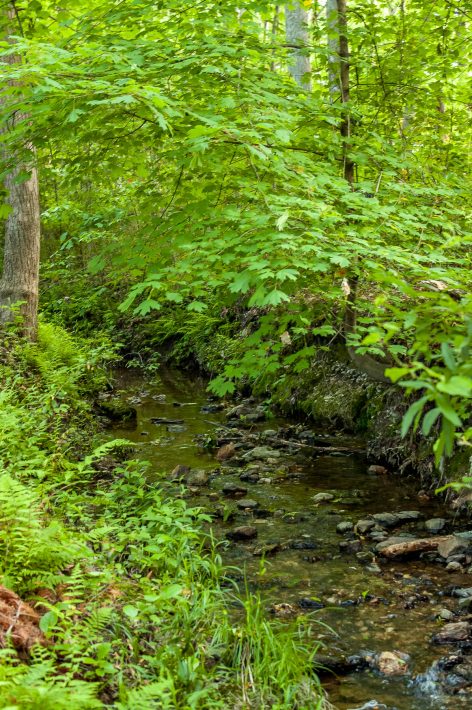
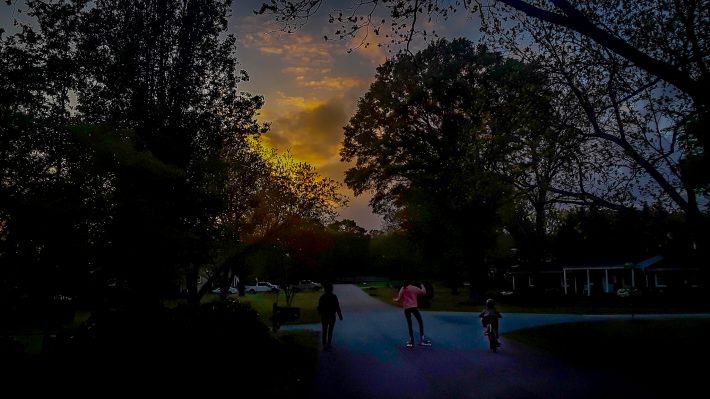
This evening's walk was a hybrid: the kids wanted to go exploring; we wanted just a normal walk. So we began in the woods, then emerged in the adjacent neighborhood and headed back to the house the long way.
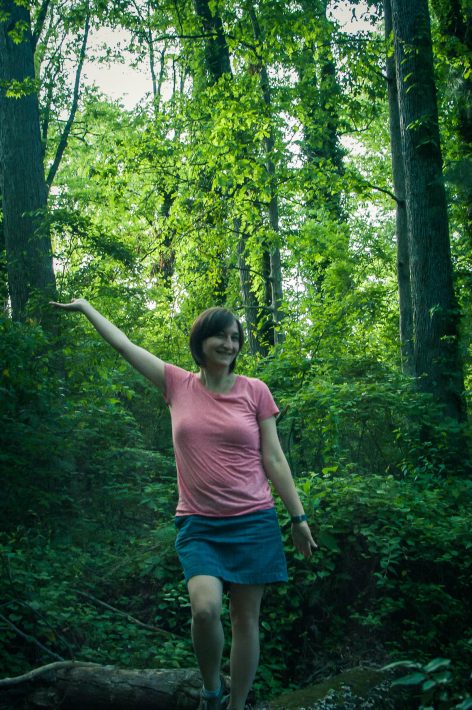
Photo by the Boy

The Boy snapped pictures most of the way. And, somewhat predictably, the Girl, seeing E having all the fun, wanted to take a few pictures herself. Well, that sounds a little too cynical: she has expressed a slight interest in photography, but there is always that thirteen-year-old aspect to her that, well, I don't know. She's thirteen. That's really all we need to say.
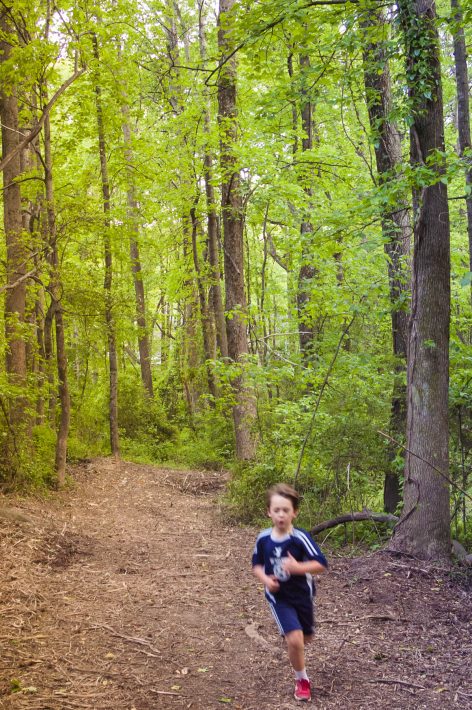
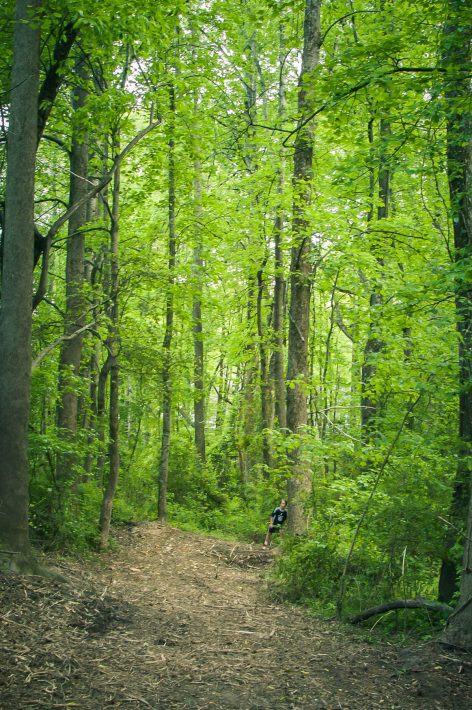
Photo by the Girl
Photo by the Girl
Photo by the Girl
Photo by the Boy
Photo by the Boy

On the way back, so much silliness. I can't remember the last time L, E, and K were so silly with each other, laughing at nonsense, making more nonsense just to make everyone laugh all the harder.

Photo by the Boy, obviously

And Clover and I the only ones keeping things serious. Sort of.

We got back with time to spare before I had to start getting the Boy ready for bed. For our reading, we continued with what we've been slogging through for some time now: 20,000 Leagues Under the Sea. It's not that it's a bad book: E insists that Verne is a master of cliffhangers. But he does seem to get a little carried away with himself. For example, one chapter begins thusly:

The Mediterranean, the blue sea par excellence, "the great sea" of the Hebrews, "the sea" of the Greeks, the "mare nostrum" of the Romans, bordered by orange-trees, aloes, cacti, and sea-pines; embalmed with the perfume of the myrtle, surrounded by rude mountains, saturated with pure and transparent air, but incessantly worked by underground fires; a perfect battlefield in which Neptune and Pluto still dispute the empire of the world!

It's not a passage for a seven-year-old. "What's 'par excellence mean?" "Who were the Hebrews?" "What are Greeks?" "'Mare nostrum' -- what's that?" "What does 'embalmed' mean?"

The next chapter -- the very next chapter -- begins thusly:

The Atlantic! a vast sheet of water whose superficial area covers twenty-five millions of square miles, the length of which is nine thousand miles, with a mean breadth of two thousand seven hundred—an ocean whose parallel winding shores embrace an immense circumference, watered by the largest rivers of the world, the St. Lawrence, the Mississippi, the Amazon, the Plata, the Orinoco, the Niger, the Senegal, the Elbe, the Loire, and the Rhine, which carry water from the most civilised, as well as from the most savage, countries! Magnificent field of water, incessantly ploughed by vessels of every nation, sheltered by the flags of every nation, and which terminates in those two terrible points so dreaded by mariners, Cape Horn and the Cape of Tempests.

"Jules, you're killing me!" I wanted to yell. But it did give us some laughs.

In truth, though, I've been skipping -- sometimes rather liberally. Take this passage from tonight's chapter, for example:

Two hours after quitting the Nautilus we had crossed the line of trees, and a hundred feet above our heads rose the top of the mountain, which cast a shadow on the brilliant irradiation of the opposite slope. Some petrified shrubs ran fantastically here and there. Fishes got up under our feet like birds in the long grass. The massive rocks were rent with impenetrable fractures, deep grottos, and unfathomable holes, at the bottom of which formidable creatures might be heard moving. My blood curdled when I saw enormous antennae blocking my road, or some frightful claw closing with a noise in the shadow of some cavity. Millions of luminous spots shone brightly in the midst of the darkness. They were the eyes of giant crustacea crouched in their holes; giant lobsters setting themselves up like halberdiers, and moving their claws with the clicking sound of pincers; titanic crabs, pointed like a gun on its carriage; and frightful-looking poulps, interweaving their tentacles like a living nest of serpents.

That got cut to this:

Two hours after quitting the Nautilus we had crossed the line of trees, and a hundred feet above our heads rose the top of the mountain, which cast a shadow on the brilliant irradiation of the opposite slope. Some petrified shrubs ran fantastically here and there. Fishes got up under our feet like birds in the long grass.

I've determined that I'm not a fan of such novels, which seem to be nothing but a litany of adventures leading to -- to what? Aronnax, Ned Land, and Conseil want to escape, but thus far, there's been precious little talk of it and a lot of chatter about all the marvels Nemo is showing them.

Fortunately, the Boy agrees in part: we can do without all the descriptive flourishes -- let's get to the action. And through it so we can read something else. Perhaps Tom Sawyer?
Day 31: The Walk

I’ve been reading Faulkner and thought it might be fun to emulate him. Forgive me.

Having cleaned up after dinner, a process that entails both the obvious cycling of dishes back to the dishwasher only hours after having taken them out to hide them neatly in stacks concealed behind cabinet doors only to place them on the table yet again in and endless cycle that is the bane of our children’s existence and the not so obvious assisting Papa in his regimen of oral hygiene procedures foisted on him by childhood dental neglect, a regimen that has become a comforting habit rather than a chore, we head out for our evening walk, a Covid-19-induced habit that might be the best outcome of a worst-case scenario. Tired of the usual routes, we’ve taken to walking a circuit that runs through the neighborhood just across from ours, a newer neighborhood without power lines snaked between crooked power poles but not so new as to have sidewalks, a neighborhood with a slightly more eclectic mix of architecture. For about a year now this has been our favorite route, in part because K likes the feel of the neighborhood more than others, in part because of its distance — almost exactly a mile — and in part because of the long, straight, flat stretch that it includes where the kids, L on her rollerblades and E on his bike, play a strangely frustrating version of tag that includes time outs and random rules that E is convinced — and I am likely to agree — are L’s on-the-spot inventions intended to keep her from being tagged.

Enough — how that man could write like that, though what I did was just a pale imitation, lacking the lugubrious flourish he put into every sentence as if it were the habit of a card cheat. See? Once you start writing like that, start thinking like that, once you start piling phrase upon phrase, clause upon clause, it’s almost impossible to stop, so maybe that’s how he did it: just a big push and off he went, heedless of periods, question marks, semicolons, and anything else resembling in its vaguest form something that someone could accuse of being an ending, a final mark on the paper to suggest “Stop.” The result, in all seriousness, is nothing short of breathtaking. His greatest achievement, Absalom, Absalom!, just sings right from the opening sentences.

From a little after two o’clock until almost sundown of the long still hot weary dead September afternoon they sat in what Miss Coldfield still called the office because her father had called it that-a dim hot airless room with the blinds all closed and fastened for forty-three summers because when she was a girl someone had believed that light and moving air carried heat and that dark was always cooler, and which (as the sun shone fuller and fuller on that side of the house) became latticed with yellow slashes full of dust motes which Quentin thought of as being flecks of the dead old dried paint itself blown inward from the scaling blinds as wind might have blown them. There was a wistaria vine blooming for the second time that summer on a wooden trellis before one window, into which sparrows came now and then in random gusts, making a dry vivid dusty sound before going away: and opposite Quentin, Miss Coldfield in the eternal black which she had worn for forty- three years now, whether for sister, father, or nothusband none knew, sitting so bolt upright in the straight hard chair that was so tall for her that her legs hung straight and rigid as if she had iron shinbones and ankles, clear of the floor with that air of impotent and static rage like children’s feet, and talking in that grim haggard amazed voice until at last listening would renege and hearing-sense self-confound and the long-dead object of her impotent yet indomitable frustration would appear, as though by outraged recapitulation evoked, quiet inattentive and harmless, out of the biding and dreamy and victorious dust. Her voice would not cease, it would just vanish. There would be the dim coffin-smelling gloom sweet and oversweet with the twice-bloomed wistaria against the outer wall by the savage quiet September sun impacted distilled and hyperdistilled, into which came now and then the loud cloudy flutter of the sparrows like a flat limber stick whipped by an idle boy, and the rank smell of female old flesh long embattled in virginity while the wan haggard face watched him above the faint triangle of lace at wrists and throat from the too tall chair in which she resembled a crucified child; and the voice not ceasing but vanishing into and then out of the long intervals like a stream, a trickle running from patch to patch of dried sand, and the ghost mused with shadowy docility as if it were the voice which he haunted where a more fortunate one would have had a house.

Four sentences weighing in at just a little over 400 words, with three of the sentences doing most of the work: that third sentence is so perfectly short (“Her voice would not cease, it would just vanish.”) that it creates the perfect rhythm, a little pause in the thinking that gives both authenticity to the voice and rest to the reader.

I’m reading Absalom now, probably for the tenth or twelfth time, and each time I read it, I notice a little something that had escaped my attention previously: some little piece to the puzzle (for the book is, at its heart, a puzzle to match the puzzle that is living itself), some lovely phrase, some little something. I don’t think I will ever tire of that book, and every time I finish it, I look forward eventually to starting it again: “From a little after two o’clock until almost sundown of the long still hot weary dead September afternoon they sat in what Miss Coldfield still called the office…”

Checking the Gift

L is going to a birthday party tomorrow. She had to check the gift before wrapping it.

Too Many Toys

Every night whoever has Boy Duty (as opposed to Girl Duty) reads to the Boy, and my selection tonight was Too Many Toys by David Shannon of No, David! fame (one of the best children’s books of all time). The story was a little predictable: “Spencer had too many toys,” it begins, and the astute child or the typical adult will guess where this is going.

Tonight, we reached the page that showed all of Spencer’s toys spilling down the stairs. “Spencer liked to make his toys into a parade that stretched from one corner of the house to the other and back again!” E pointed to the huge line of toys and said, “He poured them all out.”

“Yes,” I laughed. “I know someone else who likes to pour his toys out.”

E looked at me thoughtfully for a moment, then concluded, “Babcia doesn’t.”

Indeed. Every time we visit Babcia, she complains, only partially in jest I’m convinced, that she’ll be glad when we’re all gone and she can get back to normal. “No more toys here, there, and everywhere!”

No, Babcia would not be a fan of Spencer’s train of toys.

After a thoughtful second, E continued: “I do too.” Up went his eyebrows as they always do when he’s about to raise an index finger to emphasize a point. “But I clean up.” Another small pause. “Sometimes.”

Begin and End in the Kitchen

The day obviously starts in the kitchen. But it’s more than food and preparation for the day. The Boy has a favorite book lately — Hot Rod Hamster — and on a whim, the Girl decides to read it to him. I read it to him last night; K read it to him the night before. But that’s not enough: he could listen to that book every single day, most likely because of the basic interactivity of it. Hot Rod Hamster, you see, has to choose the parts of his car, and the author often asks the reader, “Which would you choose?” By now everyone in the family knows which one he would choose, but that’s not the point.

DSCF1856

The day also ends in the kitchen, with play. The office chair in which I now sit is a favorite toy, for it swivels in endless circles.

DSCF1857

To the delight of both kids.

DSCF1859

Dig!

Story Time!

The Girl had an idea: record herself reading a story. Unfortunately, her little Leap Frog system wasn’t the highest quality, and she had no way to support the camera while she filmed.

Tata, of course, saved the day.

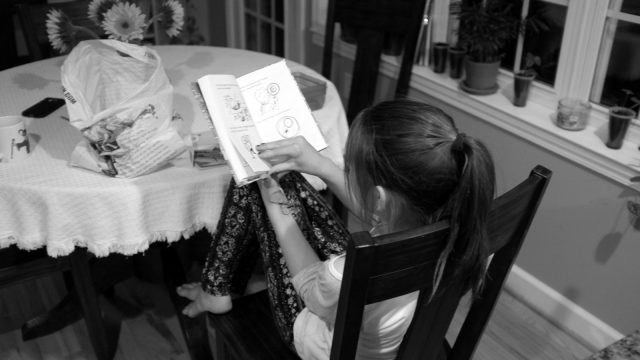
Reading

The Boy has a developing passion for books. It was one of his early words.

BW0_4632

And it’s one of his favorite activities.

BW0_4643

Promising.

Teaching Eighth Graders

1-DSC_5254

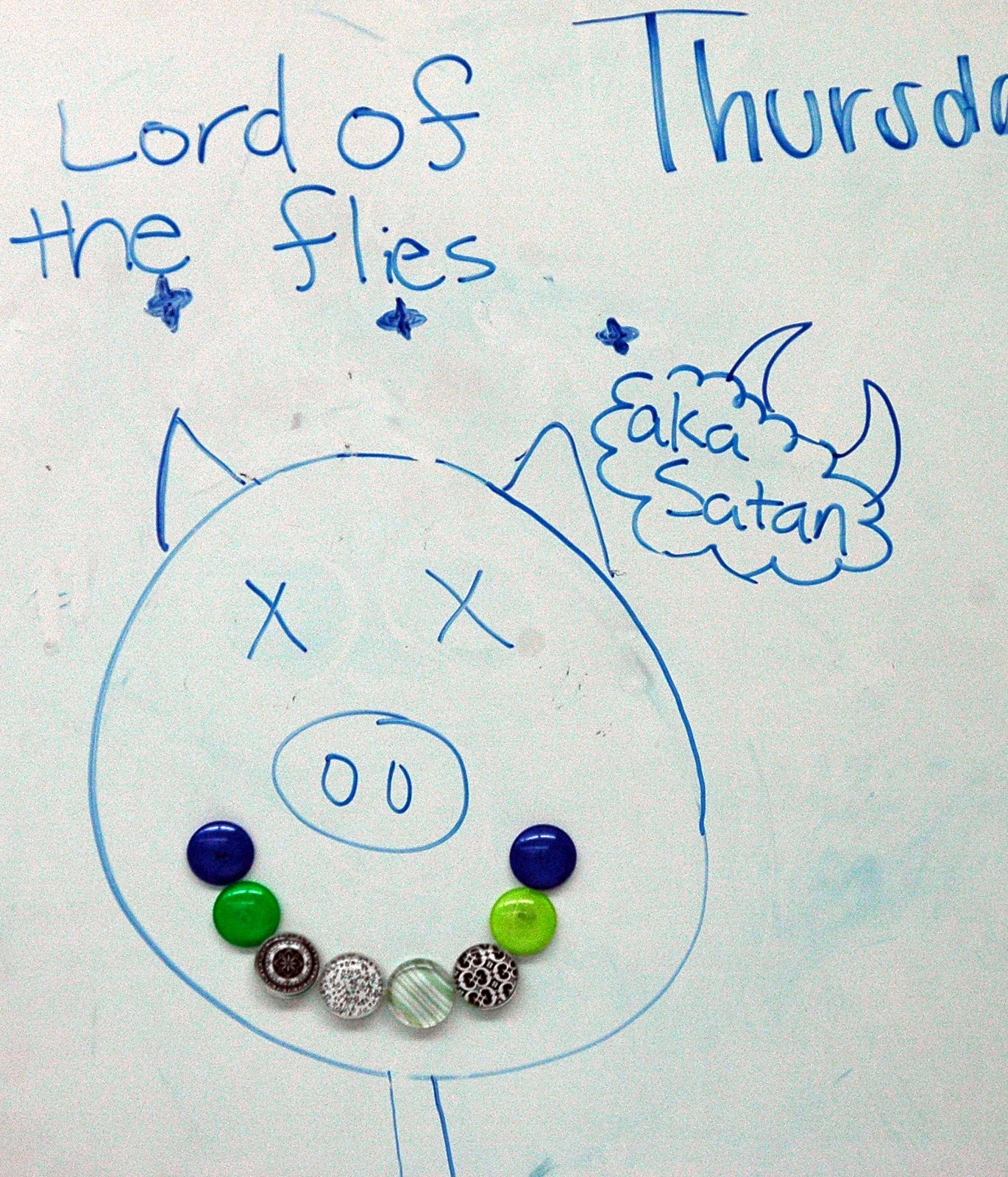
Lord of the Flies

It starts slowly. In fact, Lord of the Flies is a downright boring book for the first little bit, especially for eighth graders. There’s just a lot of, well, buildup. Sure, the Beast is a little interesting, but nothing thrilling.

And then we hit chapter eight: “Gift for the Darkness.”

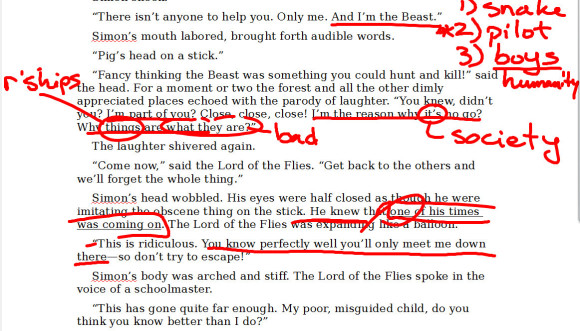
We do a close reading of Simon’s encounter with the Lord of the Flies, and by the time it’s over, almost all the students are eager to read chapter nine. I find out from their science teacher — most of the kids have science their final period — that all sat in rapt silence the last few minutes of class, reading Lord of the Flies. After school, one by one, the kids come to tell me how horrified and thrilled they are.

Another good time to be a teacher.