Matching Tracksuits

fun in fours

reading

The Letter

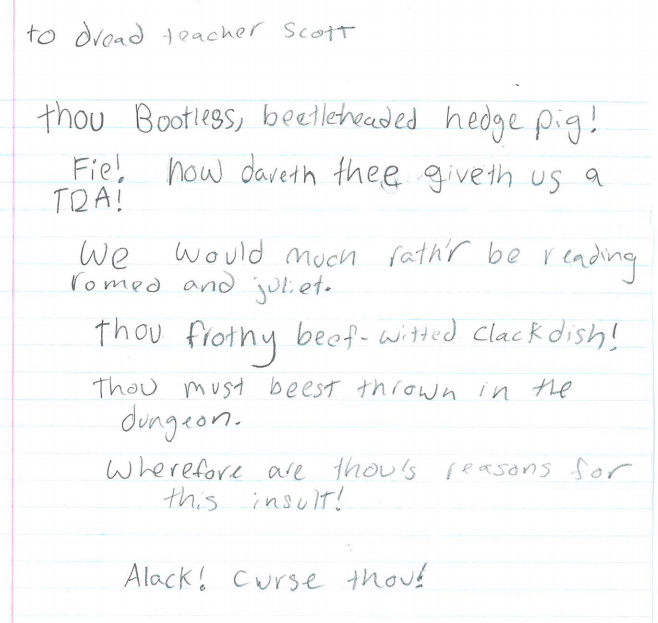
We just started Romeo and Juliet, and a lot of the kids are quite excited about that.

I found this waiting on my desk at the end of the day. (“TDA” is a “text-dependent analysis” — the district requires us to give a couple of practice TDAs in preparation for the state-mandated one at the end of the year. No one really likes them…)
Tuesday Adventures

We all woke up at seven this morning. For K, that was sleeping in half an hour; for me, that was my normal wake up time; for E, well, it depends; for L, it was definitely early. Our plan: a morning bike ride on a route that we repeat regularly to check for improvement. After mapping out a route, we headed out. I stuck with the Girl because I knew she would be zooming ahead; K stuck with the Boy because he just doesn't have the stamina a thirteen-year-old possesses. L and I made the 7 km ride in 24 minutes, which means an average speed of 16 km/h. Not too bad for a then-fussy girl who didn't even want to get out of bed to begin with.

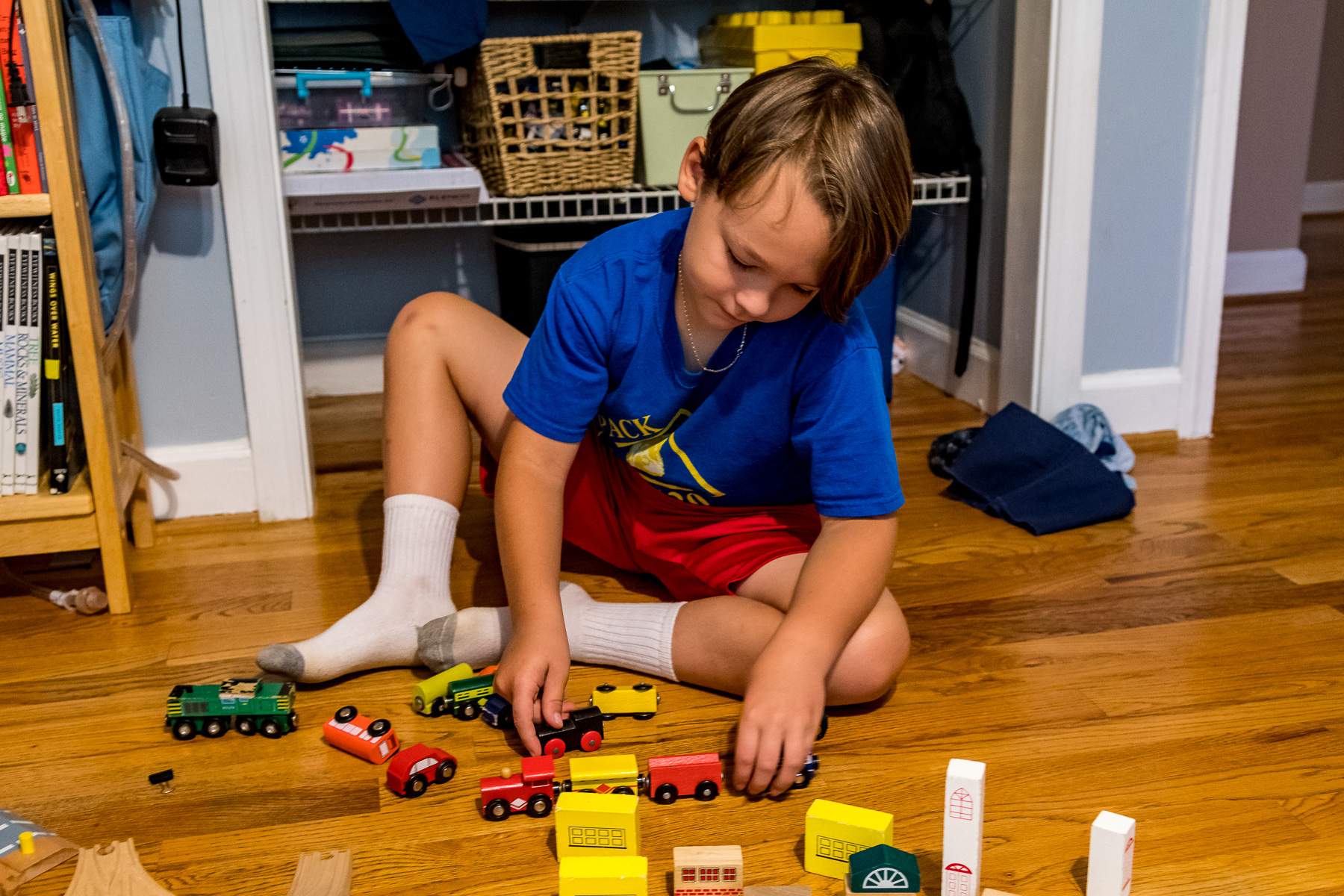
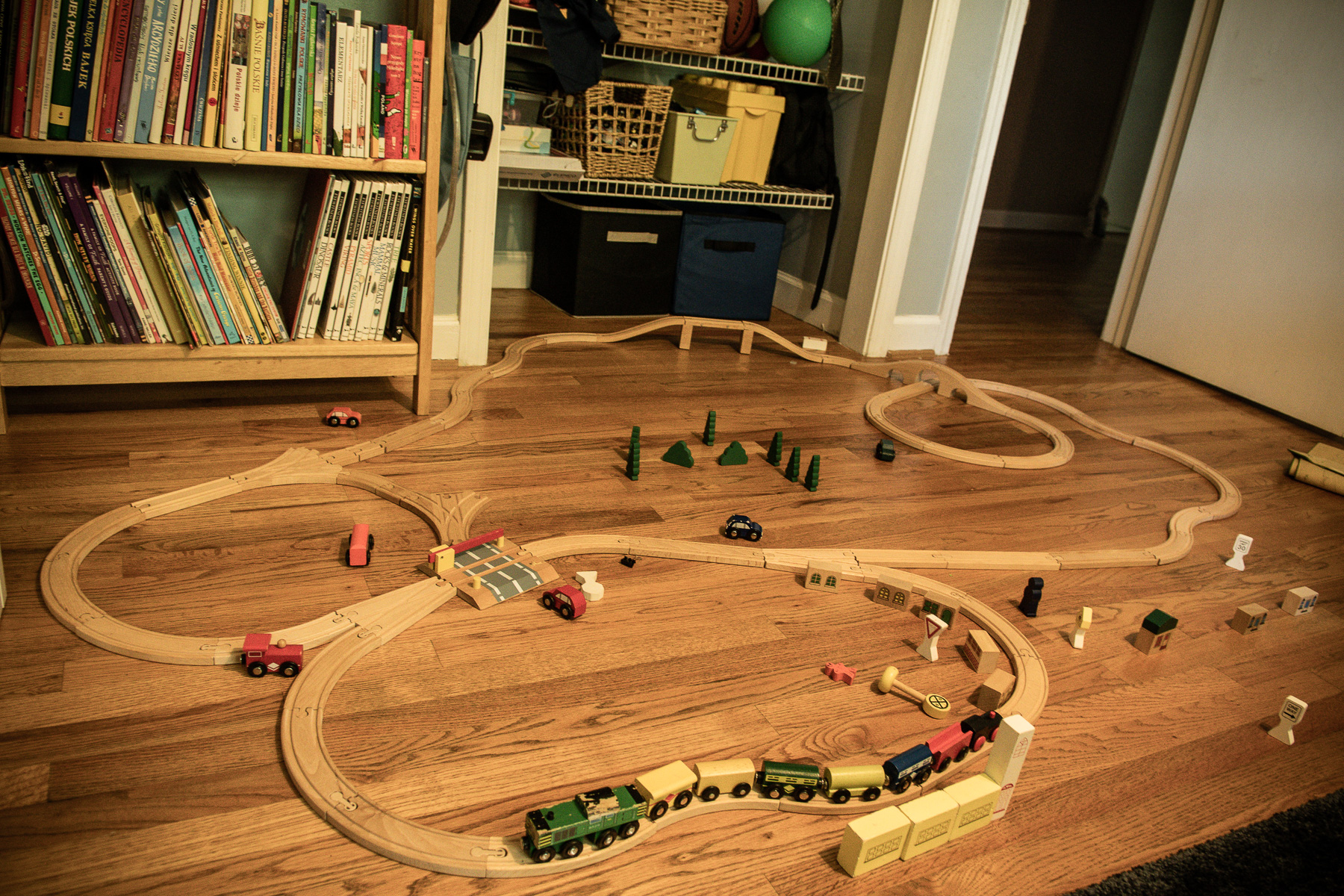
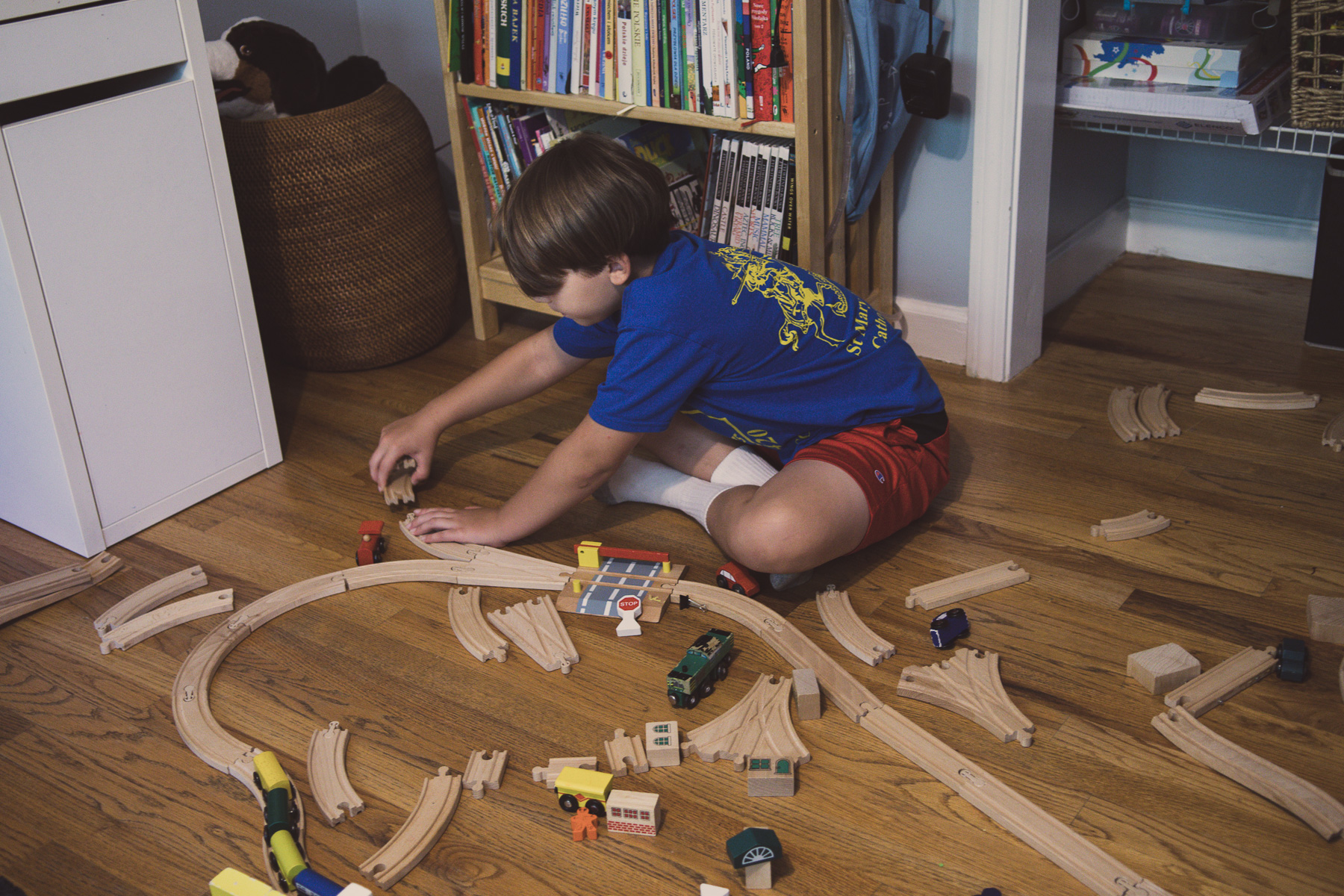
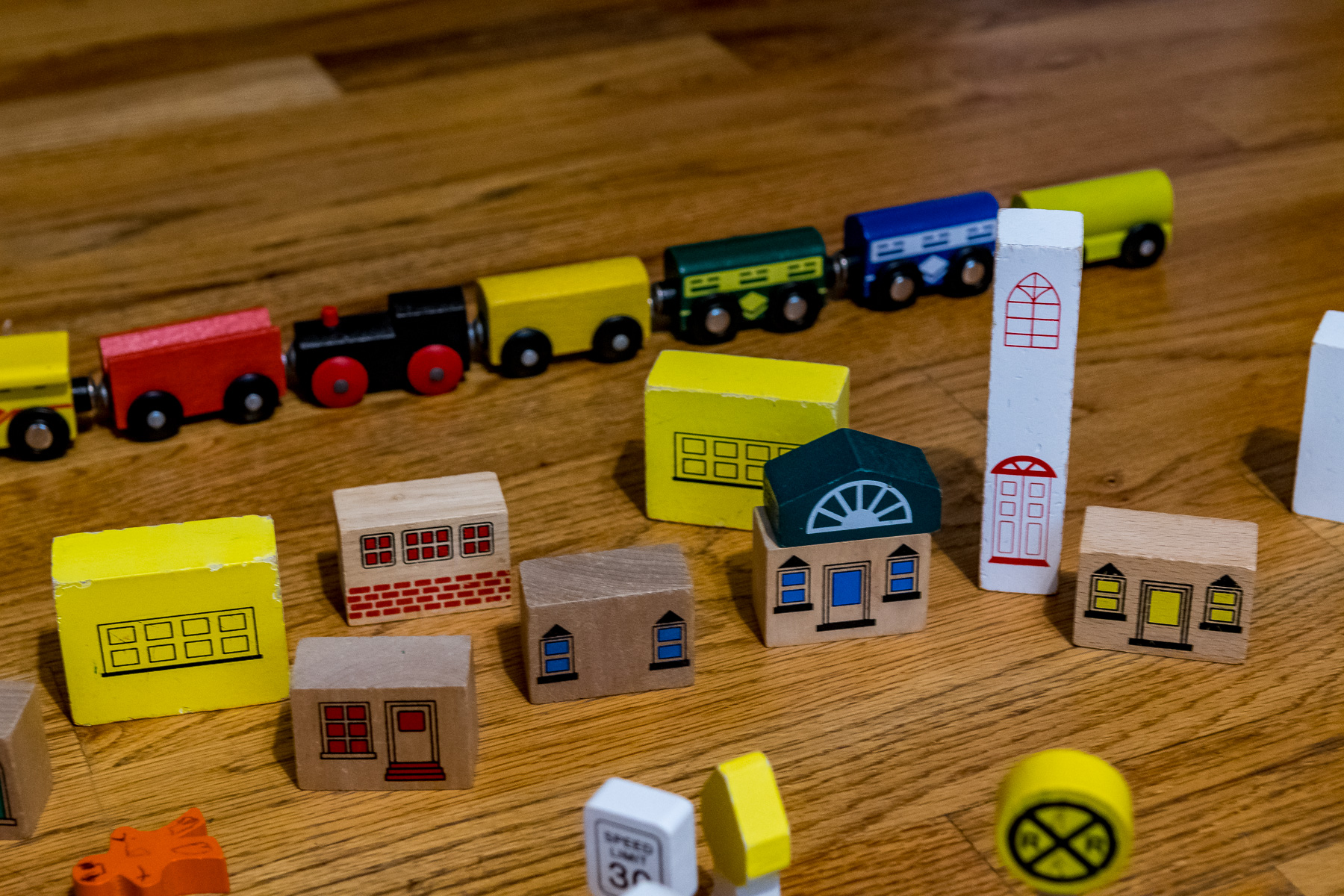
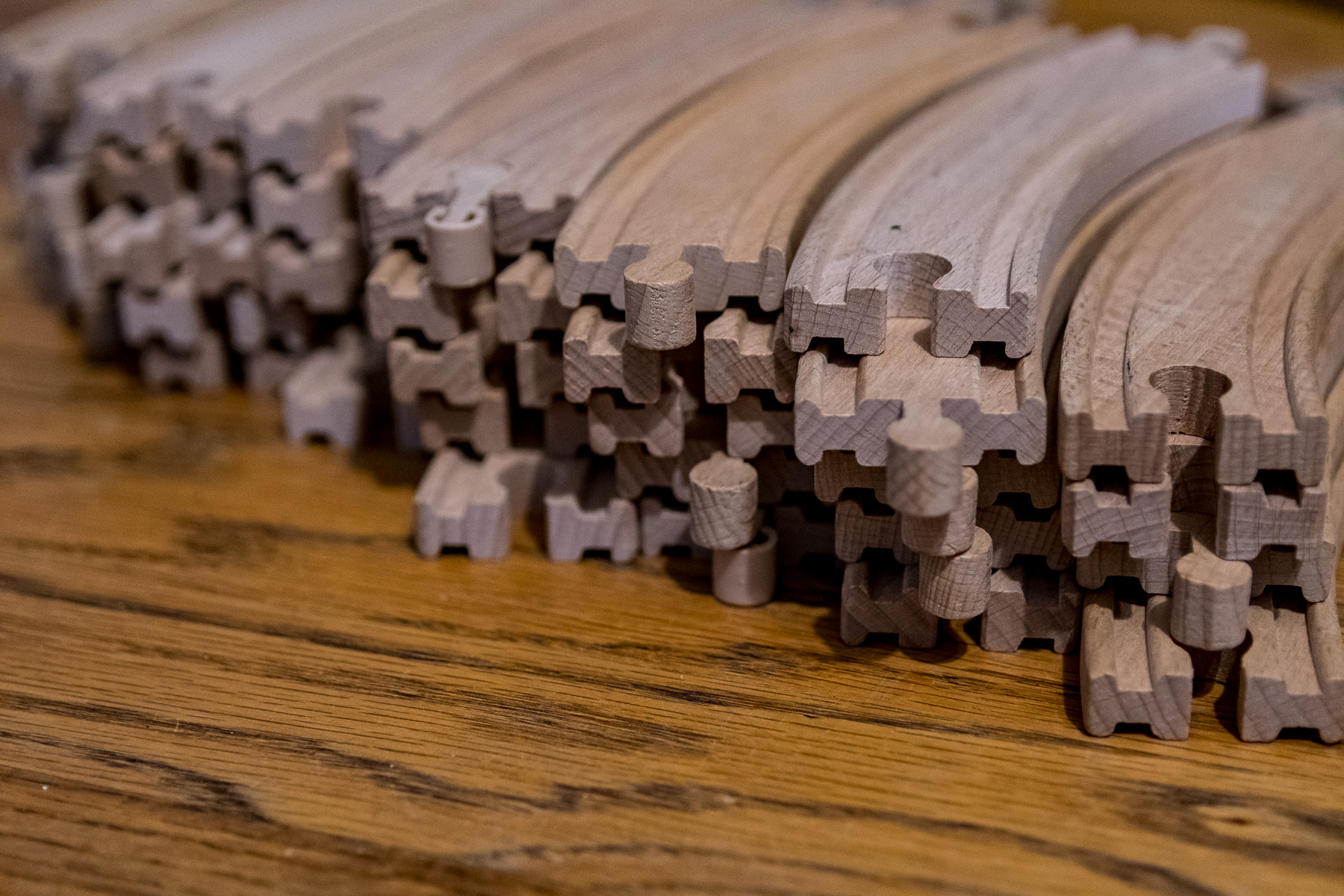
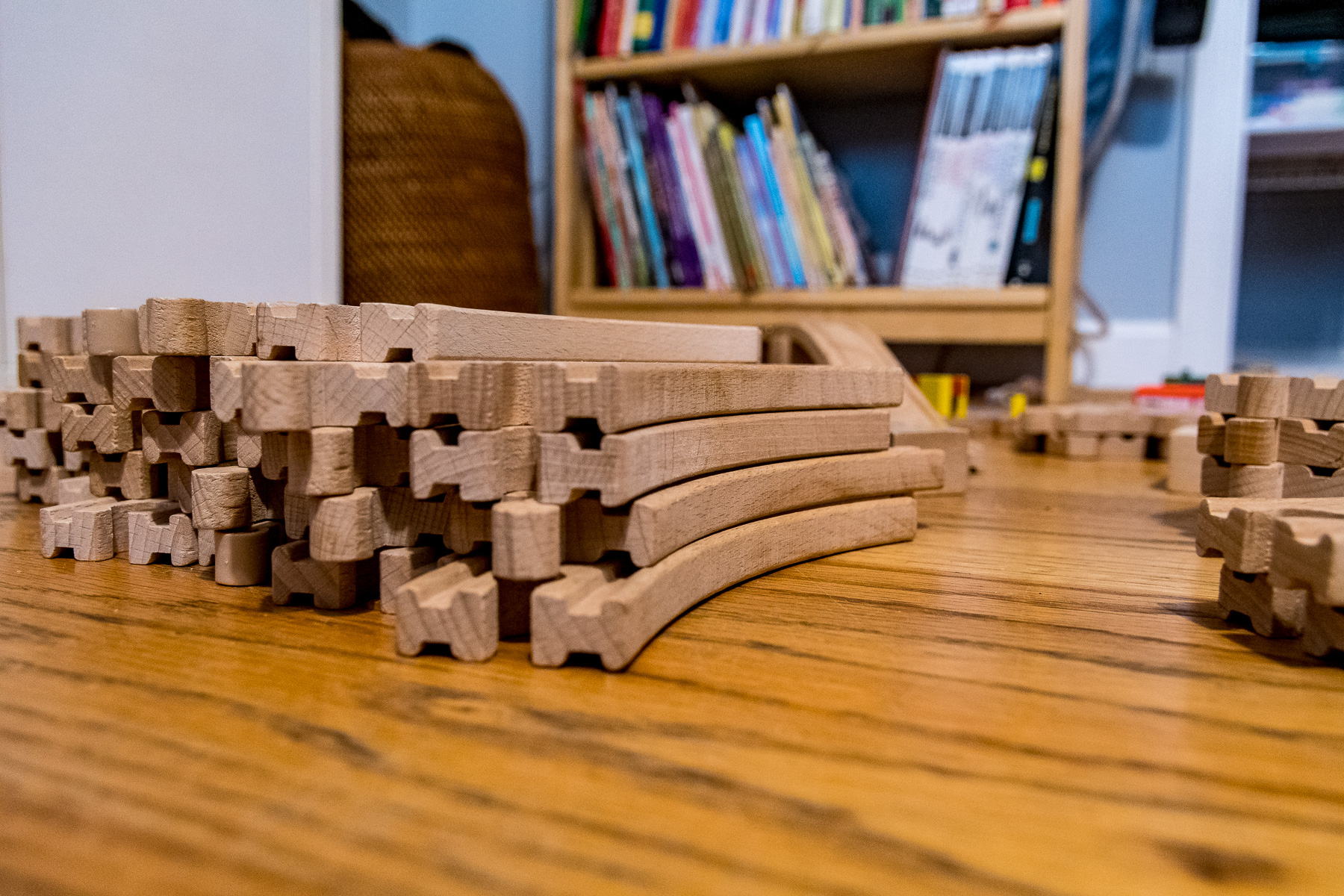
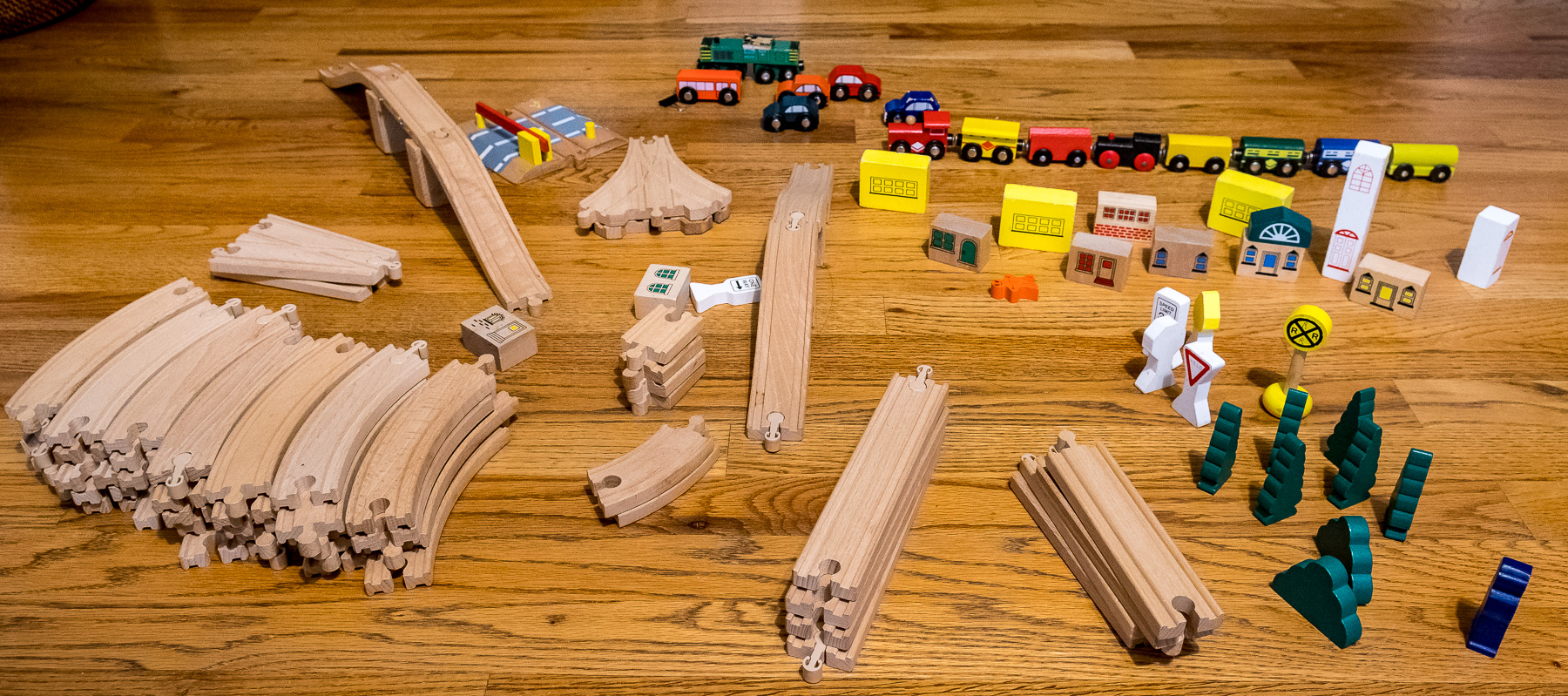
After breakfast, the Boy and I set up his wooden train set to take some pictures: he wants to sell it (eBay? Facebook Marketplace? Craig's List?) since he doesn't play with it anymore.
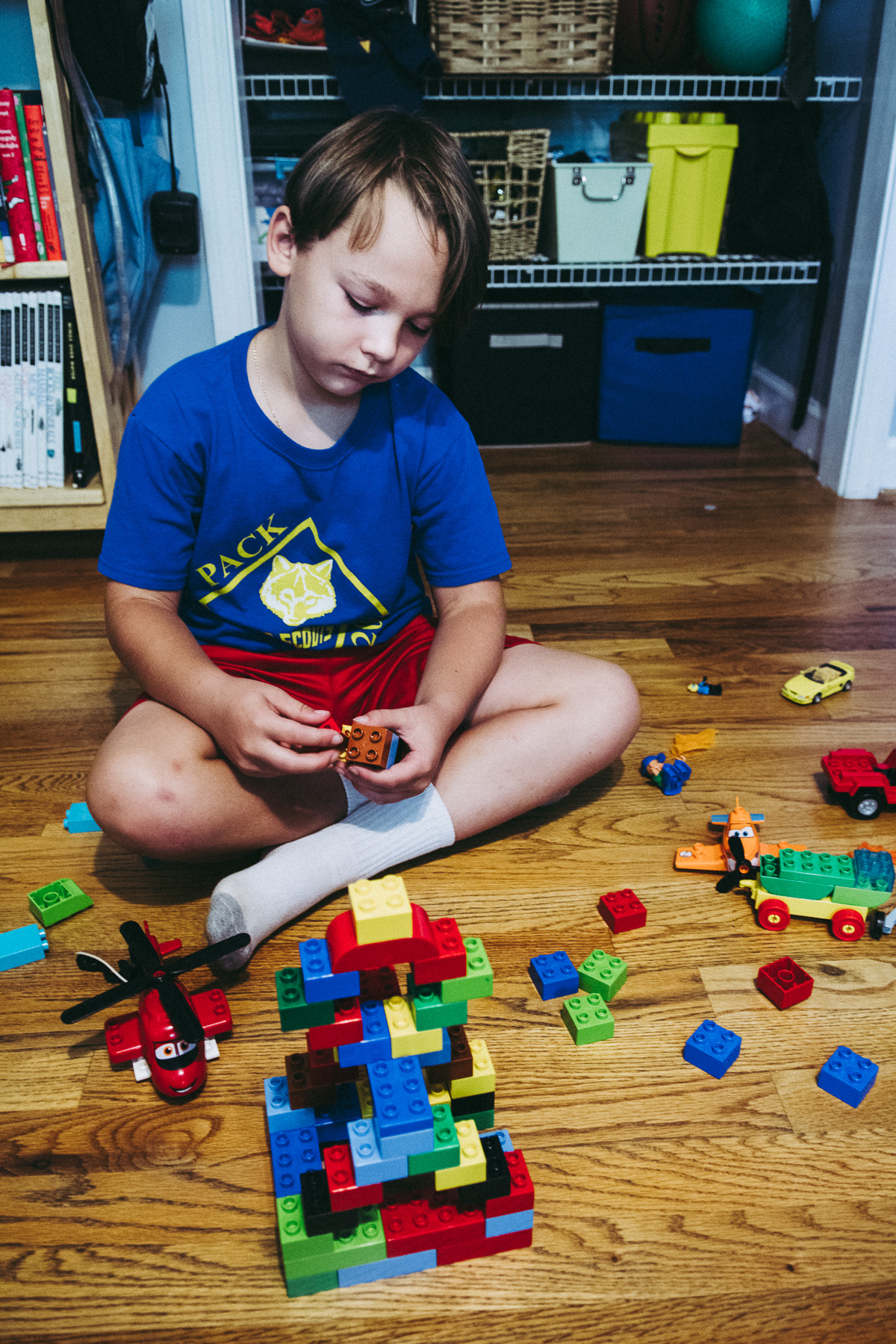
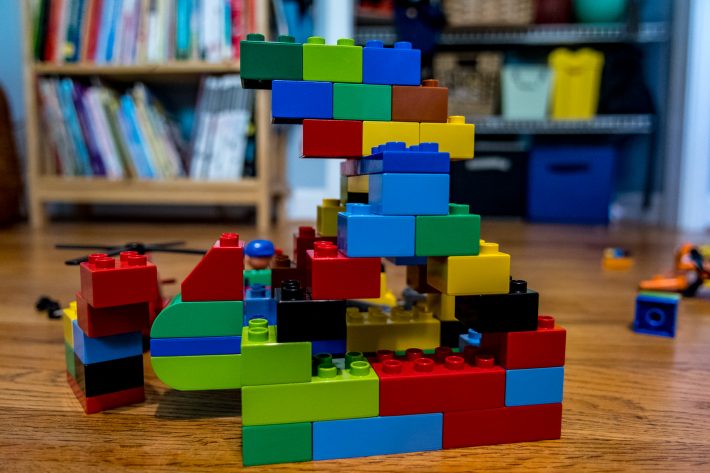
Then we did the same with his Duplo blocks. "I haven't touched those in years!" he proudly informed me. But after we just display them, we have to make something out of them.

One last time.

The afternoon passes with a lot of reading.

The Girl reads Harry Potter and the Goblet of Fire in its entirety for the second time. It's the HP book I've agreed to read, so she wanted to get through it quickly so I could read it. I struggled through the end of Barnes's Flaubert's Parrot -- a book I had high hopes for but which ultimately left me disappointed.

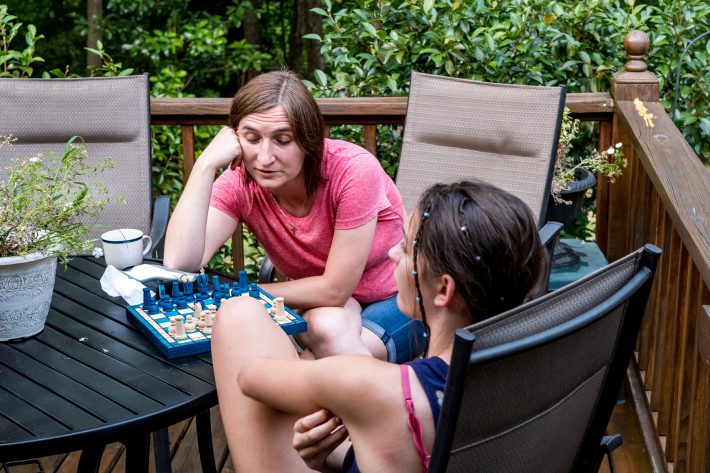
In the evening, the Girl played a game of chess with K while E and I went on another bike ride:

And throughout the day, I popped downstairs for the next lesson in the series on Photoshop compositing and ended this evening with this creation:

Next step -- apply those newly-learned skills to pictures of my own kids...

Review: Rules of Civility

I wasn't sure what I thought of this book at first. There wasn't much of a plot: just some randomly connected incidents pulled together by the simple fact that they were happening to the same character. She goes to a nightclub; she eats dinner somewhere; she does this; she does that.

Then I started picking up on the allusions. This book is jam-packed with them. While there are some allusions to music and art, most of them refer back to novels. And then I started to see that the structure of the novel was itself an allusion to a classic novel we've all read. And then I started to see how Towles was taking yet another novel, itself a modern classic, inverting the structure, and placing on top of the allusion to the classic novel.

And then came this passage between a rich New York aristocrat (with a good and pure heart, though) and the narrator, a working-class girl born to Russian Jewish immigrants. The aristocrat is visiting the narrator's apartment and notices the books:

"You've got a lot of books," he said at last.

"It's a sickness."

"Are you ... seeing anyone for it?"

"I'm afraid it's untreatable."

He put his briefcase and the wine on my father's easy char and began circling the room with a tilted head.

"Is this the Dewey decimal system?"

"No, but it's based on similar principles. Those are the British novelists. The French are in the kitchen. Homer, Virgil and the other epics are there by the tub."

Wallace wandered toward one of the windowsills and plucked Leaves of Grass off a teetering stack.

"I take it the transcendentalists do better in sunlight."

"Exactly."

"Do they need much water?"

"Not as much as you'd think. But lots of pruning."

He pointed the volume toward a pile of books under my bed.

"And the ... mushrooms?"

"The Russians."

This is, at its heart, a book about books, cleverly camouflaged as something else, but it is in essence a giant hat-tip to literature. That's not all it is, of course, but that's it's organizing principle.

I won't mention what exactly the classic novel and modern classic are -- that would be a spoiler. I fear in mentioning them at all I've given too much away.

For all it has going for it, though, this novel is clearly a first novel: execution doesn't quite meet conception. Perhaps Towles's A Gentleman in Moscow, which I read first, set me up to expect too much. This is a solid novel, though, and an enjoyable read even if it does drag just a bit at times.

Day 74: Rainy Dickens

Another Rainy Day

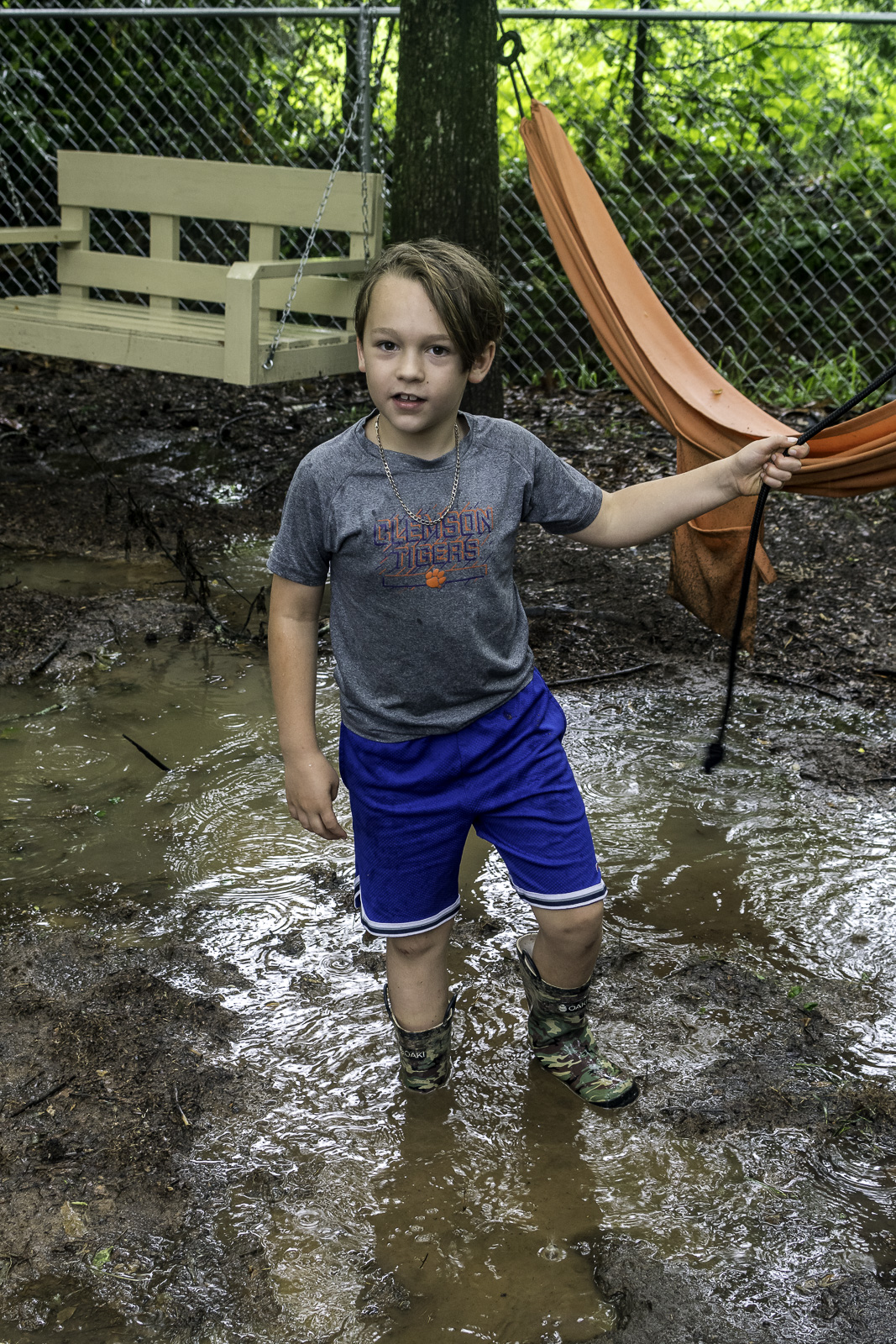
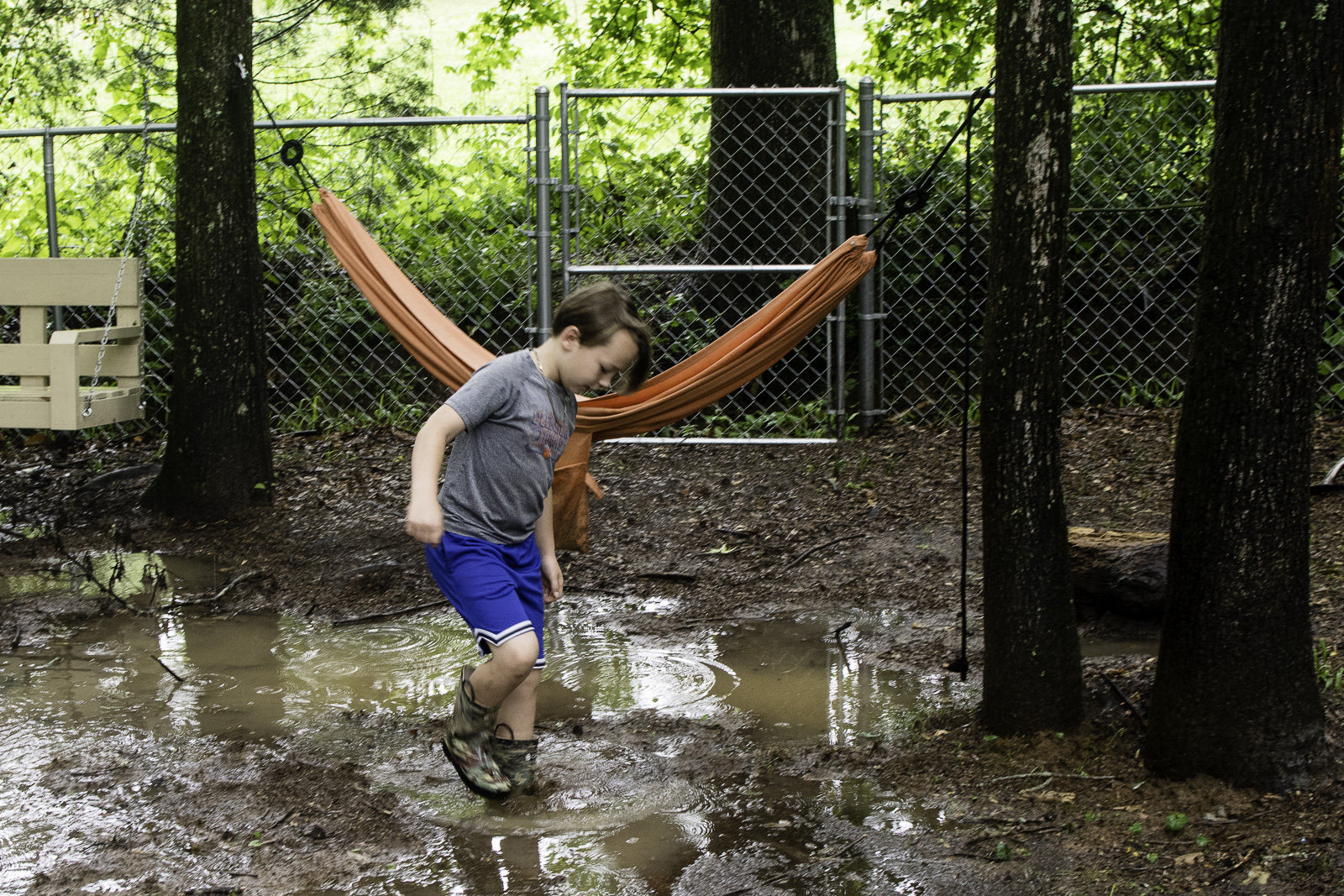
We are sick of the rain. Simply sick of it. Every day for the last — how long has it even been? A week? Day in, day out, at some point during every single day, it rains. The air is heavy and moist, and it’s just not a pleasant experience — though it could be worse with all the flooding others are getting.

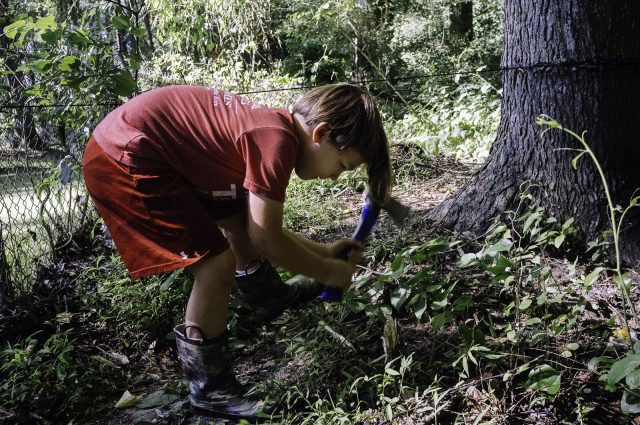
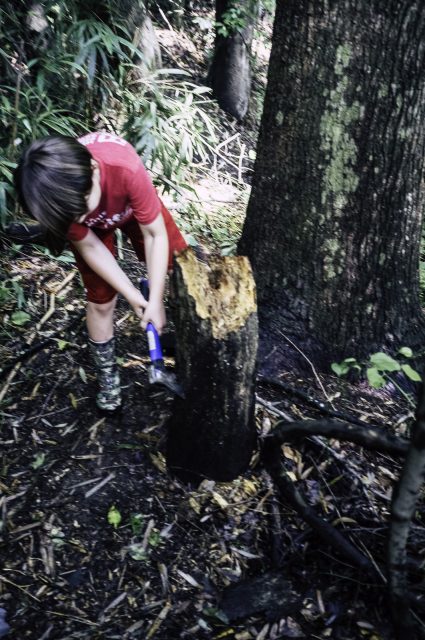
Today, we finally got outside in the afternoon. It was muggy but sunny. What else could we do but head back to our new fort location and work on it. Doing what exactly? Well, chopping things down.

Some things were much easier to chop than others. The mushy, termite-infested stump we discovered to be such a few months back when I gave what appeared to be a 10-foot stump a push and broke it off about two feet from the ground — that stump is quite solid a little further down.

Of course, the sprinkles that filled the morning and early afternoon and kept us inside came back with friends in the early evening just as we got back from our walk.

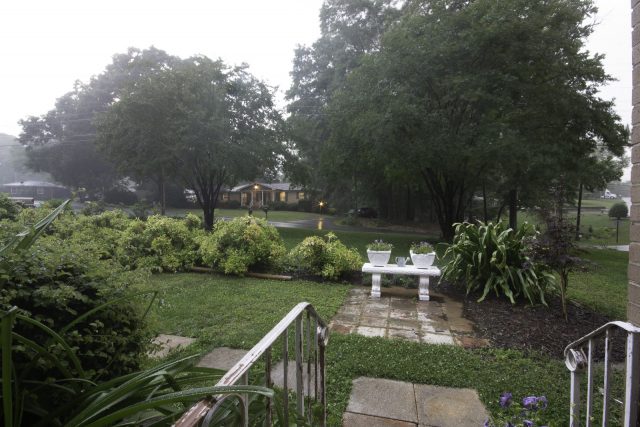
I took a few experimental shots — long exposure. Long exposure for daylight pictures. The above image was about 15 seconds. I don’t know what I was hoping to accomplish — get streaks of rain in the image, I guess — but it just turned out to be a bland shot of our front yard.

Later in the evening, we tried it inside. When I explained what a long exposure inside would do, the kids thought it was a very unique idea. “Make us ghosts!”

Done.

Dickensian Commonalities

I’ve been listening to Dickens’s Dombey and Son on Spotify this week — the first time in close to 20 years that I’ve read a new (to me) Dickens book. One of the things that I’m enjoying most is the simple pleasure of discovering new examples of Dickensian acerbic wit, like this:

After the lapse of some minutes, which appeared an immense time to little Paul Dombey on the table, Doctor Blimber came back. The Doctor’s walk was stately, and calculated to impress the juvenile mind with solemn feelings. It was a sort of march; but when the Doctor put out his right foot, he gravely turned upon his axis, with a semi-circular sweep towards the left; and when he put out his left foot, he turned in the same manner towards the right. So that he seemed, at every stride he took, to look about him as though he were saying, “Can anybody have the goodness to indicate any subject, in any direction, on which I am uninformed? I rather think not.”

Add to that a classic Dickensian name — can there be a more inept educator than someone named Doctor Blimber? — and it just brought out of me a loud laugh.

I’m discovering too that this is another example of Dickensian exposes on the Victorian view of children, which often enough bordered on abuse. And as always, Dickens does it with a flourish of humor that still has enough darkness around the edges to make the reader shudder just a little at what the child must be going through.

Poor Paul Dombey, at six, has been deposited at a boarding school in an effort to make up lost time in his education due to his generally ill condition. The headmaster, Dr. Blimber of above, is known for instilling in the children a thorough knowledge of Greek and Latin grammar and little else and of assuming that he’s aptly prepared his pupils for the challenges of life. Paul, on his second day of school, is given a pile of books to read and master. He does the best he can with them:

‘Now, Dombey,’ said Miss Blimber. ‘How have you got on with those books?’

They comprised a little English, and a deal of Latin—names of things, declensions of articles and substantives, exercises thereon, and preliminary rules—a trifle of orthography, a glance at ancient history, a wink or two at modern ditto, a few tables, two or three weights and measures, and a little general information. When poor Paul had spelt out number two, he found he had no idea of number one; fragments whereof afterwards obtruded themselves into number three, which slided into number four, which grafted itself on to number two. So that whether twenty Romuluses made a Remus, or hic haec hoc was troy weight, or a verb always agreed with an ancient Briton, or three times four was Taurus a bull, were open questions with him.

‘Oh, Dombey, Dombey!’ said Miss Blimber, ‘this is very shocking.’

‘If you please,’ said Paul, ‘I think if I might sometimes talk a little to old Glubb, I should be able to do better.’

‘Nonsense, Dombey,’ said Miss Blimber. ‘I couldn’t hear of it. This is not the place for Glubbs of any kind. You must take the books down, I suppose, Dombey, one by one, and perfect yourself in the day’s instalment of subject A, before you turn at all to subject B. I am sorry to say, Dombey, that your education appears to have been very much neglected.’

‘So Papa says,’ returned Paul; ‘but I told you—I have been a weak child. Florence knows I have. So does Wickam.’

‘Who is Wickam?’ asked Miss Blimber.

‘She has been my nurse,’ Paul answered.

‘I must beg you not to mention Wickam to me, then,’ said Miss Blimber. ‘I couldn’t allow it’.

‘You asked me who she was,’ said Paul.

Bear in mind that Paul at this point is six years old. “How is your Latin grammar?” asks the headmaster. “I am sorry to say, Dombey, that your education appears to have been very much neglected,” declares his tutor, the headmaster’s daughter. Just what were they expecting of a six-year-old boy?

Day 69: Training, Cleaning, and Reading

Our pup has come a very long way. I thought, when we got her, that since she’s a border collie (smartest breed on the planet, right?), things would be easy. She’d be easy to train, easy to control (after all, you can get those dogs to do the most amazing tricks herding sheep), easy to house-break — just easy. But it turns out that BCs are too smart for their own good: it makes them a little stubborn at times. And that describes our Clover perfectly: stubborn, stubborn, stubborn. But we didn’t give up on her: we took her for some obedience training, we left her a couple of times for one-on-one days with a trainer, and for the last year, things have been going great.

Now, we have a few tricks with her.

  • You can, for instance, drop a piece of the most tempting meat in front of her and she’ll just sit down at it, shifting her gaze from the meat to you and back to the meat, a pleading look in her eye, and she won’t touch it until you tell her, “Eat.”
  • In the morning, you can open the door and tell her, “Siusiu,” and she’ll go out and immediately relieve her self and come back inside.
  • You can call her and she comes and sits beside you.
  • If you want her on the other side, just say “Other side” and she’ll switch sides.
  • You can tell her to stay and then kick ever her most beloved ball and she won’t go darting after it until you tell her “free” or “go get it” or “release.”
  • “Heel” means “heel.”
  • When you’re taking her for a walk and stop moving, she sits — sometimes immediately, but usually after a bit of hesitation. (There’s that stubbornness.)

For her birthday, though, we got her an agility course. The Girl began training her yesterday. It was fairly simple: she figured out that she had to jump over the bar, had to jump through the hoop. Easy-peasy. She looked up at L like she looks up at me when we go for a run: “Was that supposed to be a challenge or something?”

Today, the Boy got in on the fun. He had a little difficulty getting her to jump without a leash on her to guide her, but soon enough, he’d worked out his own way of bribing her with a little treat.

My Ántonia

I finished reading My Ántonia today — or rather, listening to it on Spotify. I first read that book in college, and it astounded me, particularly one quote: “Some memories are realities, and are better than anything that can ever happen to one again.” More than O, Pioneers! (the only other Cather book I’ve read), I really connected with the sense of nostalgia that pervades My Ántonia. That’s why I remember that quote almost a quarter of a century later: I read it shortly after some emotionally traumatic losses (not deaths, just losses) in my life, and I was wallowing in nostalgia about those lost relationships.

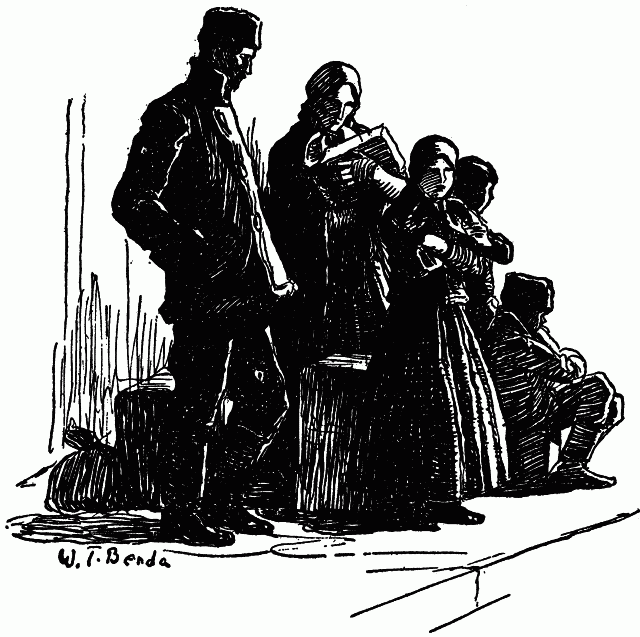
Illustration: Immigrant family huddled together on the train platform

I had forgotten, though, about the ending:

This was the road over which Ántonia and I came on that night when we got off the train at Black Hawk and were bedded down in the straw, wondering children, being taken we knew not whither. I had only to close my eyes to hear the rumbling of the wagons in the dark, and to be again overcome by that obliterating strangeness. The feelings of that night were so near that I could reach out and touch them with my hand. I had the sense of coming home to myself, and of having found out what a little circle man’s experience is. For Ántonia and for me, this had been the road of Destiny; had taken us to those early accidents of fortune which predetermined for us all that we can ever be. Now I understood that the same road was to bring us together again. Whatever we had missed, we possessed together the precious, the incommunicable past.

“What a little circle man’s experience is.” What a lovely notion, what a great truth.

Returning to Dickens

“What to listen to now?” I thought, as I finished the Cather novel early in the day and still had plenty of outside work to keep me occupied. Much of the morning I spent cleaning rocks. Yes, cleaning rocks. The drainage trough (for lack of a better term) I made at the base of our driveway has, over the years, become more and more clogged with dirt. Now instead of wicking water away from the drive, it just serves as a barrier and makes it puddle water. What’s more, with all that dirt, weeds had a great place to grow. So I pulled out all the rocks down to the landscaping fabric, washed the dirt off the rocks, and put them back. (Coronavirus quarantine has lent itself to long-ignored, not-necessarily-critical projects.) Anyway, I was still working on the rocks and the book finished.

Spotify is sort of hit-or-miss with audiobooks: there’s very little (that I’ve found) that’s relatively recent, and a lot of the older books are actually in translation — lots and lots of German audiobooks I’ve found.

When I lived in Poland, I had some difficulty finding affordable English-language books. Penguin Classis, though, were plentiful and relatively cheap. That’s how I read almost every Dickens book in the space of three years. There are a few that I never found, though, and I thought today might be a good day to return to Dickens.

I hadn’t really read him in almost twenty years. I teach Great Expectations some years to my English I Honors students, but that doesn’t really count: the last year I taught it (two years ago, I think), I didn’t even read it with the students.

So today I began Dombey and Son. I’d forgotten how clever and witty Dickens can be, and how gifted he can be at beginning a novel. Think of his most famous, A Tale of Two Cities:

It was the best of times, it was the worst of times, it was the age of wisdom, it was the age of foolishness, it was the epoch of belief, it was the epoch of incredulity, it was the season of Light, it was the season of Darkness, it was the spring of hope, it was the winter of despair, we had everything before us, we had nothing before us, we were all going direct to Heaven, we were all going direct the other way— in short, the period was so far like the present period, that some of its noisiest authorities insisted on its being received, for good or for evil, in the superlative degree of comparison only.

Or my personal favorite Dickens beginning, which I’ve mentioned here before, Bleak House:

London. Michaelmas term lately over, and the Lord Chancellor sitting in Lincoln’s Inn Hall. Implacable November weather. As much mud in the streets as if the waters had but newly retired from the face of the earth, and it would not be wonderful to meet a Megalosaurus, forty feet long or so, waddling like an elephantine lizard up Holborn Hill. Smoke lowering down from chimney-pots, making a soft black drizzle, with flakes of soot in it as big as full-grown snowflakes—gone into mourning, one might imagine, for the death of the sun. Dogs, undistinguishable in mire. Horses, scarcely better; splashed to their very blinkers. Foot passengers, jostling one another’s umbrellas in a general infection of ill temper, and losing their foot-hold at street-corners, where tens of thousands of other foot passengers have been slipping and sliding since the day broke (if this day ever broke), adding new deposits to the crust upon crust of mud, sticking at those points tenaciously to the pavement, and accumulating at compound interest.

Fog everywhere. Fog up the river, where it flows among green aits and meadows; fog down the river, where it rolls defiled among the tiers of shipping and the waterside pollutions of a great (and dirty) city. Fog on the Essex marshes, fog on the Kentish heights. Fog creeping into the cabooses of collier-brigs; fog lying out on the yards and hovering in the rigging of great ships; fog drooping on the gunwales of barges and small boats. Fog in the eyes and throats of ancient Greenwich pensioners, wheezing by the firesides of their wards; fog in the stem and bowl of the afternoon pipe of the wrathful skipper, down in his close cabin; fog cruelly pinching the toes and fingers of his shivering little ‘prentice boy on deck. Chance people on the bridges peeping over the parapets into a nether sky of fog, with fog all round them, as if they were up in a balloon and hanging in the misty clouds.

Dombey, though, has a clever opening:

Dombey sat in the corner of the darkened room in the great arm-chair by the bedside, and Son lay tucked up warm in a little basket bedstead, carefully disposed on a low settee immediately in front of the fire and close to it, as if his constitution were analogous to that of a muffin, and it was essential to toast him brown while he was very new.

Dombey was about eight-and-forty years of age. Son about eight-and-forty minutes. Dombey was rather bald, rather red, and though a handsome well-made man, too stern and pompous in appearance, to be prepossessing. Son was very bald, and very red, and though (of course) an undeniably fine infant, somewhat crushed and spotty in his general effect, as yet. On the brow of Dombey, Time and his brother Care had set some marks, as on a tree that was to come down in good time—remorseless twins they are for striding through their human forests, notching as they go—while the countenance of Son was crossed with a thousand little creases, which the same deceitful Time would take delight in smoothing out and wearing away with the flat part of his scythe, as a preparation of the surface for his deeper operations.

Of course, Dickens can be tiring with all his subplots and sub-subplots (after all, the longer he stretched novels, which were always published in syndication in magazines, the more money he could make from a given book), but I’m thinking he’ll be a lot easier to listen to than read.

Day 65: Inferring in the Rain

Inferring

Authors often say a lot without saying much. A good author leaves a lot for the reader to piece together for herself, and that's one of the things that can make a book engaging. But filling in those gaps is a skill that readers must learn. It doesn't come naturally.

This is one of the things I spend a lot of time and energy teaching my eighth graders how to do. The honors kids are usually fairly adept at it, but the on-level students often struggle. I have to model it for them, doing think-alouds in which I say aloud all the inferences that are running through my head when I read. I infer; I predict; I connect to previous knowledge; I comment on what I read. I model, model, model, then turn it over to them to try as a class before they try it in groups and finally as individuals. Scaffolding, that's called: model it, practice as a whole class, practice in groups, practice individually -- the bread and butter of my teaching.

Tom Sawyer is providing ample chance for me to begin exposing the Boy to this kind of critical thinking.

Presently [Aunt Polly] stepped into the kitchen, and Sid, happy in his immunity, reached for the sugar-bowl -- a sort of glorying over Tom which was wellnigh unbearable. But Sid’s fingers slipped and the bowl dropped and broke. Tom was in ecstasies.

I pause: "What do you think will happen?" I ask the Boy.

"Aunt Polly will think that Tom broke the sugar bowl," he said after a moment's thought.

"Right. That's called predicting..." I begin.

"I know, Daddy. You tell me that every time we read something." Perhaps not every time, but often enough.

We continue:

In such ecstasies that he even controlled his tongue and was silent. He said to himself that he would not speak a word, even when his aunt came in, but would sit perfectly still till she asked who did the mischief; and then he would tell, and there would be nothing so good in the world as to see that pet model “catch it.” He was so brimful of exultation that he could hardly hold himself when the old lady came back and stood above the wreck discharging lightnings of wrath from over her spectacles. He said to himself, “Now it’s coming!” And the next instant he was sprawling on the floor!

"What does 'sprawling' mean?" the Boy asks.

I explain, then ask, "Do you understand what happened?"

There is a lot going on in that passage, particularly in the final two sentences: "He said to himself, 'Now it’s comin!' And the next instant he was sprawling on the floor!" Missing from this is the fact that Aunt Polly slaps Tom so hard that it knocks him off his chair.

I explained it to the Boy. He thought it was horrible that someone would slap a child so hard that it knocks him out of his chair. I think that's a fairly reasonable concern, to say the least. Why do we adults find that passage funny, though? I think it's because of all the work Twain makes us do, all the thinking, all the blanks we fill in. Twain is a master of implication.

In the Rain

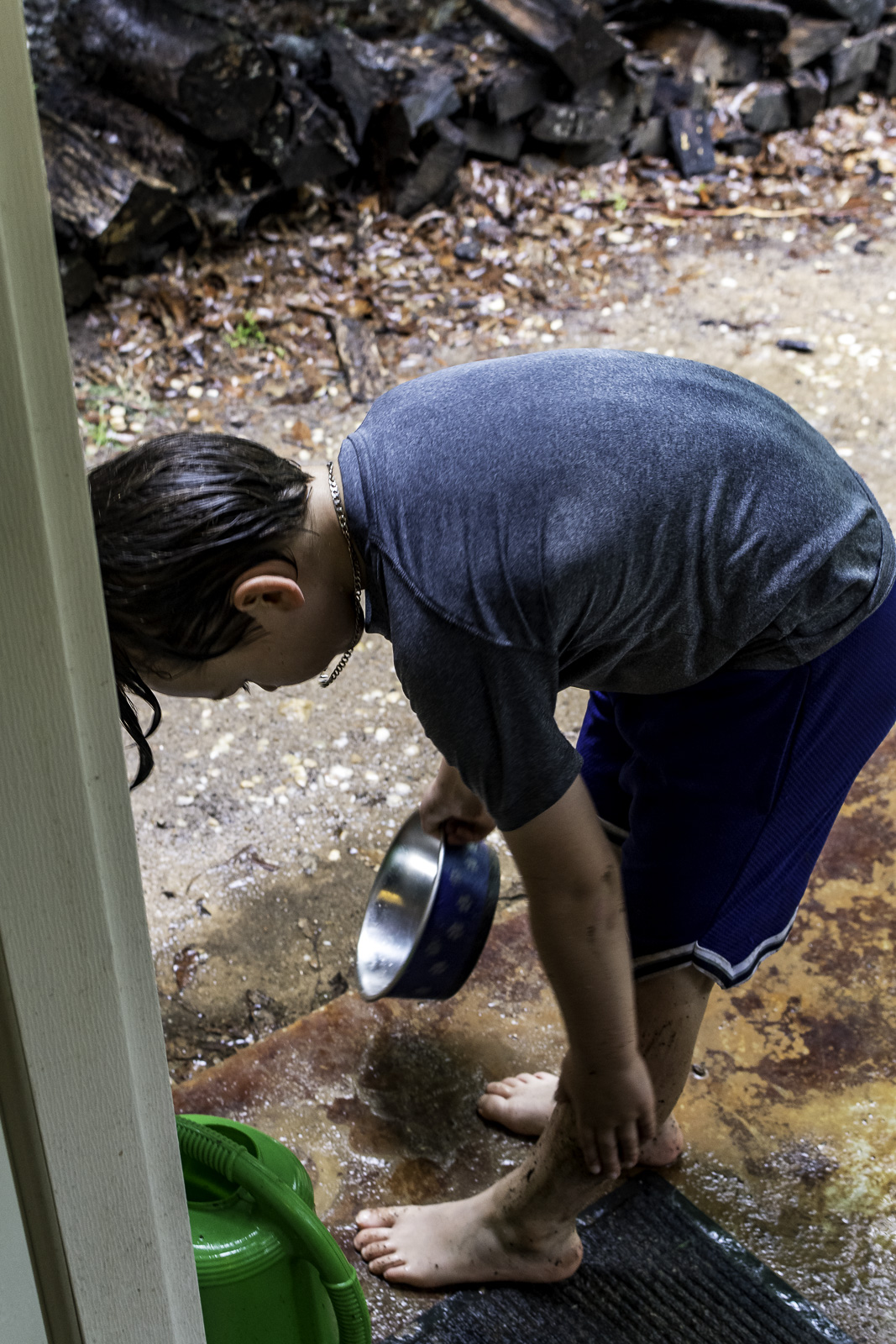
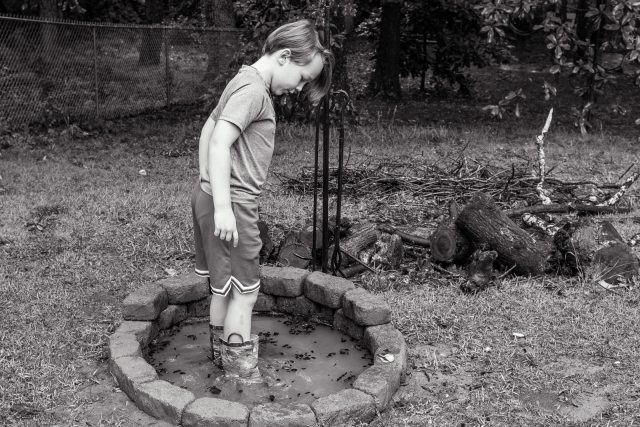
It rained all day today. K and I were concerned that it might turn out to be enough to threaten our basement again. Granted, I have filled all the termite treatment holes with hydraulic cement: those holes shouldn't let any more water into our basement, let alone the geysers and fountains that were gushing in during our last storm. And the crack by the fireplace? I drilled it out completely and patched it with more hydraulic cement.

So part of me was thinking, "Okay -- bring it on. Let's see if I've got you licked" (to employ a usage from Tom Sawyer that still tickles the Boy).

But most of me was just hoping that it didn't come to that. When the Boy and I headed out in the morning to see how much rain had fallen, things were looking bad but not dreadful.

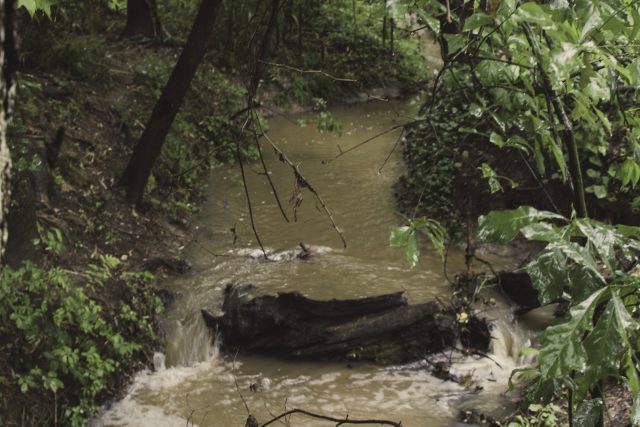
We went back out in the afternoon after more rain. We went ahead and crossed the creek at this point like usual: the water was only a few inches above our feet. I held the Boy's hand, and we ventured up a bit further. The rain continued, and by the time we made it back to this point, the water was waist-deep for the Boy. I held his hand firmly, and we made it across easily, but it was a lesson: "See how quickly the water can rise?" That's the epitome of flash-flooding.

Scare Politics

I noticed this particular meme this evening on social media:

I find it hard to imagine what kind of simplistic thinking could lead to something like this. Surely no one so naive as to believe that it's as simple as this meme suggests. To think that we could go from Trump-istan to this worst-case-scenario, utterly exaggerated vision of progressive ideas run amuck in one election cycle -- I just don't get it.

What I do get is the fear buttons this kind of meme pushes. The left has their own versions of these memes, of course. I could probably browse the tweets of friends who lean much further to the left that an avowed centrist (don't we all see ourselves as centrists? no -- we certainly don't) like me and find the equivalent: we're one step away from living in a real-life Handmaid's Tale. (Come to think of it, I believe there was a protest with women dressed as handmaids from the novel/movie/series.) Making decisions from fear is bad enough, but making them from a sense of fear that might very well have been intentionally manipulated -- that in itself is terrifying.

The Dog

Two things: how can a dog get that dirty in a matter of seconds? And how can it seem to disappear as soon as she's dry?

Day 64: Working, Ending, and Reading

Working and Ending

We’re nearing the end of the year — only a couple of weeks to go. These weeks promise to be anything but typical. For one thing, I’m giving assignments with the understanding, on both sides, that I will provide minimal feedback and that the grade depends more on effort than accuracy. That’s the district policy during our quarantine teaching. It might be the state policy. So some kids do their absolute best, like this analysis of chapter 24 of To Kill a Mockingbird:

Chapter 24 is important because it shows how the town of Maycomb isn’t as “Christian” or as “nice” as they claim to be. For example, Mrs. Farrow Mentions how they can educate them and try to make them Christians but till there will be, “no lady safe in her bed.” The antecedent ambiguity that Mrs. Farrow makes using “them” as in the African Americans shows a sense of judgment she has towards them. Not only that but when she mentions how much they are fighting a losing battle and women still can’t be safe shows the hierarchy these white people have put themselves in showing that no matter what an African American will never be better as a person of white ethnicity. Similarly, Merriweather states how there are some, “Misguided people” in the town who think they were “Doing right”, but all they did was “Stir [them] up.” This second case of antecedent ambiguity this time towards Atticus shows the real hypocrisy of Mrs. Merriweather. Mrs.Maudie backs that up with a remark showing how Mrs. Merrieweather doesn’t feel any ounce of remorse talking trash, but eating Atticus’ food. Showing how really bad Mrs. Merriweather actually is.

Other students don’t turn in anything. Despite calls to parents. Despite emails. Despite encouragement. Despite the constant reminder that this the only time they’ll have to pull in a handful of 100s (nine of them, in fact) for simply doing the work. Just putting forth the most minimal effort. It’s frustrating, not to mention tiring.

The Boy, though, gets no mercy. Just try to skip something, or not do his absolute best — K is on him to get everything done, and when she’s not, I am. Truth be told, though, she’s done the lion’s share of the work with him — probably something like 95% of the work with him even if I’m being generous with myself. I have spent most of that time in the basement, “grading” things, sending emails, planning things, meeting on Google Meet. She has kept him on his toes, kept his nose to the cliche grindstone, which means she’s been keeping her own to the grindstone as well.

I am usually keeping my own students’ noses to the cliche at this time of year, especially the English I students. They’ll soon be writing their letters to next year’s students, and I have to make sure their final impressions of the class will help them create the appropriate first impressions in next year’s classes. They’re usually finishing up Great Expectations or Lord of the Flies at this point in the year. They’re out of breath, academic legs aching, making the last mad dash for the finish, and I’m there cheering them on and behind them whipping them faster, mixing metaphors left and right. The letter is supposed to be completed in one class period. That’s what makes it so impressive to the students next year.

“How would you rate this letter’s organization?” I ask. They usually are moderately impressed.

“How would you rate this letter’s length?” I ask. They usually are moderately impressed.

“How would you rate this letter’s persuasiveness?” I ask. They usually are moderately impressed.

“Last year’s students wrote these letters in one class period. These are, therefore, first drafts.” I pause for effect. Everyone begins looking at each other. “Whose opinion of these letters has risen noticeably?” Every hand — every single one — goes up.

And this year? How can I make sure each student only spends the equivalent of one class period on her letter? In short, I can’t.

Not the end of the world, but frustrating.

Reading

E and I finished Twenty Thousand Leagues Under the Sea last night. After complaining about how he didn’t understand everything for the last couple of weeks, he changed his tune when I realized we wouldn’t find out what happened to Captain Nemo.

“Is there a sequel?”

“I think there is. Or at least he appears in another book,” I say.

“Can we read it?”

No — not now. Enough Jules Verne for now.

Our next book: The Adventures of Tom Sawyer. We begin with a history and culture lesson: I talk to the Boy about the n-word. It appears in the book. There’s no escaping it. He’ll encounter it in one way or another soon enough.

Then we begin reading. I’m hoping he’ll find it amusing. If he doesn’t… well, I guess we’ll have to try something else. But soon enough, he’s laughing:

The summer evenings were long. It was not dark, yet. Presently Tom checked his whistle. A stranger was before him—a boy a shade larger than himself. A new-comer of any age or either sex was an impressive curiosity in the poor little shabby village of St. Petersburg. This boy was well dressed, too—well dressed on a week-day. This was simply astounding. His cap was a dainty thing, his close-buttoned blue cloth roundabout was new and natty, and so were his pantaloons. He had shoes on—and it was only Friday. He even wore a necktie, a bright bit of ribbon. He had a citified air about him that ate into Tom’s vitals. The more Tom stared at the splendid marvel, the higher he turned up his nose at his finery and the shabbier and shabbier his own outfit seemed to him to grow. Neither boy spoke. If one moved, the other moved—but only sidewise, in a circle; they kept face to face and eye to eye all the time. Finally, Tom said:

“I can lick you!”

“I’d like to see you try it.”

“Well, I can do it.”

“No you can’t, either.”

“Yes I can.”

“No you can’t.”

“I can.”

“You can’t.”

“Can!”

“Can’t!”

The Boy is laughing so hard by the time we get here. We reenact the dialogue a number of times, each time to more uproarious laughter. I’m not sure what he finds more amusing: the idea of “whip” meaning “to beat up” or repetition of assertion and denial.

We continue:

An uncomfortable pause. Then Tom said:

“What’s your name?”

“’Tisn’t any of your business, maybe.”

“Well I ’low I’ll make it my business.”

“Well why don’t you?”

“If you say much, I will.”

“Much—much—much. There now.”

The whole “much-much-much” just about doubled him over. It’s what an eight-year-old might do, after all.

After his evening dental hygiene session (what a way to describe an eight-year-old boy brushing his teeth), we embark on chapter two, the most famous of all Twain’s passages: the whitewashing scene.

Tom gave up the brush with reluctance in his face, but alacrity in his heart. And while the late steamer Big Missouri worked and sweated in the sun, the retired artist sat on a barrel in the shade close by, dangled his legs, munched his apple, and planned the slaughter of more innocents. There was no lack of material; boys happened along every little while; they came to jeer, but remained to whitewash. By the time Ben was fagged out, Tom had traded the next chance to Billy Fisher for a kite, in good repair; and when he played out, Johnny Miller bought in for a dead rat and a string to swing it with—and so on, and so on, hour after hour. And when the middle of the afternoon came, from being a poor poverty-stricken boy in the morning, Tom was literally rolling in wealth. He had besides the things before mentioned, twelve marbles, part of a jews-harp, a piece of blue bottle-glass to look through, a spool cannon, a key that wouldn’t unlock anything, a fragment of chalk, a glass stopper of a decanter, a tin soldier, a couple of tadpoles, six fire-crackers, a kitten with only one eye, a brass door-knob, a dog-collar—but no dog—the handle of a knife, four pieces of orange-peel, and a dilapidated old window sash.

The idea of “a dead rat and a string to swing it with” was just terribly amusing for the Boy.

As he was drifting off to sleep, he remembered another favorite line — once I explained key vocabulary — and muttered it one last time: “would have bankrupted every boy in the village.”

Day 59: Morning Work Hooks the Companion

Morning Work

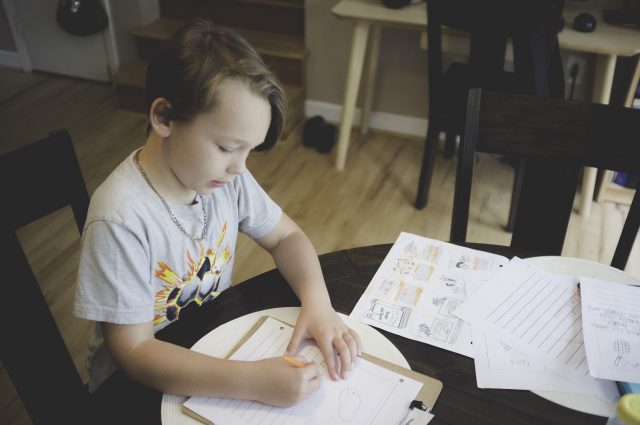
Since I didn’t have much to do for school this morning, I took over the first part of E’s homeschooling adventure. Our first task: to write the first chapter or two of his book about frogs and toads. Six chapters will constitute the final product:

  1. Introduction
  2. Toads
  3. Frogs
  4. Similarities
  5. Differences
  6. Dedication

As we read, I saw the difficulties and frustrations lying ahead: when it would come time to write the book, he might fuss, “Now we’ll have to go back through the text again. We have to read it again!!” So I taught him a little trick as we read that I use with my students.

“As you’re re-reading, highlight facts you might want to rewrite in your own writing. Then put a number beside it to indicate which chapter you’ll use it in. When it comes time to write, then, you’ll just have to look at all the numbers for the chapter you happen to be working on.”

There are two reasons for this: first, it will help him with his writing later. That’s the most obvious way it assists him. Less obvious but more importantly, it helps him develop skills as a critical, analytic reader. My own students often have difficulty reading because they’re not reading for a particular reason. Giving kids a purpose as they read gives them a goal and a metric to measure comprehension and success.

As we read, E grew more confident about the whole process; as he began writing the first chapters, he realized the sense behind it all. That might lead to a little less fussing as he continues to work on the piece.

Hook

Mr. F, our neighbor, is a keen fisherman. He’s got a boat, countless rods and reels, and multiple tackle boxes filled with endless lures and hooks. Heading out to the lake regularly, he often comes home with enough fish for his family and some neighbors: he’s given us many, many pounds of fish over the year. He’s the type of fisherman that, as regards fishing equipment, if he doesn’t have it, it probably doesn’t exist.

The Boy often goes over to help Mr. F. He’s something of a third grandfather to E, which makes him really like a second grandfather since Dziadek passed before E was a year old and E knows him only from pictures.

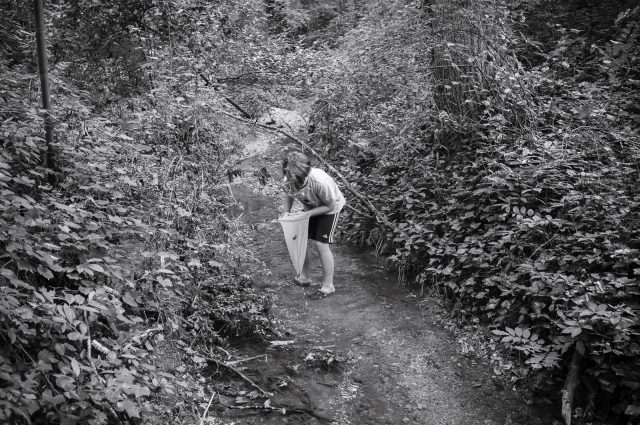
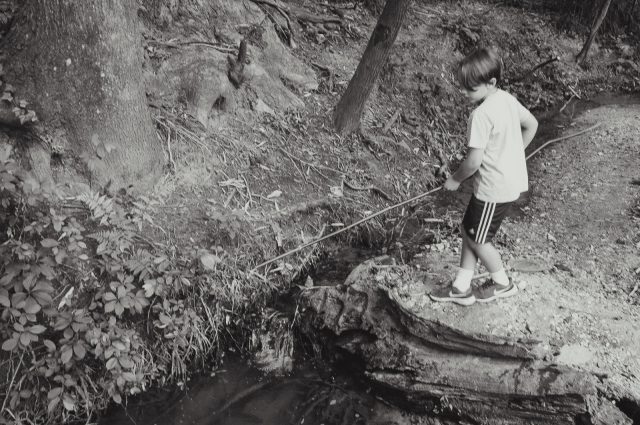
When E and I discovered in the creek that runs behind our house a couple of pools that are deep enough for larger minnows -- some looking to be three or more inches long, maybe even four inches long -- I commented that they’re almost big enough actually to use a hook and bait. Recalling the little minnows we caught in Lake Jocassee with just a line, a hook, and some bread, I suggested that we could use a bamboo cane and make a real, old-fashioned playin’-hooky-to-go-fishin’ cane fishing pole.

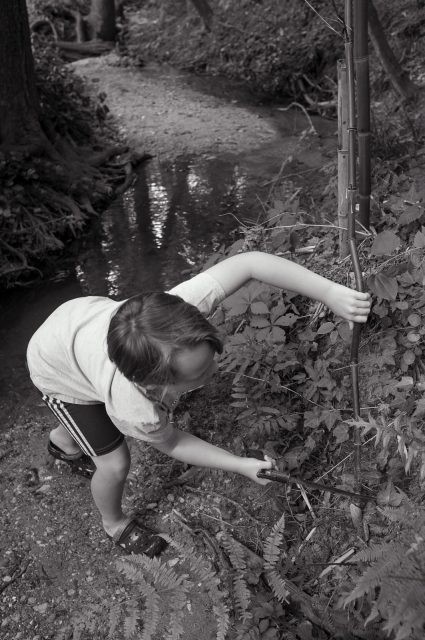
After we were both done with school, we headed down, saw and net in hand. “I still want to try to net some minnow,” he explained. We found an adequately small cane and cut it after a bit of unsuccessfully netting attempts.

“Now we just need the line and a hook,” the Boy said as we headed back, adding as a sad afterthought, “but we don’t have any.”

“Why not ask Mr. F?” I suggested.

“Oh yeah!”

Then the real question as far as I was concerned: with Mr. F not out, he would have to go knock on the neighbors’ door, and I decided it was something he was going to have to do by himself. Would he do it?

“Just go knock on their door,” I said after he protested that Mr. F wasn’t outside at that moment.

“What if Mrs. P answers the door?”

“Just tell her that you have a favor to ask of Mr. F.”

He paused in thought. “Okay.”

When he came back, the Girl had joined us and was snooping about to figure out what was up. I explained. “Oh.” No protests about how awfully cruel it would be to catch a minnow with a hook. “With a hook!? Jabbed in its mouth?!” I could just hear her indignantly and incredulously asking.

When the Boy headed down for some fishing, I suggested that L might want to go with him. “Don’t let her talk you into letting her have the first turn because she will try to bamboozle you,” I warned.

He headed down by himself, though. I thought for a while that I should go with him at least to memorialize the moment photographically. Then I thought better of it: he needs some independence, and since he didn’t even ask me (with the explanation of being scared or worried about this or that) to go with him, I stayed behind.

He came back up a few minutes later, a scowl on his face as he stomped up the hill.

“Guess what?” he began, not waiting for a response. “I had one or two good tries and then the hook got stuck. When I tried to pull it out, the hook came off!” He plopped in a chair. “Now I can’t fish at all today!”

“Sounds like we might need to go get our own hooks,” I suggested.

More incredulity: “At the store?!” E is the most worried about cornavirus in our family. I think he’s convinced, despite our efforts to explain everything, that one can just get it, that it just lurks in the air waiting for unsuspecting victims.

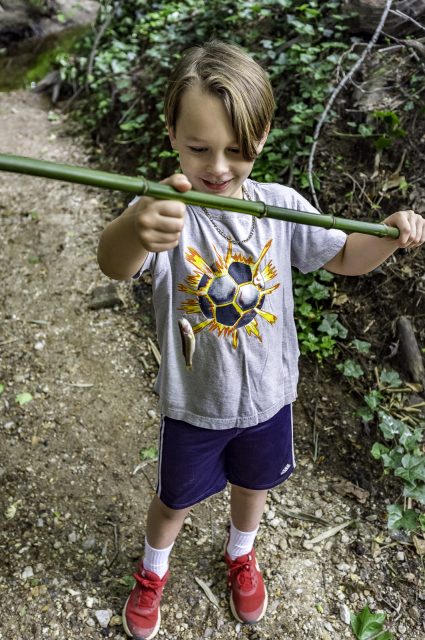
In the end, we didn't have to go get more hooks: the Boy remembered he had one small hook still on his fishing pole, so we cut it off and tied it onto the cane pole. We took some bread from a dinner roll we had, rolled it back into dough, and put it on the hook.

Soon enough, we had a minnow.

But our catch-and-release plan was thwarted by the difficulty of removing a hook from such a small fish. In the end, something terribly traumatic happened to the poor fish as we were removing the hook, and it went belly up immediately upon release.

The Companion

Clover has become a companion dog. She doesn’t wander around, looking to find what she can get into. She doesn’t sneak off to try to get on the couch. She doesn’t (always) go off searching for a toy. She plops down next to someone and just relaxes. When we’re outside and L is, for instance, in our fort reading and Papa is on the deck listening to music (he’s become a real Spotify fiend), the pup moves from person to person, spending a little time by my side, a little time by Papa’s side, and a little time with L.

Another sign that she’s no longer a puppy.

Then she goes over to the fence just to antagonize the neighbors’ dog, so many not so much...

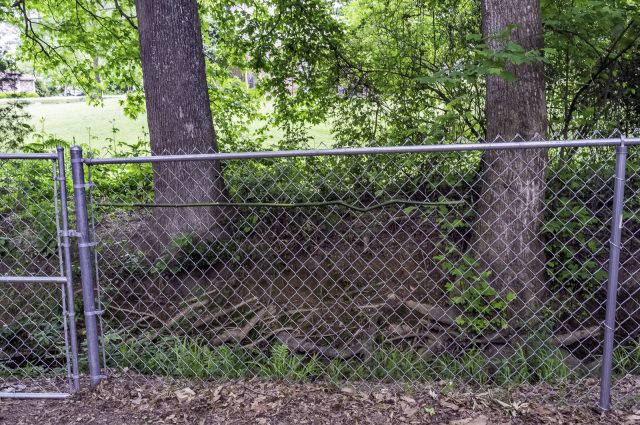
Convenient cane pole storage system

Day 57: Math, Mowing, Painting, and the Missionary Society

Math

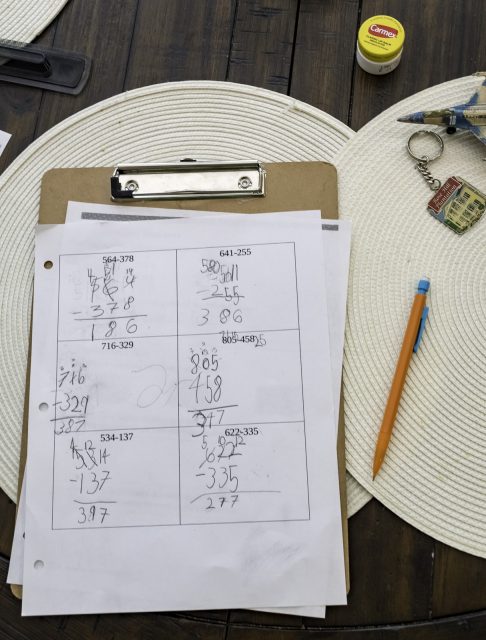
The Boy was having trouble this morning with three-digit subtraction, things like 352-178. He was thinking a little too much, mixing prior knowledge with current practice. For example, in the number above, he would know he had to borrow a 10 from the 10s place in order to subtract 8 properly, but then that would leave him with 4. Instead of writing 4 above the crossed-out 5, he wrote 40. Which is technically correct. But the be was subtracting 7 from 40 and coming up with 33, and before long, he was subtracting one three-digit number from another three-digit number and coming up with a six-digit answer.

I remember the frustration of borrowing numbers in subtraction. I, too, experienced it in second grade: I just couldn't figure out how those numbers were shifting around, 5 becoming 4 so I could subtract something from the 1s place. Everyone tried explaining it to me: my teacher, mom, dad, the girl who babysat me from time to time. It just didn't make any sense to me no matter how often and how many different ways it was explained.

So I understood the Boy's frustration this morning. I sat with him a while, taking a break from my own work, and tried to help him through it.

"Yes, but Daddy, that's the 10s place, so it's not just 4, it's 40."

"Technically, you're correct, but..."

"What do you mean 'technically'? What does that even mean?!"

It was another moment that I found myself in awe of elementary school teachers. I don't teach many new skills: I mainly take existing skills and improve them. The kids can write when they come to me; I just help them write better. They can read when they come to me; I just give them tricks for comprehending more challenging texts: things like "make sure you keep track of your pronouns' antecedents -- you need to know who 'he' is when the author uses that pronoun," or "determine the part of speech of that unknown word -- that will help you a lot in inferring a possible meaning." But just taking a kid who doesn't know at all how to read and turning her into a reader? I haven't got the slightest clue how to do that. I know it's just a matter of training: I minored in education in college, but in secondary education -- not primary. An entirely different field of study.

Still, having experienced that frustration myself, I had a certain patience and understanding of his frustration.

This is why some feel that teachers who teach subjects they were always good at isn't as effective as alternatives. We -- for I was always good at literature and decent at writing -- know how to do these skills seemingly instinctively. It's hard to teach someone how to do something that you can do, relative to the struggling student, without thinking. It's better to teach something that you yourself have struggled with, goes the thinking. But the problem with that: where's the passion? I don't teach English just because I want to teach and happened to choose English. I teach it because I myself enjoy writing; I teach it because I love reading. I teach it because I have a certain excitement about certain books, certain poems, even certain reading skills that I love to share with students. I struggled with math, and the only passion I feel about it is a certain kind of revulsion.

Mowing and Painting

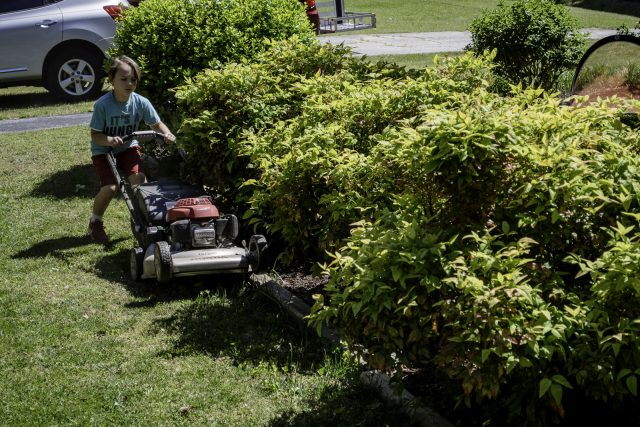
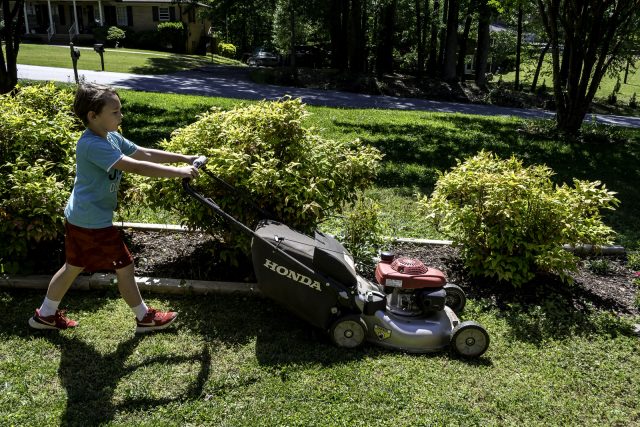
The Boy loves working in the yard. We bought a battery-powered weed eater just so he could help (which is now out of trim line, which we don't have). Today, after scolding me a little bit about still not having the right line, he asked if he could help mow.

When we first started doing this, I would let him do the little flat, straight portion in the front yard just between the flower bed and the crape myrtles. Today, I let him tackle some of the more challenging areas.

"Make sure you keep the line of uncut grass just on the inside edge of your outside wheel," I explained, demonstrating just what I meant.

He tried, poor fellow, but he just couldn't stop drifting inward, leaving slivers of uncut grass with every row.

Still, I can't help but be pleased that he's still willing to help. At some point, the job will be his entirely.

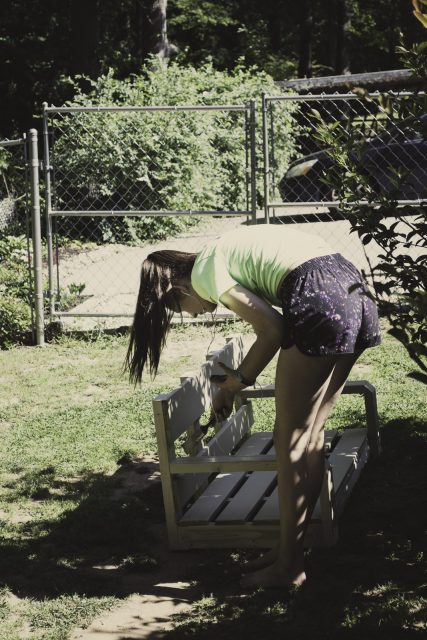
The Girl finished up the afternoon with a little more painting: the swing I'd started Saturday for K's Mother's Day gift is nearing completion.

The Missionary Society Meeting

It's always a chapter that confuses students: the 24th chapter in To Kill a Mockingbird feels like someone took a chapter out of a completely different novel, changed a few names to match a few characters' names in Mockingbird, and just slipped it into the stream of the story. The only connection it seems to have with the rest of the book is the news of the death of Tom Robinson toward the end of the chapter. I contend that in many ways it's one of the most important chapters in the book as it fully develops one of the book's major themes: the hypocrisy of Southern white Christians.

Most of the chapter centers around Aunt Alexandra's hosting the Maycomb Alabama Methodist Episcopal Church South Missionary Society meeting. Scout attends as "a part of [Alexandra's] campaign to teach [Scout] to be a lady." Poor Scout is lost from the beginning: she asks about what they studied and gets confused immediately:

“Oh child, those poor Mrunas,” [Mrs. Merriweather] said, and was off. Few other questions would be necessary.

Mrs. Merriweather’s large brown eyes always filled with tears when she considered the oppressed. “Living in that jungle with nobody but J. Grimes Everett,” she said. “Not a white person’ll go near ‘em but that saintly J. Grimes Everett.”

Mrs. Merriweather played her voice like an organ; every word she said received its full measure: “The poverty... the darkness... the immorality—nobody but J. Grimes Everett knows. You know, when the church gave me that trip to the camp grounds J. Grimes Everett said to me—”

“Was he there, ma’am? I thought—”

“Home on leave. J. Grimes Everett said to me, he said, ‘Mrs. Merriweather, you have no conception, no conception of what we are fighting over there.’ That’s what he said to me.”

“Yes ma’am.”

“I said to him, ‘Mr. Everett,’ I said, ‘the ladies of the Maycomb Alabama Methodist Episcopal Church South are behind you one hundred percent.’ That’s what I said to him. And you know, right then and there I made a pledge in my heart. I said to myself, when I go home I’m going to give a course on the Mrunas and bring J. Grimes Everett’s message to Maycomb and that’s just what I’m doing.”

A skilled reader with a moderate amount of background knowledge immediately understands: this J. Grimes Everett is a missionary to the Mrunas, who, in turn, are clearly an African tribe ("Not a white person’ll go near ‘em but that saintly J. Grimes Everett").

The reason the author includes the Mrunas is clear only toward the end of the missionary society meeting, when Mrs. Merriweather begins talking about Atticus's decision to represent Tom:

Mrs. Merriweather nodded wisely. Her voice soared over the clink of coffee cups and the soft bovine sounds of the ladies munching their dainties. “Gertrude,” she said, “I tell you there are some good but misguided people in this town. Good, but misguided. Folks in this town who think they’re doing right, I mean. Now far be it from me to say who, but some of ‘em in this town thought they were doing the right thing a while back, but all they did was stir ’em up. That’s all they did. Might’ve looked like the right thing to do at the time, I’m sure I don’t know, I’m not read in that field, but sulky... dissatisfied... I tell you if my Sophy’d kept it up another day I’d have let her go. It’s never entered that wool of hers that the only reason I keep her is because this depression’s on and she needs her dollar and a quarter every week she can get it.”

“His food doesn’t stick going down, does it?”

Miss Maudie said it. Two tight lines had appeared at the corners of her mouth. She had been sitting silently beside me, her coffee cup balanced on one knee. I had lost the thread of conversation long ago, when they quit talking about Tom Robinson’s wife, and had contented myself with thinking of Finch’s Landing and the river. Aunt Alexandra had got it backwards: the business part of the meeting was blood-curdling, the social hour was dreary.

“Maudie, I’m sure I don’t know what you mean,” said Mrs. Merriweather.

“I’m sure you do,” Miss Maudie said shortly.

Yet this is where students really get lost. In typical Southern gentile fashion, Mrs. Merriweather won't deign to gossip about anyone -- how uncivilized -- so she simply makes talks about Atticus in the third-person plural. And everyone in the room knows exactly who she's talking about -- everyone but Scout. And our young readers.

Today, my English I students started the adventure of figuring out this marvelous chapter. I always read the relevant passage aloud in class. It's one of the most enjoyable things I do all year. I lay on the Southern accent, dropping final rs ("squalor" becomes "squala") and altering the cadence and tone of my reading. How to do that when in lock-down? Simple: record it. My favorite part -- that passage above.

Day 48: Scarlet Projects

This morning I had a little epiphany that I should have had months ago: "I'll bet there are lots of audiobooks on Spotify." I know -- an obvious thought I should have had long ago, but I am sometimes a little slow on the up-take. I did a quick search and discovered that almost any classic one could imagine is there. Shouldn't have been a surprise.

A month or so ago, I'd pulled from the bookshelf a novel I've been wanting on and off to re-read since college, The Scarlet Letter. I hadn't really liked it a lot then, and I liked it even less in high school, but I reasoned that, being twenty-five years older than when I'd last read it, I might see something more in it.

For one thing, it's been a different read because I finally made it through the opening section, "The Custom House." When we read it in college, we were supposed to read that seemingly disconnected introduction but I didn't. Today, I listened to it while I worked on our broken smoke, cleaning off the base blocks before screwing down the barrel that serves as the body of the smoker and then covering all the base in concrete. The job took about an hour and a half because I spent some time trying to pry off the leaking quick-connector on the hose before mixing the concrete, to no avail; the intro itself took considerably longer to complete.

And what of "The Custom House"? It's a fictionalized attempt at making the story seem authentic by making it something of a found-footage type novel (mixing media there, I know). Was that novel (no pun in intended)? I really don't know.

When the novel began, I was back in familiar territory. I'd initially forgotten about that opening, with the rose outside the jail door, but once that portion began, it was like hearing a long-forgotten-but-once-loved song again after twenty years:

[O]n one side of the portal, and rooted almost at the threshold, was a wild rose-bush, covered, in this month of June, with its delicate gems, which might be imagined to offer their fragrance and fragile beauty to the prisoner as he went in, and to the condemned criminal as he came forth to his doom, in token that the deep heart of Nature could pity and be kind to him.

This rose-bush, by a strange chance, has been kept alive in history; but whether it had merely survived out of the stern old wilderness, so long after the fall of the gigantic pines and oaks that originally overshadowed it,—or whether, as there is fair authority for believing, it had sprung up under the footsteps of the sainted Ann Hutchinson, as she entered the prison-door,—we shall not take upon us to determine. Finding it so directly on the threshold of our narrative, which is now about to[53] issue from that inauspicious portal, we could hardly do otherwise than pluck one of its flowers, and present it to the reader. It may serve, let us hope, to symbolize some sweet moral blossom, that may be found along the track, or relieve the darkening close of a tale of human frailty and sorrow.

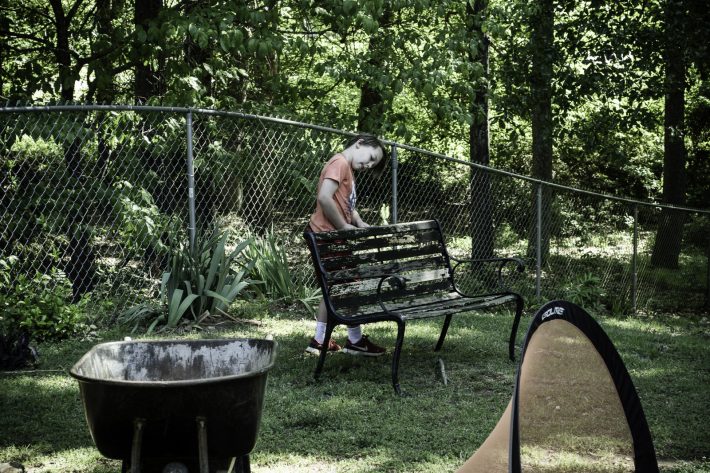
While I was working on the smoker, the Boy was working to remove the last bit of flaking paint from the bench we brought from Nana's and Papa's to use by our firepit.

I went inside to get the drill and impact driver and by the time I came back out, he'd disappeared.

"It's too hard!" he exclaimed. I think he understood that I expected him to get all the paint off.

By the time I was ready to work on the next project of the day, the novel was introducing its heroine, Hester Prynne.

The young woman was tall, with a figure of perfect elegance on a large scale. She had dark and abundant hair, so glossy that it threw off the sunshine with a gleam, and a face which, besides being beautiful from regularity of feature and richness of complexion, had the impressiveness belonging to a marked brow and deep black eyes. She was lady-like, too, after the manner of the feminine gentility of those days; characterized by a certain state and dignity, rather than by the delicate, evanescent, and indescribable grace, which is now recognized as its indication. And never had Hester Prynne appeared more lady-like, in the antique interpretation of the term, than as she issued from the prison. Those who had before known her, and had expected to behold her dimmed and obscured by a disastrous cloud, were astonished, and even startled, to perceive how her beauty shone out, and made a halo of the misfortune and ignominy in which she was enveloped. It may be true, that, to a sensitive observer, there was something exquisitely painful in it. Her attire, which, indeed, she had wrought for the occasion, in prison, and had modelled much after her own fancy, seemed to express the attitude of her spirit, the desperate recklessness of her mood, by its wild and picturesque peculiarity. But the point which drew all eyes, and, as it were, transfigured the wearer,—so that both men and women, who had been familiarly acquainted with Hester Prynne, were now impressed as if they beheld her for the first time,—was that Scarlet Letter, so fantastically embroidered and illuminated upon her bosom. It had the effect of a spell, taking her out of the ordinary relations with humanity, and enclosing her in a sphere by herself.

The scarlet letter is a double symbol: it is a symbol to the characters in the novel of Hester's sin and depravity as well as a symbol for Hester herself of her resistance. For readers, it's both these things, but it also represents the hypocrisy of Puritans, among other things.

At this point, I'm about halfway through the novel, though completely through the day's projects (as is L). More thoughts coming later, I'm sure.