Bridge
fun in threes, sometimes fours
polska
My always obsession...
Today was the last full day K and L will be here. Tomorrow afternoon we head to K's brother's house for a grill and a short nap before taking the girls to the airport at the ungodly hour of 4:00 am.


Today, we went to Spytkowice to visit with a few people we hadn't seen at all or had seen only shortly.
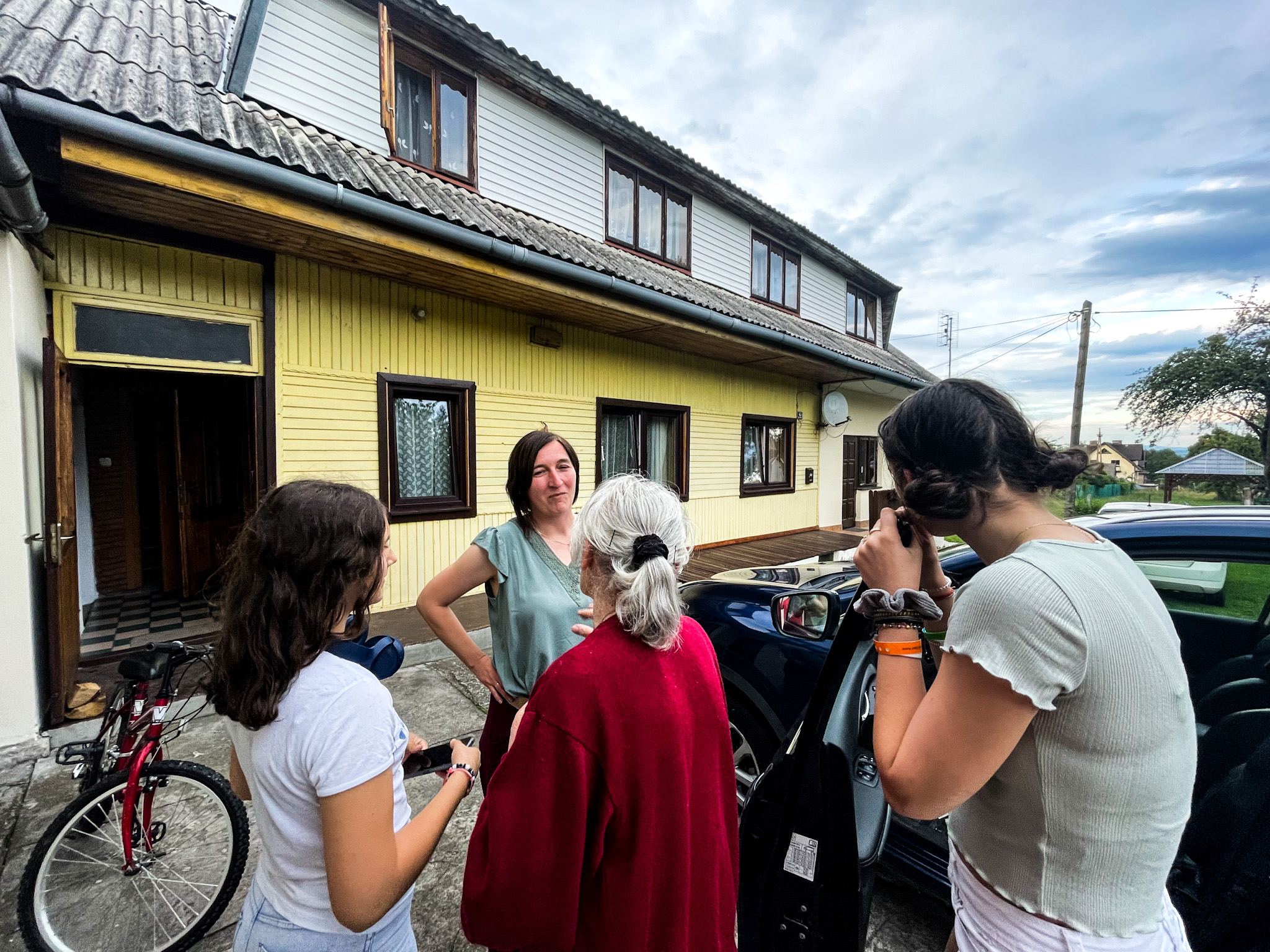
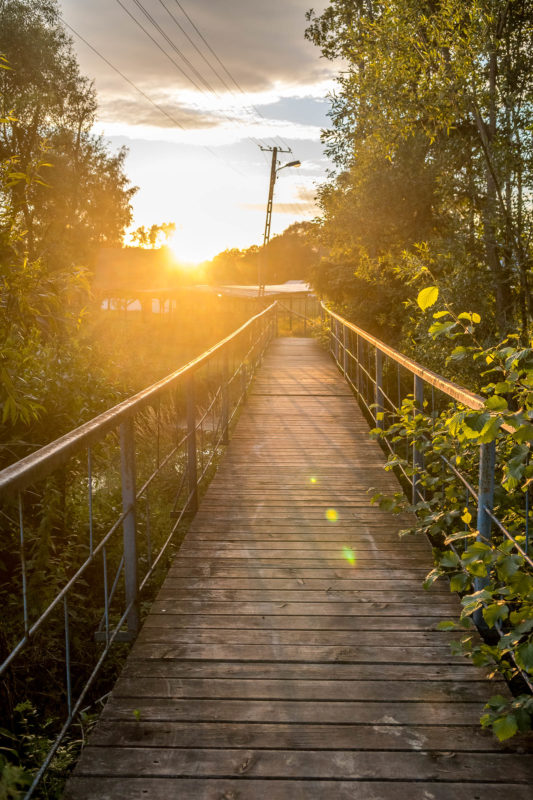
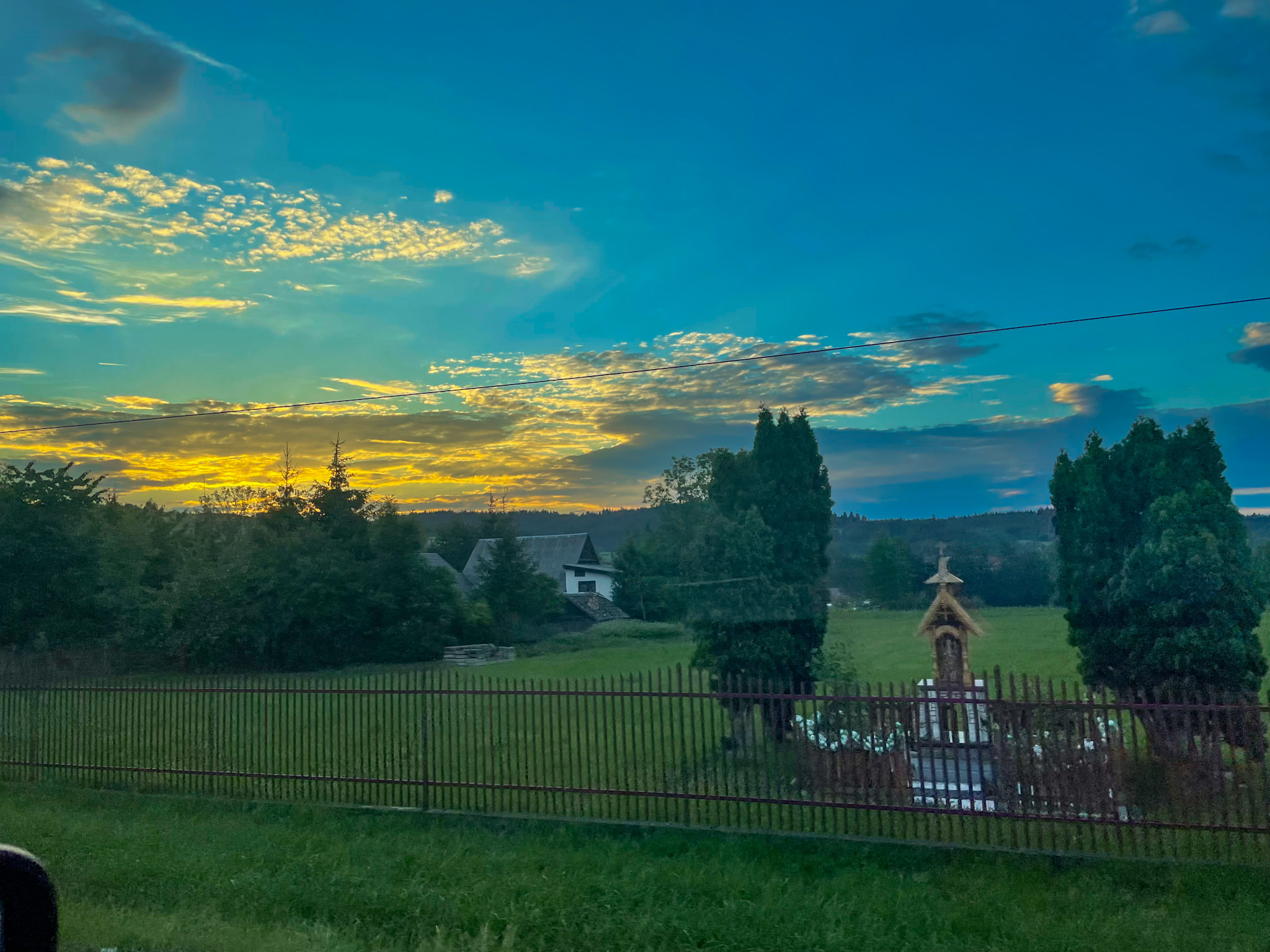
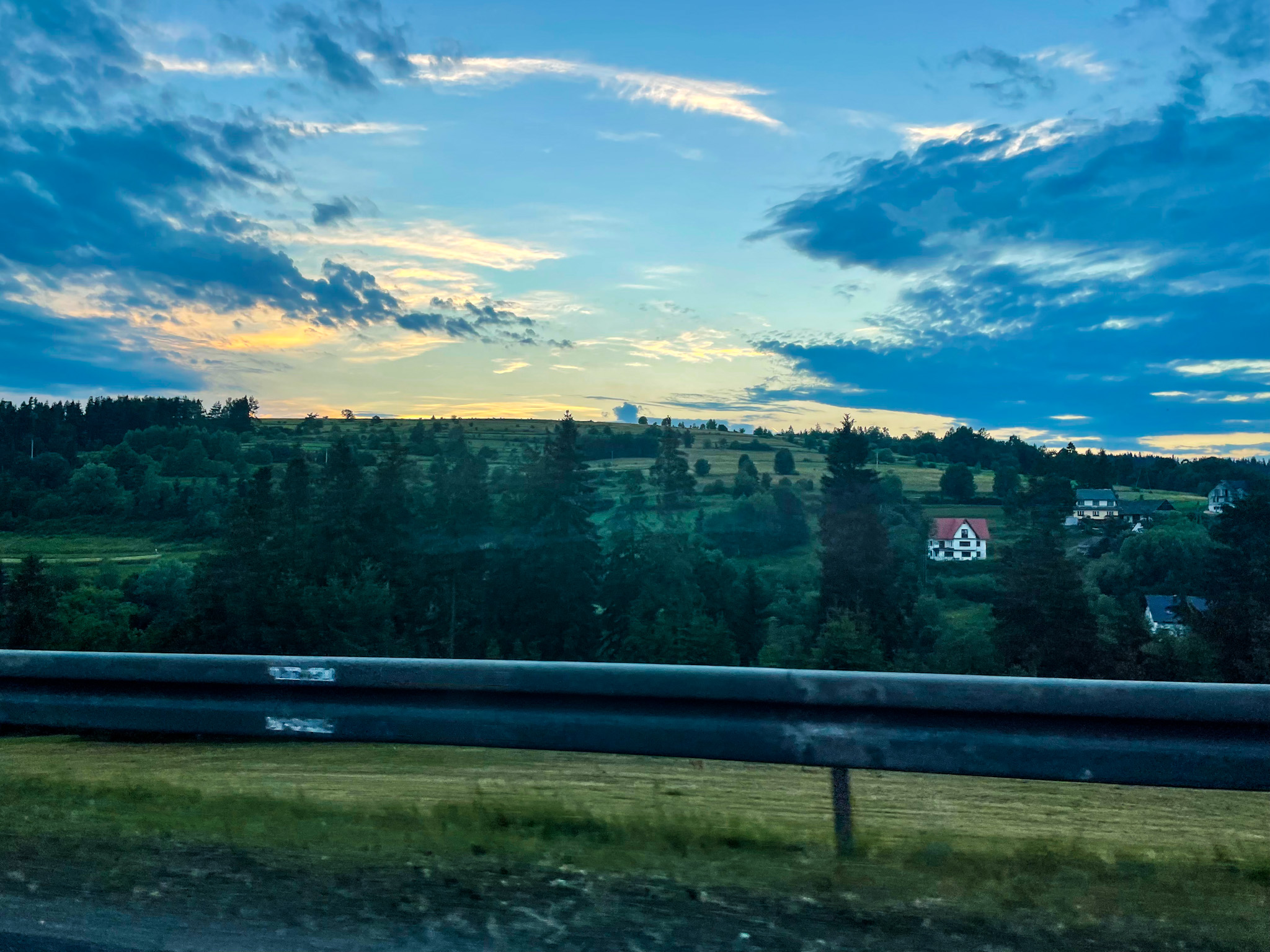
And of course, there was the lovely drive home.
But the highlight of the day came at the start of the day, so to speak -- before taking Babcia out for a final lunch, we had a short photo session.
The Boy took a picture.

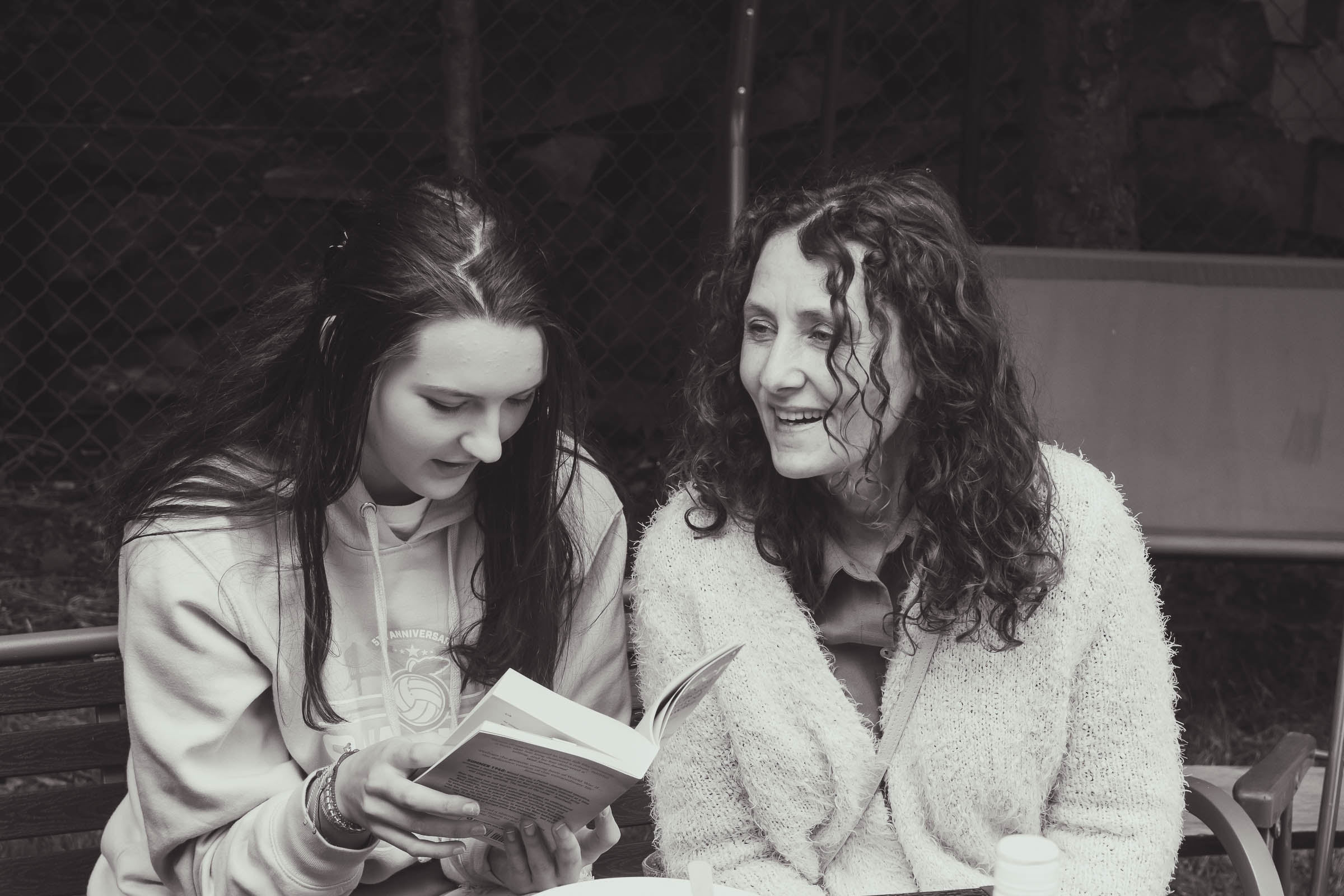
I took a picture of the three generations of ladies.

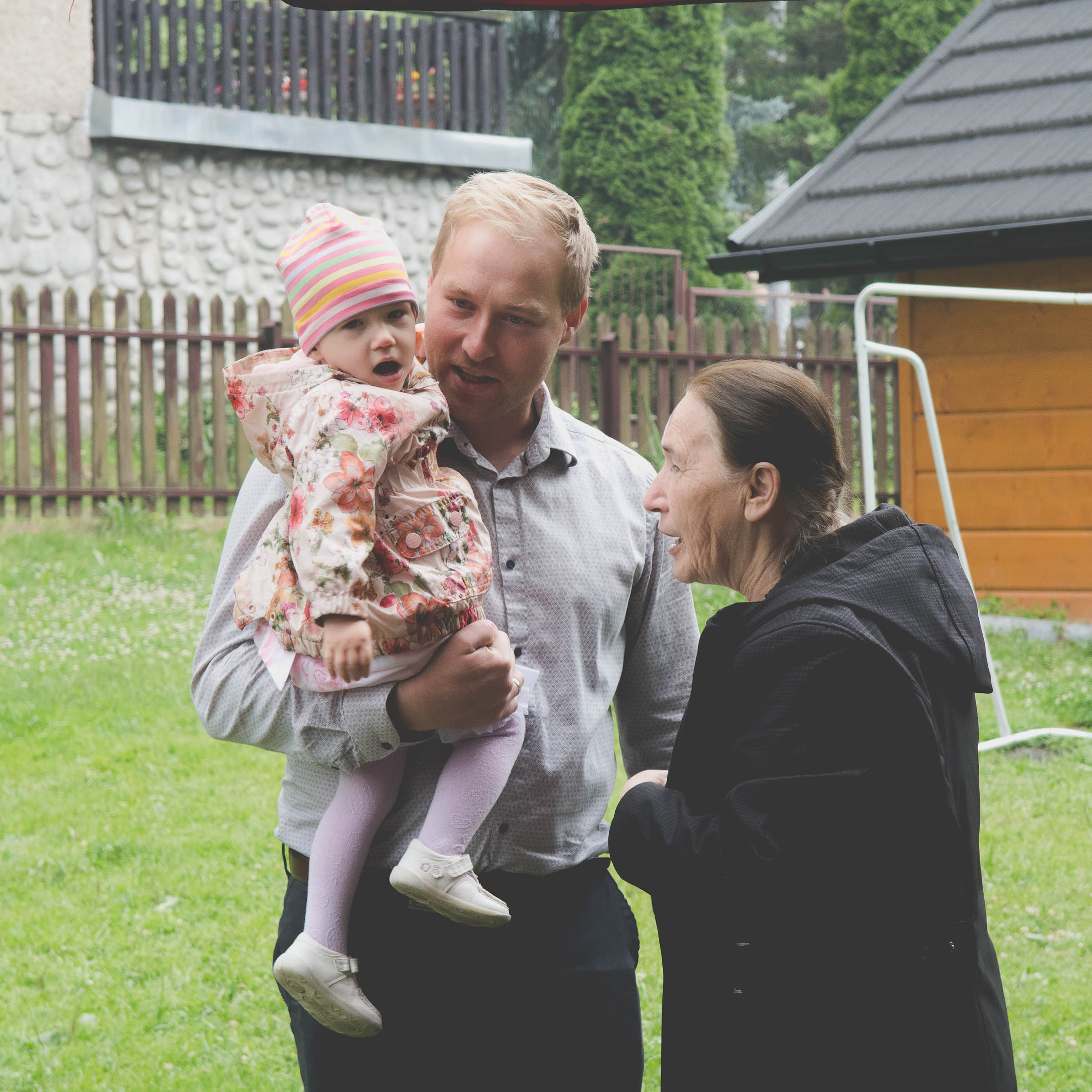
But the picture of the day, in some ways the picture of the whole trip thus far, was a quick, informal portrait session with Babcia.

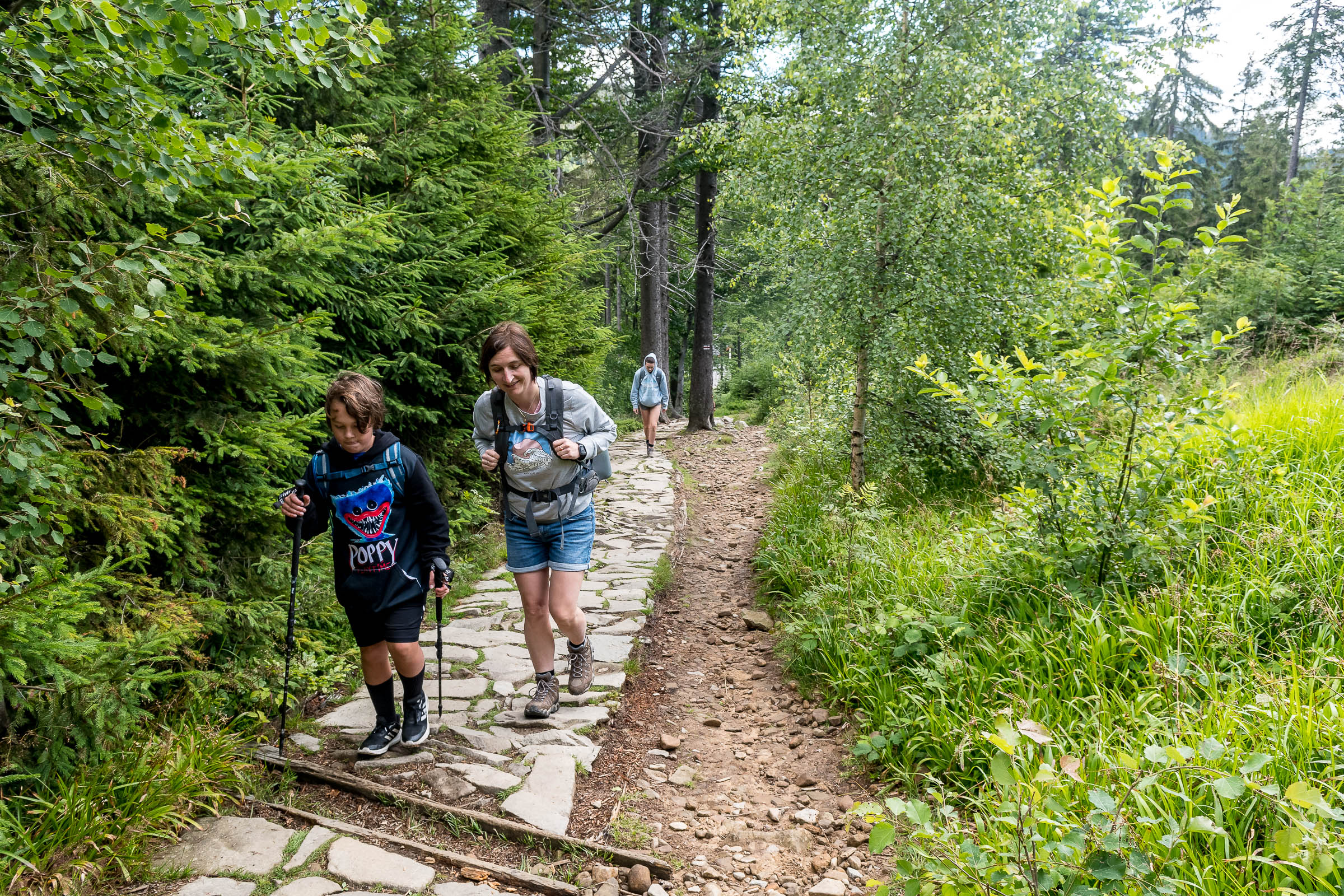
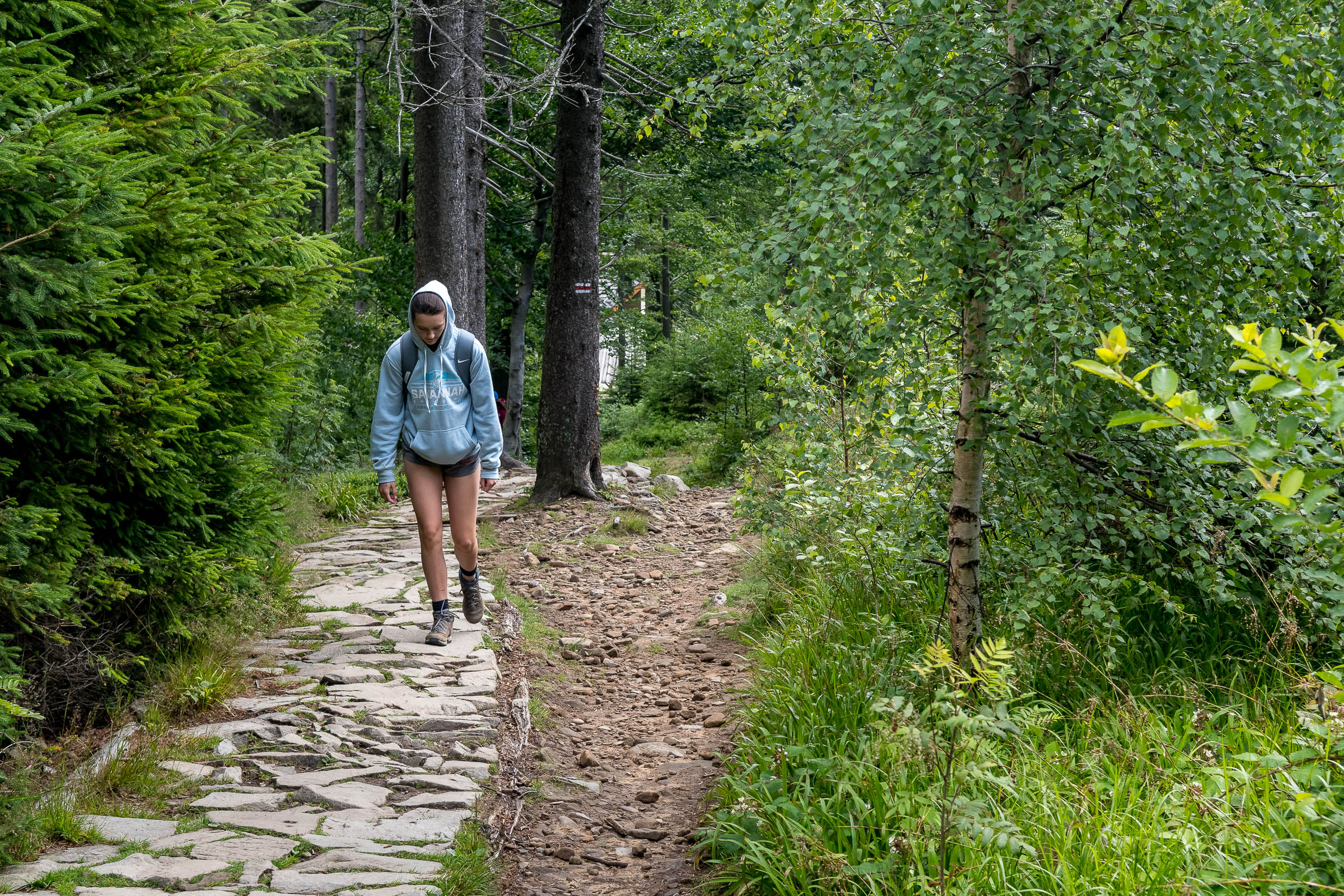
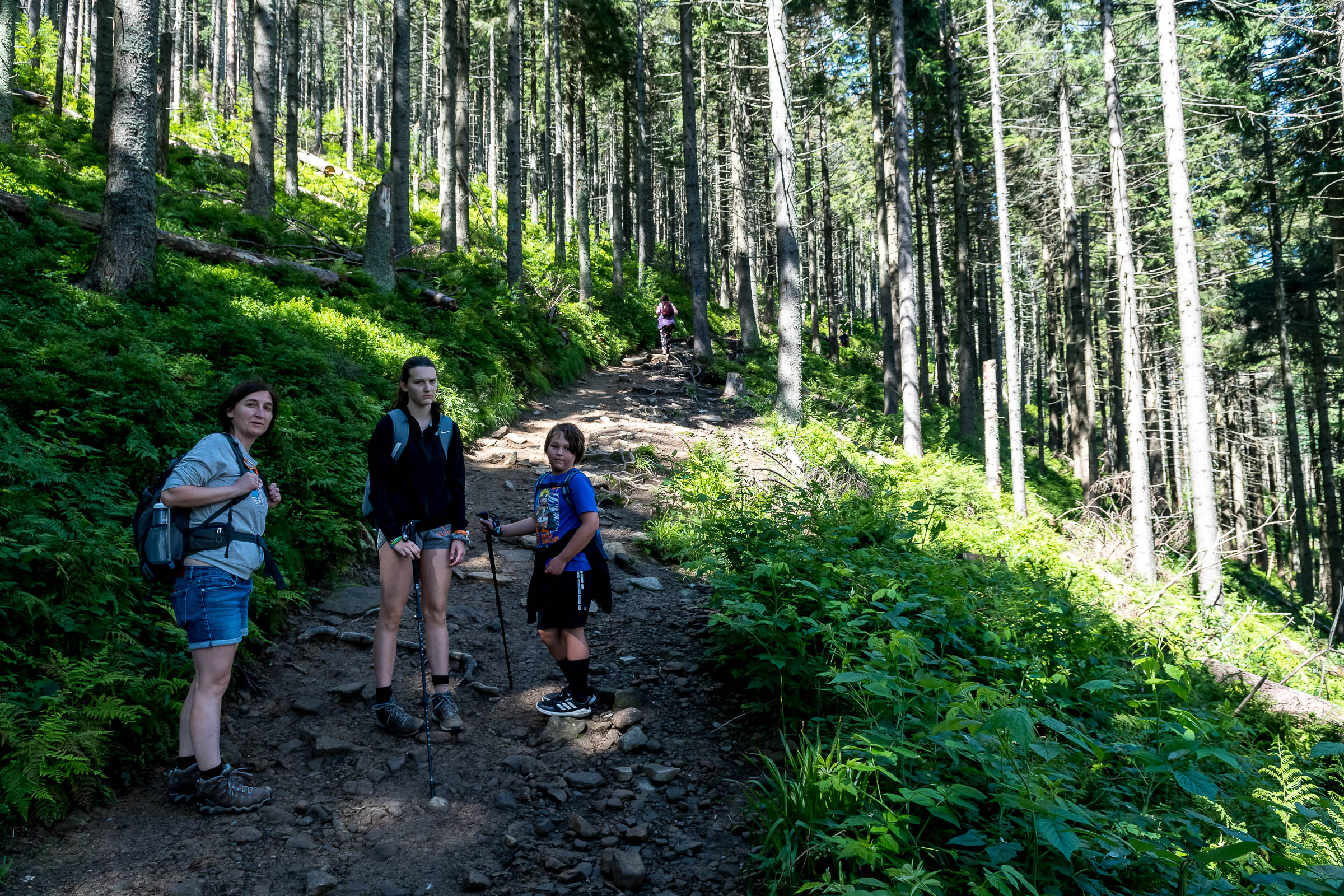
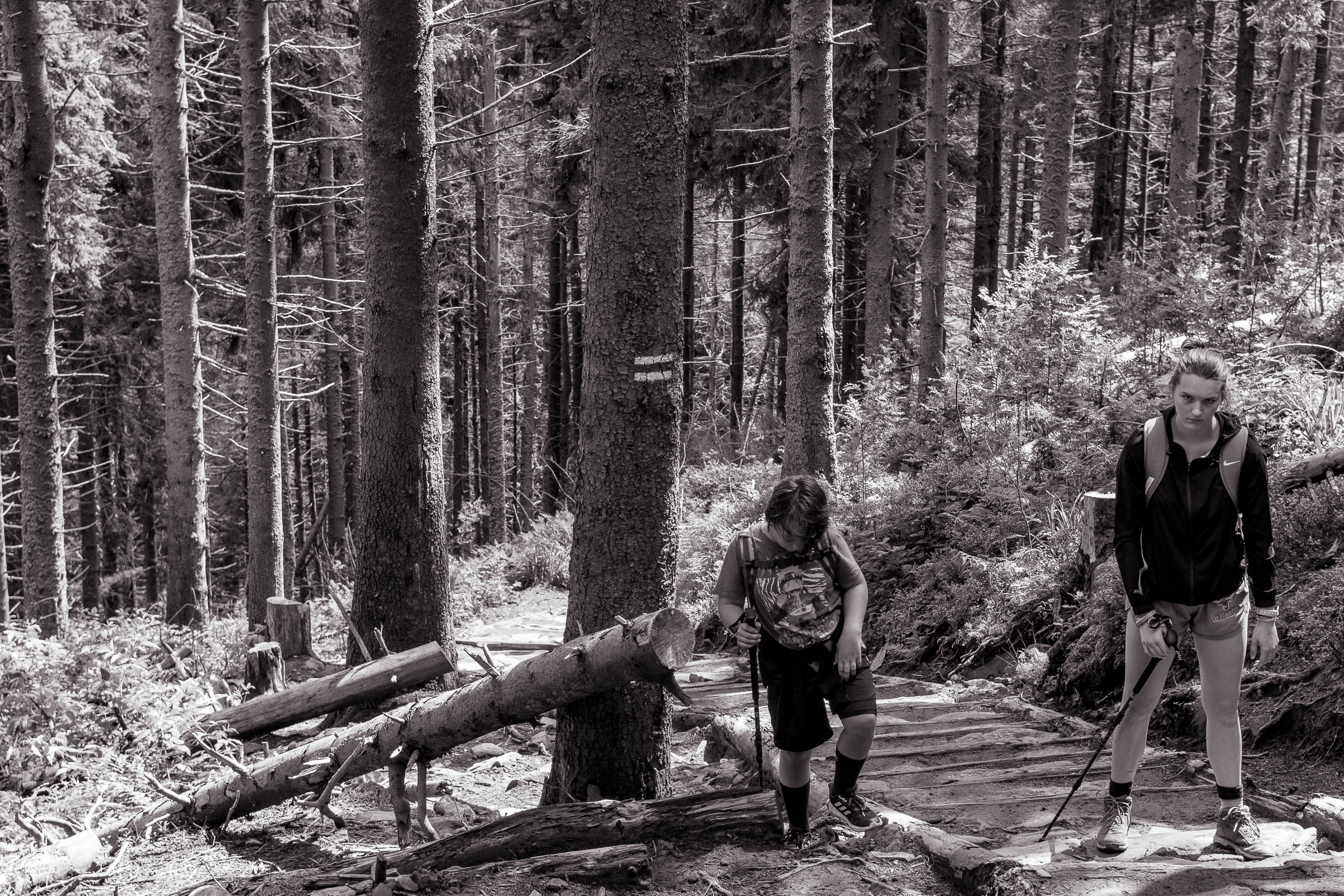
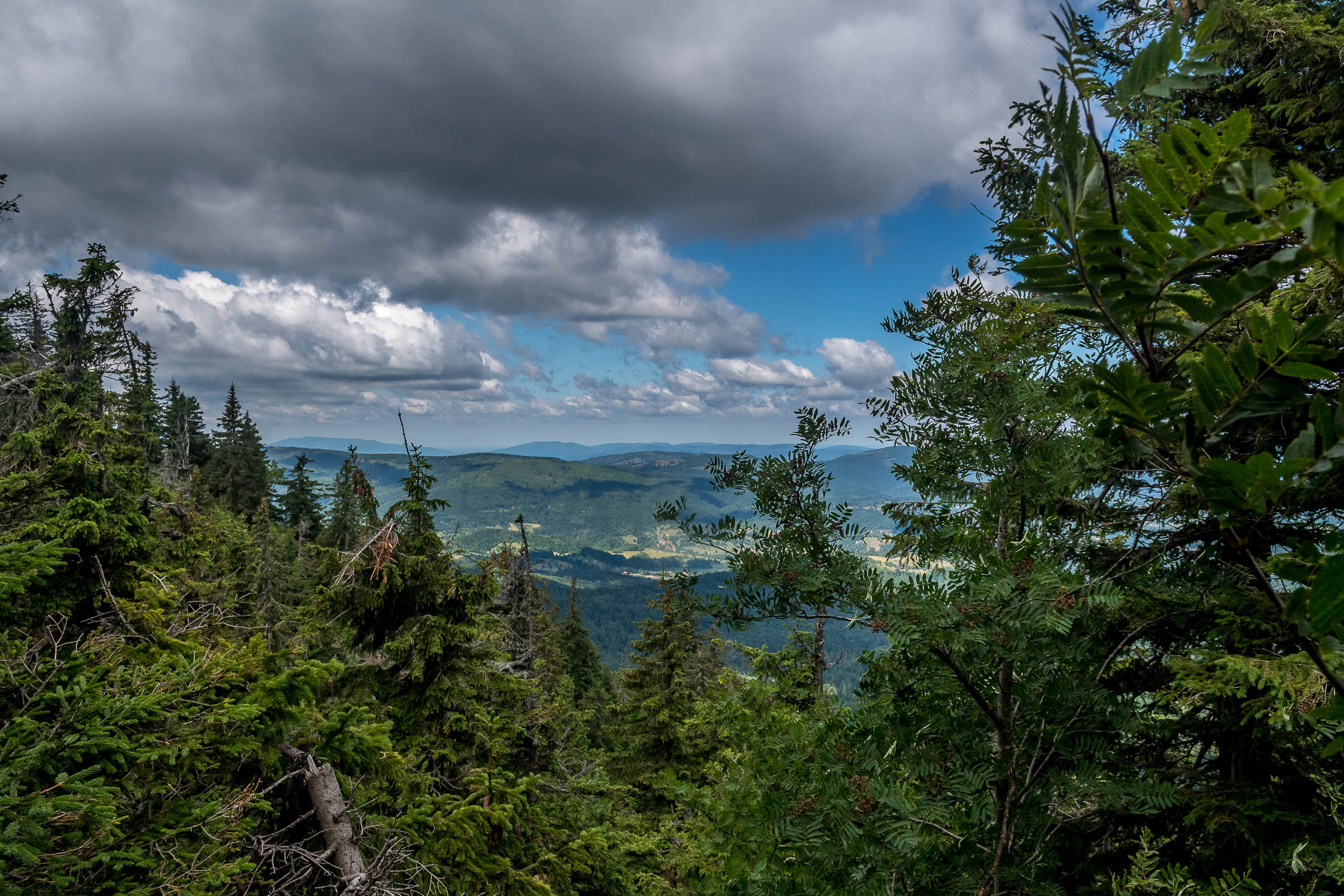
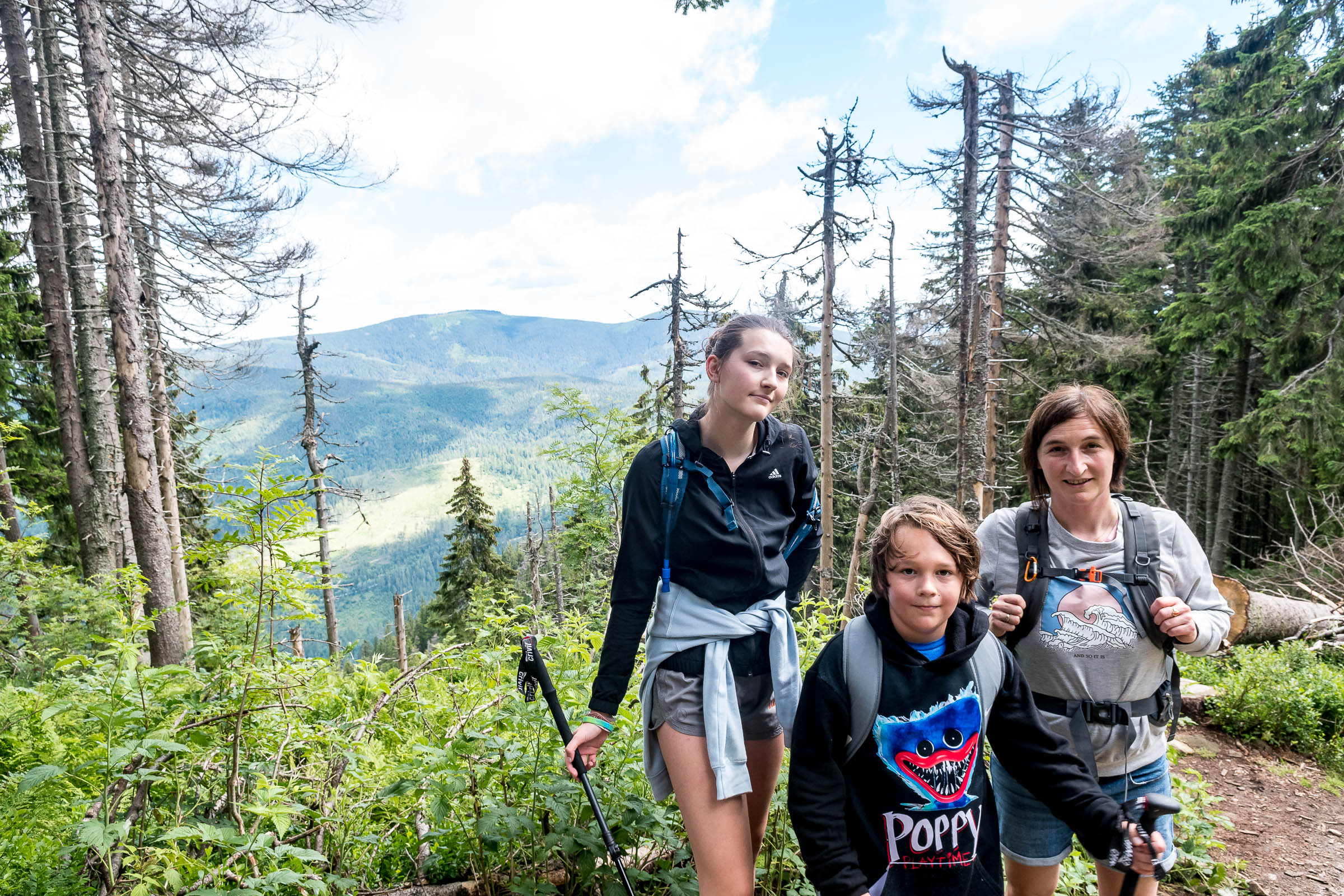
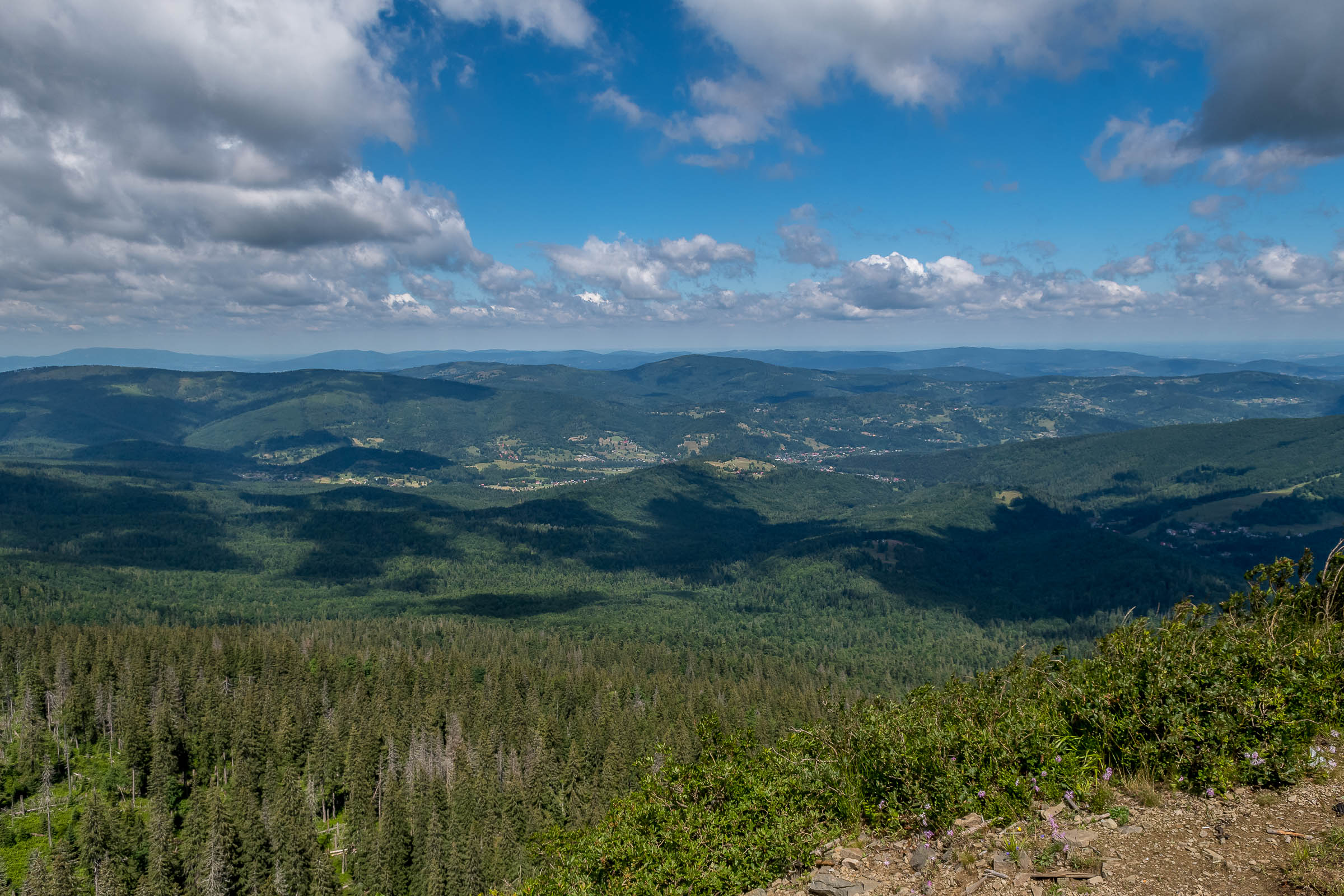
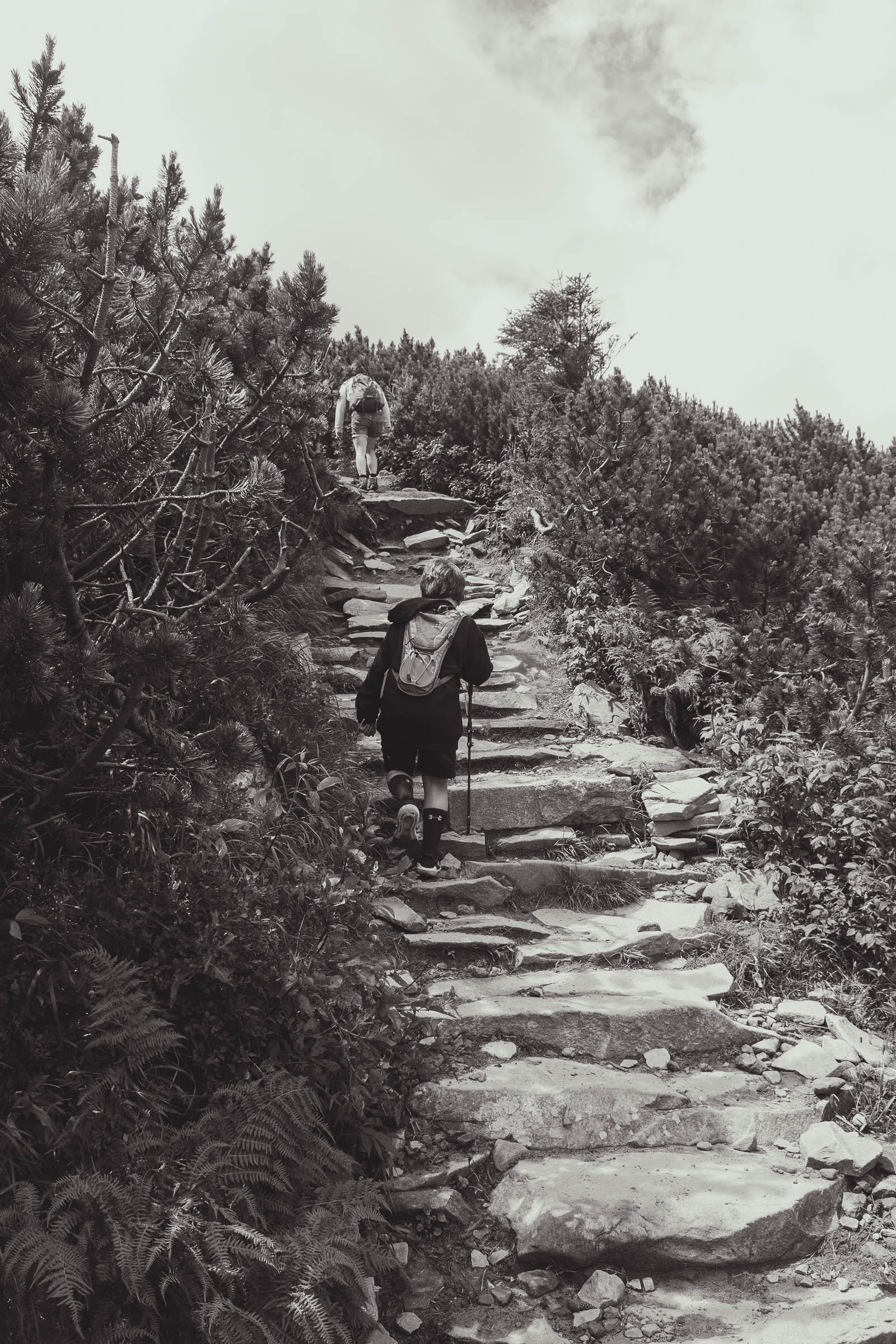
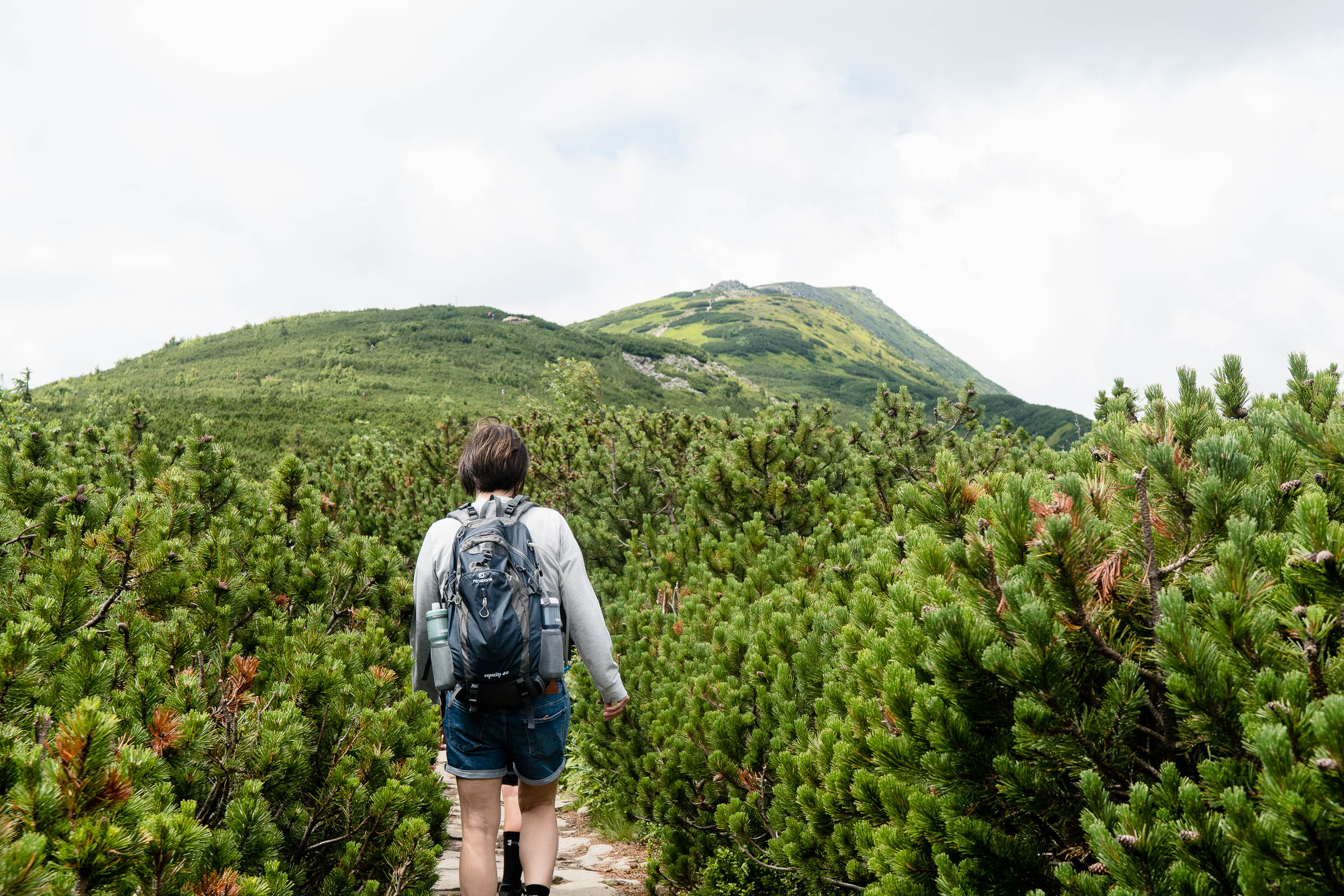
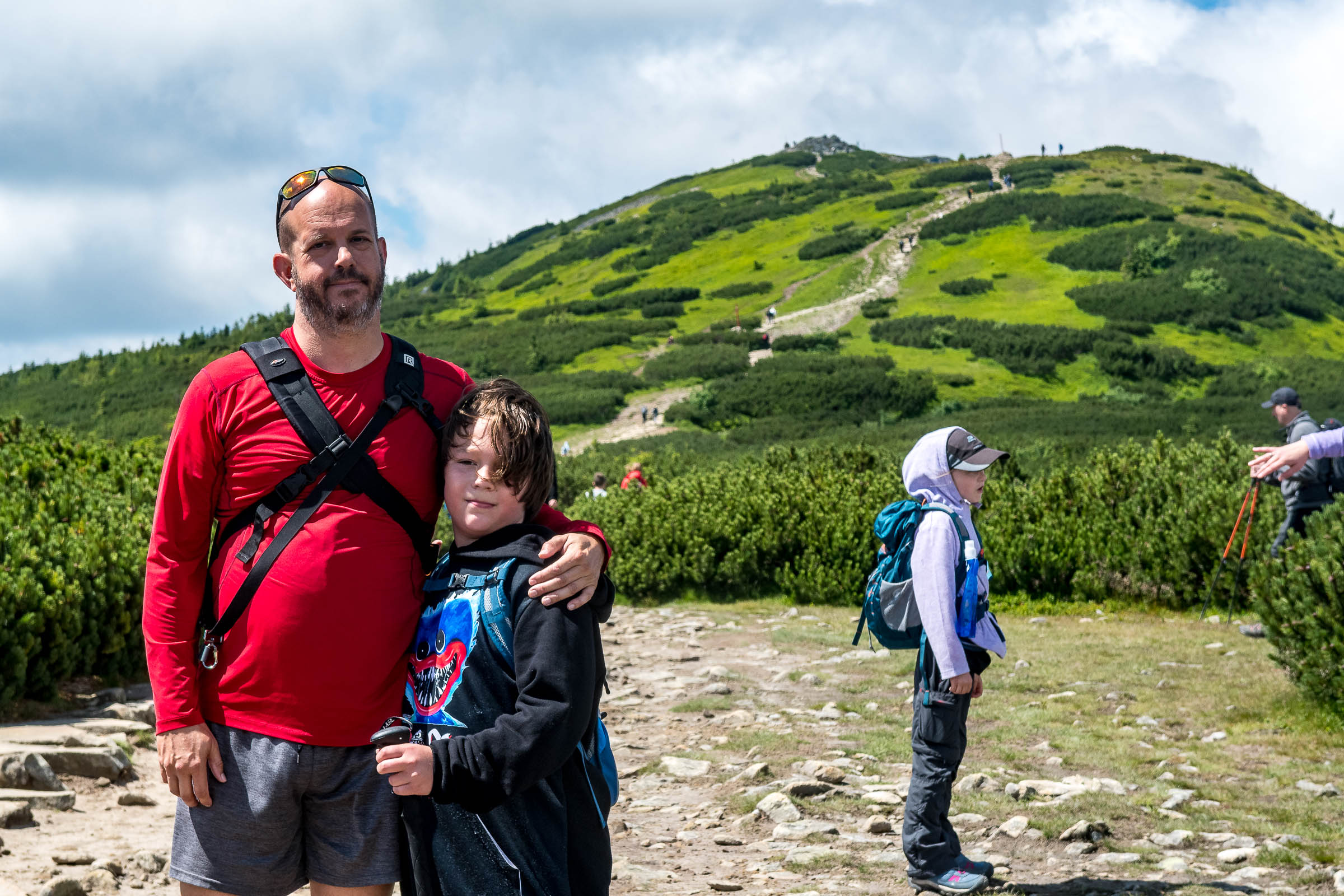
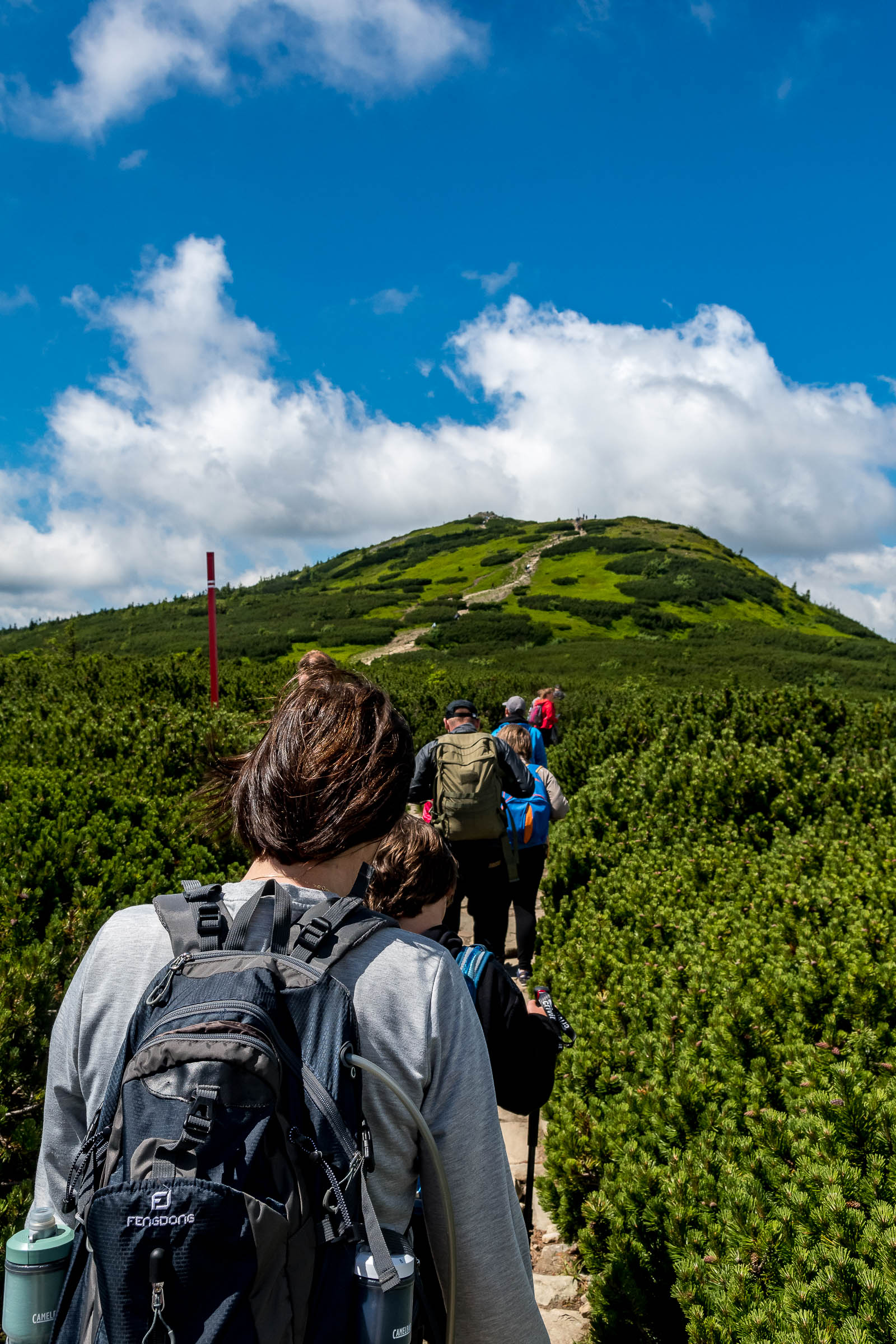
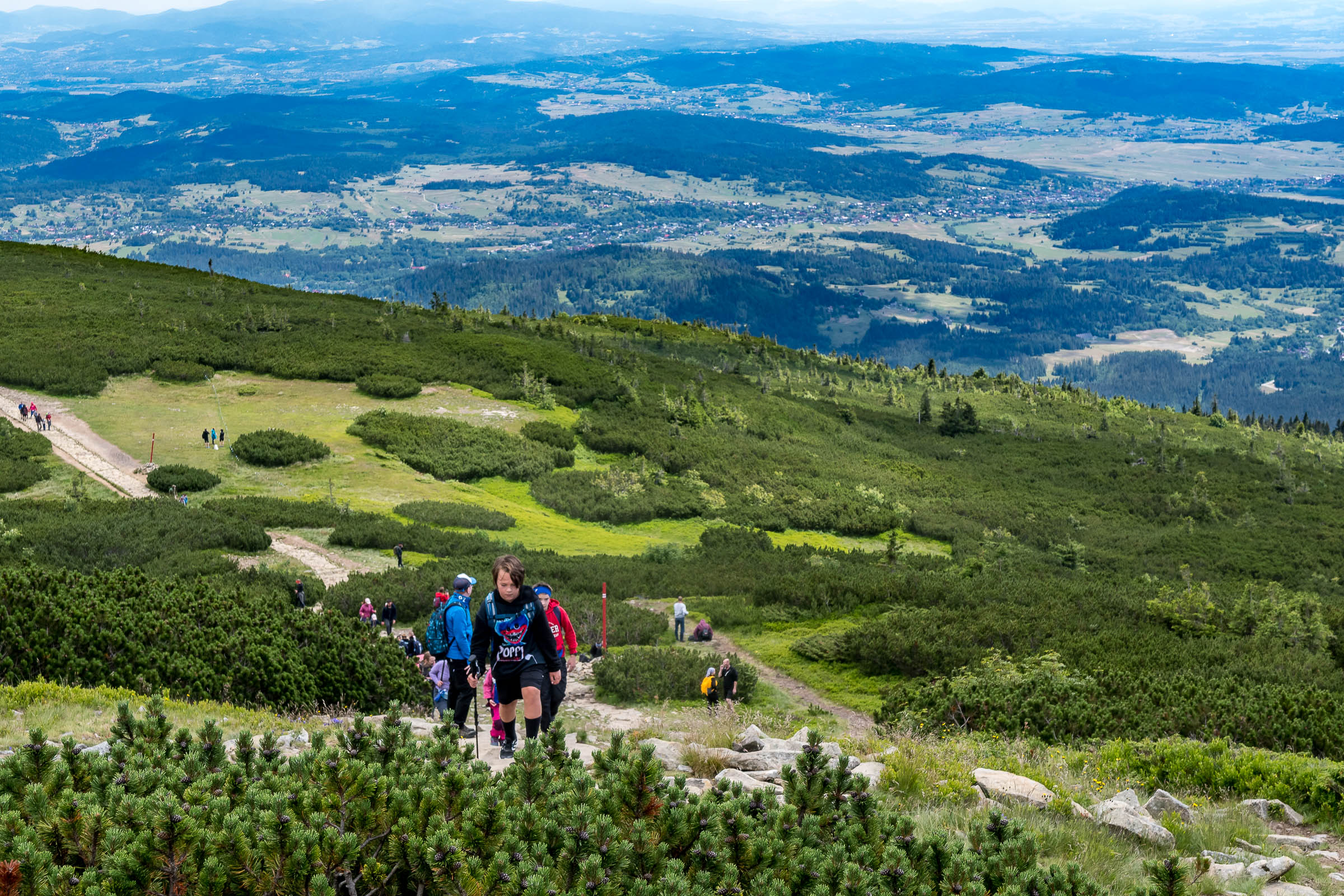
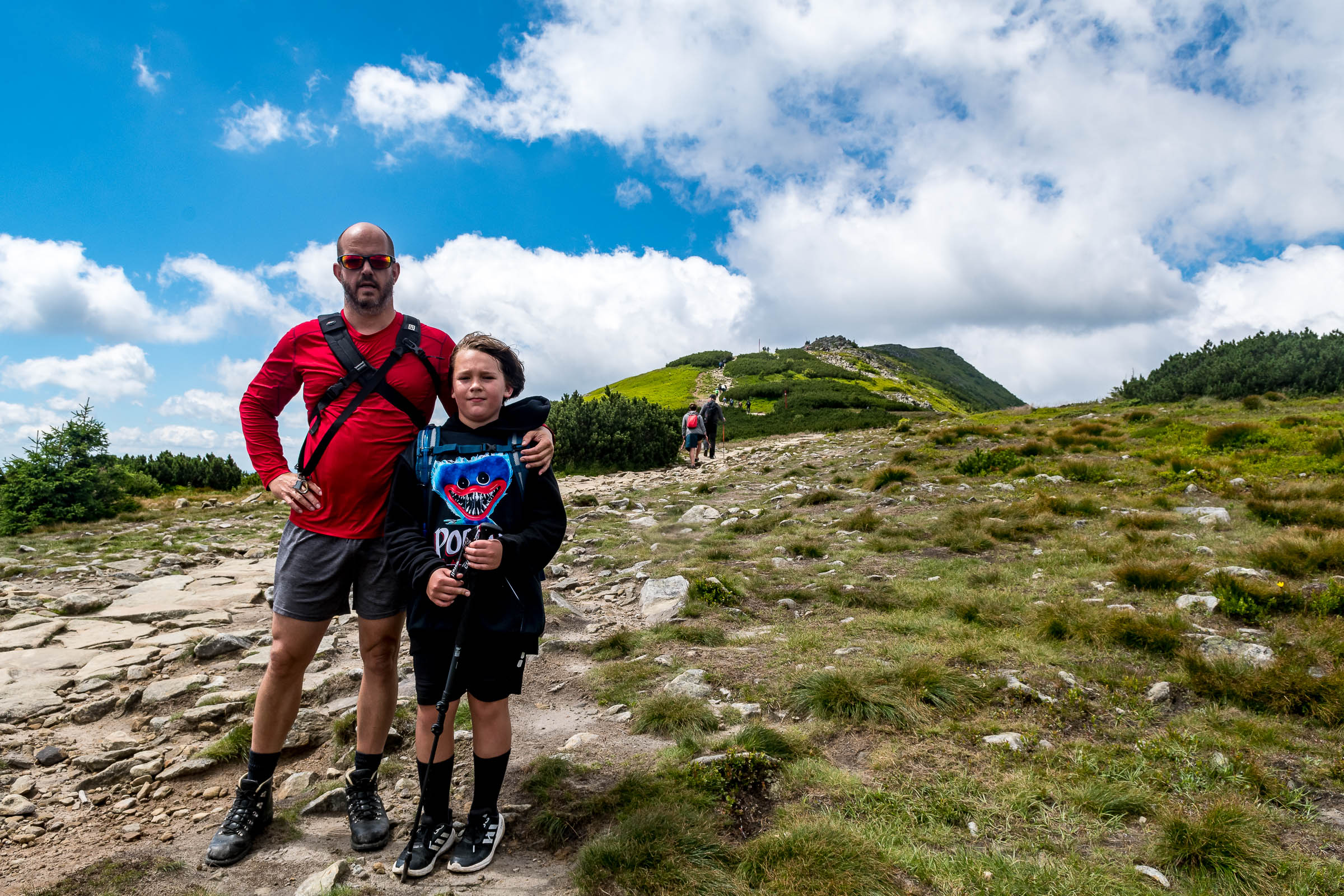
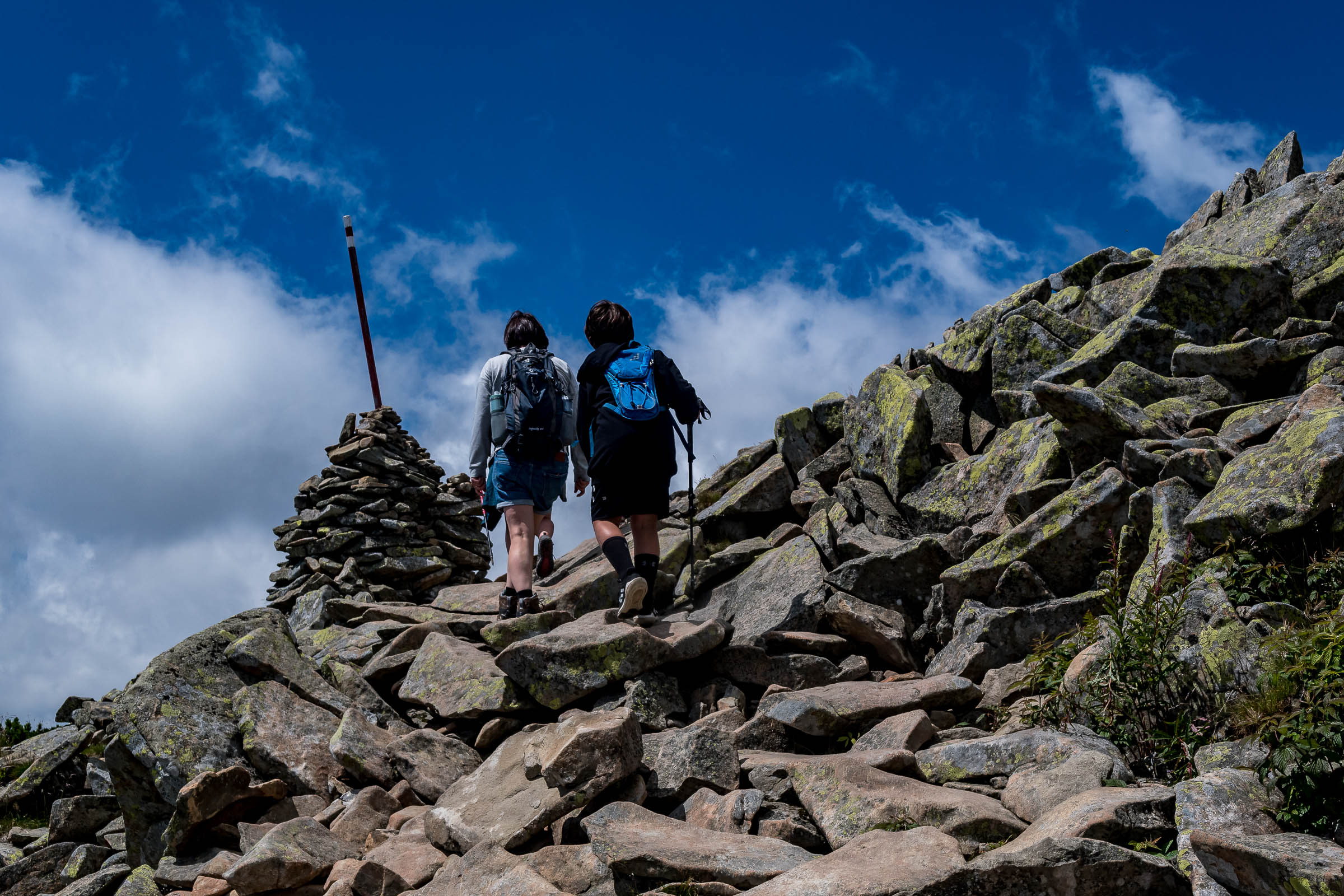
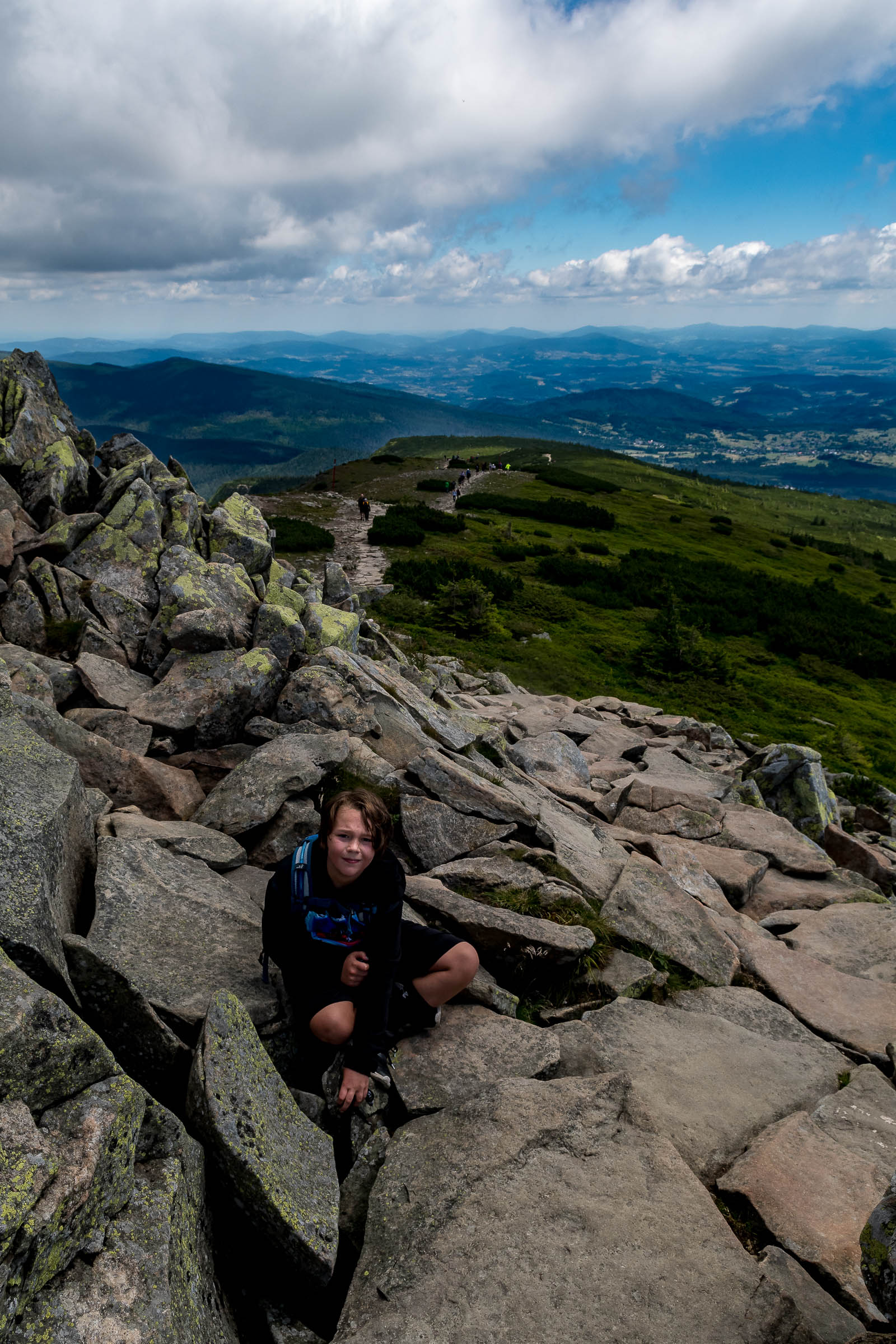
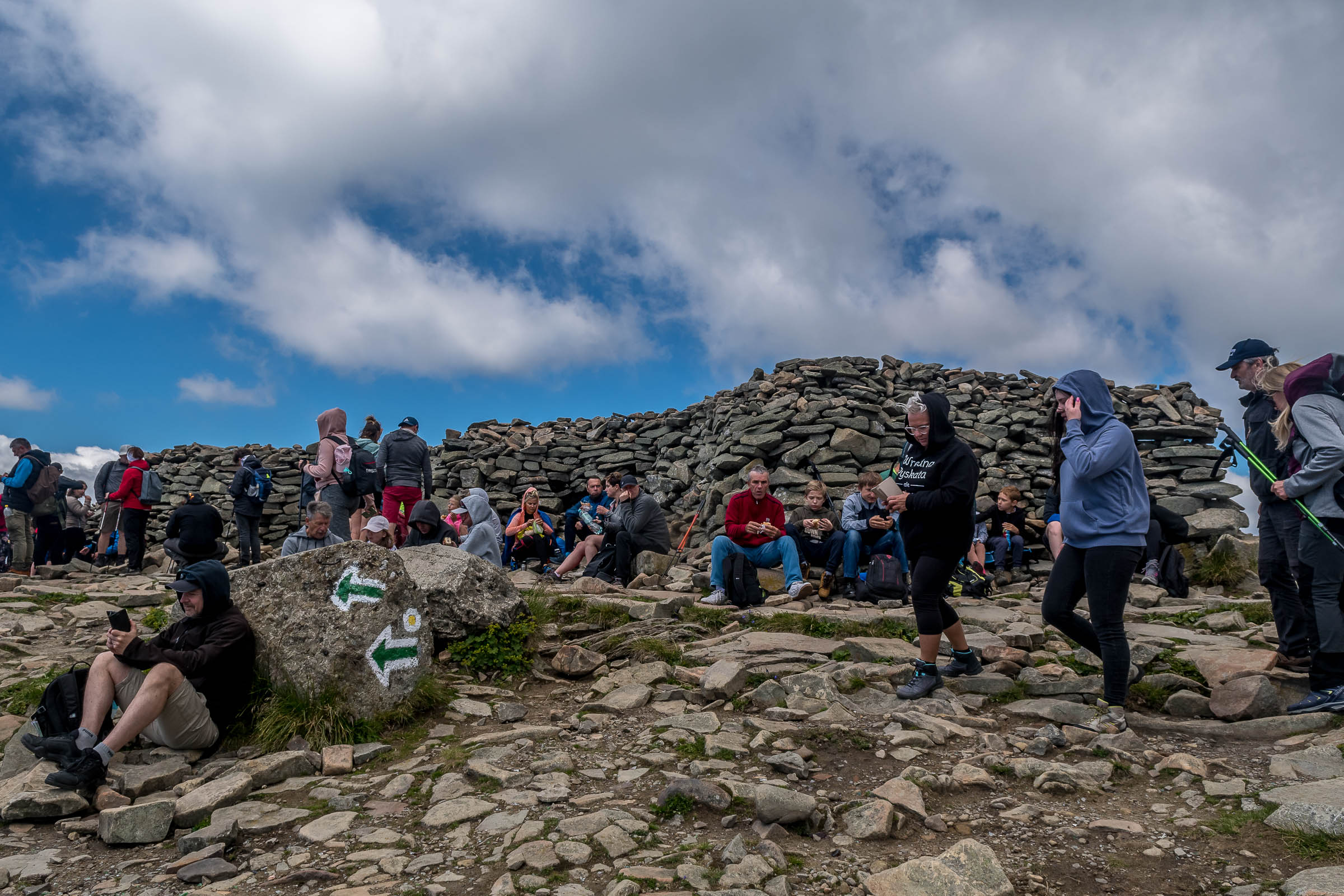
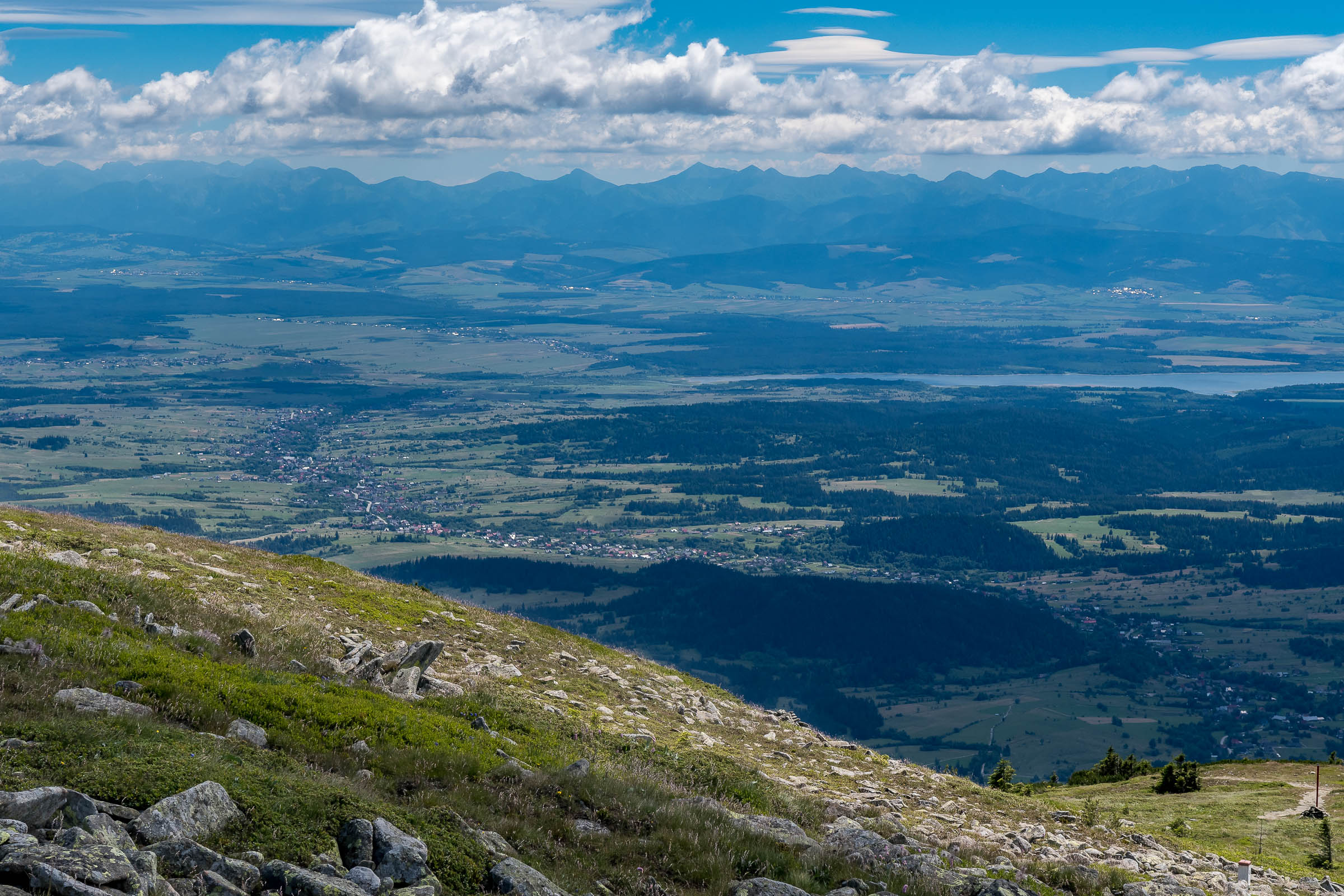
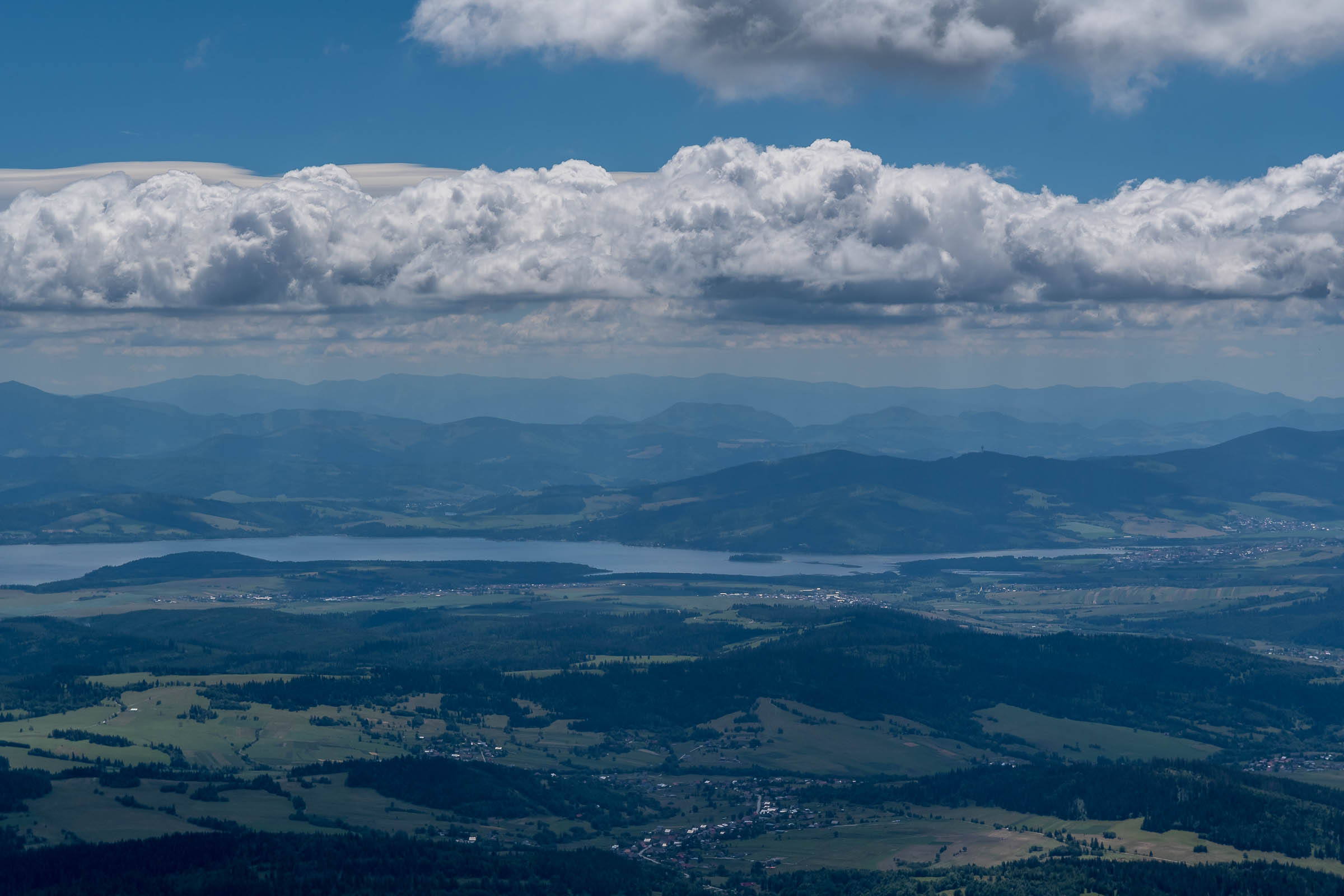
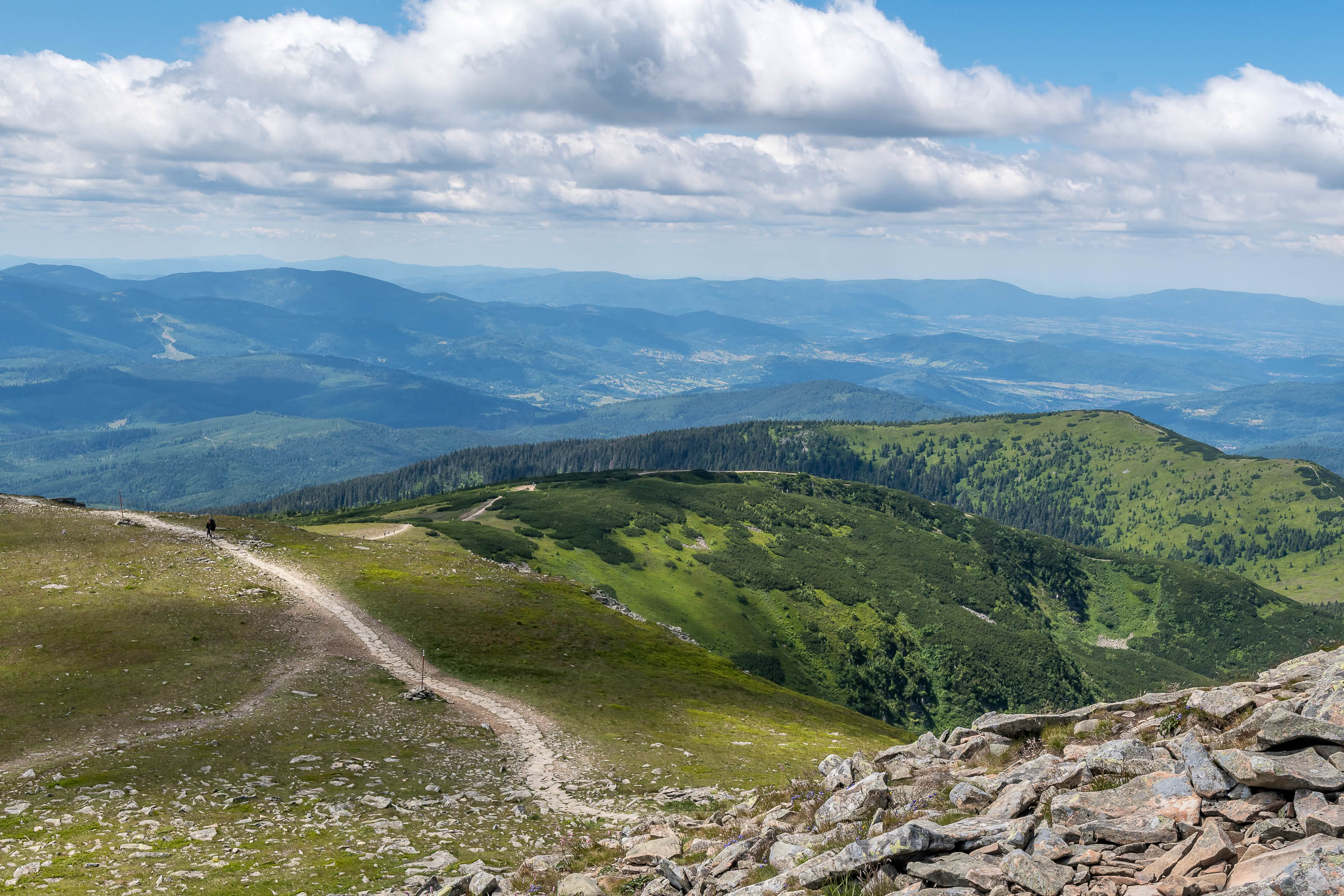
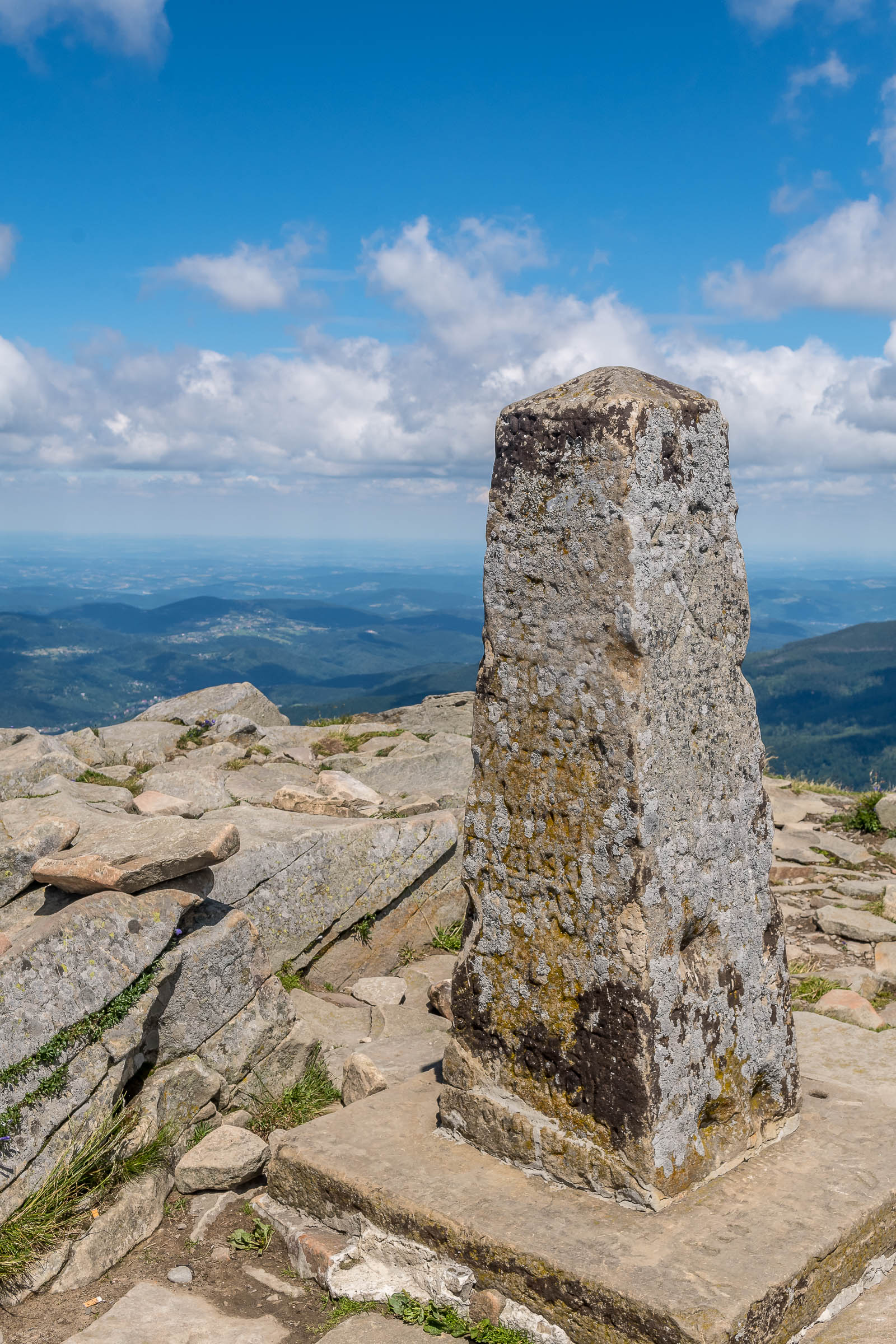
I lived at the base of Babia Gora for seven years and only once tried to reach the summit. Shortly after that, I injured my knee while hiking in the Tatra Mountains. Some time after that, when my knee had healed, I injured the other knee. And so I never made it to the top of Babia. Until today.
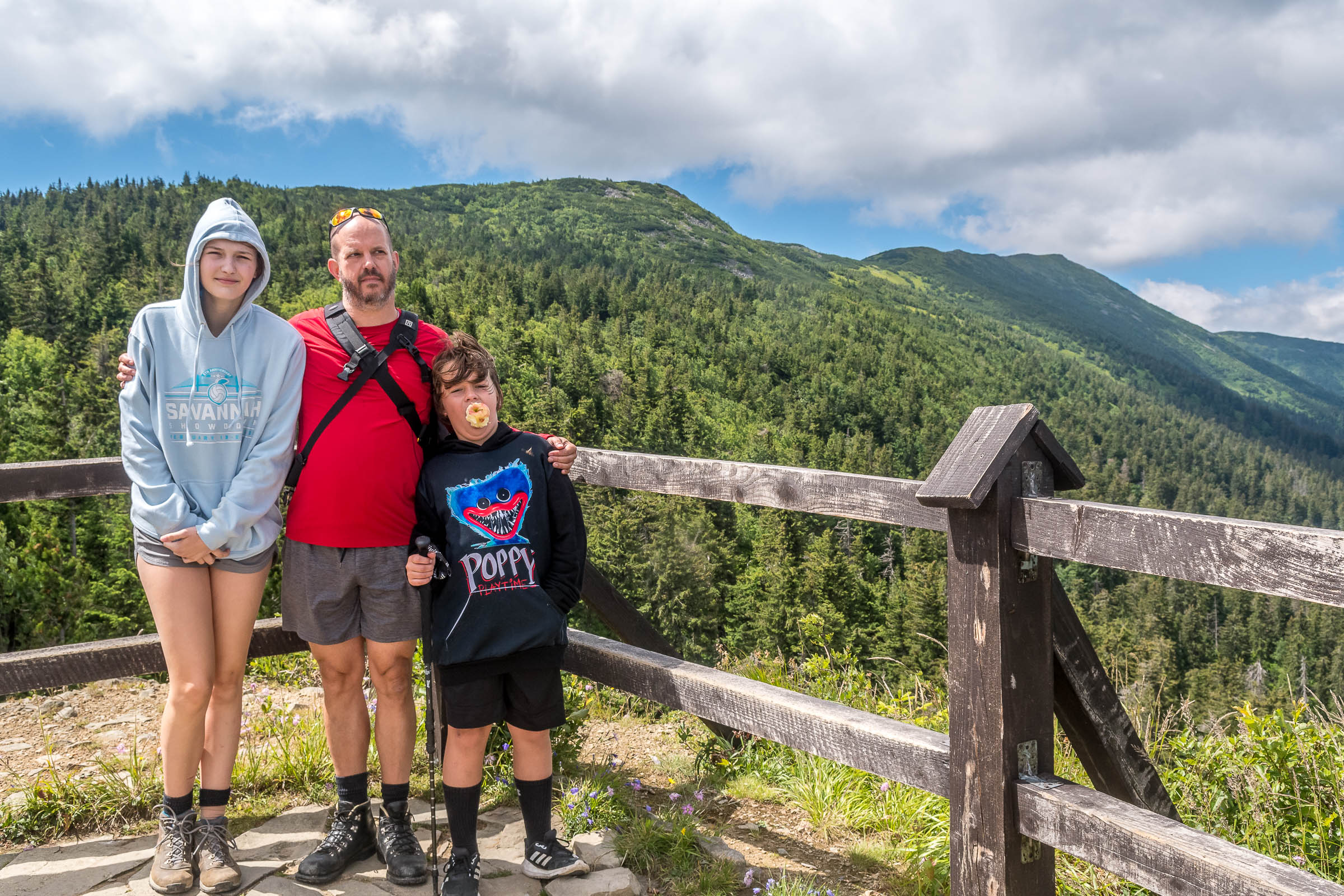
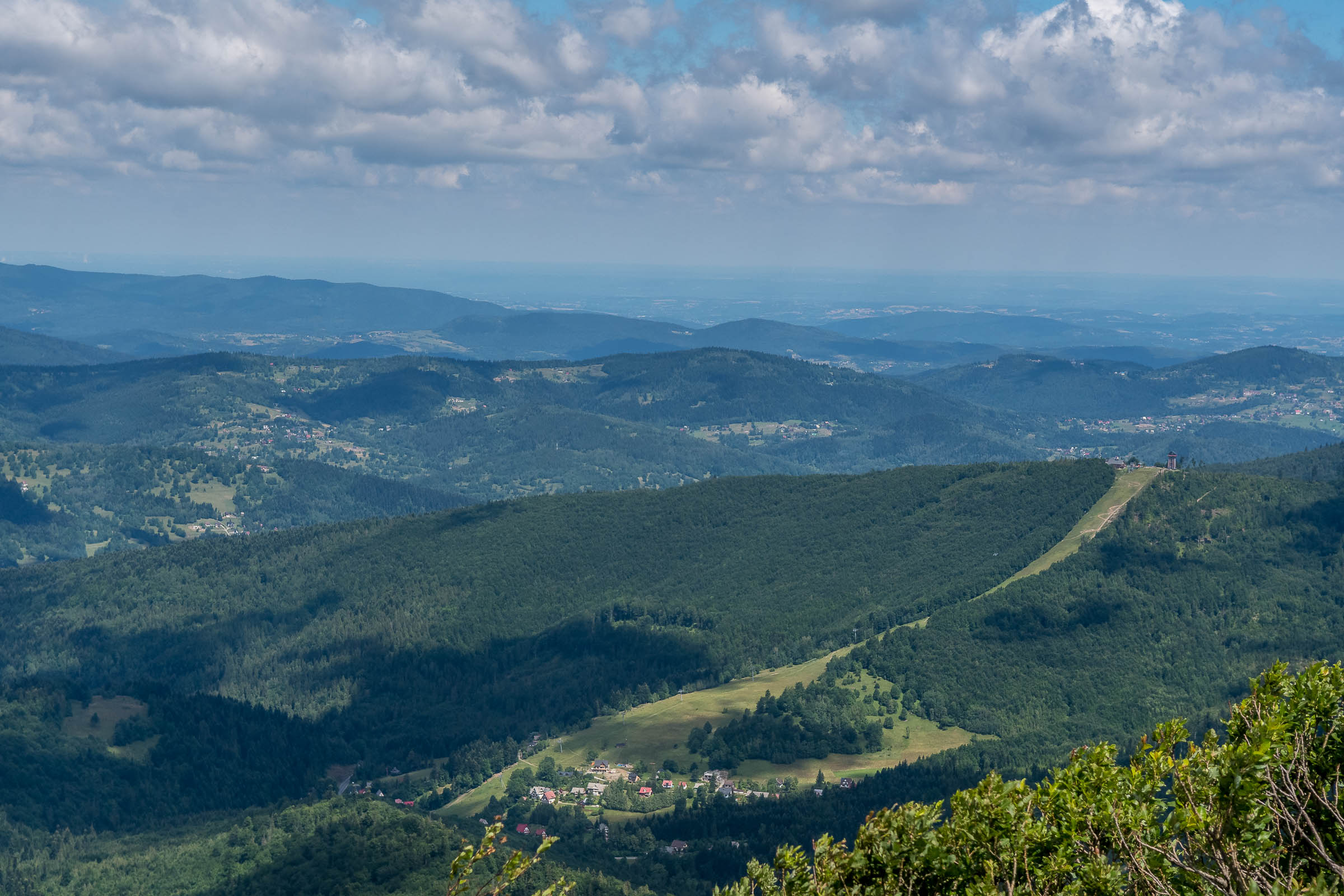
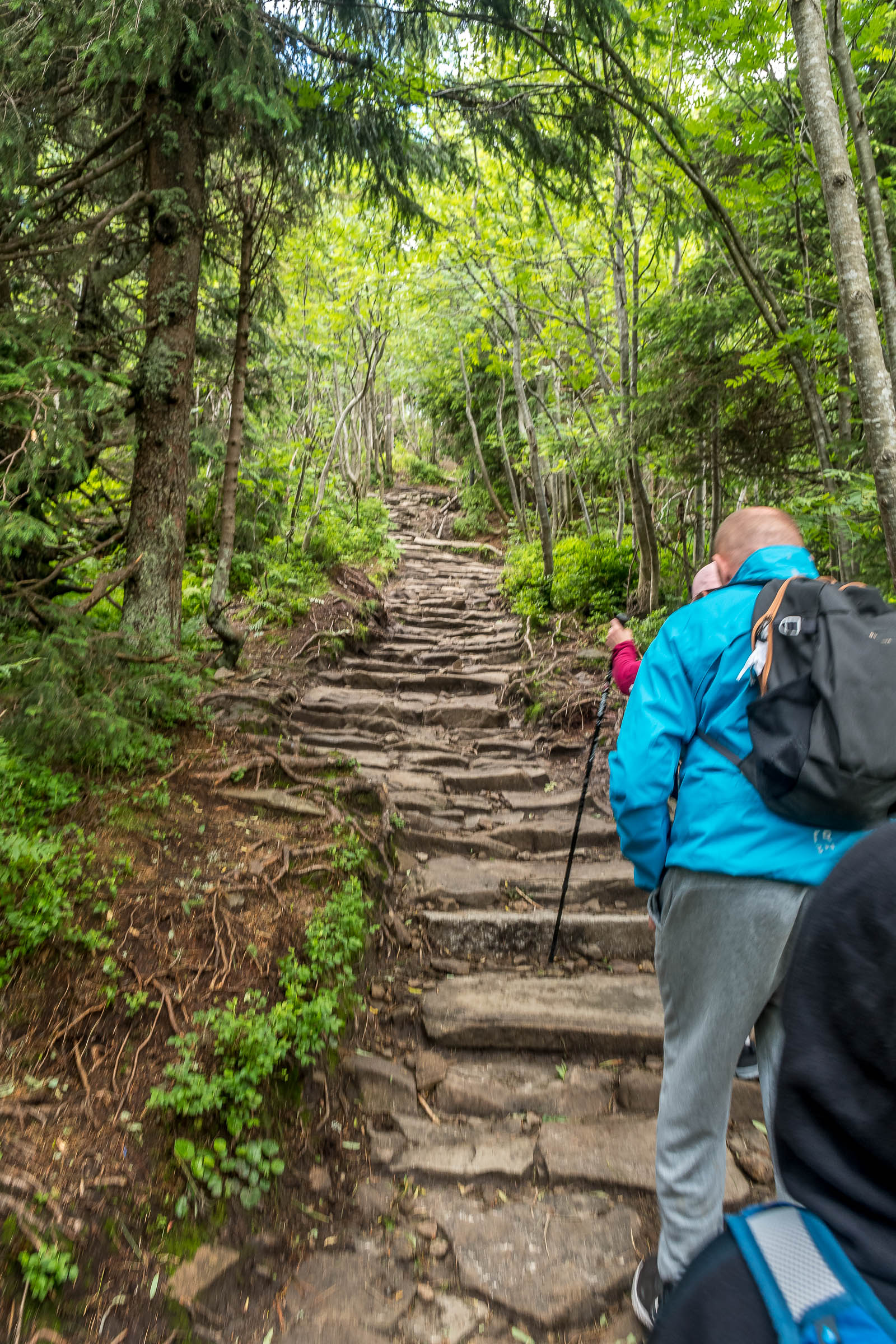
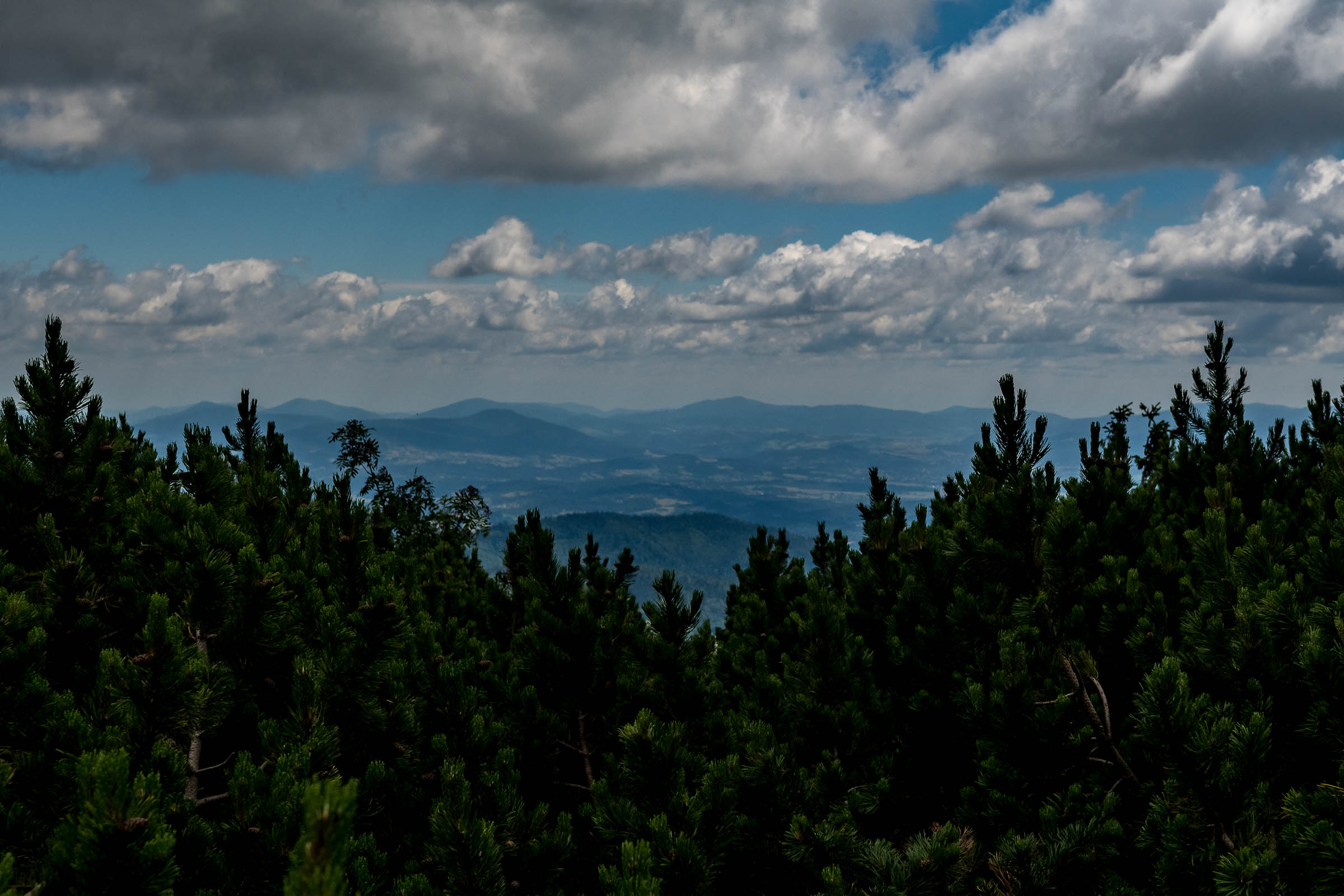
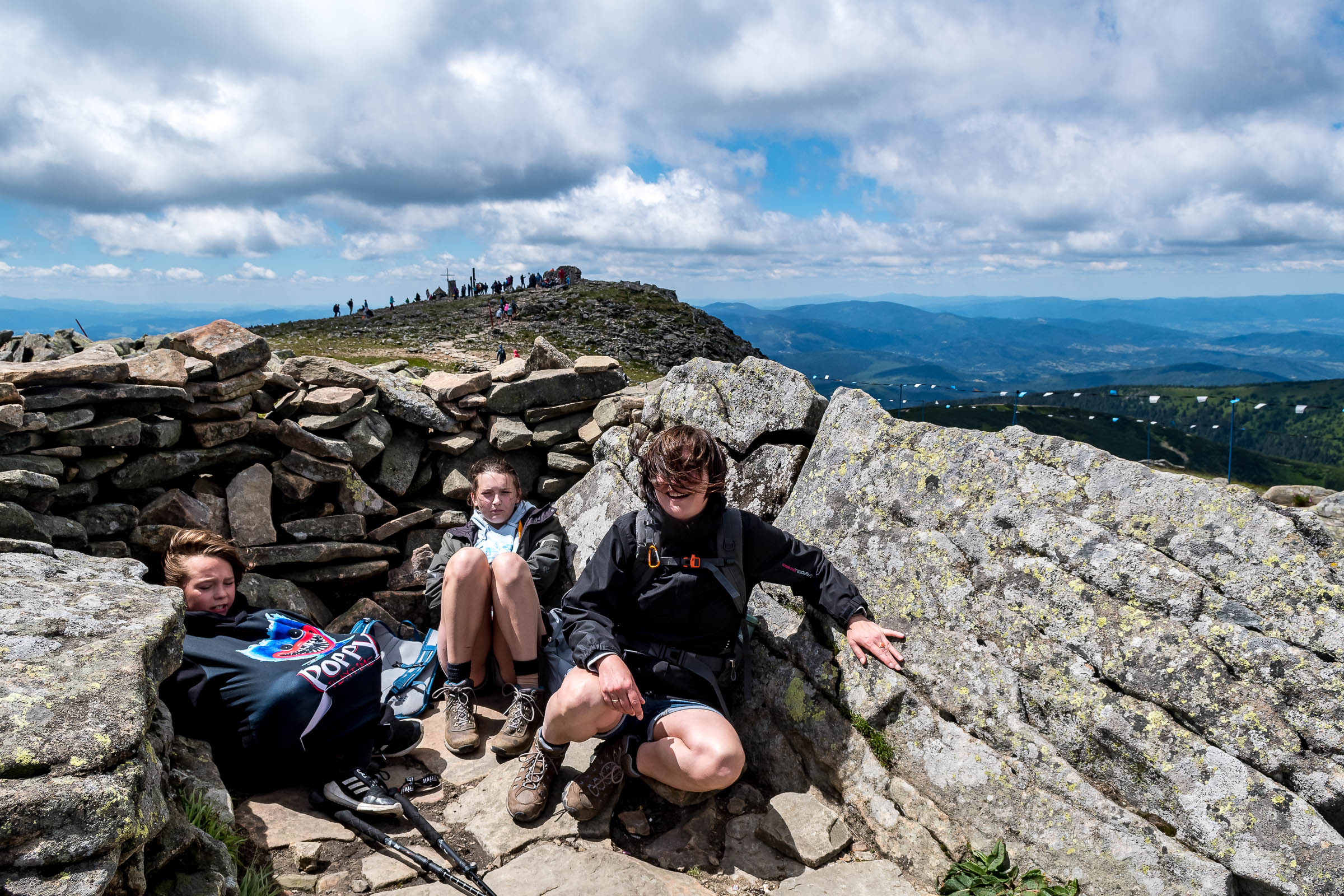
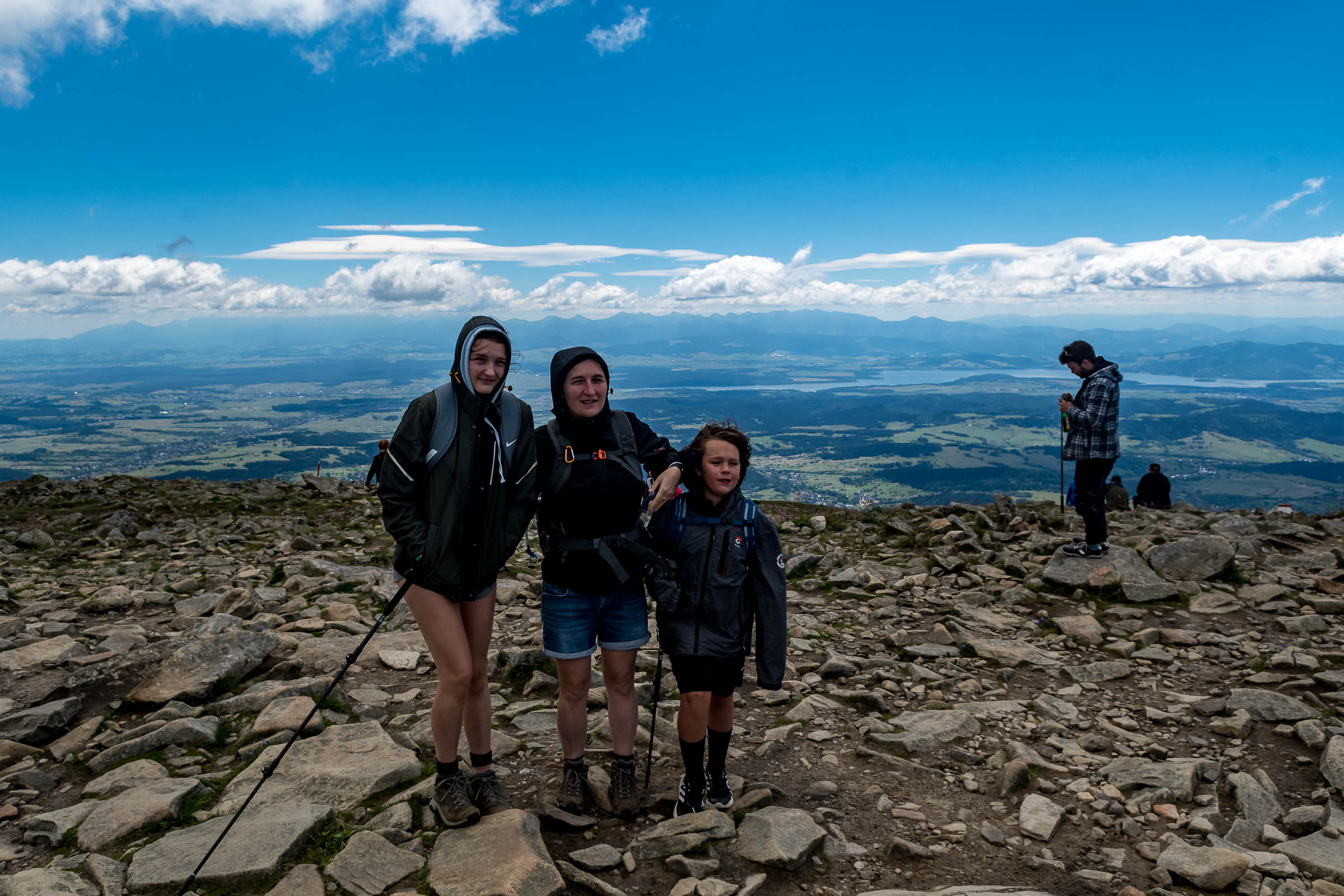
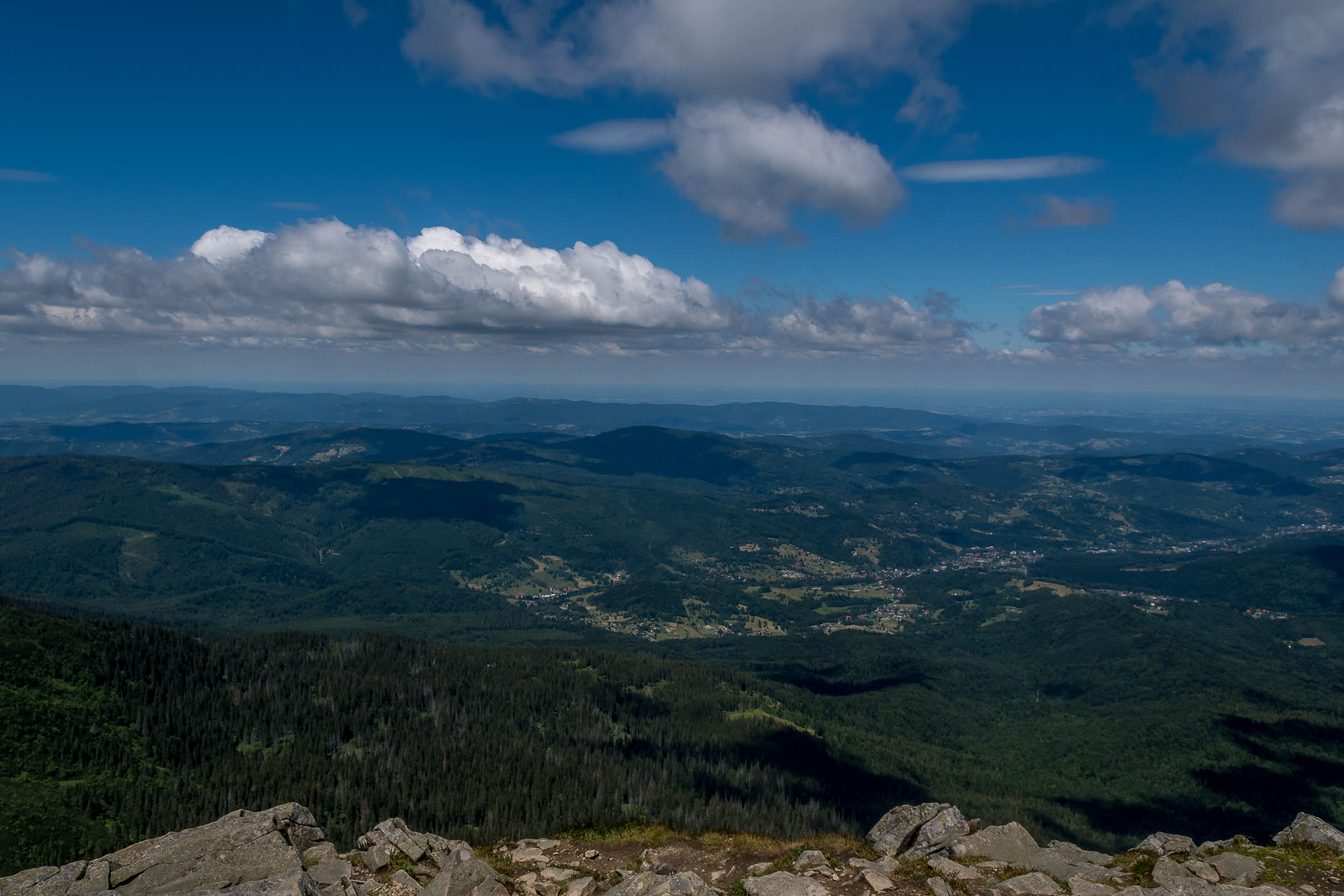
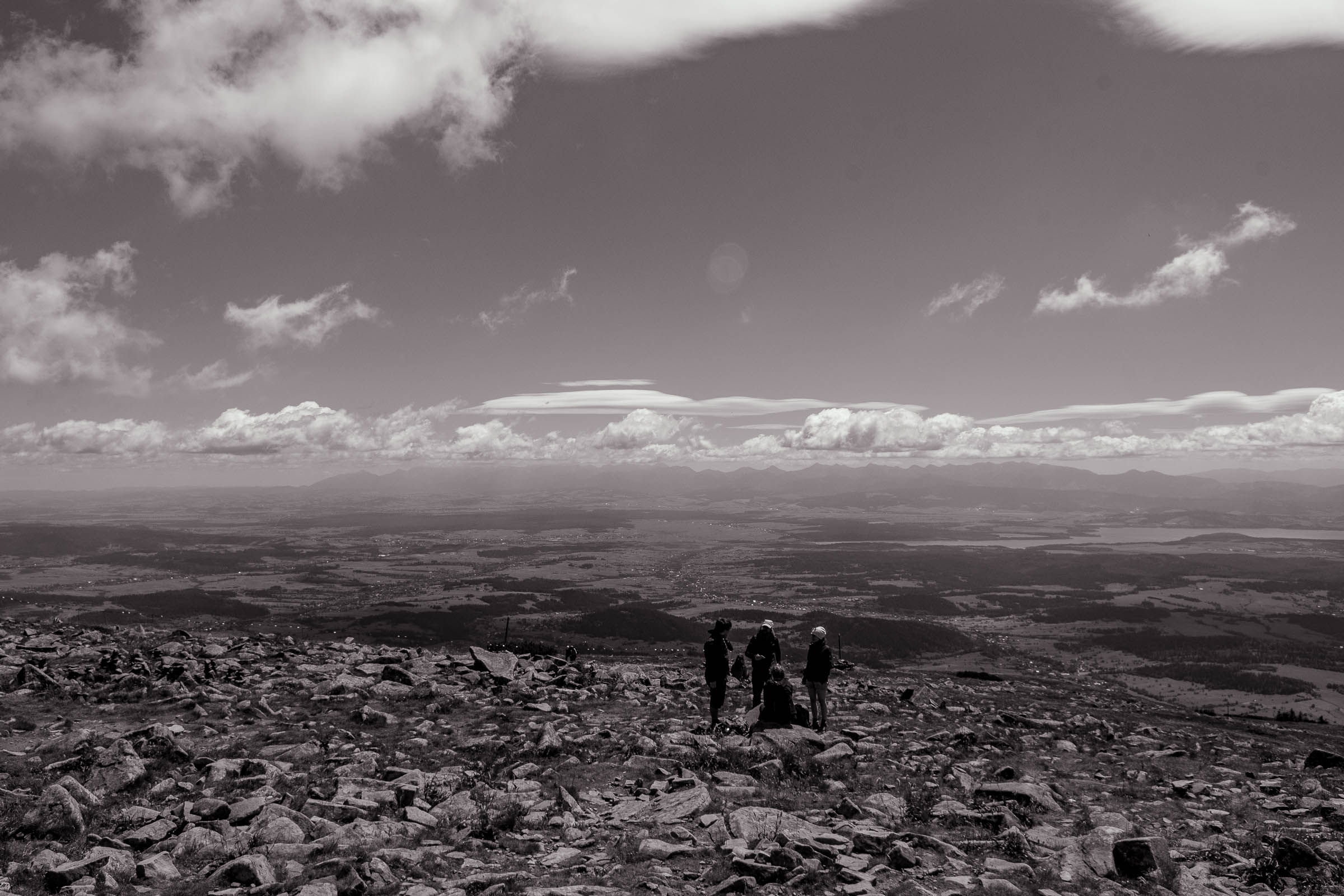
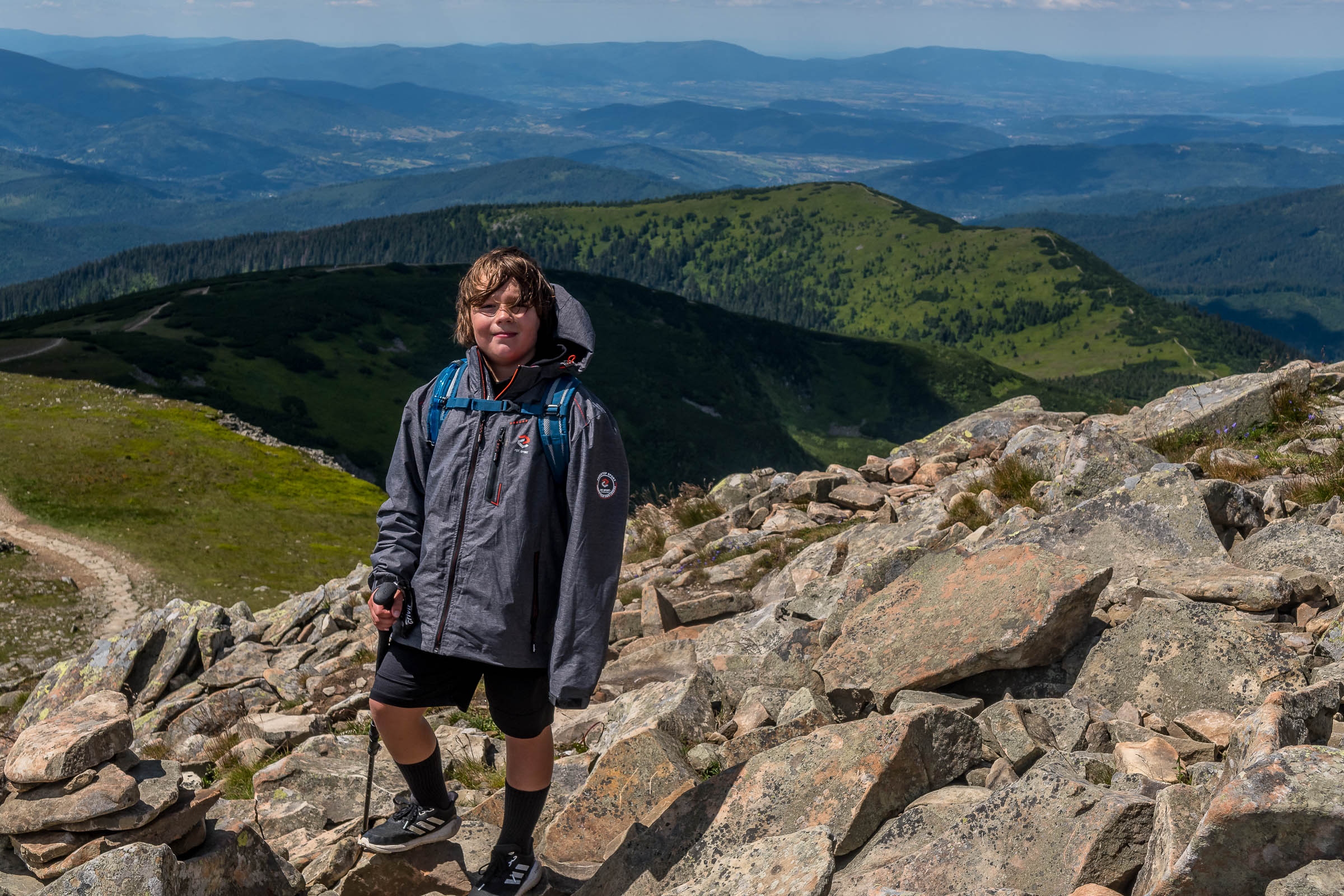
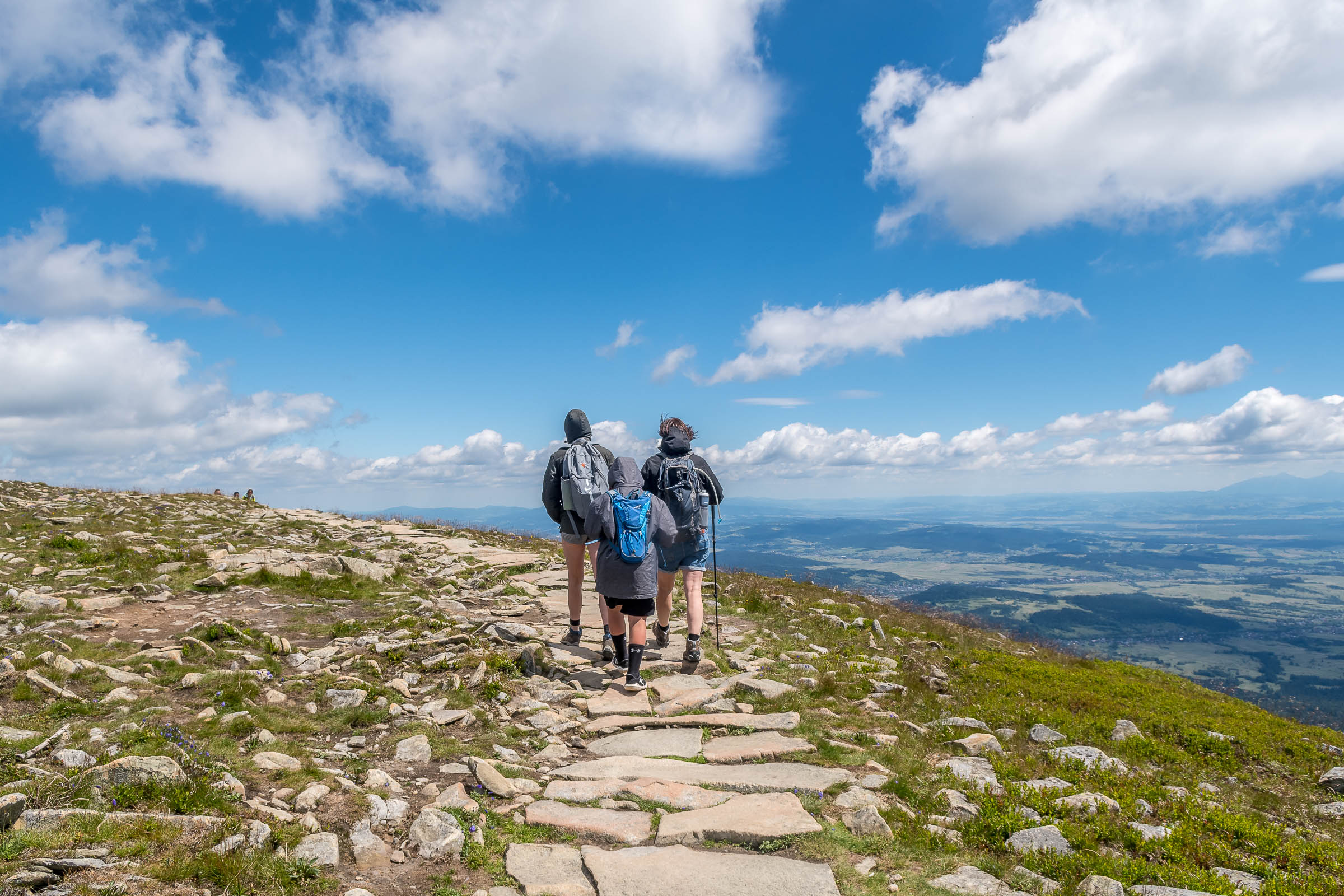
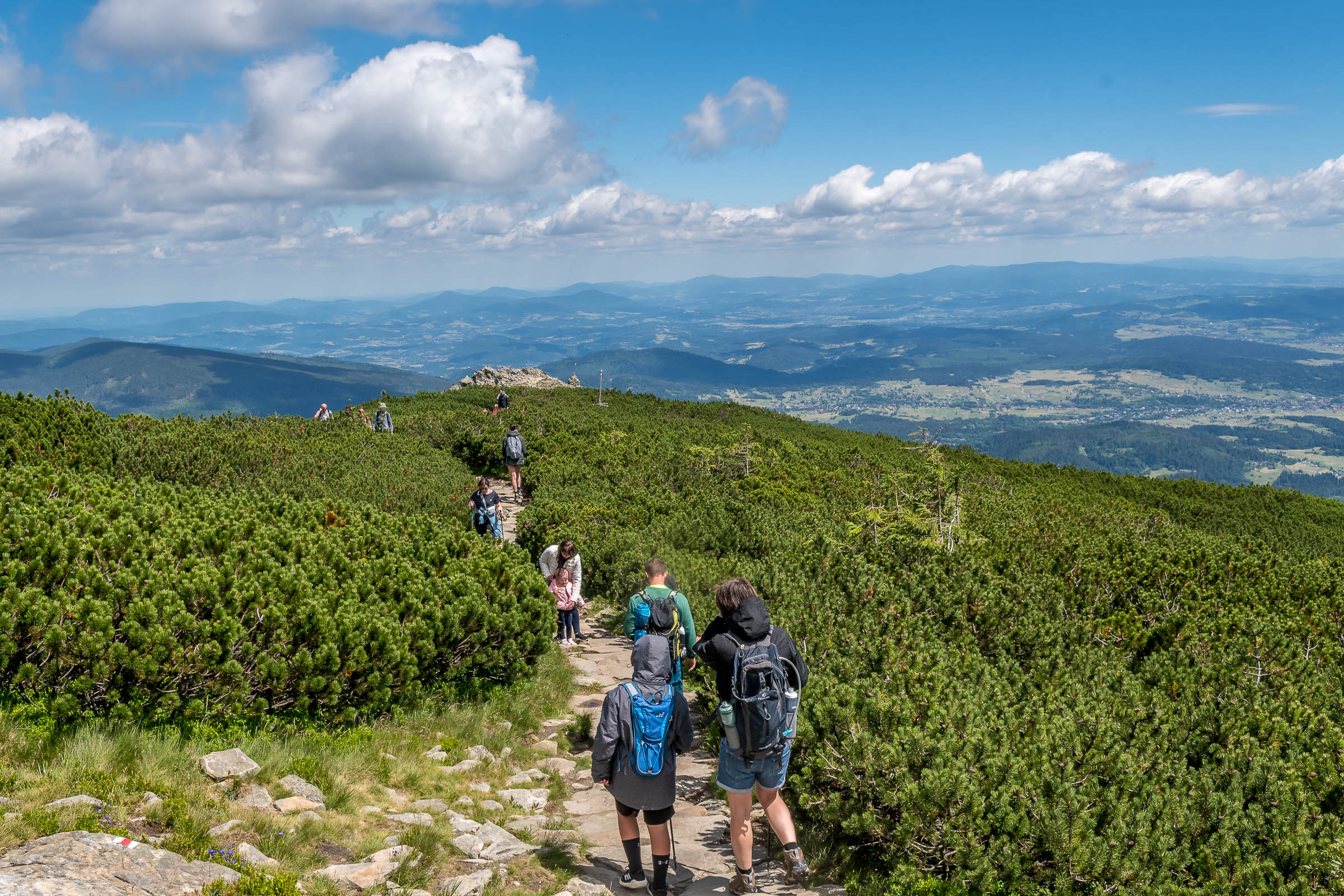
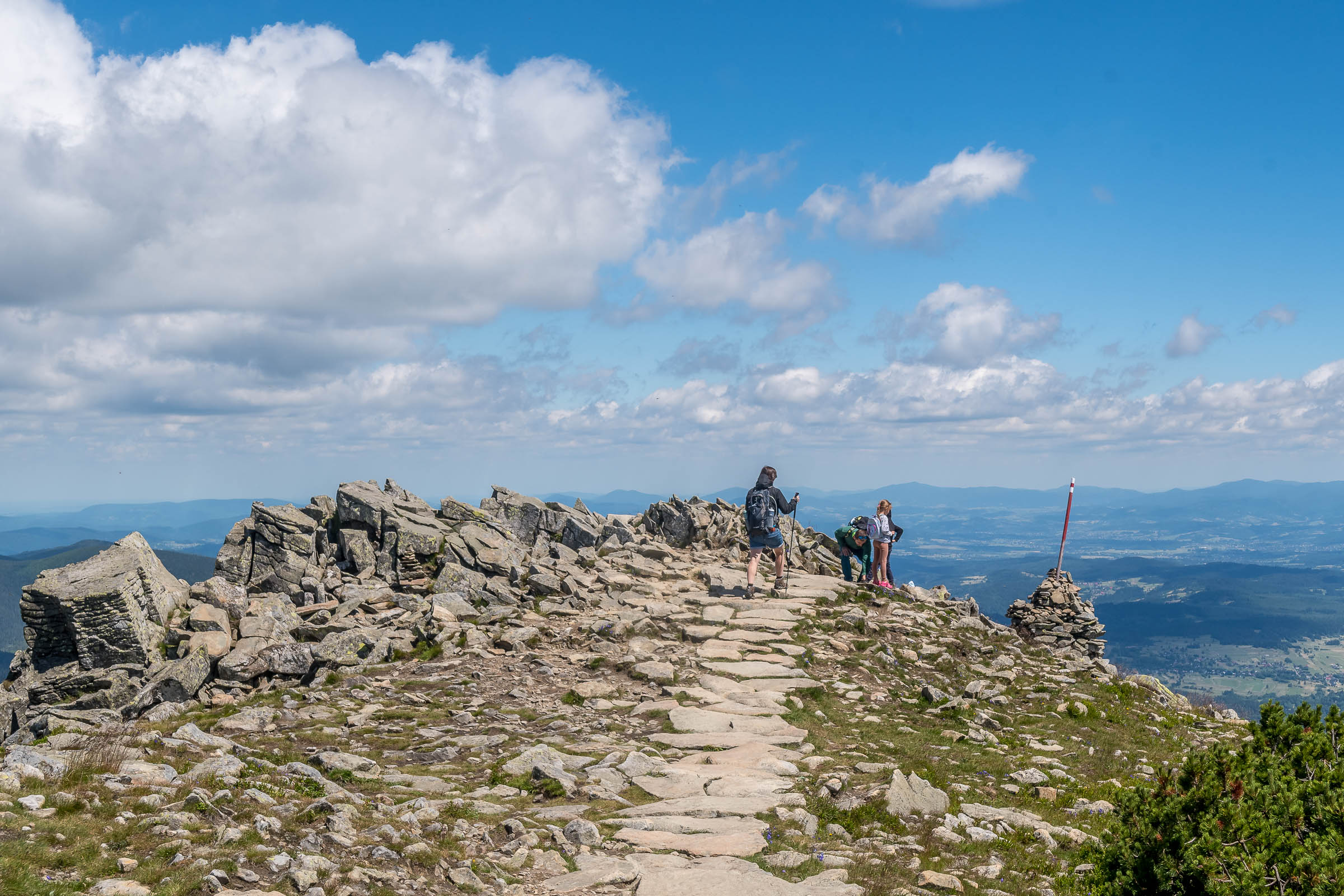
Here's some video showing just how windy it was at the top.
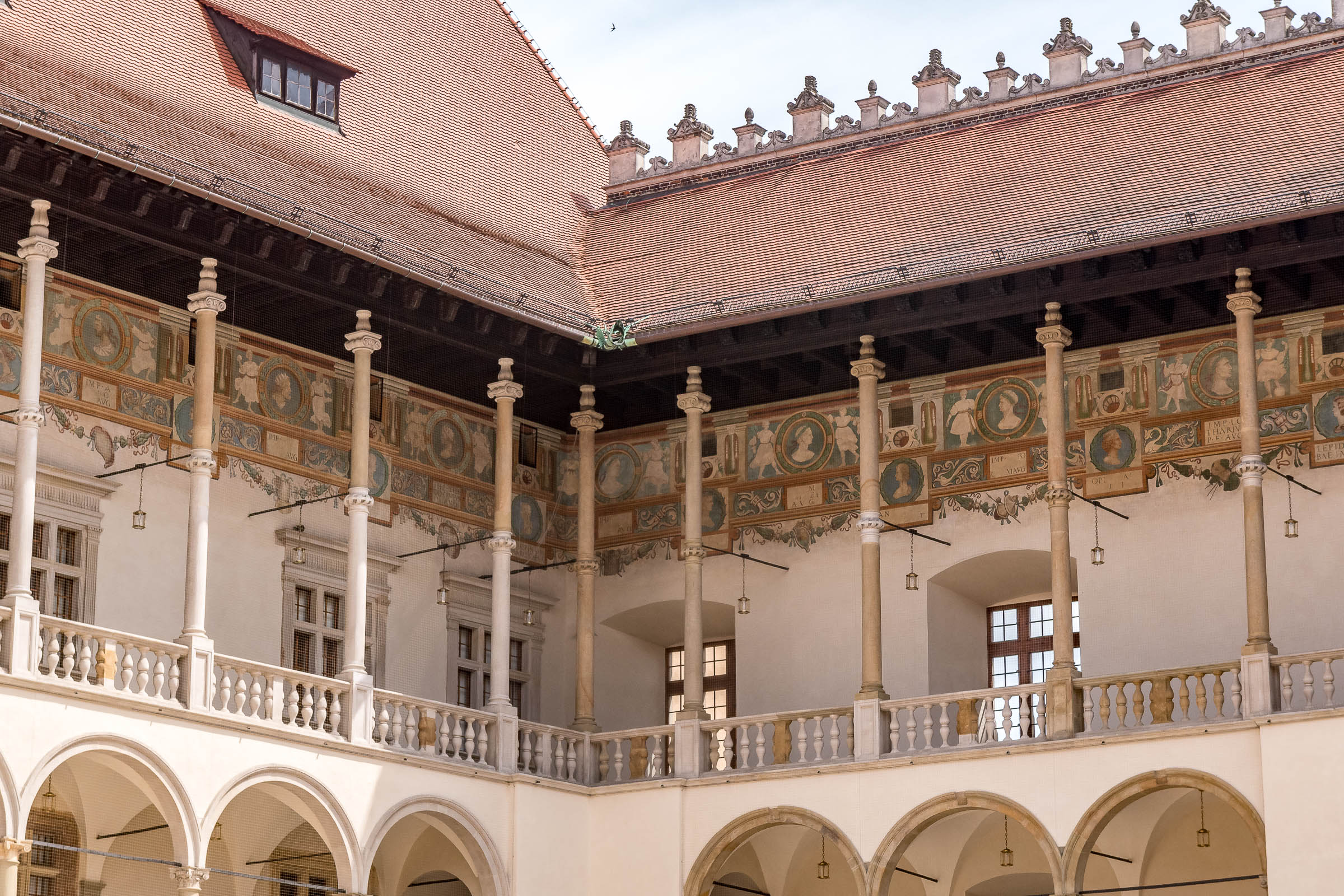
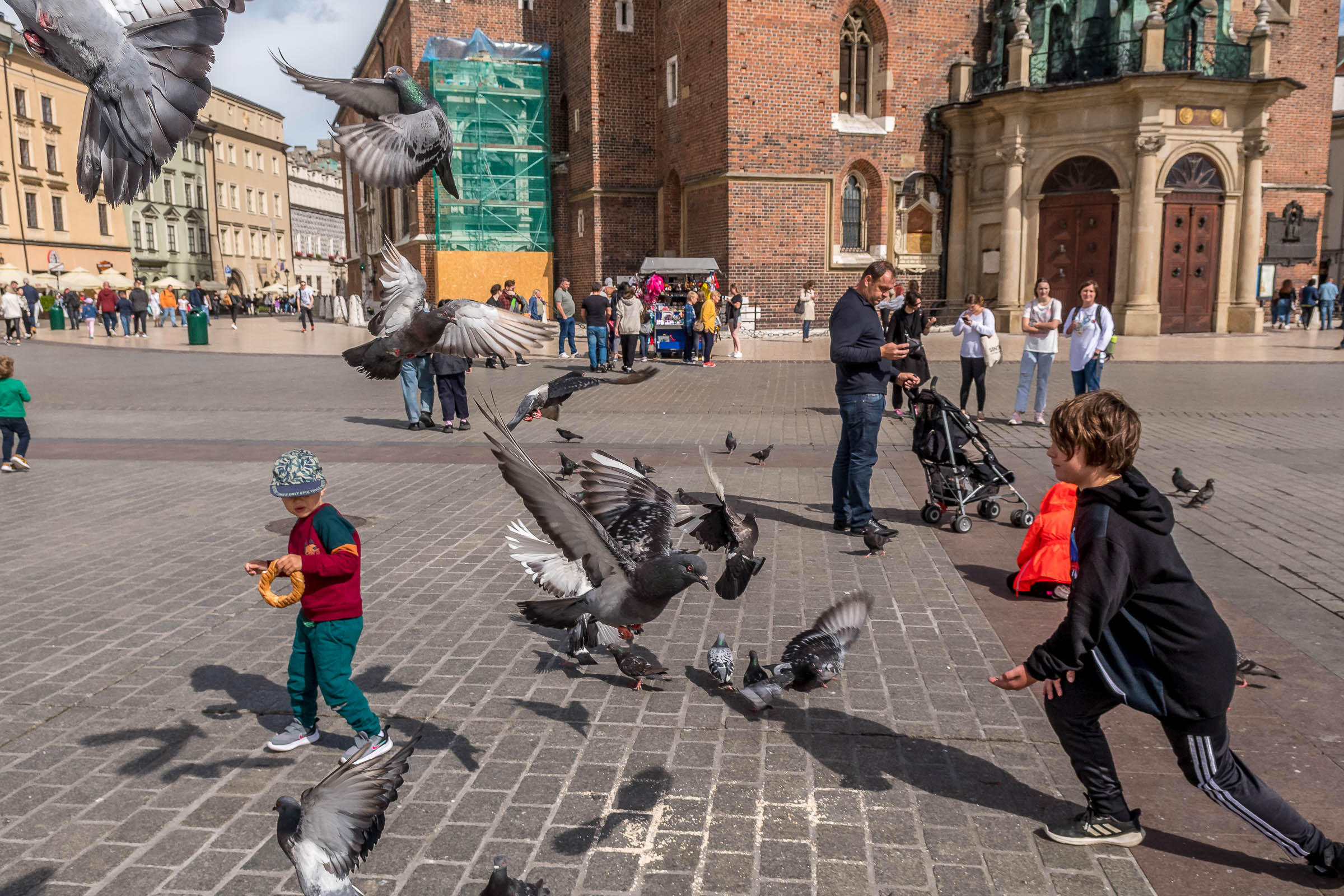
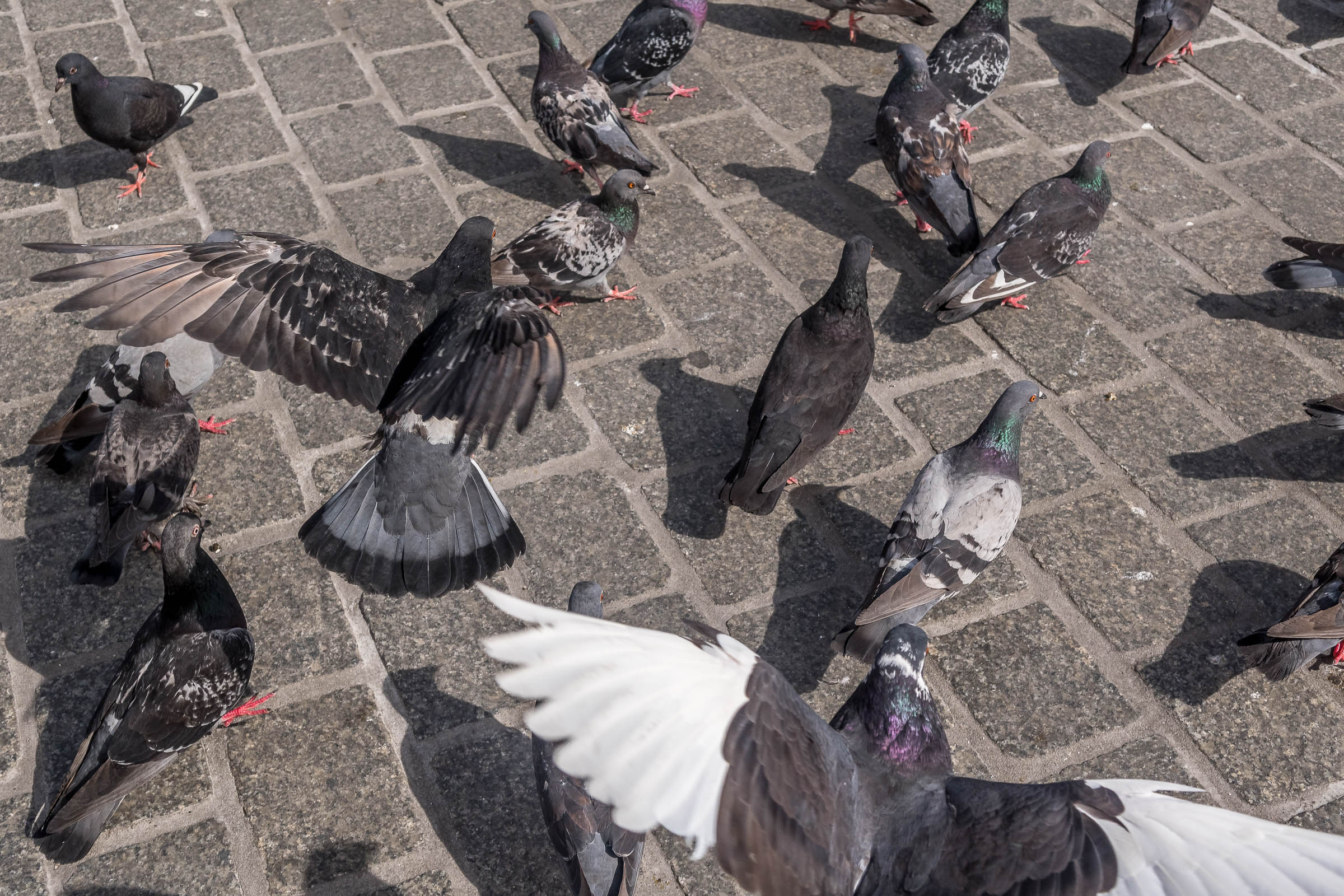
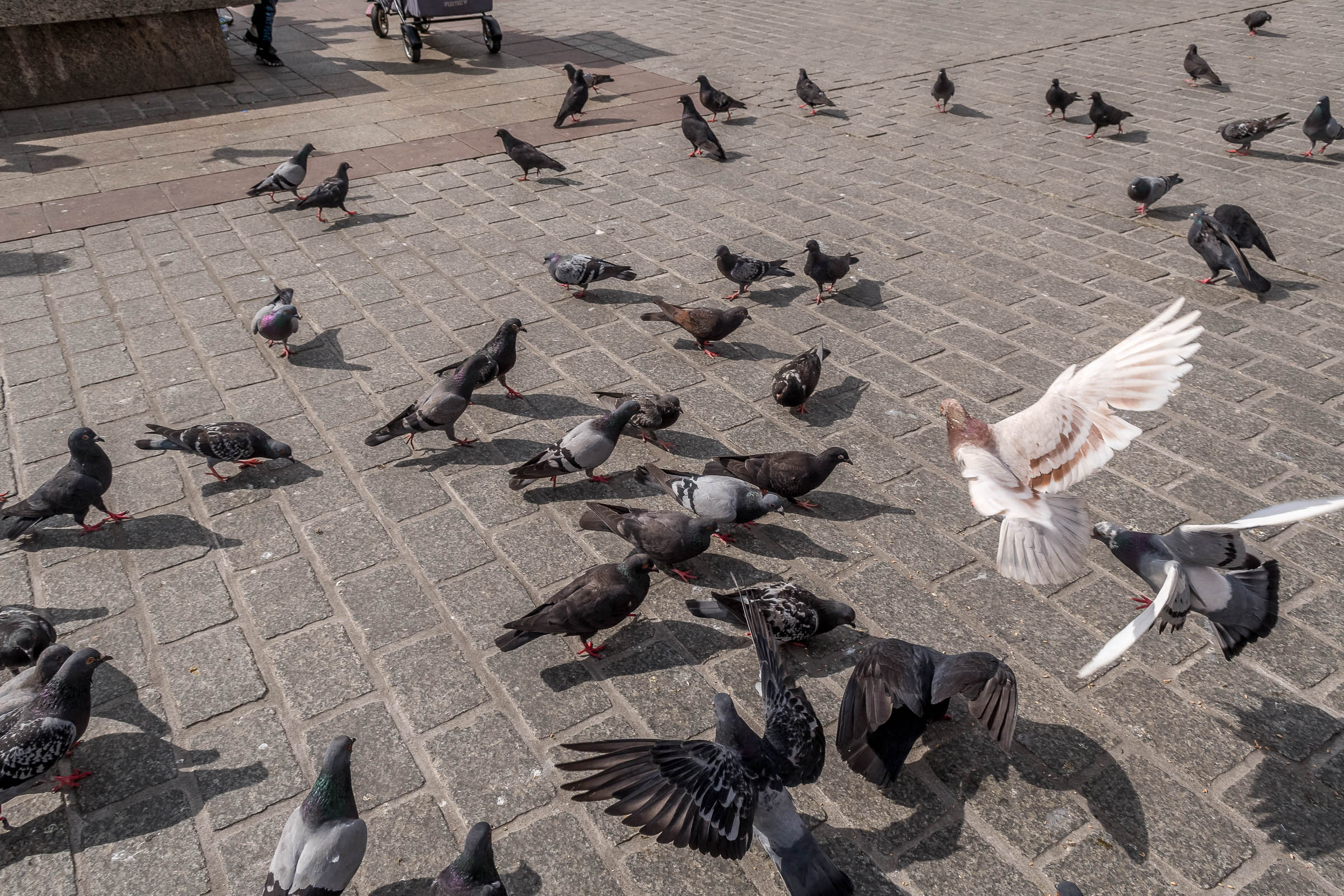
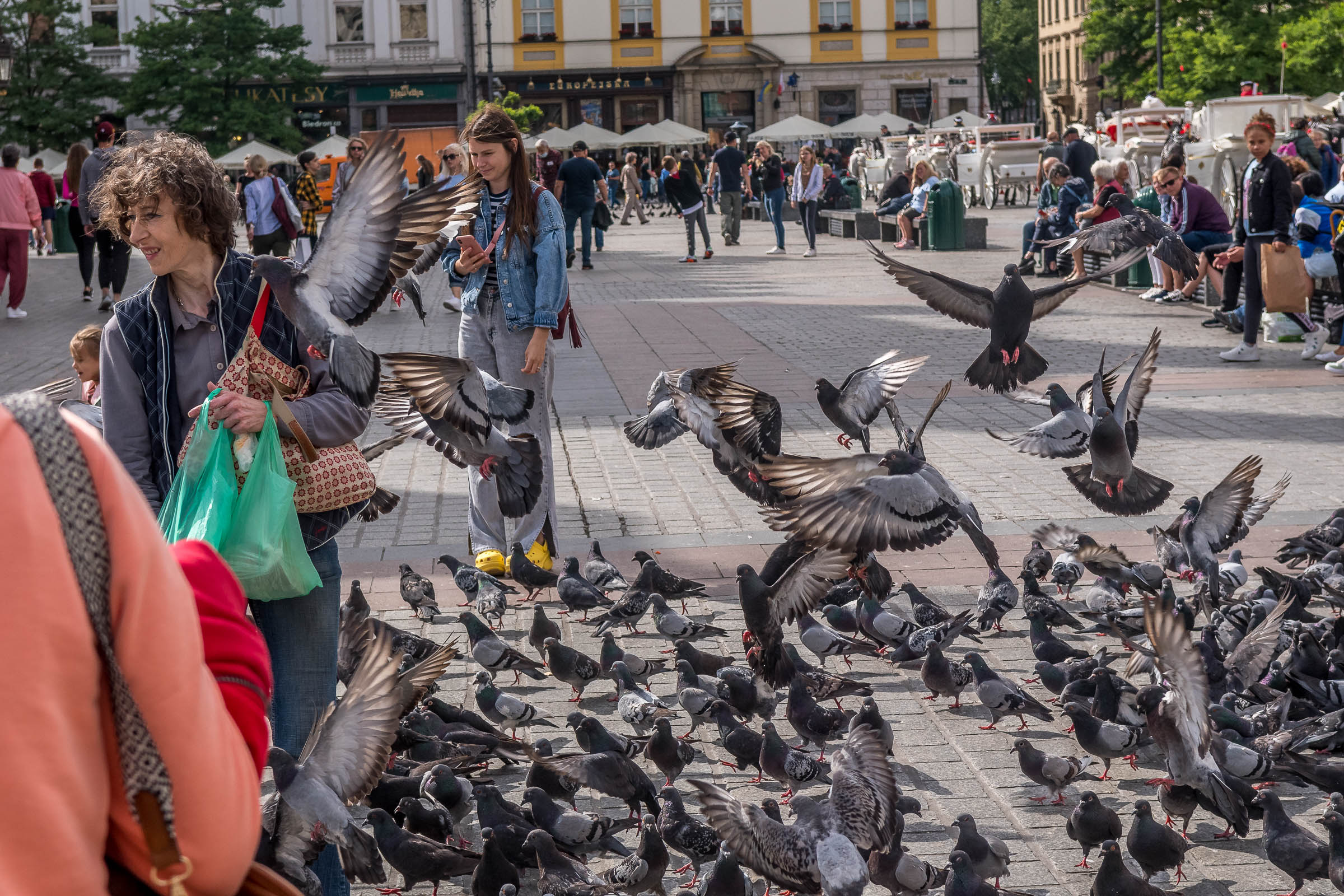
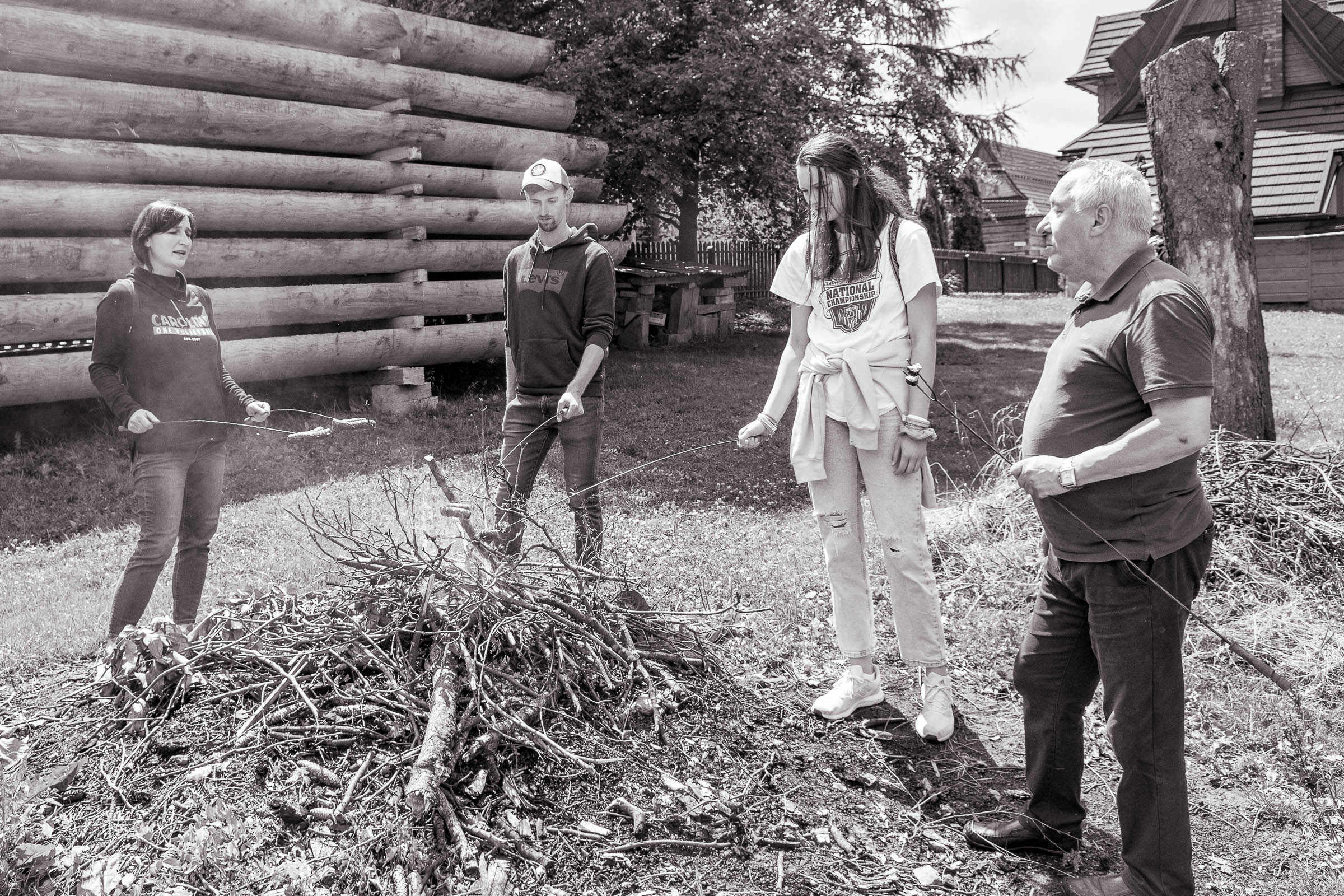
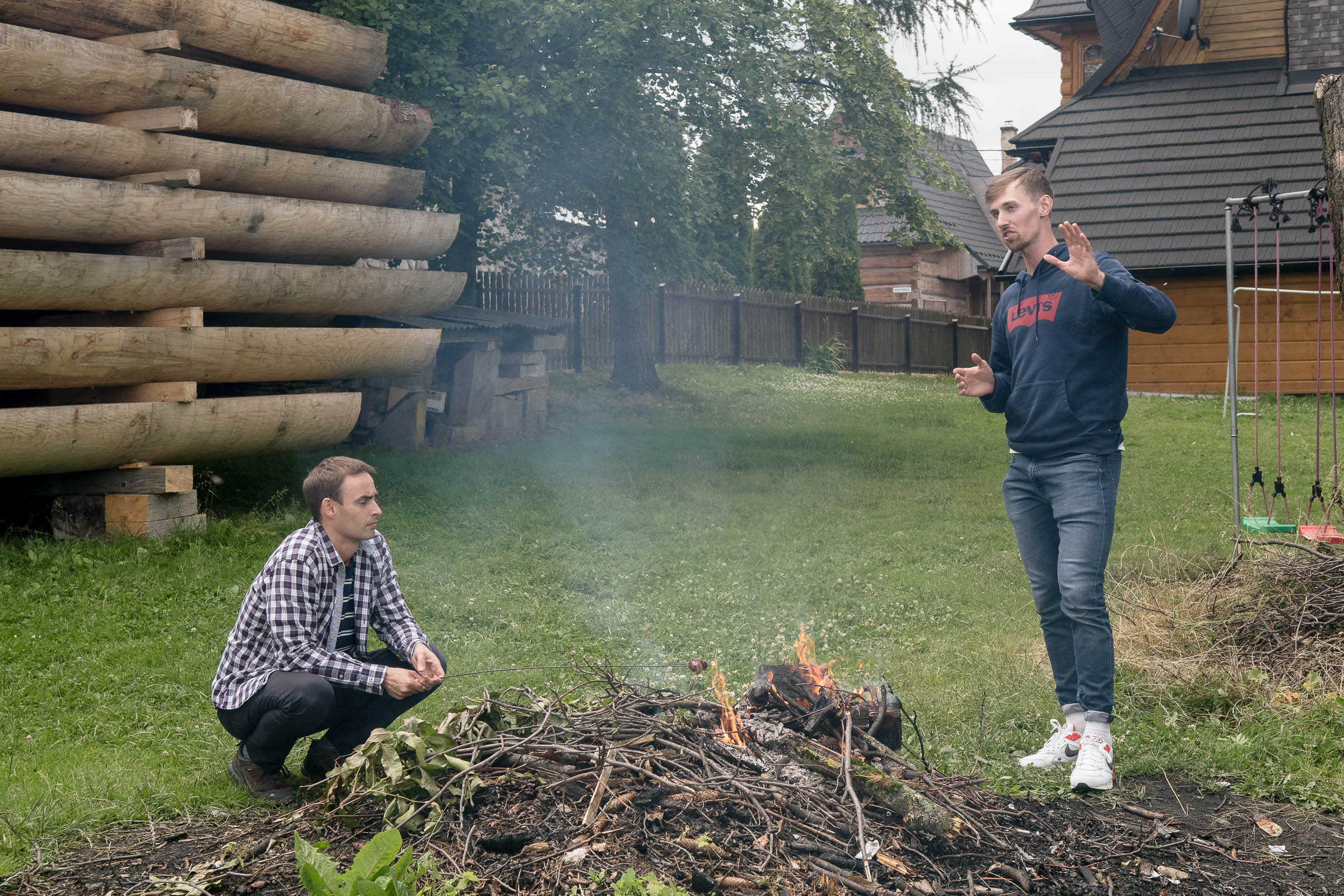
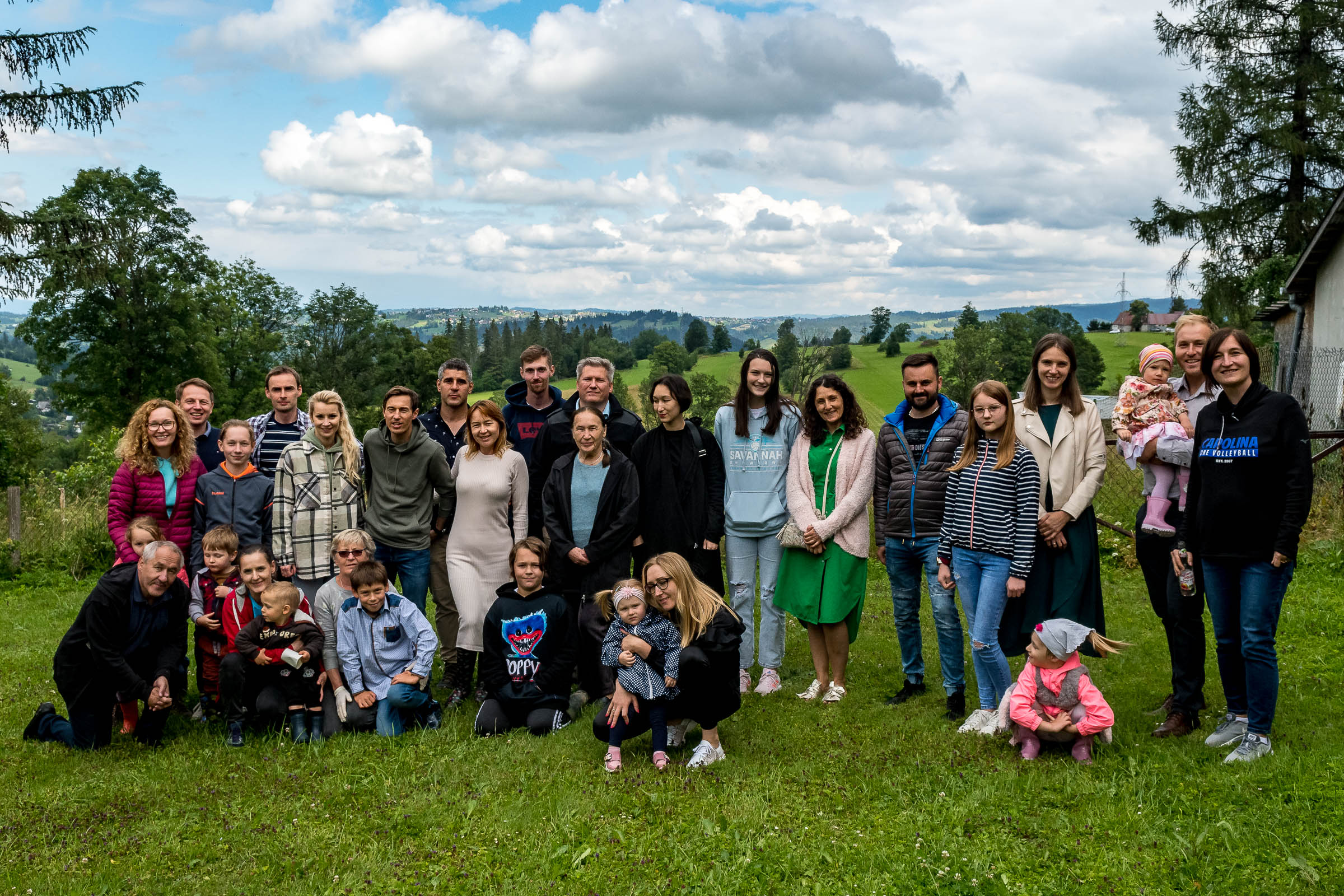
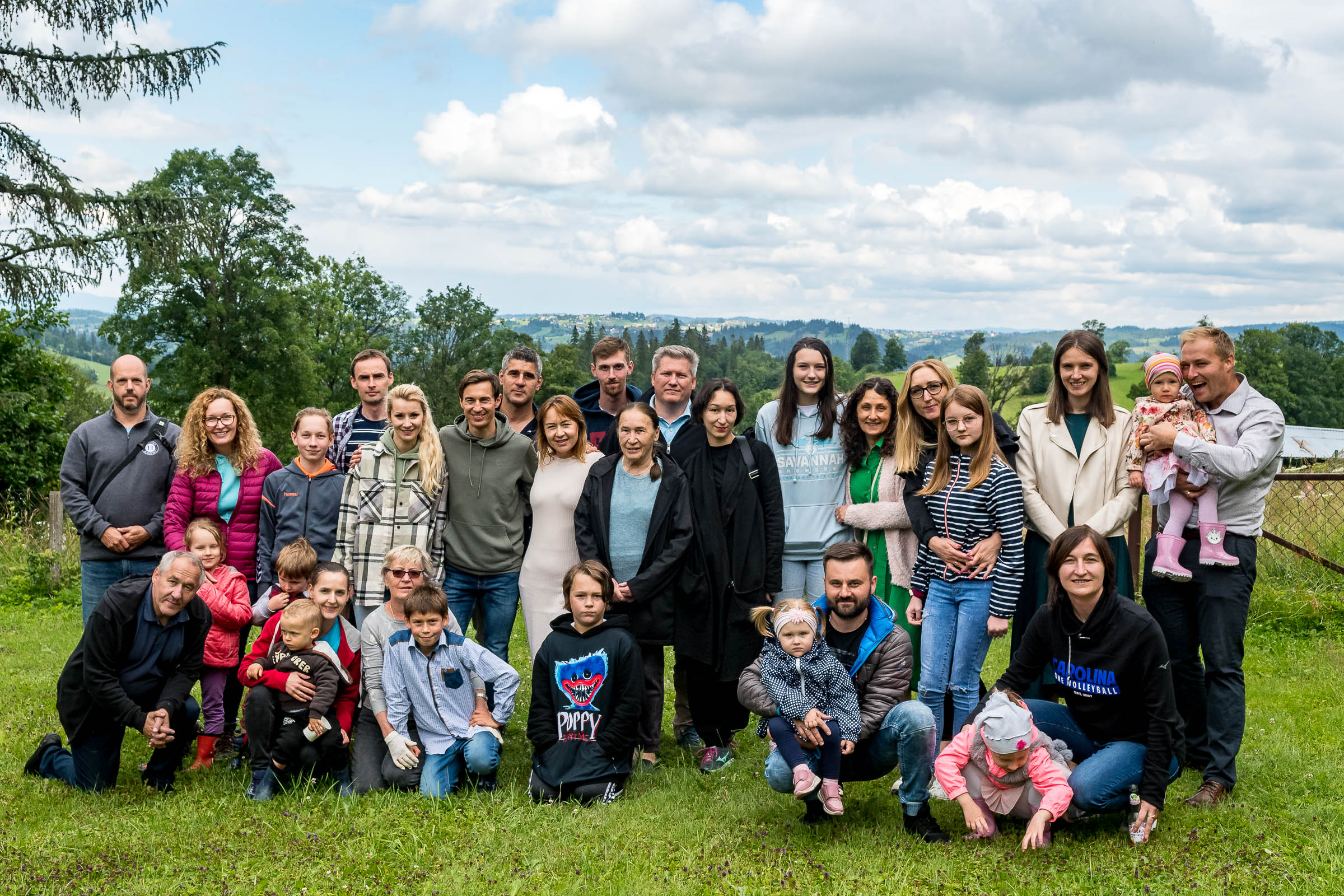
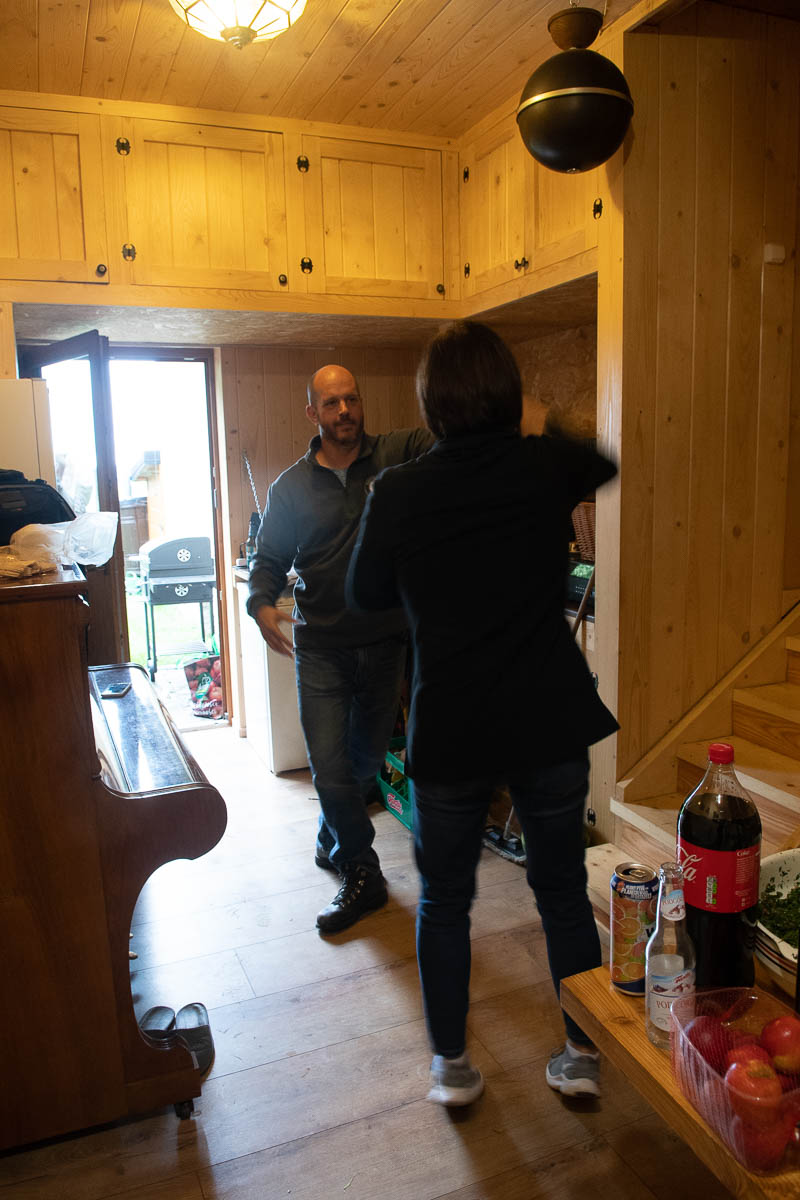
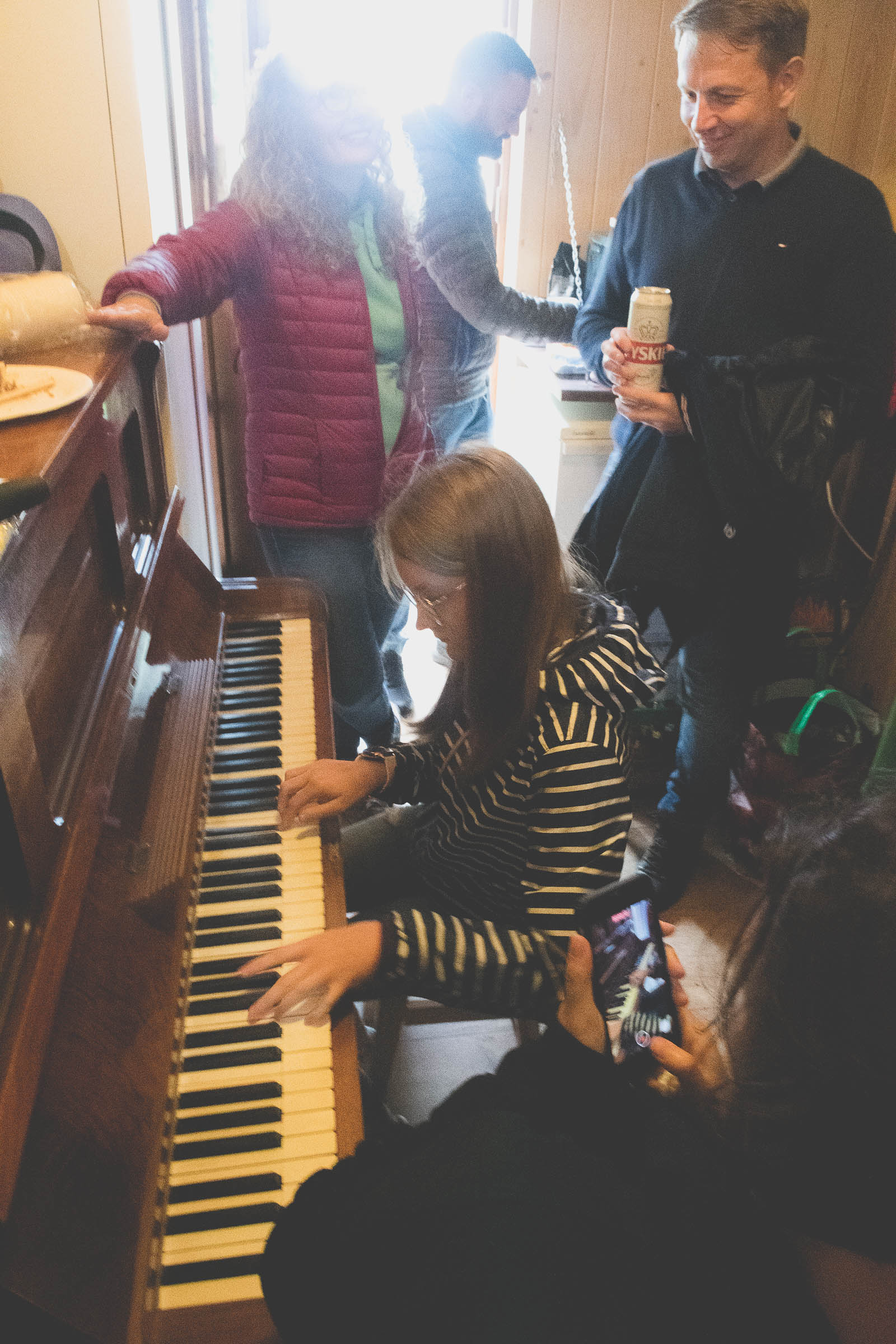
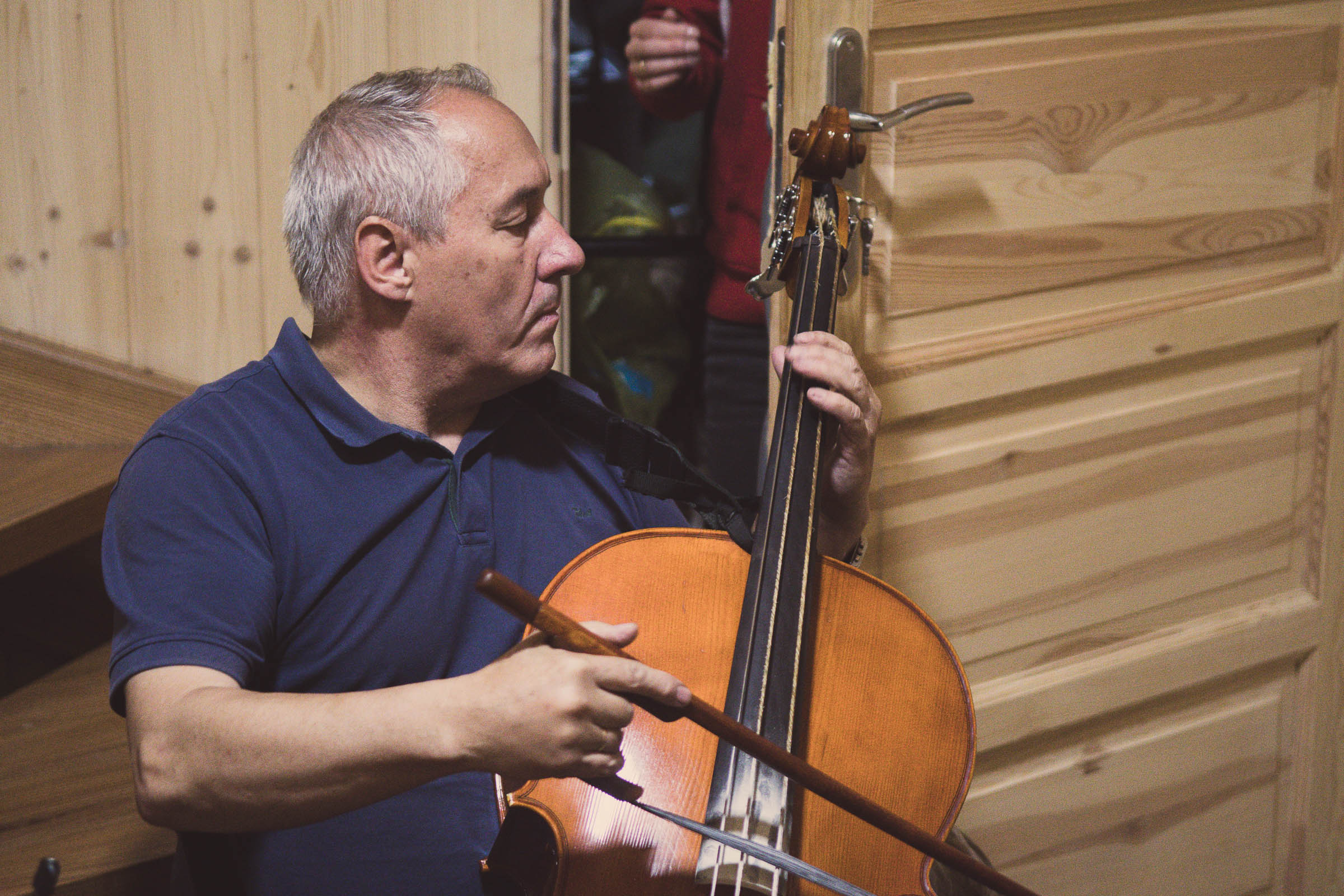
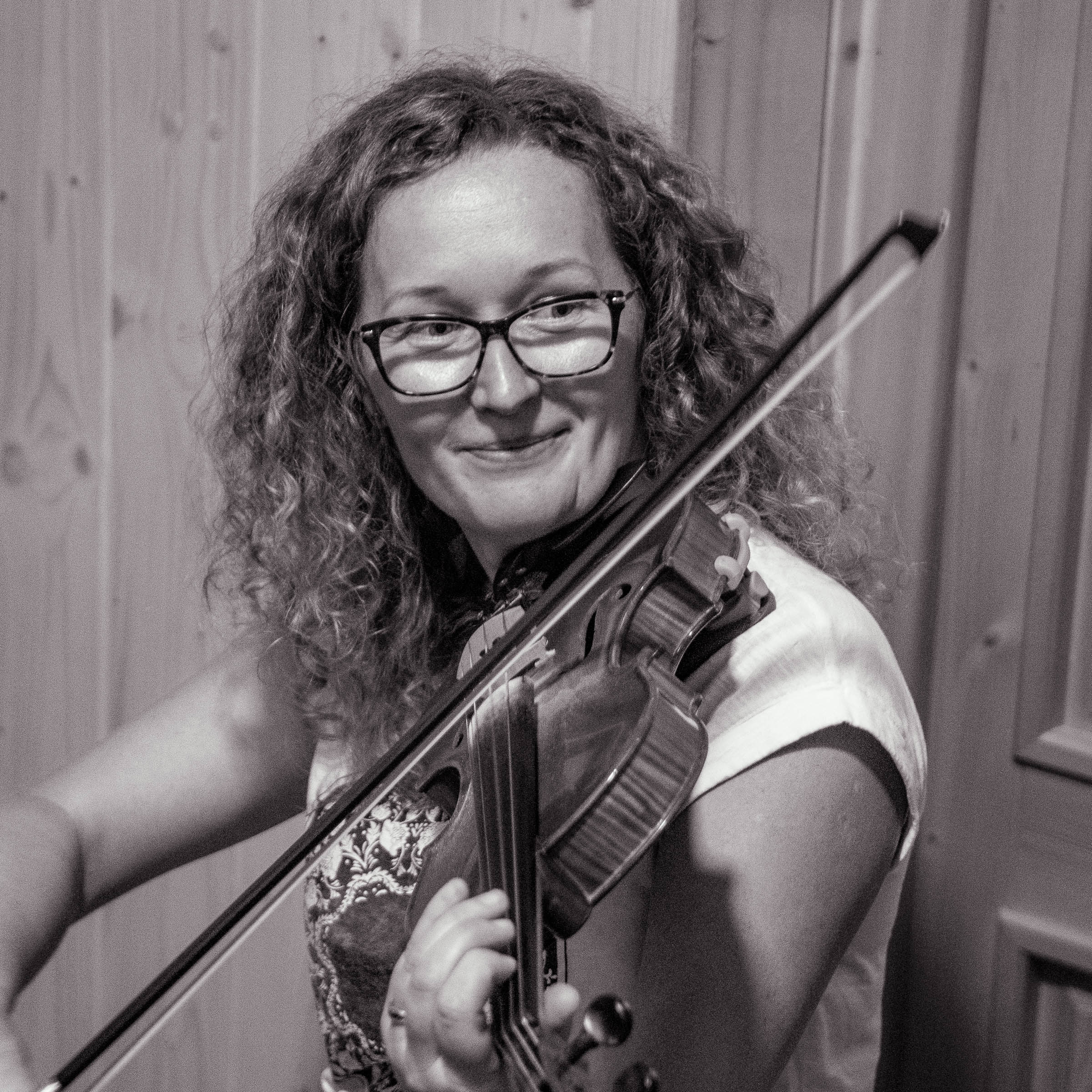
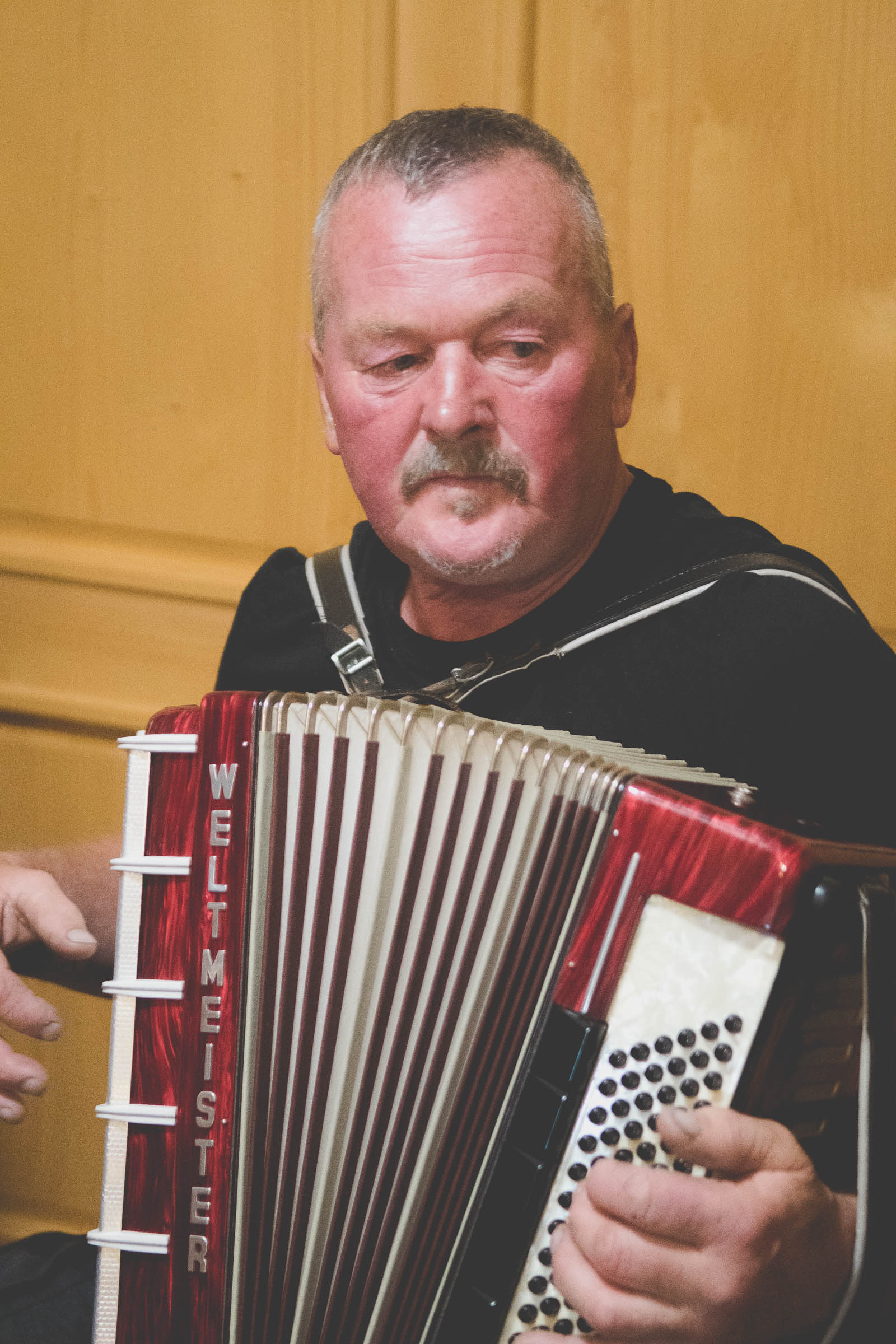
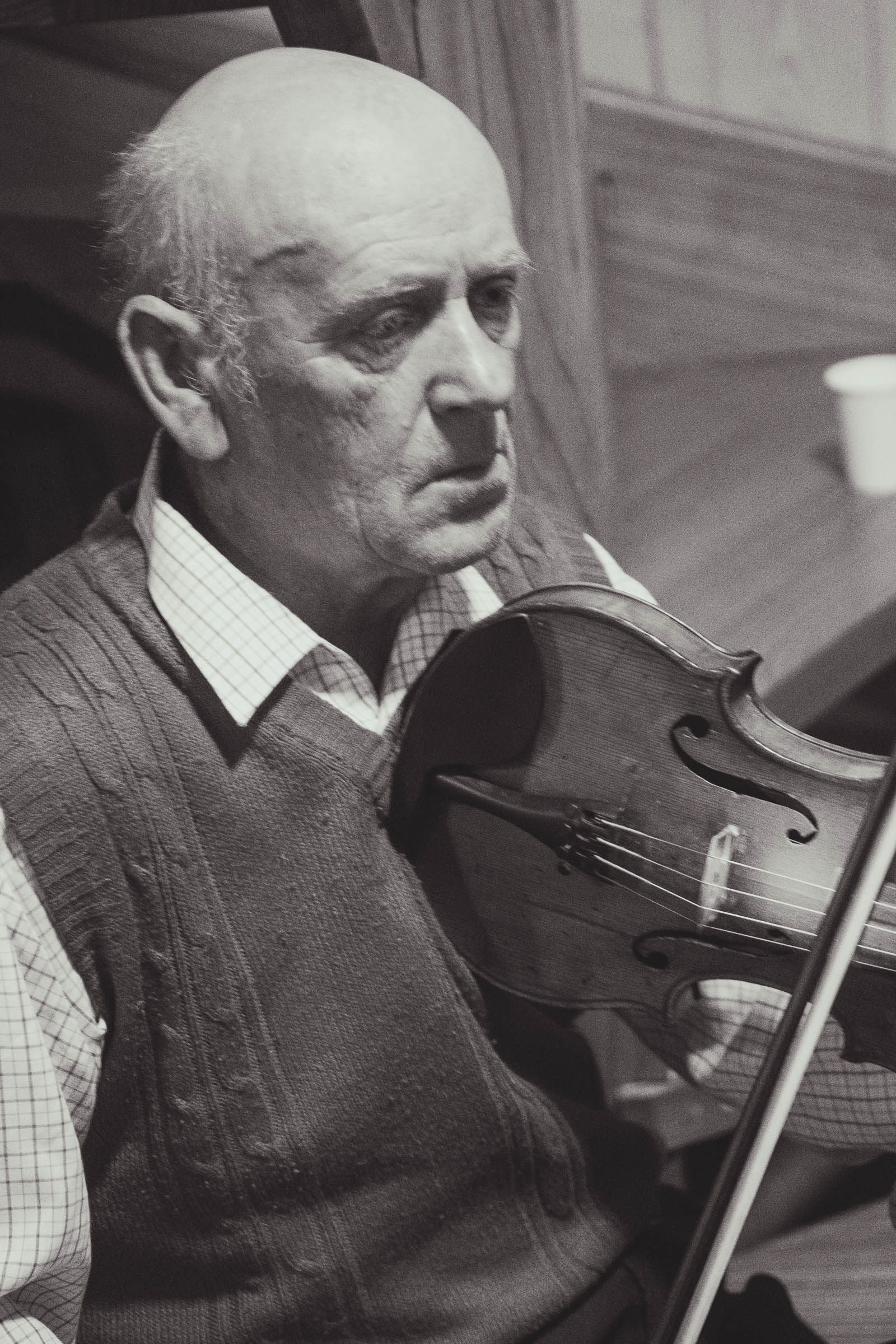
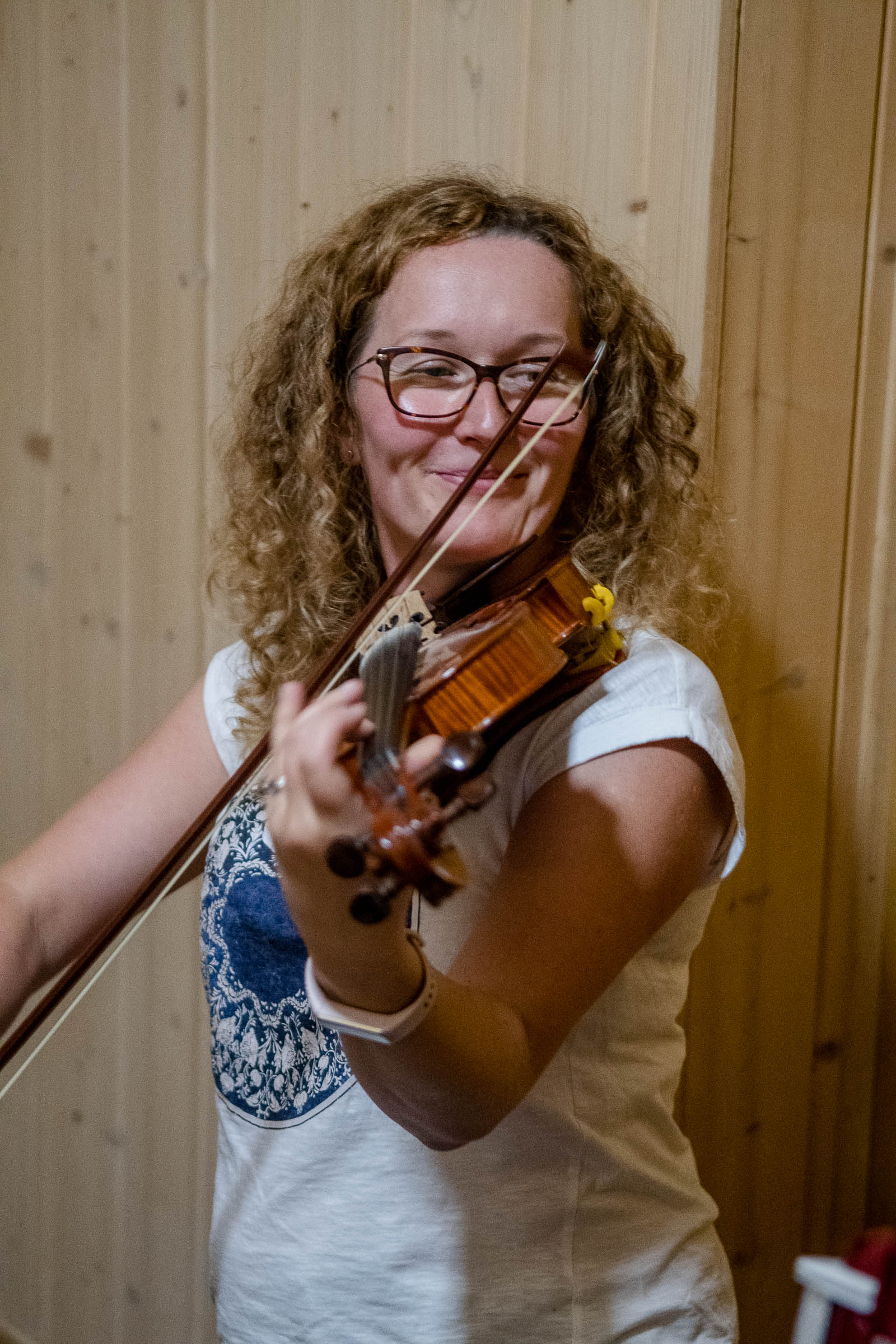
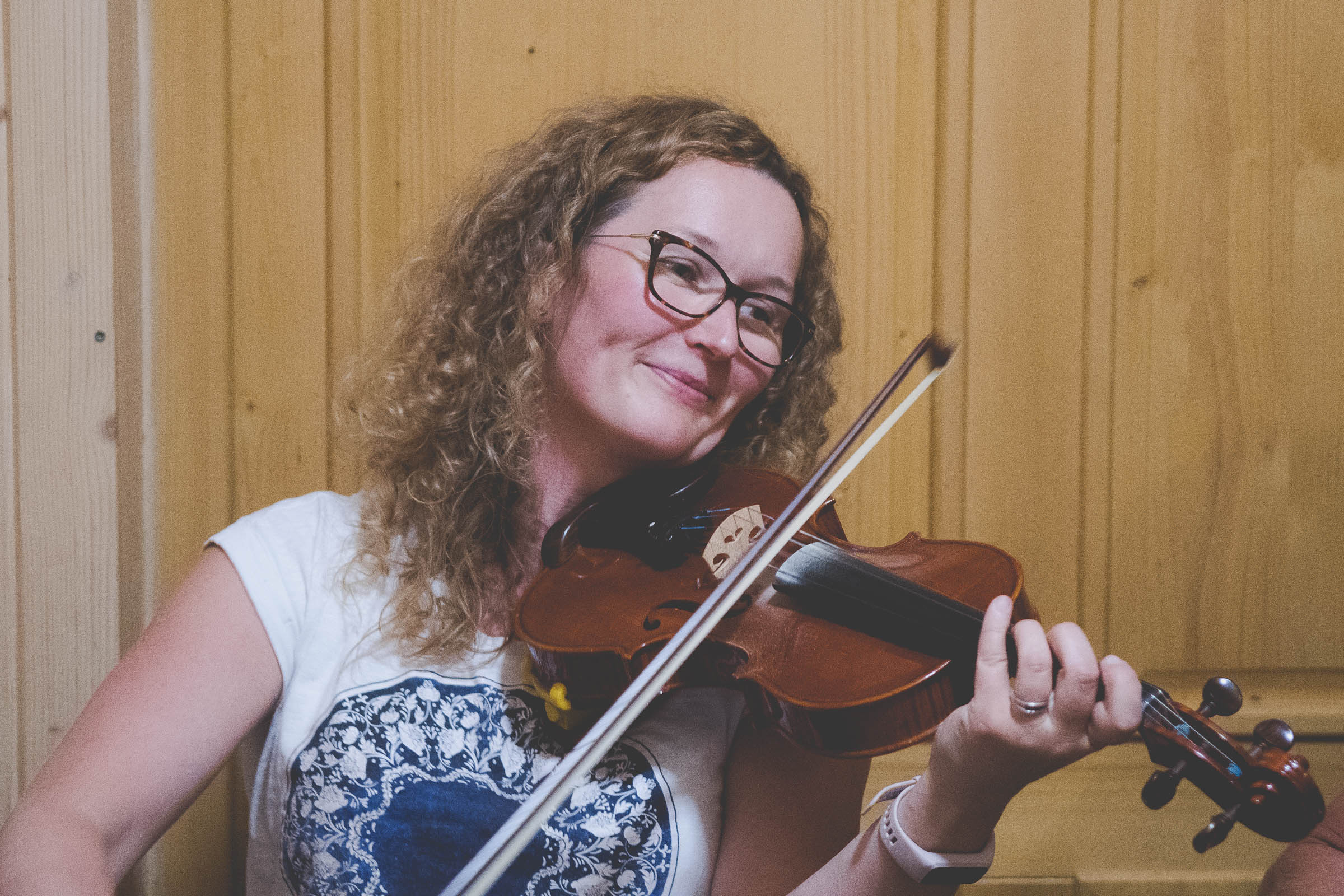
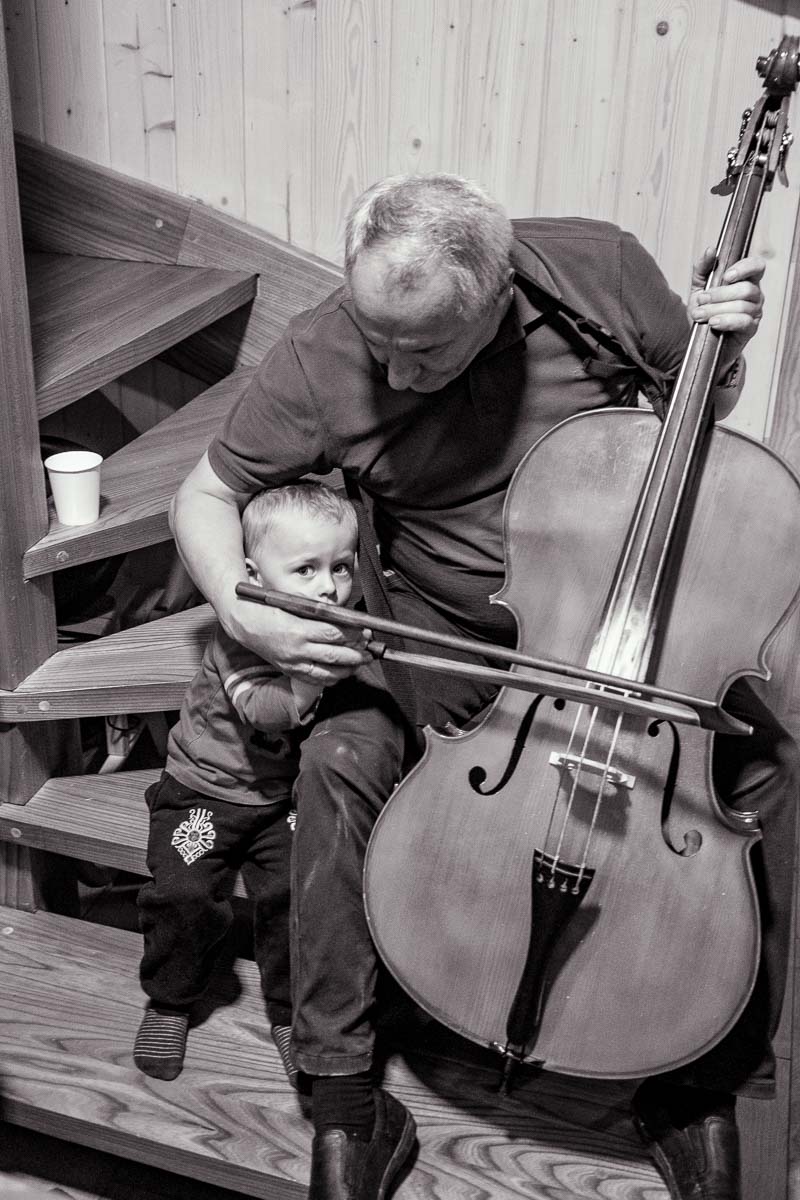
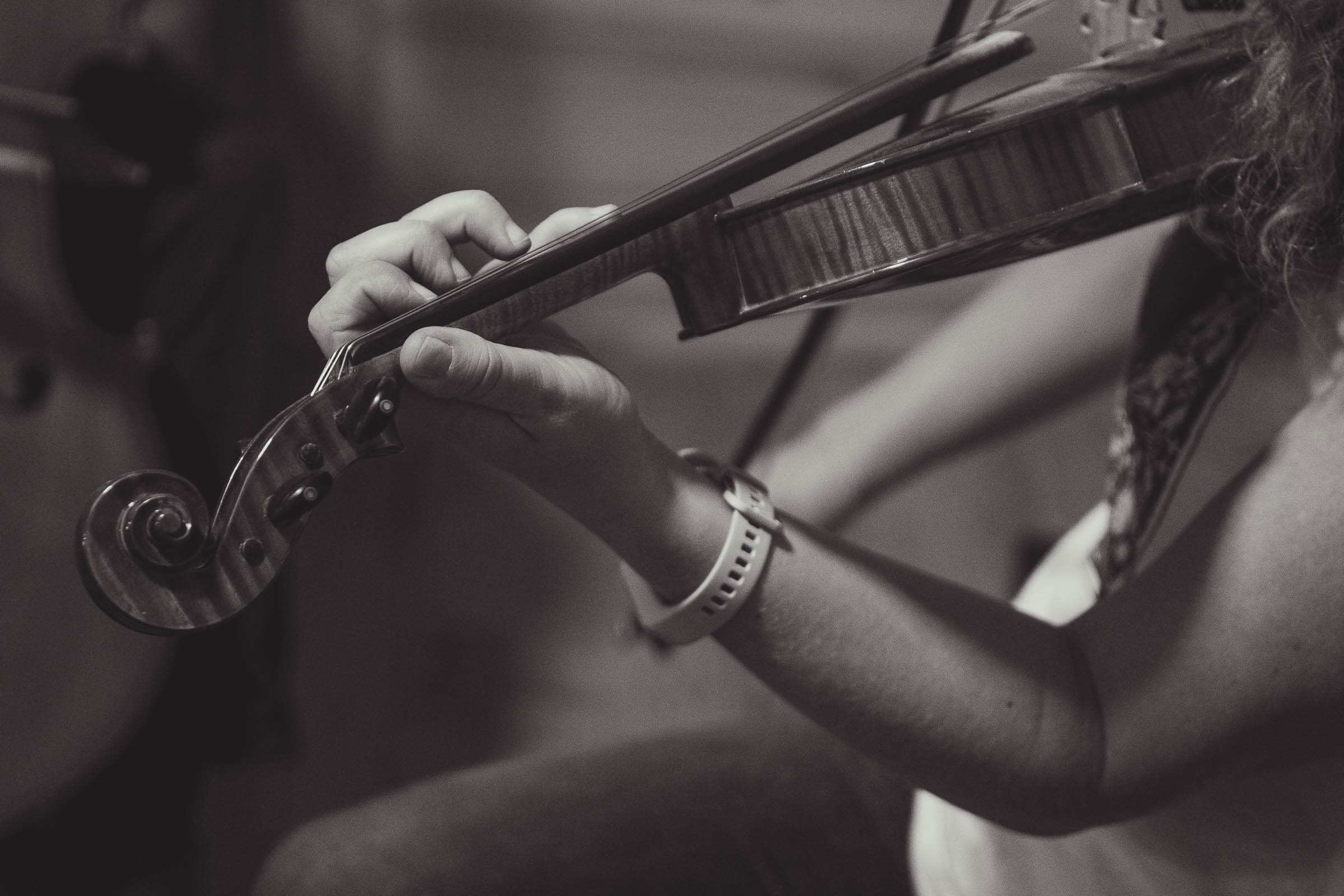
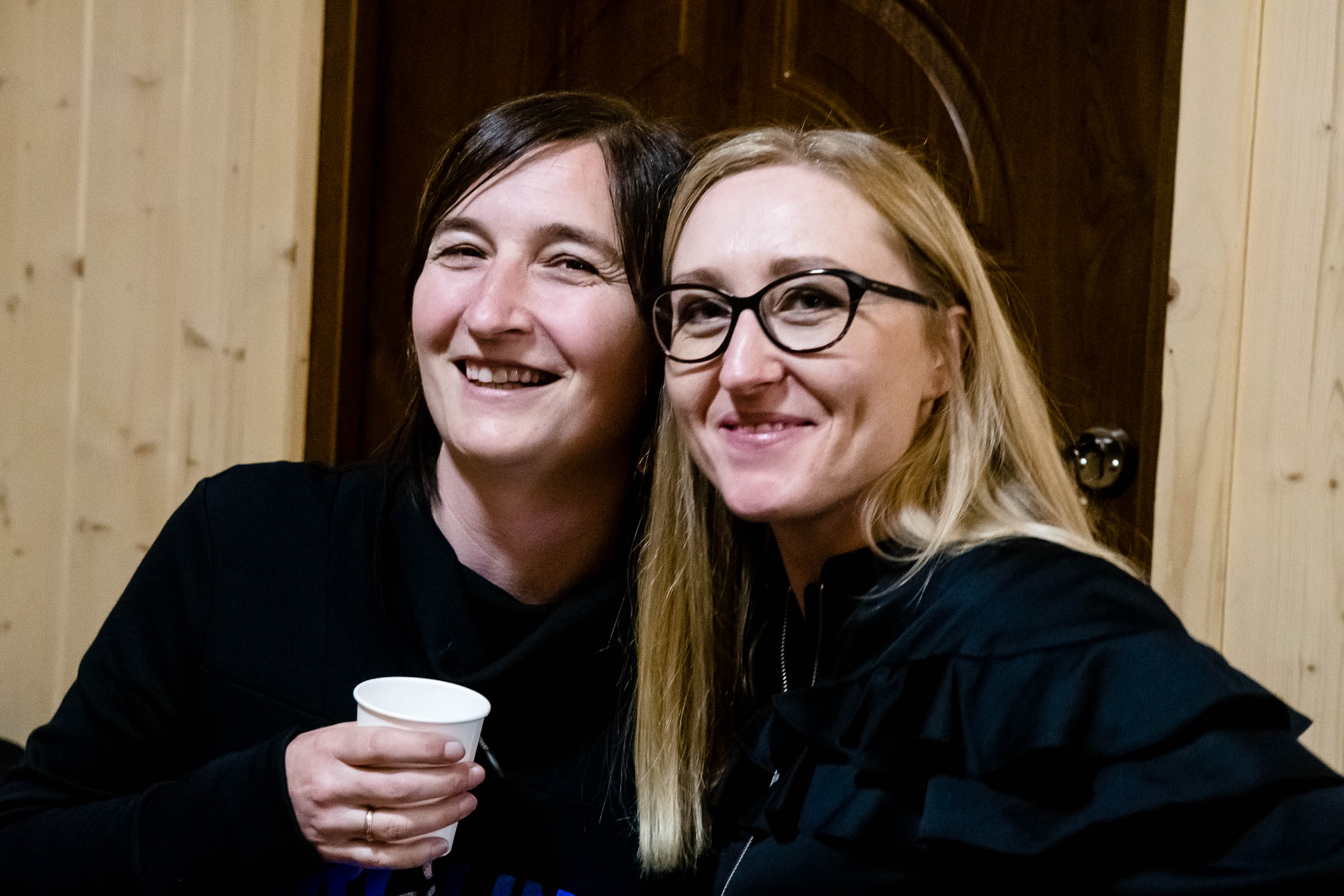
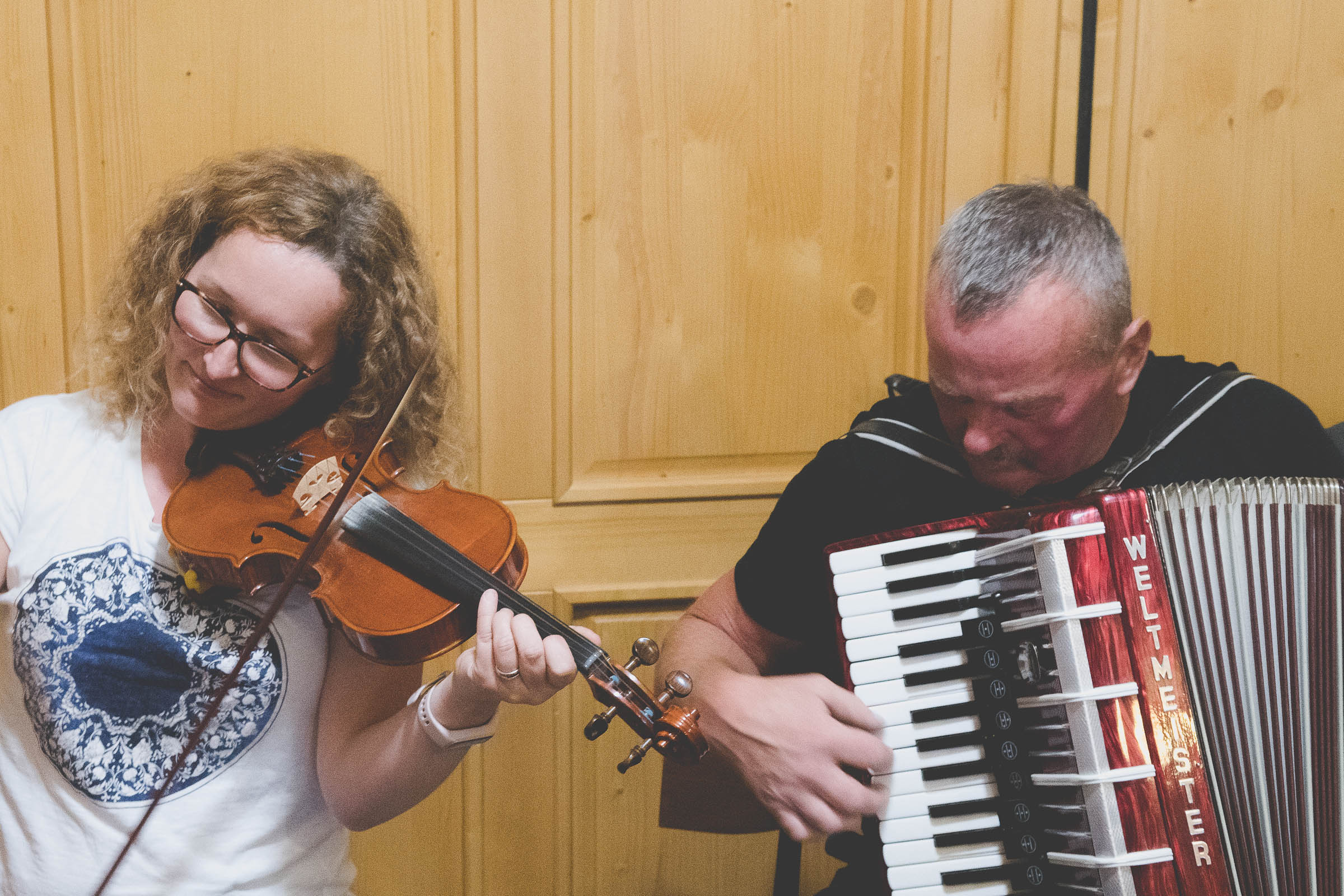
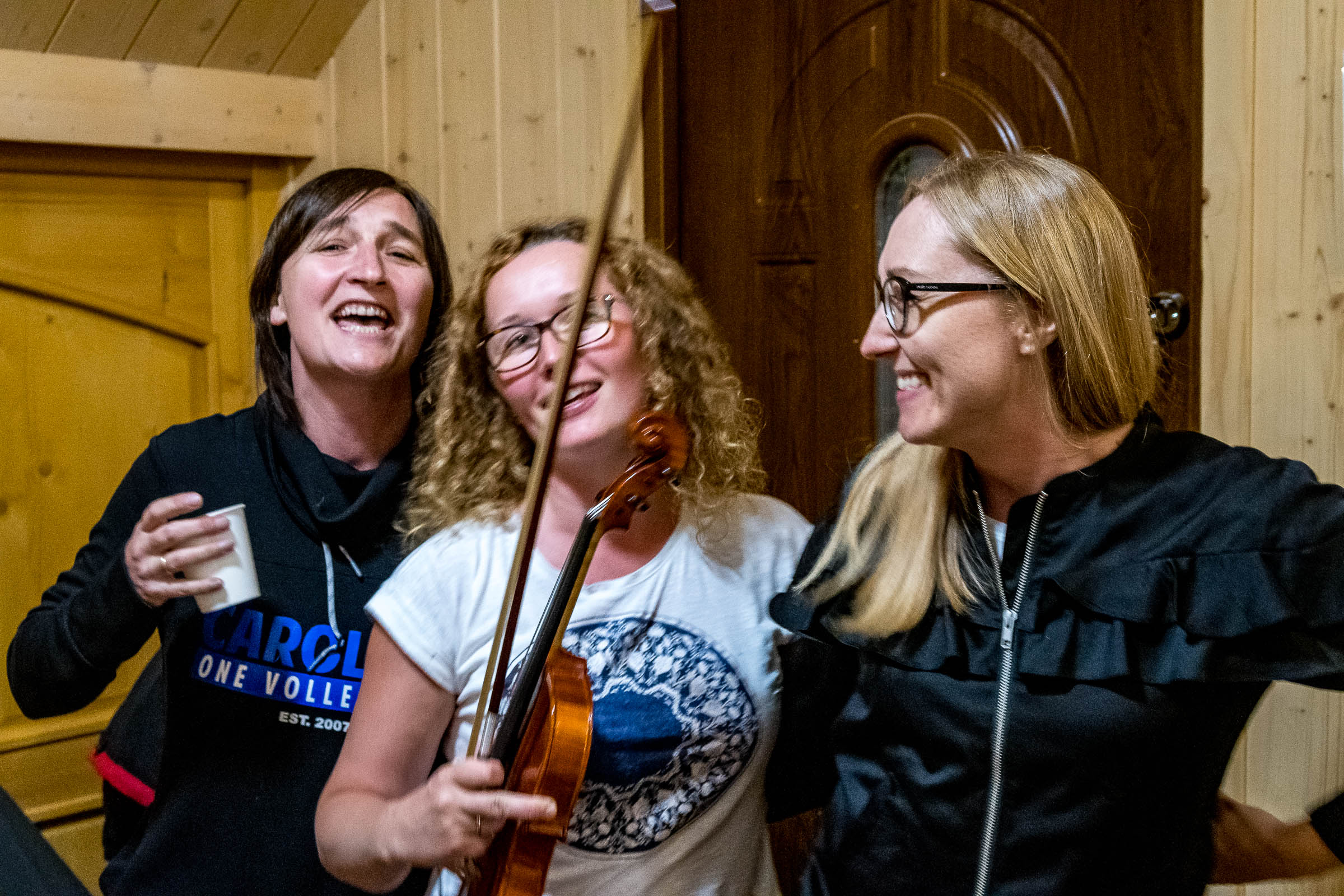
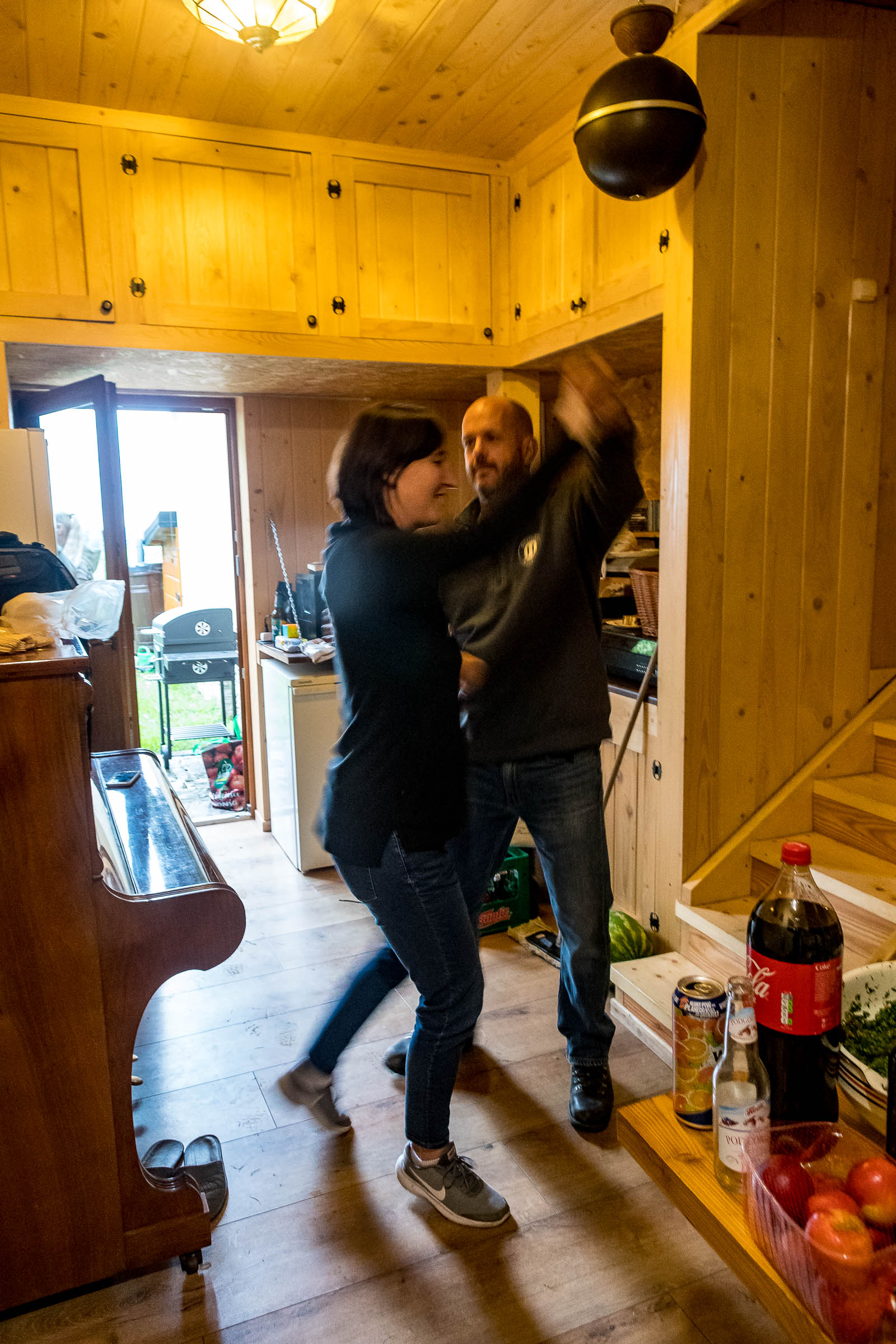
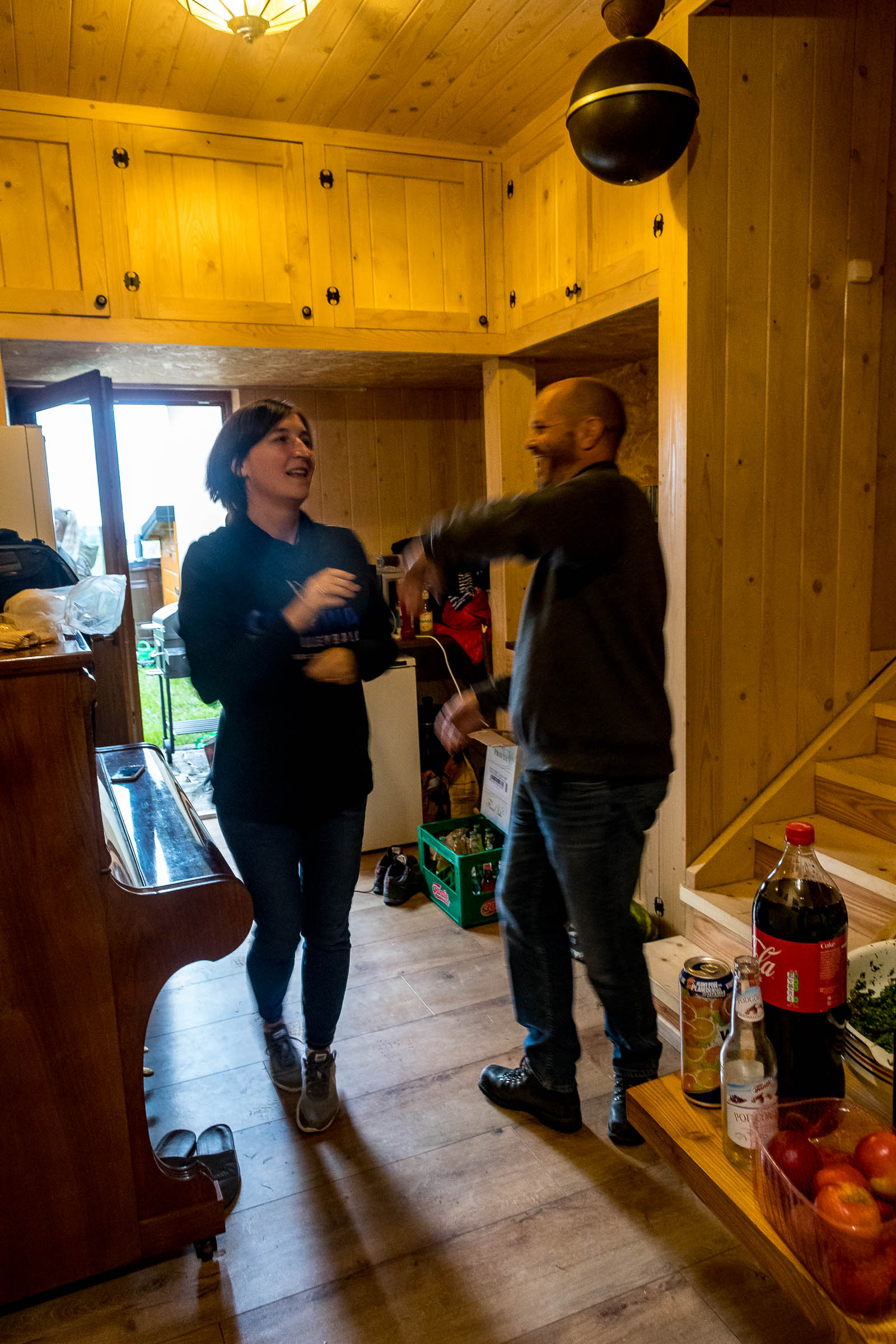
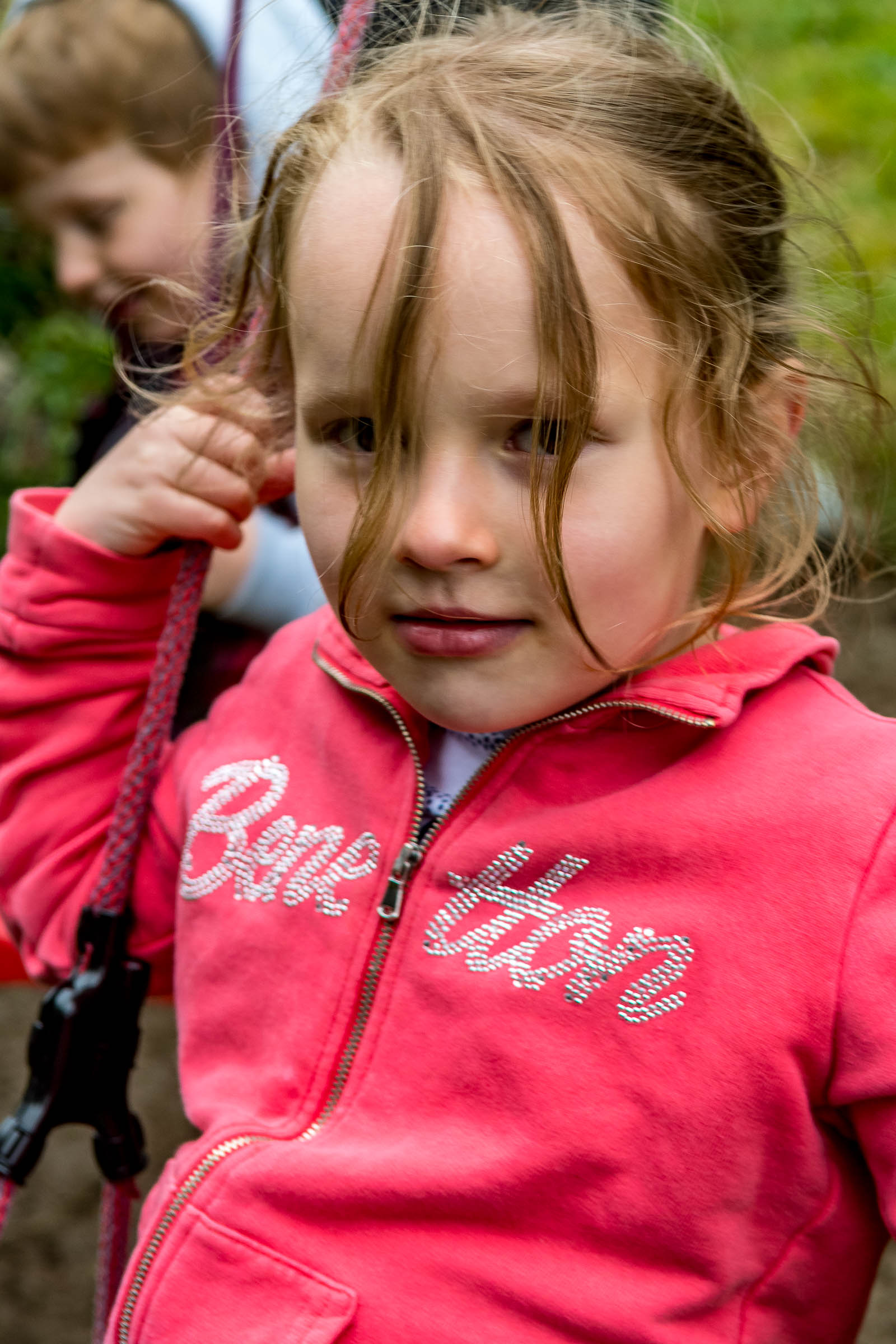
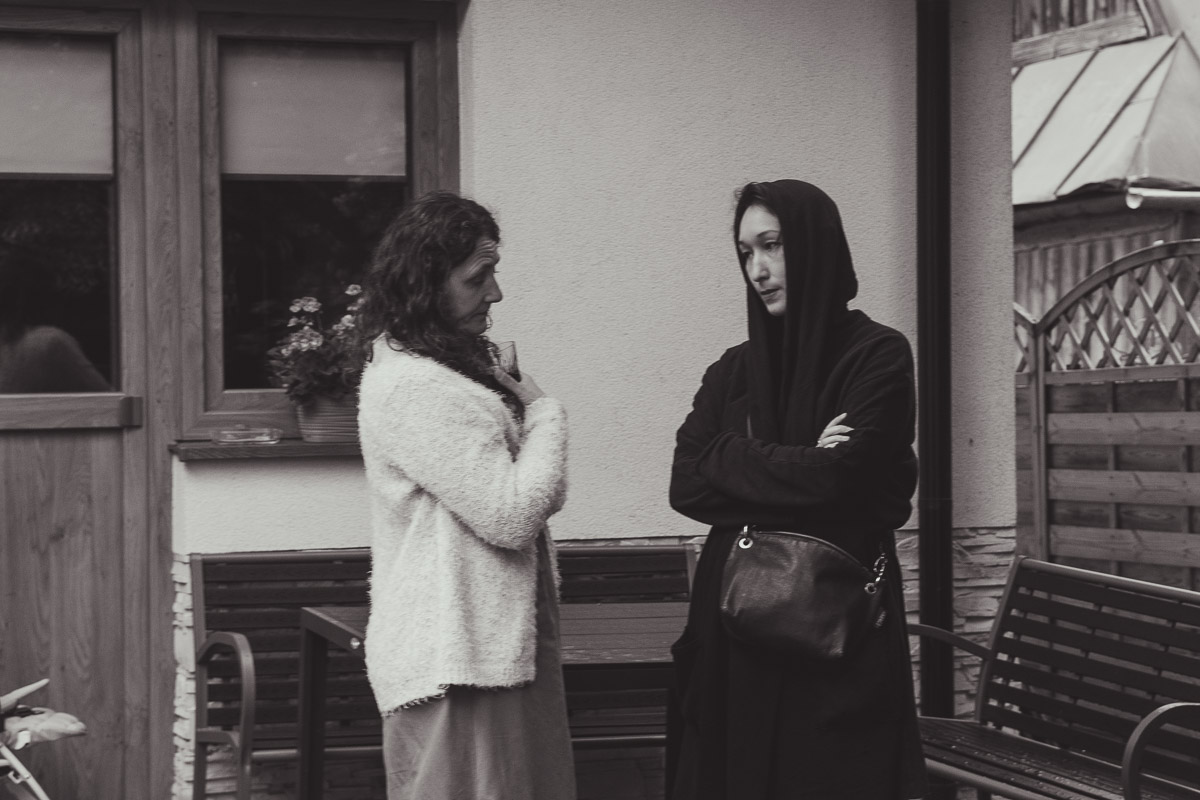
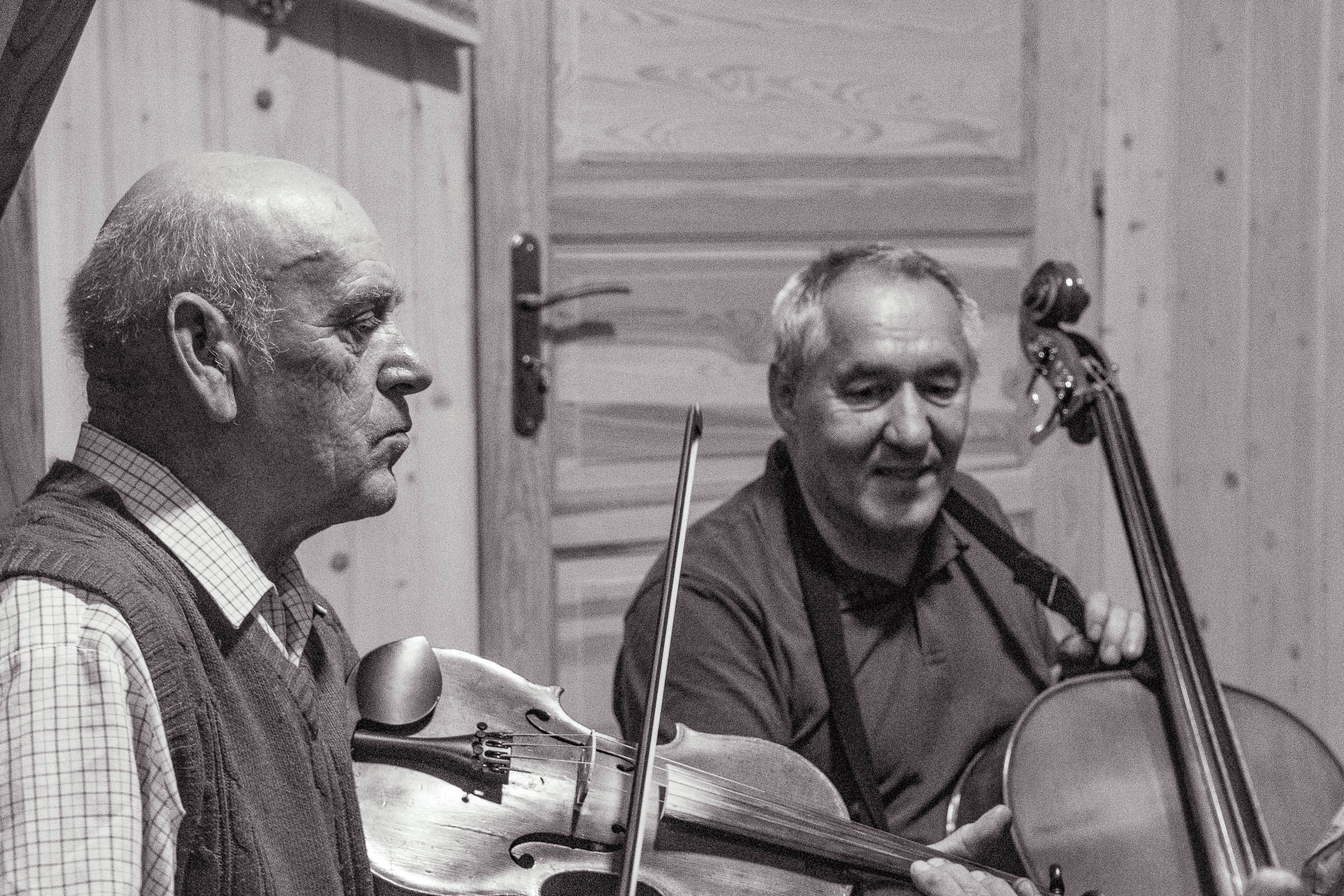
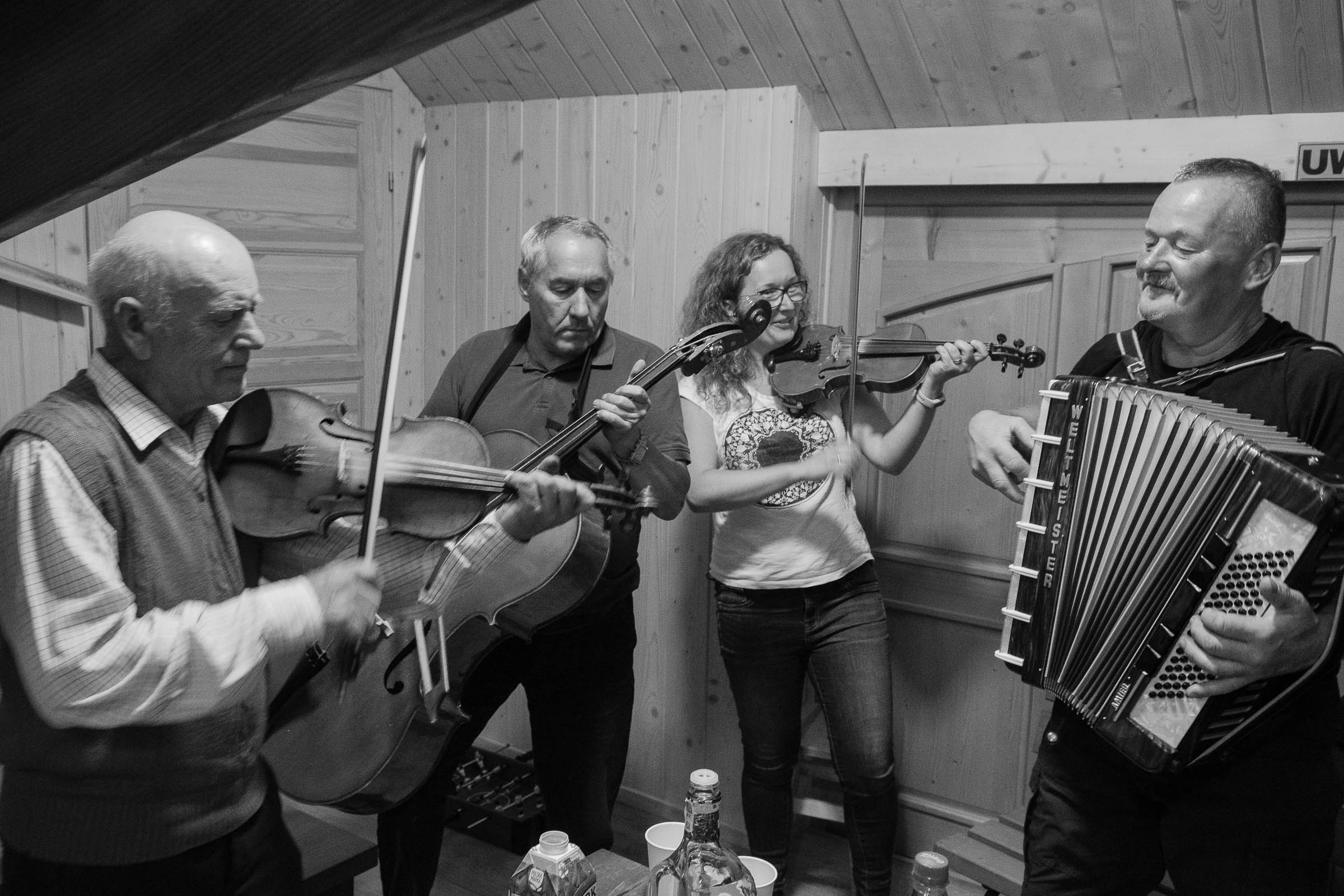
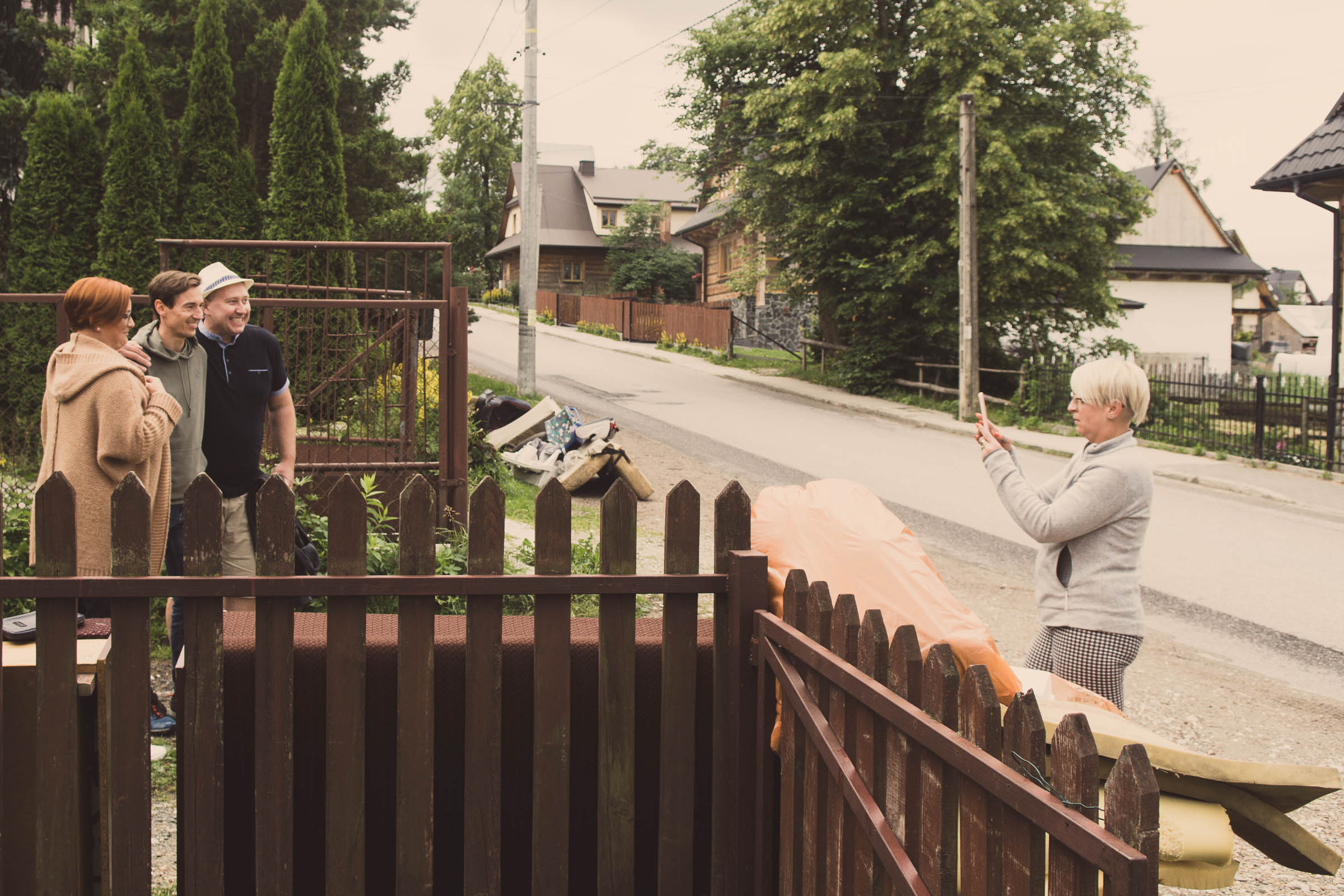
And of course, there was music.
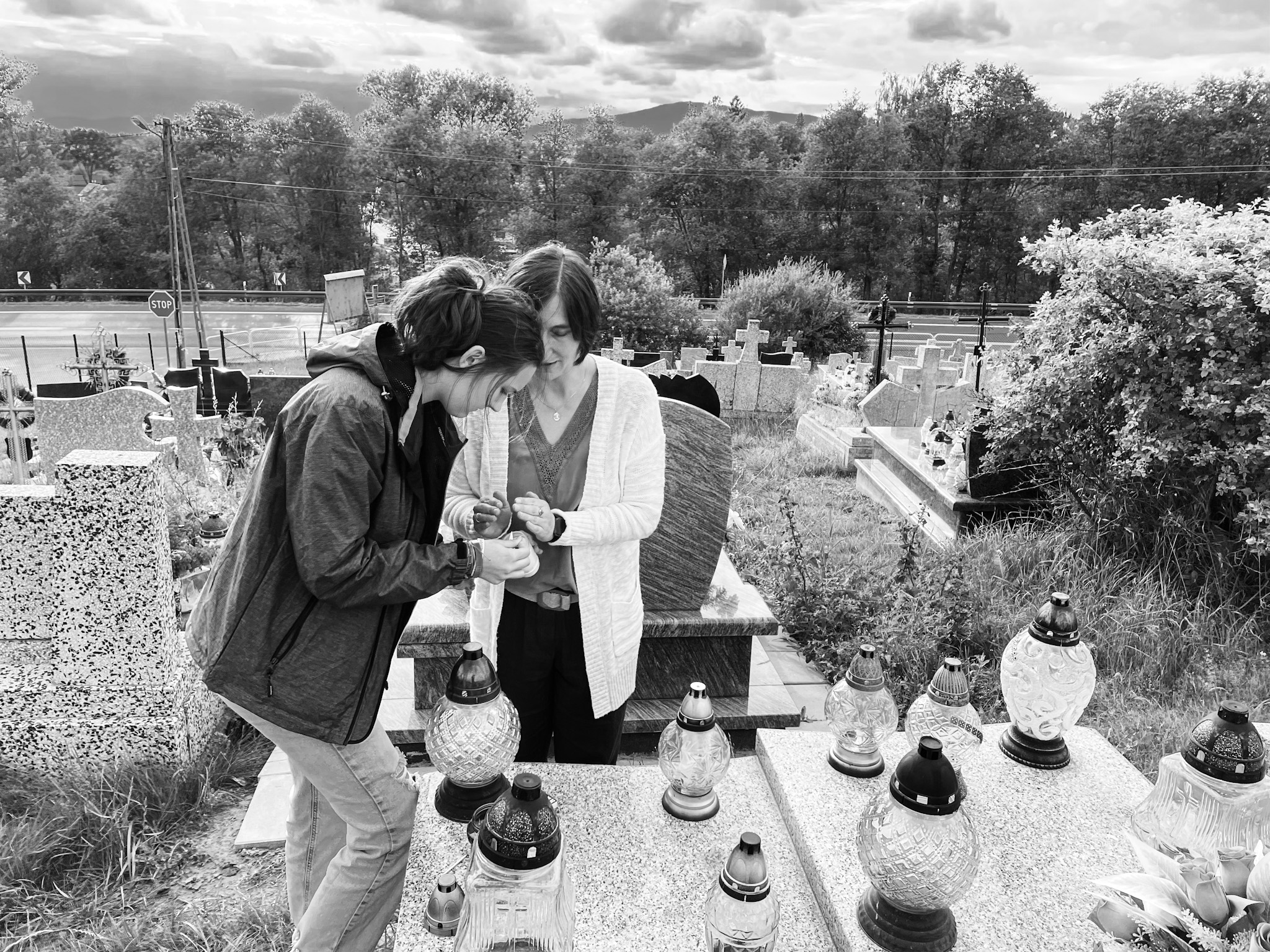
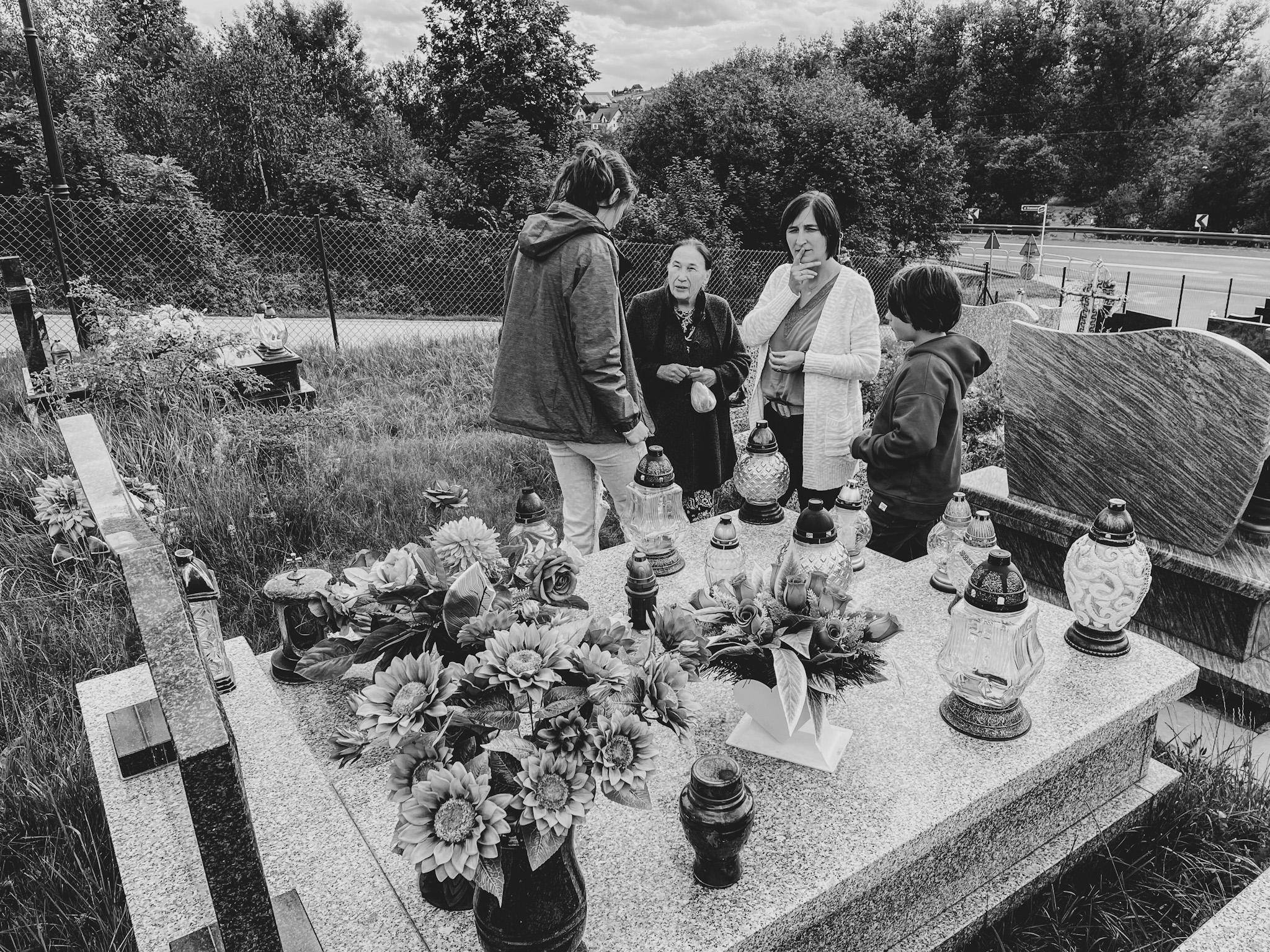
I keep repeating myself: X is always a highlight of our time in Polska. When you come here only every few years, I guess everything becomes a highlight. Still, going to Pyzowka to visit K’s dearest friend D and her family has to count as a highlight no matter how you define it.
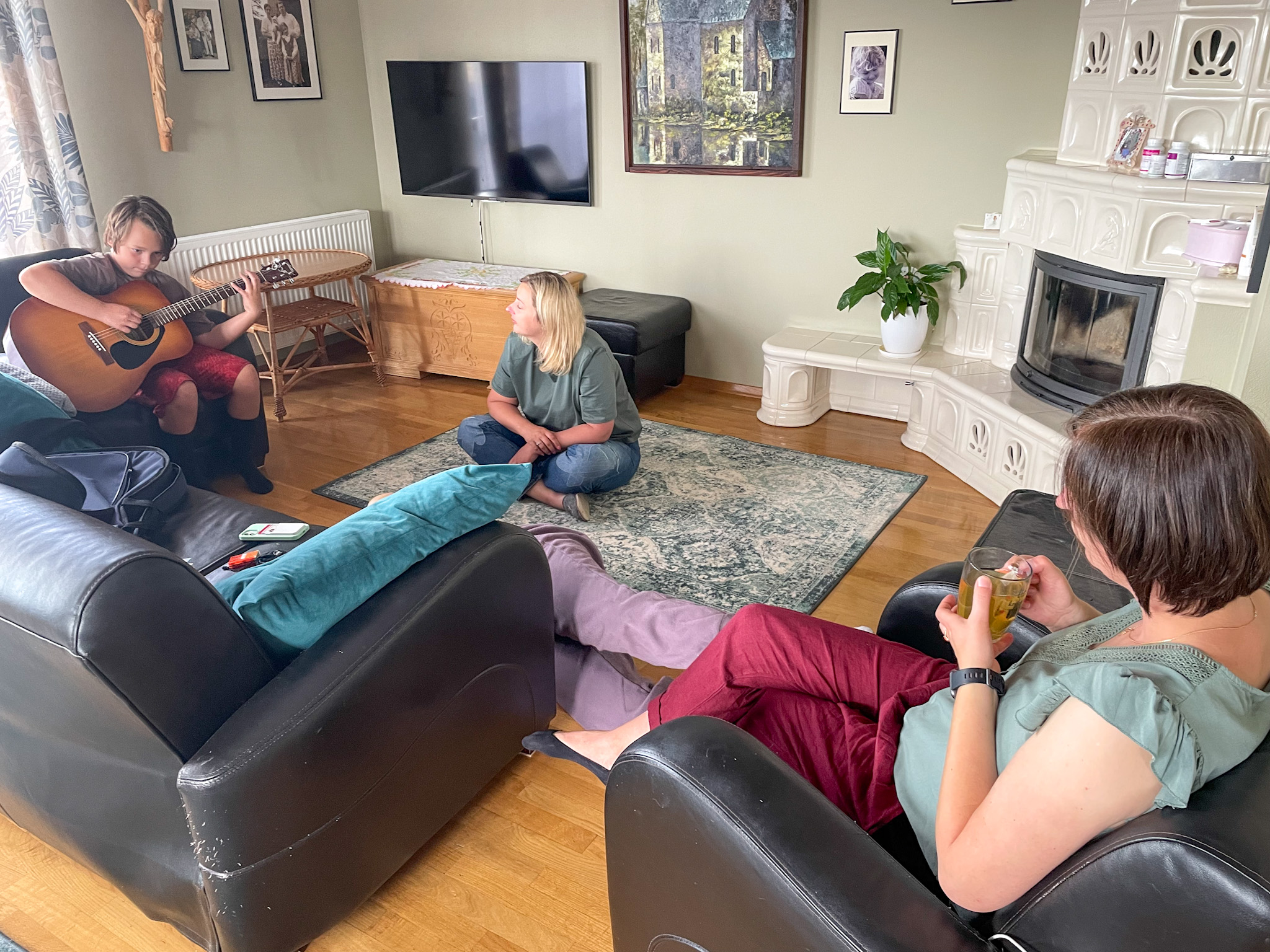
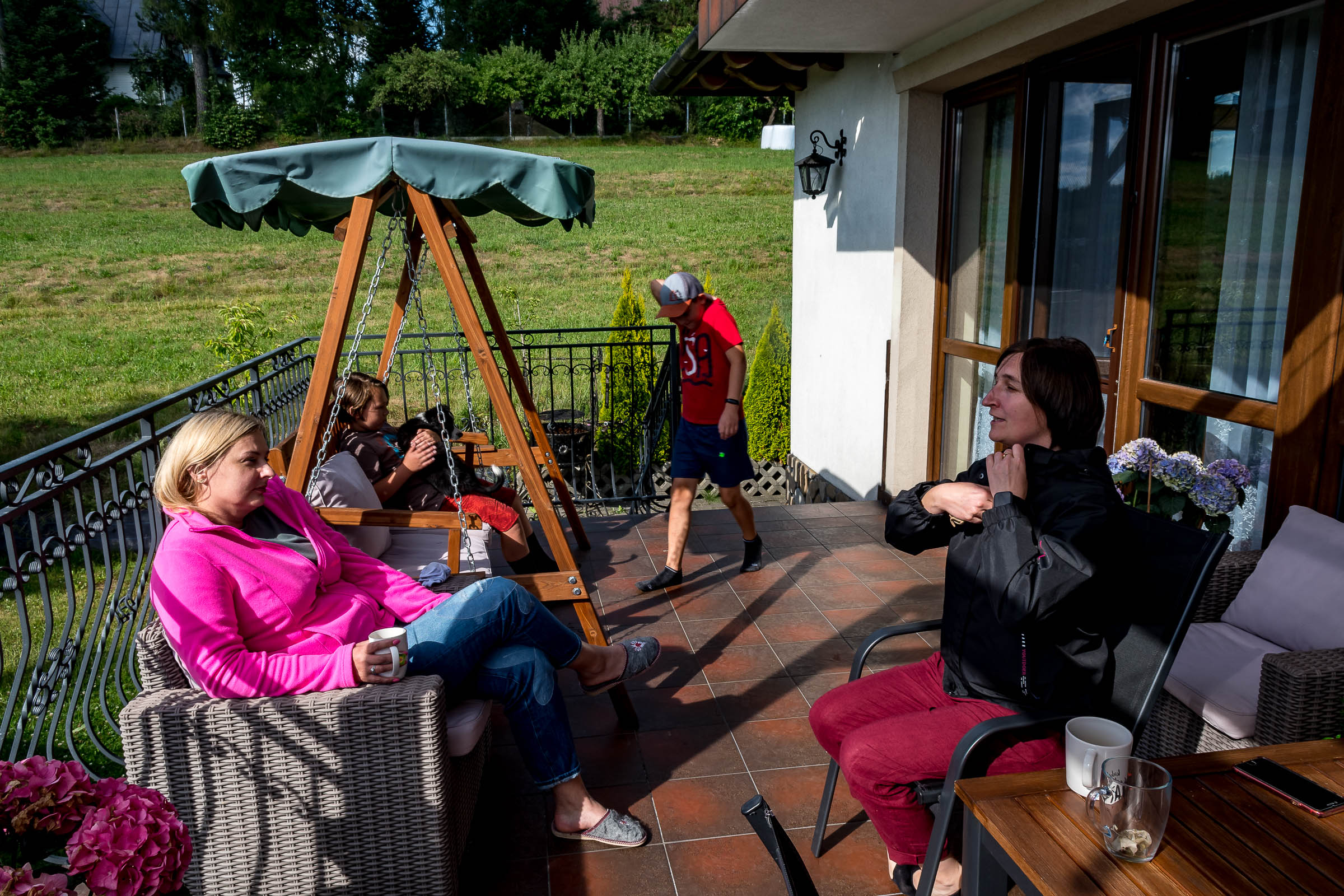
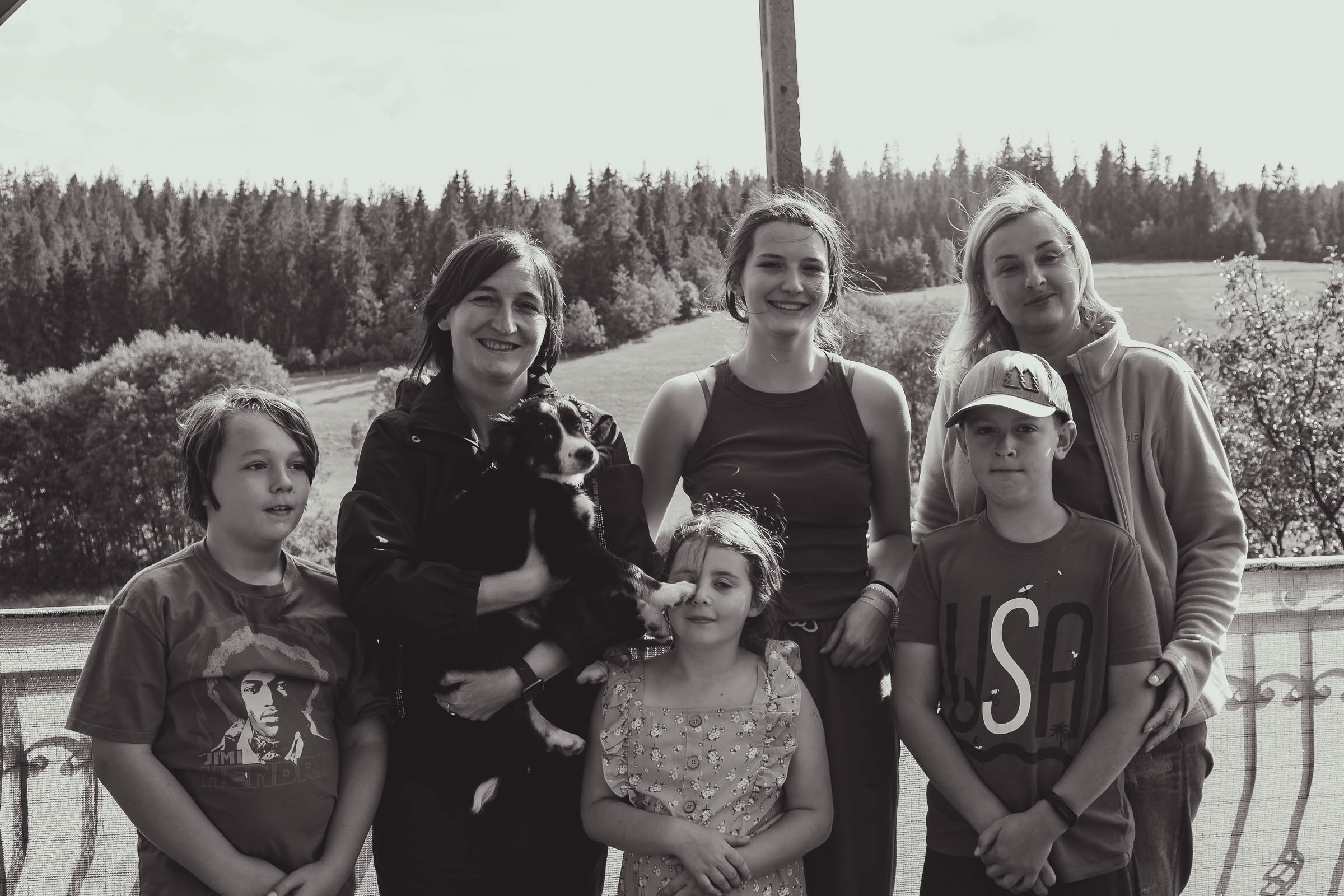
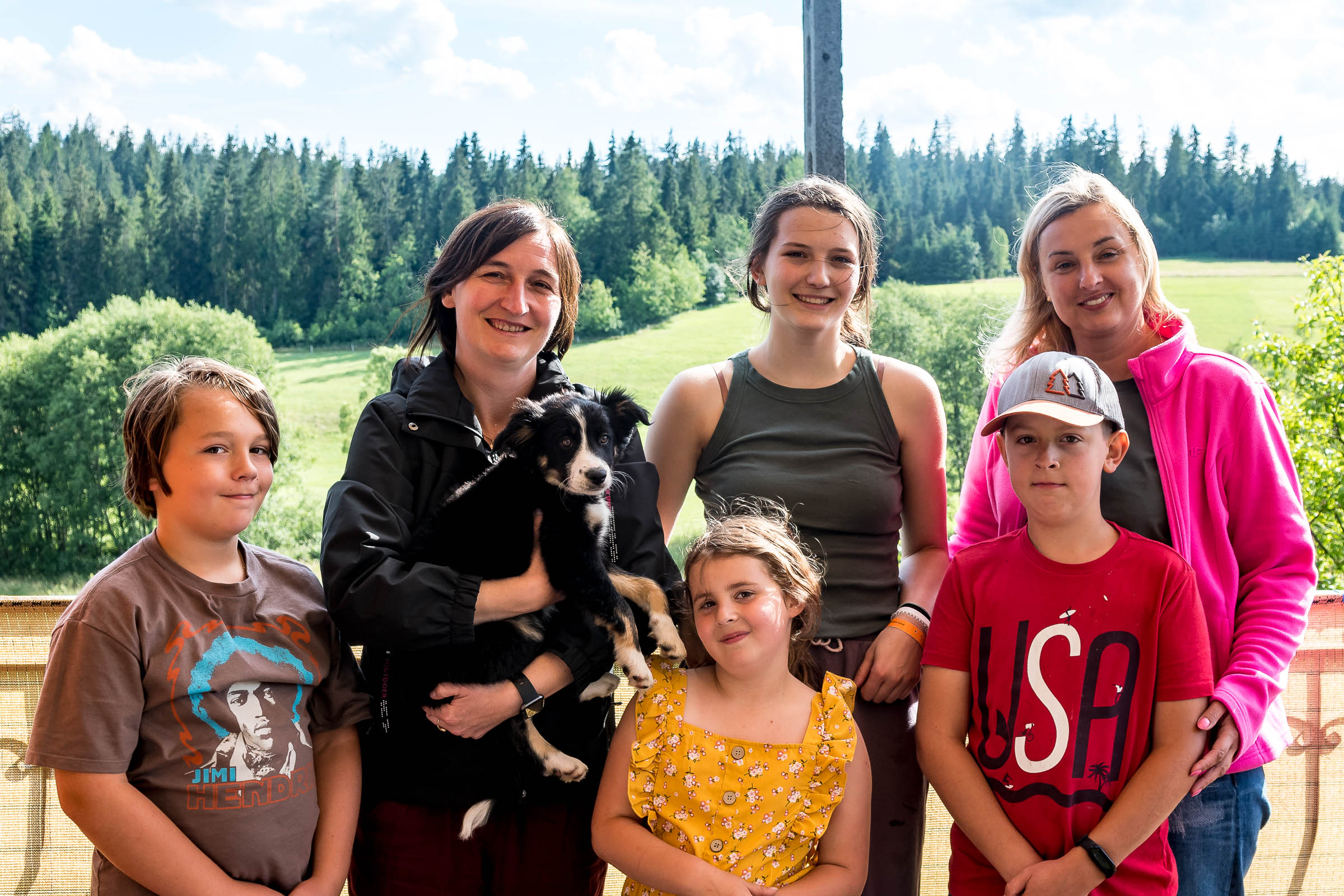
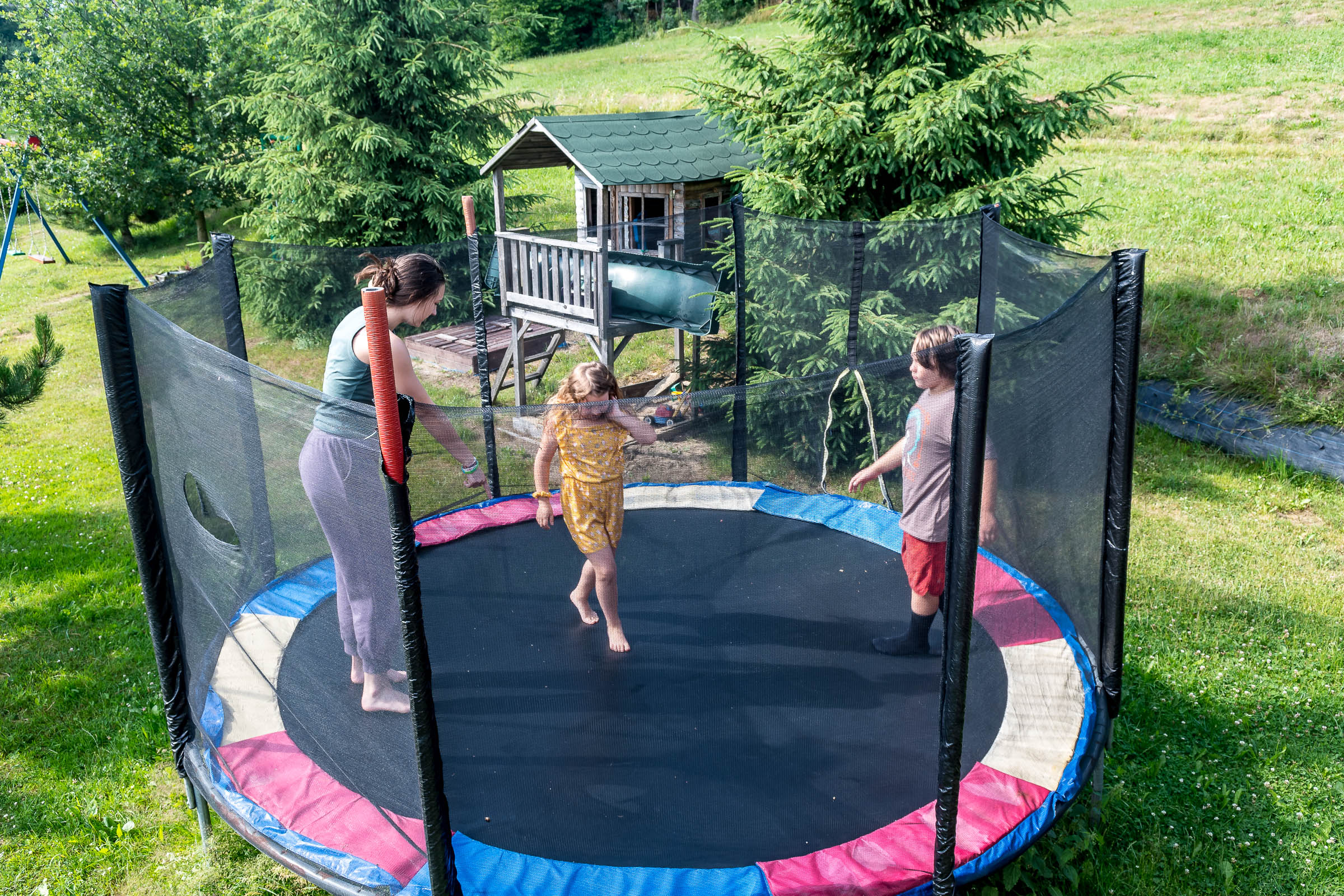
D is the type of friend you have that, no matter how much time has passed since your last visit, the years disappear in an instant and except for the topics of conversation, your relationship feels little different than it did when you were in high school together. These days, you might talk about the cost of your child applying to college versus the cost of your child going to college if you lived in the states. You might talk about friends that only one of you has seen in the last twenty years and how they’ve changed or not changed. You might talk about the cost of heating your house this year as opposed to last year. These are discussions your parents would have had years ago, but now you have them.
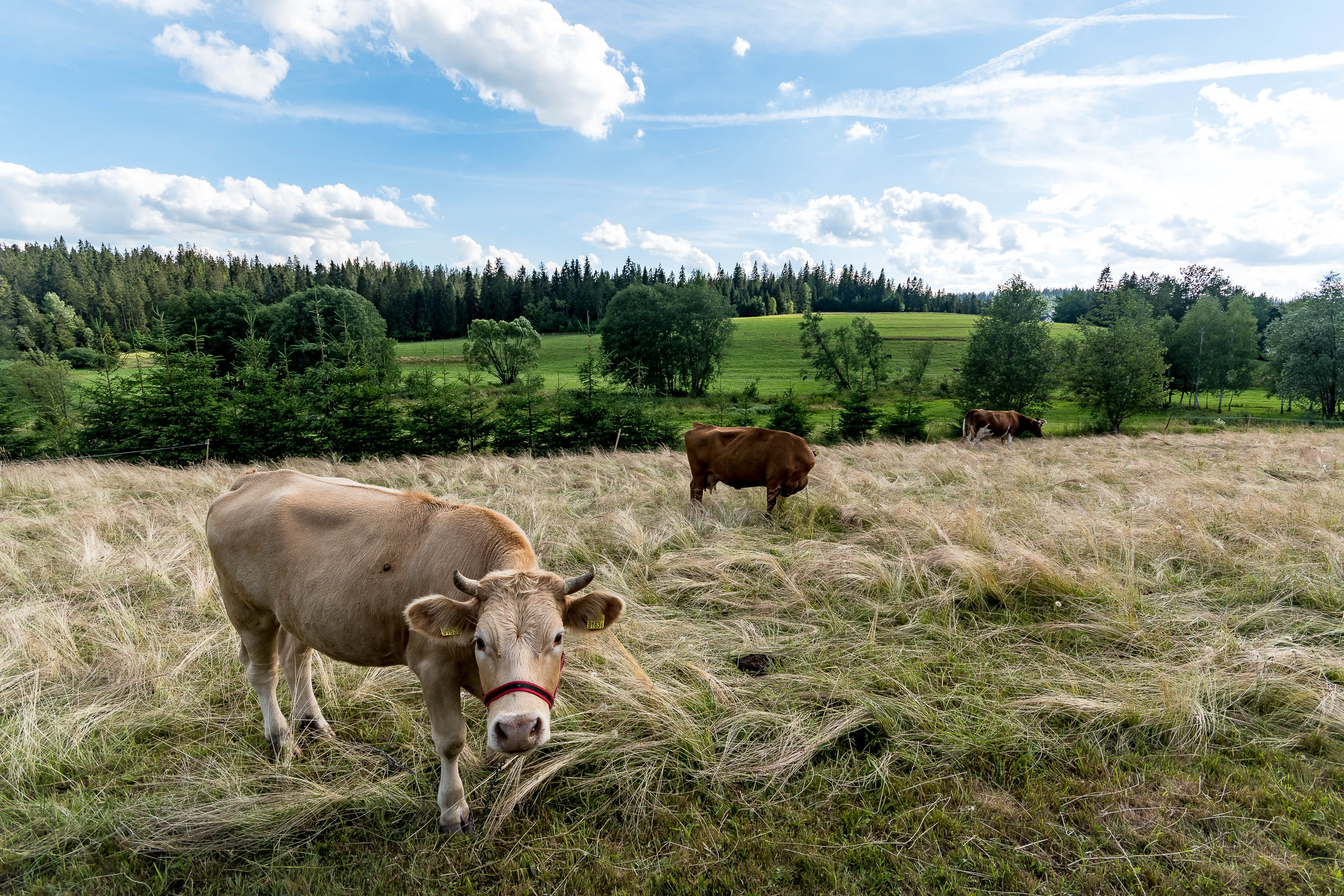
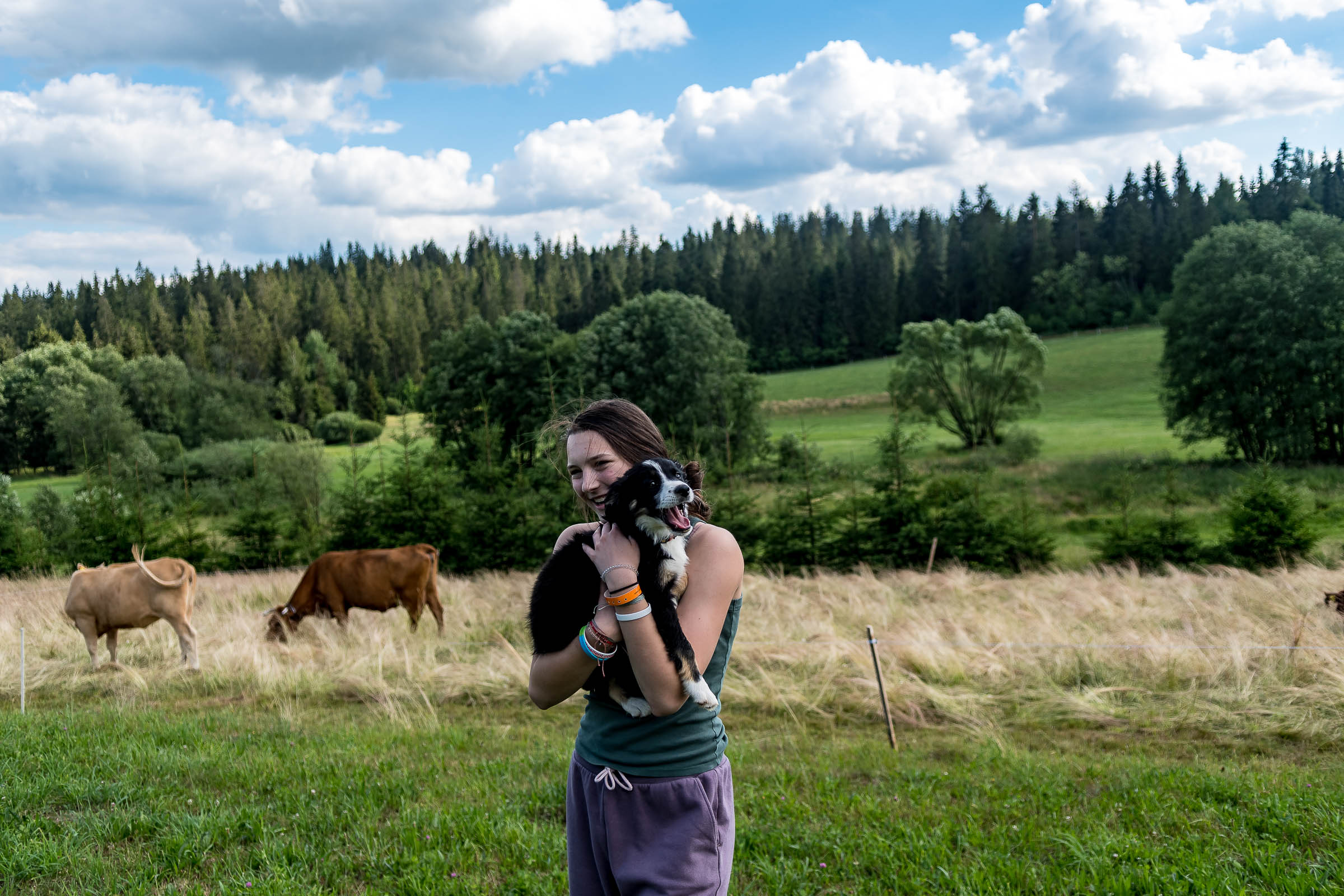
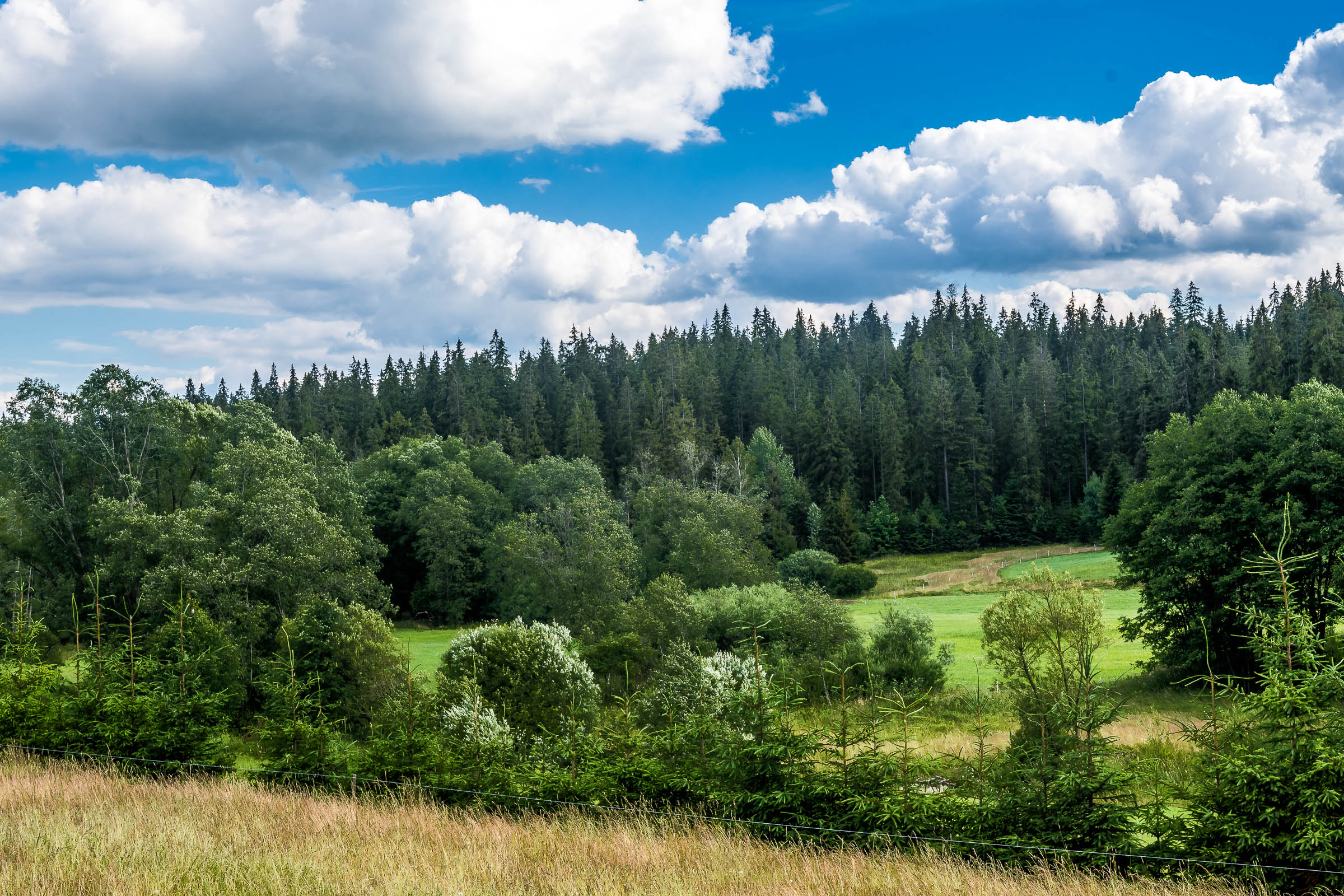
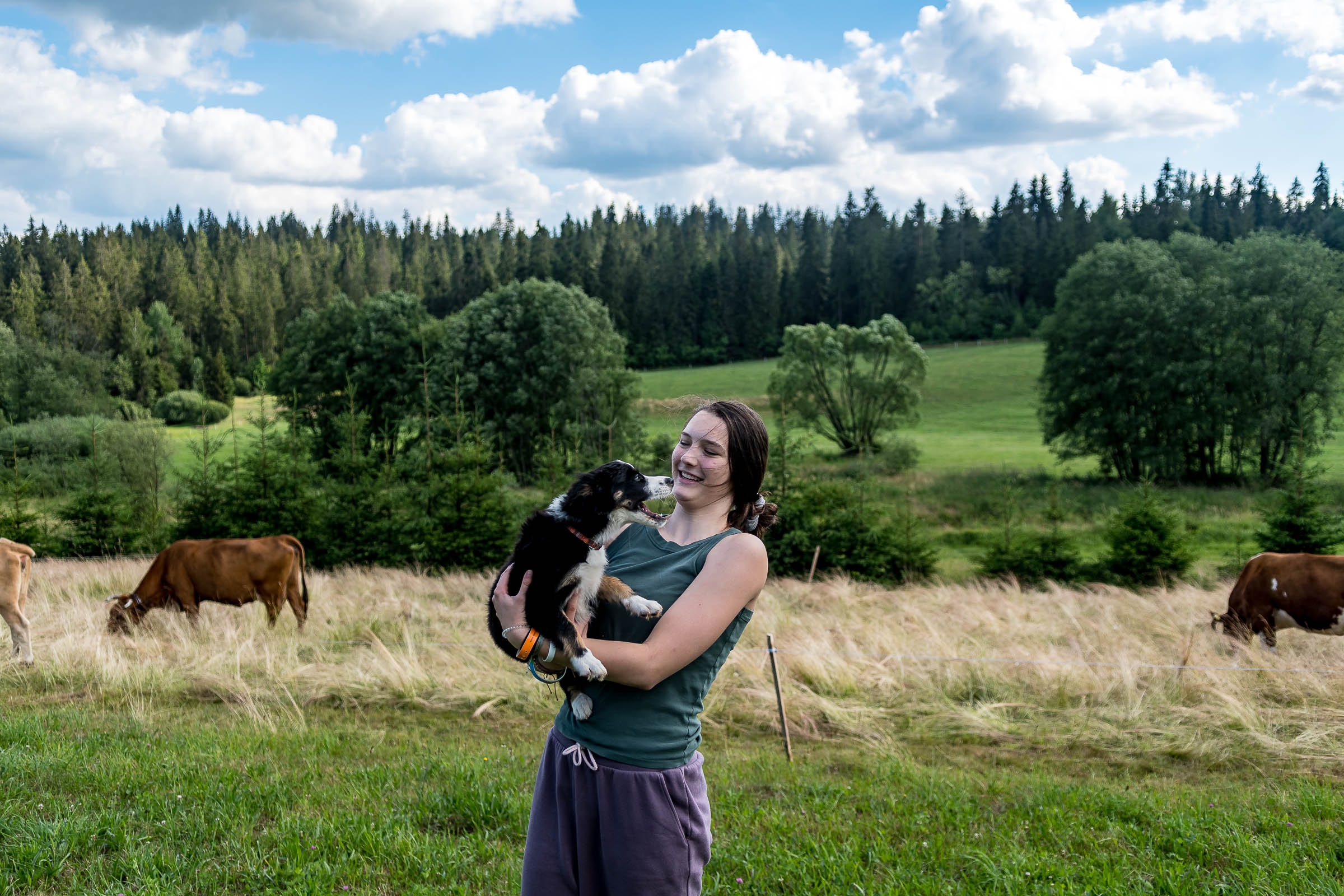
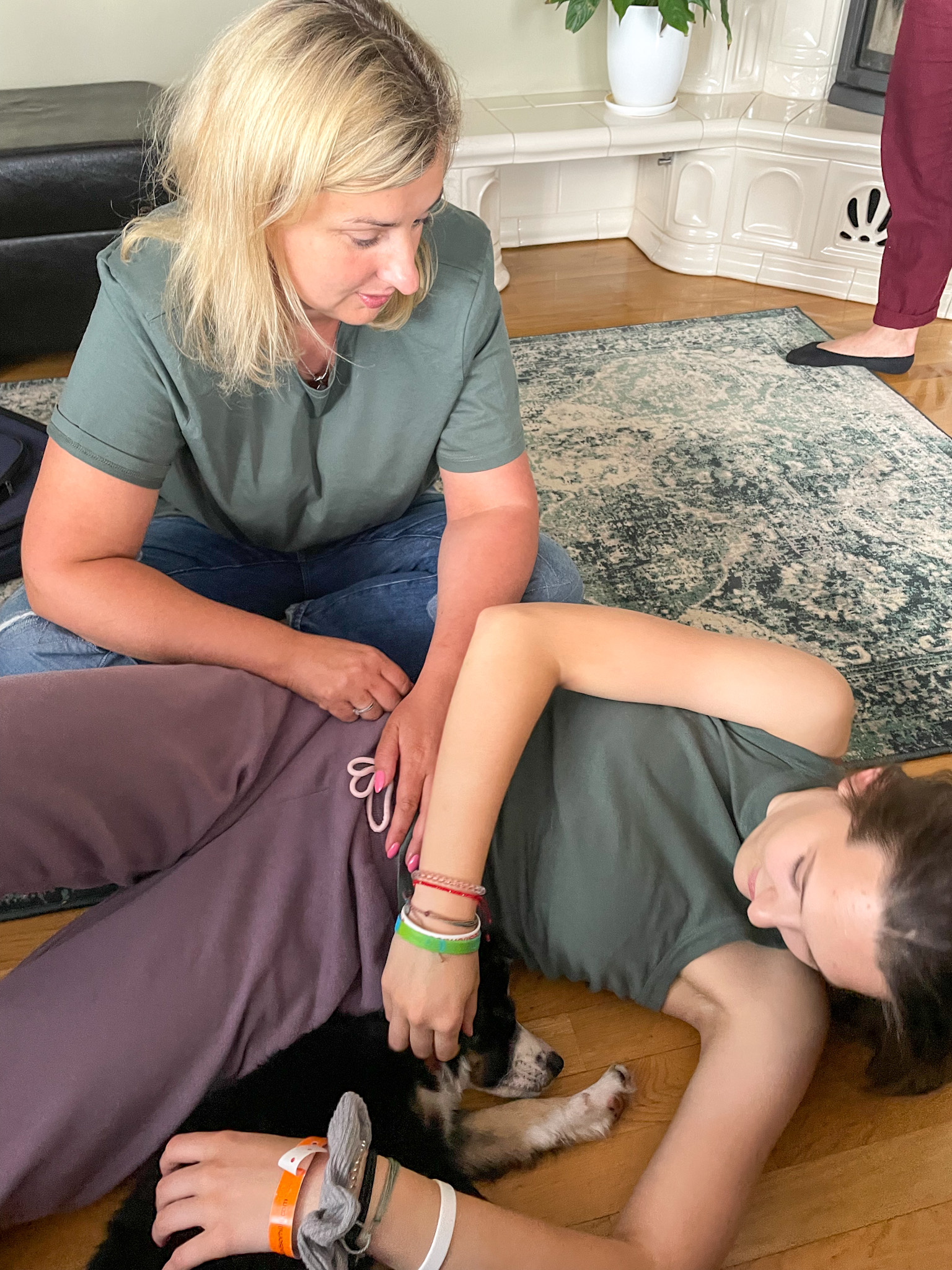
Before you know it, your children will be having them as well. But for now, your children are happy jumping on the trampoline and playing with a puppy. The cost of heating is as distant to them as it was to you when you were their age. They hear your discussions, but they don’t pay much attention to them.
Then again, neither did you.
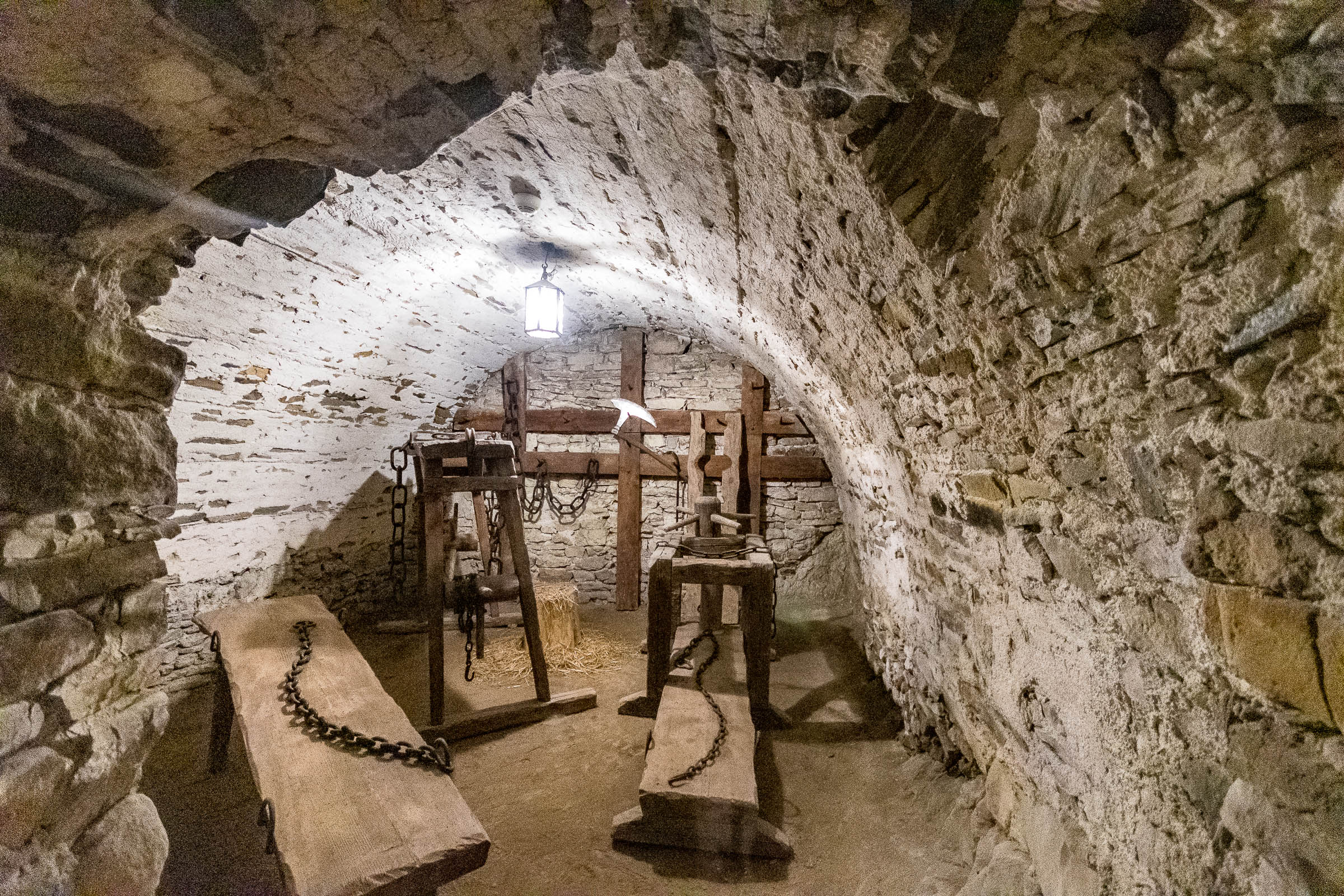
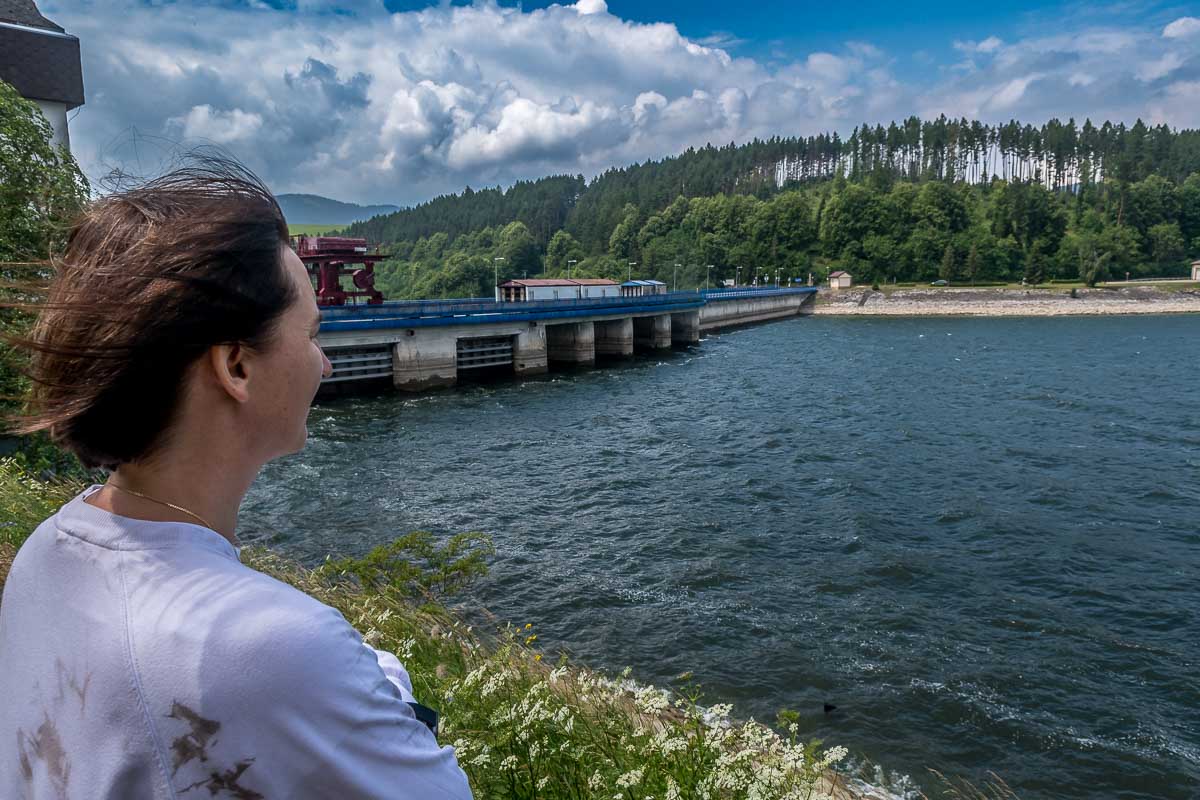
Today was a day of castles: Niedzica and Czorsztyn. The former was once guarding the Hungarian border; the latter was protecting the Polish side of the border. In the middle ran a river. A dam completed in 1997 turned that river into a Czorsztynskie Lake.
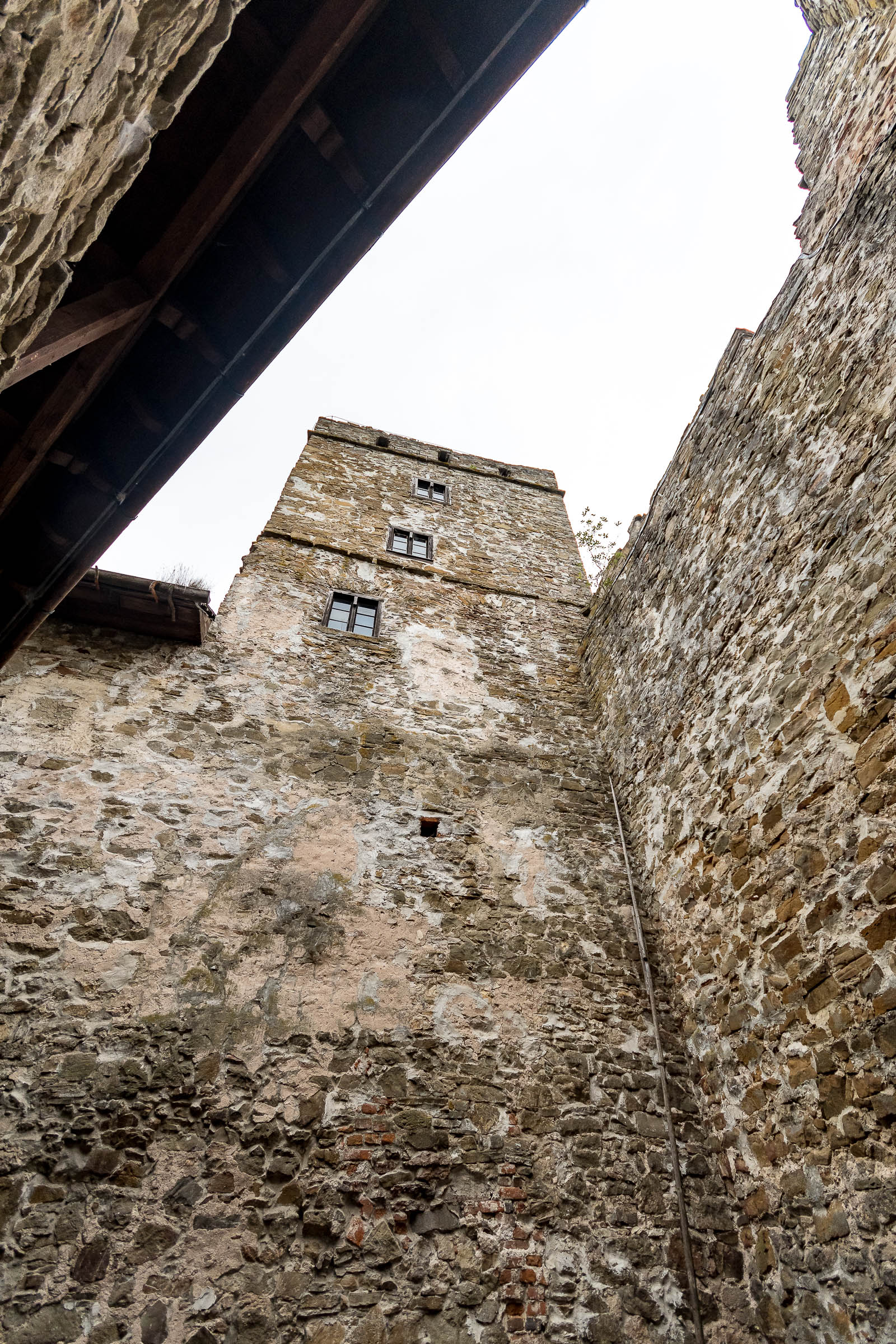
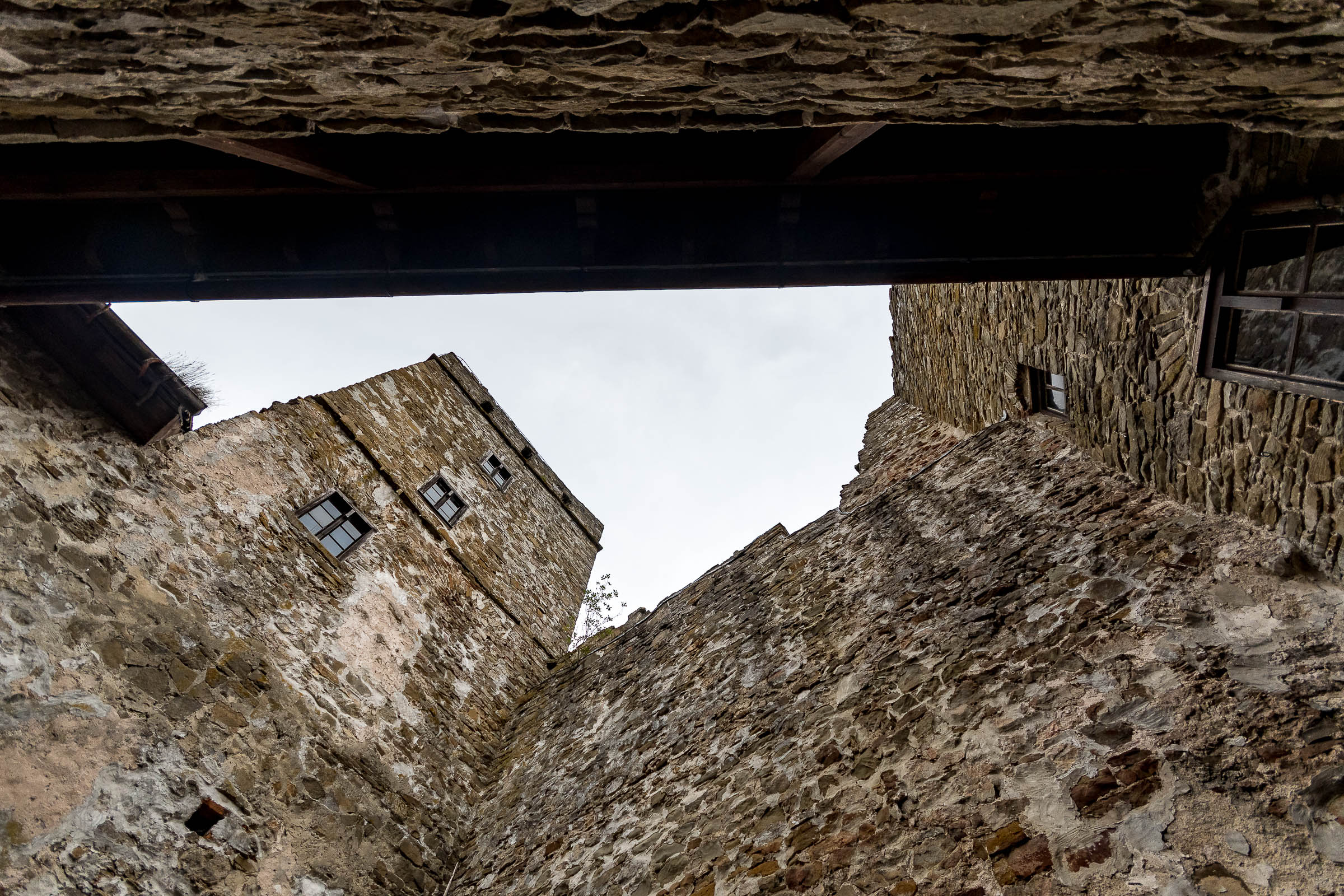
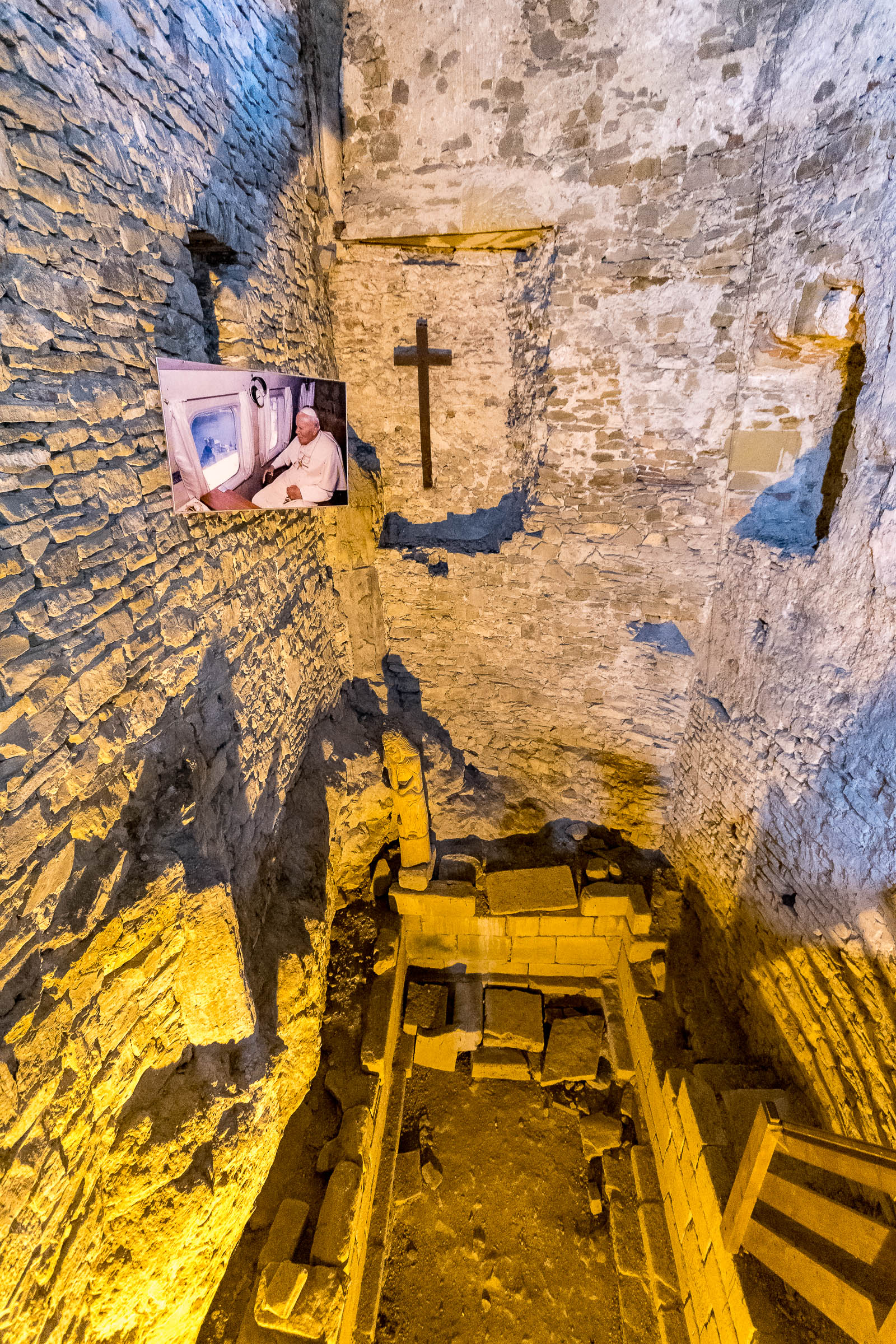
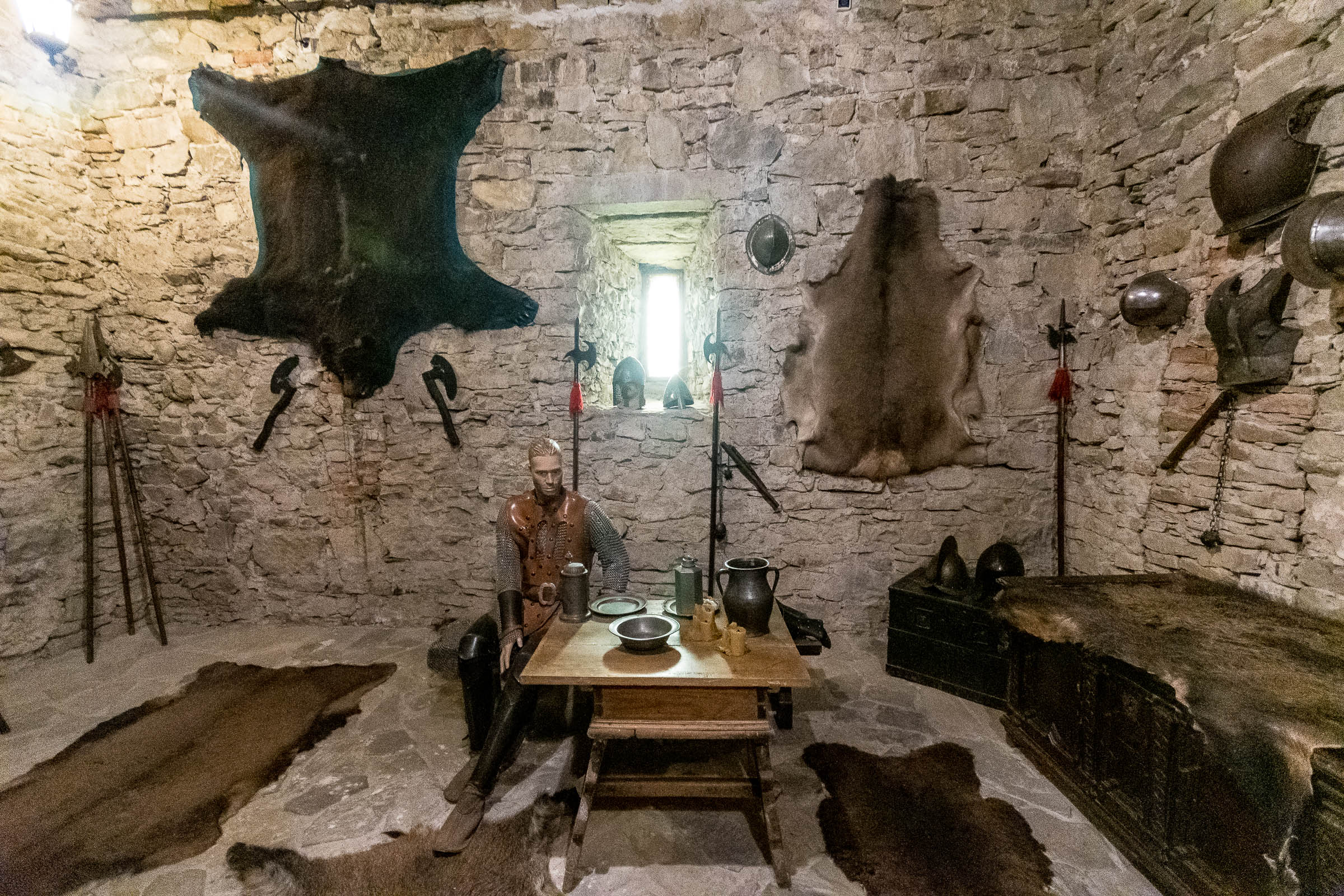
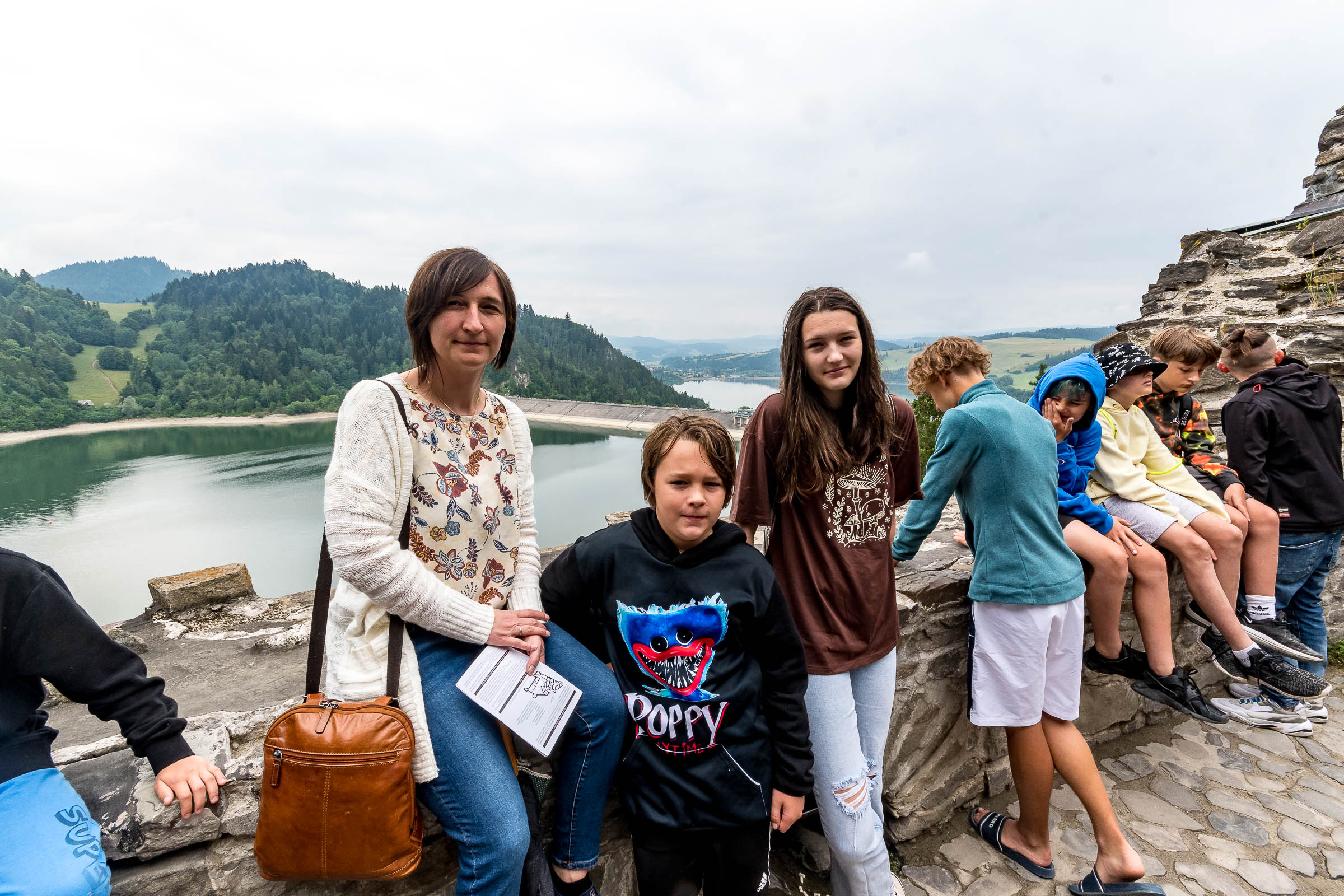
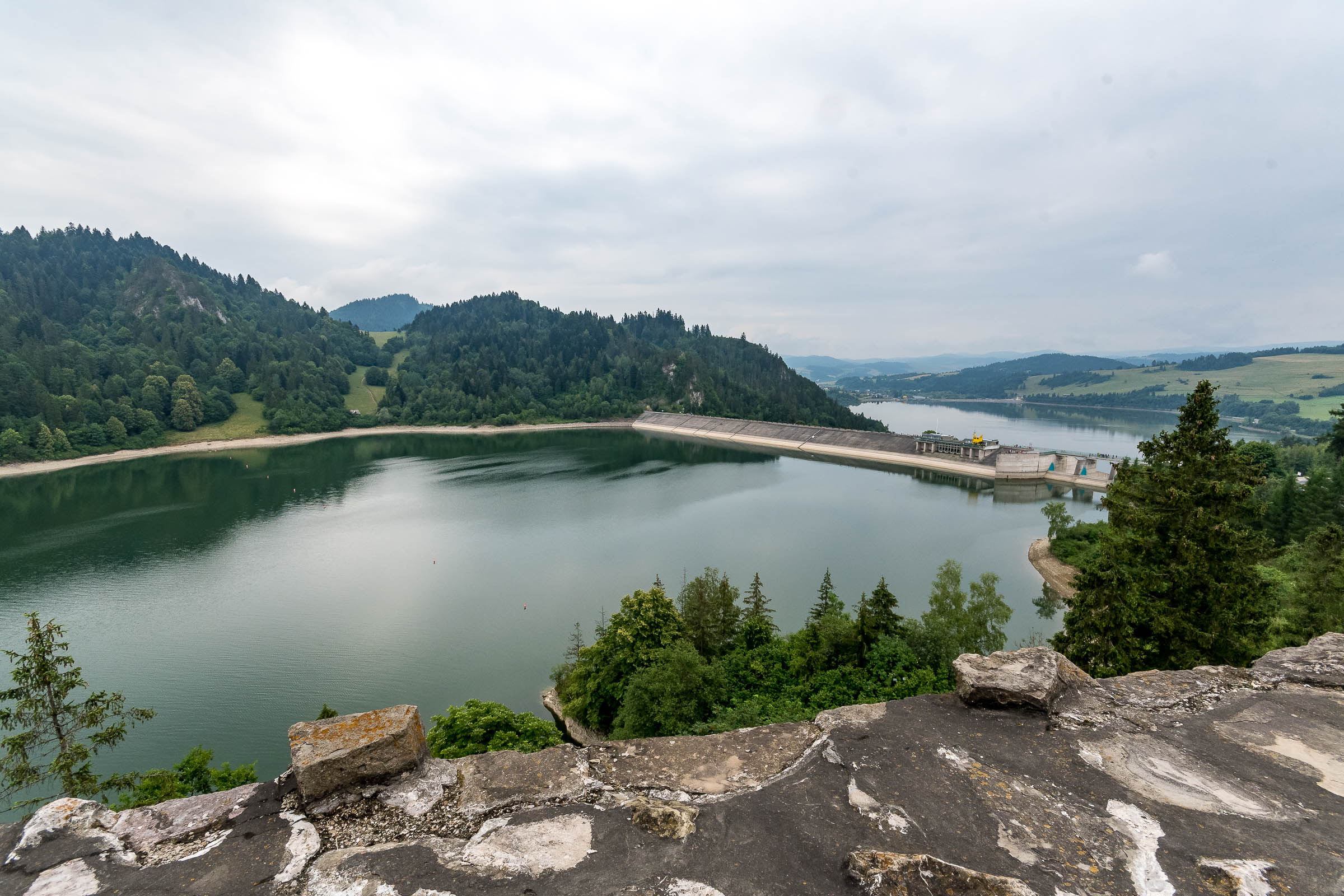
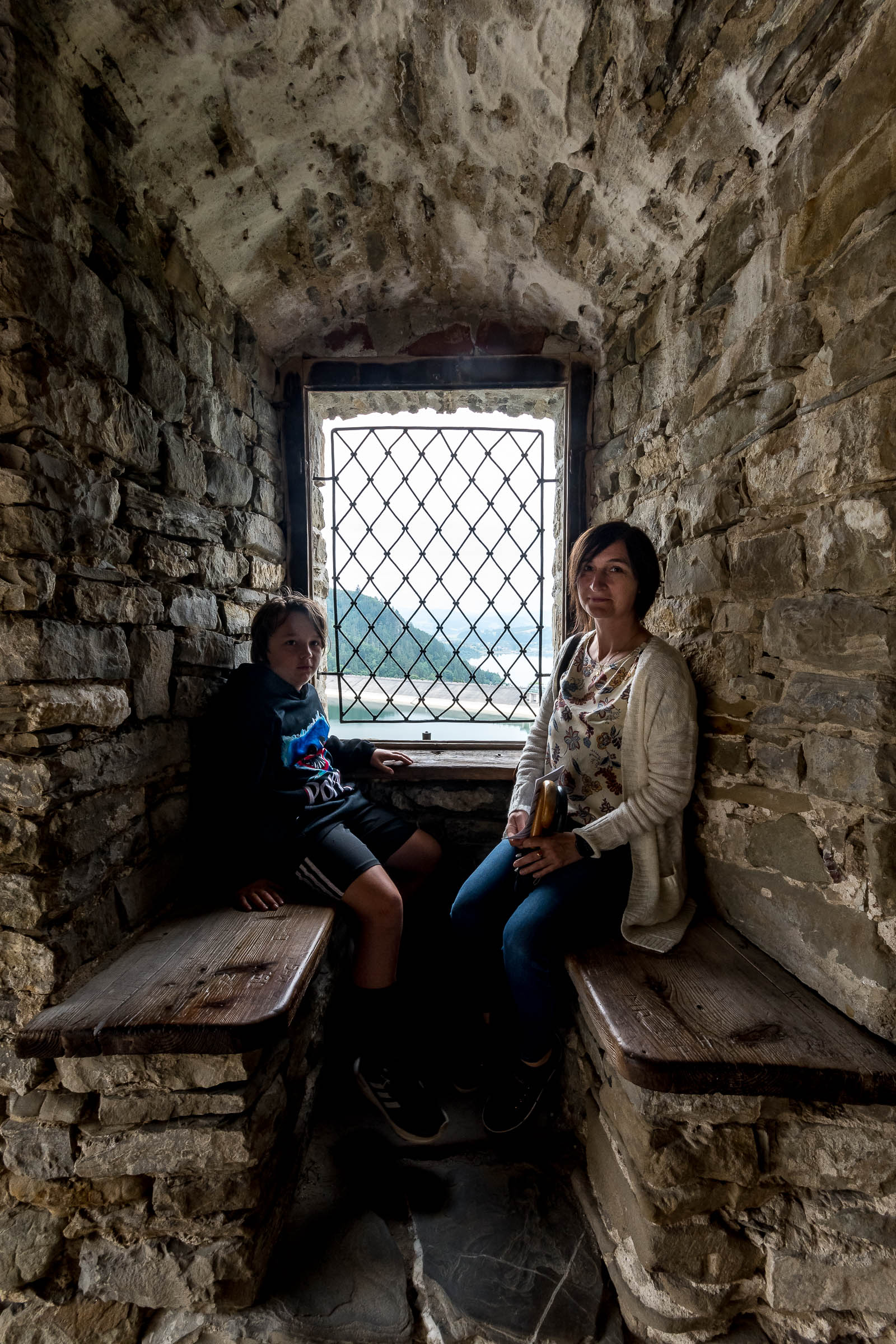
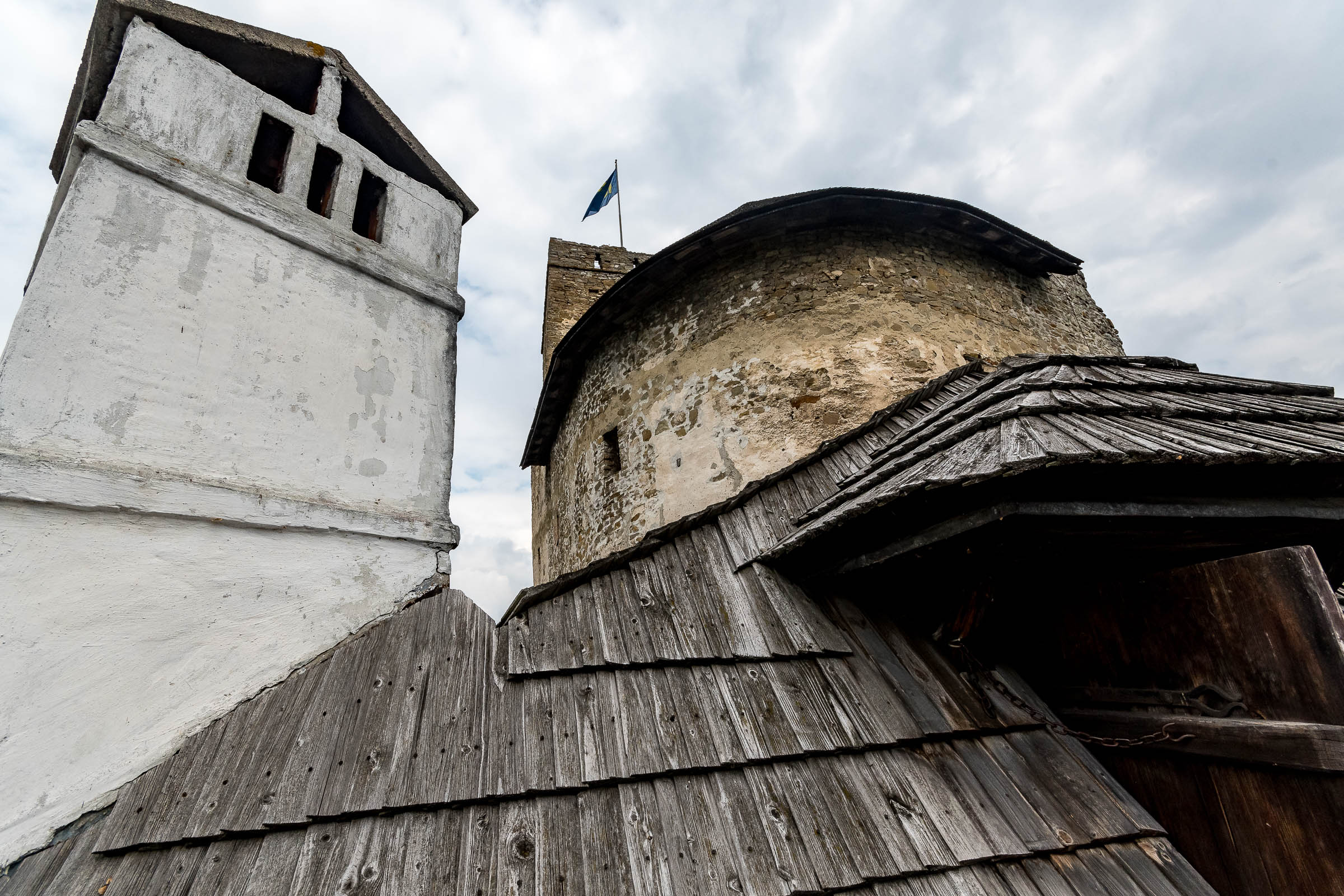
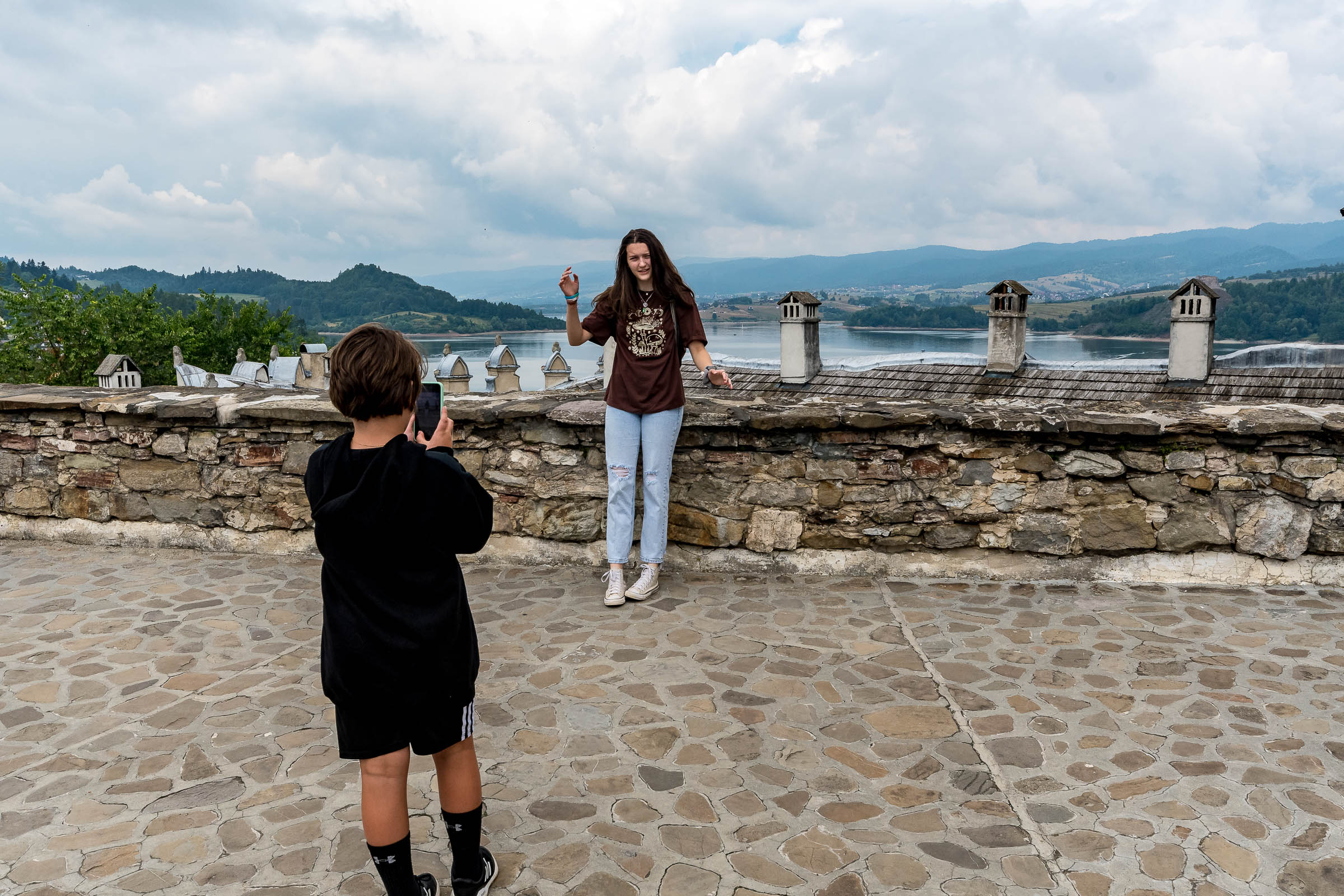
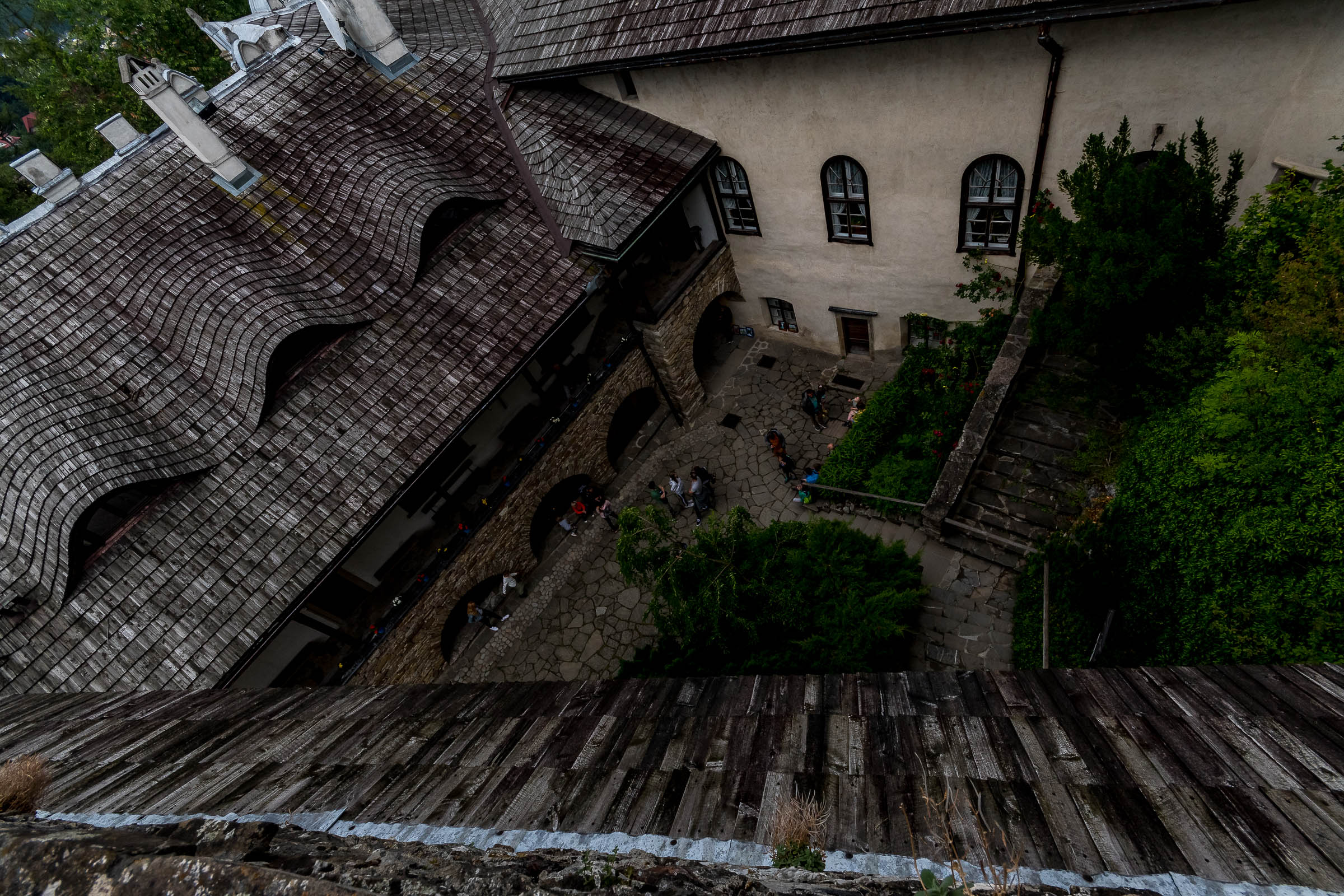
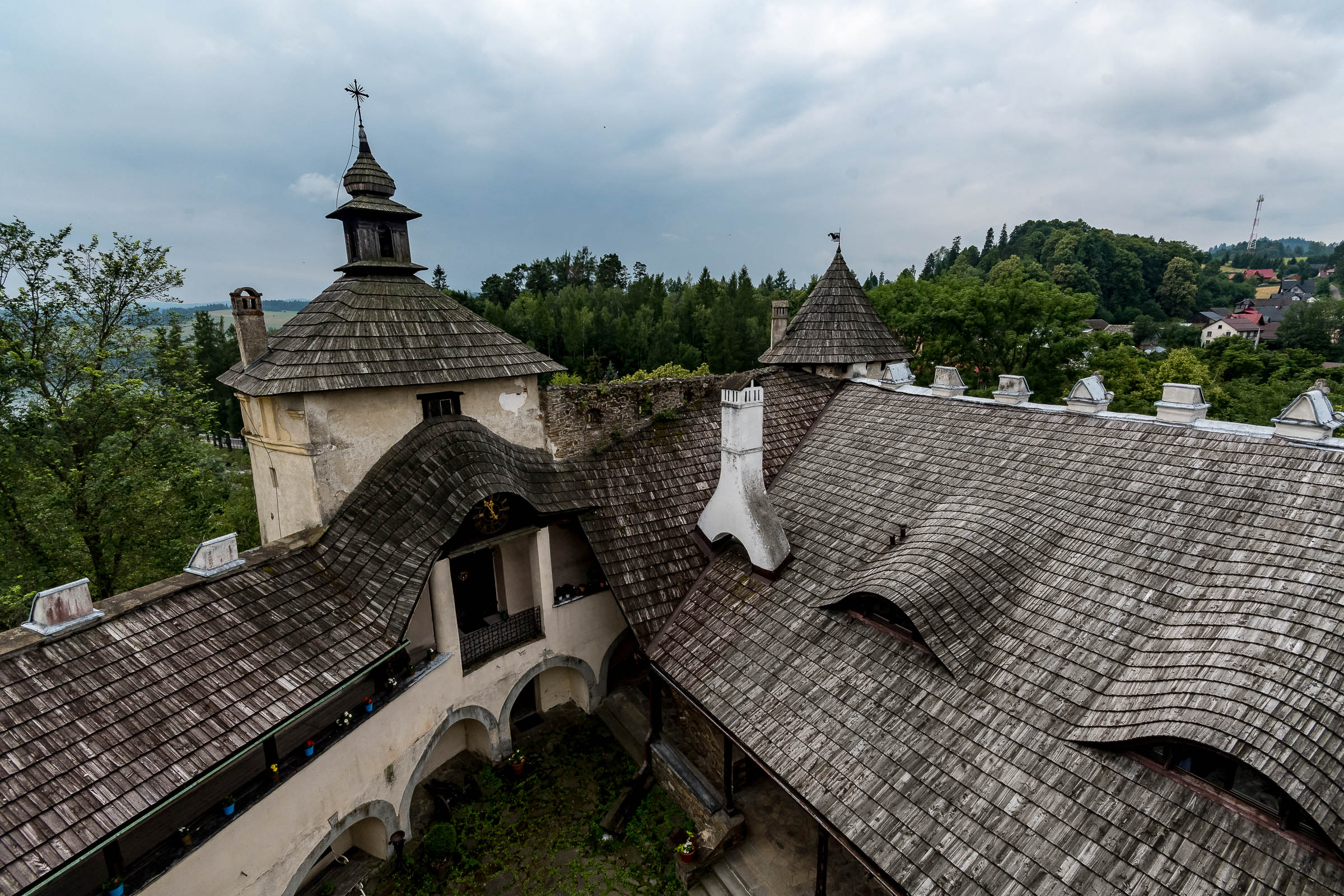
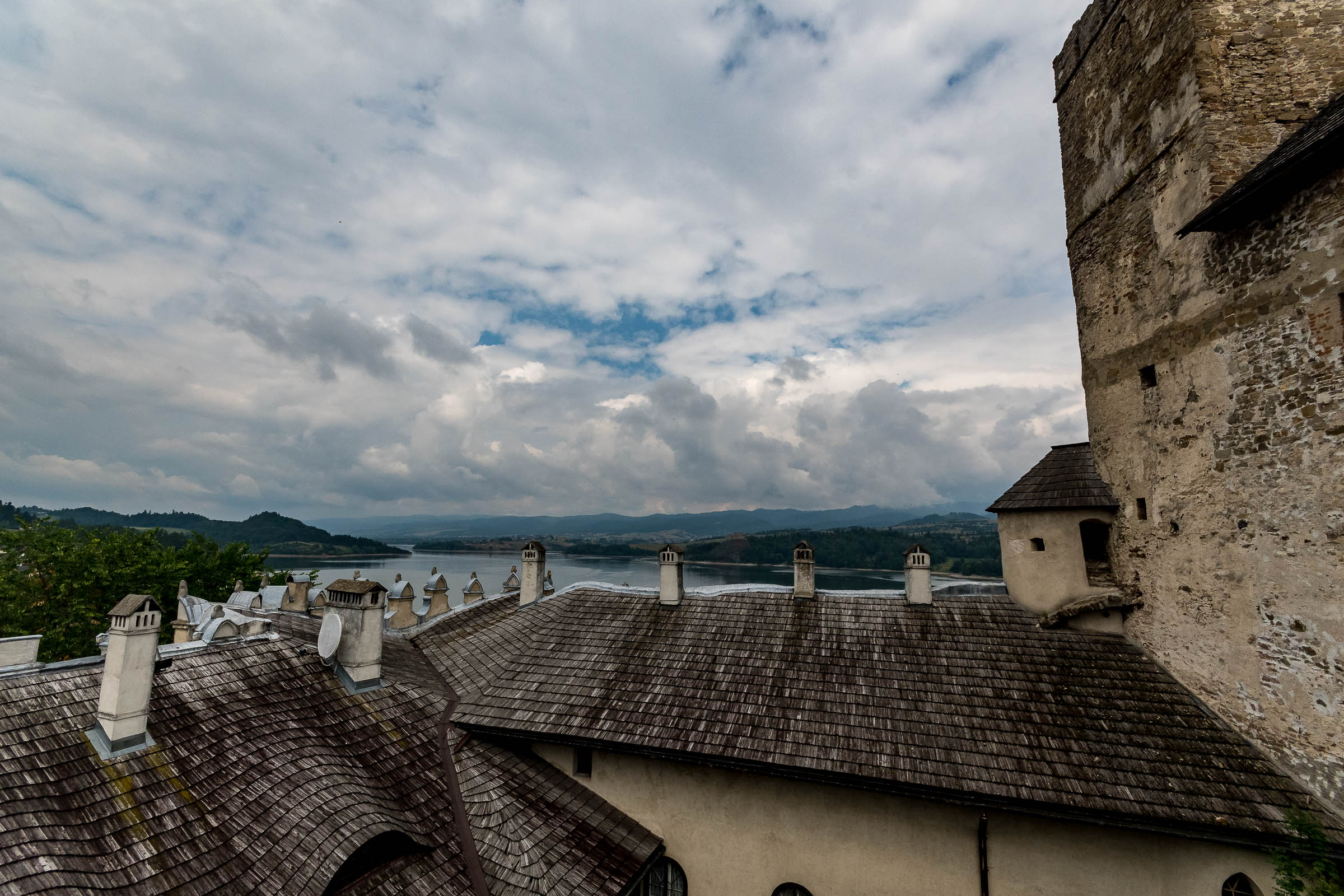
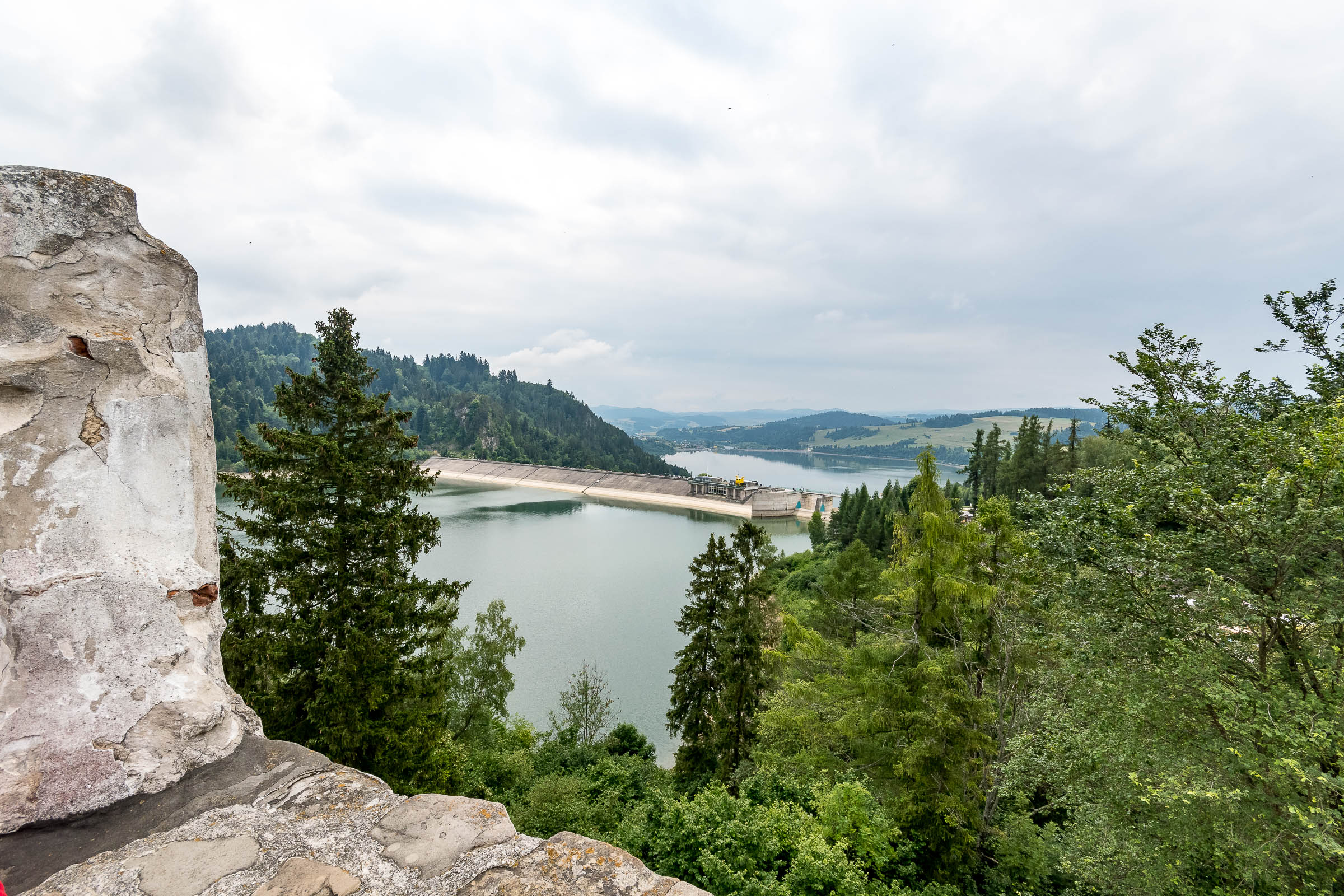
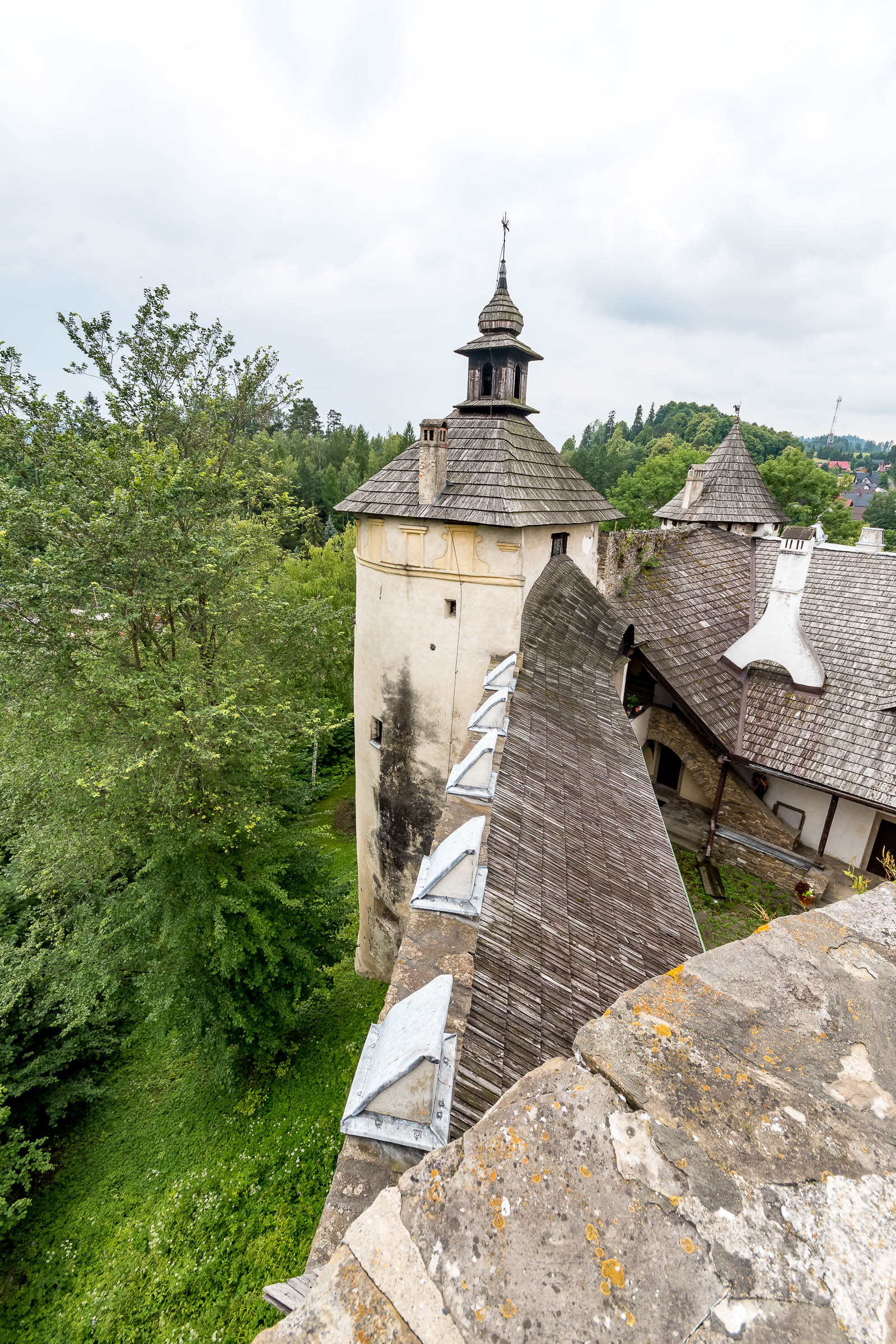
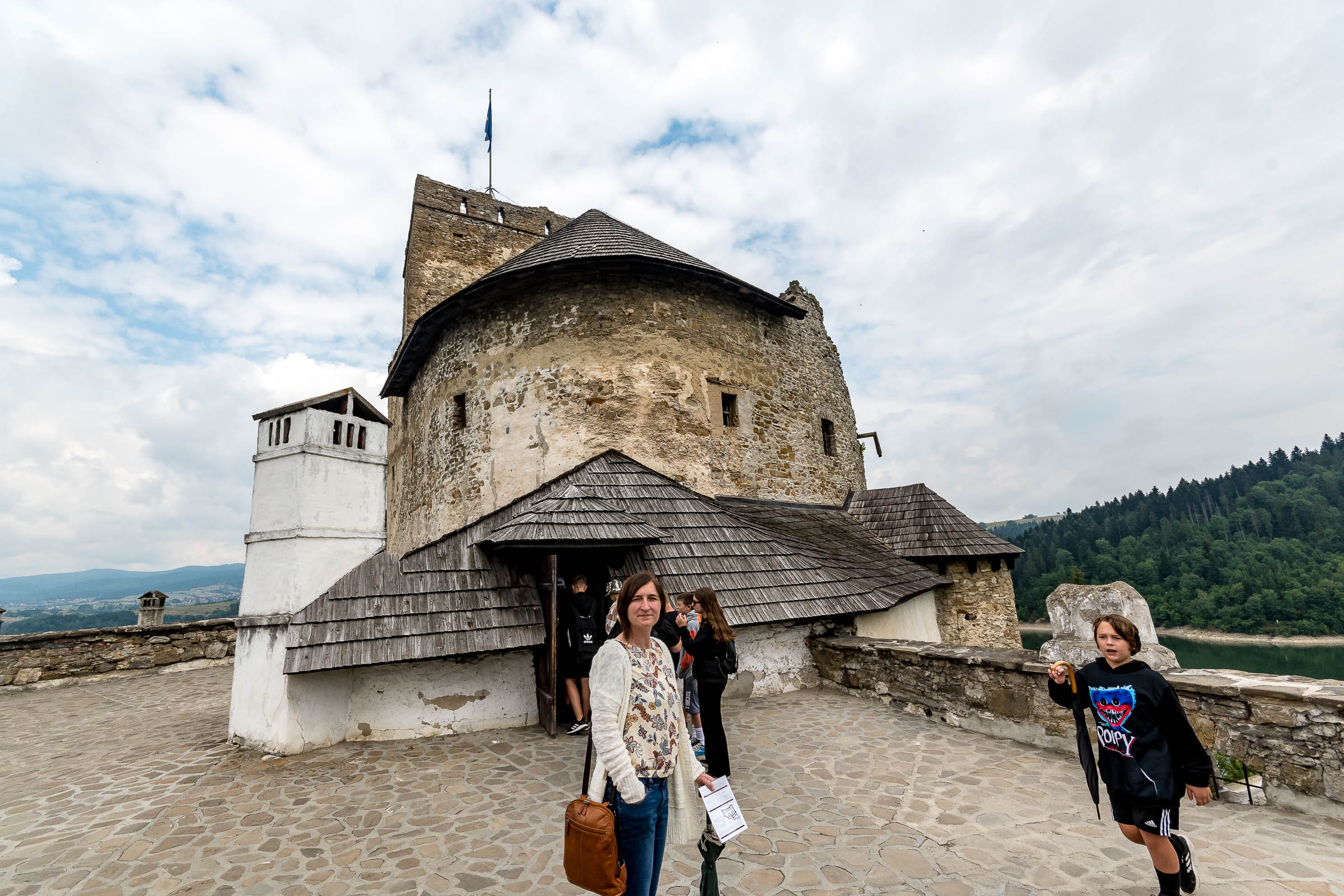
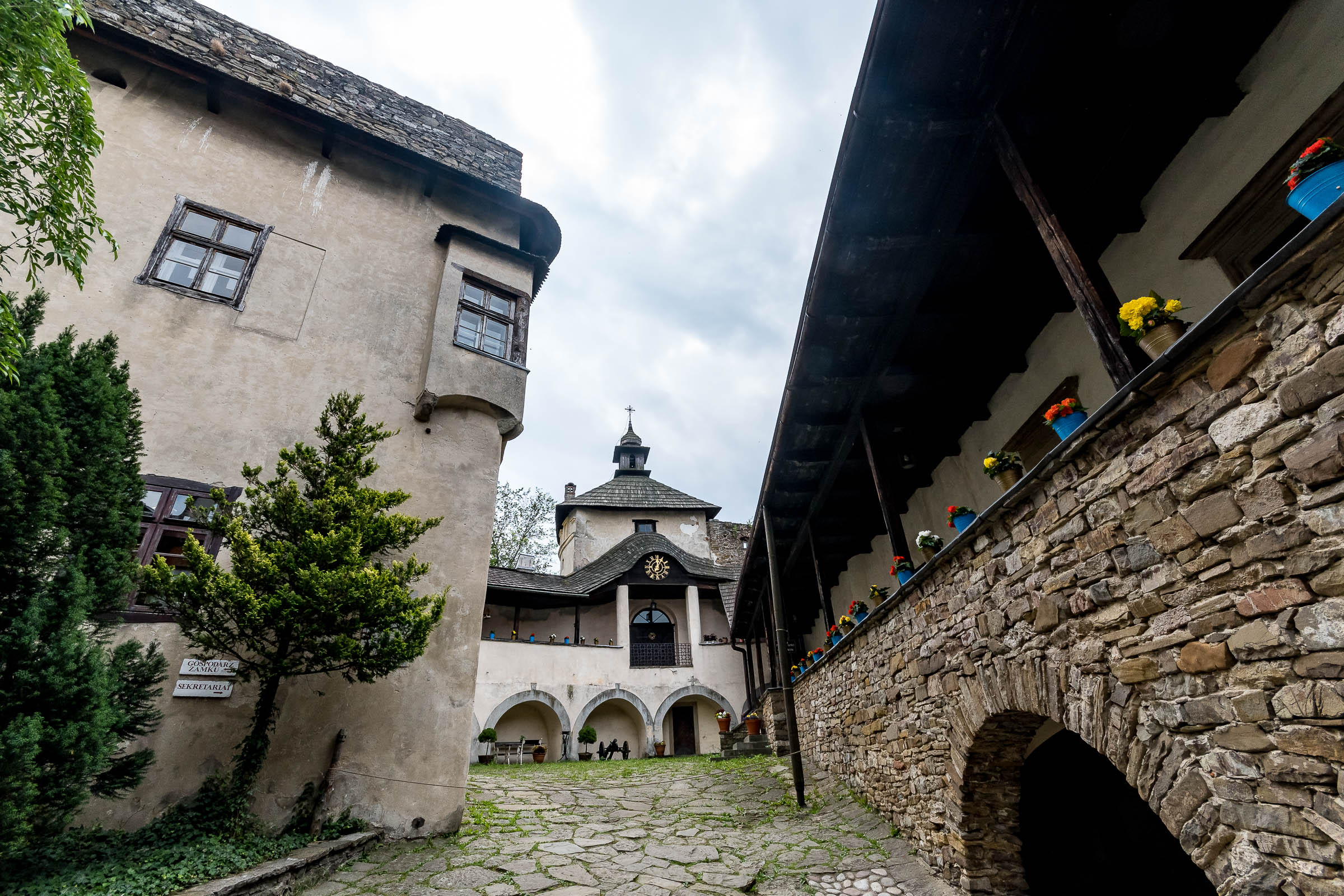
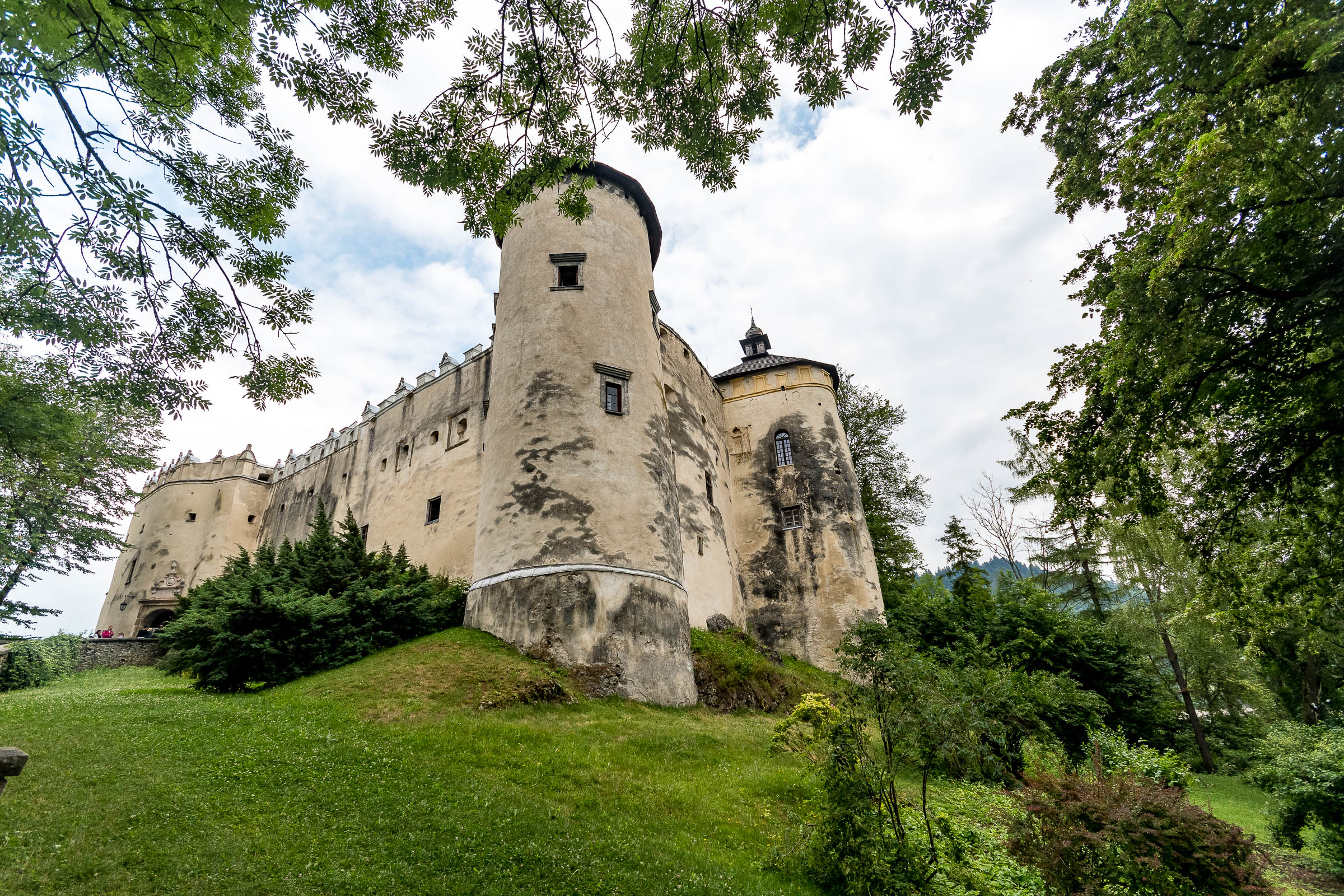
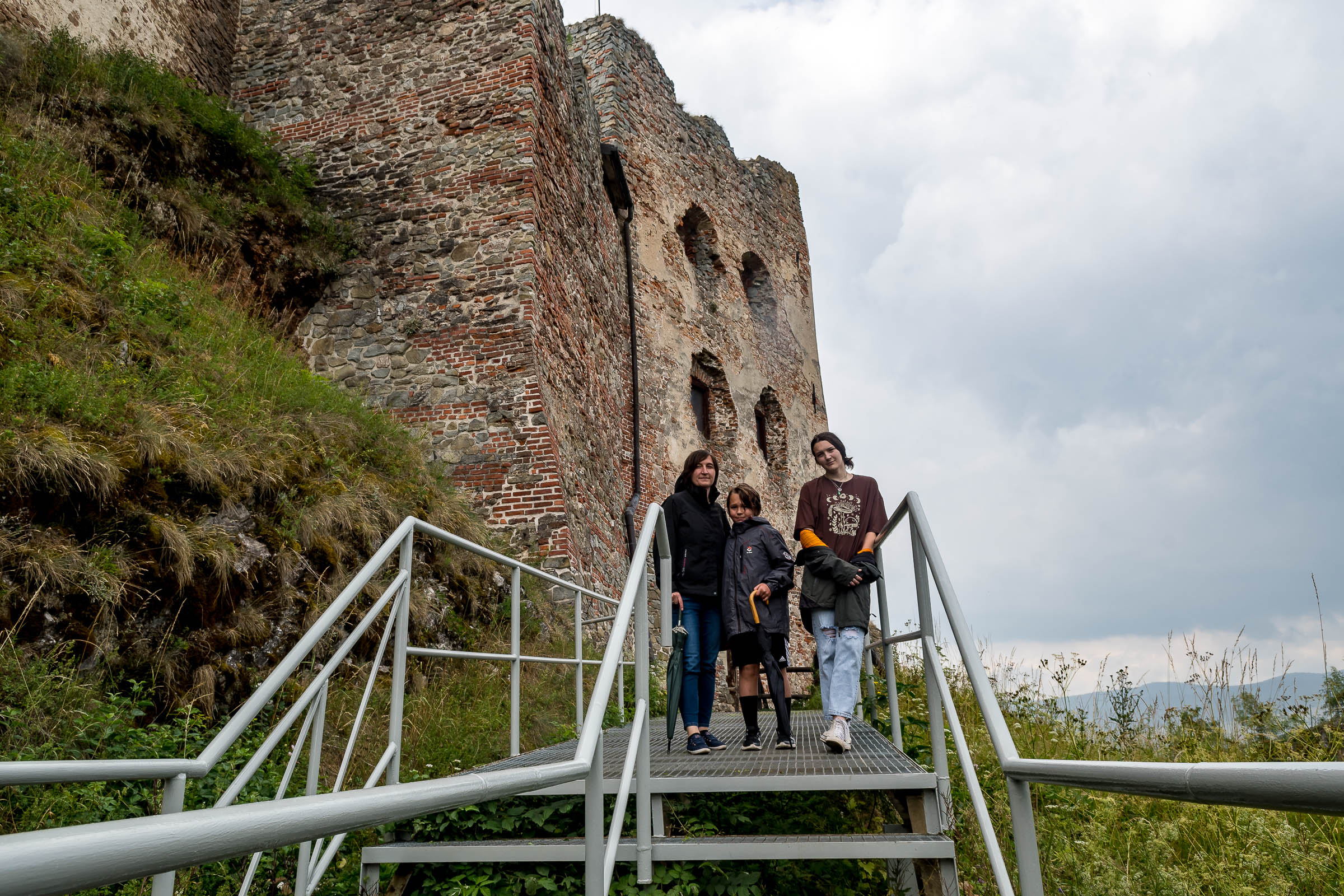
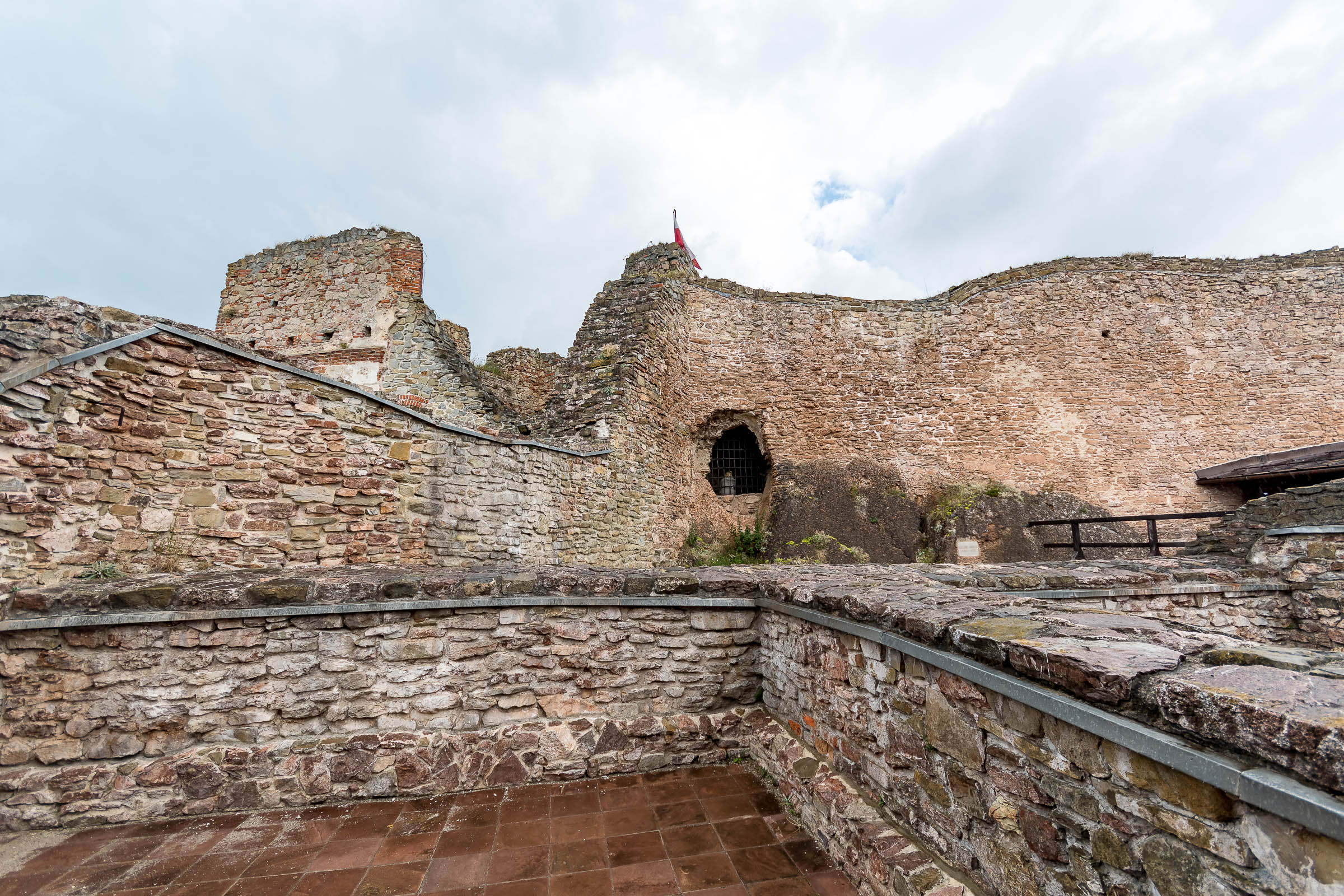
In the afternoon, we headed to Nowy Targ, just for a bit of ice cream at the best ice cream place on the planet and some baked goods before heading to the highlight of the day.
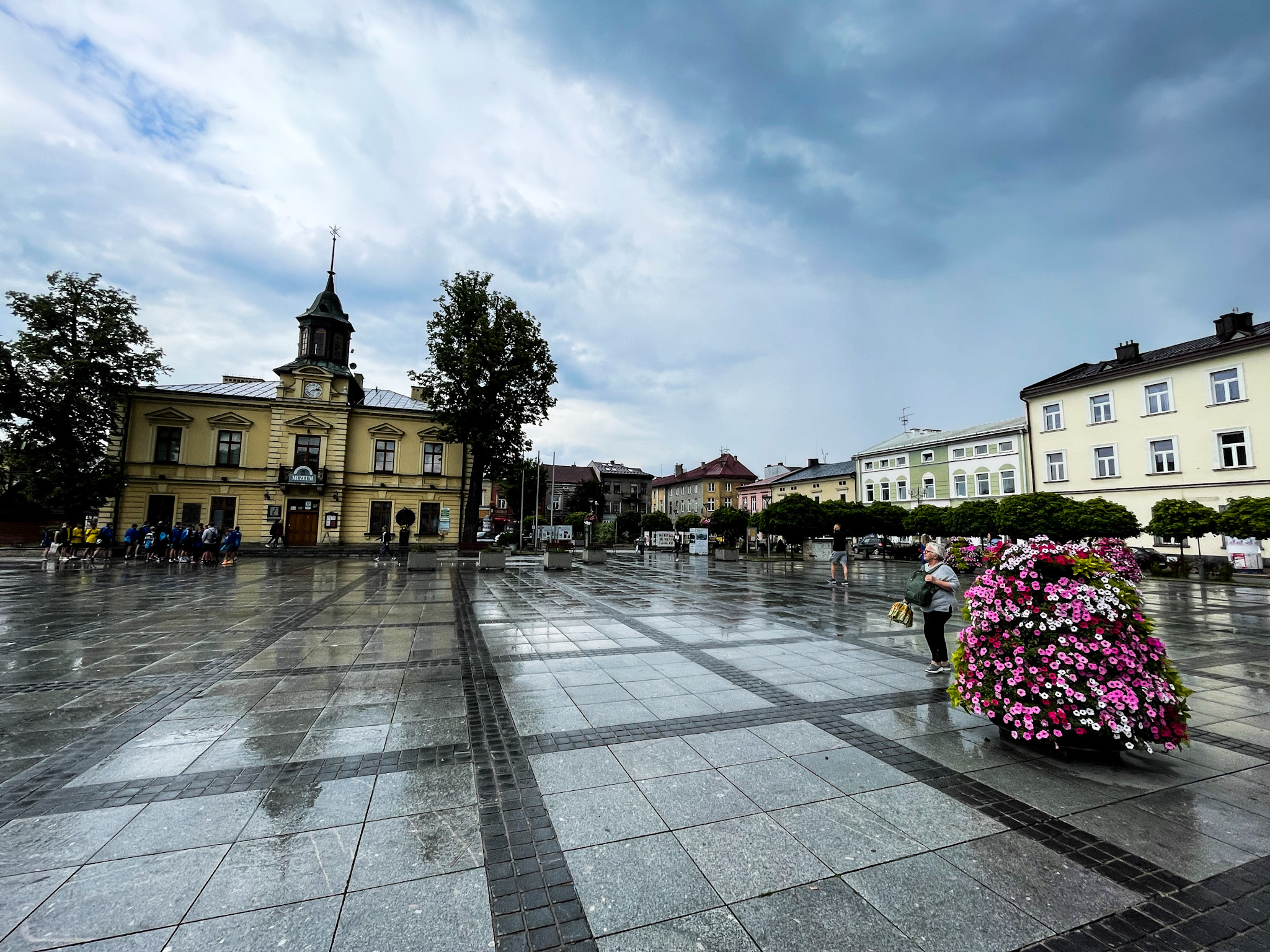
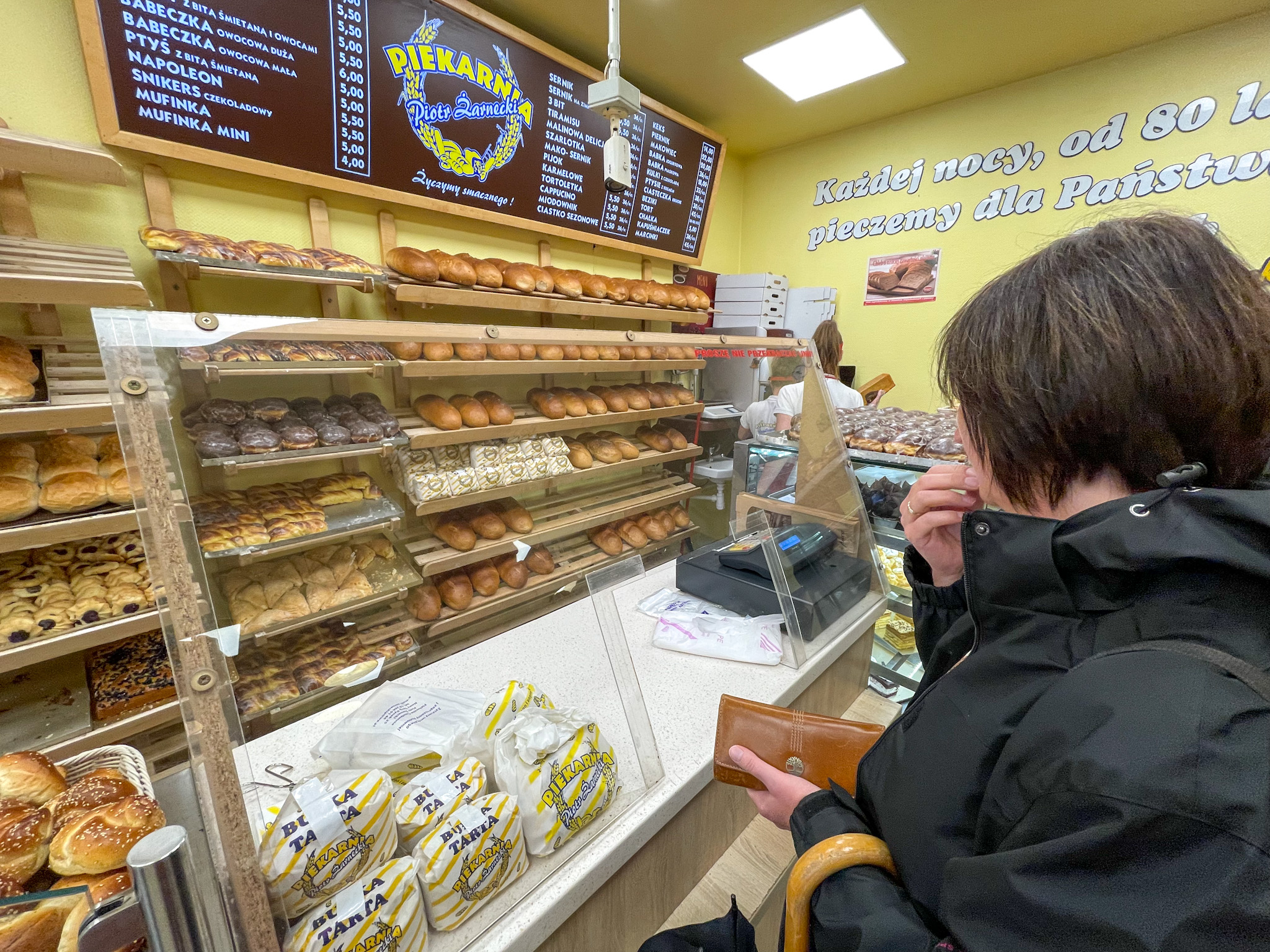
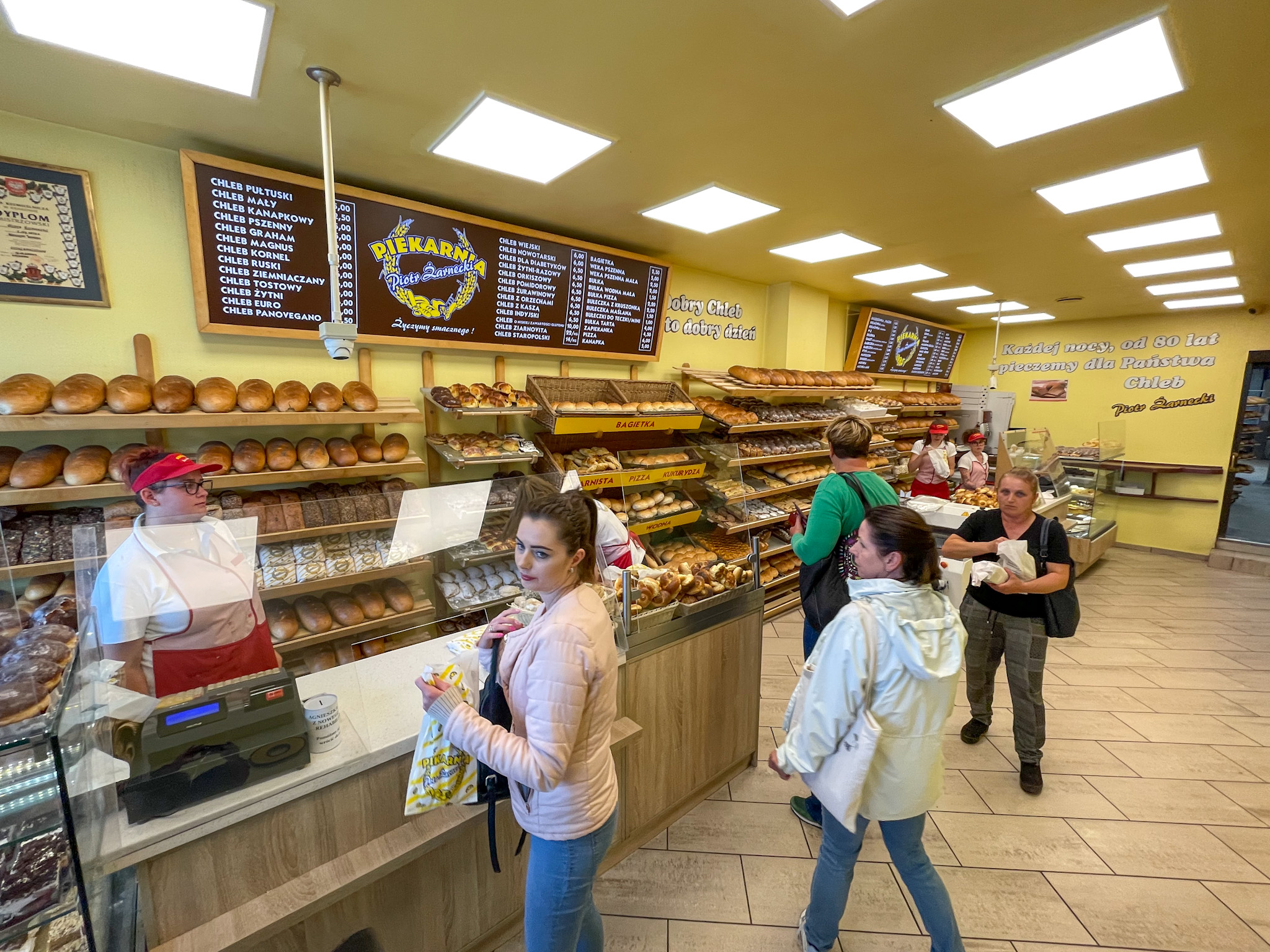
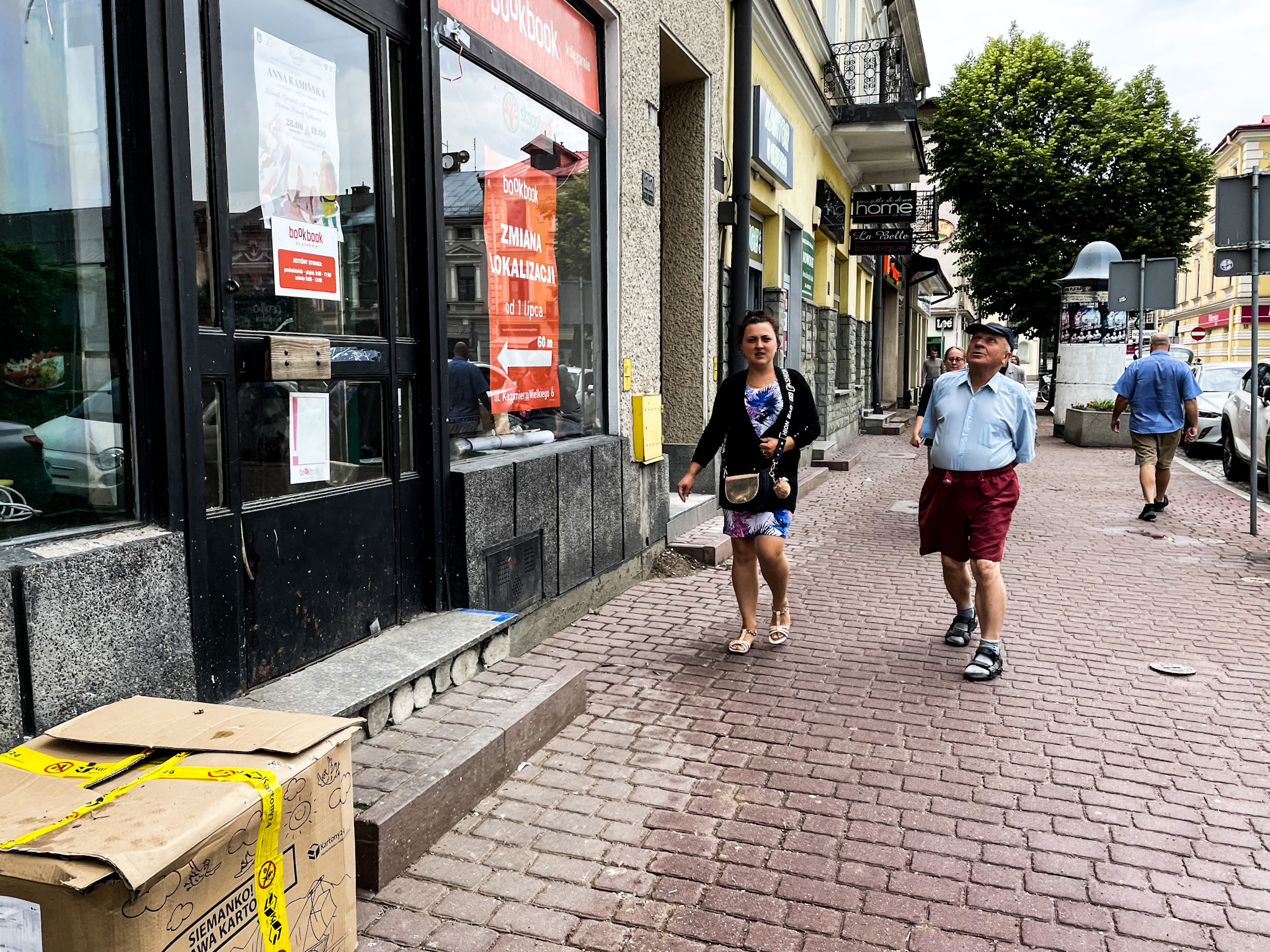
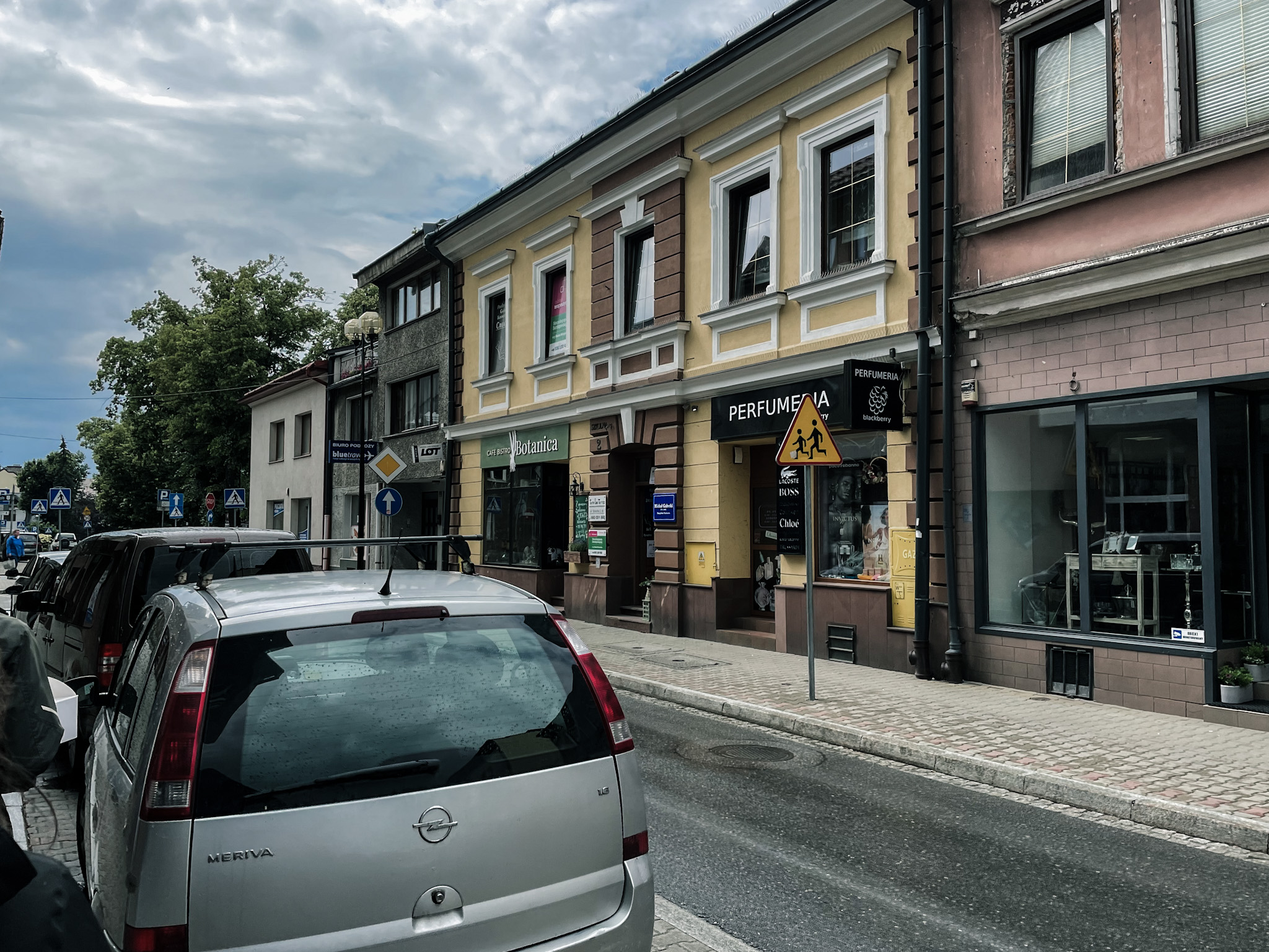
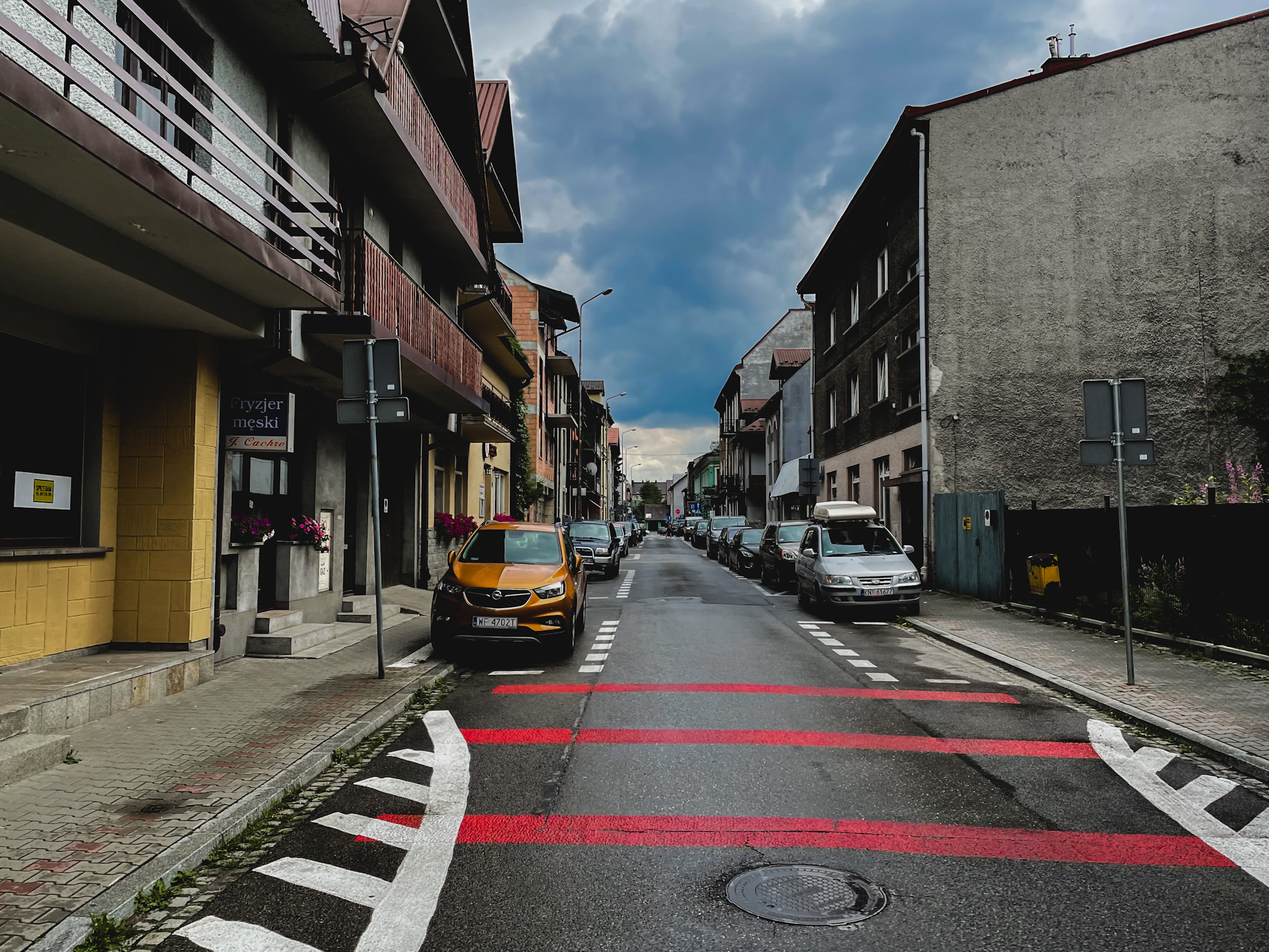
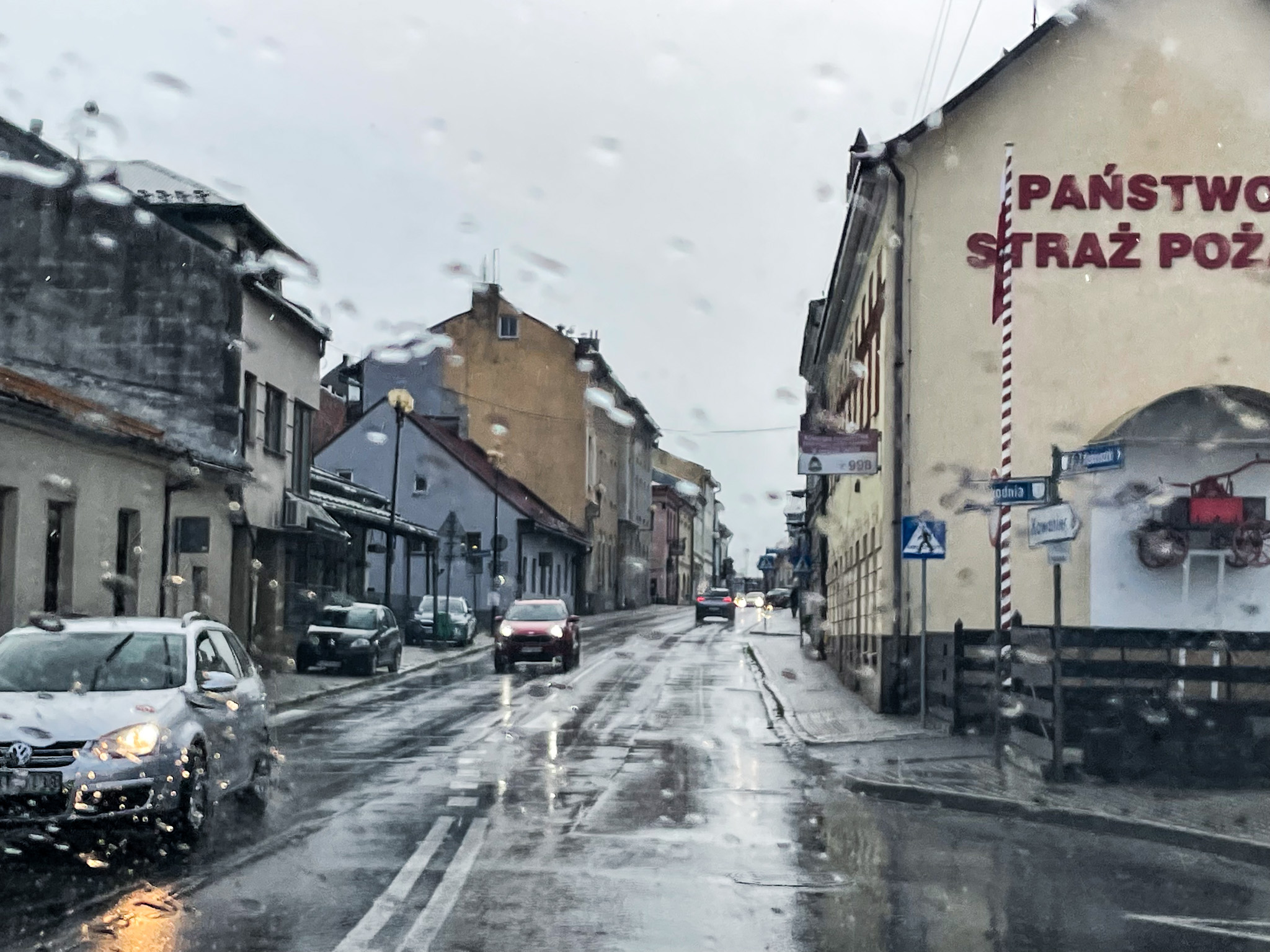
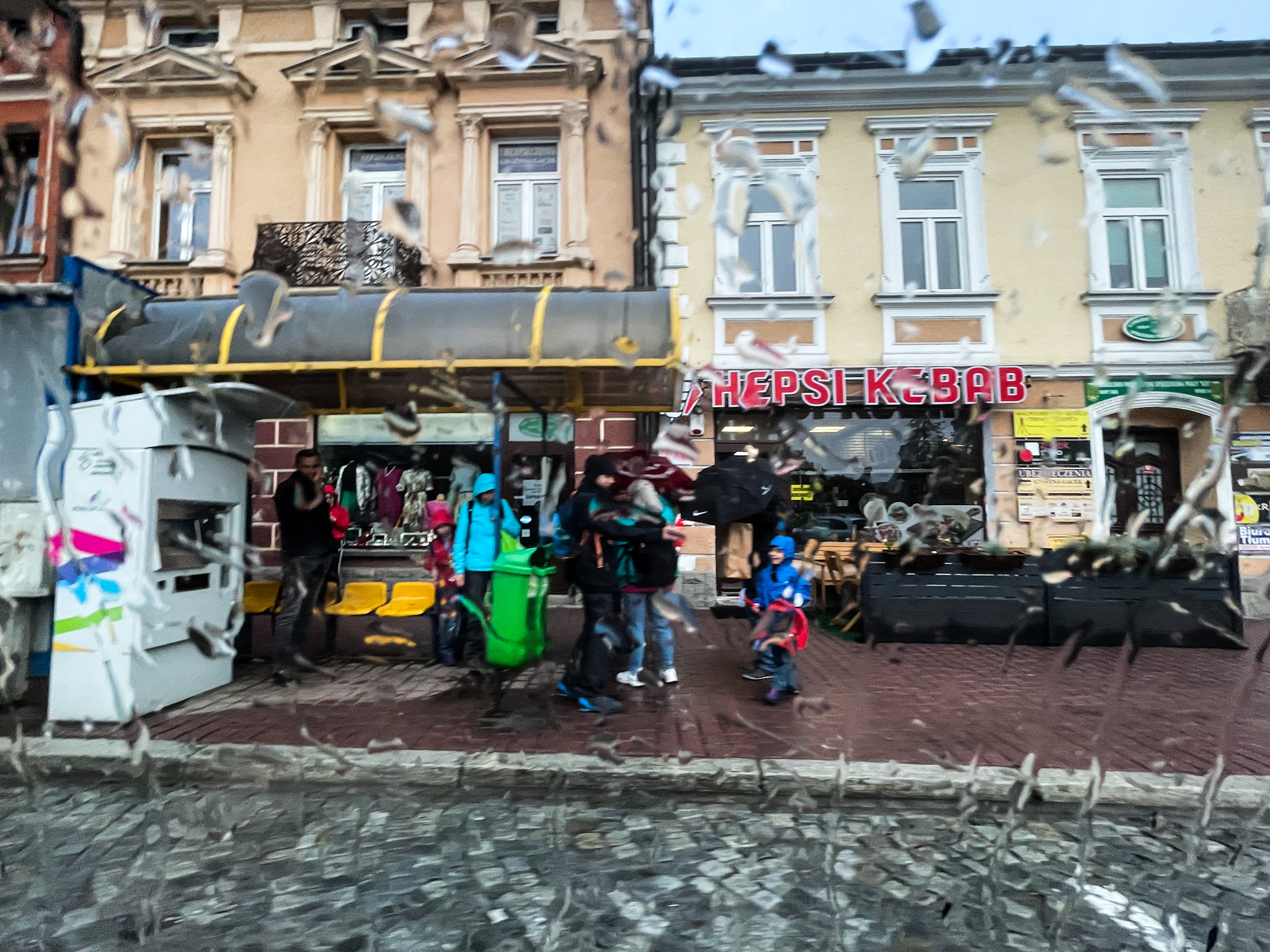
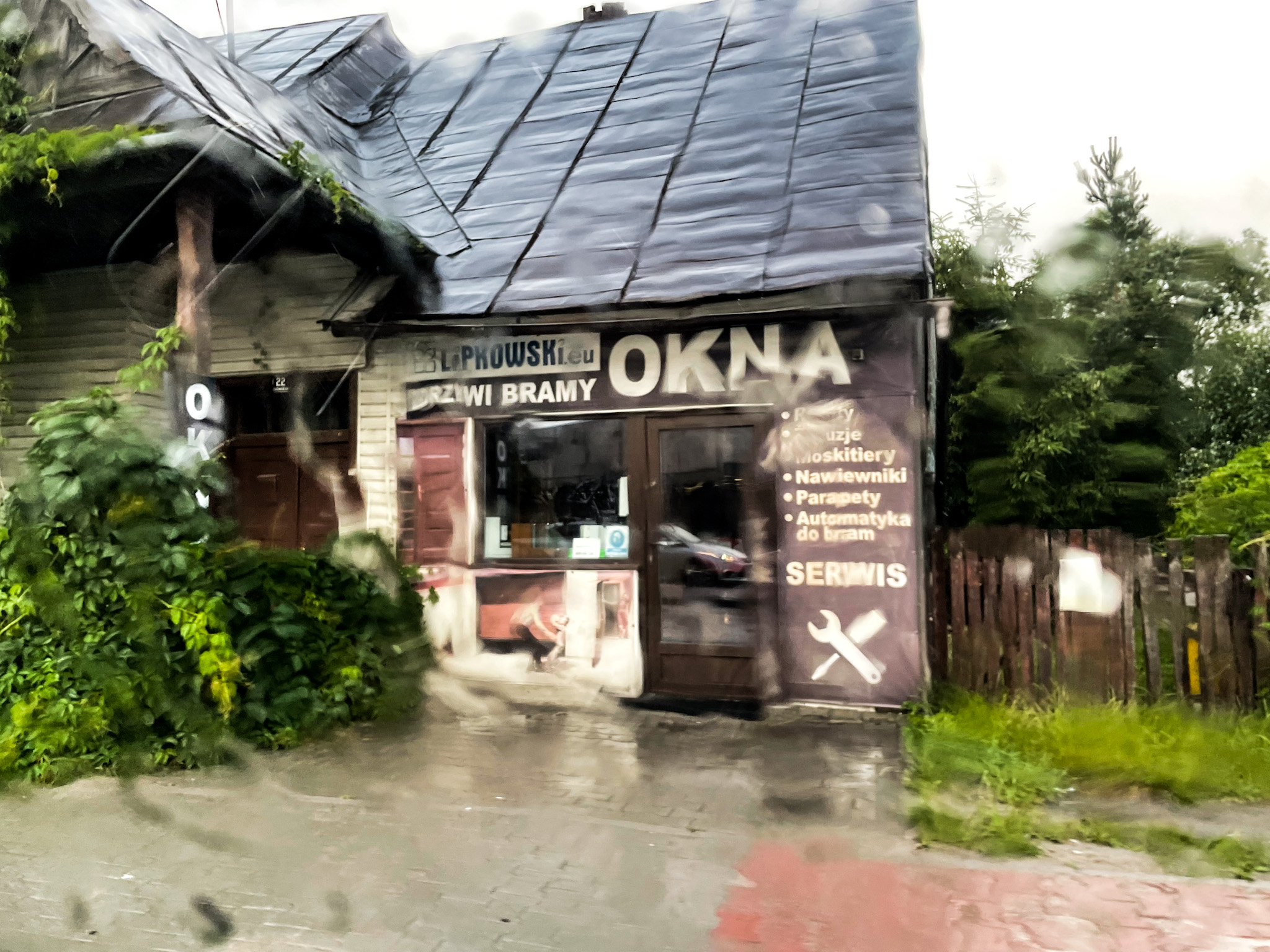
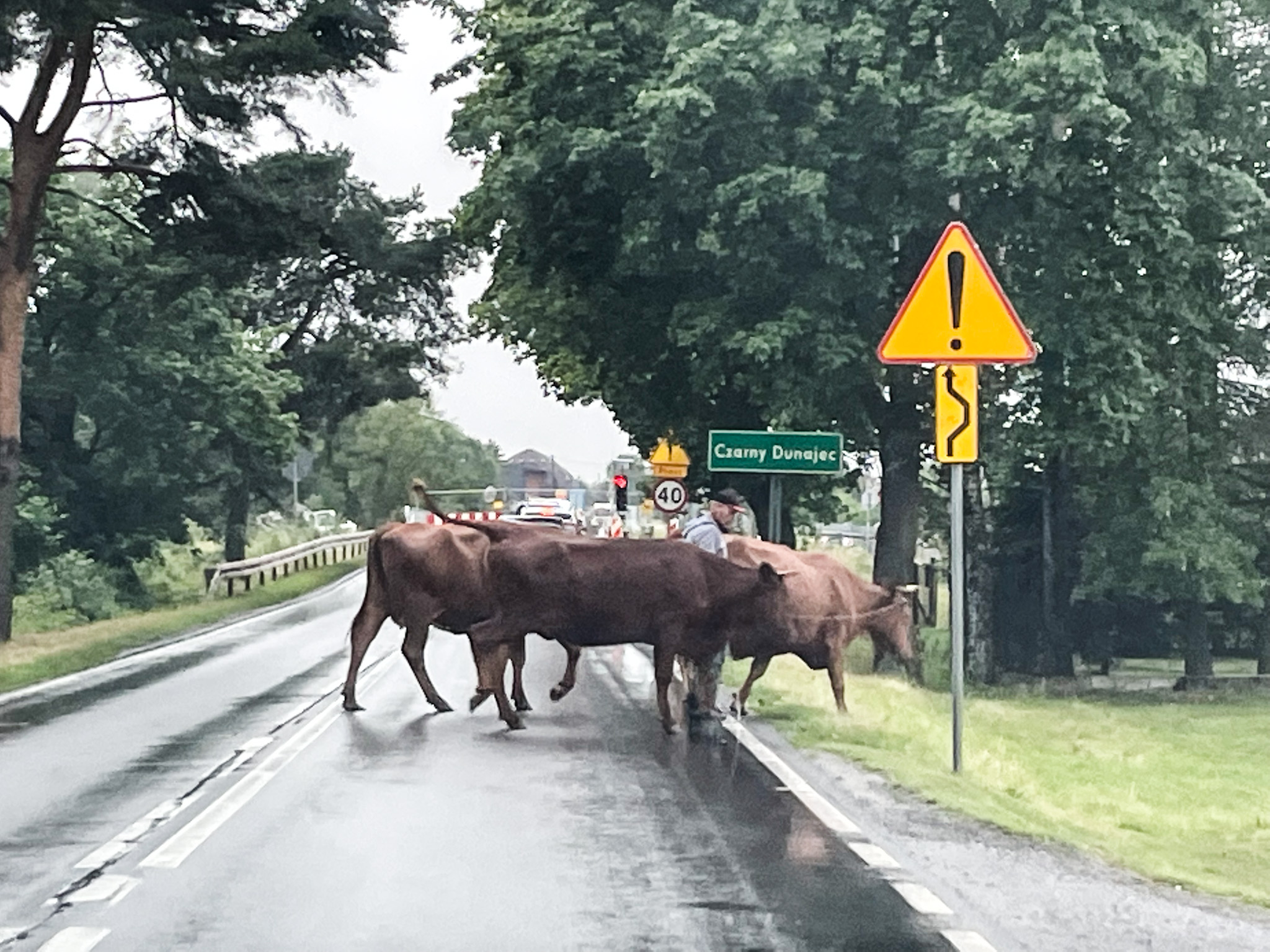
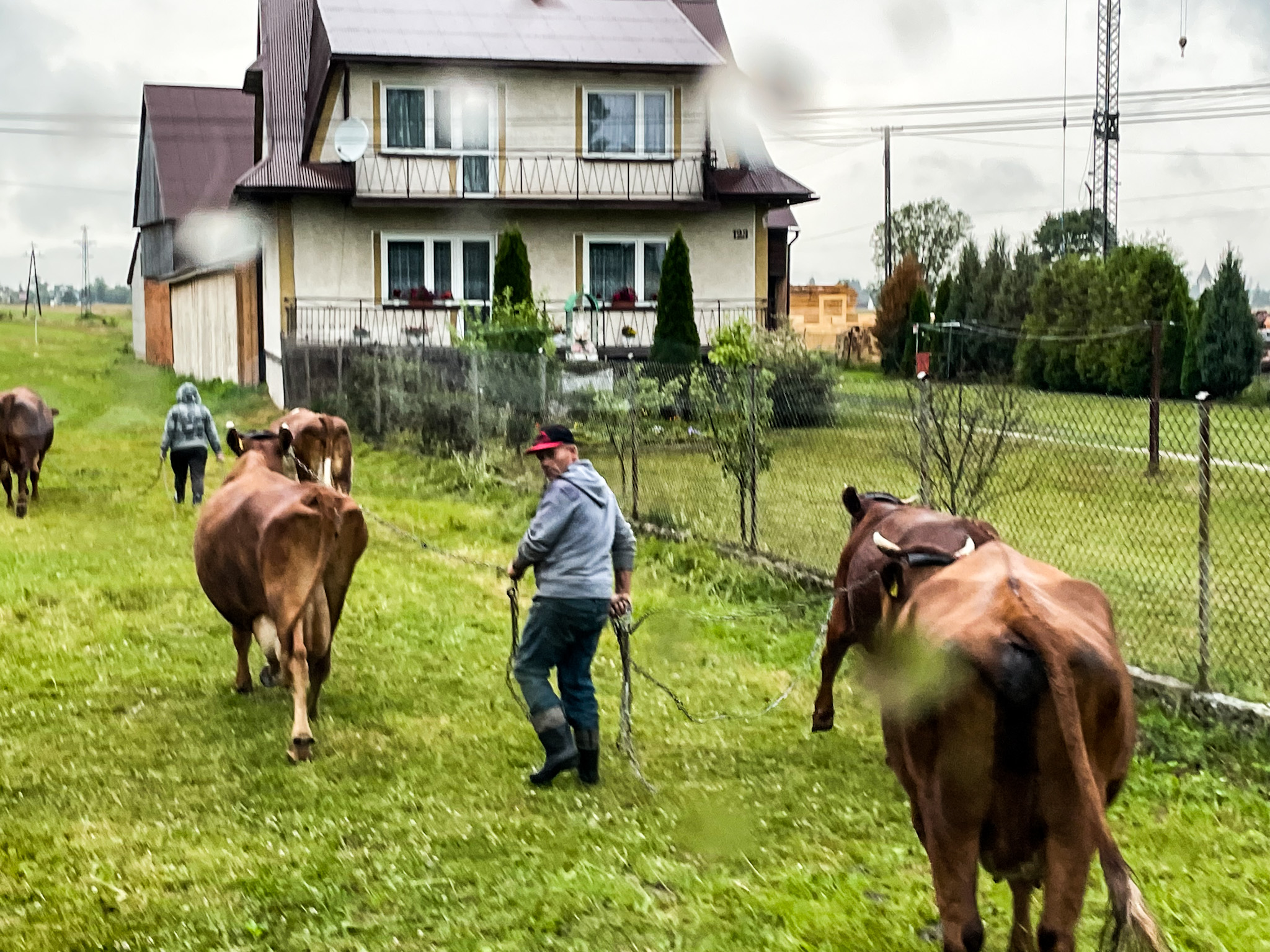
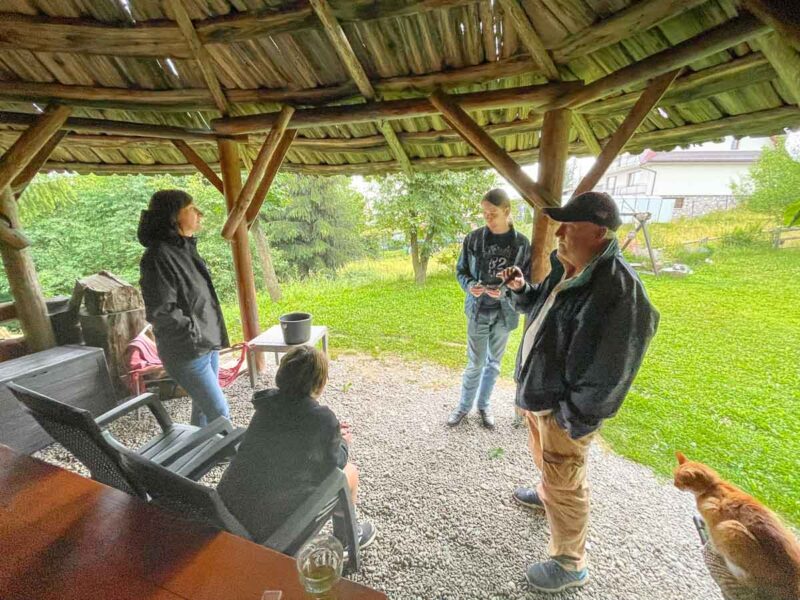
A visit with my oldest friend here.
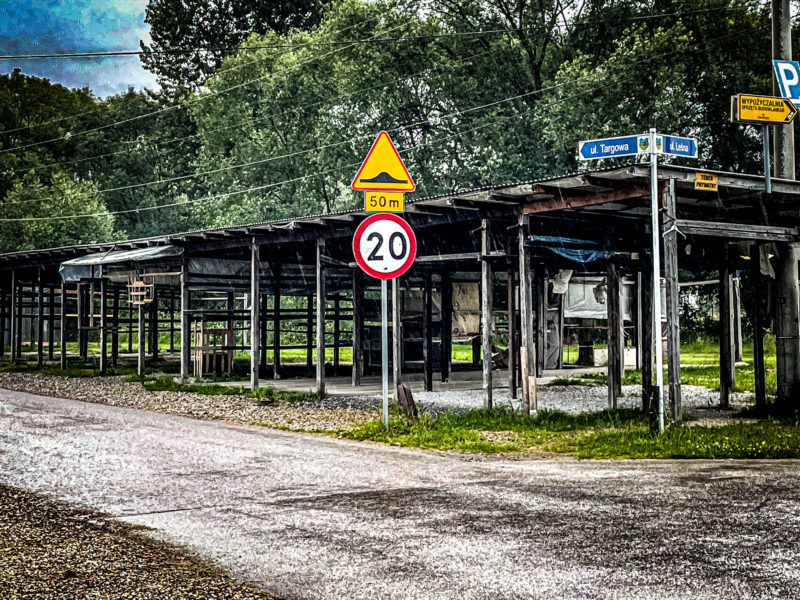
For six days of the week, the stalls stand empty, a sort of minimalistic ghost town of spare wood framing and corrugated metal roofing. The corner of Market and Forest Streets normally looks like this.
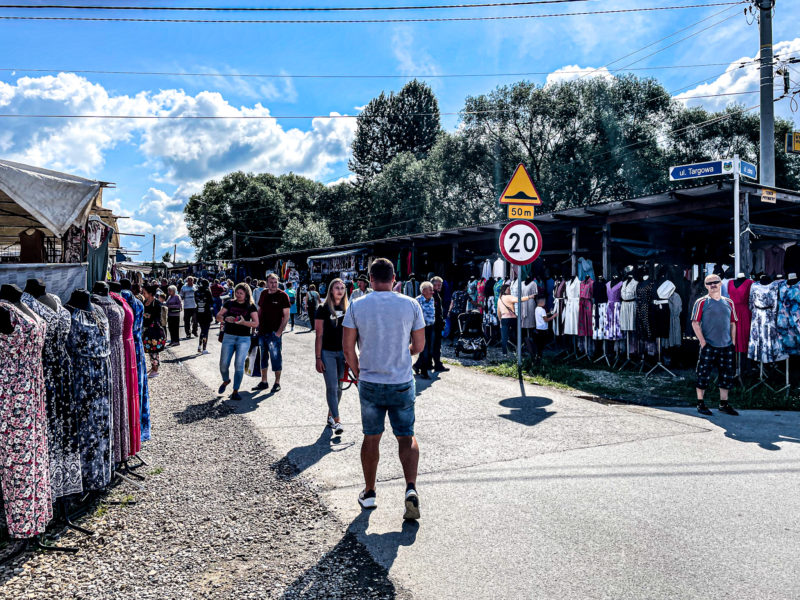
But on Wednesdays, when the jarmark comes to town, everything looks different. The stalls fill with vendors and goods, and the streets are essentially closed to traffic as potential customers weave in and out, walking between the various vendors' invitations to inspect their wares.
"Can we go see the chickens?" the Boy asks as we enter the market. It's always been a favorite spot for him.
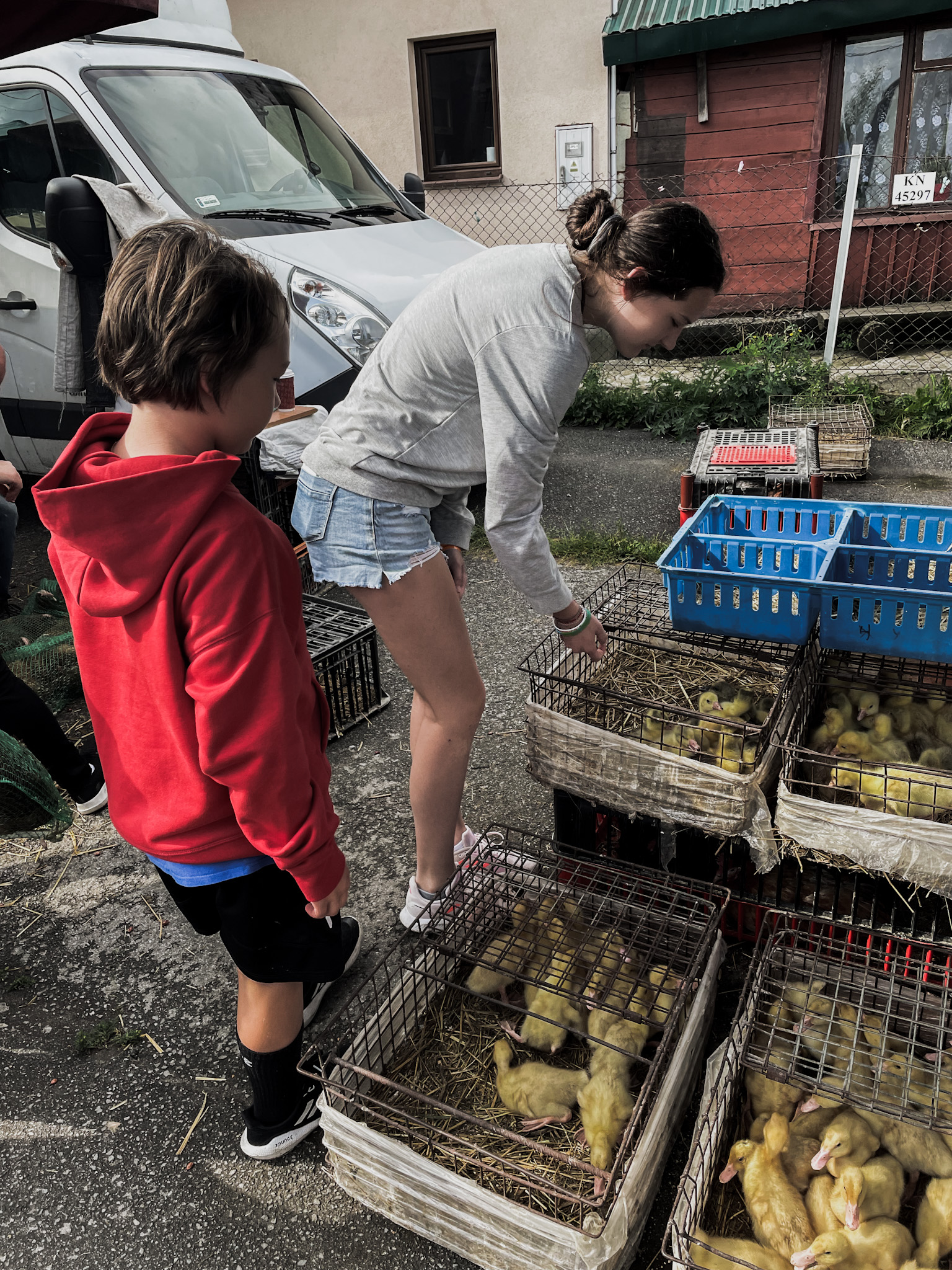
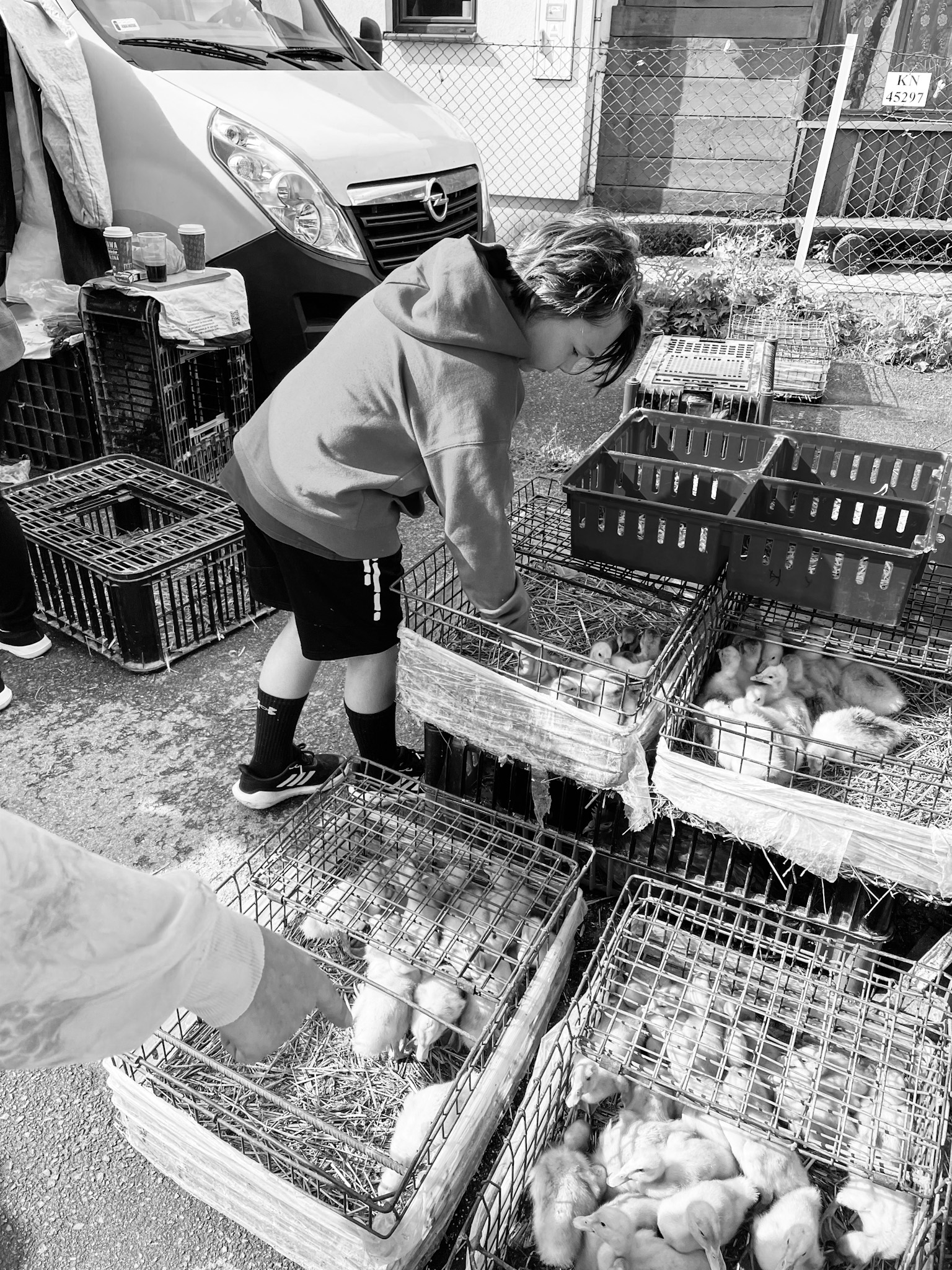
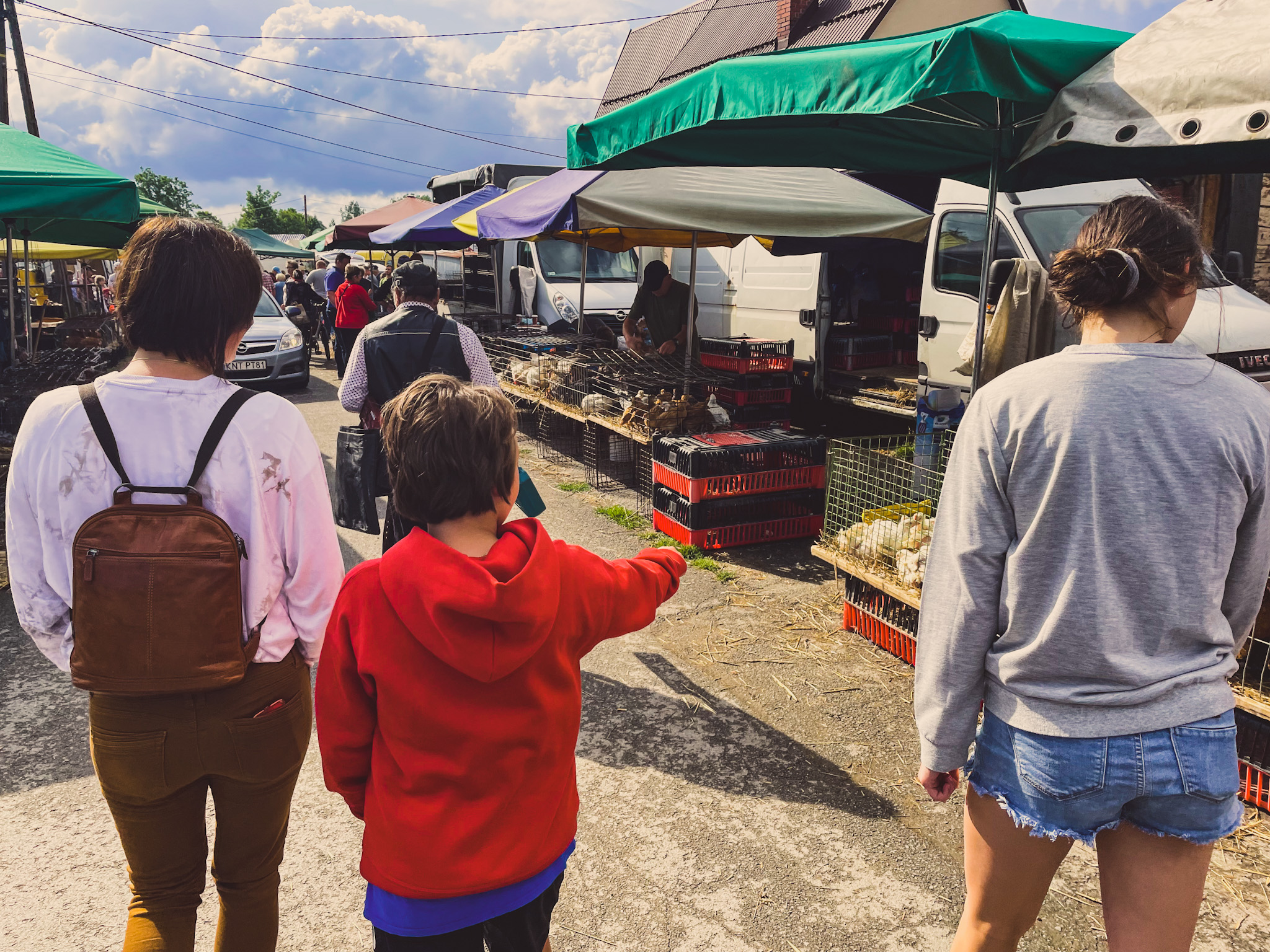
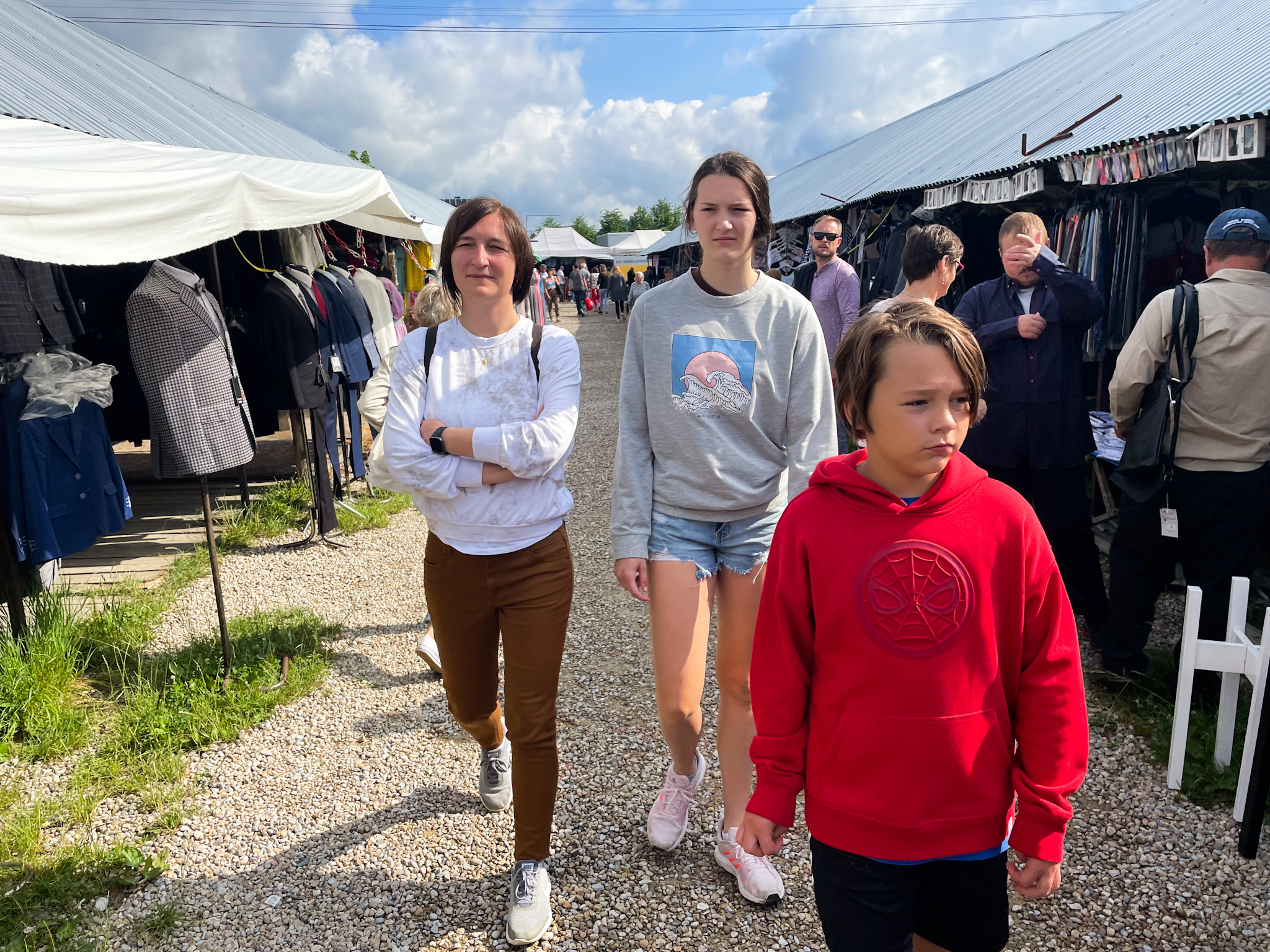
Of course, chickens aren't the only attraction. Tables covered with knives, hoodies with the most incredible images.
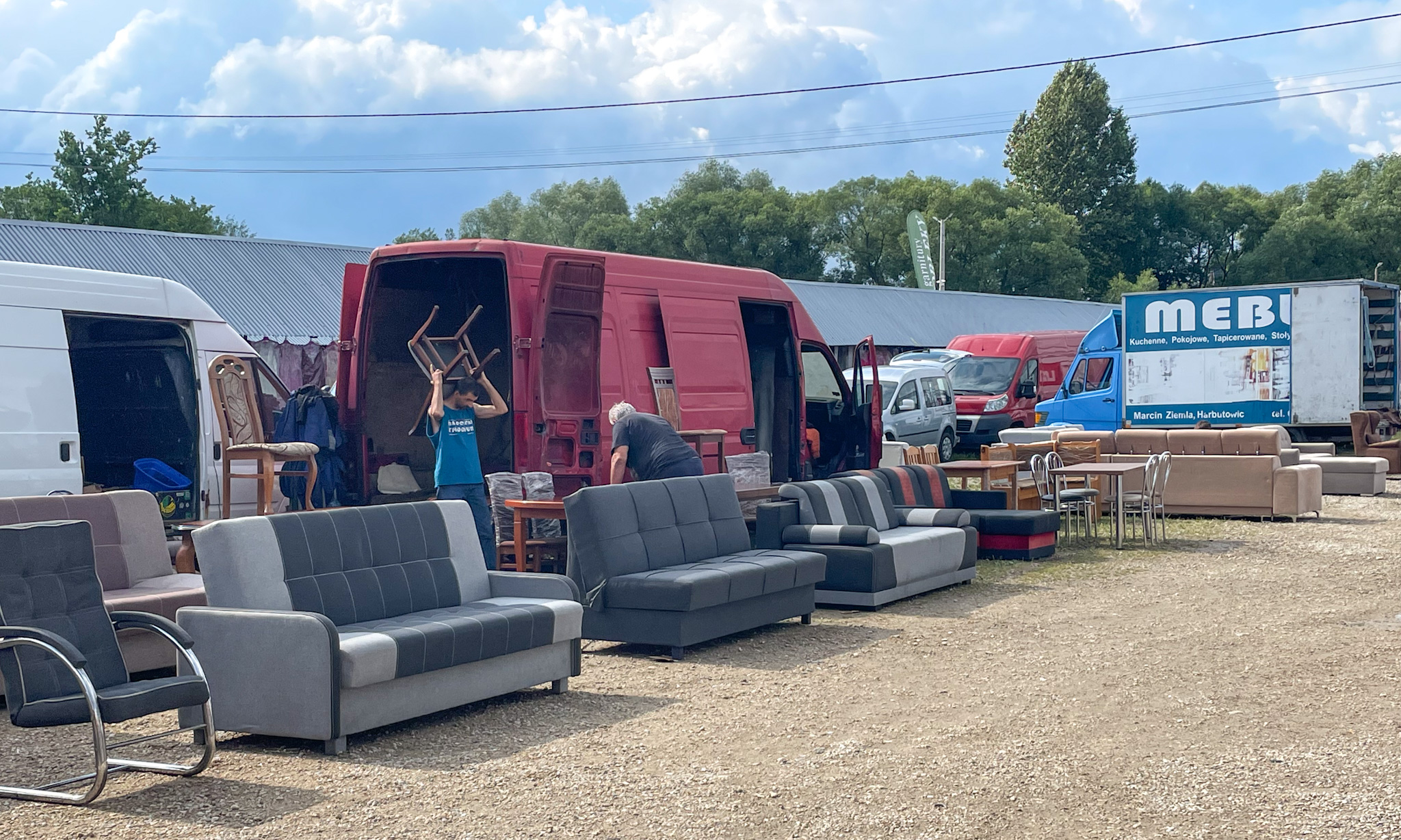
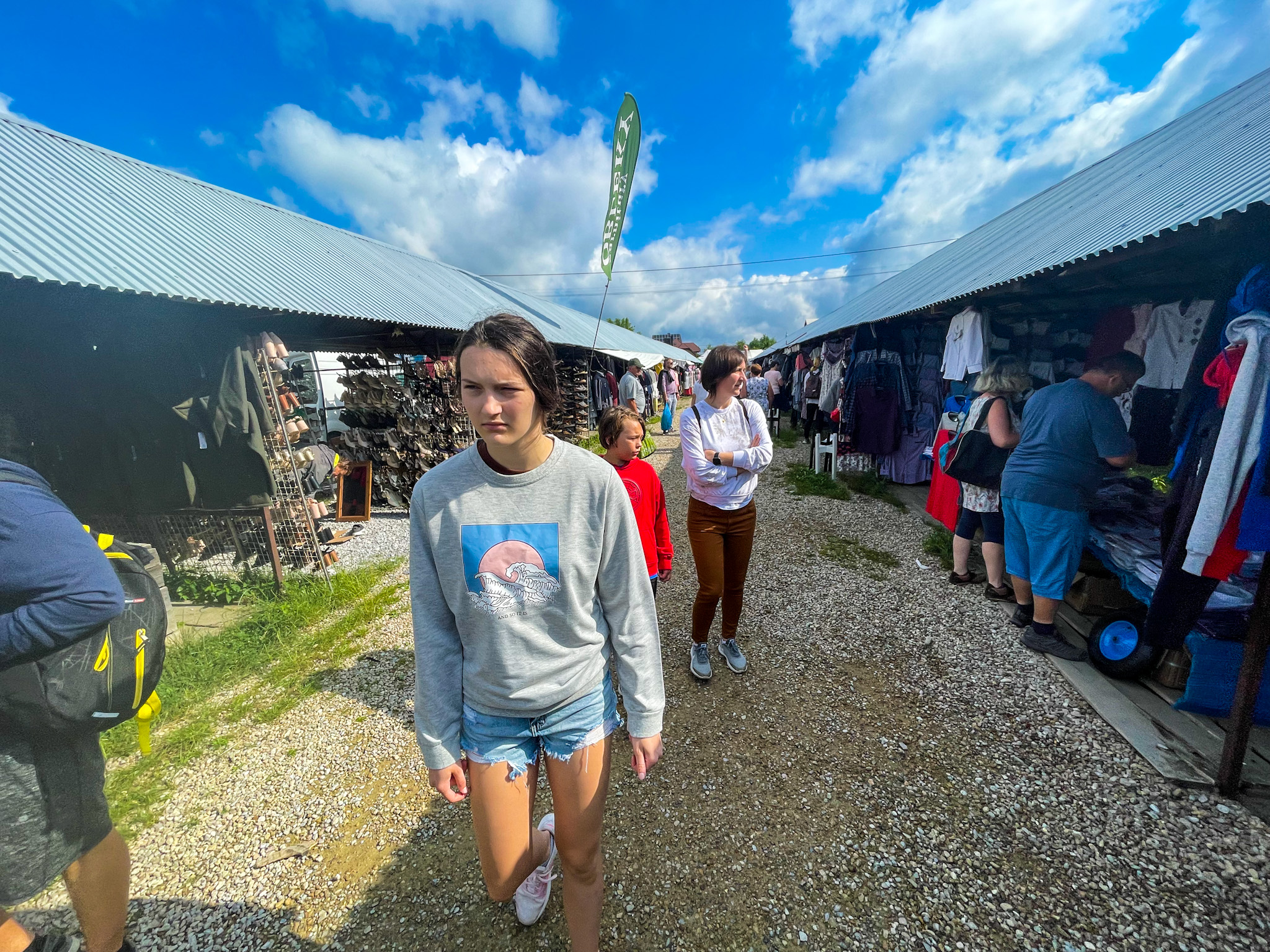
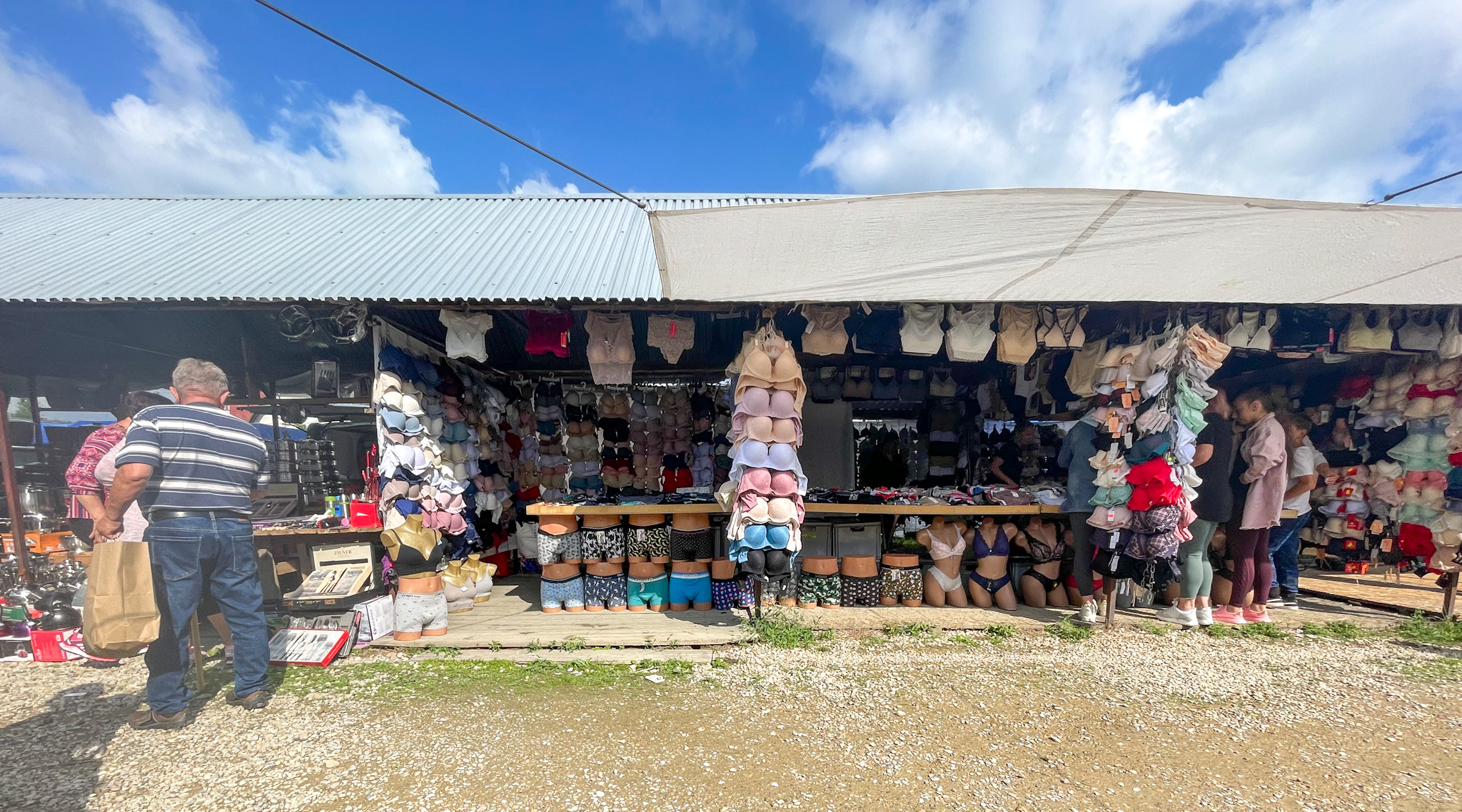
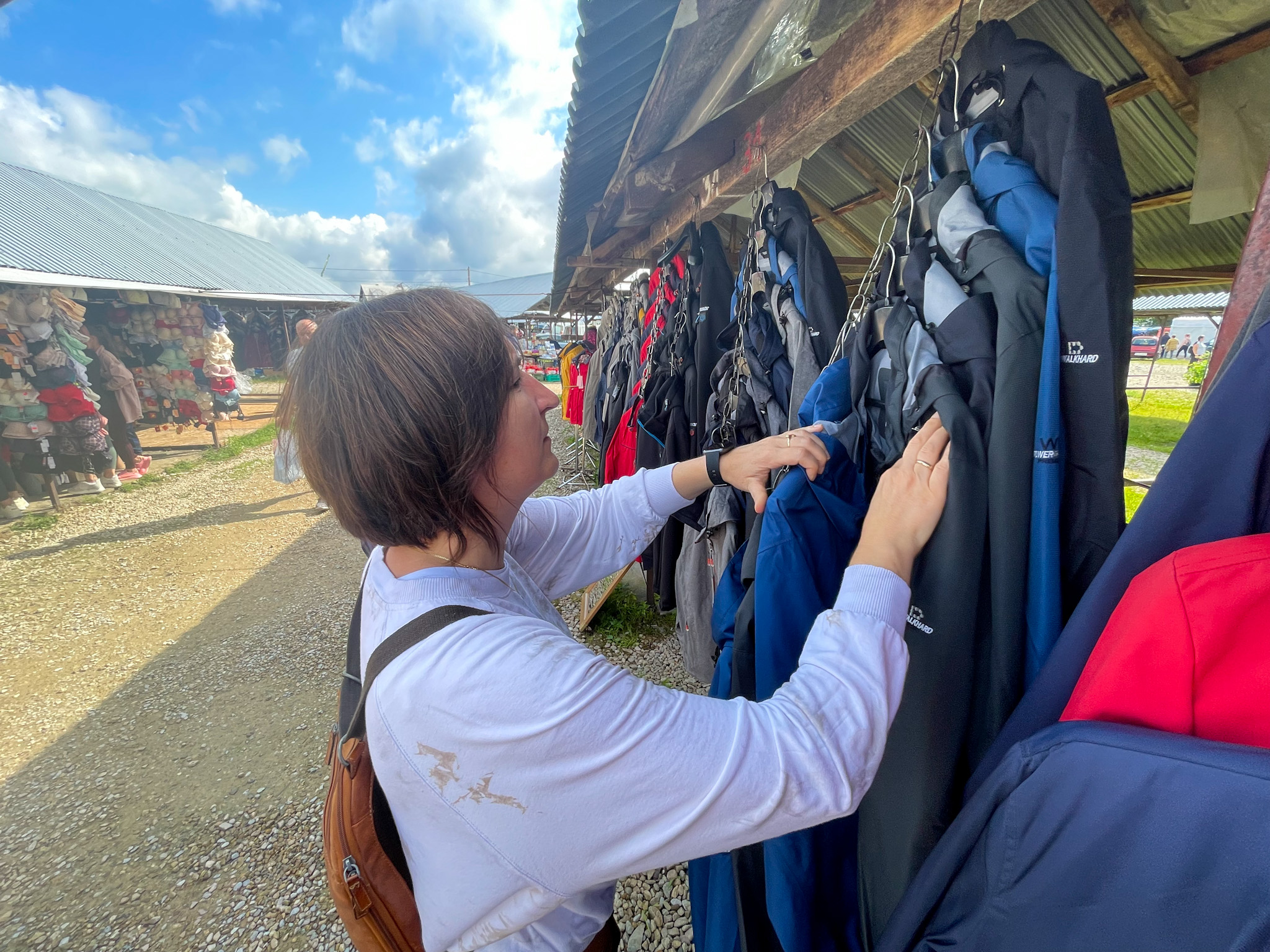
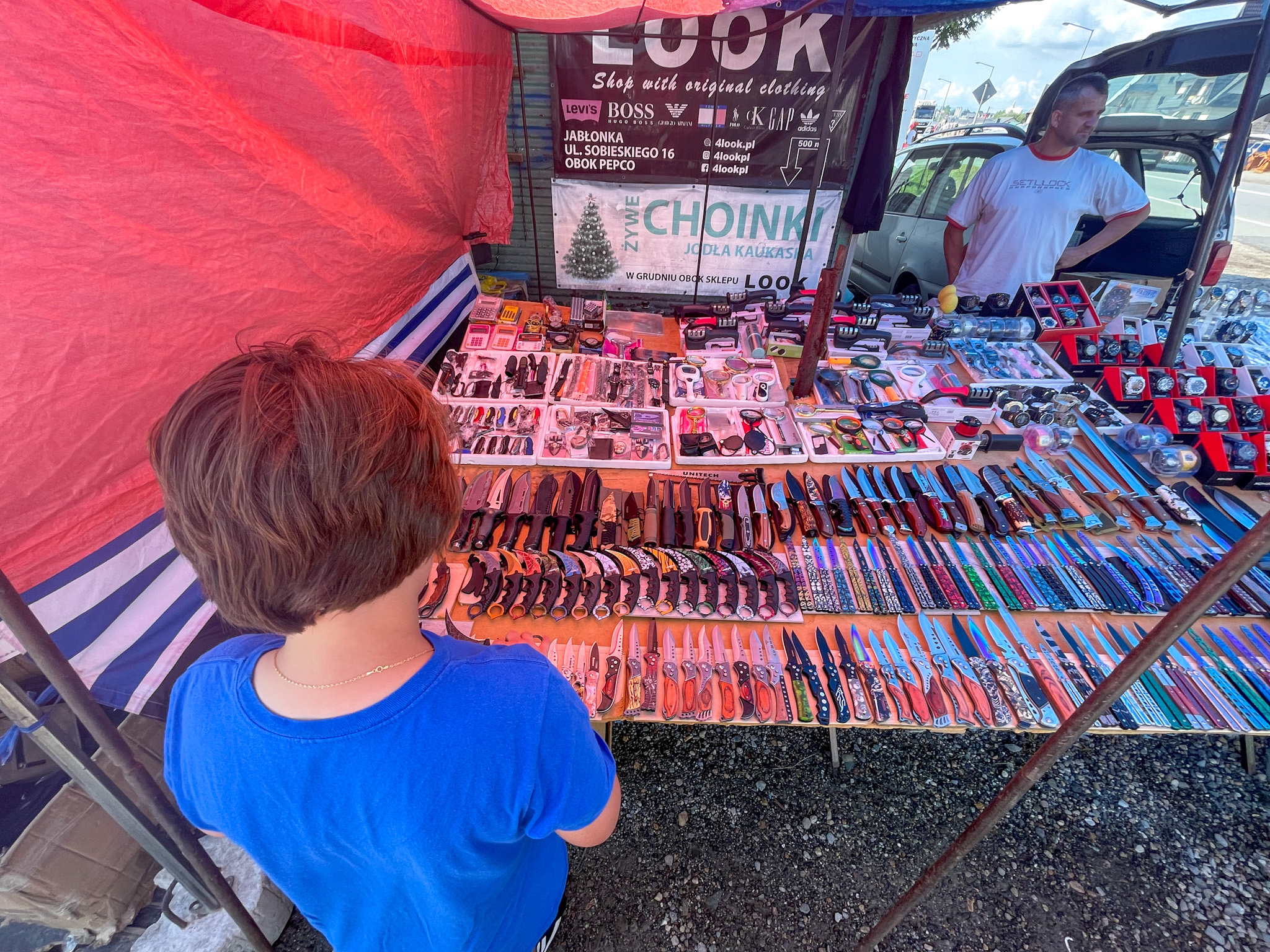
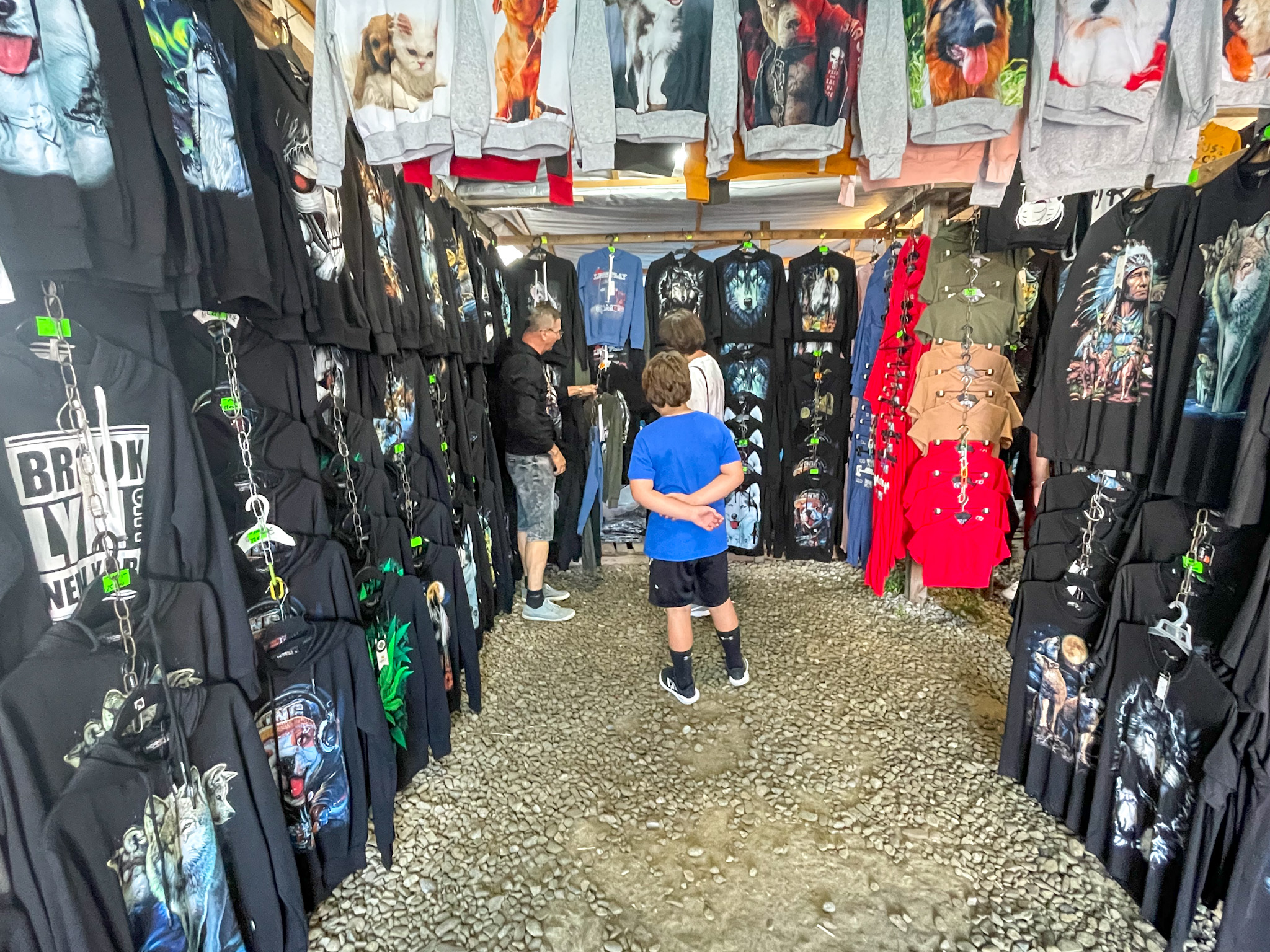
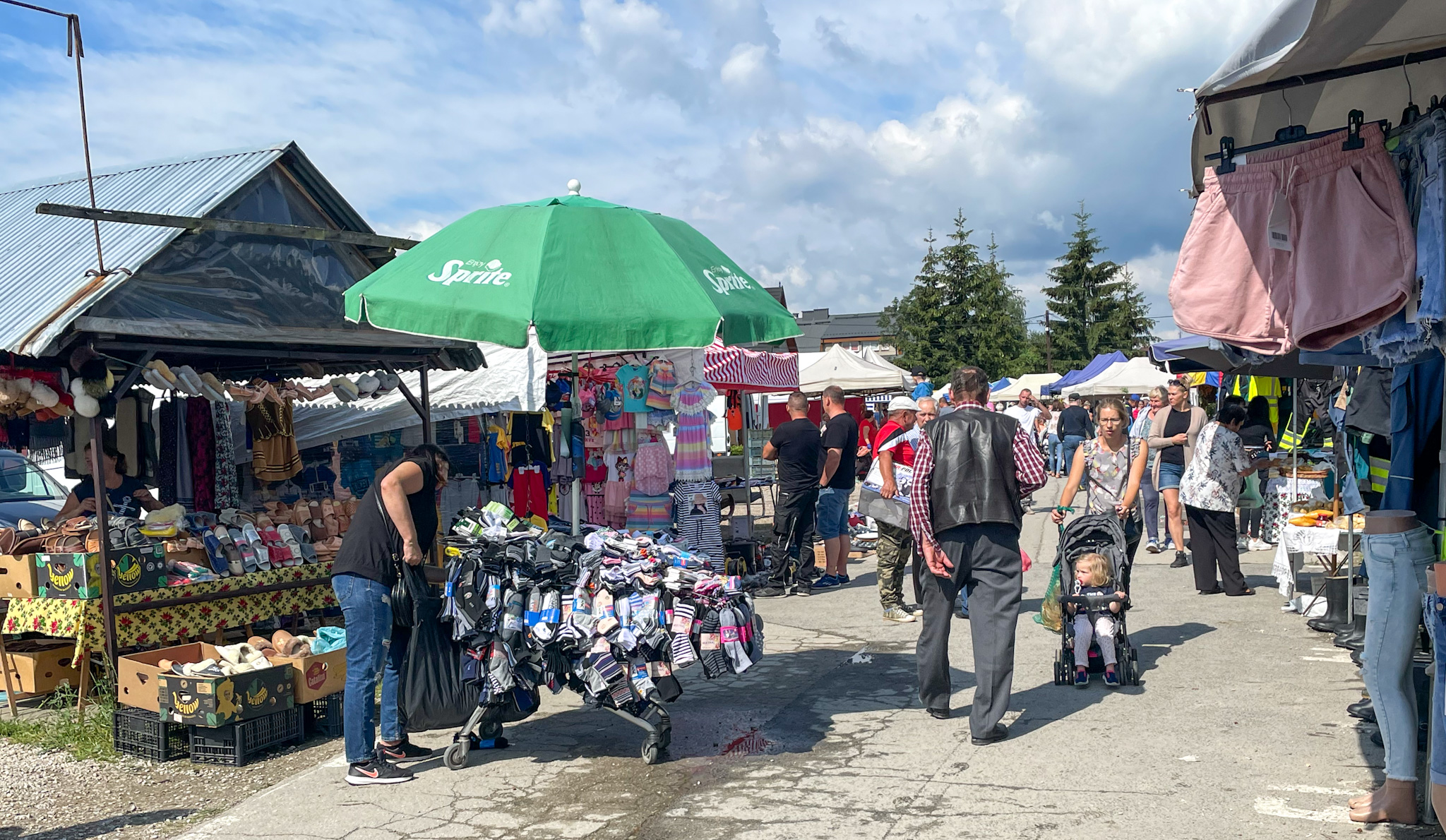
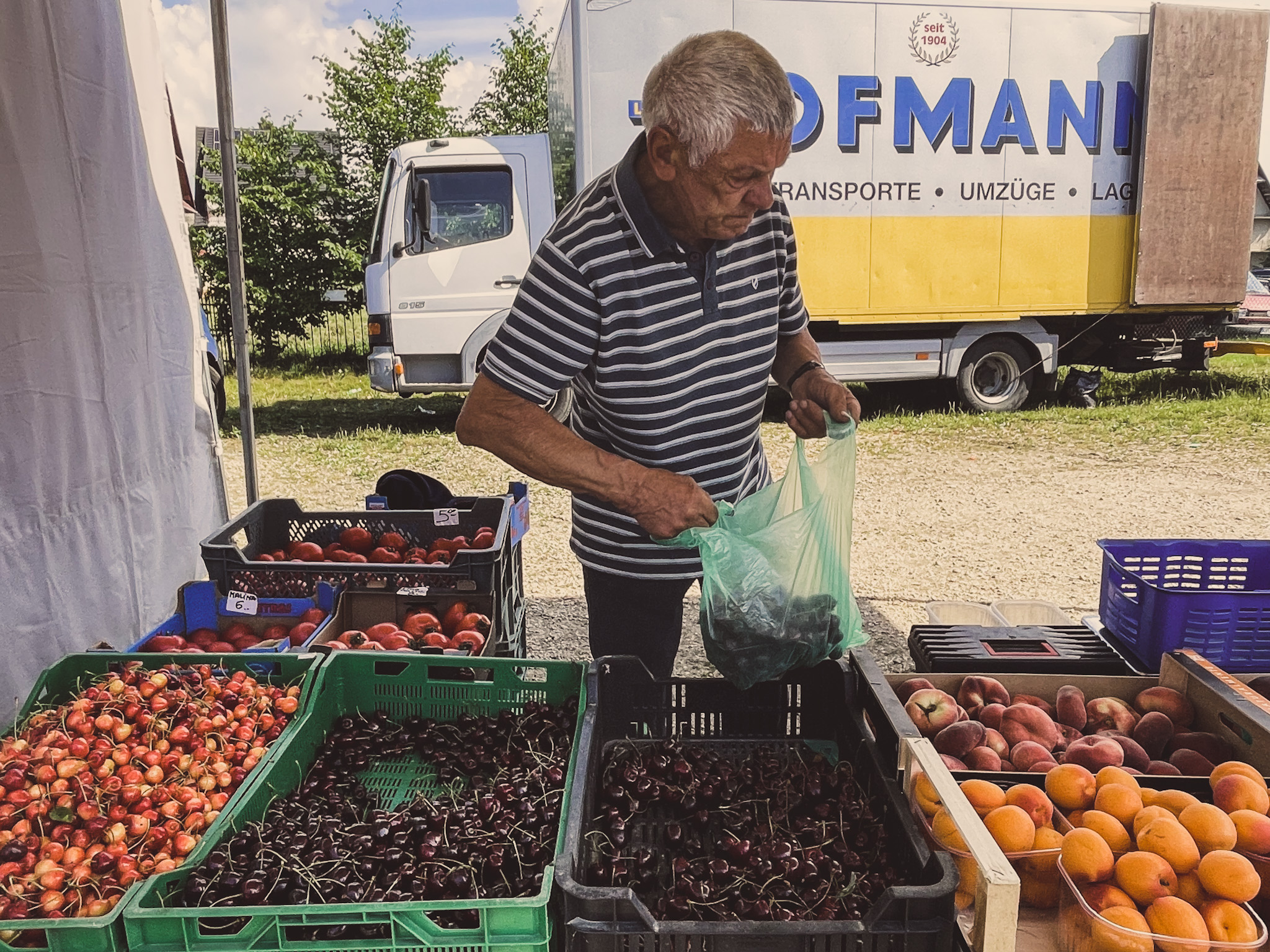
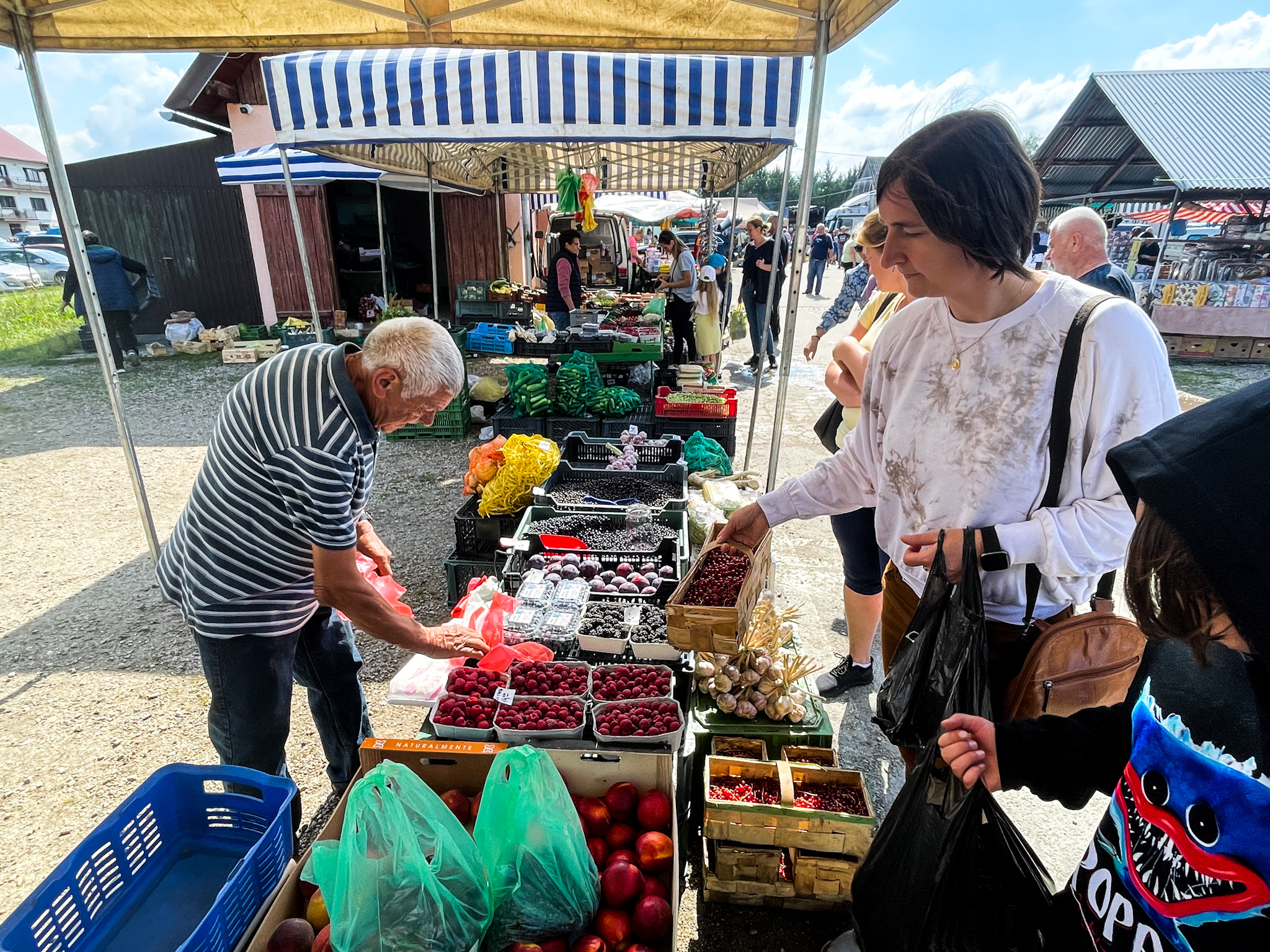
And then there's all the food.
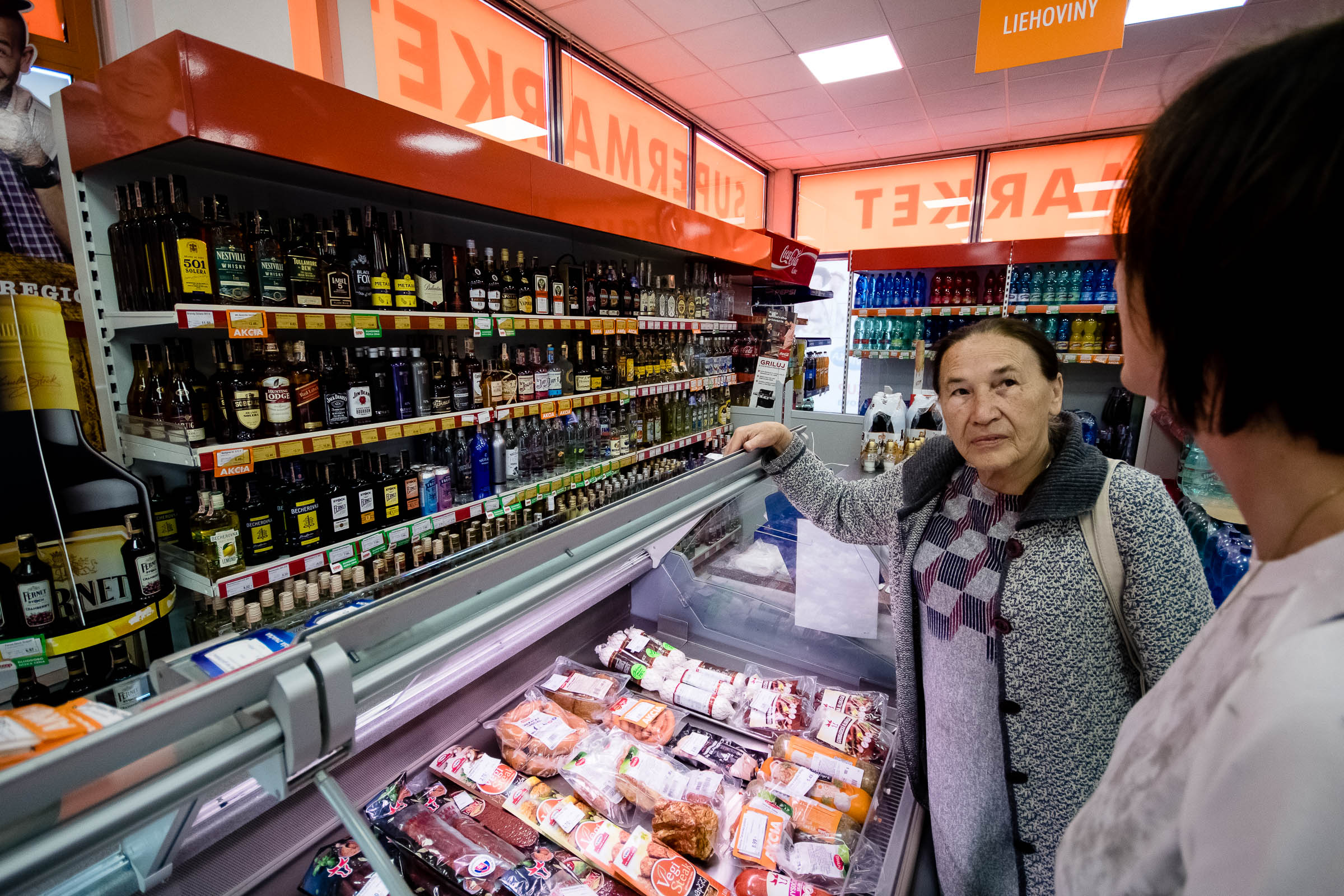
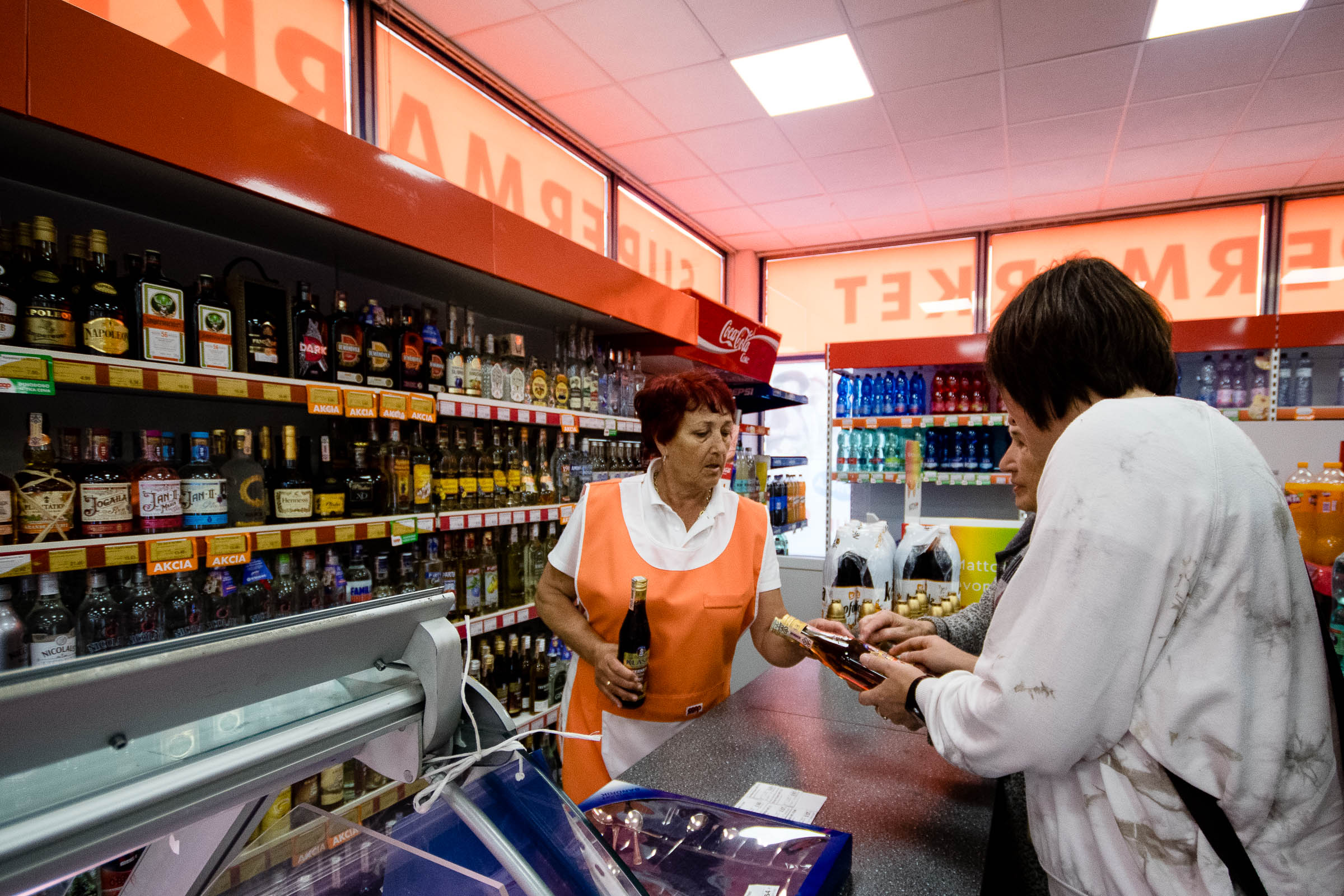
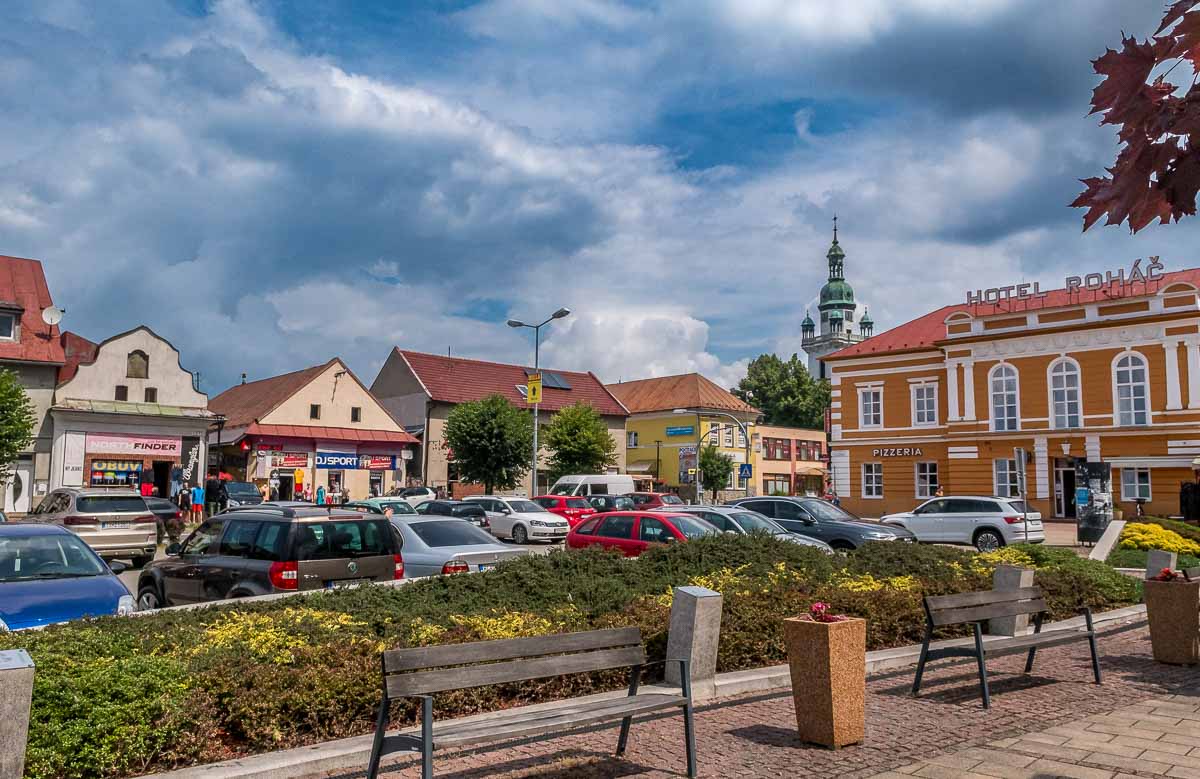
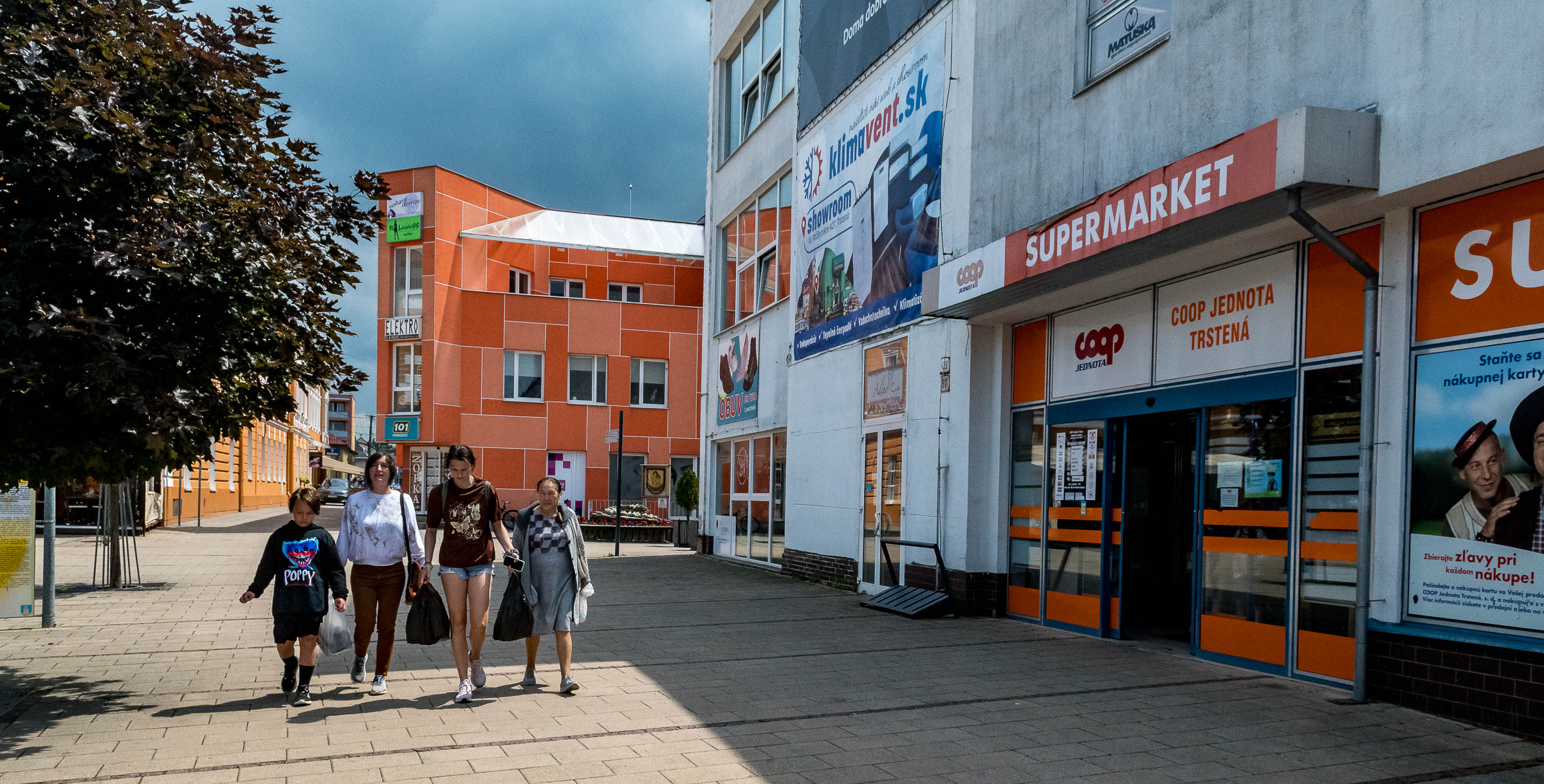
A trip to Poland isn't complete without a short trip across the border into Slovakia. Babcia always likes to do a little shopping there, and it's always pleasant to see a slightly different view of central Europe. Things haven't changed here as much as they have in Poland. The supermarket on the small rynek looks like it must have 30 or even 40 years ago.
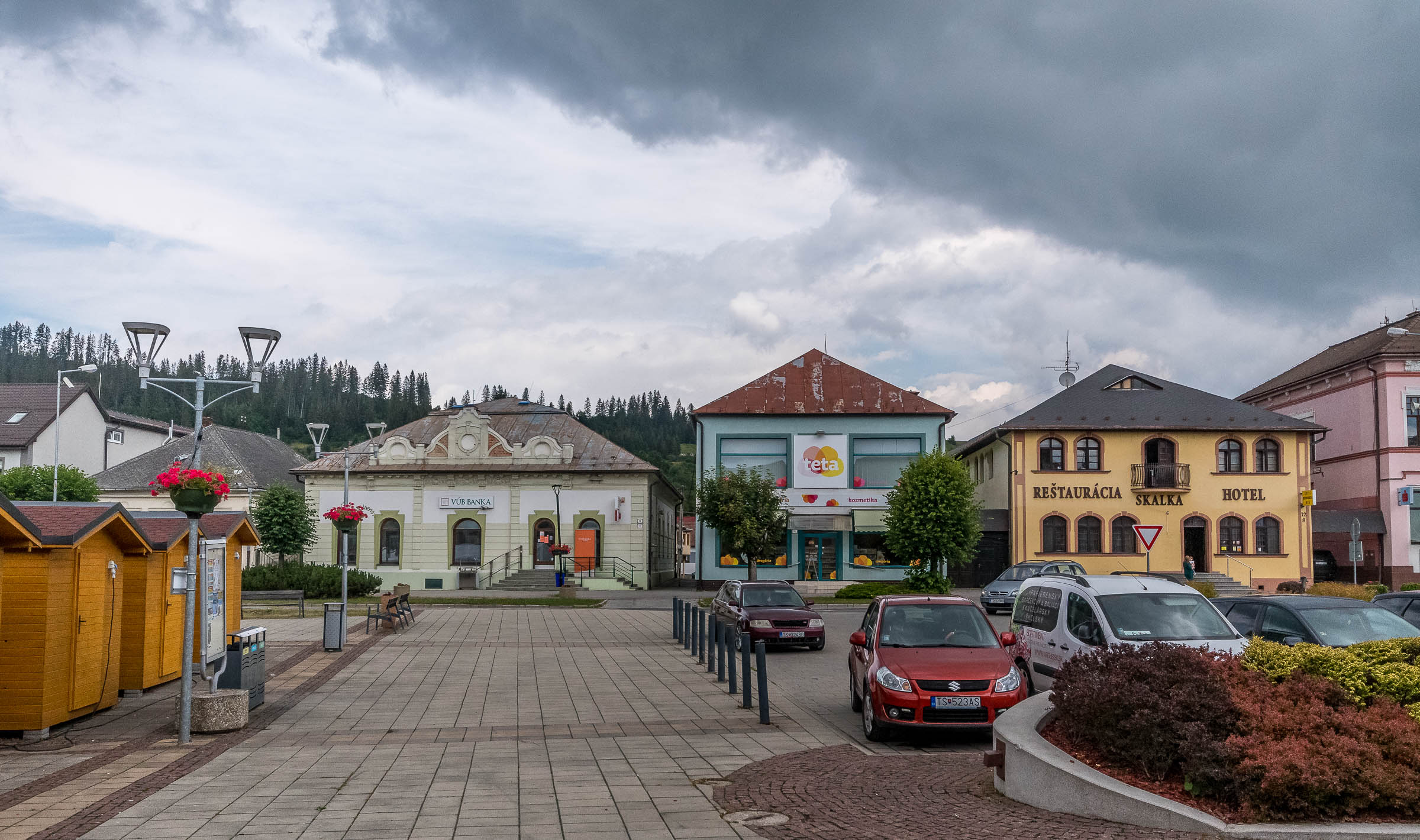
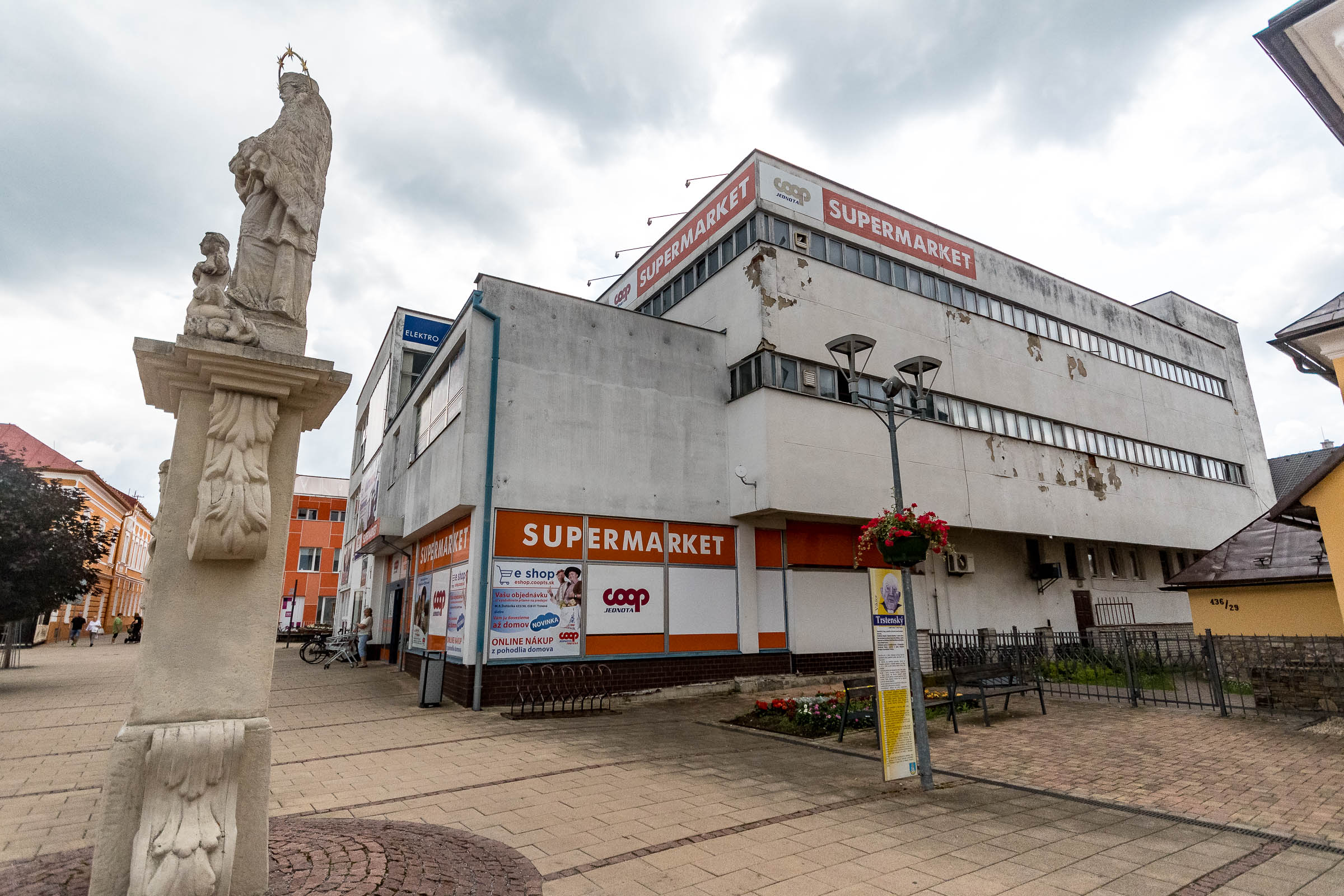
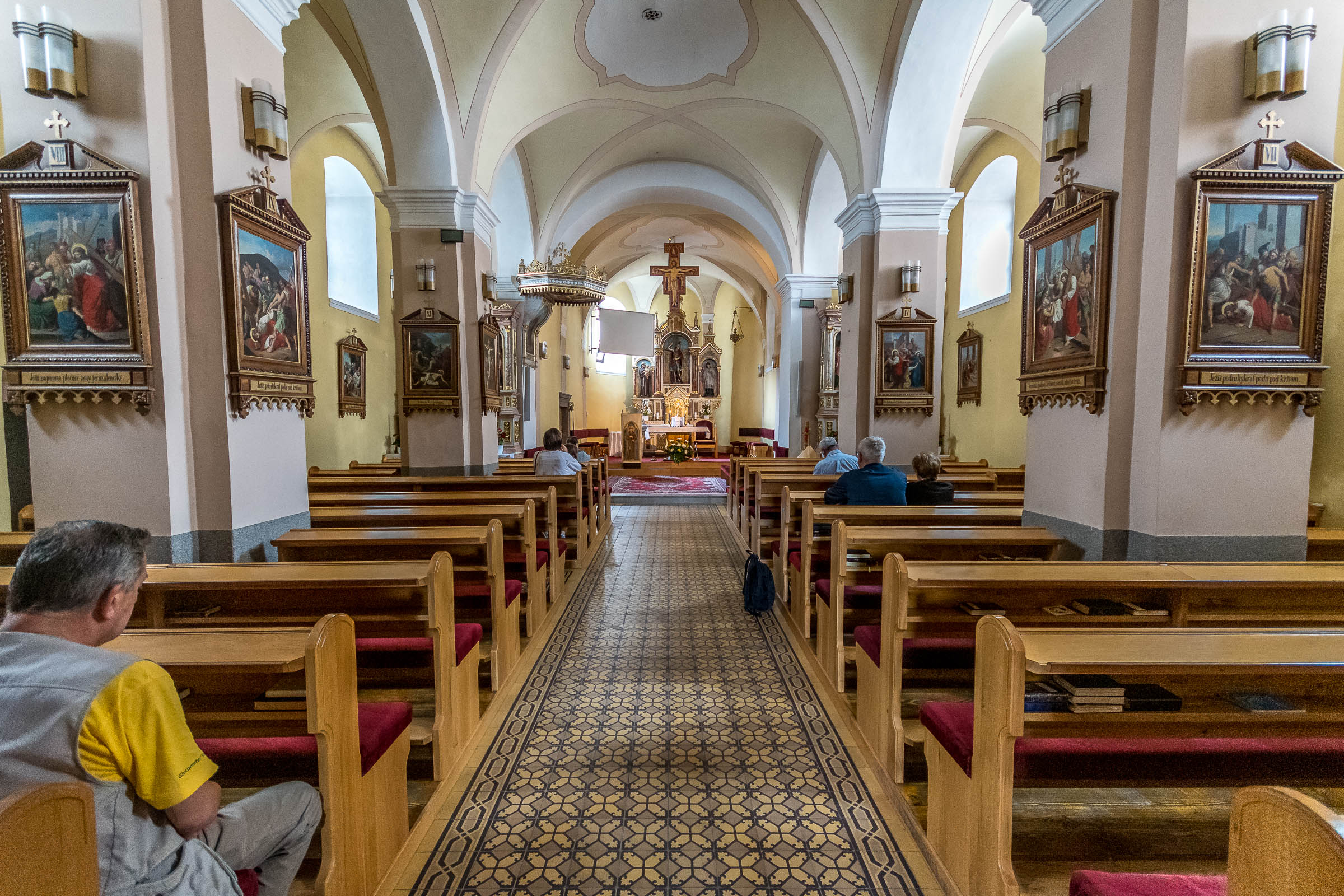
My Polish home for seven years, Lipnica holds a place in my heart like no other.
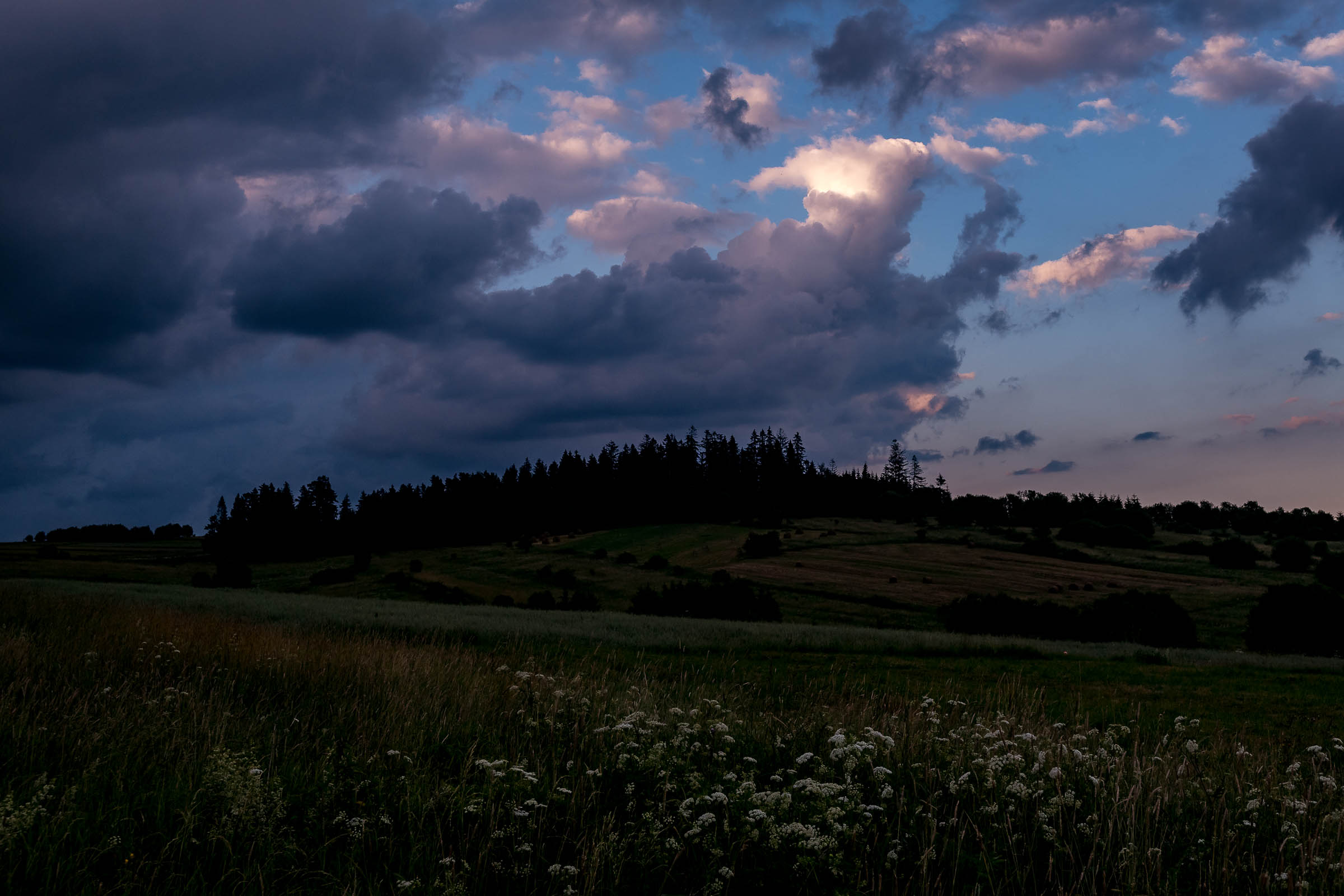
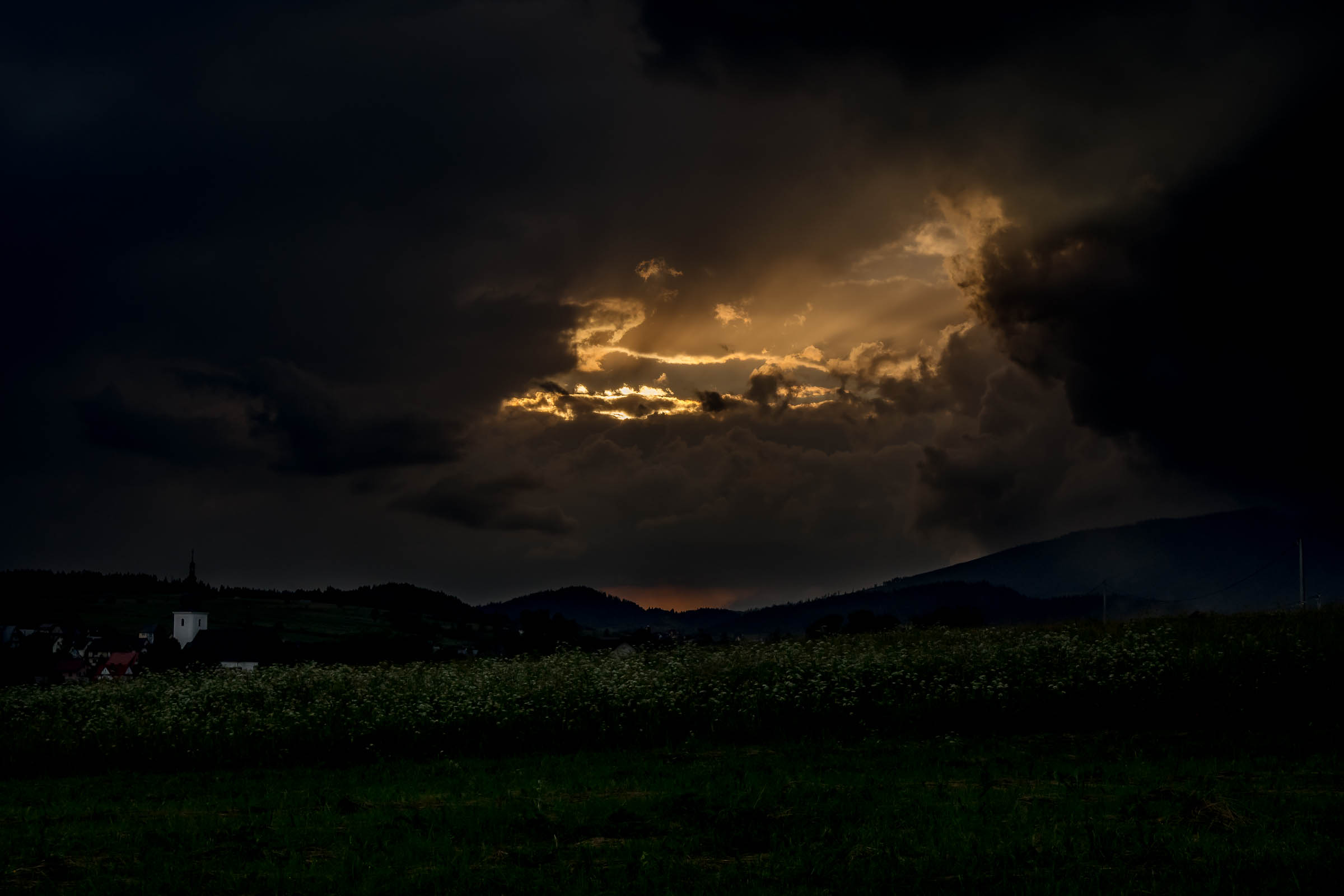
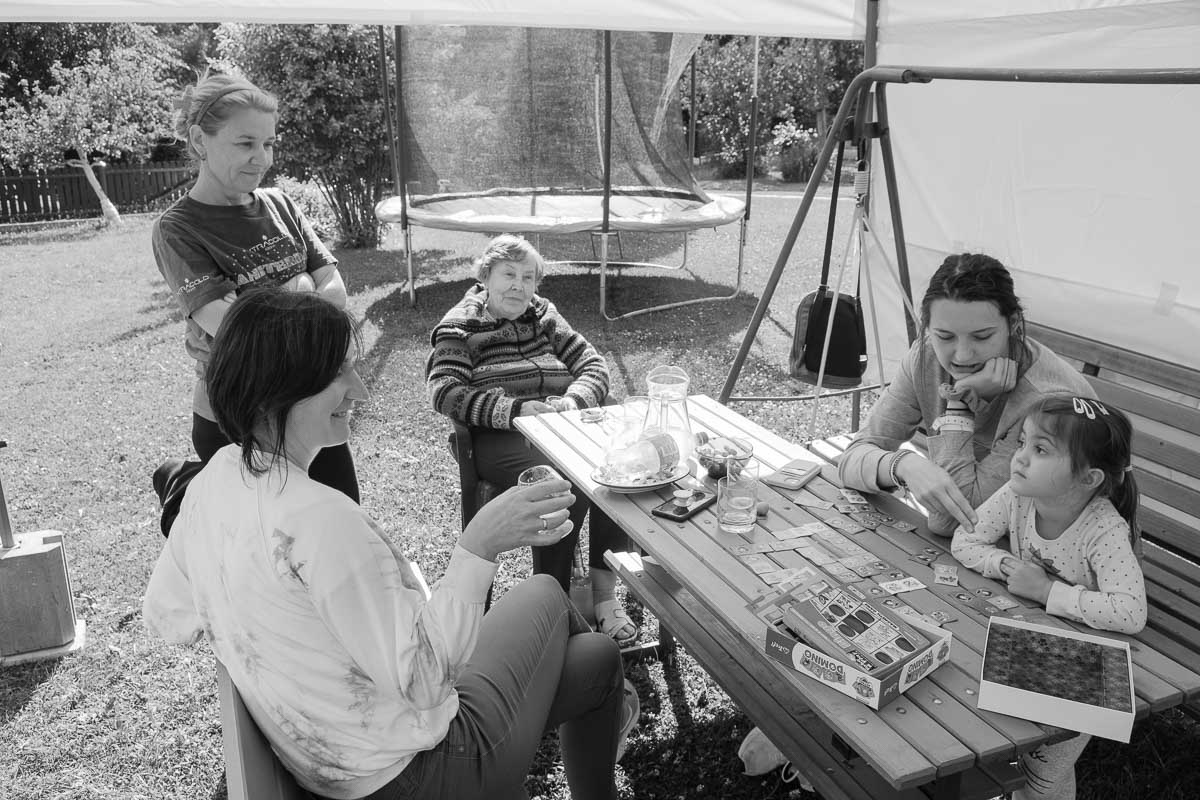
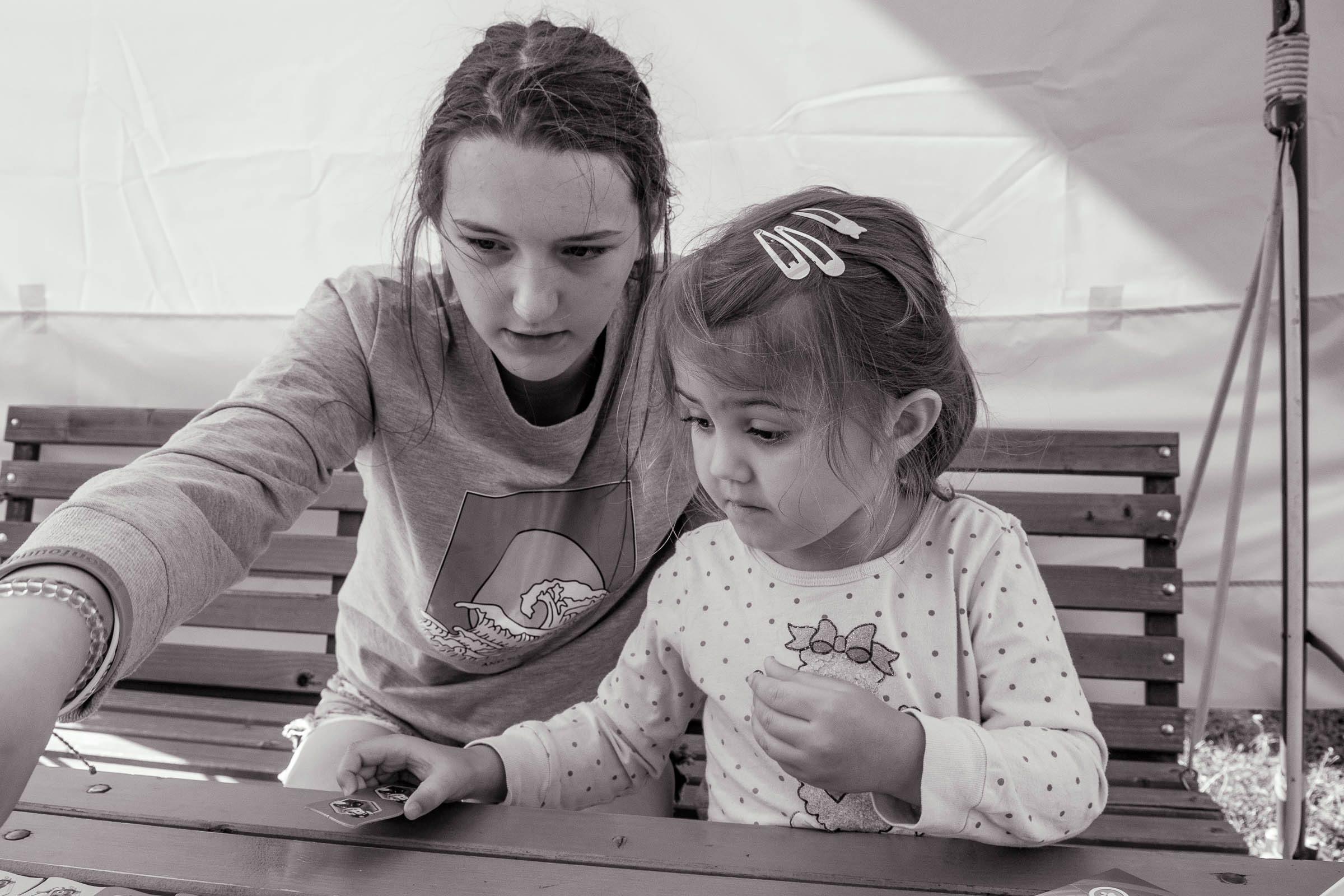
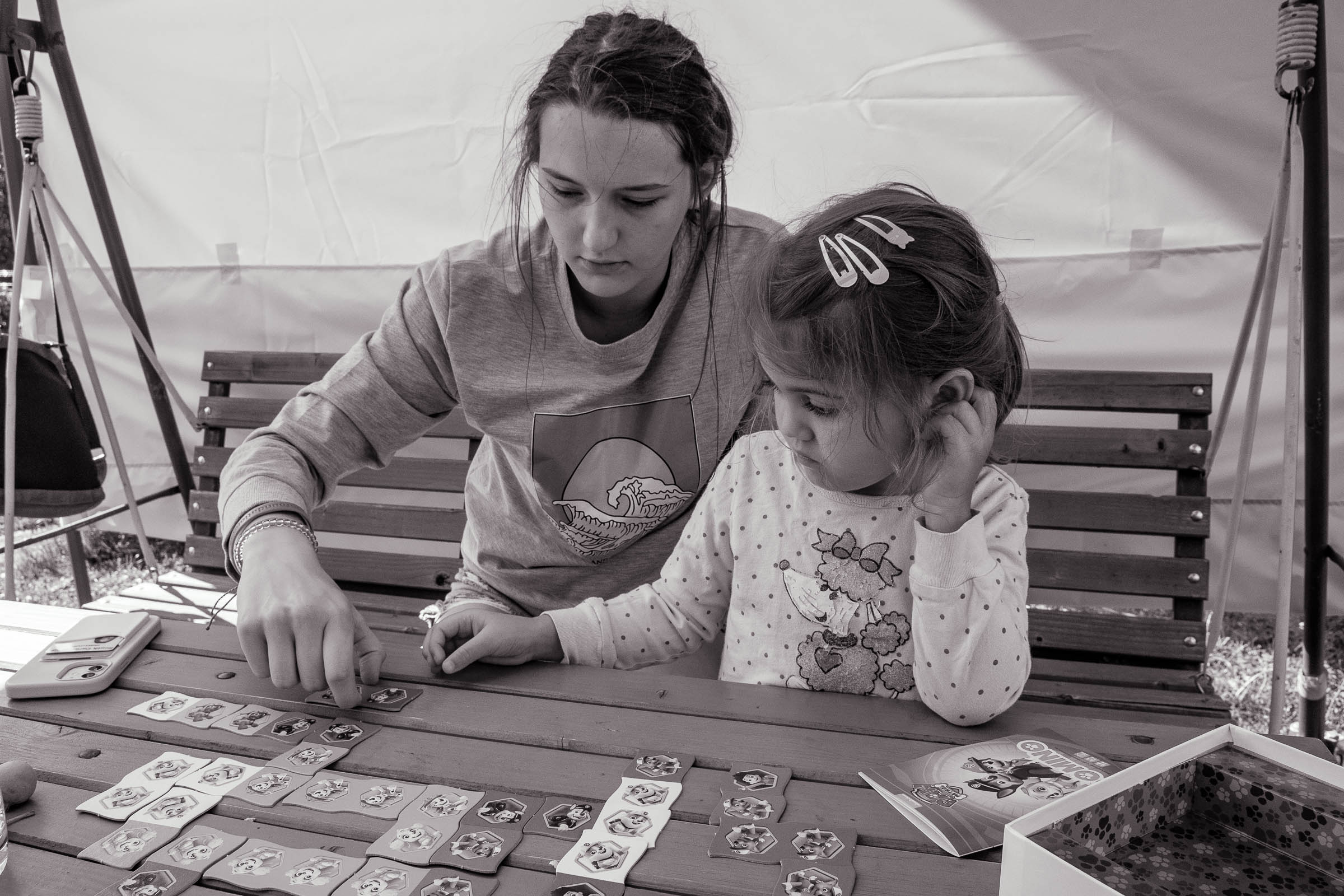
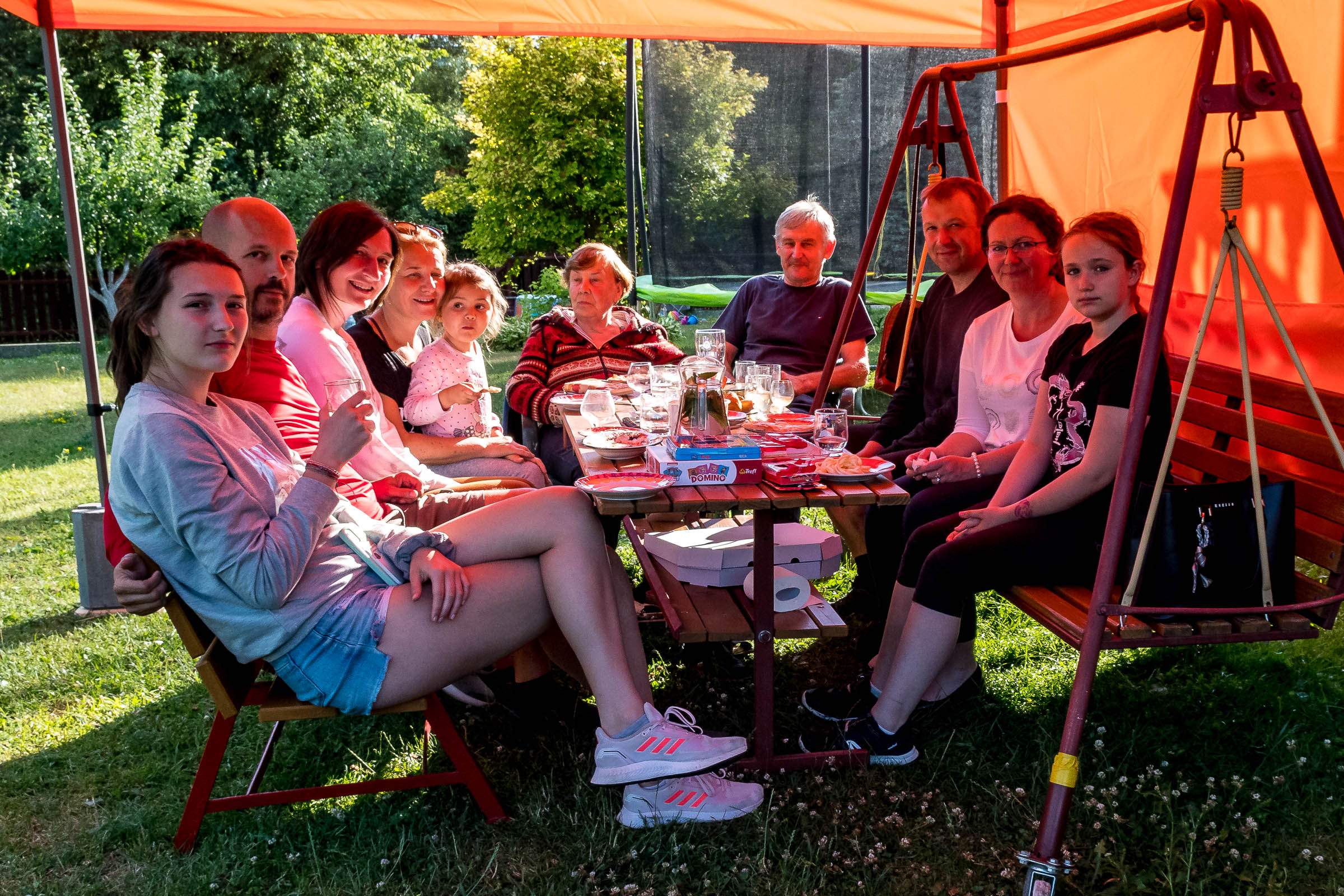
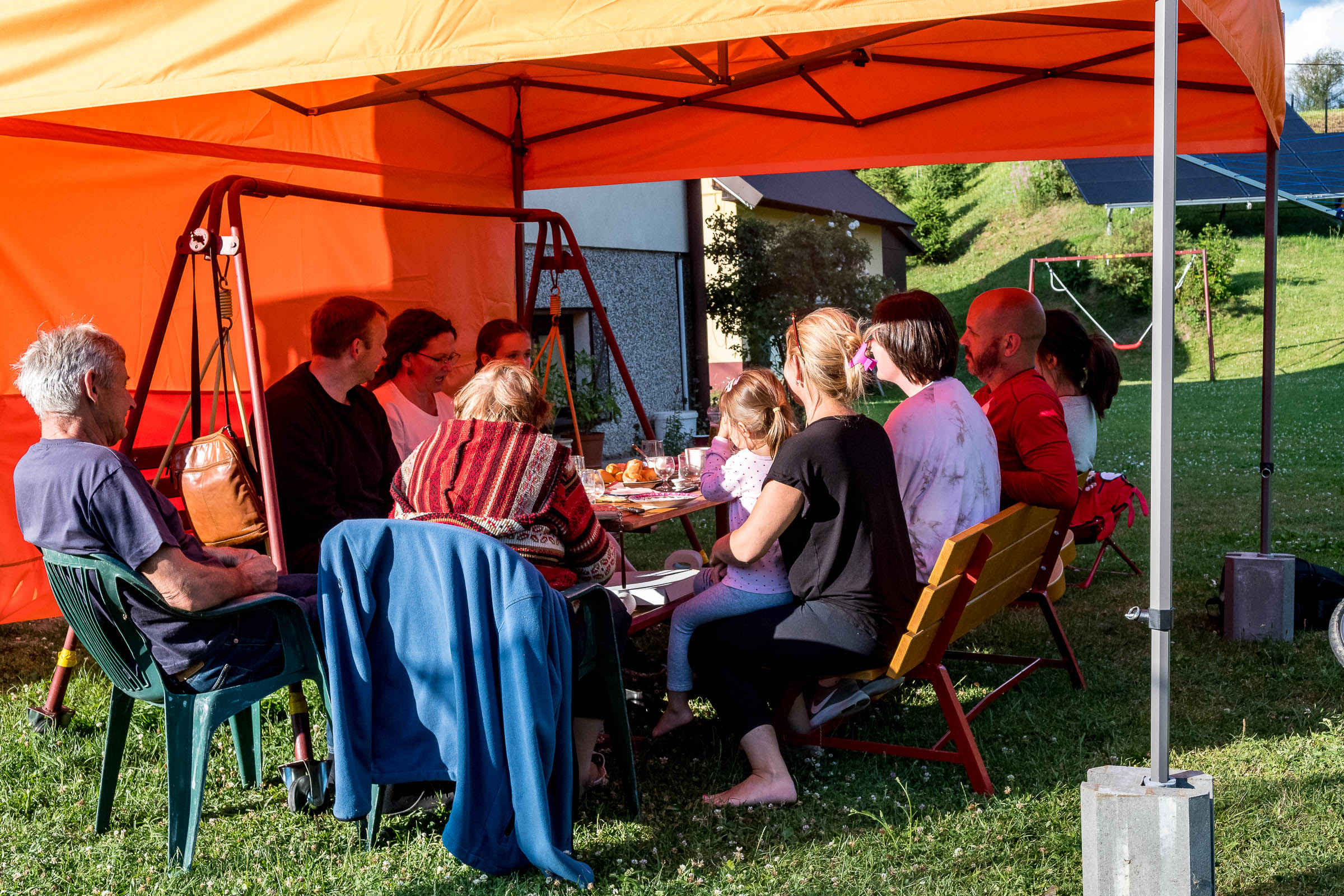
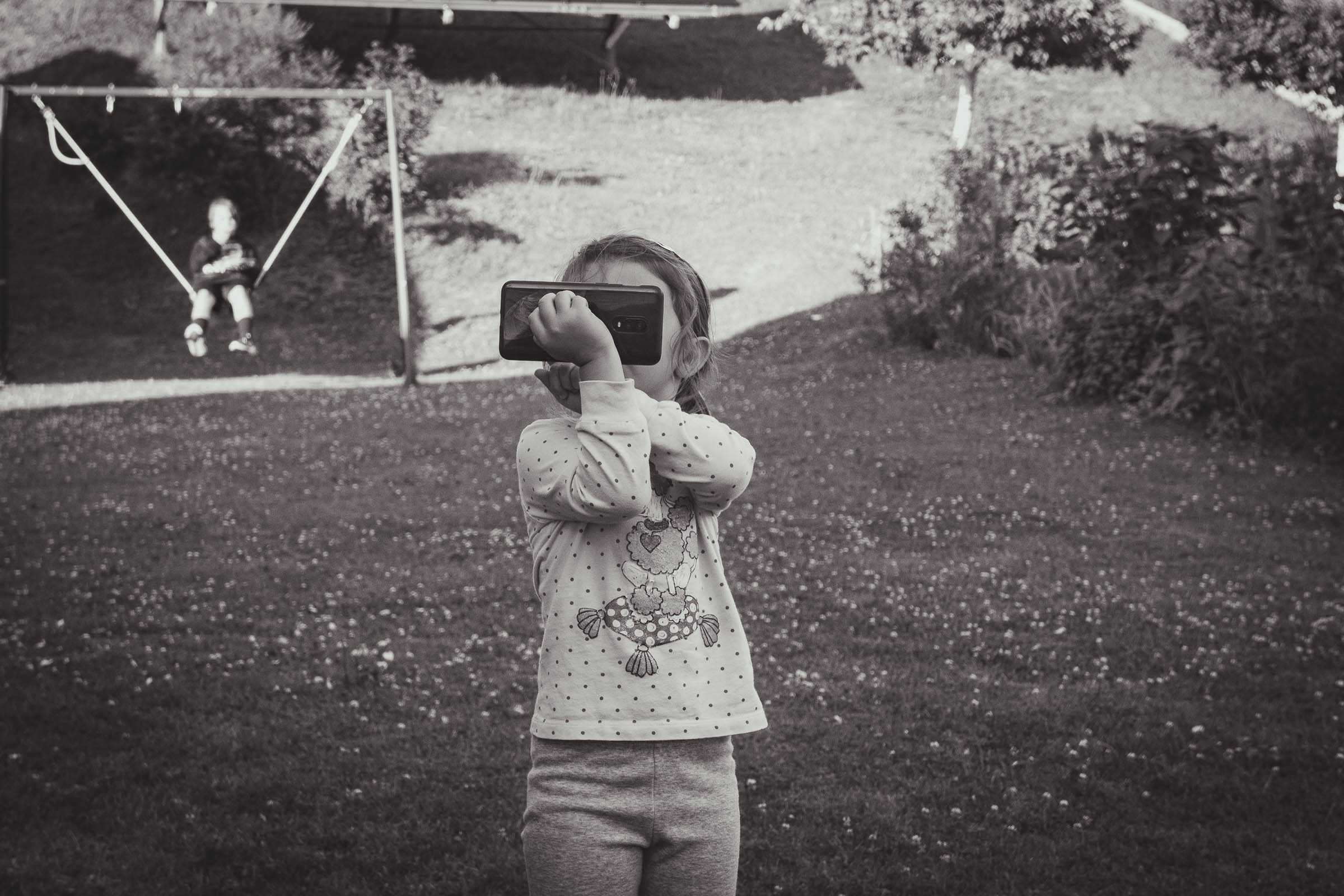
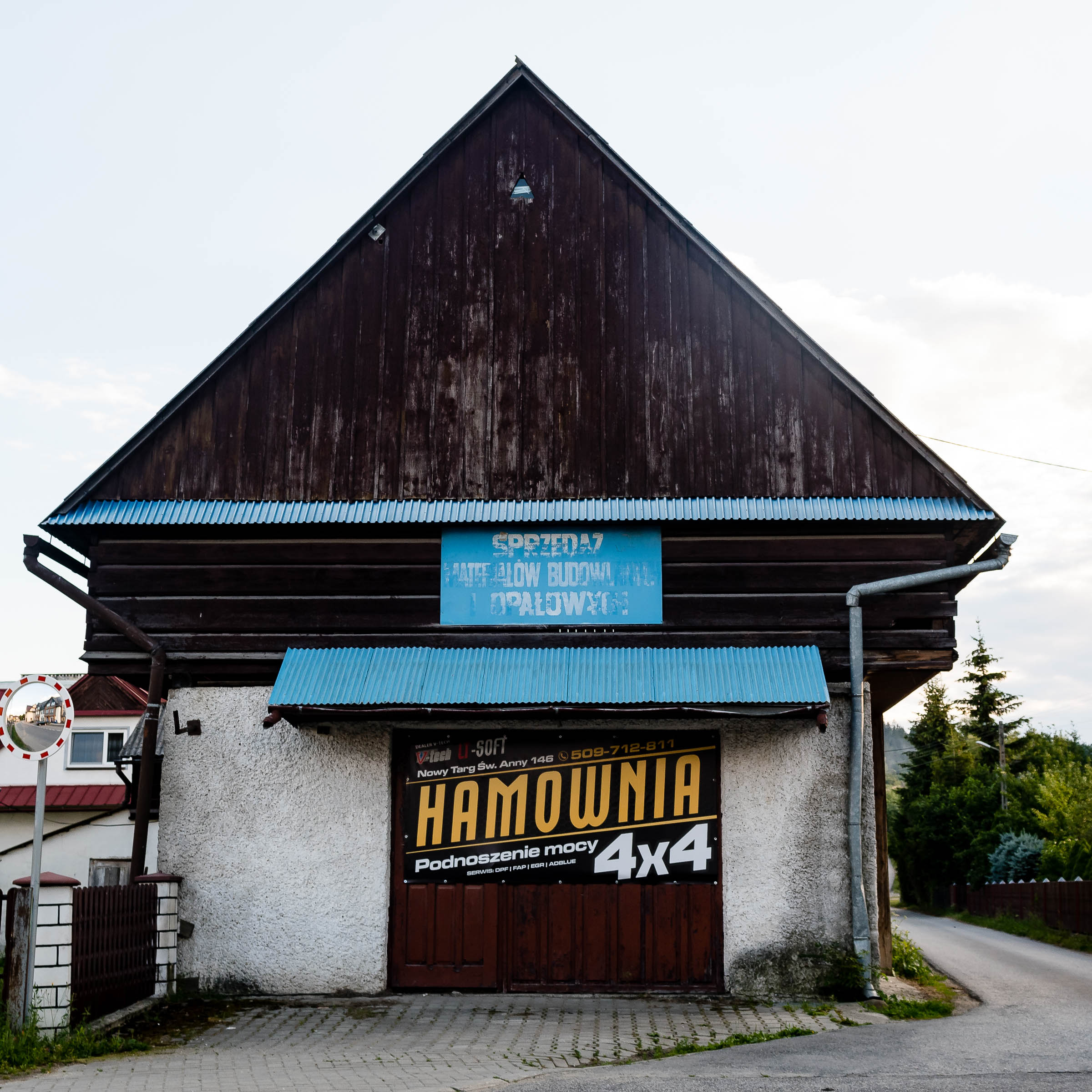
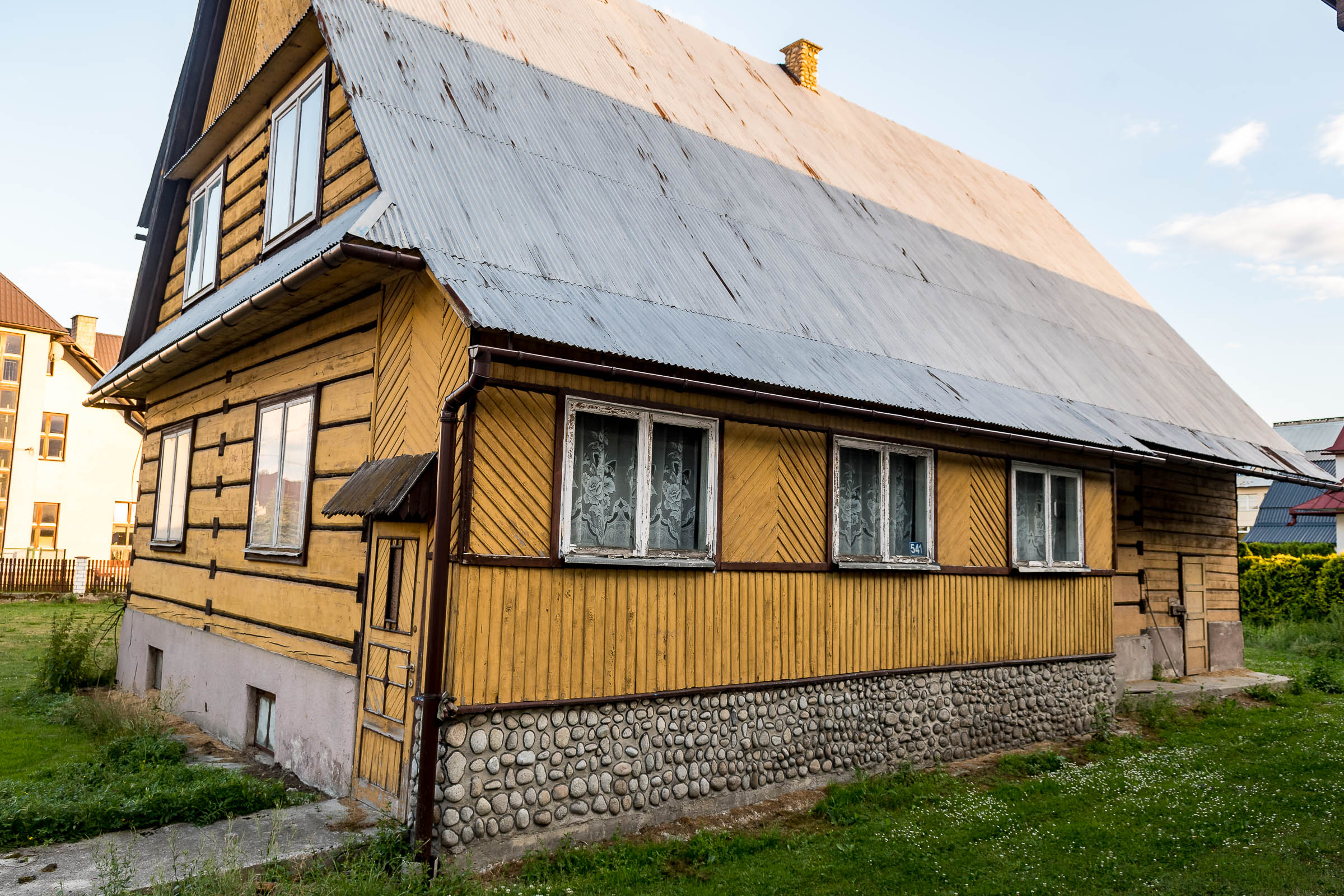
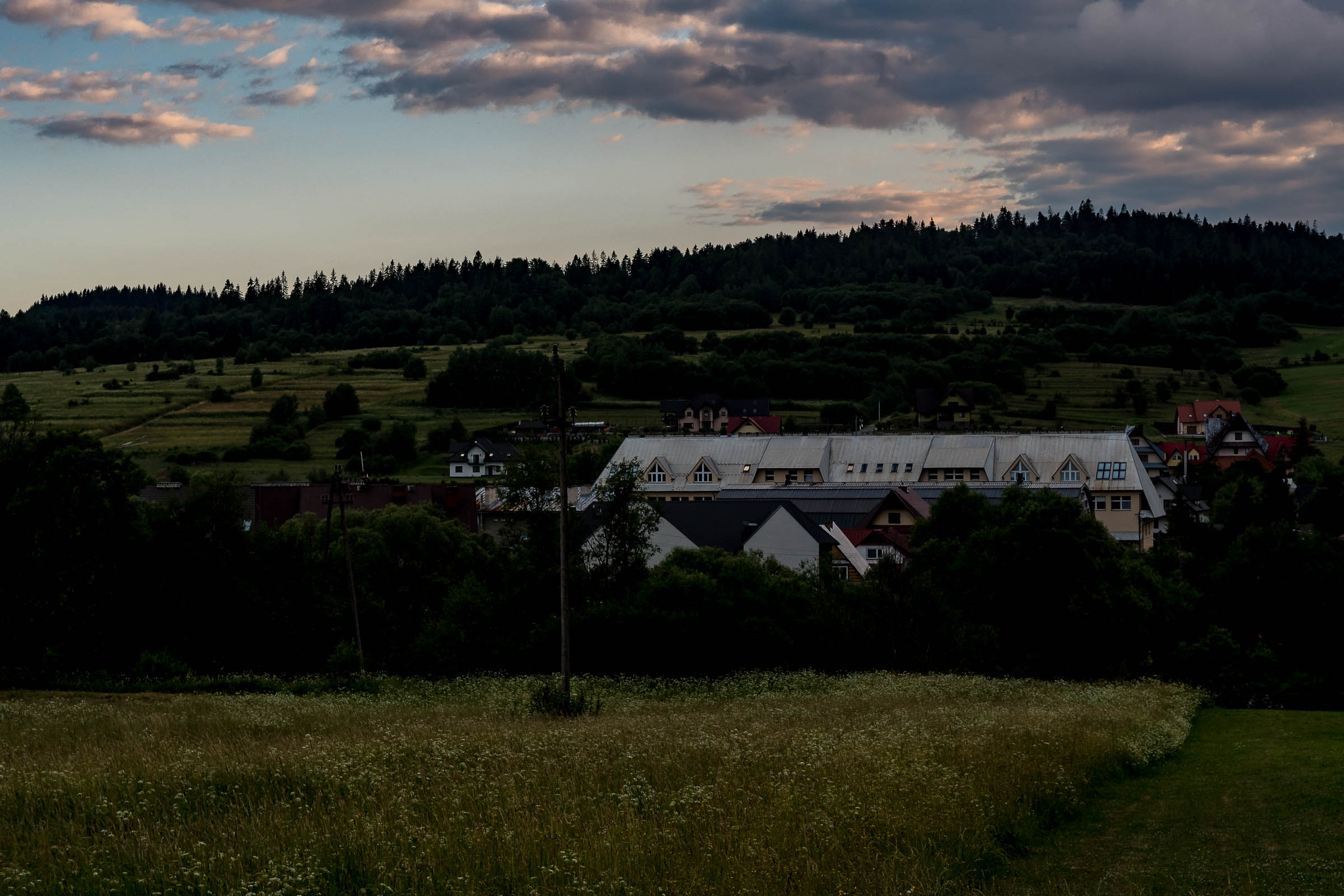
It's always a highlight of a trip to Poland, especially when you find out some parts of it are disappearing for good.
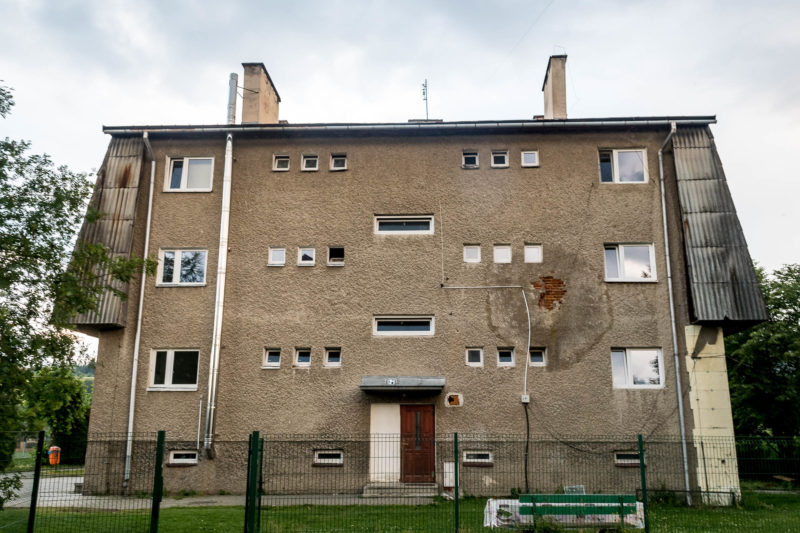
The first apartment I had Lipnica was the lower-left apartment of the six-apartment dom nauczyciel. I found out during today's visit that the entire building is to be demolished in the near future. It suddenly occurred to me that trying to get into the apartment one last time, now that I know that it's empty, is a bit of a priority for the rest of the time I have here.
But the real surprise of the visit, though, had to do with people.
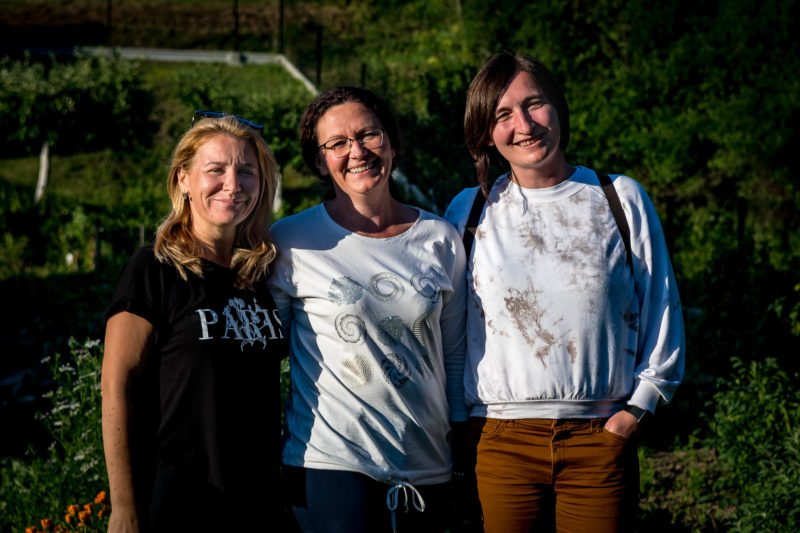
Two old friends of K and mine whom we haven't seen over twenty years were there. One is not surprising: she still lives in Lipnica; the other, also named K, lives in New York, home visiting her parents. It was these three women, then girls, who approached me during one of my first visits to a disco in Lipnica and said, "You're the new English teacher. We want to practice our English."
Traveling always risks bad weather; coming to Poland, for us it seems, just about guarantees it. After several lovely days (how many? four? five?), it's supposed to rain. Every day. For the rest of K's and L's stay in Poland.
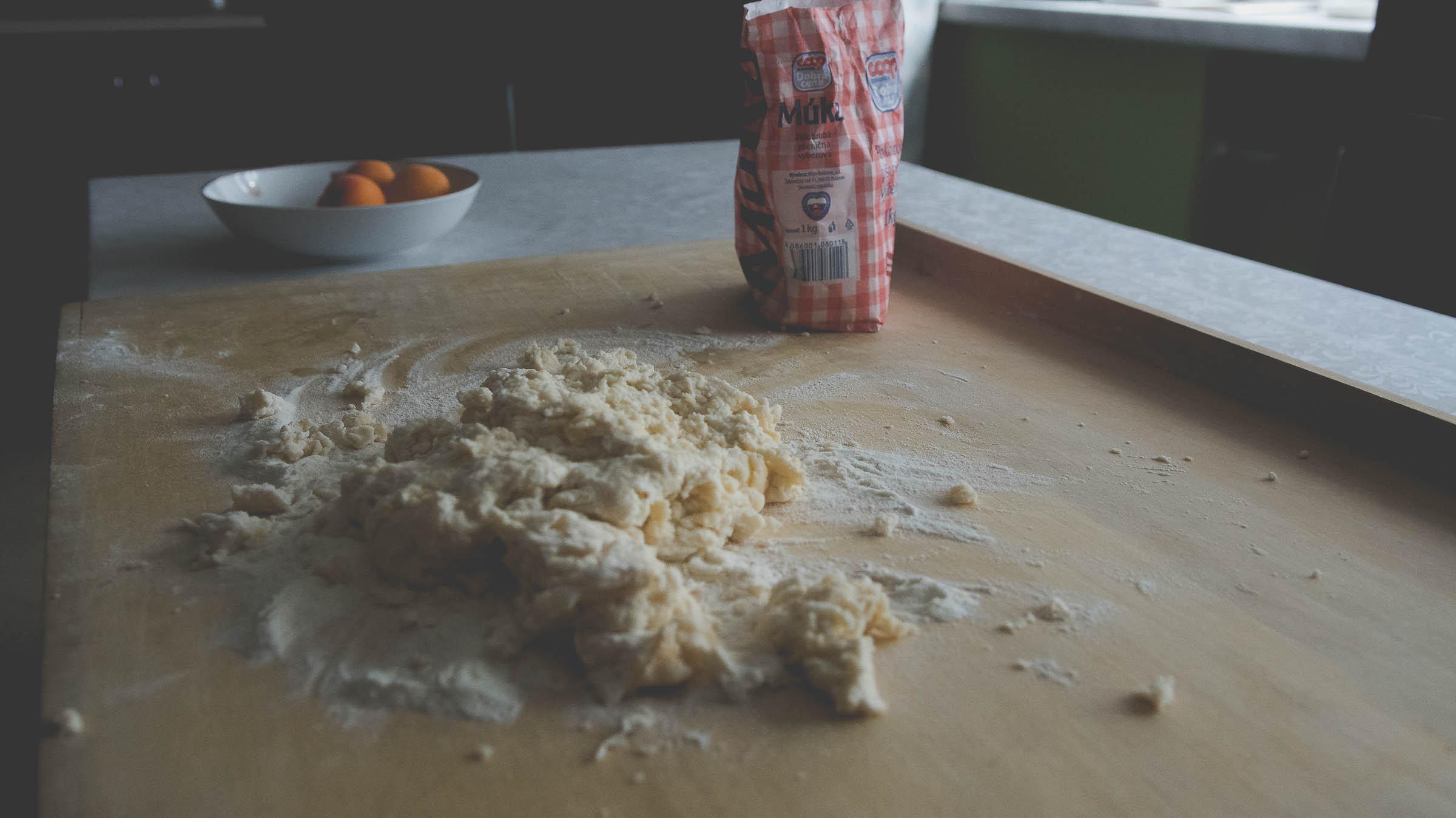
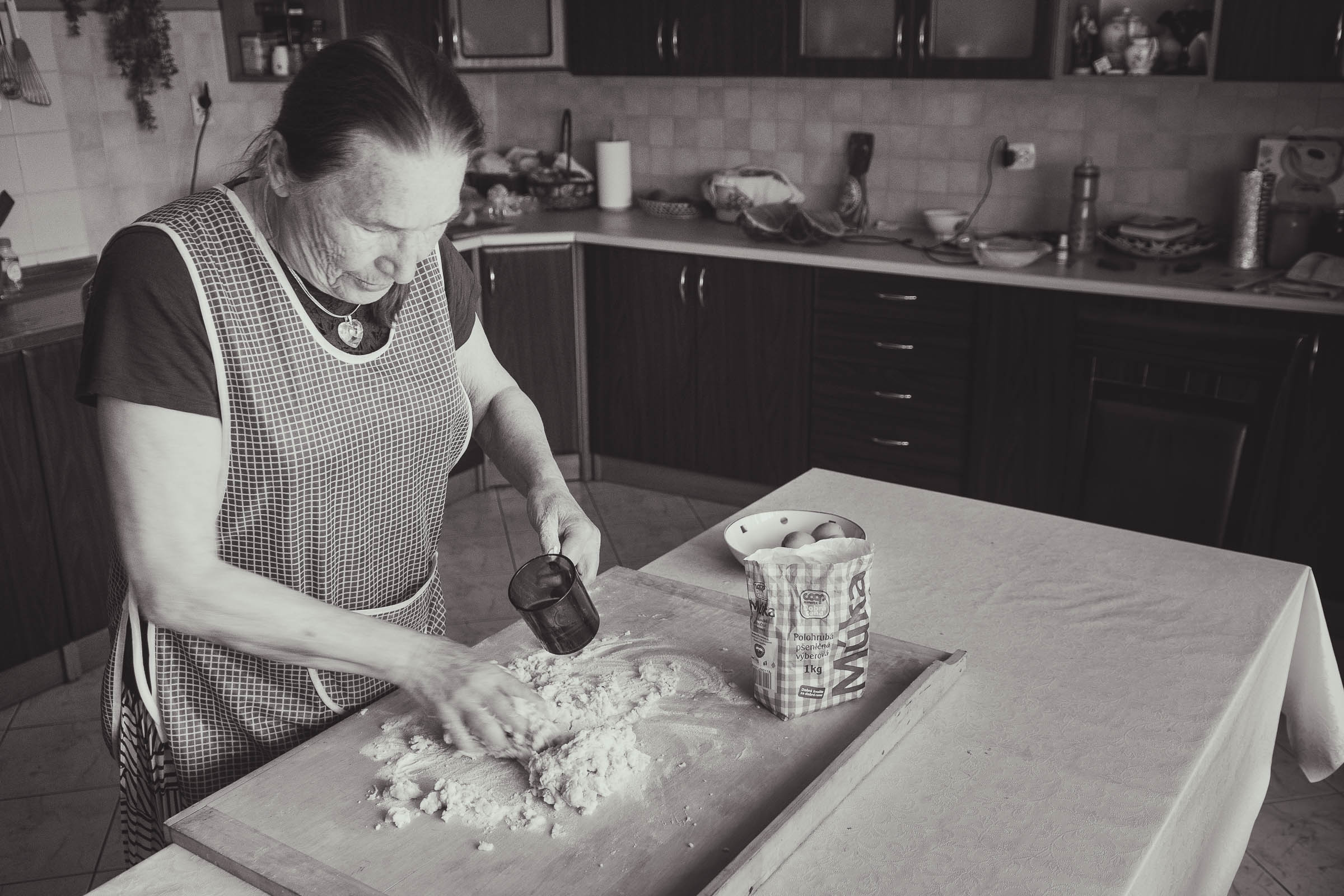
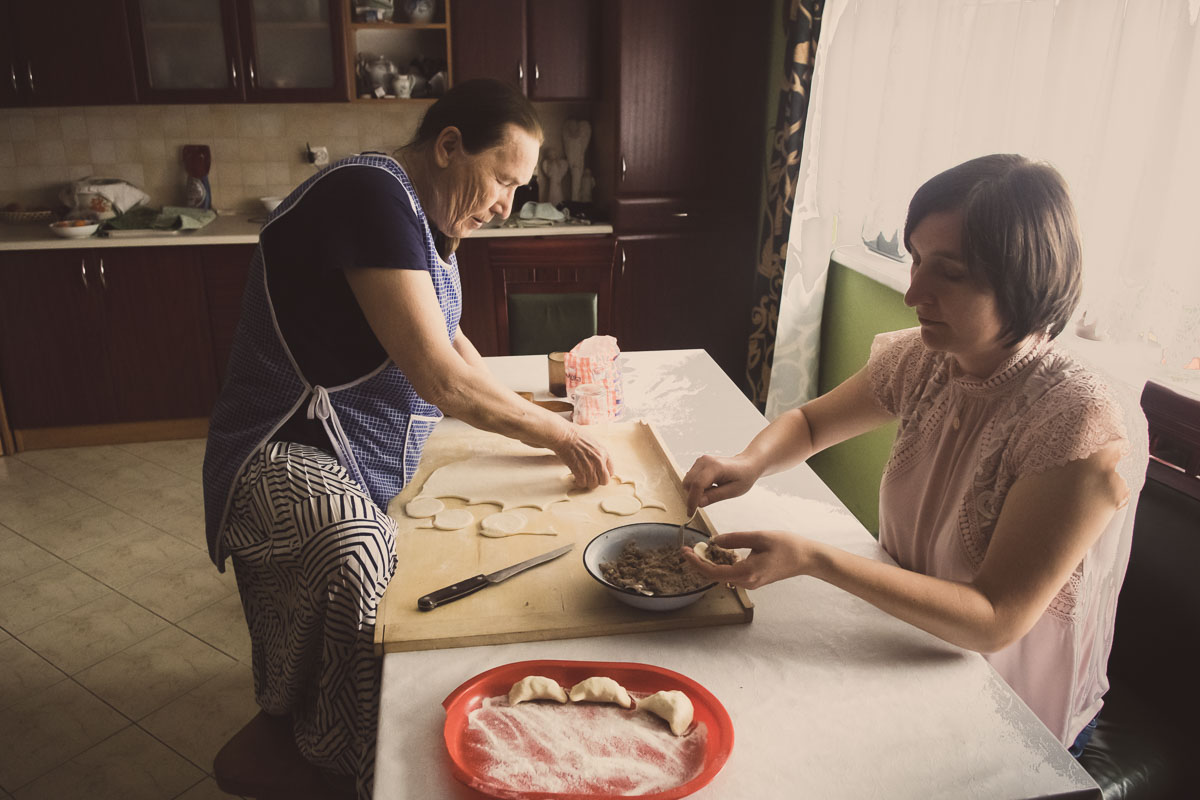
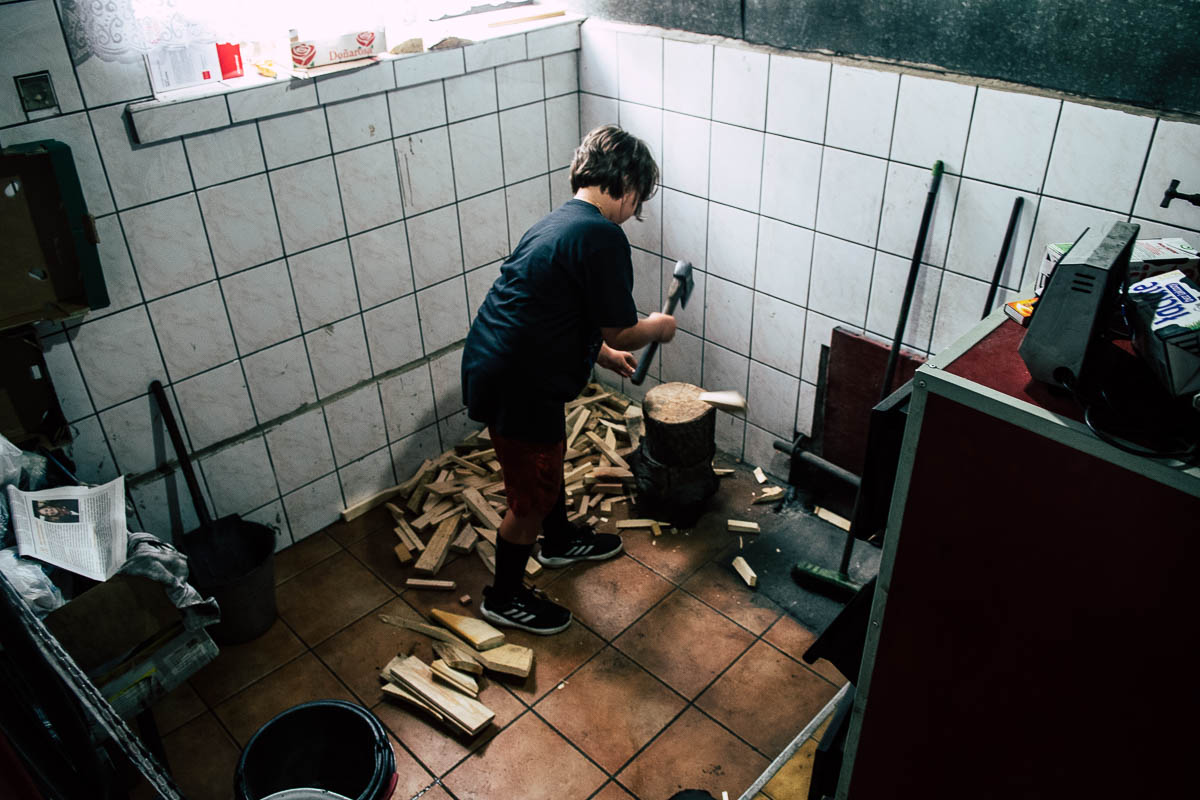
Still, we make the most of what we've got, like using leftover meat from rosol to make pierogi for lunch, or using the rainy weather to chop a little wood for Babcia.
After lunch we met with K's brother's family for some more bowling. This time, we took two lanes, and the adults played as well. That was a mistake: my long-injured finger began aching again, and I made it through two frames before I decided that it might be less painful to have my finger in a vice than roll even the lightest bowling ball available.
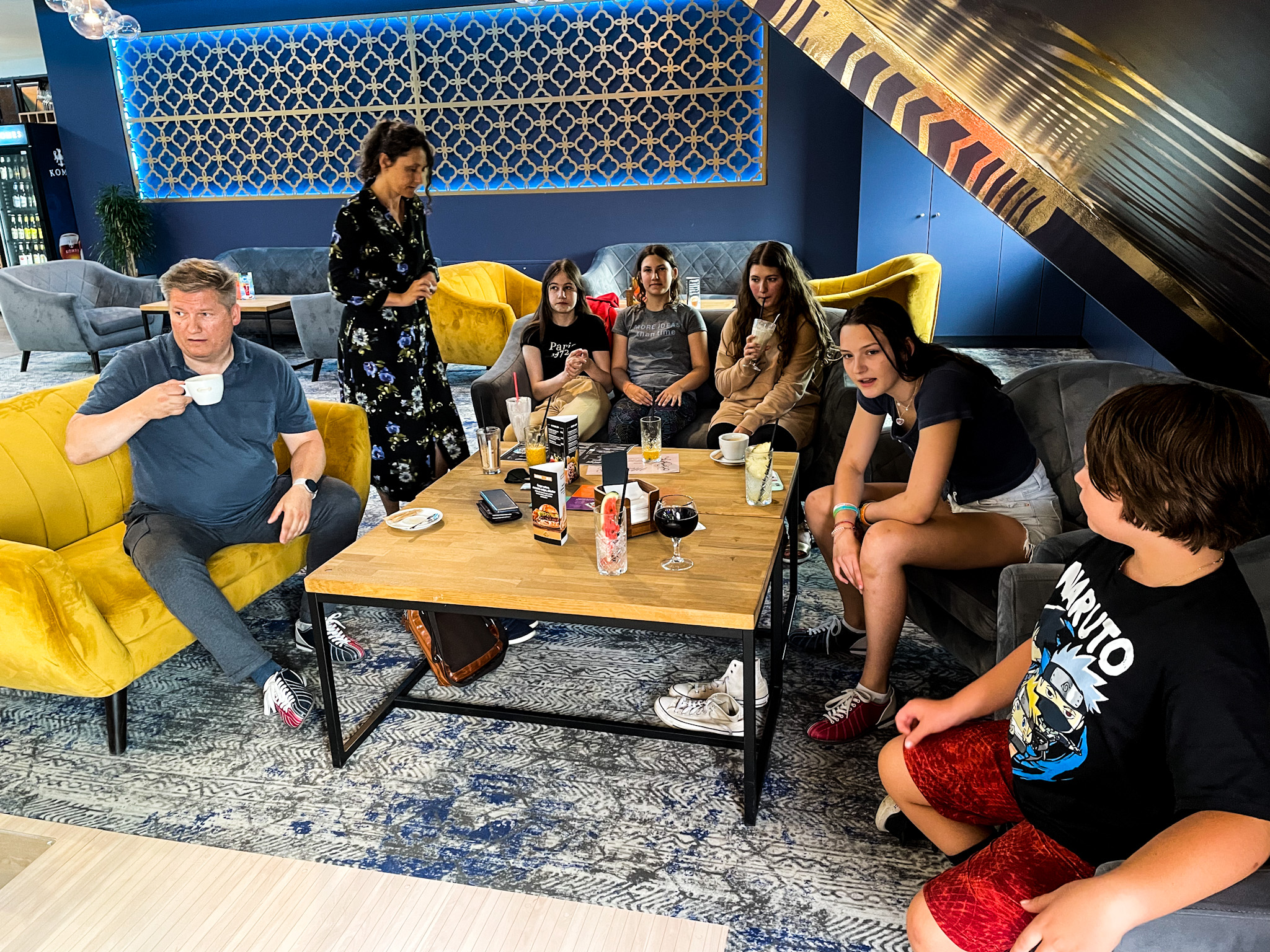
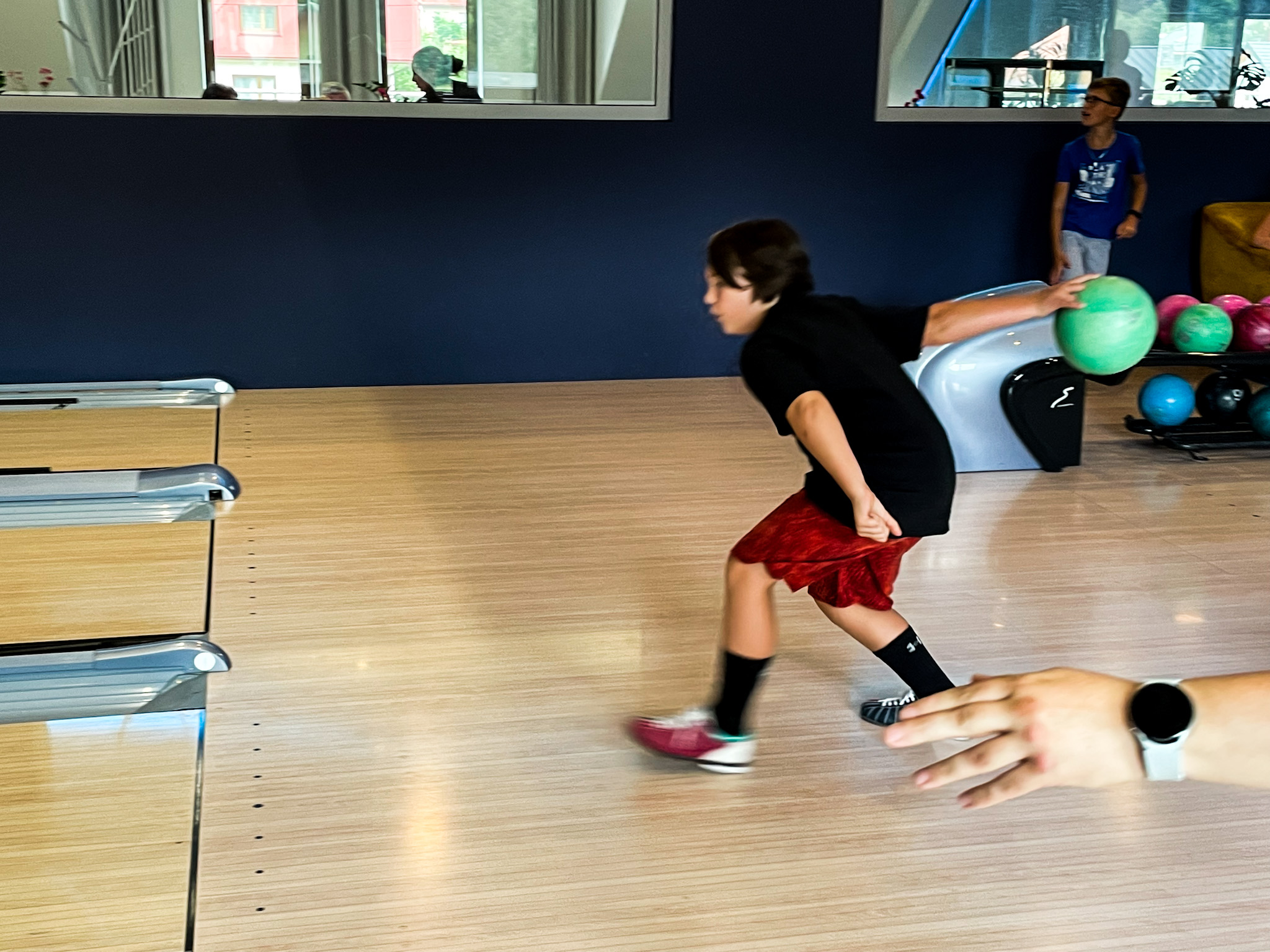
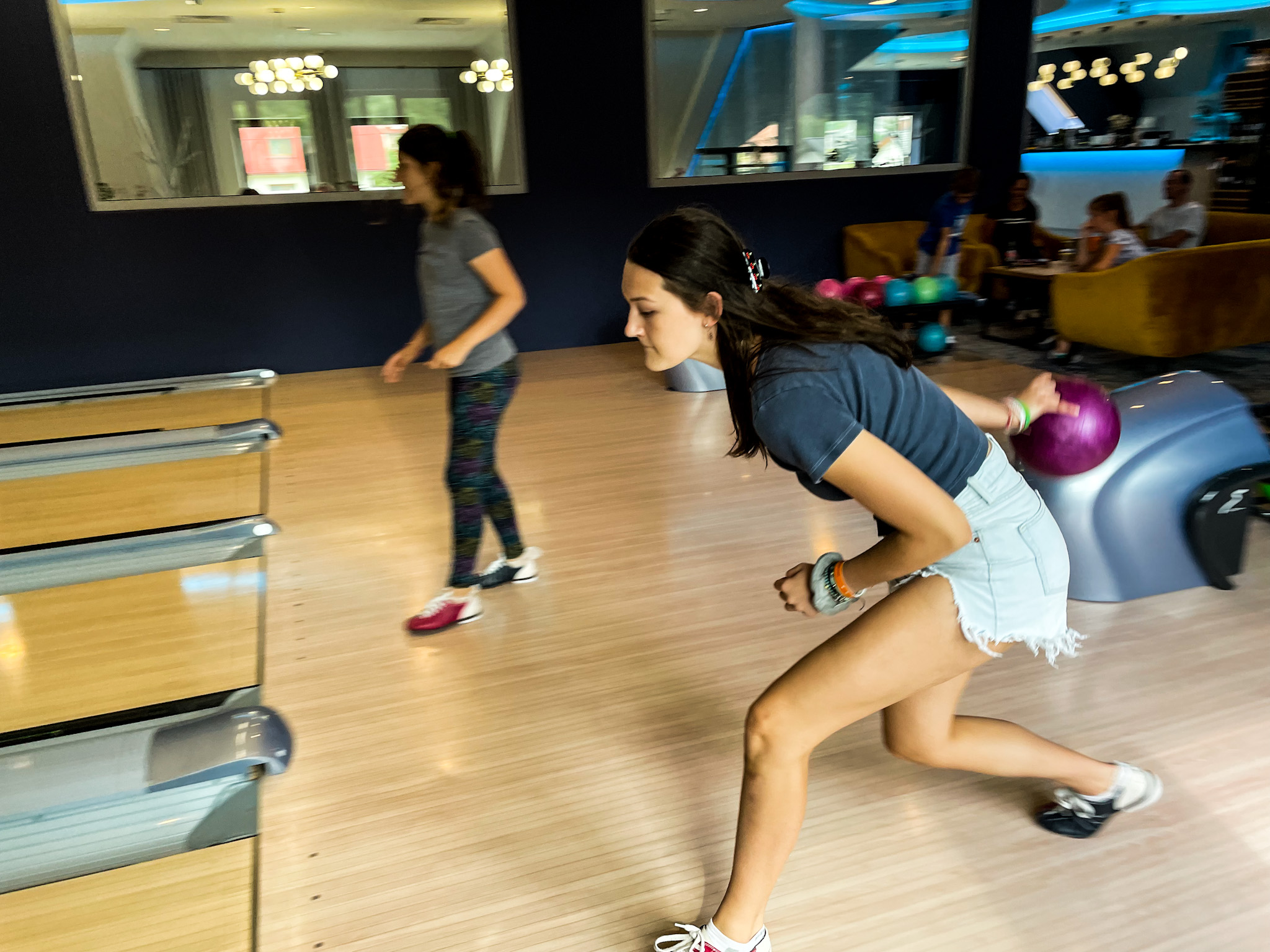
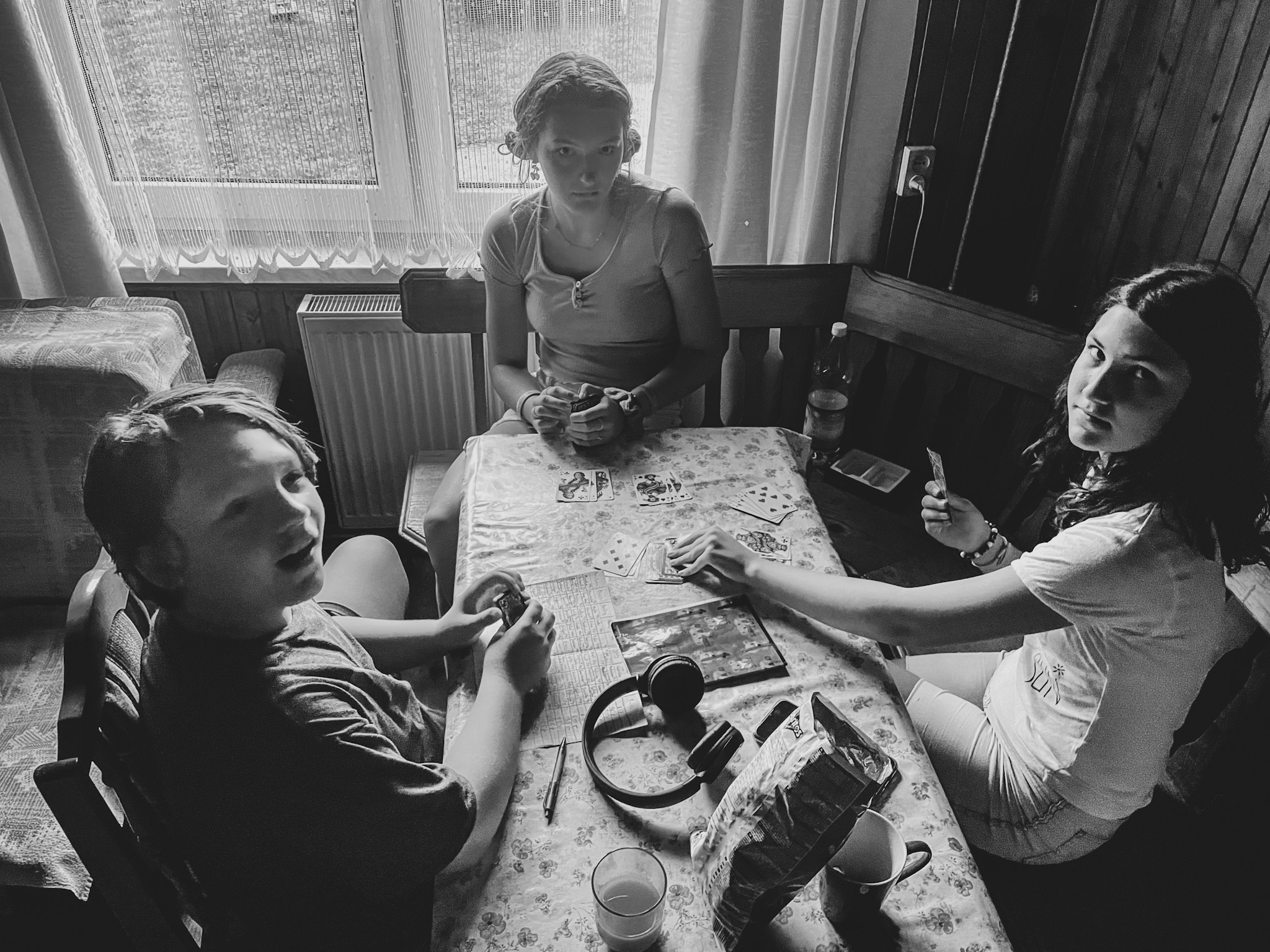
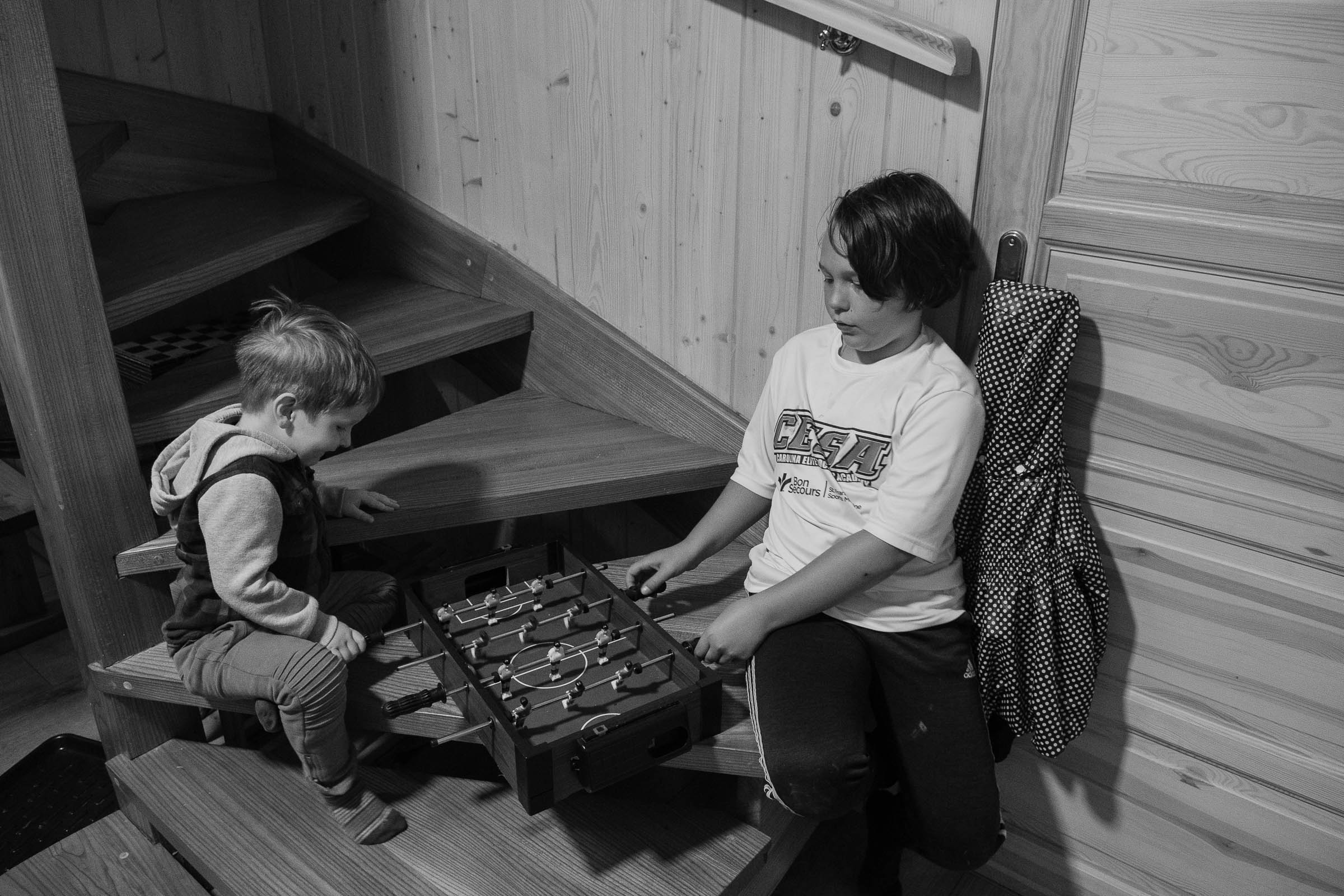
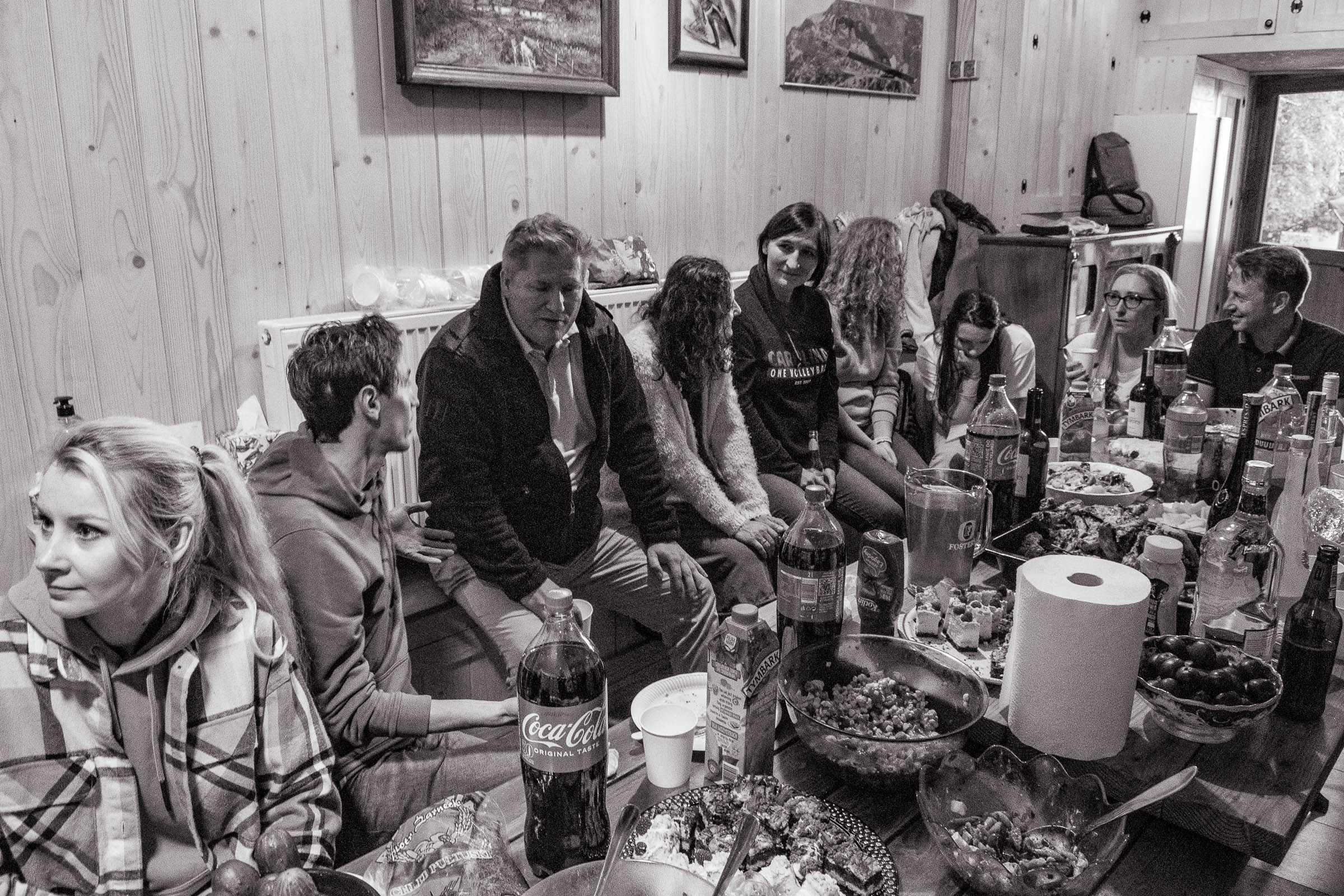
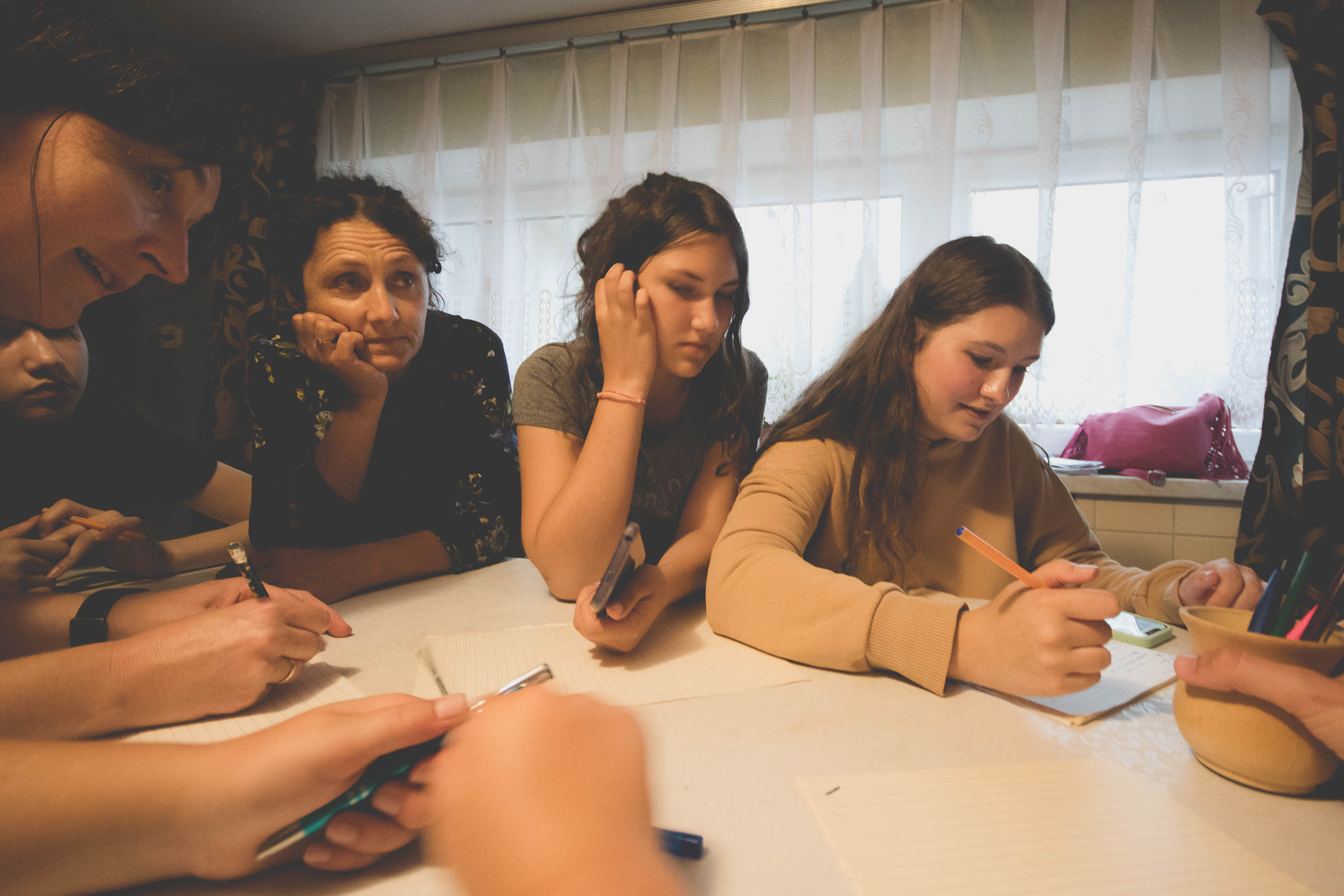
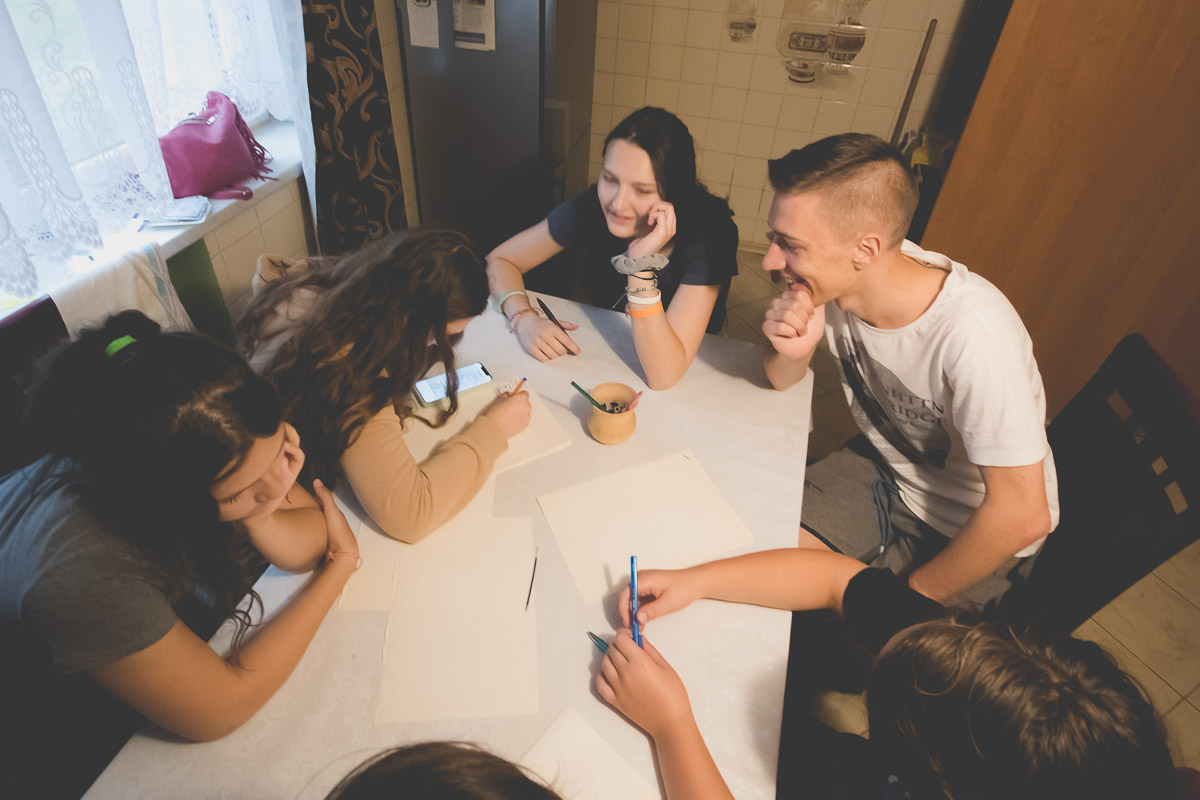
Afterward, we all headed back to Babcia's for games and conversation. Hearing the cousins laugh and argue and joke together is a lovely bit of chaos.
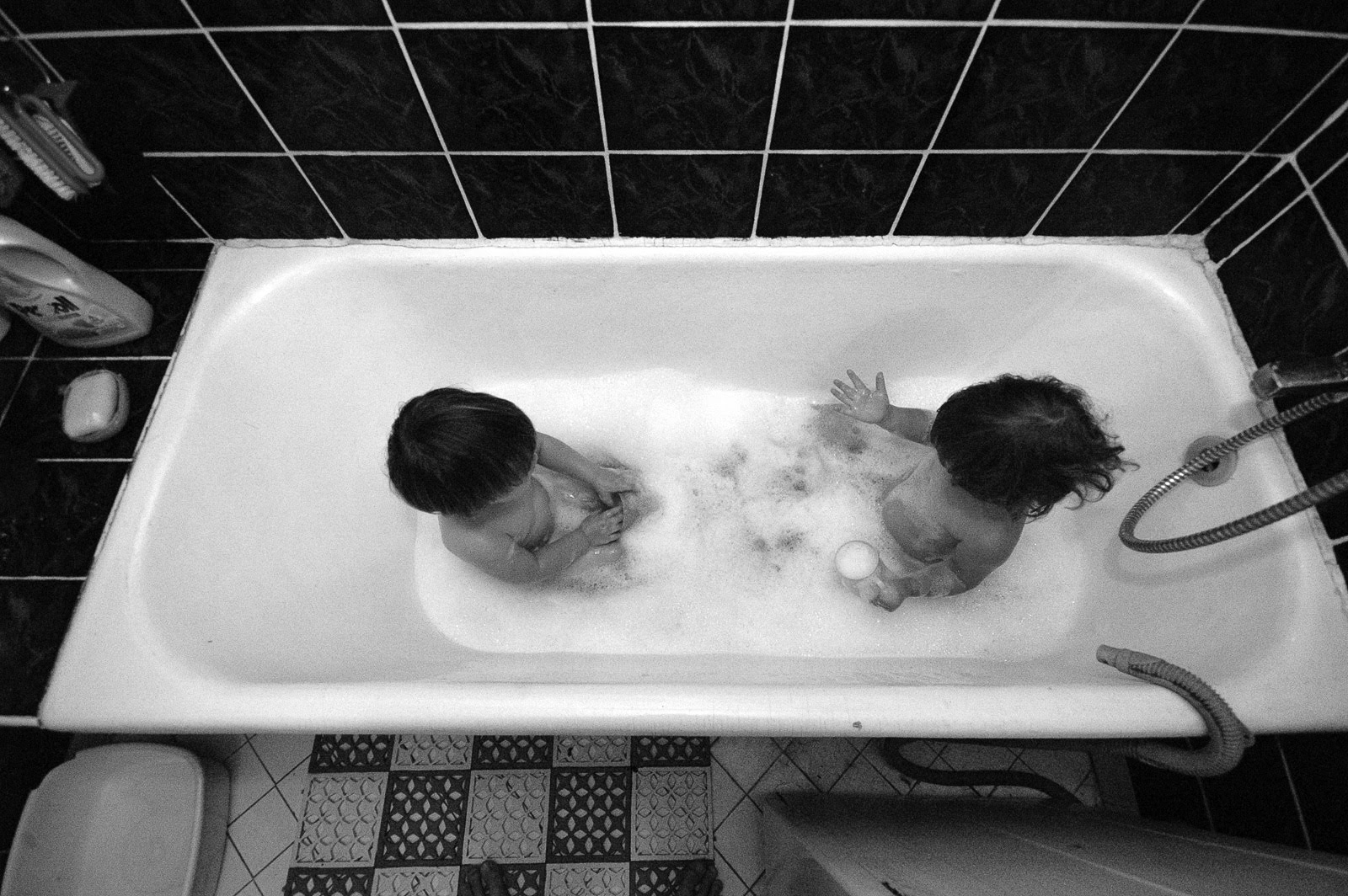
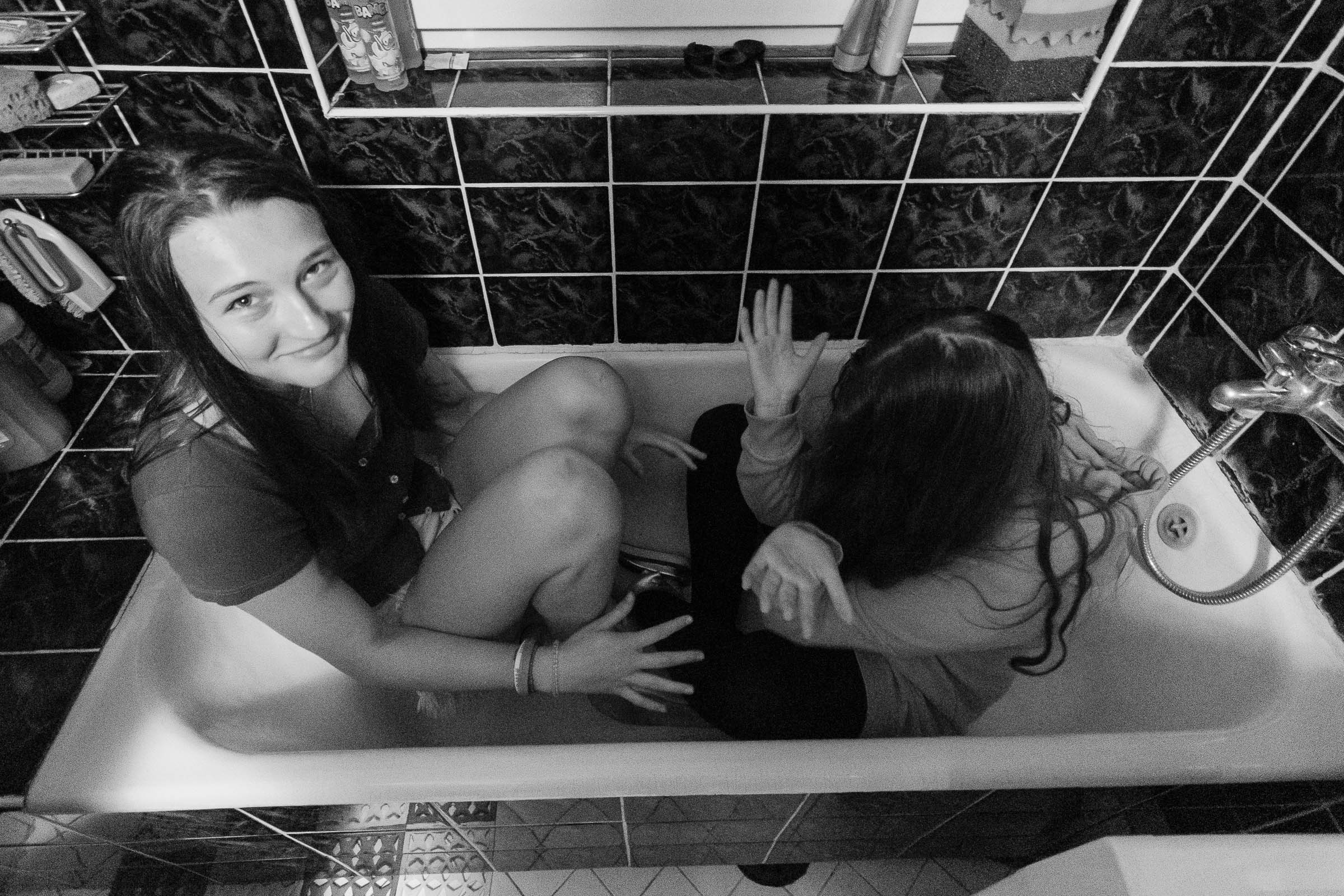
And finally, I talked the girls into the first of several photo recreations. The original image is from 2008, when L was a year and a half old and S was a year older. They barely fit into the tub together now.