Matching Tracksuits

fun in fours

parenting

Greedy Belly

The Boy is a good eater. To say that is perhaps the ultimate understatement of our family. Sure, the Girl is theatrical; K is dedicated; Tata plays chess -- all of these are understatements, but they are gross exaggerations in comparison to "the Boy is a good eater."

All families, I guess, have the good eaters and the bad eaters. L leans toward the latter. True, she likes things most kids her age wouldn't touch (beetroot soup comes to mind) but she detests things that most kids her age adore (hamburgers and hot dogs come to mind). The Boy, on the other hand, will eat just about anything he sees us eating, and his favorites are some of the very items that L detests, like broccoli. This is often advantageous to them both, for she'll leave her three spears of broccoli on the plate for the very last minute, and occasionally the Boy, long done with his own dinner, will hop about for a while, roll about on his little four-wheeler, then abruptly jump up, dash to the table, and steal a broccoli spear.

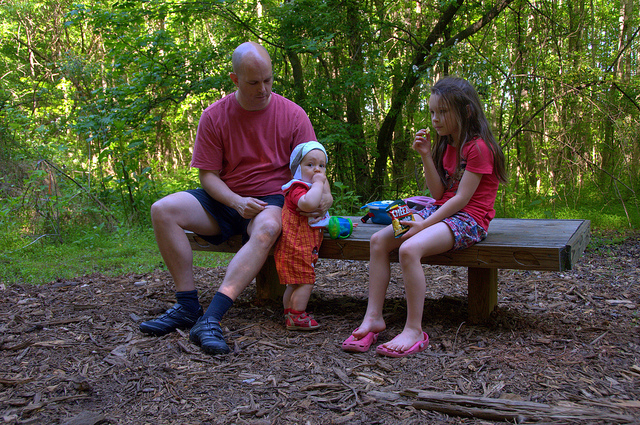
Tonight, though, the Girl was with Nana and Papa for dinner, and the Boy had all the broccoli he could eat. He sat, holding each spear as if it were a lollipop, munching it down to the end, then simultaneously grabbing another and pointing to K's pile of green. He ate all of his and half of hers.

For his encore later this evening, he pulled a chair over to the counter by the stove and clamored up to grab one of the remaining crab cakes we'd had for dinner. It took him half an hour of playing then eating, playing then eating, but he ate almost the whole thing. When offered the final bite, he stood thoughtfully for a moment, then shook his head. "Nah," he squeaked and ran to the living room to look for a mess to make.
Fr. Barron on Time

Fr. Barron hits it out of the park again.

The Smallest Pets

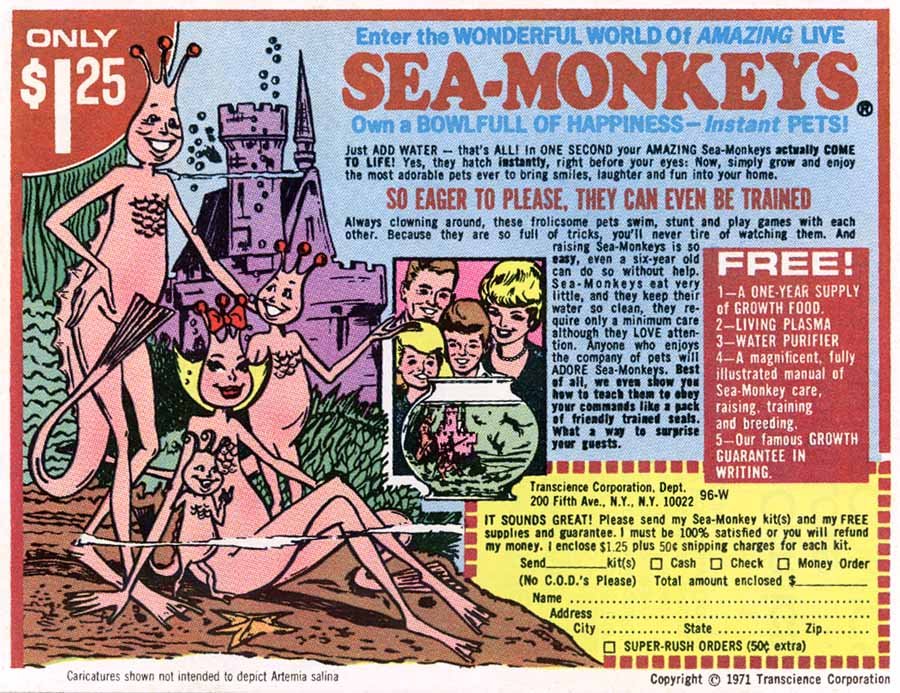
The advertisement was on the back of every single issue of Boy’s Life magazine, the offical publication of the Boy Scouts. I never really knew what they were, but Sea-Monkeys seemed like fascinating creatures. Of course it was obvious even to a ten-year-old that the ad was full of hyperbole. In reality, they’re brine shrimp, incredibly small creatures with a short life span. I was fascinated but never enough even to broach the subject with my parents: I knew from the quality of the ad itself and its exaggerating tone that it had to be a scam. But how cool would it have been if they were only half of what they were advertised?

sea-monkeys

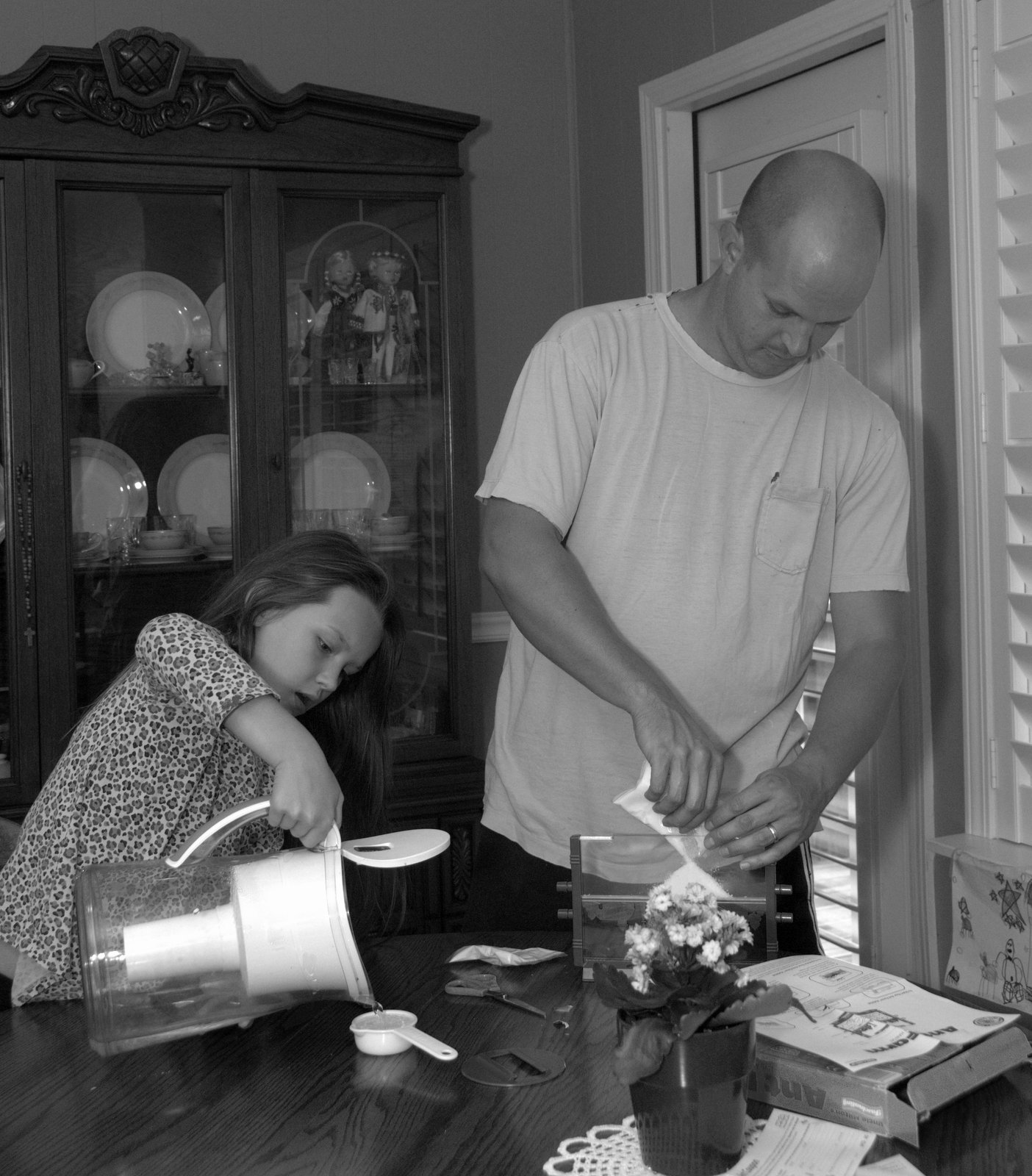
Had I really thought about it, I would have realized that there is a better alternative for small pets, a much more intelligent and interesting alternative: an ant farm. When K, L, and E returned home this afternoon with an ant farm, I wondered why I’d never thought of it as a kid.

VIV_7772-001

But that’s one of the many advantages of being a parent: one gets to re-live certain childhood by your daughter’s side.

A Response to Ferrett Steinmetz

A friend posted a link to an article at The Good Men Project entitled, “Dear Daughter: I Hope You Have Awesome Sex” by Ferrett Steinmetz. With that provocative title, how could I resist reading? Completing the piece, I posted it to my on Facebook account with the comment, “This article has so much wrong with it, I don’t even know where to begin…” To which another friend responded, “?? what exactly is wrong with it?”

At the heart of the problem is the notion grounding the whole perspective: “Look, I love sex. It’s fun.” It’s kind of like going to the movies or listening to your favorite band: it’s fun! And what do we do with fun things? We enjoy them without much thought of the consequences. Indeed, it’s fun–how can there be anything but positive consequences? Sex is little more than fun because sex is pleasure. That is the basic underlying assumption of the whole piece.

I find the article objectionable because I believe sex is more than pleasure. I believe it’s so much more significant than almost anything else we do in our lives that to call it “fun” is to diminish it to its lowest common denominator. Steinmetz, though, feels sex is little different than a sit-com, and he denigrates those of us who feel differently with misrepresentation, false dichotomies, and straw men arguments.

To begin with, he hardly seems to understand (or perhaps he willfully misrepresents) the thinking behind those of us who look at those “10 Rules” memes and chuckle that they’re pretty accurate. (It almost goes without saying to point out that the rules are hyperbolic expressions of some fairly basic, traditional ideas about parenthood and sex, but perhaps some take it a little more literally than others. I cannot say.) He begins by calling them “twaddle” and goes on to misrepresent the motivation behind such tongue-in-cheek thinking.

There’s a piece of twaddle going around the internet called 10 Rules For Dating My Daughter, which […]boil down to the tedious, “Boys are threatening louts, sex is awful when other people do it, and my daughter is a plastic doll whose destiny I control.”

Nowhere in said meme is there the suggestion that “sex is awful” or that “my daughter is a plastic doll whose destiny I control.” I’m not quite even sure where this comes from, for there must be so many progressive interpretative steps between a hyperbolic “rule” like “when it comes to sex, I am the barrier, and I will kill you.” and hating sex and plastic dolls that a simple-minded traditionalist couldn’t possibly grasp it, but I’ll try to reconstruct it.

  1. When it comes to sex, I am the barrier, and I will kill you.
  2. This shows that I don’t want you to have sex with my daughter, which
  3. means that I can’t possibly like sex, and so therefore
  4. I want to force this view onto my daughter, and by doing so,
  5. show that I think she’s a plastic doll.

That doesn’t make a lot of sense, I know. It’s not very coherent, logically or otherwise. Perhaps there were other steps I missed. I’m not sure. When making such huge leaps as these between the premise and the conclusion of an argument, it’s difficult for others to reconsctruct the rest of the argument. Still, it’s hardly a surprise: Steinmetz simply passes over these steps and assumes that his audience would fill in for him. He knows his audience: mostly progressive males. And judging by the comments, the seem to have done so willingly.

Of course this is an old theme, this notion that anyone who equates anything moral with sexuality is a repressed prude who has never had satisfying sex and therefore doesn’t like sex and furthermore doesn’t want anyone else to have sex either. It’s nice to see that Steinmetz spells this quaint notion out as well a few sentences later:

It doesn’t lessen you to give someone else pleasure. It doesn’t degrade you to have some of your own. And anyone who implies otherwise is a man who probably thinks very poorly of women underneath the surface.

There it is: the implication that behind all of this is misogyny. There could be no other reason for being concerned about how our daughters view sex than our hatred of women. No, that doesn’t make much sense to me either: the conclusion doesn’t logically follow the premise, but as with the earlier example, Steinmetz is likely making a series of progressive connections that he assumes his readers will make, so he doesn’t bother to explain how these ideas might be connected. They just are, and ever correct-thinking individual knows that.

This is also a complete misrepresentation of the traditionalist worldview. No one is suggesting that giving someone pleasure lessens you; no one is suggesting that receiving pleasure lessens you. What a traditionalist is suggesting is that this pleasure might come at a price, and that that price might not be worth the pleasure in the first place. What might this price be? Disease; unwanted pregnancy; complications later in life with desired pregnancy after these unwanted pregnancies were dealt with through abortion; a lack of self-esteem when one begins wondering whether anyone actually likes you for you, whether anyone can see through your body to your soul. Those are a few that come to mind. Is it possible to live a modern sexual life without these? I would imagine so. The point is, I don’t want my daughter taking that risk.

This last quote also illustrates Steinmetz’s tendency to present the issue as a series of false dichotomies. He continues with this gem:

Do you know what would tear me in two even more [than holding you after you’re heart’s broken]? To see you in a glass cage, experiencing nothing but cold emptiness at your fingers, as Dear Old Dad ensured that you got to experience nothing until he decided what you should like.

There are apparently only two options: let the kid screw around, learn from her mistakes, and be there as a shoulder to cry on, or be a controlling manipulative freak who hates all emotion and wants to create a carbon copy of himself. How about the middle way? That would be a father who teaches his daughter that she is more than what’s between her legs, that her value comes from more than how others view what she does with what’s between her legs, and that happiness and fulfillment in life are never connected solely with what she does with what’s between her legs. It would be a father who realizes the daughter is going to make mistakes but tries to give her the tools to avoid those mistakes–and still accepts her unconditionally if she makes them. It would father who doesn’t want to send his daughter out on the journey of life without a map, without a compass, with only the assurance that he’ll be there for her if she loses her way.

But that is diametrically opposed to what Steinmetz thinks is his role as a father:

And so you need to make your own damn mistakes, to learn how to pick yourself up when you fall, to learn where the bandages are and to bind up your own cuts. I’ll help. I’ll be your consigliere when I can, the advisor, the person you come to when all seems lost. But I think there’s value in getting lost. I think there’s a strength that only comes from fumbling your own way out of the darkness.

Some of us feel it’s our job as parents to be there before their children get lost. Some of us feel that being sexually lost is not quite the same as being lost in all the career options one faces or college options. And that precisely is the problem with this article: it turns sex into a decision along the lines of whether to have a latte or a cappuccino. He essentially admits this when he concludes a paragraph later in the text, “Love the music I hate, watch the movies I loathe, become a strong woman who knows where her bliss is and knows just what to do to get it.” Music, movies, sex–it’s all the same thing, so don’t get hung up on preferences! It’s a reframing of the “whatever makes you happy!” meme, and it orients the notion of what it means to be a strong woman along those lines alone.

The obvious 21st century progressive modern response at this point is, “If it’s consensual, though, what does it matter?” Indeed, how consensual is it when everything in our culture objectifies women and turns every encounter into a potential sexual adventure? How consensual is it when the entertainment and advertising industries (aren’t they really one and the same?) spend billions of dollars teaching girls that good girls are slim with large breasts, that sexiness is the greatest virtue, and one’s sex appeal is a tool to be wielded in pursuit of whatever happiness one seeks? (It also teaches that the ultimate happiness is sexual happiness, so it sort of kills two birds with that last bit.) Our culture pumps into girls from a very early age the notion that their value comes from their genitalia, and if they buy into that, that consent is a false consent.

The article isn’t all bad. There are passable passages. Well, one.

This is how large and wonderful the world is! Imagine if everyone loved the same thing; we’d all be battling for the same ten people. The miracle is how easily someone’s cast-offs become someone else’s beloved treasure.

This is about the only thing I can agree with entirely in the whole article. However, the whole article has been about sex, so I’m inclined to assume that the author also is referring to sex here. Perhaps I’m wrong, but he has set me up to interpret it thus: “Imagine if everyone loved the same thing” means “Imagine if everyone had the same sexual predilections.” Hopefully he meant more than that, but judging from the rest of the article, I doubt it.

There’s another passage that seems sweet but is left bitter by the shallow nature of the rest of the article:

Ideally, I am my daughter’s safe space, a garden to return to when the world has proved a little too cruel, a place where she can recuperate and reflect upon past mistakes and know that here, there is someone who loves her wholeheartedly and will hug her until the tears dry.

That’s what I want for you, sweetie. A bold life filled with big mistakes and bigger triumphs.

Given the guidance this bloke has given his daughter, I’m fairly sure that he’ll be providing that “safe harbor” quite often. However, I prefer to be the safe harbor before and after the tragedy. I prefer to try to equip my children with tools to avoid as many on those mistakes as possible, to teach them to see them as mistakes before committing them and thereby avoid them.

The final line, though, puts it all into proper perspective: “Now get out there and find all the things you f-ing love, and vice versa.” It’s all about “f-ing.” Perhaps Steinmetz could have saved us all the time of reading his article by simply quoting the Bloodhound Gang:

You and me baby ain’t nothin’ but mammals
So let’s do it like they do on the Discovery Channel
Gettin’ horny now

Some of us see a bit more deeply into life, though, and we hope our daughters do, too. What’s more, we make a deliberate effort to that end. It’s not about controlling; it’s about empowering and enabling.

And here’s the real kicker for those arguing that this is a case of misogyny: we do the same for our sons.

Monopolies

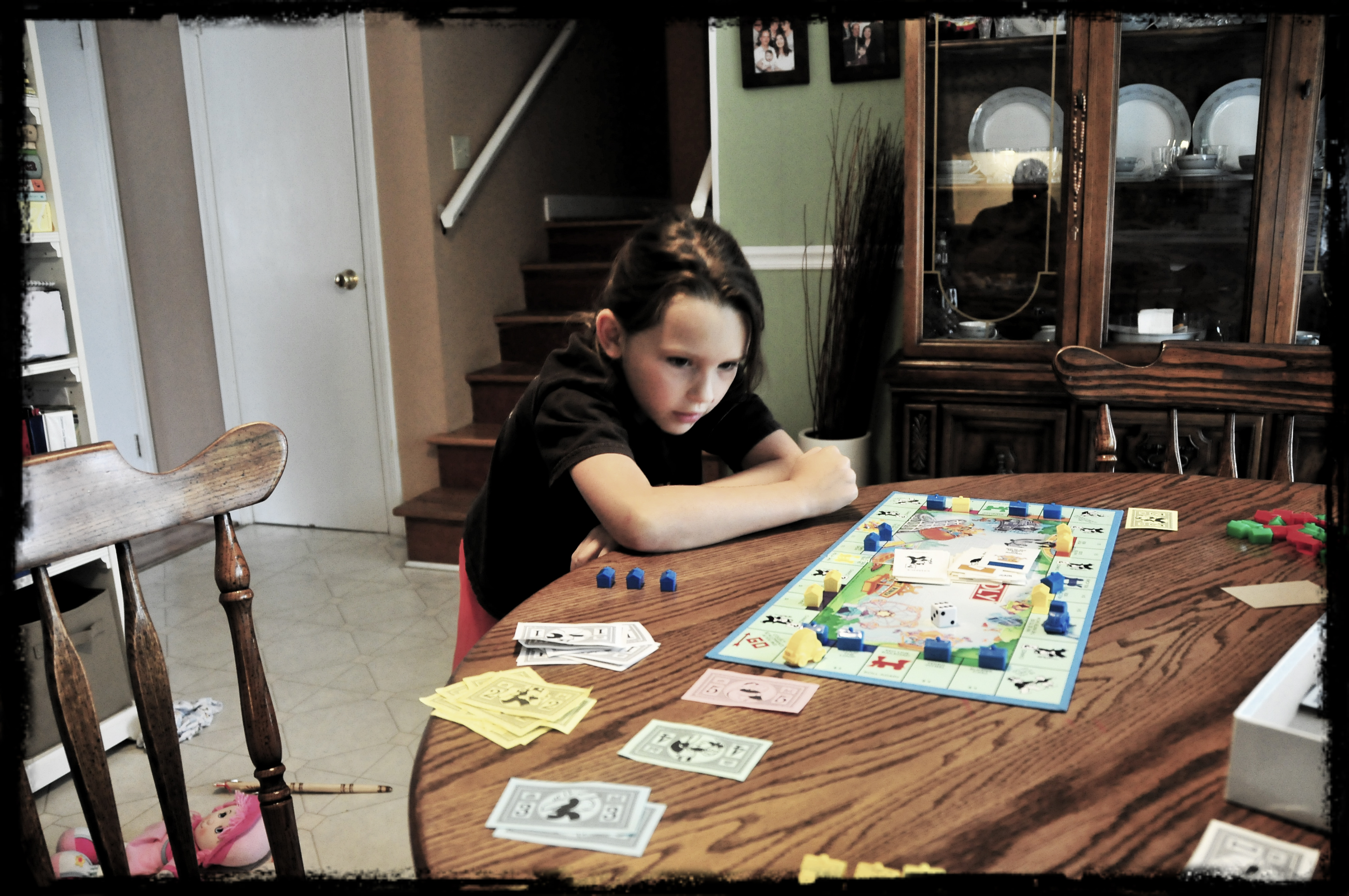
"Daddy, will you play with me?" It's a common refrain from the Girl when we're home alone, just the three of us, and the Boy is down for his nap. And lately, the answer to my question "What would you like to play?" is itself a question: "Can we play a board game?"

game

It's an opportunity to see how much the Girl has really matured in the last year. We play Sorry; she loses -- no tears. We play Monopoly Junior; she wins -- no hysterics.

I find my own attitudes towards these games are vastly different, though. Sorry depends a great deal on chance, but there's a bit of strategy involved. You draw a seven and you have to think of how best to split those seven moves between two pawns. You draw a "Sorry!" card and you have to determine which is the best piece of your opponent to replace, and it has to be a balance between what helps you the most and what hurts your opponent the most.

Monolopy Junior, though, is pure chance. Roll the dice; move the piece; buy the property (which in Junior involves merely buying a ticket booth -- looks like a regular Monolopy house -- and putting it on the square) or pay the owner. Mixed among the typical Chance cards are cards that allow a player to get a free ticket booth, which can entitle the player in some instances to confiscate the opponent's existing booth. It's a frustratingly random game, and I often find myself relieved as I start hemorrhaging money and the end approaches.

Yet boring as it is for me, I play with the Girl whenever she asks. As a husband and father, I no longer have a monopoly on my own time or interests.

Mix and Match

A busy day, with mowing, smoking, staking, moving, shaking -- a busy June beginning in preparation for a long-delayed first-birthday party for the Boy. It coincides with Dzien Dziecka, a holiday missing from the American calendar, so we'll be having a laughter-filled party (We have Mother's and Father's Day? Why do we leave the children out?)

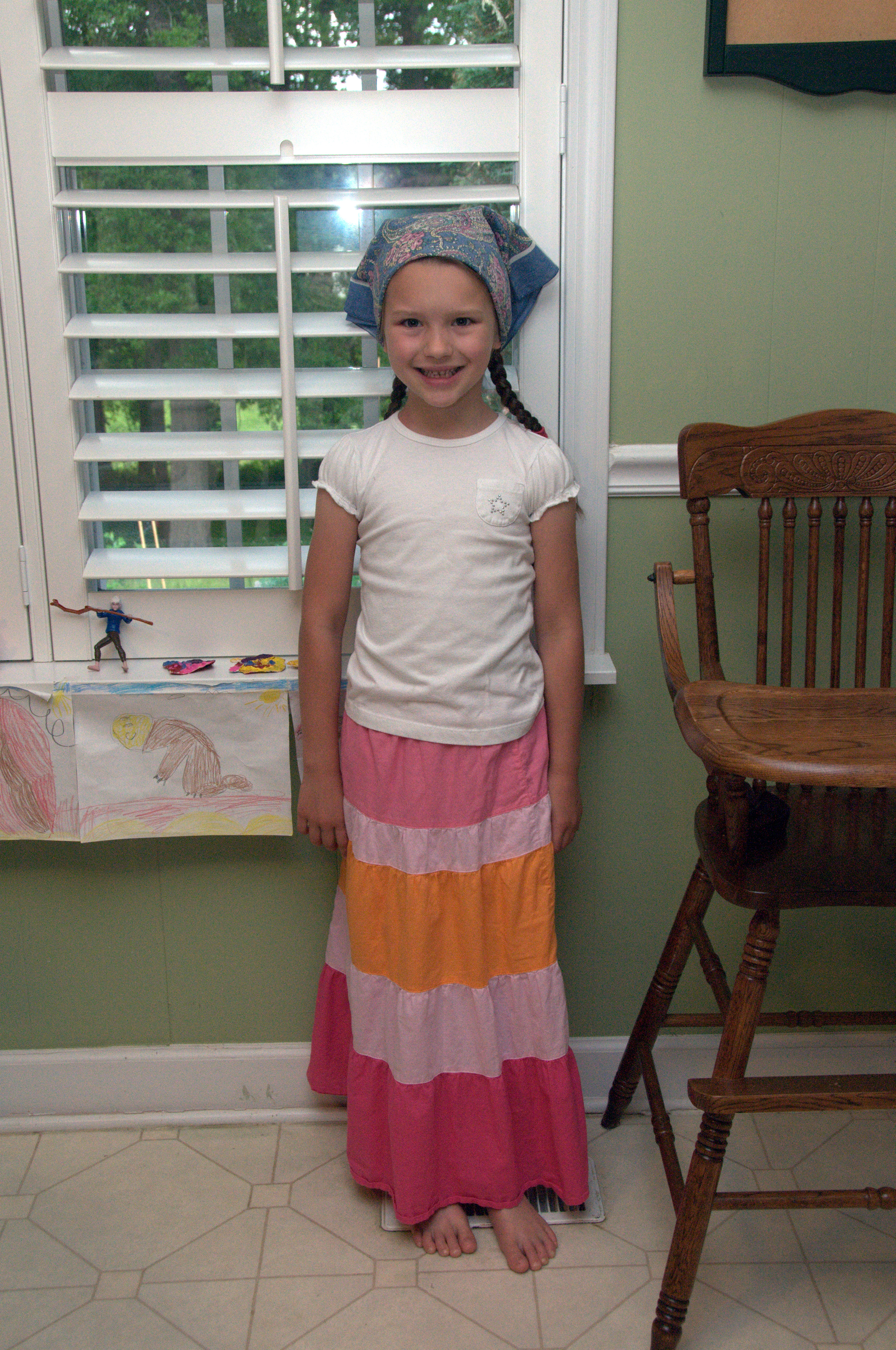
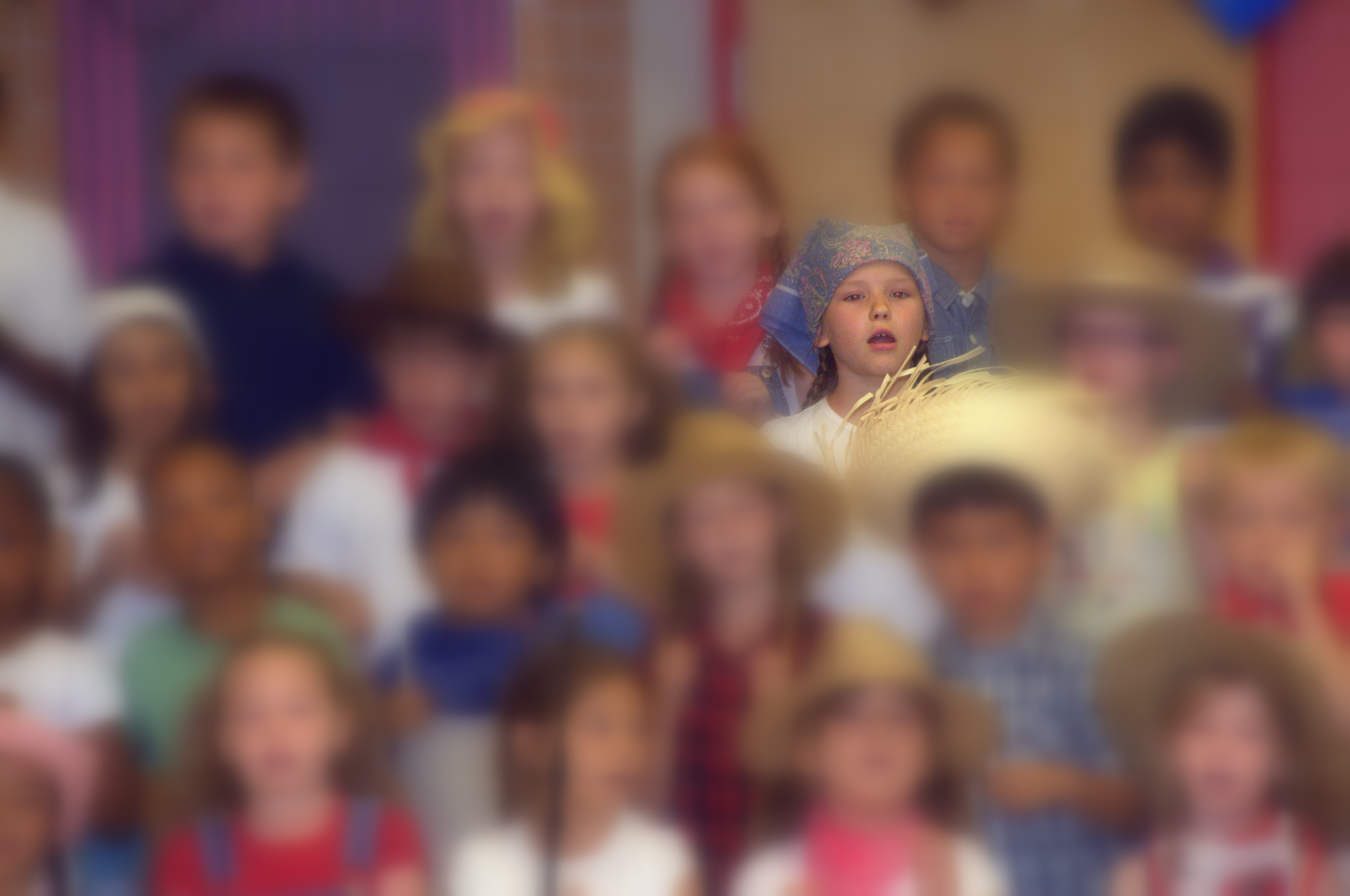
But there was no time for pictures today. And so we have the mix-and-match: pictures from yesterday (L's kindergarten awards day) and a few words about today.

Mothers

The irony about mothers is that, while everything -- everything -- depends on them, we often take them for granted. Without them, our existence wouldn't merely be meaningless; it simply wouldn't be. And yet we let them do their magic as if their behind the scenes is total absence: we don't notice, we don't think, we don't thank.

VIV_1053

They make our lives possible and we thank them by trying to make their lives impossible.

VIV_1065

They pack our afternoon snacks while we're off doing more important things. All the while, they put off their own "more important things" -- playing, of course -- for years while wiping our butts, feeding our faces, cleaning our scratches, changing our sheets, and a million other little tediums become, by complete choice, the center of their lives.

VIV_1079

They give us life, then give us their lives. They stay up late ironing our clothes and get up early to pack our lunch. They share when they know that sharing is anything but.

VIV_1087

And in the midst of it all, the best ones never seem to lose their sense of humor.

VIV_1100

I've been fortunate regarding mothers in my life. So many mothers, sadly, are unable or unwilling to accept the responsibilities of motherhood (and sadly, the number of men unable or unwilling to accept the responsibilities of fatherhood dwarfs the number of unwilling mothers), and so to be surrounded only by good examples (of both mothers and fathers) has been a blessing. A blessing that I generally take for granted, true, but at least occasionally, I wake up and realize that I haven't considered the pack of blessings laid on my back in a considerable time.

VIV_1103