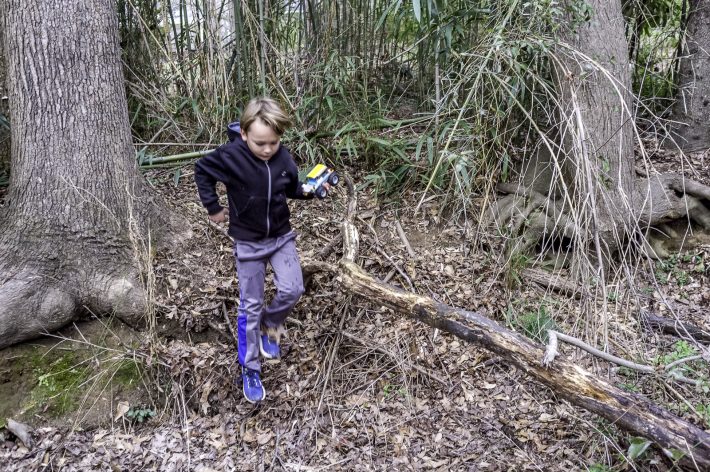
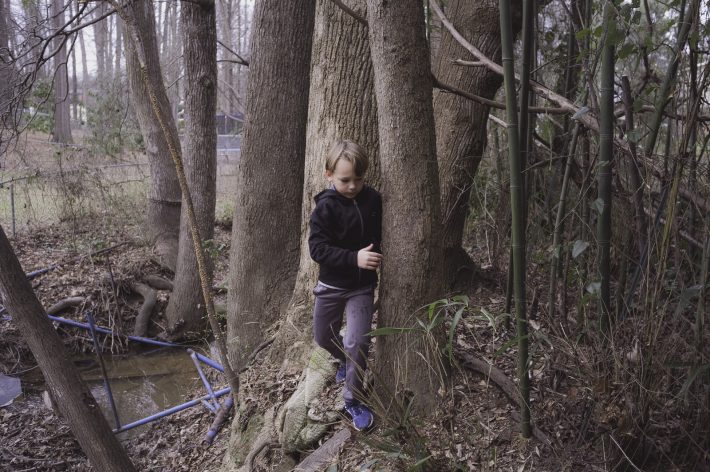
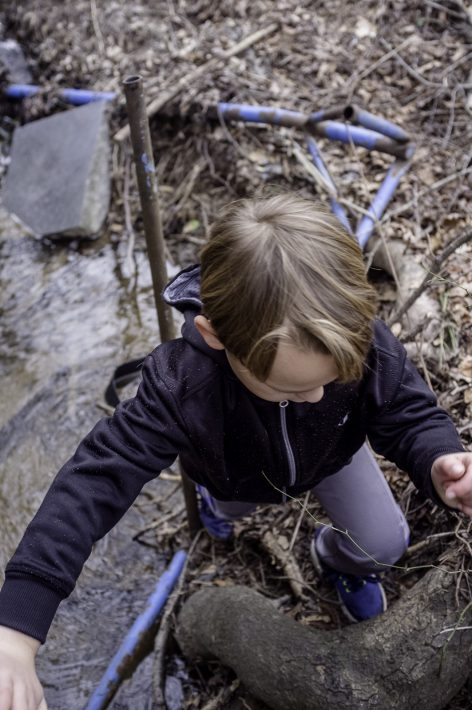
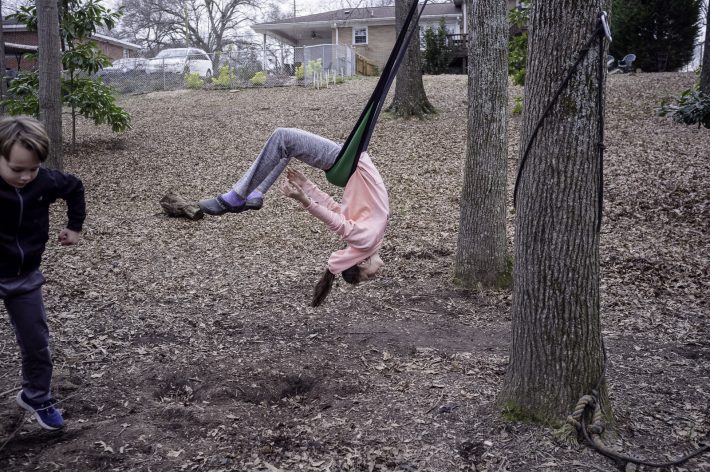
Matching Tracksuits

fun in fours

parenting

Helping

Babcia informs us that L has been absolutely wonderful -- "We have a great relationship!" she proclaimed. She's put the Girl to work, ironing, cleaning, changing bed clothes in the guest rooms.

This is honestly such a relief. The Girl can be, well, a typical twelve-year-old when it comes to helping around the house. I think I expect too much of her sometimes; I think I expect too little of her other times. Even though I'm a teacher and preach this to my students constantly, I forget it with my own kids: perfection is the goal but only insofar as continually striving for it ensures we never settle. Mistakes are part of that process; half-assed jobs are part of that process; even fussing at not wanting to do it is a part of that process.

I don't want to tinker about with the dishwasher tomorrow. I don't want to move the left-over bricks into the crawlspace tomorrow. I don't want to re-mount Papa's TV tomorrow. I say these types of things to the kids every time they complain about not wanting to complete this or that responsibility, but it's often more sarcastic than it needs to be.
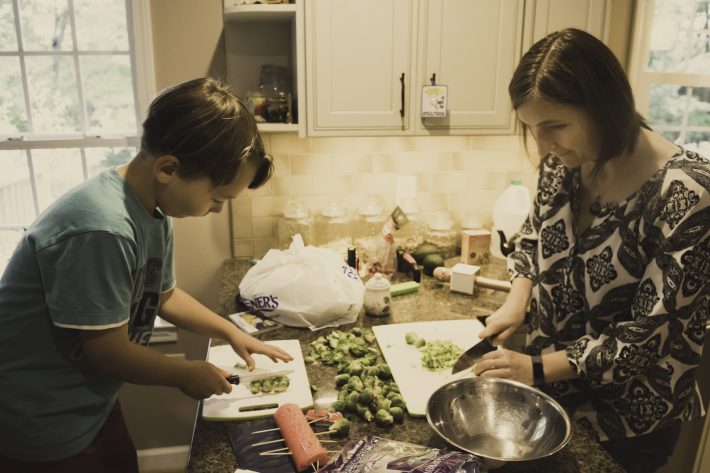
Working on dinner
Working on dinner

The Boy likes helping, but he too is starting to complain about things. We all complain. I guess that's part of it.
What They Deserve

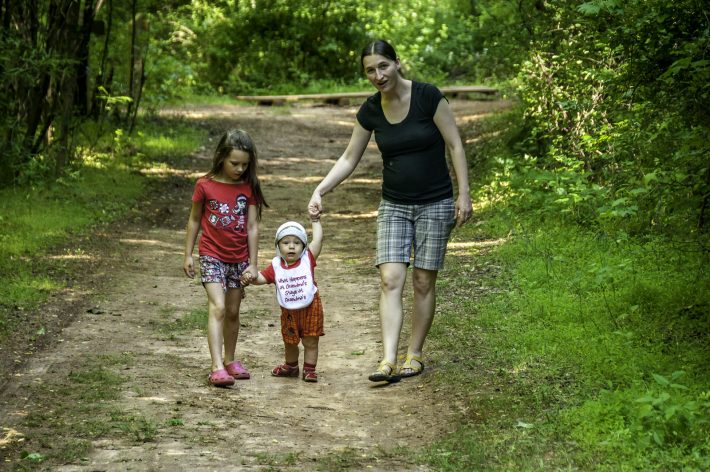
Six years ago today, it was Mother’s Day, and we went to Conestee Park, probably our favorite park in the area. L was six, the same age as E now. As E and I do so often now, L and I were riding out bikes during this particular visit.

L is now twelve and snarky. Part of that is the age and part of it is environment: she comes by her sarcasm honestly. I teach her through example, when I’m sarcastic with her, when I’m sarcastic with K, when I’m sarcastic with drivers who can’t even hear me and wouldn’t care what I have to say even if they could. It’s one of those areas in parenting that I think I could have done a lot better.

The Boy is six and not snarky, but he tries on a bit of bravado every now and then because he learns it from his sister, who learns it from me.

Through it all, K has remained the steadfast example of patient and sarcasm-less parenting. Of the two of us, she’s the one I’d rather my children emulate. Of the two of us, she’s the one doing less to screw them up; in fact, she’s doing all she can to balance out what I’ve messed up. She is the wife I most often feel I don’t deserve and the mother I feel my kids most deserve.

Beginning Lord of the Flies

My kids are reading Lord of the Flies as their final selection in English I Honors. It's been years since I last taught it; it's been even longer since I actually read it.
As I reread it, passages that never stood out as significant take on new importance. For example, Ralph laments the fact that there are no adults who "could get a message to us," expressing a fear that many of the boys have: "If only they could send us something grown-up.. . . a sign or something." The next paragraph reads:

A thin wail out of the darkness chilled them and set them grabbing for each other. Then the wail rose, remote and unearthly, and turned to an inarticulate gibbering. Percival Wemys Madison, of the Vicarage, Harcourt St. Anthony, lying in the long grass, was living through circumstances in which the incantation of his address was powerless to help him.

Young Percival is doing exactly what his parents taught him: he's lost, and he's simply reciting his address.

"If you're ever lost," we can imagine his parents calmly telling him, "find a police officer and tell him your address."

"The Vicar- vicar," Percival, who is six, struggles.

"Vicarage," his father, obviously an Anglican priest, prompts.

"The Vicarage, Hardcourt..."

"No, son. No 'd.' Just 'Harcourt."

"Harcourt..."

They practice it a while. It becomes a morning chant with breakfast, an afternoon game, an evening blessing.

When he has it, he's got it for good. He recites it at blistering speed a few days later through smiling lips.

"That's wonderful!" his mother applauds.

And now, trying to come to grips with the terrors that plague him endlessly, he falls back on his incantation -- what a wonderful choice of words -- and tries to will himself out of the place. He can't be convinced that there is no beast lurking on the island, but he has no idea what he should really fear.

The older boys do, though. Jack and Ralph have begun their irrevocable split, with Jack resorting to his first violent act: punching Piggy in the stomach and then knocking his glasses off, simultaneously blinding Piggy and cutting all the boys off from civilization, as it was Piggy's glasses they used to light the signal fire.

"I know there isn’t no beast—not with claws and all that, I mean—but I know there isn’t no fear, either.”

Piggy paused.

“Unless—”

Ralph moved restlessly.

“Unless what?”

“Unless we get frightened of people.”

I imagine my own six-year-old in this situation, watching the closest things to adults around him -- the boys of thirteen and fourteen -- descend into fighting and arguing, with chaos unimaginable just days away, and I shudder.

When we reach this part of the book, I'm going to break with tradition and help the kids see all the foreshadowing. "If you're not terrified imagining yourself in this situation, you're not really reading this book."

Standing Still

Coming home this evening, L was playing a life simulator game on her iPod and mentioned that she was now forty-seven.

“You’re older than I am,” I laughed.

“No,” she explained, “you can change your age at the click of a button.”

“It’s a good thing you can’t do that in real life,” I replied.

What I had in mind was what I thought at her age: I can’t wait until I’m X years old. That always looking forward, always longing to be a little older, which struck around age six or so. “When will I be big?!”

“No, it’s a good thing,” she agreed. “I’d never press the button then.”

She was taking the opposite option, to which I replied, “Well, at some point, I’d just click the button for you.”

“Why!?” came the incredulous response.

“Because you’re not going to mooch off me for the rest of your life.” We both laughed a bit, but I got to thinking about what it might be like if we could have that option, if we could just stay one age for as long as we wanted to.

On the one hand, the nostalgic in me would love that, but what moment? While looking at the “Time Machine” posts at the bottom of the site, I discovered this shot from 2013:

The Girl was just a little younger than the Boy is now, and I hadn’t thought about how much different she was then than she is now. A six-year-old and a twelve-year-old are completely different people in many ways. Looking back, I can see traces of personality traits she now exhibits all the way back then, but the reverse wasn’t true: I had no idea how much she would change in six years (and, of course, how much she would stay the same).

Yet, within that little clump of nostalgia is a nightmare: if I chose that moment, then what about all the wonders that have happened since? Being stuck in one moment, after all, is what Bill Murray’s brilliant Groundhog Day is all about. But it’s more complex, because that film is really about being stuck in that moment without enjoying that moment, being stuck in a moment when all one does for one’s whole life is look toward other, more exciting moments.

I think I’ve lost the thread of where I was going with this, and that’s kind of the point perhaps. The key to life, rediscovered once again, is getting stuck in the moment by enjoying the moment so much that one doesn’t want to move forward but accepts the simple fact that that forward motion is, in fact, the moment itself. Axiomatic. The present doesn’t exist — it’s a sliver between the past and the future. That old chestnut. Living the moment means accepting that it’s just that — the moment.

So what to do in the moments of this afternoon? Go exploring, of course. Play in the backyard, of course. Enjoy the short bit of time we had between visits to Nana and visits to Papa and trips to church and more trips to church and cooking and lesson planning and everything that makes Sunday Sunday.

Last Game and Pinewood Derby

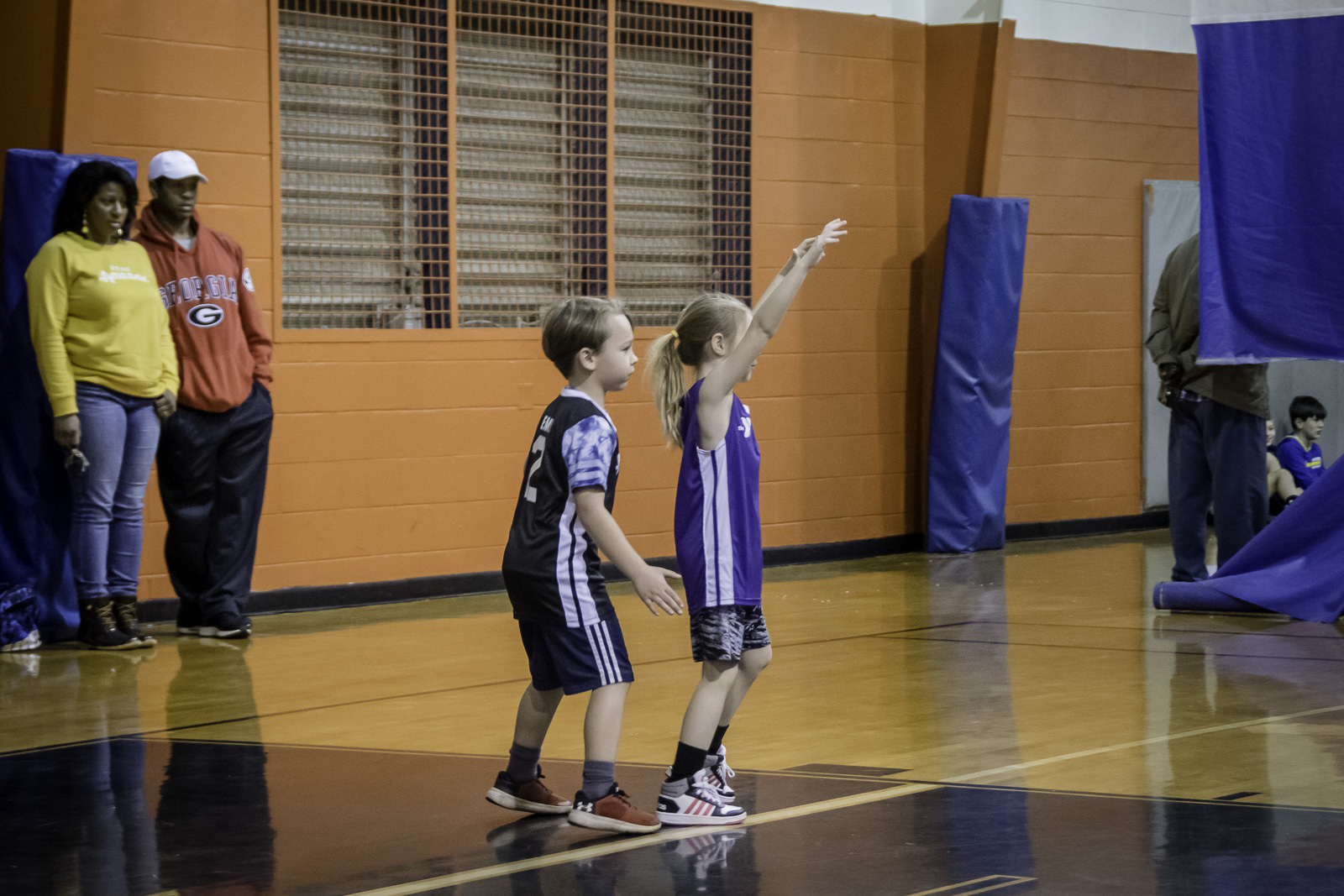
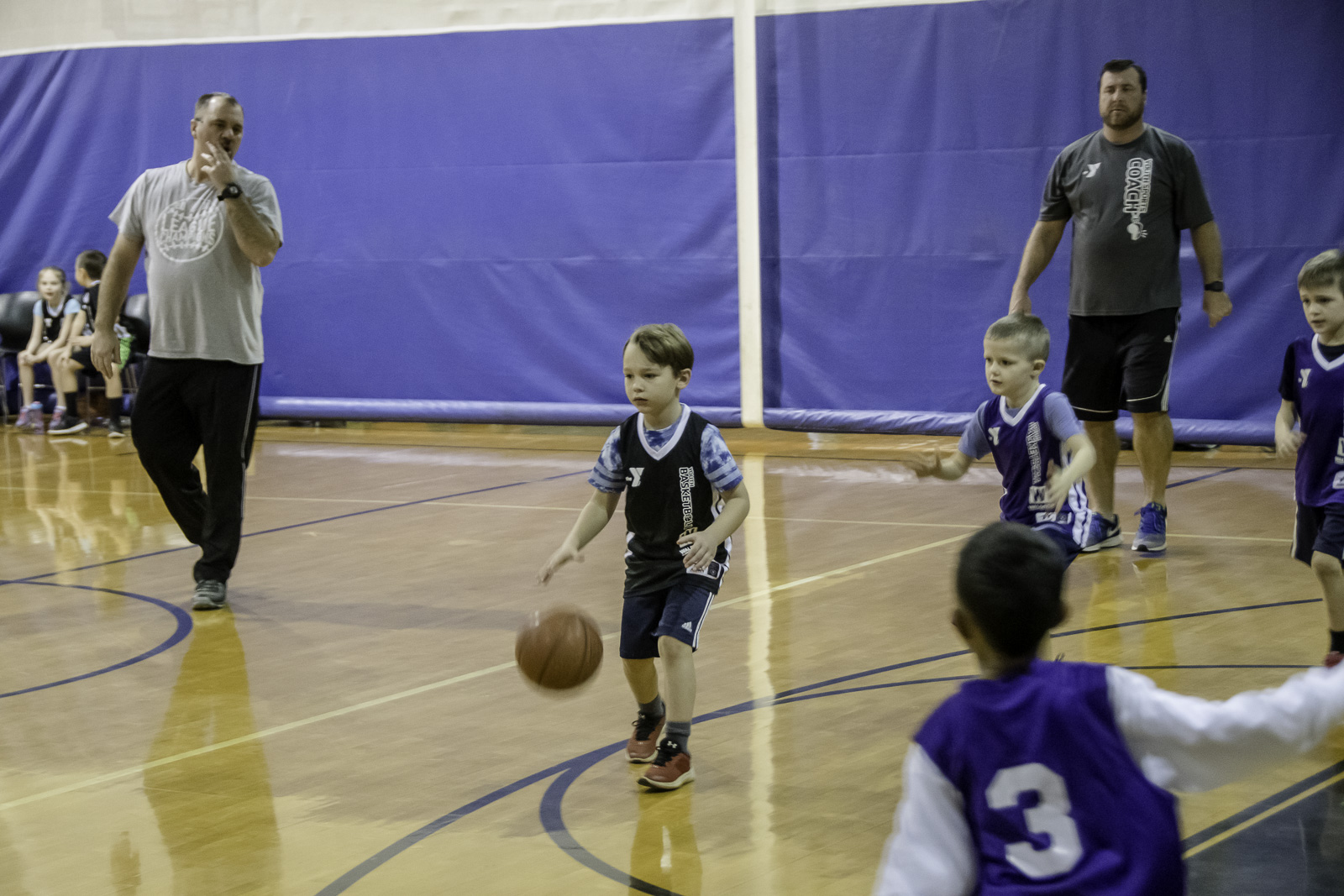
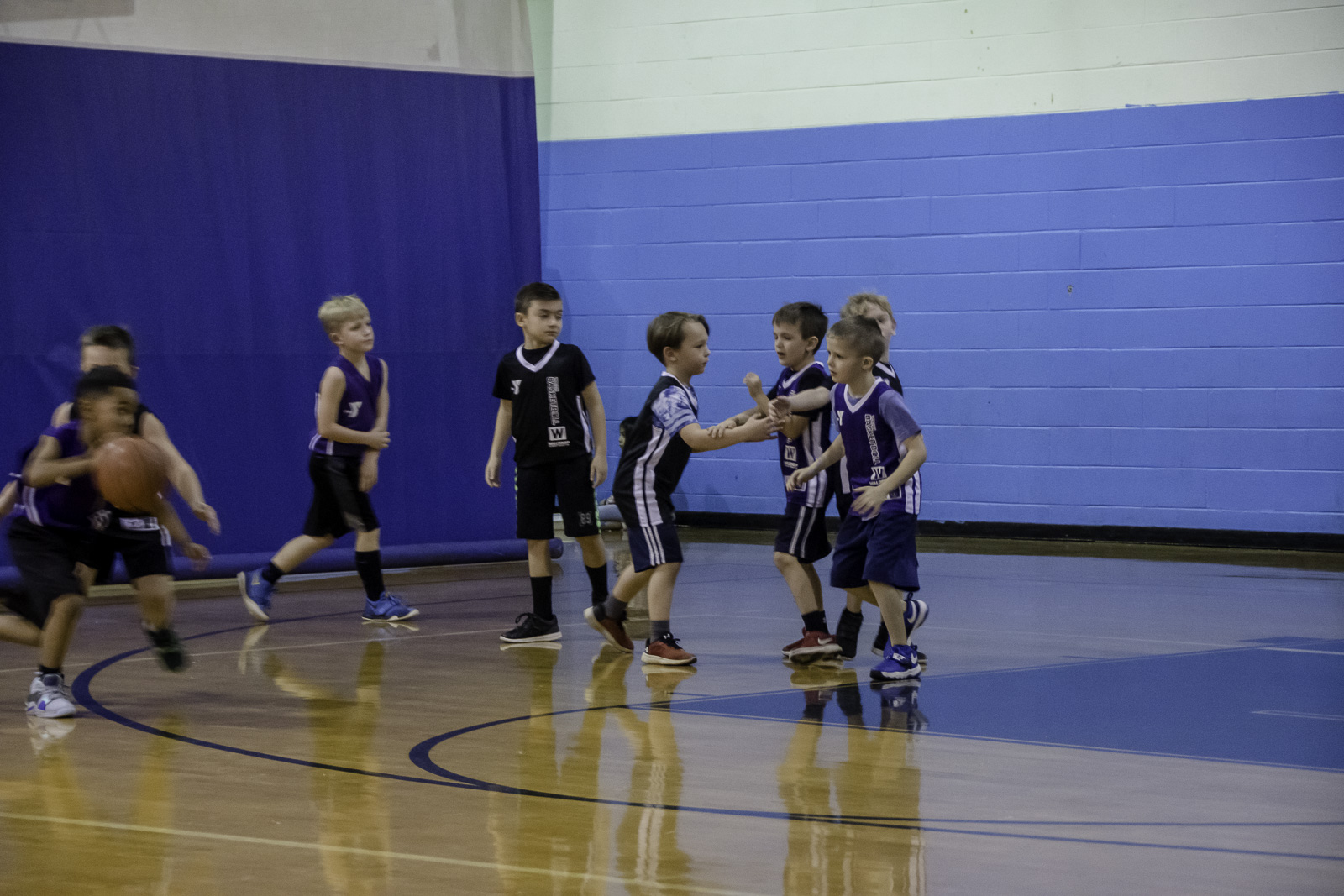
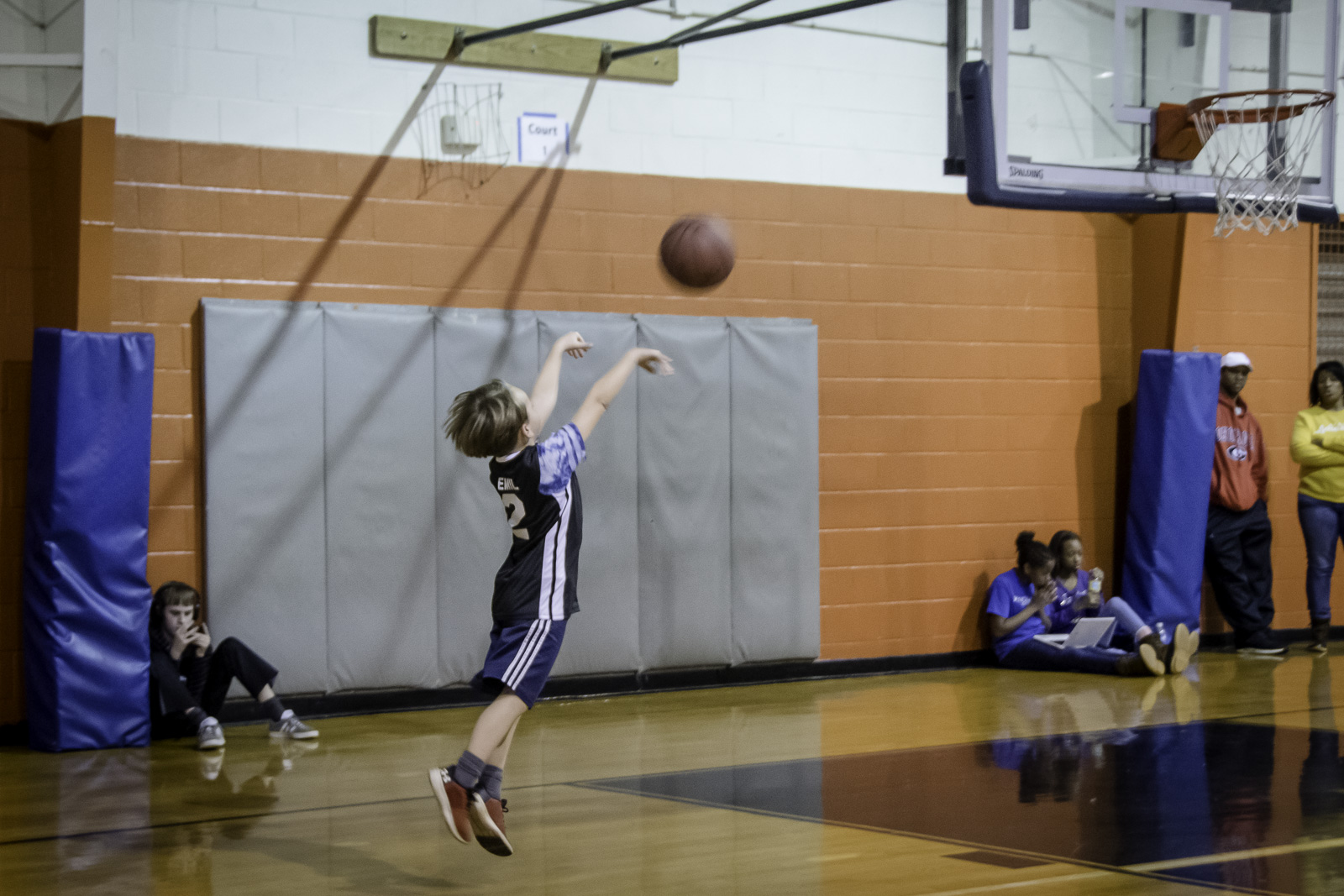
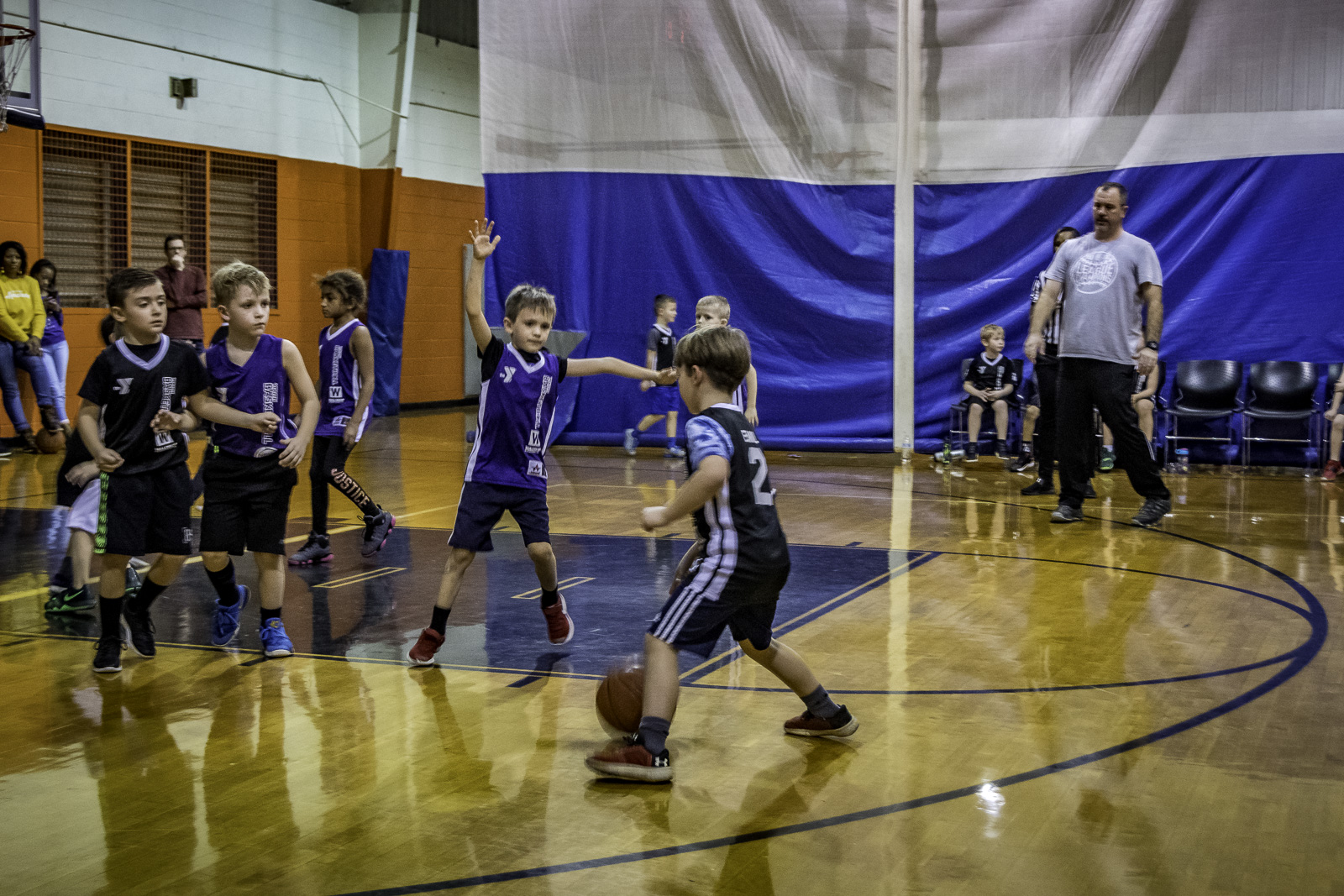
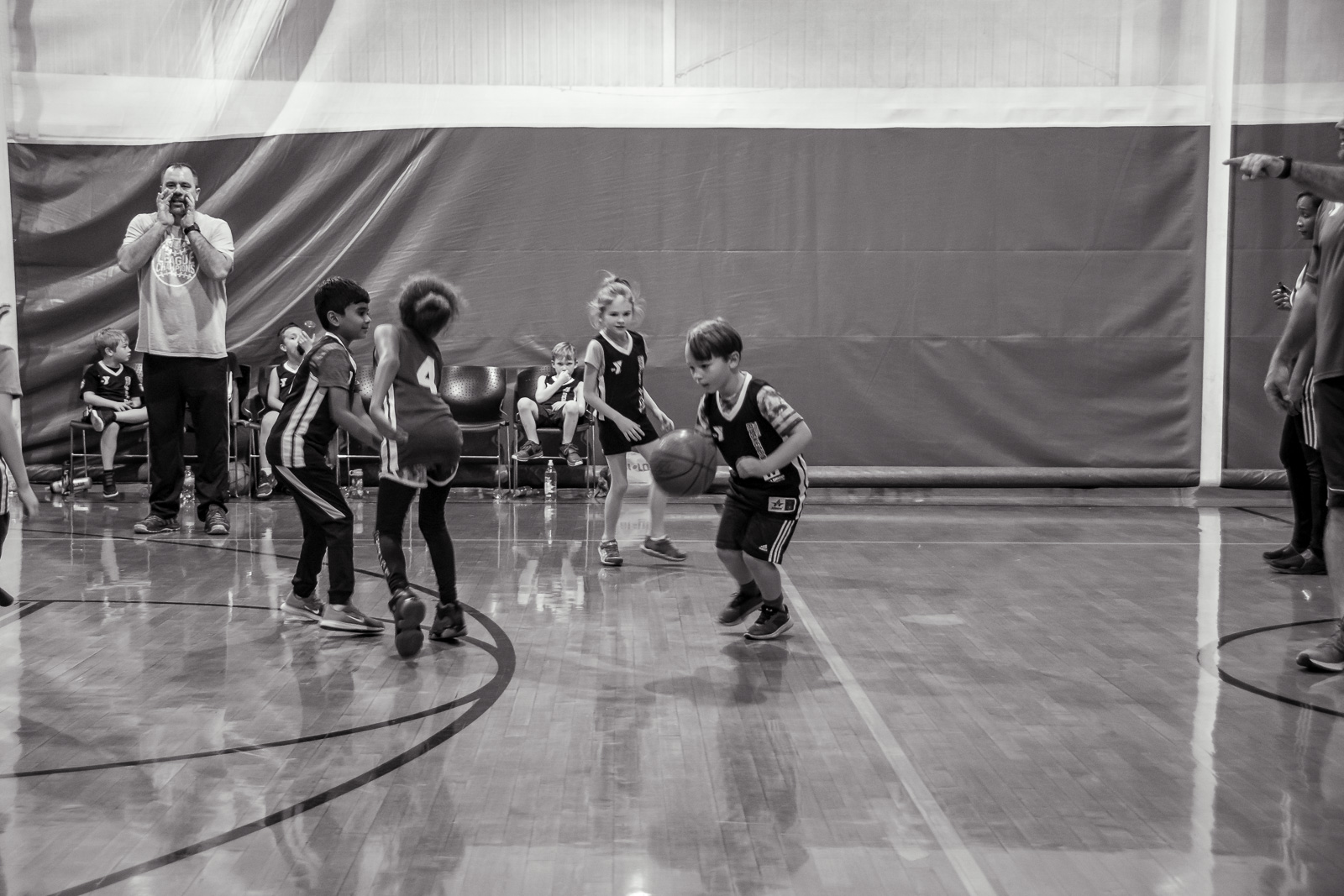
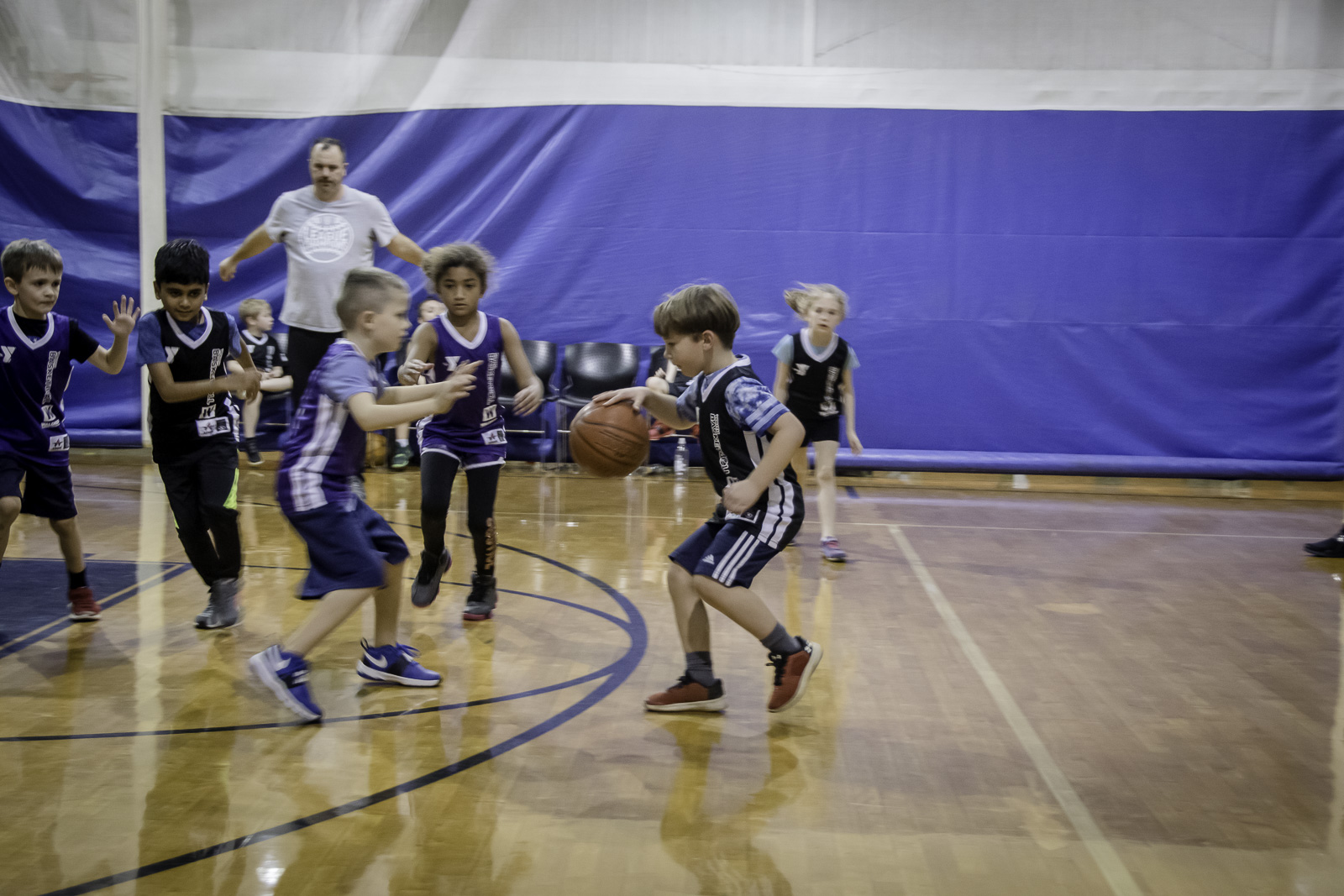
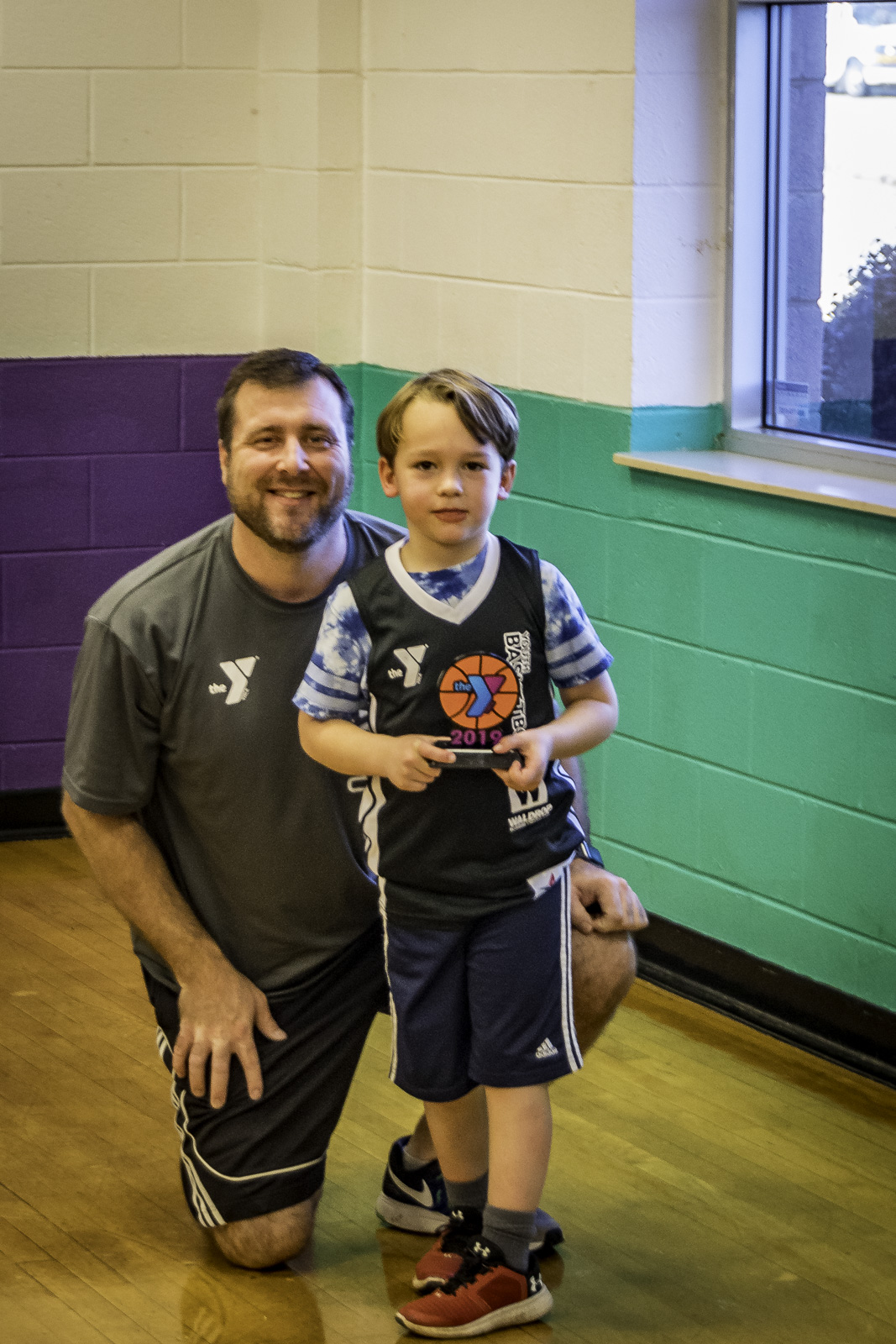
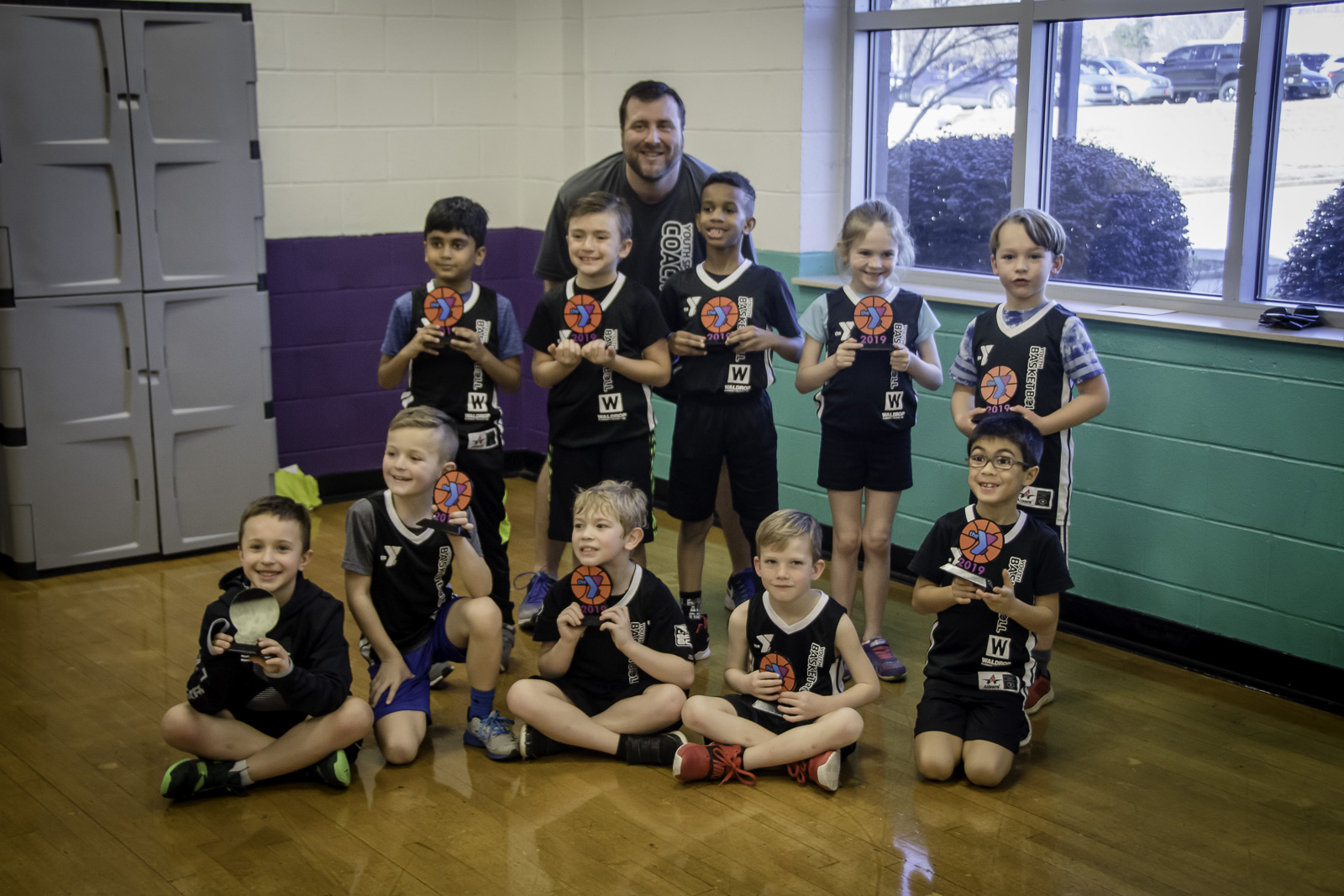
The Boy played his last game of his first basketball season today. He didn't make a basket, though he took a shot. He had a couple of turnovers. At one point, he was defending his assigned player even though his team was on offense. All signs of a new player still finding his way in a game that he really doesn't fully understand. But he played with such heart. He did everything his coach told him (coaches at this level are allowed on the court, as soccer coaches at that age group are allowed on the field), and oblivious to the above facts, he enjoyed it, which is what counts most.

"I know what I'm saving up for," he declared earlier this week. "A basketball goal for our house." The only problem: we don't really have a place to put a goal. But our neighbor has a small court set up on his driveway -- we'll have to find the time to go there more often, K and I decided.

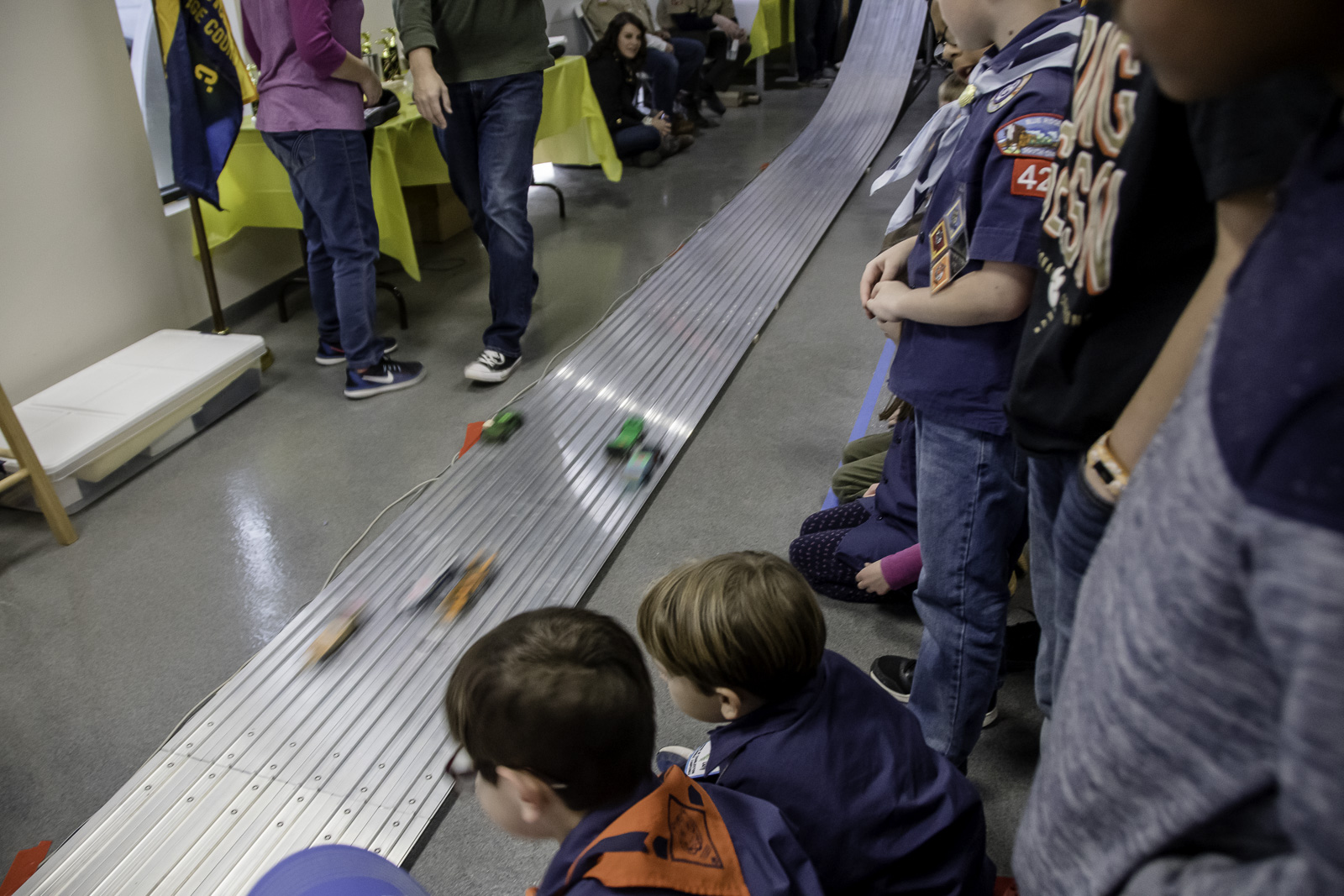
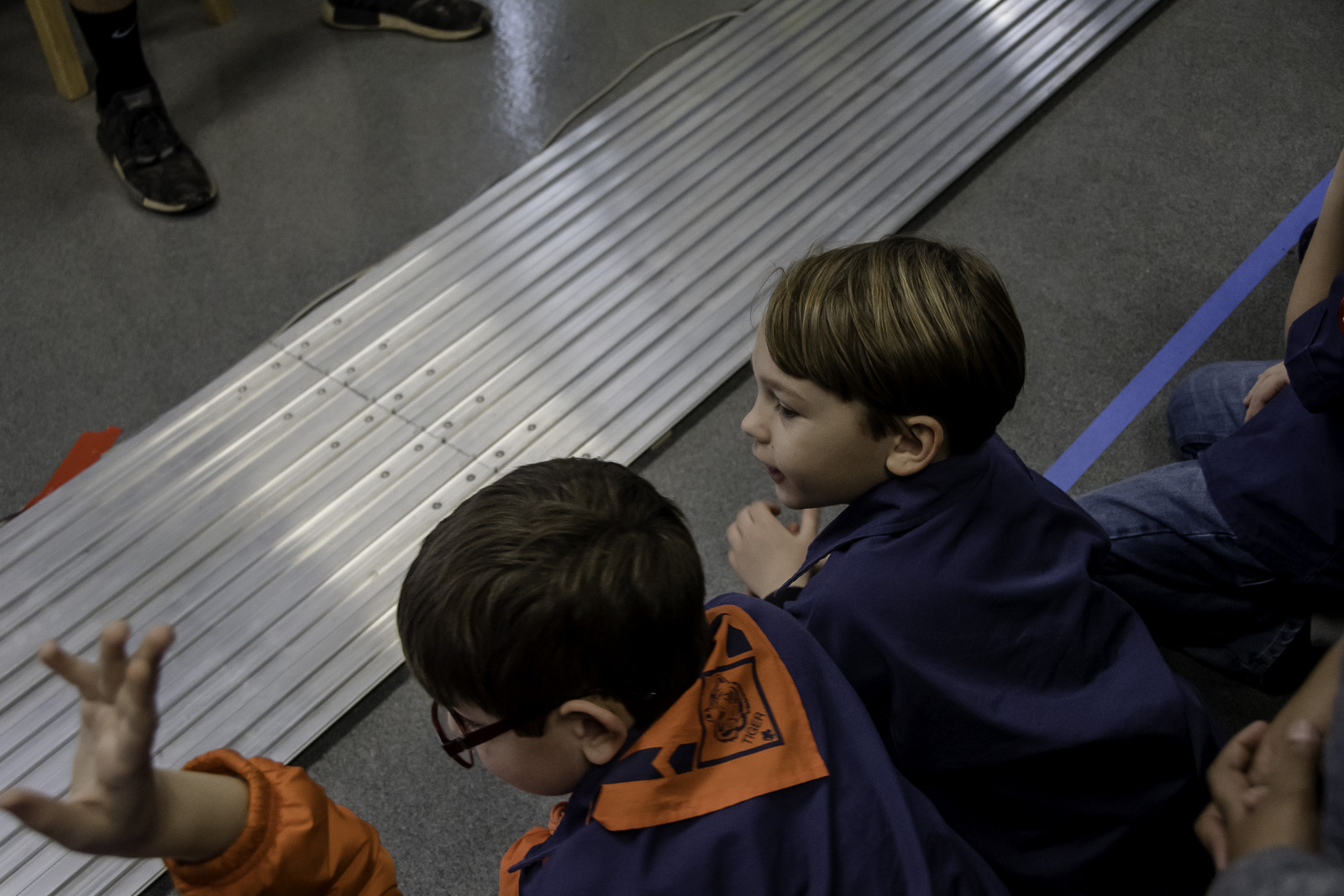
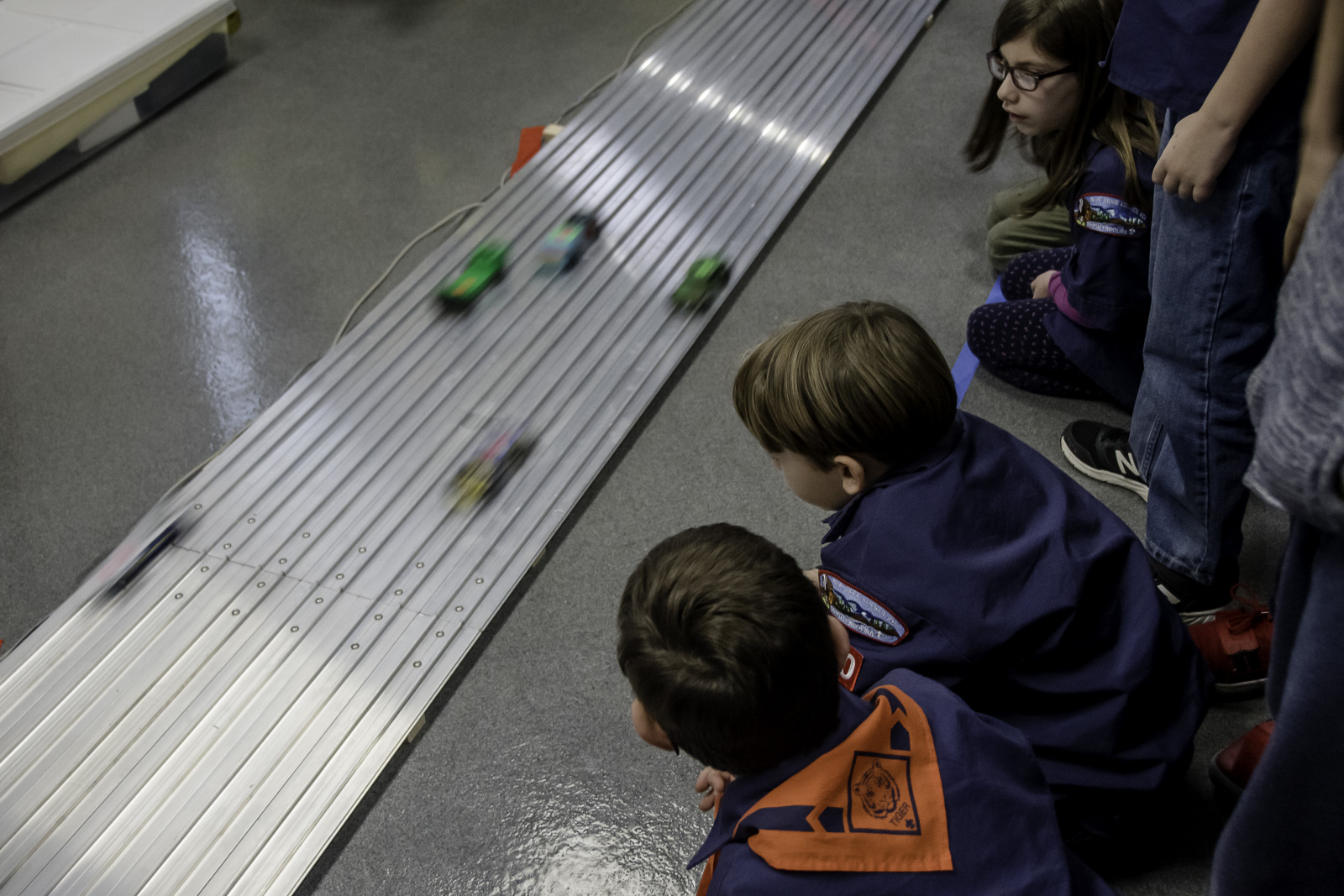
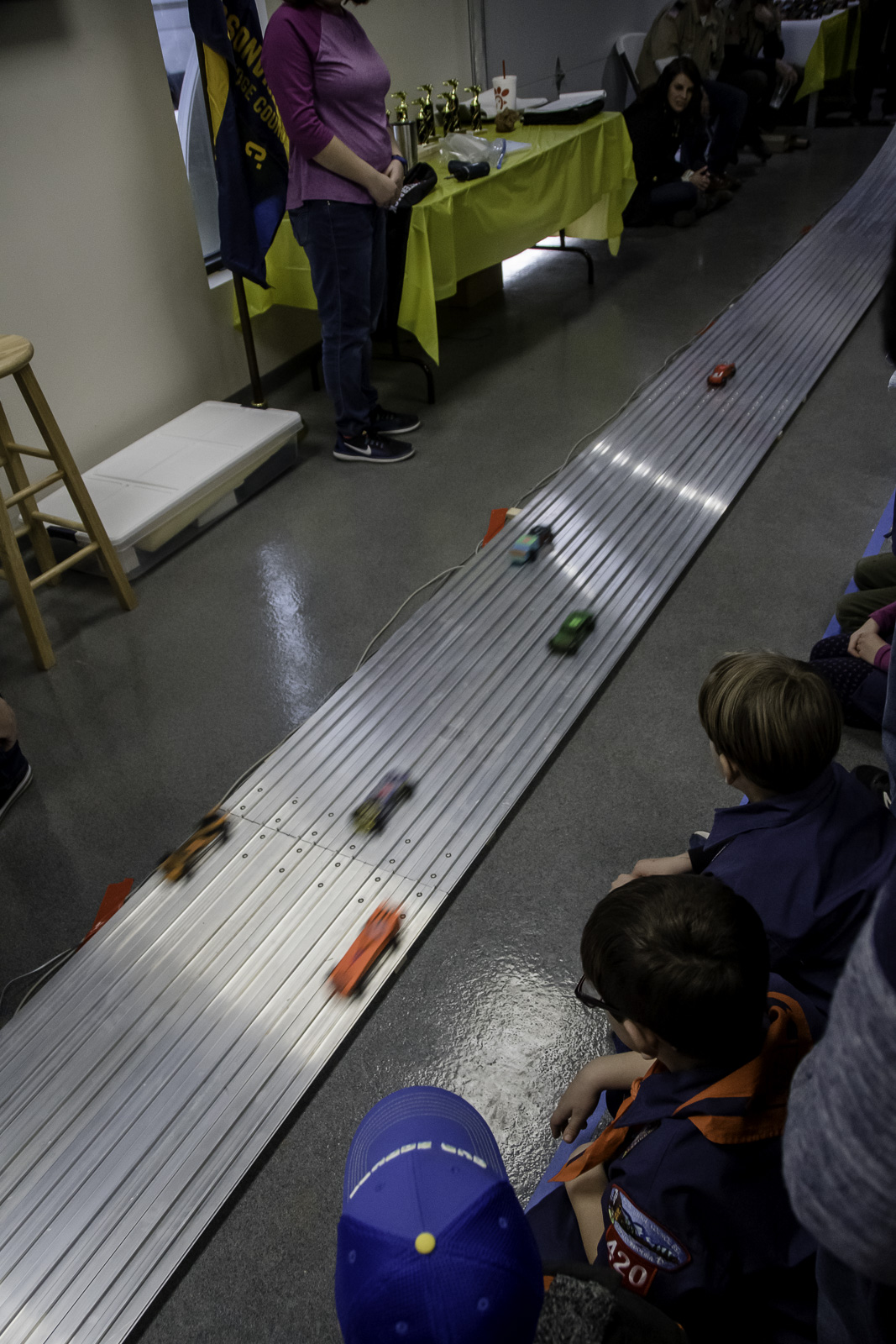
In the early evening, we went for the Boy's second pinewood derby. We'd been working on the car this week, and the Boy went into it with a lot of confidence. At the very least, he was sure, we would have the best-looking car. He'd decided on a humvee, which made for easy painting and it looked pretty good when it was all said and done: I did the cutting and some of the sanding; he did the painting and some of the sanding.

When the racing started, his car finished consistently in fourth place out of the six cars racing. That meant he wasn't the fastest but wasn't the slowest either. A more competitive spirit would equate those terms with "best" and "worst," but I try not to look at it that way because I'm only somewhat competitive.

Sometimes I wonder, or rather fear, that his lack of competitiveness comes from a lack of confidence, that he feels he has no chance of winning anyway and so why not cut one's losses and not appear to be terribly worried about the results of inherently competitive events. That's how I was, I think, when I was a child and teen. It wasn't that I worried about losing; I just didn't want to get embarrassed, to get beaten into the ground, so to speak. In gym class during high school, when we had basketball, I was reticent to participate because I was never all that good. I even refused to dress out some days, making the excuse that because I was on the swim team and got plenty of exercise that way, I really didn't even need the activity. Swimming was different, though, because I had success in the pool and felt more confident there.

Is that compensation or something more concerning? I don't really know, and I'm honestly not terribly worried about it. I think in the end, all of us with a little competitive spirit in us do that.
Wednesday Night Inferring

A busy day for everyone culminates in us arriving separately at home after seven, two hours after we normally eat dinner. After school, a long meeting, and a visit with Nana (out of the hospital and back in rehab -- hurrah!), I'd stopped for something for us to eat; after work, shuttling the Girl to choir practice while taking the Boy shopping, running the Boy to basketball practice after dropping the Girl off at volleyball practice, then picking everyone up, K arrived shortly after.

As we ate, the kids and I decided that K's plan for the rest of the evening was flawed.

"I'll put away all the groceries and then go to bed if you'll put the Boy to bed."

"Nope. I'll put away the groceries while you take a hot bath, and then I'll put the Boy to bed while you go to bed yourself." L and E agreed -- Mama needed to call it a day. As I was bustling about the kitchen, I remembered it was garbage night.

"L, take the garbage and recycling out," I said, expecting a little fussing.

"Okay." Nothing more.

She came back in, a little whiny, and said, "E always takes out one of them. Can he take out the recycling? I'll go with him."

"No, sweetie, it's late. Just do a little more than you have to."

"Oh, okay." Nothing more.

From this, a simple inference: our daughter really is growing up. She's not just sprouting vertically (she's almost 5'4" now); she's not just developing into a young woman; she's maturing. With my nose pressed to the ever-present every day, I forget that sometimes. It escapes me.

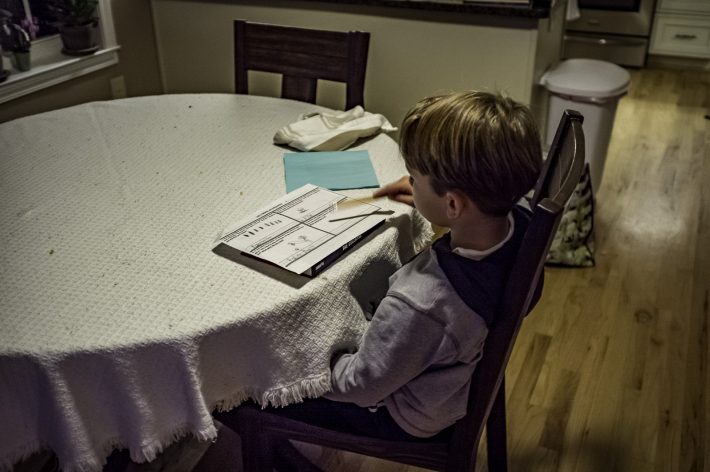
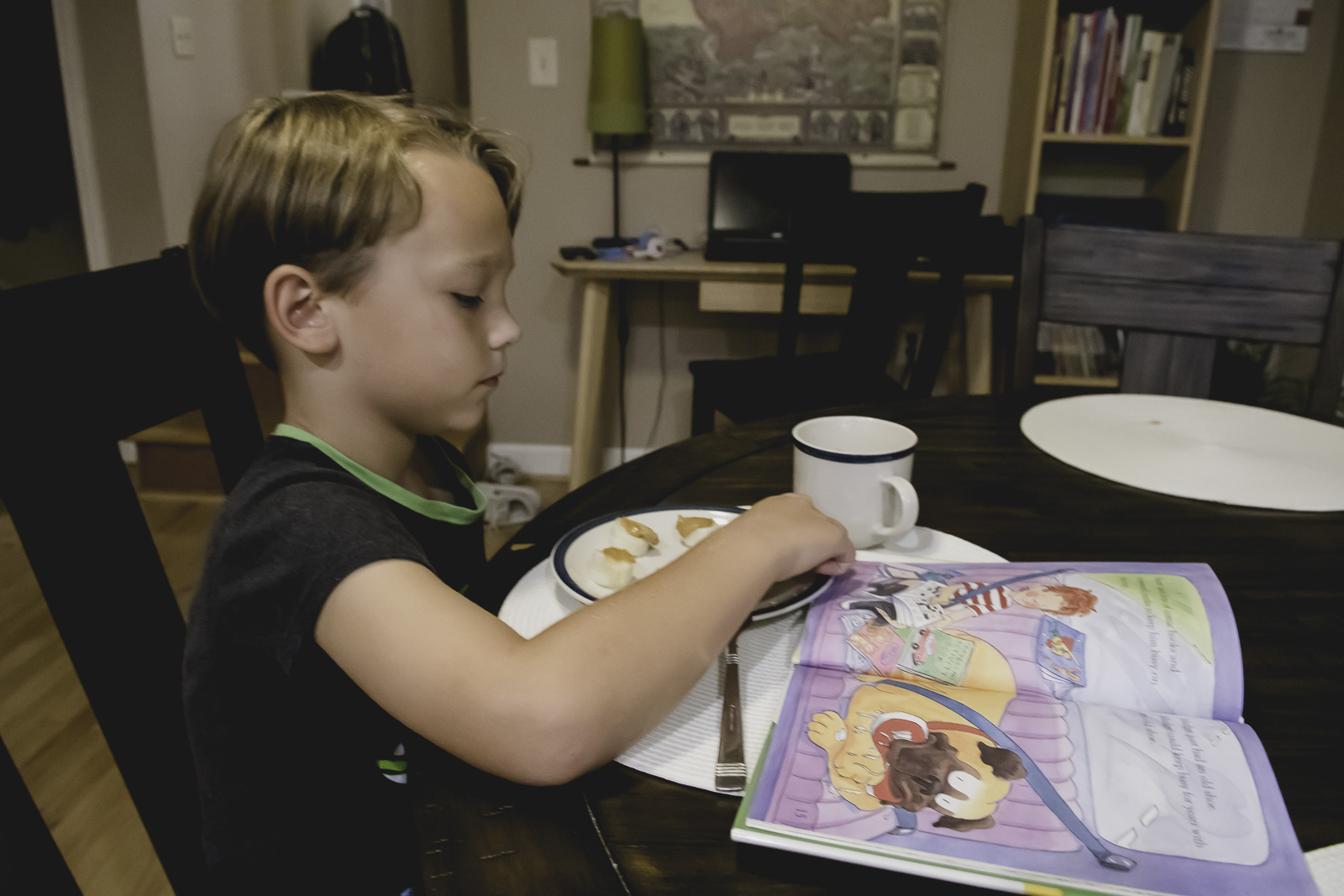
While all this was going on, the Boy had started his homework.

"What are you working on tonight?" I asked him.

"Inferring. We learned it today."

As an English teacher, I've been working on the Boy's (and the Girl's) inferring skills for years. I taught him the word; he must have forgotten. The teacher did a better job today. "What's that?" I asked.

"Making a good guess."

Not a bad definition. I usually tell my students it's "making a reasonable guess based on evidence."

And there you might notice something: I teach eighth grade; my son is in first grade. Am I really teaching inferring again? Well, I'm not teaching inferring -- they know what it is. But we're still practicing it. Like mad. Especially (really, that should read "solely") with my lower-achieving students. I give them a text like this:

Every day after work Paul took his muddy boots off on the steps of the front porch. Alice would have a fit if the boots made it so far as the welcome mat. He then took off his dusty overalls and threw them into a plastic garbage bag; Alice left a new garbage bag tied to the porch railing for him every morning. On his way in the house, he dropped the garbage bag off at the washing machine and went straight up the stairs to the shower as he was instructed. He would eat dinner with her after he was “presentable,” as Alice had often said.

I then ask a question: What type of job does Paul do? How do you know this? I have the students back up their answers with three specific pieces of evidence from the text, then explain how that evidence is evidence. A good student response (an actual student response) looks like this:

Paul is a farmer.I know this because he is wearing muddy boots. Wearing muddy boots is evidence that he is a farmer because if he were to work in an office or inside he wouldn't have muddy boots. Also, he is wearing overalls in which he would not have been wearing if he was working inside. Finally, Paul’s overalls are dusty and most farmers work a lot outside so he must have gotten dirty from working outside.

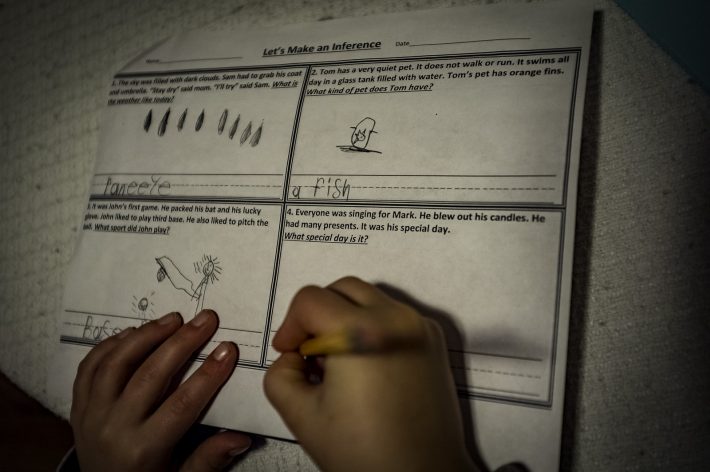
So I applied the same thing to the Boy's work. The same thing -- a text followed by a question:

Everyone was singing for Mark. He blew out his candles. He had many presents. It was his special day. What special day was it?

E read the text and said, "It's his birthday!"

"How do you know this?" I prodded.

"Because he got presents."

"But we get presents at Christmas as well. How do you know it's not Christmas?" He looked stumped for a moment, so I told him what I tell my own students: "Go back to the text. Find something in the text that shows it's not Christmas."

He read a while, thought a while, then said with a smile, "Because it says it's his special day, not everyone's special day. Christmas is everyone's special day."

I thought he'd pick up on the candles. That's the more obvious piece of evidence. He went the more subtle route.

"That's great. A very good observation. Now, can you find a third piece of evidence?"

Again, he looked, read, thought. "The candles. You don't blow out candles on Christmas."

After a tiring day, what a perfect ending.

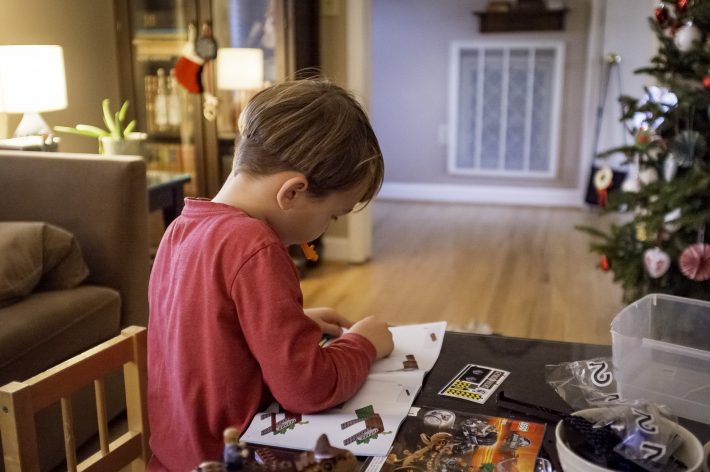
New Legos

The Boy collected a bit of money for Christmas, and it's been gnawing at him ever since. He wants to spend it. Badly. But he has a way of spending his money on items that just don't last. K and I let him make those decisions once we've advised him, like buying a radio controlled car that was clearly of poor quality and obviously wouldn't last long, then we try to help him reflect on the wisdom of that decision. He deemed the radio controlled car a poor decision.

With that in mind, we tried to steer him toward something that would last a bit longer. Given his love of Legos, it wasn't that difficult. The difficulty came in choosing which enormous set he'd actually buy.

He went with a Jurassic World set, even though he's never seen any of the movies.

"Can I watch one of the movies?"

"No, it will only frighten you."

That's as far as it's gotten, but one doesn't have to have seen the film to enjoy the Lego set. And he knows enough about the movie to make proclamations like, "I'm going to go against the rules: the dinosaurs are going to be friends with the people, not enemies."

46

As of today, I'm on the back half of my forties, the downhill slide to fifty. Truth be told, it's all been a slide, year to year.

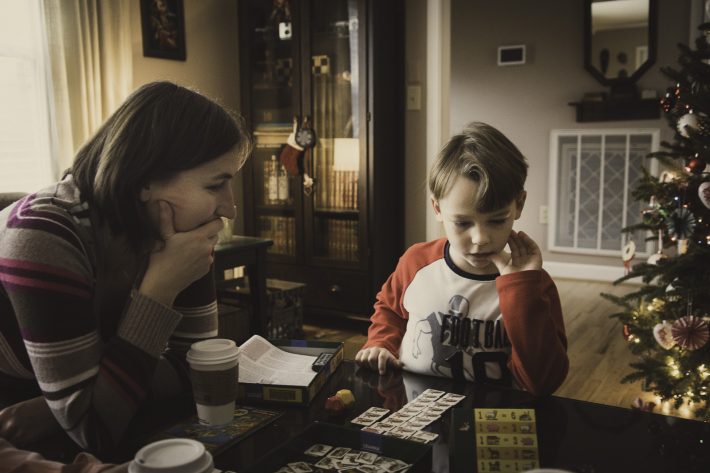
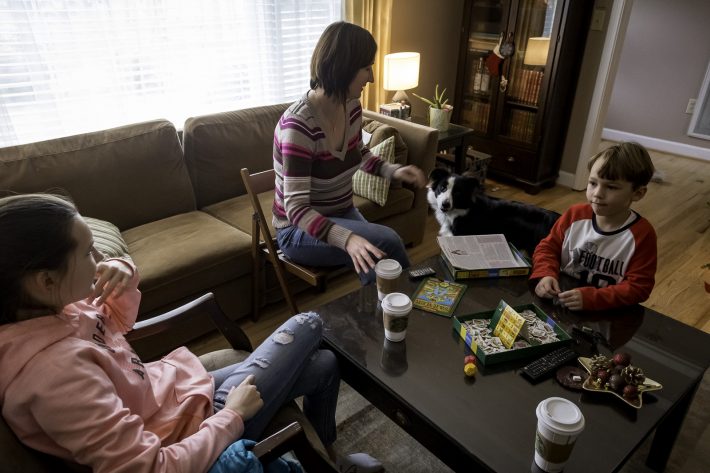
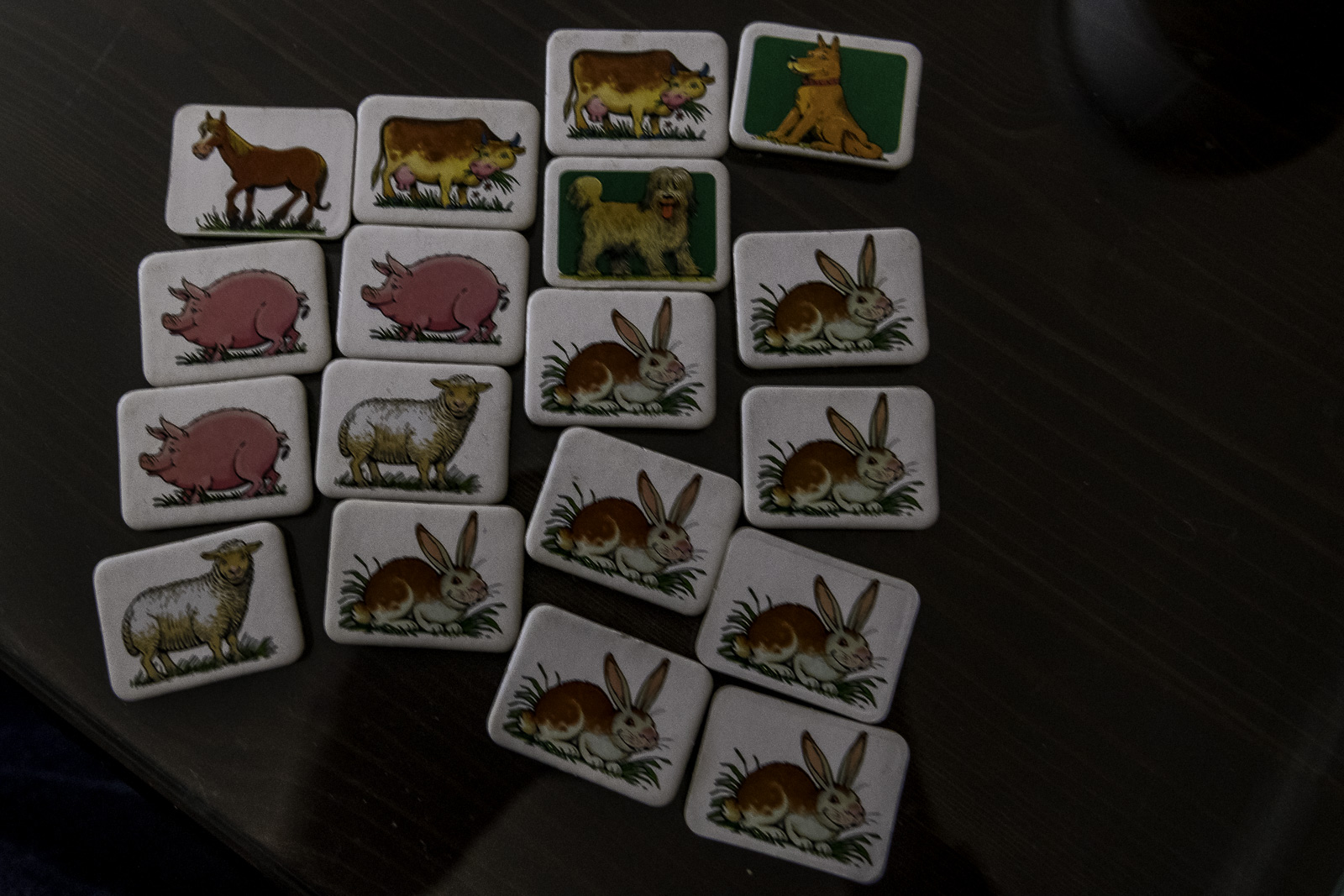
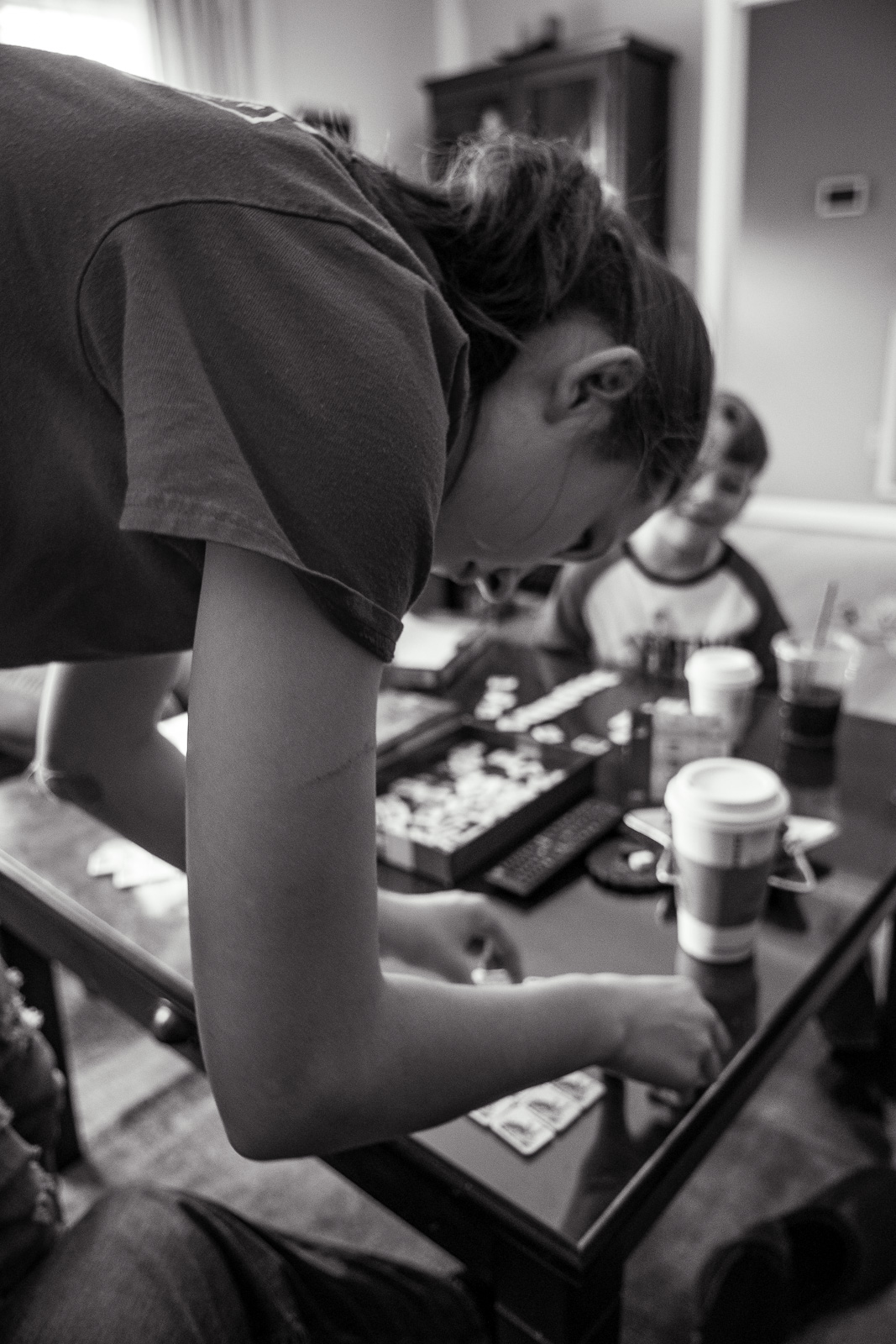
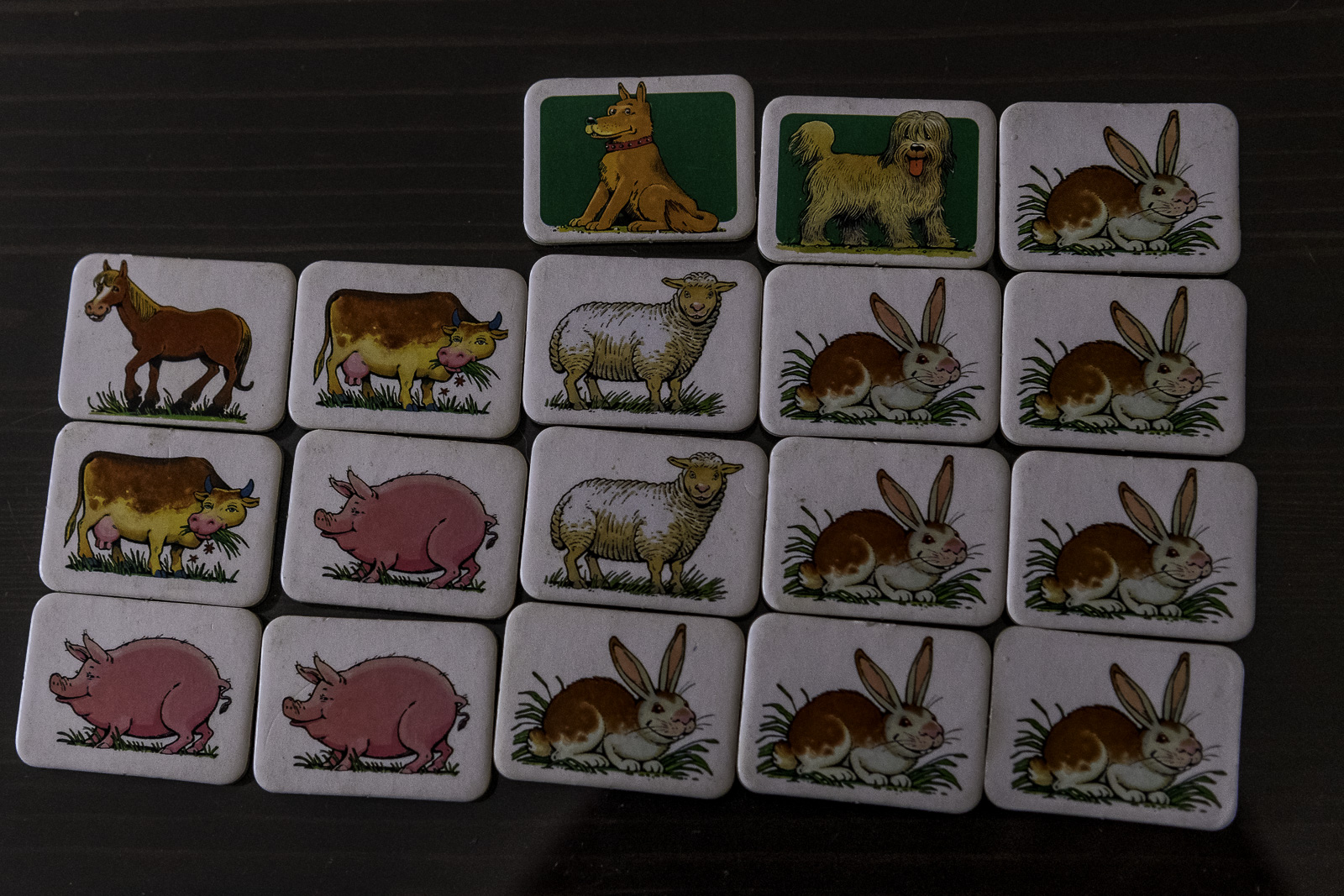
Considering his options in a family game of Super Farmer

It doesn't seem like I've changed that much since the time I worried about the things the Boy worries about: how do I compare to the other boys? Am I as fast? Am I as coordinated? Am I as brave?

How do you console such worries? How do you reassure your son in this hyper-masculine culture about his fears of not measuring up to the other boys? The truth is, I not only worried about such things when I was young but continued stacking myself up against others and finding myself coming short well into my twenties thirties forties. I think most people who tell you they don't do that are lying, probably to themselves first of all.

Clover wanted to play, too.

Life is not kind to most little boys like E, boys who are actually sensitive to others' feelings, who can spontaneously show compassion and empathy. Who take a little while to settle into new sports. Who are so scrupulous about following rules that they ask daddy when on the road, "Daddy, how fast are you going? Are you speeding?"

My winning hand
L, organizing my winning hand
My winning hand after organization

I don't have answers. I don't even know if I understand the questions.

K and I talk about it. We encourage him. We support him. But we're not there on the playground when he's struggling to keep up with the other boys as they run about. We're not there when kids are mindlessly cruel, and he struggles to understand why people could be so mean.

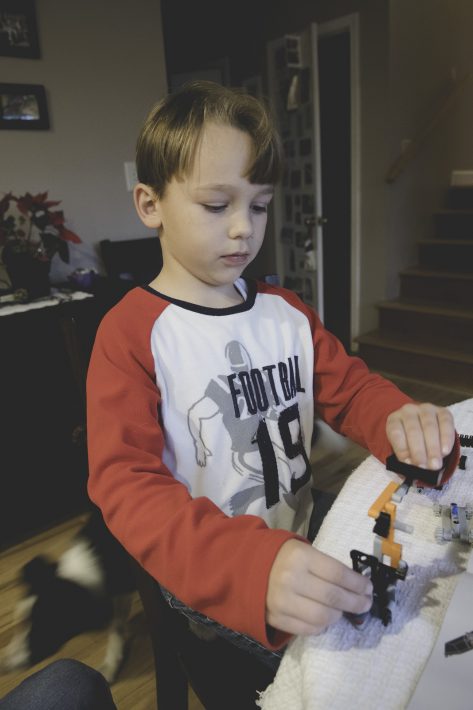
Finishing up the latest Lego project

Good souls win in the end, don't they? I look around the world and struggle to find an answer to that question other than, "Afraid not."

Volleyball

As a parent watching my daughter play volleyball, I always have some mixed emotions. During the last season, her team struggled mightily: they didn’t win a single match, if memory serves, and they only won a handful of sets. It was rough. Lots of frustration in the car after games.

“We won’t ever win.”

In several matches, they were swept, three sets to nothing. There was nothing immediately redeemable about that. I said what any parent would say: “You’re getting stronger.” “This is building character.” “This shows how tough you are, that you keep at it despite the challenges.”

This year has been different. They’ve won many more than they’ve lost, and they’ve handed out a couple of 3-0 sweeps themselves. It’s great to see the Girl so happy, so excited about what’s going on.

But I sometimes secretly cheer for the other team.

Tonight, they faced a team that they had already demolished once this year. I’m sure the coach has the best intentions, but from what I saw of the girls’ play, he doesn’t have the most experience with volleyball: his girls made basic mistakes in fundamental skills, mistakes that could easily be corrected. Mistakes that our coach has corrected. So these girls are losing through no fault of their own: they just don’t have someone to teach them how to pass and to serve properly.

The first game this evening began unevenly, and it became clear that our girls would win fairly easily, which they did, 25-15. Their opponents came out on the court excited, and they never  lost hope, but as I watched them, I really didn’t think they had a chance that game because our girls were out-scoring them 2-1 through most of the game. It was impressive, those girls’ enthusiasm. I found myself thinking, “They might not have won a match all year, might have won only a few sets, but they keep playing and smiling and encouraging each other.”

The second game began like the first and coincidentally ended with the same score.

The third game started, and I wished only one thing: for those sweet, energetic girls to win one. And they came so close. They clawed back from a 14-8 deficit to tie it at 14. That’s six consecutive game points. They were so excited. They were so ready to win.

The score went back and forth, back and forth, but in the end, our best server came up and nailed the final point: 18-16.

Our girls were thrilled. I was happy for L and everyone on her team. But for that third game, I was a total, secret fan of that other team.

Wednesday Evening Vignettes

In a flash, the cherry tomatoes were rolling across the concrete floor like greased bearings -- E had been unloading the shopping cart when, in a moment of slightly careless abandon, the container of tomatoes crashed into the side of the buggy as he was lifting them out, then crashed to the floor.

"It was an accident!" he said, looking up at me.

"Well, clean up the accident, then."

He began picking up the tomatoes and hustling them to a garbage can. Behind us, a mother and her daughter, probably around four, stood watching. When E returned for another load, the little girl walked over and began picking up tomatoes with him.

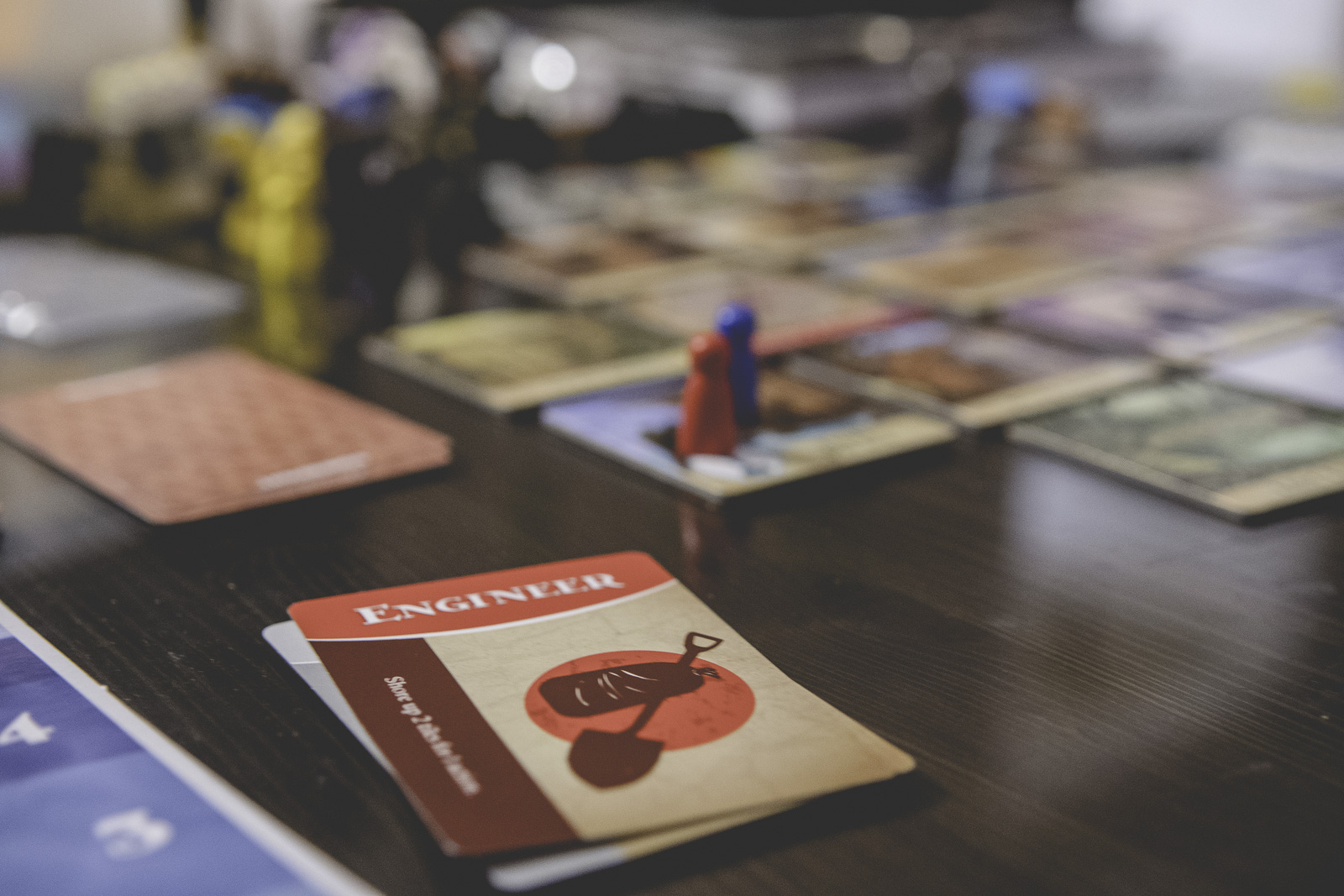
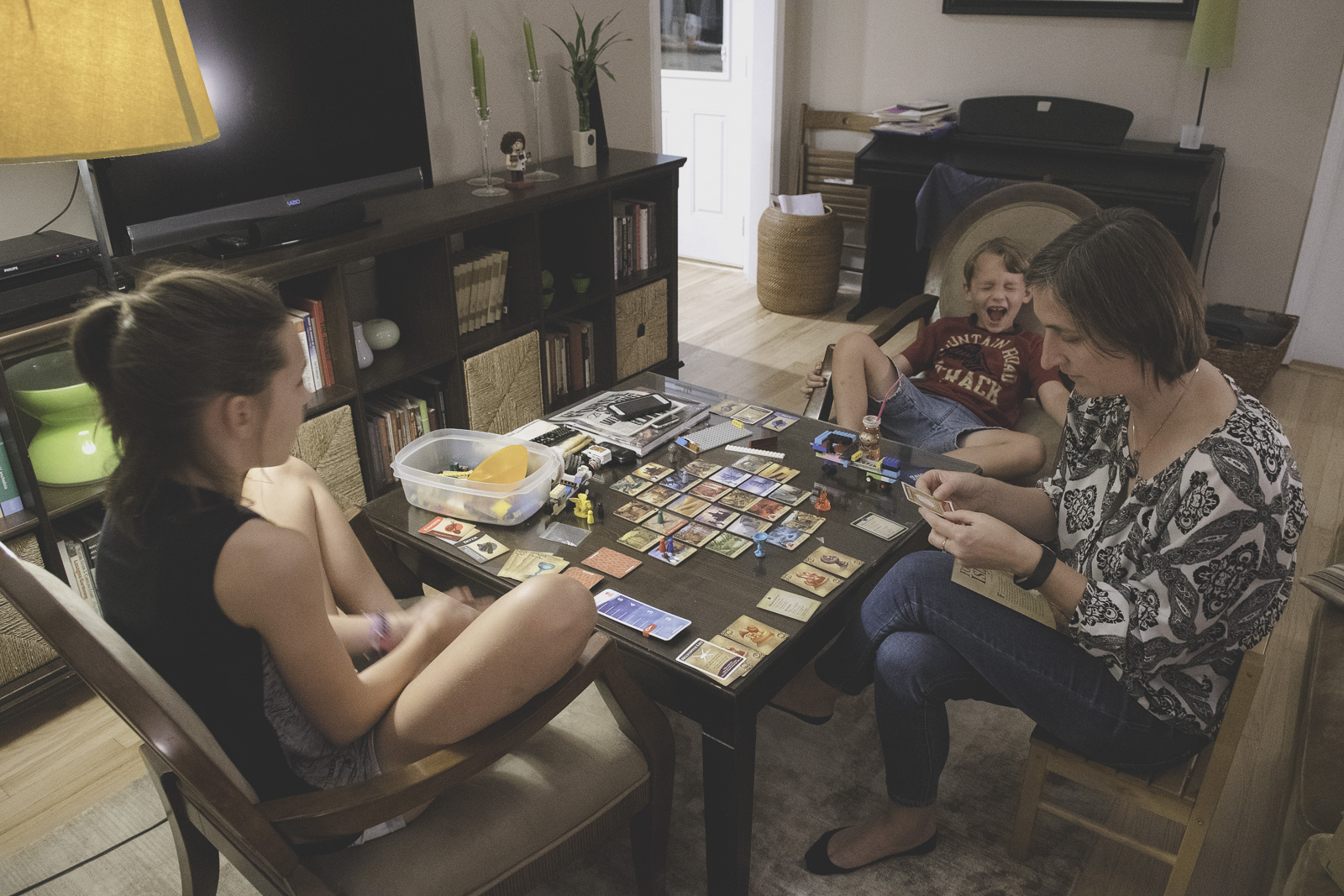
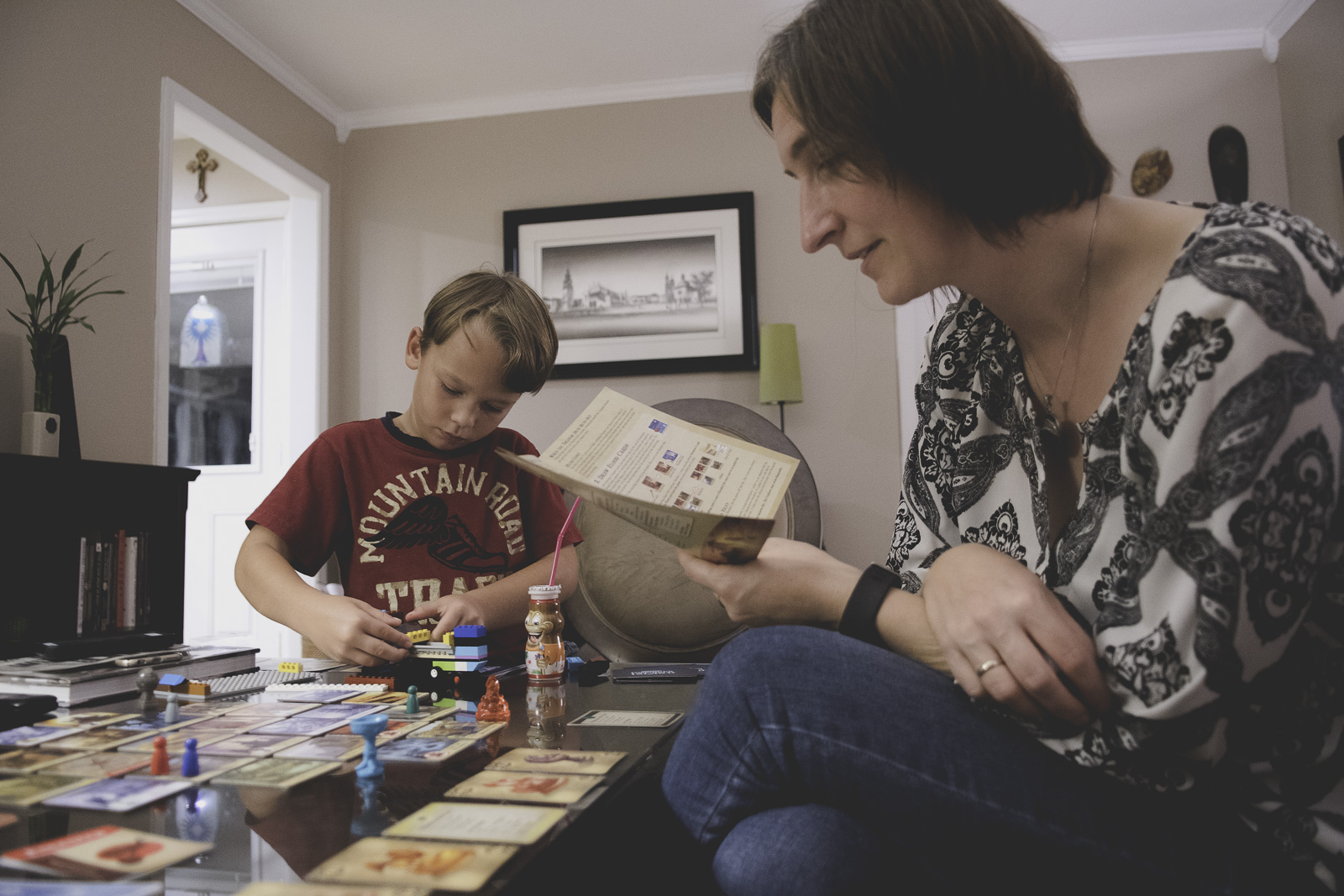
When we returned home, K and L were in the midst of figuring out a new board game. Well, not quite a board game -- there's no board to speak of. Still, a game. An exceedingly complicated game. With multiple decks of cards. And two different sets of tokens. And so many rules to remember that it seemed impossible that a human could keep that many exceptions in her mind at once.

Of course, I started making silly comments.

L, very much wanting to play, naturally got a little irritated with my silliness.

E, content to entertain himself, worked with Legos as all this went on.

And K, determined to make it through all the instructions -- a multi-page book, mind you, not just a few short paragraphs on the underside of the box -- kept explaining the game to us.

"We have fifteen minutes before it's E's bedtime," K said. "We have a little time to play." Between all the complicated rules and steps, everyone got a single turn in those fifteen minutes.