Matching Tracksuits

fun in fours

parenting

Changes

Our daughter now leaves the bathroom trailing a Monet scent of blossoms and linens, the mingling of surf and grass -- the thousand and one scents of a young teenage girl. She started out smelling of "pinkness and warmth and contentedness," a warm mix of comfortable and soft scents that came from her effortlessly, naturally. It was who she was; it was how old she was, or rather how young.

Now, too, her scents bloom from her age, though now from deliberate choice and purposeful will. They come from body washes and facial scrubs, hand creams and lip balms, shampoos and exfoliants. They are from her will and a representation of her will -- a desire to be pleasant, to be sweet, to be pretty.

To what end? As far as I can tell, she's not seeking the eye of anyone, not interested in any such things, and though the time is right for such interest to begin budding, we've not heard a word.

But realistically speaking, would we? Didn't I try desperately to hide from my parents the fact that I no longer found girls foreign and frightful? Didn't I try desperately to hide from my parents the fact that this girl or that had caught my eye? Didn't I try desperately to save myself from that embarrassment, because how could they possibly understand?
Giggles

When putting to bed a 7-year-old, the giggles are sometimes inevitable. Just about anything can set them off. A giggling 7-year-old is usually a joy, but it bedtime there's a touch of gray to it as well: the kid needs to go to sleep, but it's so much fun just to lie there giggling together.

Tonight the word "nipple" the boy giggling and he couldn't stop. "Such a funny word!"

I put my index finger to my lips to shush him.

"Daddy," he said, "you're trying to shush me but you still laughing."

"I know," I laughed.

In the end, I had to leave. I knew he would never get and I would never stop laughing if I didn't.

There was an added tenderness to that moment from a passage I had read earlier in the evening in a book by Paul Auster. One of the characters is a man named Peter Stillman who's father had literally locked him up in a dark room from the age of three so he would forget English and revert to the natural language of God.

Needless to say, it didn't work.

The only thing the father's cruelty accomplished was to create a scarred man who could barely speak.

No father would behave way. Depravity is possible but not to that degree. At least we tell ourselves that. Insanity is the only explanation for such horror.

It seemed to me then that I was not only having a sweet moment with my son but also giving him an extra helping to make up for other children's horror. As if that would help. 

Lost Stories

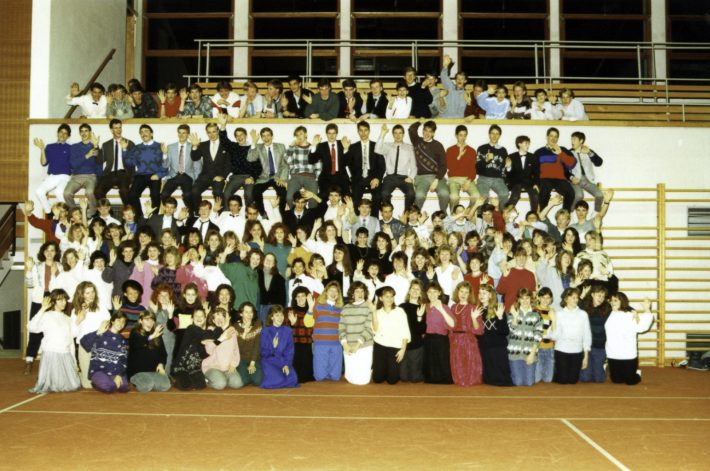
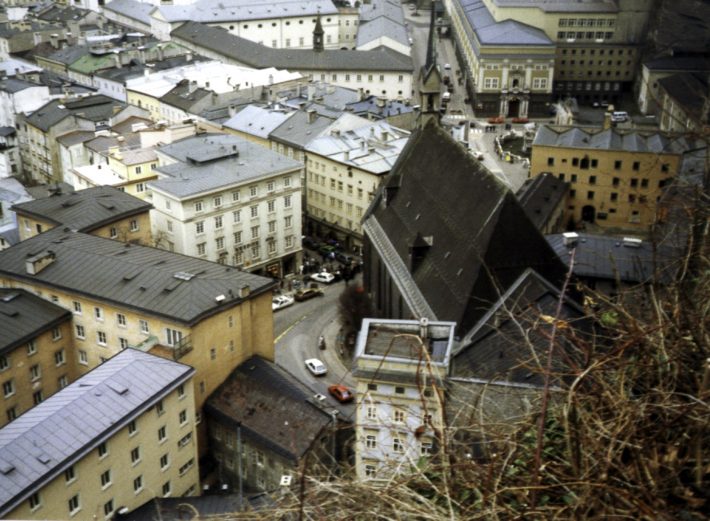
In 1986, I went to Austria with a group of about 120 teenagers from various congregations of our church. We didn’t go as part of a mission trip — our church members didn’t proselytize, for that was the responsibility of the leader through his television program. (Members’ job was to support him, i.e., pay for his TV time.)

The program was called the Winter Education Program, and it was intended to teach us kids who went about two things: winter sports (like the church’s SEP did for summer sports) and theology (which could more aptly be called programming since questioning was out of the question). It was, in reality, an extended ski trip for the kids whose parents could afford it.

I really remember very little about it other than two salient points: first, I never really connected with anyone there and didn’t develop any close friendships. When I went to the summer equivalent a few years later, I made great friends, some of whom I’m still in contact with. Second, I bought my first Pink Floyd cassette on this trip, A Momentary Lapse of Reason. My father, taking his duty to protect me very seriously, had to approve a given band before I could buy anything by them, and I had a suspicion that Pink Floyd wouldn’t make the cut. (There’s a double pun in there for anyone familiar with their discography.)

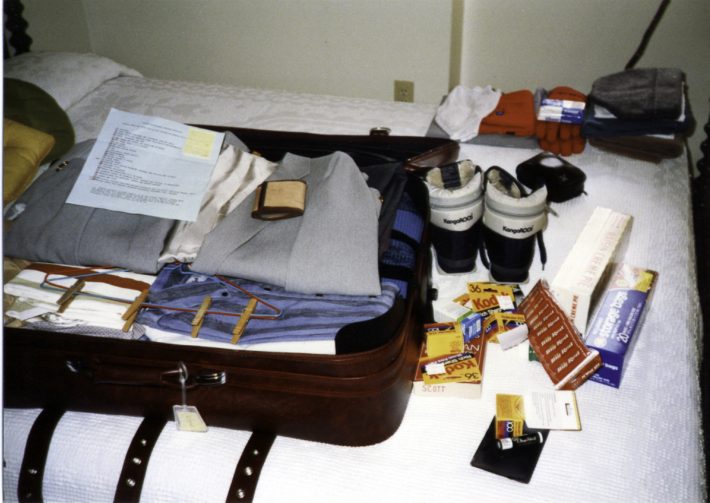
I hadn’t even thought of this whole adventure in probably 25 years when going through photos we took from Nana’s and Papa’s condo, I found these images. It’s a significant event (in a sense) of my youth, and it’s something my wife and children know nothing about. And that realization is what really got me thinking.

I’m forty-seven years old now. That’s roughly 17,155 days and change. By any conservative estimate, I’ve had thousands of little experiences that I remember to some degree or another, making them at least slightly significant, about which my family knows nothing about. They were insignificant at the time, but I remember them years later — that provides some degree of import, I think. There is, of course, no way or reason to share all these experiences with them, but that means much of my life is a mystery for them.

The same, though, is true for my own parents. I know only what they’ve told me, and now that Nana has passed, there are stories upon stories that I will never know.

Looking Down

The call came in at 3:30, when I had fifteen minutes left of my day. Kids were milling about, waiting for their parents to pick them up or to head off to after-school. I looked at my phone to see that it was from Nowy Sacz. I thought perhaps it could be Babcia, perhaps Wojek D. It was, however, neither of them. Instead, it was Pani M, my former landlady in Lipnica and the closest I'd had to a Polish mother until I actually got one (-in-law).

She'd called to thank us for the Christmas card we'd sent, which the family had received only this week. We got to talking for a while, and she asked about the family.

"L looks like she's getting very tall," she said.

"She's taller than her mother now," I said. We'd learned that when she went to the doctor this week. Five feet eight inches -- one inch taller than K.

"How tall?" she asked. Knowing imperial measurements would be meaningless to Pani M, I Googled it quickly. 

"172," I replied.

"Oh, that is tall."

In the evening, I was standing across from L as K helped her prepare her nightly medicine regimen, and I realized I was looking straight ahead as I looked right into her eyes. Straight ahead. We were only about five feet apart. And it hit me: we're almost there physically. That little bundle of pink that we could hold in a single arm thirteen years ago is now almost fully physically grown.

Today's Photo, Completely Unrelated

I reworked a few photos from our Grand Canyon trip. This is one of my favorites.

Ten Years

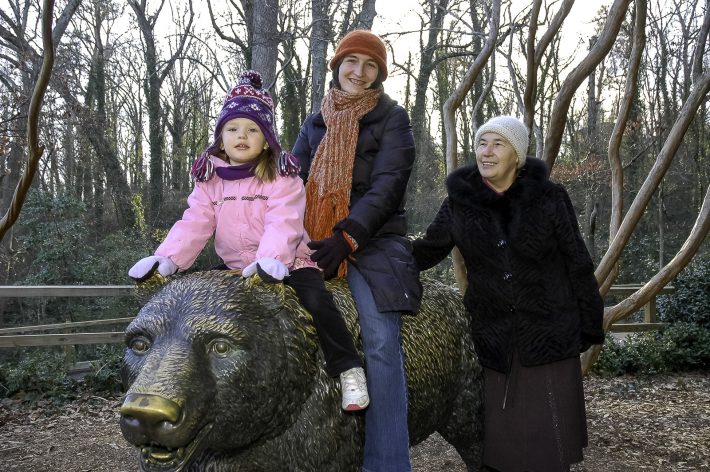
Ten years ago, K's mother came to visit and help out with the Girl. We were still reluctant to put her in public daycare, and J was willing and eager to come help.

Finding these pictures was another "how has it gone so quickly?" moment. And they're only piling up, I realize.

L is now 13, which means in only a few more years, she'll be heading off to college. Is she ready for that? Are we ready for that? And I know that every parent goes through this, but going through it ourselves -- that's something entirely different.

Today's journalism journal entry:

This has got to be the longest week in the history of weeks. This week had a week of Mondays, a fortnight of Tuesdays, a few dozen Wednesdays, and though it’s now Thursday afternoon, I can’t imagine what’s awaiting us tomorrow. All of that to say it’s been an exhausting week. It’s been made even more exhausting by the fact that our daughter is still sick. Four days out of school. She’s positively paranoid about the amount of work she’ll have to make up, and I’m positively paranoid about how she’ll fuss about having to make up all that work. One more thing to deal with this weekend.

Speaking of this weekend, I have an ungodly amount of grading to finalize over the weekend. A test for English 8; English I’s IXL work; this final article in journalism. I’ll probably be drinking coffee this weekend by the pot. Just put it in an IV drip for me -- it would probably be simpler.

Free Monday

Today was a teacher workday, one of three that we are able to take off without worry. Exchange days, they're called. If we've gone to meetings and such after school, we use those hours toward the time we would have ordinarily spent in school. I didn't have those hours, so I took a personal day.

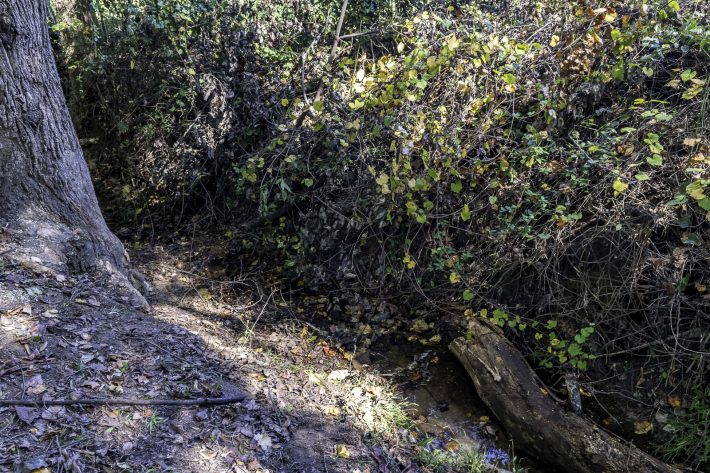
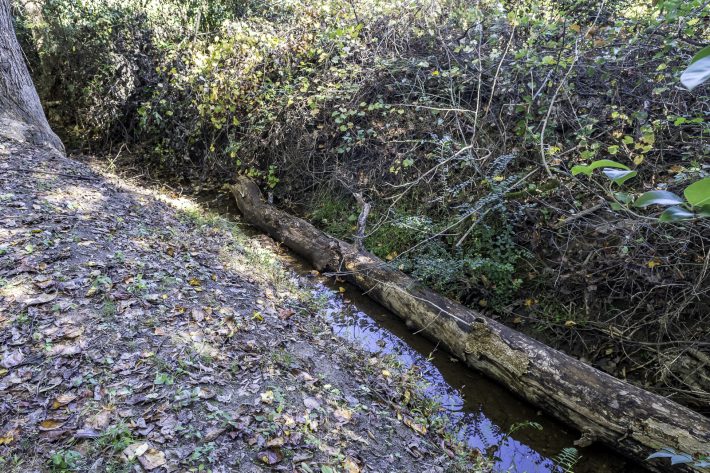
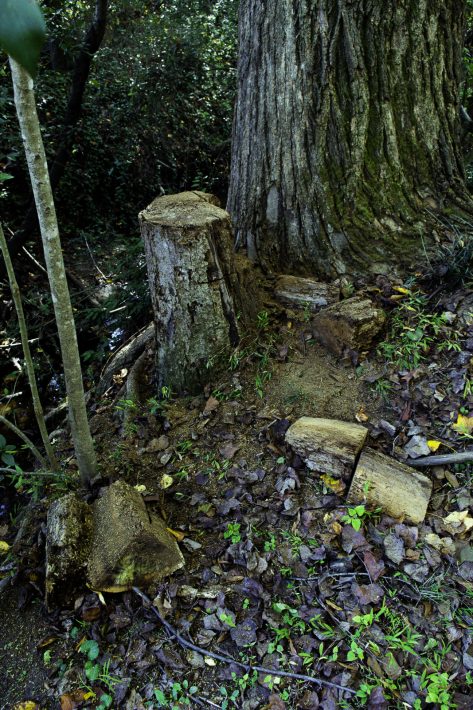
E and I spent the morning working on the large tree that had fallen in the drainage ditch -- which we call a creek -- that runs behind our house. I knew that if we didn't, the first big rain storm would cause flooding.

I didn't realize how much of the tree was under brush and vines that I'm assuming it took down with itself as it fell. We cleared all that away so we could get to the tree, and we cut and removed as much as we could with just two of us.

E is of an age that he actually is starting to be helpful. I can pull on a large tangle of vines and have him cut the critical vines that are keeping everything locked and immobile. He can bring tools to me, help pull things up out of creekbeds, offer helpful commentary on the whole process.

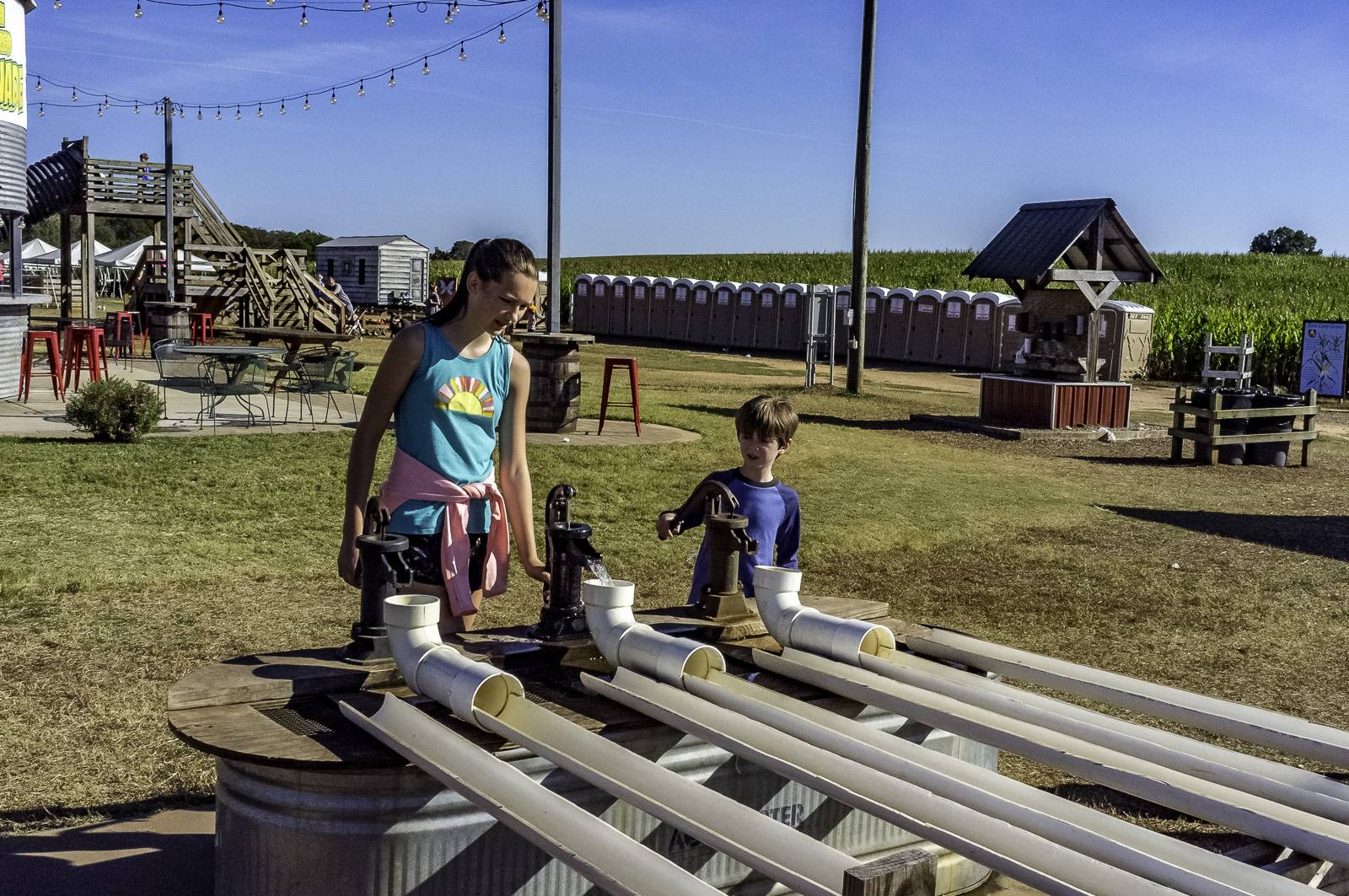
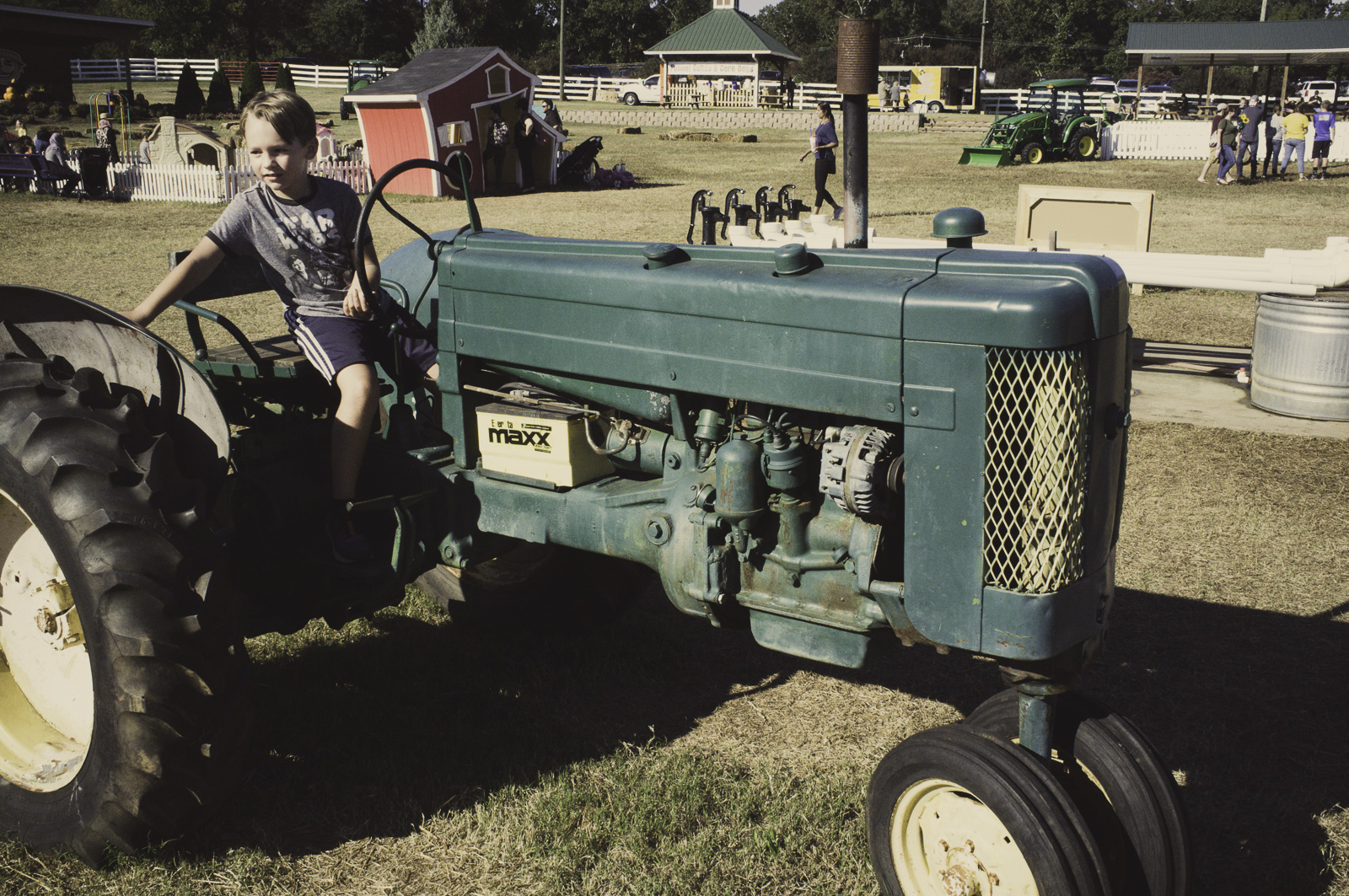
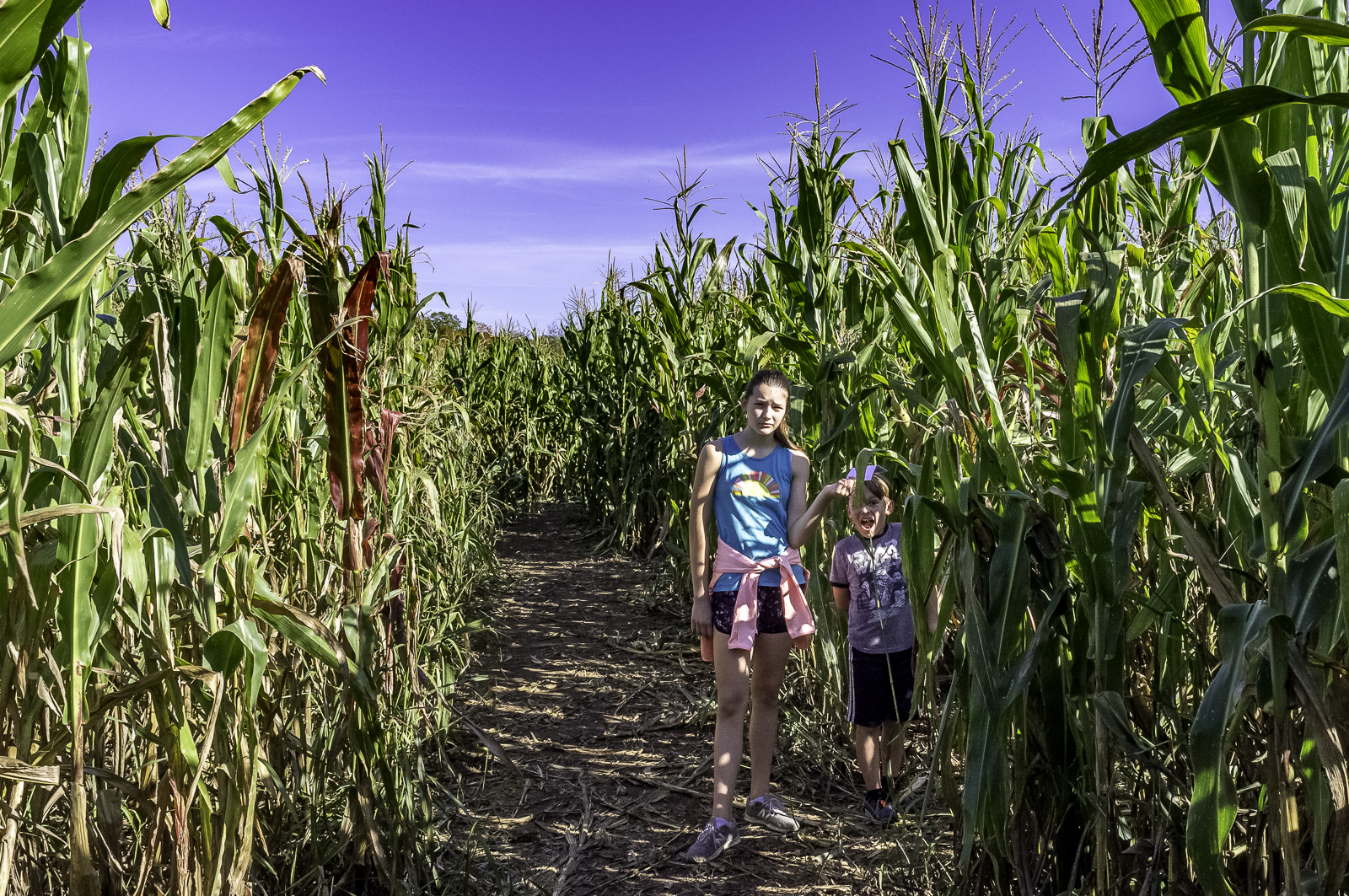
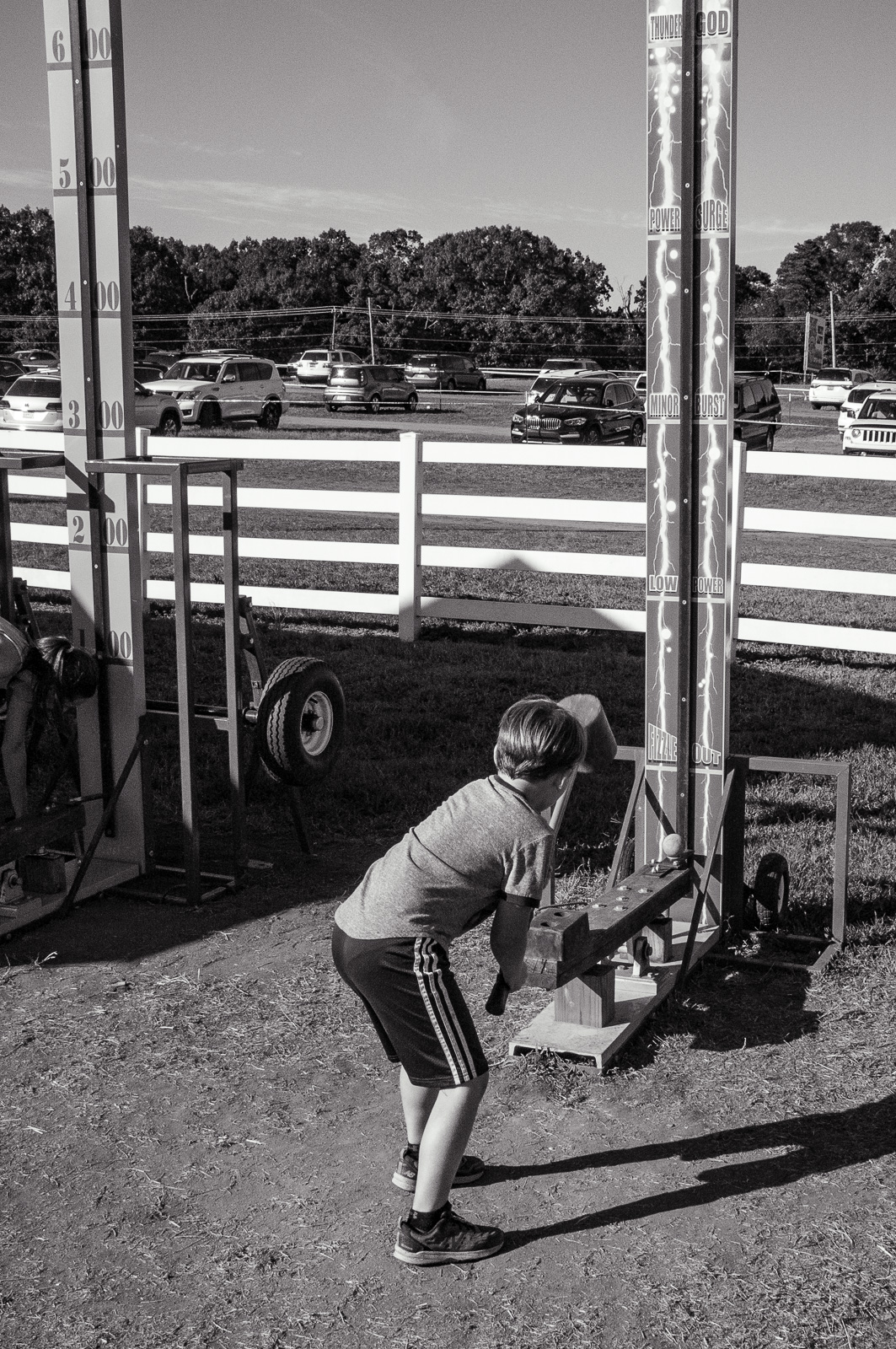
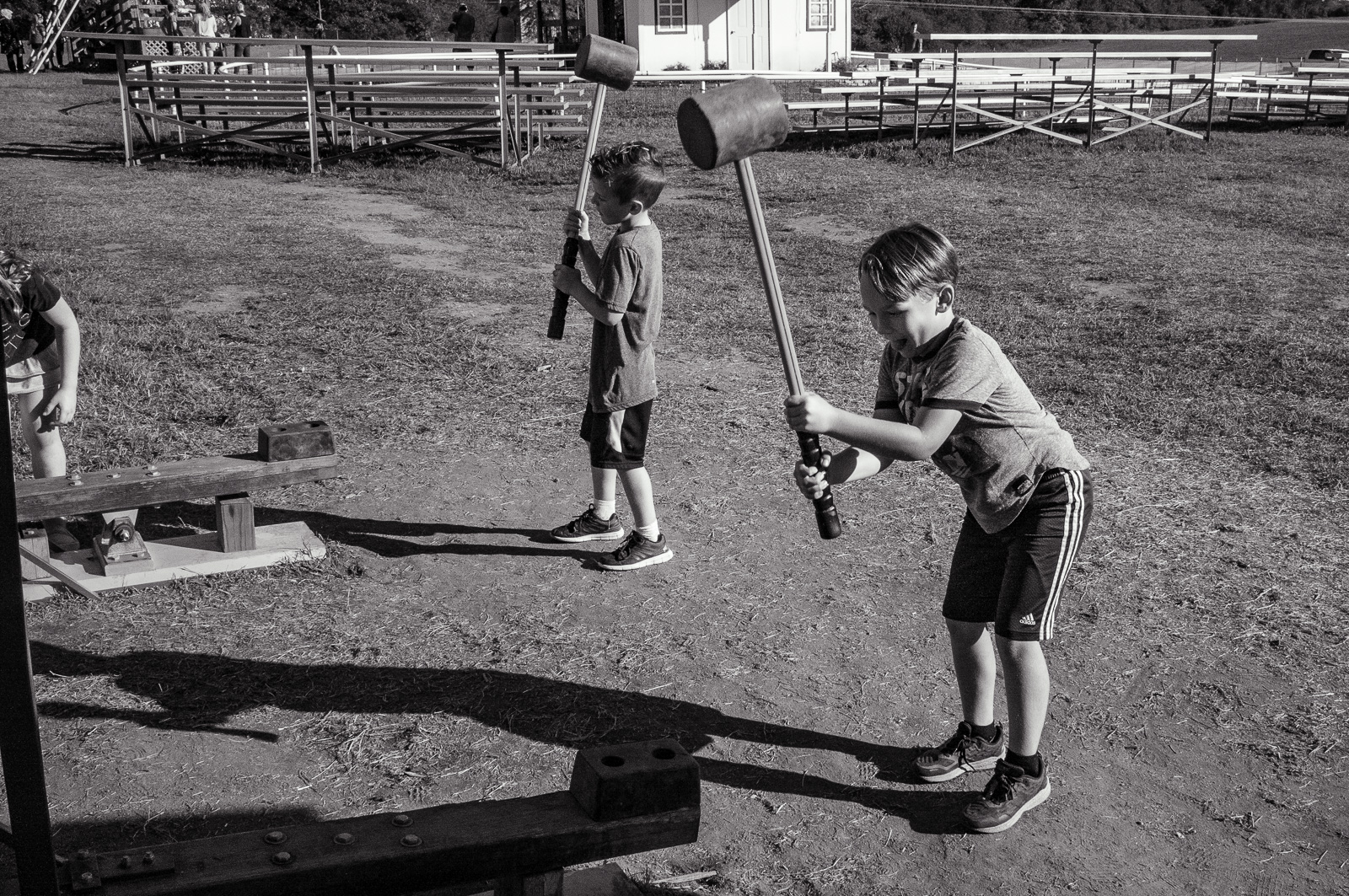
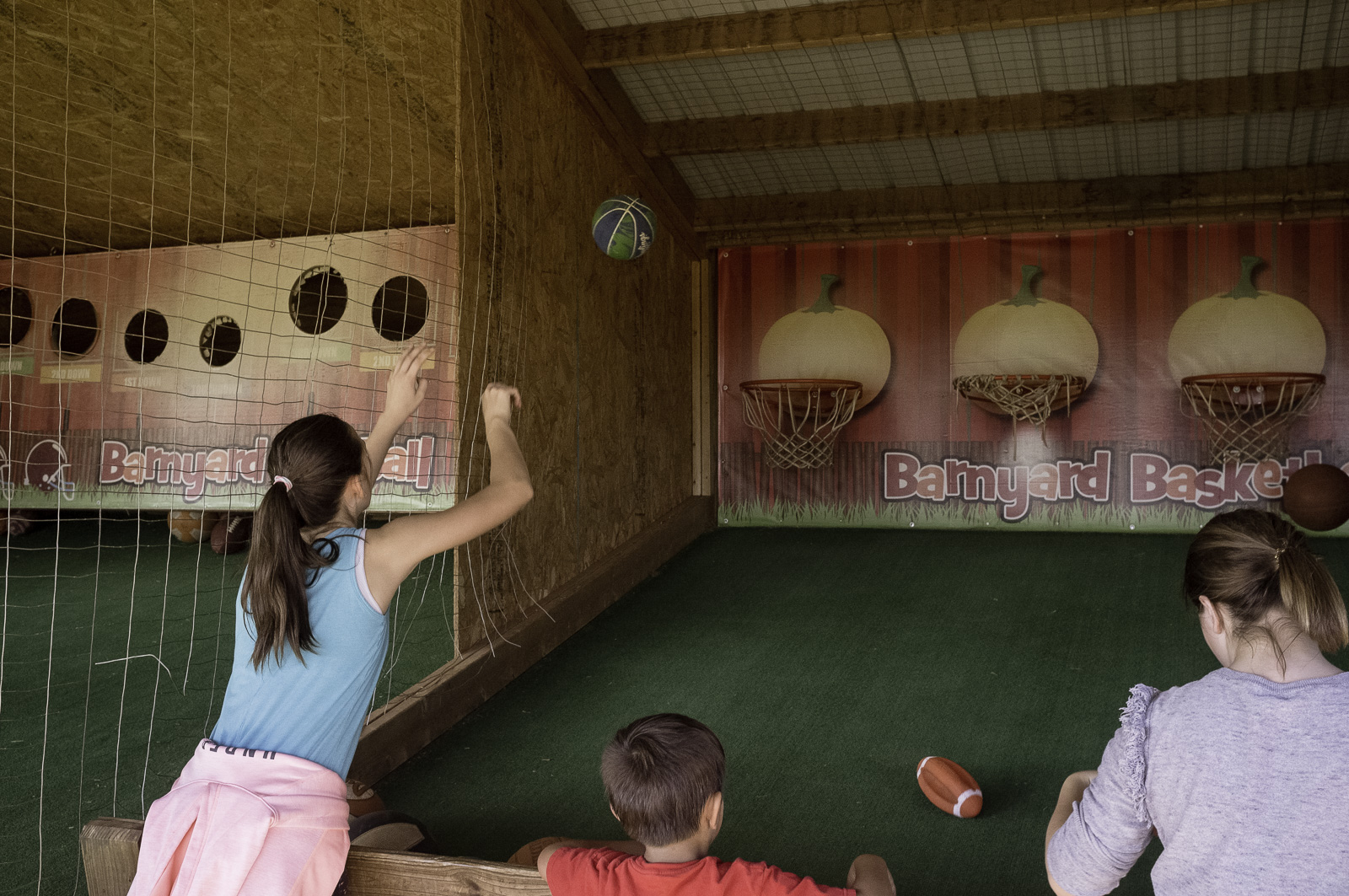
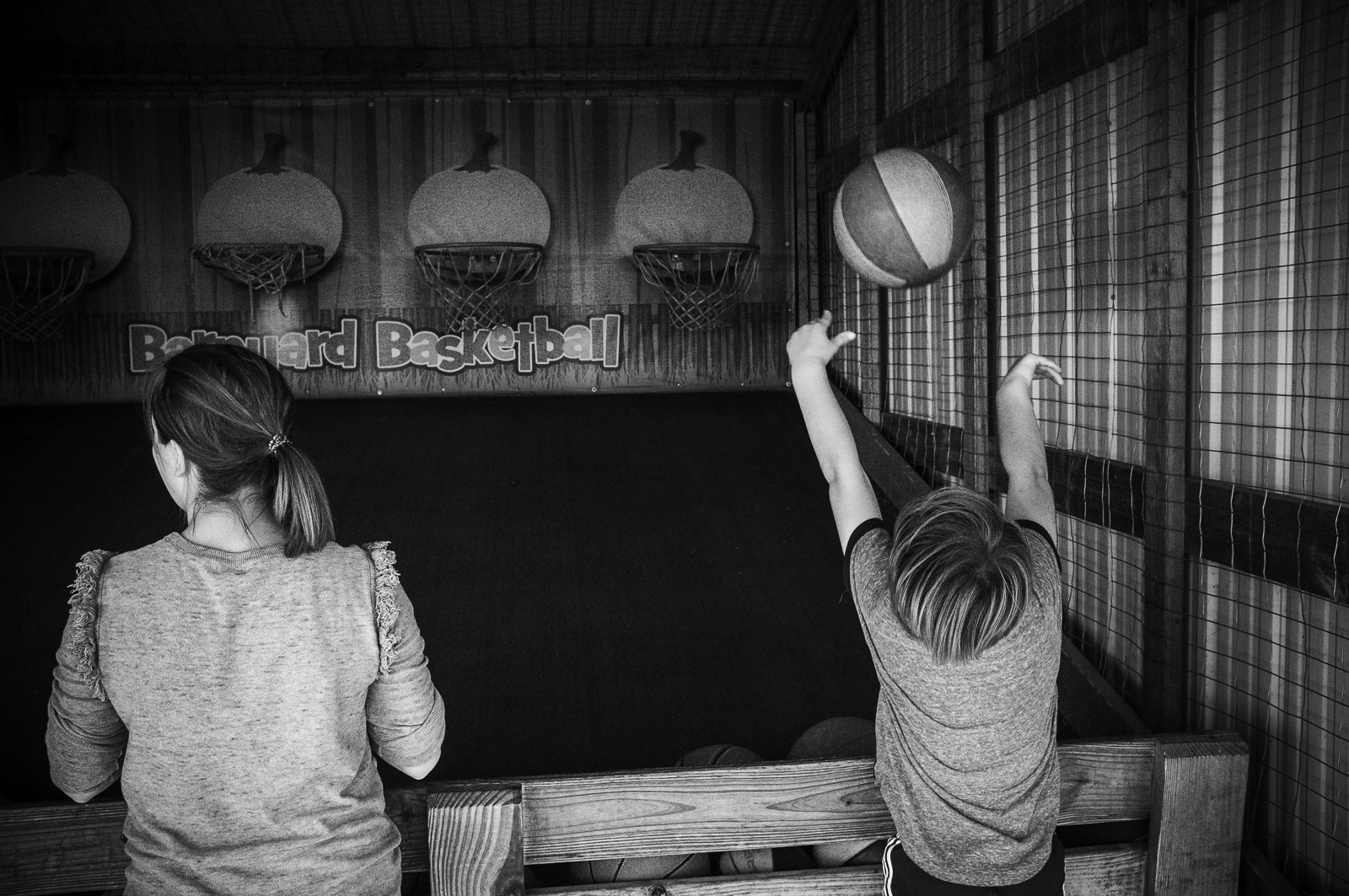
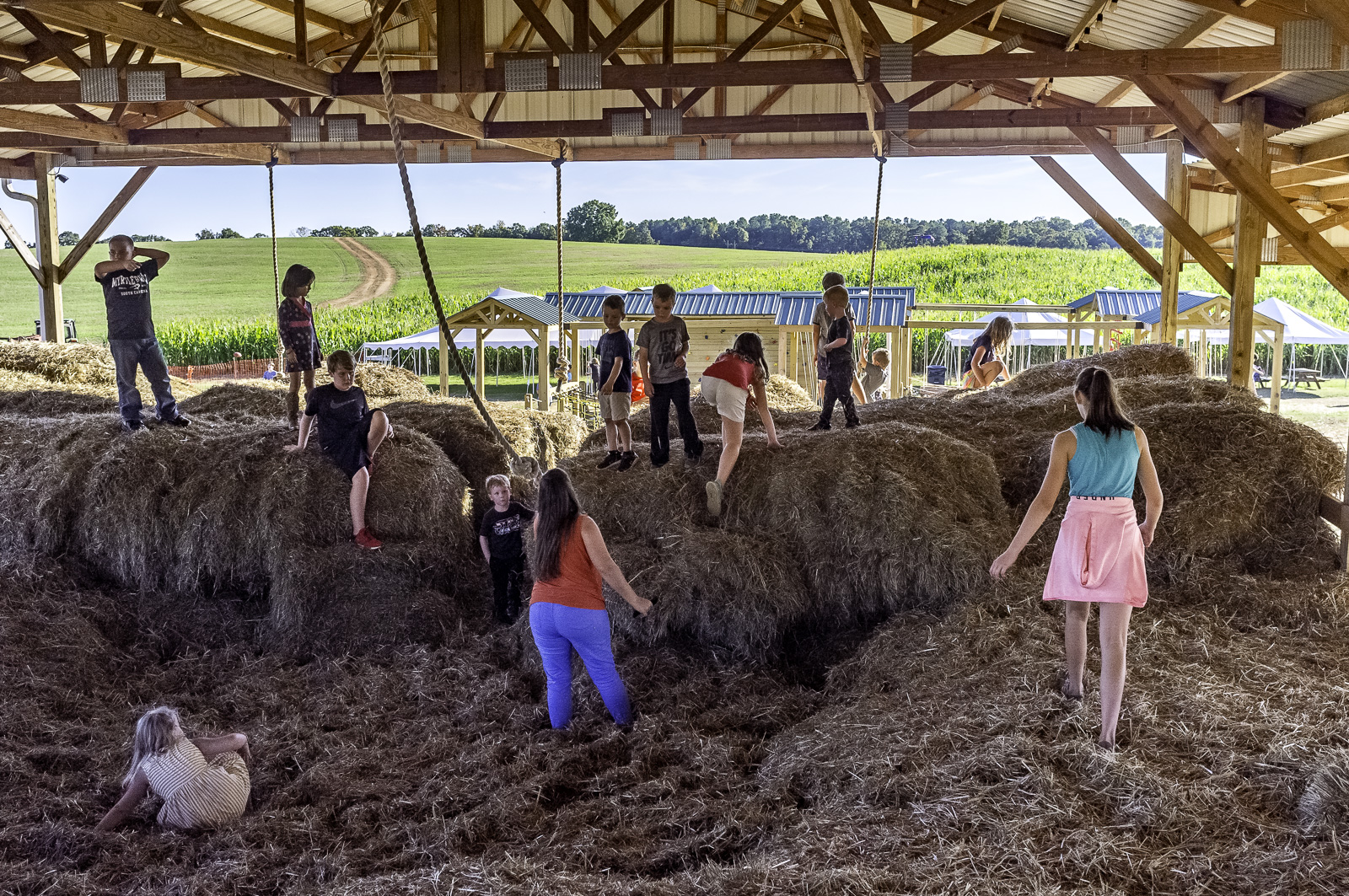
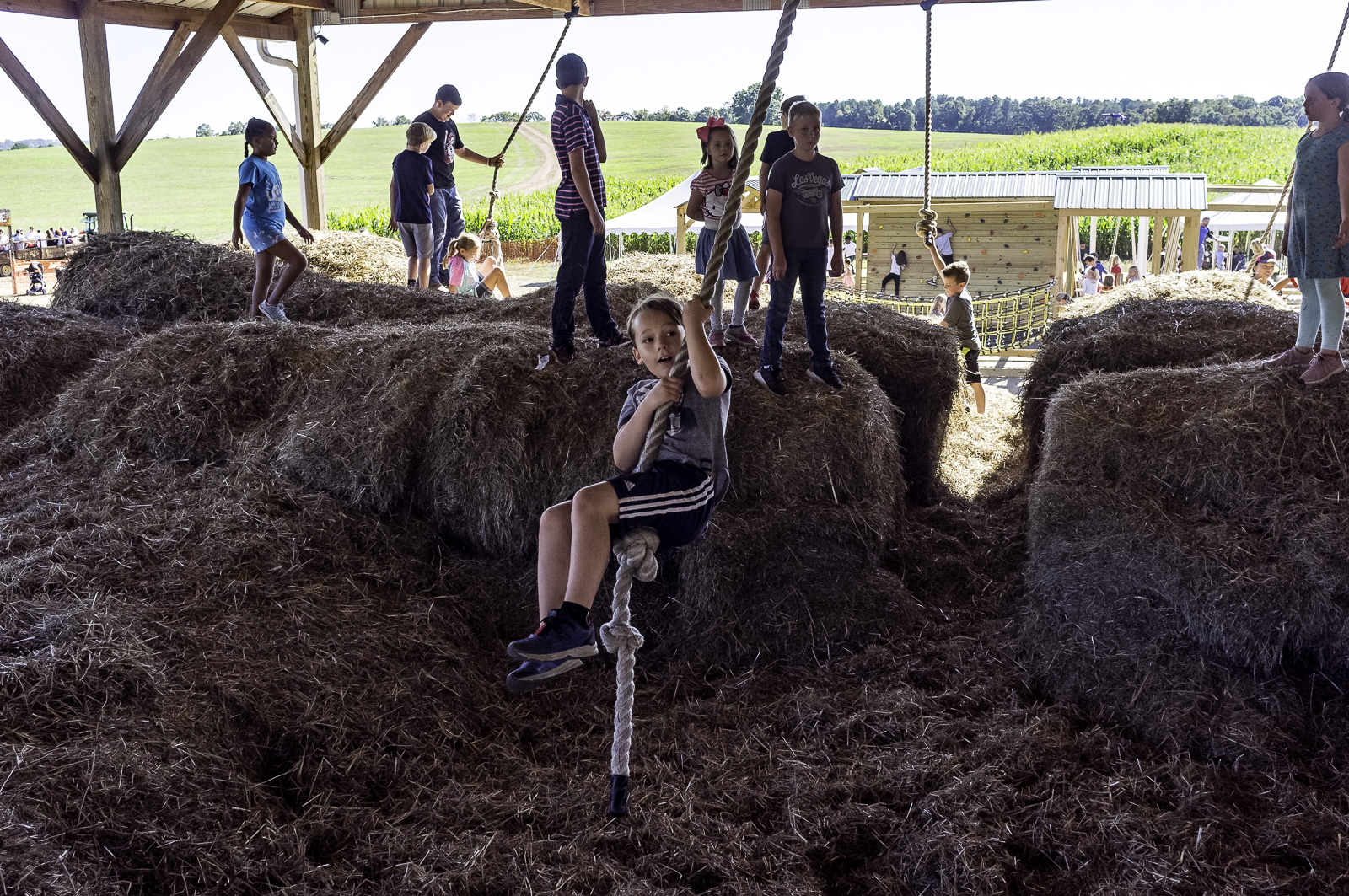
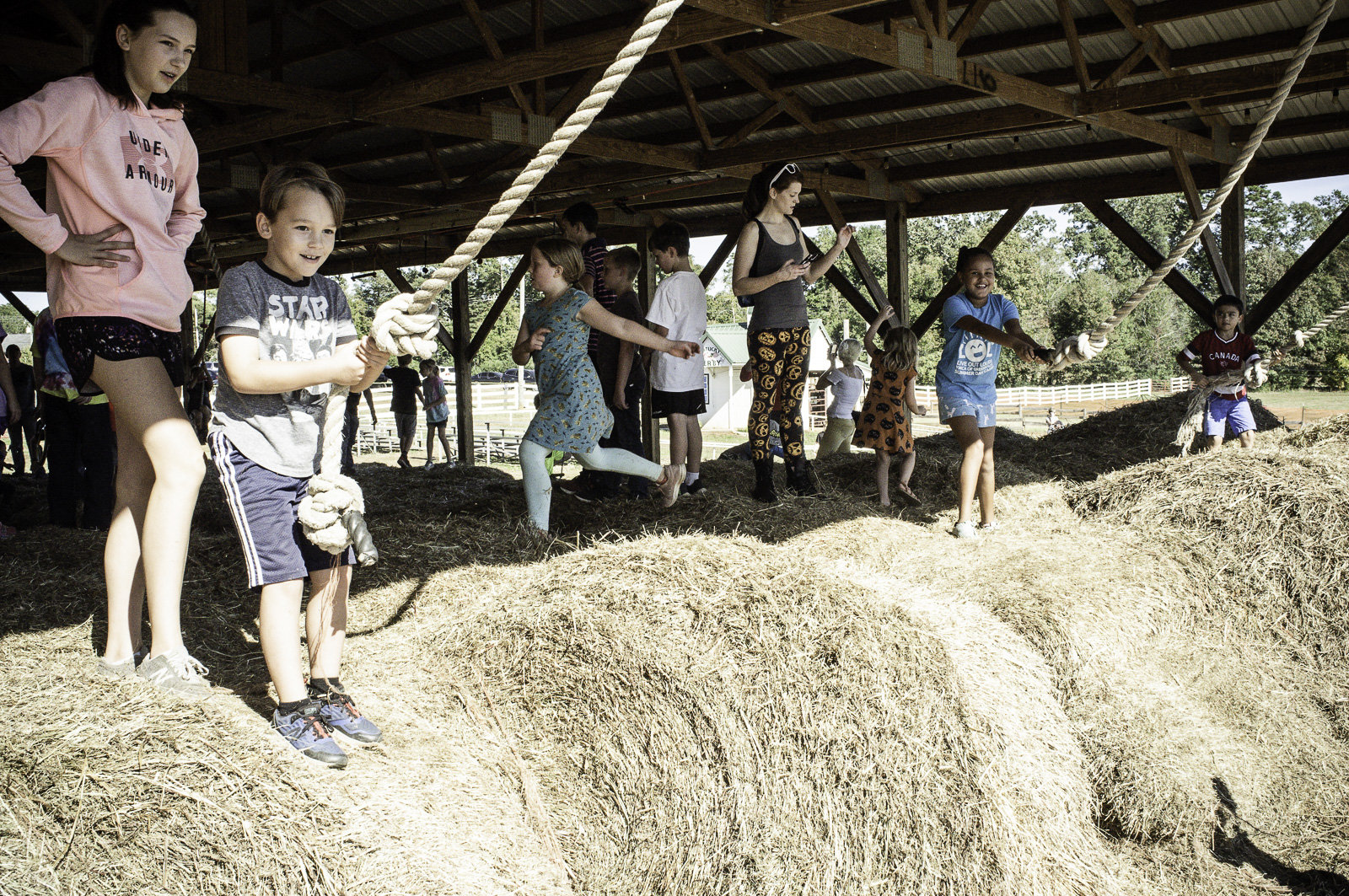
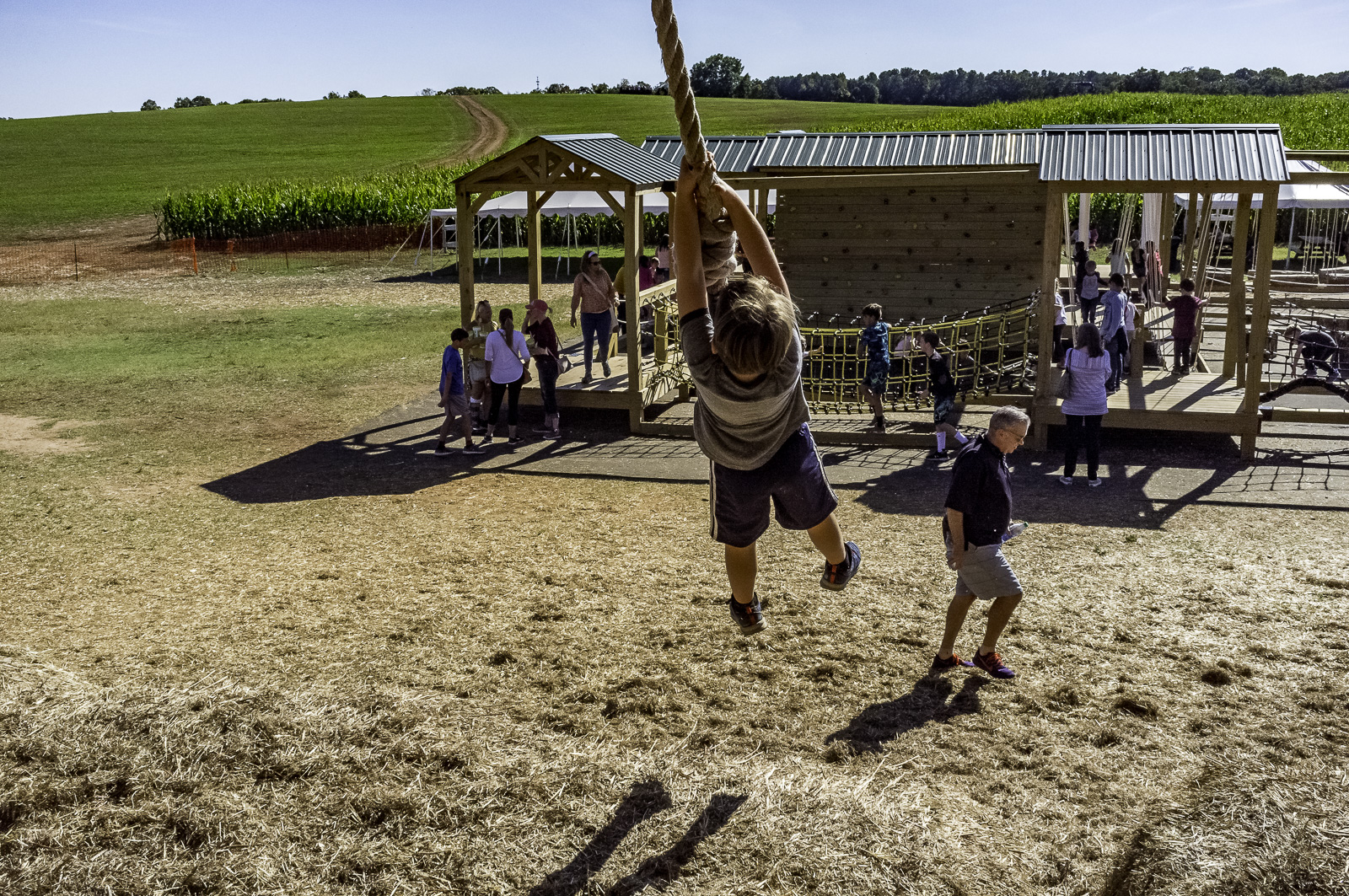
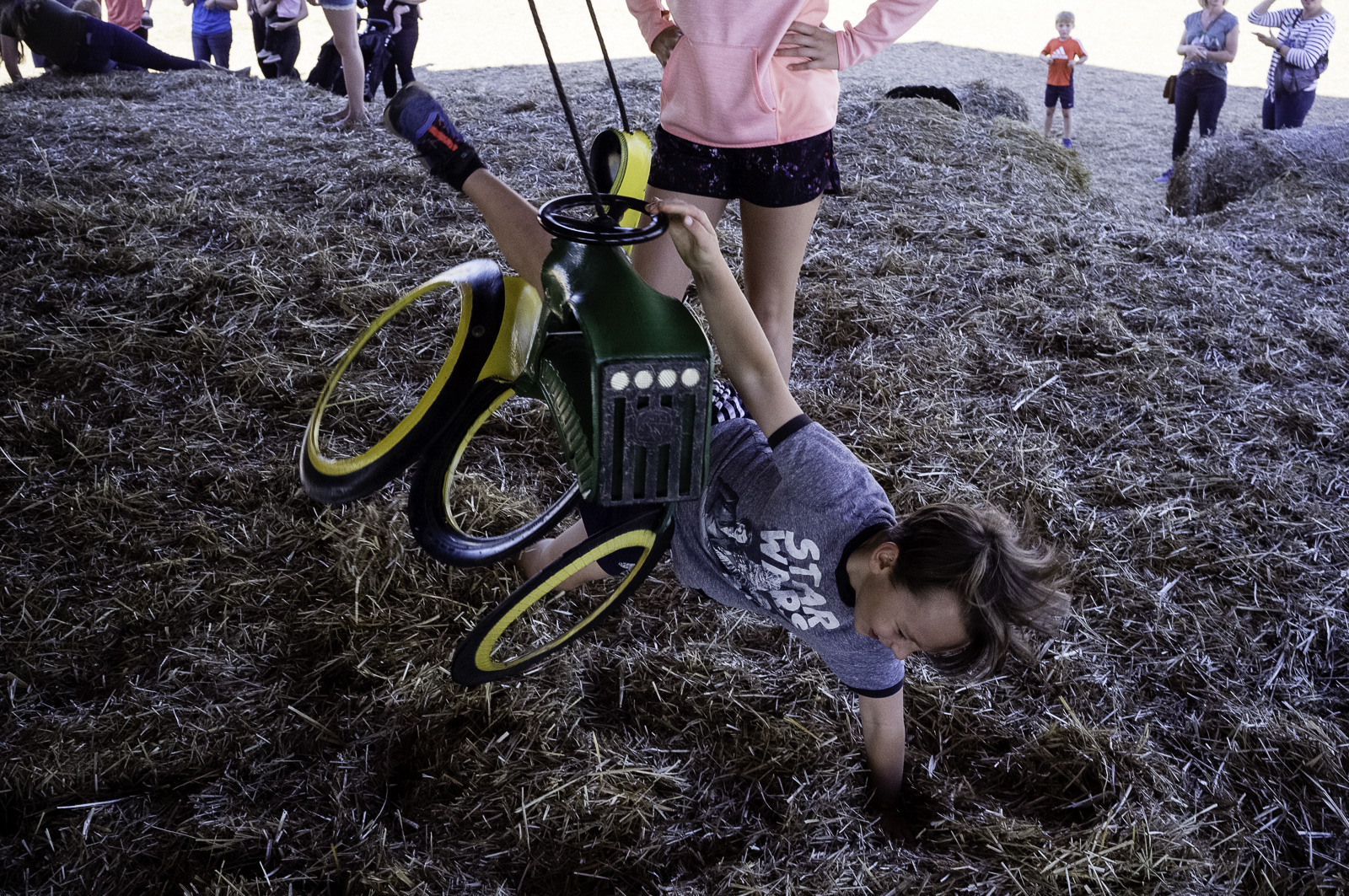
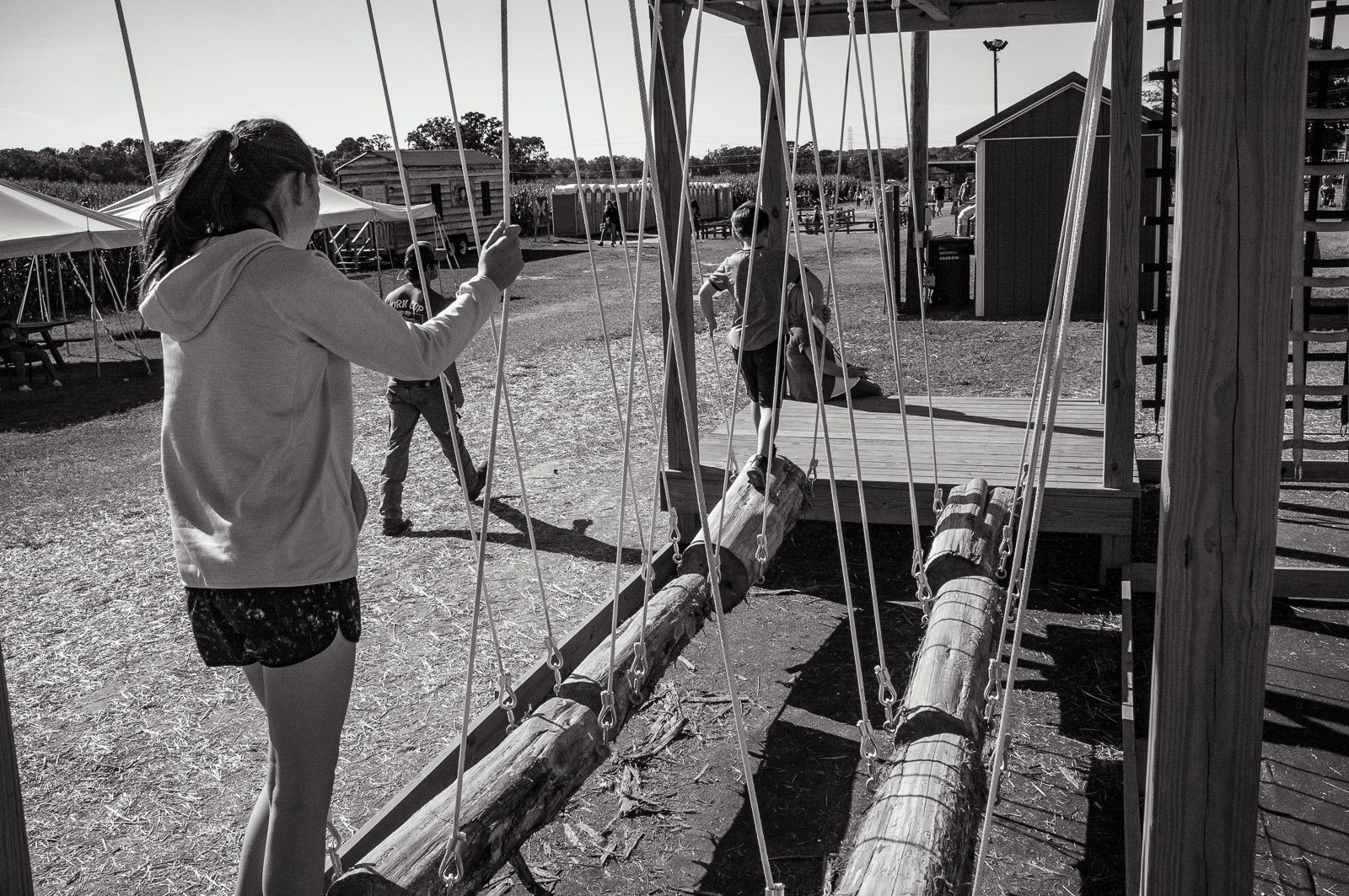
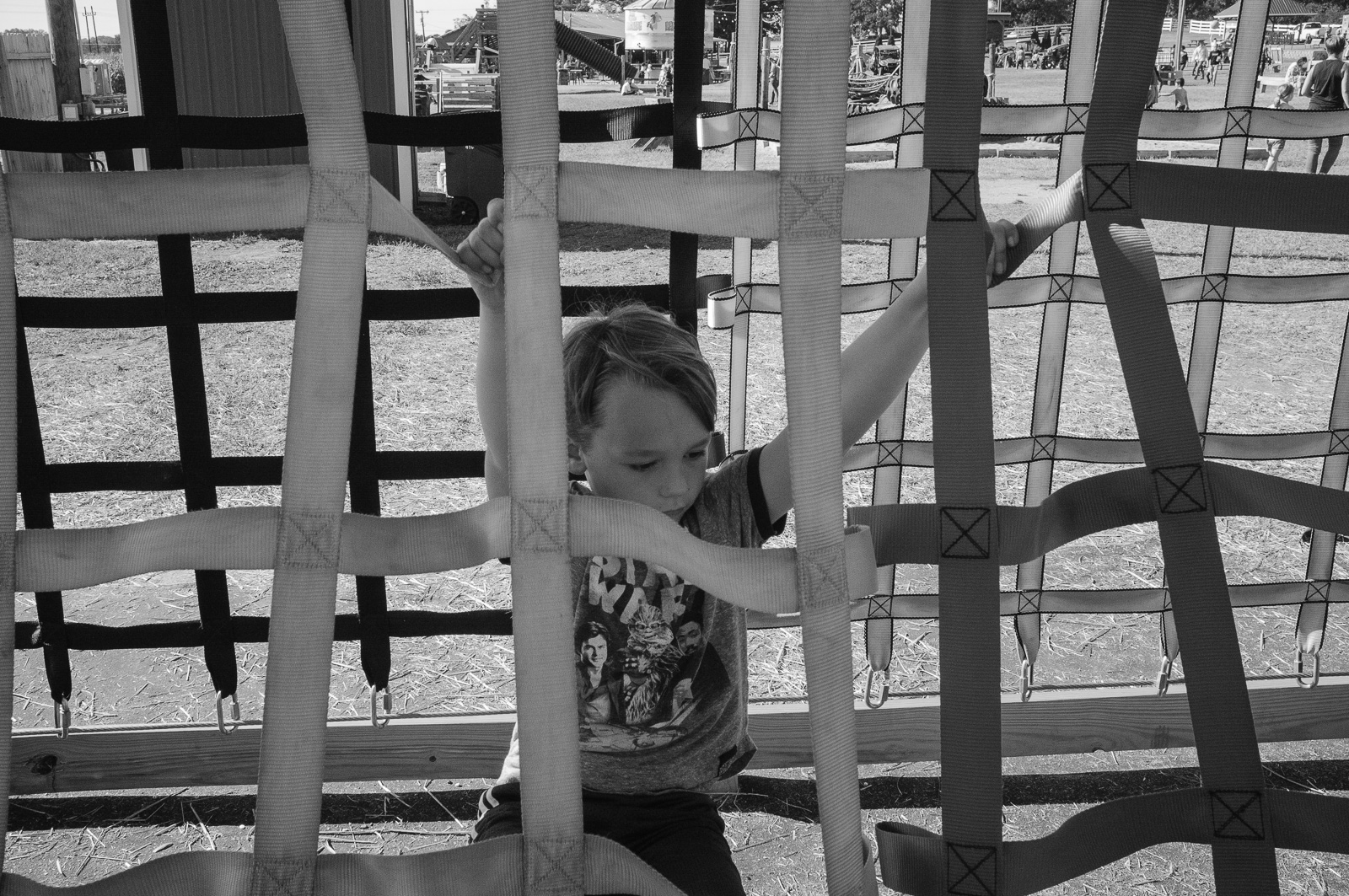
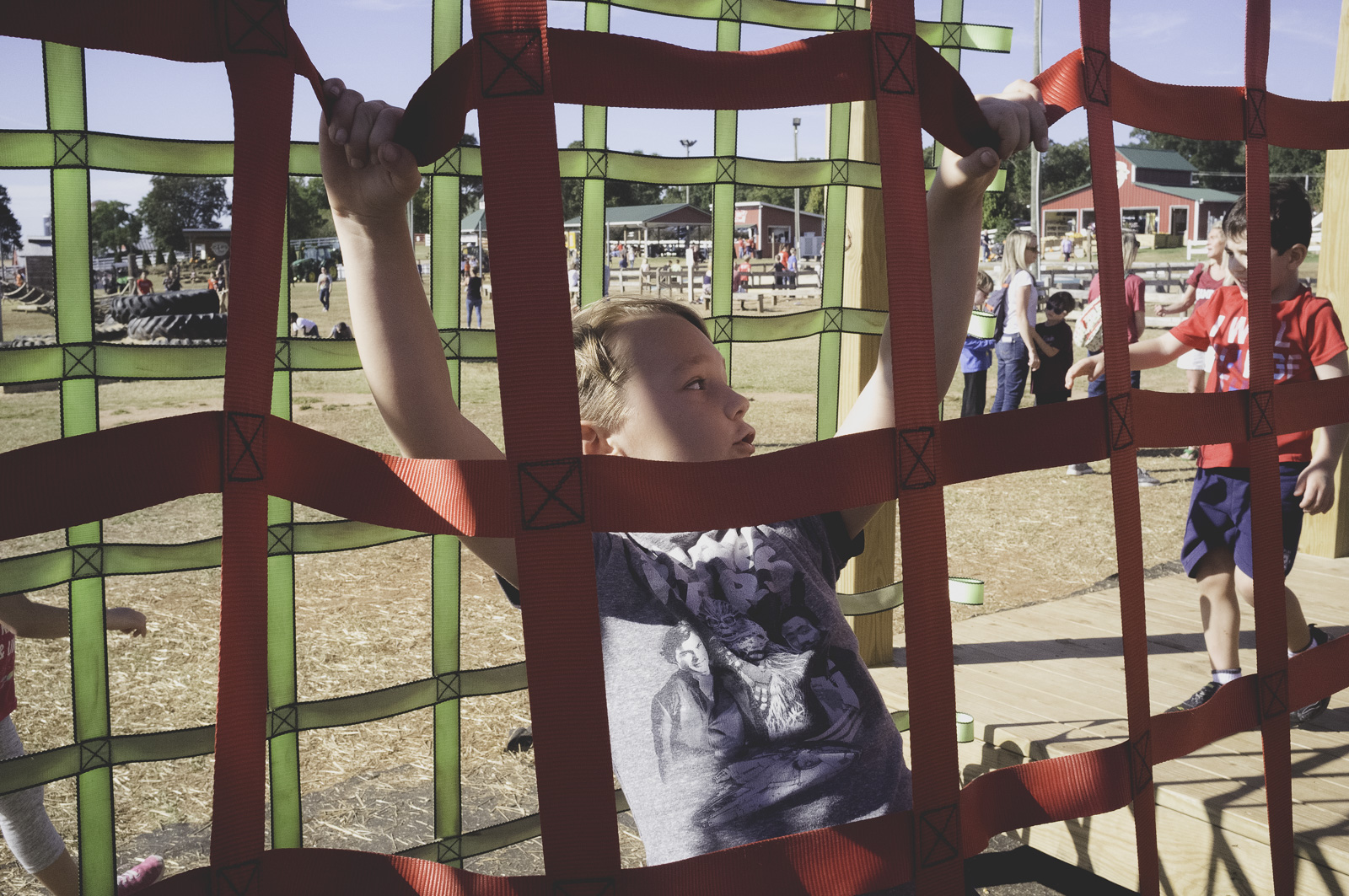
Once we got that done and ate some lunch, we spent the afternoon at Denver Downs -- fun with hay, ropes, and corn...

Loss

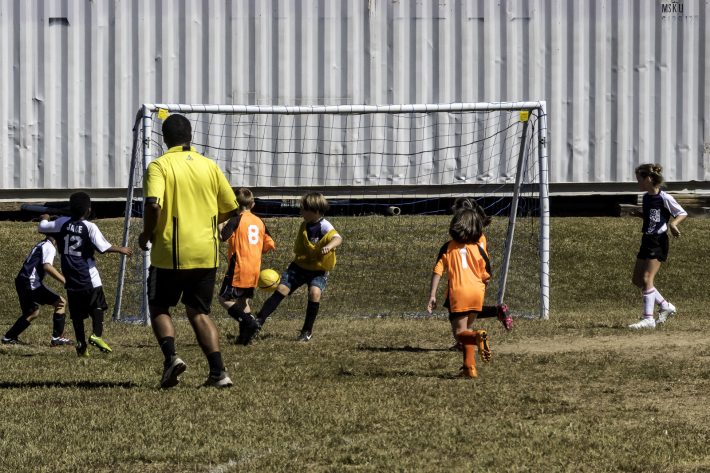
The Boy was the goalie when it happened — the break, through the pack that always orbits the ball, past the last defenders who have spent most of the year looking on, that left the Boy basically one-on-one with the attacker.

From the moment the break started, I fear for the worst. And a few short seconds later, there it was. The first goal of the game. The only goal of the game. The team’s first loss. With E manning the goal.

I knew he would be distraught about it. “I’m no good at defense,” he declared.

The question is, will this affect his love for the game? Can we help him move past it? How long will this bother him? These were the thoughts I rehearsed on the way back to the house.

By the time we got home, there was no real mention of it. No mention of it for the rest of the day. But what about Tuesday, when it’s time to go to soccer practice?

Drawings

The Boy has taken to drawing again. And being the generous soul that he is, the kind soul that he is — so much a more generous, a kinder soul than I — he regularly draws things for his friends at school.

Today he explained he was drawing a soccer ball for a friend at school who loves soccer.

“Is he a good friend?” I asked because I had certain concerns.

“Well, we don’t really talk. Just when we’re playing soccer. You know, stuff like ‘Let’s get the ball!’ and things like that,” he explained. That didn’t sound like the closest friend in the world. More like a soccer-field acquaintance.

And so I imagined a nightmare scenario of E, so thrilled with his drawing and happy to give something to someone that he imagines will bring only joy, giving this boy this drawing and the boy being completely nonchalant about it. Or worse, asking something like “Why’d you do this?” Or worse still, throwing it away in front of the Boy.

And then I imagined the conversation later, the confusion and pain the Boy might feel. “I would never do anything like that to someone,” he would protest. “Why would anyone do that?”

Why, indeed?

I don’t know that this will happen; I don’t know that, if it does, the Boy will even bring it up. But I do know that I can’t always be there to step in and block a painful situation, that I can’t always steer him away from people that seem callous or hateful, that I can’t always stop the pain before it starts, so I let it go at that. We’ll see tomorrow how his friend took the gift.

Winning, Losing, and Soccer Practice

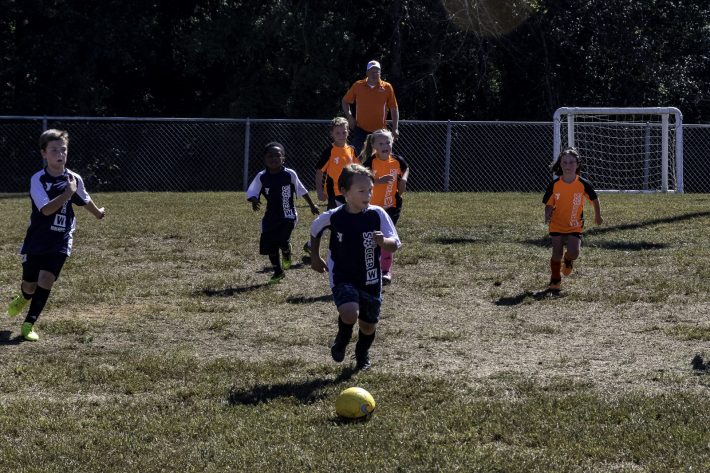
The Boy headed over to his young soccer team with a nonchalant gait that suggested ambivalence.

"Run, E," I said. "Show some enthusiasm."

He broke into his power stride: he slams his feet down in short strides and rocks his whole upper body back and forth. It's not a particularly efficient gait, and I've tried several times to help him improve it.

"Slamming your feet down quickly doesn't help you run faster," I once explained. "In fact, it really has the opposite effect." We practied a better step together, but anytime he wants really to run, he reverts back to his jerky, stomping gait.

I suppose his thinking is logical in a way: to run full speed, you have to put all your energy into your run. What more obvious way is there of accomplishing this than expending massive amounts of energy in slamming your feet down?

So he was running across the field toward the circle of players while I retrieved my folding chair from the trunk. I closed it, looked up, and saw E sprawled on the ground, his arms out at his side, his feet still traveling upward as he rocked ever so slightly onto his upper body from the momentum of the running and falling.

I sighed.

The Boy has such a time with his self-confidence. He's keenly aware that he's slower than a lot of his peers; he's quite cogniscient of the fact that he's far from the most aggressive player on the soccer field; he knows he doesn't play any number of sports as well as his friends. The only thing he feels truly comfortable and confident doing is riding his bike with me.

I couldn't tell what happened in the end. He just got up and continued over to the group, but I don't know if anyone said anything, but I don't think that's even necessary: we're perfectly capable of feeling we've made a fool of ourselves without anyone saying a word.

The question was, should I say something?

There was a part of me that wanted to talk to him, wanted to reassure him, wanted to make sure he was okay, that his ego hadn't taken too big of a hit. Yet there was another part that felt I should just let it go. Bringing it up later might not do anything positive, I thought.

In the end, I just let it go. He never said anything about it, and it seemed like the coach was giving him a little extra dose of praise later -- perhaps thinking the same thing I was and trying to give that confidence a little boost? I don't know. I didn't talk to him about it either.

It's that fine line -- when to step in and when to back off -- that I suppose every parent tries to find in every situation.

When we got back home, the Girl was asleep: she'd just finished a volleyball game and had been fighting a sniffle for most of the day. "Just let her sleep a while," K said, and so we did.

"How was the game?" I asked.

It turned out that L's team didn't just beat the other team; they completely demolished them. "I'm not sure the other team had a total of 25 points in both sets combined," K said sympathetically.

The coach of the other team had come out and told the audience that they were a young and inexperienced team. "Please give them all the support you can," she said.

I'm not sure how I feel about that. In a way, that's like saying, "We know we're about to get our asses handed to us, but cheer for them anyway." It's a tacit admission of what's about to happen. And yet what's wrong with that? Isn't that really just knowing one's own limitations?

In my own brief coaching career, I got reprimanded by a parent when, after a player on our team, watching the other team warm-up, declared, "We're going to lose! There's no doubt," I replied with, "Yes, you certainly are." Dramatic pause. "If that's how you see it, that's exactly what's going to happen." I continued by pointing out that they'd given up before they even started, and nothing good ever comes of that.

"Well, I think you could have been more encouraging," the mother said.

Perhaps. By that time, the girls had lost not only every single match but every single set. We won one set the entire year and lost every single match. I'd been trying to encourage them, but I suppose it wasn't enough -- not for the girls, not for this particular mother, not for any of them.

It was my one and only season of volleyball coaching. Fortunately, I have a lot more seasons of parenting to get it right.

Interruption

One of the things I miss about living in Boston is walking down a street or emerging from a subway car to hear someone busking. Granted, there were enough buskers with little enough talent to make them a nuisance more than anything else, but every now and then, someone would make me stop, take a little time out of my day, and immerse myself in their world.

These guys, who sadly play in NYC and never ventured into Boston’s subway system (and probably didn’t even exist when I lived there — the sax player would probably have been a toddler then), have perfected busking: ten-minute sets filled with energy, dynamism, and a touch of humor.

It makes me wish that our family lived in a place with more of this type of thing going on.