Matching Tracksuits

fun in fours

growing

Day 52: A Fort of Sympathy

The Fort

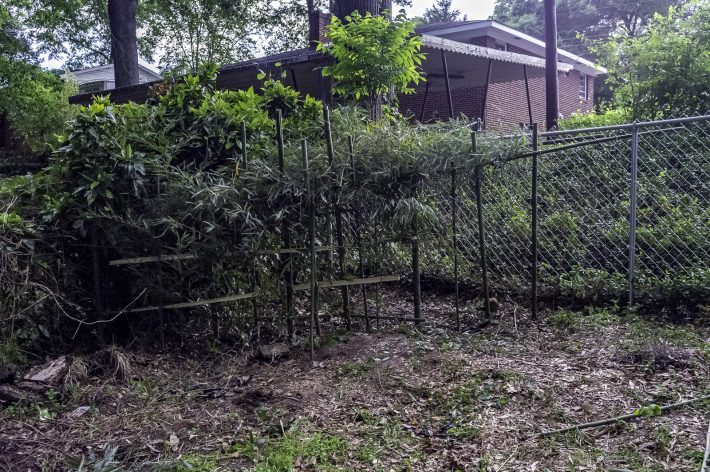
Work continued this evening on the fort. We needed some more bamboo canes, so we headed over to our neighbor's stand of canes and selected four after school was over. By the time we got them back on our property, it was nearly dinner (school for me went really late today), and it was raining, making it impossible to continue working.

After dinner, though...
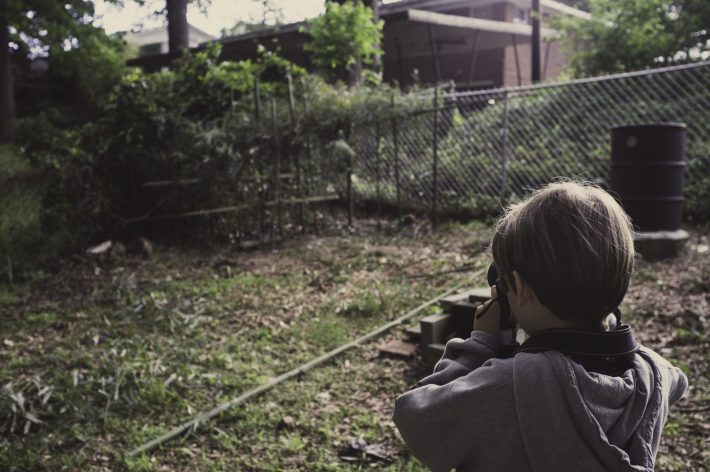
The process has been one of evolution. We start with a design idea, discover it works, continue for a while, then have another idea. We try to incorporate it into the old idea; it sometimes works; it often doesn't. We see if a third idea will bond the two original ideas a little more firmly. And so on.

E is discovering that the men who do all the primitive building on YouTube are in fact deserving of quotes: "primitive" building, for there's nothing primitive about it except the tools they're using. I could have tried to explain that to the Boy, but I don't think it would have convinced him. Working on it himself, though, has certainly done that.

Sympathy

I went for a run this evening. It's been a while. I get in these phases that I feel certain that a fitter, healthier G is just within reach: I simply have to get a regular exercise routine going and monitor what I snack on (or eliminate it altogether). It's easy -- nothing at all to it. And then I put the Boy to bed and find that I almost fell asleep with him and reason, "I'm already almost asleep. It would be a shame to waste it." Or I just decided a glass of wine and some chess online is a better way to spend my time. Or occasionally (this is a cycle I've been going through for about 18 months now), I get this routine going and then some injury or previous pain flares up and I have to stop running for a week or more, and my motivation is back to where it usually is, which is to say near zero.

So I went out for a first run in probably two weeks, cueing up my running soundtrack on Spotify. The first song shuffled out: Beck's "Devil's Haircut." I wasn't in the mood for it, so I swiped on to the next song: the Stones' "Sympathy for the Devil." (One run, Spotify played "Sympathy for the Devil" followed by Van Halen's "Running with the Devil," and concluding with "Devil's Haircut." A more superstitious person would read something into that.) The second verse began, and it got me thinking:

And I was 'round when Jesus Christ
Had his moment of doubt and pain
Made damn sure that Pilate
Washed his hands and sealed his fate

It reminded me of the scene in Mel Gibson's take on the passion story. During Jesus's scourging, a very androgynous Satan crying a child who looks surprisingly old walks through the crowd, looking as if he's somehow winning a victory by having Jesus crucified.
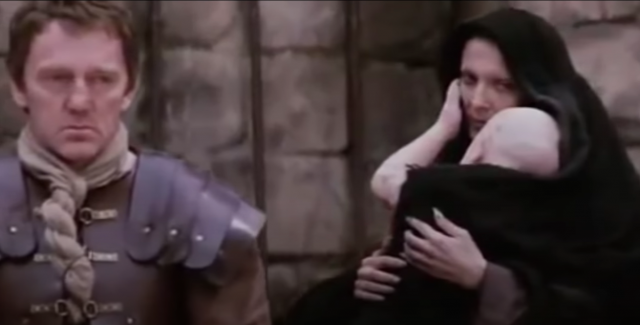
In both these examples, and in general Christian thought, Satan is presented as having had a part in influencing humans to kill Jesus. But why in the world would he do that if Christian claims that Jesus was foretold for millennia? Christian theology teaches that through the crucifixion, Jesus somehow defeated Satan and ultimately saved our souls, and that this plan was in place from the Fall in Eden.

That is kind of confusing as well: if God is omnipotent, he knew that was coming, and so it was part of the plan to begin with. But if it was part of the plan to begin with, it seems like a bad plan, as if the failure implicit in the Fall is integral to the whole scheme. Which means we were made to fail. Odd plan, that.

At any rate, I was wondering why Satan is always shown to be crafty and yet an idiot at the same time. Evangelical views make Satan even more of an idiot: he's going to try to overthrow God in Armageddon, yet he's doomed to fail. All Evangelicals know this. It's preached every Sunday. And yet somehow Satan, a being who is supposedly so much more powerful than humans in every way imaginable, doesn't know about this.

More questions about the devil: why would he torture people in hell? Wouldn't he want to reward them for choosing him over God? Wouldn't he make it a paradise to rival Christian views of heaven just to thumb his nose at God? He's literally an instrument of God's punishment in the Christian view, yet he has free will and hates God. Why in the world would he be God's pawn like that? That's the whole reason he got tossed out of heaven in the Christian story.

And that's another thing: how did this war in heaven happen? How do spirits battle? Wars have to do with one thing: inflicting more death and carnage on your enemy than he can on you. How in the world would immortal spirits fight then? It just doesn't make any sense. Maybe that's why we should have sympathy for the devil: in the grand scheme of things, he's just a schmuck doing God's dirty work in punishing souls who reject God. What a crappy job.

So I was jogging along, all these thoughts bouncing about in my head, and it struck me that perhaps that's as good an argument as any against going for a run: I roll about in silly, useless speculation...
Day 47: Quartets and Cars

Quartets

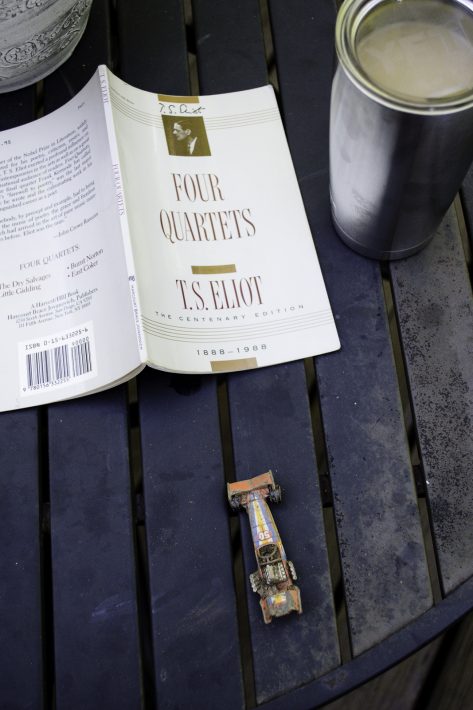
This afternoon, while cleaning up the kitchen, putting away groceries, and just generally puttering around the house, I discovered a BBC culture podcast that talks about, among other things, T. S. Eliot’s Four Quartets, a cycle of four poems that have, from the very first time I encountered them during my freshman year in college, utterly enthralled me. Naturally, I listened to it; naturally, halfway through, I was rooting around in the bookcase where we store such books for my thin volume of the poems.

Some passages of those poems seem pulled from the very fabric of existence itself, so fully do they capture the experience of being a finite human. In “Burnt Norton,” the first of the poems, Eliot writes of the frailty of the one thing that links us humans one to another: language.

Words strain,
Crack and sometimes break, under the burden,
Under the tension, slip, slide, perish,
Decay with imprecision, will not stay in place,
Will not stay still.

I read those lines in college at a time when I was growing very distrustful of language having been in a relationship that I ended largely because I felt like the young lady was lying incessantly, for no reason whatsoever. Was it compulsive lying? Was it even always conscious lying? Was it even lying? I could never figure that out, but I learned I couldn’t trust her, and when that happens, there’s only one thing to do.

The second poem in the cycle, “East Coker,” returns to this motif:

So here I am, […]
Trying to use words, and every attempt
Is a wholly new start, and a different kind of failure
Because one has only learnt to get the better of words
For the thing one no longer has to say, or the way in which
One is no longer disposed to say it. And so each venture
Is a new beginning, a raid on the inarticulate
With shabby equipment always deteriorating
In the general mess of imprecision of feeling,
Undisciplined squads of emotion.

“Is he reading my mind?” I thought. The poem seemed to be a summary of my growing interest in the idea of language itself. Such a strange thing — it’s the only thing we have that connects us to other people, yet it’s such a fragile connection, so easily manipulated and bent.

The Buried Car

This evening, as I was reading the poems again after dinner, the Boy brought me a little car he’d found buried in the backyard.

“I found it buried in Mommy’s flowers,” he explained.

“It was my car,” I said, wondering if he would remember that it had been among the mass of cars that Nana had saved from my childhood just to give to a grandchild.

“Really?!” He couldn’t believe it. “Why did you bury it out there?”

It’s so rare that we can see someone’s entire faulty thinking process from just one sentence, the entire line of thought backing up neatly, step by step, until the whole story is clear, and it was so different from reality. That was such a moment. I knew I could utterly perplex him with one short sentence.

“I didn’t bury it out there; you did.”

I could almost hear the gears clicking. He wrinkled his brow, cast his eyes upward, and his breathing quickened. “I did?”

Back to Eliot — the very next lines:

And what there is to conquer
By strength and submission, has already been discovered
Once or twice, or several times, by men whom one cannot hope
To emulate—but there is no competition—
There is only the fight to recover what has been lost
And found and lost again and again: and now, under conditions
That seem unpropitious. But perhaps neither gain nor loss.
For us, there is only the trying. The rest is not our business.

I had not really lost the car; he had not really gained it. He discovered something that he himself had owned, had played with, had possibly even treasured.

“Yes, you must have been playing with it when Mommy was working out in the flowers and you accidentally left it there. Or maybe you even buried it on purpose, and you just don’t remember.” More thinking.

“I did?”

“Yes.” And I could even imagine how it happened: E, with more than a handful of cars, following K around as she planted flowers or pulled weeds, never willing to let her get very far away from her, picking up everything to follow closely behind.

Nana told me I was the same way. Probably, we all are.

“You must have been playing with it when Mommy was working in the flowers.”

He shrugged, not convinced, still wondering, I think, how I knew it was mine. “Was it one of your favorites?”

True, I think I can remember when I got that car, which means an event likely forty years ago. When we went to our church’s annual fall retreat, we had two-hour church services every day. To keep me quiet when I was a child, Nana and Papa gave me a new Matchbox car every day at the start of the service. I believe that’s where this one comes from. But it could simply be that I just remember playing with that old car.

Are there any of my old toys I wouldn’t recognize? I rather doubt it in a way. Toys are so precious to children — at least they were to me and to my own children — that they form an integral part of our identities. Like the music we listen to as adolescents, the toys we love as children reflect our interest and how we see ourselves.

I didn’t tell him all that, though. Too much back story, and so much of it so very different from the reality the Boy experiences.

“Two-hour church every day?! Why would you do that?” I can hear him ask. Why, indeed.

Back to the Quartets, this time, from “Little Gidding”:

There are three conditions which often look alike
Yet differ completely, flourish in the same hedgerow:
Attachment to self and to things and to persons, detachment
From self and from things and from persons; and, growing between them, indifference
Which resembles the others as death resembles life,
Being between two lives—unflowering, between
The live and the dead nettle. This is the use of memory:
For liberation—not less of love but expanding
Of love beyond desire, and so liberation
From the future as well as the past.

It’s attachment to things that makes us remember those toys, I guess, and the sense that they are part of us — thus, attachment to self.

Day 44: Chess and the Mess

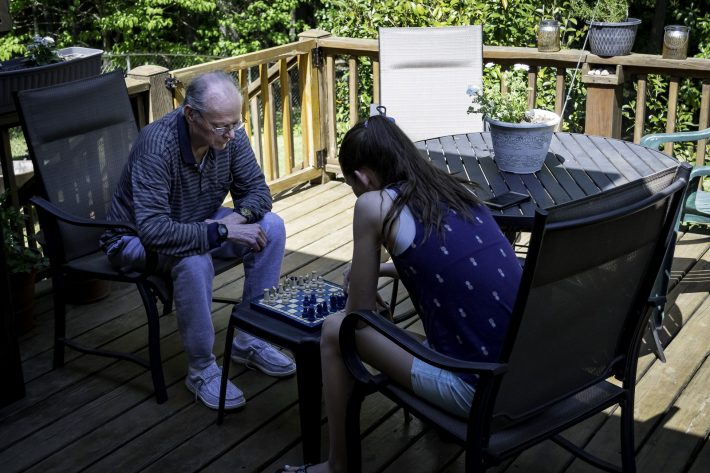
“Daddy, let’s play chess!” Normally, I wouldn’t say no to this. I enjoy sharing chess with the kids, so when the Girl suggested we play this afternoon, I was more than willing. She went out on the deck, where Papa was taking his afternoon fresh air, and began setting up the board. And then I had the idea.

“Why don’t you ask Papa if he‘d like to play?” I suggested.

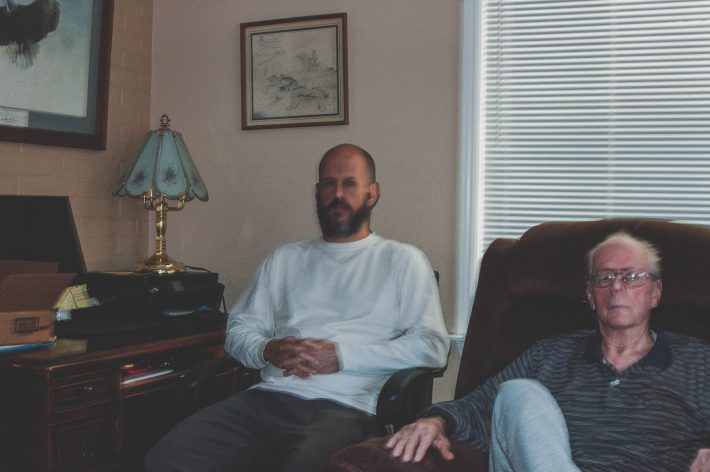
Papa used to be obsessed with chess. He taught me how to move the pieces and then nothing more. This was because, by the time I came along, he’d given up chess. It was taking over his life, he said. He was lying in bed thinking of lost games. I know that feeling. So I wasn’t sure if he would play a game with her. But of course, I knew he would — he’s not going to turn down his granddaughter.

It was an up and down game. I sat by them, reading Paul Auster’s The Locked Room, looking over every now and then to see how things were going. Papa was up; L was up; Papa was up; L was up. It was a very uneven game until the end, when L just fell apart.

During all this, E was Facetiming his best friend from school. They were talking about Pokemon, baseball cards, favorite cartoons — second-grader stuff. He’d suggested it to his friend while the whole class was having a Google Meet in the morning.

“E, do you have a question?”

“Yes! I want to ask N when he can Facetime because it’s been ridiculously long since the last time.” And so we set it up for this afternoon.

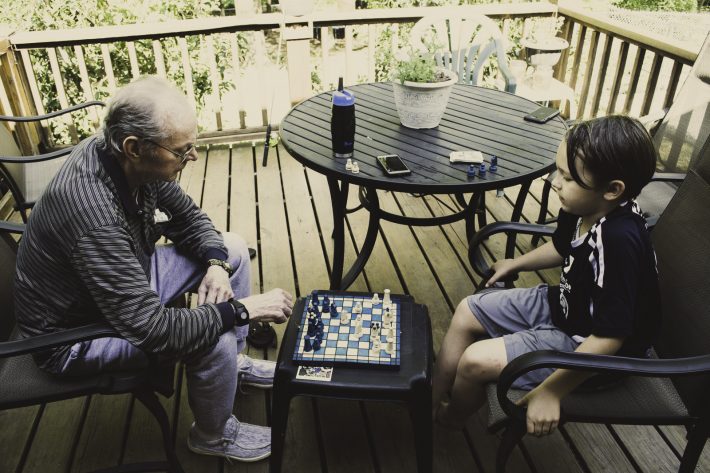
Once he came outside and saw the chess game, though, he wanted to play Papa.

Things didn’t go much better for him — Papa went undefeated today. Which was good for Papa.

In the evening, L decided she wanted to bake cookies and try a formula for homemade Playdough. One might think this is something that would thrill parents, but K and I have learned: the Girl is not the best cleaner. She talks fast, walks fast, and cleans fast, which means she cleans poorly. It’s a thirteen-year-old thing, I’m certain. Tonight was no different. So I called her back down to the kitchen and pointed out the little things she’d missed.

She fussed; she argued; she pouted. But in the end, she did it.

Day 37: Tuesday

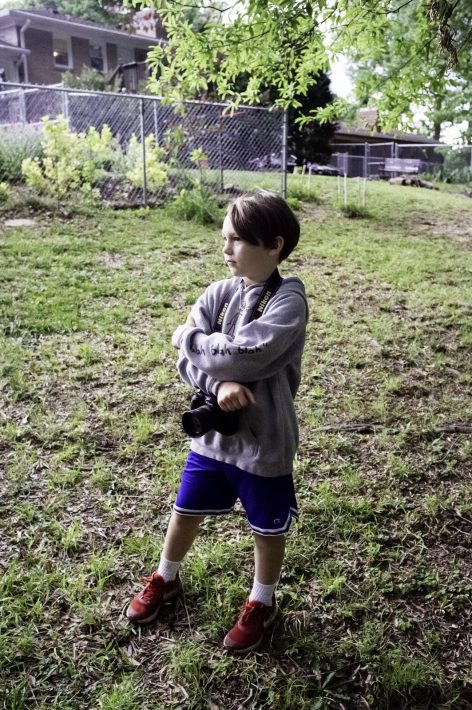
The Boy was at it again today -- 177 photos spread through the day, from morning to evening.

Photo by the Boy; editing by the Daddy

Today, he got some really good shots. Part of that came from experimentation: I let him use a telephoto zoom, which helped him fill the frame more that he's done the last two days. He liked it, but in the end, he preferred the little prime lens he'd been using. "It's so much less bulky!" he exclaimed.

Photo by the Boy; editing by the author

He also learned a little lesson: not everyone whats to be photographed all the time. The Girl, for example, appears less frequently in here because she's increasingly resistant to photographs. (What 13-year-old wants dad writing blog posts about her?) During dinner, then, he asked everyone who's willing to let him photograph them. Only L opted out.

But he still snuck a few shots, much to her frustration.

"If you're a spy, it's okay to take pictures without permission. Otherwise, it's not a good idea," I said.

Excitedly, he heard what he wanted: "If I were a spy I could..."

"But you're not." I could envision him redefining that word to suit his own purposes.

Same credits again

I'm afraid, though, that I might have encouraged it the other day.

"What do you like taking pictures of, Daddy? What's your favorite thing?"

"I like taking pictures that show people just being, just doing what they do every day without thinking about it." If I had more guts, I might be able to parley that into a gig as a street photographer, which in its own way is a certain kind of spy.

Ditto

There was a little photo session after dinner, with the Boy getting a few poses out of K. He walked over to her and manipulated her arms into the position he wanted -- something like a dab -- and then took his position. "Perfect."

Guess

Day 24: Legos and “Weeds”

The Boy got a fair amount of money from Babcia for a) his first communion and b) his birthday. Both are over a month away; the latter is sure to happen, the former, not so much. But Babcia sent the money early because she wanted to be sure it got here in time.

“I’m rich!” he squealed and began plotting how to spend the money.

“Not so fast!” K jumped in. The money for first communion must go toward something, well, churchy. “Do you know what Ciocia Z bought me for my first communion?” K asked E. “The image of Saint K that’s over our bed.”

“In your bedroom?”

“Yes.”

“You still have it?” We tried to explain that yes, that is the point.

As for his birthday money, well, that’s his to spend as he wishes. Within reason. “You’re not spending it all on Pokemon cards!” K and I said in chorus — or if we didn’t, we at least thought it at the same time. Roughly.

There is, of course, one thing we’re always willing to let him buy: Legos. Anything that simultaneously builds, I don’t know, the ability to follow technical directions (when building the sets) and encourages creativity (when building everything else after the set has been demolished and all the blocks added to the growing collection) is to be valued.

“Daddy, I’m going to take my time with this set!” he proclaimed as he opened all the numbered bags and carefully poured them into bowls (that’s where they are, K, when you’re looking for them).

With all the free time he has now, that’s a good idea. But even if it goes faster than he planned, there’s always some trimming to do.

Day 15: Monopoly and Growth

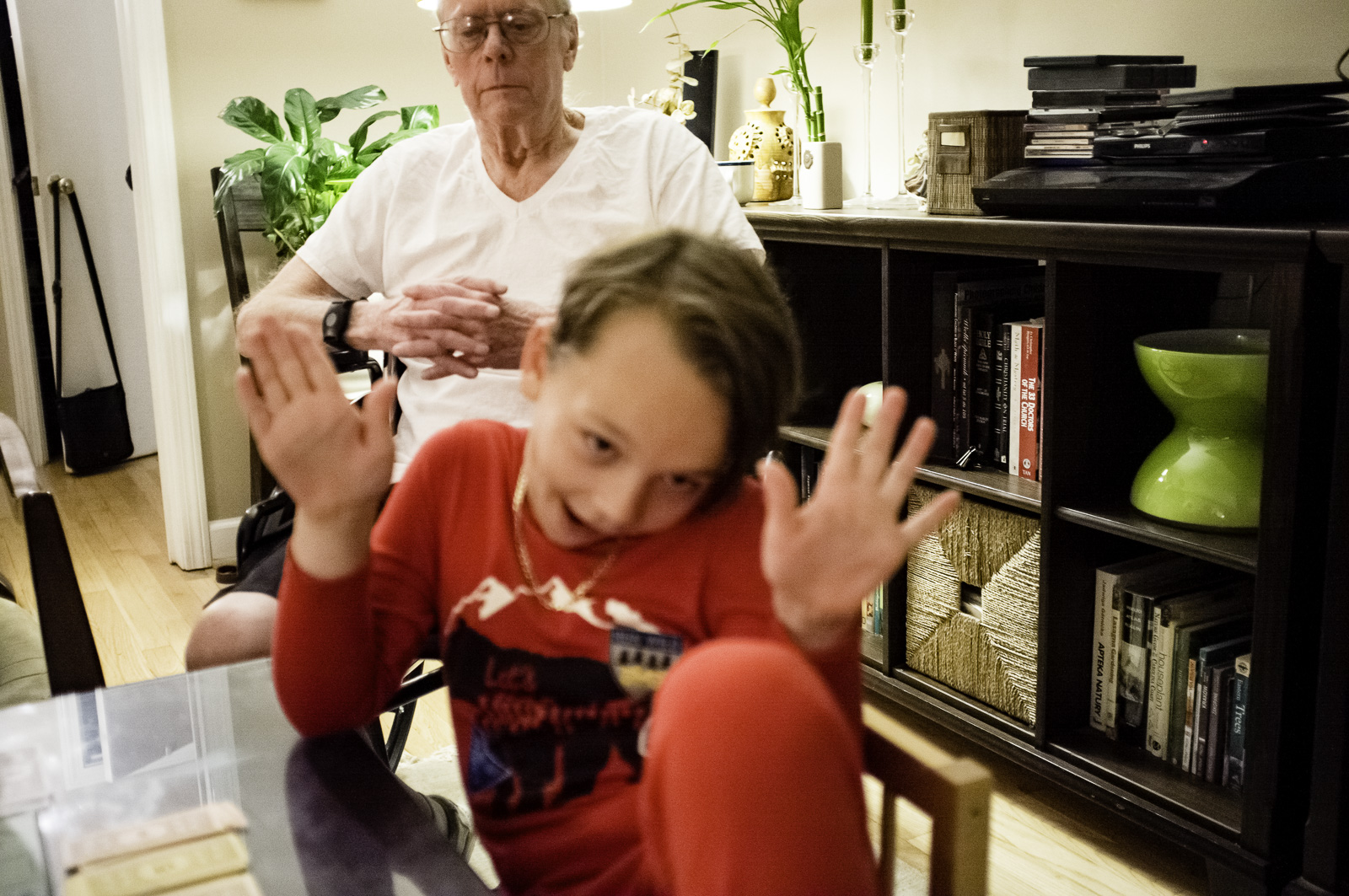
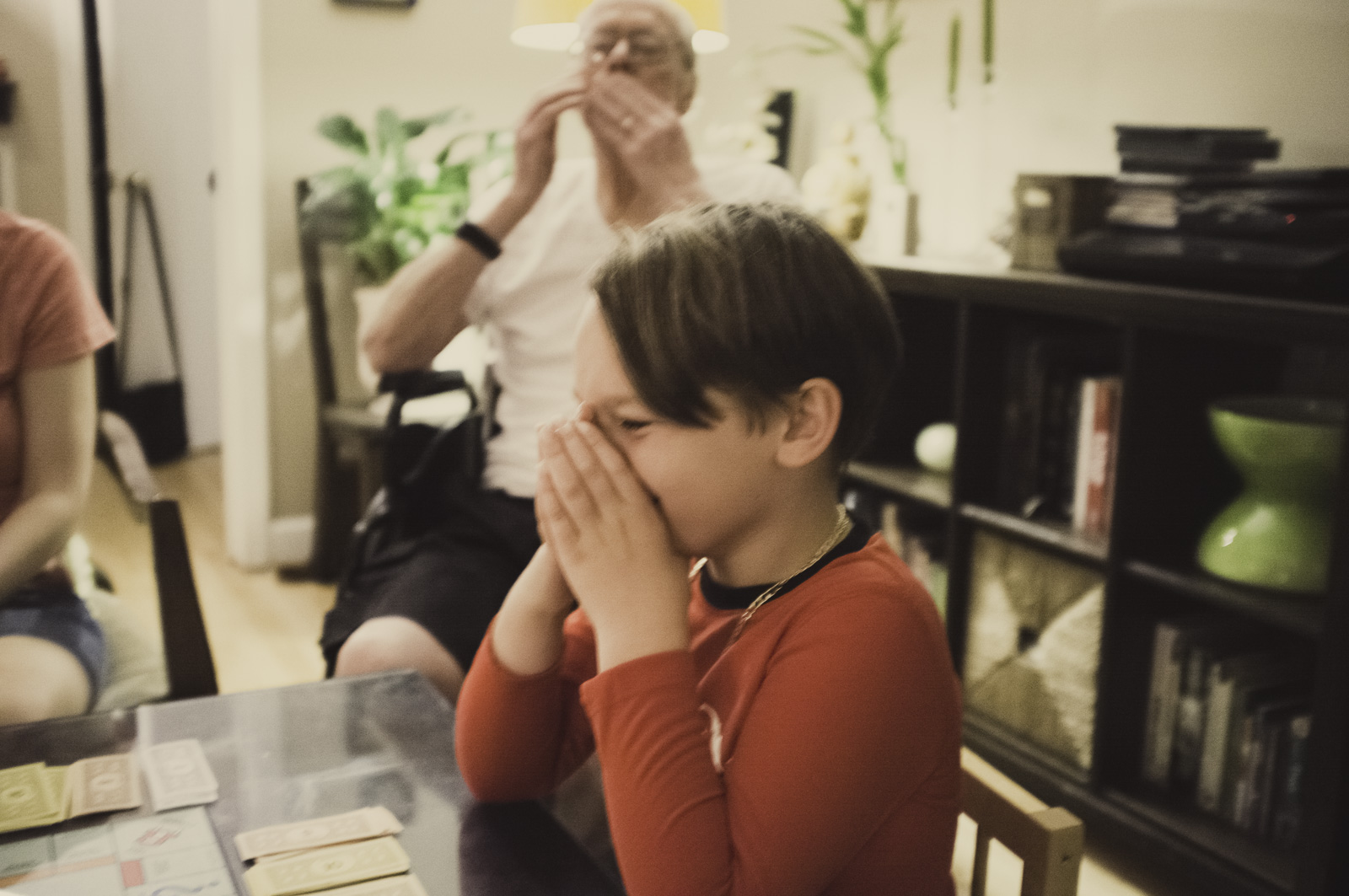
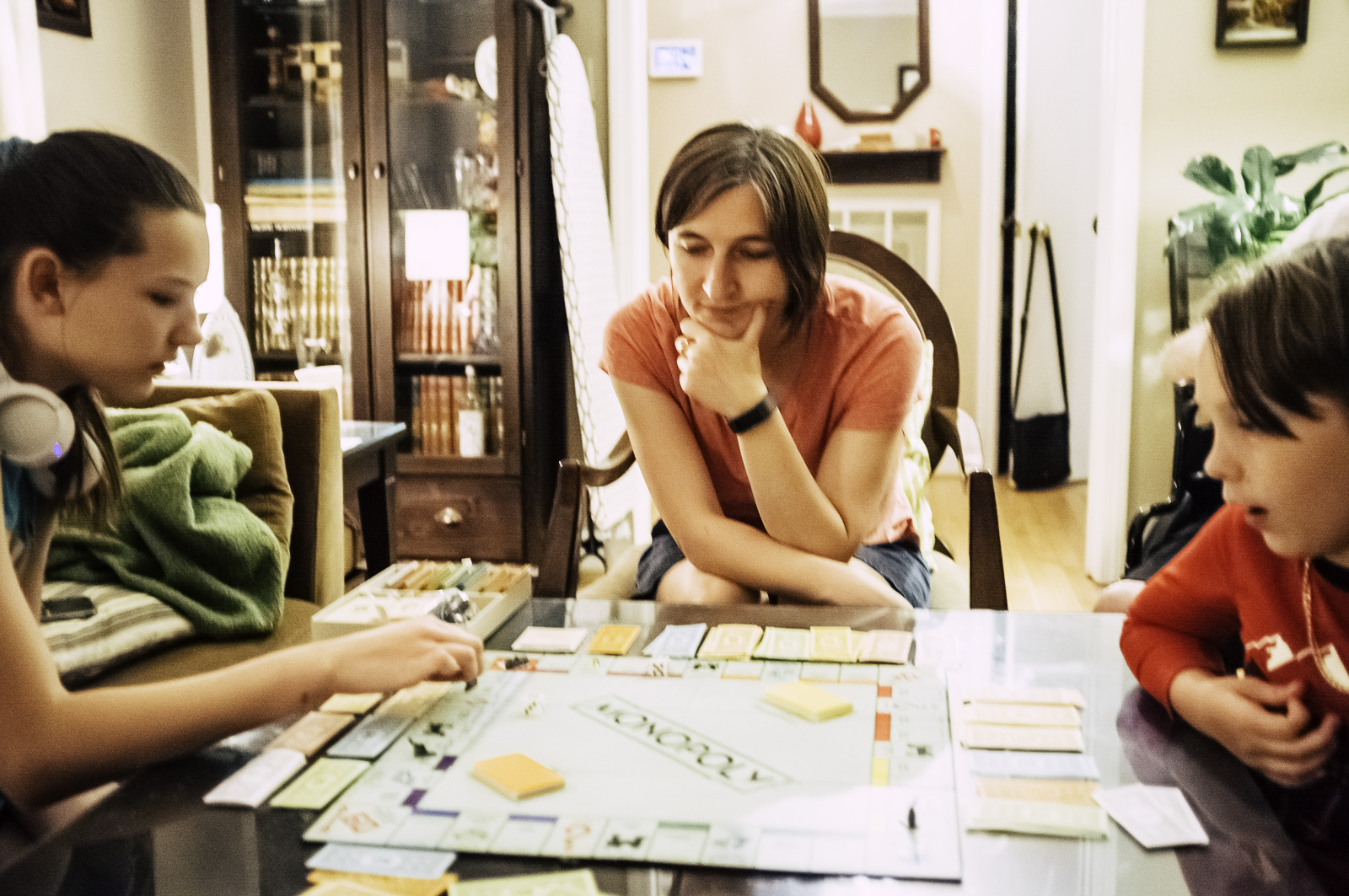
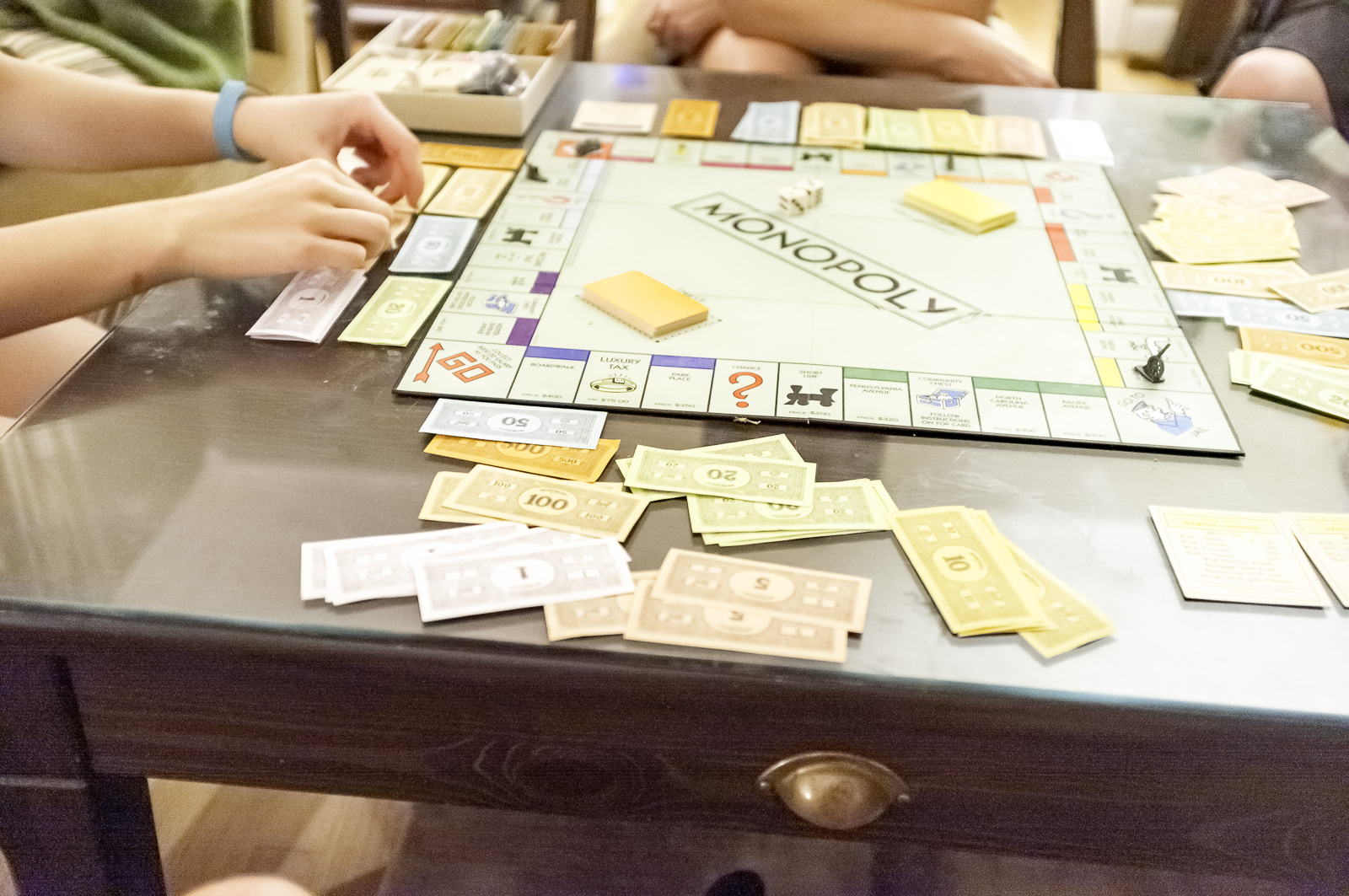
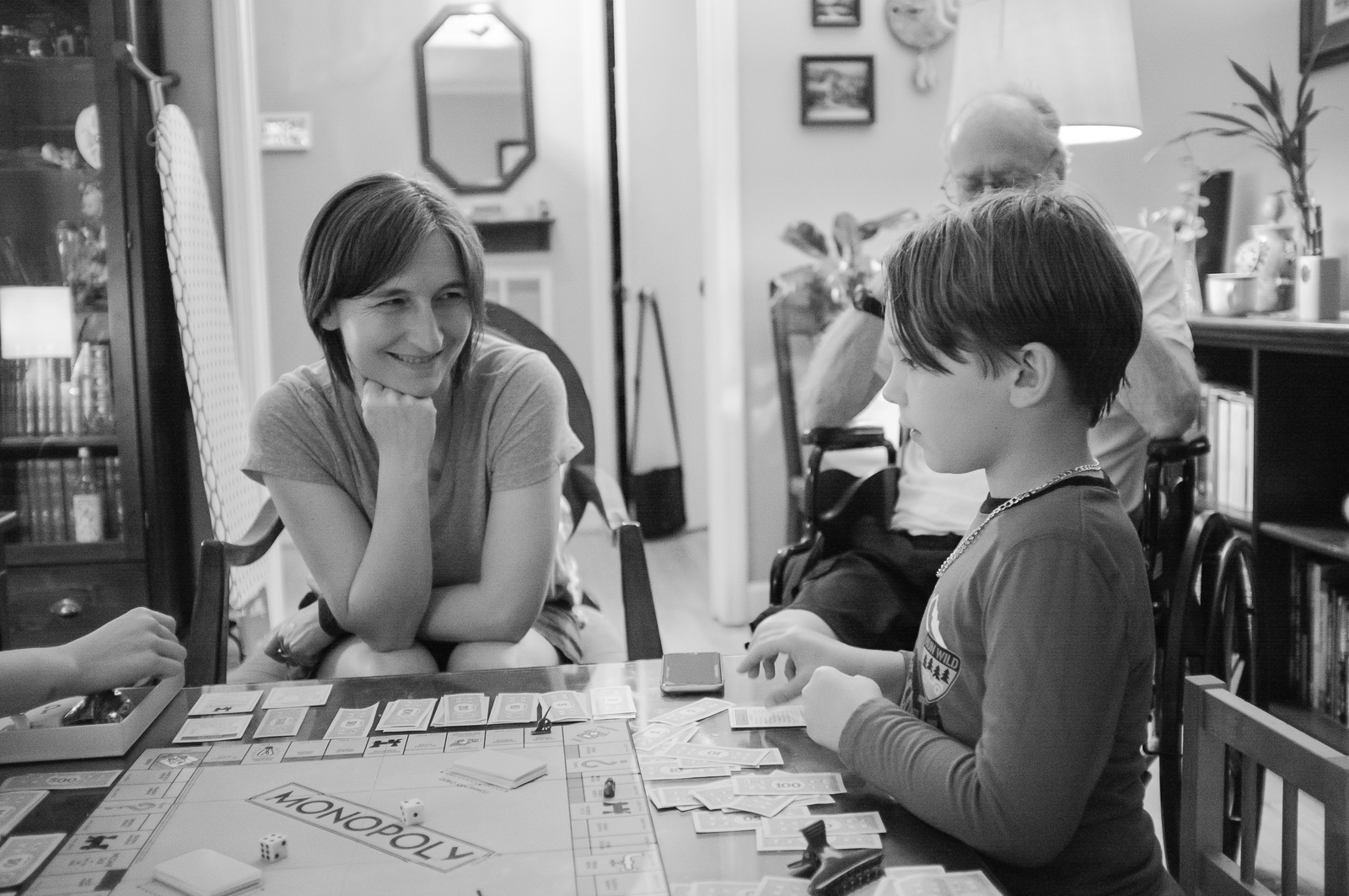
We were playing Monopoly again tonight (E’s choice), and E was having a hard time of it. He really didn’t have any property, and he was landing on L’s or my property fairly regularly. He soon grew fussy.

“I never win at this game!” That sort of thing.

L and I kept encouraging him to continue, but he was reaching a point of frustration that seemed like it might overwhelm him. And then he landed on one of the two orange properties that he was missing.

“I’m buying it!”

I glanced at my own marker: I was standing on the final orange property he would need.

I turned to L, who is always our banker, and said, “Oh shoot, I forgot to buy that property.” I looked her dead in the eye, hoping she would realize what was going on.

“Oh, you wanted to buy that?” She grabbed the card and traded it for a little cash.

I turned to E: “I’ll sell it to you.”

The point of the story is not helping the Boy like that. The point is L’s reaction. There was no “That’s not fair!” There was no immaturity. There was the simple understanding that we were going to try to help the Boy in some little way because his seven-year-old patience had reached just about the end of it.

“Our little girl is growing up,” I said to K when I told her about it later in the evening.


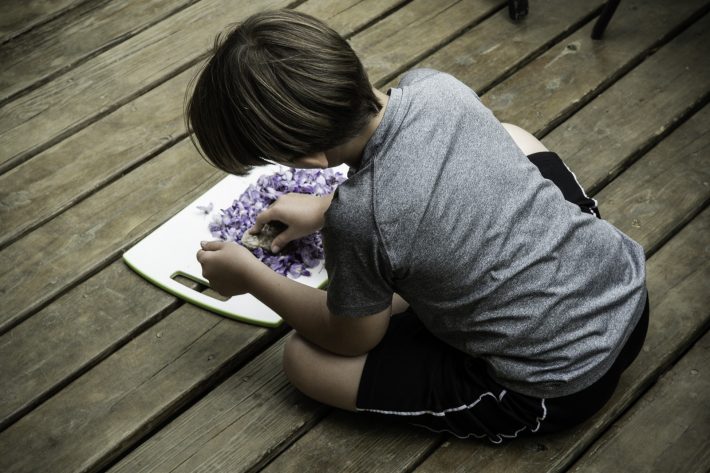
In the afternoon, he’d brought in some wisteria blossoms and declared, “I’m going to make some perfume!

Day 14: Another Sunday

The Boy is sometimes too sweet for his own good, I think. "Perhaps all seven-year-olds are like this," I want to say, but I know it's just not true.

There would be the dim coffin-smelling gloom sweet and oversweet with the twice-bloomed wistaria against the outer wall by the savage quiet September sun

This is not to brag on our child, for we've certainly done little, I think, to develop this side of his kindhearted demeanor. And this is not to suggest that he's always like this: he can be as selfish as any other kid his age, but those moments are often short-lived and his sense of generosity and fair play returns.

He often comes with a snack and offers to share with anyone around. When he was collecting rocks today, he wanted to make sure he shared with everyone in the family.

But it often shows in places one wouldn't expect, like normally-competitive situations -- boardgames.

Tonight, while playing Monopoly, K was hemorrhaging cash. She was down to a few ones and fives. Sure, she had a fair amount of property, but she had a definite liquidity problem. E, on the other hand, literally had a pile of $100s. He grabbed a few from his pile -- not even counting -- and gave them to K.

"Here, Mama."

"No, honey. That's very kind, but you don't need to do that," she smiled.

"But it's my money. I can do what I want to with it," he protested.

Later, he tried to do the same with me.

He did not, though, ever offer L any money, so I suppose the generosity doesn't always overcome sibling rivalry...

Shooting in the Back Yard

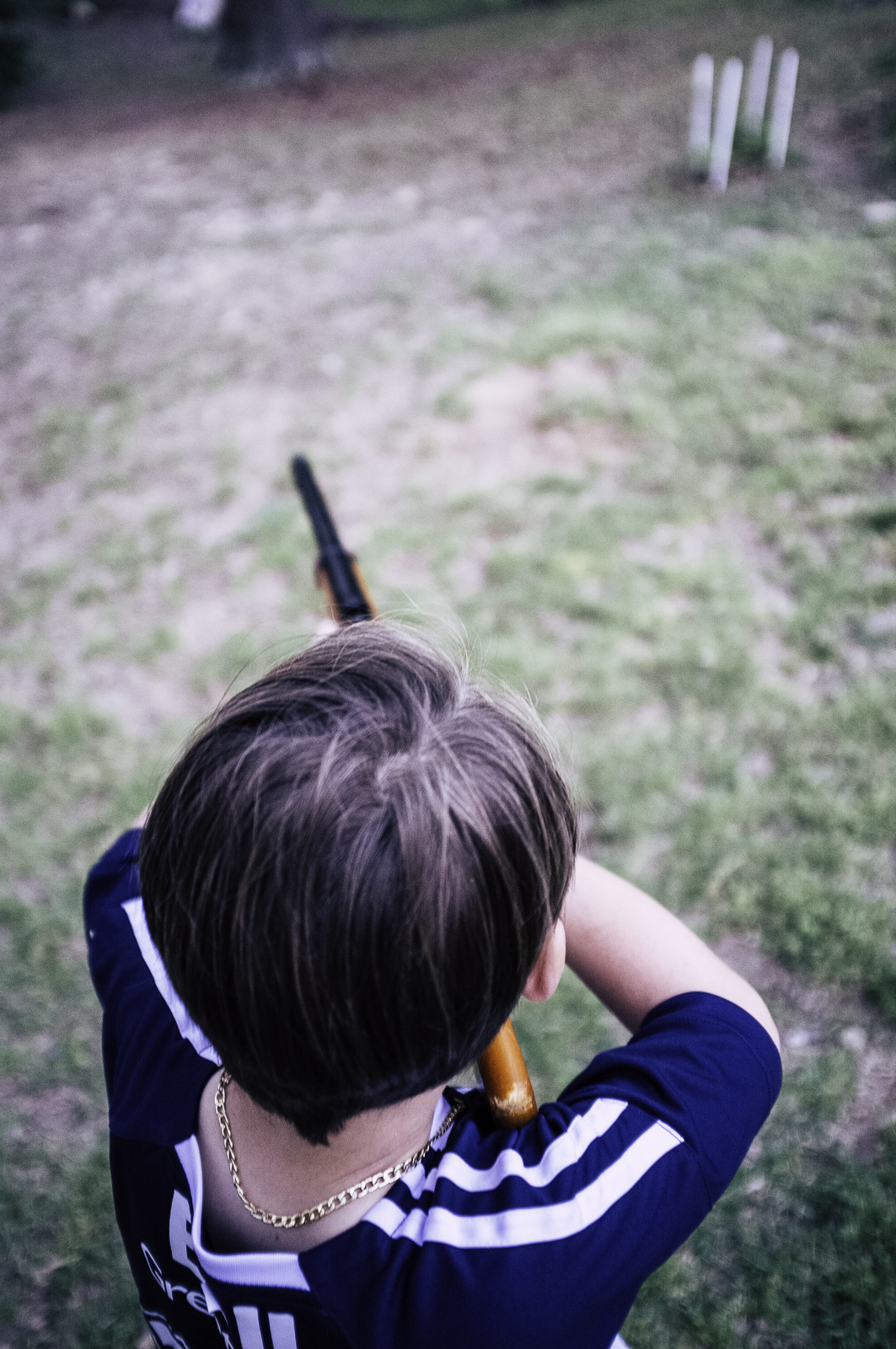
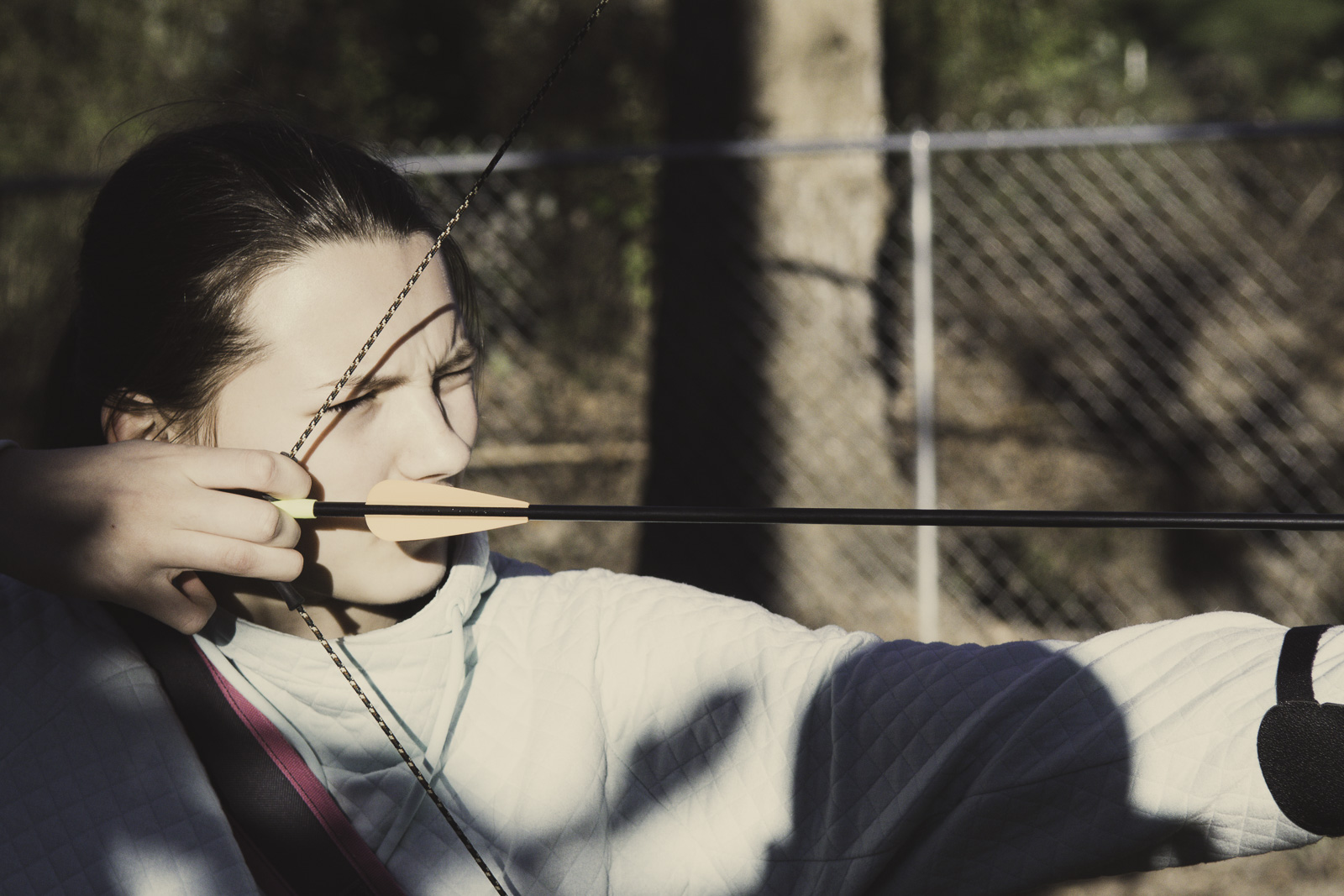
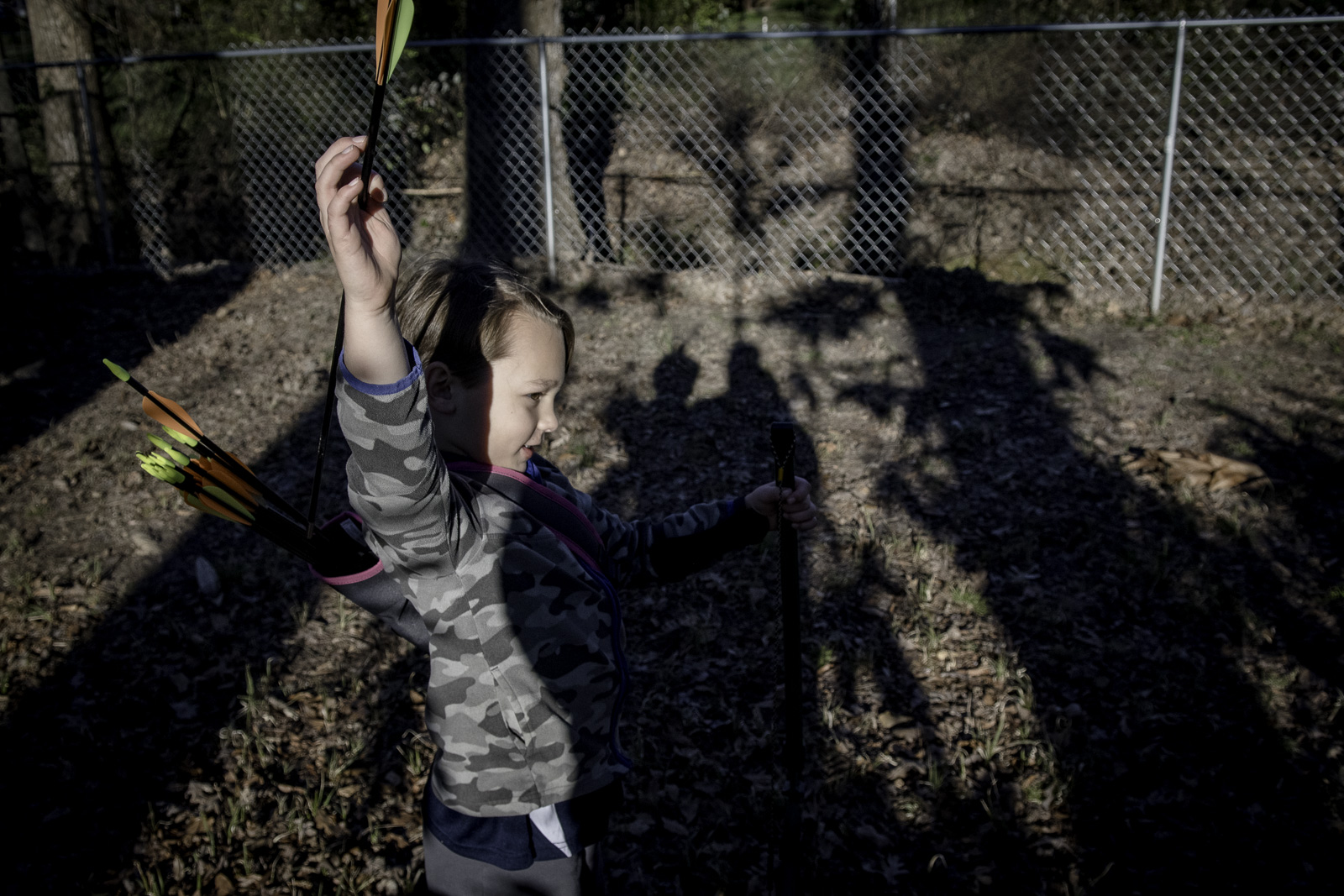
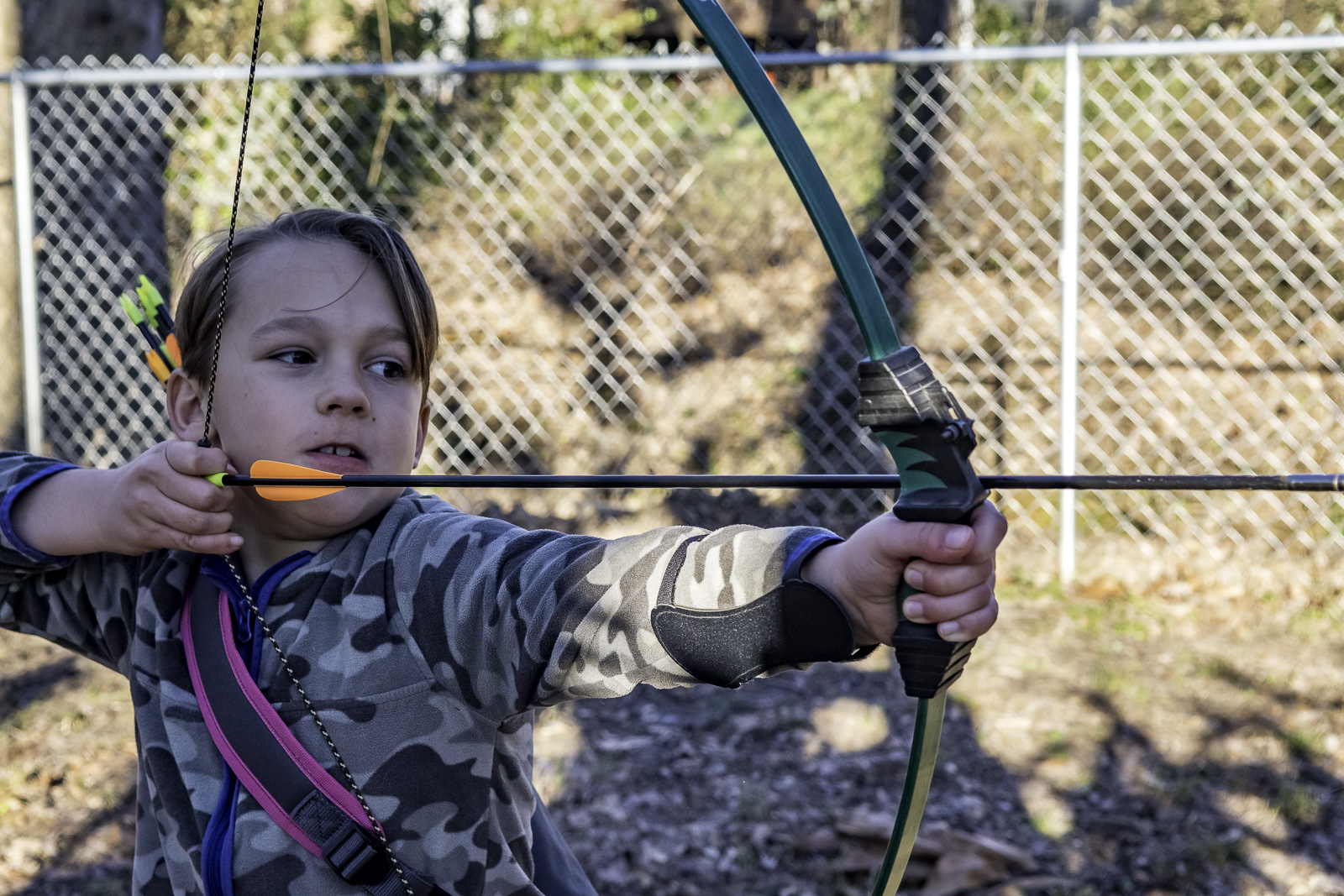
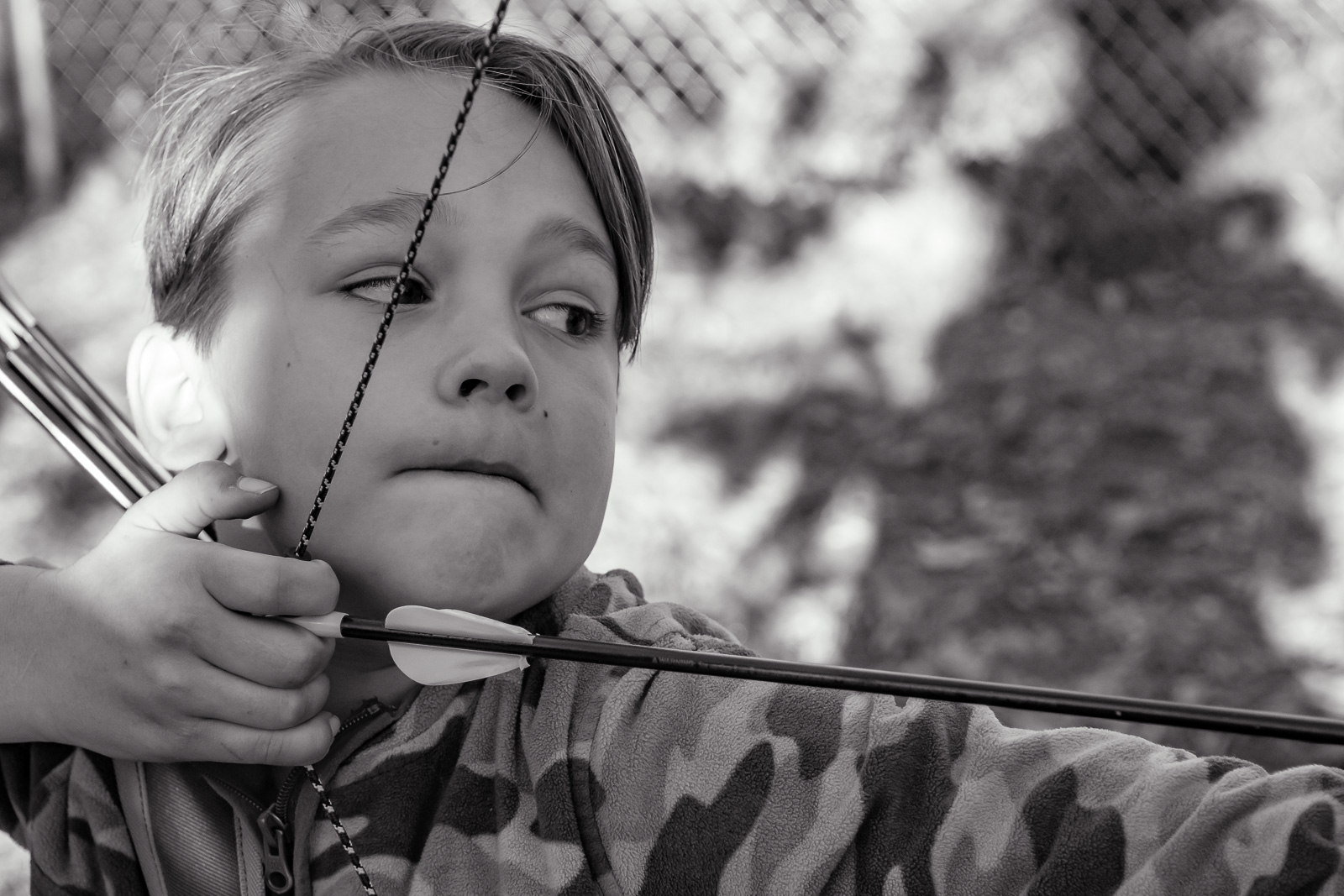
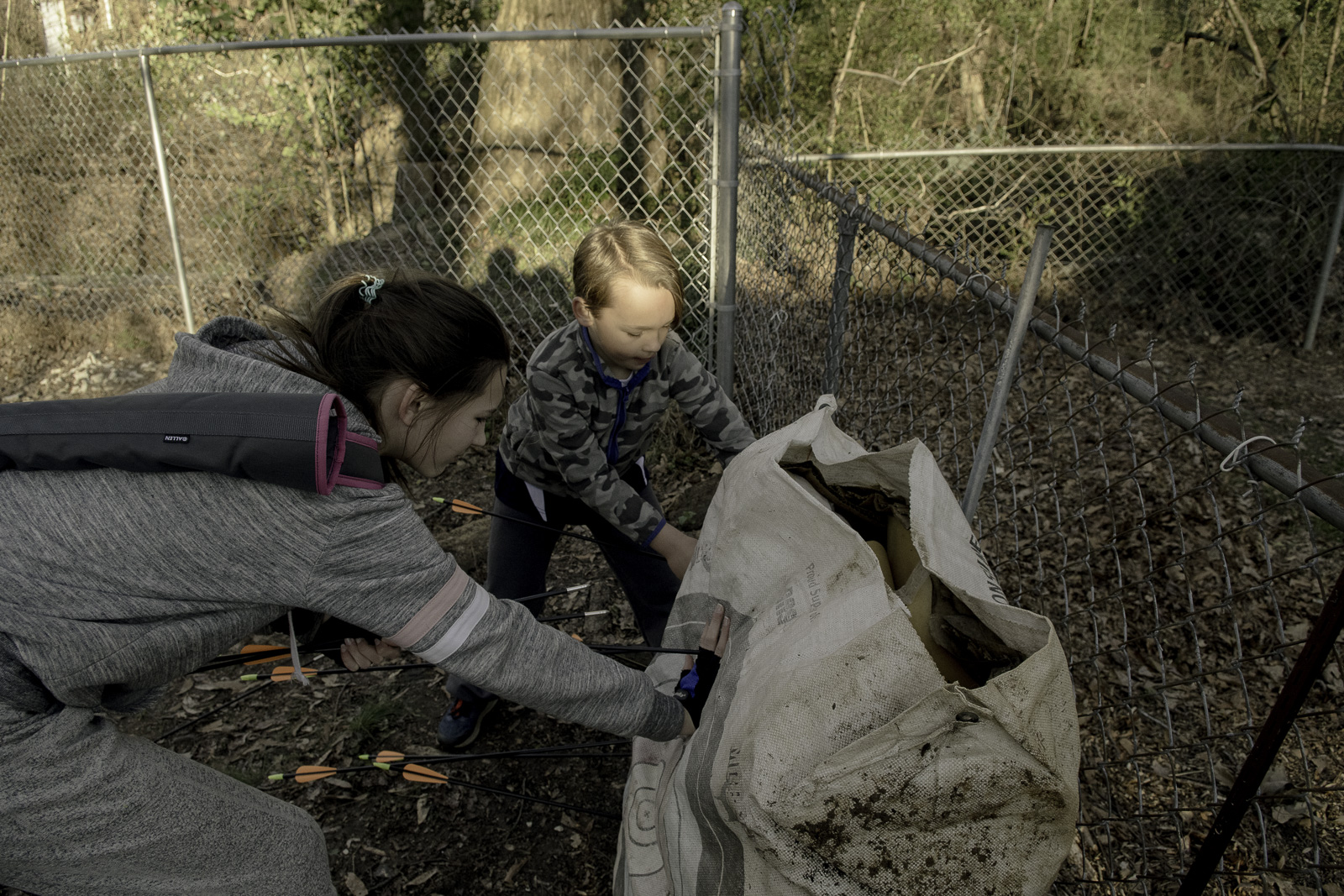
In the afternoon, after almost all the day’s necessities were behind us — shopping, a photoshoot at a local church for the diocesan newspaper, a soccer game (that I didn’t attend because I stayed behind to keep an eye on Papa, hence the lack of photos) — we went out to shoot L’s bow and arrows. K had gone to drum up some clients for her new venture in real estate, but the kids and I were, for all intents and purposes, done. Sure, I still had a consultation call with a client for a web site I’m building for her, but that was easily put off to the evening.

The Girl hadn’t lost her touch. Which is to say that she didn’t put a lot of arrows near the center of the target, but she didn’t miss the target entirely — which was the case when she first started shooting.

For the Boy, though, it was a different matter. He hit the target a few times — many shots fell ineffectually short, but he did hit the target a number of times. The problem was, though, that the bow was just a little too big for him, so he was not able to get enough pull on it, so not enough energy went into the arrow. So every single shot that did hit the target bounced off.

Understandably enough, it was a source of great frustration.

“Daddy, I can’t make any of them stick!”

What to do when your boy is frustrated and wants to quit? Make a joke of it.

“It’s almost like the target is against you, like it has a will of its own. Like it has some kind of Jedi power. ‘Nope,’ it says as your arrows strike. ‘Nah, not this time,’ it says the next shot.” And so on. Soon he was laughing and making his own jokes when the arrows flopped off the target.

“That one slammed into reverse and backed up!”

Lost Stories

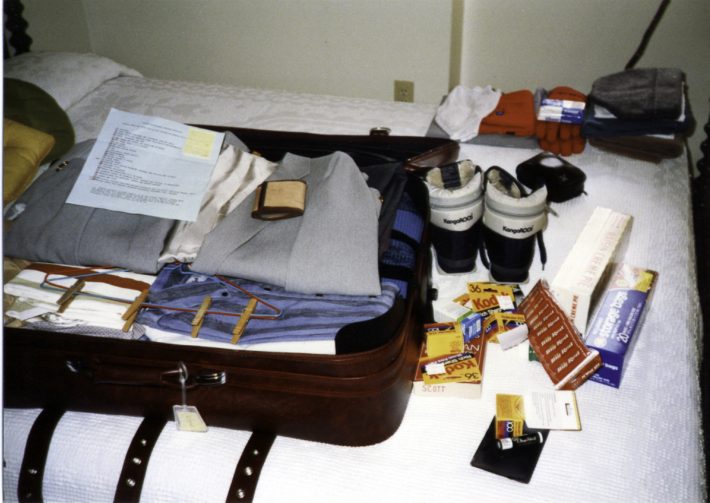
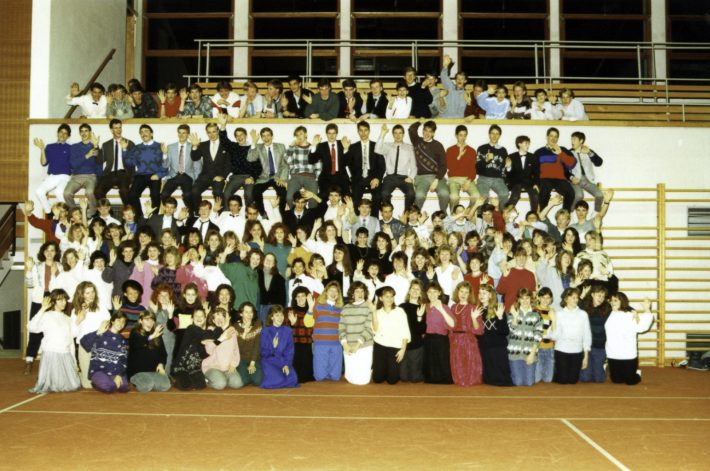
In 1986, I went to Austria with a group of about 120 teenagers from various congregations of our church. We didn’t go as part of a mission trip — our church members didn’t proselytize, for that was the responsibility of the leader through his television program. (Members’ job was to support him, i.e., pay for his TV time.)

The program was called the Winter Education Program, and it was intended to teach us kids who went about two things: winter sports (like the church’s SEP did for summer sports) and theology (which could more aptly be called programming since questioning was out of the question). It was, in reality, an extended ski trip for the kids whose parents could afford it.

I really remember very little about it other than two salient points: first, I never really connected with anyone there and didn’t develop any close friendships. When I went to the summer equivalent a few years later, I made great friends, some of whom I’m still in contact with. Second, I bought my first Pink Floyd cassette on this trip, A Momentary Lapse of Reason. My father, taking his duty to protect me very seriously, had to approve a given band before I could buy anything by them, and I had a suspicion that Pink Floyd wouldn’t make the cut. (There’s a double pun in there for anyone familiar with their discography.)

I hadn’t even thought of this whole adventure in probably 25 years when going through photos we took from Nana’s and Papa’s condo, I found these images. It’s a significant event (in a sense) of my youth, and it’s something my wife and children know nothing about. And that realization is what really got me thinking.

I’m forty-seven years old now. That’s roughly 17,155 days and change. By any conservative estimate, I’ve had thousands of little experiences that I remember to some degree or another, making them at least slightly significant, about which my family knows nothing about. They were insignificant at the time, but I remember them years later — that provides some degree of import, I think. There is, of course, no way or reason to share all these experiences with them, but that means much of my life is a mystery for them.

The same, though, is true for my own parents. I know only what they’ve told me, and now that Nana has passed, there are stories upon stories that I will never know.

A Tale of Two Books

About a year ago I read Treasure Island to the Boy. It took us a long time because I read the original, unabridged version. E loved it.

“Daddy, can we read Treasure Island again?” he asked the other day. I thought it might be a good idea to try to read another classic adventure tale instead of re-reading that one, so I suggested Twenty Thousand Leagues Under the Sea.

I read the opening to him:

The year 1866 was signalised by a remarkable incident, a mysterious and puzzling phenomenon, which doubtless no one has yet forgotten. Not to mention rumours which agitated the maritime population and excited the public mind, even in the interior of continents, seafaring men were particularly excited. Merchants, common sailors, captains of vessels, skippers, both of Europe and America, naval officers of all countries, and the Governments of several States on the two continents, were deeply interested in the matter.

For some time past vessels had been met by “an enormous thing,” a long object, spindle-shaped, occasionally phosphorescent, and infinitely larger and more rapid in its movements than a whale.

He was hooked.

“What was it?” he asked.

“Well, that’s what the whole book is about.”

In the course of the opening pages, the longitude and latitude of various sightings. I tried to explain to him what the coordinate system was, but he was a little lost. This evening, after dinner, we looked on Google Earth and mapped out the precise locations of all the sightings of the mysterious creature.

While he was eating his snack, I read another chapter to him. It’s kind of slow going: he asks for definitions of a lot of words, and the sentences are so long, with so many embedded subordinate clauses and prepositional phrases, that it’s hard for him to follow. Here’s an example:

Taking into consideration the mean of observations made at divers times–rejecting the timid estimate of those who assigned to this object a length of two hundred feet, equally with the exaggerated opinions which set it down as a mile in width and three in length–we might fairly conclude that this mysterious being surpassed greatly all dimensions admitted by the learned ones of the day, if it existed at all.

That’s one sentence — it would give my own students fits.

It is in these sentences, though, and the challenging vocabulary that I find the lasting value in the reading. Sure, we’ll have great memories to share; certainly, we’ll enjoy the book. But when it’s time to tackle things like this on his own in school, he’ll have some experience with it because he’ll have heard me reading Jules Verne and Robert Stevenson and eventually Twain and Dickens.

After the Boy was in bed, I was in L’s room, talking to her about the books she’s reading. I’d had in my mind that I wanted to start reading to L again, and I thought A Tale of Two Cities might be a good start. So I asked her if I could read her something.

“Sure,” she said fairly emotionlessly — it’s a thirteen-year-old thing, I’m discovering.

It was the best of times, it was the worst of times, it was the age of wisdom, it was the age of foolishness, it was the epoch of belief, it was the epoch of incredulity, it was the season of Light, it was the season of Darkness, it was the spring of hope, it was the winter of despair, we had everything before us, we had nothing before us, we were all going direct to Heaven, we were all going direct the other way– in short, the period was so far like the present period, that some of its noisiest authorities insisted on its being received, for good or for evil, in the superlative degree of comparison only.

As I was reading, she jumped up, skipped over to her bookbag, and dug out her social studies notes. “We went over that in class!” she said excitedly.

She looked through her notes and I saw a heading “The Reign of Terror.”

“That’s where it will be,” I said.

We talked about it for a bit, and that was it. Will we go through with this reading? Does she even want to? I don’t know. I understand less and less of her thirteen-year-old mind, but I know that just being there is often enough. Do I do that enough? It’s the worry of every parent, I suppose.