Morning: playing in the carport/covered porch. Bubbles and leftover candles.


Late morning: a ride with the Boy.
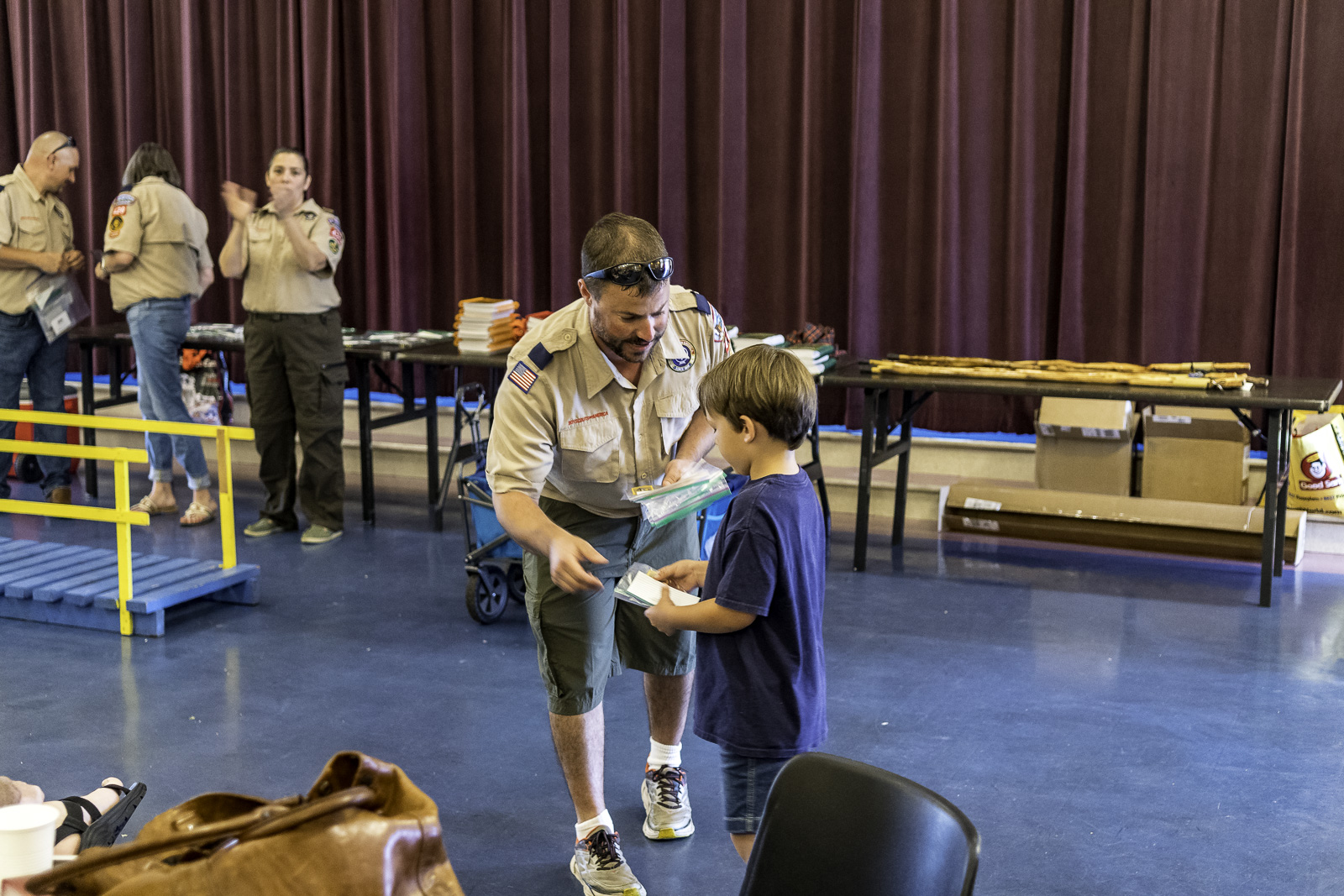
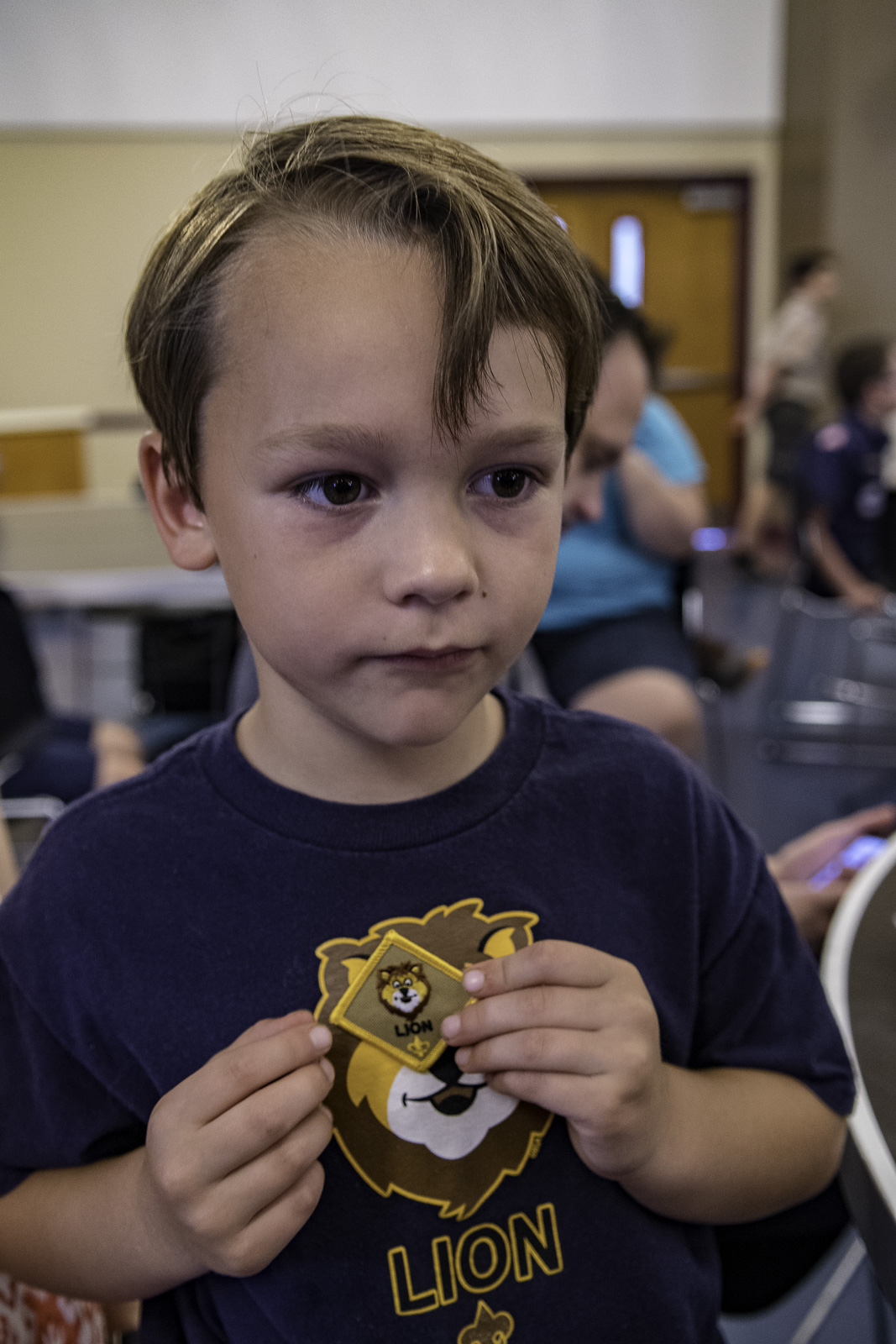
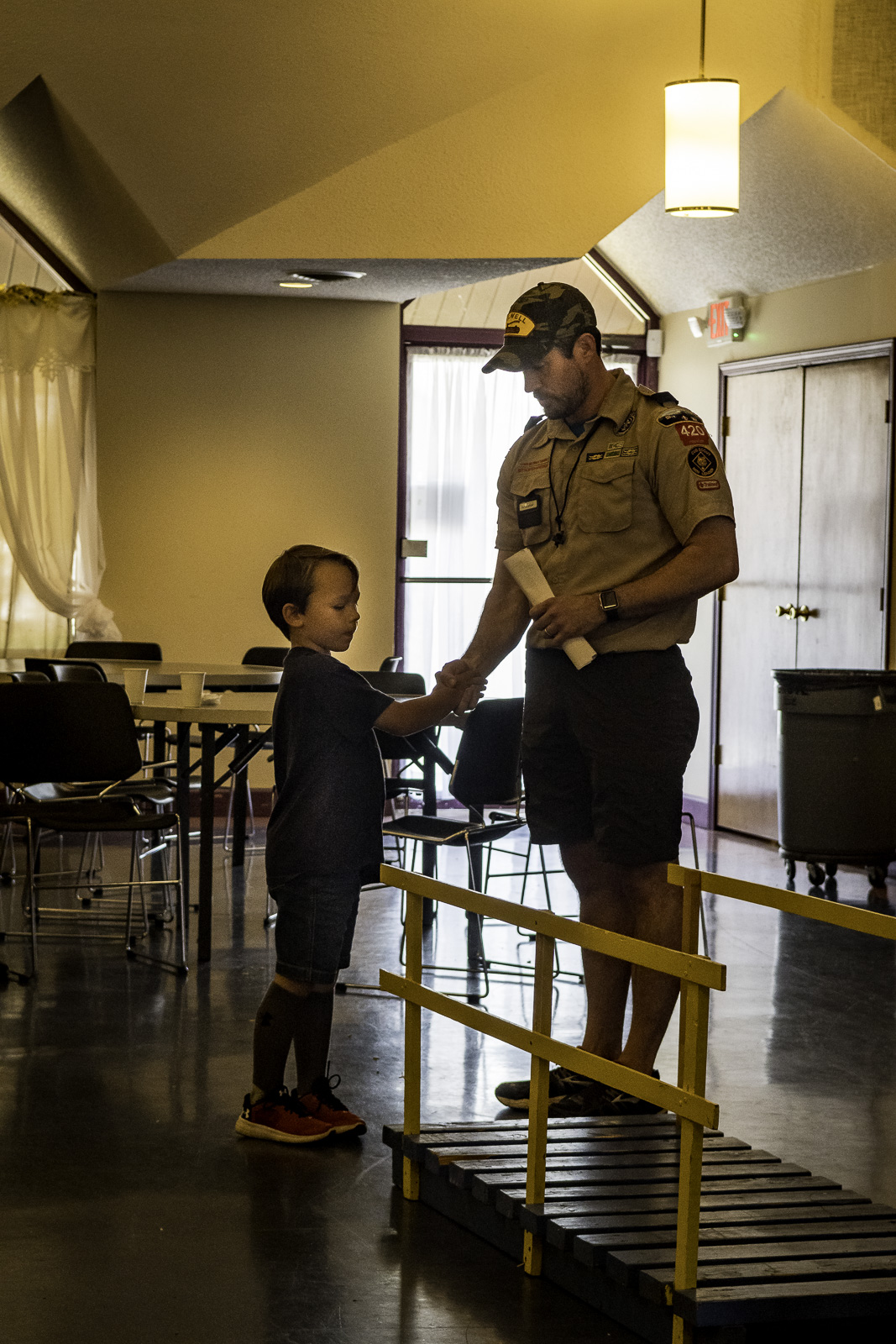
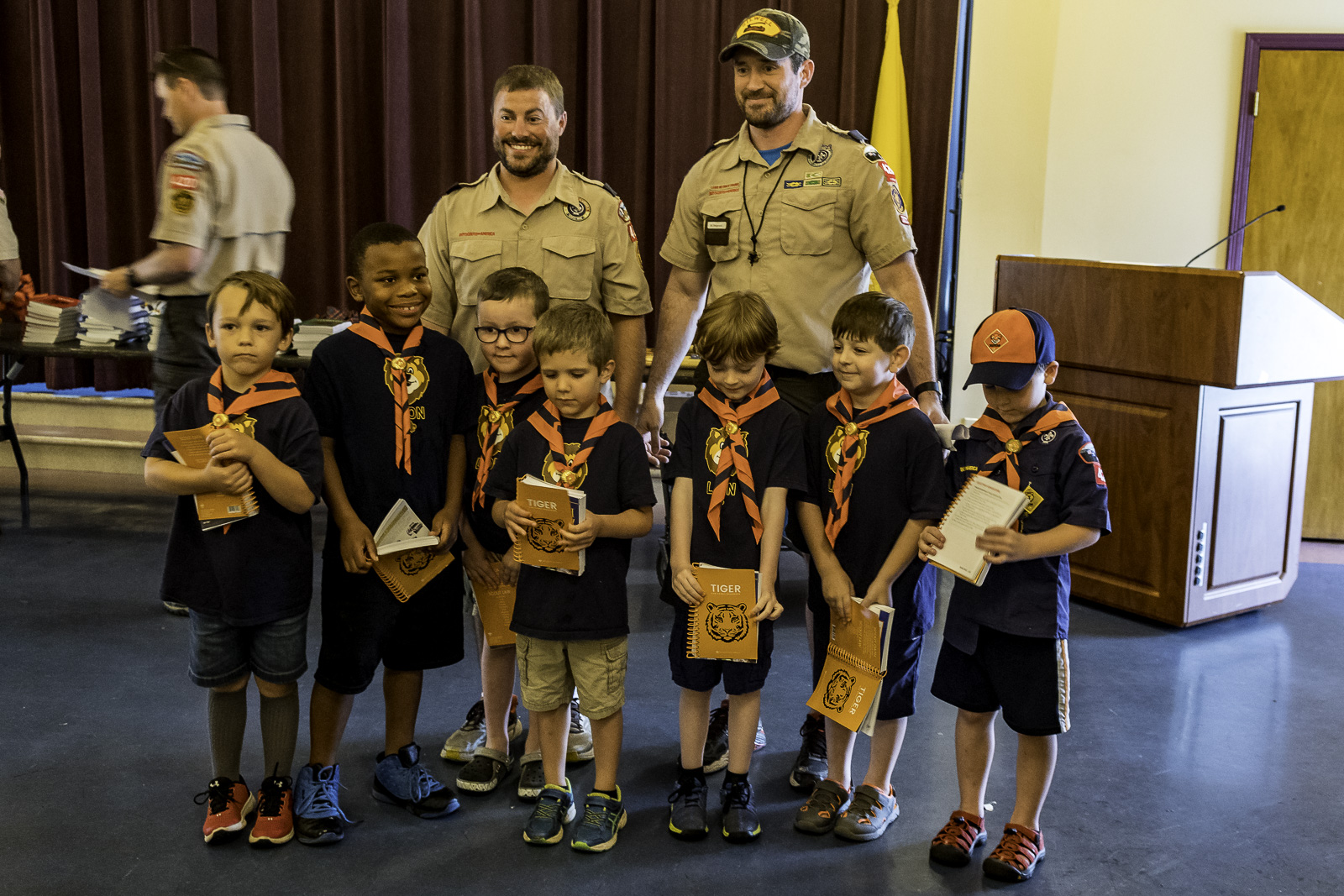
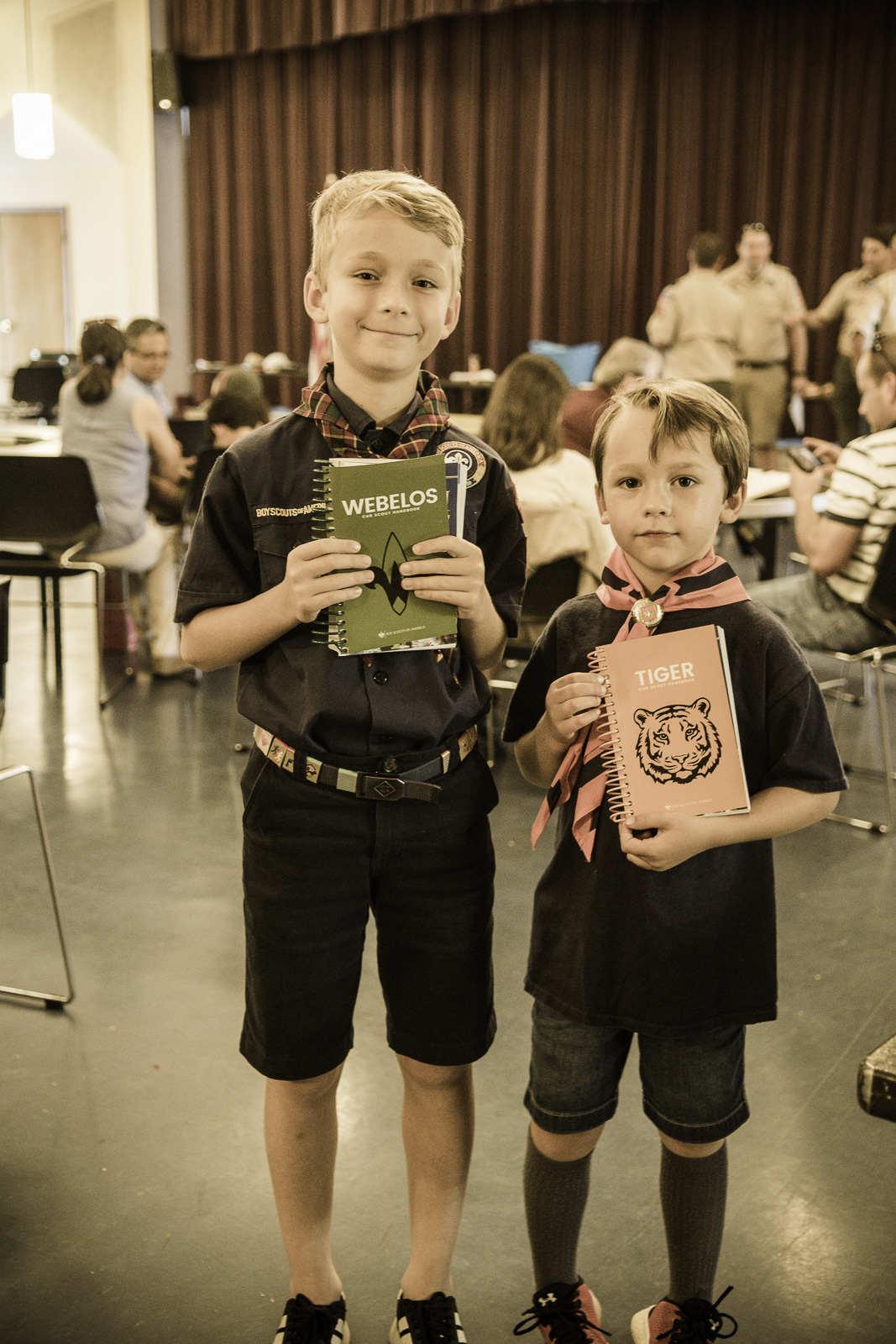
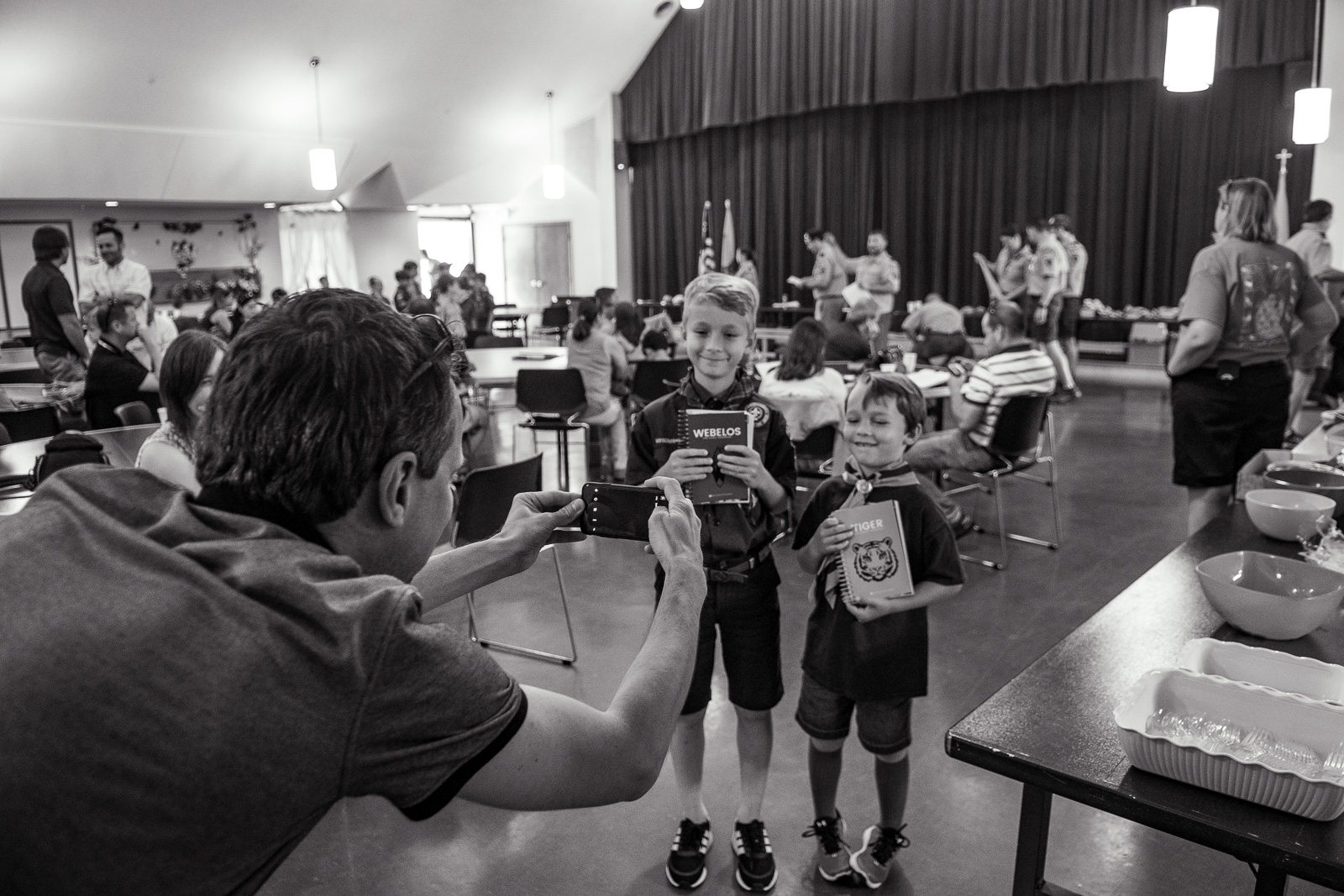
Afternoon: the final pack meeting. The Boy got his Lion badge and moved up to a Tiger.

fun in threes, sometimes fours
growing
Morning: playing in the carport/covered porch. Bubbles and leftover candles.
Late morning: a ride with the Boy.
Afternoon: the final pack meeting. The Boy got his Lion badge and moved up to a Tiger.
Sometimes, the Boy can be his own worst enemy. It's true of all kids his age -- and older. He'll get upset about something, fuss about it, then escalate it when the resolution doesn't appear to be going his way. The trick is to get him to see that habit and stop it.
Today he was upset about something. About what, it doesn't really matter, but it involved L, who was helping me clean the bathrooms in preparation for the Boy's birthday party Saturday. We have too much to do in too little time, so some of Friday's cleaning shifted to today. The incident spilled over to a whine-fest with his mother, then with me. I sat him down and talked to him about what was going on.
"We're all getting things ready for you. For your party. Every single thing we're doing, we're doing it for you. I think if someone was doing this much for me, I wouldn't be upset because they weren't paying enough attention to me at that moment. I'd be thankful. I'd say, 'What can I do to help?'"
He calmed himself down with the little breathing exercise I taught him -- basically, slow, measured breaths, in through the nose, out through the mouth -- and then went to ask K if there was anything he could do to help. She set him to washing dishes, a chore he adores.
"Thank you for showing me how fun it is to work together today," he told me in the midst of his toothbrush session. "If I'd kept fussing, I would have missed out on a lot of fun."
Later that night, as we read Tashi in bed, Tashi had an opportunity to escape from bad guys who'd kidnapped him. He ran by the river, where he saw the wife of the Chief Bad Guy drowning. I stopped.
"Do you think Tashi should stop and help her?"
"No!" the Boy said incredulously.
"Why not?"
"Because she's his enemy. If he helps her, she might just grab him and take him back to the other bad guys," he explained earnestly.
"Or," I said, thinking carefully how I could explain it, "she could be so impressed and touched that he helped her that she stops being his enemy."
"Yeah, but in Smurfs: the Lost Village, when [some character whose name I don't remember] fell of the boat and the Smurfs helped him out of the water, he said, 'Yeah, but I'm still bad!' and captured them. And it was their boat. They made it themselves!" His patience in explaining that was enchanting.
"Yes, that happens sometimes," I replied, "but sometimes, something different happens. Sometimes they stop being enemies." I knew this was going to happen in the book, and it rings true in my own life.
Just today, I had an encounter with a student that made me feel I was in Groundhog Day. During morning duty, I'm charged with keeping all the kids sitting in the hall quietly and the hall calm and to do this, we teachers enforce a basic rule: "You can whisper, but you can't talk." Suzie -- not her real name, of course -- always talks. She speaks in a fairly low voice, but she's engaging her vocal cords, which means she's talking. Plus, I can occasionally hear her thirty or forty feet away.
"Suzie, whisper please," I said calmly. Respectfully. As I've done every day I'm on duty for the entire school year. Her response is to quiet her voice at first but to continue talking, not whispering. Her response to being redirected again is to suggest that because other people are also talking, that I'm unfairly targeting her. Today I explained the simple fact: "That's because you've taught me to expect it from you. The other people are not consistently disobeying me. The other students do it once and a while; you do it every single day." Again -- quietly, calmly, respectfully.
Today, I talked to her about it again. It turns out, she doesn't know what whispering is. "I am whispering," she insisted. I explained again that if she puts her hand on her throat when she talks and she feels vibrations, she's not whispering.
"Go ahead, try," I said, smiling.
"No!" she cried, breaking into a smile herself. "It's embarrassing!'
I pointed out to her that I wasn't picking on her, that I in fact like her a lot and see a lot of potential in her. "As long as you can keep these little things under control." (She also has a tendency to grow increasingly disrespectful when redirected multiple times.)
Here's a girl that could have easily become my enemy. I could have simply snapped at her, signed her discipline card, or by this time, probably, simply have written an administrative referral. But instead of seeing an enemy, a rebellious little brat (like many adults would), I try to see something a little different: someone who just hasn't had anyone take the time to show a genuine interest in her regarding the little things. It's easier just to brush if off with sarcasm or a referral.
The funny thing is, in spite of the fact that she still grows disrespectful with me, I'm fairly certain she doesn't see me as an enemy either. Sure, it's not the same as saving the life of the wife of the bandit who threatened to pull all your nose hairs out like Tashi did, but it's moving in that direction.
A busy evening for the Girl. Cross country try-outs from 6:00 to 7:15, then volleyball practice from 7:15 (obviously we were a bit late) to 8:15. Two things — sports, no less — about which she has never shown any interest until the last few weeks and now is bound and determined to participate in.
We arrived ten minutes early, and since the Girl is a rising sixth grader and most of the other kids were already attending the middle school, she stood around and looked like she felt a little lost. Friends were bantering back and forth, and she just stood and watched them.

She missed yesterday’s portion of the try-out due to her final choir concert for her elementary school, so as everyone began repeating the stretching and warm-ups from yesterday, the Girl was left looking around to see how everyone else did it. At one point, to stretch the quads, the coach told the kids to put their right hands on the shoulder of the kid to their right to help with balance. She did so, but the girl to her left didn’t put her hand on L’s shoulder. When it came time to repeat on the left side, L hesitantly reached her hand out to the girl on the left, noticed she still wasn’t balancing herself on anyone and managed to stretch without support.
How well I remember those moments of uncertainty at that age. Always looking about to make sure I’m doing what everyone else is doing. Trying hard not to call attention to myself in any way at all. Truth be told, I still behave that way in new environments with new people, but such a subdued L is an uncommon sight. I felt I was getting a little peek into what her first day of school might be like when, in a few short months, she begins middle school.
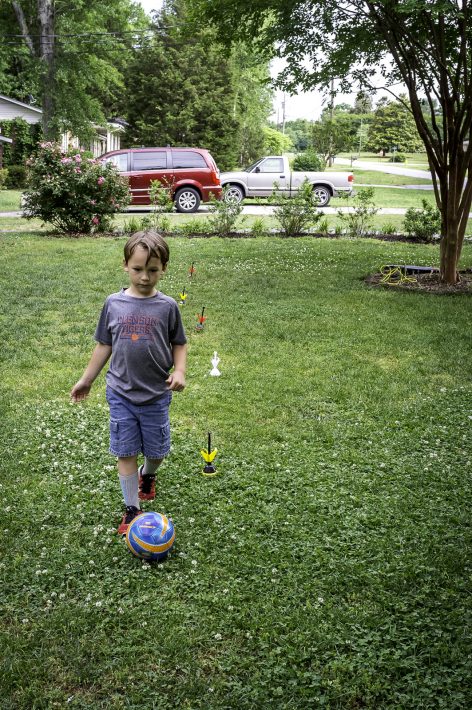
When did that happen? When did our little girl become a 5’3″ young lady who no longer looks like a little girl? I knew it was coming, but somehow I’d convinced myself it wasn’t just around the bend.
The try-out itself was instructive, for me and for L. She completed two miles in 22 minutes. It’s probably the longest distance she’s run. I sat in the car, reading (I’ve decided it’s time to reread a book that I promised myself fifteen years ago when I first read it that I would — must — read again, Steinbeck’s East of Eden), and I was aware of kids running in the field in front of the car, so I stopped and watched, waiting for the Girl. I was actually doing a bit of both, so when I didn’t see her, I just thought she’d passed by when I’d looked back down to read for a moment or two. Then I heard the kids behind me, laughing, complaining, resting. I went back to reading when a flash of blue caught my eye: L ran by, alone, dead last.
“I had terrible cramps,” she explained later.
“But do you know how proud you can be of yourself for not stopping?” I asked. It’s a big thing: our princess is learning to finish what she started, no matter what.
We jumped into the car and drove the few miles to the Y, where she’s going to be playing volleyball for the first time.
Almost everyone on the team is a complete beginner, so the coaches have to explain everything. The rules. Rotation. How to pass, to set, to serve. How to move once the ball is in play. At one point, L and a few other girls were on the sideline.
“You have to listen as I’m explaining to the other girls,” one of the coaches explains. “If you’re talking, you’ll have to run laps.”

A few minutes later, I heard him call out, “You three, take a lap!” L and two other girls began jogging around the court. I caught his eye, smiled, and gave him a thumbs up, which he returned, laughing.
After practice, I mentioned that to L: “Good job taking that lap without fussing,” I said.
“I wasn’t actually talking,” she explained. “I was just looking at the girl who was talking.”
“Better still,” I said.
That girl is maturing, I tell you.
A few Two random thoughts from the day:
The Girl is trying out for volleyball. She started working on her skills Saturday after having bought a ball that morning.
"How did it go?" I asked when I got home.
"I was the worst one there," came the simple reply.
It turned out that it was a two-day tryout session, and so I immediately wondered if she'd be discouraged from her first experience and say, "I don't have a chance of making the team. I don't want to go to the second day." And I was wondering how I might handle that. Is it something I should make her do in the interest of building character -- following through on what you set out to do and all that? Or should we just let it go?
Turns out, the dilemma never presented itself: after gymnastics, she asked if we could go practice volleyball for a few minutes.
Second thought: While the Girl was in volleyball, I did some shopping, and I went through the self-checkout lane when I was done. If they'd had these things in Poland twenty years ago, I might not have stayed. It was tough, those first weeks; it was especially tough making friends when I didn't speak the language. The store saved me. No self-service there: no, just a counter and a packed shelf behind it, with a sales clerk between you and your merchandise. So I had to ask for every single item. Which led to funny mistakes and misunderstandings. Which led to laughter. Which led to friendships.
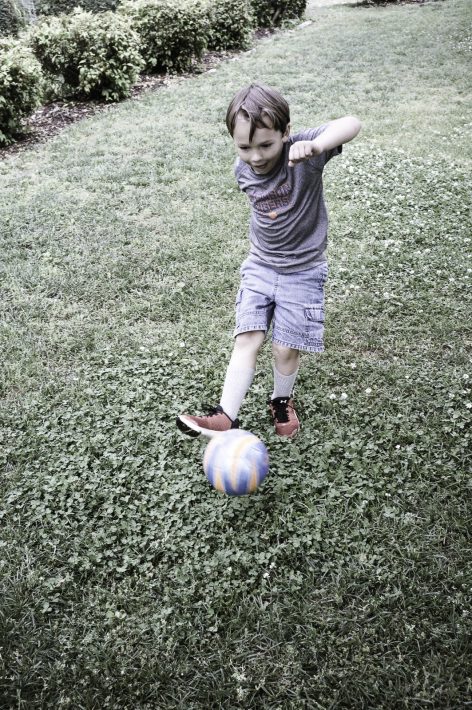
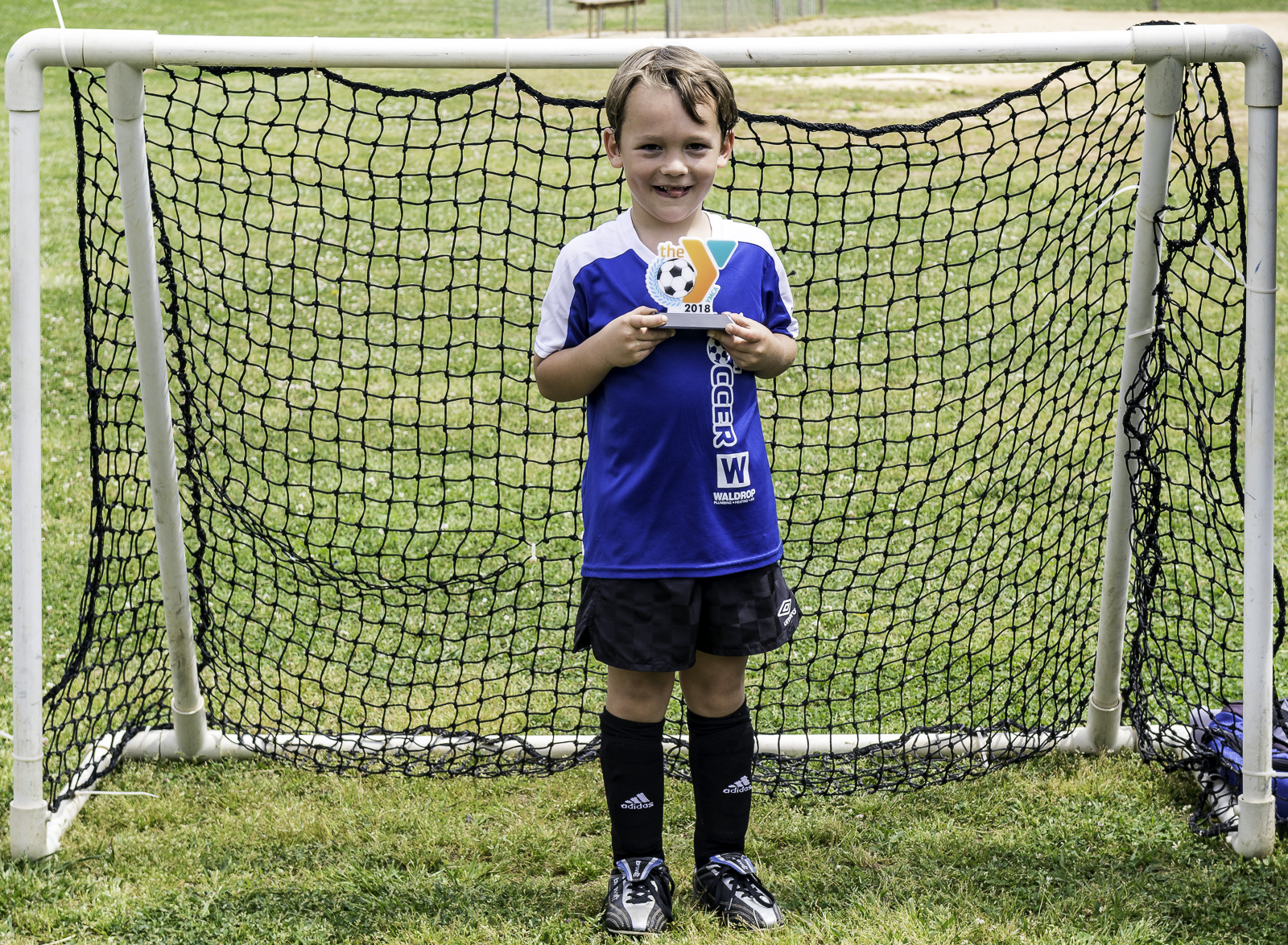
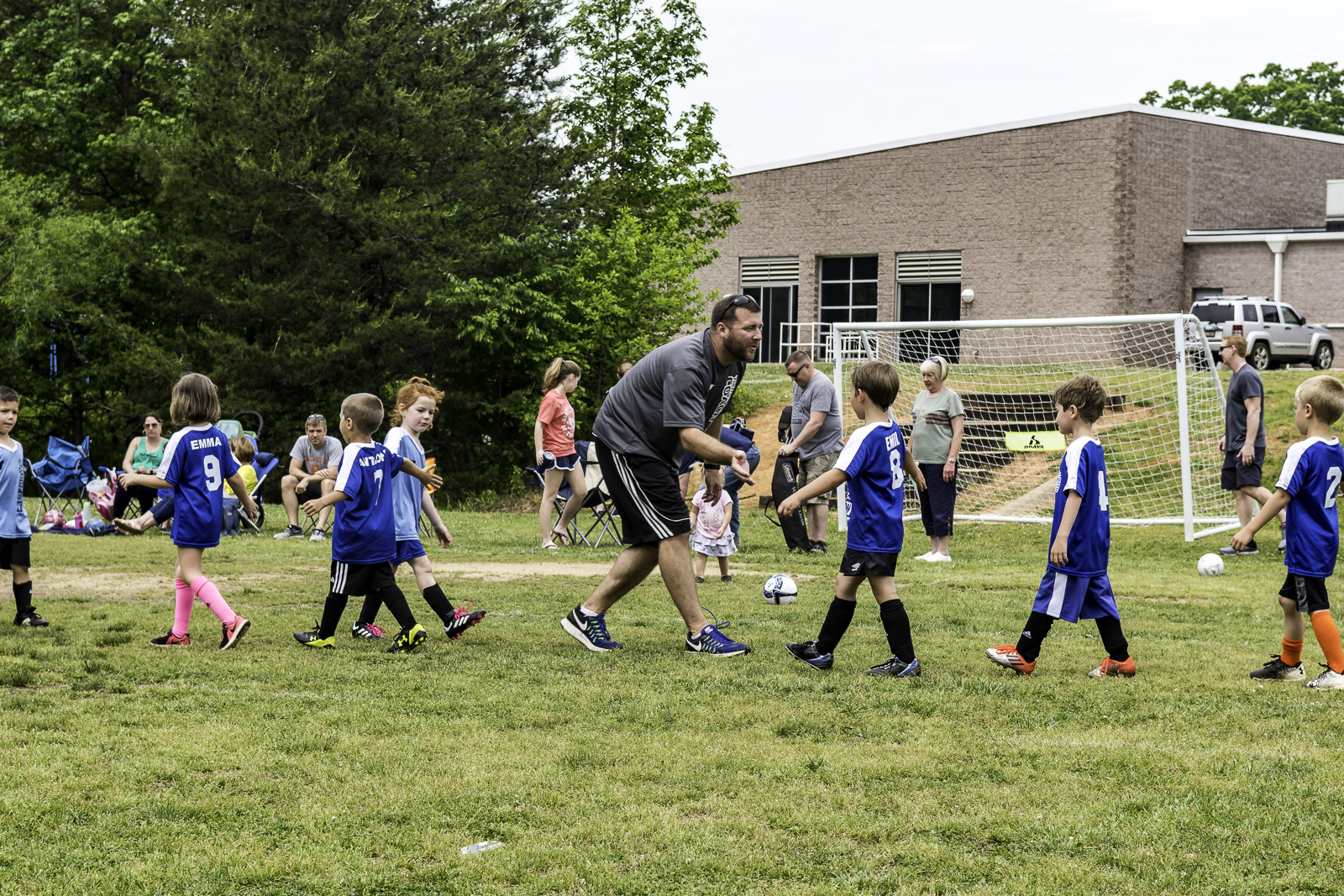
The Boy finished his second season of soccer. It was a successful season, no doubt. Talking to the coach during Monday's practice, I heard the kind of praise about one's child that parents dream of. "He's really got something," he said. "He plays thoughtfully. He watches. He thinks. He doesn't just barge in. He waits for a moment." This jives with E's own description of his strategy: "I just run around the edge [of the pack of children all trying to gain access to the ball] and wait for a good moment."
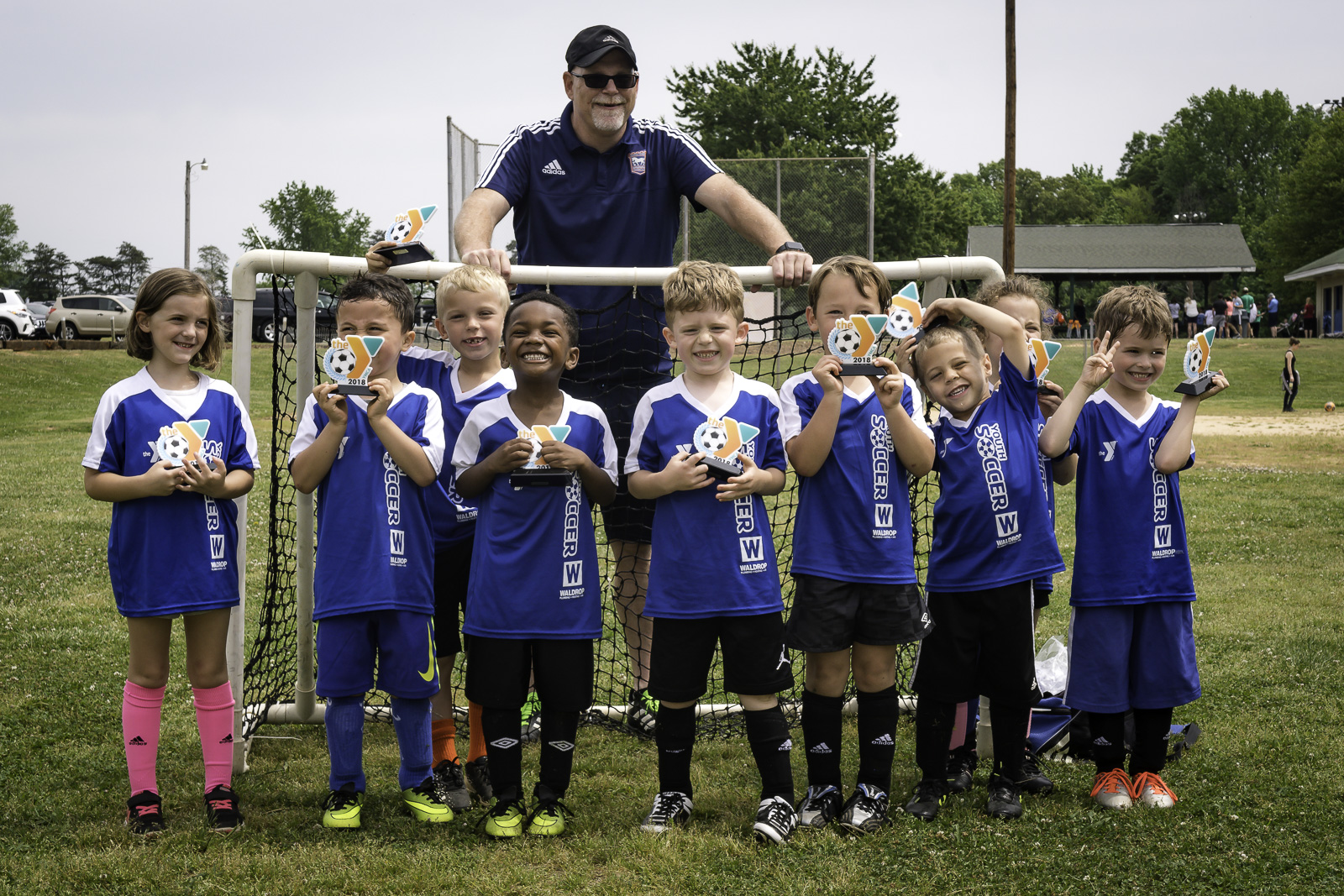
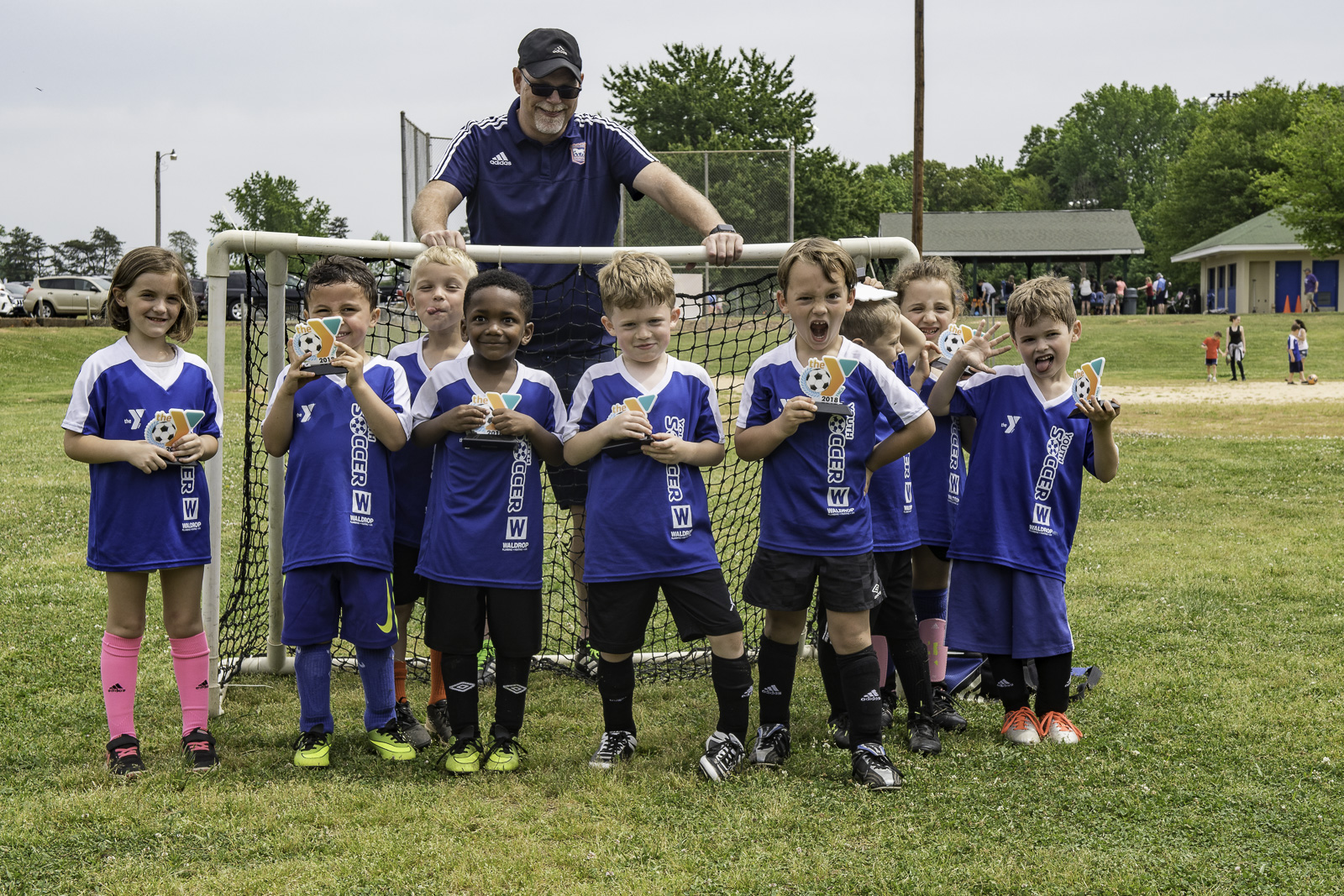
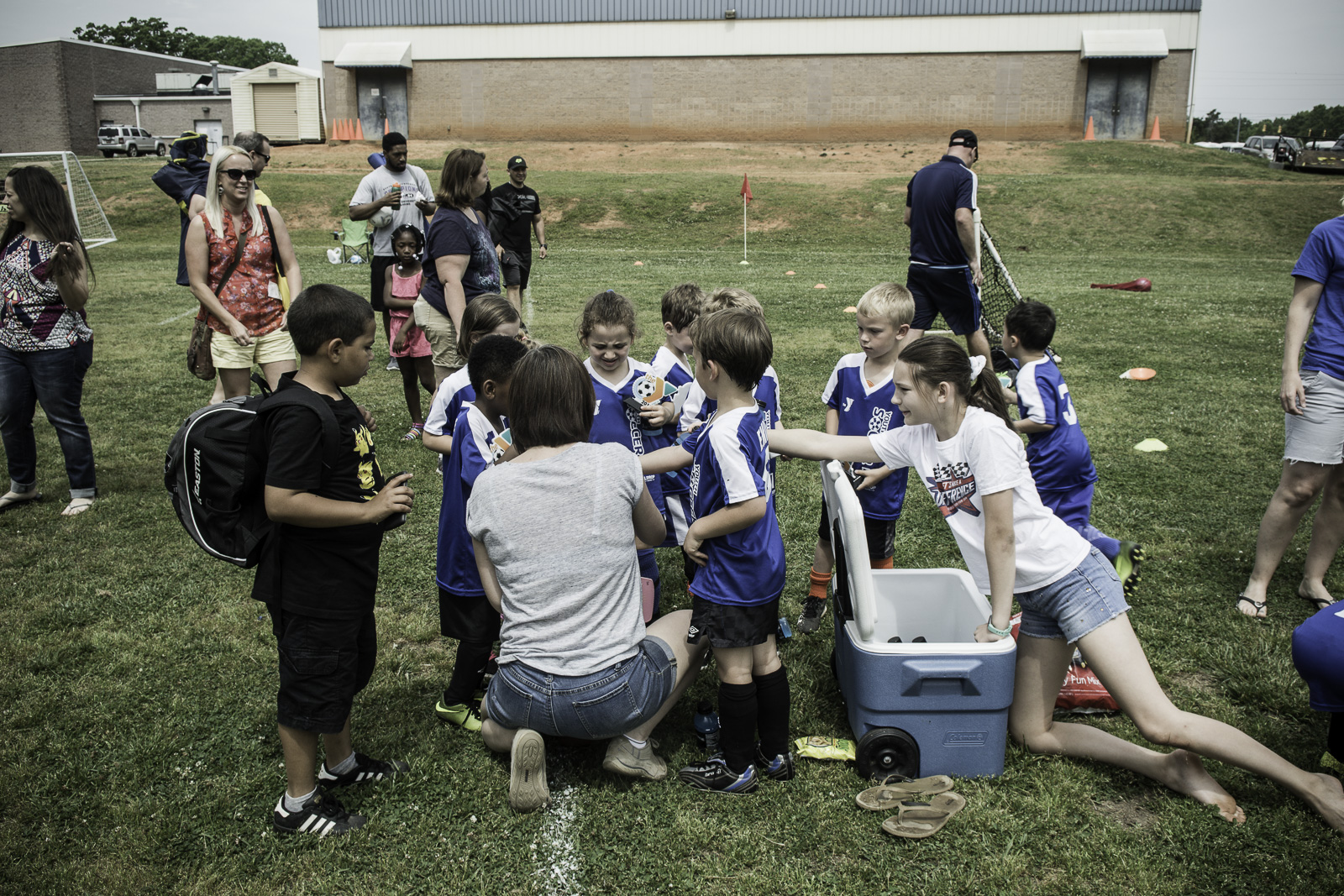
(Click on the images for a larger view.)
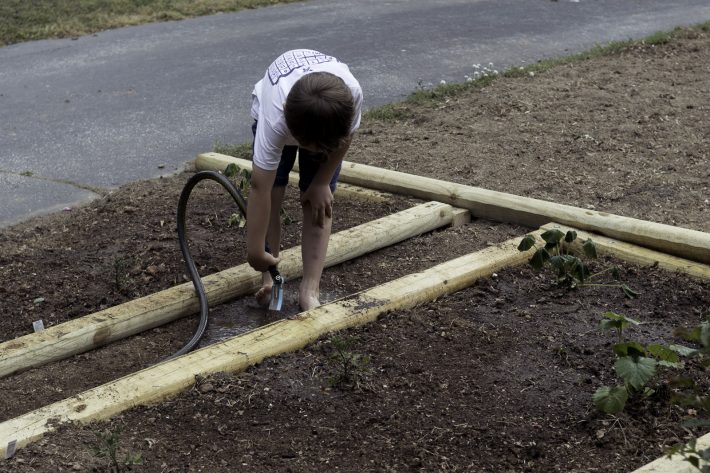
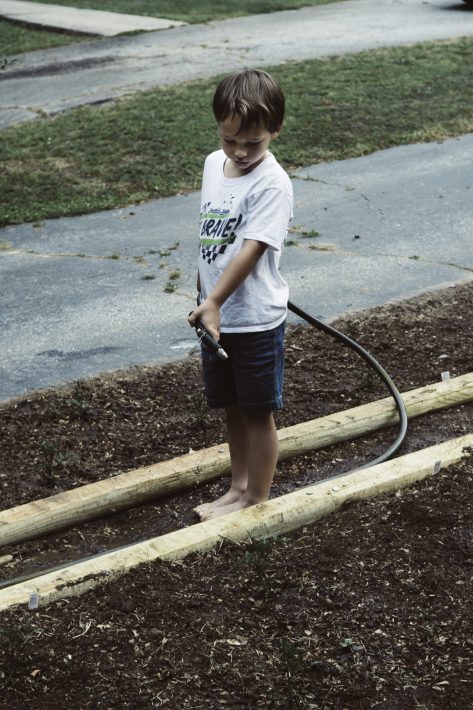
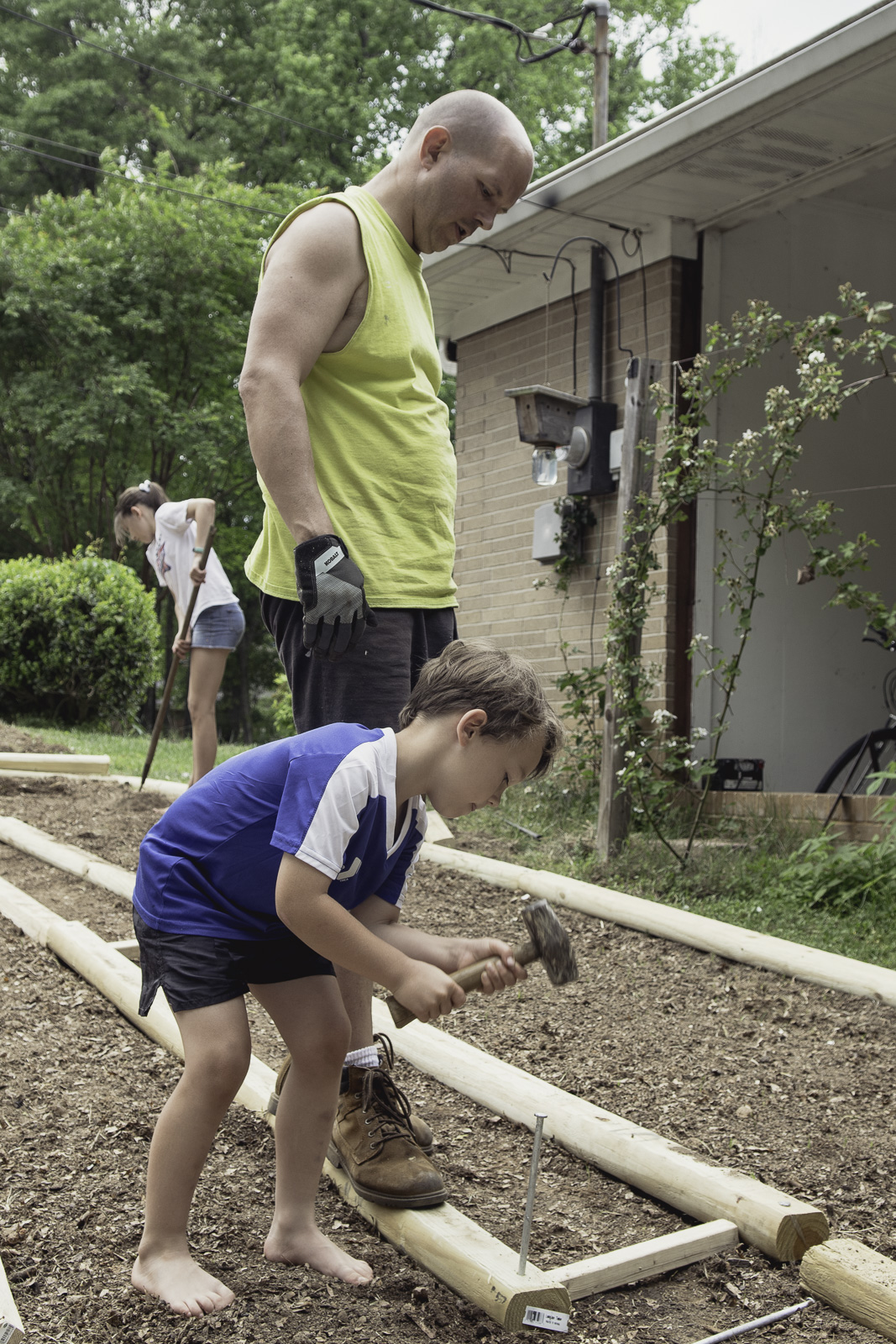
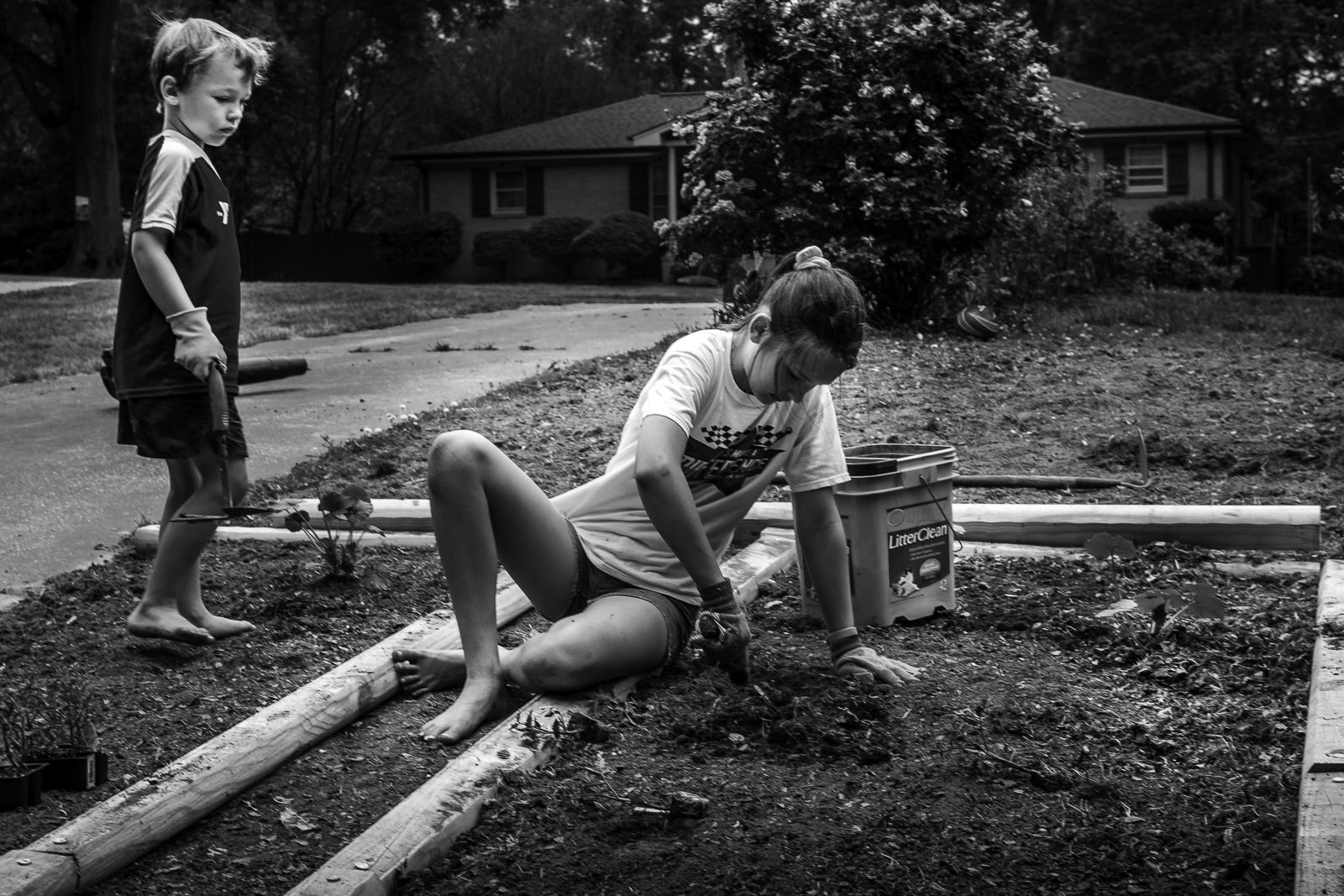
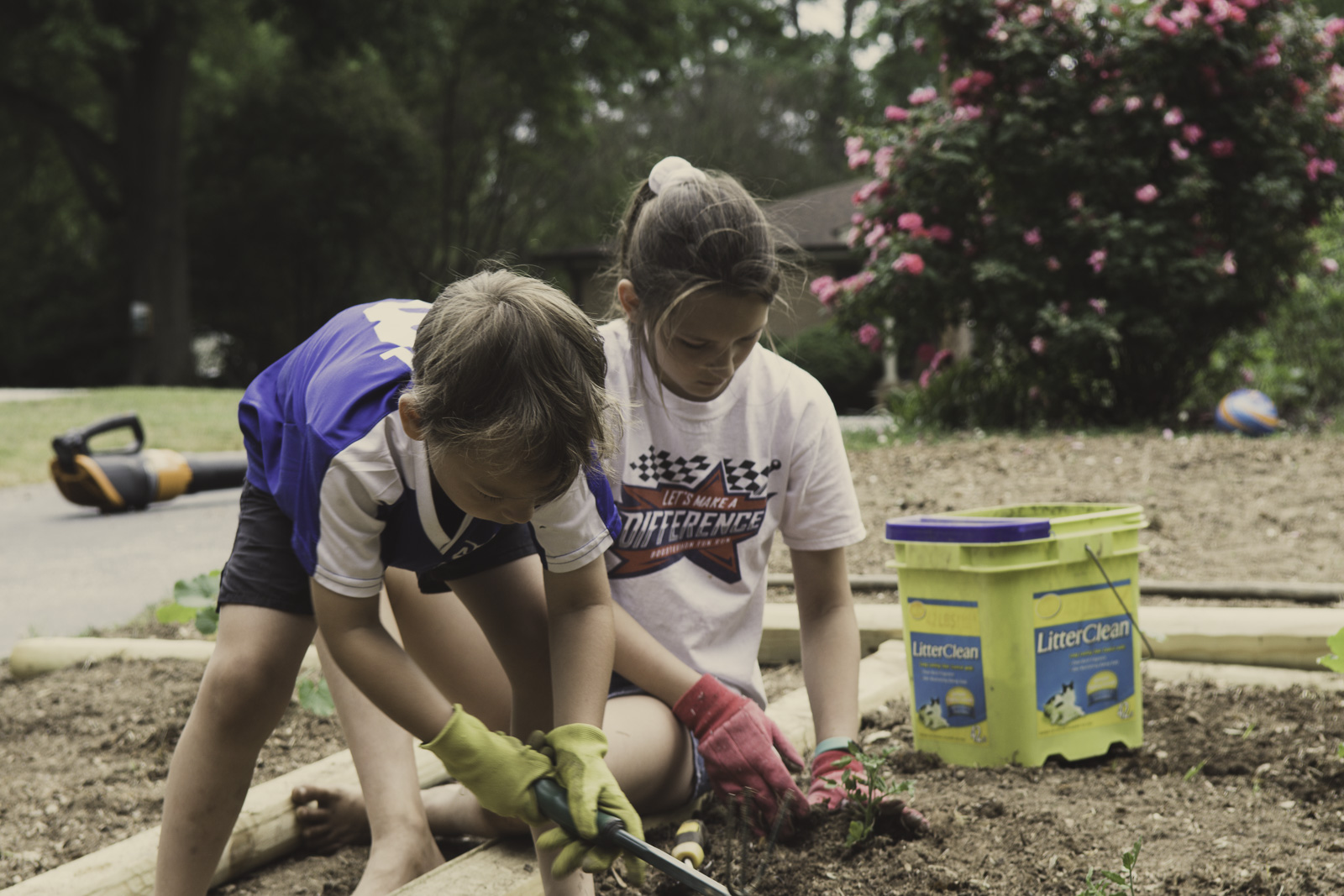
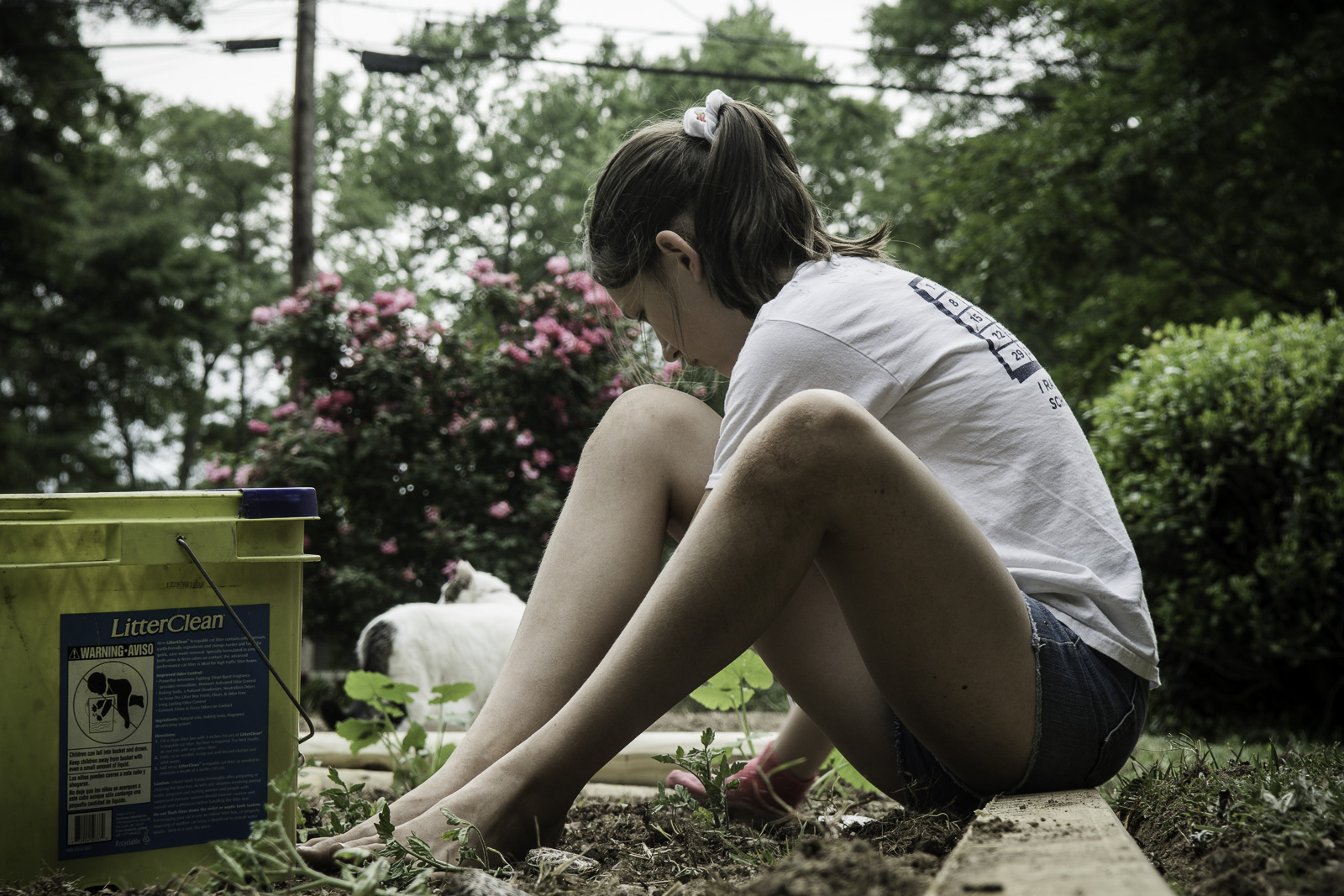
After the game, spring planting. The Girl decided she wanted to help. Wanted to drive the stakes that will hold our simple borders in place. Wanted to rake the soil one last time. Wanted to put the young plants in the ground.
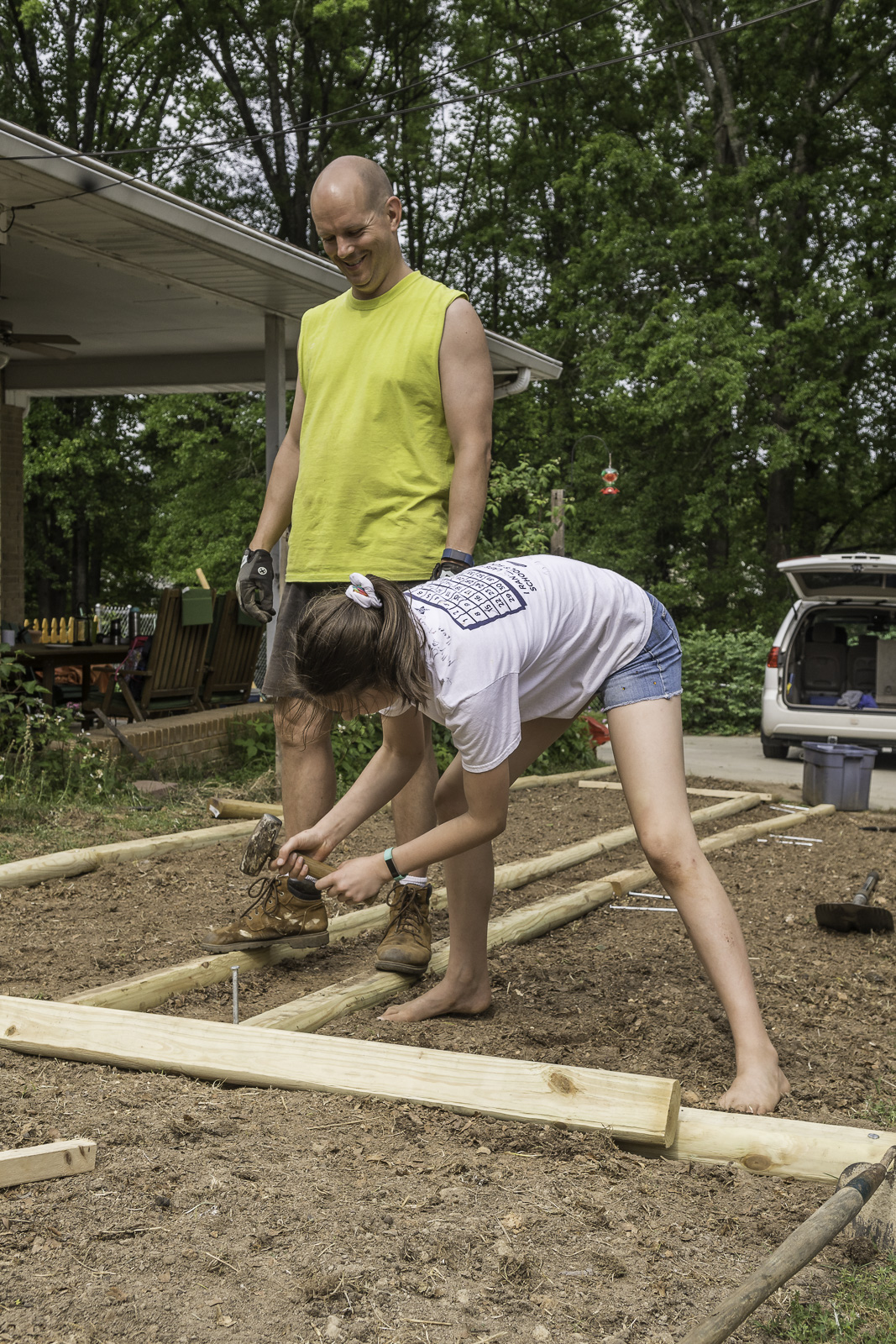
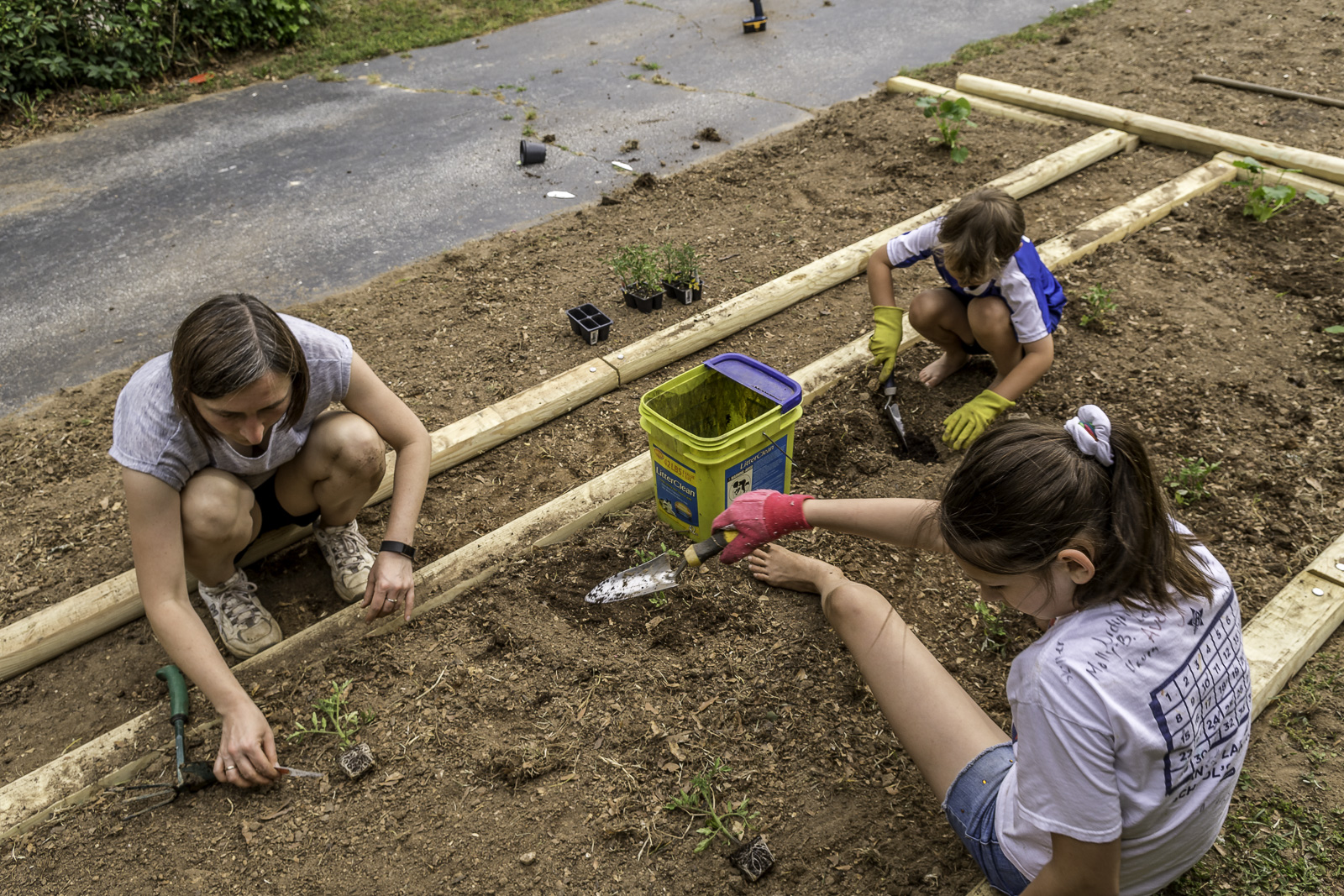
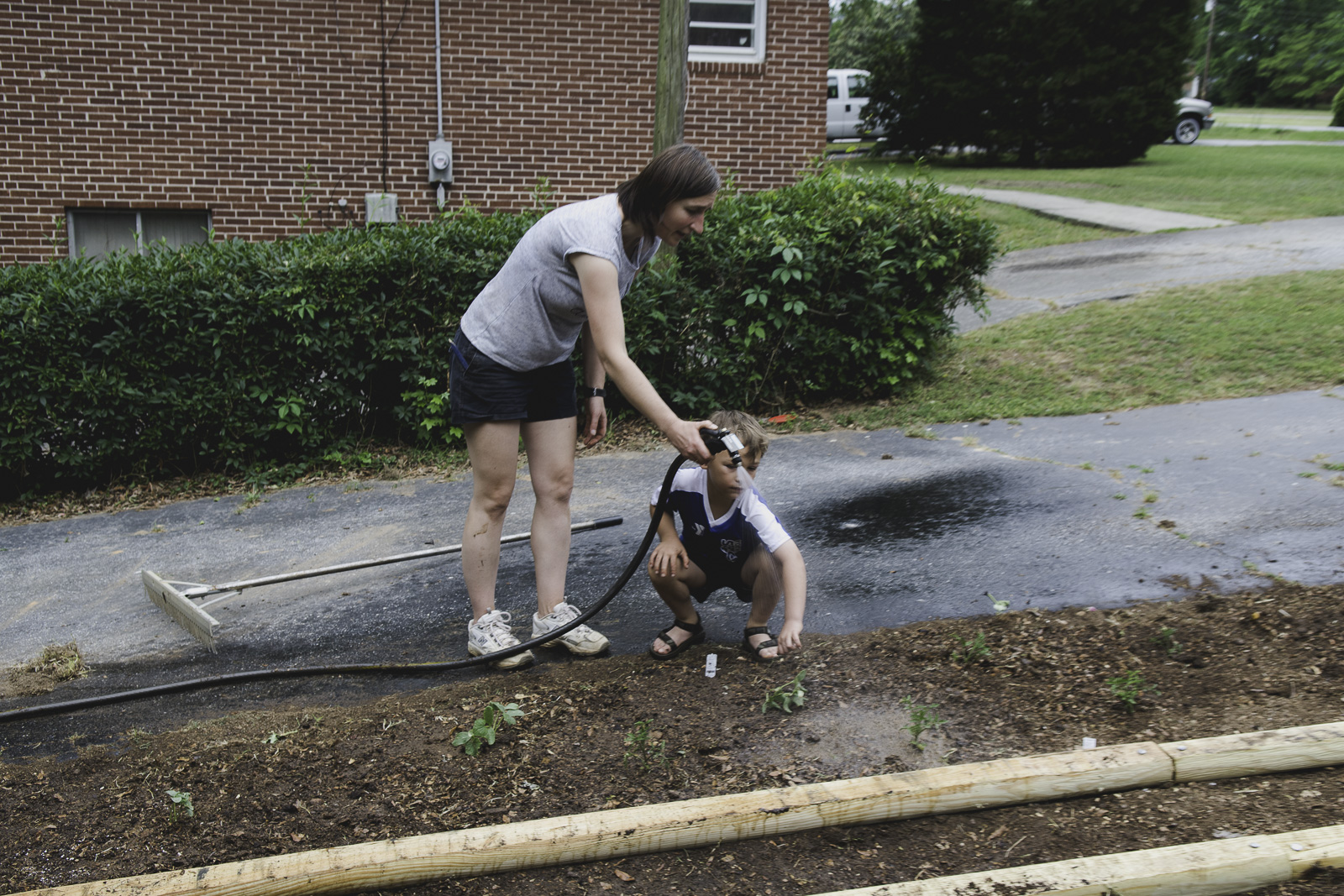
(Click on the images for a larger view.)
The Boy, just having woken up from a nap, had to fight for his right to drive a few stakes in...
In the morning, we had the school talent show.
A time for the Girl to shine, a time that brought applause and high fives.
The evening brought the second and final round of the Battle of the Books. The girls got in on a wildcard, and they were terribly excited about the prospect of being able to win the whole thing.
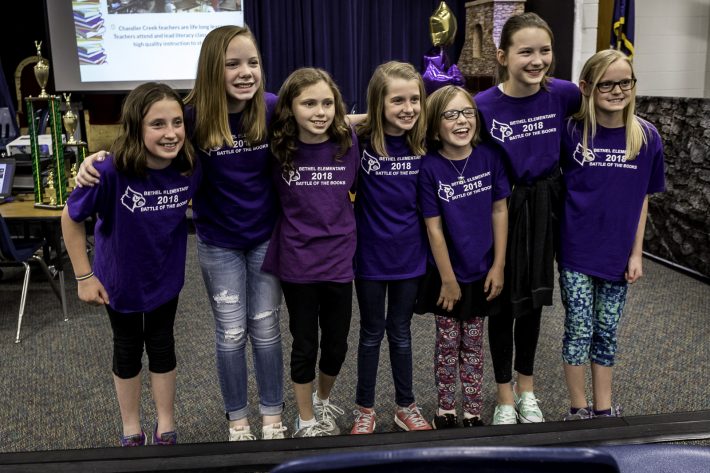
They were asked to lead the Pledge of Allegiance at the start of the competition, and everyone laughed that it was definitely a good sign.
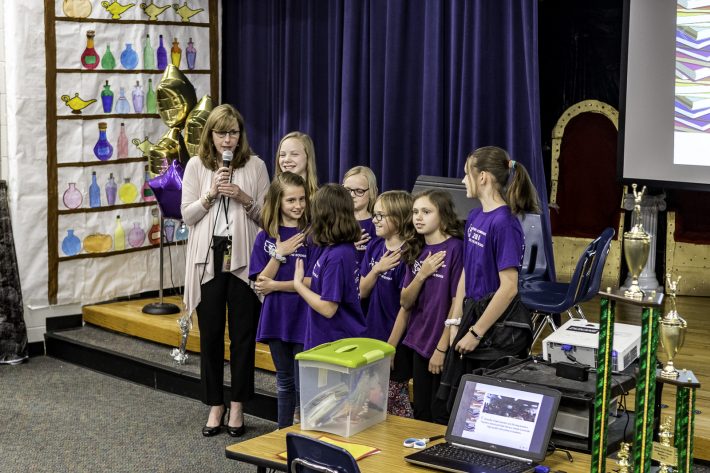
They were up against the school that, in their minds, was the favorite to win the whole thing. The first round went quickly: seven questions to each, no mistakes from anyone. But these were the easy questions — they questions they’d been given before. “The practice questions” the judge called them. And it showed: very little consultation for each question from either side.
Round two featured questions that they’d never heard. Gone were the immediate answers. The teams sat huddled talking about each question, and after our girls gave their answer, the tension immediately increased as we waited for the magical words: “That is correct.” Everyone trying to read into the judge’s body language, tone, facial expression. A slight pause from the judge and everyone thinks, “No! We got it wrong!” only to have that assumption mercifully shattered: “That is correct.”
And then it happens: we get a question wrong. The other team swoops in for the bonus points (3 instead of 5) for answering it correctly.
“Now team B will get their next question.” Everyone knows what this means: there’s only one way for our girls to continue. The other team has to get this question wrong, and they have to get it right to get the bonus points to tie the match. But they get it right. And the girls’ faces all drop.
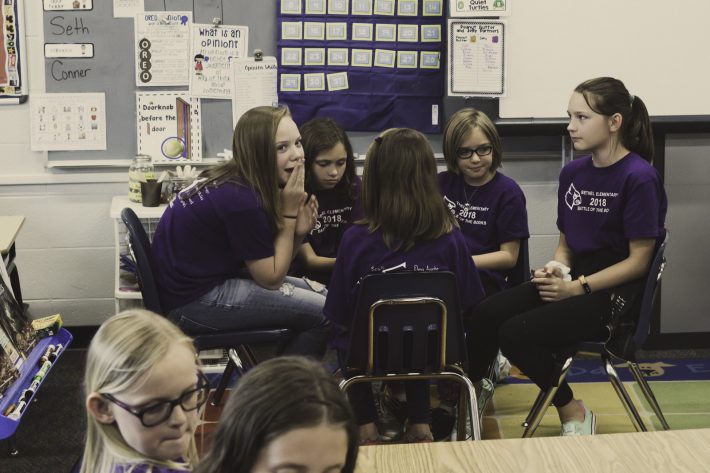
The winning team comes over and shows perfect sportsmanship:
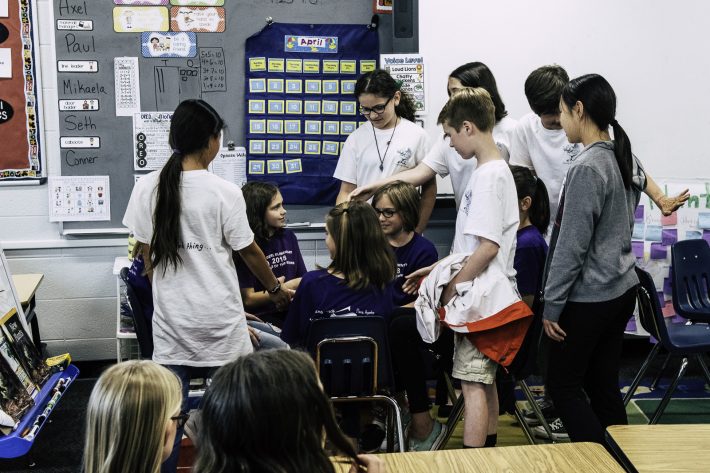
But that does little to take the sting out.
Afterward, the girls talk about the answer and they’re sure their answer was just as correct as the other team’s, but it’s for naught.
Or is it?
There’s much to gain from losing, and perhaps even more from losing unfairly. If losing builds character, as they say, unfairly losing builds even more.
A day of contrasts. At school, the kids in eighth-grade English as working on performances of small excerpts from The Diary of Anne Frank, the play based on Anne's diary. Most of the groups are doing great: they work well together; they take criticism from each other well since they know part of their grade comes from how well they're performing as a group; they seem to enjoy the challenge. Most of them. One group, not so much. The group just isn't getting along. One girl -- we'll call her Alicia -- has a temper that could be measured in nanometers, and she has to express her thought when she finds herself annoyed, which is frequently. Another girl -- we'll call her Susan -- just doesn't care, and she doesn't care that other people might care, and she doesn't care that her apathy affects them. And she has a temper as well. One boy in the group likes to provoke anyone and everyone he can. And finally, a third girl has made a big turn-around this year in my class and has gone from being nasty to being a fairly well behaved, decent working young lady, but one who doesn't like it when things don't go her way. So while all other groups were developing their ideas, rehearsing their lines, planning who would bring what props, this group broke into fits of frustration and argument literally every three or four minutes.
How can you teach kids any subject when first they need to be taught how to control their temper, how to control their tongue, how to control their sense of self-injury?
At home, the Boy and I initiated what we're going to try to make into a daily activity: a bit of chess together. He knows how to move the pawns fairly well now. He knows the basics of the rooks. Next, we'll introduce bishops, the king, the queen, and finish up with the tricky knights.
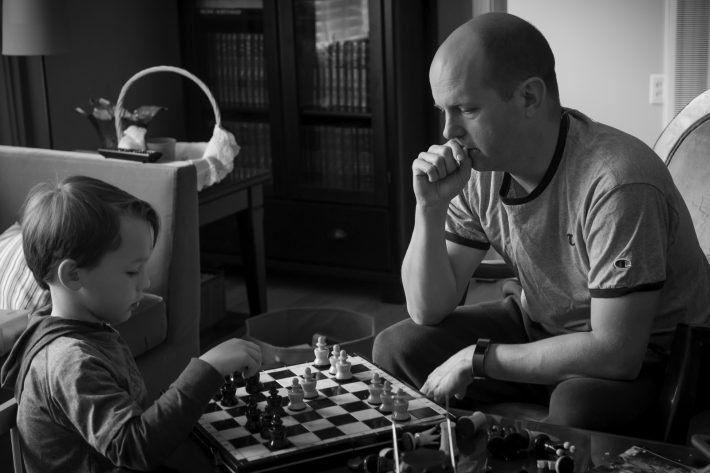
He's learning to pile up attackers and count defenders to determine if he can take a piece or not; he's starting to think offensively and defensively at the same time; he's eager to learn more -- all good signs. His mind is growing. His body, too -- faster, in fact.
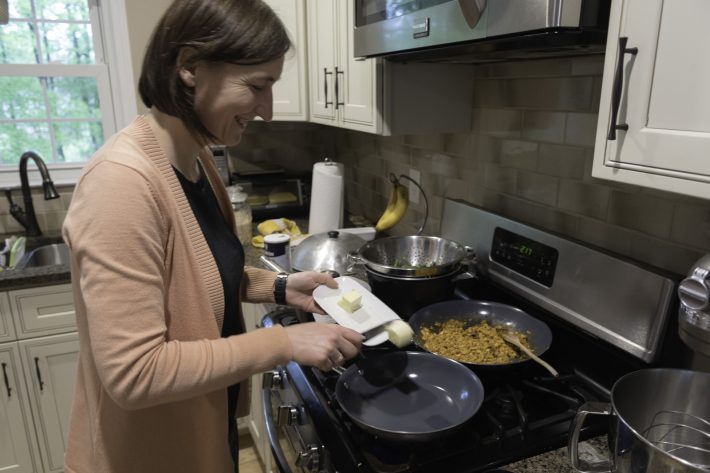
Tonight was taco knight (see what I did there?), and the Boy loves Mexican food. We have a little Mexican restaurant down the street where the two of us have eaten dinner when the girls are out on their own, and he's always eager for more.
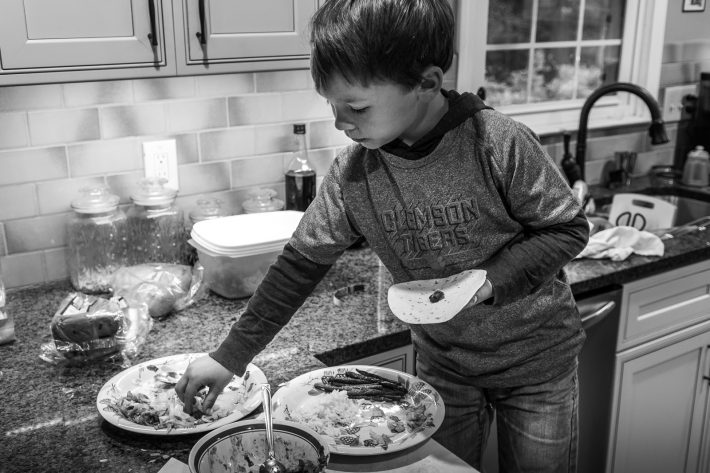
Tonight, he skipped the beans and the rice and ate not one, not two, but three tacos. Half the fun for him is actually making the taco.
The calm and the joy of chess followed by tacos seemed so jarring juxtaposed with the chaos my one group of students was experiencing. Those who were causing the issues -- what kind of jarring, chaotic home life might they have? It doesn't seem that people who would go home to some time with their family and a bit of comfort food would have that much difficulty keeping themselves in check because it would have been modeled for them and perhaps taught explicitly.
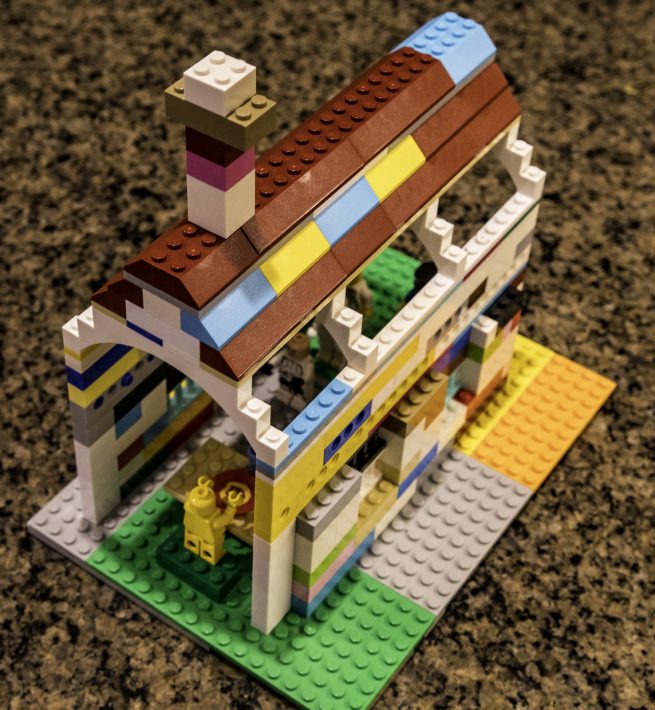
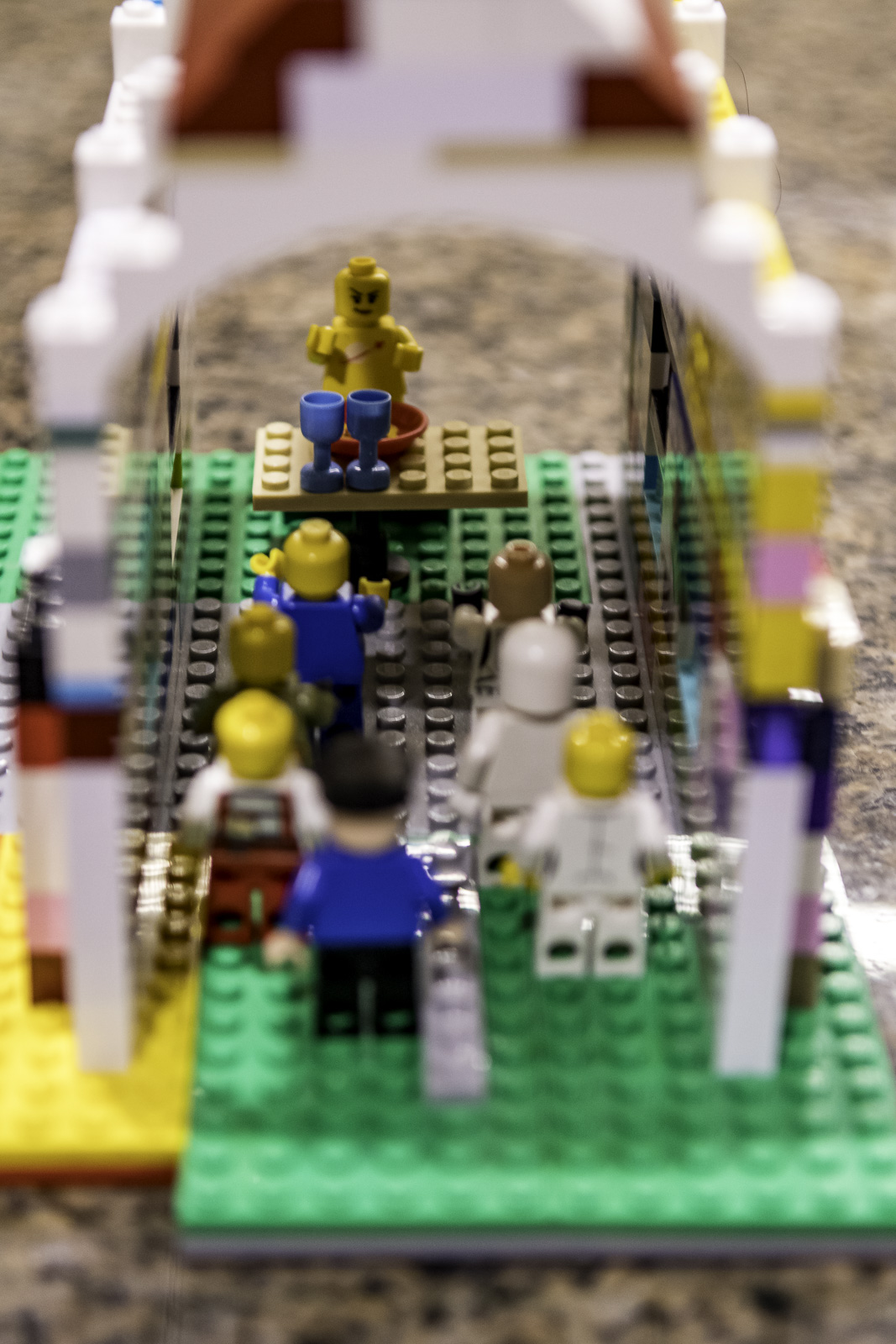
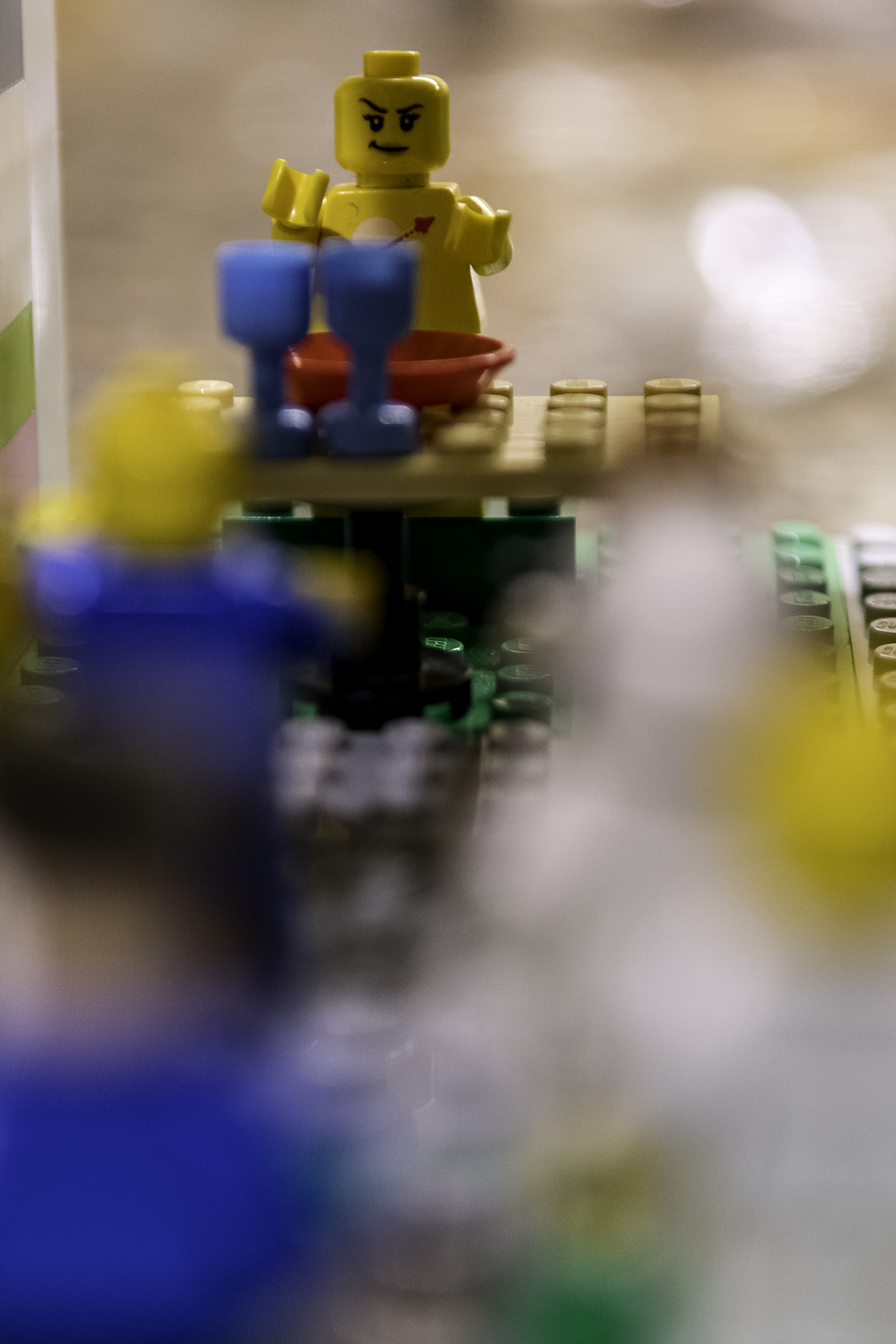
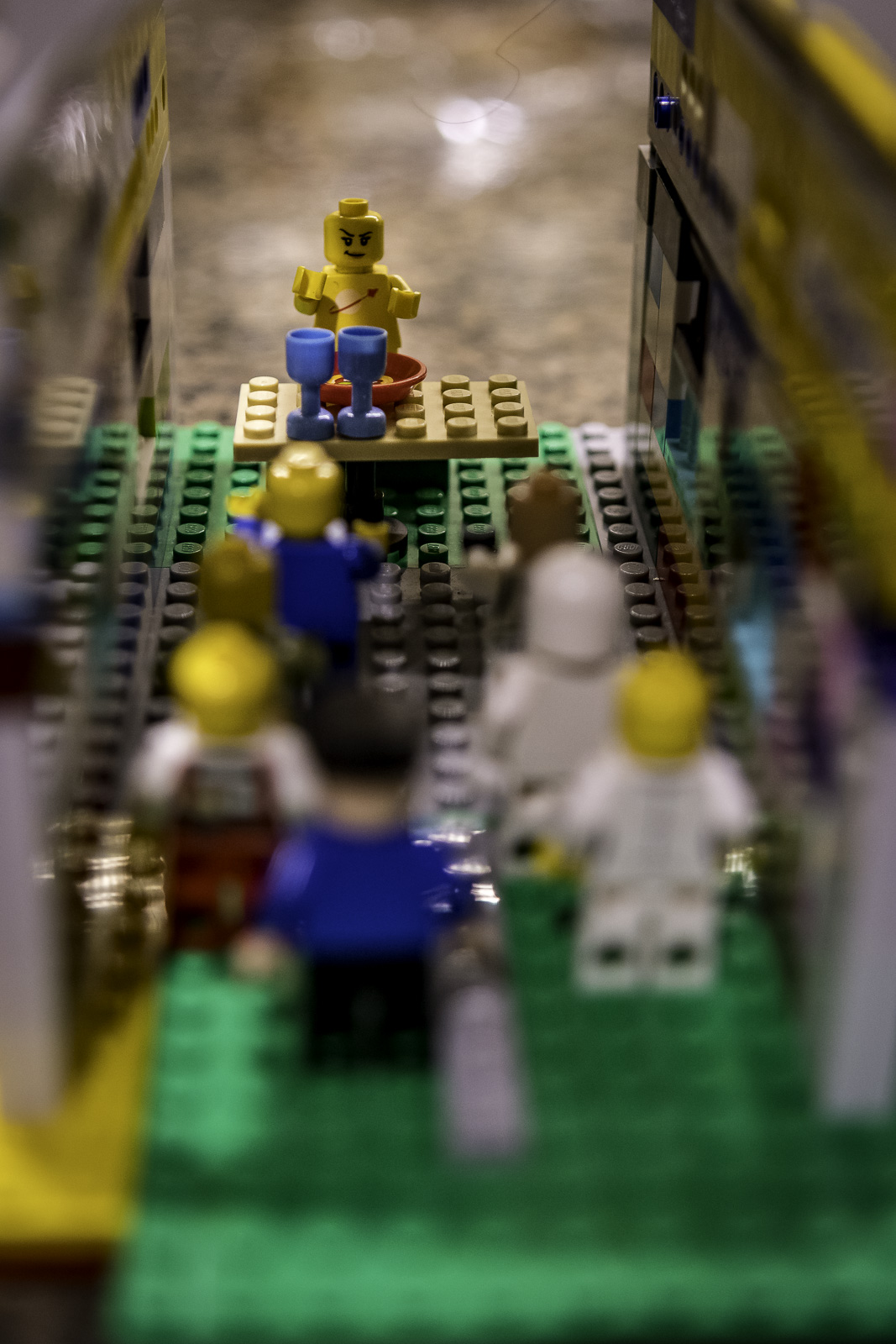
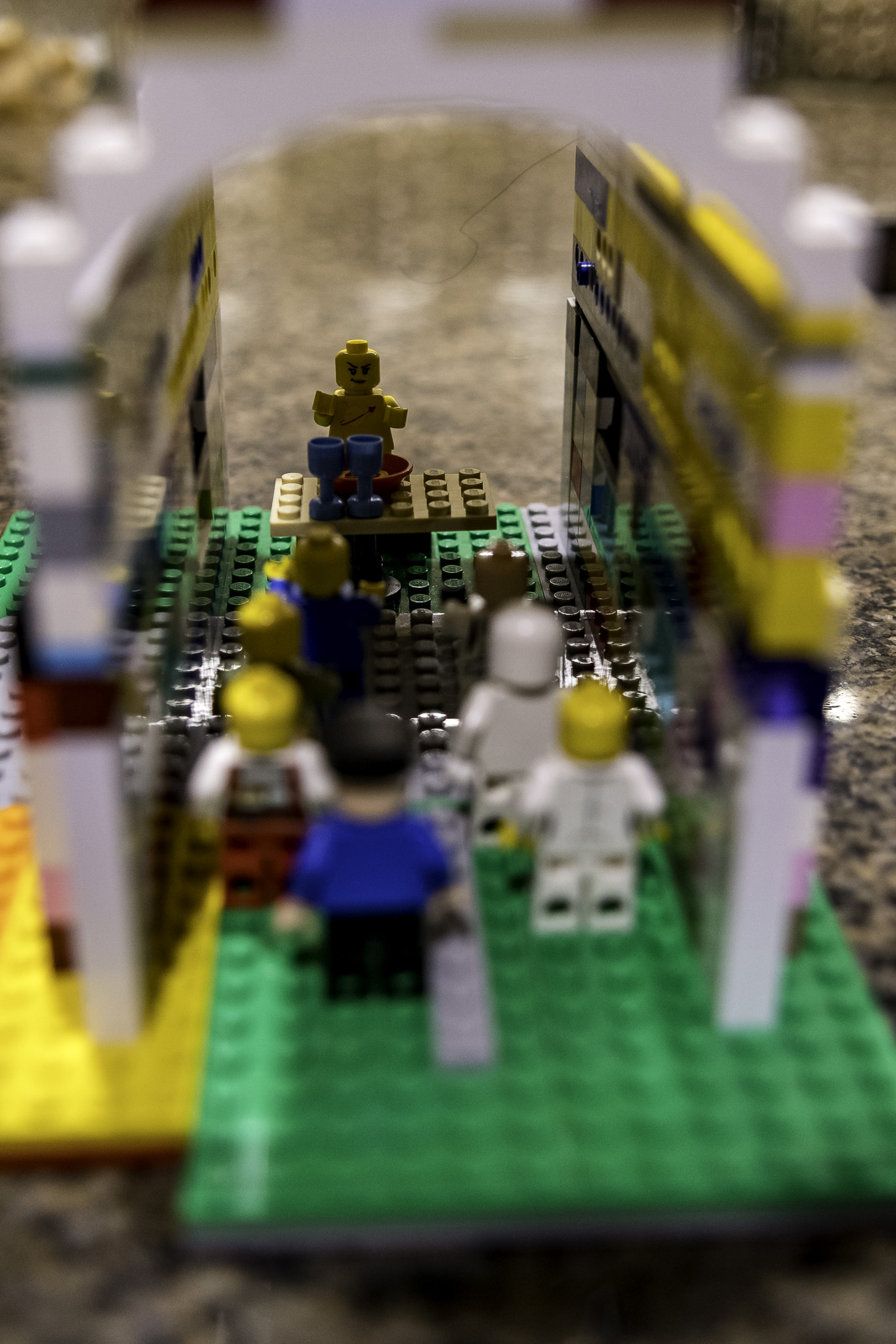
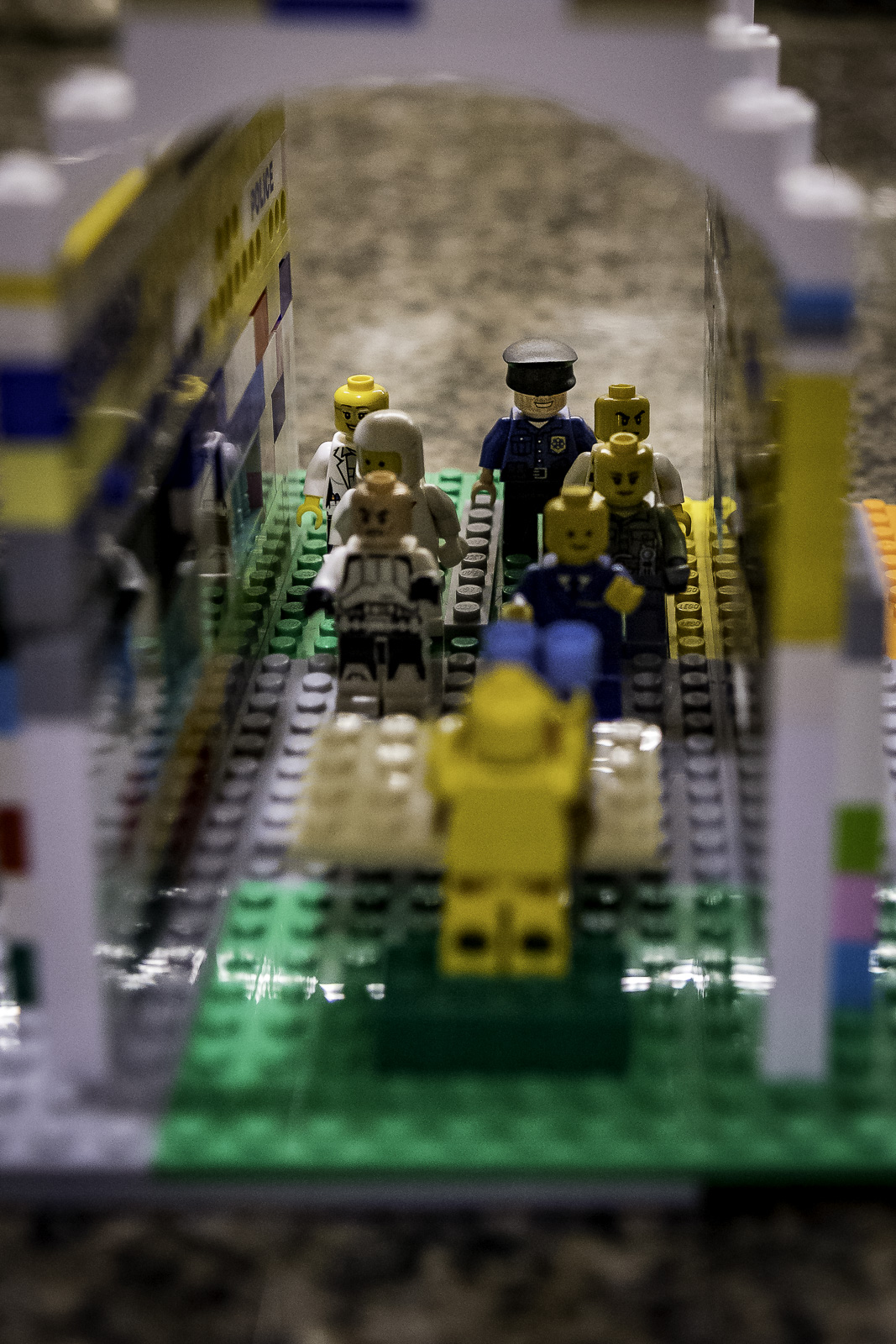
In the evening, when the girls have gone to gymnastics and shopping, the Boy and I decided to play with Legos, and we decided we needed to make something we'd never made before. We decided on a church.
As I was building the roof, the Boy declared that he would start working on things for the inside. After a few minutes, he showed me something he'd made.
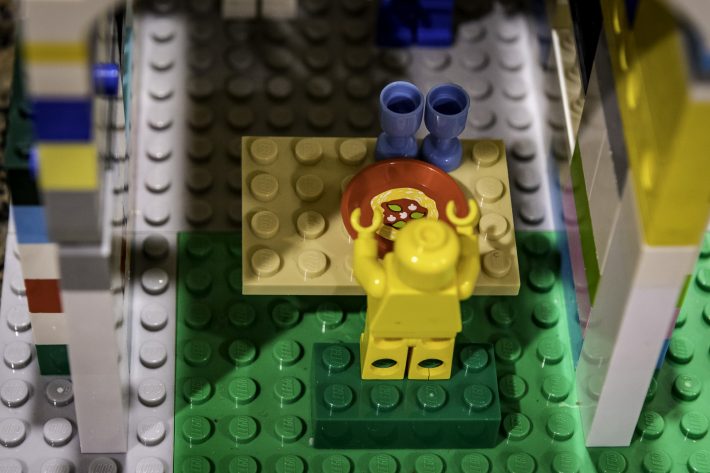
"It's that table, where they do everything," he explained.
"The altar?"
"Yeah."
And he made it complete with chalices and a paten.

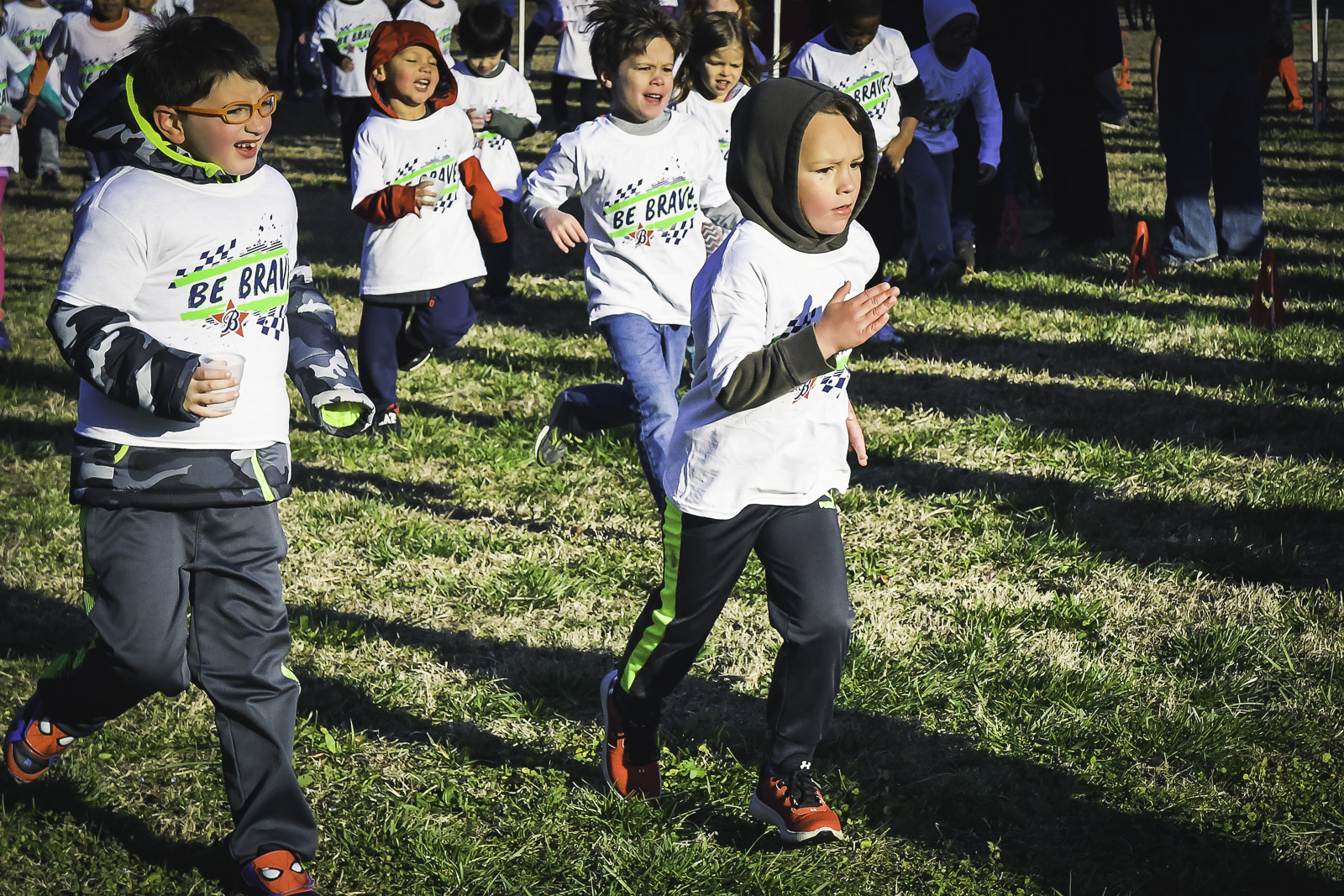

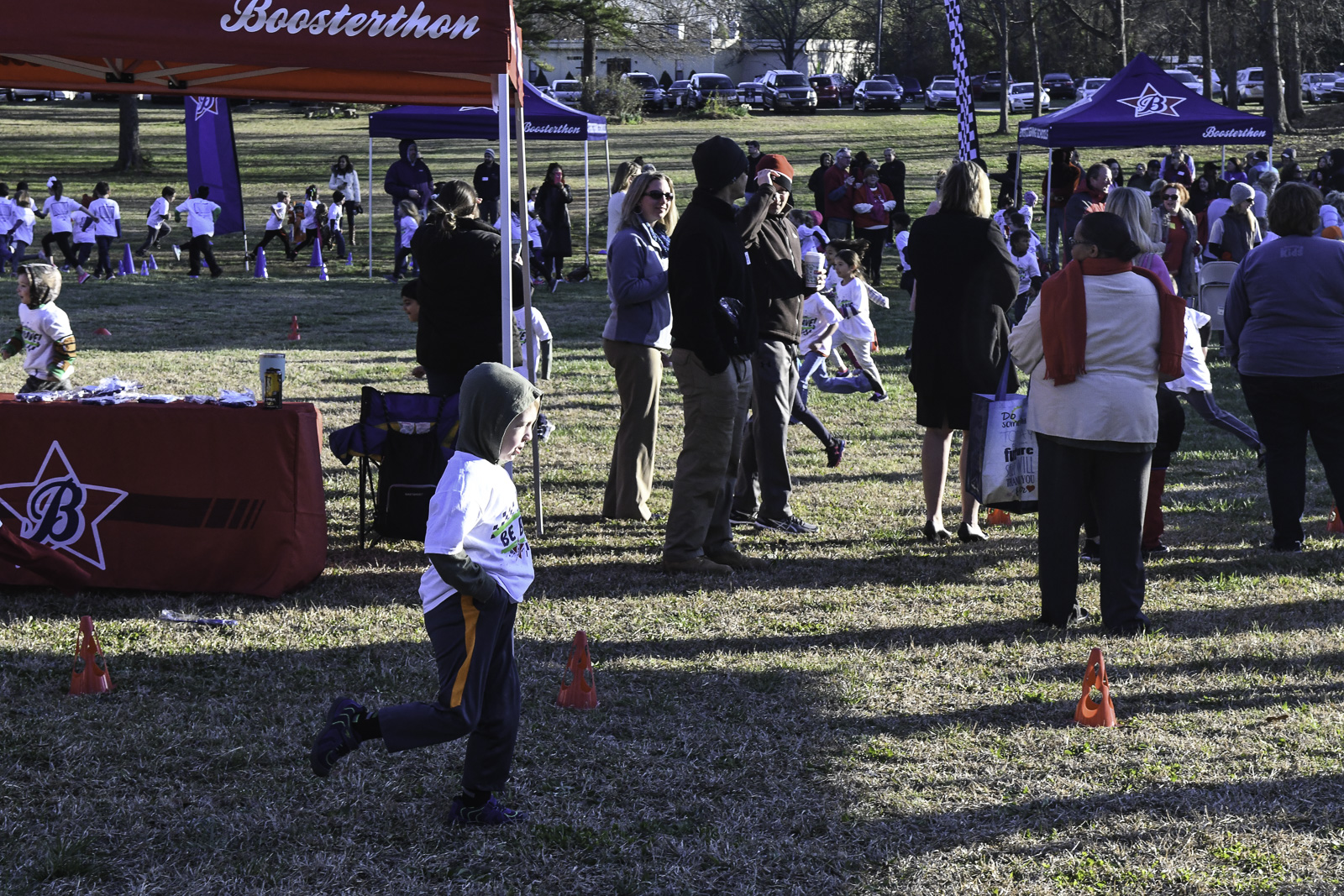
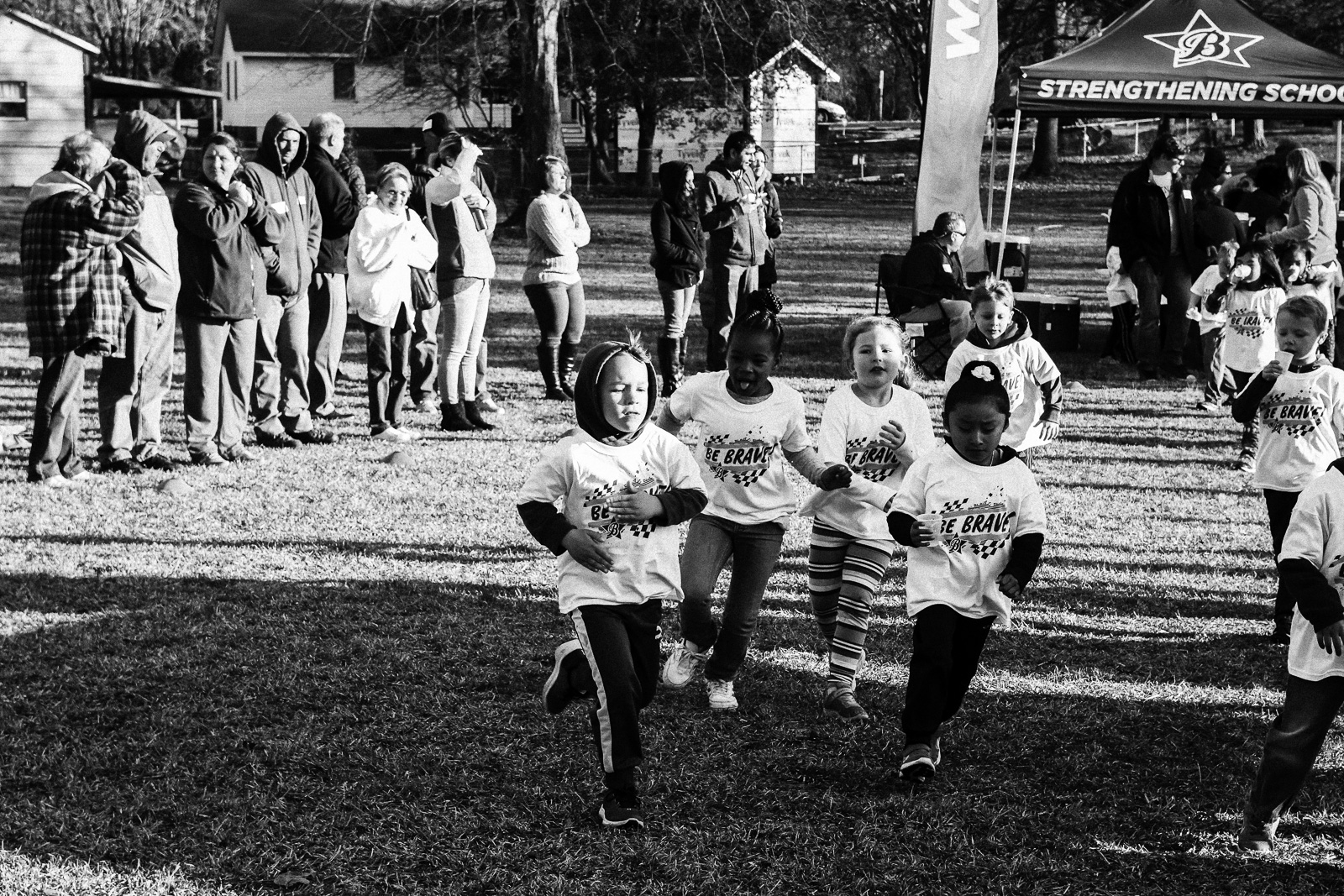
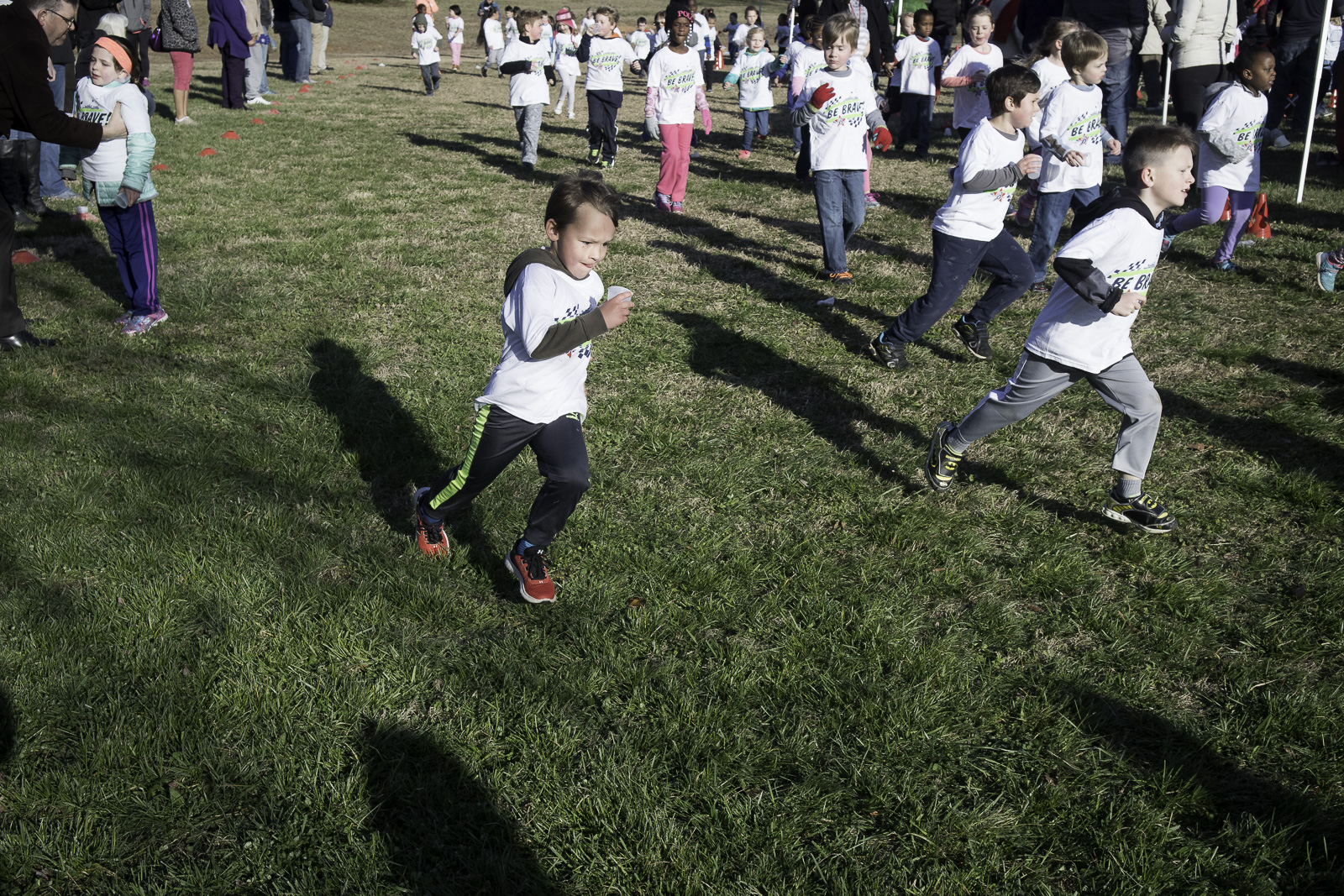
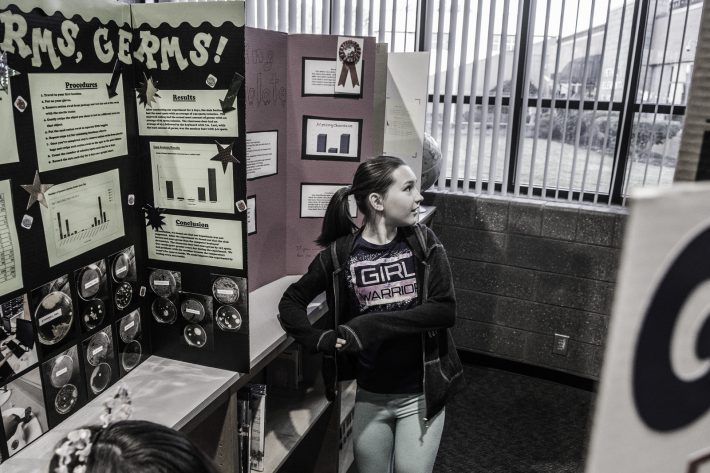
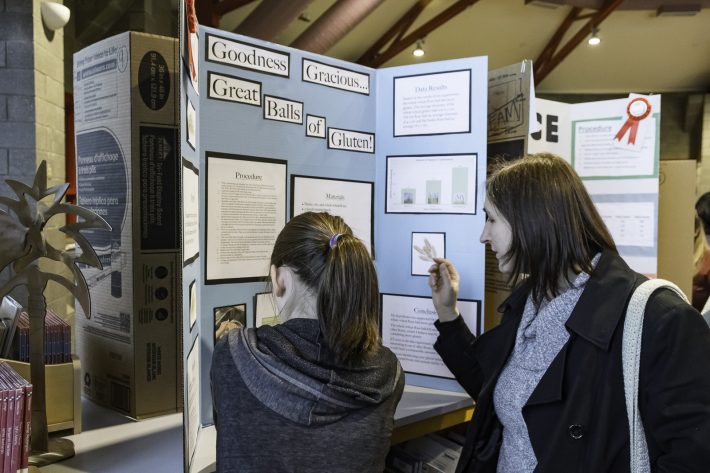
I find it hopeful when we take L for the science fair project display. Of all disciplines, science is the one we as an American populace most obviously show a general, nationwide deficit. The fact that millions of people don't understand the basic tenants of evolutionary theory, that millions of people think global warming isn't a reality and if it is, isn't the cause at least in part of human activity, that millions of people think vacations are a greater risk than they are a benefit, that millions thousands (thankfully not millions -- yet) think that the moon landing was faked and the earth is actually flat, that millions of people think the earth is only 6,000 years old despite an overwhelming amount of scientific evidence to the contrary -- all these facts make it clear that as a society, we have some work to do regarding basic science education.
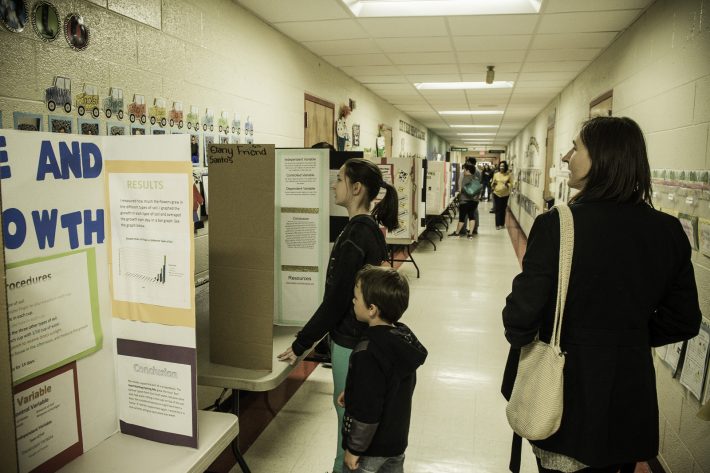
It's not the science education, per say, that is so important -- it's the critical thinking that goes along with it. The methodical, analytical, self-critical way of thinking. The notion that no single answer will always stand the test of time and peer review. The humble idea that you could be wrong. Go to a presentation of scientific findings and you'll hear people constantly couching their findings in self-effacing comments designed to show everyone in the room that the presenter doesn't think she knows it all. For every scientific finding, there are other researchers chomping at the cliché bit, attempting to replicate a given experiment, hoping to prove something wrong. Science is about putting forth a hypothesis and then watching a bunch of people try to show you you're wrong. It must be a humbling experience.
Ironically, on the other end of the knowledge spectrum, we find the Dunning-Kruger Effect, a cognitive bias that essentially says that the less a person actually knows, the more superior that person feels about his knowledge; the less competent a person is, says Dunning-Kruger, the less likely he will recognize his incompetence.
It's a scary thought, the idea that I could have an inflated opinion about my own talent and knowledge and not even see it. Fortunately, I don't think I suffer from this: I see what other teachers do and know that I'm a "fair to middling" teacher: I do some things well, but I know perfectly well that I quite frankly suck at other aspects of teaching. The same goes for just about everything else. And K -- she's even harder on herself.
Or perhaps I'm just fooling myself about myself -- indulging in self-reflection filtered through a carnival mirror.
At any rate, we walked around the project posters and witnessed kids getting a good first or second (or third or fourth) exposure to experience with the research methods of the scientific process, and I found my hope for humanity lifted just a bit.
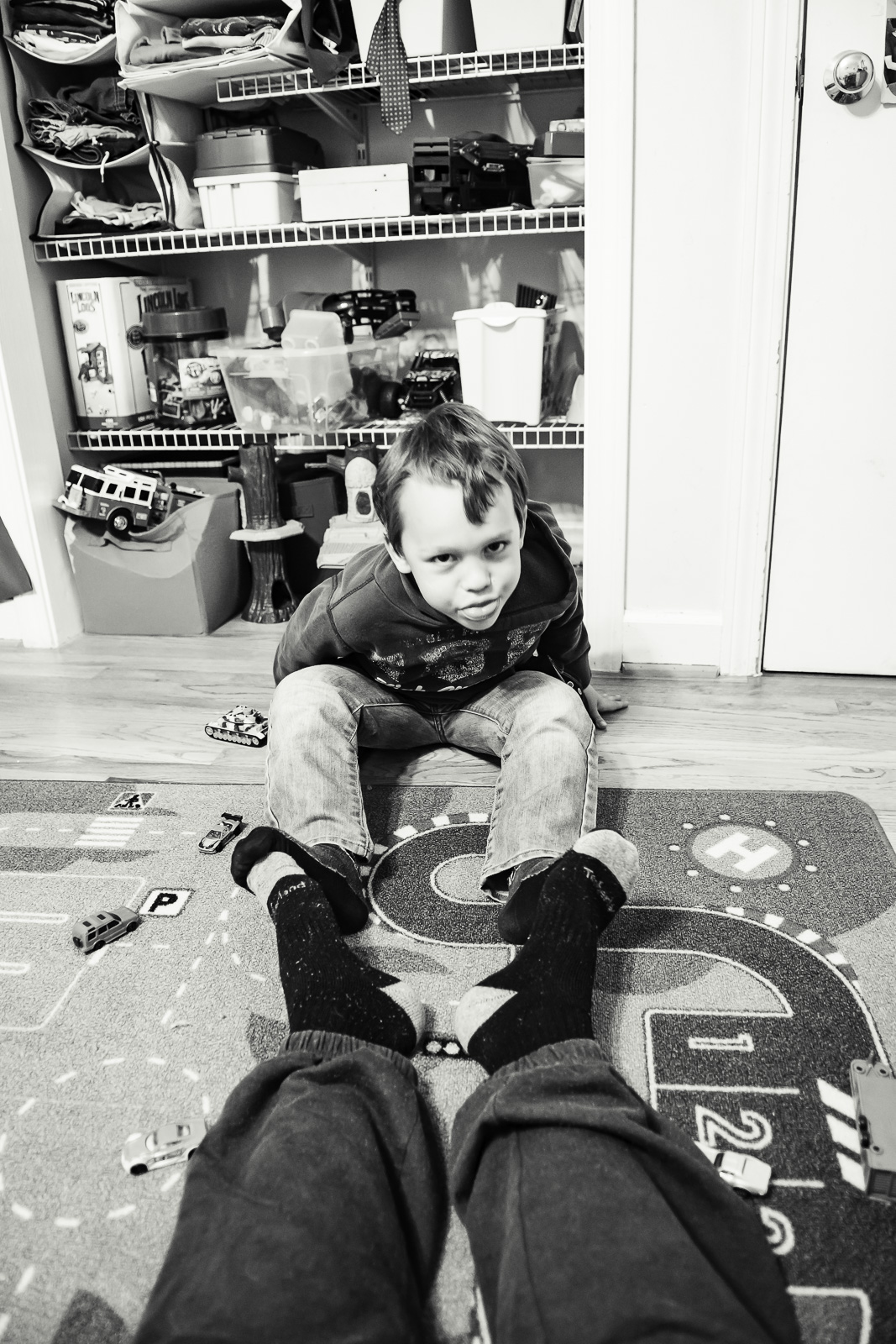

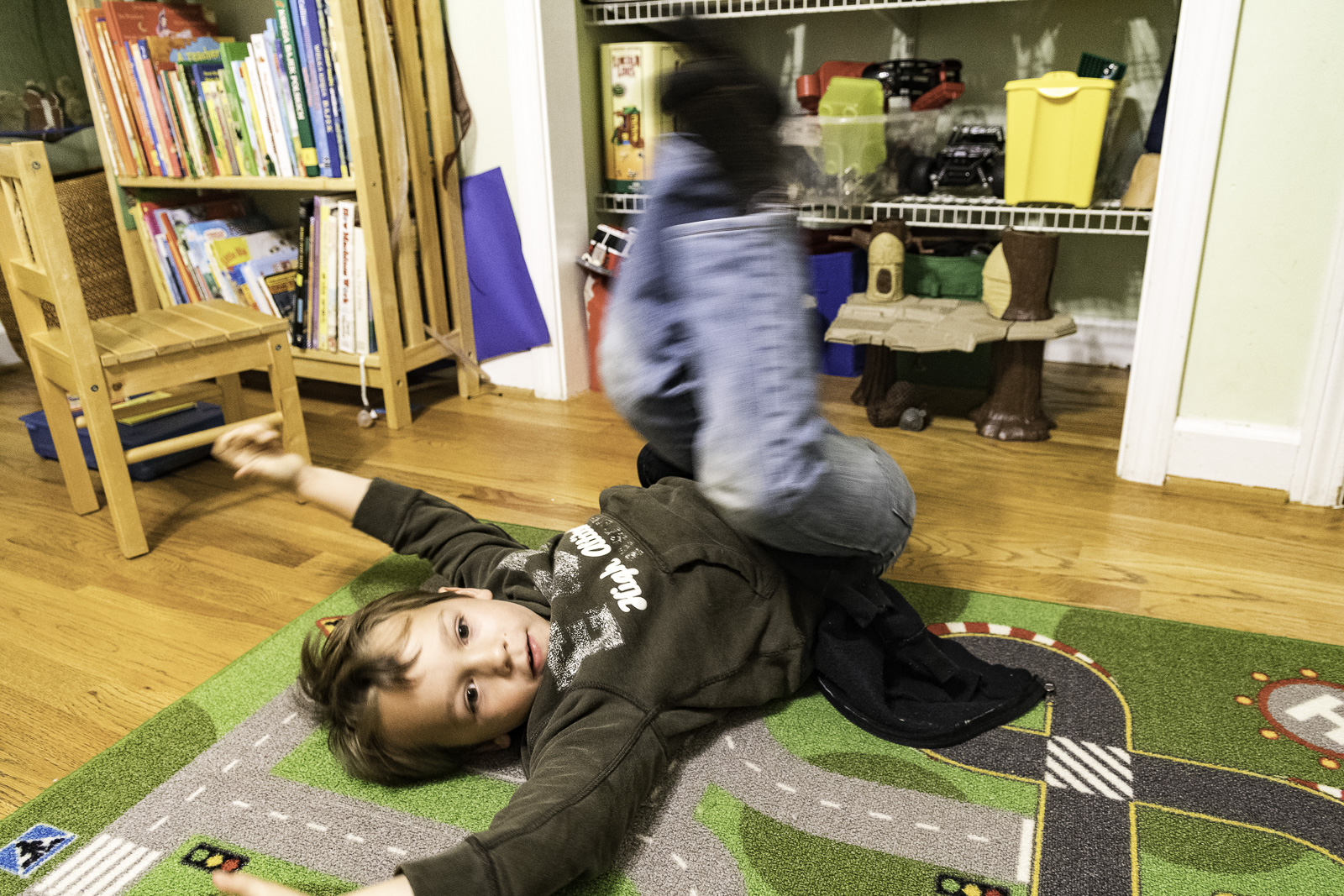
Coming home and playing with the Boy did more for me, though.
The Girl is writing a piece about Polish Easter traditions for the church bulletin where Polish Mass is held each month. She spent over half an hour last evening interviewing K about the traditions. Sure, she knows them herself, but not well enough to write about them. And not well enough to discuss the symbolism.

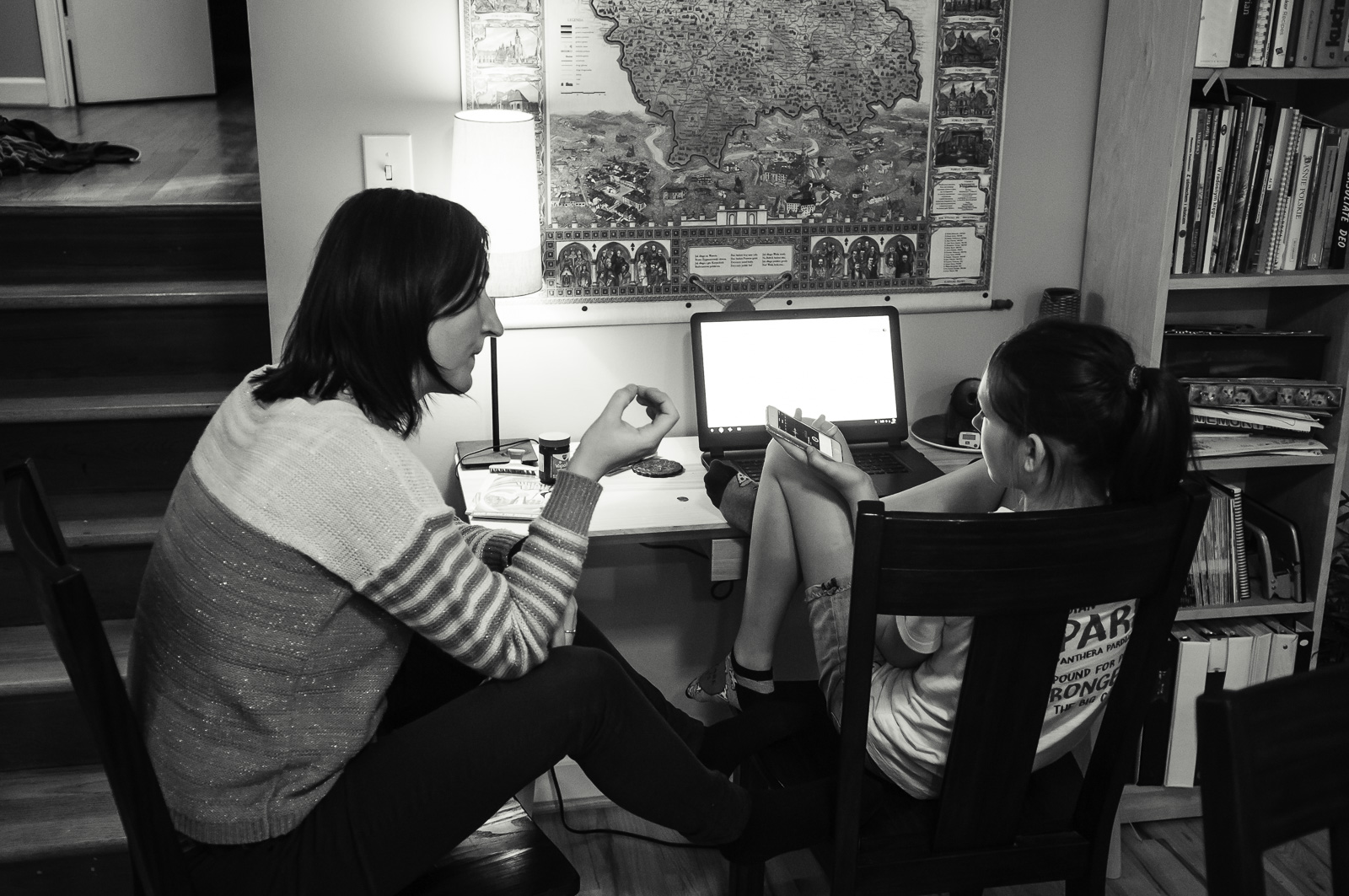
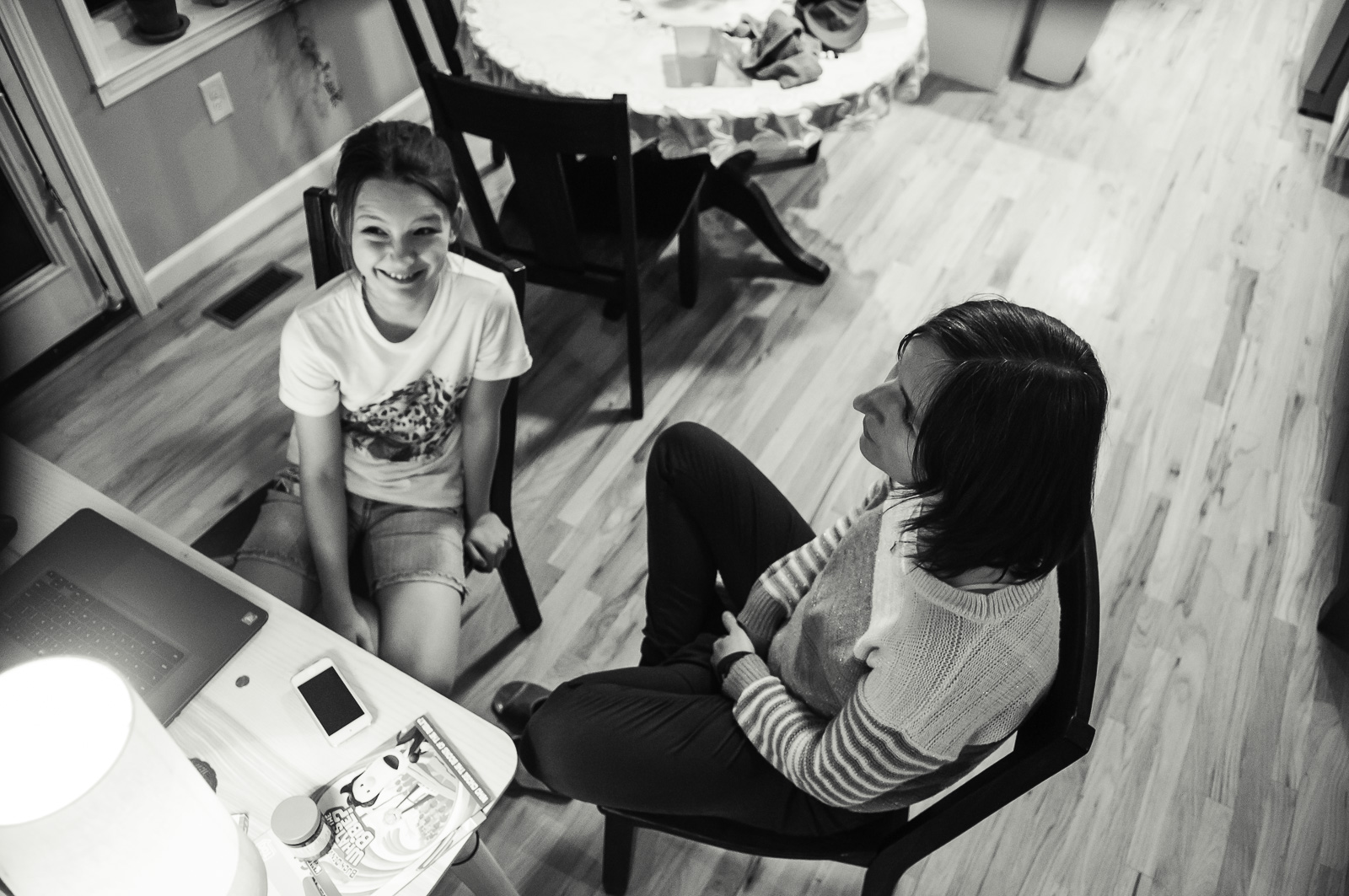
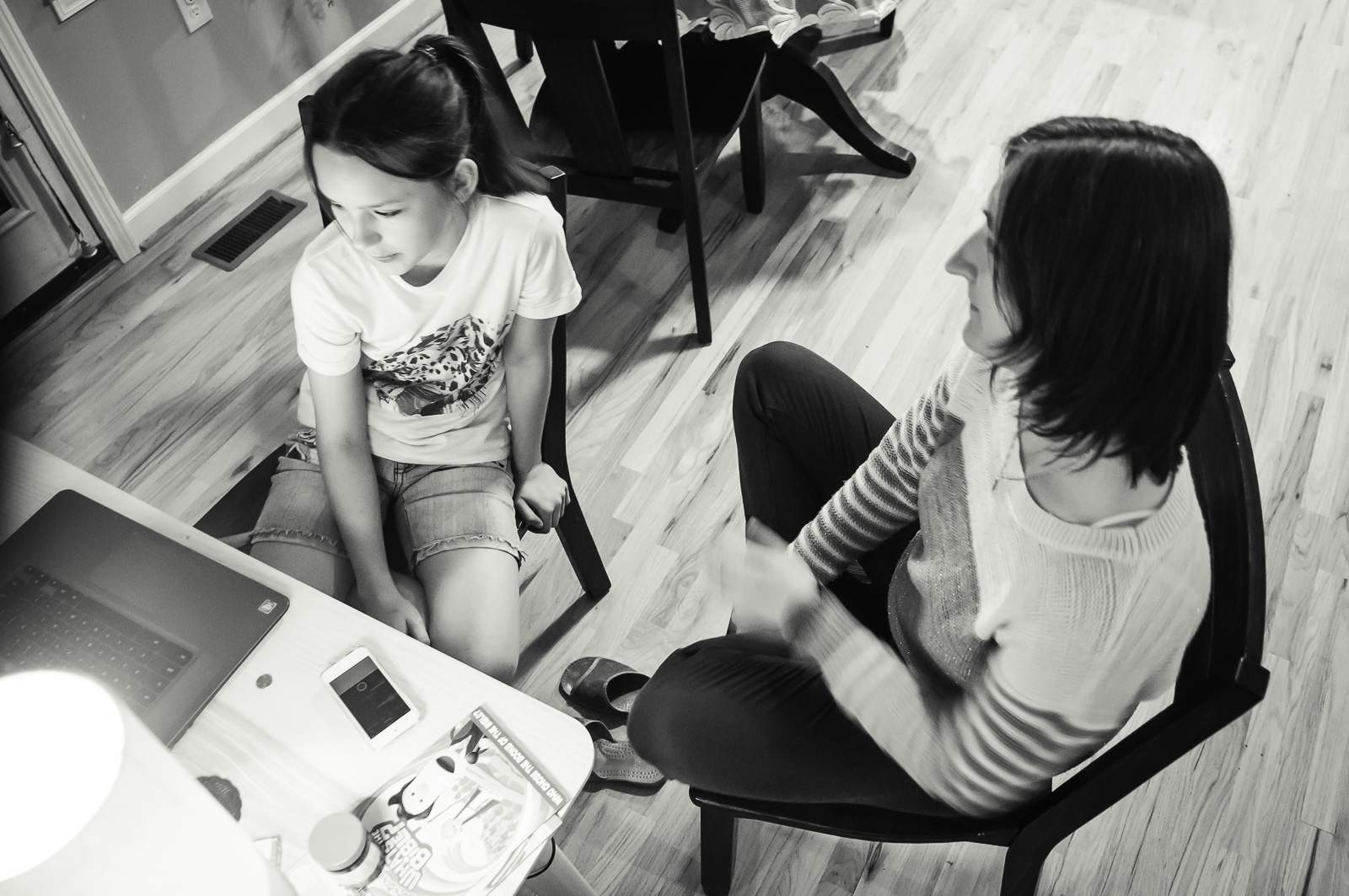
Today, she began writing. We'll put it here once it's done.