Matching Tracksuits

fun in fours

growing

Old and Young

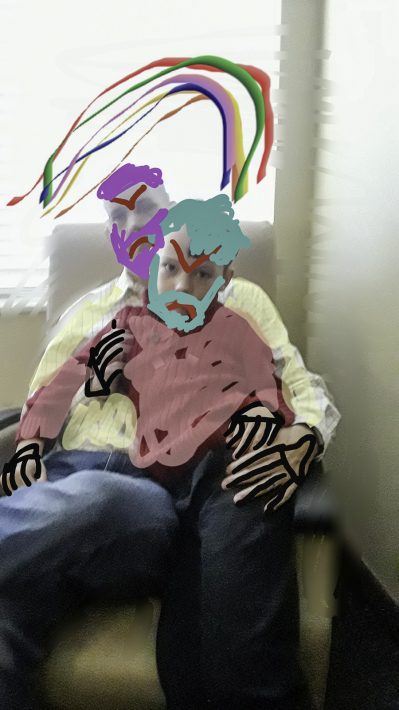
Life is a collision of old and young. When you're young, all you do is dream of being old; when you're old, you often reminisce about being young. We can't have it both ways, but we always want it both ways.

For some reason, eleven was the age for me when I was E's age. It just seemed like the perfect age. Perhaps it was because eleven is the nearest age with repeating numbers -- 11 is cool, and 22 seems so far off as to be impossible.
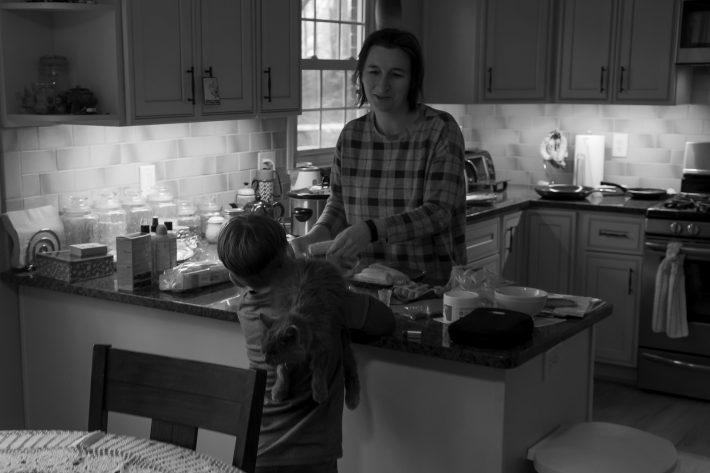
The Boy has taken on a role as defender of our old rescue cat, Bida, in her never-ending conflict with our overly excited dog, Clover.

Of course, when I was in middle school and high school, I couldn't wait to be sixteen. There was nothing about how the numerals 1 and 6 looked juxtaposed -- it was just the relative freedom of having a driver's license, even if one didn't have a car.

Eighteen meant adulthood, voting, and the like; twenty-one meant drinking; twenty-five meant a quarter century. And then suddenly, I really didn't care about age. It just didn't seem to matter. And then, age began bothering me, slightly. I turned thirty and realized, "Hey, I am so far from being a kid now that I can't even pretend anymore."
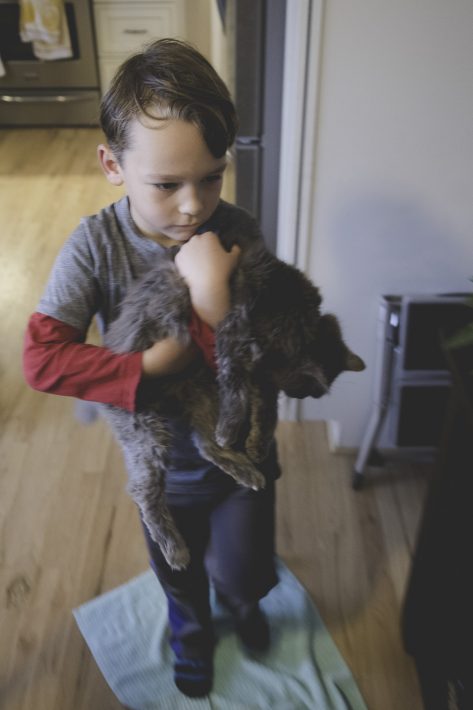
He spent much of the morning carrying her around.

I know this extends into my near future and distant future: I'll be 50 before I know it, and then 60, and so on. But at this point, what's the point of thinking about it except to take stock in one's life and ask, "Is this how I want to be at age 45?" Couldn't I be in a bit better shape? Couldn't I spend my time a little more wisely, a little more conscientiously?

All this is brought into sharp relief by the fact that Nana is in rehab, a dear friend is struggling with cancer, and most of my peers and I are getting to the age that such worries are realistic worries or even realities.
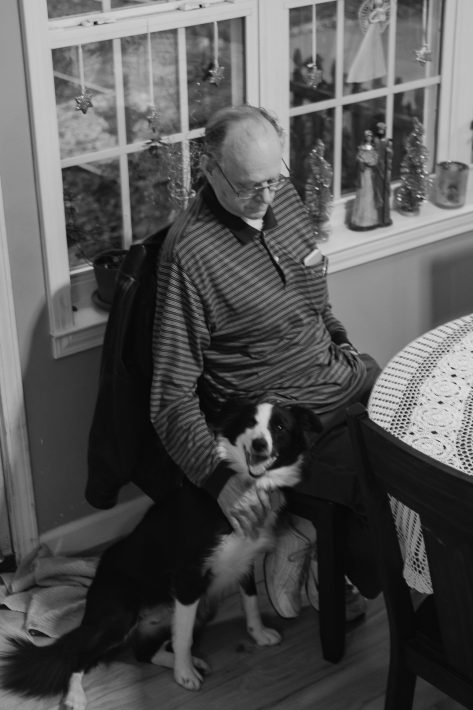
Bida isn't the only one that excites Clover; just seeing Papa sends her into spasms of uncontrolled excitement.

And so I've begun jogging. I haven't run (without being chased) since I was in high school. I stopped after my freshman year because I developed what was diagnosed as shin splints but which still occur, thirty years later. Are shin splints a permanent condition? I could ask the internet.

Shin splints result when muscles, tendons, and bone tissue become overworked. Shin splints often occur in athletes who've recently intensified or changed their training routines.

That doesn't sound like me. Instead of worrying much about it, I went out and bought good running shoes and began running. Well, running for a bit and then walking as the burning along the sides of my lower legs becomes too great. Apparently whatever condition I have in my legs is still there, thirty years later.
Here's where the intersection of youthful recklessness and approaching-middle-aged cautiousness meet: do I stop or do I push through the pain? Right now, youthful recklessness is winning, and for a couple of nights now, I've just pushed through the pain, walking when it intensifies, running again when it goes away. And besides, that sweet burning in the quads hours later that tells you you're getting stronger -- that's too good to give up.

But I think back on the day, remembering the time we spent at the local trampoline park, the Girl learning some new tricks,

and my response to the question, "Will you be jumping, too?" and I realize that tension is as strong as ever. Would I have liked to jump? Not really. Every time I jump on our own trampoline in the backyard, the jarring makes my back ache. Would I like to jump with my kids? That's an entirely different question, but I decided to sit it out because of my worries about a sore back or worse later.

And yet, a few hours later, I went for a run knowing very well what might happen, knowing very well that if it did happen, I was going to push through the pain as much as possible.

Young and old, old and young -- the eternal conflict in us all.
Old and Young
Santa

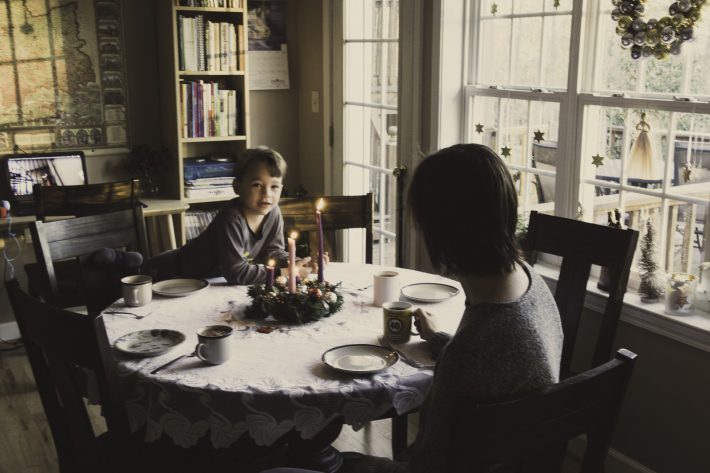
While waiting for breakfast -- a delicious quiche that a lovely student gave me as a Christmas gift -- the Boy asked a simple question: "Daddy, does Santa even exist?" The question took me unawares.

"Well, if he doesn't, how do you think you get those presents?" I asked in response after a pause.

"You guys do it!" he shouted with a grin.

I've always been a little reluctant about the whole Santa thing. On the one hand, it's harmless fun. On the other, it does necessitate misleading your child. I decided that this was the opportunity for which I'd been waiting to encourage critical thinking.

"Well, how could we figure it out? What kind of an experiment could we run to see?" I remembered Neil DeGrasse Tyson explaining the experiment his daughter ran with her friend to test the existence of the Tooth Fairy: they decided they simply would keep secret any lost teeth and see if the TF showed up. She didn't. Simple.

E couldn't think of anything, but we went through the logic behind the Santa story -- or rather, the lack thereof. Using a Socratic-type questioning method, reached the following conclusions:

  • The North Pole is real, but that doesn't prove much.
  • People in Brazil don't have chimneys, but they still get presents.
  • The size of the average chimney makes it all but impossible for a human to slide down it with a sack of toys.
  • The dirt in the chimney (I didn't get into soot) might make the toys dirty, but the fact that they're in a sack might keep them clean.
  • The dirt in the chimney would definitely pose a problem when it came to leaving without a trace -- there would be dirty footprints everywhere.
  • It doesn't seem possible to visit all homes in the world in a single night.
  • The size of the sack needed to carry all the toys is unrealistic.
  • Reindeer can't fly.

When L joined us at the table, the Boy relayed the whole conversation to her, and she began apologetics for Santa.

I'm still not sure where the Girl stands on Santa. Surely she doesn't believe anymore, but we've never had a conversation about it. And it's just like the Girl to play devil's advocate in such a situation.

In the end, the Boy stood more skeptical on the issue, and we decided that, even if Santa doesn't exist, it's fun to pretend he does. Perhaps that's the best stance.

Twelve

We're on the brink. I know, I know -- we've already into the teen years in a lot of ways. She has teen interests (some, not all), a nearly-teen body, a teen attitude at times. She has no more toys in her room. The birthday presents she wants to buy when she goes to parties come from Bed and Body Works and similar shops. She has a whole slew of favorite music, which I find myself thinking about in a way that my parents probably thought about my music. But her age is still not appended with "teen."

For one more year.

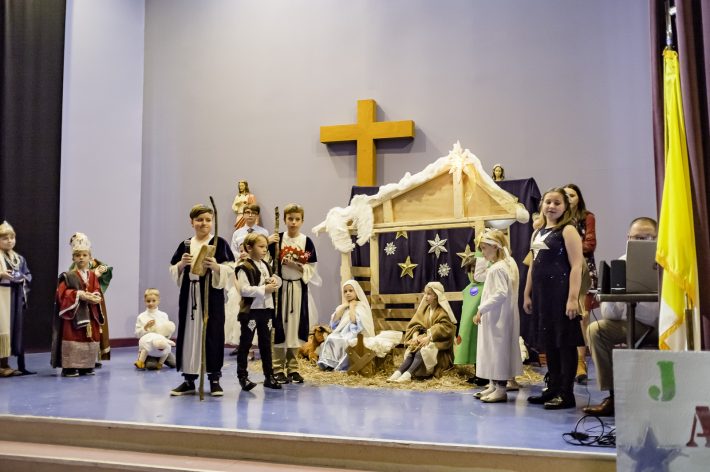
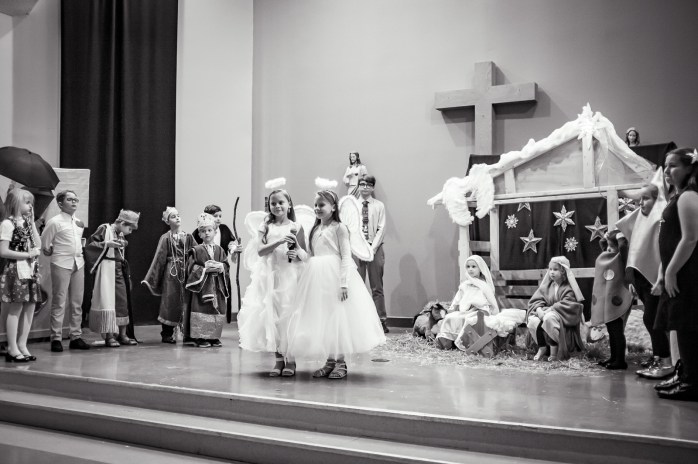
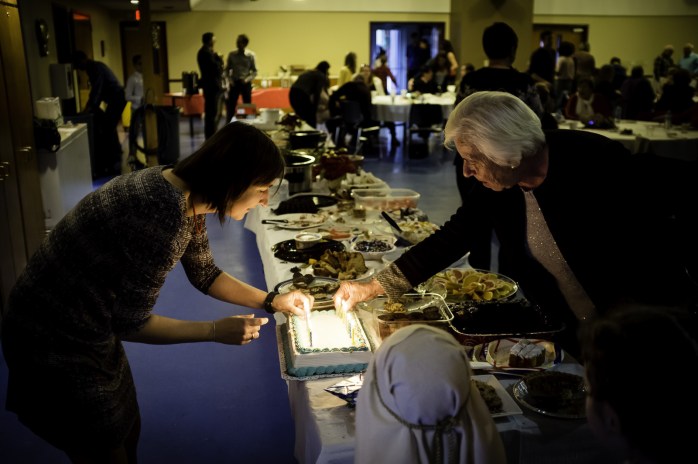
Today we had the annual pre-Christmas Polish gathering, which always includes a nativity play (jasełka) put on by the children of the Polish community. The Girl has been participating in this since she was four, making this the eighth year she's done it.

Many of the children who used to participate are no longer children. They were young teens when they first did it, and now they're in college, one in med school. They gather together during these performances and sit at a table, one of the islands of English in a largely Polish crowd. The other island -- the young children who are today's stars.
So to watch L perform on her birthday when sitting nearby are yesterday's children who are now young adults is a jarring experience in some ways. "They grow up so quickly," we all say, but we never really see it because their changes occur daily, and that daily exposure blurs the changes. But every now and then...
When I first arrived, I saw a young lady walking out of a door that I didn't recognize immediately. Tall, graceful, with tastefully done makeup and a flawless face -- it took me half a second to realize that it was my own daughter.

To see one's own daughter, for the briefest of moments, as a stranger is to be, for the briefest of moments, a time traveler: I would not have immediately recognized twelve-year-old L were she to walk through the door eight years ago; were thirty-year-old L to walk through the door now, I might not realize it for a moment.

That is what we mean when we say "They grow up so fast." They cease being the little girls and boys we're comfortable with before we're ready for it, before we even realize it's happened.

Previous Years' Birthday Posts

2009: Three
2011: Big Sister's Birthday
2012: Six and Jasielka
2013: Birthday Party
2014: 8
2015: Nine
2016: Ten
2017: Eleven

First Clues

The Boy found an old SIM card the other day and was convinced it was some sort of memory device. I, of course, played along thinking it might be a good way to transition into an actual treasure hunt.

Last night, K told E it wasn't a memory card. "It's from T-Mobile," she explained. I'd explained that the "T" was for technology, perhaps.

"Why'd you tell him?"

"One day, he might take it to school and tell everyone it's a memory card and someone will laugh and him and say, 'It's just something from T-Mobile.'"

Still, I persisted. Today, I shared with him the message that was buried in the memory card.

The Game Master breaks his silence.

I had in mind hiding something in his copy of Green Eggs and Ham with the final half of the clue, an allusion to the ending in which Sam-I-Am promises to leave the protagonist alone if he'll just try the green eggs and ham.

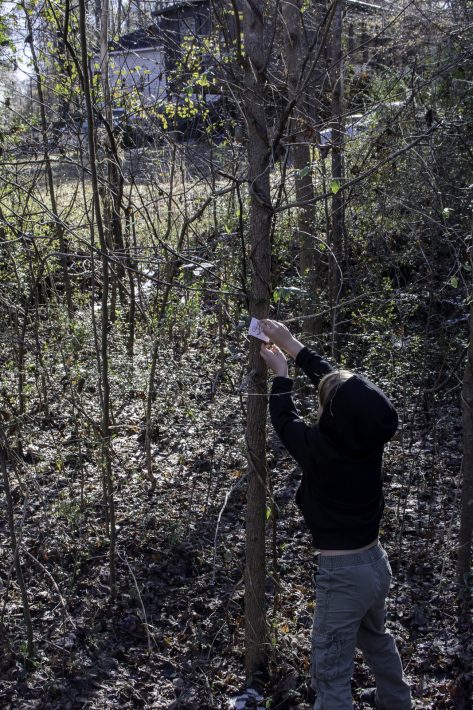
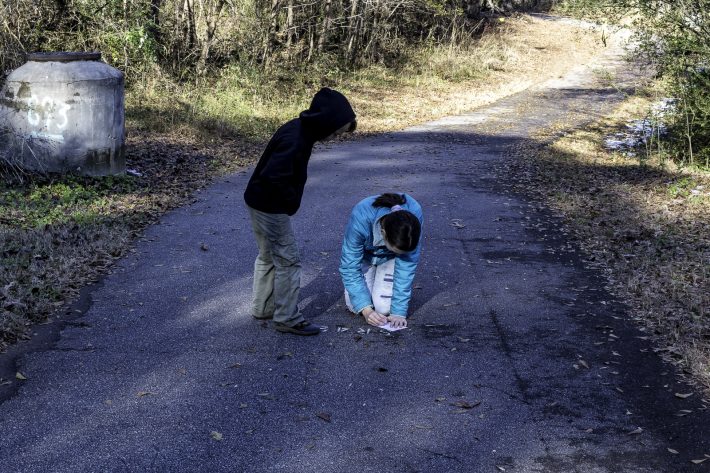
I hoped the clue I had the Girl plant while we were walking in the park would help solidify the connection: "Agent Rex, are you Sam?"

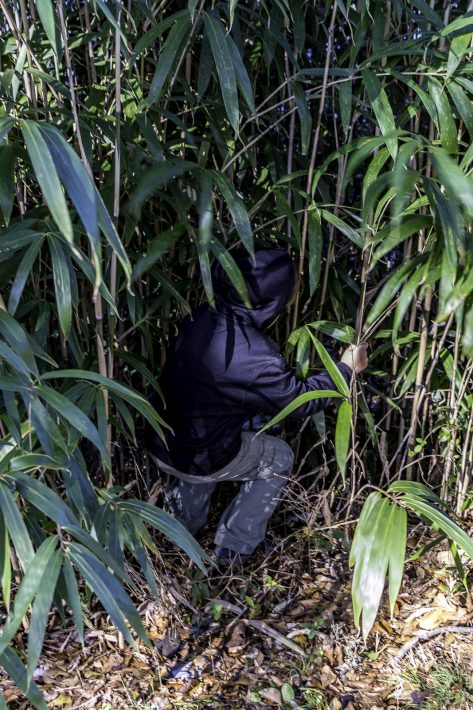
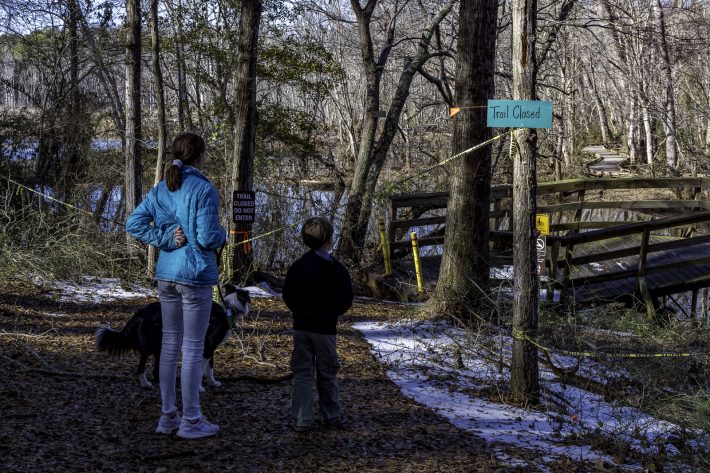
When we first arrived, E was terribly eager to look for clues; he looked in the unlikeliest of places, convinced that the Game Master would hide clues only in hard-to-find locations. I looked down at his shoes, though, and realized it woudn't be the adventure I'd initially planned.

"Why did you put sandals on?"

"Because I couldn't find my shoes."

So I was constantly telling him to stay away from the remnants of snow, carrying him over spots where a puddle covered the entire path, and asking him, "Are your toes cold?"

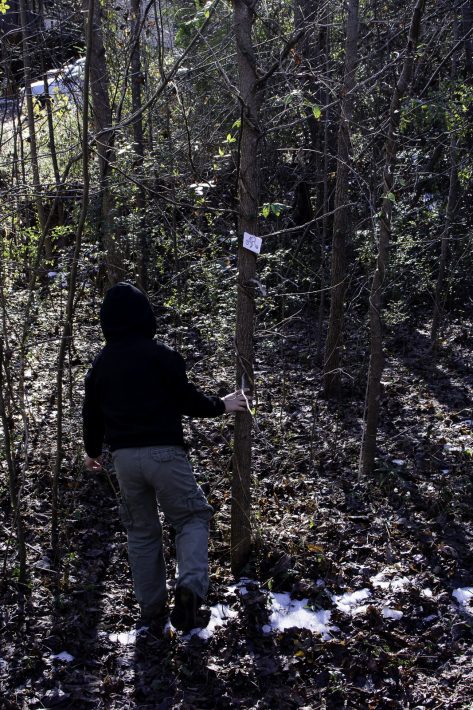
When he finally reached the tree to which L had pinned the clue, he completely missed it because it just above his eye level.

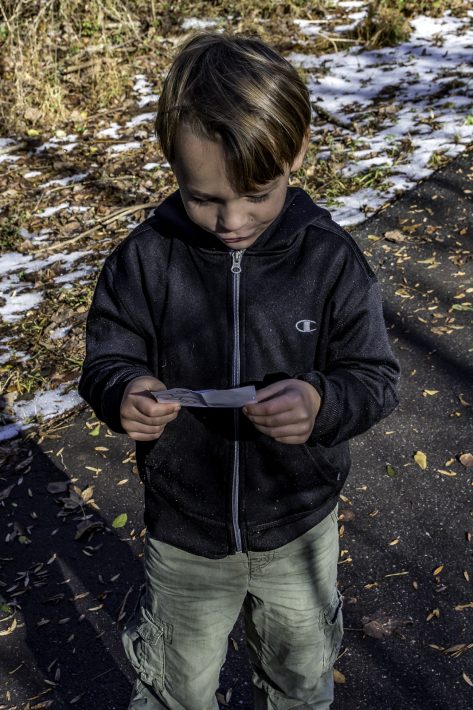
When he finally found it and read it, he was perplexed. I knew I'd have to guide him toward Green Eggs and Ham, and I thought he could figure it out if we steered him that way deliberately.

We didn't succeed.

And then K came home and the Boy explained everything to her.

"Oh, like Sam-I-Am."

I'd considered texting her the details so she could respond just like that, but it was apparently not necessary.

Soon enough, the Boy was in possession of his third clue of the day:

Agent Rex, your mother doesn't have an agent name. I can't communicate with you until she has a name. When she does, send me a message in a manner I will explain at a later date. Until then, be brave, Agent Rex!

By now, though, the novelty of it was wearing off.

"This isn't a treasure hunt," he lamented. "It's a clue hunt."

True enough: Axel's dad has set up all sorts of treasures along the way; I'm just winging it with clues I write in Evernote so I can keep track of everything I've said for the simple reason that I'm still not sure where we're going.

"Maybe the Game Master will have us looking for stuff in Poland!" the Boy had said in anticipation of this summer's trip.

"Maybe!" I replied, wondering if I could string him along for that long. The answer came today: not with clues alone, silly amateur, not with clues alone.

Still, it was great fun, not only because the Boy had fun (at first) but because the Girl enjoyed being in on the secret.

Monday Afternoon and Evening

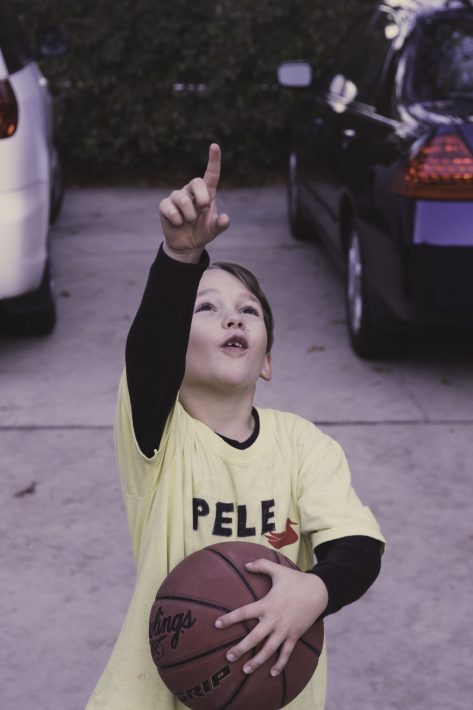
When I got home, E was ready for some basketball practice. We don’t have a basketball goal, and there’s really no place we could put one, so that limits our play to some degree. Fortunately, he’s happy just to practice the basics: chest passes, bounce passes, and a bit of dribbling.

Sometimes K and I worry about his self-confidence, but at times, it seems he has a bit too much. “I’m already very good at dribbling!” he proclaimed as he slapped at the basketball. Certainly, in comparison to what he was doing a couple of weeks ago, he’s much better. But has he, as he insists, almost mastered it? So I have this fine balance to walk with him: keep him realistic but not crush his spirit.

“You’re much better than you were,” I said, “but there’s always room for improvement.”

“Well, yeah,” he said, “of course there’s always room for improvement.”

We took a little break to look at a few unusual clouds. One, in particular, looked as if Bob Ross had taken one of his wide, fan brushes and made a few strokes of Titanium White on Phthalo Blue.

After dinner, we played with his Legos. He took the Millennium Falcon set that he’d completed Sunday, tore it apart, and built something new from it. It’s a common thing he does: follow the directions, build everything in the set, then never build it again. That’s what Legos are for, I suppose.

When it came time for E to work with K on a little homework, I went up to see what the Girl was doing.

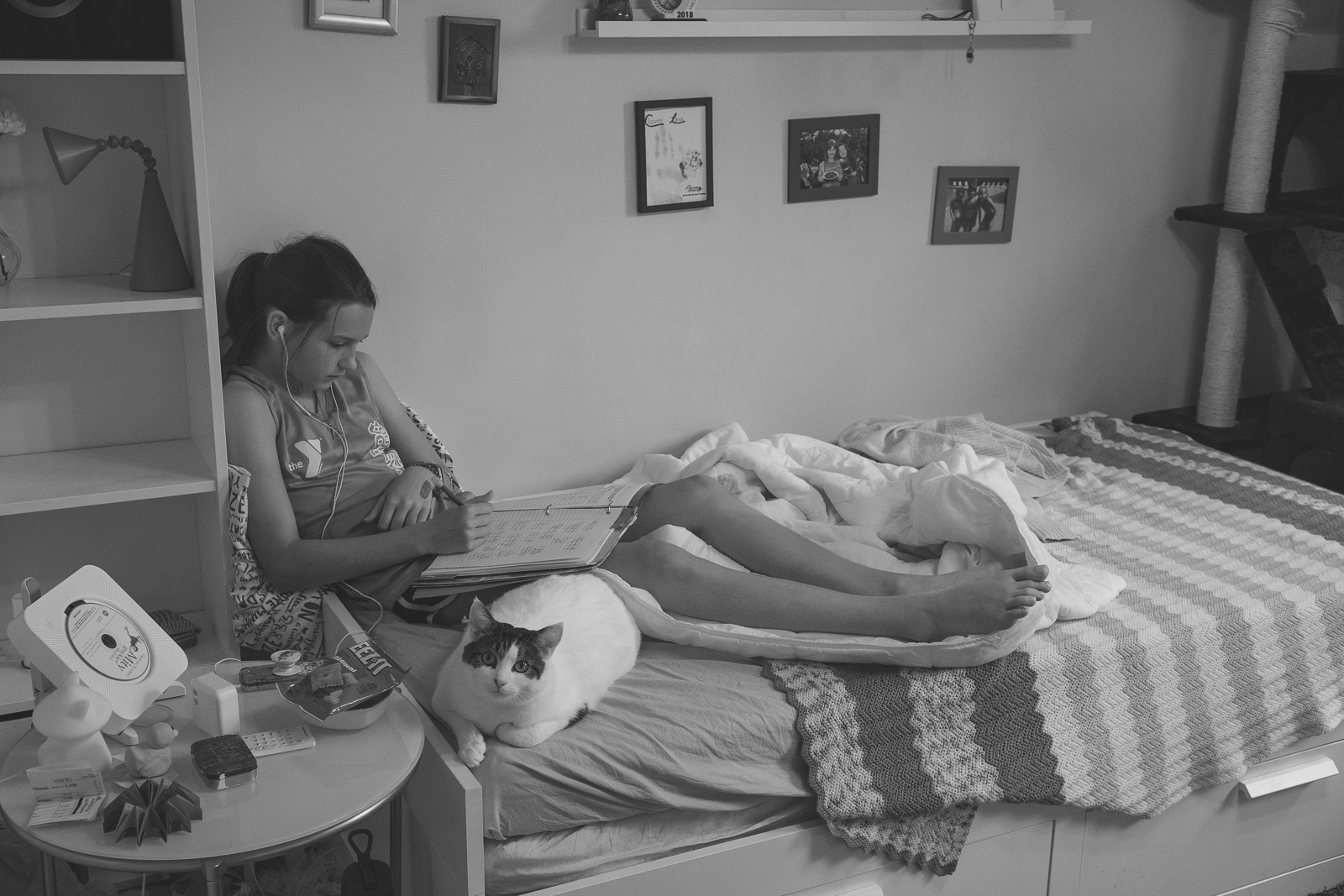
“Watching YouTube.” That’s how she spends most of her screen time these days. She watches DIY’ers and slime makers, but more and more, she watches more mature things. Like how to do makeup. She’s growing up.

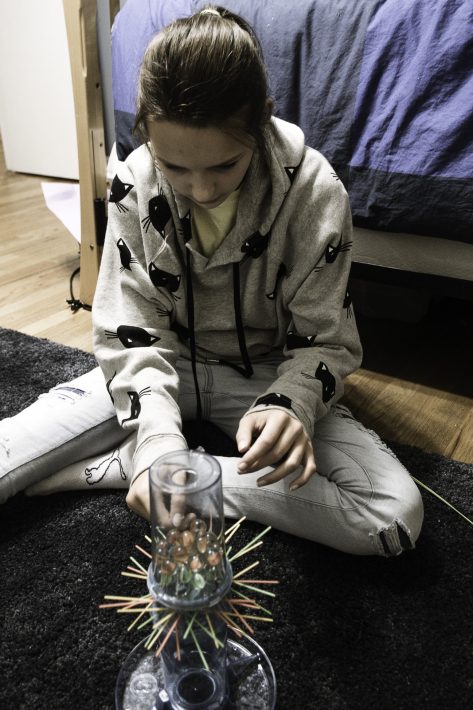
“Want to play a game?” I asked. “Your choice.” But it really wasn’t. There were a couple of games that I nixed immediately. One, because I don’t even understand how to play it. A board game that has ten plus pages of instructions is not something I have the patience to learn. The other, well, I don’t really understand it either. We settled on Kerplunk, a game that takes longer to set up than to play.

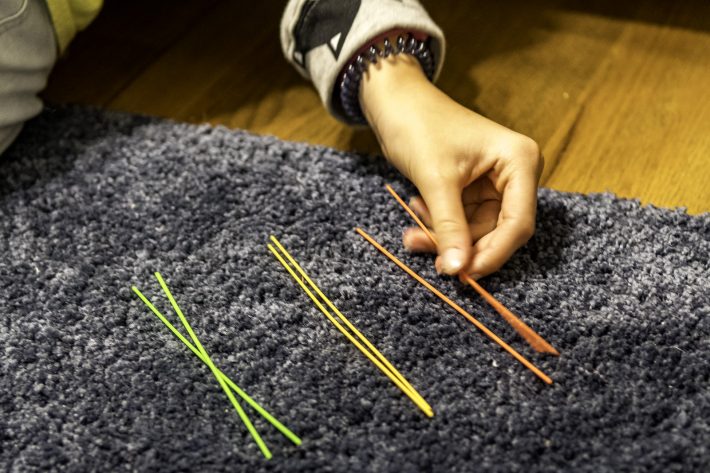
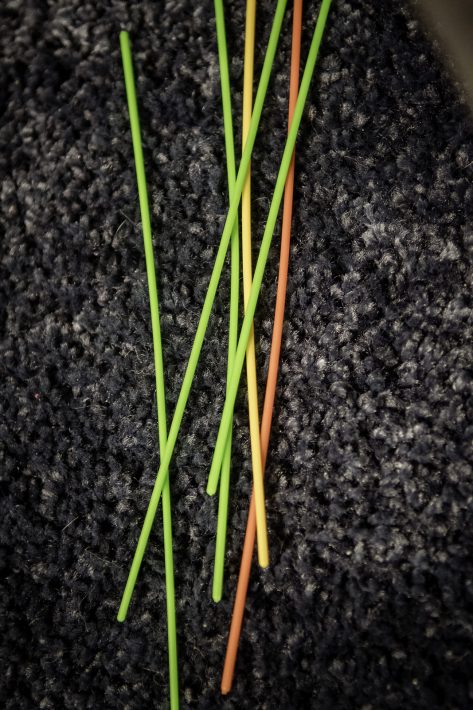
I noticed how different we are regarding our sense of organization. The Girl wanted to segregate all the straws by color and then put them in the cylinder layered by colors, and she wanted the marbles segregated to the same ends. As she pulled out straws, she placed them in color-sorted piles. I, on the other hand, wanted the straws placed as chaotically as possible, and my pulled straws — just tossed in a pile.

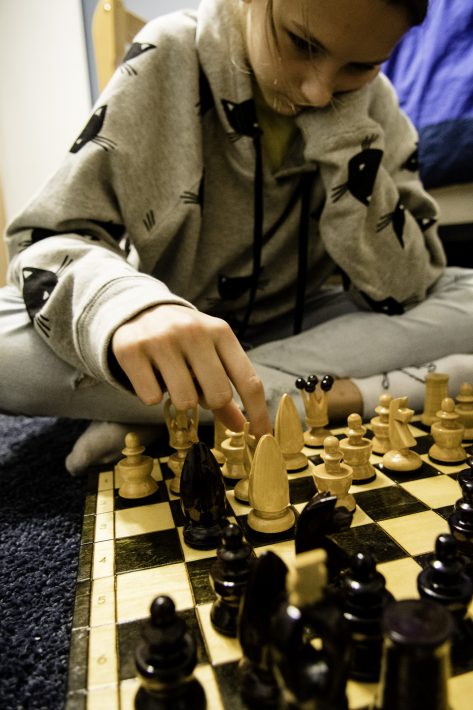
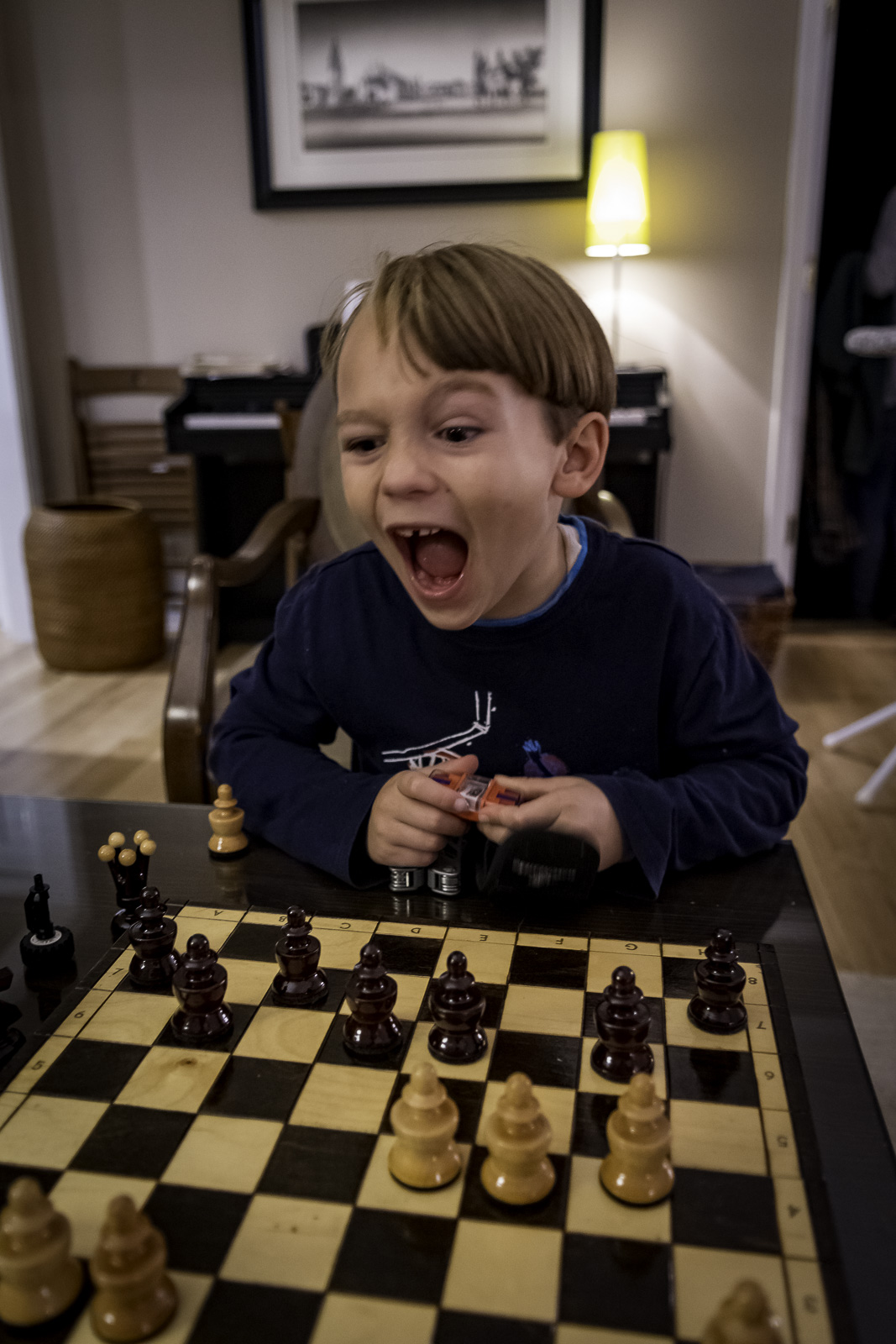
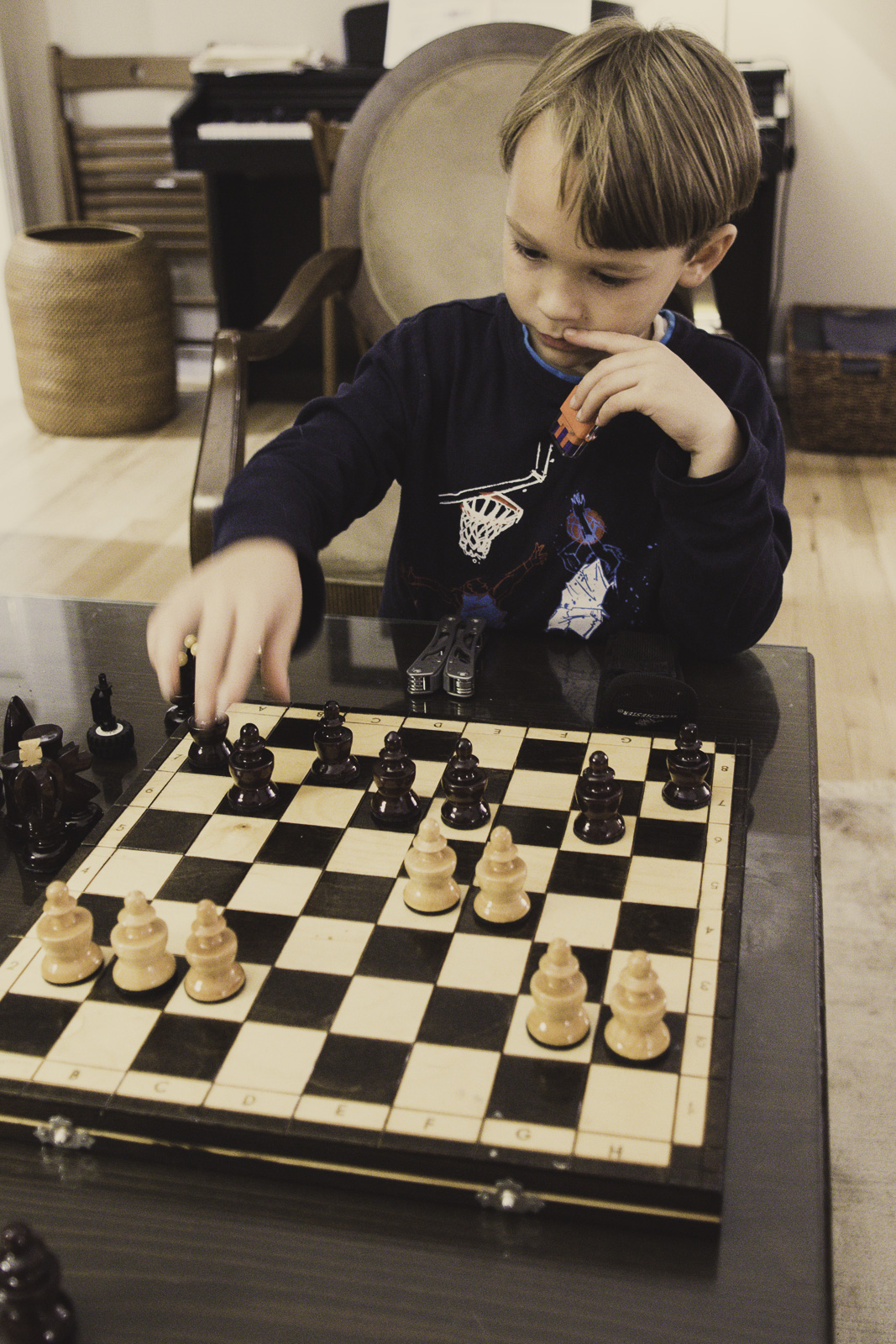
After she beat me twice, I said, “Well, that’s fine. But you still won’t get me in chess.”

“Yes, I can beat you!” she cried and headed downstairs to get the chess set. I beat her, but she has improved so much that it’s difficult to believe. Her development followed tried-and-true principles (which is not to say “theoretical principles”–we haven’t talked about openings themselves, only the idea of getting out your minor pieces, castling, and connecting your rooks as basic opening development), and she saw clearly several threats a couple of moves away. As the game concluded, I showed her what backline mate threats are, how to anticipate them, and how to avoid them.

A perfect evening, in other words.

Fun and Responsibilities

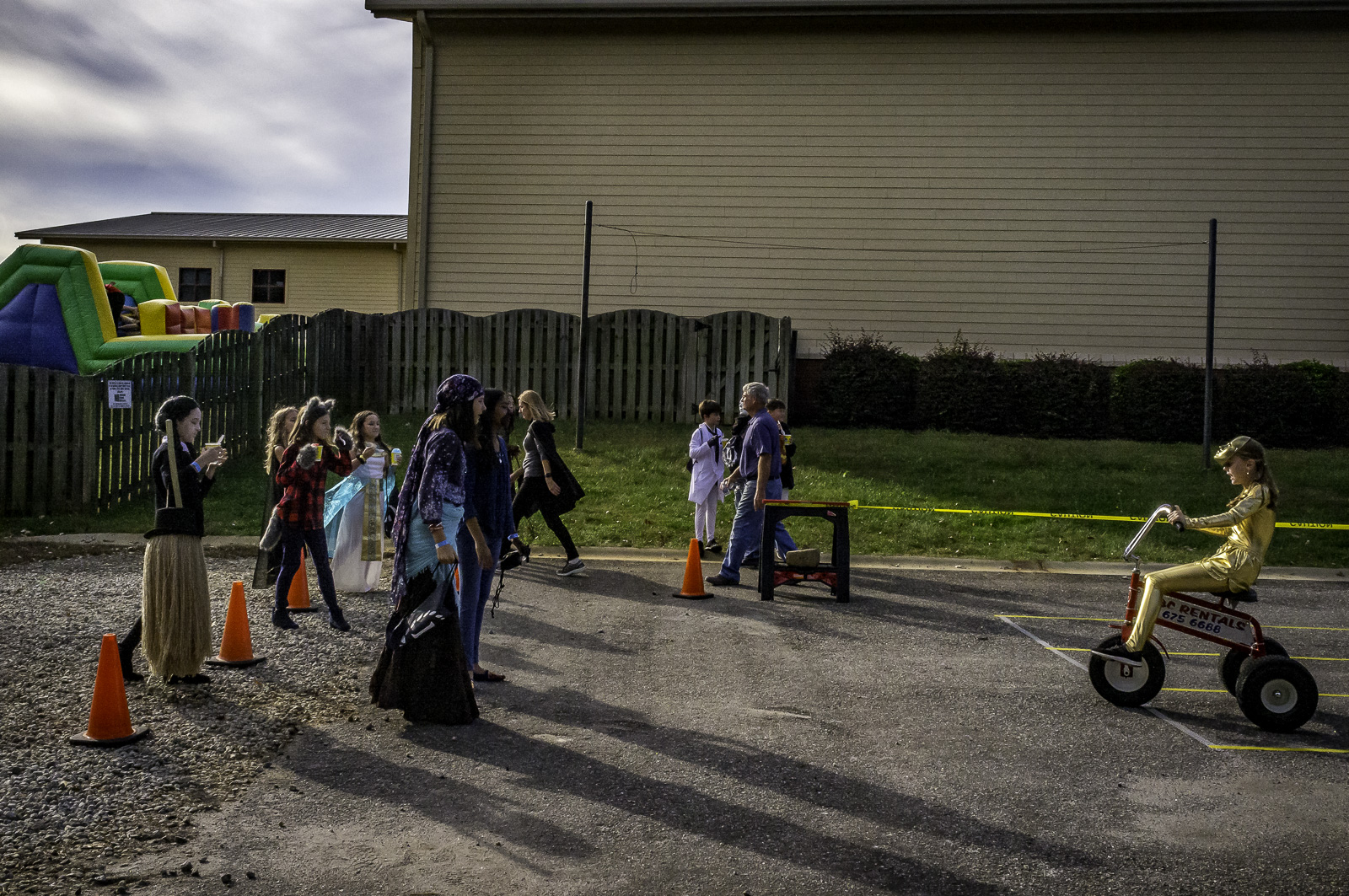
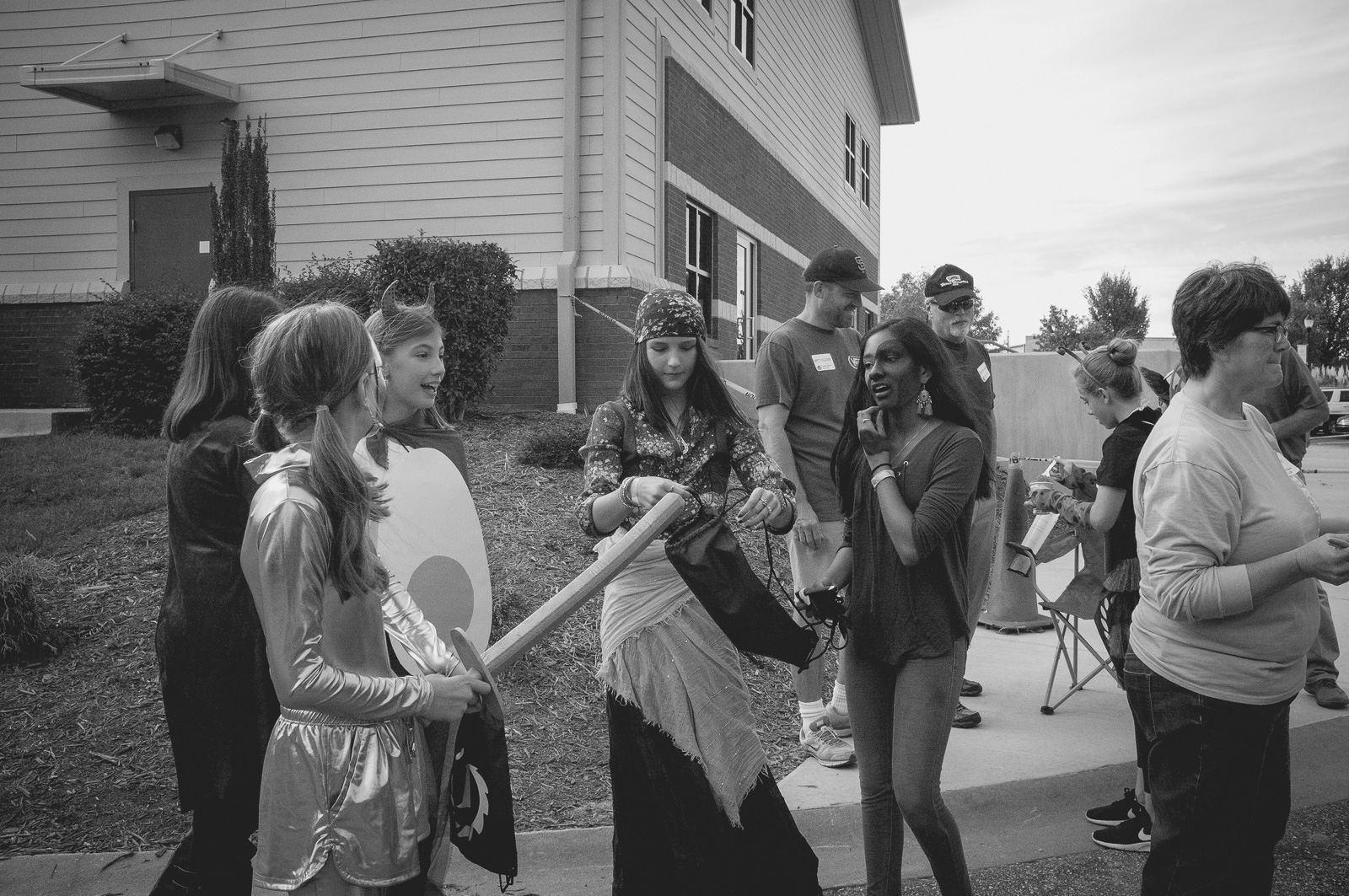
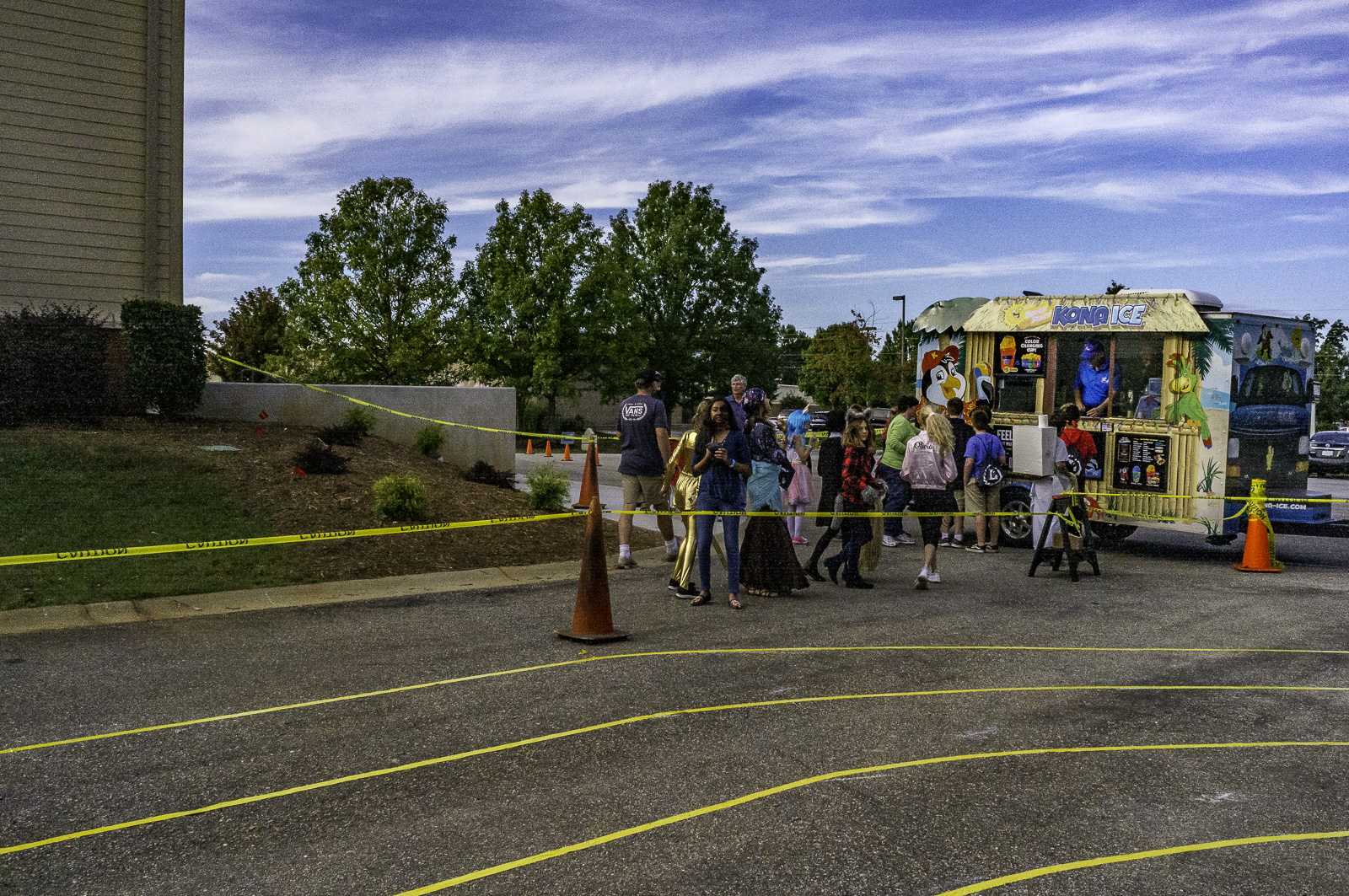
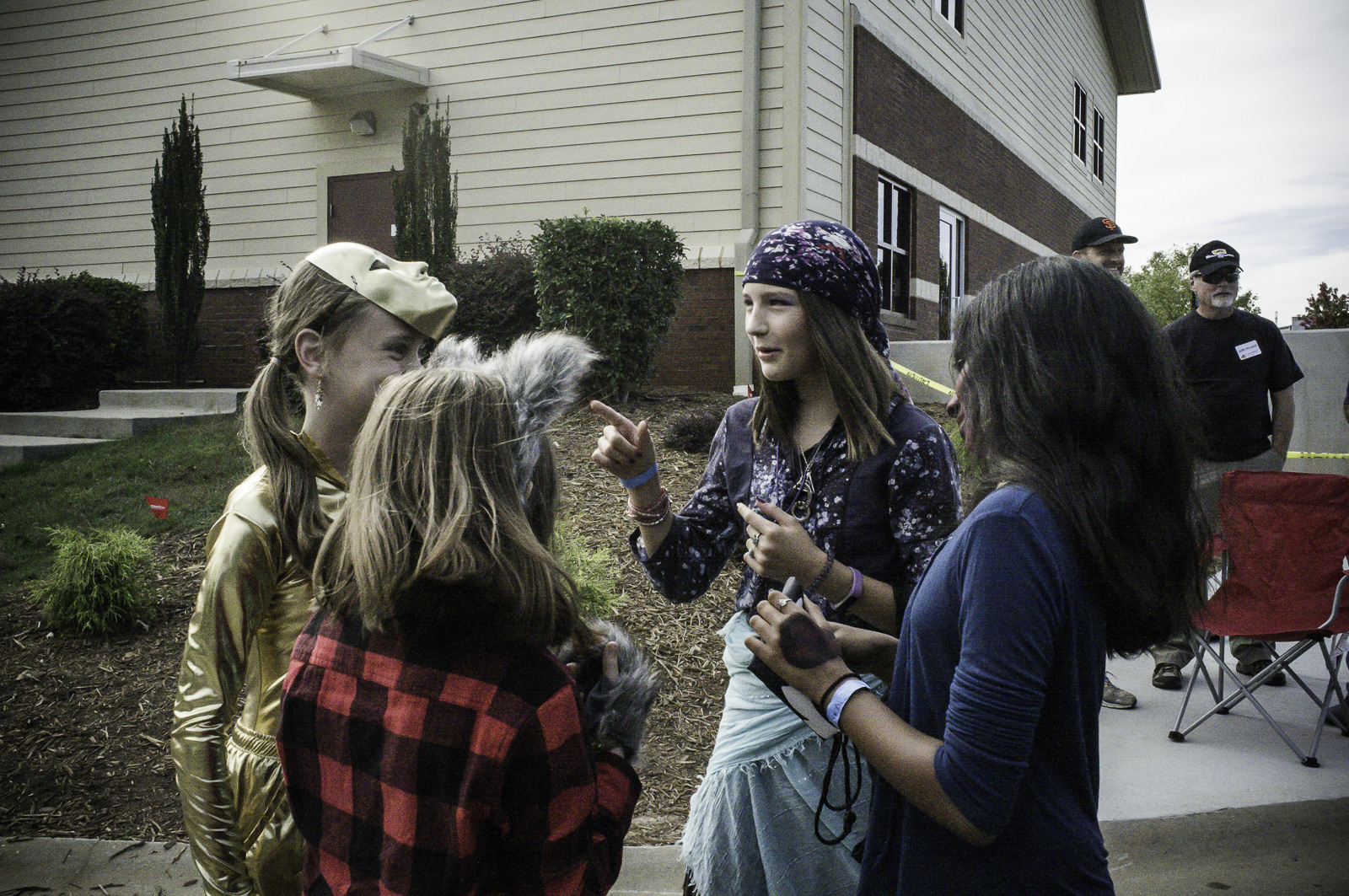
Halloween Bash

Volleyball

As a parent watching my daughter play volleyball, I always have some mixed emotions. During the last season, her team struggled mightily: they didn’t win a single match, if memory serves, and they only won a handful of sets. It was rough. Lots of frustration in the car after games.

“We won’t ever win.”

In several matches, they were swept, three sets to nothing. There was nothing immediately redeemable about that. I said what any parent would say: “You’re getting stronger.” “This is building character.” “This shows how tough you are, that you keep at it despite the challenges.”

This year has been different. They’ve won many more than they’ve lost, and they’ve handed out a couple of 3-0 sweeps themselves. It’s great to see the Girl so happy, so excited about what’s going on.

But I sometimes secretly cheer for the other team.

Tonight, they faced a team that they had already demolished once this year. I’m sure the coach has the best intentions, but from what I saw of the girls’ play, he doesn’t have the most experience with volleyball: his girls made basic mistakes in fundamental skills, mistakes that could easily be corrected. Mistakes that our coach has corrected. So these girls are losing through no fault of their own: they just don’t have someone to teach them how to pass and to serve properly.

The first game this evening began unevenly, and it became clear that our girls would win fairly easily, which they did, 25-15. Their opponents came out on the court excited, and they never  lost hope, but as I watched them, I really didn’t think they had a chance that game because our girls were out-scoring them 2-1 through most of the game. It was impressive, those girls’ enthusiasm. I found myself thinking, “They might not have won a match all year, might have won only a few sets, but they keep playing and smiling and encouraging each other.”

The second game began like the first and coincidentally ended with the same score.

The third game started, and I wished only one thing: for those sweet, energetic girls to win one. And they came so close. They clawed back from a 14-8 deficit to tie it at 14. That’s six consecutive game points. They were so excited. They were so ready to win.

The score went back and forth, back and forth, but in the end, our best server came up and nailed the final point: 18-16.

Our girls were thrilled. I was happy for L and everyone on her team. But for that third game, I was a total, secret fan of that other team.

Wednesday Evening Vignettes

In a flash, the cherry tomatoes were rolling across the concrete floor like greased bearings -- E had been unloading the shopping cart when, in a moment of slightly careless abandon, the container of tomatoes crashed into the side of the buggy as he was lifting them out, then crashed to the floor.

"It was an accident!" he said, looking up at me.

"Well, clean up the accident, then."

He began picking up the tomatoes and hustling them to a garbage can. Behind us, a mother and her daughter, probably around four, stood watching. When E returned for another load, the little girl walked over and began picking up tomatoes with him.

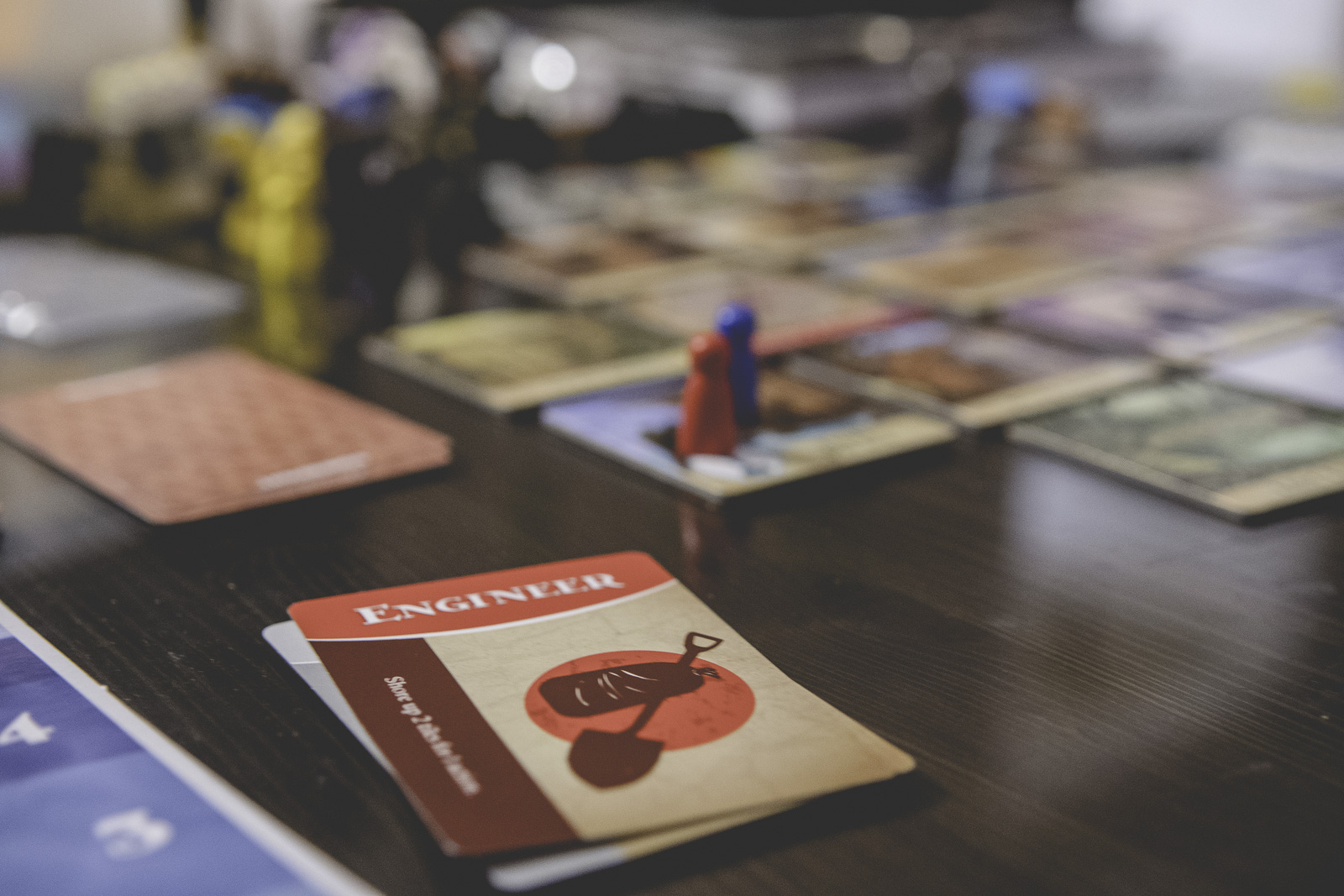
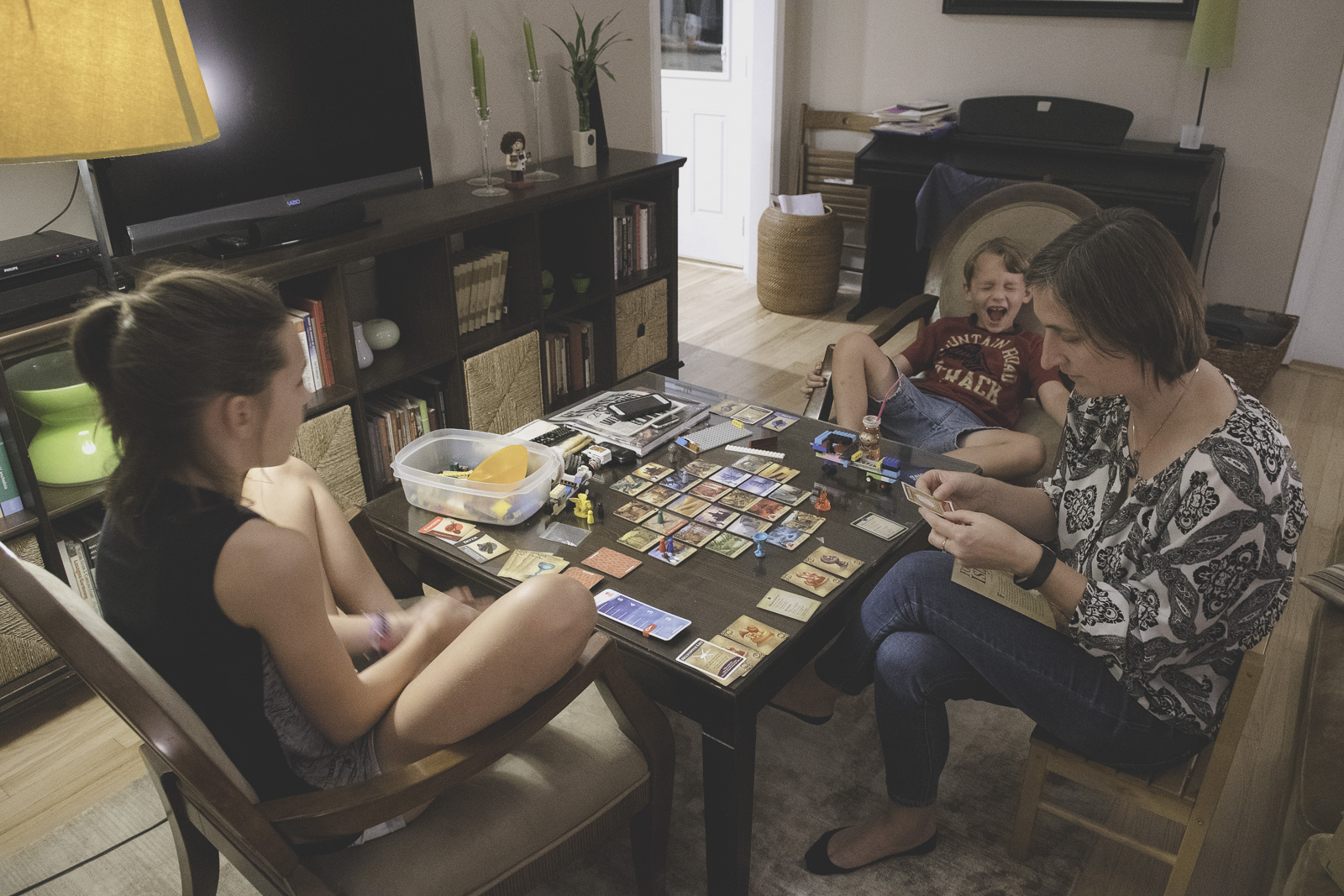
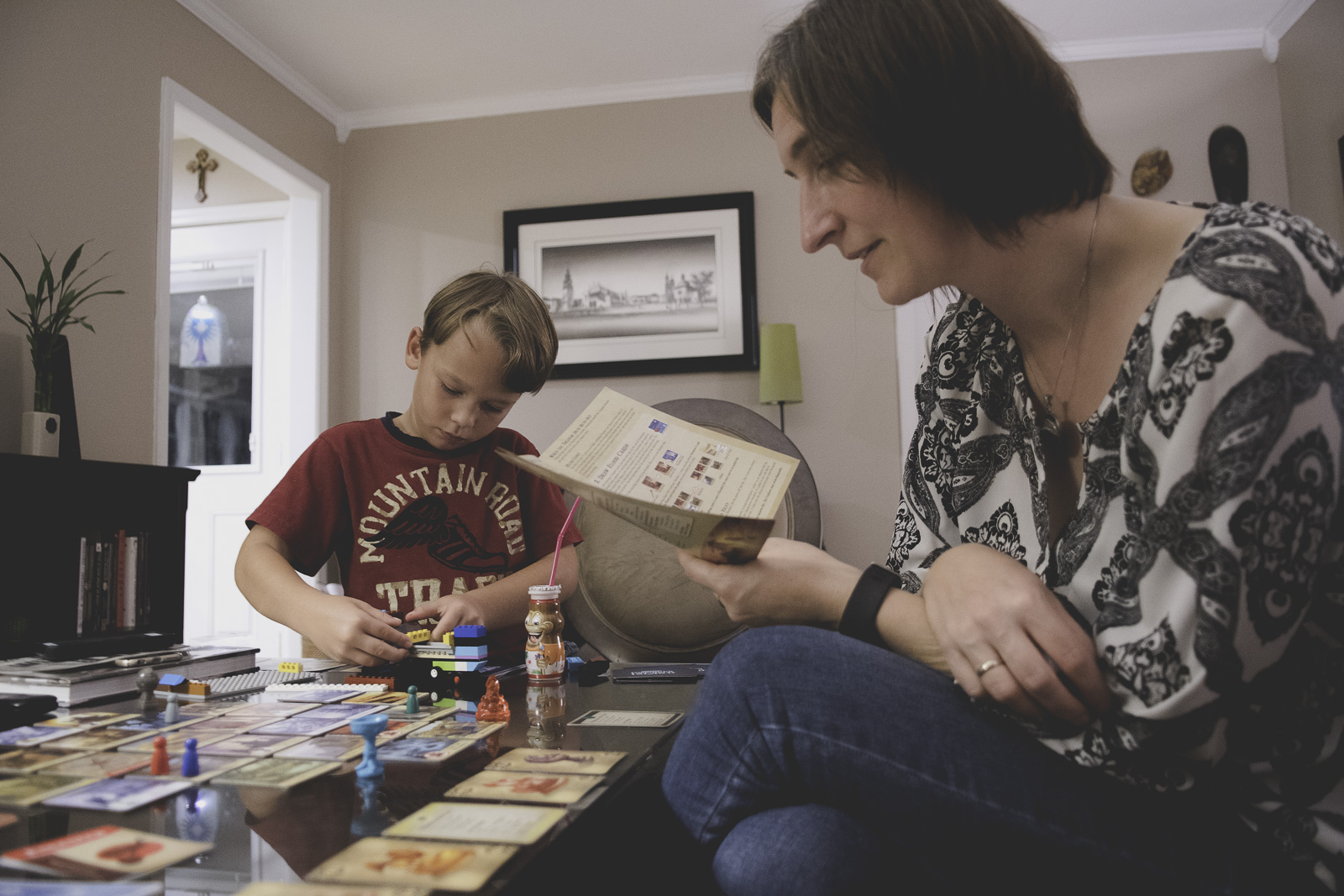
When we returned home, K and L were in the midst of figuring out a new board game. Well, not quite a board game -- there's no board to speak of. Still, a game. An exceedingly complicated game. With multiple decks of cards. And two different sets of tokens. And so many rules to remember that it seemed impossible that a human could keep that many exceptions in her mind at once.

Of course, I started making silly comments.

L, very much wanting to play, naturally got a little irritated with my silliness.

E, content to entertain himself, worked with Legos as all this went on.

And K, determined to make it through all the instructions -- a multi-page book, mind you, not just a few short paragraphs on the underside of the box -- kept explaining the game to us.

"We have fifteen minutes before it's E's bedtime," K said. "We have a little time to play." Between all the complicated rules and steps, everyone got a single turn in those fifteen minutes.

Scrabble Homework

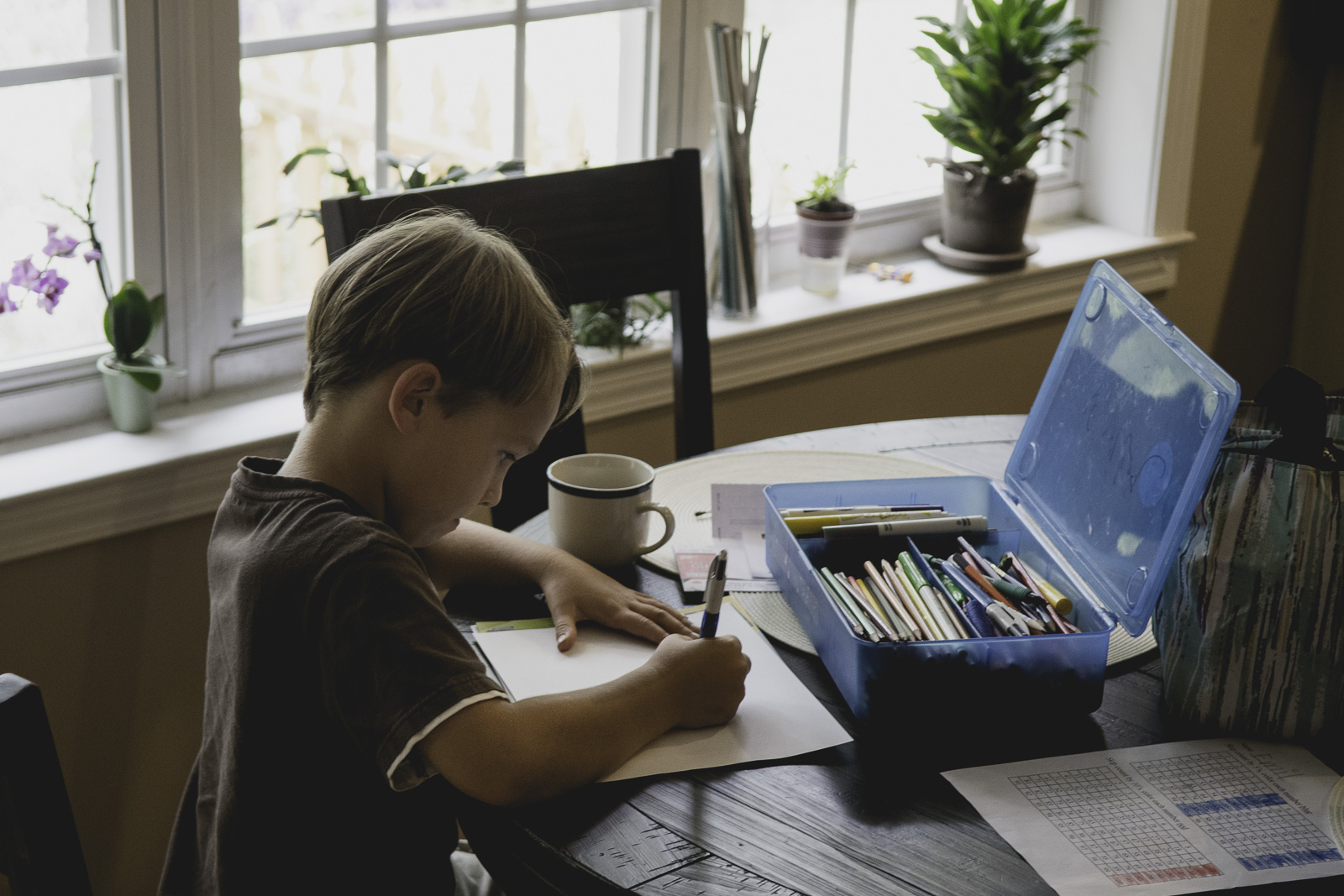
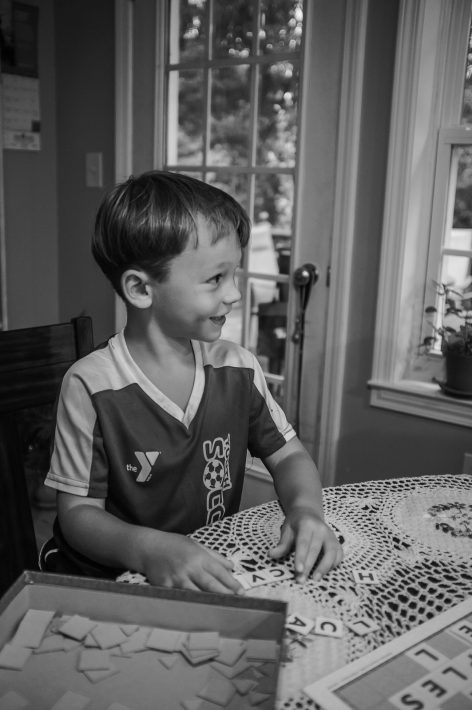
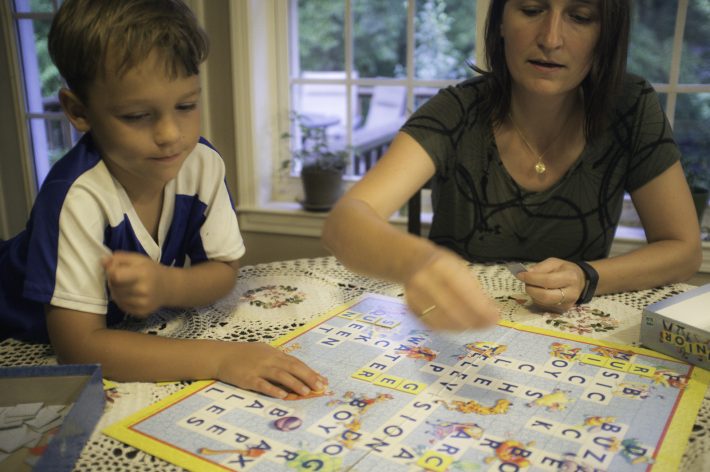
The Boy had no homework tonight, so we played Scrabble, which was sort of assigned as homework when you don't have homework. "Play a word game," the instructions said, and what better word game than the word game?

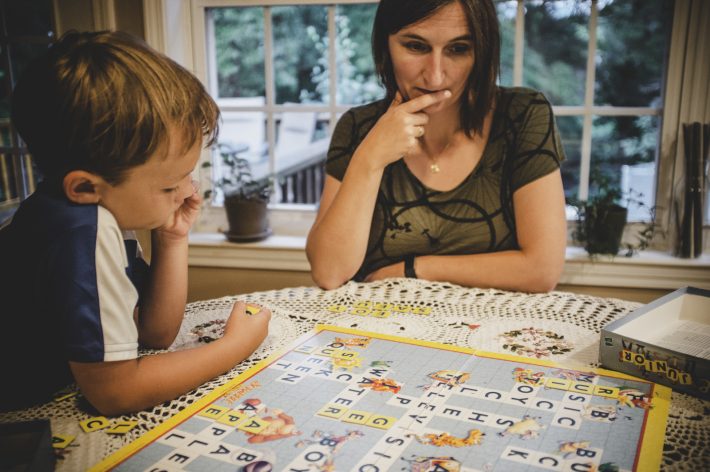
We played the basic version of Scrabble Junior, which has words laid out for young players -- good for working on spelling and reading. We looked through the instructions but couldn't find anything on how to play that version. The back of the board is a more traditional, blank graph for players to make their own words, and the instructions dealt exclusively with that, so we made up our own rules.

A pre-game shot when E realized, with K's help, that he had "CVS."

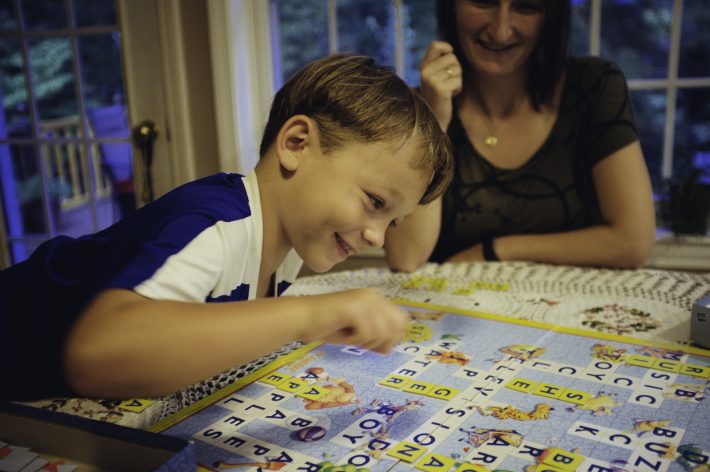
We could, in short, build words letter by letter, and one only got a point when one finished a word. E got the first point, finishing "ball" like a champ.

But at one point, I finished a word knowing that the Boy could have finished it in the following turn. K had had the opportunity to do it earlier, but he'd have fallen behind, so she elected not to take the point from him. I was the only one with no points, and I decided to offer him a learning opportunity.

He was not happy.

Storming off to the living room, he declared, "I'm not playing!" At first, we tried to get him back through his competitive spirit: "Okay, you'll just lose your turns."

"I don't care!"

We needed more drastic measures, so I simply and firmly instructed him to return. "This is not good sportsmanship. There is no need to get upset because someone else gets a point. No one else at the table was upset when you got points. Indeed, we were all happy for you. Now, calm down, sit down, and play with a mature young man."

A few minutes later, he drew a G, which meant he could finish "dog" and "grapes" for two points. (We were playing one point per word, not one point per letter of completed words.)

In the end, he came in last place, but we were all separated by single points, and by then, he didn't care. Hungry, he didn't even stick around to count points.

Mission accomplished.