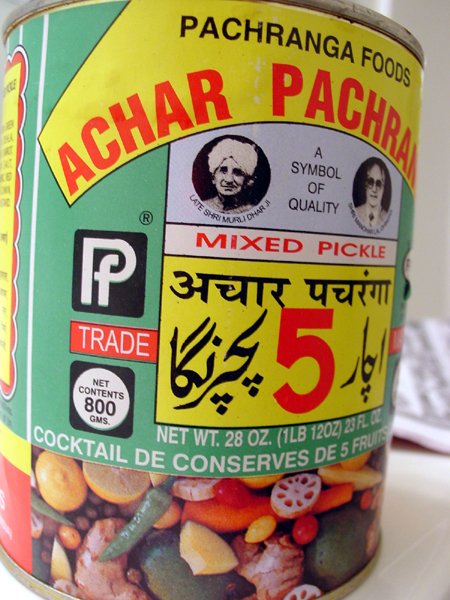
Recently found an Asian food market…and the sweating began!
food and cooking
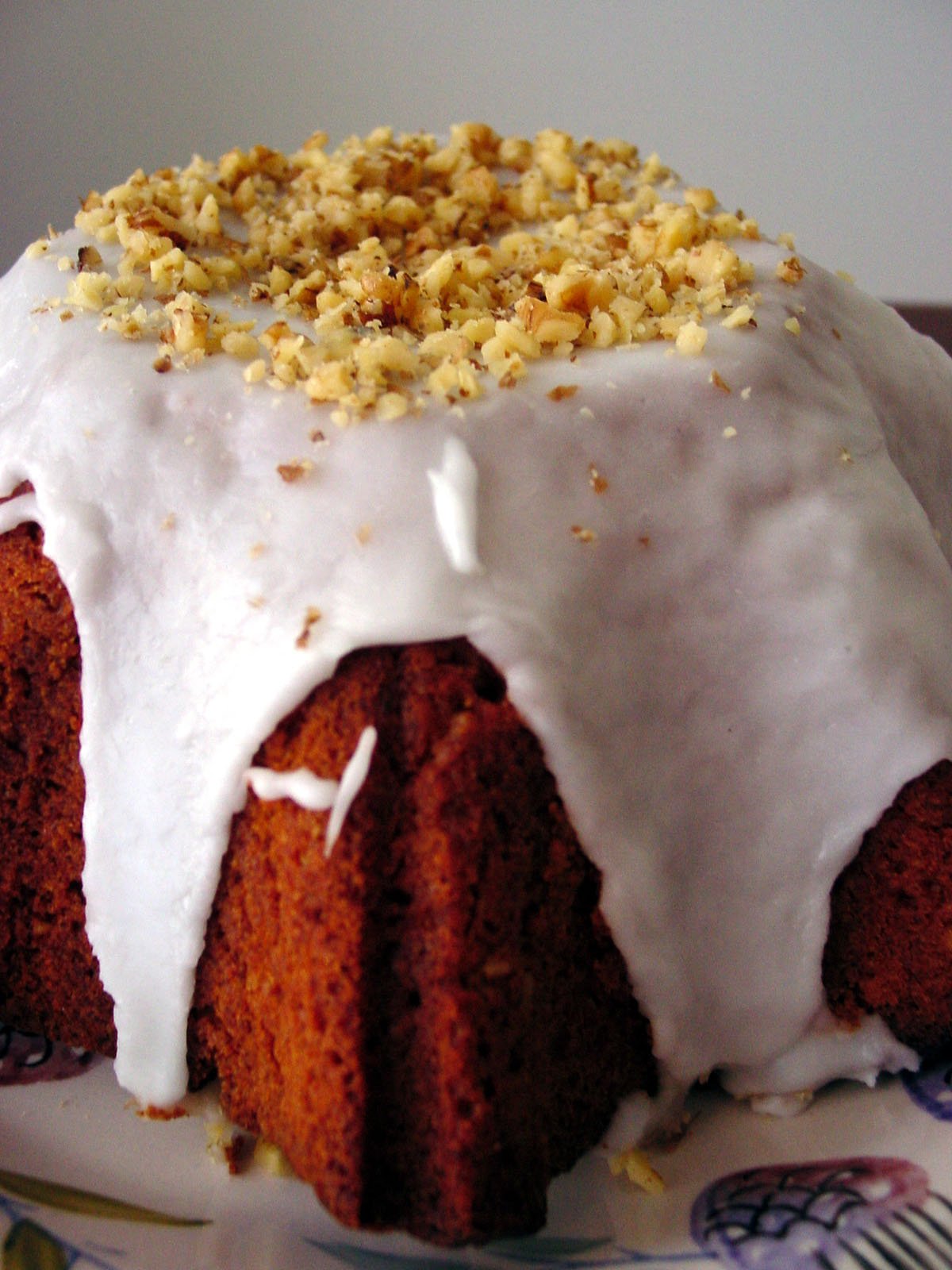
Babka
Shakin’ the Rolls
The entrance to our apartment complex is situated between two fast food restaurants: an Arby’s and a McDonalds. When Kinga and I first came to look at the apartment, we were given directions which included those two restaurants as landmarks. Whenever we give directions, we in turn do the same.
We’ve never really eaten at either restaurant. Kinga has never been a fan of fast food, having grown up in a country more or less devoid of it (at least in the time she was growing up). I ate less than my fair share growing up. I was never crazy about any of those places, but they were convenient and so I did eat there from time to time, though almost never at McDonalds.
About once a month, Kinga and I like to walk the quarter of a mile down the long driveway and get shakes (she, vanilla, I, chocolate) at McDonalds. No burgers, no fries, just shakes. And smalls, at that.
All the same, I feel embarrassed walking in. Looking around the room at the patrons, I want to say, “We’re just here for shakes! We’re not going to eat this filthy, greasy food, just a bit of ice cream mixed with milk!” And it must be much greasier than I remember, for you walk in and smell it -- you can almost feel it hanging in the air.
The cliche is that America is fat because of such restaurants, that McDonald’s and Wendy’s play a disproportionate role in the fattening of America. While not a staunch defender of freedom of grease, I used to look at that argument in the past with skepticism. “It’s more a lack of exercise,” I thought. But on seeing the average McDonald’s customer for the first time in years, I’ve come to the conclusion that it must be more the food than the lack of exercise.
Every time -- and I mean every single time -- Kinga and I have gone for a shake, there is always a family or two sitting in McDonald’s who probably have between them enough weight for one or two additional people. Last night, there was a family to the right of us as we ordered our monthly shakes and a family coming through the drive in, and they were all, parents and children, huge.
The question is, who’s to blame? Fast food is undeniably that -- fast, and convenient. I suppose when the majority of what you sell is simply taken out of a freezer and fried, it can’t help but be fast. Don’t these fast food places have any sense of guilt in what they’re feeding people?
An interesting article ran this morning in the IHT about this: "Processed foods? Read this, France says
But food can be fast and healthy. The only place Kinga and I eat at with any regularity is
Subway, and for ten years I’ve always gotten the same thing: a veggie sub and water. But it seems the vast majority of people doesn't want vegetables, but meat. Fatty, greasy meat.
In the end, though, it’s like cigarettes: smokers and McDonald’s patrons are ultimately responsible for their own decisions. We can argue that there has been misleading advertising and so on, but let’s be reasonable -- something dripping with fat or glistening with grease is so obviously unhealthy that it’s hard to imagine who could be fooled by any kind of advertising spin whatsoever.
Comfort Food No. 1
Quaker Instant Oatmeal, Apples and Cinnamon
Taste: artificially close to oatmeal.
Brings to mind:
- Snow days
- Picture day in junior high and worrying for the first time about your hair
- Grocery shopping with Mom
- Doing homework while eating breakfast
- Heating water in a microwave oven
When removed from the box, the individual packets are also good as padding for Christmas packages sent from home.
Mushrooms
As a child, I hated mushrooms — or what I took to be mushrooms: slimy little buds that came from cans. Admittedly, I'd never tried them. Eventually, I did, and I came to like what I'd mistakenly taken as "mushrooms."
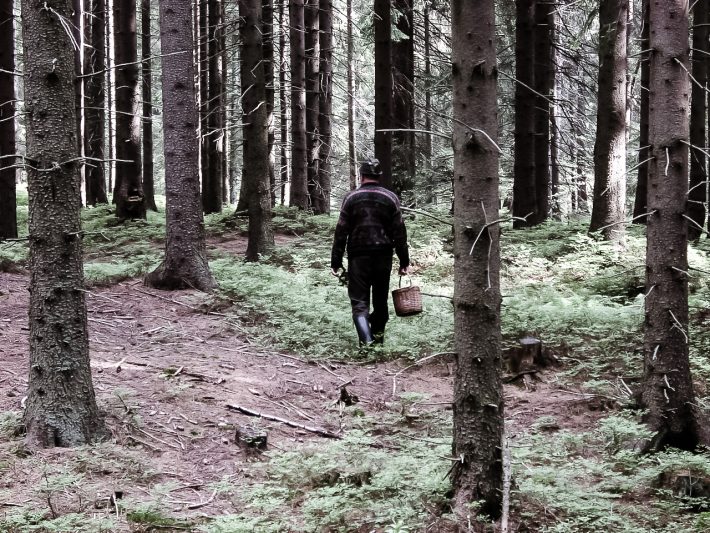
I also recall being in the woods and wondering why we didn't just pick the mushrooms that were all around us. Someone explained that they were poisonous, and my mother later clarified that "We only eat mushrooms we buy in stores."
That limits things somewhat: champignons, portabella, and shitake are the only non-canned mushrooms I recall seeing in stores in the States. Of course, I never really went out looking for other types, so I'm sure I'm misrepresenting mushroom's availability.
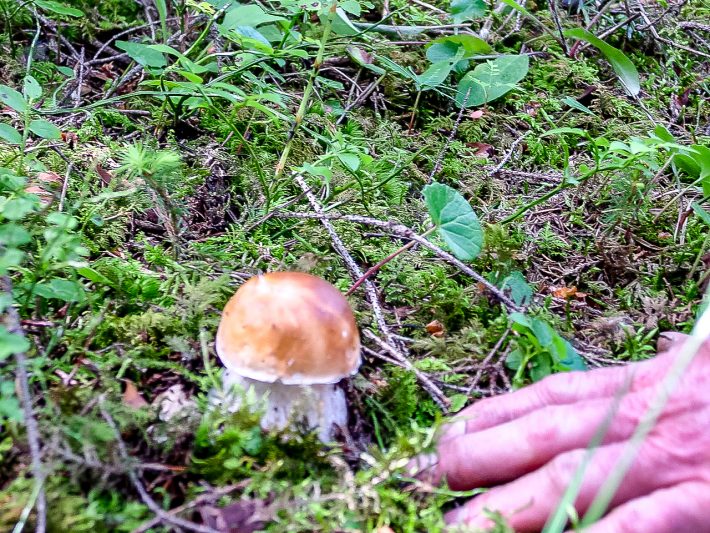
Then I came to Poland, and all my conceptions about mushrooms changed. Mushrooms became not something you bought in stores, but something you went out in the woods to find.
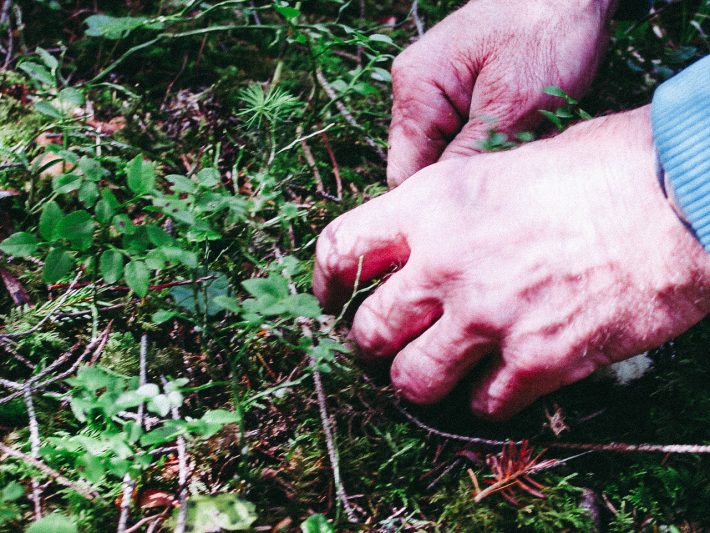
"Mushrooming," for lack of a better term, is a popular hobby in rural Poland, and not only, for often people come from the cities for the express purpose of "mushrooming." It's a simple concept, really: take a basket into the woods and wander around looking for mushrooms.
Of course, not just any mushroom will do. Some, as a shroomer put it, are "edible only once." Others don't taste so good. What everyone dreams of is finding "prawdziwki." I've no idea what kind of mushroom that would be (the mushrooms in the first image are "prawdziwki" — anyone know what they're called in English?), but the word "prawdziwki" would be literally translated "little real ones."
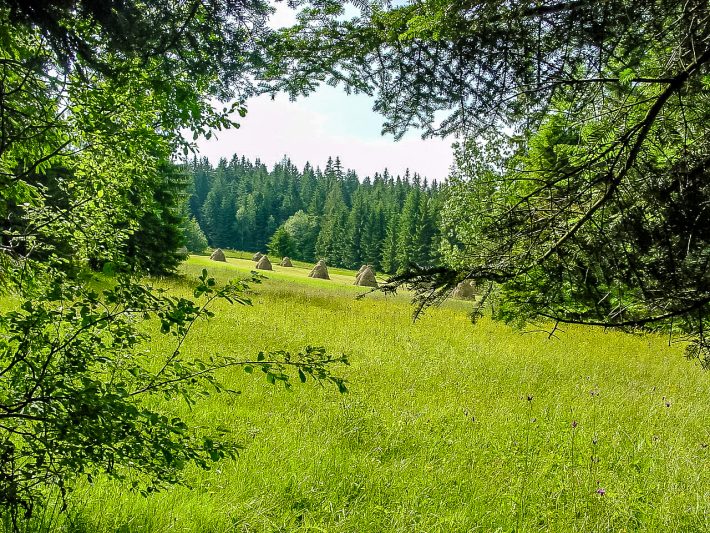
The first step is to find them. Most often they're at the base of trees, or near them, partially covered, growing in damp ground.
A friend told a story of someone who, while out hunting mushrooms, unexpectedly came upon a deer with a broken leg, it's antlers caught in the undergrowth. The gentleman managed to kill the deer with the small paring-knife he'd brought along for cutting mushrooms. Then he went back into the village, borrowed someone's van, drove out into the woods, and loaded the deer up, only to find that the animal was much larger than he'd imagined and the antlers were still on the ground. So he tied the antlers up to the roof of the van, drove it home, and had venison for a week.
Once you find them, it's not a question of jerking them out of the ground. Instead, you have to cut them carefully at the base.
In some ways, it's a pleasant enough activity even if you don't find any mushrooms. Fresh air, sunshine, singing birds — a pipeful of tobacco in my case. It's not a bad way to spend a morning.
But the longer you look without finding anything, two conflicting thoughts start rising. First of all: "I've been out here for ninety minutes already and I haven't found anything edible. This is a waste of my time now." Second: "I've been out here for ninety minutes and I haven't found anything edible. I can't possibly go home empty-handed, so I'll look longer."
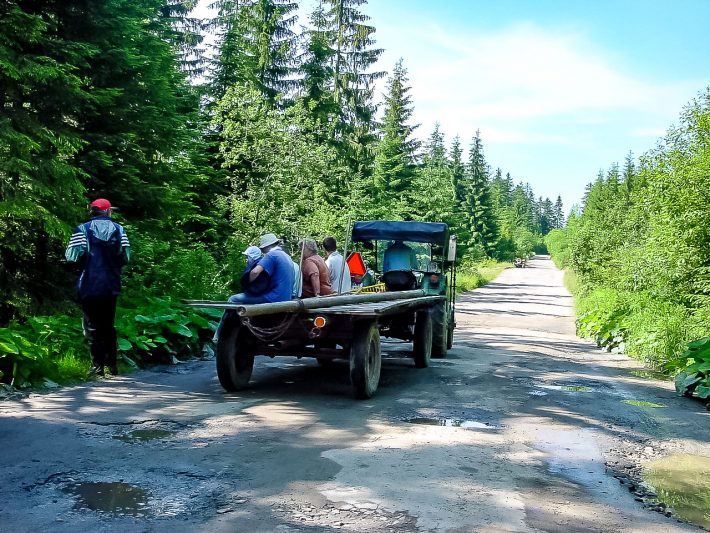
What's worse is when your shrooming partners are finding "prawdziwki" and you aren't. Of course, I'm a shrooming novice, and I guess I don't know how or where to look.
Libation
There are several drinks one associates with Poland. Surprisingly, tea is one of them. I say "suprisingly" because tea is too English to fit into Polish society, but fit it does.
But who wants to read about tea?
Coffee is another story altogether. In Poland they drink their coffee Turkish style. They simply put coffee grounds in a cup and add water. No filter, so there's a sludge (not to be confused with sledz) in the bottom of the cup. My friend's uncle does strange things with his coffee grounds: He eats them. He puts eight or nine teaspoons of sugar in his coffee (or rather, he pours a little water of his sugar and coffee ground mixture), then eats the stuff at the bottom of the glass.
"Glass? Don't you mean, 'cup?'" you might be asking yourselves. No, I mean glass. Most often coffee is served in a glass, much like we would drink soda from in the States. In other words, there's no handle. I think it is actually rather dangerous, because it's very easy to burn my tender hands holding a glassful of hot coffee. But most Poles just grab the glass, and don't wince at all.
Vodka
I'm not sure I'd ever drunk vodka straight before I came to Poland. Since coming to Poland, I've drunk a fair amount of it (comparatively speaking), but I still don't like it.
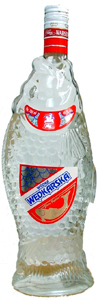
Vodka accounts for many of the little surprises I've noticed around here — missing fingers, for instance. Many men in Lipnica have part or all of one or more fingers missing. I knew fairly early on that this would be a result of carelessness in one of the many sawmills in the village, but I thought, "Come on, simple carelessness doesn't account for it." Then I saw a man covered with wood chips and sawdust come into a shop and buy a half-liter of vodka.
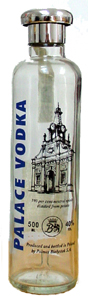
As far as straight drinking goes, though, Poles, while they out-drink Americans to a lip-numbing degree, are teetotalers in comparison to Russians. I once saw a documentery in Poland, called Z?ota Ryba ("The Golden Fish"), about vodka in Russia. It showed a home distillary that produced 140 proof (i.e., 70% alcohol) vodka that even Grandma was tossing back by the full glass (Not a shot glass, mind you, but the size Poles use for coffee and tea.), without a chaser.
Poles make their own vodka too — to a degree. It's a tradition to use pure spirits to make wedding vodka. (Kinga's father and I made it for ours.)
Still, buying spirits and dilluting them is one thing; making your own spirits is quite another.
The Linguistics of Vodka
Vodka in Polish is "wódka." A perfectly normal word, but its derivation is strange.
First, a bit about diminutives. A grammatical "diminutive," for those who don't know what it is and don't want to look it up, is used to denote the smallness of or fondness towards a particular thing.
In English, we don't really have them. We might preface some noun with "little" (as in, that's a nice little dog), or even use "little" in conjunction with "cute" or "sweet."
In Polish, though, you actually change the word, usually adding "ek," "ka," or "ko" to masculine, feminine, and neuter nouns respectively. In the example above, a Pole might say "piesek" as the diminutive form of "pies."
Poles have diminutive forms of first names as well. You seldom call a friend named Piotr by that name, but instead use "Piotrek," or if you're his mother, "Piotru?." It's similar to the change from "Thomas" to "Tommy," I suppose.
Now, back to "wódka." If you notice, it ends in "ka," meaning it is, in fact, the diminutive of some feminine noun. What word could that be? Why, it's none other than "woda," or "water."
Beer
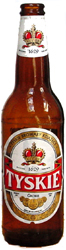
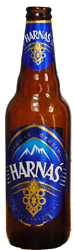
I'll never forget the first time I saw it: standing in a shop at seven in the morning, waiting to buy something for breakfast, I watch a man come in, buy a beer, down it in one long gulp (for lack of a better word), put the bottle on the counter and walk out. Seven in the morning.
It's safe to say that beer is viewed somewhat differently in Poland than in the States. In fact, when someone in Poland says, "I haven't drunk in two days!" I take that to exclude beer. "I haven't drunk vodka in two days," is what he probably means.
Sausage Making
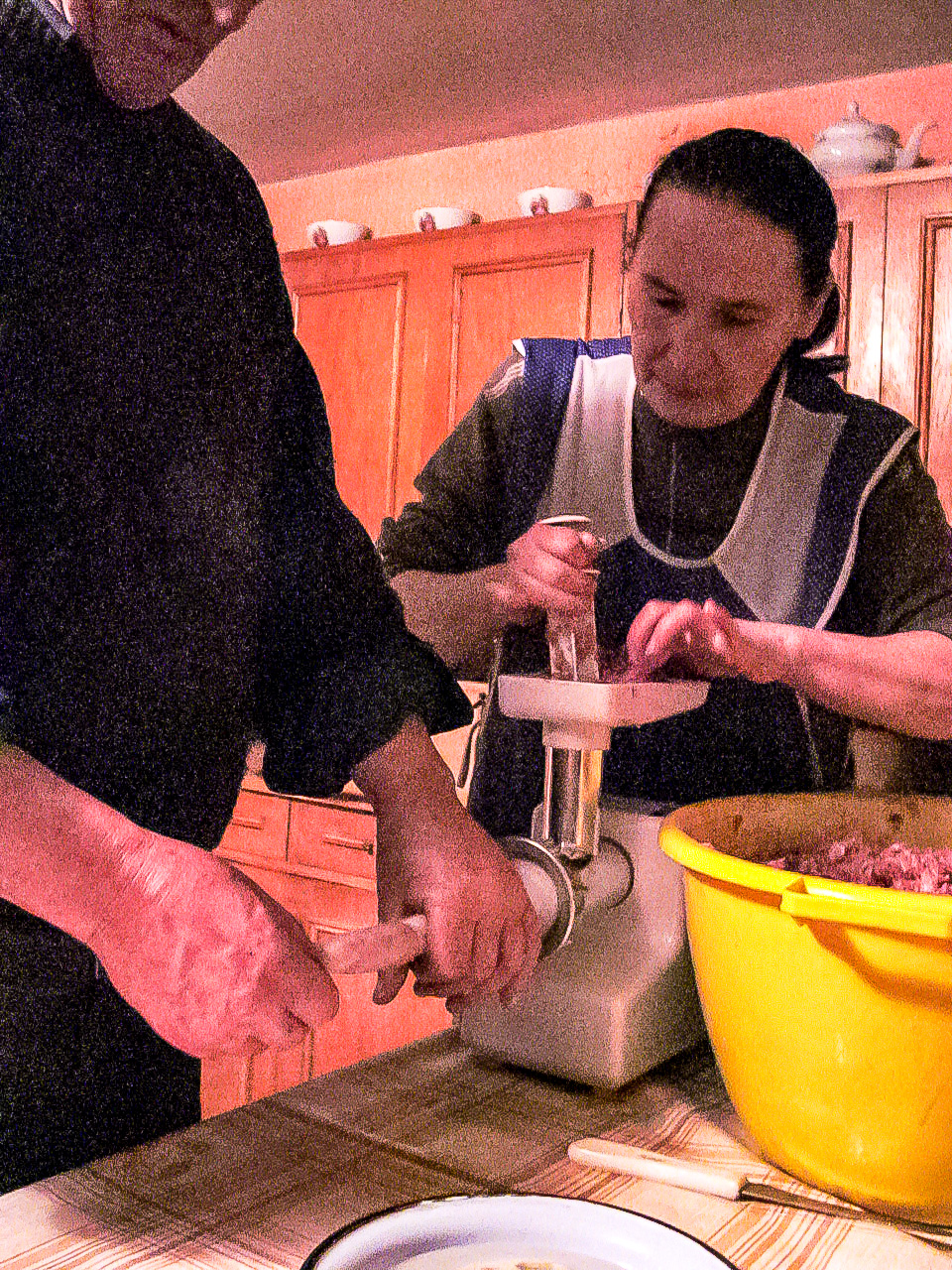
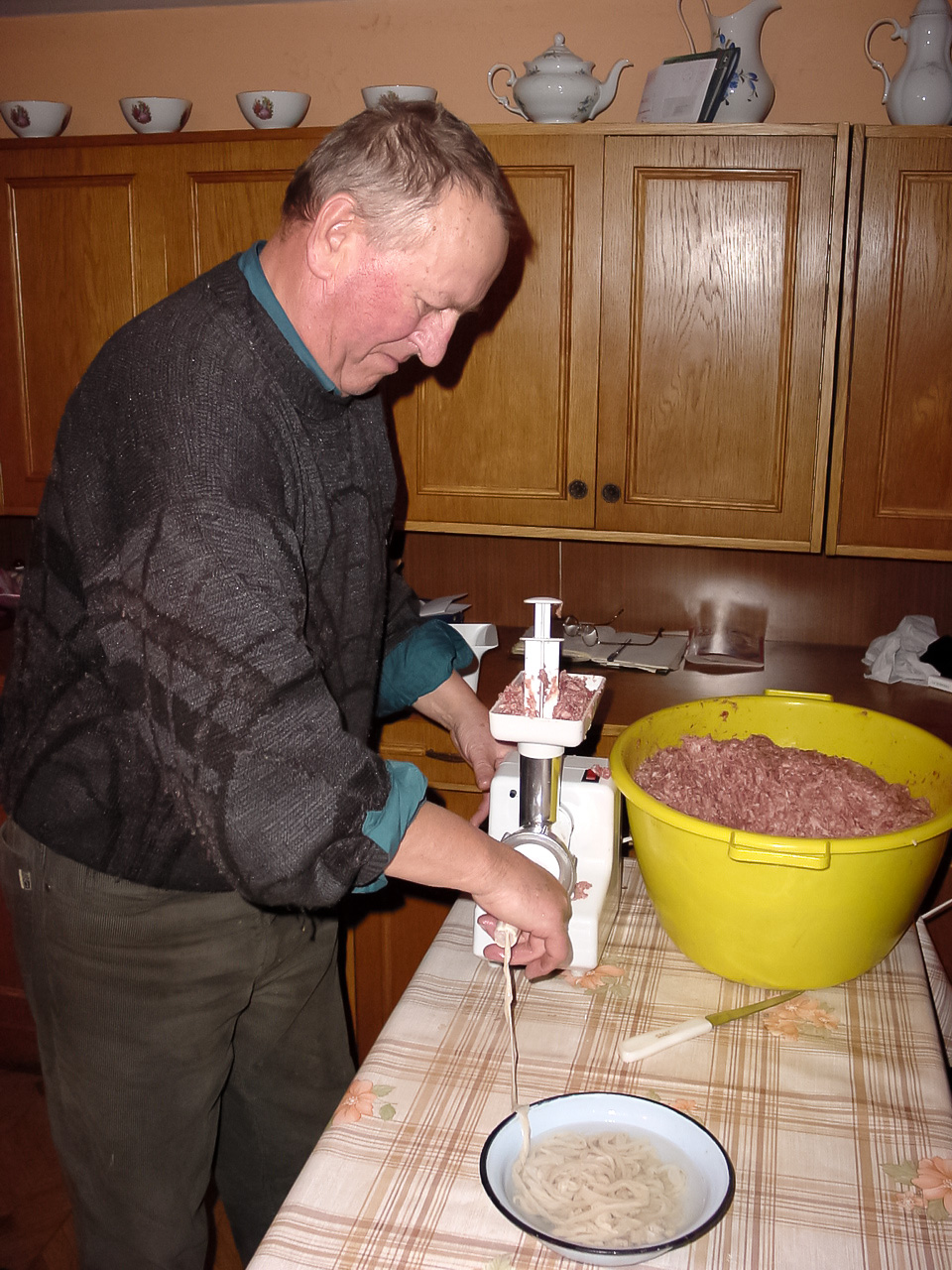
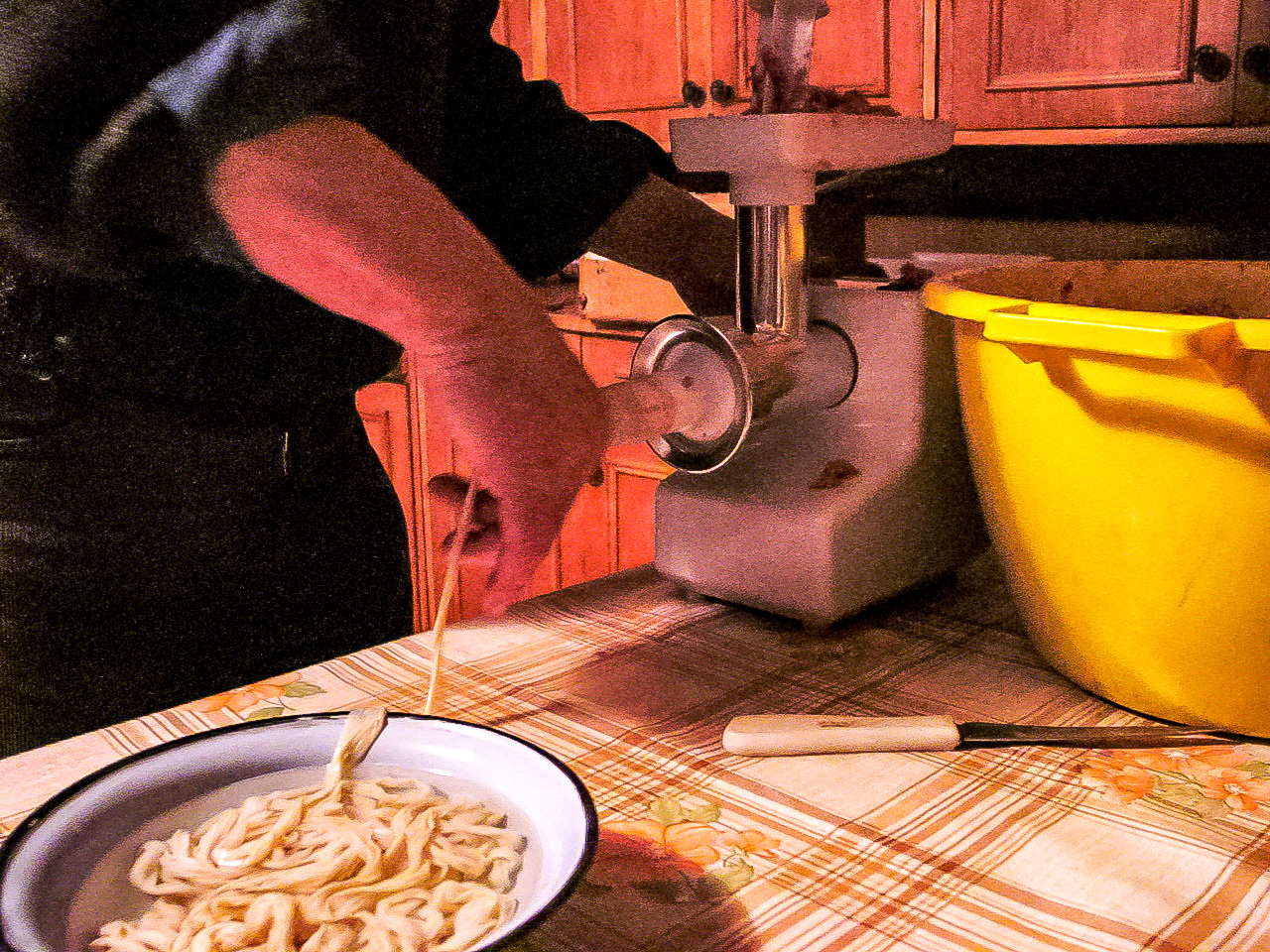
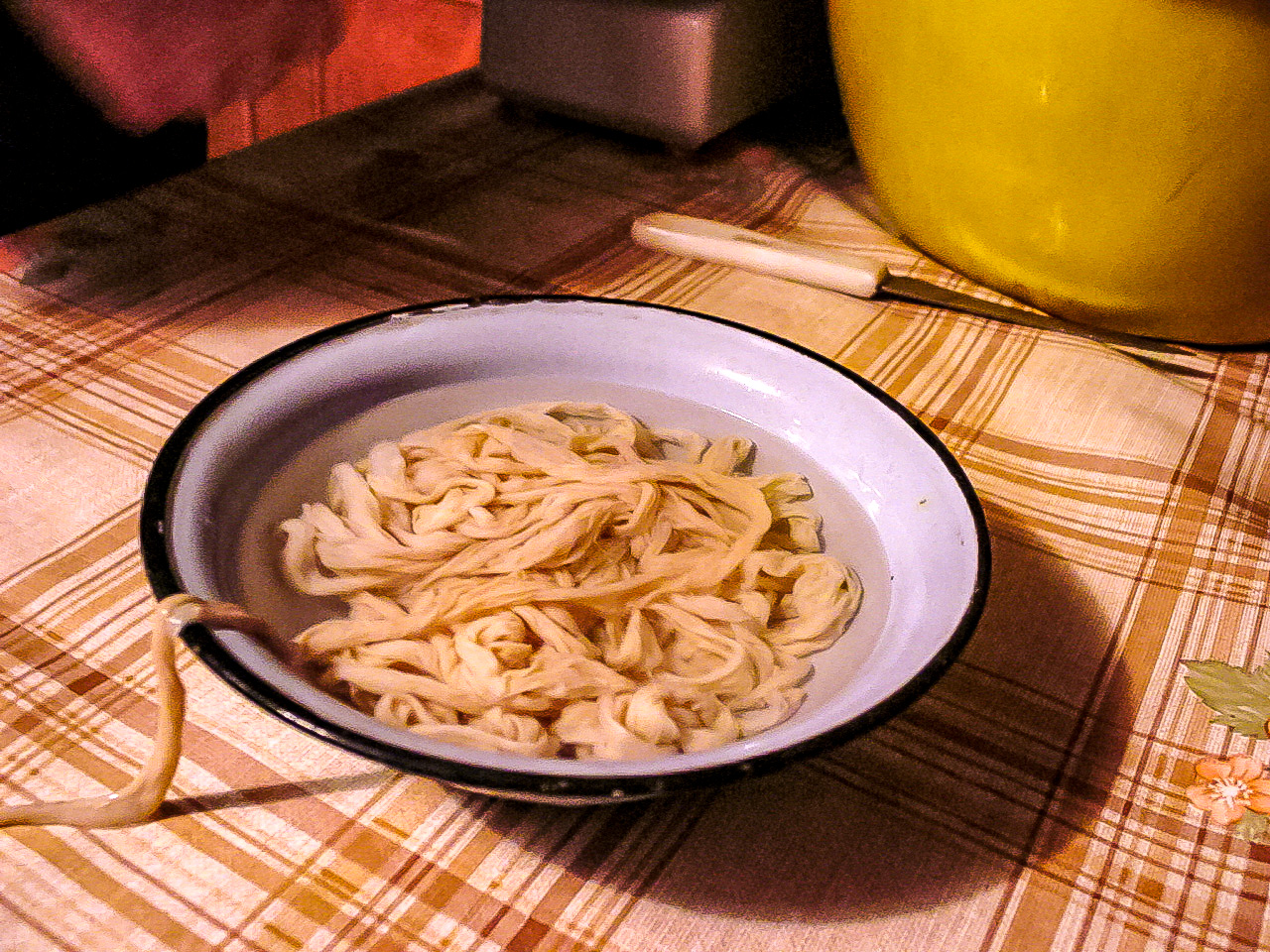
Smalec
A friend once described mayonnaise as "whipped fat." That name somehow seems more appropriate for a particular, traditional Polish highlander dish called "smalec," with the "c" pronounced "ts." It is, in a word, lard. Seasoned lard, with big chucks of boczek in it (which is basically smoked fat-back — yum). The funny thing about it is that they add something to the lard so it's not so solid (not like the solid white blob I bought to make tortillas with the other week), and then whip it. Yes, I've literally eaten whipped fat, smeared it fresh-baked bread.
It took a moment before I could actually bring myself to eat it, though. I sat there, looking at the piece of bread with the glistening concoction smeared all over it, the blobs of smoked fat sitting like burnt raisins in the whipped fat that looked more like dirty whipped cream, wondering if I could go through with it. Obviously I did, else I wouldn't be rambling about it.
And — surprise — it was tasty. Tasty in a cholesterolly, carnivorous kind of way, but tasty all the same.
Kinga informed me that she's had much better, and that I shouldn't judge all whipped fat on that one experience, but I think I will anyway.
Tired of worrying fat content, always thinking about calories-from-fat percentages and cholesterol levels? Try smalec. No need to worry about fat content here — it's a nice, round 100%.
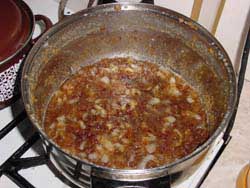
But how to make it? Simple. Put some lard and boczekinto a pot and let it simmer all day.
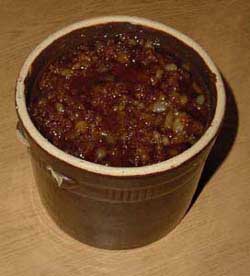
Next, pour the mixture through a sieve and place the now-soft chunks of fat in a ceramic container, careful not to drain entirely the now-clarified fat from the now-soft fat.
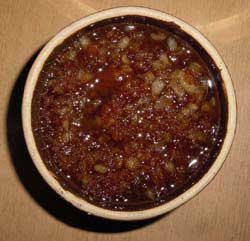
Smile as you think of the glistening mixture sliding through your body.
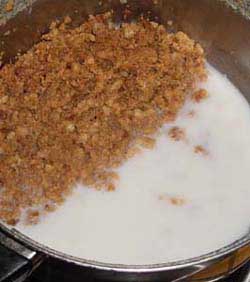
If your curious what the insides of your veins will look like shortly, leave the remaining mixture to cool.
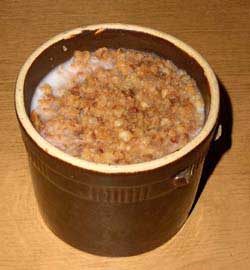
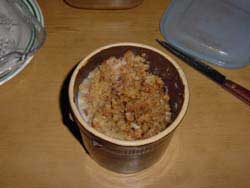
Next day, dig in. Your neighborhood cardiologist will thank you for the business.
So apparently, I was wrong. It's not whipped fat. It's just boiled fat.
It's amazing there are any Poles who, eating like this, live past the age of, say, fourteen.
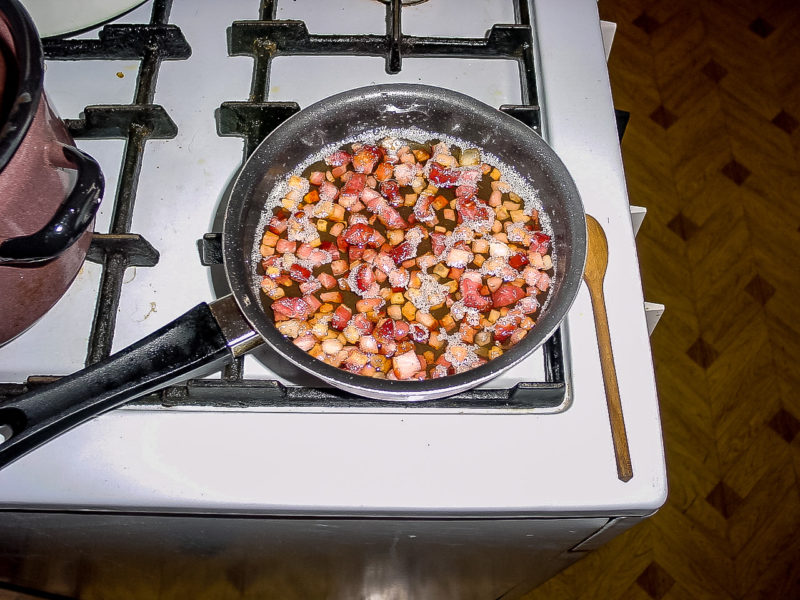
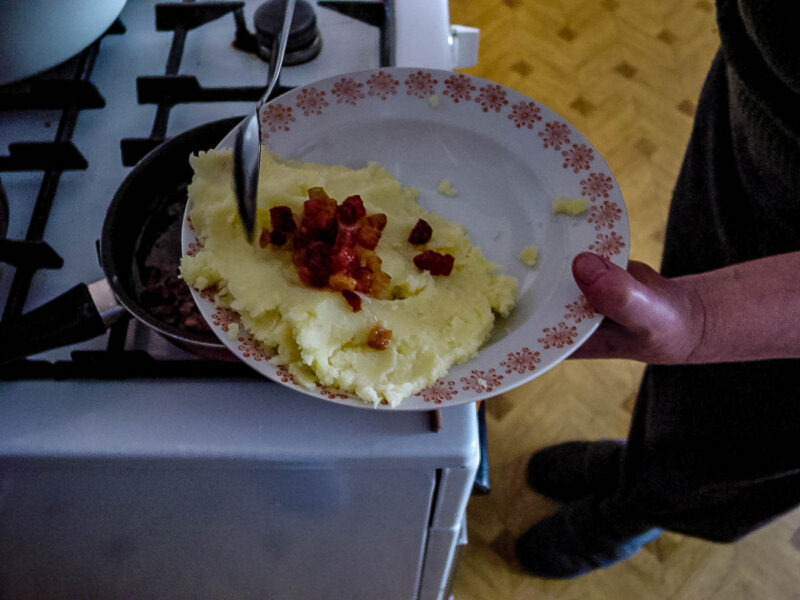
Polish Kitchen
Flaki
It looked like perfectly harmless soup. I could see a bit of carrot and potato, and a sip of the broth revealed a nice, rich flavor. Then I saw it: A bit of bumpy white mystery that was vaguely meat-like. I moved it around a little with my spoon and thought to myself, "Oh, please don't let this be flaki." I took a bite. It was rubbery and had a very pungent flavor. I swallowed and it was at that point that my host brother asked, "You know what that is?" Before I could say, "Wait--don't tell me. I don't want to know," he informed me, "Flaki!" He smaked his lips and rubbed his belly. "Ummmm," he said with a sly smile. "Go ahead," he prodded, "It's great!" I tried to eat more, but I simply couldn't. After all, how much intestine soup could you handle? Yep, flaki is basically soup made from cow guts. While the broth can be tasty, the meat itself isn't, and the while it cooks it positively stinks.
This was only one of my culinary adventures during the 1996 Christmas holidays. I returned to Radom to spend Christmas with my host family and I was introduced to the wonders of the Christmas feast. On Christmas Eve there is a huge meal with anywhere from nine to fifteen dishes, none of which have meat (unless you count fish, which the Poles don't). There were a couple of geletin dishes with bits of veggies and fish suspended in a suspect looking gel and sledz (herring).
The highlight of the dinner is the carp. Traditionally it is kept alive in the bathtub until the day of Christmas Eve when the grandfather bludgeons the poor thing to death and then it becomes the central entree of the Christmas Eve banquet. I'd never eaten carp, and if you haven't, I wouldn't advise it. Fishermen throw it back for a reason! It is basically a bone with some skin and a little meat trapped in between. Breaded and fried, the carp I had was rather difficult to finish. When I finished the pile of bones was somehow bigger than the actual piece of fish was.
Christmas day is a day of meat. While none of the Christmas Eve dishes had meat, almost every single Christmas day dish had meat. This was when the flaki made its appearance. I was somewhat surprised to find that the desert had no meat in it. I thought, "Why not a mincemeat pie? Perhaps some chicken ice cream? Or even a pork cake?" but I kept it to myself.
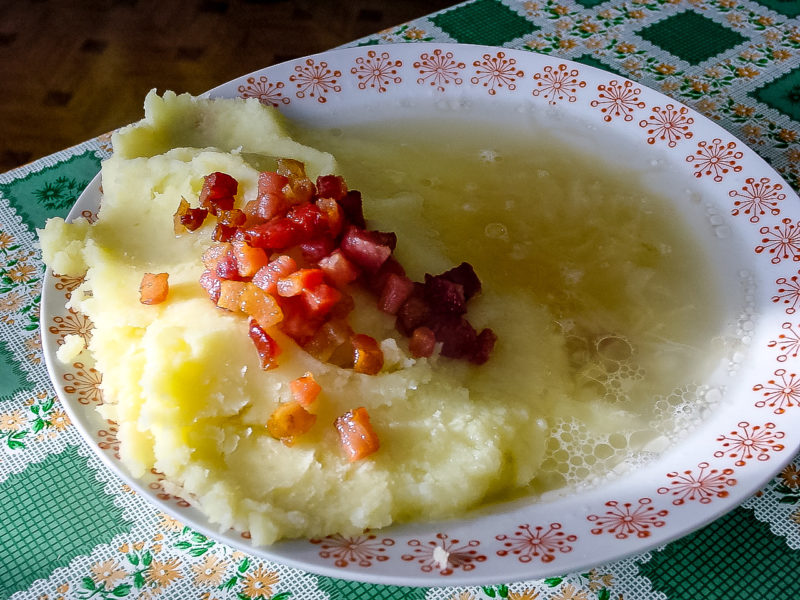
As a general rule, though, Polish fare is quite good. It's a bit on the starchy side, but tasty. Potatoes are served with almost every meal to which I've been privy, cabbage appears on the table frequently, and pork is the meat of choice. Beets are rather common (in soup--barszcz--and as a side dish), and every meal is washed down with warm kompot which is an incredibly sweet drink made from various fruit (apple and pear seem to be the most common in Lipnica). Occasionally chicken will show up (though most often in soup) and I've even had rabbit on once. While I ate, Elmer Fudd kept singing, "Kill da wabbit, kill da wabbit . . ." and I felt a little guilty, but I have to admit that wabbit is wader wonderful. No wonder Elmer's so intent on bagging Bugs.