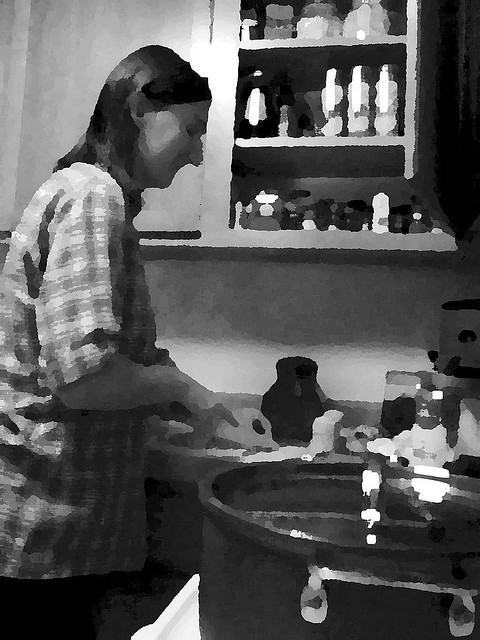
We finished the first batch.
First we rubbed down the meat with some papryka:
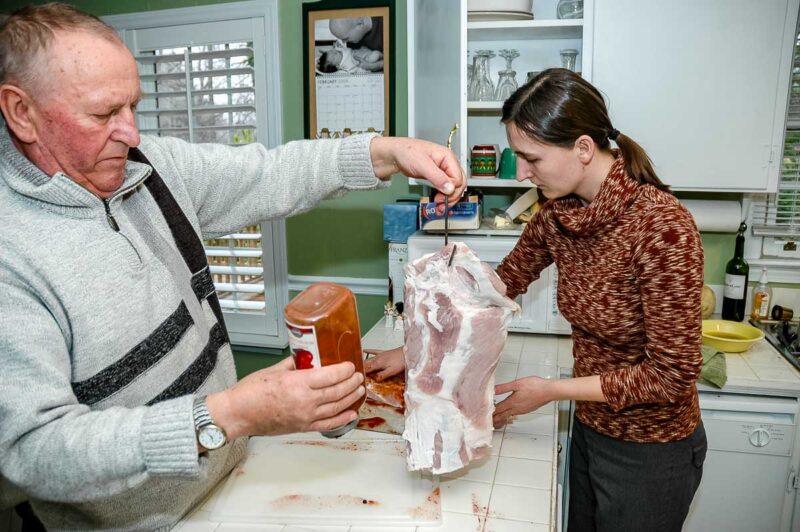
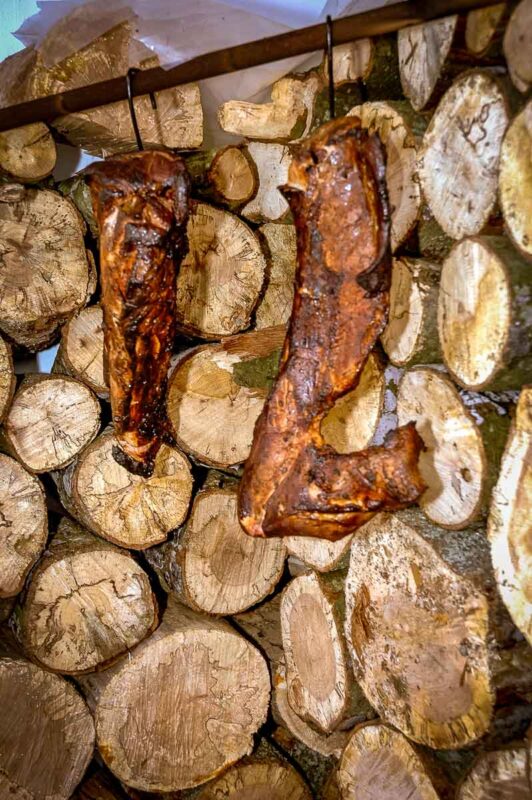
Then we hung them:
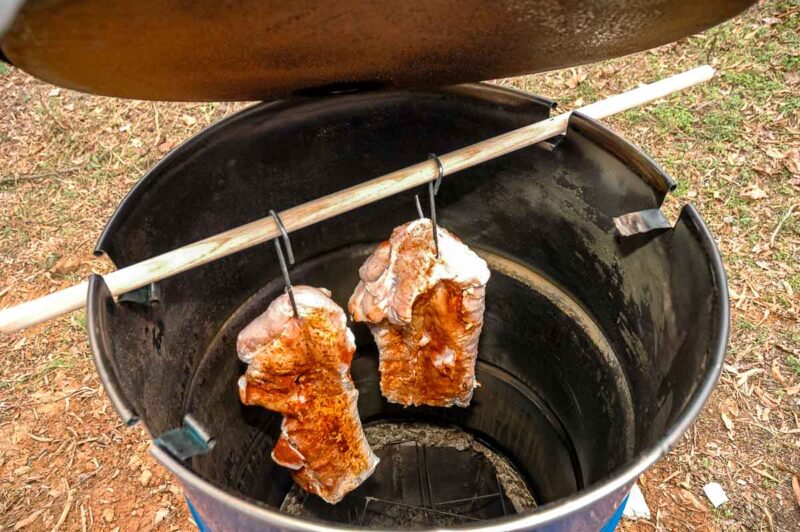
Smoked them:
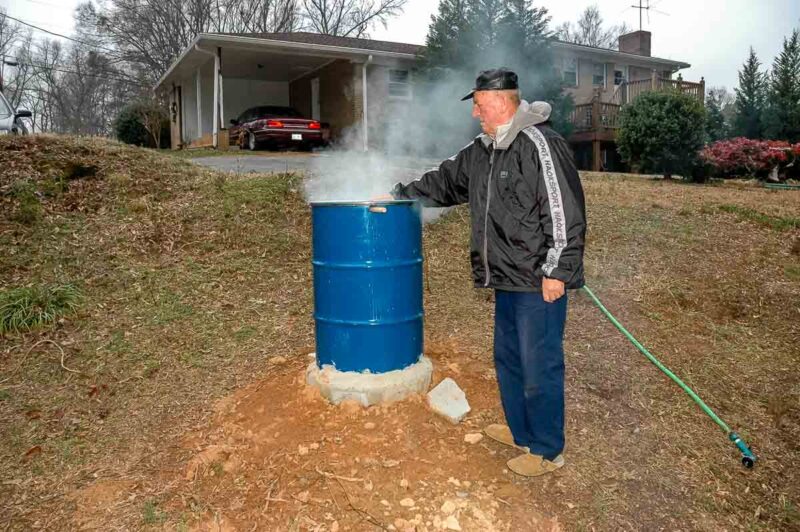
Cooled it:
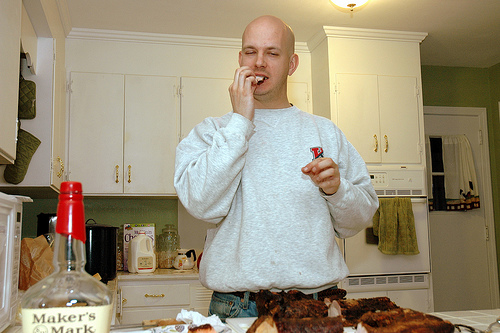
And ate it:
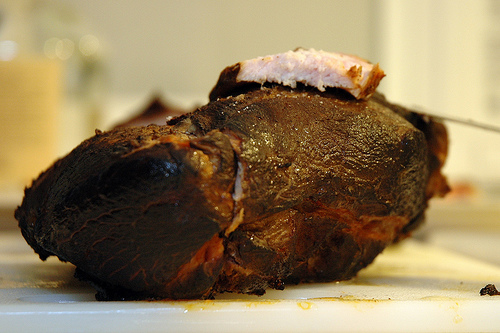
Finished product:
fun in threes, sometimes fours
food and cooking
We finished the first batch.
First we rubbed down the meat with some papryka:
Then we hung them:
Smoked them:
Cooled it:
And ate it:
Finished product:
All the prep, all the cooking, all the cleaning, all the -- let's face it -- hassle, and what do you get?
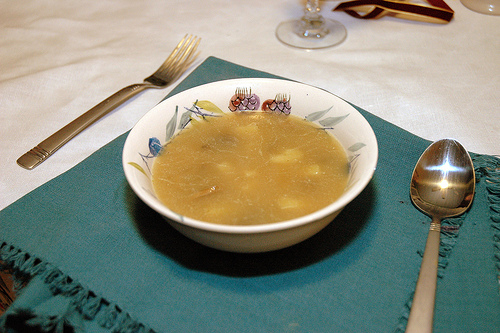
First course: barszcz (beetroot soup) with "ears" (wonton-like dumplings)
Second course: wild mushroom soup.
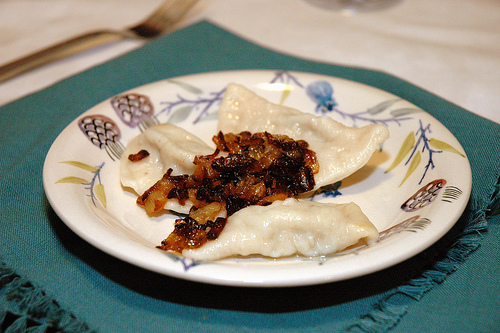
Third course: pierogi (somewhat larger dumplings) filled with sauerkraut and mushrooms.
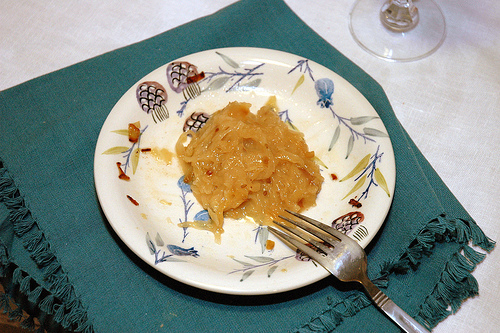
Fourth course: fried sauerkraut and onions.
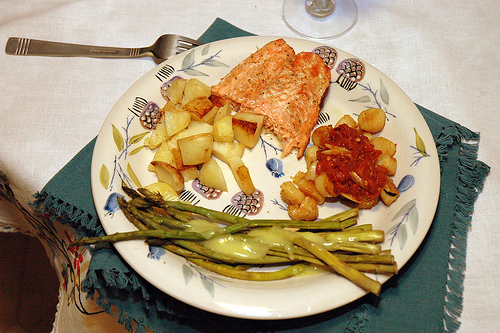
Main course: baked salmon, served with roasted potatoes, scallops, and asparagus.
And after dinner, gifts, including a new book for L.
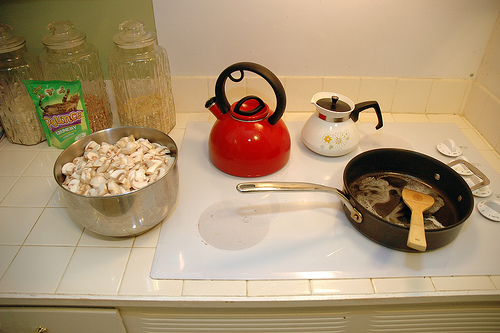
Clean, clean, clean — the first three steps in the Polish Christmas prep tradition. This year, we only did the second on those three steps: having a toddler running around makes cleaning a Sisyphusian challenge.
The next steps in preparing a traditional Polish Christmas: cook, bake, bake, cook, cook, bake, cook. Due again to the Girl, we have time for only half that. And we’re getting a late start at that. Last year we did the dumplings and “ears” weeks in advance and froze them.
Last night, I got started on the pierogi (dumplings) and uszki (“ear” — little dumplings, more like wontons).

First step: saute the mushrooms.
Second step: make a pulp out of the mushrooms.
Third step: squeeze every last bit of water out of the mushrooms.
This third step is critical, since the mushrooms will be the one of the main components of the pierogi and the sole component of the little wontons. Too much moisture in the filling and instead of nice little dumplings, you wind up with a doughy mess.
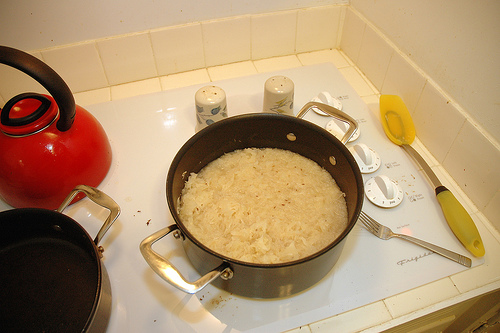
The next step after the mushrooms is simple: do the same thing with the sauerkraut.
It took me about ninety minutes last night to prepare the mushrooms and kraut, though most of that time was simply waiting for it to cook. But it’s frightening: ninety minutes for the filling of one of several dishes for Christmas Eve dinner.
But what is time when you’re cooking? The only regret is how long it takes to prepare all the food versus how quickly everyone eats it — the cook’s eternal curse.
Dziadek had never eaten shrimp in his life, and so K and I had to correct that situation.
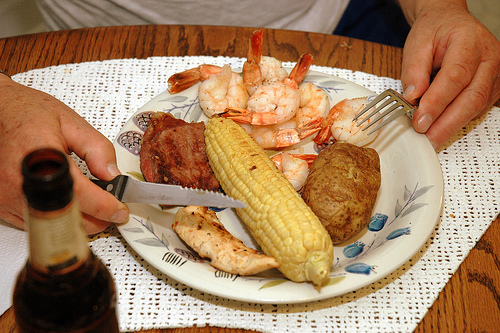
Ribeye steak, marinated chicken, grilled shrimp with garlic, baked potato, and corn with lemon and cayenne pepper (learned from Chhavi).

Dill is summer in Poland. Fresh, young potatoes topped with dill make me think of all the Polish summers I experienced, but in particular, the first one, which was well underway eleven years ago today. It seemed during that first summer in Radom, during pre-service training, we had potatoes with dill every single day. And so the scent instantly brings back to mind the large, Stalinist Polish cafeteria where we ate.
Maybe that first summer was simply dill overload, because no matter how many pleasant memories I associate with the odor, I honestly don't really like dill. It has such a fresh scent, and yet it so easily overpowers. Summer potatoes with dill taste, to me, almost exclusively of dill, no matter how sparingly it's applied.
Friday for Catholics often means no meat. Good Friday for Catholics means no meat. Period. What to do? What to cook? Seafood soup with migas.
First, the migas, because it has to sit around for a while and get soggy.
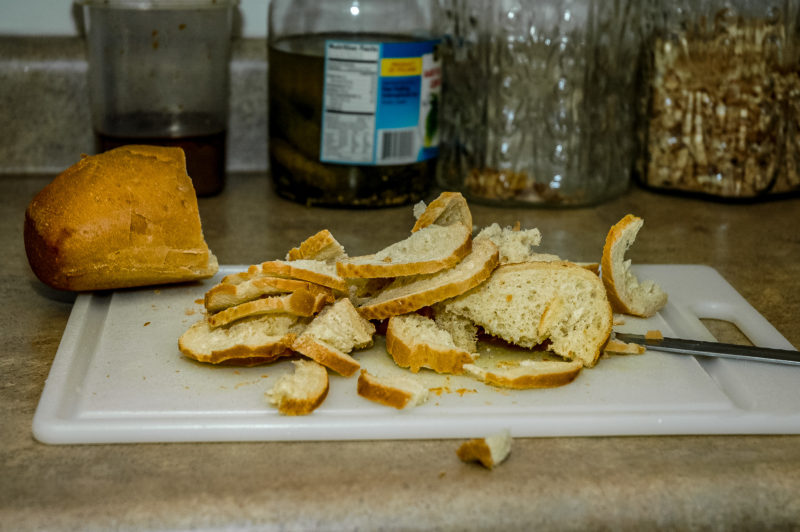
Cut the bread into thin, rather uneven slices. (I tore a lot of my slices up to create irregular shapes.) Then mix the bread, onion, garlic, and bacon together, spread it evenly in a pan, and sprinkle the water over it. Let it sit for at least half a hour. (Cooking it for Good Friday, though, I separated it into two different batches: one with bacon, one without.)
When you begin to fry it, you’ll need a mixture of garlic and olive oil:
Once the migas is migasizing, it’s time to start the soup.
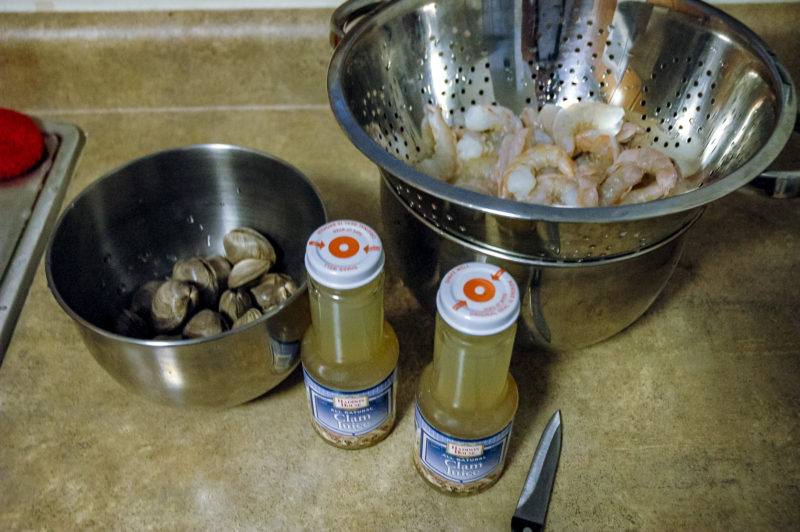
Cook the onion, green pepper, and garlic together in olive oil. When soft, pour in tomato puree, clam juice, wine, broth, bay leaves, chile, coriander, basil, thyme, half the lemon slices, and carrots. Bring to a boil, then let simmer for about 20 minutes (until carrots are soft).
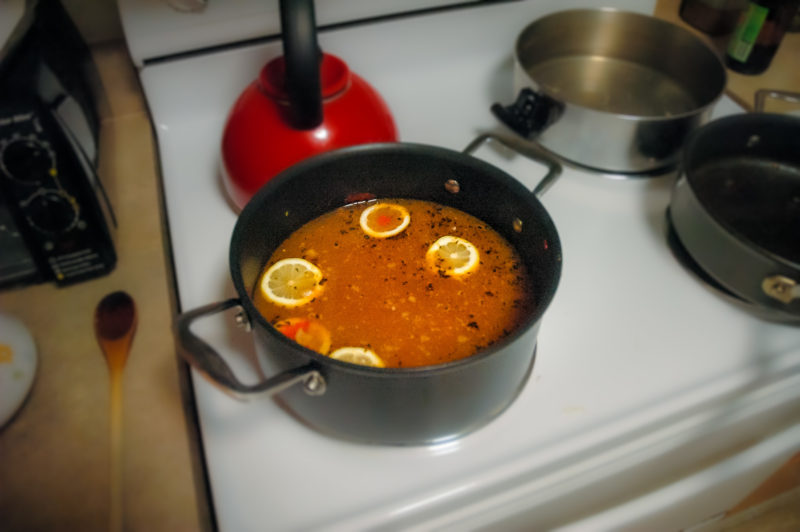
Add fish, clams, and shrimp and simmer until clams open and shrimp are pink.
Immediately after adding the fish begin to fry the migas. Brush a hot frying pan evenly with the garlic and olive oil mixutre, then spread about 1/2 cup of the migas mixture in the frying pan, pressing it down until it’s about 1/4 inch thick. Let it cook for about four minutes, then turn it. It will break apart as you flip it — it’s part of the idea, I guess.
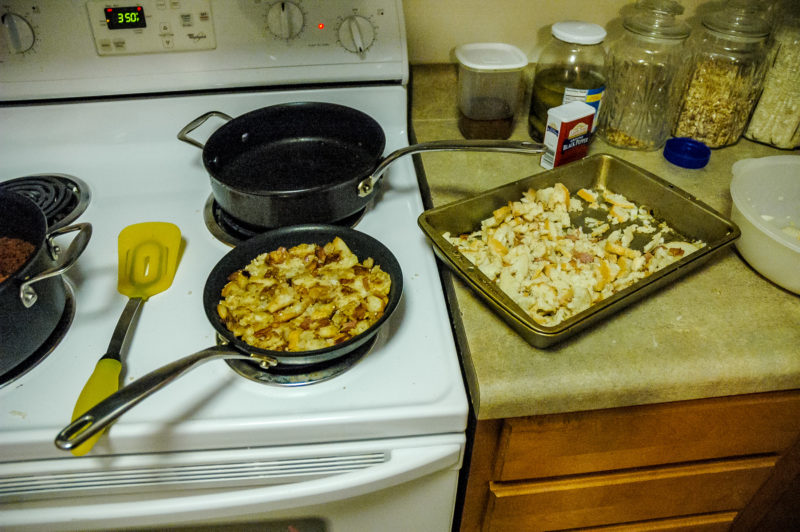
Once the migas is brown and crisp and the calms have overcome their shyness, it’s time to serve.
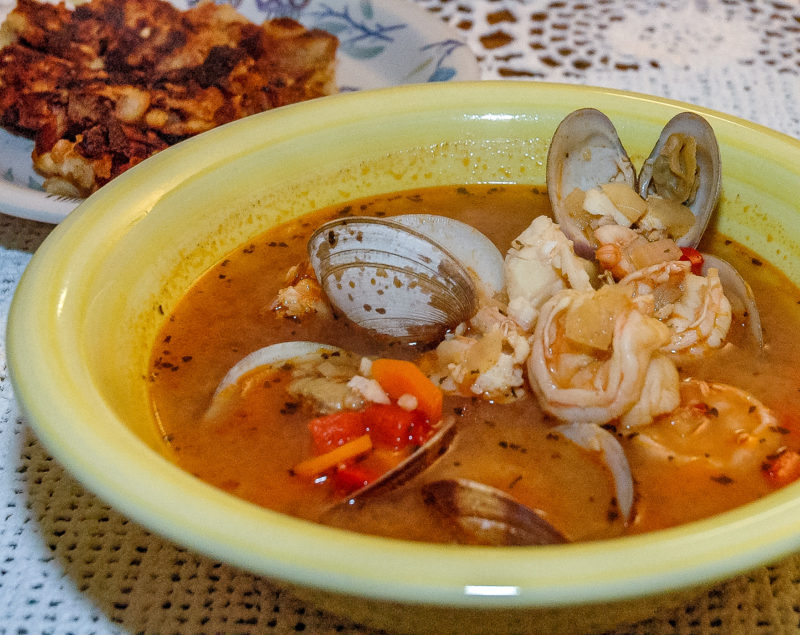
It’s not for the budget-minded. The ingredients cost over $50, since all the seafood was fresh, fresh, fresh, and wild-caught. Halibut at $18 a pound and shirmp at $12 a pound does indeed add up.
But it was worth it. As a friend would say, fresh and honest.
A week into J's visit (J being K's mother) and she finally went out shopping. I took her on our weekly grocery rounds yesterday afternoon, wondering what she'd think of the wonders of American consumer choice, which plays itself out practically in a grocery store that has an entire row of paper towels.
This is not the first time J has been to America. She came for a visit almost ten years ago, but I think she stayed fairly exclusively in the safely Polish sections of Chicago.
When I returned to America after a couple of years in Poland, it was that choice over-kill that shocked me. I'd grown used to little corner stores where I stood on one side of the counter and the food and grocer were on the other, and I had to as for everything by name (which does wonders for language learning). She didn't comment on the paper towels though.
I kept an eye on J, hoping to see what might catch her eye. It was finally in Ingles that she showed some real excitement. We passed an isle display of a particularly southern snack and her eyes light up and she began, "Oh, these are those, those, those," searching for what in the heck you'd call fried pork rinds in Polish.
Thinking she couldn't possibly realize what these things were, I said "the skin of" and she found her word. The best word for something as untranslatable as "pork rinds."ï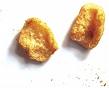
"Pig chips!" she cried. "Oh, we loved these. We ate them all the time!"
She had me translate each flavor for her so she could pick the one she wanted: cheddar.
"Of all the things for her to get excited about," I thought, putting a bag of fried pork skin into my shopping cart for the first time in my life.
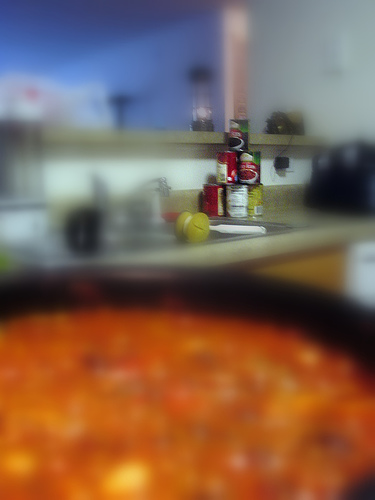
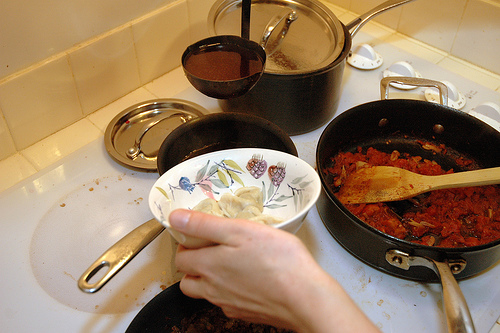
The sauce:
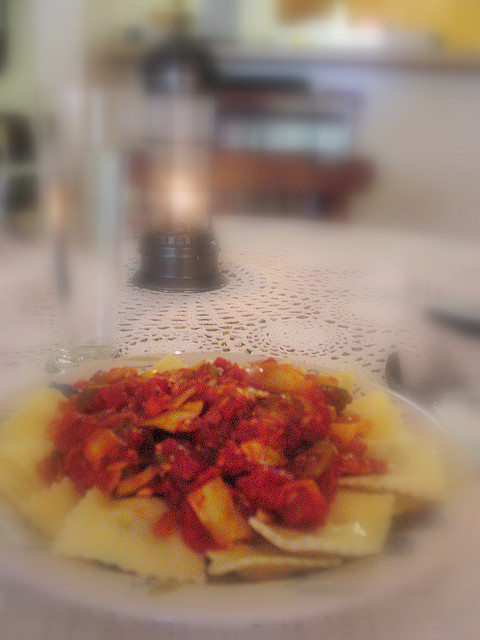
The ravioli: chicken and Parmesan cheese.
A fifteen-minute meal.