Eating
Wednesday 14 December 2011 | 0 Comments
fun in threes, sometimes fours
food and cooking
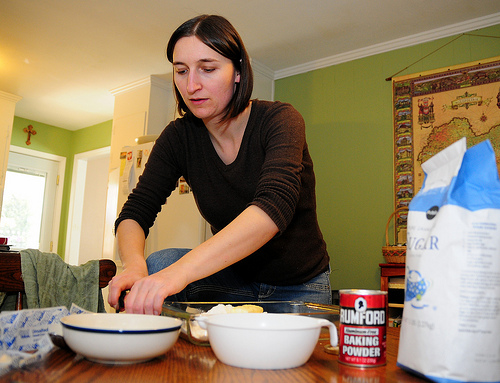
Being married to a woman who is Polish through-and-through means that food is important in life. It's not something to be squeezed in, willy-nilly, whenever, and it's not something that can be simply plopped out of a can or popped in the microwave. It's something that requires preparation, time, and patience.

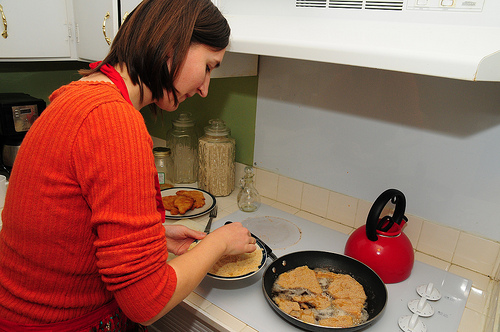
For example, if a certain little girl would like to have chicken nuggets for dinner, that's fine. But a Polish woman will not be pulling a package of milled and breaded chicken odds-and-ends out of the freezer. From time to time, something like that is fine, perhaps a couple as a snack. For dinner, however, only real chicken will suffice.

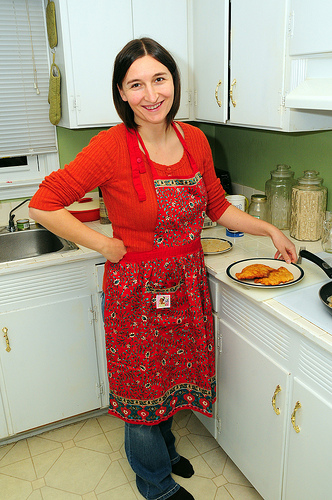
And this requires time, and an apron.
Truth be told, the apron is something in the Polish genetic make-up, I believe. Babcia, in Poland, slips on an apron every morning as habitually as I slip on socks or a shirt. It's simply another article of clothing, and it stays on all day, whether cooking, cleaning, or taking a break. (It comes off when heading out into public, of course.)

But the results of aproned cooking -- who could possibly complain?
Immigrants bring all sorts of things with them when they move to a new country. They bring items of their culture: language, songs, recipes.

They bring a love of native-language literature (even if it's actually translated from another tongue) that excites them beyond words when they find someone else who seems to love a given book as much as they do.

But one thing they must leave behind is the confectionery that brings a smile to their faces and warmth to their hearts.

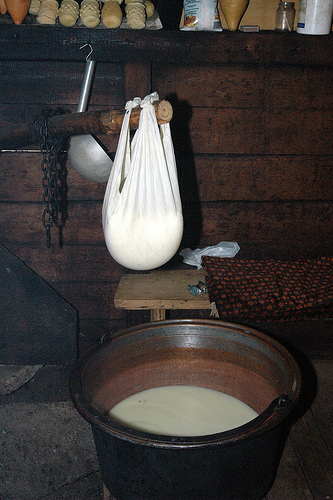
At first glance, it looks like a bit of cauliflower. It is, in fact, a mixture of bacteria and yeasts — a fungus, of sorts. Kefir grains, used to make what Poles call “kefir,” what Russians refer to as “кефир” (pronounced the same) and what we call, essentially, buttermilk.
Production is simple: take the kefir grains, wrap them in gauze, drop them in a ceramic container, cover them with fresh milk, and let the mixture sit overnight. In twenty-four hours, you’ll have a chunky, lightly acidic buttermilk, that, an added medicinal bonus, has a slight alcohol content.
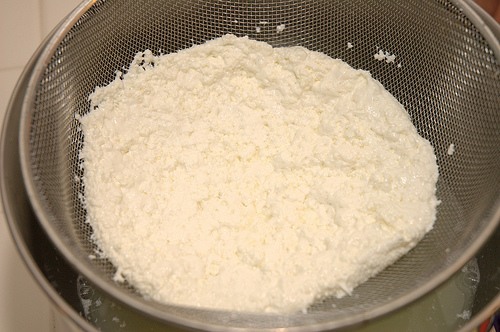
From there, it’s just a moment’s heating away from farmer’s cheese: mix the buttermilk with some fresh milk, heat, and strain.
In Poland, they do the same essential process with sheep milk, eventually forming it into oblong cheese blocks and curing them in a smoke house.
The Girl is a strange eater. In truth, she’ll eat anything if she’s cooked it. For a long time, as a child, her favorite thing to cook while banging around the kitchen was “blue zupa,” a hybrid Polish and English name (“zupa” is Polish for “soup”) for an imaginary, favorite-colored dish. K and I ate countless pots of blue zupa.
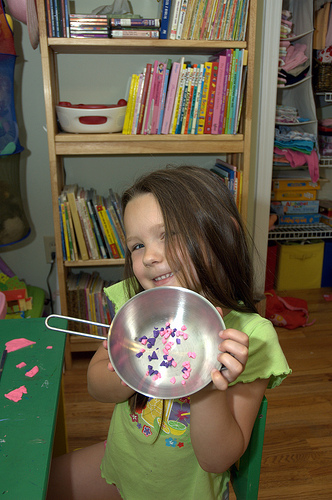
We eventually bought L some realistic play pots and pans at Ikea, and she moved from more imaginary to less imaginary. It’s truly amazing what you can cook from blue and pink Play-Doh.
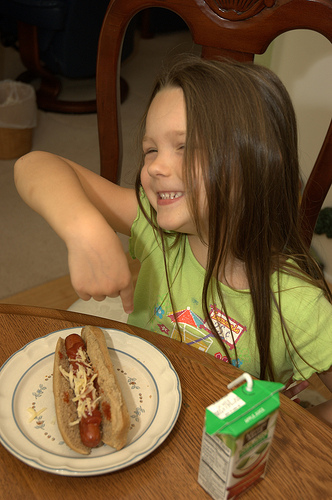
When it comes to more realistic food, though, the Girl has slightly different tastes. She likes some of the standards: spaghetti and pizza are always welcome on the table. Yet other childhood favorites have always been less popular. For instance, she just ate her first hot dog over the Fourth of July holiday. Granted, she hasn’t had much exposure to hot dogs: we eat them probably twice a year at most, if even that often. Still, she sees them at school, and probably sees how the other kids virtually inhale them. That peer pressure has had no effect (if only that would continue).
Yet non-typical foods she adores. Exhibit A: barszcz. Her favorite food, without exception, is a traditional Polish beetroot soup. She’s absolutely obsessed: she’ll eat it once a week without fail, more if we let her.
She’s also eager to bring her best friend from school to try it.
“What will you do if E doesn’t like it? If he tries it and says, ‘I don’t like it.’? I ask.
“I’ll tell him, ‘You just have to try it,'” she replies.
“But what if he tries it and doesn’t like it?” I press.
Try it and not like it? Unthinkable.
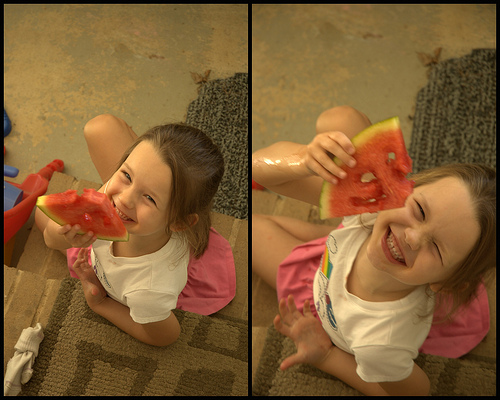
The Girl is a fan of summer snacking — what kid isn’t, I suppose. She always seems most attracted to the foods that make the biggest mess.
But then again, what kid isn’t? What’s the point of eating something sweet if you can’t, at the same time, wear it? That is a convenience born of the fact that watermelon and ice cream taste better in the summer. Who would want to clean up such a mess inside? Better to let it drip and leave a small bit of sweetness for the ants.
Ice cream is a different story altogether, and at the same time, it’s just a variation watermelon. Sweet and sticky, they both leave a trail behind. But only ice cream is affected by the clothes one wears.
Sunday dresses always make ice cream taste best.
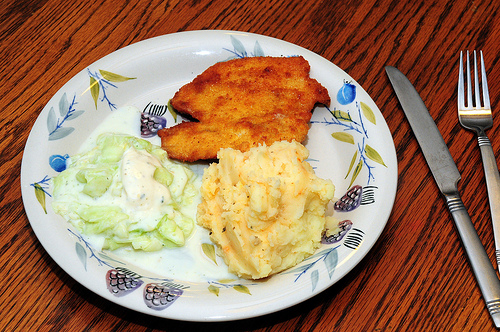
Kotlet schabowy z ziemniakami. She loves the pork — though we sell it to her as chicken — but she has to give the potatoes a bit of thought.
Still, she’s a Polish girl, through and through. Her favorite meal, the thing she would eat daily, the dish that gets her squealing with delight when she learns it’s on the day’s dinner menu: barszcz.
Yesterday was Tłusty Czwartek, "Fat Thursday." In Poland, it's traditionally a time for pączki, doughnuts. "Ile pączków zjedliście?" asked a friend in Poland of his Facebook friends. How many doughnuts did we eat? On Thursday we ate none. Dunkin Dounuts and Krispy Kreme don't count. They're doughnuts, not pączki. Traditionally filled with rose petal jam, Polish pączki really look, smell, and taste nothing like what we usually get in the South.
And then K discovered that Publix -- of all places -- sells "Original Pączki."

They're filled with raspberry jam instead of the ineffably good rose jam, and there's something not quite right about the consistency of the crust, but they're an acceptable substitute for a mid-sized Southern town.

L had one for dinner. "It's time she learned what 'Fat Thursday' is all about," proclaimed K. For her part, L was less interested in the doughnut than the filling, which she fingered out and declared to be delicious.
When Christmas Eve dinner includes two soups, multiple courses, and more desserts than one can possibly imagine, it's a good idea to get started a little earlier.

Ten days ought to do.
And so last night we began by preparing the cabbage/mushroom filling for the dumplings. It's neither a long nor a labor-intensive process, but when there will be cakes to bake and soups to season during the days before Christmas, it puts things into a little different perspective.

So last night we cooked the sourkraut, sauted the onions, ground them to a literal pulp, mixed a sprinkle of bread crumbs and called it a night.

Tonight, stuffing and fast-freeze.