food and cooking
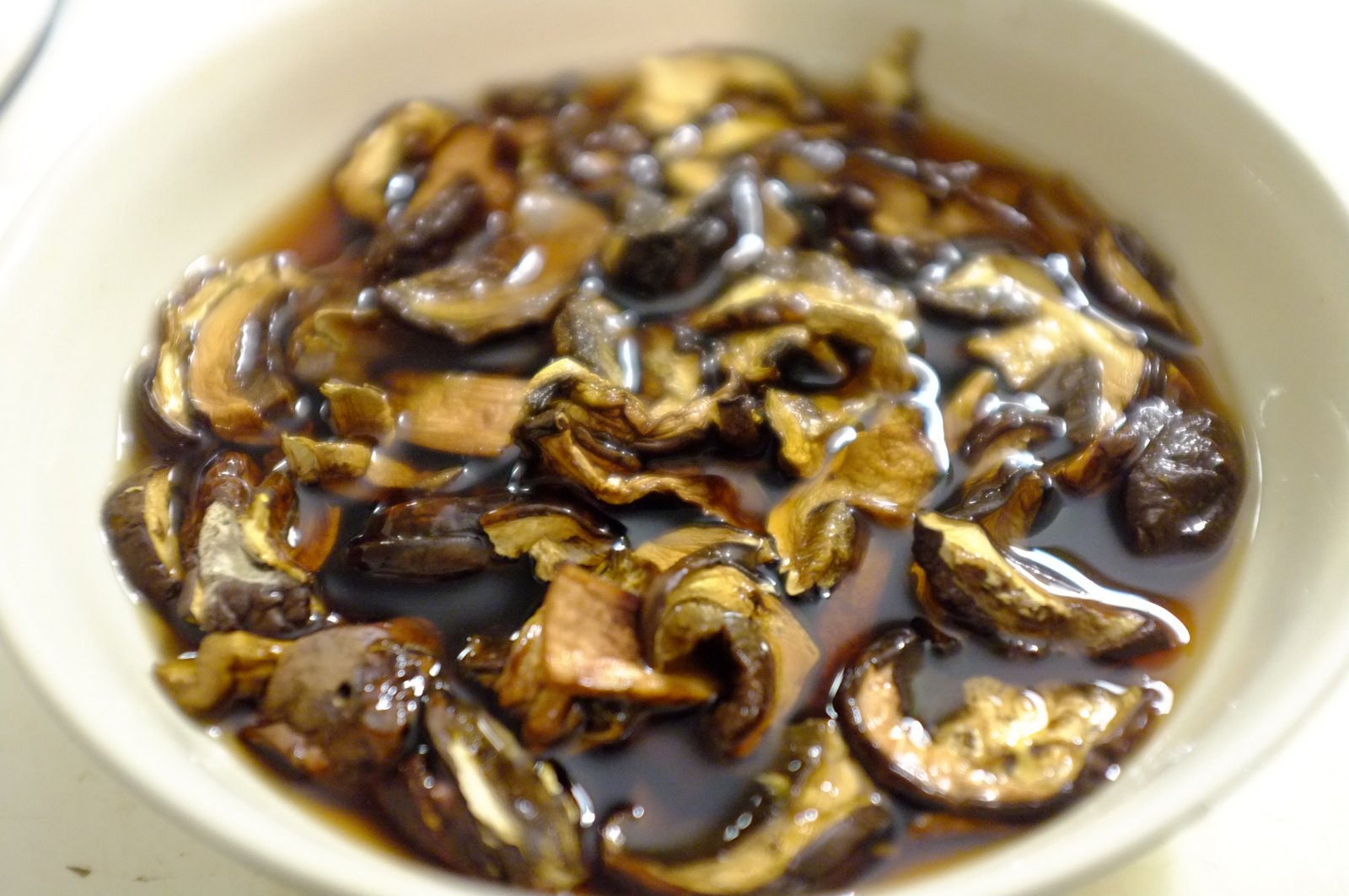
Mushrooms
Bread and Games
When I first arrived in Lipnica Wielka, I was shocked one morning at the small grocer's in front of the teachers' housing to see how much bread the women in front of me were buying. It solved a mystery, though. I'd discovered that if I arrived too late, sometimes simply in the mid-morning hours, there was no bread to be found.
"Nie ma" was the curt reply.

Standing in line that morning, though, seeing woman after woman buy two, three, sometimes four loaves of bread, I understood why. It wasn't until I saw the same woman buy the same amount the next day that I realized her family ate that much bread in a single day.

The loaves themselves looked like nothing I'd ever seen for sale in grocery stores. I knew you could get stuff like that -- hard and crusty on the outside, thick and hearty on the inside -- at bakeries and such specialty stores, but in a regular Food Lion or Kroger?

When K and I first moved to the States, finding a good source for good bread was of primary grocery-shopping importance. Who knew we had a source right there?
42
Kwasnica.

My favorite Polish soup by far: traditional kwasnica, made from smoked ribs, sauerkraut, a hunk of pork, bacon, and love.
Food in the House
What a pleasant feeling to have so much food in the house after a day of cooking. I smoked ribs, tenderloin, sausages, and chicken, then cooked a pot of chili and a smaller pot of dal makhani. In addition to other work around the house. And now I have little desire to do anything other than go to sleep.
Prawdziwy Polak
Traditional Polish cuisine has lots of pickled items in the menu. It makes sense: the winters are long and cold, and there's no way to get fresh food (other than meat or dairy) in the dead of winter. If you want cabbage in February, you'd better turn it into sauerkraut in the autumn; if you want cukes in January, convert them to pickles in the fall. To love Polish food, then, means to love sour things.
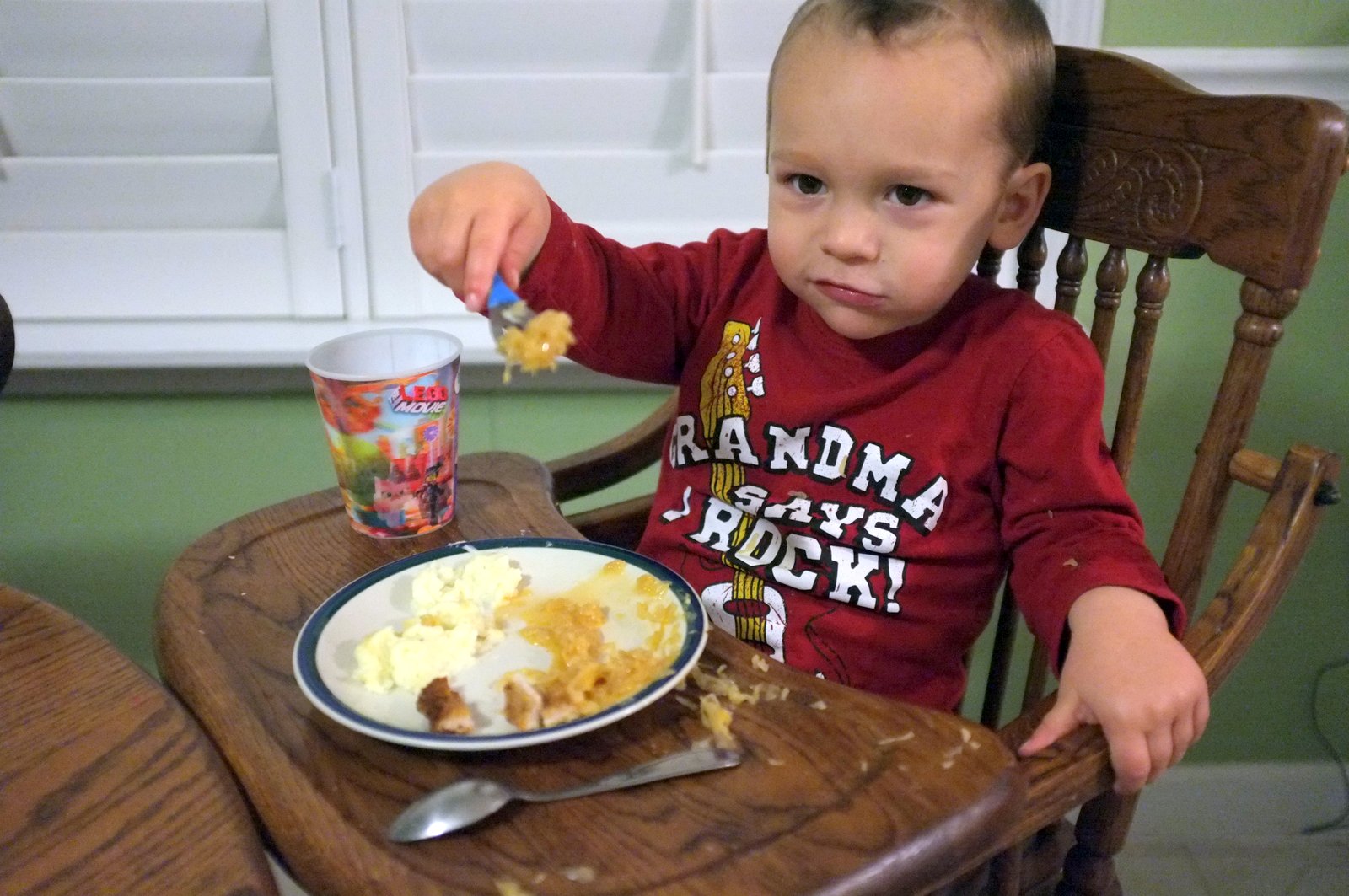
To be really Polish -- to be Polish at the bone -- you have to love your sauerkraut. The Boy, for instance, ate three helpings of it today at dinner.
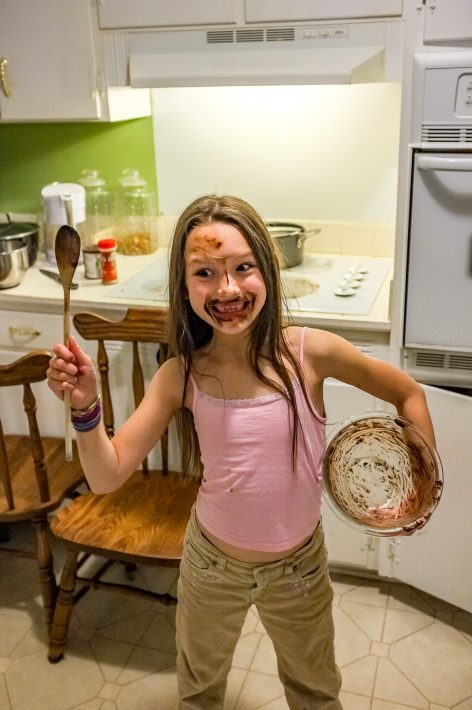
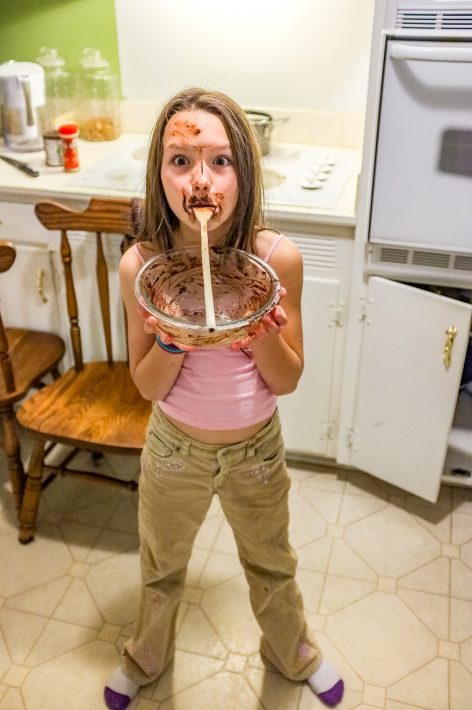
Licking the Bowl
Eating Rosół
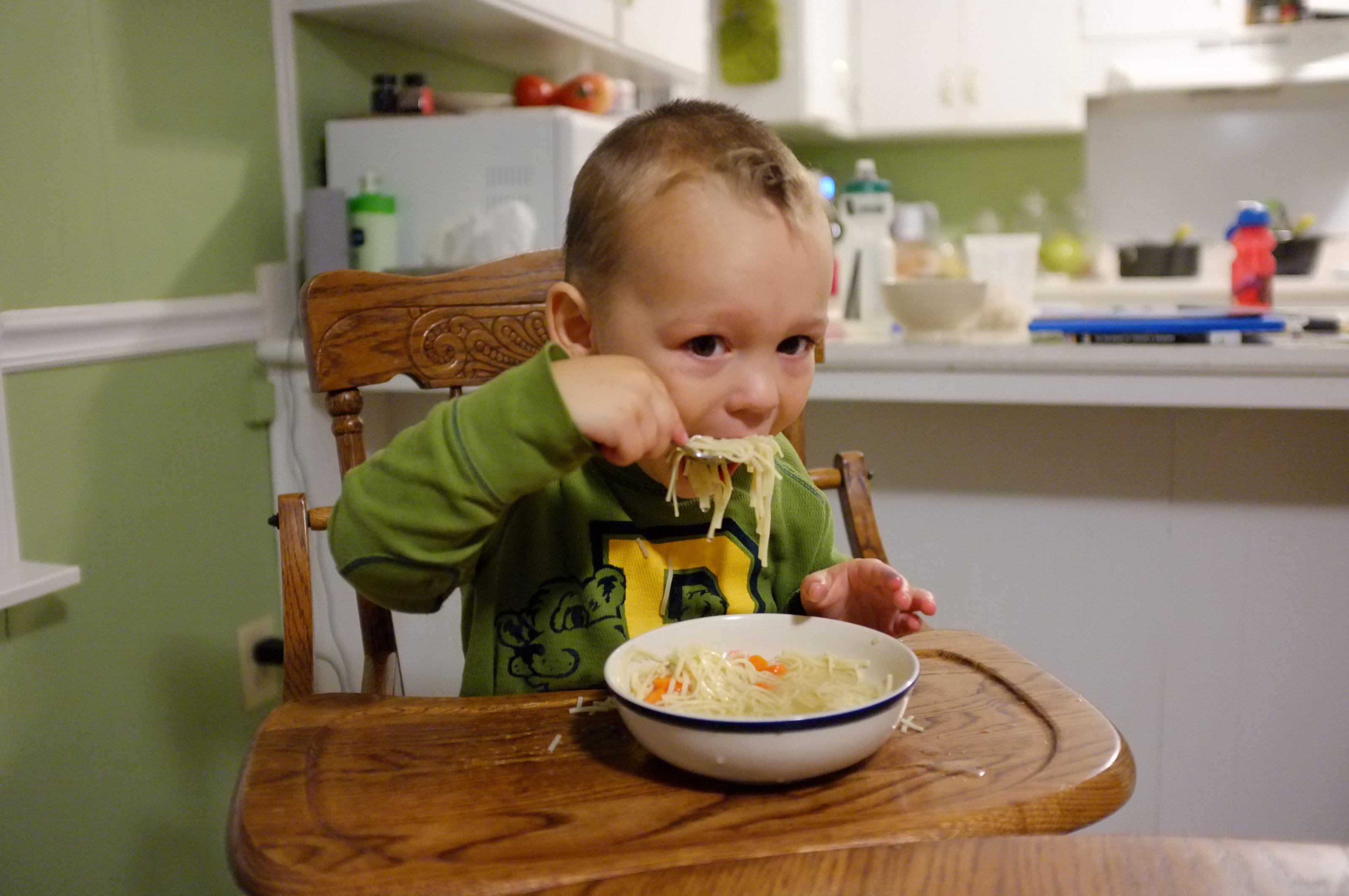
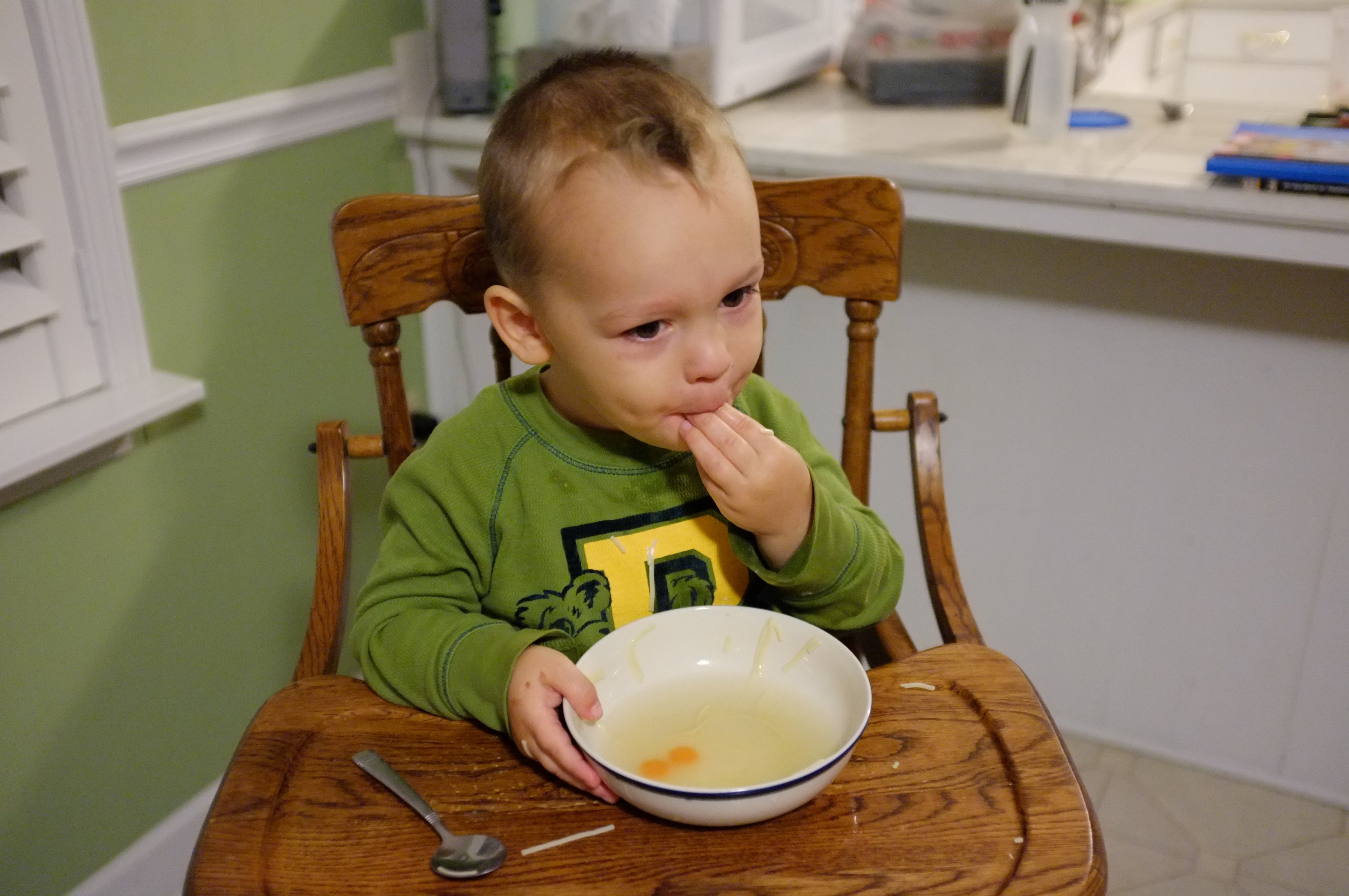
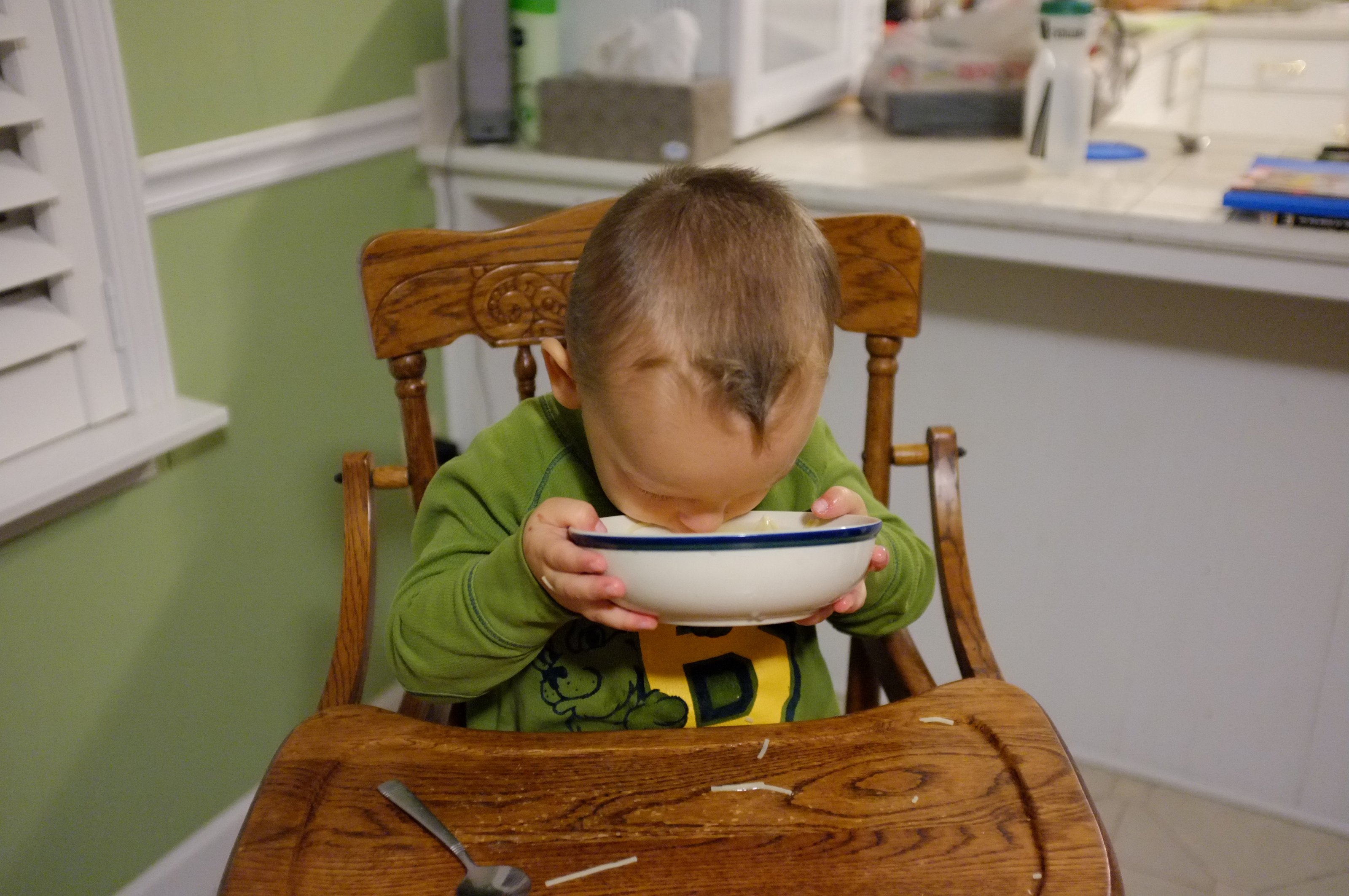
Graham Crackers

The Boy has a peculiar way of eating crackers, apple wedges, chicken fingers, triangles of watermelon etc. He likes to stake his claim on each piece before really digging in.
Soup

L is a picky eater -- no doubt about it. Certainly she has some odd tastes, odd by the average American girl standards, I think. Still she can throw us a curve ball, protesting something that seems so logical for her to life. Soup is always a hit with her, but K's tomato soup from yesterday wasn't a hit. Not sure why: it used to be a big hit. But it wasn't. And it wasn't any better tonight when we finished up the leftovers. She basically ate next to nothing, leaving almost a whole bowl of soup. Granted, she got nothing else for the evening with the understanding that she would have to finish the soup before she could have anything else. Nothing.
Tonight, during prayers, we reached "Give us this day our daily bread," and I pointed out to L that she would get that soup back at breakfast. "We're not going to waste food, especially when it's something that you used to like and eat willingly. She fussed, predictably, but then, thinking about reading the news and the horrors occurring in Syria and Iraq as ISIS sweeps through and imposes strict Islamic law, committing their own brand of ethnic cleansing, I decided to give the Girl a little perspective.
"L, there are children in a country called Iraq now who are literally dying because they don't get food or water."
"Why?"
Brief overview appropriate for a seven-year-old, includes terms like "bad people" and oversimplification.
"So these children are so hungry, L, that you could spill that soup on the floor, and they would willingly lap it up like they were animals."
Silence. Wide eyes.
"You're lucky: you fuss about being given something you don't want to eat. These children, if they had the energy to fuss, would fuss about not having anything to eat. At all."
We'll see tomorrow what happens. I'm hopeful, but I know how stubborn L is. Besides, that "kids starving in [insert country]" argument seems rarely to work.