education and teaching
Because They Asked
Simple instructions — the starter — great them when they enter the classroom.
Complete: “Poetry is…”. Write at least five facts about poetry. Then complete “Poetry isn’t…” and write five more things poetry isn’t.
They get started scribbling a list, a list we will share and debrief once I’m done checking roll and making sure I have all my materials for the day’s work in order.
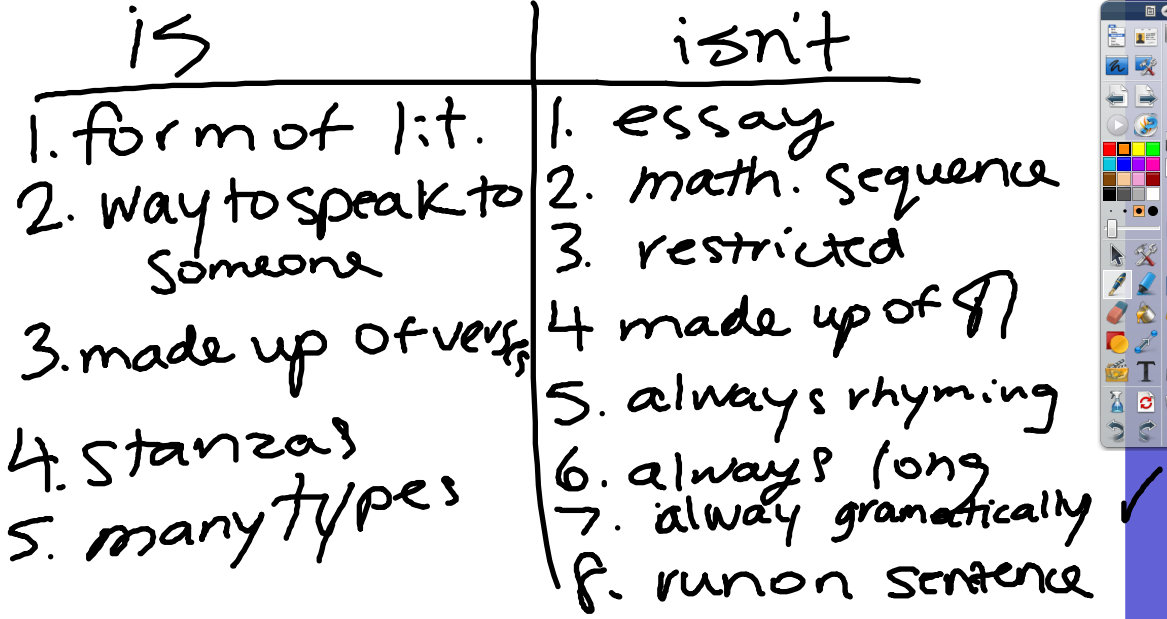
Then the poem: “Because You Asked about the Line Between Prose and Poetry” by Howard Nemerov.
Sparrows were feeding in a freezing drizzle
That while you watched turned to pieces of snow
Riding a gradient invisible
From silver aslant to random, white, and slow.There came a moment that you couldn’t tell.
And then they clearly flew instead of fell.
After reading a couple of informational texts about how to read a poem, students try their hand at Nemerov’s analogy:
prose : poetry :: sleet : snow
It’s slow going at first, for it’s such a strange poem for eighth graders. “It claims it’s going to be talking about poetry and prose in the title,” one student complains, “and then it’s all this stuff about birds and rain and snow.”
Tomorrow I will model the steps of interpretation, relying heavily on the questions and steps in the two texts about reading poetry they went over today, with the hope that they’ll be able to do it for themselves, at some point.
Natural Consequences
A kid shoots a paper wad at the trash can and misses I sit and look at him, at the wad of paper on the floor, back to him -- what's a logical, natural consequence? There really isn't a natural consequence, I guess, but a logical one? A negative reinforcer? Or even a punishment?
I hate moments like this. I find myself being far more analytical in situations than I really need to be.
M-Jezzy
Dear Terrence,
Seven years ago, on 13 October 2006, I wrote this, I worked at a day treatment facility for kids who had been unable to find a path to success in school.
Yesterday, one of the boys in our program asked if he could use the computer for a little while. “No problem,” I said. He’s had a great week, and it was a slow morning.
The week was much improved over the past. We were both frustrated about how things were going in my class – he much more than I. At the end of the last six weeks, when we were working on science (now we’ve switched to social studies for the second six weeks), M-Jezzy (his nom de plume at our program’s blog) was trying to make up some missed work, and getting very frustrated about it.
“Man, I just hate science,” he exclaimed.
“That’s fine,” I said. “Not everyone likes science. What we can do, though, is use that as a way to make up some of your work.” I instructed him to log into our blog, akacoolpeople.com, and write about science and why he hates it. “Explain three reasons you don’t like it, and we’ll count that as one of your missed assignments.”
He wrote,
I do not like science at all. And i,ve got three reasons why. One reason is because it is so confusing. likewhe gives the homework out. I dont know what he is talking about beause. They would be so many things that he is talking about. An the other reason iswhen he gives the i want know what to do because. It will be so many things that you would have to look for an you would have to do so much research. And the last reason is the things that he teaches in class i dont know wat in the world that hebe talking about. Likewe was talking about an atom an what i have to study about it is so hard because. The atom has so many things in it. And you will get mixed up with all the parts of an atom. Beceause you will not know how to put them in oder. An if you get this and you are really feeling wat i am saying to you then mail me back M-JEZZY out. I hate science so bad i wish i did not have it at all. (science)
I read it and thought, “What an indictment of me. I obviously don’t explain things for him, and I can’t even make myself clear when assigning homework.”
Depressing.
But fixable.
I talked to the head teacher about it; I talked to the program director about it; I talked to the head counselor about it. The consensus: M-Jezzy does not deal with ambiguity well (as if anyone really does). Like most people, he wants to know where he’s going and what he’s going to have to do to get there.
Starting this week, I began something new. Something obvious. Something basic. Something I should have been doing all along. I blocked off a portion of the white-board and wrote an outline of what we’d be doing, including information about what kind of activity it would be.
Next class, M-Jeezy was like a different young man – much more attentive, much more focused, much more involved. He asked penetrating questions, and he didn’t giggle too much.
A success, I thought.
Back to yesterday morning. M-Jezzy sits down at the computer and logs into “aka cool people,” and starts typing. This is what he writes:
now sence my teacher was started to put the agenda on the board i am starting to learn more in class and i know no wat to do.And i am not getting confused write me
I can’t remember the last time I felt so good.
Yet it was not what M-Jezzy wrote that made my day – it was that he did it spontaneously.
M-Jezzy was fifteen when I wrote this, theoretically a tenth-grader but he was still in eighth grade because of behavior. He’d been tossed out of regular school because of his behavior — basically an unwillingness to regulate his impulses in any way whatsoever — and then tossed out of alternative school for the same reason. All of this left him with few alternatives, which is how he landed in our day treatment facility — a last ditch effort to teach him the social and personal skills he so clearly lacked and so desperately needed.
In the end, it’s clear that we didn’t get through to M-Jezzy, for later this week, he’ll be going to trial facing six charges: misdemeanors and two felonies. The former: trespass charges and assault on a female; the latter: first degree murder and intentional child abuse with serious physical injury. He stands accused of beating to death his girlfriend’s four-year-old son.
From the accounts I’ve read in newspapers, it seems a reasonable assumption that he’s guilty. Knowing him personally and seeing his temper in action, I find it tragically plausible that he did indeed beat a toddler to death.
The vindictive (read: human) side of me thinks his punishment should be based on a simple mathematical equation. A proportion, really. Take the pounds per square inch of his punch over the weight of the child he beat to death. The other side of the proportion you can probably figure out: x over his weight. Solve for X. Then he should be beaten regularly by someone who can hit with that much force. Beaten for weeks on end. Months on end. The end will come — eventually, he’ll be beaten to death in one, long session. But he’ll never know which one it will be. So each time he sees his executioner, he’ll have to ask himself the same question his victim asked himself: how will it end this time?
Fortunately, I’m not in charge of sentencing. The compassionate side of me realizes that such punishment is cruel, but again, the vindictive side says, “Who is he to deserve mercy?” It’s a conundrum.
I write this to you because I want to be perfectly clear with you: I don’t know how M-Jezzy got from where he was merely a disruptive kid in an under-funded day treatment facility to a young man facing serious prison time (if he survives: my aunt, who worked in the prison system for twenty years, assures me that as soon as inmates find out what M-Jezzy got convicted of, if he’s convicted, they’ll take care of the problem). I don’t know the road he took, but I do know this: you remind me of him so much sometimes it’s terrifying. And now, it should be terrifying for you.
With concern,
Your Teacher
Positive and Negative
Dear Teresa,
When I asked you today to keep track of your positive comments and negative comments throughout the day, I didn't really realize you might not be able to tell the difference. I realized this when I saw in the positive column, "Please get out of my face."
Despite what you've been told, "please" doesn't always make all the difference in the world.
With a smile,
Your Teacher
Common Core
 The rumbling in the district probably started long before I first started hearing about coming “new standards.” We’d just revised the state standards a few years earlier, but I’d begun teaching in the state the year the new standards went into effect, so I never had to go back and revamp plans to correspond with new standards.
“Well, I guess I’ll see what that’s like now,” was my only real concern. But I was confused: I knew little about what these “new standards” might be or whence they might come. I assumed it was the state again, fiddling eternally with the numbered guidelines that are my daily metric of effectiveness.
Last year, though, we began going through the process of shifting from old state standards to the Common Core. This meant, it turned out, decidedly more than changing standard numbers on our lesson plans. The head of English instruction in our district, in a series of workshops preparing teachers for the change, constant told us (and more importantly, showed us) how these standards would necessitate a change not only in what we teach but also in how we teach.
I did have some initial concerns over the standards, though. The English standards place high importance on what in Common Core nomenclature is known as “informational texts.” We used just to call it “nonfiction,” but somehow that’s not descriptive enough, I suppose. This is not nonfiction as in essays and biographies, though. By one definition,
informational text is:
- text whose primary purpose is to convey information about the natural and social world.
- text that typically has characteristic features such as addressing whole classes of things in a timeless way.
- text that comes in many different formats, including books, magazines, handouts, brochures, CD-ROMs, and the Internet
This includes, then, things like textbooks, pamphlets, forms, and myriad other textual forms. I’m certainly not going to suggest these things have no place in a classroom; indeed, they’re critical in the classroom. But what proportion? The Common Core suggests that by high school, students should be reading seventy percent informational texts. This means, in short, the classics are essentially gone. Only thirty percent of high school students’ reading should be fiction, and I’ve heard from a friend who is also a teacher that her principal has informed the librarian that she will receive absolutely no funding for the purchase of fiction this year.
What’s the thinking behind this? The earlier-quoted article continues by providing four reasons why these texts are so important:
we feel children should encounter more informational text in the primary grades for the reasons explained below:
- Informational text is key to success in later schooling.
- Informational text is ubiquitous in society.
- Informational text is preferred reading material for some children.
- Informational text often addresses children’s interests and questions.
It’s all a question of supposedly getting kids ready for “the real world,” where most of the texts they read are informational texts. Indeed, the first point echoes things I’ve heard in my own district about informational texts: students get to college and have difficulty reading college textbooks. They’re used to reading primarily fiction, goes the argument. This is simply ridiculous, most conspicuously for the stunningly obvious fact that high schools use textbooks, which ironically is a function of the second point about the ubiquity of informational texts.
Beyond that, though, it belies the my experience and that of everyone else I know who successfully completed college: we all made the shift from (supposedly) primarily fiction reading to mostly nonfictional texts without much difficulty. There is some truth to the claim that much of informational text in the world is argument, written to persuade, but all middle and high school curricula covered that without Common Core’s insistence on seventy-percent informational text coverage.
Yet other portions of the Common Core struck me as reasonable, even necessary. For instance, the CCS places a much higher premium on writing than other standards, and the proposed shift in assessment (via Smarter Balanced Assessment Consortium) seemed more like things people do in “real life” rather than simply choosing A, B, C, or D. It involves reading resources with the aim of synthesizing something from them (often an argument). People do that all the time in their jobs, and it’s a critical skill.
I’m ashamed to admit that I never stopped to think about what political forces might have lined up behind these new standards. Somewhat like Milgram’s thirty-seven, I just did what I was told. I heard the hoopla, went to the meetings, studied the new standards, and went along with it, changing my unit plans, ditching this and that, adding that and this. Yet the more I learn about it, the more concerned I am.
The major concern right-leaning people have about the Common Core has to do with the apparent increased control it gives the federal government over education. Yet that seems to be a misplaced concern. Yet I am worried about the loss of state control over education, not to the federal government but to the private corporations that make the tests that will assess students’ and teachers’ performance with the new standards. It is, as one commentator called it, “Education without Representation.”
Another worry: we’re going headlong into these new standards and tests with very little empirical testing. All these states just seem to be jumping on the bandwagon and saying, “Hey, great idea — let’s do it!” But will these standards actually accomplish what they’re touted to accomplish? In modern education, it’s all a question of data, data, data — except in this case.
A final worry is the one that likely rolled around in the thoughts of all teachers who have spent more than a couple of years in the classroom. Educational fads come and go. Standards change and then disappear, reappear, and are reshaped. My fear is that this too will only turn out to be a fad, something that everyone gets excited palpitations about now but only appears in the footnotes of Intro to Ed books. If that is the case, a final, more politically conservative concern: think of all the tax dollars wasted in that case in this clamoring toward these new supposedly salvific standards. We could likely do some real good in the classroom for all that money.
Uncommon Core
Imagine forty-some states all adopt new standards that involve drastic realignment of what and how all English teachers runs their classes. Imagine that the standards have such a different focus on instruction that most existing state standardized testing would have to be radically changed. Imagine that the standards are in fact so different that you suspect that early and fairly complete implementation of the standards in anticipation of the changes but before the new tests are put into place (i.e., old tests taken by students taught to new standards) would result in a noticeable decrease in overall test scores. And then imagine that perhaps there are rumors swirling that it is all for naught, that it will all be rescinded. If that’s true, think of the time wasted, the tax dollars wasted, the work wasted.
Only rumors? Does it really matter?
255, 223, and 186
Though I am not a mathematician, physicist, or astronomer, and though I teach words, words, words, my professional life is an orbit of numbers. Some of the numbers are relatively innocuous: attendance, school picture orders, class periods. Yet every fall I get a series of numbers that guides instructional decisions for the next months and serves as the first half of what, to some degree, is largely regarded as a metric of my effectiveness as a teacher. In the spring, students trudge back into the computer lab as they did today to take the second MAP test, and I sit at my computer, entering the various scores, hoping that each student will score higher than she did in the fall.
The fall testing regime tells me what I have to work with. There are rarely any surprises: I can often guess within three or four points what a given student will make. By the time they’ve taken the test, the students have been in my class for a month, plenty of time to figure out their strengths and weaknesses. Add to it the fact that English and math classes are grouped by ability in our county and it’s a relatively easy exercise, this “Guess My Score.”
But there are always surprises. Today, for example, student after student in one class just seemed to be scoring higher and higher. Given the fact that an average MAP reading score for an eighth grader is 220, seeing student after student score above 240 is astounding. “It’s no wonder these kids are in English I Honors, effectively skipping eight-grade English and going straight to a ninth-grade, rigorous honors course,” I thought as I punched in the numbers. I knew they would be high, but this high? Unheard of. The highest fall class average I’ve ever encountered. And then one student finished with a score of 255, just four points lower than the highest spring score I’d ever seen!
It’s much more dramatic when one knows the grade level norms for the MAP reading test.
| Grade | Fall | Spring | Growth |
|---|---|---|---|
| 1 | 160 | 173 | 13 |
| 2 | 179 | 190 | 11 |
| 3 | 192 | 200 | 8 |
| 4 | 201 | 207 | 6 |
| 5 | 208 | 212 | 4 |
| 6 | 213 | 216 | 3 |
| 7 | 217 | 219 | 2 |
| 8 | 220 | 223 | 3 |
| 9 | 222 | 224 | 2 |
So the reading level of the student who scored a 255 is at least a college freshman, if not higher.
“What am I going to do with these kids?” I joked with a colleague. “They’re already scoring higher than they should at the end of ninth grade!”
“Make them your assistant teachers,” she replied.
Yet it’s not a serious problem: I just have to push them harder than usual. It would be a problem if they were mixed in with some students from other classes, because their reading level is significantly below grade level.
Later in the day, I had the opposite situation: student after student was scoring significantly below grade level. By significant, I mean a class average that, for the first twelve or thirteen students, didn’t rise above 197. Several students were scoring in the 180’s. Scroll back up and check the chart: that’s a second- or third-grade reading level. Though several students were absent from that class, I was still hopeful that by the time I entered the final scores, the average would rise above 200. But there were no scores high enough to pull the mean up, until the 223. The highest score in the class, and technically a score above average. The mean soared, rising to almost 201. I sighed in relief: it’s low, but having a sub-200 score seemed impossible. Unheard of. Then the next student finished: 186. The averaged dipped below 200 again, and stayed there until the end of testing, just two tenths of a point away from 200.
At the end of the day, I looked at the summary I’d created. Two classes drastically below average; two classes radically above. The lowest score put one student at a second-grade reading level; the highest score put another student at a college freshman or sophomore level.
“Thank goodness I don’t have them in the same class,” I thought. What could a teacher possibly do with students literally ten to twelve grade levels apart in reading? It’s essentially a return to the one-room school concept. Fortunately, I don’t have to figure out a way to solve that problem in my class, and the math teachers are equally fortunate. But social studies and science? There’s no leveling there, and so one’s class is likely to be an incredible mix of ability, motivation, and preparedness. I know there are ways to compensate for this (I have a Master’s in education, for heaven’s sake), but those techniques and tricks seem hardly up to such a challenge: they seem like they work only in theory. In practice, someone is always going to be bored, and thus someone is always going to be disruptive.
I wish I could end this with some sort of optimistic, pithy observation about the nature of education, about the malleability of the brain, about the strength of the human spirit, or some such cliche. I have answers I’ve found in books, but I don’t know how effective they are in dealing with such issues, especially when a significant portion of the challenge lies in challenging others to change their habits and behaviors.
It leaves me feeling pessimistic.
But I’ll get over it by Monday.
The Smile
I saw her walking down the hall and as I always do, I shot her a smile.
She seems to need it: there’s always apathy just at the edges of her eyes, sadness just at the corners of her mouth. When she smiles, her dark cheeks set off the whites of her wide eyes and glistening teeth. She is transformed.
“You need to smile more often,” I tell her. It’s not just honey and vinegar and all that. The ability to create a positive affect is a basic skill that everyone needs to master, and when one is as gifted with physical beauty as she is, something as simple as a pleasant smile puts everyone in the room at ease. She has that advantage, and she rarely uses it. In fact, most of her peers and teachers, I believe, think she’s ambivalent to the world, lazy at best, perpetually angry at worst.
Every time I smile at her, she smiles at me. That’s progress.
So I shot her the smile, and she smiled back.
“Who else do you smile at?” I asked.
“No one,” she replied, the smile disappearing.
Heartbreaking and heartening at the same time.
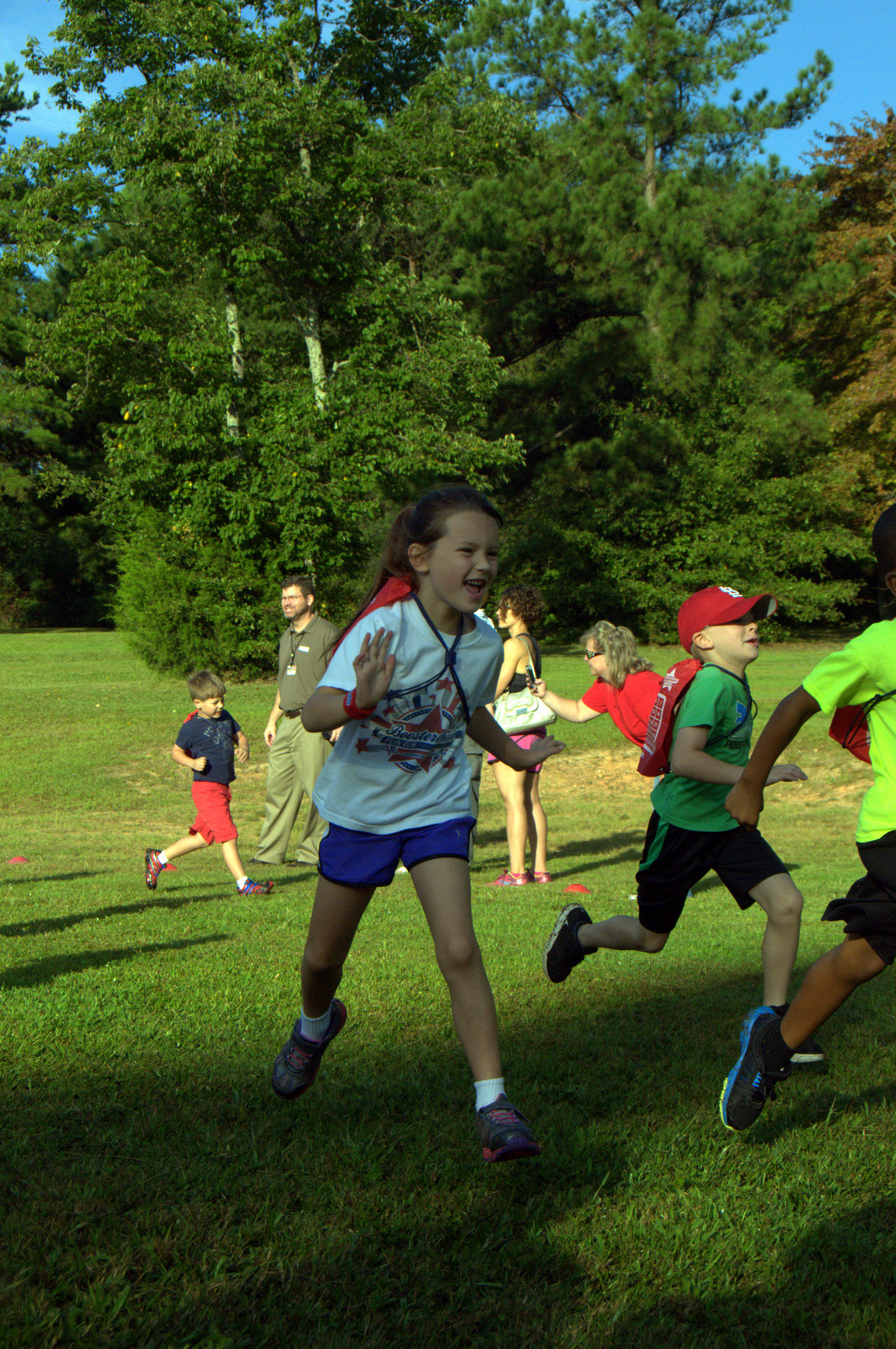
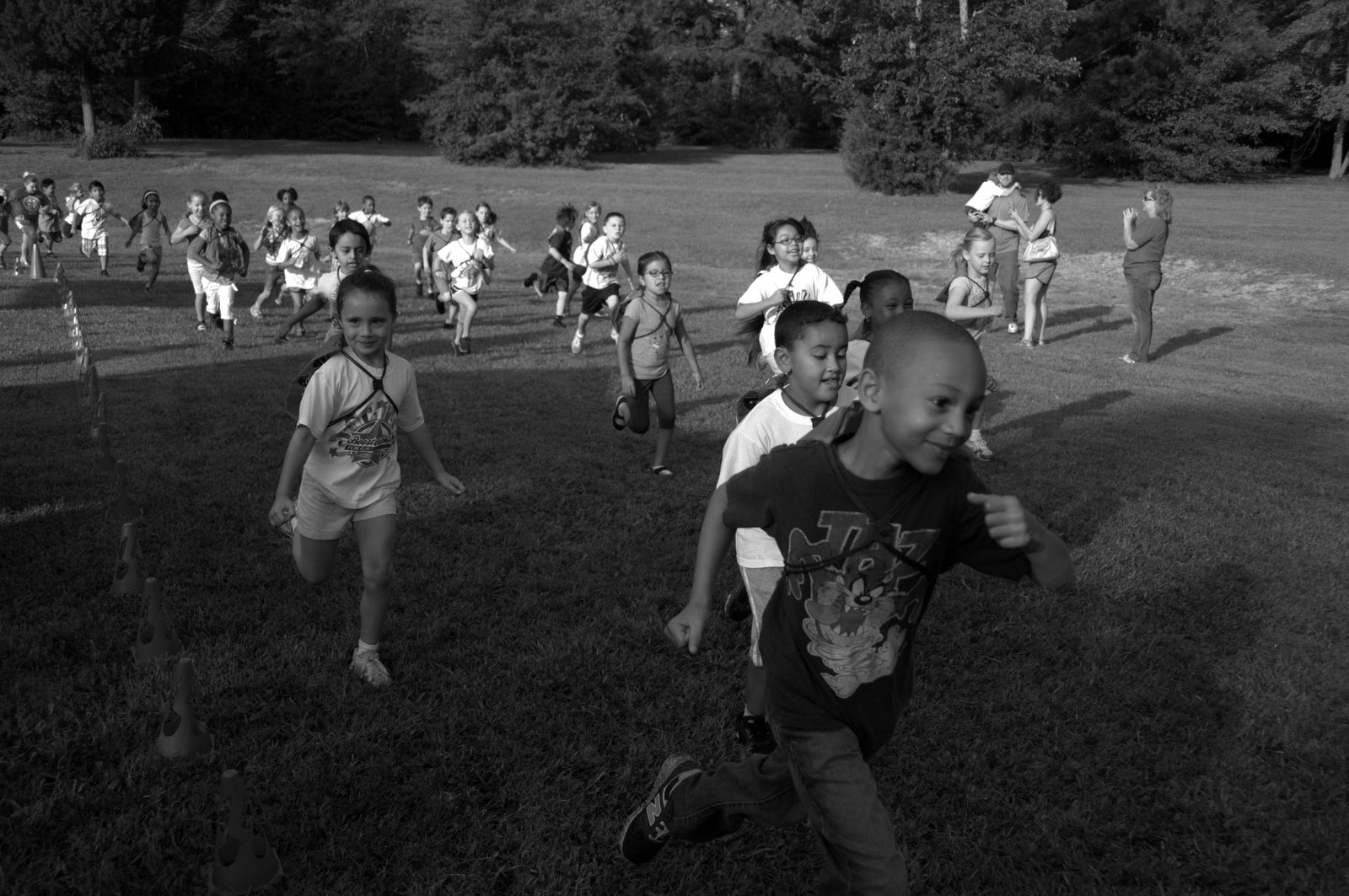
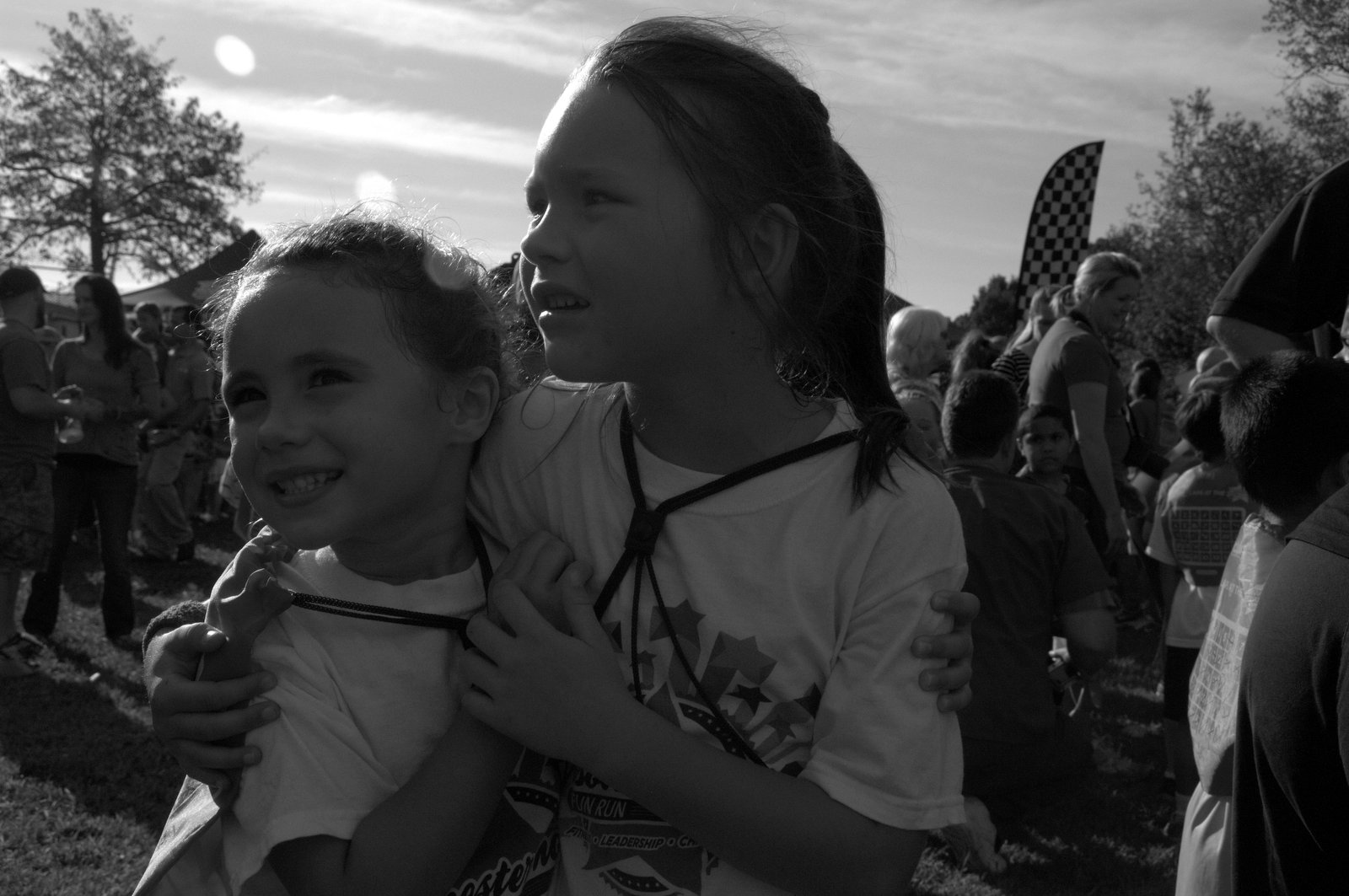
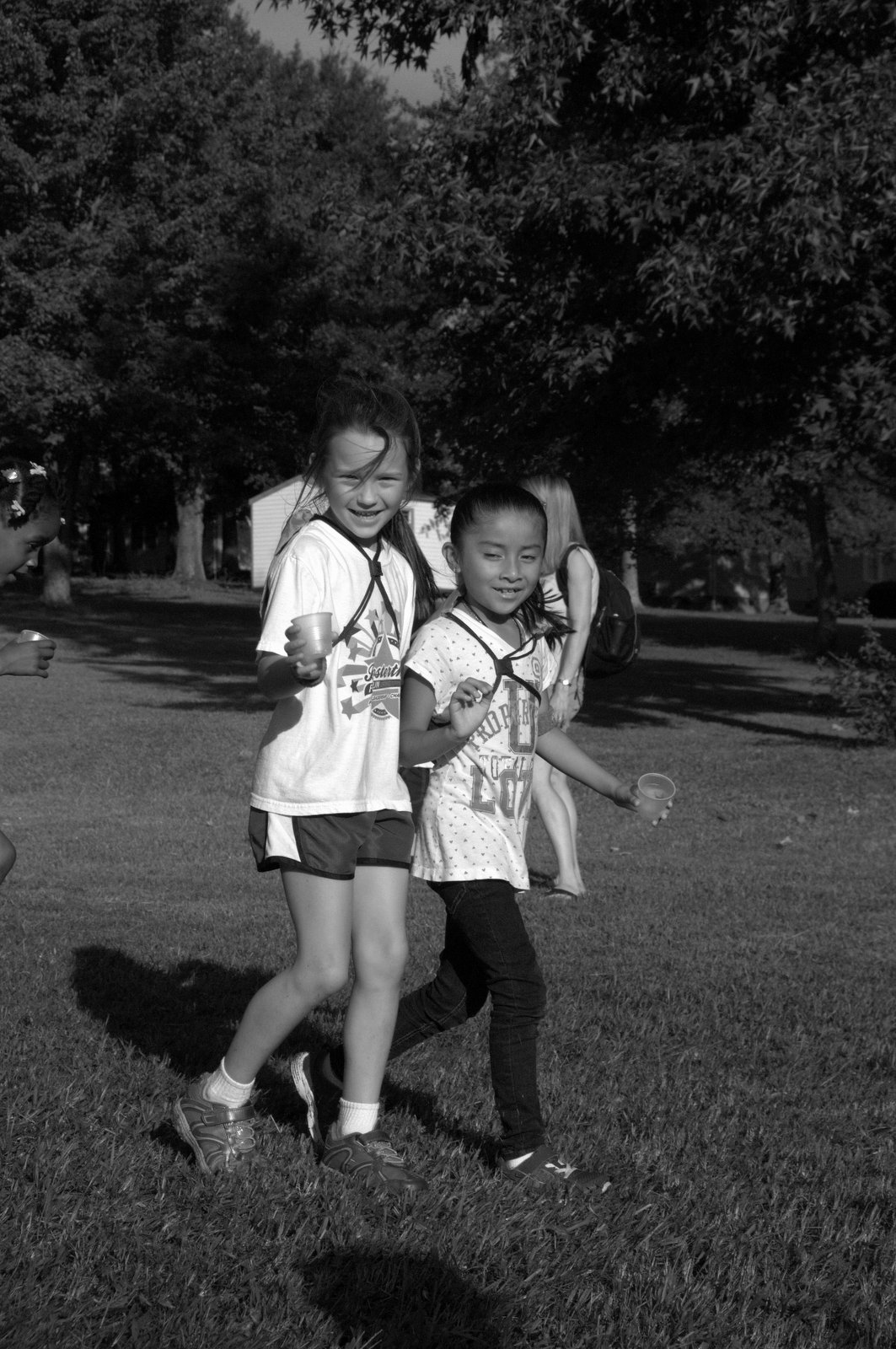
Boosterthon 2013