
education and teaching
Last Days in EC Classroom
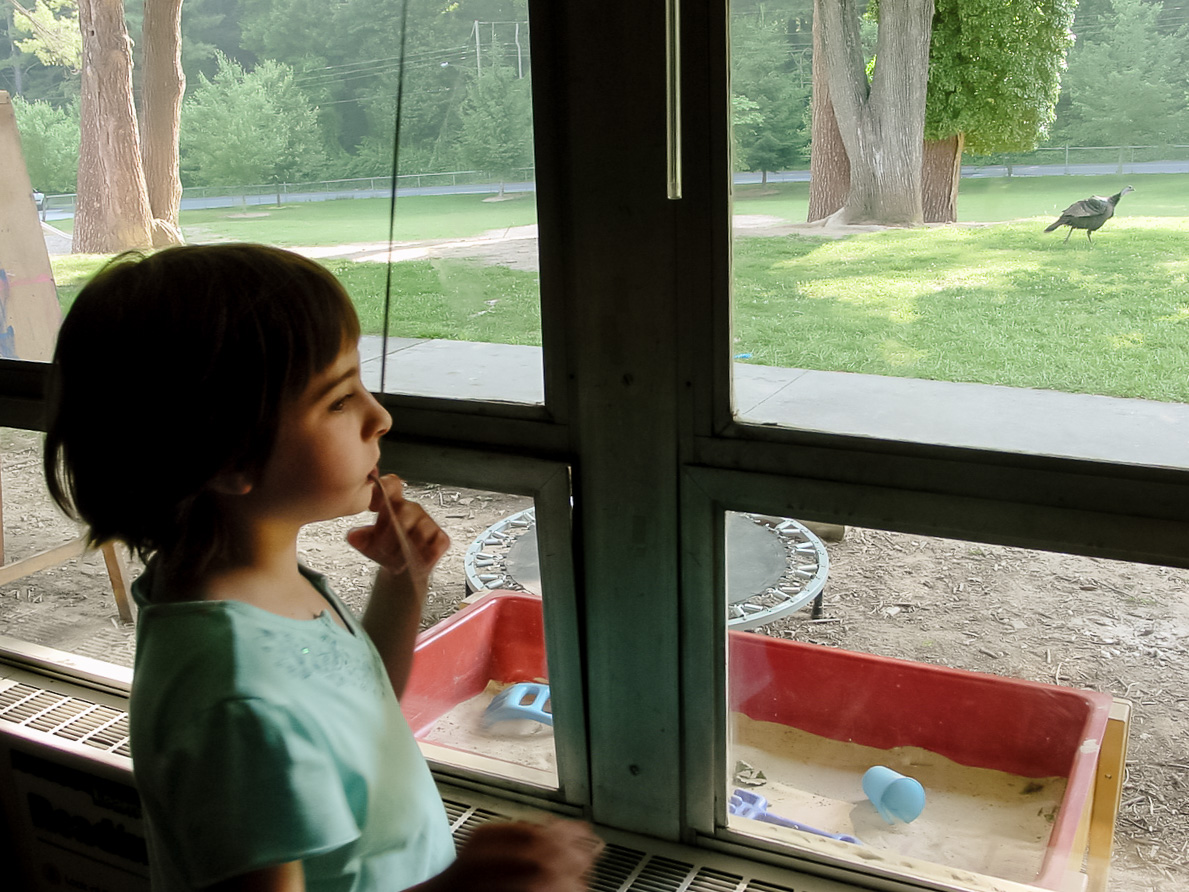

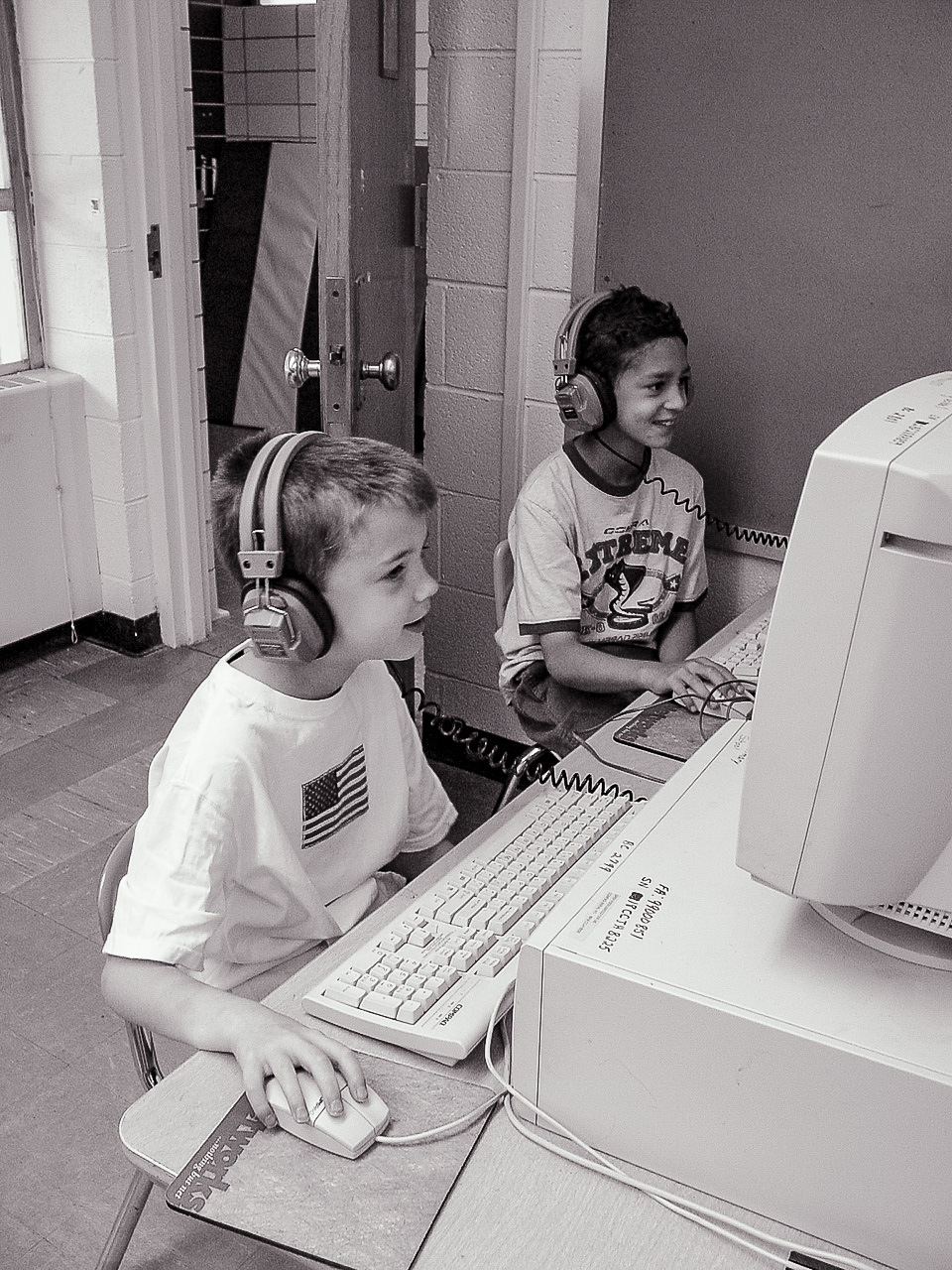
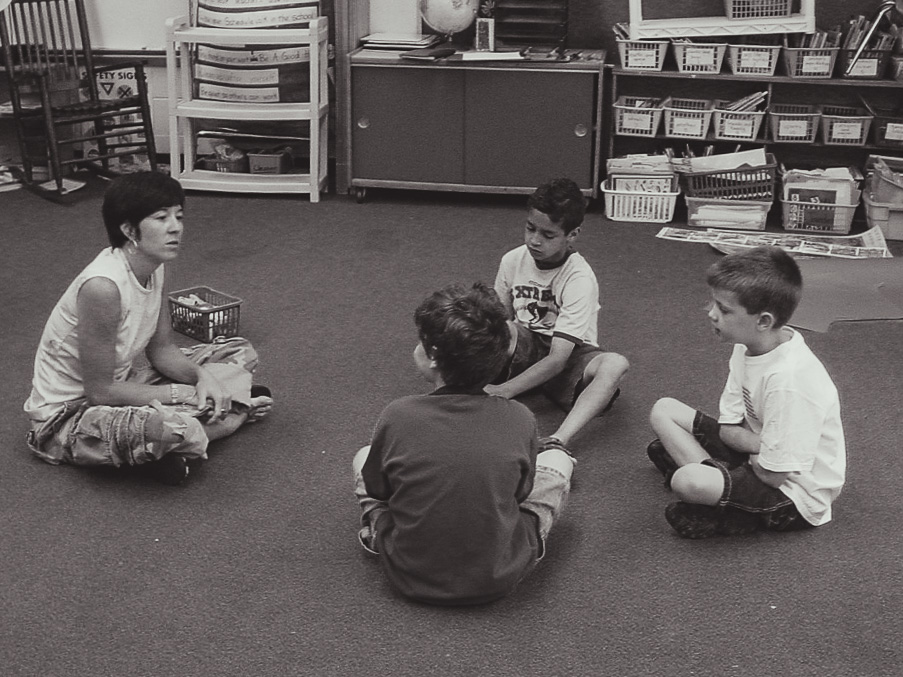

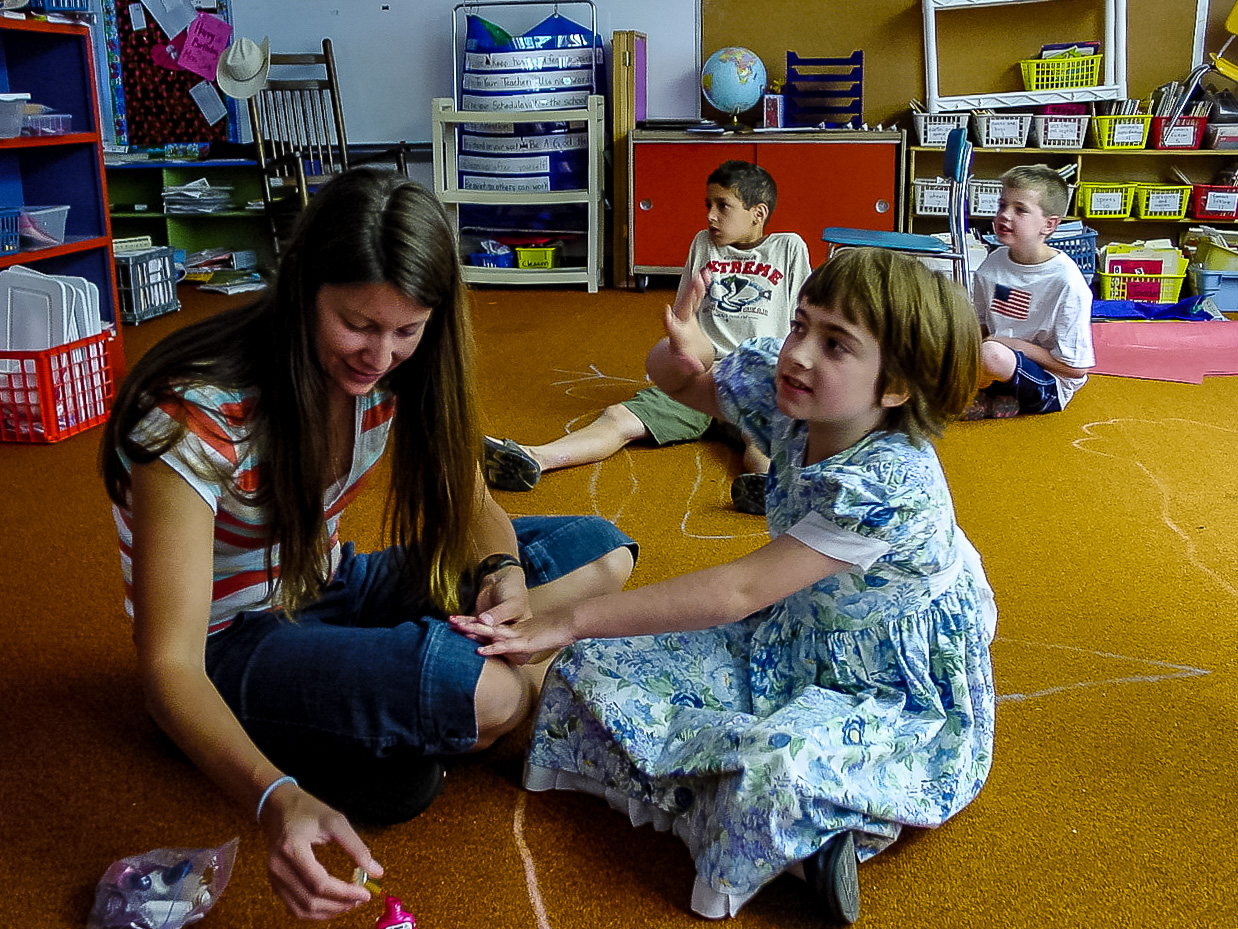

Zep Kittens
Something mildly amusing one of our students found while looking for pictures of kittens on the internet.
Pressing Flesh For Effect
This Monday I participated in an education flesh fair: an education career fair. Hundreds of us unemployed teachers (or at least not employed teaching in one’s subject area) were queuing in front of tables where representatives from various school districts sat, taking resumes and asking assorted questions.
I’d checked all the websites of districts I knew to be participating and found very few jobs listed there. “Perhaps they’re just not listing them on the site, opting instead to wait until after the career fair to see what jobs remain open.” Wrong.
There were very few school systems looking for English teachers, and a couple of them that had posted vacancies just about two weeks ago had already filled the positions. That’s fast – two weeks to get resumes, conduct interviews, make the first selection, call back those who made the cut, interview a second time, make a decision, make an offer, and have the offer accepted. At some point in that process one would think that the district would update its vacancy page to reflect the filled position, but that’s a bit naive I guess. Two of them are still there.
At any rate, I went from table to table (county to county essentially), flashed a smile, answered questions, and generally schmoozed. The outcome: one interview set for mid-June, with two more schools expressing interest. “We’ll call you,” they said.
I’d interviewed at this same school near the beginning of the school year when an unanticipated vacancy appeared literally days before the school year began. My first interview in years. It obviously didn’t go so well. It also didn’t go so badly, it seems, for the director of personnel remembered me and was willing – interested, might I even say? – in having me “come by to talk again.” The downside: the school is forty miles away.
Stepping Up to the Plate
I recently wrote about the disappearance of Federal funding for autism support programs.
To its credit, the Asheville city school system refused to let Bush's tax cuts harm students under its care. They have hired several of the individuals who provided one-on-one support for more severely autistic children so that their education is not disrupted by Bush's idiocy.
The Blue Chair Crisis
Children, it seems, sometimes like to have things just so. Everything in its place -- as they deem it -- and everything arranged just so. Perhaps that’s why Rudyard Kipling named his book of children’s stories Just-So Stories.
What happens when things are not just so? If the child has autism, she might have difficulty explaining how things are not just so, and once that’s explained, might have further difficulties accepting the fact that things must remain as they are, just so or not.

Imagine a child -- we’ll call him Samuel -- is sitting in a blue chair at a table, working on an art project in his free time. Another child -- we’ll call her Jen -- is getting ready to do her math work with me. She starts heading over to the table where all the materials are laid out: the worksheet for answers, the manipulatives (in this case, plastic blocks) to help with counting, and a few horses because, well, Jen just likes horses.
But her blue chair is not there. Who knew she had a blue chair? I didn’t. When did she get an attachment to this particular chair? No idea.
Still, she needs her blue chair. The one Samuel is sitting in.
Who knew Samuel could so quickly develop an attachment to that very same chair? I didn’t know, but would have suspected it’s possible.
Who knew this would all to amount to crisis for Jen? Once I saw where things were heading, I did.
The thoughts running through my mind then: Whom do I upset? If I leave the chair under Samuel’s bottom, Jen is not going to do any work and will in fact only scream at me for trying to work out a compromise with her. If I try to get Samuel to relinquish the chair, he’ll go ballistic because he’s having a go-ballistic-at-everything day. Besides, it really isn’t fair. He was sitting in the chair long before Jen decided she had to have it. And it will be more difficult to work while he is in crisis than it will be to try to get Jen to compromise, so I left the chair there, got Jen to go to the quiet area for calming down, and waited.
“I’ll give you two minutes to calm down,” I said, then walked away, set the timer, and waited.
“Are you ready for some math, Jen?” I asked when the timer’s bell finished ringing.
“No!” came a shriek. “I hate math! Stupid math! I want blue chair!”
“The time is not ripe,” I thought.
Eventually, Samuel finished with his project and moved on to another part of the room to do more work. I grabbed the blue chair while I had the chance, put it at the table where I’d set everything up, and walked quickly over to the quiet area. Tapping Jen on the shoulder, I said quietly, “Look what I have for you over at the table.” She hopped up, virtually bounced to the table, sat down, and we had a truly delightful time working together on math.
Daily Dose
We have a particular friend here in Asheville–a Polish friend we’ll call Franek–who can get caught in the such pessimistic moods about the nature of “the system,” about his own inability change that system, about the amount of suffering in the world–in short, about the “human condition”–that it’s made me say, “Damn, Franek! I thought I was a pessimist!”
And I did, and indeed I was. I was a half-glass-of-bile-a-day guy for a little while, though my episodes usually only lasted, say, the duration of a visit to a museum. In the National Gallery in Berlin, I felt sick to my stomach thinking of the money I’d paid to see idyllic paintings of Tahitians (Yes, it was a Gauguin exhibition.) when the majority of the people in the world had to scrounge for survival.
But I bounced out of it, probably because of my profession. Teaching is, at it’s core, simply the act of helping people understand and practice something–math, a foreign language, cosmetology–better. Right now, working with autistic primary school children, the skills I’m trying to help students master are much more basic than a second language or expository writing. As such, I see daily progress, and I often get my daily dose of hope many times over.
Talking to Franek, I said that I see miracles every day. I’d never thought of teaching like that, but that’s precisely what I mean by getting a daily dose of hope, corny as that sounds. In individual students I’ve seen enough improvements in behavior and impulse regulation, communication, social skills, and a host of other challenges unique to autistic children, that I can easily say to myself, “I have made a difference.” It has certainly been a team effort, and my part might have in fact been minimal. But minimal is better than nothing.
No Non-Autistic Child Left Behind
One thing that can cause massive amounts of problems for autistic children is lack of consistency. Our classroom is strewn with visual reminders of one sort or another to help the children stay calm by giving them a pattern to their day. At the basic level, it consists of schedules given to each student -- rather, placed in "his/her" area -- that outline what we'll be doing the whole day.
Unexpected changes can send more profoundly autistic children into spirals of panic, which manifest themselves usually in a meltdown of screaming and other “typical” autistic behaviors.
Even with this, some children have trouble navigating through the day without having someone assist them exclusively throughout the day. These services are supplied by the Autism Society, which receives a great deal of federal funding.
Well, the Federal funding has been cut, and that means that all services in our area end 17 March. No tapering off; no warning -- just BOOM!
“Sorry Joey, but your one-on-one had to leave. You won’t see him again. The entire structure of your school day will now be instantly and violently disrupted. Have fun!”
Thanks, W. Really -- No Child (who isn’t autistic, and whose parents are middle or upper class and contribute to my campaign) will be Left Behind.
One of the best things about being a teacher
is an unexpected snow day — when you’re fully dressed, ready to head off to work, and you look outside and notice it’s snowy and icy…
I loved them until I got to college, when I realized, “Hey, I pay for this day whether I get an education or not — not good.” (To be fair, only one or two days were classes canceled due to weather as an undergrad.) Now it’s come full circle.
Pattern of Mate
Chess, from beginning to end, is a game of patterns. Steven Pinker, in The Blank Slate, writes that chess grandmasters are no better than non-players at remembering randomly arranged chess pieces. They rather remember the patterns of threats, attacks, defenses.
Patterns are the stock and trade of autism. Arranging, rearranging, obsessing with shapes.
At school I’ve been finding that chess is in fact an excellent activity for children the higher functioning spectrum of autism. During their choice time, several kids have taken to playing chess, taught primarily by yours truly. Elementary chess; chess without much “strategy”; with some kids, chess without all the pieces (minimizing input and thereby confusion) -- still, chess all the same.
Today, much to my surprise, one of the children with more intrusive autism (read: closer to low-functioning than most of the other children) decided he wanted play with the chess pieces during his choice time. He knew that they go one to a square, and he’d even picked up from watching the other kids play during the last few weeks that all the pawns go in front of all the major pieces. Once he’d got them all situated, I asked him if he’d like me to show him how the back pieces were to be arranged. He readily agreed, and I showed him: castles (using “rook,” “knight,” etc. was a level of abstraction that I decided was unnecessary) go on the outside; the horses go next, because they’re riding out of the castles; next we have these tall, funny, pointy looking pieces; and then the king and queen. I tried to get him to turn the board around and set up the white pieces, using the black pieces as a model. Nothing going there, and I simply backed off. I returned in a few minutes to find that he’d done it himself.
Impressive.
But more was to come.
Another young lad decided to join in the fun, and the two were soon having a blast simply moving the pieces around randomly, taking with rooks by jumping three pieces at a diagonal, but still obviously grasping the object of the game.
And then the real shock – the first boy put all the pieces back perfectly and they played again.
Once choice was over, I used the chess pieces and board with the first boy to segue into math, working on which numbers are bigger. Instead of using the workbook and coloring in blocks of a chart to give a visual for the young lad, we used the chess board. Once he’d arranged the correct number of pieces on the board, he then colored in the squares in his workbook, and we had a short little quiz.
“Which number is bigger: six or eight?” A quick to the chess board or the workbook gave him the necessary help when he wasn’t sure. By the time we got to ten (I added two squares on a piece of paper, since a chess board is only eight by eight), he was carefully arranging the pieces by alternating color and size.
And we continued working, without a glitch, even when the rest of the class left for the library.