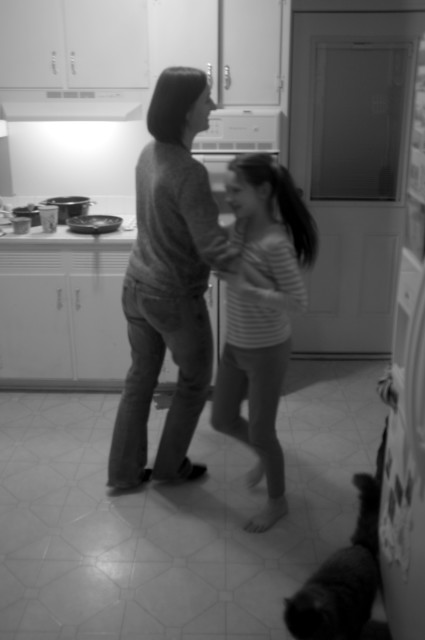
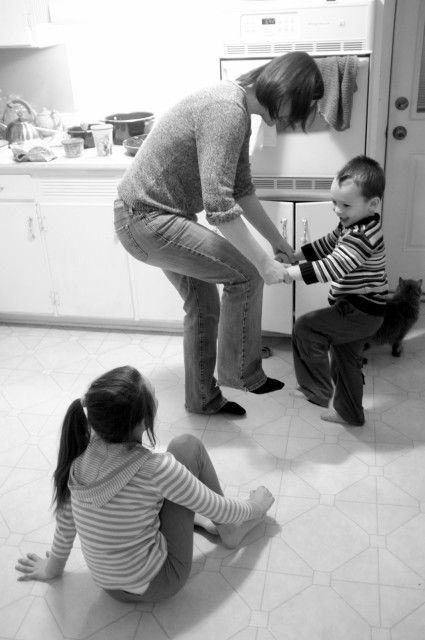
matching tracksuits

fun in threes, sometimes fours

education and teaching

Zugzwang

I’ve begun a chess club at school. Today was our informational meeting, and around twenty students showed up, including three girls. We set up a meeting schedule — first and third Mondays of the month — and I had them take a little “quiz” to see if they knew how to use algebraic notation, had the instinct to do more than take the “free” pawn in the King’s Gambit, could recognize the next move of the Sicilian Defense, and knew what stalemate means.

One small problem: we don’t have any chess sets. PTSA to the rescue. And as I was talking to someone about how to fill out the paperwork to request the funds, I had an epiphany: why not use chess in the classroom on a regular basis? The benefits are manifold, especially the thought of encouraging such dedicated, focused attention for some period of time, weighting options and making a decision, and overall critical thinking. So with some careful planning, I might actually be able to pull it off.

Coming home, I discovered that the Boy wants to play soccer. A good sign. And out of the blue, he wants to play chess.

Sometimes life gives you zugzwang — a situation in chess in which one player would rather not move but has to move. And occasionally, it gives you the opposite.
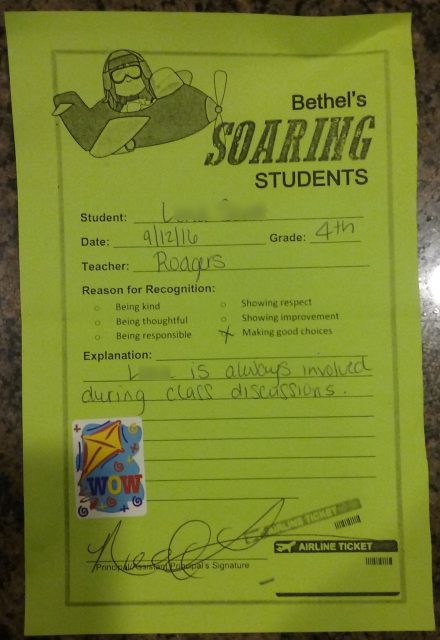
Note from School

l_card

Saturday Remembered

1-bw0_5519

Grading, grading, grading -- school is definitely back in session.

How Many?

They always seem a little surprised that I can do it. I strike up a conversation with a student before school, someone unknown, someone who's caught my attention. We chat a bit, and then I ask the question: "If it's not too forward, can I ask you how many referrals you got last year?" Today's student, E, raised his eyes to the ceiling as he began count, but I didn't let him continue. "It's okay," I explained. "The number is not the point. The question is the point." He looked at me with a bit of confusion. "Did you notice I didn't ask you, 'Did you get any referrals last year?' but rather, 'How many referrals did you get?', which is a different question entirely." I paused. "Do you want to know how I knew you'd gotten referrals even though I've never seen you before in my life?"

Later, when E is in class with me, I recalled for the class, with his permission, the conversation. They were intrigued and asked if I could do it again.

"Really? You want me to put you on the spot like this?"

"Yes, we don't mind!"

I pointed to a boy who had already been quite chatty. "You've gotten a few." I pointed to a girl who, despite her best effort to hold it in, had displayed a bit of attitude. "You got a few." I mentioned two or three other students, and I was not wrong with a single one of them.

"Do you want to know how I do it? Do you want to know why I can confidently say that I could walk down the all on other team and tell you who'd gotten referrals, that I could go up to the sixth grade hall and make bets on who would get referrals within a few weeks?" They all wanted to know, so I explained the simple fact: "You are constantly, constantly communicating. With everything you do." I glanced around the classroom and created a list on the fly: "The way you're sitting in your desk communicates," I said to a young man who was slouched in his desk. "The way you carried on at the beginning of class, before we really got started, communicated," I said to the girl who was arguing loudly at the start of the period. "The way you wear your clothes," I said to a girl who obviously takes a great deal of pride in her physical appearance.

"Every little thing about every one of you communicates, some of it positive, some of it negative. Some of it you're aware of; most of it, I would guess, you're not aware of." And so many of them are not. They don't see that they're communicating disrespect with their body language and get upset when a teacher calls them on out on it. They don't see when they're communicating apathy by the simple way that they hold themselves. They think they're riddles wrapped in mysteries, but so much of it is just so obvious.

"Are you saying you know everything about us?" one girl asked.

"Certainly not. I'm only making inferences based on what I see, inferences based on past experiences. I don't know why you all do the things you do." That was a bit of a lie: I don't know about the specifics for this or that student, but I know many of the contributing factors.

Every year, I have this same conversation. Every year, I have the same hope that I can help them change.

New Start

Dear Terrence,

Tomorrow is the first day of the new school year, and I'm assuming I'll meet you tomorrow, but sometimes you don't really show up until the second or third week. That is to say, your behaviors don't show up until then.

I'll be honest: I've talked to your administrator from last year, and I have a pretty good idea who you might be, but that of course is never certain. The move from seventh to eighth grade works wonders sometimes, and you disappear into the crowd and become just another student. Still, you sometimes like to come out swinging, letting me know that very first period who you are with your disruptive and sometimes disrespectful behavior.

I would just remind you of a simple fact: you don't have to go that direction this year. You can choose to make a different path for yourself. You don't have to play the same part with the same actors as last year, possibly the year before. It can be different. It can be better. All you have to do is meet my smile with one of your own, and when in doubt, don't speak. Don't get me wrong -- I want to hear what you say, but what you say can sometimes be disruptive, so just keep the burner on low for the first week and let's see how things go.

With hope,
Your New Teacher

Another End

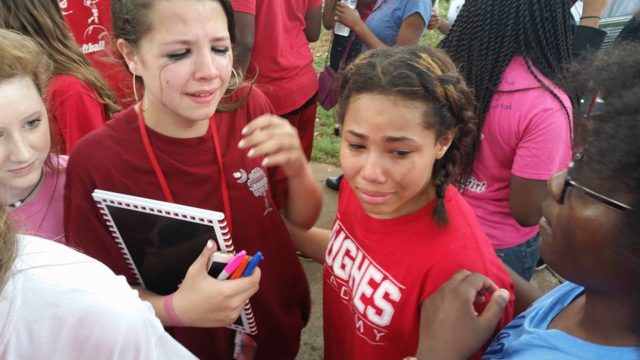
"I am not going to cry," said the girl with mascara running. She looked at me as if I'd suggested she might take to a life of crime for the fun of it upon finishing middle school.

"You never know," I smiled.

school

It's the ones who are most convinced they aren't going to cry that end up crying the most. They end up putting to shame the few brave souls who admit days in advance, "When it's time to leave that last day, I'm going to start bawling."

I still find it sweet, this youthful reluctance to let go of the past. "You're going to be laughing about it over social media in a few minutes," all the teachers insisted, but that doesn't provide solace. A young heart in a sense loves to ache. Or maybe I'm just speaking for my own youth.

Art Show

My Percentage

Dear Terrence,

classdojo-iconToday you asked me a question that I’ve never heard you ask before: “Mr. S, what’s my Dojo percentage.” You’ve always insisted that Class Dojo is a waste of time and a generally stupid idea, and although I’ve never given up trying to convince you of its value, I never really thought you’d come around and see it for what it is: a powerful tool for monitoring and controlling your behavior. After all, everyone is keeping points on us in their heads for all the good and bad things we do. It’s called a reputation. But at least with Dojo, you get an idea of where your strengths and weaknesses are. Anyway, your question caught me off guard, because I really didn’t know. I had to check. And that was a good thing, because in the past, I could have likely guessed it without looking: “No more than 30%, I’d say.”
You and I have had our issues this year, and at least once you’ve stormed out of class insisting that you have to get your schedule changed because you’re sure I’m out to get you. I assure you, I’m not: your behavior, though, sometimes seems like it is, which is why I think Class Dojo could be such a powerful tool for you. It could help you see your weaknesses (talking out of turn) and help you build on your strengths (helping others).

But you’ve made a turn around — at least your behavior of the last few days indicates that. So I was particularly pleased when I looked down at my phone and saw you were at 83% for the week.

Keep up the good work,
Your Teacher

Field Trip

Last night, L and I went to see the last performance of Matilda the Musical here in Greenville. She’d read the book earlier and was eager to see the show, and K gave me tickets for us as the sweetest and perfectly thoughtful birthday present I’ve received. And so we headed out in the late afternoon and came back in the late evening completely enthralled with what we’d see and talking about what we might see next. (Junie B Jones is coming later, but I think I’ll let K take the Girl for that particular one.)

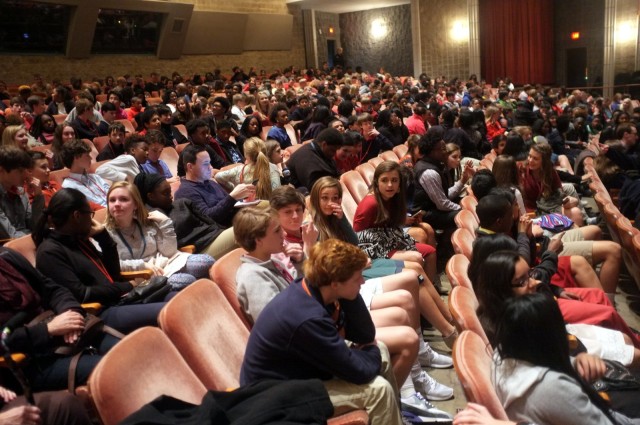
Ironically, we went on a school field trip to the same venue this morning.

1-DSCF8314

Odd, the difference between taking your own daughter to a show and taking 250+ thirteen-year-olds…

Learning

My job is about learning. It's about teaching, too, but the more I stand on this side of the desk, the more I realize that teaching is learning. It's not just the simple process -- as if it were so simple in truth -- of learning how to teach. There's that, certainly. I'm better this year than I was last year, I hope. I'm better this year than I was five years ago, I'm sure. I'm better this year than I was fifteen years ago, I know.

DSCF8087

It's not pedagogy and method that I have in mind, though. I've learned that learning is so much more than simply figuring out how to write a good paragraph, understanding how to do geometric proofs, seeing the logic of the scientific method. These things are all well and good -- and important. But they all serve as simple means to ends. We learn to write a good paragraph to be able to communicate better. We work on proofs to be able to construct a scaffold of surety around our knowledge -- to prove to ourselves what is is. (And to move on to higher and more challenging math.) We study the scientific method because it's the best way to find out things about the physical world.

All this knowledge helps us in our day to day functioning, but it does very little to help with our living. I'm not more at peace with myself because I can write a paragraph. I can't show compassion better because I can manage geometric proofs. I'm not more mature because I know the scientific process. My life can bump along just fine without this knowledge, and having this understanding is in now way insulation or protection against anything. I'm not a better person for this.

DSCF8099

I'm a better person when I connect with other people. I'm a better person when I understand that the most precious and instructive moments in life are those flashes when a couple of people connect in a real and meaningful way.

I teach my students how to make sense of Shakespeare (and, by proxy, many other challenging texts), and I show them how to organize a paragraph coherently, then how to string several paragraphs together in a logical order. Useful skills, but not life changing. Yet sometimes I get so wrapped up in the importance of those minutia (relatively speaking) that I miss the real teaching and learning opportunities. I forget that just because they're not learning just what I want in just the way I planned it than my students aren't learning. I forget that just because what they're doing for a particular session has nothing to do with English than they're not become better people. I forget that, at it's base, that's what all good teaching is about. There's the subject matter, true, but all the teachers we really remember taught us more than just their subject matter. In some rare cases, we can sometimes barely even remember what exactly they taught us about English or math or Spanish, but we remember what they taught us about life.

DSCF8101

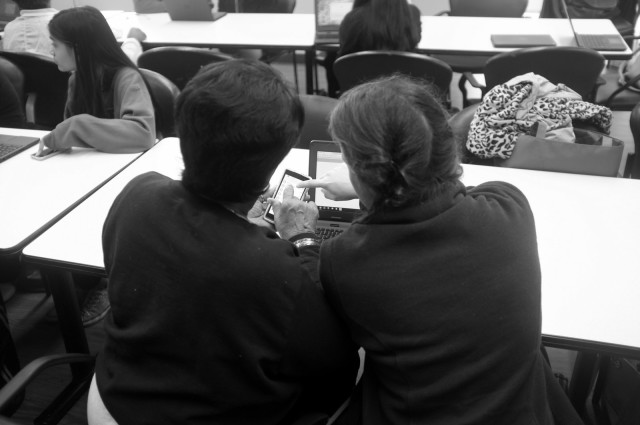
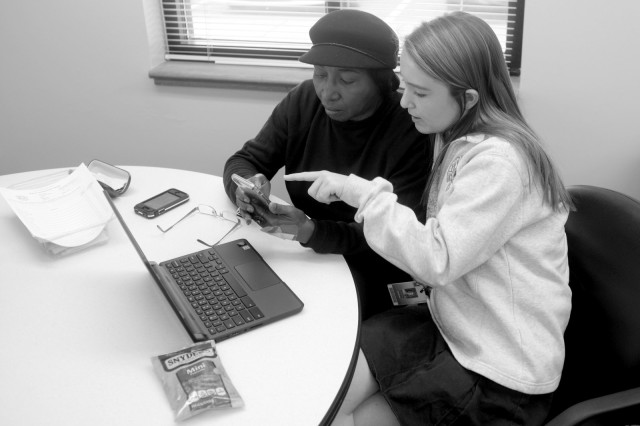
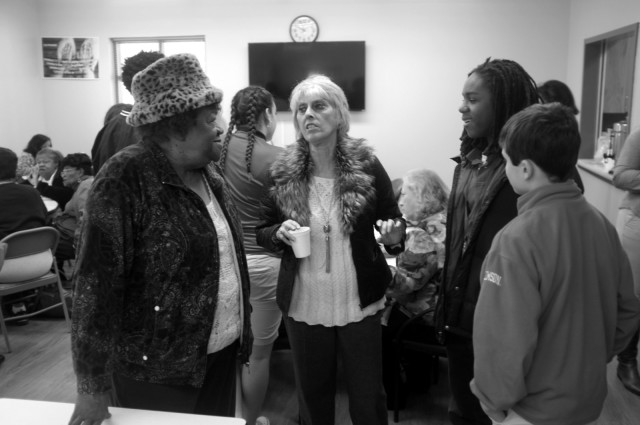
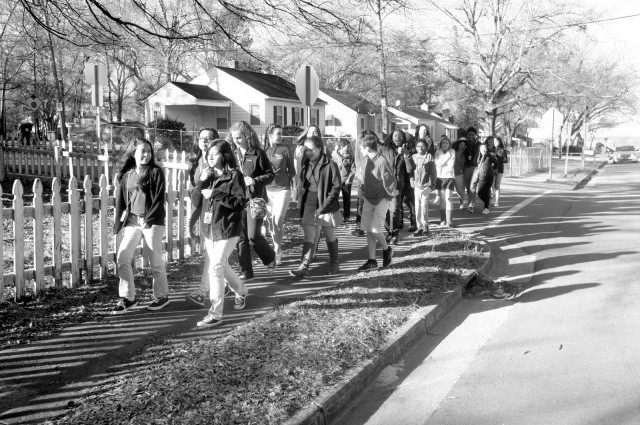
Today, I had the privilege of taking about twenty of my students down the street to a community center than has a trice-weekly seniors program. The plan was simple. The plan didn't work as planned due to technical issues. And so from a certain point of view, it was a complete waste of time. It didn't do what I wanted it to do. The plan didn't behave properly. And in that mini-disaster, I learned once again -- my students taught me once again -- that there's more to teaching and learning than nouns and rays and Erlenmeyer flasks.

DSCF8095

Sometimes lessons just come along than can't be planned because the lessons themselves come simply from the messiness and unpredictability of life. Sometimes a room full of teens and seniors offers such individualized lessons that could never be planned, never be executed because life can often never really be planned. And that in itself is part of the lesson.

DSCF8114

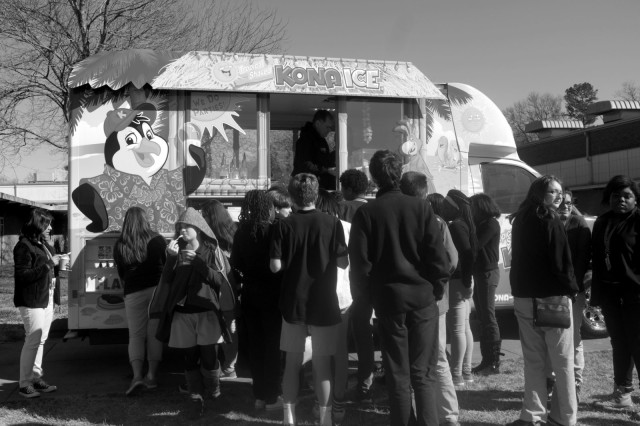
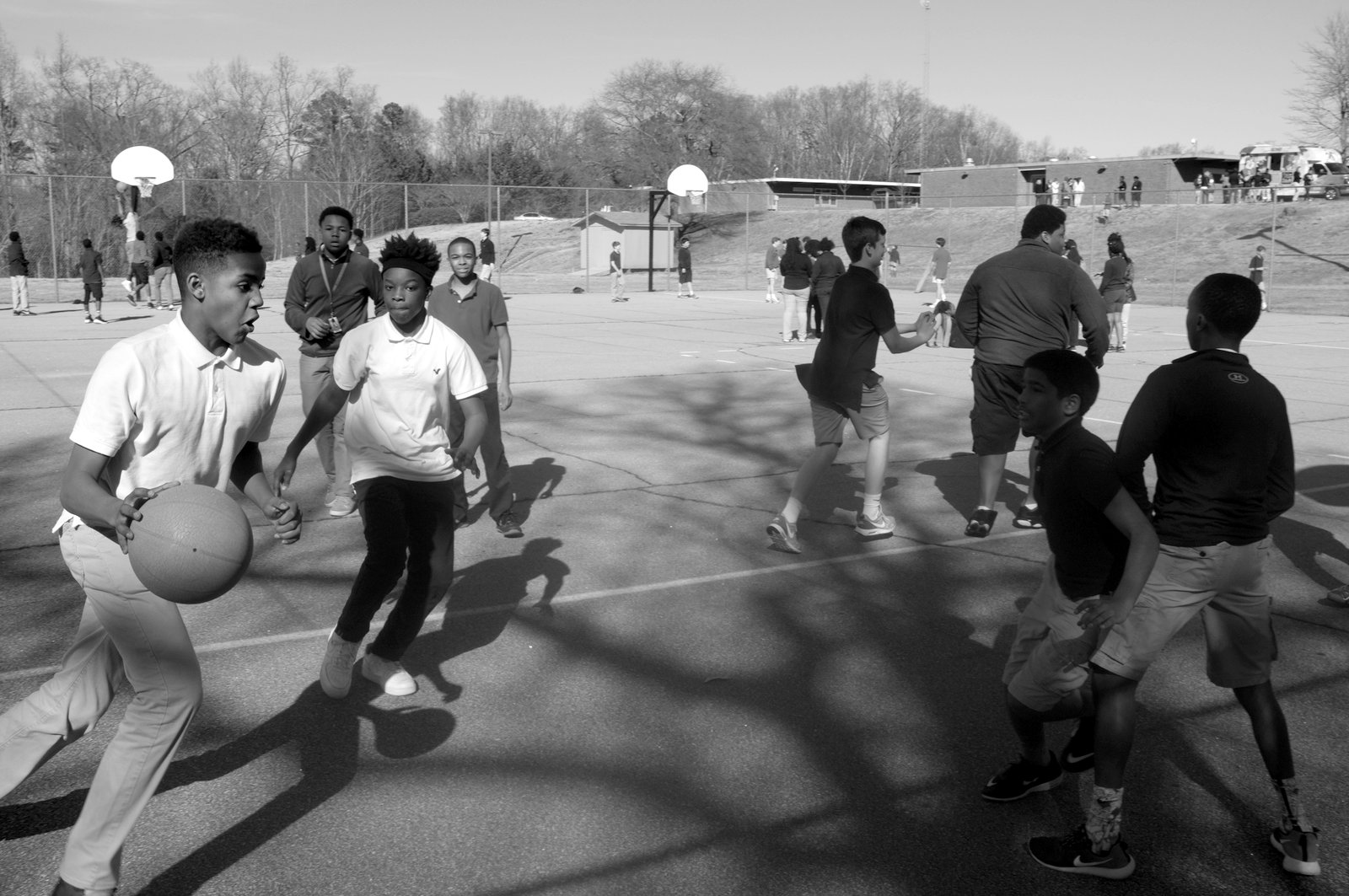
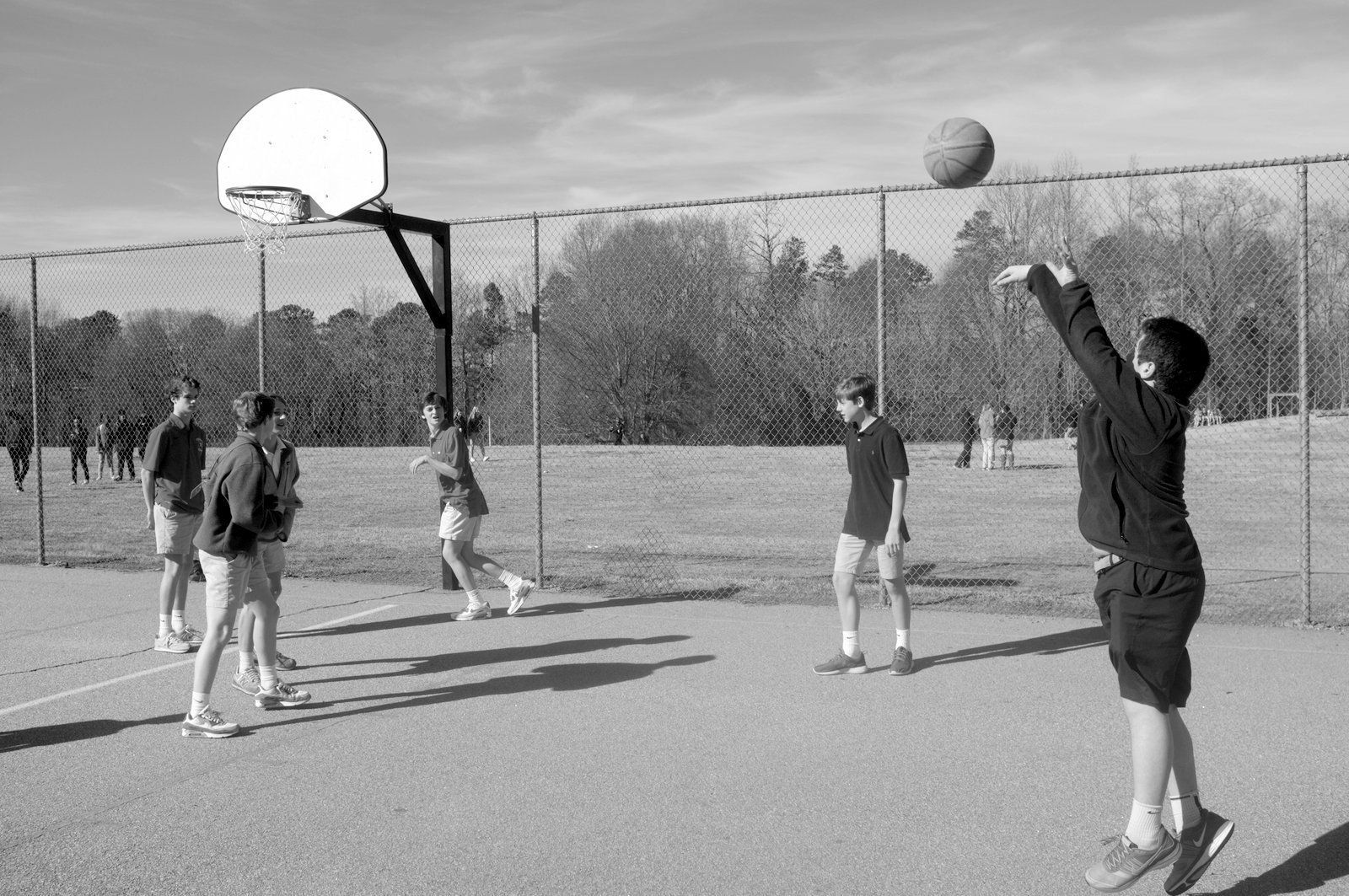
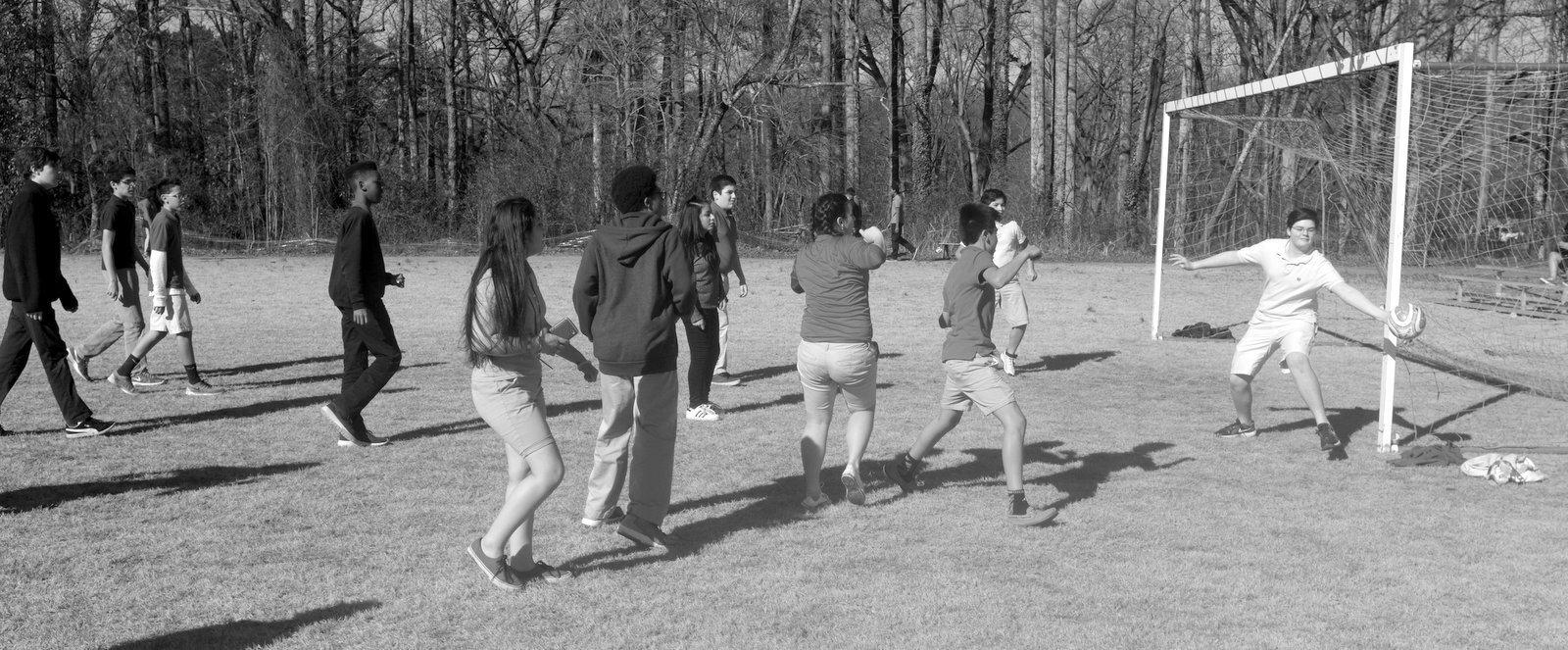
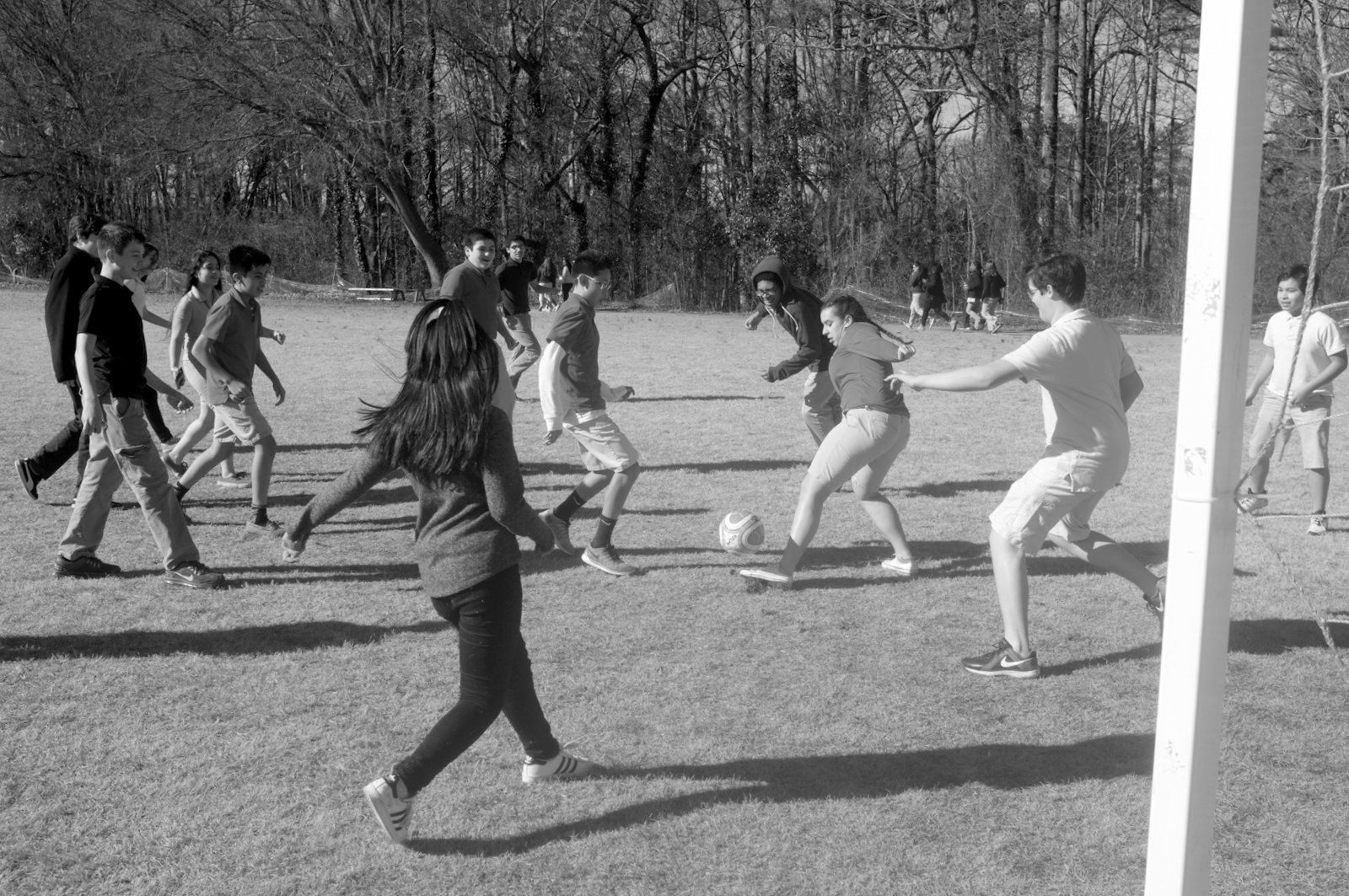
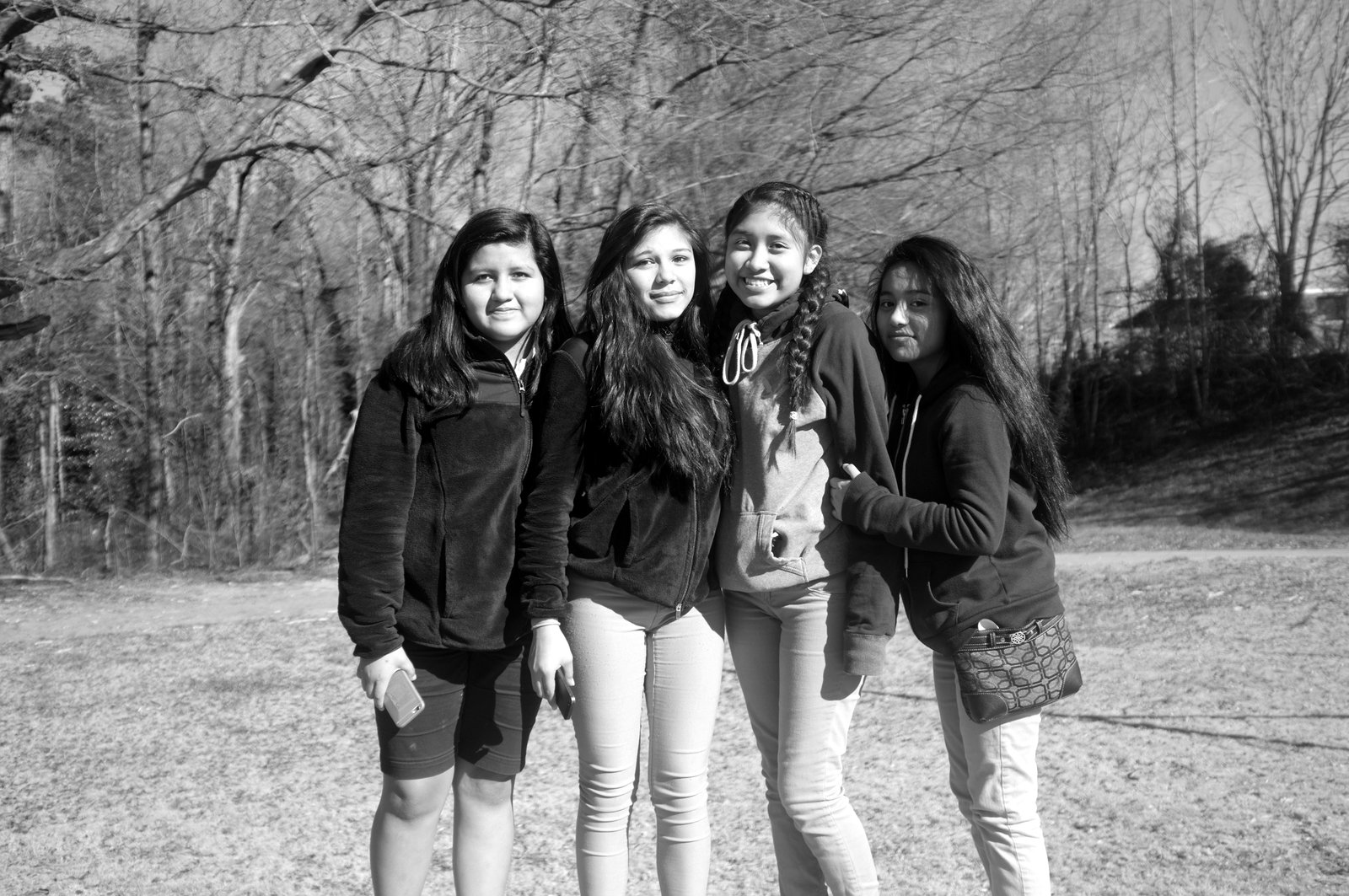
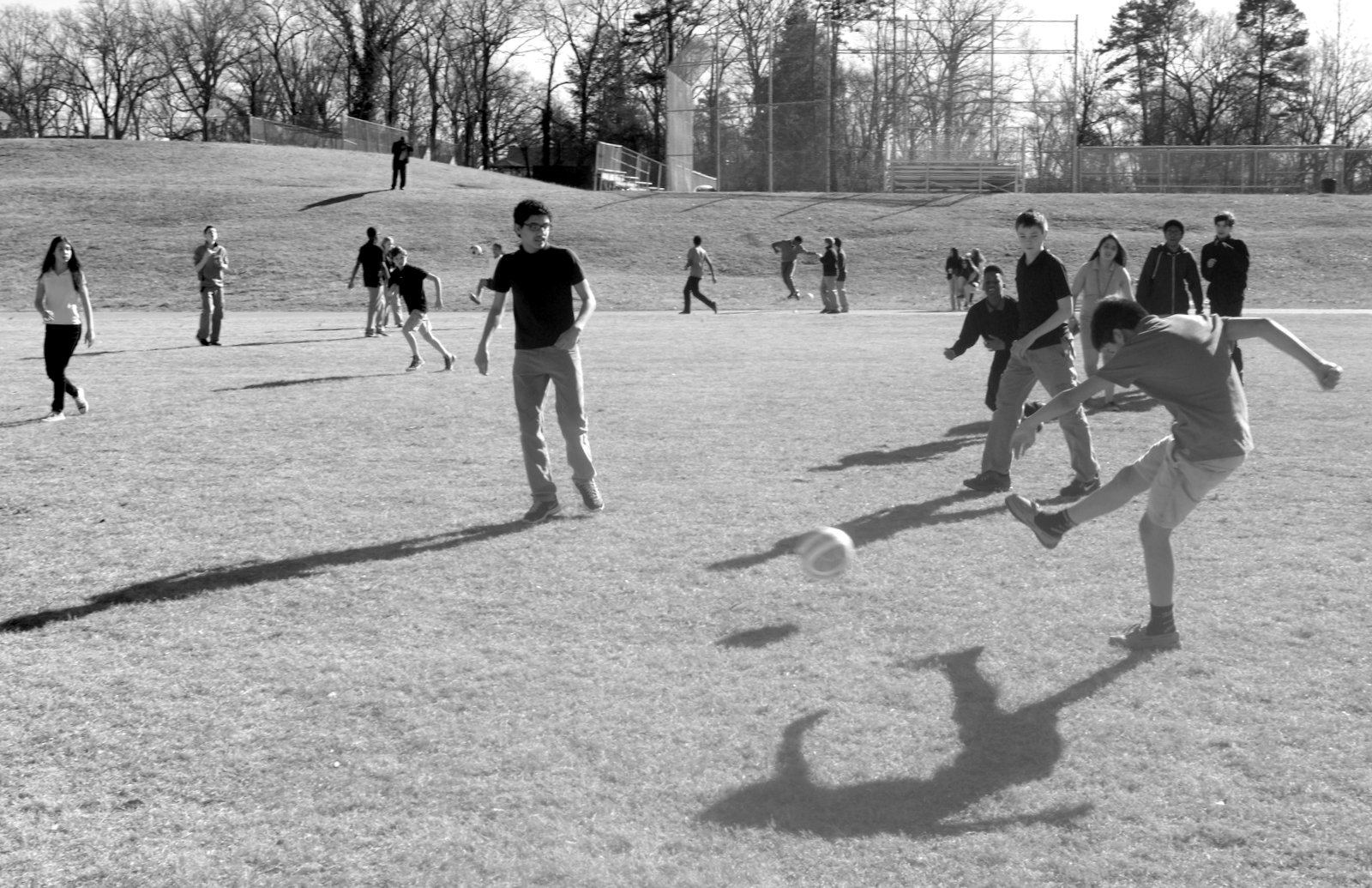
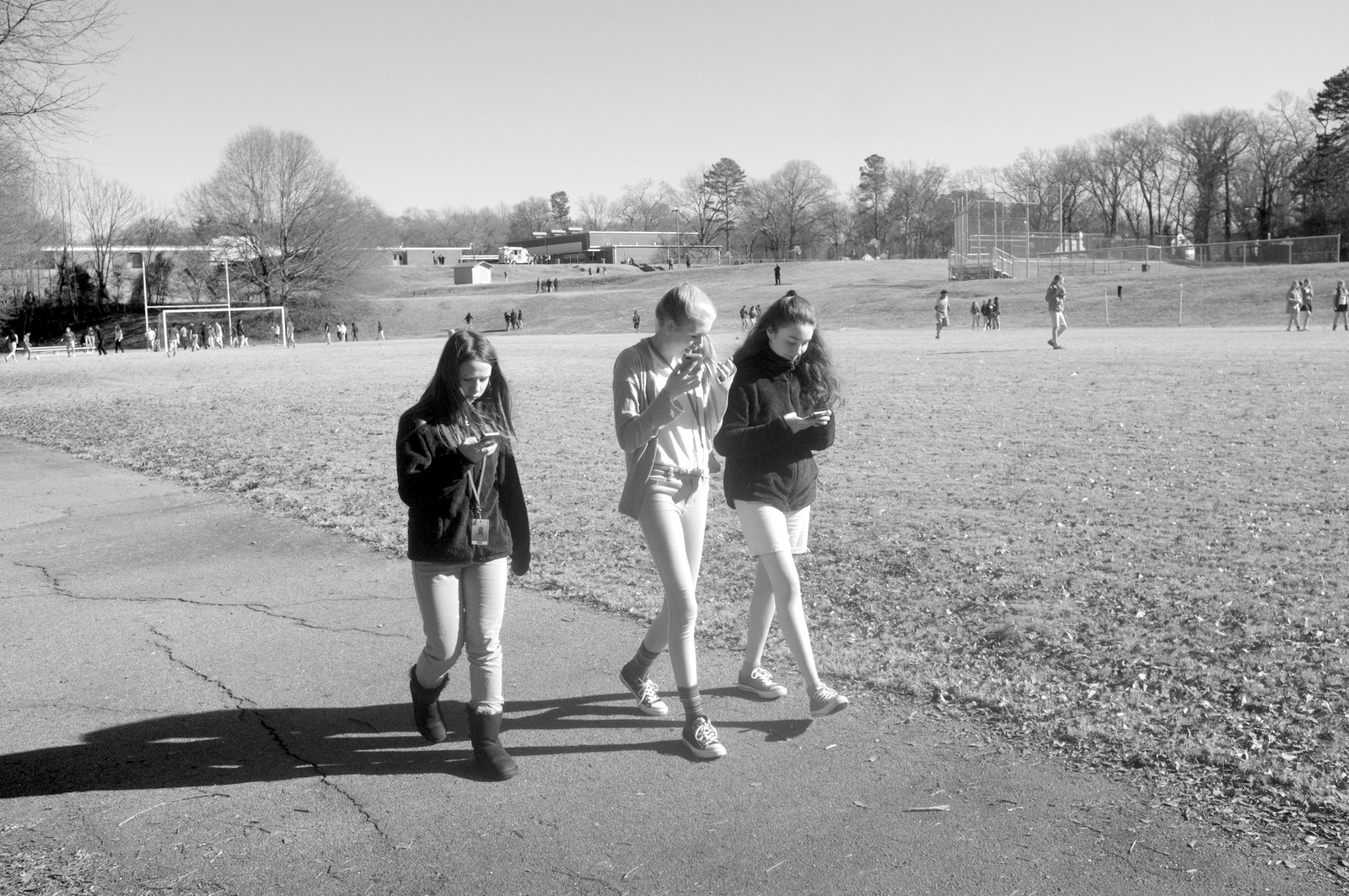
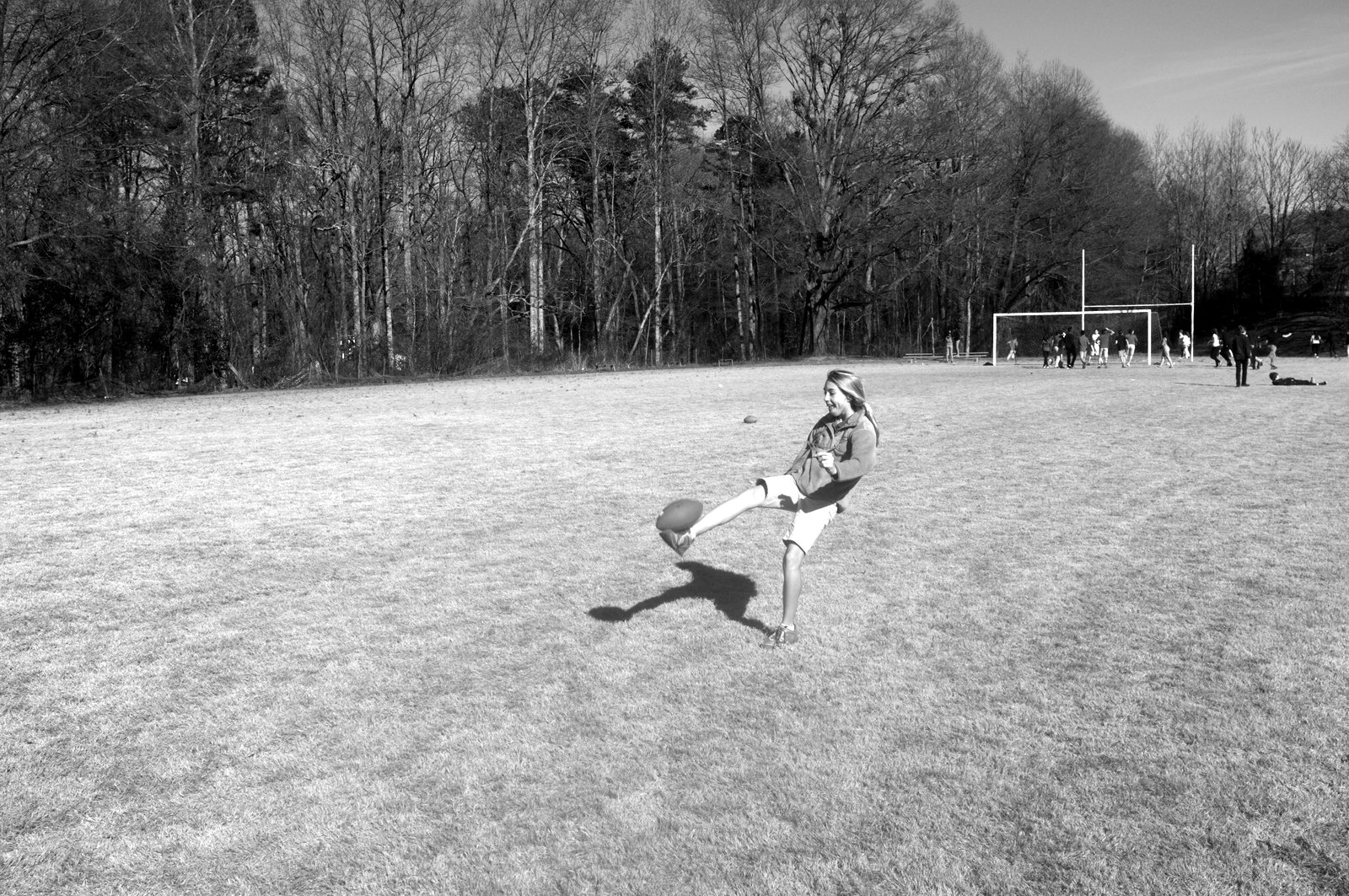
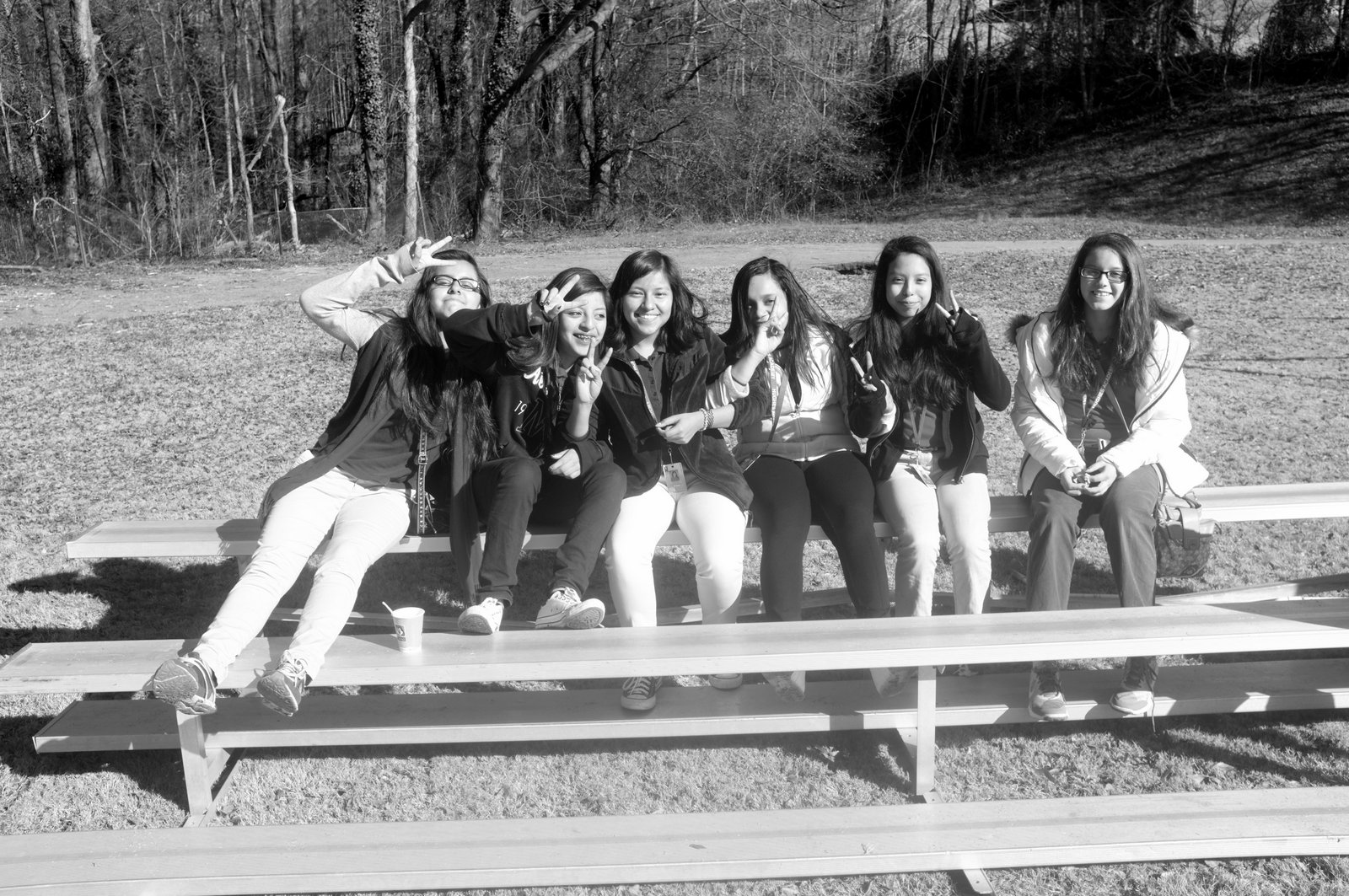
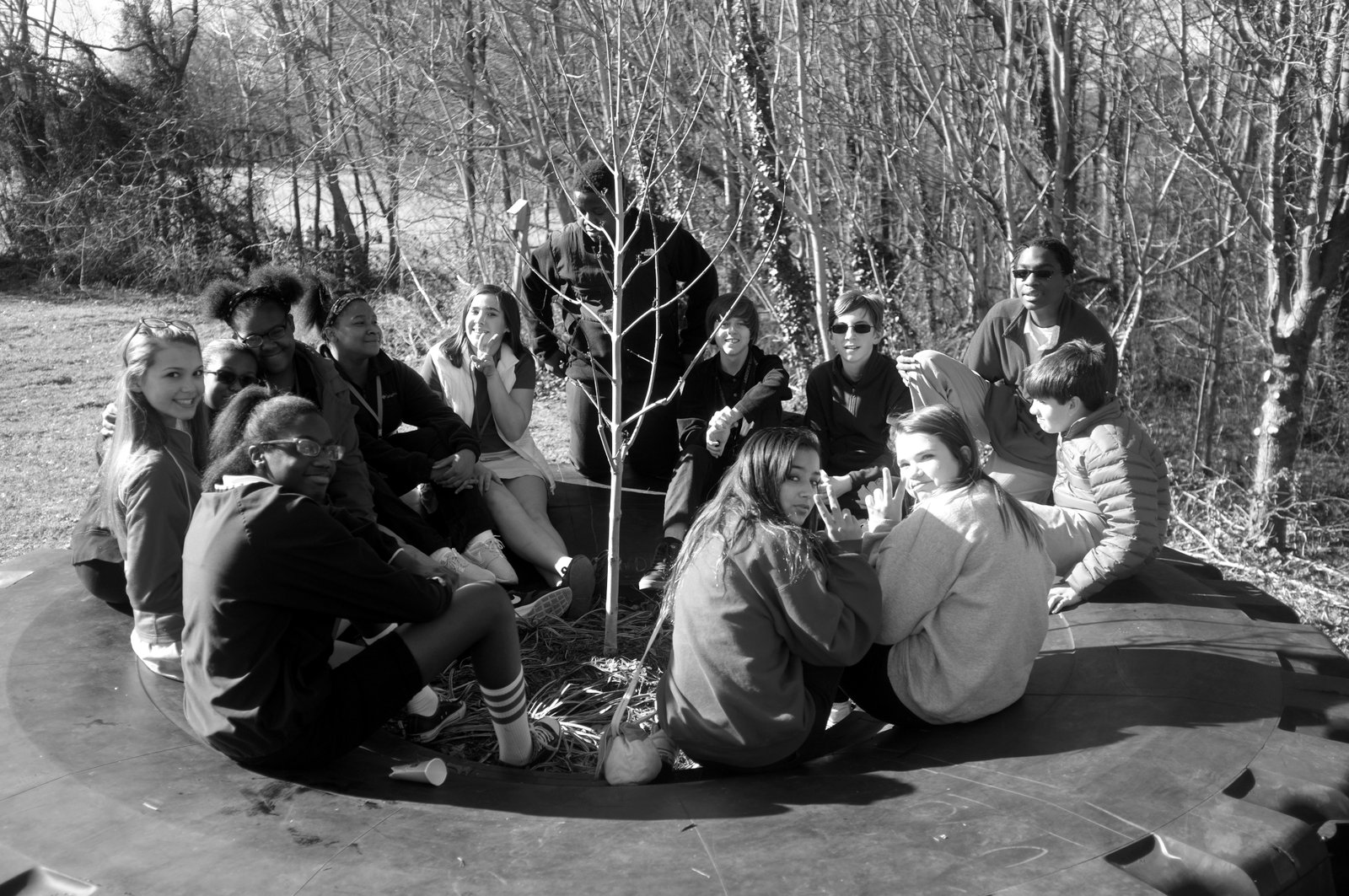
In the afternoon, another lesson about learning: not all learning has any adults at all involved. The kids headed out for their quarterly (or is it more often? I can never remember) reward day, which consists basically of forty-five minutes of freedom outside. Some kids play basketball; some kids play soccer. Some kids walk around and gossip orally; some kids walk around and gossip electronically.

And some kids just do a little bit of everything. The lessons there? Countless, and completely unplanned.

Back at home, L asked K to help her with a traditional Polish dance that she'd like to use to try out for the school talent show later this year. Tryouts are coming soon, and the Girl is not quite sure what she's going to do. This is the first year she's eligible, so she's feeling a bit stressed about making a good impression. She'd noticed that all the Indian students in the past who'd done traditional dances made it to the show itself, so she reasoned that a Polish Highlander dance might stand a good chance.

2-DSCF8214

So K began working on it with her. I'm not quite sure how this is supposed to work because Polish Highlander dances are really not solos -- unless you're dancing a male part. This bit of information prompted a bit of begging from the Girl, so K showed a few male moves. And E decided he wanted to learn them all, male moves and female moves.

1-DSCF8223

Another unplanned lesson.

They're really all around us. The opportunities are endless. And the miracle of it all is that we really don't even have to be aware of it.