matching tracksuits

fun in threes, sometimes fours

education and teaching

How Much Time?

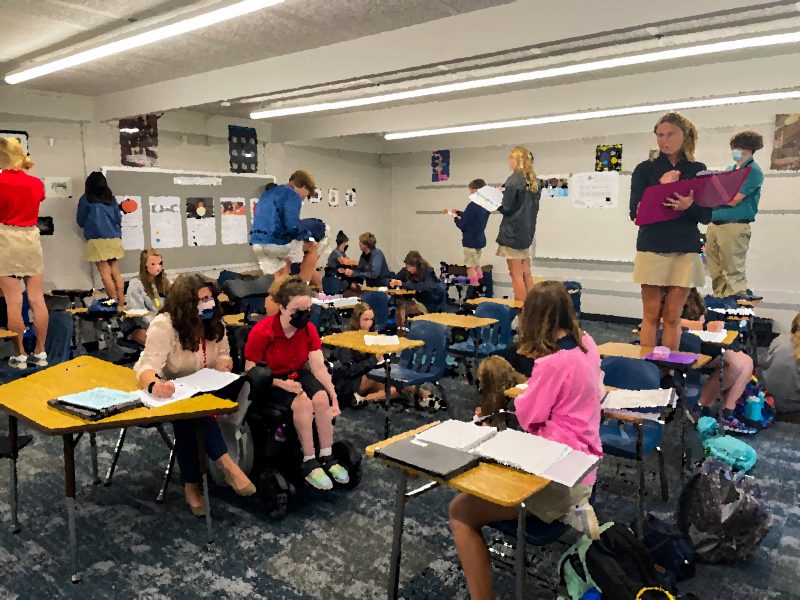
Sometimes, I find myself wondering just how much time I need to give students to finish an assignment. If they're playing around and wasting time, then they're doing just that -- wasting time. Why should they get extra time? But if I assess what they do turn in, then it's so incomplete that it's more an assessment of behavior rather than skill.

Take our current project: we're writing about how the narrator effectively creates the voice of an uneducated slave girl in Nightjohn by judicious decisions in diction, regularly irregular grammar, and extensive use of fragments. We've gone over all this stuff. We've practiced finding it. We've found it. We've noted it.
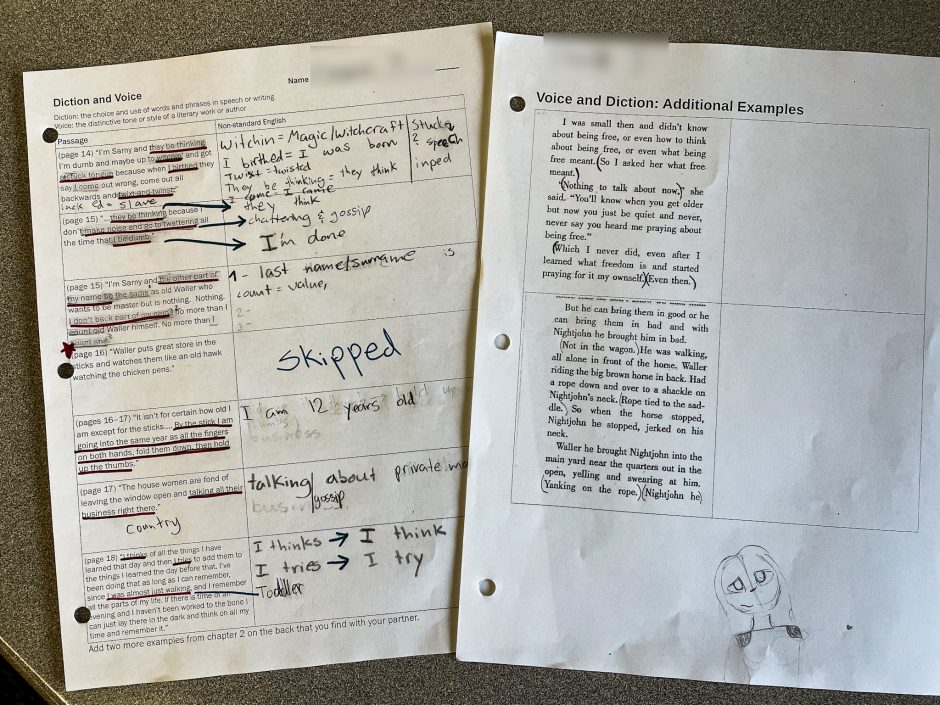
I've planned out everything so that what they have to do is less figuring-out-how-to-do-it and just doing it. We determined potential topic sentences as a class. We found evidence in groups. (Much of the evidence they already had -- it should have taken them about 5 minutes to find evidence because it was in earlier work.)
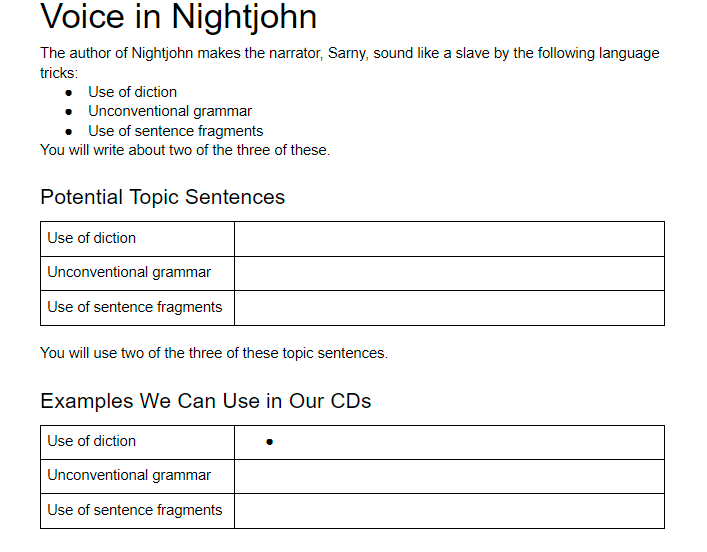
At this point, students who have been focused and working well are almost done; those who haven't are not close to done. They should work on it over the long weekend. Will they? Of course not. How do I know this? Fifteen years of teaching eighth grade at this school has shown me that 85% of the kids in on-level classes just won't do anything on their own at home. Anything at all.

English I students, on the other hand, finished up their analysis of "Sonnet 29" with an examination of the elements of a sonnet:
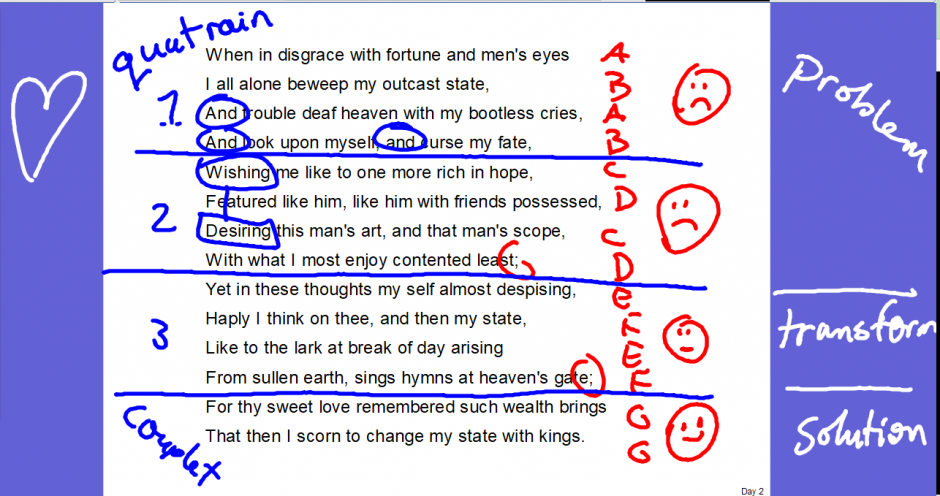
We then turned our attention to "Sonnet 18" -- undoubtedly Shakespeare's most famous sonnet:

Shall I compare thee to a summer's day?
Thou art more lovely and more temperate:
Rough winds do shake the darling buds of May,
And summer's lease hath all too short a date:
Sometime too hot the eye of heaven shines,
And often is his gold complexion dimm'd;
And every fair from fair sometime declines,
By chance or nature's changing course untrimm'd;
But thy eternal summer shall not fade
Nor lose possession of that fair thou owest;
Nor shall Death brag thou wander'st in his shade,
When in eternal lines to time thou growest:
So long as men can breathe or eyes can see,
So long lives this and this gives life to thee.

The difference in what they're working on is striking, but it's less striking when you see the difference in how they work. The kids in the honors classes, by and large, are focused and studious. They do homework when I require it. They pay attention when I'm demonstrating. They stay on task when I ask them to cooperate on a task. They remain silent when I tell them I want them to do some step or other on their own.
Taking a Chance

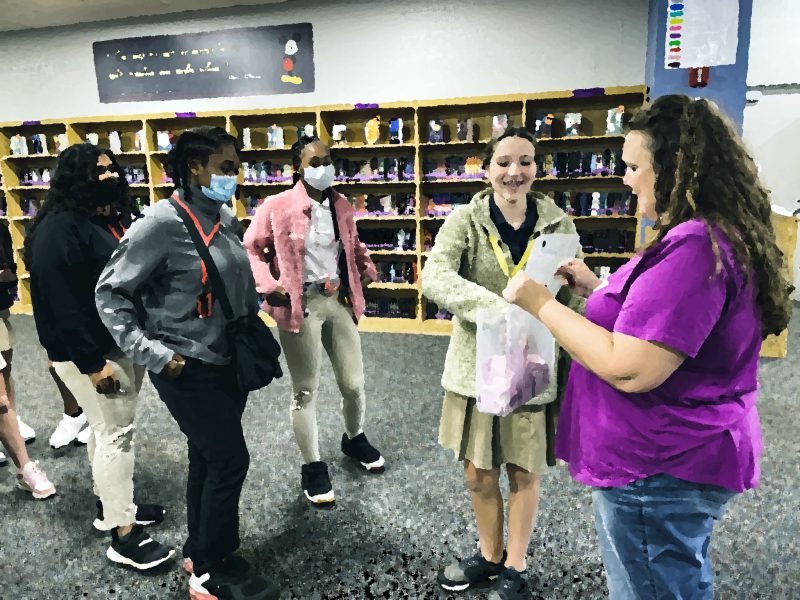
I took the kiddos to the library today to get their first independent reading selections for the second quarter. The librarians came up with a clever game for the kids to play: they chose cards at random that “dared” them to get particular books.

“Get a book with a red cover.”

“Get a book by a female author.”

“Get a book from a friend’s recommendation.”

“Get a book with a one-word title.”

I talked the librarians into adding a new one: “Get a book Mr. Scott selects for you.”

For two girls I selected Ender’s Game — a science fiction masterpiece. I first read it when I was their age, and it thrilled me. What a shocking ending! I chose it for the two girls because they had never really read science fiction. “I’m more a dystopian fiction girl,” one of them said, “But I’ll give it a shot.”

Reading

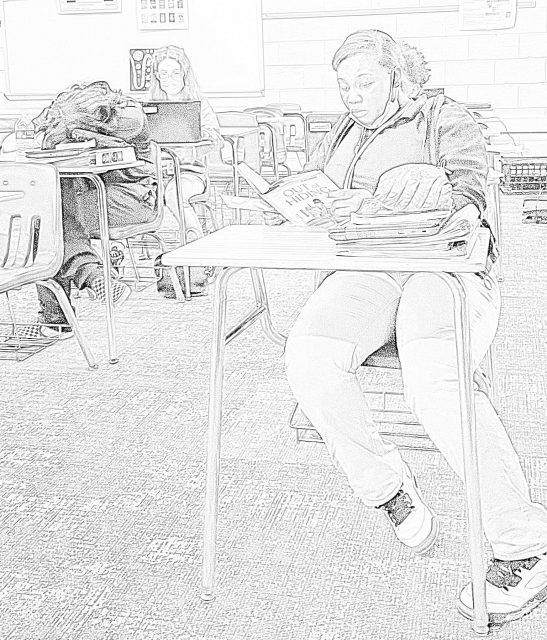
I knew taking the picture might break the spell: an at-risk student who, of her own accord without any prompting or suggestion, chose to read a book during free time after lunch might not be thrilled about having her picture taken. But on the other hand, it’s a picture of success, and when it’s a kid you’ve already grown to love in a way, a kid you’re already pulling your hair out over and cheering on and fussing at with a smile — you go ahead and take that chance.

Sure enough — “Mr. S! Don’t!” And the spell was broken. But unlike many magical moments, this one has evidence to back it.

Discovery

We started working on poetry this week. I always begin with the same poem:

Because You Asked about the Line Between Prose and Poetry

Sparrows were feeding in a freezing drizzle
That while you watched turned to pieces of snow
Riding a gradient invisible
From silver aslant to random, white, and slow.

There came a moment that you couldn’t tell.
And then they clearly flew instead of fell.

It’s a perfect start-of-the-poetry-unit poem because it has so much in it that makes poetry great. There’s enough ambiguity to necessitate a little digging. There’s a title doing all the work a good poem title should do — integral to the poem yet still standing a little aloof. There’s parallelism and patterns. There’s such an economy of language.

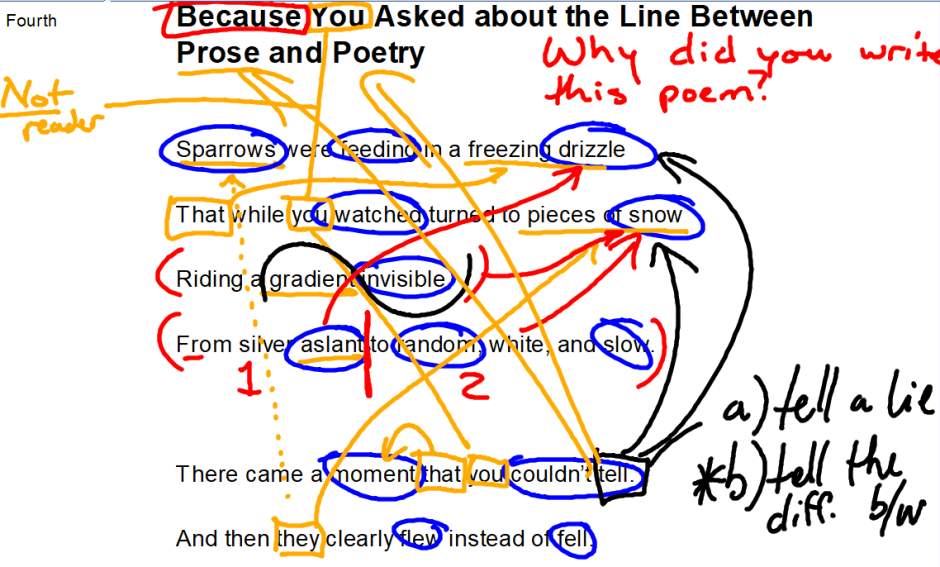
We work through it slowly. First, we find some of the ambiguities: who is the “you”? It’s not the reader. What is that “they” in the final line? They flew, so we think at first it might be the sparrows, but they also seem to have fallen at some point — birds don’t usually fall. “It’s the snow!” someone realizes.

We tackle the ambiguity of the word “tell.” “It’s not ‘tell’ like ‘to tell a lie’, is it?” I ask. We determine that “discern” might be a synonym. Or just “tell the difference between.” “Between what?” I probe a little further. They realize that it’s telling the difference between snow and rain, and that that is what’s going on in that final stanza: whoever is watching the birds is experiencing a moment when the rain is turning to snow and more specifically, experiencing that liminal moment when we can’t quite tell what it is.

We work on the title a bit. “It begins with ‘Because,'” I point out. “What does that signify?” They soon realize that before that must have been a “Why” question. “So talk to your seat partner — what is the understood question?” Eventually, we get it: “Why did you write this poem and give it to me?” Finally, we unpack the whole title: at some point, someone asked the poet, “What is the line between prose and poetry?” He left the question unanswered and returned at some point with a poem, which he gave to the interrogator. Confused, she asks, “Why did you give me this?” And the class says in unison: “Because you asked about the line between prose and poetry!”

“So he gives her a poem about birds and rain and snow?!?” I ask. “What kind of crazy answer is that?” They talk a little. I give them a hint: “Look for patterns. Look for repetitions.” Then they see it. Two things in the poem: rain and snow; two things in the title: prose and poetry. It’s time to put the bow on it.

I write on the board.

__________ : rain :: __________ : snow

“Let’s finish the syllogism,” I invite, and together they say, “Prose is to rain as poetry is to snow.” Or we could have done it differently: “Rain is to snow as prose is to poetry.” We get the same results. Snow and rain are made of water; poetry and prose are made of words.

“So what’s the poem’s answer to the question? What’s the line between prose and poetry?”

“Not much.”

Not much, indeed, and yet so much. So much difference and so many glowing faces as the poem that just a while ago made no sense to them at all suddenly is this beautiful and pithy exploration of the nature of written language.

School Volleyball 2021

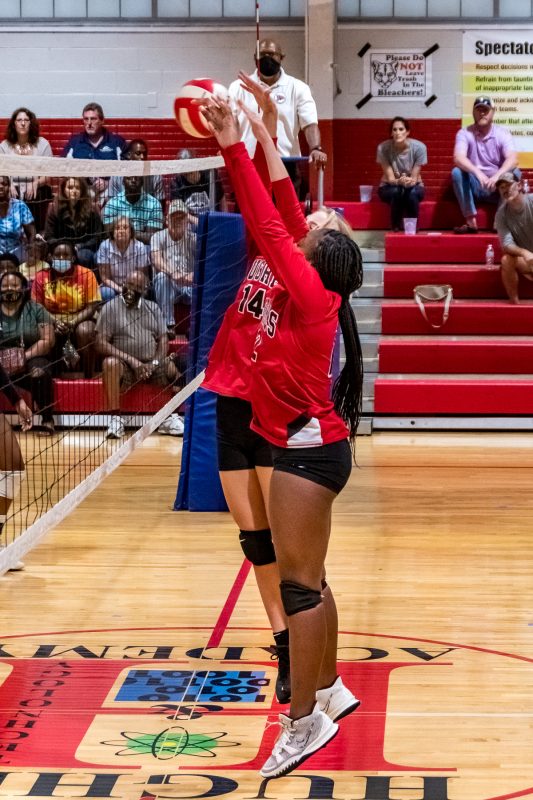
I went to a volleyball game for our school team tonight — in part to take pictures, in part because I have to attend a given number of school events, but mainly because several of my sweet new students play on the volleyball team. It was a tough match against Mauldin, the middle school L would have attended if she hadn’t gone to a charter school. Our girls were out in front at the beginning, but soon fell behind. And then fell further behind. And then lost 10-25. The second set looked better, but they still went down 19-25. The third set was much like the first: 11-25.

I still haven’t attended one of L’s high school games, so all my associations with school volleyball are with last year’s perfect season: not a single set lost. I sat watching and thinking: L’s team from last year would beat Mauldin like Mauldin beat Hughes tonight. And versus Hughes? It would be brutal.

It was a good reminder of how much our L has improved.

Football Glory and Critical Thinking

When we lived in Asheville, I worked for one year at a day treatment facility for kids who'd been expelled from alternative school. It was a tough bunch of mainly fourteen- and fifteen-year-olds. At one point, though, two boys who'd known each other "on the outside" (as they'd referred to it) were in the program at the same time. At lunch they'd revel in their former football glory, recalling magnificent plays they'd been a part of and sharing in the sorrow of those losses that had stung so badly. At one point, one of the boys mentioned having a recording of one of those games.

"Really!?" The program director was incredulous, but he managed to talk the boy into bringing in the video.

A couple of days later, during afternoon free time, the kid put the video cassette into the VHS player and pressed play. Soon, the director was howling in laughter as he watched a little league game in full chaotic, cute glory.

"Man, I thought you were talking about games you'd played in middle school or something," he laughed. "I didn't realize you were talking about second grade!" He was just good-naturedly ribbing the kids, and they took it fairly well.

Soccer practice under a half-moon

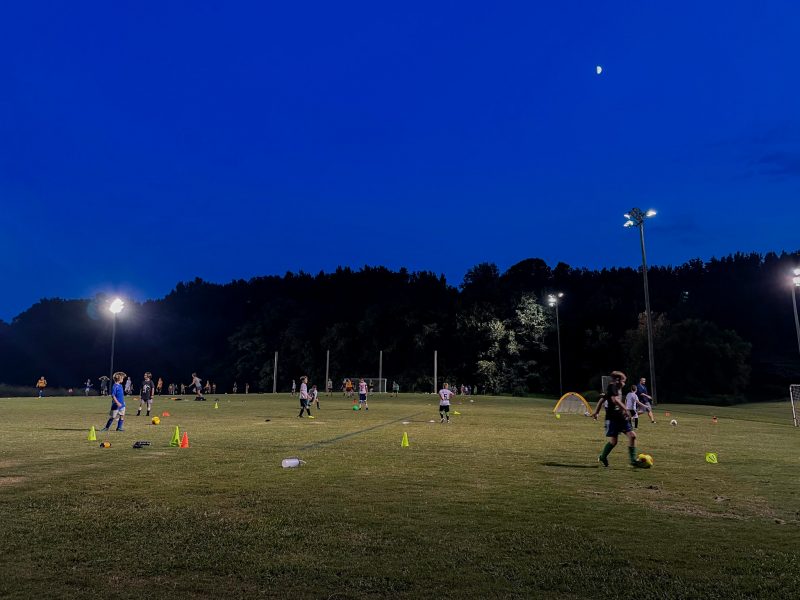
Looking back on it this evening as I jogged laps in a parking lot while the Boy had soccer practice, it suddenly took on a newly instructive dimension for me. Had any of us really thought about it, we would have known it could not have been middle school football the boys were talking about. They'd experienced little success in middle school, showing out enough to be removed from the setting altogether. Even the most gifted player is going to have to meet certain standards -- administrators might bend some requirements for such a boy, but there are at least some requirements. These boys couldn't even make it through alternative school let alone the less structured setting of a typical middle school classroom, so there was no way we adults should have assumed they were talking about playing organized football in the last several years.

We made those assumptions, though, because they neatly and immediately fit our assumptions. When a fourteen-year-old boy is reveling in past glory, we don't expect it to be from early elementary school but from the recent past. It's an immediate and logical assumption that we make without even being aware that we've made such an assumption. The thing is, we make these kinds of assumptions constantly throughout the day. We couldn't function, I'd argue, if we were to give extended critical thought to each and every decision we make and every thought that flits through our mind. The trick is being aware enough of our thoughts to have as a conscious option the ability to switch on our critical thinking and go, "Now, hold on there."

It's one of the reasons I enjoy teaching literature to middle schoolers. It's just those "Now, hold on there" moments that critical reading encourages.

Halina

February. There’s ice everywhere from snow packed on the road, snow compressed on the sidewalks, early melts in the fields that have refrozen. I am walking to the post office that’s in the serve-all commercial building in the village center of Lipnica Wielka.

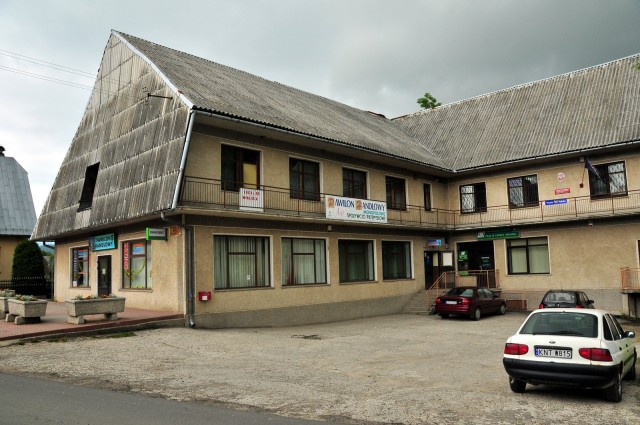
The building houses a large public (as in government-owned) store downstairs, a large hall for wedding celebrations upstairs, and the post office upstairs in the wing to the right. Below it — who knows? Like many public buildings in Poland in the 1990’s, there’s a lot of empty space. In my hand, a pile of letters to family and friends. As I begin up the outer steps, I meet the director the rehabilitation center at the top of the village, just under Babia Gora, the mountain that looks over the whole village.

It’s a center the Duchess of York has established for children recovering from the chemicals and radiation used to treat cancer. I’ve been going up to spend time with the kids from time to time since the first weeks of my arrival. I always leave feeling depressed and heartened. Children have always been a joy to me, but so many withered children, boys with no hair, girls covering their bald heads with kerchiefs leave me emotionally drained.

Halina is one of the residents, a girl of seventeen who is trying to complete her first year of high school in Lipnica. She’s tried twice before, but her cancer and its treatment have made it impossible. She sits in my first-year class, clearly older, clearly more mature than the other students, and she often looks at me with an expression that seems to say, “You have no idea what you’re doing, do you?” A first year teacher, I really don’t.

Just before Christmas break, Halina disappeared. When I meet the director of the center, we make small talk for a few moments before he abruptly tells me, “Halina died.”

I stand there for a moment, silent. What do I say? What can I say? Everything feels so trite, so silly, so empty.

Goodbye, Kiddos

I lost four of my students today. They’re not gone from school or even off our particular team grouping. I’m just no longer their English teacher. The reason is the irony of bureaucracy: the law that’s meant to protect in this case hurts.

They’re special education students with IEPs that require a special ed facilitator in the room with them for English class. This special ed teach has been reassigned to another class, so those four students have to go to another teacher’s inclusion classroom. It’s the law. The problem is, there are already too many special ed kids in the classroom my students got moved to, and since there are only four of them, it’s not much of a challenge for me to meet their needs without assistance. But the law is the law. It’s there to protect them, even when it doesn’t.

I spoke to administrators, special ed coordinators, guidance counselors about these kids. “Please, leave these kids in my class! They’re doing great! The classroom atmosphere is very supportive. It’s a smaller class than the one you’re moving them to. I really like them; they like me. They’ve settled into the routines of the class. They know how things work. It’s a good fit. It’s working,” I begged. But it’s the law, and it’s there to help these kids.

I’ve known this was coming for a week. I’ve been fighting it for a week. Today was the first without the kids in class. Three of them came to my door later in the day asking why they can’t be back in my class.

“Trust me, kiddos — I want you in my class,” was all I could say.

Unrelated Picture

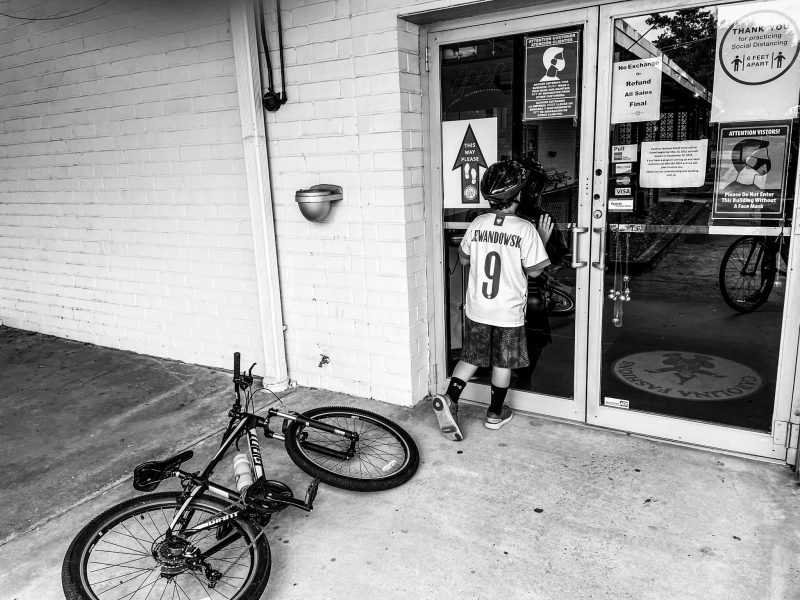
We went for a bike ride this evening. The Boy wanted to visit the old garment factory that’ now houses only a costume shop.

It doesn’t open until later in the month…

Return from the Long Weekend

We returned to school to find 18 teachers out today due to covid. That’s not 18 positive cases — just 18 teachers affected in one way or another. Quarantined due to exposure. Staying home because of a child being quarantined due to exposure. Staying home because a child’s daycare has closed due to excessive covid cases.

“Why don’t we call the governor to see if he would like to come and cover some of these teachers who are out,” I suggested to another teacher as we stood, sensibly distanced and masked, making copies and preparing materials in the teacher workroom.

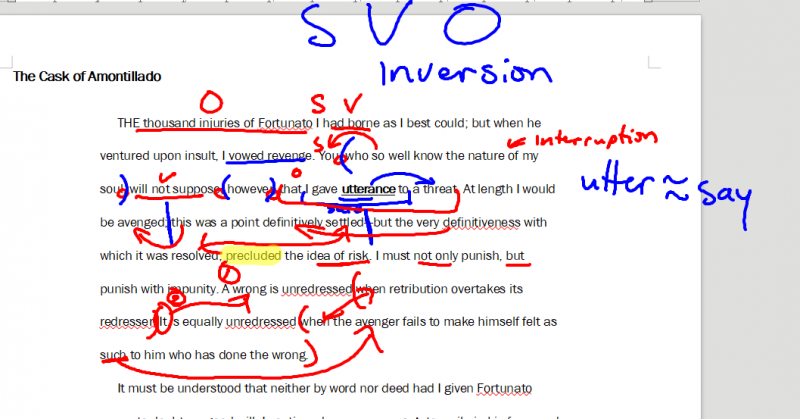
Meanwhile, the kids came and went in a variety of styles: no masks, masks worn down on the chin, masks worn properly, and various transitional states between the three. I carried on, masked all day, conscientiously distanced from everyone, teaching English I Honors kids how to parse some crazy Poe sentences.

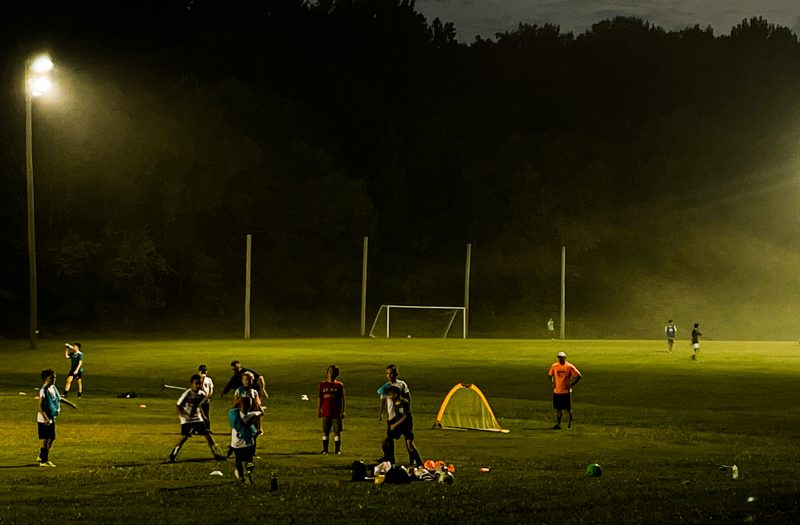
After school and dinner, the Boy and I headed across town for soccer practice.

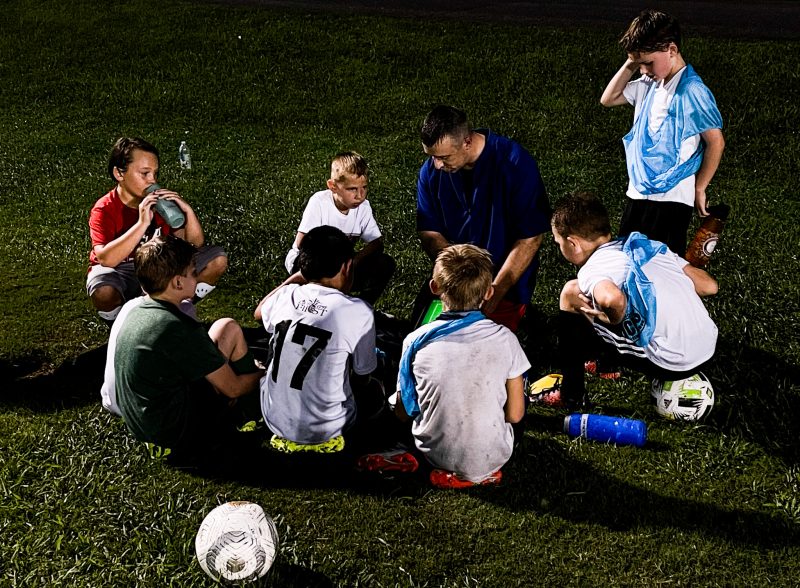
At last — a fairly safe activity in these uncertain times. And after practice, I was pleased to see the Boy making a conscious effort to distance himself.

How long will these habits last? Will E still be pulling back from huddled groups ten years from now? Will it become a reflex? Some on the right would bemoan how this somehow scars them. Maybe, but I can think of worse scarring.

Perspective