Matching Tracksuits

fun in fours

current affairs

Irma

It’s all we’ve been hearing about for obvious and logical reasons, but still, it’s not every year that we’ve had thoughts and worries about what a hurricane could do to us here in Upstate South Carolina. Irma was just such a storm, though. For most of last week, we heard on local news that it might impact us significantly, that it might reach us still a hurricane — even a Category 2 hurricane — and not merely as a tropical storm or depression.
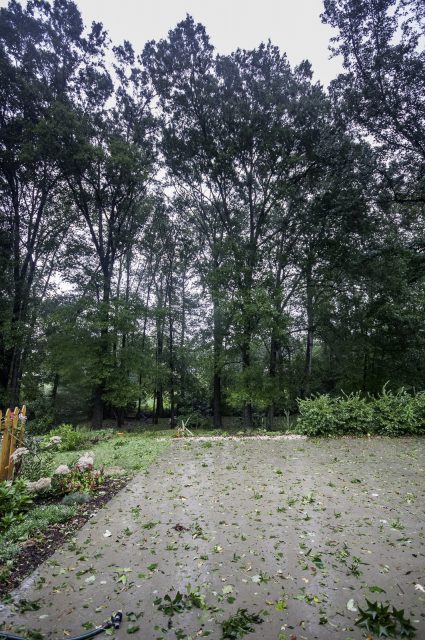
In the end, it turned to the west just a little, and the resulting path took it fairly far west of us. Or so it appeared on the map. What we got today — and are still getting to some degree — were sustained winds in the twenties and thirties with gusts up to fifty miles an hour.
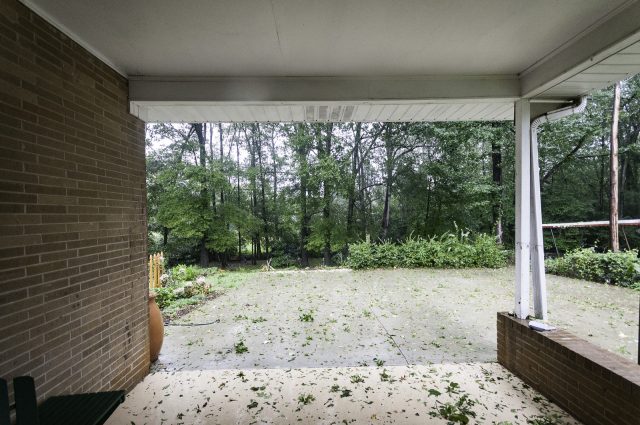
My concern was which direction the wind would be blowing. It turned out that most of the day, it was blowing in the most stressful direction: east to west. From the back of our house, with several large trees, each of which with the ability to do significant damage should one fall. What we got was a bunch of leaves and small twigs in our carport and a renewed leak from an upstairs door that was poorly installed. In short, nothing major. And for that, we are very thankful.
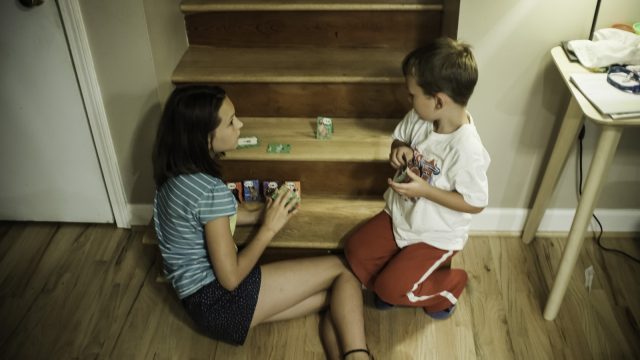
As a precaution, though, school was cancelled today. We spent the day feeling a bit like Sally and her brother in Cat in the Hat. Our story might be renamed Puppy in the House, though, for it was especially hard on Clover. How does a Border Collie pup get her energy out when she’s afraid even to venture into the hard to relieve herself?

And how does the day end? With an announcement that, due to fallen trees on roads and extensive power outages, we have no school again tomorrow.
American Tune

Four years ago, I marveled at how some of these lines mirrored what I was feeling after a disappointing election. I still feel this way after the election in 2016, but for different reasons.

With an untried, inexperienced, president-elect of questionable integrity, surely these are, in many ways, America’s most uncertain hours, both for Republicans and Democrats.

Decision

The morning: the kids entertain themselves while I do some school work. They play school, help make mac and cheese, and watch a bit of television.

Afternoon, we head out to the backyard to swing and jump on the trampoline.

Evening, games.

14-bw0_7327

The rest of the country, most people thought it was possibly the end of the world if the opponent won.

Trump Versus Reality

Does Trump forget that everything is recorded nowadays and his characterization of an event can be compared with the event itself? I’m no fan of Obama, but the man handled himself excellently in this situation. A man was protesting. Obama defended his right to protest, and even took the crowd to task for booing him. Trump characterized this as screaming at the protester. Trump suggested that if he spoke to protesters in a similar way, the media would declare “he became unhinged.” I think he’s right: if Trump ever speaks respectfully to a protester instead of inciting violence against him, many would believe he was unhinged — because it would be so out of character for him.

How do we explain this? Either he lied or he has terrible trouble interpreting body language, tone of voice, and the linguistic content of an utterance. Or he takes his supporters for chumps and thinks, “Well, even if they do go back and check on this clip and see I’m making things up, I won’t lose supporters.” Of course, if he hasn’t lost a given supporter by now, he never will. He probably could, as he bragged, shoot someone and not lose a certain segment of his supporters.

Game 7

Preconceptions

Every year, my students begin Romeo and Juliet with certain preconceptions, both about the play and about the character of Romeo. It’s a Shakespeare play, they reason. Shakespeare’s hard to read, noble and magnanimous and all that. He writes about noble ideas, noble dilemmas, high-minded philosophy. They don’t expect it when the play starts out and within a few lines, characters are saying things like this:

GREGORY

The quarrel is between our masters and us their men.

SAMPSON

‘Tis all one, I will show myself a tyrant: when I
have fought with the men, I will be cruel with the
maids, and cut off their heads.

GREGORY

The heads of the maids?

SAMPSON

Ay, the heads of the maids, or their maidenheads;
take it in what sense thou wilt.

GREGORY

They must take it in sense that feel it.

SAMPSON

Me they shall feel while I am able to stand: and
’tis known I am a pretty piece of flesh.

I take them through the text enough to get them to realize that these two characters, like Donald Trump, are fond of locker room talk that involves suggestions of sexual assault. (No, I don’t bring in the politics, but the thought crossed my mind to make the connection at least today.) I don’t point out to them what Sampson really means when he says, “Me they shall feel while I am able to stand,” but I suspect some of them get it.

Then there’s Romeo: He’s going to be a good guy, they reason, because the play is the most famous love story of all time, and the most famous love story of all time can’t possibly have anything other than the ideal man in it. So we begin reading and find this passage in response to Benvolio’s queries about what exactly is making Romeo’s days so long:

Well, in that hit you miss: she’ll not be hit
With Cupid’s arrow; she hath Dian’s wit;
And, in strong proof of chastity well arm’d,
From love’s weak childish bow she lives unharm’d.
She will not stay the siege of loving terms,
Nor bide the encounter of assailing eyes,
Nor ope her lap to saint-seducing gold:
O, she is rich in beauty, only poor,
That when she dies with beauty dies her store.

“How has Romeo tried to win her?” I ask. We mark the text and make a list.

“She will not stay the siege of loving terms?” I ask, and the students figure it out.

“He’s used smooth words.”

“Nor bide the encounter of assailing eyes?” I ask, and the students get it.

“He’s been making eyes at her.”

“Good. Finally, ‘Nor ope her lap to saint-seducing gold’?” Here they stumble.

“Money?”

“No — how do guys use gold to win girls?”

Finally, someone gets it: “Oh, jewelry!”

“Right!” Then the question — should I pursue the issue further? Should I lead them to see just exactly what Romeo’s saying here? Some years, I don’t. This year, I did.

“And what about the rest of the line?”

They look at each other quizzically.

“What do you think he means by ‘ope’?” I ask.

“Open?” a student suggests.

“Correct. Now, she will not ‘ope her lap to saint-seducing gold’?” I see in some of their eyes that they’ve got it, so I suggest what I suggest every year. “We’ll have to behave as adults in this unit and not giggle and be immature about some of the topics. So what’s he saying?”

They get it. They’re mildly shocked. The girls are a little angry and disappointed that this supposed hero of the greatest love story of all time is a fairly typical male and simply trying to get Rosaline in bed — to spread her legs, literally.

“Nothing ever changes,” one student observes.

1-dscf1197

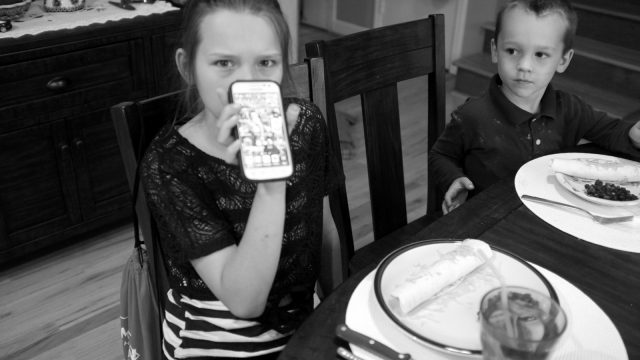
The Girl tonight hit on her own preconceptions and battled them mightily. Beans are nasty. She’s decided that already. Of course, at her age, I’d decided the same thing about a lot of things, most beans as well. But we have a rule in our house as Nana and Papa had when I was growing up: you have to try everything. In L’s case, it was about three bites of beans.

We jokingly took a picture with a time-stamp (that’s in fact illegible) to see how long it took her to eat them. Although she didn’t have to sit at the table the whole time, she had her final bite around ten minutes before bedtime.

I remember doing the same thing.

Nothing ever changes.

Saviors

One of the most disturbing things about Trump for me is his savior mentality: he often says things like “I’m the only one who can solve this problem” instead of something more expected from a presidential candidate, like “our party’s platform is the only thing that can solve this problem.” It seems he wants to create a cult of personality, something that frightens many of us.

But are his followers buying into it? A sign seems to answer the question.

trump

That seems to be a near-perfect rewording of a traditional Christian formulation: “Jesus, who gave up his role in heaven to be humiliated, ridiculed, and crucified to save the world.” It also echoes John 3.16 in a way.

It’s a frightening sign, to say the least.

1-fullscreen-capture-11262016-15427-pm

If we look closer at the implicit comparison, though, it becomes even more problematic. Jesus was ridiculed and humiliated because what he said went against the common thoughts of the time. He embraced those that society rejected, like the tax collector and the woman at the well. He taught unconditional love, and he was humble. Trump, on the other hand, rejects whoever angers him. He suggests punching people in the mouth, and he is anything but humble.

A false comparison, and a dangerous one, if I ever saw one.

Or perhaps it’s satire. It’s unlikely because I don’t see Trump smiling at a protester holding up a damning sign. Then again, he might not initially realize it’s satire.

Or perhaps it’s one of those meme-making sites that allows you to add your own message to a church billboard for an authentic-looking photograph.

Two of the three explanations don’t leave me gasping.

Water

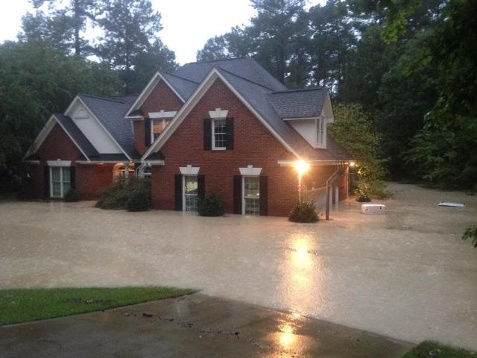
The key is to keep things in the proper perspective, as it is with most things in life. We just came out of a mini-drought, with very little rain at all for weeks, and the rain of the last week has replenished our water supply.

As the forecast worsened, I was confident. I'd just redone our basement work space that had flooded twice before, putting heavy-duty waterproof paint on the floor and up to the ground line and sealing the previously-unsealed holes in the concrete that were evidence of some previous owner's battle with termites. We were ready with a pump in case it did flood. I'd redone the draining system, the failure of which had caused the first two floods. We were ready.

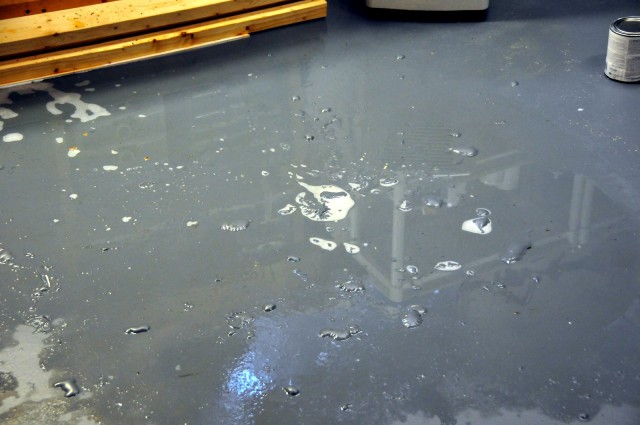
Sunday morning, though, we found water in the basement. Not much, but a bit. By the time I had gone back upstairs to change into more appropriate attire and had returned, there was noticeably more water. Significantly more water. I scanned for the source, but it didn't seem to be coming from corner that was the usual source. I soon discovered the breach: one of the termite-poison-injection points had been compromised: water was literally bubbling out of the small hole as if it were a spring. I plugged it with a wine cork and set up the pump, only to discover that the two or so inches of water was not enough to trigger the pump. No fear: we had plenty more water in the crawl space and a shop vac. In the end, I pumped probably seven or eighth hundred or so gallons out of the crawl space at about two hundred gallons out of the work room.

1-DSC_8767

The nicely-painted floor, though, was a wreck. But the overall damage was minimal, and the situation could have been much worse:

  • We had power.
  • We had a working pump to empty the crawl space.
  • We had a working shop vac to suck up the water that's too shallow for the pump to draw up, which was basically all the water in the basement -- but still.
  • Even if it totally flooded the basement, nothing down there was critical to daily living or irreplaceable.
  • The living area living of our house was highly unlikely ever to flood at all.

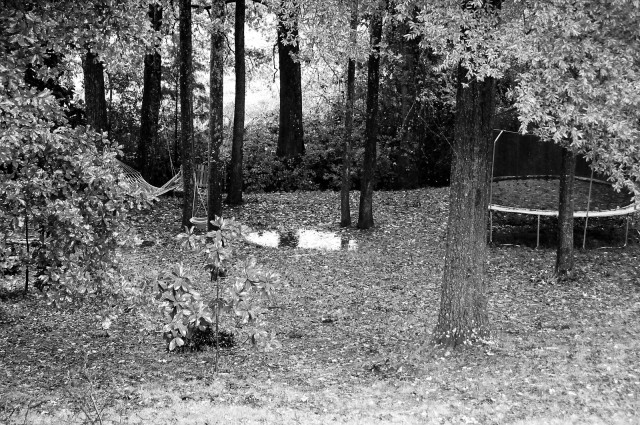
By the time we got the basement situation under control, the only real concern was the forest in the backyard. With such saturated ground and such relatively strong winds, everyone was saying that the compromised root systems of trees wouldn't hold indefinitely. But they all held, and we escaped with no damage to speak of.

1-BW0_8763

Throughout the day, the routine was the same:

  • Grade some papers.
  • Check the water level in the basement.
  • Hang out with the kids a while.
  • Repeat.

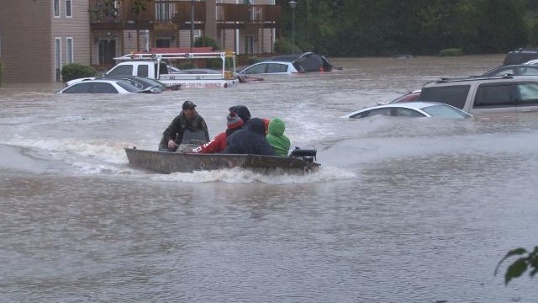
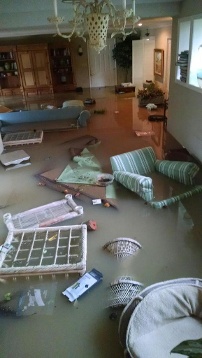
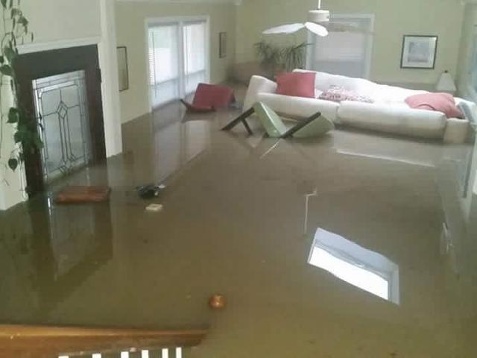
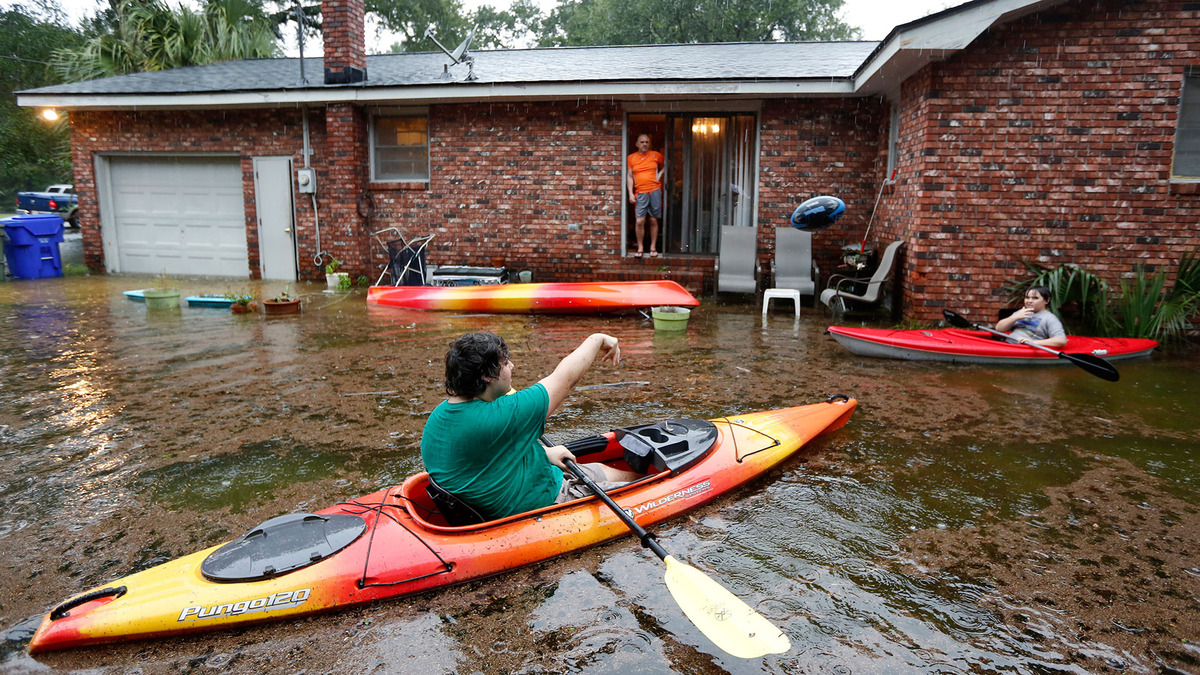
We all knew that the situation was worse the closer one got to the shore. When the pictures of the damage started appearing on the Internet, though, it was far beyond anything we'd expected.

So today, we went about our normal routines, and I'm sure I wasn't the only one thankful for the ability to go to work this Monday morning.

Standing in Line

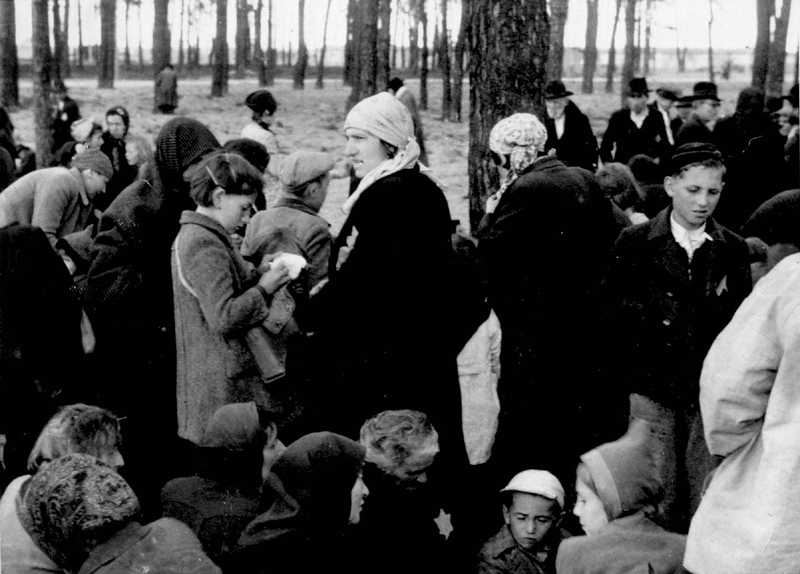
Today is Holocaust Remembrance Day, when we recall all the millions of Jews who died at the hands of the Nazis, some of whom stood in line for the gas chambers at Auschwitz and Treblinka, at Chełmno, Belzec, and Sobibor. It is something unthinkable for me: why stand peacefully in line? Why not fight? Of course, it would be in vain, but why not resist? Of course in the early days, they might not have realized what was happening, for the Nazis went to great measures to hide the fact that they were about to die. Still, rumors spread as the Holocaust continued, as people escaped from camps and told their stories, and many knew what was about to happen. Still, they stood in line for showers that many of them knew were not actual showers. Perhaps they did not want to panic their children. Perhaps they wanted their last moments to be as peaceful as possible. Whatever the reason, many of them waited in line.

Women and children waiting in a small wooded area near Crematorium IV at Auschwitz.

Tonight, I was waiting in line at Barnes and Nobles when I saw the cover of this month's Atlantic. The cover story is an article by Jeffrey Goldberg entitled, "Is It Time for the Jews to Leave Europe?" It is an article that details the stunning rise in anti-Semitism in Europe. Goldberg writes that "France’s 475,000 Jews represent less than 1 percent of the country’s population. Yet last year, according to the French Interior Ministry, 51 percent of all racist attacks targeted Jews."

While the article dealt with, for example, the highly nationalistic, ultra-right Nation Front of France and Greece's openly anti-Semitic Golden Dawn, Goldberg also spends a great deal of time discussing the rise of Islamic anti-Semitism.

Finkielkraut[, a French Jew,] sees himself as an alienated man of the left. He says he loathes both radical Islamism and its most ferocious French critic, Marine Le Pen, the leader of France’s extreme right-wing–and once openly anti-Semitic–National Front party. But he has lately come to find radical Islamism to be a more immediate, even existential, threat to France than the National Front. “I don’t trust Le Pen. I think there is real violence in her,” he told me. “But she is so successful because there actually is a problem of Islam in France, and until now she has been the only one to dare say it.”

Goldberg goes on to give numbers: "Violence against Jews in Western Europe today, according to those who track it, appears to come mainly from Muslims, who in France, the epicenter of Europe’s Jewish crisis, outnumber Jews 10 to 1."

Yet for secular, left-leaning Western Europe, there is a problem: Muslims are seen as victims just as much as Jews. Scratch that: more so: “'People don’t defend the Jews as we expected to be defended, [Finkielkraut] said. 'It would be easier for the left to defend the Jews if the attackers were white and rightists.'" Even Goldberg seems to see the problem with Islamic anti-Semitism as a question of social injustice rather than a theological component of Islam itself when he explains that the "failure of Europe to integrate Muslim immigrants has contributed to their exploitation by anti-Semitic propagandists and by recruiters for such radical projects as the Islamic State, or ISIS." One only has to look at imams'Â comments coming out of the Middle East to see the prevailing contemporary view of Jews in the Islamic world.

As I stood in line, though, not having read the article, I was initially taken aback: I thought for a moment it might be an extreme leftist anti-Zionist diatribe and not just one that skates close to anti-Semitism but that openly embraces it. I decided I must read it when I got home, though. I looked down at the book I was purchasing, ironically about Auschwitz, then glanced around the shop. A covered Muslim woman was approaching with her uncovered husband and son. I glanced at the book in my hand, glanced at the Muslim family, glanced at the magazine cover, and wondered at the irony of the moment.