Matching Tracksuits

fun in fours

current affairs

The Beginning of Something Big

Perhaps it was because almost no one went to church this morning: Papa is still not feeling confident enough in his strength to risk it, L was sick, and K was worried that E would be too tough to control and keep in the same line she was planning for herself at church: touch nothing, nothing at all.

Perhaps it was the simple anticipation of an announcement we all knew was coming. “My guess is they’ll try to get through the next couple of weeks, then send everyone home for an early spring break,” K said last week. “Or at least through next week — it is a short week with Friday being a scheduled teacher work day.” Still, with all the alarm over the potential of this pandemic, we knew an announcement would likely come this afternoon or evening.

At any rate, when the announcement came at 2:30 that the governor would have a press conference at 4:00, we knew what was up.

Once that happened, I jumped on the computer and loaded up my book request queue to get some books from the local library system before everything shut down for good. Everyone else is hoarding toilet paper. I want to make sure I have something to read.

After that (and only after — priorities), I began checking my work email regularly. Finally, this: “The Governor has just announced all schools in South Carolina will close immediately in response to COVID-19. As you know, we have been preparing for this eventuality.”

What will we be doing? Is this vacation? Of course not, nor should it be:

At this point in the closure, teachers must be available during normal working hours throughout the closure to respond to student questions beginning Wednesday. Teachers are paid for this time and are required to be responsive and accessible via electronic means. […] During the closure teachers should catch up on paperwork, data entry, grading, or electronically delivered professional development. This will also be a great opportunity to plan for accelerating lessons upon students’ return.

Yet how much actual learning will be possible during this time? I have students who are motivated to work only when I’m standing over them, and one or two who don’t even work then. What will they do during this extended period of distance learning?

We’ll find out tomorrow.
Virus

And like that, everyone is living with the effects of a pandemic. The Girl's tournament this week will almost certainly be canceled, and we aren't going even if it isn't: our club owner made an executive decision that no Excell teams will be playing there. USA volleyball recommended the cancellation of all tournaments, but the tournament organizers didn't cancel. "I put the girls' safety above everything else," he said in a team meeting this evening after practice. "The NBA has stopped playing; universities have virtually closed down; schools are closing. It's just not responsible to go." And we all shook our heads in agreement.

It also puts into question our summer trip to Poland. It's still three months away, but who knows how this will play out.

It's gotten me to thinking macabre thoughts, though, about a potential pandemic a few years in the future that seems inevitable. A pandemic that, if it comes to pass, will have been completely preventable. The permafrost is melting due to rising temperatures, which in turn are due to our shortsightedness, past and present. Trapped within that permafrost are microbes that have been locked away from immunological history for millennia. When they get out, what will happen? In my mind, the worst-case scenario would make the present fears about coronavirus seem like the naive good old days.

Always the pessimist...

Hyper-partisanship

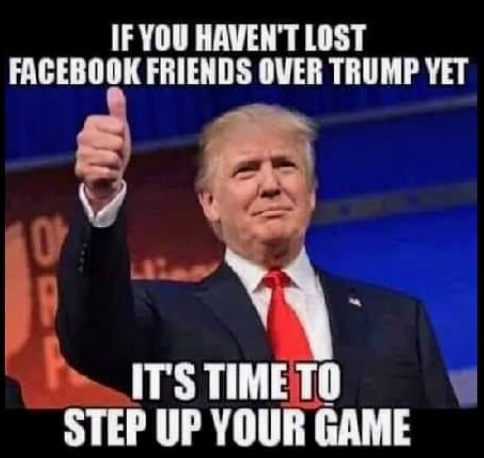
I saw this the other day, and I can't really stop thinking about it.

This could, of course, go both ways: a supporter or opponent of Trump could post this, but the old acquaintance who posted this is, I think, a fairly staunch Trump supporter.

I usually refrain from saying much of anything on social media these days except to share pictures of the family with other family members, but I couldn't let this one alone for some reason. Or rather, I chose not to.

"So now we're reveling in hyper-partisanship and its destructive effects on relationships?" I asked. A bit provocative? Unduly sarcastic? I tried to be neither.

The response: "You’re more than welcome to unfriend me if you can’t handle my opinions 😊."

I thought about that response for a while. Was she perhaps hoping I would do so? I don't know. But it made me realize that that's what the whole enterprise is about: politicize your feed to the point that people who have different political views just no longer think it's worth their time to wade into your stuff. In this case, she would probably see it as "getting rid of the snowflakes;" a liberal might define it as "getting rid of the wingnuts."

"Oh, there's no problem handling them," I replied. "Just leaves me shaking my head that politics defines (and then breaks) so much today."

9/11 Anniversary

It’s odd that today is the anniversary of the most significant and deadly terrorist attack in US history and I’ve heard almost nothing about it and I’ve read almost nothing about it in the press. Eighteen is a somewhat odd anniversary. Ten years, fifteen years, twenty years — these are significant because, well, I guess they’re half decades. But eighteen? Doesn’t have the same kind of significance — doesn’t feel that way, anyway.

It’s difficult to believe it’s been eighteen years. I’d just moved back to Poland, and for me, that’s what’s more difficult to believe: it’s been almost twenty years since I moved back to Poland after those two wonderful yet horrid years in Boston. That’s such a central period of my life, so significant, and I tend to organize my life around that as a milestone — when I had the courage to follow my inner voice, to do what seemed like the crazy yet right thing to do. I had a girlfriend; I was engaged; I had a great job making great money in computer programming; I lived in arguably the best city in the States, a city that feels small but has everything a big city has to offer. And I gave it all up and went back to Poland — what a crazy thing to do.

The attack itself — what a strange day. I remember coming back from school and trying to figure out what Pani Barnas was saying, something about a plane hitting a building, some kind of terrible accident. It was around four o’clock in the afternoon, so that made it 10 in the morning here. That would have been sometime between the two towers getting hit. I have a memory of watching the second plane hit the tower on live TV. Karol had stepped into the other room and I called him back: “Popacz,” I said, as if there were any other reason to call him back.

These kids were still four or five years from being born. What a thing to make you feel old. The kids I teach now weren’t even alive: I can’t ask, “Where were you when 9/11” happened. “Not even born yet,” they answer. That makes it like something that happened in, say, 1967 for me. I can’t think of anything significant that happened then. Was that when Israel was fighting one of its many wars of the 60s? Was that the Six Day War? Can’t remember.

Conspiracy Theories

From Anne Applebaum’s latest article in The Atlantic:

The emotional appeal of a conspiracy theory is in its simplicity. It explains away complex phenomena, accounts for chance and accidents, offers the believer the satisfying sense of having special, privileged access to the truth. But—once again—separating the appeal of conspiracy from the ways it affects the careers of those who promote it is very difficult. For those who become the one-party state’s gatekeepers, for those who repeat and promote the official conspiracy theories, acceptance of these simple explanations also brings another reward: power. (Source)

The conspiracy theories swirling around in Poland right now about who was responsible for the disaster at Smolensk includes thought Jews were somehow responsible, that the Russians did it, that the previous administration — kind of like the deep state conspiracy theory in the States — was responsible don’t at first appear similar to the conspiracy theories in the States like birtherism, Pizzagate, and the malicious omnipotence of George Soros. But Applebaum’s article points out some frightening similarities in the central commonality of all these conspiracy theories: the politicians who encourage and spread them do so as part of a mechanism to solidify power.

It’s been happening in Poland for some time now, and Applebaum’s article draws some parallels with how such thinking developed in Poland and led to an unquestioned leaning away from democracy. Both countries have experienced a demonization of the press, with our own president going so far as to call it the enemy of the people. A free press is only the enemy of someone with totalitarian aspirations, someone who looks at demagogues admiringly. Both countries are incredibly polarized with differing definitions even of the truth. Civil discussion has become all but impossible for many, and the article discusses how these political differences have divided and broken families. I’m sure it’s happened here in the States as well.

The article is worth a read.

Eulogy for the Ages

No matter what one thinks of him, Obama’s eulogy for John McCain was absolutely masterful. It is undoubtedly one of the best speeches I’ve heard in a long time.

What struck me most was this line: “We never doubted we were on the same team.” Such a difference from so many politicians and pundits who constantly demonize the other side.

Another standout passage:

So much of our politics, our public life, our public discourse can seem small and mean, and petty. Trafficking and bombast, and insult, and phony controversies, and manufactured outrage.

It’s a politics that pretends to be brave, and tough, but in fact is born of fear.

John called on us to be bigger than that — he called on us to better than that.

It’s a speech for the ages, sure to be included in anthologies of eulogies in the future.


1984 in 2018

Somehow or other, I’ve encountered in articles discussions of or quotes from George Orwell’s 1984 two or three times in as many days. “When was the last time I read that?” I asked myself, quick to answer: “The first time I read it, which was in ninth or tenth grade.” In other words, thirty or so years ago. So on the way home from school today, I dropped into the local branch of the Greenville County library system and picked up a copy of the novel.

It somehow seemed ironic that I borrowed a book about ultimate and total control of a society on the day when thousands of kids around the country protested the perceived lack of gun control in the States. I say “perceived” not because I’m a card-carrying member of the NRA — which I am not — or am any kind of staunch opponent to gun control laws but because many of the perceptions I’ve heard from the teens protesting seem to have missed the point. Many haven’t, but a few have.

For instance, I heard on the radio coming home the other day an interview with a young lady from Chicago who wanted all guns banned because she was “scared of guns.” Growing up in the inner city, she’d witnessed gun violence firsthand, and she and her mother had once held a young man as he died from a gunshot wound. She wanted laws that would make it all but impossible to get guns. I wonder if anyone pointed out the likelihood that the guns used in inner city violence are obtained illegally, and thus no amount of legislation will stop that from happening.

On the other hand, it seems that many of the kids had very logical ideas: increased background checks, better cooperation between law enforcement to prevent such things from happening, more money for school counselors and psychologist to help find those kids before they pop.

So I came home and in the evening, read a bit of the novel. Within a few pages, when Winston goes into the apartment across the hall to help the woman who lives there with her clogged drain, he leaves thinking about “the look of helpless fright on the woman’s greyish face” because of how children were behaving: they’d been pretending to be Thought Police arresting Winston, accusing him of collaboration with the enemy, declaring that they knew he was committing Thought Crimes on a regular basis.

With those children, he thought, that wretched woman must lead a life of terror. Another year, two years, and they would be watching her night and day for symptoms of unorthodoxy. Nearly all children nowadays were horrible. What was worst of all was that by means of such organizations as the Spies they were systematically turned into ungovernable little savages, and yet this produced in them no tendency whatever to rebel against the discipline of the Party. On the contrary, they adored the Party and everything connected with it. The songs, the processions, the banners, the hiking, the drilling with dummy rifles, the yelling of slogans, the worship of Big Brother—it was all a sort of glorious game to them. All their ferocity was turned outwards, against the enemies of the State, against foreigners, traitors, saboteurs, thought-criminals. It was almost normal for people over thirty to be frightened of their own children. And with good reason, for hardly a week passed in which The Times did not carry a paragraph describing how some eavesdropping little sneak—’child hero’ was the phrase generally used—had overheard some compromising remark and denounced its parents to the Thought Police.

I read that and thought of the parent who emailed me because he was afraid that his child had missed a test in my class due to skipping class for the protest. “No,” I assured him, “I thought about the potential for many kids being absent for some part of that class and planned accordingly.” He mentioned that he would have been disappointed if his daughter had missed the test because of choosing the protest over school work. In other words, he expected X of his daughter and could express disappointment and presumably some kind of consequence for her actions — the exact opposite of the reality in Orwell’s novel.

I read that and thought about how I can teach my children what to think and believe, and that I have the freedom to teach them something that counters the prevailing narrative of the time. There’s a certain wonder in that freedom, but when you see little kids on documentaries doing a Nazi salute and using the N-word freely, it’s hard not to wonder where the limits on that might logically be, and how we could enforce those limits, and whether we would even want to try. I think the answer is obviously “No,” but how do we counteract that as a society? Or do we counteract it? Is America so free that we can raise bigots? Isn’t that an Orwellian Thought Crime until someone acts upon it?

I read that and thought about people who homeschool their kids. Some who choose that route do so because they’re afraid something like this is already happening, that kids are being brainwashed in the schools, being turned into evolution-believing, homosexuality-accepting, socialist-leaning moral relativists who will end up rejecting all the parents have tried to instill in them. They see 1984 as virtually fulfilled prophecy.

I read that and thought about what it would have been like to live in the Soviet Union in the height of thought-control there, when people could be denounced for anything or nothing, when people were arrested simply to fill a quota. (I’m getting this from Solzhenitsyn’s Gulag Archipelago, which I read probably twenty years ago — might be rusty on the details.) In such a society, one did indeed have to be careful around one’s children.

So it’s been a day punctuated with thoughts of potential disasters and real disasters, of potential fears and real fears. But far from depressing me, these thoughts have just lingered at the edges here and there, which is perhaps a good thing and bad at the same time. On the one hand, we can’t live our lives consumed with such thoughts lest we become nihilists, and that’s no way to be a parent. On the other hand, a seeming complacency breeds — what? Stagnation? And yet — and yet.

The kids played; the Boy tried to build; the dog behaved; the Girl took out compost without a single complaint; the duration of the battery in K’s new phone is improving daily, assuaging her worries. So in the immediate scope of things, it was a great day. Would that it were for more people.

Family and Culture

It's a common worry among conservatives these days -- and I suppose all days, all times -- that what is going on in popular culture is more of a corrupting influence on our children than it is a positive influence. I've written about it several times, and I've acted on it several times as well. Certain cartoons have been prohibited from the Girl's viewing due to the behavior modeled, and I've more than once worried about what kinds of interactions go on at school on the playground and at the lunch table.

But these are small worries, I see now.

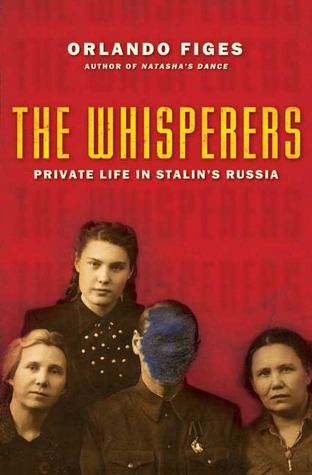
I'm currently reading The Whisperers: Private Life in Stalin's Russia by Orlando Figes -- the topic fairly succinctly described in that subtitle. The opening chapters deal with what life was like immediately after the 1917 October Revolution and the years immediately afterward. What strikes me is the double life everyone soon had to live. Because everyone at that time had grown up in the pre-revolutionary period, they still had a non-Bolshevik mindset. What if you didn't particularly agree with the Bolshevik principles? Could you have a mini-revolution in your family, raising your children to act one way and think another? Could you go against culture?

The simple answer is no. It was an enormous risk. What if your child accidentally blurts out in school something critical you said at the dinner table? Or worse, with the schools becoming the primary indoctrination mechanism for the children, what if your child drinks the Kool Aid and begins to see you as an anti-Soviet thought criminal? The book details accounts of both incidents occurring, so neither is wild speculation.

I think back to the uproar a few years ago about Obama's address to students. An acquaintance said, "I'm not letting Obama indoctrinate my child!" as if it could happen in one speech, some kind of magical brain washing that effectively changes a child in a few-minute address. I think of the email we received this week at school detailing the district's plan to let parents opt out of watching the inauguration: presumably some parents might have had the same fear about Trump. In both cases, such a naive view of what indoctrination means.

Trump and Obama

So it’s support Trump at all costs? Support him no matter what? One can’t be a conservative and criticize him?

The simple truth of the matter is that Trump has done so many things about which conservatives would have been absolutely livid had Obama done them that it leaves moderates like me scratching our heads, wondering where the moral steadfastness that Republicans so pride themselves on could have gone.

What if Obama had refused to release his tax returns? What if there were serious questions about Obama’s relationship with Russia? What if Obama, long before being president, had exhibited sexist, predatory behavior that had been recorded? What if Obama suggested that Fox News was fake news, the enemy of the American people? What if Obama had issued an executive order that the judiciary later restrained, and he’d begun attacking the credentials of the judge? What if Obama had made disparaging comments about the family of a slain soldier? What if Obama had lied again and again about the extent of his electoral victory? What if Obama had said that if one of his daughters wasn’t his daughter, he’d be dating her? What if Obama had refused to divest himself completely of business ventures that could create conflicts of interest when he’s president?

I mean, his lies about Putin are on video.

Any single one of these things, which range from trivial to cricitial, would have made Republicans livid had Obama done it. But to have done them all? “Impeachment” would have been on the lips of every Republican in the land. And yet these same conservatives are strangely okay with it when their side does it. What’s more, when conservatives do raise questions about it, they’re instantly labeled “traitor” and “rino.” There’s a word for that. And it troubles many of us to see it so brazenly on display.

Party Allegiance

There’s been a lot of talk in conservative circles about Republican party allegiance, with three incidents in particularly coming into play: the three Republican senators who scuttled Trumpcare, Lindsey Graham’s comments about who should support him and who shouldn’t, and Bob Corker and Tim Scott’s criticism of Trump’s handling of the attack in Charlottesville.

Most widely known, nationally anyway until Charlottesville, was Susan Collins’s, Lisa Murkowski’s and John McCain’s voting against the so-called skinny repeal bill that would roll back portions of Obamacare. They were ridiculed for their actions, called “Rinos” (Republican In Name Only), traitors, and worse. And yet why? Because they voted their conscience?

That’s exactly the action I want from my senators. I don’t want them to be mindlessly following some party platform and voting this way because it’s the establishment Republican way to vote. The same applies to Democrats.

I don’t vote Republican because I expect the office-holders always to vote Republican. I vote Republican because, by and large, many of the Republican positions resonate with my own positions. I’m more liberal on many social matters, though, and most of my views regarding education would still be considered left-leaning. But I vote Republican because that’s the way my conscience leans, and I would hope that Republican office-holders are the same.

However, the Republican party is not perfect, and I don’t expect it to be. And I expect office-holders to feel the same way. I don’t expect them to vote Republican for everything because everything Republican is far from perfect.

The alternative is simple: blind party allegiance. It means putting your thinking aside, putting your conscience aside, and going with whatever the party says. It is willfully surrendering your freedom to think for yourself. Blind party allegiance is unhealthy and dangerous: Blind party allegiance is the mentality of members of the Supreme Soviet and the Nazi party — our party is right no matter what! — and not of a well-functioning republic. I would add “like ours” to that last statement, but I don’t think it’s a particularly well-functioning republic right now.

Susan Collins, Republican PartyMany of those who call the three Republicans who voted against the skinny repeal RINOs and such likely don’t even know why they voted that way. Collins explained it thus:

In a statement after the final vote early Friday, Collins said that while she supported components of the final plan and that many Americans are suffering under Obamacare, she said Republican leaders punted on many difficult questions.

“We need to reconsider our approach,” she said. “The ACA is flawed and in portions of the country is near collapse. Rather than engaging in partisan exercises, Republicans and Democrats should work together to address these very serious problems.” (Source)

In other words, she was trying to make the process more republican (notice the lower-case “r”). She was, in my view, behaving like an adult who understands that we don’t always get everything we want, and that compromise and cooperation is always necessary. The other option is not democracy, but it does indeed begin with the same letter.

Lindsey Graham, Republican PartyThe second, less-well-known case is here in South Carolina, where Senator Lindsey Graham clarified his position on deporting DREAMers:
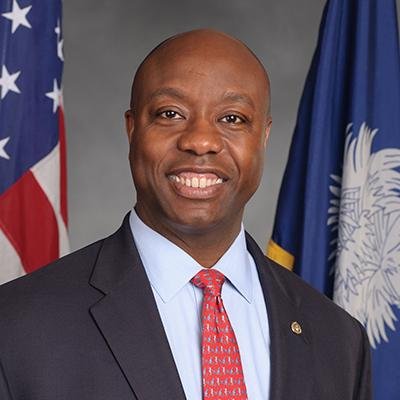
“I’m excited about giving you a chance to live the rest of your life” in America, Graham said of DREAMers.

“I embrace you, and I want you to succeed,” he said, speaking at a press conference with Sen. Richard Durbin (D-Ill.).

“To the people who object to this, I don’t want you to vote for me. Because, I cannot serve you well,” he said. (Source)

According to Fox News, this was “Senator Lindsey Graham (R-S.C.) [telling] voters who support deporting children covered under the DREAM Act that he didn’t want their vote.” It has the connotation, when framed like that, that Graham was saying, “Take your vote and shove it.” That’s the connotation I take from it. Yet look at how he himself framed it: “I don’t want you to vote for me, because I cannot serve you well.” He seems to be framing it in terms of talking frankly to voters: “If this is what you want, I’m not your best choice.” That seems to me highly ethical, surprisingly ethical for the stereotype of politicians misleading people to get votes. He could have said nothing and voted that way despite his earlier implications, by membership in the Republican party, that he would vote for laws that result in DREAMers getting deported and then vote differently. I admire the man for his frankness.

Some Republicans have suggested that this makes him a RINO, too, because he differs from the party line in this particular area. Some have even called him a traitor. For such Republicans, it’s the party line or nothing. Such politicians don’t have the right to call themselves Republican because these other Republicans disagree with their stance on one particular question.

Tim Scott, Republican PartyThe final and most recent example comes with Republican criticism of Trump’s handling of the Charlottesville attack and his suggestion that the counter-protesters were as much to blame as the white nationalist protesters. Bob Corker and Tim Scott both criticized Trump for his response, with the former suggesting that it illustrated that Trump “has not yet been able to demonstrate the stability nor some of the competence that he needs to demonstrate in order to be successful” and the latter saying that Trump’s “comments on Tuesday started erasing the comments that were strong. What we want to see from our president is clarity and moral authority” (Source).
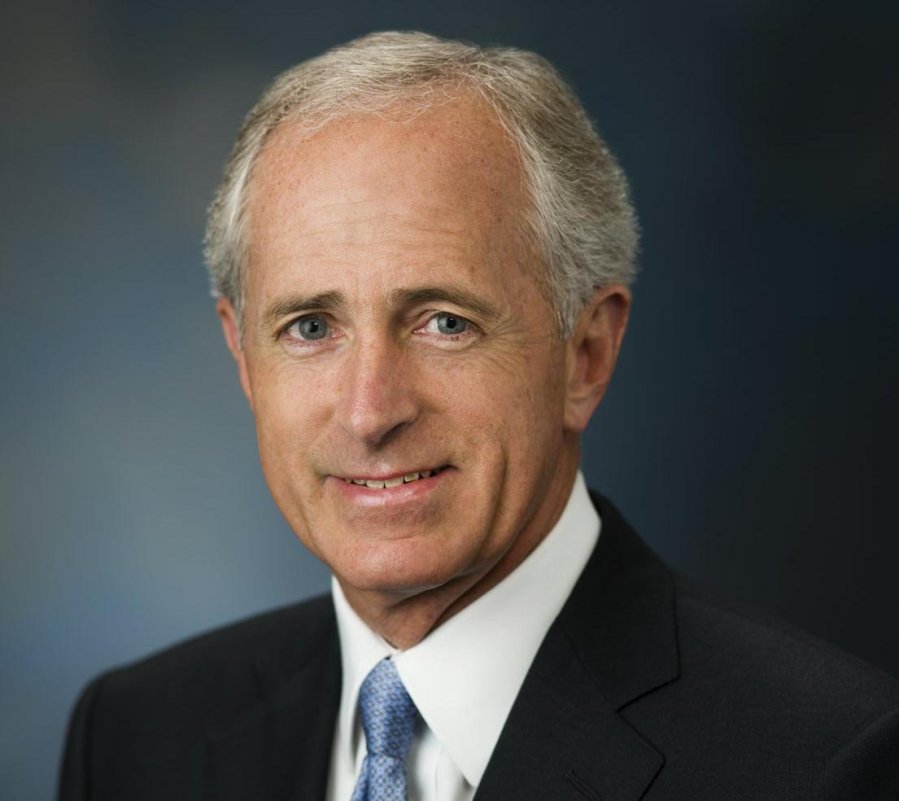
Bob Corker, Republican Party

These two Republican senators criticized, in specific and pointed terms, the behavior of a sitting Republican president, an act which for some is unthinkable. Out came the claims of being a Republican in name only, of being traitorous.

One wonders for such Republicans who are so keen on labeling others in their party just what Trump would have to do to earn their criticism. Trump, during the primary season, suggested that he could go out on Fifth Avenue and shoot someone and not lose any followers. Perhaps for some, he’s right.

Increasing Partisanship

In 2015, Real Clear Politics published an article about such partisanship called “Political Partisanship: In Three Stunning Charts.” The first is most telling.

It shows that in 1949, Republicans and Democrats couldn’t really expect their party-elected officials to vote solidly according to party lines. They leaned left and leaned right, it seems, but didn’t always vote the party line.

There are a lot of potential explanations for this. In 1949, the world was still recovering from the Second World War, which was a time of relative political unity in the States. We were united in fighting the Nazis and Imperial Japan: war always heightens the “us” side of the us/them divide. But look more closely: even in a period of division, like the 1960s, there was more cross-party voting than today.

The Effect of Technology

When did it really start to split? Look at 1979 — that’s when two separate peaks are clearly visible with an ever-widening gulf between them. It grew in the 1980s, then exploded in the 1990s. It corresponds fairly well with the rise of cable and the growth of the internet. The net allows people to tune into information sources that confirm their pre-existing biases.

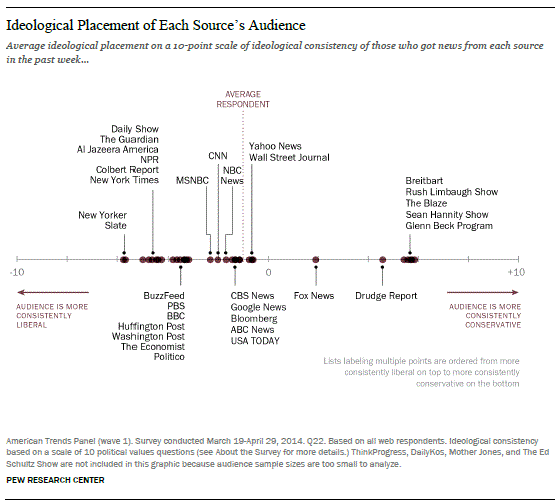
Pew Research did a survey about the “scale of ideological consistency” of viewers and their preferred information outlet:

Those who lean left can comfortably ignore opposing viewpoints if they wish; those who lean right can easily find a comparable echo chamber. Sites like left-leaning Daily Kos and right-leaning Breitbart promote hyper-partisanship: Commenters and writers alike regularly suggest that the other side is the other side because of stupidity and selfishness. People derogatorily call the other side “wingnuts” and “Demoncrats,” dehumanizing them and making it easier to discount the opposing view. These name-calling echo chambers we’ve created on the internet foster an us/them mentality that might be useful for defeating the Axis powers but are not particularly conducive to continuing an effective republic.

When you only hang around people with a right-leaning or left-leaning view that corresponds to your own, your idea of where “center” or “moderate” lie on the political spectrum gets skewed. The result is almost comical if the fate of our nation didn’t ultimately lie in the balance: Ask someone on the far left what a conservative newspaper is, and he might name the New York Times. Ask someone on the far right what a liberal newspaper is, and he’s likely to give the same response.

What’s even more troubling is the recent tendency, particularly in the right-wing camp, of assigning the dismissive label “fake news” to anything that disrupts their right-leaning bias. It allows the wholesale creation of “alternative facts,” as Kellyanne Conway labeled them, which might not be facts at all. In other words, this hyper-partisanship has descended to the level that people don’t even agree on what a fact is anymore.