Matching Tracksuits

fun in fours

chess

Day 33: Celebration and Smothered

Celebration

Today is Papa's birthday. Seventy-nine. I remember when he turned forty. I was only eight then, and because of various religious interpretations, we didn't actually celebrate birthdays, but I knew it was significant. He's stayed forty or fifty in my mind's eye ever since.
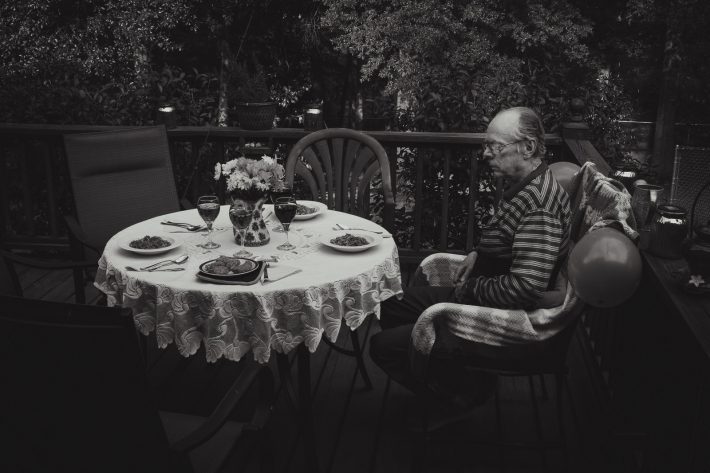
Sixty just seemed like an extension -- a little older, maybe a little slower, but basically the same. Seventy? Now nearly eighty.
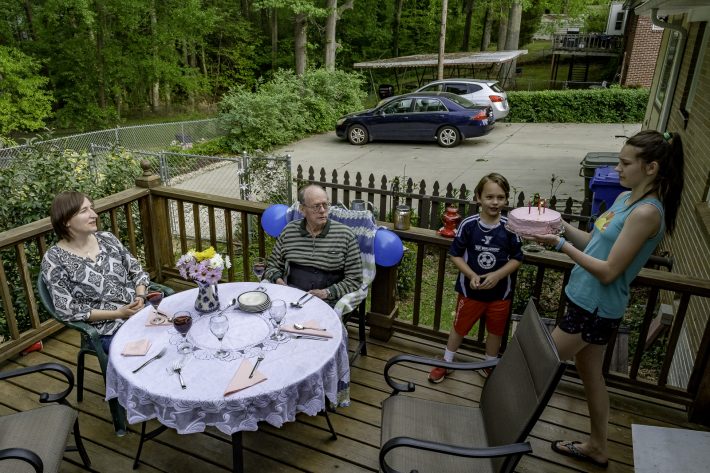
You know what's coming -- "Soon I'll find myself almost eighty, wondering where the time went..."

This was a bitter-sweet birthday, though: the first one without Nana. A few days ago, K asked him what he'd like for his birthday dinner. He thought about it for quite a while and asked if we had Nana's Chinese casserole recipe.

"Nope, but I'm sure we could find it."

When was the last time we had that? It must have been twenty-five to thirty years since I'd had that. Still, I knew what the recipe must look like: I found something seemingly identical and K tried to fix it while I was pulling up the mass of briars that had grown where our composter used to be. Neither one of us are experienced casserole makers, so it turned out a little, well, moist. But it tasted just like Papa and I remembered.

"Brings back some memories, doesn't it Pop?" I asked. (I don't know why, but I've taken to calling him Pop again. I used to call him that when I was in high school, but since L was born, he's just been Papa.)

"Sure does."

Smothered

I used to say I could play chess when I really couldn't. I could move the pieces around, sure, but I really had no deeper understanding of the game, and I didn't even really know some of the basics. Give me a rook and the king against the opponents lone king and I would have had no idea how to mate.

Even now, there's one mate I can only barely understand and probably couldn't pull off: mate with one knight, one bishop, and the king. Here's a good intro:

Yet there's one mate that's in the realm of mortals. "Probably the most popular checkmate pattern, the Smothered Mate often fascinates new chess players and retains its popularity even after one becomes proficient." So says Chess End Games, and that's no exaggeration. Every time I've taught someone the smothered mate pattern, I've gotten looks of amazed awe. The knight pops into a square and mates the king from a distance -- beautiful

But Chess End Games is selling it short. There are several ways to achieve a smothered mate in chess, but the most satisfying is with a queen sacrifice. Any win involving a queen sac (chess-speak there) is satisfying because, well, you're sacrificing your queen, the most powerful piece on the board -- until it isn't. Queen sac smothered mates are rare, though, because most decent players see it coming and resign beforehand.

In fact, I've only done it once -- last night.

It was a wild game, and I had taken a gamble that wasn't paying off. In fact, not just down an exchange but down an entire rook, I felt sure mate was coming. My opponent sacrificed the exchange, though, taking my knight on f4.
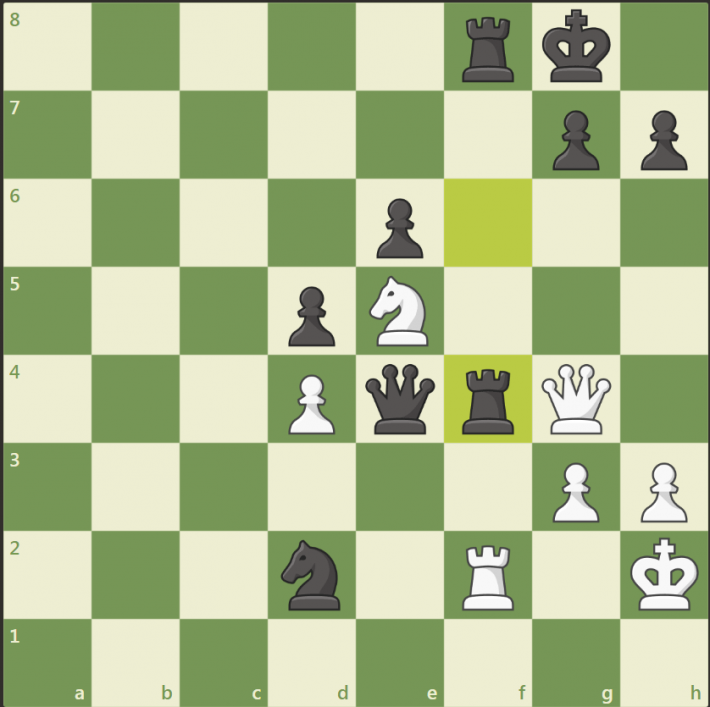
White to move

I took with the pawn thinking that I might be able to slide the rook over to g2 to put pressure on g7. It would have been easily mitigated with a pawn move g6, but it was the only thing I saw.
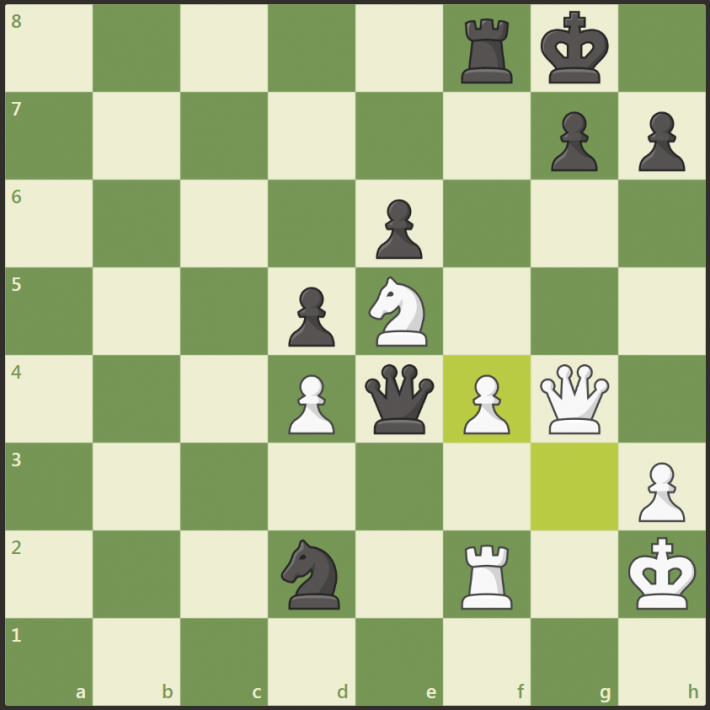
Black took my undefended d4 pawn, threatening my rook. My first instinct was to continue with my plan and move my rook to g2, but then I saw it: my queen and knight were perfectly placed, and with black's rook pair gone, it looked perfect.
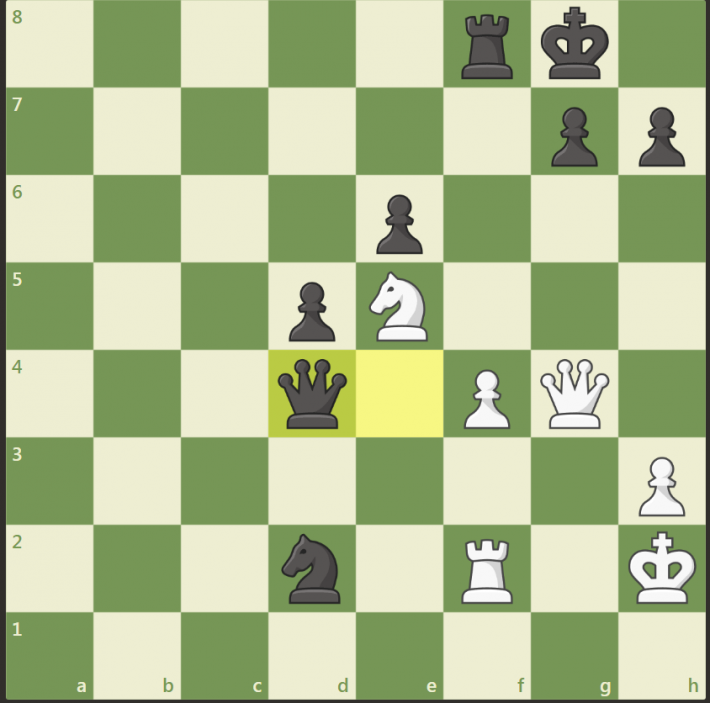
Queen took on e6 with check. From here, mate was almost inevitable. Almost. I thought black might resign or bock with his rook, which would have led to mate with black's king on h8 and white's queen on f8 or d8 after having taken the double-attacked rook.
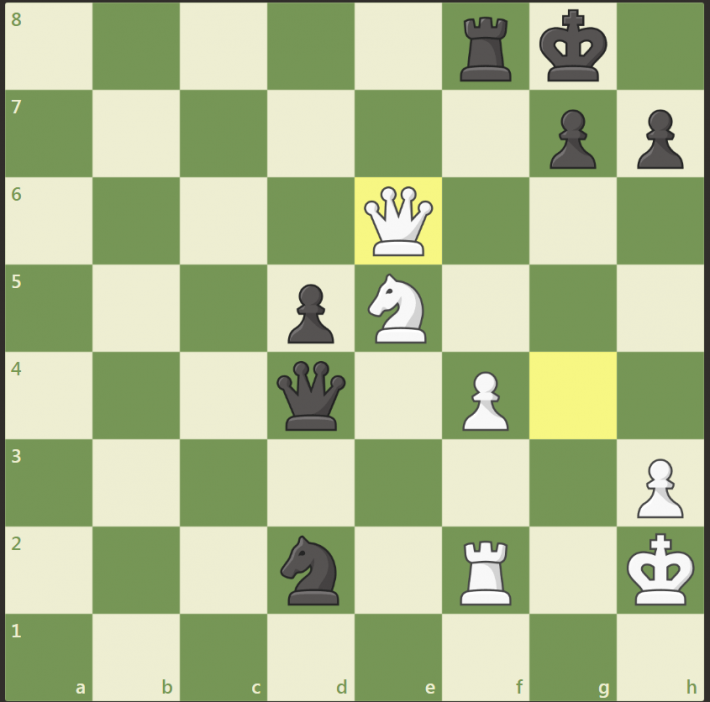
But black moved the king to h8 and my heart went pitter-patter. Could I get the smothered mate or would black resign?
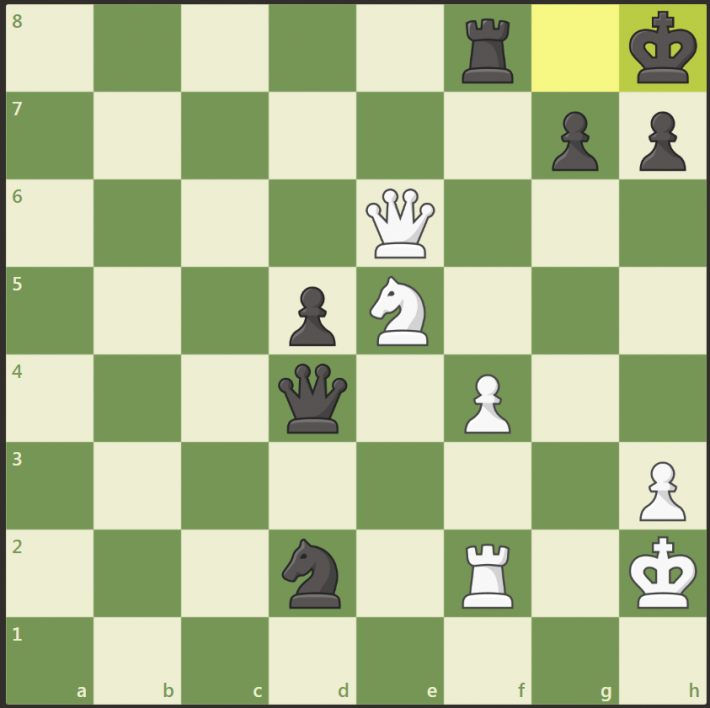
The first move was to pop the knight in for a check. If black took with the rook, I was in trouble: my next move would have been to take with the queen, then black's queen would deliver a nearly-fatal check on f2 and mate would have been coming. But black didn't see it.
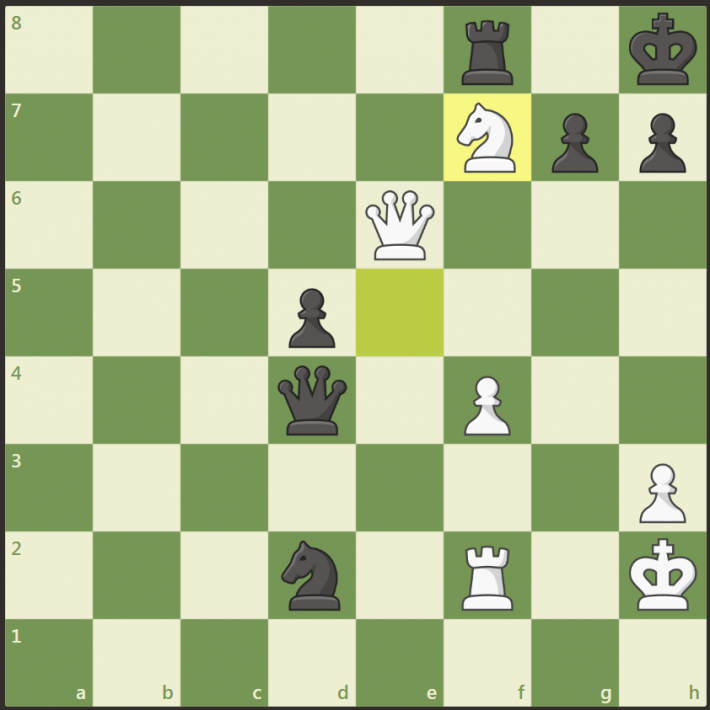
King to g8. "It's going to happen!" I thought.
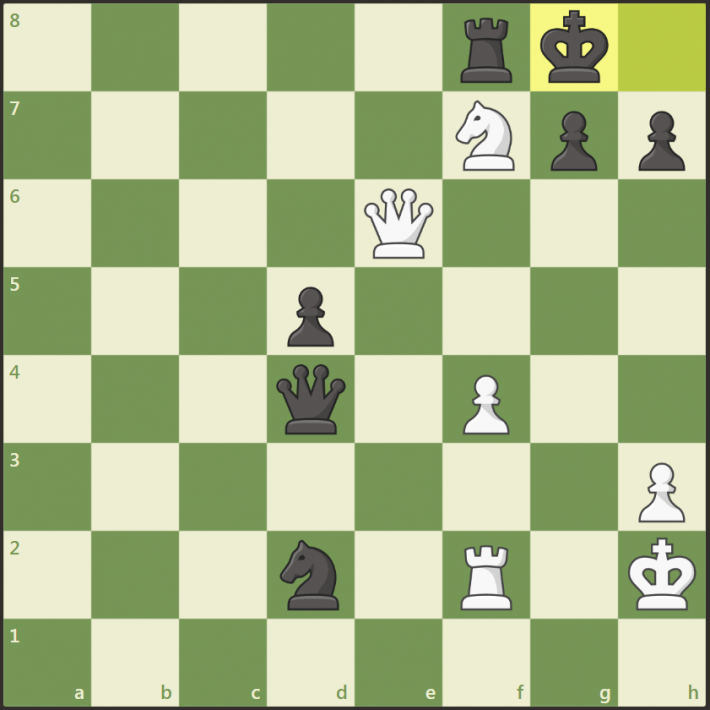
Knight to h6 gave a double check, so black cannot take the  knight or simply block the queen,
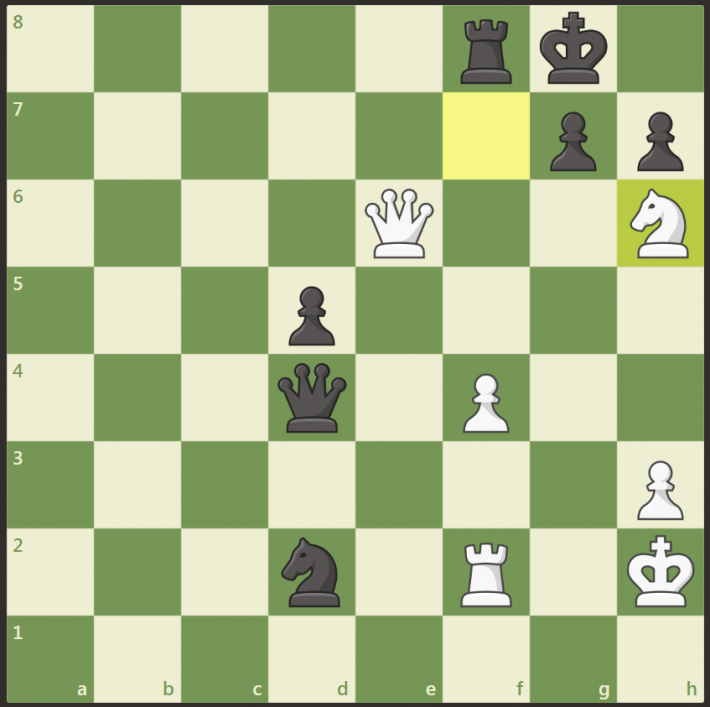
Black had to move back to h8 -- or resign. "Oh, please don't resign!
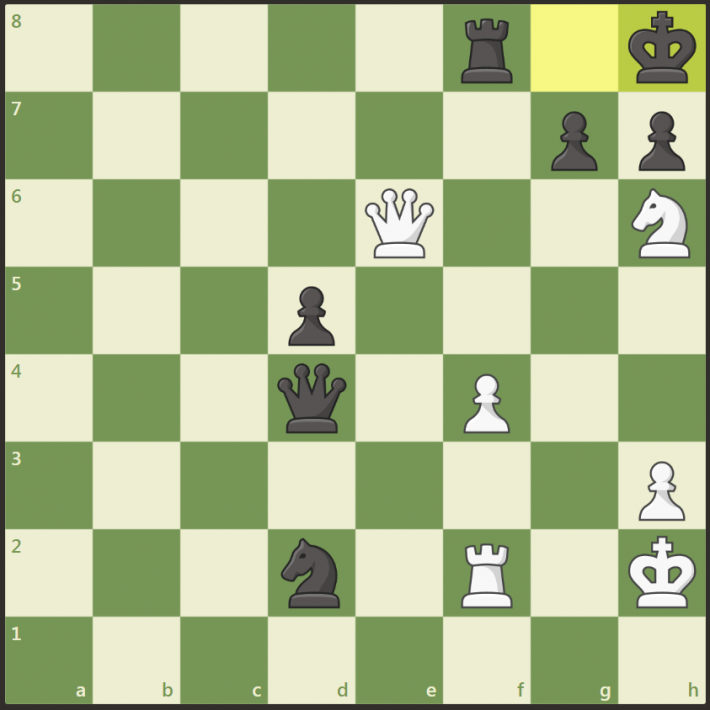
No resignation! Next came the most seemingly crazy move ever: the queen slid into g7 for check. Black could not take with the king because the knight defended the queen; black had to take with the rook.
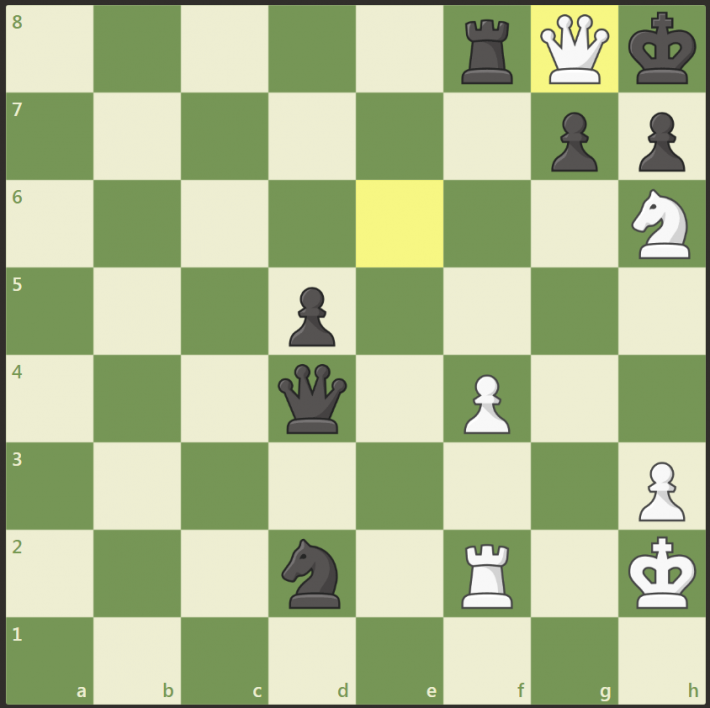
The only problem is, in doing so, black took away the king's only remaining flight square. The king was boxed in completely.
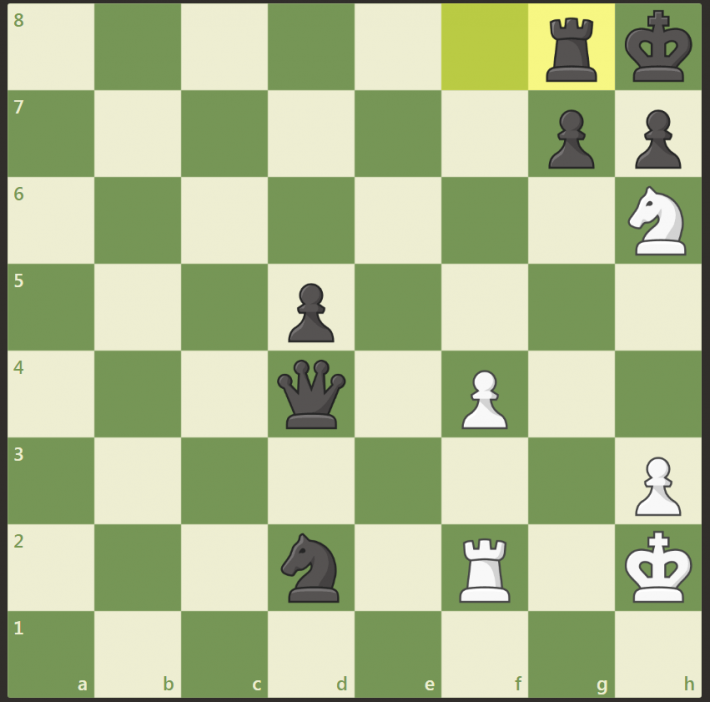
Knight to f7 for mate.
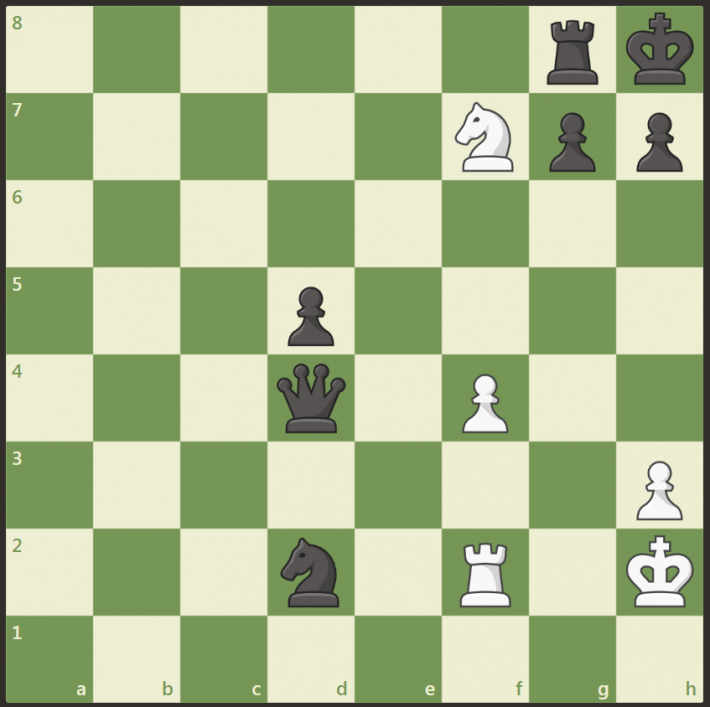
I can't remember the last time I smiled so after a simple chess game.

Monday Afternoon and Evening

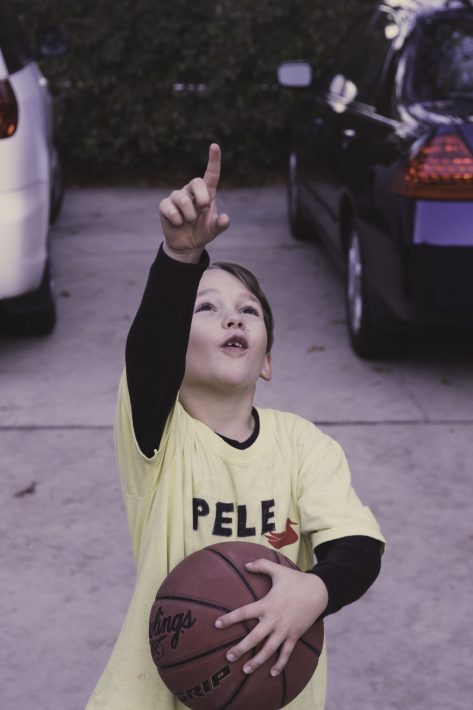
When I got home, E was ready for some basketball practice. We don’t have a basketball goal, and there’s really no place we could put one, so that limits our play to some degree. Fortunately, he’s happy just to practice the basics: chest passes, bounce passes, and a bit of dribbling.

Sometimes K and I worry about his self-confidence, but at times, it seems he has a bit too much. “I’m already very good at dribbling!” he proclaimed as he slapped at the basketball. Certainly, in comparison to what he was doing a couple of weeks ago, he’s much better. But has he, as he insists, almost mastered it? So I have this fine balance to walk with him: keep him realistic but not crush his spirit.

“You’re much better than you were,” I said, “but there’s always room for improvement.”

“Well, yeah,” he said, “of course there’s always room for improvement.”

We took a little break to look at a few unusual clouds. One, in particular, looked as if Bob Ross had taken one of his wide, fan brushes and made a few strokes of Titanium White on Phthalo Blue.

After dinner, we played with his Legos. He took the Millennium Falcon set that he’d completed Sunday, tore it apart, and built something new from it. It’s a common thing he does: follow the directions, build everything in the set, then never build it again. That’s what Legos are for, I suppose.

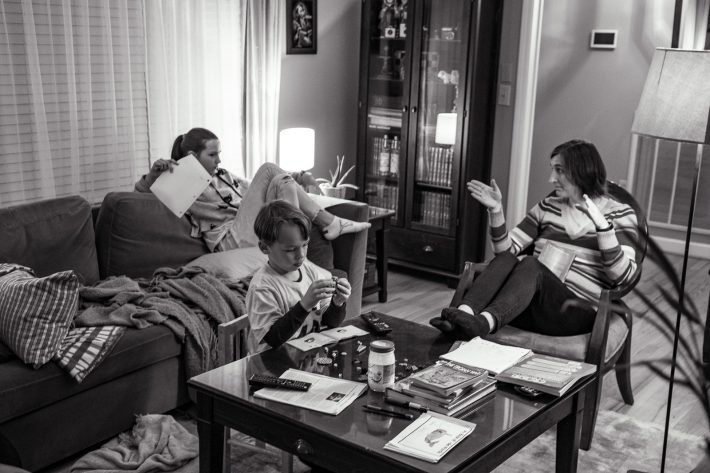
When it came time for E to work with K on a little homework, I went up to see what the Girl was doing.

“Watching YouTube.” That’s how she spends most of her screen time these days. She watches DIY’ers and slime makers, but more and more, she watches more mature things. Like how to do makeup. She’s growing up.

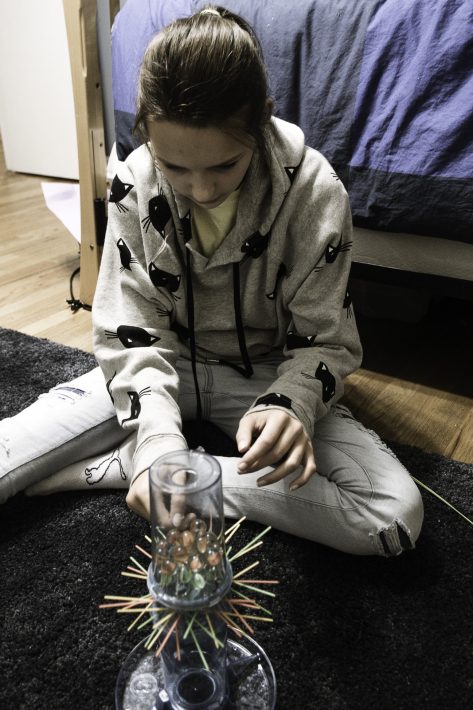
“Want to play a game?” I asked. “Your choice.” But it really wasn’t. There were a couple of games that I nixed immediately. One, because I don’t even understand how to play it. A board game that has ten plus pages of instructions is not something I have the patience to learn. The other, well, I don’t really understand it either. We settled on Kerplunk, a game that takes longer to set up than to play.

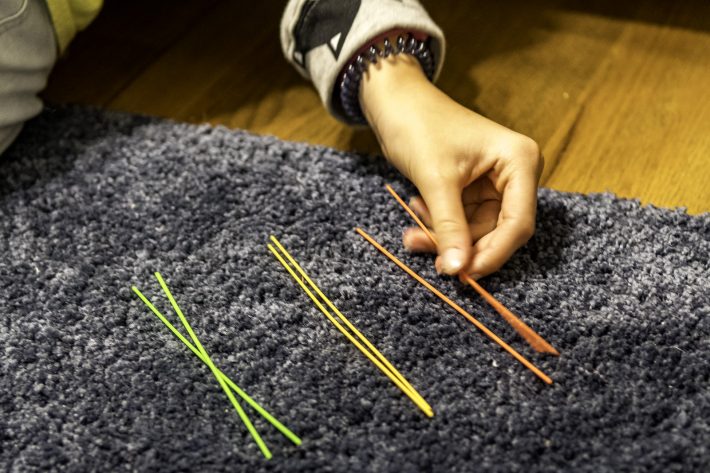
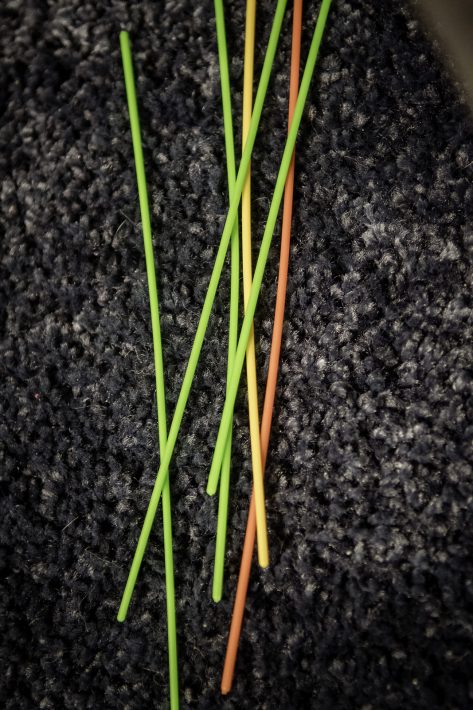
I noticed how different we are regarding our sense of organization. The Girl wanted to segregate all the straws by color and then put them in the cylinder layered by colors, and she wanted the marbles segregated to the same ends. As she pulled out straws, she placed them in color-sorted piles. I, on the other hand, wanted the straws placed as chaotically as possible, and my pulled straws — just tossed in a pile.

After she beat me twice, I said, “Well, that’s fine. But you still won’t get me in chess.”

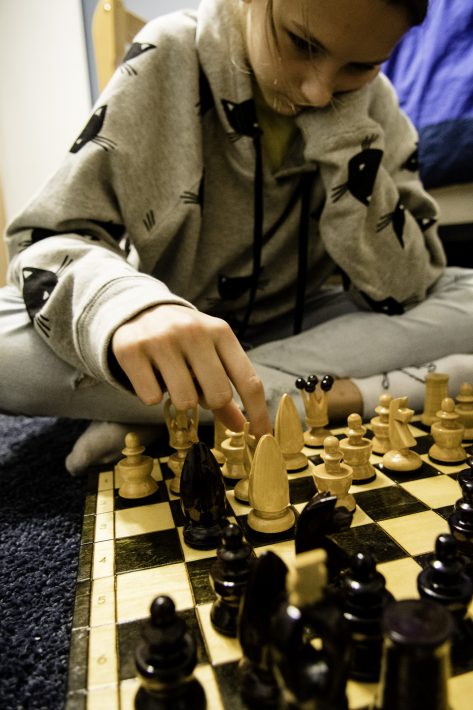
“Yes, I can beat you!” she cried and headed downstairs to get the chess set. I beat her, but she has improved so much that it’s difficult to believe. Her development followed tried-and-true principles (which is not to say “theoretical principles”–we haven’t talked about openings themselves, only the idea of getting out your minor pieces, castling, and connecting your rooks as basic opening development), and she saw clearly several threats a couple of moves away. As the game concluded, I showed her what backline mate threats are, how to anticipate them, and how to avoid them.

A perfect evening, in other words.

Fun and Responsibilities

Chess in Spytkowice

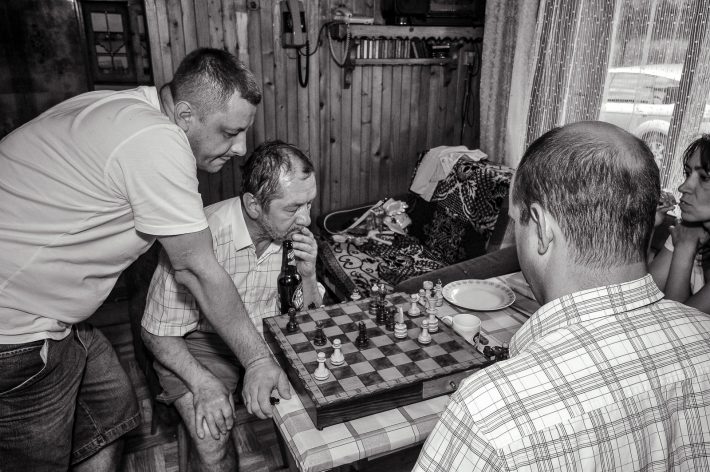
M is K's sister's-in-law father, and he's a keen chess player. I first played in him Krakow, at their apartment, in 2003 or so. We played one game, which lasted probably an hour and a half and went to roughly 40 moves, I'd guess. I knew I'd won with about 15 moves to go: he'd underestimated the queen-side attack I'd slowly been building.

Years later, when we went to Syptkowice to visit with them at their summer house, we'd always play. Since I'd won that first game, my ego was soothed, and I took more chances. In this particular game, those chances didn't work out for me.

Tempers, Tacos, Chess, and a Church

A day of contrasts. At school, the kids in eighth-grade English as working on performances of small excerpts from The Diary of Anne Frank, the play based on Anne's diary. Most of the groups are doing great: they work well together; they take criticism from each other well since they know part of their grade comes from how well they're performing as a group; they seem to enjoy the challenge. Most of them. One group, not so much. The group just isn't getting along. One girl -- we'll call her Alicia -- has a temper that could be measured in nanometers, and she has to express her thought when she finds herself annoyed, which is frequently. Another girl -- we'll call her Susan -- just doesn't care, and she doesn't care that other people might care, and she doesn't care that her apathy affects them. And she has a temper as well. One boy in the group likes to provoke anyone and everyone he can. And finally, a third girl has made a big turn-around this year in my class and has gone from being nasty to being a fairly well behaved, decent working young lady, but one who doesn't like it when things don't go her way. So while all other groups were developing their ideas, rehearsing their lines, planning who would bring what props, this group broke into fits of frustration and argument literally every three or four minutes.

How can you teach kids any subject when first they need to be taught how to control their temper, how to control their tongue, how to control their sense of self-injury?

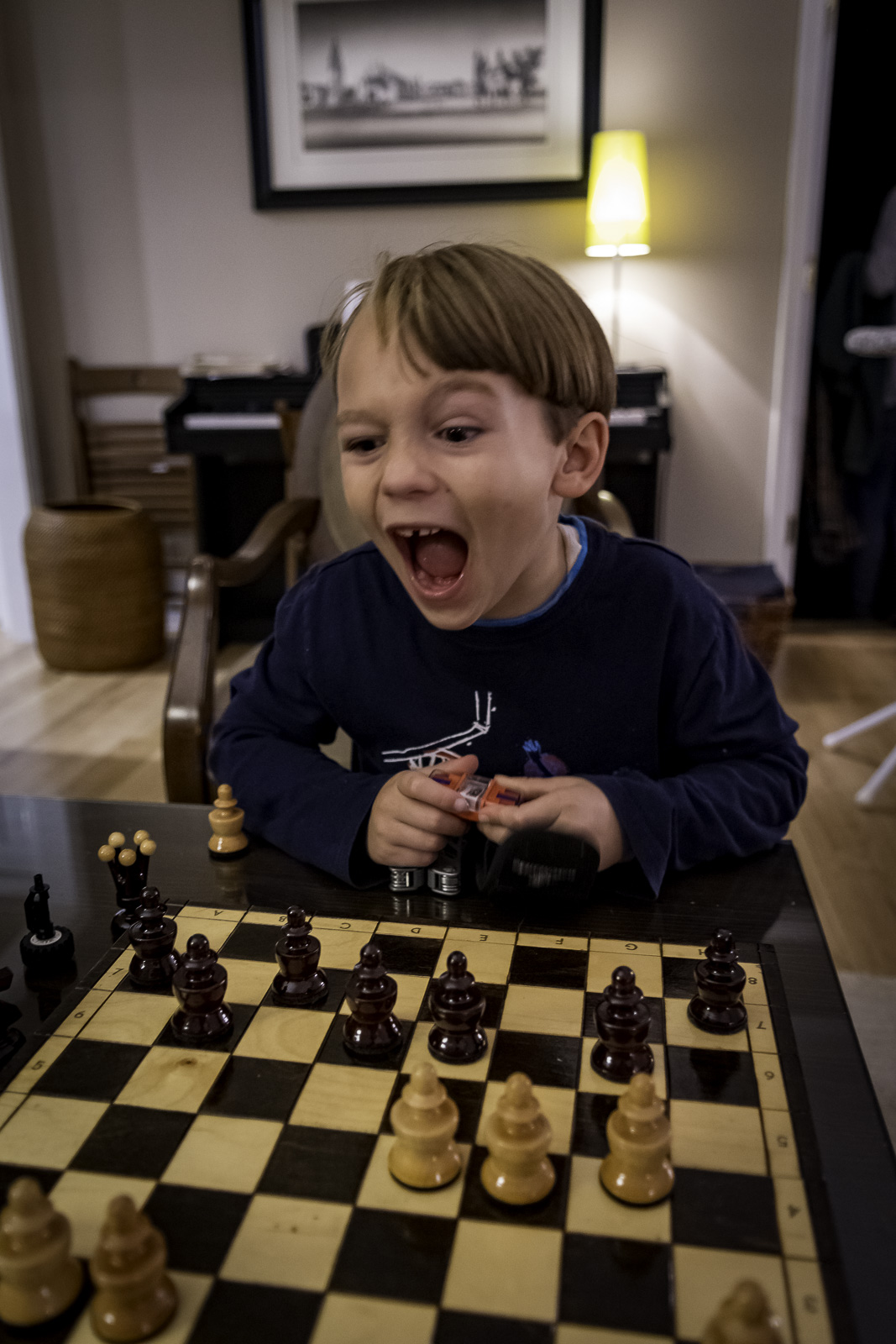
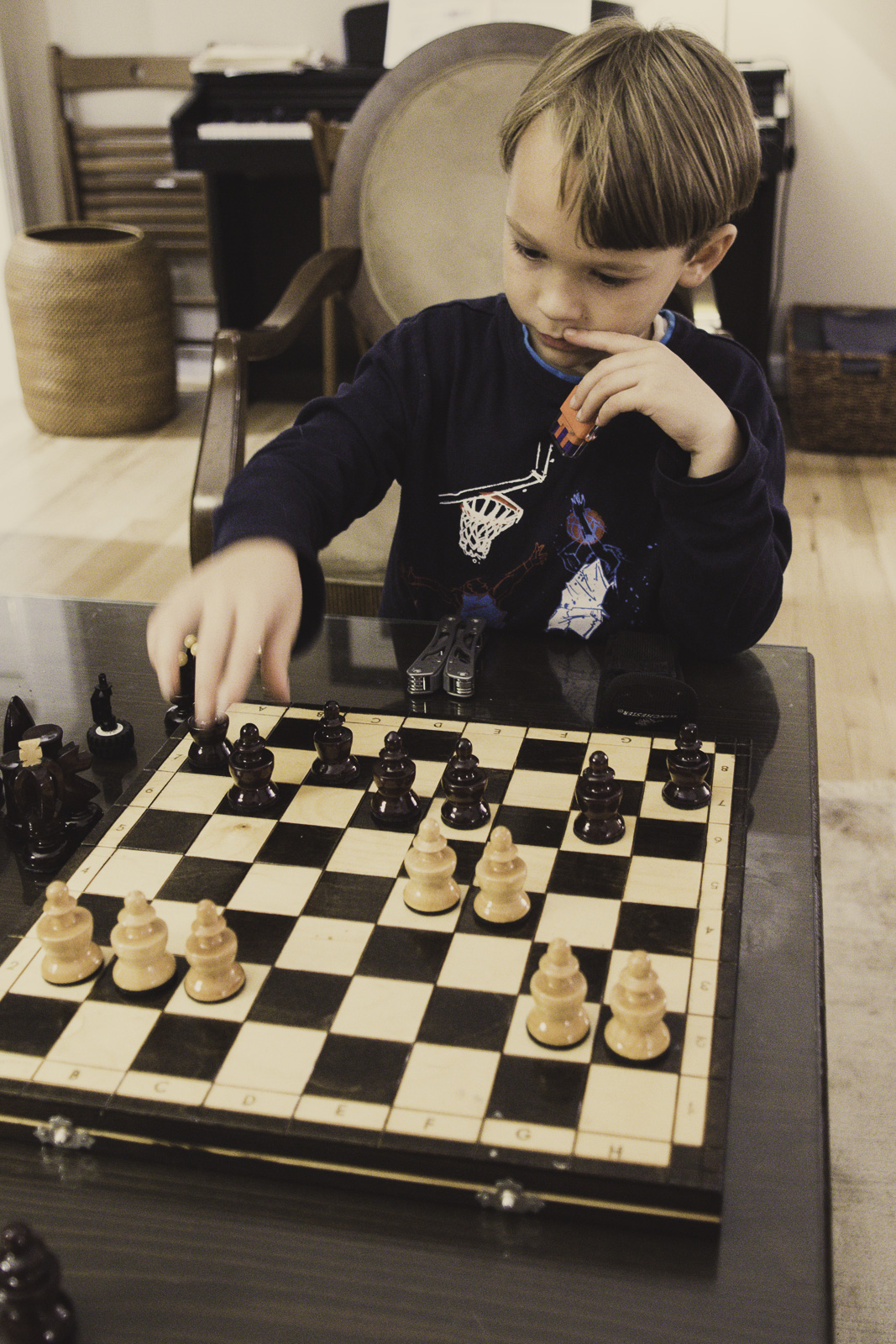
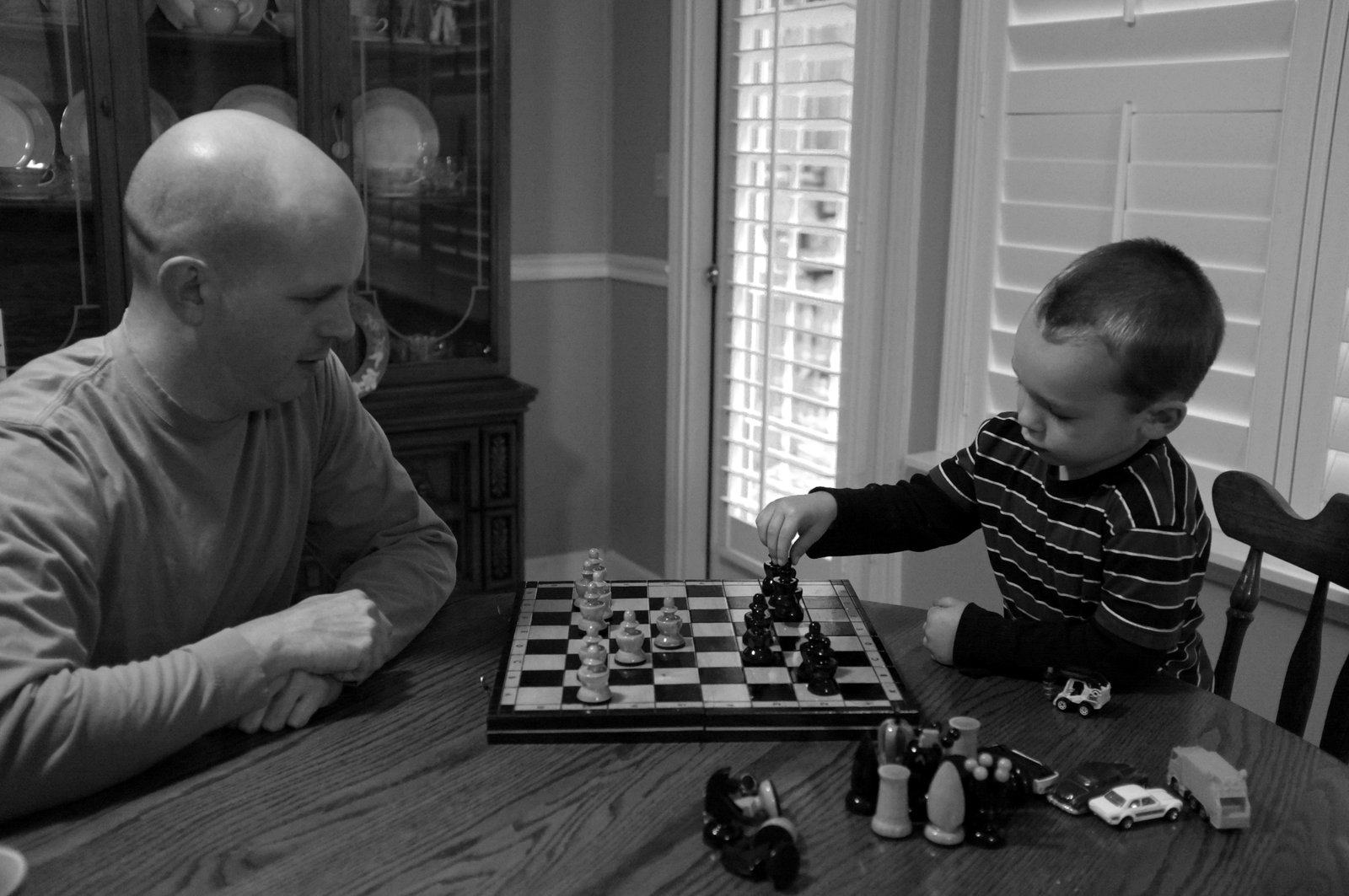
At home, the Boy and I initiated what we're going to try to make into a daily activity: a bit of chess together. He knows how to move the pawns fairly well now. He knows the basics of the rooks. Next, we'll introduce bishops, the king, the queen, and finish up with the tricky knights.

He's learning to pile up attackers and count defenders to determine if he can take a piece or not; he's starting to think offensively and defensively at the same time; he's eager to learn more -- all good signs. His mind is growing. His body, too -- faster, in fact.

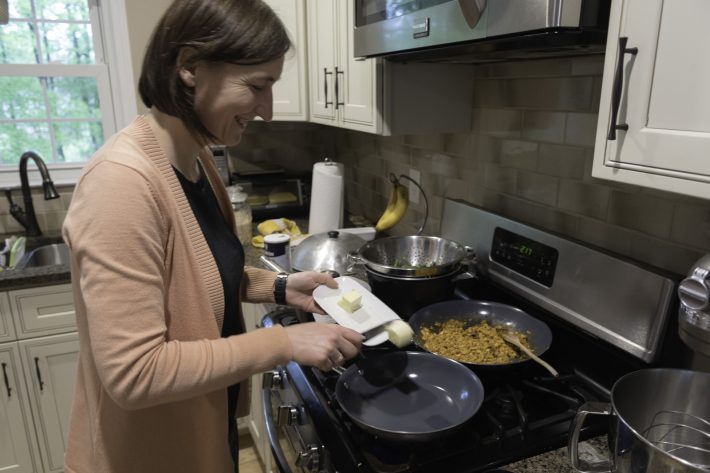
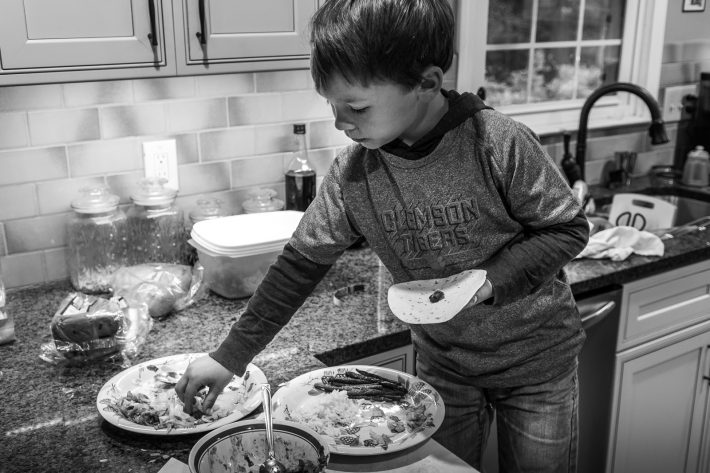
Tonight was taco knight (see what I did there?), and the Boy loves Mexican food. We have a little Mexican restaurant down the street where the two of us have eaten dinner when the girls are out on their own, and he's always eager for more.

Tonight, he skipped the beans and the rice and ate not one, not two, but three tacos. Half the fun for him is actually making the taco.

The calm and the joy of chess followed by tacos seemed so jarring juxtaposed with the chaos my one group of students was experiencing. Those who were causing the issues -- what kind of jarring, chaotic home life might they have? It doesn't seem that people who would go home to some time with their family and a bit of comfort food would have that much difficulty keeping themselves in check because it would have been modeled for them and perhaps taught explicitly.

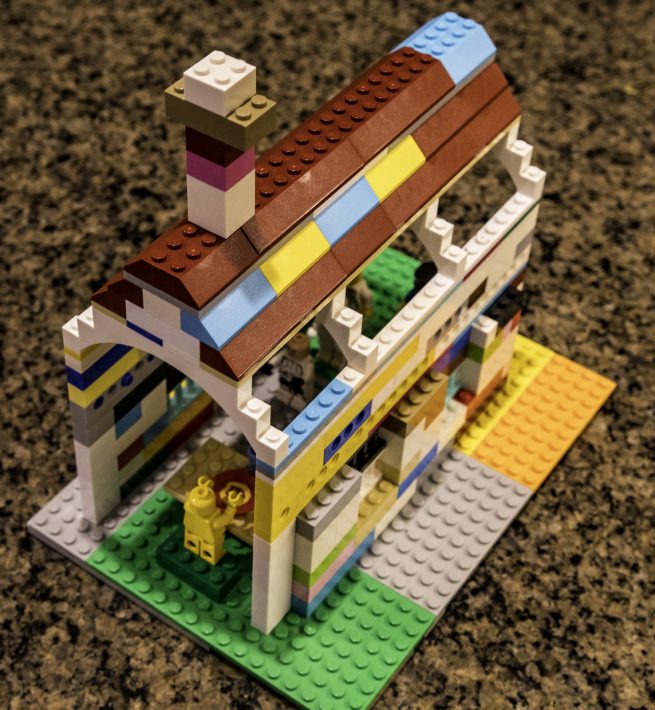
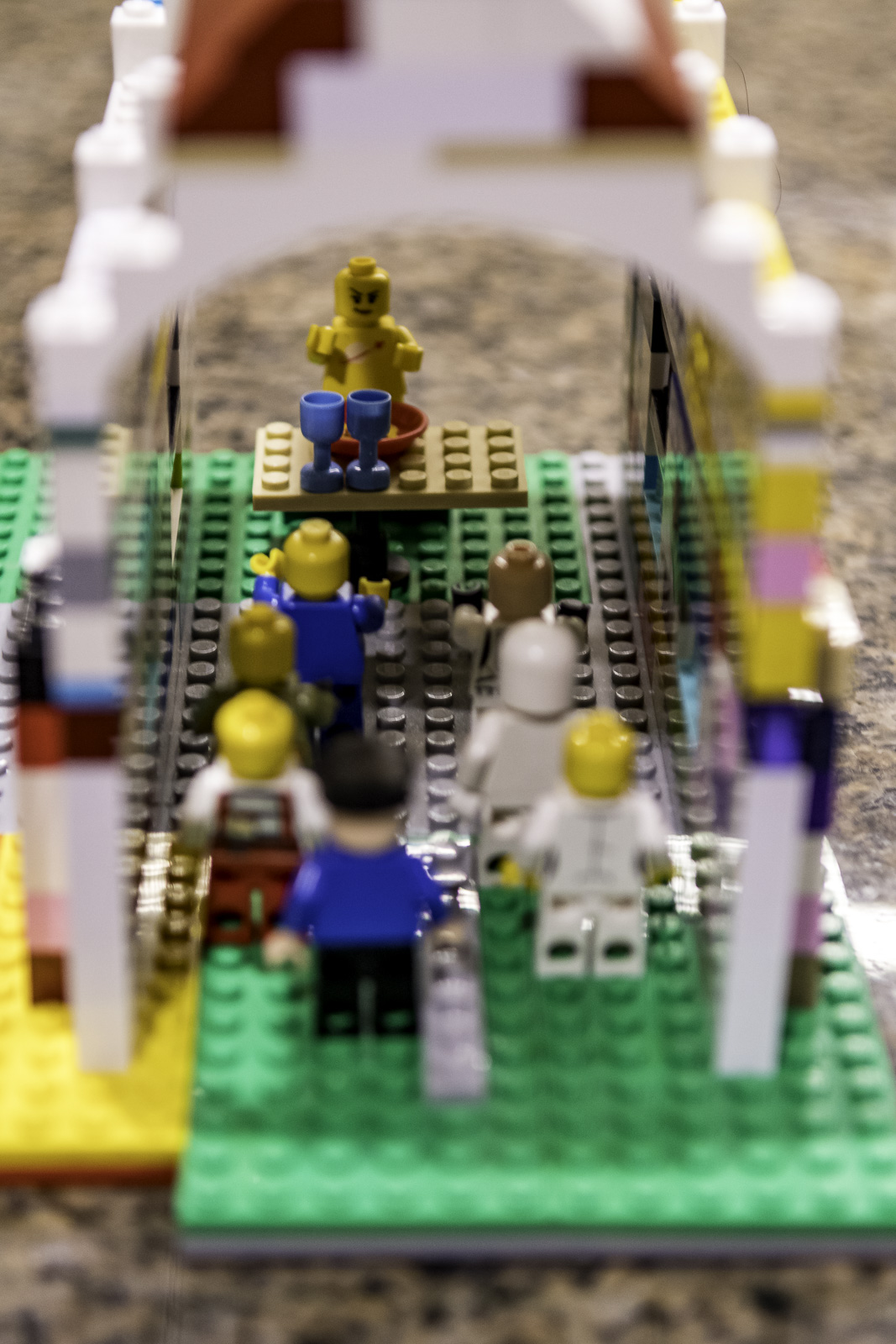
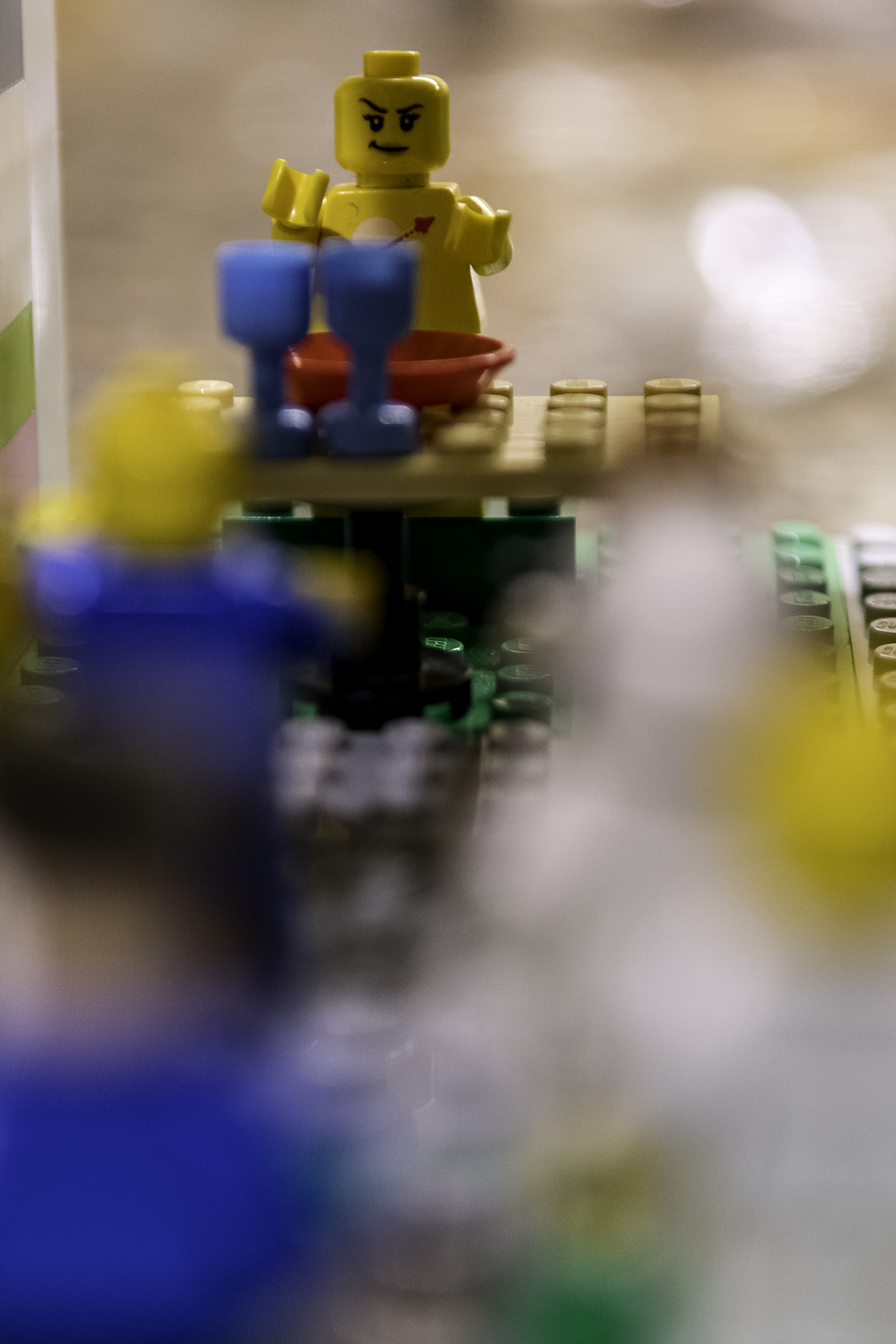
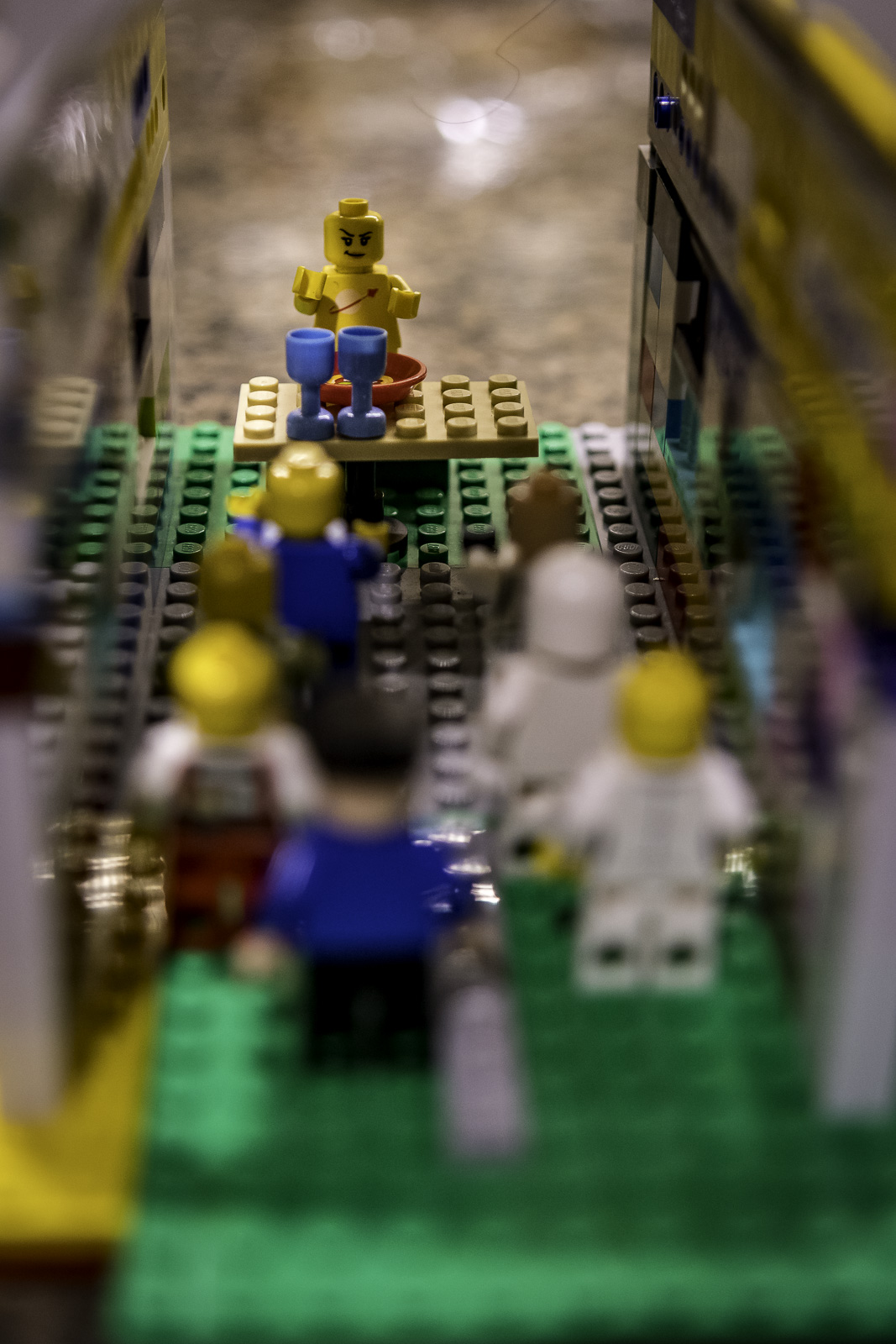
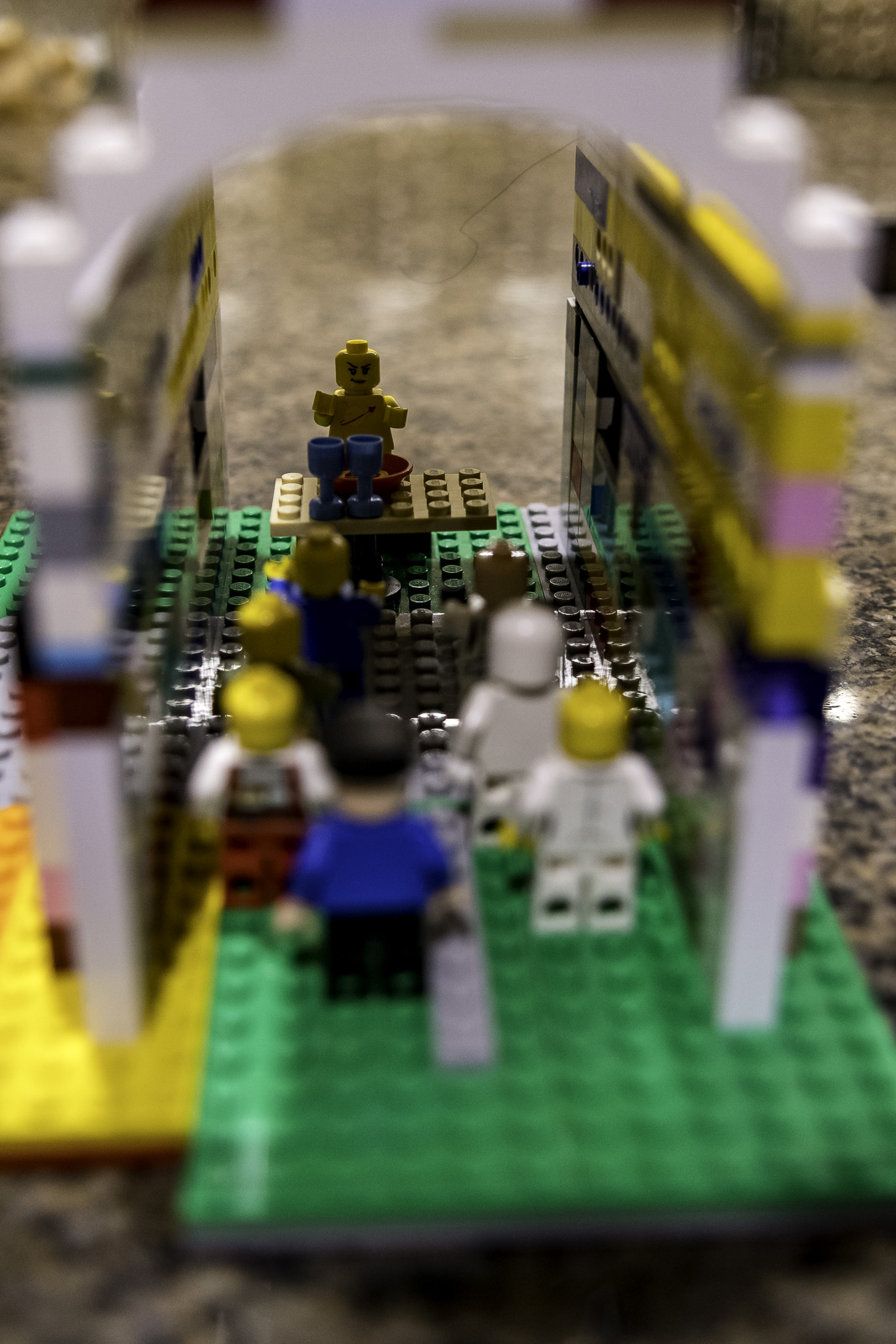
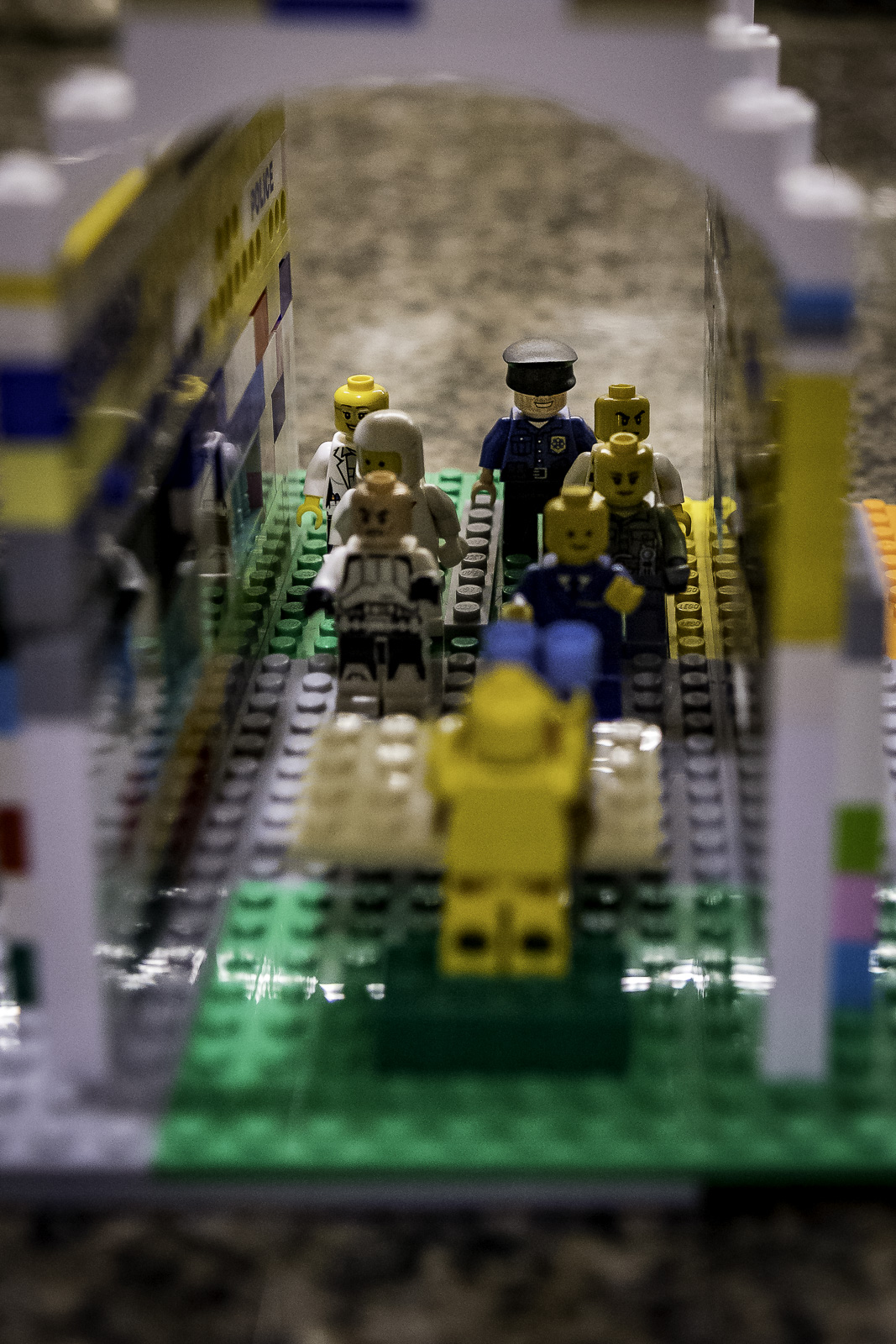
In the evening, when the girls have gone to gymnastics and shopping, the Boy and I decided to play with Legos, and we decided we needed to make something we'd never made before. We decided on a church.

As I was building the roof, the Boy declared that he would start working on things for the inside. After a few minutes, he showed me something he'd made.

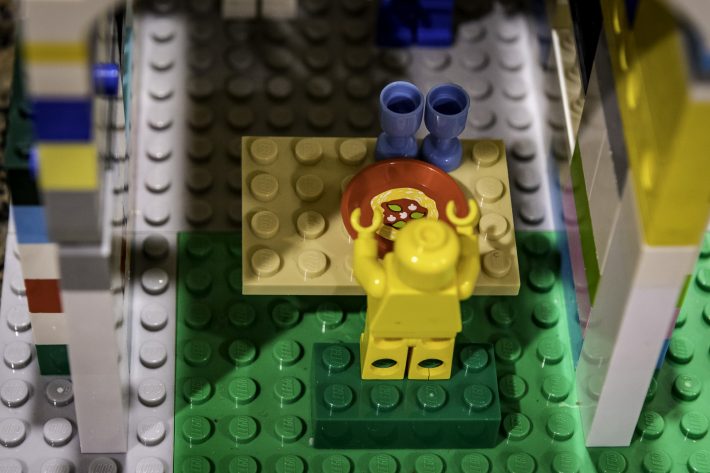
"It's that table, where they do everything," he explained.

"The altar?"

"Yeah."

And he made it complete with chalices and a paten.

Chess

1-DSCF7335

Introduction to Chess

The first steps usually happen simultaneously: learn the pieces and the layout of the board. The next step: learning how individual pieces move. L's got two of the three done, and she's started on the third, with the most basic: the pawns.

(I might add that L has taken the initiative entirely on this. I'm not some freakish dad pushing his own obsession on his child.)

Odd Surfing

Nothing special -- just an odd little chain of clicks...

I watched some of Searching for Bobby Fischer last night. It's the story of Josh Waitzkin, a child chess prodigy who still plays chess. I know his several of his games well because a chess program I have include several of his self-annotated games.

In the movie, Josh's foil is child prodigy Jonathan Poe. In real life, the boy's name was Jeff Sarwer.

Jeff no longer plays chess. But he has a little on his web site about it, specifically the games against Waitzkin he played twenty years ago. He writes,

I found some old scoresheets of games I played in the 80's. There are games from the World Youth Championships, New York Open, and for kicks the only two tournament games I played against Josh Waitskin. The first game I won, and in the second I blew a winning position and a draw occured [sic] that I never realized would become chess folklore. (The book and film "Searching for Bobby Fischer). In short, I was 7, he was 9, and I quickly forgot about the draw and won the world-10 championships 2 months later.You won't find many tournament games of mine, but the truth is that I never played in too many tournaments -- I was always happier playing speed chess in the park or in some random late night cafe or something

Truth is, Sarwer didn't just stop playing chess because he realized he preferred speed chess in the park to tournaments. The truth is more tragic.

Anyway, the subtitle of Jeff's web site is "citizen of the world" and he has a little interactive map that shows all the places he's been/lived. "Wonder if he's been" -- oh, you know where I checked.

Turns out he's currently living there, I think.