Matching Tracksuits

fun in fours

around the house

Working in the Backyard

Those Leyland Cypresses have really been a blessing and a curse. On the one hand, they provided a bit of privacy. On the other hand, they were a terrible nuisance to trim, and they were very very susceptible to disease and pests.

The last few months, though, one has given way to some kind of illness. I don't know what it is. I don't really care -- it's not a battle I was willing to fight. I knew I could never win that battle, so K and I decided to take down the entire tree. And the other two.

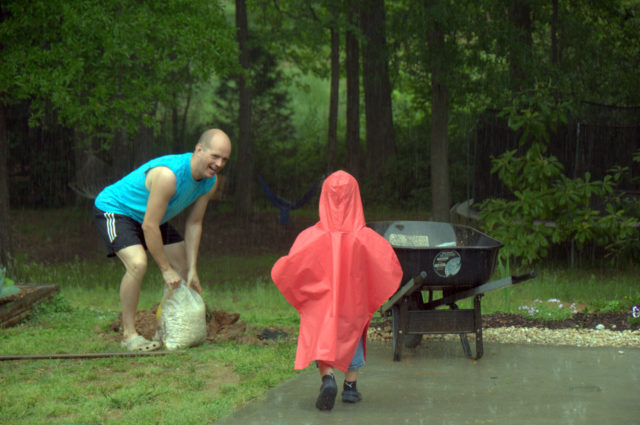
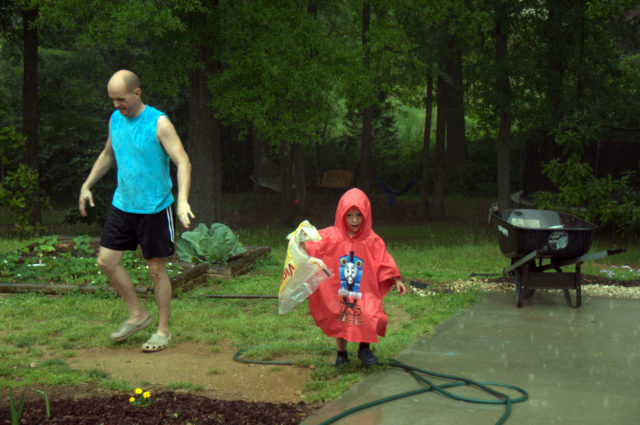
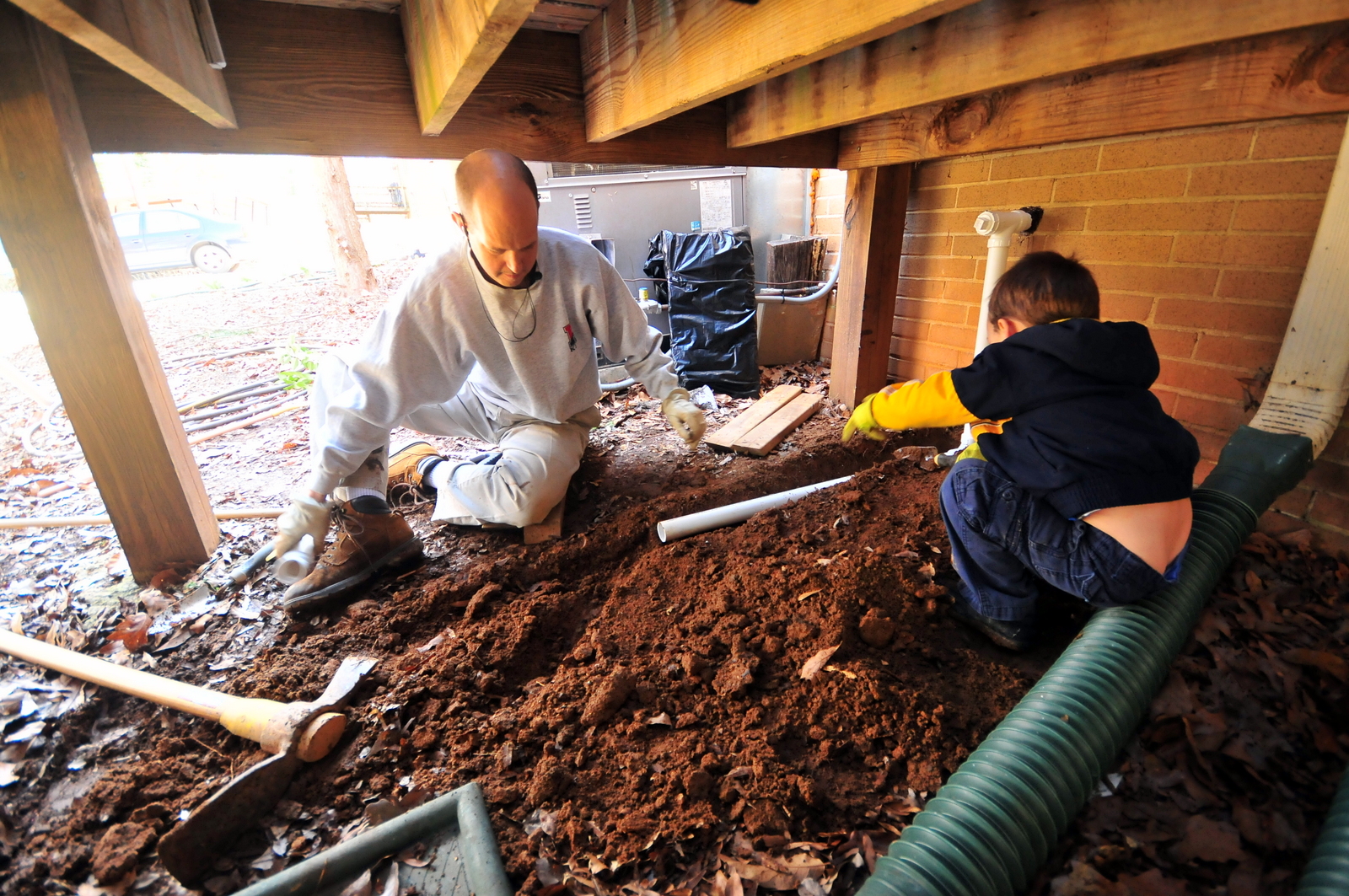
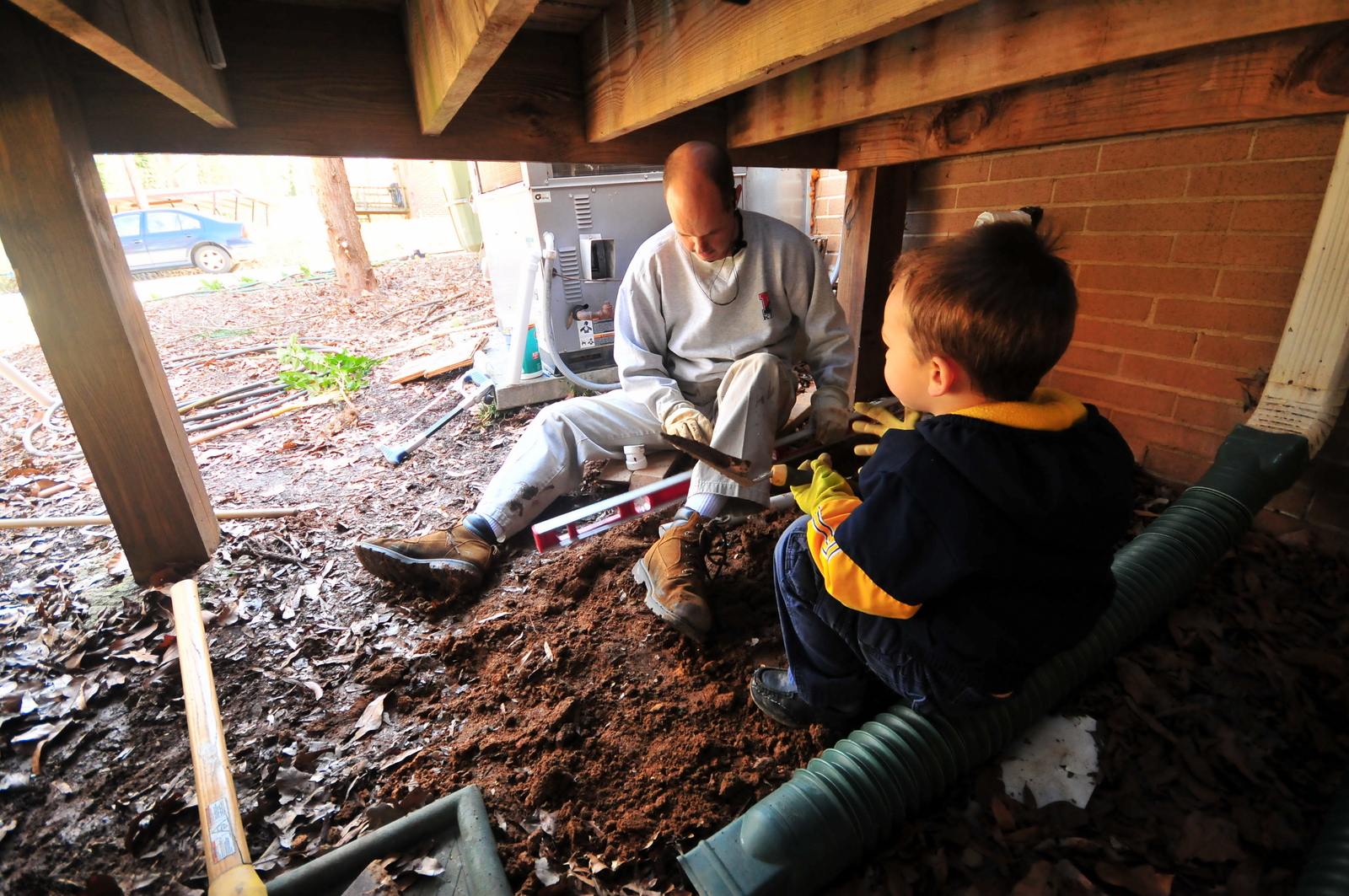
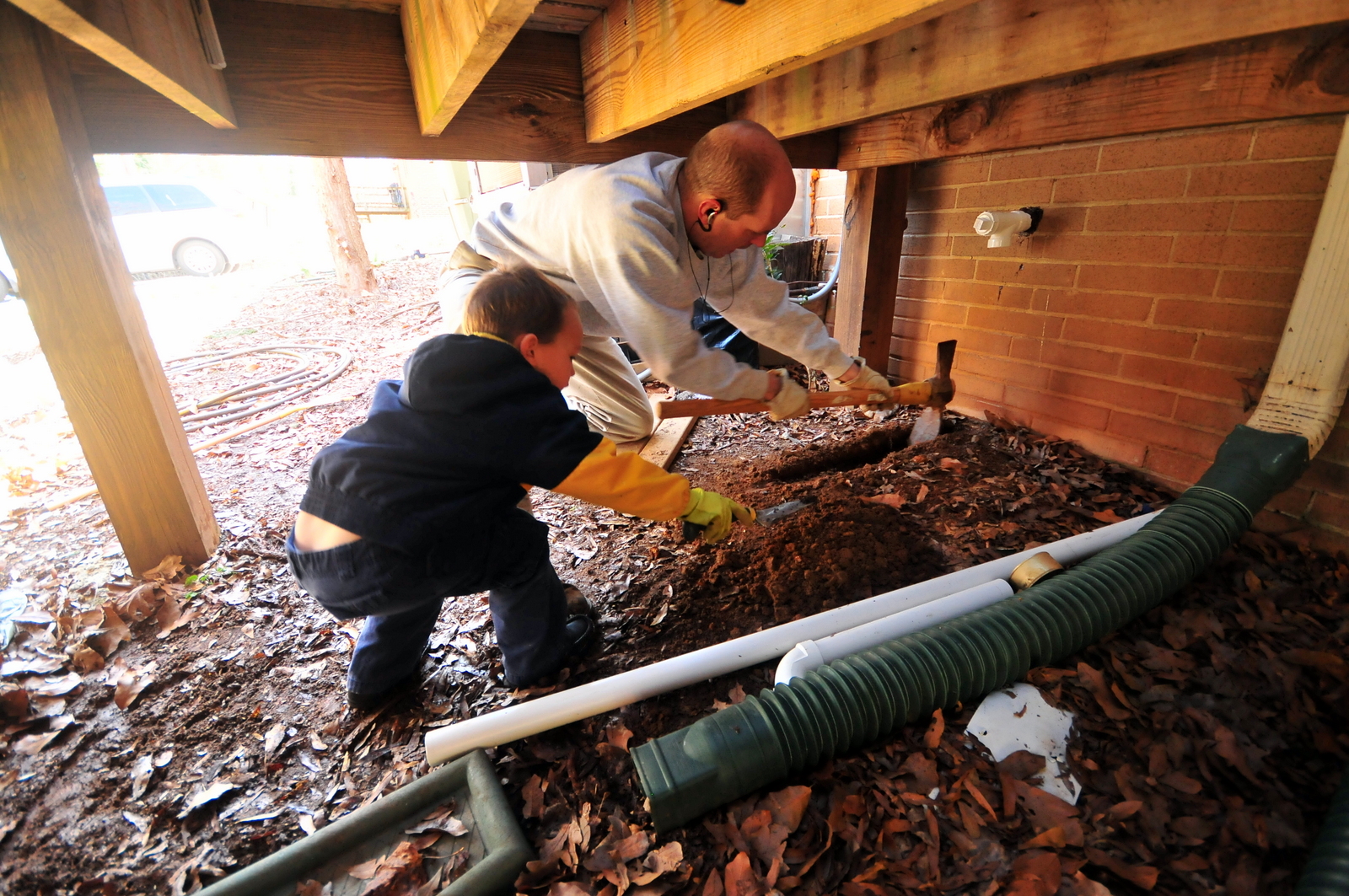
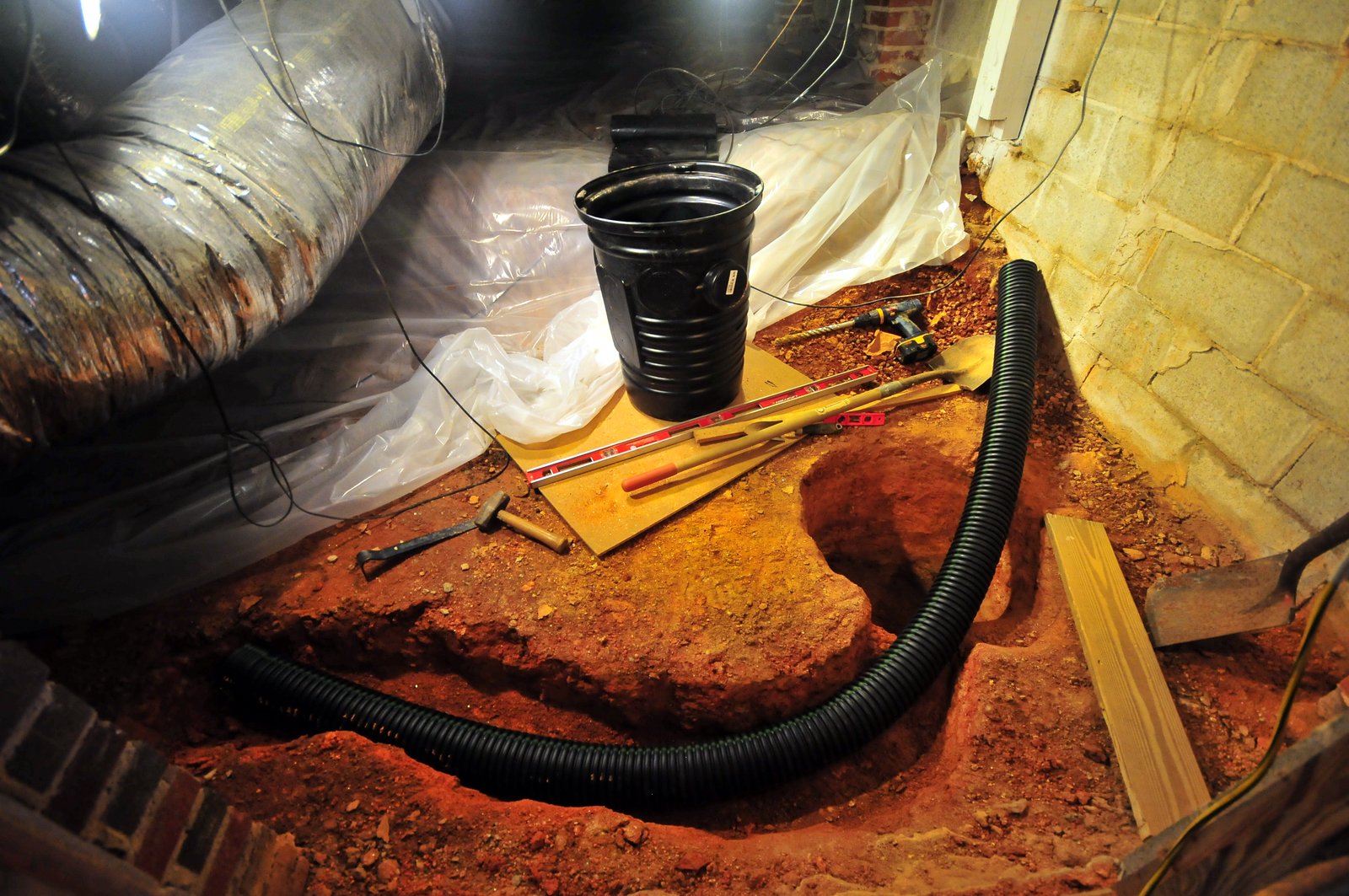
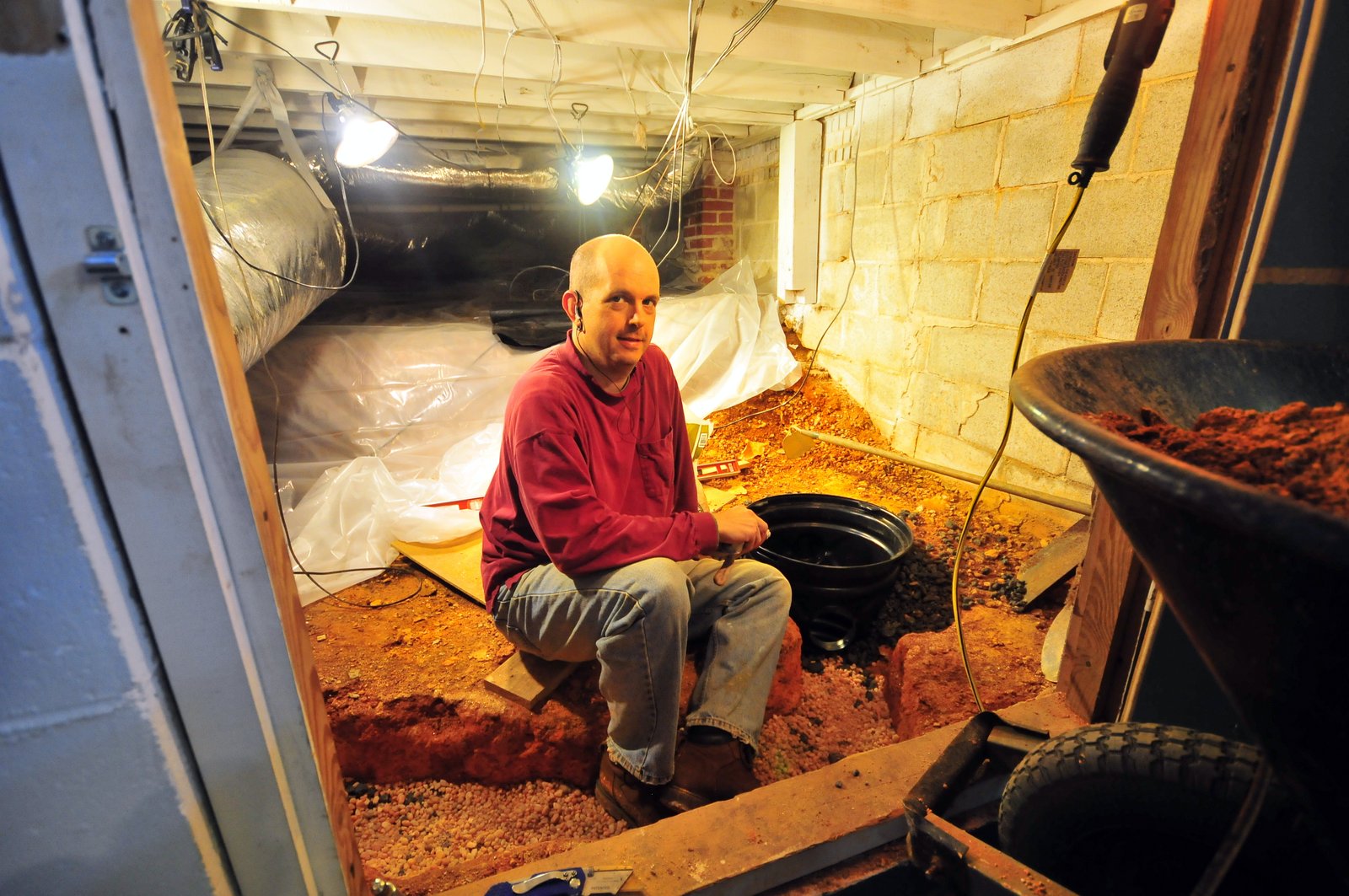
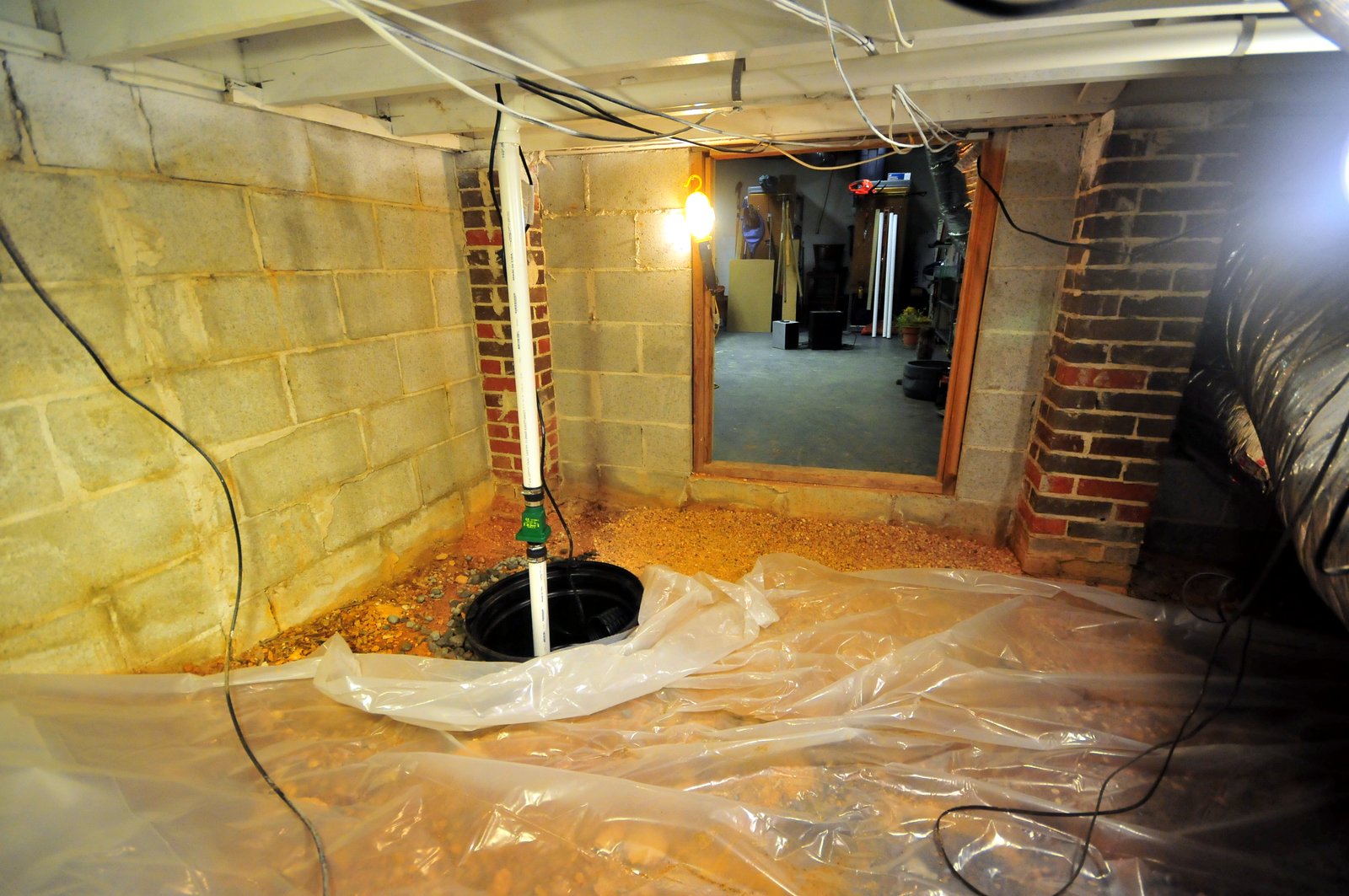
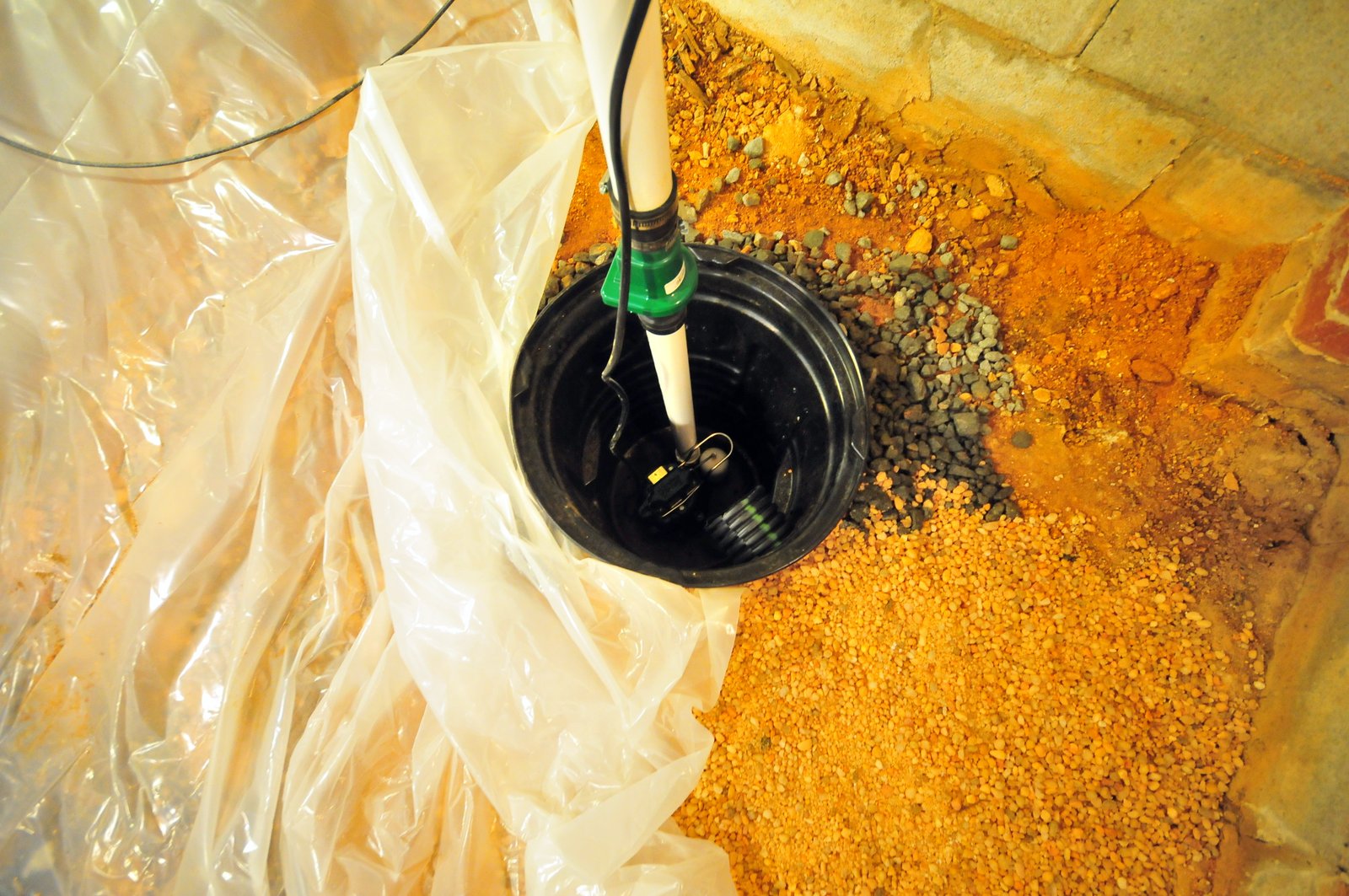
Second on the agenda: finish the sump pump system. The pit and pump have been installed for some time now, but the actual outlet was only a temporary fix. As of today, it's a little more permanent. Still not the perfect solution, but it should work.

5-VIV_2123

And finally, wings for dinner. A perfect Saturday.

Under Us, Around Us, In Us

I know nothing about mold other then the fact that it appears on bread. I've worked out this little personal equation that the purity of the bread is proportional to the speed with which it becomes covered in mold: the sooner, the better as it indicates few preservatives. But when it comes to mold in the house, I'm lost.

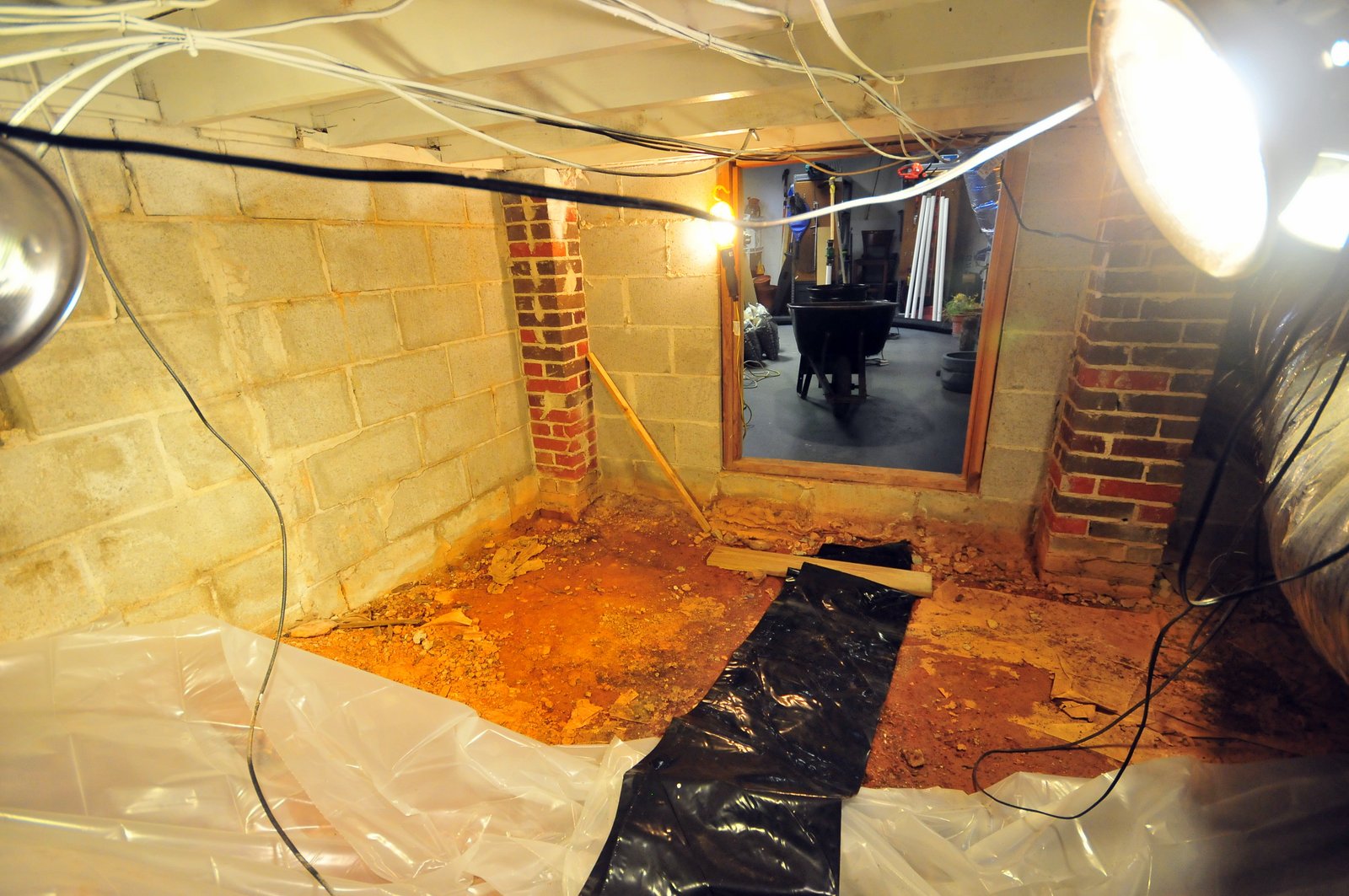
We have mold in the crawl space. A slow leak that went completely undiscovered for several weeks is all it took to create a wonderful little breeding ground for the stuff. Specifically, we have, according the the report we received, Cladasporium and "Pen./Asp", which a quick search reveals as "Aspergillus and Penicillium." A little more research was clearly in order.

According to the Centers for Disease Control, "common indoor molds" are

  • Cladosporium
  • Penicillium
  • Alternaria
  • Aspergillus

In other words, our three molds represent 75% of the most common molds. So it's nothing rare, and it's really not even anything that's not already naturally present in the air to some degree or other.

The CDC further explains,

Generally, it is not necessary to identify the species of mold growing in a residence, and CDC does not recommend routine sampling for molds. Current evidence indicates that allergies are the type of diseases most often associated with molds. Since the susceptibility of individuals can vary greatly either because of the amount or type of mold, sampling and culturing are not reliable in determining your health risk. If you are susceptible to mold and mold is seen or smelled, there is a potential health risk; therefore, no matter what type of mold is present, you should arrange for its removal. Furthermore, reliable sampling for mold can be expensive, and standards for judging what is and what is not an acceptable or tolerable quantity of mold have not been established.

Of course, regardless of the mold type, the amount seems to be just as important if not more than the type. All the sites I used in the research spoke of mold counts, some of them absolute ("spores per cubic meter") and some of them relative ("10 times the outside count"). Our report indicated "very low" levels of Cladosporium and "low" levels of Aspergillus and Penicillium. This seems even more useless than "x times the outside count," which itself seems fairly useless. Worse still, the CDC states that "[s]tandards for judging what is an acceptable, tolerable, or normal quantity of mold have not been established." In addition, the WHO suggests that the best way to test for mold is with a culture test, and our test is labeled "Direct Microscopic Examination Report," which indicates someone put the stuff on a slide and looked at it under a microscope, which would mean the concentration was determined by counting or even estimating.

The first mold remediation company came out and tested our crawl space and gave us a quote for taking care of the problem: $2200. This included "basement encapsulation," which promised to prevent the problem from happening again. The insulation, he assured us, wouldn't need to be changed. After all, it's glass. All told, two days' work.

The second company came out and basically said the problem was even worse than the first company said. The whole kitchen floor and subfloor needs to be replaced, they explained. The insulation in the entire crawl space would need replacing, as would the heavy plastic vapor barrier.  The gentleman looked at our mold report from the other contractor and felt it inadequate. It would be better to use their testing services, for a mere $500, to get a true picture of the problem. All told, eight days' work, he said. The quote: $12,000. As with the $20,000 replacement window quote, I would have found it hard to keep a straight face were it not for the fact that the gentleman delivered the quote by phone to K about half an hour after he left.

And so where do we stand? A crawl space with some amount of mold that according to "experts" hovers gently between dangerous and deadly (judging from the quotes) filled with insulation that may or may not need to be replaced, and a vapor barrier that needs to be replaced to varying degrees.

Digging in the Dirt

In which Tata installs a sump pump.

Water

We can't live without it, but for the past week, I can't say that I'd be too unhappy to give it a shot. The evening before Wigilia preparation, several days of rain took control of our basement and my whole night: it became pouring, literally, up one of the formerly-thought-to-be-plugged termite treatment holes. At about midnight, I was shop-vac-ing sixteen gallons of water every eight minutes. The rain stopped at around one, and I finally stopped sucking up the water at around three.

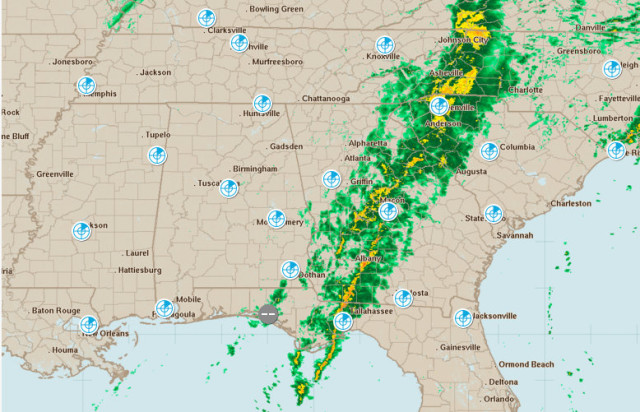
And now, less than a week later, we're in the same situation. Days of rain, and then this:

1-Fullscreen capture 12292015 124621 AM

A line of storms that's just moving northwest straight through our little state. And so I'm up at past one in the morning again, writing this (planning to back-date it for obvious reasons), waiting to see if the rain stops, wondering if my second third fourth who-knows-which attempt at patching the holes will at least hold for this deluge.

But I'm not complaining, though it sounds like it. I know it could be worse. I know others are experiencing worse -- everyone on our street, in our neighborhood, is experiencing the same thing and then some. And then there are the tornadoes in Texas and the midwest. Still, chronicling and all...

Cooking over Fire

Except for organized, group events, I don't remember really having any kind of bonfire growing up. It just wasn't something we did. Part of it was likely where I grew up, for certainly kids who grew up in the country must have had bonfires. But for those of us who grew up in developments planned right down to the arrangement of identical-floor-plan houses, it probably never happened. At least it never happened in my universe.

For K, on the other hand, growing up in Poland, they were like baseball games or tailgating in the south: just something one did. Go for a walk in any of the woods that surround K's home village and you'll eventually find a spot where some group or other threw some rocks in a circle and lit a fire. And many houses have a fire pit somewhere on the property.

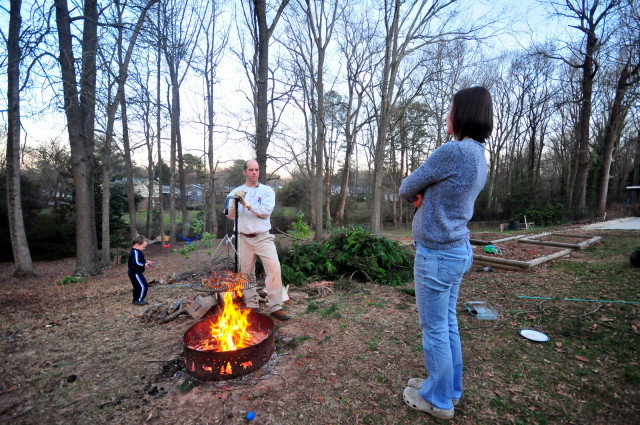
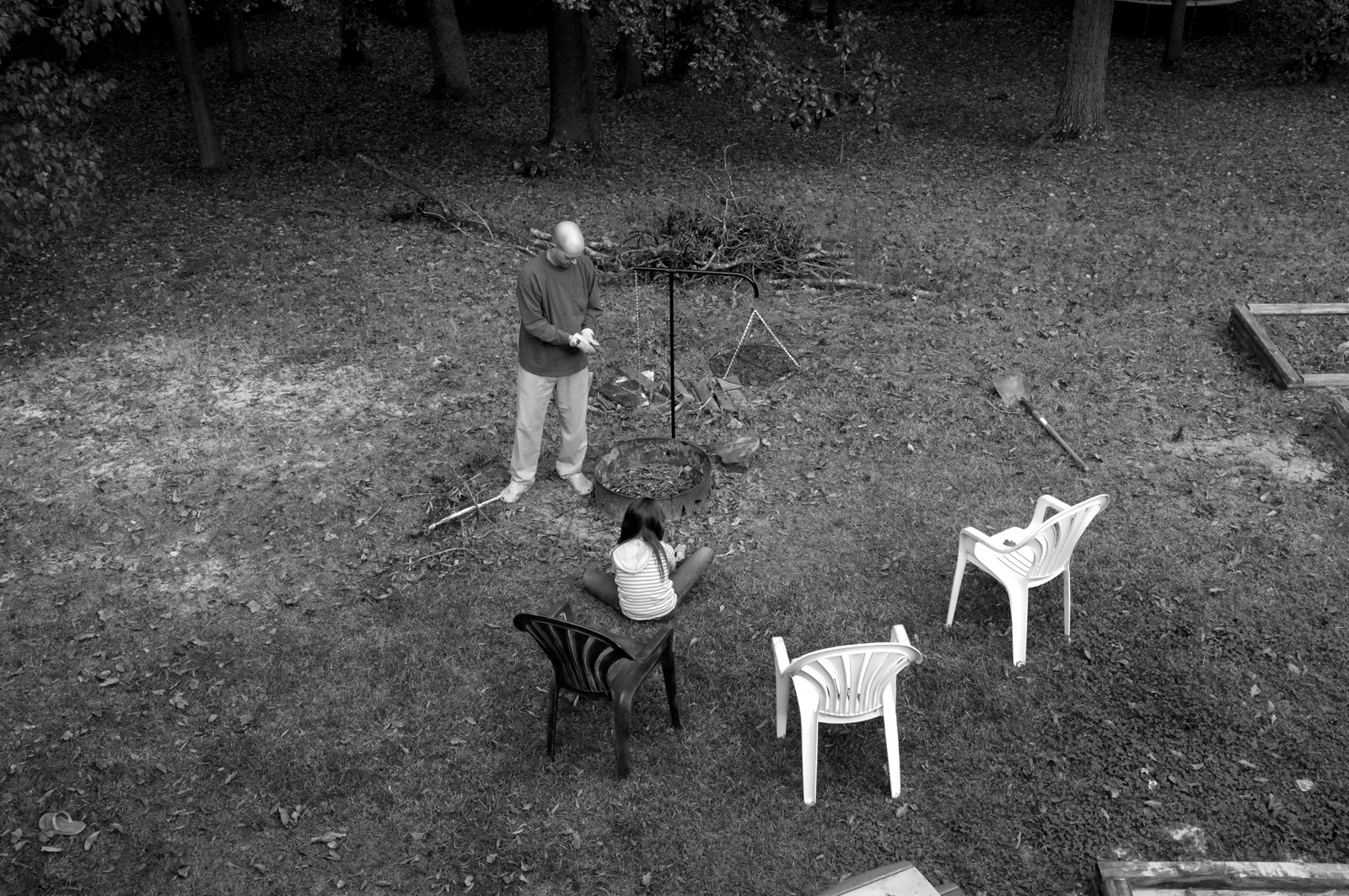
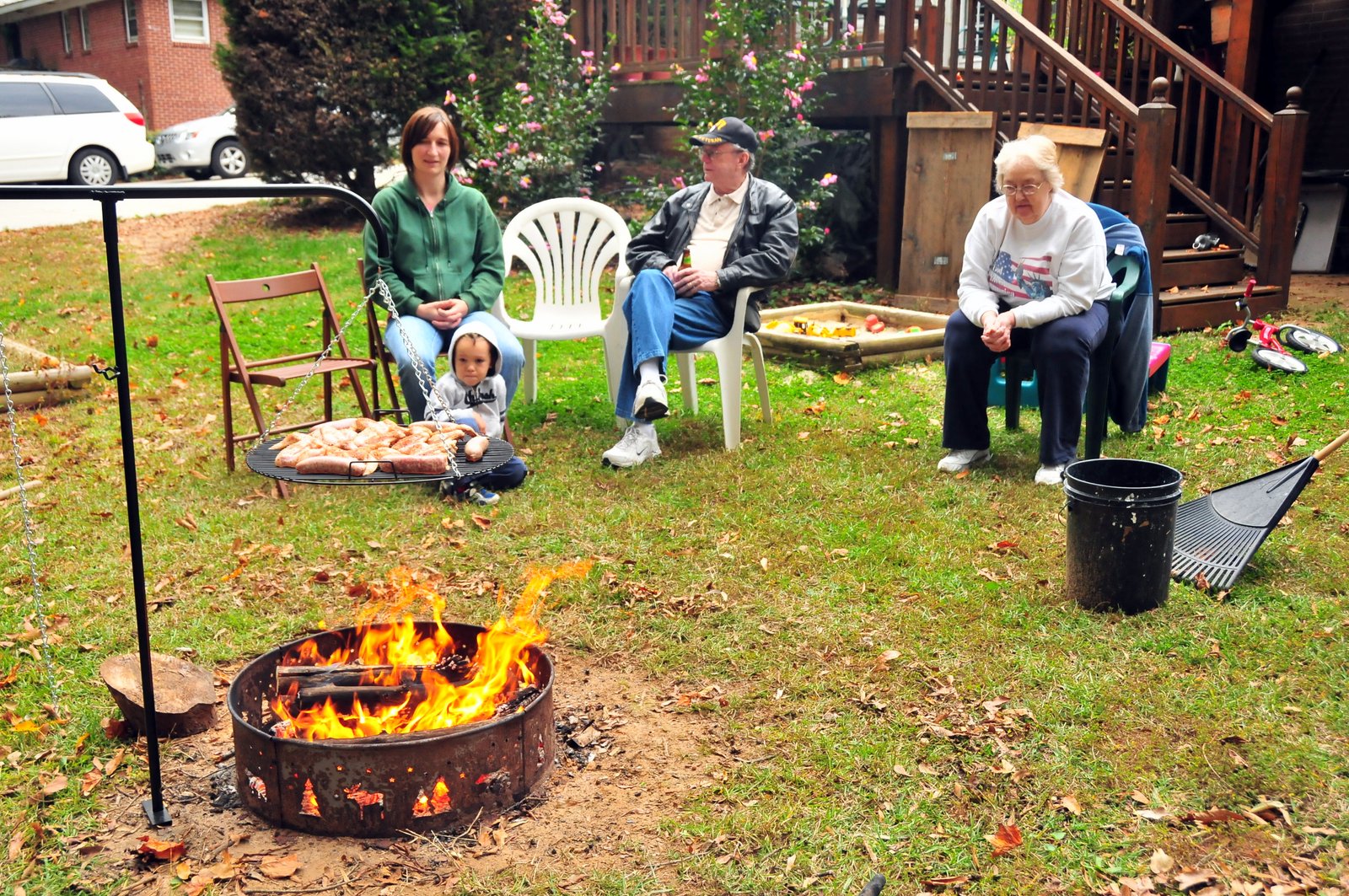
Since Nana and Papa gave us a fire ring that someone gave them -- it's Christmas all year round in our backyard -- we've been having bonfires fairly reguarly as the weather permits, which means generally spring and fall. Open fires in 90 degree heat and pea-soup humidity are not very pleasant, but now that things have cooled down and the humidity has dropped to normal level, we try to have a little fire every now and then. The kids adore it, and we find it's an almost magical family time. But there was always something missing: food. We roasted weenies on sticks sometimes and made s'mores every now and then, but that's nothing compared to the feasts Poles prepare on their bonfires. This week, though, we bought a cheap kit to suspend a grill over the flames, and tonight, it was like being back in Lipnica again.

Autumn Tomatoes

Even though it’s nearly November, we still had tomatoes in the small raised beds we accuse of being a garden. For the last several weeks, though, the ripening process has all but stopped, and so ahead of tonight’s possible freeze, K sent the kids out to pick the remaining tomatoes.

DSCF6921

They were to segregate them into red and green, with the plan being to eat some of the green later this week in the form of fried green tomatoes and putting the rest in paper bags to ripen slowly.

DSCF6920

Given the color distinctions, everyone felt it was best if E just held the bowl.

Disaster Lurking

Saturday in the fall means a day in the yard more often than not. We have neglected our yard, however, and so we had quite a bit to get caught up. Rain for several Saturdays didn’t help much either, other than encourage growth of our lawn, which amounted to more work.

VIV_8819

With a batch of pumpkins for fall decoration, the kids had a bit of work as well. They each got a small, personal pumpkin but had to share a large one. On his half, E elected for an all black pumpkin, then decided that he might like to have an entirely black pumpkin and began slowly taking over the whole pumpkin. Much to L’s frustration.

VIV_8823

While they were painting, I was trimming all the hedges when I discovered the fourth nest of yellow jackets since we moved here. Or rather, they found me, with one giving me a welcome present just below my left eye.

VIV_8835

Two catastrophes in one day. If only we could keep all catastrophes at this level.

Decorating

They run downstairs to find our few Halloween decorations and begin!

01-DSCF6731
02-DSCF6734

Back To Normal

“Well, now everything is back to normal,” I said just the other evening, when the kids were having an evening snack, and K and I were divvying up the evening responsibilities — who does the bathing and tooth-brushing, who does the reading/praying/tucking-in.

“Not quite, Daddy,” L corrected. “We’re still missing Bida.”

Our oldest cat had run off just before I’d left for Poland, and no one had seen her since. “She’ll come back” was K’s constant refrain, but I wasn’t so sure. How well could an arthritic, deaf, virtually-toothless old cat survive without human intervention?

Apparently, she could survive quite well, because this evening, she came trotting into the carport as if nothing had happened. Her long, gray hair was starting to mat after a month of neglect, and it was filled with little twigs, seeds, and dirt. She’d lost a fair amount of weight. But other than that, she was just like normal: the old grumpy lady who hisses at Elsa, our year-old-cat, for the slightest little thing, who trots up the stairs and hides under our bed whenever she’s offended (which doesn’t take much).

Elsa, for her part, was thrilled to see Bida, and eager to help. She gave up her food for Bida, backing away when the elder cat approached, and she stood watch as Bida ate slowly.

Elsa’s restraint has always impressed me: with her sharp teeth and sharper claws, she could tear Bida apart in a fight. Yet every time Bida hisses and swats ineffectually at Elsa, Elsa just backs down and submits.

So tonight, when we’re all divvying up responsibilities and snacks, I can try again: “Everything’s back to normal now.”

Basement

Step one: take almost everything from one side of the basement and put it on the other side. Cram everything in as much as possible — make it look like a complete wreck.

Step two: clean and paint the now-clean side of the basement with waterproofing paint to reduce eliminate the risk of future flooding. (This should be done in conjunction with a complete renovation of the gutters’ drainage system.)

Step three: move everything else out of the basement storage room into only other room in the basement. Pack it all as ridiculously tightly as possible.

Step five (the previous one counts as two steps): clean the other half of the basement storage room floor

Step six: dread reversing all the steps.