

fun in threes, sometimes fours
around the house
They just about destroyed one of our Leyland Cypresses last year: Thyridopteryx ephemeraeformis, Evergreen Bagworms. They devour the needles of the tree, using some of them to camouflage their cocoon and the rest for nourishment. The females -- who have no wings, legs, or eyes -- remain in their bags their entire lives, and as they never lay their eggs, the new larva emerge from the mother's carcass.
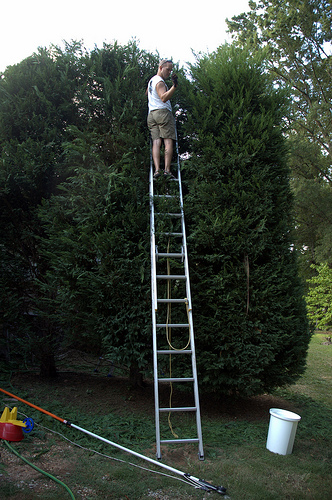
It's a lovely little insect, in other words, one that we all love and long for. We just happen to have more than our share of them, and since no neighbors appreciate the sheer destructive capability of such a pet, we simply have to pick them off, one by one, and euthanize them.
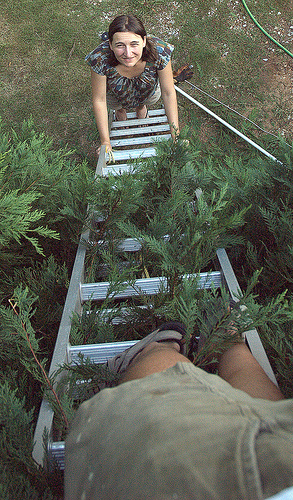
It's really an itch-inducing process that I don't enjoy, but occasionally it yields a nice surprise or two.
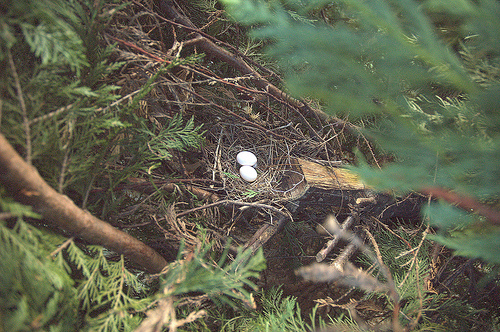
What's ironic is that we have at least three bird nests in those three, neighboring trees, and one would assume that having birds around would reduce the population of something like caterpillar larvae. Apparently, the camouflage is quite effective.
However, we have yet another tool at our disposal. We are breaking all conventions of warfare and going biological: Bacillus thuringiensis.
“Go out the front down and look to the left,” K instructed one morning.
The day before Christmas Eve in a Polish household is always frantic. Cakes to bake, salads to make, and general culinary chaos.
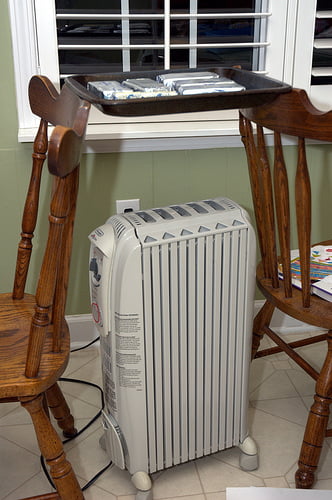
The heating system dying in the morning didn't help, though. The verdict: the zoning system's main control board is malfunctioning. Cost: the part alone runs $1300. Time to make some decisions. Merry Christmas from Arzel.
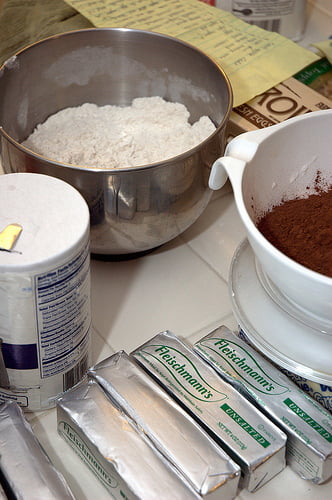
In the meantime, we have baking to do. Cheese cake, for instance, requires room-temperature ingredients, a fact inconveniently forgotten by inexperienced bakers the world over.
Fortunately, we had a little helper today to get us through the tough parts. Without her valuable advice and assistance, I'm sure we would have got finished much more quickly than we did been at a complete loss.
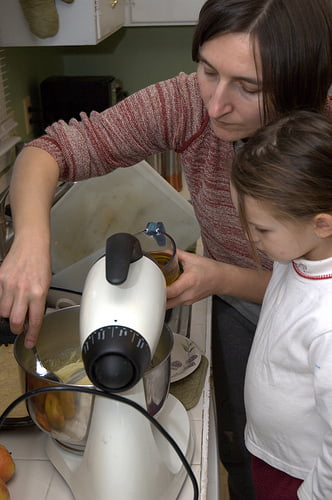
With her in the kitchen, it's a constant battle against her curiosity. "I want to do it!" is her refrain.
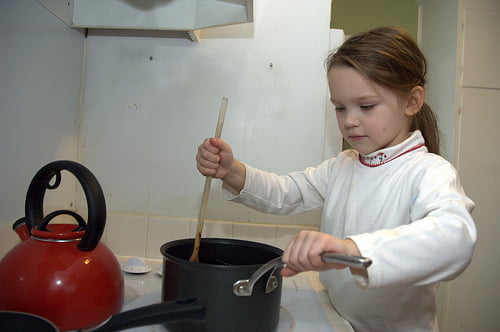
At the same time, how can one battle curiosity? Who would even want to? It's a question of direction and redirection.
We’re moving up — literally. This year was the first year we put up lights around the house.

It was easier than I was expecting, just a matter of up and down and up and down the ladder.

And the realization that what comes up before Christmas must come down shortly thereafter.
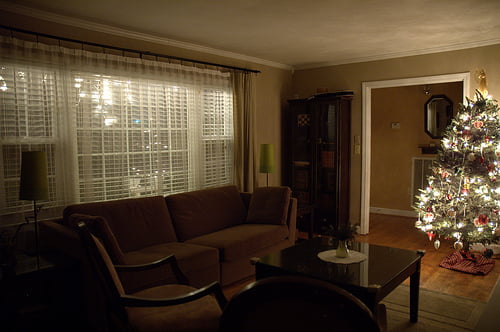
Still, to sit in the living room is a double pleasure now.
In order to create, we must destroy.
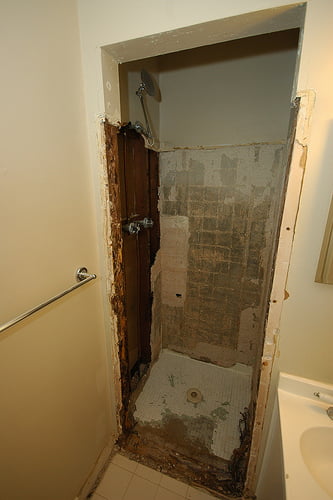
Partial destruction is oxymoronic: in the process of destroying, we often find we need to destroy more than we'd initially anticipated.
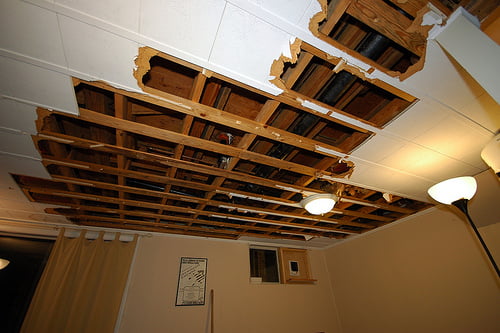
One cannot destroy only halfway, though one can create halfway. It's called cutting corners.
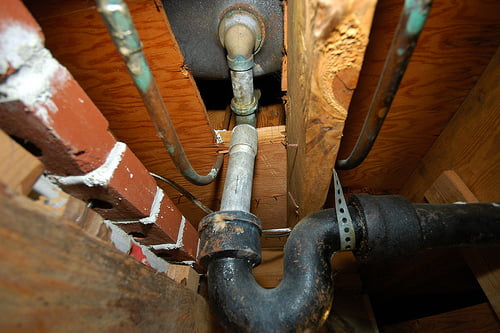
Living in a house highlights that mystery, for a house is itself a mystery.

There are leaks that leave tracks, and sinks that have no visible connection to the main drain line.
"When you talk about destruction, don't you know that you can count me out. In." You know, it's going to be alright. Eventually.
With new grass everywhere -- "baby grass" as L calls it -- we do a lot of watering these days.
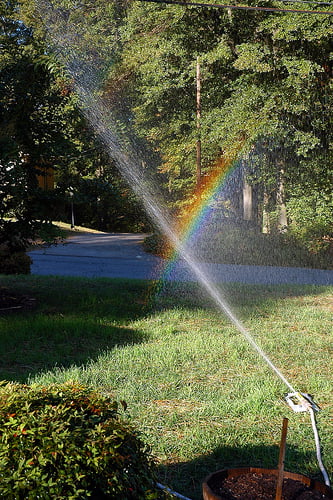
It's enough to make me think we should have installed an irrigation system.
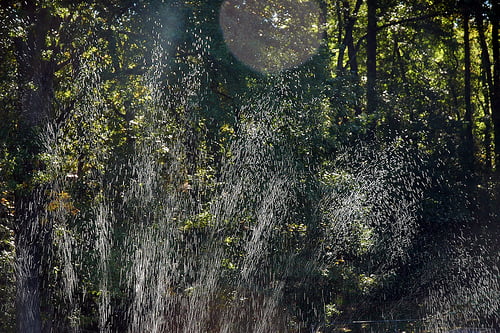
But then we wouldn't get sights like these.
Last year, we overseeded our front yard. It looked fantastic.
"We have the best grass on the block!" K and I would congratulate each other. It was thick, lushly dark, and totally carpeted our entire front yard.

Over this summer, it all died.
All of it.
We looked at our wretched front yard and looked at what it used to be like, and a sort of "why do we even try?" depression would set in.
But we don't give up. Not we. We continue to dump money into projects that probably should be left alone. So last week, we rented semi-heavy machinery,
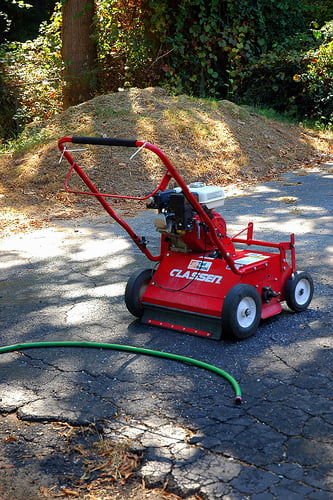
and started all over.
Technically, it was called "dethatching." Practically, it was called "pulling up all the grass, most of which had long-since died."
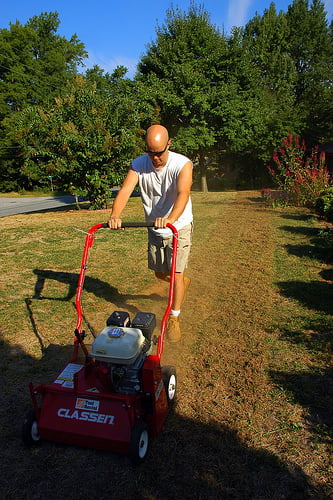
We were left with rows of rubbish -- weeds, dead grass, almost-dead grass -- that had died for mysterious reasons. Bugs? Disease? (Certainly not fungus: it was too dry this summer for any fungus to survive more than a few moments.)
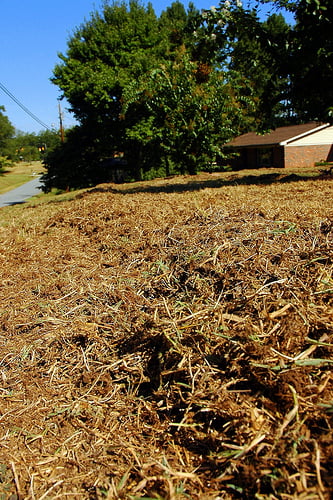
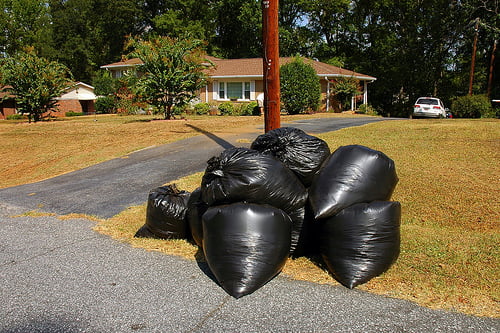
Whatever it was, we didn't want it. So ten bags of it went out to the curb.
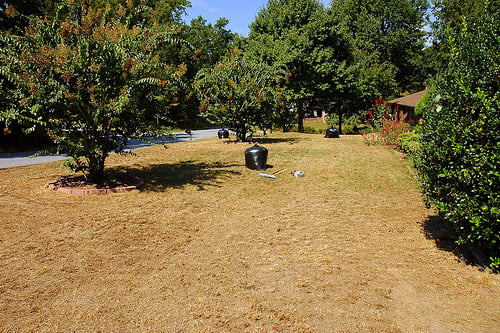
What a waste, really. It got me thinking -- if our lawn survives this coming summer -- whether or not I could simply run our mulching mower over the dethatched refuse and let the yard self-feed.
After applying top soil, mulch, seed, fertilizer, and straw, the rain came. After many dry weeks, we had thirty-six hours of continual rain, followed by sporadic showers through the following week.
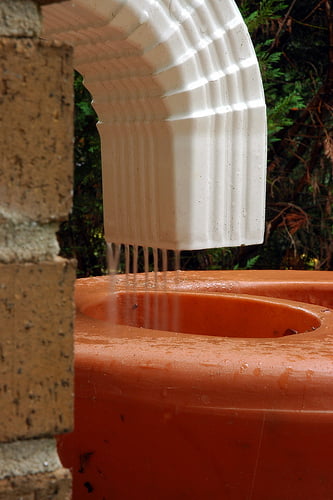
I couldn't have planned it better if I'd tried.
A week later:
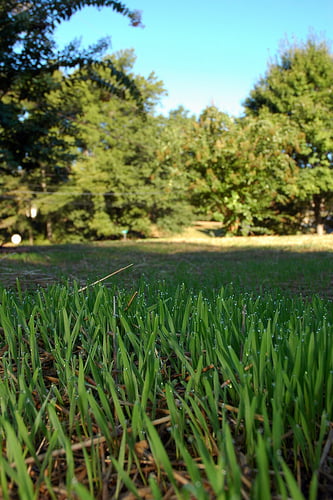
Summer means gardening for us. I wish I could say that without the knowing smile, for our “gardening” is still quite rudimentary. It’s about like saying I’m a cyclist because I manage to hop on a bike once or twice a month.
Our gardening consists of a few pepper plants, a watermelon vine or two,

perhaps a cantaloupe, and maybe a few spices, especially basil. Next to cilantro, basil has to be the best, freshest-smelling herb that exists. Apparently I’m not the only one who thinks so: K came in today with a caterpillar who’d devoured a basil plant.
“Why are you upset?” ask L.
“Because a beast was eating our basil!” K responded.
“What’s it for?” L inquired further.
“For cooking, not for caterpillars,” explained K.
“But you should share,” replied the sage.
The trouble is, we don’t have enough basil to share. We don’t have enough watermelon to share, nor cantaloupe. Our peppers are sparse too, but that’s really for a different reason.
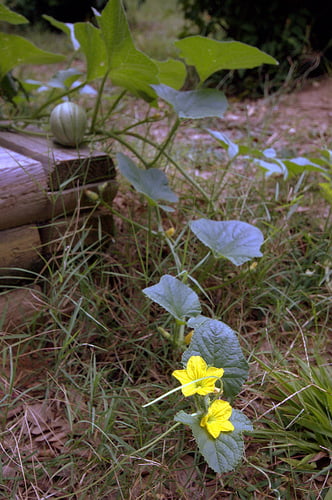
The tomatoes. The only thing we have enough to share is taking over our small raised beds. One vine alone requires six to eight stakes: each fork in the vine turns enormous and fruit-laden.
We head out daily to pick the tomatoes. We’re growing three varieties, including sweet, bright cherry tomatoes. Most of these rarely make it to the house:

we munch on them so while we’re picking the rest of the tomatoes that hardly any are left when we make it back to the kitchen.
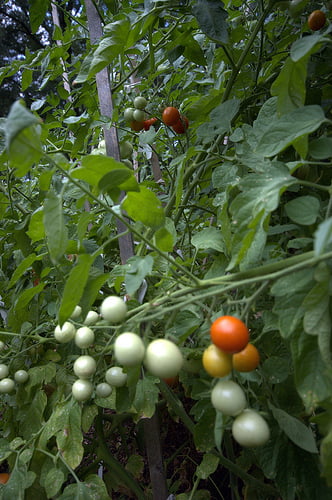
All the same, two days can produce enough tomatoes to overwhelm quickly.
This is what K tried to explain to L this evening: “We do share. We give tomatoes to Nana and Papa, to A and P, to the chipmunks and squirrels…”
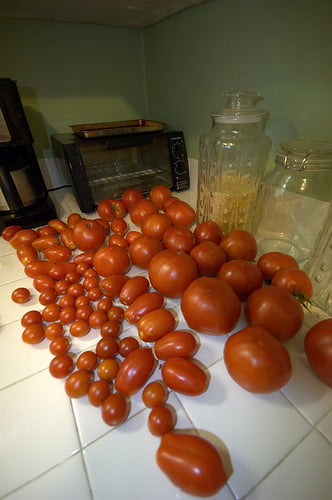
And still we end up with so many every couple of days. Then again, who can complain about this? Quarter a fresh tomato and sprinkle salt and pepper: a perfect summer snack.
In the process of saving a Leyland cypress from being utterly destroyed by a vast infestation if bagworm moths, I've been removing and killing hundreds (possibly closer to a thousand by now) of bag-encased larvae. Violence in the effort to save a tree.
I discovered a new risk today.
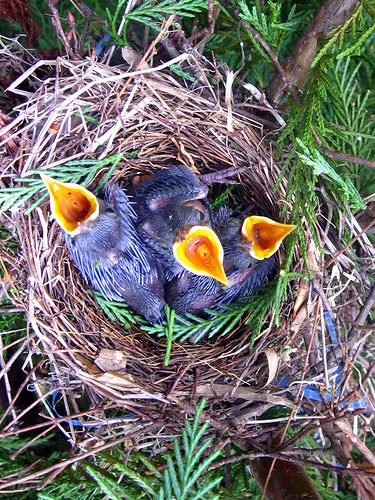
As I was working to trim the tree and remove the bagworm larvae, I heard the constant call off a bird. It was a distressing call, and I realized I must be near the nest. I moved my ladder a few feet to the east, climbed up, glanced down, and was started with what I saw.
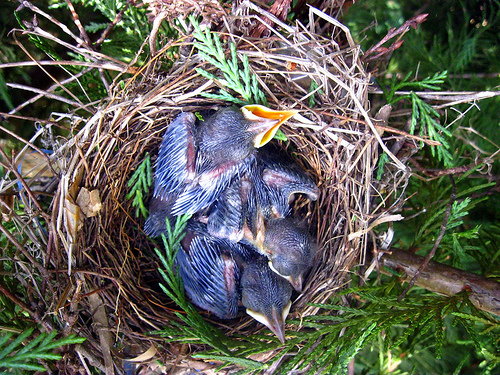
I only made a slight motion, and the three chicks suddenly raised up about four inches, mouths open, willing to ingest whatever was placed there.
My old addiction
Makes me crave only what is best
Like these just this morning song birds
Craving upward from the nest
These tiny birds outside my window
Take my hand to be their mom
These open mouths
Would trust and swallow
Anything that came along
It's not just the risk of willingly accepting anything as food that makes a small bird's life precarious. As they raised their almost featherless bodies from the nest, they swayed, nearly blind, their heads too heavy for their underdeveloped necks. It seemed miraculous that they didn't fall out of their nests.
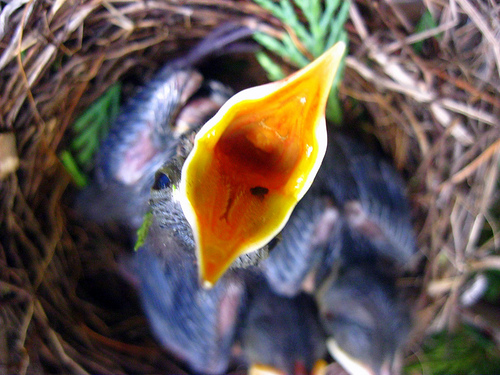
For over two hours, I was working not more than three feet from a nest chicks so young they were barely beginning to get feathers. Had I situated my ladder eighteen inches to the left, I probably would have destroyed the nest.