It has been an exhausting day. I had practice maturas from eight to nine, then I came home to do some planning. I taught class IIIA and then had an hour break, so I took the opportunity to run take some pictures in the cemetery while the snow was falling and everything was relatively untouched. I also took a picture off the Mastelas’ bridge – another attempt. Then I rushed back to school to wolf down some lunch and then head off to teach IA and IC, then tried yet another experiment with IVA. I had Anna B. and Monika K. conduct class for a while. It meant that we didn’t cover nearly as much as we should have, but I think it might actually work out if I give them enough time to prepare for their teaching engagement. We’ll see. I want to give them as many opportunities to speak somewhat authentic English as possible. After that Chhavi and I taught dancing for almost an hour. We came home and I had enough time to realize I was really tired before heading off for an hour of basketball. Afterwards I returned home and cooked dinner. So basically I’ve been going for fourteen hours straight without many real breaks.
The Sound and the Flurry
The Cultic Revelations of Malachi's Message
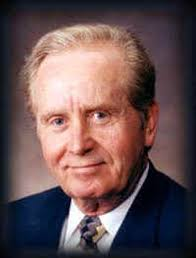
When the Worldwide Church of God began reevaluating doctrines, many people within the organization were suddenly faced with a decision they thought they would never have to make: stay, or go? For the most part, people stayed when Joseph Tkach Sr. began reevaluating and modifying certain church doctrines because in making these changes, Tkach was leaving the core doctrines (Sabbath attendance, tithing, the nature of God) intact. The first changes included a new position on the use of cosmetics, a new scripture to designate the church's commission (Matt. 28.19, "Therefore go and make disciples of all nations, baptizing them in the name of the Father and of the Son and of the Holy Spirit," instead of Matt. 24.14, "And this gospel of the kingdom will be preached in the whole world as a testimony to all nations, and then the end will come."), and the decision to seek accreditation for Ambassador College. Gradually, though, Tkach and the WCG leadership turned their attention to doctrines many considered indispensable, and eventually Gerald Flurry and others decided that the WCG, in changing its doctrines and dogmas, had turned its back on God and therefore it was no longer God's church. Flurry immediately wrote Malachi's Message to God's Church Today, the centerpiece of all his writings and, with his followers, formed the Philadelphia Church of God.
Little time need be spent discussing Flurry's actual argument. His thesis is not incredibly complex and can be summed up quite succinctly: Because we are nearing the end-time, it is necessary for God to separate the true Philadelphian minority from the Laodicean majority. He accomplishes this by sending a "strong delusion" (2 Thes. 2.10-11) in the form of deceived leadership. Converted Philadelphians will see this with the aid of divine revelation (read: Malachi's Message), thereby escaping the Tribulation and receiving their eternal reward.
The interesting thing to look at when reading Malachi's Message is not so much the prophetic rantings and ravings, interesting as they may be, but rather the implicit revelations Flurry makes about his personal theology and the PCG's official teachings while arguing his case. Flurry also illustrates the sociological and theological mechanisms used by cult leaders to keep their "flocks" in submission. Lastly, a close examination of several passages reveals Flurry's definition of God to be quite heterodox with some rather unnerving aspects to it.
Explanations
By and large, Flurry's teachings are identical to those put forth by Herbert Armstrong, the Worldwide Chruch of God founder. Since many of Armstrong's ideas are unlike anything found in mainstream Christianity and the terms and figures of speech he uses are found in traditional Christian articulations, a few explanatory comments might be helpful.
Herbert Armstrong's Lingering Influence
From the beginning, Flurry illustrates that this book is intended for those steeped in Armstrongian theology. This is obvious enough when we remember the full title of the book, Malachi's Message to God's Church Today. However, this sense is strenghtend by the fact that Flurry expects his readers to grant him several basic assumptions which are based on WCG theology. Remarking that several churches have left the WCG in recent years, Flurry argues, "Your Bible says only one of these groups can be doing God's work" (x). The idea that God is working with only one group of people during these "end times" is a recurrent theme in both Armstrong's work and Flurry's own theology. That Flurry takes this as his starting point makes it clear that this book is designed to do one thing: encourage people to leave the fellowship of the WCG and join his own. To be sure, Flurry does not hide this agenda, and later in the book makes it perfectly clear that he sees the warning of God's people as his calling. In fact, Flurry argues that Herbert Armstrong (hereafter referred to simply as HWA) "set a precedent for what the PCG is doing now" by writing to the members of the Sardis era and telling them "their Church was dead!" (149). However, Flurry provides no documentation for this, and an otherwise good point is compromised.
This assumption that all readers are thoroughly familiar with HWA's teachings also manifests itself in the use of Armstrongian theological terms which would be completely incomprehensible to non-WCG members. Flurry tosses around "The Place of Safety," "The Great Tribulation," the "Laodicean Era" without defining them or proving them scripturally. They are given truths to be accepted from the beginning. you could go so far as to demonstrate your scholarship ? here and define them for the reader here.
Clearly Flurry feels that there is only one true church, and with so many to choose from, it's critical to make the right decision, for "if you make a wrong choice, it is going to bring physical and spiritual curse. A right choice will lead to incredible physical and spiritual rewards." The criterion Flurry initially gives for finding this church is not what most people would expect from a Christian church. Instead of saying that we must weigh carefully what these churches teach against what the Bible says, we must find the "one Church [which] truly follows in the footsteps of Mr. Armstrong" (x). This and this alone is the one true, pure Church of God. To be fair, Flurry does encourage his readers to prove scripturally his argument, but the initial criterion is whether or not the church follows Herbert Armstrong.
Additionally, it's not enough according to Flurry simply to follow HWA's teachings. It's necessary to fellowship with this one true church: "We, as Christians, have the responsibility to be in that Church following Christ" (xiii). The implication is that being a member of the right church is necessary for salvation, not simply following Christ. Even if we keep all the Old Testament commandments (even the seemingly ridiculous ones about wearing clothes of two fabrics and destroying our houses when we can't get rid of the mildew), it won't be enough unless we're in the right church (read: PCG).
The Philadelphia Church of God was formed because the Worldwide Church of God was not clinging to Herbert Armstrong's doctrines. A logical place to begin an analysis of Malachi's Message, therefore, is a consideration of how Flurry and the PCG view Armstrong and his teachings.
Flurry explains in the introduction how the WCG has gotten off track: "Why do the Laodiceans fail to see that Mr. Armstrong fulfilled all of these major end-time prophecies? Because their focus is too much on the man--not on God and his message!" (xi). Ironically enough, this serves as a perfect thesis when discussing the PCG's view of Herbert Armstrong: The emphasis is clearly on what Herbert Armstrong taught and not on what the Bible actually states.
From his introduction onward, then, Flurry makes it clear that Herbert Armstrong's teachings are of utmost importance. Flurry's exaltation of HWA is, in fact, the most striking thing in the entire book. This manifests itself in several ways in Malachi's Message.
The first thing one notices is the manner in which Flurry uses Armstrong's writings as final authoritative proof concerning almost anything, something which is not surprising since the "true gospel ends with Mr. Armstrong" (130). Many times in Malachi's Message, Flurry's final recourse is simply, "Mr. Armstrong said . . . " On one occasion, Flurry even writes that "Jesus Christ agreed with Mr. Armstrong" (91). One would think it should be the other way around, but to make that assumption is to forget that we are talking about a cult and not a healthy Christian church.
This trend really begins in the introduction when, discussing the "end-time . . . John the Baptist," Flurry writes, "For years Mr. Armstrong said repeatedly that he fulfilled this office" (xi). No other evidence, scriptural or otherwise, is given that Armstrong did indeed fulfill this role. Yet, since Mr. Armstrong said it, it must be true. Flurry does the same thing when discussing HWA as the end-time Elijah (14) and later when trying to illustrate that HWA was the end-time Zerubbabel (59, 65, 131). In each instance, the fact that HWA said it is enough to establish it as fact.
The equating of Mr. Armstrong with Zerubbabel deserves some attention in itself. As stated before, Flurry really does little to prove this thesis other than the fact that HWA said it was true. Early in the book Flurry points out, "Zerubbabel died an old man. So did Mr. Armstrong" (3). If this is meant to be taken as evidence, it is a laughably weak attempt to prove this thesis. According to this logic, the following syllogism is true: "God thinks. Humans think as well. Therefore, humans are God." The real "proof" seems to be in the idea that HWA created a new church just as Zerubbabel was responsible for a new temple. Following that logic, though, anyone who begins a new church would be a candidate for this "Zerubbabel," including Luther, Calvin, Smith, and Koresh (to name a few). Yet despite the fact that this is complete speculation, Flurry takes it as fact to the extent that on at least thirteen occasions he even equates HWA and Zerubbabel thus: "God says Zerubbabel (HWA) built the house with God's Holy Spirit . . ." (61). This makes it possible to read all references to Zerubbabel as references to Armstrong.
Assigning scriptures to leaders (both religious and secular) is a favorite weapon in the Armstrongian interpretation arsenal. It is so much so that Flurry considers the WCG's current reluctance to engage in this practice as one of its major doctrinal changes. (For more on this, see page twenty-six of Worldwide Church of God Doctrinal Changes and the Tragic Results.) Indeed, to interpret prophecy in the exacting detail that the WCG has historically done, it is necessary to assign Biblical passages to individuals, both contemporary and historic. When HWA applied names to world leaders examples? it is simply amusingly bad exegesis; when applied to you're missing some words here HWA applied names to himself, it was not only poor Biblical interpretation but arrogance. Of course Flurry doesn't see it this way, and names HWA as Elijah at least ten times and as John the Baptist twice, both in the same fashion as with Zerubbabel.
It's ironic that while Flurry is perfectly willing to name HWA as certain Biblical figures, he seems reluctant to name Joseph Tkach Sr. specifically as someone from the Bible. To be sure, he hints (more than strongly) that Tkach is the less-than-ideal Joshua of Zech. 3.1-2 and "the man of sin" from 2 Thes. 2.4, but he never equates them in a "Joshua (Tkach)" manner as he did with HWA (90). (It's interesting to note that Flurry gives two possible roles for Tkach, thereby doubling his chances of an accurate prophecy. There is a doctrinal reason for this, however, which we will explore in due course.) In addition, there is a disturbing comparison which implies that Mr. Tkach represents Judas and HWA, Christ (99), but there is no direct "Judas (Tkach)" comparison.
One major aspect of the Philadelphia Church of God's mission is to keep the memory and teachings of Herbert Armstrong intact, untainted with accusations of personal immorality and un-Biblical doctrines.
It should, in theory, come as a surprise to discover in PCG's theology any changes in what Herbert Armstrong wrote. In an older issue if the PCG's magazine, the Philadelphia Trumpet, writer Dennis Leap asserts that the “Philadelphia Church of God is the only Church on earth that upholds all of the doctrines Mr. Armstrong established in the Church” (“Who Are Today’s Laodiceans?” Vol. 6, No. 8, pg. 27). If the Philadelphia Church of God follows all of Mr. Armstrong’s doctrines then there should be absolutely no changes to any doctrines or dogmas whatsoever. Doctrine for the Philadelphia Church of God should remain constant, never changing, always identical to the teachings of the Worldwide Church of God at the time of Mr. Armstrong’s death. Yet, in reality, the PCG has made several doctrinal "corrections" which, for all intents and purposes, amount to doctrinal changes.
To be sure, Flurry is not making these changes without any outside stimuli. Indeed, the very reason for his church's existence necessitates certain changes and realignments within PCG theology. All of these changes are almost inevitable given the fact that the Worldwide Church of God has so radically changed its theology from an inward-looking, exclusive cult to an outward-looking, evangelical ministry. None of these things were prophesied to happen in quite they way that they did. Armstrong taught that there would be a lukewarm, Laodicean era which means?, but it seems doubtful that he ever imagined that this "Laodicean attitude" would be embraced by the WCG leaders and make it necessary for the "Philadelphian elect" to remove itself from the Laodicean majority. If anything, Armstrong indicated that the Laodicean's would be the minority, and speaking from my personal understanding of the doctrines, I always believed that the Laodiceans would remove themselves from the Philadelphian majority and start a new church, not vice versa. Therefore, there is a need to update all prophecies concerning the end-time church eras and Flurry has, according to Dennis Leap (in the same article quoted above), received "new revelation [which] has corrected slightly some of what Mr. Armstrong taught prophetically concerning the Church." So the key thing to look for is "slight corrections," not major new teachings. However, change is change, and any "slight correction" invalidates the PCG's claim to uphold "all of the doctrines Mr. Armstrong established in the Church." (page number)
The most decisive change in Herbert Armstrong dogma stems directly from this Philadelphian-Laodicean relationship. As with most cults, the WCG used to love to look for significant numbers in the Bible and then, using a hodge-podge mixture of math and prophecy, figure out what these numbers mean 'for us today.' Concerning the alleged history of church eras in Revelation, the key number is 144,000. The WCG always taught that this is a reference to God's chosen, the number of people who would be whisked off to Petra to be saved from the German savagery of the Third World War. any documentation? This also served as a gauge for how close we were to Christ's second coming, for it was always implied that when church membership reached 144,000 baptized "firstfruits," Armageddon and Christ's subsequent return were very near at hand.
However, Flurry no longer teaches that the 144,000 represent Christ's chosen, Philadelphian elect. Instead, he argues that the 144,000 represents the Laodiceans (43). He quotes an Ambassador College Correspondence Course from 1966 as saying, "They will be some of the modern-day descendants."
Occasionally Flurry obscures the point that he is changing one of HWA's doctrines by stating that "the Church" has taught such and such. Consider the following: "God's Church has applied II Thessalonians 2.4 to the world for the most part. But it doesn't apply to the world. There is tremendous biblical support to show it applies to God's church" (79). While Flurry doesn't say that Armstrong taught this, but there can be little question where this doctrine originated. Flurry is basically saying, "Herbert Armstrong taught this, but it's not quite right. It's close, but a little flawed."
Is this a drastic change? In some ways, no. After all, it doesn't involve a change in underlying assumptions and fundamental dogma. Specifically, it's still an explicit and direct application of a prophecy to contemporary events, something quite in line with Armstrongian interpretation techniques. Flurry still teaches this is a prophecy which has a contemporary fulfillment. Since the WCG stopped looking at the Bible in such a fashion (one of the catalysts for the PCG's formation), this is not a major change for the PCG, comparatively speaking. At the same time, it is not at all in line with what the PCG claims concerning their unwavering support of Armstrong's doctrines. It is certainly an unqualified affirmation of his exegesis techniques, but not complete support of the doctrines themselves.seems a little redundant.
Flurry makes another slight "correction" concerning the curse of Mal 4.5-6: "This is a curse which means 'utter destruction.' In the past, this has been applied to the 'utter destruction' of the earth's inhabitants. That is not what it means! The message of Malachi was not sent to the nation of Israel or the world. Primarily, the subject is God's ministry" (119, 141). This is certainly not what Mr. Armstrong taught, but Flurry is careful not to acknowledge this and introduces the idea even more vaguely than the preceding example.
Surprisingly, Flurry does directly and bluntly say that HWA was wrong on one occasion. Referring to the fact that Armstrong felt he would be alive at the time of Christ's return, Flurry says, "Mr. Armstrong didn't live to see the end of this age as he thought he would. (So correct that little error in [The Book of Revelation Unveiled at Last].)" (110). Of course Flurry had little choice but candidly to admit that Mr. Armstrong was wrong in this case. He would look utterly foolish to try to argue that, ultimately, Mr. Armstrong was right even in this case. But doctrinal revision due to historical incompatibility is a far cry from the drastic changes within the WCG concerning prophecy. The leaders of the Worldwide Church of God had a choice concerning whether or not to disclaim Armstrongism and embrace evangelical Christianity; Flurry had no such choice in this case.
Flurry has also made slight changes in the Church's "God-given" commission. He writes, "The major work now is getting the message of Malachi to the Laodicean Church. The Gospel has been preached. The Laodiceans must now be warned!" (133). In Worldwide Church of God Doctrinal Changes Flurry goes to great lengths to point out that the WCG has changed its commission from Matt. 24.14 to Matt. 28.19-20 (114-117), but neither verse mentions anything about warning the Laodiceans. Clearly this is a change in the primary directive (read: commission) of the Church, but it doesn't seem to bother Flurry in the slightest. (Later still Flurry claims that Mr. Armstrong himself changed the commission and said that the primary thing now is to "get the Church ready" (137), yet he provides no documentation of this claim.)
The last change that Flurry has made in HWA's teachings which we will consider concerns the Bible's final warning to the people of the end-time, Flurry now states that, "The greatest warning in the end is given to God's people--not the world" (103). Armstrong never said anything like this (to my knowledge). Indeed, he was quite often decrying the horrible condition of the world and making it known that he was God's chosen to give the pathetic, deceived wretches of the world their final warning. Flurry, however, feels now that Mr. Armstrong wasn't quite right concerning to whom the Bible gives the strongest warning (though of course Flurry doesn't say it in so many words). While this is technically not a change of doctrine, it's a slight shift of emphasis in what HWA taught.
Of course this final warning is contained in Malachi's Message and is simple: God prophesied all this to happen, and showed the consequences of not heeding this warning. But this thesis begs the question: Why, with his prophetic acumen, didn't Herbert Armstrong see these prophecies? He made very specific claims about Germany rising again to initiate the Third World War; he made quite detailed assertions about what would happen to God's elect during the Great Tribulation. Why, with all his clairvoyance, wasn't Mr. Armstrong able to see what Flurry now understands so clearly? The answer is simple: Armstrong did not have the privilege of hindsight that Flurry now has. In other words, this is a prime example of what I'll call retroactive prophecy, a topic we'll return to in a bit.
It is not surprising, given the preeminence accorded Mr. Armstrong and his teachings, that Flurry is gradually adapting his leadership style to a manner more befitting to someone claiming, for all intents and purposes, to be Armstrong's true successor. Flurry gives several indications that he learned well from Herbert Armstrong how to lead a cult and has incorporated several Armstrongian techniques into his methods.
Early in the book Flurry makes a most-Armstrongian declaration: "You must prove what I say in this book!" (9) Many times Herbert Armstrong would get quite excited about this point, calling on people to "blow the dusts off your Bibles" and prove what he was saying there. However, both Flurry and Armstrong only allow certain Biblical proof. The criterion for their Biblical proof seems to be to "let the Bible interpret itself" (89). This is not a bad idea in itself, but Flurry's application of this principle is questionable. Additionally, in telling people to look to the Bible to prove this or that, Armstrong and Flurry are calling on people to exercise rather poor exegesis.
Another example of how Flurry is becoming more like Armstrong in his leadership is shown by a subtle, egotistical claims. One such claim comes from Flurry's view of his own writing. Mr. Armstrong several times made claims that God was working through him and inspiring all he wrote. The best example of this concerns what HWA said about Mystery of the Ages, specifically that "I myself did not write" it but rather "God used me in writing it." (See Malachi's Message 20-25). Armstrong tried to assure us that he viewed all his writing as being more from God's mind than from his own. Yet sometimes his ego interfered slightly and he let things slip, like saying that Mystery was the "the best work of [his] 93 years of life!" Flurry is beginning to make the same slips. While he often declares that Malachi's Message was directly inspired by God, he wonders why "Why does this deceived [WCG] minister [would] say it would be wrong for WCG members to read what I write?" (93).
Another claim that smacks of egotism (though in a strangely pathetic fashion) is the declaration (made originally in all caps), "It takes courage to warn the world" (75). This is a courage that neither of the Tkachs have, but clearly Flurry has it in abundance.
Of course doctrinally Flurry will always be akin to Armstrong, but he also makes claims in Malachi's Message which, while not direct quotes from Armstrong, certainly are in line with Armstrongian leadership. The first one notices when looking at Malachi's Message is a startling claim on the back-cover abstract: "[Flurry] also preaches the wonderful news that Jesus Christ is going to intervene and save mankind in this generation." The final prepositional phrase, "in this generation," leaps off the page and in the minds of educated Christians sets of warning bells. This obviously enough is a direct contradiction of what Christ said concerning his own return in Matt. 24.36, 25.13, and 13.32. Apparently Flurry seems to think he is privy to information that not even God has revealed to Christ.
Flurry is only so specific concerning Jesus' return once, but on several occasions he hints strongly that it will occur within the next few years. In the introduction he proclaims that "soon it will be obvious to everyone which group comprises the very elect" (xiii). Later, discussing "Joshua's fellows" (Zech. 3) he declares that the appearance of "Joshua's fellows [is] a sign that Christs return is very near" (69). As his reference he gives Zech 3.8: "Hear now, O Joshua the high priest, thou, and thy fellows that sit before thee: for they are men wondered at: for, behold, I will bring forth my servant the branch." Even if we read the verses before and after, it's clear that there is no way this can be seen as a sign that Christ's return is near. Finally, while discussing the rebellion of 2 Thes. 2, Flurry claims twice that it is an indication that Christ is returning soon. This rebellion, he says, is another sign that the end "is at hand or imminent. It could be very imminent" (79). Later, concerning the same scripture, Flurry writes, "When you see this 'falling away' from the truth God taught through Mr. Armstrong, it's time to think very seriously about Christ returning soon--very soon" (83).
All of these examples are clearly in keeping with Armstrongism, but tragically unbiblical. One might imagine that Flurry has learned from the abysmal historical record of setting dates for Christ's return, to which Armstrong of course made several of his own contributions. Naturally Flurry can rightfully enough counter, "But we're not setting exact dates!" At the same time, to say Christ will be returning "in this generation" is as close as one can come without actually setting a date.
With such special prophetic knowledge and understanding, it should be clear to all (according to Flurry's reasoning) that he is now the sole divine messenger, passing on God's words and thoughts to the nations for their edification. This is an idea common to almost all cults and Armstrongism is not an exception. Following in Armstrong's example, Flurry elevates himself to prophet and prophet fulfiller. He writes, "This is [that warning to the Laodiceans]. You are holding it in your hands! It is a prophecy being fulfilled this very minute!" (31). Just in case readers don't get the point, Flurry makes it two more times: "God is knocking--to a great extent through Malachi's Message" (41); "God must reveal the 'man of sin.' God has done that through Malachi's Message" (87). Flurry gets so carried away with the idea that he alone is God's spokesperson that he makes two quite fantastic and egotistical claims toward the end of the book. He first argues that "all of God's ministers are going to know Malachi's Message came from God--whether they realize it now or in the Great Tribulation" (143). In the conclusion, though, he broadens this claim: "Malachi's Message was revealed by God. Every human being on this earth must eventually come to see that!" (151). None of this should not come as a surprise as God is using him alone to carry on HWA's work (99).
Since, in the eyes of the general PCG membership, Flurry is God's sole messenger on the earth today, we should expect that if Flurry makes claims that have no Biblical support whatsoever they will remain generally unquestioned by the PCG majority. And indeed, Flurry indulges in such extra-Biblical speculation on several occasions. In doing so, Flurry is, for all in intents and purposes, speaking for God, revealing information that God previously chose to keep to himself.
Flurry first makes this mistake when referring to a passage on the famed "church eras." "God included these verses in Revelation 14 to be an encouragement to the Laodiceans who read them during their trials in the Tribulation" (48). Of course the interpretation (re: seven prophecied church eras) Flurry applies to this scripture is subject to great debate, and many Biblical scholars, if not most, would vehemently disagree with this bit of exegesis. Yet even if this were the accepted interpretation of this passage, there is nothing here to indicate that God included this as comfort for the Laodiceans going through the "Tribulation." Flurry is making a leap completely out of the Bible and claiming information that is not even hinted at in these scriptures.
One of WCG's most disastrous doctrinal changes, according to Flurry, is the de-emphasis of prophecy. Flurry says that "God considers this prodigious change by the WCG to be a major sin!" (108). While there is an indication that prophecy should be a part of any ministry (Amos 2.11-12), it is certainly short of saying that not prophesying is a sin. Once again, Flurry is speaking for God.
The most striking (and tragically comic) example of this comes in the final pages of Malachi's Message. The passage deserves to be quoted at length:
Malachi's Message was first received by many people on January 16, 1990, the very day of the anniversary of Mr. Armstrong's death (January 16, 1986). We didn't plan it, but we were happy it happened that way. You are going to see the date of Mr. Armstrong's death take on more significance as time goes on. John Amos and I were disfellowshiped on December 7, 1989--40 days before the anniversary of Mr. Armstrong's death. The number 40 is significant in the Bible. The third 19-year time cycle of the Work of the WCG ended in January of 1991--the same month as the fifth anniversary of Mr. Armstrong's death. In the original version of Malachi's Message we asked this question: "Will we see some dramatic event in the world or within God's Philadelphian and/or Laodicean Churches then?" The Persian Gulf War began on January 16, 1991! God considers the date of Mr. Armstrong's death to be very significant (149).
After quoting Luke 13.7-9 in its entirety (referring to giving a vineyard three or four years to bear fruit), Flurry continues making wild claims.
God gave the fig tree four years to bear fruit. If it failed to produce, He cut it down. After Mr. Armstrong died, he also gave the WCG four years to bear fruit. When the WCG failed, God raised up the Philadelphia Church to do His Work. Mr. Armstrong died in January 1986. The Philadelphia Church made the first mailing of Malachi's Message in January 1990--exactly four years later! We planned none of this--God did the planning (150).
The fact that four events of some significance can be "connected" to the date of Mr. Armstrong's death is hardly proof that "God considers the date of Mr. Armstrong's death to be very significant." To begin with, it wouldn't be very difficult to connect almost any event to Mr. Armstrong's death using the significant numbers of the Bible (which are abundant in Armstrongian exegesis).
Not only is this an example of poor exegesis, but it is a variation of a logical fallacy known as the cum hoc ergo propter hoc fallacy. One makes this fallacy by asserting that because two events occur together, they must be causally related, and obviously enough, it's a fallacy because it doesn't take into account other possible factors and causes of the events. The initiation of the Persian Gulf War on 16 January had many factors, primarily logistical and political considerations.
The final point to be examined concerning Flurry's growing Armstrongian leadership methods concerns writing style. Herbert Armstrong was an advertising man, and he took the techniques which successfully caught people's attention in the ad business and incorporated into his theological endeavors. The result was the signature Armstrongian SMALL CAPITAL LETTERS FOR MODERATE EMPHASIS, LARGE CAPS FOR SCREAMING EMPHASIS and italics for subtly. Of course Flurry follows in Armstrong's typographical footsteps, and so he doesn't have to worry about writing succinctly but instead uses typography to make his point. On at least one occasion he manages to include all three styles in one sentence: "They are taking a Laodicean turn AWAY from Christ--because they ignore what CHRIST ESTABLISHED through Zerubbabel (HWA)" (62).
While the intended purpose of such uses of different type styles may indeed be emphasis, the result is something quite different. Instead, it turns the passage in question into a quite emotional cry. The huge amount of italics and all-caps when discussing the WCG's donation to help restore the Globe Theater at Stratford-upon-Avon? (129) and when considering whether WCG considers HWA a false prophet (113) reveals a strong emotional response to these issues. One can almost hear how a WCG minister of old (or current PCG minister) would deliver this in a sermon. Good writing makes its own point and a well-planned, well-documented argument reveals its strengths without the aid of typographical stunts.
Unfortunately, Flurry has taken other aspects of Armstrong's writing as his own, including an avoidance of documentation of any sort. This actually weakens one claim in Malachi's Message that otherwise would have been good points. Toward the end of the book, Flurry writes, "Mr. Armstrong set a precedent for what the PCG is doing now" by writing to the members of the Sardis era and telling them "their Church was dead!" (149). This would be a good point response to the claims that HWA began the Worldwide Church of God in a way diametrically opposed to Flurry's methods (and it was this idea that Flurry was "causing division" unlike Mr. Armstrong had which prompted his disfellowshipment), but it loses any strength by the lack of documentation.
Another example of undocumented claims is the assertion that "Mr. Armstrong's last instructions to Mr. Tkach were, 'I have reached world leaders, your job is to get the Church ready'" (137). It's amusing that Flurry doesn't see this as a change in the church's "commission." The first in Flurry's list of WCG doctrinal changes is a the new commission of Matt. 28.19-20 as opposed to Matt. 24.14 (see WCG Doctrinal Changes, 16-19). The idea of preparing the church is not in either scripture, so it appears that neither the PCG nor the WCG are following Armstrong's wishes on this matter.
It seems, in conclusion, that the relationship between HWA's legacy and the PCG's theology and leadership is at best troublesome and unbalanced. Flurry wants to keep the core Armstrongian beliefs in his church. However, the fact that the WCG abandoned Armstrong's teachings and necessitated the formation of the Philadelphia Church to begin with makes it impossible for Flurry to maintain a completely static Armstrongian theology. The result is dogma and doctrine that claim to be Armstrongian but suffer from their own necessary modifications and modulations and are not as pure as Flurry claims
The Cult Characteristics of the Philadelphia Church of God as Revealed in Malachi's Message
In his book A Rumor of Angels, sociologist Peter Berger writes that the "social psychology of fundamentalism is what Erich Fromm called the 'escape from freedom'--the flight into an illusionary and necessarily intolerant certitude from the insecurities of being human" ("Religious Liberty--Sub Specie Ludi" in A Rumor of Angels, 177). Obviously, a cult is necessarily fundamentalist, and this psychological analysis applies to the Philadelphia Church of God. Just as the Worldwide Church of God thought of itself as the exclusive body of Christ for so many years, the Philadelphia Church of God believes it is God's elect.
Exclusive religious tendencies provide a sense of security for believers, as Berger points out, and in the case of Armstrongian exclusiveness there is a sort of double-walled sense of protection. First, it draws from the general Christian idea "God loves me" the simple feeling that even if no one else loves us, God does. Christianity is peculiar because it makes very specific claims and provides a very intense sense of personal importance. When Christians speak of Christ and his crucifixion, they speak of his love, specifically his love for them as individuals. "Jesus loves me," is a common refrain in Christianity which echoes a frequently quoted passage in the Bible (John 3.16). However, Armstrong's Christian cultic ideas intensify and slightly modify this feeling. Instead of “Jesus loves me,” stressing the love, one can say “Jesus loves me,” stressing the self, the "me," implying an elliptical, “But I’m not so sure about whether he loves you.” It hints at a superiority that is intensified in the language of Armstrongian theology: the elect, the firstfruits, and so on.
Therefore, within the PCG, this exclusiveness takes on a new dimension, a sort of triple-layered exclusiveness. At the first tier is the basic Christian exclusive doctrine that Christ is the only way to eternal life. This removes any possible authenticity ("truth," in other words) of alternative salvational routes offered in other religions and at its extreme, removes the necessity for dialogue between these religions. In other words, it creates a sort of separate universe and states that any universe not identical (i.e., those which don't have Christ in them) are fundamentally flawed. (Peter Berger offers an insightful analysis of this issue in "A Funeral in Calcutta," also found within the newest edition of A Rumor of Angels.)
There is ample evidence of this in PCG theology. There is one particularly startling example of this, though: "The Jews have not been commissioned to build God's Temple--as Zerubbabel and Solomom were anciently. If they build a temple, it will be the Jews' temple, not God's temple--just as it was "the Jews' feast of tabernacles" (John 7.2), not God's Feast of Tabernacles" (80). In this one sentence Flurry uses excruciatingly poor exegesis to illustrate strong exclusiveness while hinting at subtle yet arrogant xenophobia. To being with, Flurry takes this scripture completely out of its written context and original cultural milleu.
This scripture is not intended to juxtapose Christ's example or view point to the Jews'. Indeed, Christ was a Jew. If it was the "Jews' feast of tabernacles" then it necessarily was Christ's as well.
Flurry also hints at anti-semitism in this passage. Xenophobia is an obvious extreme to which exclusiveness can be taken, and racism abounds in Mystery of the Ages and in Armstrongian theology in general, most obviously in the theory of Anglo-Israelism. Of course it is usually not explicit racism but implicit, as in this case.
Returning to the issue of triple exclusiveness, Armstrong added a second layer by saying, "Not only is Christ the only way to eternal life, but only my interpretation of Christ is the way to eternal life." While there is much chaffing and back-biting ridicule among denominations about finer doctrinal points, there are not many which go to a cultic extreme and call all other denominations Satanic as Armstrong did.
With the former Worldwide Church of God Armstrongites leaving for either the Global Church of God, the United Church of God, or the Philadelphia Church of God, there exists a possible third layer of exclusiveness. All three new churches claim to be following Armstrong's teachings more righteously and rigorously than the WCG, but there are certainly differences. One thing is common, though: There is still an exclusive tendency which sets members apart from the world, but now it does so in three ways. First there is the general Christian tendency toward exclusiveness which sets Christians apart from the rest of the world. The second is the Armstrongian exclusiveness which sets believers apart from the rest of the Christian community. Finally, there is what I'll call the Flurryian exclusiveness, which sets PCG members apart from G/U/WCG members. As we saw before, Flurry claims that "your Bible says only one of these groups can be doing God's work" (x): "Several different churches have been formed by former Worldwide Church of God ministers. All of these churches--including the WCG--are Laodicean, except one" (6). Flurry points out soon enough that only the PCG is made up of God's elect Philadelphians: "The Laodiceans are comprised of the WCG and other groups that have left the WCG--except the PCG" (31). This is the doctrinal reason why Flurry gives two possible Biblical names for Tkach: Clearly, someone else (possibly David Hulme or Rod Merredith) must be the other figure. All of this serves to strengthen (for PCG members) the idea that they are the elect and so "no other group is given this understanding [of Malachi's Message] by God" (55). Flurry summarizes this idea nicely himself: "We . . . have a 'corner on the spiritual market'" (91).
This exclusiveness has several theological ramifications, some of which Flurry notices (and even revels in), some of which he ignores. He does realize quite clearly that he is denouncing in the strongest possible terms other people's religion, for he states that the failure to recognize Armstrong as the end-time Elijah "condemns a person's religion" (52). He also understands that such exclusiveness removes almost completely the possibility that God even acknowledges non-Armstrongian Christians, to the point that he implies that God refuses to witness (and, hence, sanctify) non-Armstrongian marriages (16). However, this doesn't follow logically even if we grant that only PCG members are true Christians. There is nothing in the Bible to indicate that God ignores those who aren't his chosen favorites. Indeed, we find just the opposite in most everything Christ does and says, but Flurry overlooks this.
One of the results of this extreme exclusiveness is an equally exclusive view of the Bible. "The WCG has taught for years that when the Bible says 'you,' it's talking to God's people" (28). The Bible is written, therefore, solely for the PCG audience only. This conclusion is allows Flurry a great deal of latitude in determining what passages are prophetic for God's end-time elect. Verses directed to the human population in general (in as much as any passages in the Bible are directed thus broadly) can be scaled back and applied only to the PCG. A good example of this is found on page 93 where Flurry discusses the "strong delusion" of 2 Thes. 2.10-11.
Another cultic characteristic which Flurry illustrates in Malachi's Message is the tendency to create a separate reality opposed to general society in as many ways as possible. This is related to the exclusiveness I just mentioned, but whereas said exclusivness tends to be more theological, what I have in mind now is the practial results of this mindset.
The best way to create this alternative universe is to limit contact with non-Armstrongites which would give members something to juxtapose to Flurry's teachings. The closed-door policy of the PCG's church services accomplishes this nicely. While Flurry doesn't specifically comment on this policy in Malachi's Message (see WCG Doctrinal Changes, page 73, for Flurry's view on this topic), he does make it clear through his use of Armstrongian vocabulary that the message is intended for Armstrongites familiar with the terminology of the cult. This perptuates the need for a closed-door policy because it makes it necessary for perspective members to receive much "counciling" before they are ready to attend services. In other words, Flurry's use the Armstrongian theological lexicon (without providing any definitions or explanations) both creates an alternative reality (theological and practical) and assures the believers' distance from non-PCG society.
One of the tragic results of this exclusive universe is a lack of compassion for those of "the world." Flurry declares as a waste of money the donation the WCG made to "hurricane and other disaster funds. Instead of spending money to warn people why disasters are happening, the WCG helps them financially. Soon the world is going to be literally flooded with disasters! . . . Tithes and offerings are going to be spent in vain if they continue this approach" (95). Since "only God's people have true love" (98), we are left with the startling conclusion that true love preaches about how humanity's sins brought these disasters upon various individual but it shouldn't not help them.
It stands to reason that the creation of a separate reality necessitates an inherent distrust of those outside that protective reality. In this sense, Flurry continues with Armstrong's education bias, thereby providing another assurance that nothing can challenge his teachings. This is clearly why "Mr. Armstrong taught us to avoid educational areas such as pyschology, sociology, the word's theology and much of man's law" (76), for each of these areas of scientific inquiry can illuminate the unhealthy, cultic aspects of Armstrongian theology as well as call into question many of HWA's core doctrines. For Flurry, the results of "relying more on human, scholarly reasoning" (75) based on the "authorities of the world" (73) are clearly illustrated in Satan's beguiling of the WCG's leadership. "The Worldwide Church is too scholarly--too academic in wordly ways" (138), and the consequence is Satanic deception.
As an aside, it's interesting to note that Flurry declares as Satanic only things from the outside world ("the scholars of the world") which criticize or refute Armstrongian theology. When the world supports Flurry's pre-conceived conclusions, it is a clear plus. Concerning whether the rebellion in II Thes. 2.4 is in the world or in the church, he points out that The Interpreter's Bible Commentary says it's within the church, concluding that "If people in the world understand this, certainly God's people should!" (79). Later, he writes that "'Bring ye all the tithes into the storehouse' implies that some of the tithes are being misdirected (see almost any commentary)" (128). (I will return to this topic when I examine Flurry's interpretation techniques.)
Any cult leader must have mechanisms to ensure that members follow whatever rigorous guidelines the particular leader imposes, and most of these mechanisms are fear and guilt based. Flurry uses both with a dexterity Armstrong would have been proud of.
Flurry's primary tactic is simple. He writes, "God's truth is sometimes very hard to receive. But there is no other choice when you consider the alternative" (104). Clearly, fear is used to offset the heavy obligations of the law. "You think it's difficult to follow the law? Here's the alternative!" he seems to be saying. This means that people are following Flurry not to gain benefits but to avoid punishment. Since Flurry rejects the idea of eternal punishment, he is writing here about the loss of eternal life. And he makes this point quite a few times. The first time he connects it through implication to Armstrong's teachings: "Either we hang on to what we learned or we lose our eternal life!" (97). At another point, he makes the connection to the Laodicean majority: "God will destroy the work of the Laodiceans!" (86); "The Laodicean work of rebellion is destined to be smashed. It can end no other way, because God is against it" (87). Later, it evolves into a simple, general threat: "Eternal life or eternal death is at stake for many of God's people!" (101). By the end of the book Flurry has incorporated also the fear of losing one's physical life and makes a direct connection with Joseph Tkach: "If you follow [Mr. Tkach], nuclear holocaust awaits you!" (127).
Flurry's Interpretation Techniques
As stated before, a common element in Flurryian exegesis is the acceptance of worldly authority which conforms to Armstrongian doctrine and a rejection of other wordly influence. A long-time King James Only advocate, Flurry has often maintained there are interpolations included in other translations (i.e., the New International Version) which are Satanically inspired. Others, like the Zerubbabel inset (Zech. 4.6-10) are seen as inspired by God (63). No criteria are given for how to determine whether it is inspired by Satan or Christ, but it seems safe to assume that all passages which support Flurry's pre-conceived interpretations are from Christ and all which detract are Satanic. (There is, in fact, an article in an old Philadelphia Trumpet which makes a case for the KJV-Only position--unfortuantely, I don't have the documentation for it at the moment.)
There is a deeper irony in Flurry's KJV-Only position which he doesn't seem to grasp. If the New International Version and others are flawed because the translators were worldly and Satanically deceived, how did King James' scribes and interpreters escape this same pitfall? And more importantly, how does Flurry know that they weren't, in fact, deceived by the wily devil? Surprisingly, he does maintain that King James' interpreters were deceived in at least one area: They wrongly translated hagios pneuma as "Holy Ghost" instead of "Holy Spirit."
Naturally, the best way for Flurry to avoid the problem of deceived translators is to read the Bible in the original Greek, Hebrew, and Aramaic. To do so, though, would require a proficiency in these ancient languages that Flurry simply doesn't have. He could attend a university and take classes in these languages, but that would be going out into the world and receiving the instruction of worldly academics, something he's not willing to do.
Even though he staunchly maintains a KJV-Only position, Flurry occasionally admits that other translations offer a better interpretation of a particular word or passage. Sometimes, in stating that such-and-such is a better translation, he falls into his familiar and habitual lack of documentation: "In II Thes. 2.3, 'deceive' should be translated 'beguile'" (81), he writes, giving no documentation whatever. Ironically enough, not even the HWA favorite Strong's uses "beguile" in its definition. A couple of pages later, he does the same thing, saying that "the 'traditions' of II Thes. 2.15 are better interpreted 'instructions'" (83). Again, there is no indication of how he determined this.
Flurry claims that the best way to read the Bible is to "let the Bible interpret itself" (89). This is, in fact, not a bad idea, but in applying it, Flurry makes one basic mistake in doing this: Flurry's Armstrongian dictate to look to the Bible to "prove it!" (9) necessarily entails approaching the Bible with pre-conceptions about what we will find there, and this is one of the worst mistakes we can make when interpreting the Bible. If we look to the Bible to prove a specific point, we'll do just that. In the meantime, we will take scriptures out of their context in every way imagineable, mis-quote, and ignore contradicting passages, all of which Flurry does.
With this in mind, it's easy to see how Flurry, bent on prophecy, easily turns anything and everything in the Bible into a prophetic pronouncement. Therefore the story of Esau and Jacob can be a prophetic description of the end-time church (122). In this case, Flurry's reasoning seems to be thus: a) Malachi is clearly a prophecy directed to the church; b)Esau and Jacob are mentioned in Malachi; c)Therefore, all references to Esau and Jacob are at least somewhat prophetic and directed at the church. Once again this is sloppy exegesis combined with flawed logic. In this case, Flurry commits the circulus in demonstrando fallacy. This fallacy occurs if you assume as a premise the conclusion which you wish to reach. But as logic is a wordly science, Flurry can't worry himself too much if he violates a few of its principles here and there.
Sometimes, there doesn't even need to be a slight indication of the desired conclusion in a verse for Flurry to declare that it has some special prophectic meaning. In other words, he finds things in scripture that aren't vaguely indicated in the passage in question. For example, he claims that Amos 6.1 ("Woe to them that are at ease in Zion, and trust in the mountain of Samaria, which are named chief of the nations, to whom the house of Israel came!") is "a prophecy for the Laodicean church today!" (126). There is nothing in the verse itself or in the contextual verses to indicate this.
conclusion needed
The God of the PCG
While Flurry never gives a succinct definition of God and his attributes in Malachi's Message, we can piece one together from various parts of the book. Not surprisingly, the resulting God is startlingly different than the God of orthodox Christianity in that Flurry has disallowed from his definition of God the three main assumptions of the Western world, namely omniscience, omnipotence, and complete beneficence.
One of Flurry's worst techniques of exegesis is an indulgence in inappropriately literal interpretations of some scriptures, resulting in an incredibly anthropomorphic view of God. In short, Flurry creates an anthropomorphic God which is incapable of omnipotence and omniscience, two of the most basic components of the Western idea (and in particular, the Christian articulation) of "God."
Scripture attributes to God a great deal of qualities and emotions, many of which are necessarily anthropomorphic. This is, of course, to be expected. As humans, we have nothing except our own experience to form frames of reference about anything. To be sure, our finite nature makes it nearly impossible for us to speak of God without resorting to anthropomorphic (or, as Peter Berger refers to it, "humanizing") language. We must therefore speak of God in terms of analogy (specifically, through analogy of proportionality, not analogy of attribution), though this still presents certain problems. (The British philosopher H. P. Owen deals with these problems of analogy in religious language in his book The Christian Knowledge of God.)
The trick to developing a blanaced view of the Scriptural claims about God (and indeed, of forming a healthy view of God) is a balance between our necessarily human-based, limited articulations and the realization that they are such. Either extreme produces ridiculous propositions about God: On the one hand, it would be impossible to say anything about God if we limit ourselves to strictly non-anthropomorphic explanations of God. Even St. Bernard's via negativa relies on anthropomorphic language in describing what God is not. On the other hand, if we forget that these things we say about God are necessarily flawed (contaminated with our own humanity, you might say) and indulge in a linguistic free-for-all in our descriptions of God, we will only end up looking quite ridiculous (as Tillich pointed out in his article article for The Christian Scholar entitled, "The Nature of Religious Language").
Flurry's explanations of God and his omnipotence cross the line and are simply too anthropomorphic. He takes a literal interpretation of what Scripture says when he says God "didn't know" this or "couldn't do" that, failing to keep in mind the different shades and hues language must take on when discussing God. In other words, he has greatly reduced the powerful symbolic meaning of Scripture by viewing it too literally.
Flurry's exegesis most commonly creates a God which is decidedly not omniscient. There are almost endless examples of this in Malachi's Message. Twice he mentions something about our actions "revealing" something to God. First he says that "your approach to Bible study helps reveal to God how nobel you are" (10). Later, "the next few months and years are going to be very revealing--to God's people and to God" (91). It should be impossible to "reveal" anything to God, for something to be "revealed" necessitates prior ignorance While Flurry doesn't say as much, he is implying that God is ignornant of certain things.
However, Flurry later crosses that line of implication and says specifically that there are things God doesn't know: He argues that "we're either going to be God, or we're going to be nothing. God wants to know who is going to qualify for His Kingdom. That is the whole purpose of our existence" (11). Later still Flurry maintains that there is a "precise point when God will know absolutely which Laodiceans are to be saved and which Laodiceans are to be lost" (46). And lastly, "God wants to know if they love Him and His truth more than a man, a church, or even their own lives (Luke 14.26)" (94). It seems, then, that human existence is little more than a cosmic experiment, with God testing a hypothesis about free-will by creating humans, and clearly Flurry's God isn't quite sure of the outcome of this grand experiment.
That being said, the story of Abraham and Issac has startling implications: "God didn't know until after the test what Abraham would do" (100). Of course the seemingly inescapable conclusion here is that God was ignorant before the temptation. However, before we reach this conclusion, we must first interpret that God said, "Now I know" in a manner identical to how we as humans would say, "Now I know." Most theologians and philosophers would contend that this is a faulty interpretation, that God didn't mean "Now I know" in the way that humans mean, "Now I know." However, that's what is written in Scripture and Flurry, taking huge liberties, interprets this and other passages literally, resulting in an almost comically unorthodox God.
Obviously these examples constitute a complete denial of God's omniscience. How does Flurry get around it? He resorts to one of Armstrong's most un-Biblical and illogical assertions: "God does not yet know . . . because He has chosen not to know" (87). To begin with, there is absolutely no scriptural support for this idea. It is necessary only when we interpret scripture too literally, as Flurry does and Armstrong did before him.
In addition, the contention that God "wills not to know" is logically fragile. To have a will about anything one must have knowledge of it. God would necessarily have to know what he was willing not to know, therefore creating a logical contradiction. (If Flurry were to respond by saying that "God doesn't 'know' in the same way that we know," then he would be trying to turn my argument against me without applying it to himself. In other words, he would be making my earlier argument for me and render the whole issue a moot point.)
To back up the contention that God "controls what He knows and doesn know", Flurry might point out that God "forgets" our sins when we are forgiven. However, there is a big difference between ignorance and forgetting. For God not to have known the outcome of Abraham's temptation requires both a priori and a posteriori ignorance. Forgetting implies a posteriori knowledge which is removed. In other words, to forget means that we know before the act of forgetting, but later lack this knowledge. This is of course quite possible, as I do it myself all the time, and while it's impossible for us to forget intentionally, I'll allow that God, in his omnipotence, can do such a thing. There seems to be no logical incongruity there. However, to interpret that God "forgets our sins" as proof that he controls what he knows is ridiculous because it amounts to God forgetting before he knows, which is impossible.
Not only is Flurry's God not omniscient, but he is also not omnipotent. Toward the end of the book, Flurry declares that "if we faithfully do our part, God's message won't be suppressed!" (108). This implies that it could be suppressed, that God would be incapable of overcoming the obstacle of PCG's failure. He says the same thing a few pages later: "If the Philadelphia members don't protect God's truth, it will perish from this planet!" (147). So impotent is Flurry's God that it is possible for humans to overwhelm him and eradicate his "truth" entirely. It makes one wonder what would God do then? Pack up and say, "Oh well, we tried."
The last traditional aspect of God to fall in the wake of Flurry's inept exegesis is beneficence. As pointed out earlier, Flurry's thesis is that God is separating the true Philadelphian minority from the Laodicean majority by sending a "strong delusion" (2 Thes. 2.10-11) in the form of deceived leadership (11, 91ff). This contemporary prophetic interpretation of 2 Thessalonians has dire implications for God's beneficence. It means that not only can people lose their salvation by leading a sinful life, but also because God deceives them. In other words, Flurry's God tricks people into losing salvation. Flurry all but admits this: "God is testing each of us to see what we will do. This is a carefully laid plan to reveal the quality of our character" (134). It sounds more like a carefully laid trap devised by an immature, immoral being than an act of a loving God. Obviously, this "plan" too has obviously dreadful consequences for God's omniscience, for it also implies that God doesn't know the quality of our character without toying with us. Additionally, this is not only dreadfully immoral but also a complete contradiction of the Bible: "Let no man say . . . I am tempted of God: for God cannot be tempted with evil, neither tempteth he any man" (James 1.13, KJV).
The God of the PCG also places conditions on his acceptance of humans. There are numerous references to "qualifying" for God's kingdom (and therefore, escaping the horrible death that awaits humanity in the Great Tribulation). Also, Flurry makes it clear that "God remembers the Philadelphian group because they remembered him" (2) and "God is not going to take his people to a place of safety unless they support those who serve God!" (135). Not only is there no scriptural support given, but this flies in the face of all that Christ did. (It does, however, go a long way in assuring Flurry will have financial support to carry out his self-ordained mission. It is, in other words, another example of using fear to control the general membership. Also, the general lay-members are not the only ones who get this treatment: "Fellow ministers, what is God going to think of us if we fail to act?" (133).)
Since Flurry's God is limited in knowledge, power, and goodness, it would be well to stay always on his good side. Fortunately, Flurry provides plenty of guidance concerning how to remain in good standing with God: in a word, works. God has provided a set of rules concerning everything from what meat to eat to how to spend your Saturday afternoons (though there are several portions of the Hebrew law that the PCG doesn't follow, i.e., destroying one's home if mildew persists or not wearing clothes of two fabrics). Through strict obedience to these laws, we make God happy and he blesses us. If we don't follow these laws, God gets irritated and curses us.
One way we can get on God's bad side is not following his earthly leaders. Of course since God sends out strong delusion, we might have trouble discerning who are the true elect leaders, so we must be careful: "We all have the potential to fail horribly" (135) because our "reward depends on recognizing the true representatives of God" (145). Once we find out where the true church is, we must redouble our efforts to hold onto the precious knowledge that God gave us through HWA because "we are judged by what we do with all that knowledge" (49). Ministers too must watch their backs because the "are being judged by what [they] do with God's flock!" (144)
We are must still be vigilant once we're in the true church because God "will allow His followers to go astray. Then He usually has to start a new era--or work with those who remain loyal to him" (8). This means that if we go astray, God essentially abandons us.
Also, our salvation is ultimately in our hands--we can mess it up to the point that God is no longer willing (or possibly not able) to help
The observation that PCG/Armstrongian theology is completely works-based is nothing new, but Flurry takes this to a frightening level when discussing the fate of the Laodiceans. After less-than-ample proof that all the Laodiceans are to die in the Tribulation (46), he says, "The Laodiceans have to prove themselves by dying for God" (47). Armstrongian theology has moved from saying that we must not eat pork to prove that we are godly to saying that some of us must die to prove that we are godly. There is really no need to comment on the frightening implications of this except to say that it raises the cult status of PCG to a level nearing Jim Jones/David Koresh intensity in some ways.
There is a practical purpose for this works-based legalism, though: It provides a measuring stick for righteousness. "God loves me . . . so much that he chose me--not you--to be among the first fruits of his coming Kingdom. What? How do I know God loves me? Because unlike you, I follow his laws! I don’t work on the Sabbath. I pay my tithes. I don’t eat pork or other unclean foods." It gives us added security that we are in good standing with God and a strong sense of superiority over and condescending pity for the deceived masses.
As a final point it's important to point out that Flurry has even managed to incorporate works into his definition of faith: "Faith is nothing more than acting on God's word!" (144). Obviously enough this contradicts the Biblical definition in Hebrews 11.1: "Now faith is the substance of things hoped for, the evidence of things not seen." While it seems impossible, Flurry has forumlated a definition of faith in which works plays a significan roll. It would seem that there doesn't need to be a link between faith and works for Flurry as there is in other denominations--they are simply pronounced synonymous
In tracing several of the themes in Malachi's Message, it becomes obvious that the Philadelphia Church of God is far from the Christian orthodoxy and exhibits theological and behavioral symptoms of a cult. Of course this is nothing unexpected as the WCG's initial motions toward orthodoxy which prompted Flurry to form the PCG. What is surprising is the level this reaches and its pervasiveness. Flurry takes the already-unhealthy ideas of Amstrong and uses WCG's doctrinal shift to construct a new layer of guilt-producing, works-based, exclussivist theology. It's probably a good thing that Flurry teaches that the members of the Philadelphia Church of God should wear the "cult badge" with pride--unless there are incredibly drastic (and equally unlikely) changes, the membership will be wearing that label for many years to come.
Augustow 2: Trip to Vilnius






Augustow 1













Writing about Literature
Why am I no longer interested in studying literature? Is it simply that I don’t understand most of it, particularly contemporary poetry? Perhaps, but regardless of whether I understand it or not, it all feels so fake to me, so much like a game. The rules of the game are simple: Make nice flowery language that doesn’t necessarily mean anything in particular; make nice vague language that sounds nice but doesn’t necessarily many anything. It’s as if poets are not writing for people but for other poets. Even the criticism and analysis of poetry seems as if it’s coded for poets. I read descriptions of poetry and it tells me nothing. I understand what the words mean, but I don’t see how you can possibly describe poetry in that way and it mean anything. In that way, poetry critism is its own form of creative writing. No one simply says, “This is what the poet is getting at,” but the critic must turn her essay into a prose-poem itself.
Take for example Christian Wiman’s essay in the January 1997 issue of Poetry. He says of Heaney’s “The Harvest Bow,” “The poem has an equable, utterly accomplished feel to it, a pleasing sense of formal fulfillment and completed experience.” Or comparing Heaney’s work to Ruskin’s “sacred laws”: “Both are as yet unrealized, but they are not merely illusory expectations; the promised revelation is implicit in the work at hand.” Of course I am taking these quotes completely out of their context and not even supplying the poems about which Wiman is writing. All the same, while I understand what each word means, the sentences themselves tell me nothing about the poems. In what sense are they “unrealized?” How would an “utterly accomplished feel” differ from a “partially accomplished feel?” Indeed, what would be the opposite of “an utterly accomplished feel?” The words sound nice; they sound academic and deep; but they don’t tell me anything.
The Vintage Book of Contemporary American Poetry is filled with examples of empty and meaningless description. J. D. McClatchy, the editor, writes a brief biographical introduction to each poet, but when he sets about describing the poetry, he often loses me. He introduces Mora Van Duyn by saying, “Her intellectual balance, as well as her preferred narrative and formal strategies, serve to heighten the ordinary (what she calls the ‘motley and manifold’), and control the bizarre.” What exactly does he mean by “intellectual balance” and how does this manifest itself in Van Duyn’s poetry? He describes Robert Penn Warren’s later poetry as “craggy.” This tells me nothing.
Some of McClatchy’s description makes sense, but seems to be more than a little overstated. Concerning J. V. Cunningham, he says, “Though small in bulk and scope, Cunningham’s work is honed to a mordant precision of style and feeling.” I read this, and I have no idea what he’s talking about. Even after I read Cunningham’s poetry, I think, “How does McClatchy mean this is ‘honed to a mordant precision?’” Not all of Cunningham’s work is filled with the biting sarcasm implied in “mordant precision.” And once again, what would the opposite be?
It is not as if McClatchy writes entirely like this. About May Swenson’s work he says that she “relies on wordplay, odd viewpoints, unexpected juxtapositions, and puzzling riddles.” That tells me something; it gives me an idea about what to expect concerning her poetry. He describes Richard Wilbur’s work as being “grounded in a detailed observation of the natural world.” I read that I come to anticipate many physical details in his poetry.
I believe this style comes directly from the forms used by poets when they write about other poets. Robert Lowell wrote to Theodore Roetke and said, “One of the things I marvel at in your poems is the impression they give of having been worked on an extra half day.” What does that tell me about Roethke’s poetry? About Anne Sexton Lowell wrote, “Her gift was to grip, to give words to the drama of her personality.” The latter half I understand, but what does he mean, “to grip?” To grip what?
Wigilia 1997
It’s the day before Christmas and all through the house, I’m bored senseless. I really have no idea what I’m going to do to pass the remainder of this holiday. I should go somewhere — rather, I should have gone somewhere, for it’s a little late now. But the question is always, “Where?” And the related, “With whom?” So I plan on sitting in my apartment, passing the time somehow, doing something — alone.
Last night Kamil and I went out for a beer. We talked about the possibility of having a party at my place New Year’s Eve, but I don’t know that that’s going to work out. We don’t know who can come, and the biggest problem couched within that dilemma is, “What about women!?” We have no idea if we can get any women to come to this and if not, it could be decidedly boring. If this doesn’t work out, I don’t know what I’ll do. The thought that I might spend New Year’s Eve alone, holed up in my apartment, looms with a gloomy certainty which I’d rather not think about.
I have spent an incredible amount of time alone in the past eighteen months. In a sense it has been very nice, but enough is enough, really. I’m tired of being alone all the time. It really does get old after a while. Yet I see no alternatives. I don’t want to go hang out with drunks in the bars, and that seems to be my only option. I could invite people over, but whom would I ask? It’s the same problem I’ve been mulling over ever since I first arrived in Lipnica. There’s just not a hell of a lot to do in this place.
What will it be like when Chhavi is here? I’ve a feeling we’ll get into a few arguments because she’ll want to be doing something and I’ve gotten accustomed to doing nothing. I do want to travel on the weekends, but not every weekend — we couldn’t afford it to begin with. I really don’t know. I think she realizes the potential boredom and that’s why she wants to get a job in Warszawa or Kraków. Yet what’s the point of staying in Poland if I go somewhere else to teach? The only reason I want to stay here rather than trying to get some kind of job back in the States is that I want to work with my students for another year. I’ve pointed this out a thousand times, both to myself and to her — we both realize and understand it.
My apartment is ridiculously messy — I’m going to clean.
November Projects
My anal-ity about writing in this every night has certainly disappeared. I really have nothing on my mind to write about tonight, but I thought I’d jot down a few things before going to bed.
I finally sent Jarek the stuff from my presentation next week. It’s good to be done with all of that, but I’m still plagued by those thoughts of, “Do I have enough material to last me forty-five minutes?” It’s just like the worries I have every night as I prepare my lessons, but here it’s a little different: I cannot just fake it without everyone knowing it. I’ll spend some time Sunday (probably more than I anticipate) preparing a little something extra. I’ve been thinking about having an open discussion about lesson planning in general, but to what ends? I can’t really think of where I’d want to lead the discussion, so what’s the point? I’ll do some more thinking on that as well.
Today we had the presentations in IB and they went rather well, I thought. Their projects aren’t quite as elaborate as IA’s or IC’s but they’re good all the same. Their presentations were much more effective because we had each person teach the class two or three new words from their projects and then had a bit of a review after every group had gone.
I think on a whole the projects were very successful. I think the students enjoyed doing them and probably thought it was an original assignment, coming from English teachers. The other teachers have all commented on the projects. (We’re keeping them in the teachers’ room while we grade them.) Everyone says they look nice and that it’s a good idea which should promote learning. I’m really pleased with how everything went. It gave me a nice feeling this afternoon looking at all those projects and think, “Hey – that was my idea.” I came up with a highly effective and educational learning project. Certainly it’s not original, but I thought of it myself with no outside help. I’m quite proud of myself. Ha.
This week has gone by so quickly. The time is just flying. November seems like it just began and it’s almost two-thirds over. Next week will go by rather quickly because I only have two days (because of the IST). Then we have three weeks until Christmas break begins. And then we’ll have just a few weeks before winter break. It’s really going to go by quickly now. And in some ways it can’t go by quickly enough. I have trouble going to sleep sometimes because I keep thinking about my homecoming, and that is happening more and more frequently. Two years stretched before me endlessly – now I’m down to a little over seven months. It’s almost three-fourths over . . .
Plums
It’s amazing how quickly plums can roll. You would think that since they’re not really round but more oblong—more like a small American football than a soccer ball—that they wouldn’t roll as much as they would wobble, doing a strange dance which could look like a drunken lame man hobbling down the street. But they did scoot through the bus with amazing speed.

When the bag full of plums sitting in the aisle tipped over, I didn’t imagine the comedy of the ensuing scene. Its owner, a drunken Polish man in dire need of a belt, was completely obvious to the fact that his plums were making their way throughout the bus, rolling down the aisle and under people’s feet. Finally, whether by intuition or chance, he realized what was happening and with a groggy grunt he turned around, bent over and began picking up the plums. First, he had to put the bag back up, and this resulted in an immediate and new deluge of plums.
Containing my own amusement—for it’s not a good idea to laugh at a drunk man who’s losing all his plums—I helped him put the bag back up and then grabbed a few of the plums and plunked them back into his bag.
After he replaced the fruit in his immediate reach, he began moving people’s legs aside with a gruff “Przepraszam” as he lurched for the plums which had rolled under passengers’ chairs. Pleased with the unexpected entertainment, we sober riders which him, glancing up occasionally to smile at each other as if to say, “If only this poor guy knew how stupid he looks.”
Finally he retrieved all the fruit that was within a few feet of him, but then he revealed just how tenacious he could be. Swaying with the bus which, combined with the high level of alcohol coursing through his veins, seemed to make him look a shade of nauseous green which is not healthy even for folks with the strongest stomachs, he stood up and stumbled toward the front of the bus, grasping the chairs for balance.
His destination: a small trove of plums which had rolled all the way to the front of the bus.
He brought back three or four, dropped them in his bag which he carefully rearranged to prevent the catastrophe from happening again, then slumped down into the floor—there were no empty seats—and leaned over in a drunken stupor. A lone plum, which had somehow eluded the man, sat balanced in the middle of the isle. Though the bus was swaying back and forth fiercely and though his comrades had set an amusing president, the plum did not roll at all but sat still, content to be alone and free.
And that was what kept me amused for the rest of the bus ride from Kraków.
Journals
I got journals from IIB and IIIA today. I’ve already graded the journals from IIIA but I really dread starting on the big stack from IIB. It takes such a long time to grade those things because I always want to be fair. I don’t know if it’s possible in such a subjective thing as journals, but I try nonetheless. In some ways I wonder if they’re more trouble than they’re worth. That’s really a stupid thing to think because it does a great deal of good for the students—it provides an opportunity for them to write without worrying about mistakes or the eventual grade (for correctness, that is). The question is not whether or not to continue the assignment, but how to grade it more quickly and effectively.

I just noticed a drawback to the new grading system I’m using this year. I can’t get any kind of grade whatsoever until I have at least one grade in each area (test, journal, projects, etc). That will mean that we have to give a lot of assignments to each class. That won’t be too difficult, but it will be terribly time consuming to grade all those things and then put the grades in the computer.
One thing is certain: I am not doing all the grading like I did last year. I did it because I had so much more free time than Danuta did, but this year I’m going to get her to grade a few things. Of course that wasn’t the only reason: I was also worried that she would grade them too harshly. I always thought of those tests she gave IIB last year—some students received no credit whatsoever. I could never convince her that giving no credit for a test item is a bad idea. Perhaps this year I can talk her into it—but she is so stubborn at times.
Light
I survived the first of many Wednesdays, all of which will certainly be hellish. Eight lessons without a break is tough. But I will admit that it wasn’t as tough as I was expecting. I rather enjoyed each class, most of which are with the first class (group A, B, or C). I have IIIA to begin with, and then I have only first year students. And just as I did last year, I’m finding that I really like the first class. They’re all great, and even though I thought I had a good start with the first classes last year, I think I’m doing much better this year. I’m really connecting with them more effectively than I did last year.
I’m trying to learn students’ names of course, and there are already a few who stand out. In IA there’s a girl named Alina who has really marvelous English and seems eager and willing to use it. (I was surprised by the willingness of the whole class to use English, to be honest.) Rafał in IB reminds me of someone with his good-hearted mischievousness, but I cannot remember who. (Dominik during practicum in Radom?) In IC there’s Ba ka who reminds me of Żaneta from IIA. They even look similar.
I find now that the despression of Sunday night seems so very far away. I’ve no idea how I could have felt so bad. I look around and I think of how I’ll miss this place, even during next summer while I’m back in America. I’ll miss speaking Polish and teaching English. And I’ll even miss the smallness of this place, that which can cause such boredom if I’m not careful.
Today I got both class IB and IC to speak a little English. It was so simple, but it sounded so wonderful. They were only saying things like, “This is Bob,” or “What’s his name?” But to hear that from someone who has never before put together that many words in English was almost magical. I had forgotten how good I felt last year when IIB was beginning to say a little bit in English. It is that which makes me prefer first year classes in some way. To begin with, their easier to prepare for. But more importantly, I get a much greater sense of accomplishment from working with them.
New Classes
We had the opportunity to meet two of the three first classes today—IA and IC. It turns out that there are not as many students from class VIII that I taught last year as I thought there would. I recognized a few faces, but not many. Strangely enough there are almost as many boys as there are girls in that class. That’s a shock for Lipnica, especially when one considers both second classes and third class. I began talking to them in English and then Danuta gave a few rules and regulations in Polish. I think it will be a good class, but Danuta said it would be a difficult class. “Why?” I asked. “Because they responded much like IIIB always does,” she answered. I pointed out that it’s impossible to judge them from only one short class which had almost no interaction at all.
Class IC is a different story altogether. There are twenty-eight students in that class, and not a single boy. I walked in and said, “Hello girls and girls!” I talked to them in Polish at first to show them that my Polish is not perfect but it is understandable. I made the point that I don’t really worry about my mistakes because if I did, I would never be able to say anything. I said also that they will speak English much like I was speaking Polish. “We’ll speak like children and make a lot of mistakes, but it’s not a bad thing. We [Danuta and I] will never say you’re a bad student because you make mistakes.” I tried to encourage them and show them that making stupid mistakes—even funny mistakes—is to be expected. They were fairly quiet, but I think it was simply from nerves and not really from anything else. I now have the experience of IB last year to remind me that classes that begin with such difficulty often turn out to be the most rewarding.
I had IIIA play “Taboo” today and they were really speaking a lot. I heard more English in those forty-five minutes than I’ve heard in a very long time. I was thrilled, and it seemed that they were actually enjoying it. I really don’t know what I’ll do tomorrow, but I’m not as worried about it now. I realize that they are willing to speak English if they have such tasks that allow them to make their own constructions as they need to.
Planning and Lonliness
Part of the problem is loneliness. I haven’t seen anyone today and I don’t know that I will. I’m thinking about going across the street, but what prevents me from doing that is the simple understanding that I still haven’t finished planning for tomorrow. I could say to myself, “You don’t have class until 9:50 tomorrow morning. You can wait and throw something together then.” But that’s exactly what I did last year and where did it get me? What did I accomplish? What did the students learn? How as my sanity? So I want to try to finish writing a lesson plan for tomorrow. But I know (or rather, “I expect”) that when I go back and sit down with a fresh outlook (as fresh as I can manage at this point), I’ll run into the same brick wall. “What the hell am I going to do tomorrow?”
That was a nightly battle last year and I assume that it’s going to be the same way this year. Every evening I struggled to come up with a lesson, forty-five minutes of business and productivity. When I finally came up with something and finished all the planning, I thought, “Whew—did it again. But I’ve no idea where I’ll get another activity from.” Yet somehow, I always managed to come up with something. It’s just that toward the end of the year, my “somethings” were turning out to be rather boring and ineffective. The students didn’t respond well at all and I was left wondering what the hell I could do differently. Part of my trouble now is that the same thing is happening at the beginning of the year. I think, “Well, I survived about four or five weeks of that last year, but I can’t do nine or ten months of it this year.”
I just don’t know what the problem is. Is it that I’m not doing enough planning? Am I leaving to much up to chance? Am I too often saying, “Okay, that’s a good idea but I’ll improvise the finer details tomorrow during the lesson”? Am I planning with the wrong objective? What is my objective? I guess if I’m honest, I’m still running on last year’s fourth-quarter improvisational objective: “Let’s fill these forty-five minutes.” I need to shift my priorities and not worry so much about filling the time as teaching them English and giving them opportunities to use the language authentically. […]
Part of the problem I have is with providing structure within the lesson. I come up with fairly good ideas for activities, but I then expect (today’s magic word) the students do come up with too much stuff on their own. I provide only the barest frame and then expect them to go out and buy the paint and canvas, think of a proper subject, and finish the piece of art. Take my last lesson with IIIA for example. I told them that since we weren’t going to be using books this year, we must decide on what we want to study and how. Now that was entirely too broad of a topic. They really don’t know what the possibilities are (both in subject matter and methodology) and so to expect them to discuss that (even with the gimick of “alter egoes”) was asking entirely too much.
I also don’t have enough of a long-term plan. I told IIIA that I hope to give them a syllabus at some point which gives them at least a rough idea of what we will be doing in the coming weeks. I need also to establish a routine, a weekly schedule so that I have some idea of where I need to go with the lesson before I even start planning it. And yet I’m really not sure how to go about doing that.
Once again, I know what I need (more structure; more long-term planning; more control over the class; more enthusiasm from my students), but I’ve no idea how to go about achieving these things. It’s the seemingly unbridgeable gap between theory and praxis. Even with a year’s experience, I don’t know how to overcome these problems.
I’ve no idea.
I’ve no ideas.
I’ve no ideal.
Early Termination
I rode to Jabłonka this afternoon to meet the new volunteer. I went yesterday but no one was home. I thought I’d seen him Friday night when I was going to Nowy Targ and when I knocked on his door—his name, for the sake of simplicity, is Evan—I was surprised to see an older man and behind him a tall, young man.
I asked, “Are you the new volunteer?”
And for a moment I thought I’d just made a fool of myself, for he looked at me with the strangest expression on his face. My mind switched immediately to Polish so that I could explain what happened, but he responded in time. I can’t remember exactly what I said—something like, “I just thought I’d drop by and introduce myself.”
He responded haltingly, “Well, you’ve kind of come at a strange time.” My first thought was that he was going to go out with the older gentleman—his counterpart, I assumed. But he continued, “Because I’m ET-ing.”
“Perhaps there’s been a family emergency or something,” I thought.
However, I was wrong. He just didn’t like teaching—didn’t feel at all prepared, he said. I stayed and we talked for a few minutes, but that was about all I got out of him. I wasn’t really prying, for it is certainly none of my business. He’s going back to go to grad school.
In some ways the judgmental part of me screams, “What a wimp! He didn’t even last a week!” Yet I’ve no idea what was going on in his head and what kind of person he was. I just thought that it could have been one of those ET placements, like with that older lady in our group (whose name I can’t remember). Another part of me feels genuine sympathy for the kids in Jabłonka and the remaining teacher. When he was telling me why he was going, saying things like, “I just asked myself, ‘Where are you going to be happier in two years? In a year? In a month?’” I will admit that I was thinking, “Well, you might be happier, but what about the kids here? What will be best for them?”
Has a PCV made a commitment when he has gone to site? I think so, at least an implied commitment. I don’t think the PC administration tells potential schools during the initial interviews, “This is just a potential English teacher. S/he will come here and take a look around, and maybe s/he’ll stay, maybe not.” Of course I could be completely wrong. They could tell the schools something very similar to that—don’t get your hopes up, I guess.
All the same, I compare this to my own experience and mindset and I feel like he’s giving up entirely too soon. Of course it’s tough at first, but how can you judge an experience after only three days? If he had such serious doubts, wouldn’t they have shown themselves earlier? During training? Yet how can I judge such a thing? I’m only projecting—nothing constructive at all. One fact that I really haven’t considered that much is Evan’s counterpart, who was a little strange. I guess I might have had an entirely different experience if Danuta was a freak.
John Paul II’s Visit
I got to see the Polish pope in Poland. It's not a thing I ever thought I'd be writing. But I did indeed get to see the pope in Ludzmiez on June 7, 1997. (I'm not sure of that spelling, but it will have to do for now.) Not only that, but I went dressed in traditional, góralski clothes. This means itchy woolen pants, knee-high boots, a light cotton shirt, and a heavy woolen vest.
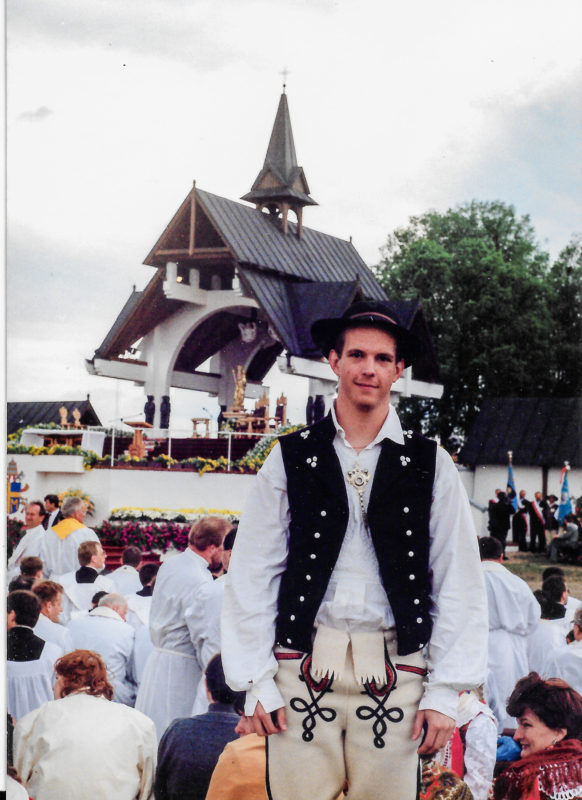
I went with the mayor, his wife, and his daughter (my student). And the mayor being just that – the major – we had great tickets. We were able to park within sight of the church (as opposed to several kilometers away) and we sat in the front, right section. Actually, my ticket was for section A1, but the mayor flashed the tickets together with his on top and we went in with no trouble. We were no more than thirty-five meters away from the podium and altar.

The whole ceremony was outside. There was a large pavilion for the pope and priests and then the people were stretched for several hundred meters along the Czarny Dunejec river. Many people held up banners (including a few in English), and almost everyone had a little yellow and white flag which they waved frantically at certain points.
First, there was a great ceremony at which a high-ranking priest (possibly the current archbishop of Kraków) spoke and the Queen of Podhale icon was brought in and placed on a pedestal in the middle of the pavilion. Four men in góralski clothes brought in the golden statue of Mary holding Jesus as an infant. In her right hand was a scepter. My friend Charles told me that when Karol Wojtyla was still the archbishop of Kraków he made a visit to Ludzmiez and was part of the processional carrying in the Queen of Podhale when suddenly the scepter fell out of her hand and he caught it before it hit the ground. People took this as a sign that he was going to be pope. Of course it's easy to say that after the fact.
Next, there was a mass, so that meant a lot of standing, kneeling, sitting, kneeling, standing. I sat beside Agnieszka and she told me what to do. The front few rows were reserved for priests, and when it came time to share the host, they took their little urns of saltines and gave them to whomever in the audience wanted to partake. There was a lot of chanting and prayer as usual, but it was interspersed with singing and music.

The pope arrived about fifteen minutes late. Wearing his customary white dress, he entered in his customary bullet-proof glass-enclosed car, waving at those who could see him. First he went into a small house that was for those who made pilgrimages to see the Queen of Podhale. Afterward he got back into his protected car and was driven out of sight. Within minutes he appeared on the pavilion. I must say that the people didn't go as crazy as I was expecting, but there was a great deal of applause and almost everyone was chanting, "Ty jestes Piotrem! Ty jestes Piotrem!" He waved and made a few signs of the cross, then went and bowed before the Queen of Podhale with two other priests flanking him. Someone came and put a red cape over him as he prayed silently, then he began the Hail Mary.
I was surprised when I heard the pope speak. He mumbled almost incoherently. Of course I don't know Latin and my Polish is still weak, but I couldn't discern one word from the other. He sounded so tired as if it was all he could do to move his mouth and tongue in order to speak. He seemed to gain some energy as he went along – at least he began speaking more clearly.
After about thirty minutes of doing Hail Marys, the pope spoke for about ten minutes. I couldn't understand much of what he said at all. I caught a word here and there, but not enough to piece the speech together. I did catch something like, "The world doesn't know. The world doesn't understand. But the world needs . . ." and I lost it there. I guess he went on to say that the world needs God, but he didn't use any vocabulary familiar to me. At this point he went and sat in a huge chair while several people came in pairs and bowed before him, giving him gifts while he blessed them.
Then he stood and left. That was it. He got back into his protected car and rode back to the pilgrims' house, then back out to his helicopter and he was gone. We were there from a little after two until about eight, but it didn't seem that long at all. And the actual presence of the pope seemed incredibly short.
The whole thing was a bit like a concert. There were officials making sure that everyone went to the correct sections. There was the pre-performance energy. There was an opening act. There was the post-performance chaos. And ridiculously priced souvenirs. Is nothing sacred anymore?!
To Strasbourg and Back
I made it out Friday to catch the bus at six. Almost all the students were there, but no bus. We stood, waiting, and I began sitting, "I don't know how many times I've told these people in Vienna and Strasbourg, 'I can assure you that we will be there,' and what if the bus doesn't show up? What if they make a liar out of me?" I remembered that the bus company wanted full payment before the trip. "What if they decide not to send the bus, citing this as a reason?" It finally showed up, thirty or forty minutes late -- I can't remember exactly. We loaded everything on and we were off. We made it through the first border without much trouble, and we were whizzing through Slovakia. It was here that the first change occurred. Bogdan told me the problem: "The drivers can only drive eight hours each -- sixteen hours total. If we go to Budapest, it will be too far for them to drive to Vienna, so we're just going to Vienna first." Fine by me, I thought. We slowed down our pace a little and arrived around seven thirty.

Somewhere in the middle of Slovakia -- a beautiful country with mountains which shoot up to sharp peaks suddenly -- Bogdan told me, "If you don't have enough money for the accommodations, you can use some of the money Wojtek got from the students." It was like he slapped me. "What is that money for, if not for the accommodations?" I asked him. "For museums and such," he responded. Suddenly the money trouble returned. I got out the information concerning our bank payments, hoping that Janusz had indeed paid the whole sum. At first I thought he had -- the amount was correct. Then I noticed it was in shillings. "We're in deep *&$#," I thought to myself. Before continuing, I'll explain how I arrived at the stupid assumption that this money was for accommodation: Talking to the mayor, I told him how much it would cost and he responded, "Wojtek has 100 zloty from each student," he said. Therefore, as we had been talking about the cost of the hostels, I assumed -- first mistake but not the first time -- that this money was that.
We arrived, and the decisive moment approached with nauseating speed. I began talking to the receptionist, hoping that we could talk her into letting us pay by bank deposit. "So you want to leave without paying and without giving any security that you will pay," she said ever so sweetly. I offered my credit card as security. She smiled and virtually whispered, "We don't take credit cards." Of course not. I went back and told Bogdan and Wojtek. "And that's for one night, right?" asked Wojtek. "What?" "We're just staying here tonight, right?" "No, tonight and tomorrow night." It turned out that the mayor told Wojtek that we could sleep on the bus the second night while we drove to Strasbourg. He only told me, "You'll be in Vienna 31 May and 1 June, so you'll need rooms there too . . ." I talked to the receptionist on Wojtek's urging. "Maybe we can cancel tomorrow's reservations -- and that would mean we need less money." I thought, "Yeah, they'll love that." They would have -- we simply would have had to pay the full sum regardless of whether we stayed or not. What else would you expect? It was what I expected, but I was hoping for some miracle. Finally, we just coughed up the money and that was that. For the time being.
Vienna is a great city, but tremendously expensive. I had dinner with Astrid that first night and a simple meal -- pasta and a beer -- cost 240 shillings. That would have been about 70 złoty if she hadn't graciously paid. A hot dog cost me 10 złoty. It was beyond outrageous. Astrid told me before I came, "I warn you, Vienna is very expensive." I had no idea she how expensive she meant.
The next day we visited a couple of places in Vienna. First, we went to a historic Polish church in Vienna so everyone could go to mass, then we went to the emperor's summer palace. Of course, the emperor had to have two -- a summer and a winter palace. I wonder why not waste more money on spring and fall palaces, as well as one for those hot Indian summers and another for the unexpected return of winter that comes every few Aprils. After all, how can one expect an emperor to live in only two palaces? Surely there were more people who could have gone hungry to provide him with three or four more palaces. Whatever the reason, the poor emperor had only two palaces in Vienna and we visited his humble summer one. We walked around the grounds (didn't actually go in -- that was too expensive). Afterward, we were going to walk to the center of town, but some of the teachers and students felt it was too far and decided to go back to the hostel. Those of us who went had a nice enough time, but I can't speak for those who went back to the hostel.

The next morning we headed to Strasbourg and made it about two hours before we stopped. I thought it was a toilet stop. "The bus broke down again," I heard one teacher tell another. The drivers had worked on it a little while we were in Vienna, but obviously hadn't fixed the problem. So we spent five hours in a parking lot somewhere in Austria waiting for the drivers to fix the problem. I called Strasbourg and told them that we might not get there until early in the morning. I read, wrote, read, rested, walked, talked, read, wrote. It was hellish.
On a side note, I think the Kiss tour buses parked beside us for a little while. I saw a bunch of guys milling around and several of them had key chains with Kiss ID cards, the sort that one wears to have unrestricted freedom backstage. I didn't see any of the actual band members, nor did I try. I think they're a bit silly, though I didn't always. I once got in trouble for listening to my neighbor's Kiss record -- forbidden music when you're six. There were all those stories that "Kiss" was an acronym for "Knights In Satan's Service" and that listening to them would melt your brain or something along those lines.
We finally made it to Strasbourg around 3:00 a.m. and got everyone checked in and in their rooms by 4:00. Then we got up at 8:30 for breakfast and the big event: the Council of Europe. After breakfast we got our lazy selves on the road and walked to the center of town, arriving at 12:45. We decided to leave for the Council of Europe at 1:45, giving us forty-five minutes to walk there. We met at 1:45 and got underway at 2:05. After walking for eternity we made it to the Council of Europe compound itself. I was in the front so I headed straight to the visitors' center. Wojtek took most of the group to the place they'd gone last year. After we went off to find them, we were ten minutes late. I was concerned that the discussion itself began at 3:00 and that by being late we would be interrupting. That concern was for naught. As was my concern about dressing nicely. Before leaving I asked all the students to bring something nice to wear for that day. When Bogdan heard this, he laughed. "We didn't last year, and it was no problem." I explained that it was a major international governing body that we were going to observe, not a carnival. "We need to look nice," I said. When we got there, I noticed that no other groups were dressed up -- nothing to worry about. Still, we looked sharp, except for a few (notably Wojtek and his running pants).
We watched a video about the Council of Europe, then headed up to the debating chamber to observe. I must admit that I was terribly excited about it all. We were about to watch a cooperative of over forty countries working together to solve problems of mutual concern. I knew we wouldn't watch any ground-breaking decisions -- such things take months or even years to accomplish. Still, I was eager to watch it all. Then one of the students asked me, "How long do we have to stay here?" and another said, "This is so boring." Of course. I had forgotten what I would have been like at that age. "Do we have to stay here long? This is so boring!"

The debating chamber was circular, very similar to the interior of the United Nations in New York. There were joined desks arranged in arcs with the main table and podium at the top of the circle. Around the outside of the room were the translators' booths, eight of them in all: English, French, German, Italian, Russian, Norwegian, Turkish, and Greek. Of course, I put on my headphones and turned the dial directly to the languages I'd never heard before, then turned it to English so as to actually understand what was going on.
We watched a session of the Congress of Local and Regional Authorities, of which our mayor is a member. The topic under consideration dealt with locally elected officials being removed from office in Turkey without due judiciary process. We were there long enough to hear a summary of a report about the problem and a representative from Turkey speak about the issue.
So how long did we stay there? I had worked frantically for four weeks to plan this, and the local government was paying several thousand zlłoty for this trip. I worried about it constantly for those four weeks and got absolutely no sleep the night before we left because of all the things I was fretting about. I thought we would stay for longer than twenty minutes, but that was it. I must admit that I was both disappointed and un-astonished. Not even the teachers were interested in it. In fact, just as one student had asked me how long we were going to be there, one teacher asked if we were going to be long. (Later that evening I saw her showing to a couple of other teachers some of the things she'd bought. It was a shopping excursion for her.)

After the Council meeting, we took the kids out to eat and then for a guided boat tour of the city. As we sat on the boat, I realized that the English portion of the tour was difficult enough that most students wouldn't understand it but simple enough that I could translate it. So I began giving a rough translation. And then it suddenly got more difficult. I struggled for a few minutes, then got one of the best students and just told him in very simplified English what the guide said and he told the rest of the students in Polish. Such was my one and only attempt at translating.
The return trip was blissfully uneventful. We left at 12:00 p.m. Wednesday and arrived home in Lipnica 9:00 a.m. Thursday. We stopped in Germany to look at a famous church which I'd never heard of. It was very small, more like a chapel, and the outside and inside walls were covered with small paintings depicting the history of the world (from a German perspective, I assume). Each picture had a black angel with a very dark halo. What I found amazing was not the paintings themselves, but the fact that the ones on the outside were still intact, free from the slightest bit of vandalism. I do not know if they post a guard there in the evenings, but I saw nothing suggesting that.
Looking back on it now, I'm not sure whether I think the trip was a success or not. I guess the fact that we made it there and back without losing anyone or anything makes it somewhat of a success. Still, the lack of organization (which several students noticed and mentioned to me) made the whole thing rather stressful and chaotic -- we wasted a lot of time. I've learned a lot in the past five weeks, and I think next year's trip (if it does indeed occur) will be much better. Thankfully, that's at least a year away . . .