matching tracksuits

fun in threes, sometimes fours

Another Year Back in the States

Yet another calendar year away from Poland. This is the first calendar year in five that I haven’t spent at least some time in Poland. Of course I’m a little sad, but not quite like I was. I might even be “getting over” this nonsense. Naturally that’s a bit of a lie, because I still think of Lipnica, that sense of complete fulfillment I experienced sometimes, and I still wonder whether I’ll ever feel that way again. At this moment, if I could, I would go back. And yet I sit here, thinking about all the nasty thing about the work — the boring planning, the Sunday nights not having any idea what I’d be doing the next day, and I think, “It wasn’t all shiny, happy days.” And I understand once again that all I miss is the interaction with the kids (primarily), feeling that I was contributing to their lives in some meager way. I miss seeing kids smile in class — especially when it wasn’t just be being stupid for silliness’ sake, but because I was being silly while teaching something. Like what Krystyna remembered, I guess.

The funny thing is, I don’t even really remember much about that lesson. I remember plenty of other lessons — the safe-sex lesson with class IV, “guest lecturing” in class IIC, line-reading exercises. That’s another thing I miss, too, I guess — the unexpected good lesson.

I got a zaproszenie to class IV’s bal studniókowy on 22 January. If I were living alone and had no responsibilities other than to pay for my way through the world, I would go, I think. Seven hundred dollars for a couple of days? Maybe I wouldn’t after all, but I’d certainly love to. I’d love to see their faces when I walked in — that would be the best part.

I actually got a lot of mail while I was in Christiansburg, mainly Christmas cards. Still, it’s true what they (who?) say about the thought. I’m just happy that they thought of me, that they remember me. Krystyna said that they would never forget me, and asked that I not forget either, and so maybe I’ll be getting Christmas cards from them for a while.

I guess it’s true about never knowing the impact one has had on others, and what makes it difficult to be back is that I know I’m no longer making an impact. I guess I never really knew how I was affecting folks’ lives while I was there, but I was fairly sure that I was having some impact. (Halina’s unexpected letter is perfect evidence of that, I guess. I had no idea that she was sitting there thinking, “I want to be like that when I grow up.”) Here I’m fairly certain that I’m doing nothing for much of anyone.

One of the things I got (rather, Chhavi and I received) was a letter from Danuta in England. It’s good that she was able to get away from Lipnica for a while. She said that things in the staff room are worse than ever — they’re gossiping about others when they’re in the same room, whispering about each other at the end of the table. Agata and Ramzes were a topic for a while, and Danuta told Agata but they decided not to do anything about it. Adam is a lazy ass as usual. She said that she can’t trust him in any sense whatsoever. When students come to her during consultation, they ask her endless questions about what he was supposed to have covered. And she said that there’s no chance of him leaving or getting kicked out because he likes it there. He doesn’t talk to anyone; he doesn’t even know the students’ name; his favorite lesson is babysitting; he’s doing nothing — why he likes it there, I don’t know. Gravy train, I suppose — he doesn’t have to do anything and he’ll get paid for it. I really should thank him when I get there. “You’ve really done so much to make me look like an incredible teacher! You show how bad things can be while I showed them how good things can be. You showed them that I’m an exceptional teacher! Thanks.”


Reading a Fundamentalist

I’ve had a thought about Christianity in my head since driving down to Abingdon Friday afternoon. I was imagining having a conversation with Stephanie about why I’m not a Christian, wondering what she would say to this and that, and yet another contradiction in basic Christian doctrine.

It all came about from thinking about a book of Maw-Maw’s I skimmed when I first got here. I was sitting by the television and I noticed “Satan” in the title, and obviously became intrigued. I picked it up and saw the wonderful title: Satan Is Alive and Well on Planet Earth. It’s by Hal Lindsey, whom I researched just a little on the internet, but nothing significant. The surprising thing is it’s published (in 1972) by Zondervan Press in Grand Rapids. Who made the decision to publish such idiocy? At any rate, during his silliness, he writes the following:

When man fell into Satan’s hands, God immediately launched His plan to redeem man from this helpless situation. What Satan didn’t count on was that God would be so just that He wouldn’t forgive man unless divine justice was satisfied. And something much more incredible — that God would be so loving that He would be willing to step down from heaven and temporarily lay aside all of His divine rights and become a man. Satan didn’t anticipate that God, as a man, would later to a cross and bear His own righteous judgment against the sin of the whole universe.

Satan Is Alive and Well on Planet Earth (63)

This requires one slight altercation in the Christian definition of God: either he can’t be omniscient or he can’t be completely benevolent. “When man fell into Satan’s hands, God immediately launched His plan . . .” This means that God was waiting for the Fall — he new it was coming, and had planned for it. This makes one wonder how loving God is to create a being knowing that he was creating this being to be damned because of his own nature. It also implies that God didn’t know beforehand — though this implication is admittedly weak.

The whole thing points out the danger in saying God had a plan. When was this plan hatched? Before creation? If so, then he created humans to be damned — at least those who don’t “accept Christ” and all that nonsense. After creation? If so, then he didn’t anticipate the Fall — and he is not omniscient. Of course I’m just butting my head against a cliché wall, for in the end it’s all “a matter of faith” and I realize that such thinking does nothing for anyone but me. It only reinforces what I already believe, just as this Satan Is Alive and Well nonsense probably only reinforced what Maw-Maw believed. (There’s a lot about how Christ came down and suffered for our sakes — this is nothing new. Yet it’s as if he’s explaining it to people for the first time. I suppose the equivalent would be Dr. Clayton reading only intro to philosophy books — it’s filled with stuff he already knows.

Speaking of philosophy, a chapter entitled “Thought Bombs” deserves a few words. He writes that

a few eighteenth-century men . . . dreamed up ideas which have sent shock waves to rock our thinking today.

The contamination of these explosive ideas has been so devastating that it has completely permeated twentieth century thinking. . . . Satan took their concepts and wired the underlying frame of reference for our present historical, educational, philosophical, sociological, psychological, religious, economic, and political outlook. You and I and our children have been ingeniously conditioned to think in terms that are contrary to biblical principles and truths in all these areas — without our even realizing it. . . .

I realize it is a serious charge to imply that these brilliant men, who in many ways made significant contributions to our world, were instruments of Satan to lead men’s thinking away from eternal truths, but as the case against them unfolds I believe the conclusions will be justified.

Satan Is Alive and Well on Planet Earth (84, 85)

That’s a fairly significant claim to make. “He’s basically going to try to show how some philosophers are Satanic,” I thought. “I wonder in how much detail he will deal with these thinkers?” I thought. Of course, I knew it was for the general readership — not for anyone with any background in philosophy whatsoever.

Before launching into these “thought bombers,” he warns, “You may find some of this pretty heavy reading . . .” A nice pat on the back — what I’ve written is so difficult for some to understand, but “it is absolutely essential that we understand how we have come to this present hostility toward God’s viewpoint of life.” He’s setting his readers up for some “heavy” philosophical musings, that’s for sure. With that, he launches his section about the first thought bomber: Kant. I think I’ll put the entire section in:

Immanuel Kant was a German philosopher. He never traveled more than sixty-nine miles from his home in Prussia, where he lived from 1724 to 1804, and yet his original thinking formulated principles which still sway the civilized world.

Until Kantian philosophy began to influence the intellectuals of the age, classical philosophy as based upon the process of antithesis, which means that man thought in terms of cause and effect. This means if A is true then non-A cannot also be true. According to classical philosophy, values were absolute.

The world at large accepted these possibilities of absolutes in both knowledge and morals. Before Kant you could reason with a person on the basis of cause and effect. However, this one man and his critiques began to question whether people could actually accept things which were beyond their five senses.

A modern French philosopher described the Kantian thinking this way: “Kant was able to go definitively beyond skepticism and realism by recognizing the descriptive and irreducible characteristics of external and internal experience as the sufficient foundation of the world.”'

In Kant’s analysis of the process of thought he proposed that no one can know anything except by experience. He believed that individual freedom lies in obedience to the “moral law that speaks within us.”

Kant, therefore, finding no personal basis for accepting absolutes, triggered the ideas which would result in the philosophy introduced by another German[, Hegel.]

Satan Is Alive and Well on Planet Earth (85, 86)

There it is, ladies and gentlemen — in just 237 words he “demolishes” one of the most important philosophers of the eighteenth and nineteenth century. One of the most important in the history of philosophy. And he did it all without having a single primary source. (At least he doesn’t include any of Kant’s books in his “bibliography.”)
New Year 2000

Concord Snow

g#i¥[m ®ä‚ÙŸÑŒÉ35BÇCN£»~Î&@"c±ÿJ_¬Ä¥Ô2)= íÿ•“ÜÈm´(1M1HK•UZ²ÔíZ2TÌFÓY|¤ZyrëYkèÕ´ˆYð"I*GÆ¿ìäc˜“L¥ˆiú
}]oV%{yä‘cw”¡bV¤µã–xpuFh¶|73µÔ%Z(šXÙ#D€Šs¯Ù‰¿ÕÁ)•WÔµZ´K1ÊB¨uäH좻ñ²¸b‚”Êáç/k—7ŸÞ!”QÚ´ã¾NØÒȬåôEд摳•ª0=ˆöÿ'%ÄÆ‘±6PÌ!Võ* ¢¡~Ñ)àÔÚ)ŽO
ˆ®Êב¨ä #ö»R™+Ýkd:ÚÂnÚ%ºOEWŸ®êUI^4ñ¯Á…Šmåé mCԑ¤ÐKõ„SΦÝG'/‹8soÌzµÞµq2Uà_I'$³H‘ÔGJԏ„š.L´šâGÒv¤ª¼UR¼JíÀž•añbZ‚9z¸þÒ4J
’ Ü×ùqU$‘POŠ÷8ªOêûÅB>Æýìàl©'ŽI¡fhNÌ8µ 
ñU[“’)‰·*Zj݆cZ ý‘íüتÛcwzÝÑdäÀ=p%éšjbÑéR„†ÕÖhÔ#Ëpѽÿ“•bRÄîSÈù­Ìš„Jœ¦c…Áð¯Z­S‘ÔtL6,ïó'[¹Òb±‚ ¾¯kt ¥r¬§€!ÏN5øøüg1qÆÉa–FéâšËê:‘šåmZ×@Ô.À7œk´ÓcU¯!"K0ÌÀ@Ûª¤W—5¿.Úk ö¨úÖF·?¼,jʏ°å'ÄÞ£/òÿ«†Q$y²myÿÌZ$úÊ7—·³xš+Ãúk-Z  éŽ(=K*<’oVîxâIV²!‘ø¢“âw,,ÿÒà—Sj:Î¥<à^JÞ ^¹³à´Í’ä)jÑvz-Ì.²)VG%Rp¬b$SøV9!Œ§š
…Ò]ܕ¸‰IåmN<ˆéRGÙþoòr‰æ½›¡†·gžR´Ôµë}fÓBx4Ë]Q==B/Dº†¦Érø~üßS<¼<÷n†ä‘jžA}?W¸Óu=ECƨþ¸â¼ã µ@gV<·]û®FZžàÊ:kêM3Ë:‡—ìçŽTŠæ6LF$/BŒŒÃ˜û³”O4àOwÔߘéWŸ"­ß ¿¤U†”P!¡Þ¿õ
~œÅþS¯áûÜ¿ä«þ/÷(Ø?+´Éå‘ä»`Îì}4ôQFý–»b{LŽˆ=˜;Ö·–<½£êßôk¨*È&x]Xӈ%kÕ~×ò䣭œ†Á‰ÐÂ'r–[Ùù^ÆêÒå5xÍŌÍqf·5‘ˆb$
t»â¯™|‰¦hÉi3·!(mf;9;û
8’7#NIž<qKÏÔùIç¹{«¿«JzqBFƒ%€+VÌÞæ&MPˆ¾a·)WV1säÿªÞ[K¨ÛÆ!L’XÔÒ¢€[ÓÃ&5,Èà Ñ)v¡¡]ØË4
G1Ø
öÛ,†A!mr‡ ¥O-h2ë:Ì4yîYR!ˈ«v' 9ÙD#ÄSŽF™å·å%ĺÅêisDCȐN÷»á@jñ–A·ú­š­WmbÀúþž&C.Mù¿òã_yô׸ŽÆ+J«Ãõ@ÑE$Œ6fZ°ZÛ#¤íÌY„Œx¸aüæ94¦?æ½M
ùô¹^'¹Š¿XôO ®¦…KPfßQ’yòÔTŽ+›3õ¹/cG‚ÿÔýà,µ’OI€Gû+Èü9®ìýtµ‰z?‡ý˟«ÒGÛÔ ŠÎ«}z•0Pî¥Áùï›w[{¡Úâif–r2±gâ8¨,k°ŸÿÓó7%YÈ2¥Hä6ØíïÛ$©Î™eg5ý®Ÿ©jSÛÙ2ÆâŽˆÒ
¨†¢®~ÑÈm`3ޑVËN’¼È-yUèPБJ¾W<”ÛW~Ooü¦_Ñ|«Ô$¹·žf’YCO…©Pµ=›|×gÍyÛgaƒMû°w݌ùé4Ÿ6~b‹rوQb[”u’«ä¬O_‹Ç$sK30¿¢ˆéᓠ$I6½ü¸òU¼ÙÚ^Ü}r8c›êë"¹þòFܚñ_‡ìæ¸ö–CR¡Gýӝ΀&6Íþk9üµü¬òmäM<O7®œy*Íñ
žßùF“Ôäà™áþ£=L†”‰_ñI8ó·åg—í4Ùï#õ¹„oM¶5 dW*í—K8púñÎ2ãiÓê†sRè¼ïÉ¿—:±¥½ÍÔ-%ÌsÎgÄs@K CÉç¿Ë.èþU»Ô­4øRkÂÒ`yqn¼”ò¼rŽÍÖke”x“âÇÅÁ/é4pc ŽøxŸ8ZBº|GMÊ
‘_µZӈ¯óîÝÒ²s—uY-­ )žñ¡¹Œ™#ôÚCµ{)ä¿,¤çŸèú[† mý/Rqkä]Fxµ
_ŒV6òÚI5´˜ùqQ5cÄ5+•Lx„G;f0š$÷<ù uÔ¢bþ²‡¨âÁ‹ÐæÂœÍèžNÖ5­;Íö:TVff·õd™ƒ£Õ$ôñÍn¨Äá2n’'ƌ{Êwåm;ôœmõM}쮬bV rÅ[Ó
Ìþì
ñ_Úl§ª2¾Nf£I(‘Šaçë9ÜÜEn©dö…׊‚²¬kû=2ìY8†Ýîltwîa¾N]4yþÆáŽQ}JÔ0ì7Ç´¢e§òa£úÃ×<‘d.¼Óæ«Añ@/ÒCMŽãõS8Ž×‰ðp×óx]Æ!R—½-ó=ÅÔ¾hµ¶¹˜Ik¦ëöÑZ!QÅchªE­OËìÈâ «¸¿­ÆÇU¢|ÞWùŸ“½«ÌŒ“^µÛ«EV‚±?f?ÛJQ¹Wálë{*Dà¹Ôg¢Ç´
¯´ù§•!EFfä9¸ÚƒR§ì¯üK2ç˜DÕˆÆH·¢ÚùóJêþŒNaG¬ZAɀæ®ÙÍäìÙóßÔ^·mÀ¦?Vèm/R½Ó¼Ãªy´ÅVWVïmrHñ†øBÈÁ¨Å8R•´ßg7z|8„;ž_´3ø¹¥:ú™_–.üµ©~_ɨj±±Ôe/“;•xÔ9à€~ÀáǦ_<’gãO0’}N+»5
¥há‘ã‘ZÄT<Ÿì­¼™<Àp‹Óþrt÷ÄþSÑ|óy7˜|­u8
öQÇa)HÐD vY#*²HVNå8ÿ&ht8ç¢ÌL‡ùޟêÿ¥w:¼à5|O-·Ôõ
WIµò¤m
Ø[ÈóEtÈU‡SɏùU΄€
õtd£ôM/O‡IÔl¦¶žóYr’éÏjL‘t§cYI5þNX“¿“ŸÿÔó$pJå՟I+Óo|+-Ôü·8Ñ,µÛi‹Ê–Öì`_€’ƒæÃùr˜›$y¶TSo.™$³KqH#–¾¥ÁnI4;ÚNôʧv݆©èÚ¾“.›cjÚEÓêv6rzRjäú‘NÒv‹ˆýª¯ƒ0%€H—?¨Â Ãm59ôïÌDÕí¢:3,Vìë€PbV«_ž|XxIa‡%fâ¯÷¬ÒûÍSˆí§×CÚO%¤öÒ¬(¨I‘½XGÛØq’Dý¯±Á3Y=!8Ïâø½_ìݎ-GA{üKÓ¿+/tûN{Ëx嶍mã)¤U†êÎi±¯ÙÌ
'î53ƒåÂìðo]ì›UÔ´Ûíî+y£œÄP† §î͟Hdàúºy6Jš]ù­æK‹%Þ$…ÞʆċÍUÔÇð¢¯$ëËÔ?cöygSÙYYˆË`>ŸæÿÒNLžg j’iìú|÷Žb¹µ‹ë$pšn3).Ÿ²ñ±_ÝÓü¬ÚêpŒ˜ø€£ áŠc3ÅÂwÙèšÕªÃå¨4§R‹¦XȞB•@Ÿ`ÅüëJ³ÿÀòÍNp›ÃŸ?Gù±r ;î8xy•¿åã~™šîì%ދ¦ô‰}FwNq¶Áكwlè?”î
²KÏv~©×i¸M*ûMö–šŸªÒXD«m2)
â^Þrþl¸i…ÆVeâþ›Í¡ôÿÓėq.©-¤÷òY ¤ÍӃÕGü8+~ÎCÌxo‡‰9¸¼ÅWÂñ§™oXT=½ÍÄO4;|N$ªòý½‰ø¸œè¥ËàóÑæßi¤é/e,¶é忊^eITR¾ ä¼¿—9y旇I=6,#Ž'‘‹óý„skW?XÖl´ëi¹­˜H´*œCTÆÀõø¸ÎìùÔFR¯âq;@qLÜ£ü×y‹Ì:4wì%ËEf°°Udg•aãUæ¿c•>ÐËtø§[âq3Î$óè´
rêÏU‘Sׄ 0ۚ0`OµGÙ®fê1 ÀÄò“‹‚F±Ì=Ëò¢æ=mõSQ&º»<œ‚´ãð‚vÛ8ohÁxàj!ÝiÈ󒇿eµ†›¦^_é0}RþÇPÞzWãXù©P{|Y/gòežHÃ)â„ñžÿÂÇ]´,txfµ®ÝjŒ÷÷'žz=Á}ƒ0#âáQ_õsºÁ„c€„~é'"M”ÞÏüS¢i+€Àn§K»u$qŒ
ê!?»¯/°ßŕž Êû½-Õ(ƙ?’ôm3Tó,v7³<¯
Tˆ<"©*¯Yùrœ‚R}!²CÎEù½kså]^ÛF‘Šé²Q“Óeõd^ŸÃOËÃN[âa~o×åEoi,ÐÚ4Q¼–üØ©zž,+þAï–
˜ÚO×áÍå´¿á% 4 -T¥í¯üm‘œAضFUɗIçï4YùxC<ÐÜ
@$sŒD¢%º‰Yj¹ƒ‹GŒLðŽróf‘ˆ³fL.7¹¶ÕJBƃ) !éF_zæÅÂ<žƒämuD«=“HÞdšg†æJ…–{P‚#‰î£–U8÷ý,,ƒ³ÿÕå~A¿òm†€òê’Ç-Ğ¢ÏfêI§ì0§Ú¯Å¶3Œ‰Ùb@æÃµ+ۙRÚÝÒÍPz( ¢'2¾ûá6Ìü»q6Žºå‡´ie‹PT,àžârr餔H—ãÒ­a{|ºZ•ªI‰.D32rgIËÇ×àWåÃàâɚ™âf'Õχo÷ÎÞ3€•w^èÿ3k·:L‰¤…–t¹XÿܓLĵAW>šõ+˜]9Éë>’ÑÃþù·,ãsCyÎm7˅ýÕÔfæva4B”
«Ä'o‰À2ûKM¤ú98Ú,†;¥å+t·0ÛÊ
½Ü东J€öTœ×êÉ eÎ%ØÛ’'_Ó®u?5i¶îÁinl£B­:ր´€òUªònYn
ŊGrOÒ|ƒŠ@_¦?Rß(yVÚûÌwÏ' ú±)_‚nµ®Ô1­(hßk.É9ËÁ¢u=V&Ú®œdŽO¬ÎßîÉrG*ŸŠƒö‹ñø³&–rÆe~«q†ª¥U²M¯ùjU±ix¨’¤XÄ({¯Æ‹ßþ!‹¢woŽ þeyfÙ剦·–./)ˆ0ÝUÉޯɿgös£Ðåì8ZÈF[Õ1ac{eå[Í2c$Ú´ÉvÉ'©Véá~:©5}¸«~×ˑ¼¢Ch²ãþs±îeþLJù¬f†4‚äCY½G*I4F€mJڑbPؾšÐ/­$·ú•¸Ñ’‰m-h®Ô
ÆVªz{rû?êæÇA¥”cs¿_›®Öêď¦½>O-óU„ÓK§¥¬my¬ÝØÊ—ößWá$R‡ø½4P7¥x¿òæçÏmÓ乑BÍ%º_¼É0”0™.Õ£…«êRT~ÎÕ­rSÖcïo&QÓLü^‘ùm«ÜyRÊõ®,Þx“ÓMÍh’–ã@;§!LÑö§g
a‰¸¬9üD,óǜlµ&òɐD5”–æt!™
 ‹áJôâíeÚËðf%ֆ,5ZÈÌTy<ÛC°Òí§k™ä<aŒFe5P_‹œµû!¾Üåâ<œLrˆæÉ|Ÿ$ÚµíǗa’ãÕÇ;û‰âchÁ
ñ±ÖdÔHGé)åôÓ¹¼ÍÄðuF´Œ€0@7QÅê9roæã€Ý±%Fu?4»
2iìŽ{«5‰K¤¨Y›áª*~ÇÄø*‚Aµ+í/V}oO/õԋgmNò¥JoûC• ‹ör`ô,IgþM¼½ k‹ªê7v³°–`?y,0ßoSX“”äõuPiÿÖóÏÔ¯!·–Õ¬&úür„.ª´©Øü_dŒ¶ØÒô·»7ûib©
høŠTÚ§L=ÌÂoÖ%•šòîââÔ¢údíȨ§~]¾Ùʋe#ô¯(귎 óËk½ªòú¼.=#ˉ
OØ
¿ýœ„ò€(c²VéZŒšºi),b
•Š`C†S_°iɁ§Ž!V‚
Ó7ÒínôøB[H%½VsåÈPèG#˜“Ÿ7'”y&ðèó^]E;+L«°tñW «ÿexáfˆn”¶°^± þYéÑ[«ß¨º¸4-$€T5;fHÅÈ8òÎS
OòëCº·dôZ›;·ÝÉŠÅ&‚ÇõÍ0ù^úkJ9’é&h¦_„rãVZ/Ù,ƒþIæ›6”ñDS¼Áª‰‡-åo>‹[óš¢yŽ]šI8Ávfh”T«ªnÑi¿káÌã‚>.#.0Ÿoå·ÐÞ4jº‚ØI¨¢=ŀø`<֞™
SïÈæ–ye0qB<B?LœØ˜ßö/FÐ2ü¼Úh¶Ð-äÔoQ¤ŒÕ+Ï©.À#Û3ôXgð˜éÏùίS MßõQ÷žlŠM&s¨Ú}E„l=2Þ bÛR´ø·Û£M"@ˆÇa{ó`·–_¦4;™µV1ÅrDåP
7SF¯ófnrÈÈnð}HšÏÌZµ½¥óJ‰§Ìú…ßAŸÕø™Mene—öyæÃ9¸¿‹Òчiê–,^x-§WQ:žª|}›2·qv§¡~^-]Ém'T€ m$¸”Íê‚8:)#ámÚ_‡ìǚÍFñēǏø¶ÿJçC,D
ÿžÙå8-QÖ´Q¯$+ºmJƒ¿·„ïn’#Ò<žuÒ#·Ô>³£Â±ÎÅ¢6î$”»üb¬UW¢oɲíC(TÆãùßJ5°Àÿ›õ0KÛß2 ]_9²ÄфøÏÚjNTͤ!È:ÙÎG›v!/è]½"UYÚR¡™}'Š*‚¬§âQɛöW&vä×H]FîÝà{{W,ÎbU‚JÐvâÄô›~OØÅoçyln8Ås4âOO÷|jü[Ÿõ²
Ŝ9¾ˆk[x¡´¶„q/¨È;r5«|똲;7o üèóå½õ–‡§$—?SԐUP¤³ro‡-ÓBŖçрK£]
#QŠG-(Wjž™˜ÉÃ}øÇ™#›ˆKVºt¶öðéó'Õä‰ùz’!CîX)4ãµx…É1<Ù®‡ä™fÓ/…¶¬·7ò#Çn,$nAVµuSào°yý®9T²W0Î0î)/’ä¸òö¡gõ³ÎßOži®aqF¢rV*OÀ¼yÁd¦-;²_Ì-të÷º«¥Æa´Hîs½]ȑ•©©û_²¹^8ðØ,²KŠˆÿ×àºÆµ.¹¯ÜÞ žÊÞR§‚±Ê€îÔh…lÀÉ'¹»™d’ÞYȕEcZ²Ö£‘ëô`¦@²}/MIla»»¹a¸GtŠ"ÇélÔ2˜Ý‹}¬®L‚œÚ–¥dñ®šêmÁ©ŠMèÃí_‡~ùy²²93¯&µ¶¤³jW6‘‹–<ÑWZÀQJž=¹m˜¹"c°;9Xä%¹§ÒOm4ރFæ…JR¢ Ø“þ¯ÙÊøkvW³?ü¿móZŒéÖÏÕ¡9“~r‚I4~8úm®rzÔdÓaÓ,
¶8•y'熟hm­n¥¸ˆŽ­$ý)CC_jÃÏáÄÍ<öÜð‡žyBîïÊv
¦K¦[jºf¤ü­/QÃ;²·ø˜~ÖadŒ2ϊÌgꋔñÄ
¸Ÿ¦A8ó“|׿§KɊAi(ŒÇexQEG Çfoòðã͏<<ÿüæÅ)ù*y{DÕü·¨%½ÍÄ­n¯ÆÎK•DTäñ¸SB‹#–[¤ÔC $}_ÄÕ«Ç(P»ð³ÍZ÷G³Ðçžòdãñ.eèñLJ‹«-NB%Ây0í'Ìw³Çè(´¹†8šTŸH¿%b~È©ûãþ®eGhÍ6.^êG’òiL)#¯Å½>$ìZf~BÐu½W]µ
û¥²!å.(X0Ûà¥~(ò¬‘mNÔú›Cµ¾·²³§¤@ôþ•í˜Ö[{¡4É$¯0’g‰¡fãPQ… þ¼®LâH|ù¨6«£k—zD±’eYÇÅOV‚"õR'æÉO%¹cD£°@kZ&¶³ÊfStéY$¸…G¨%™
šÑY¹…ÉC„
'"M”¥m"šHc/Xê=cÆB°©`«×€ûC-k2n
"ÆçÌ0éÑÝ­­³Ë雹ES¨‘…~B›WDՃÚèúëI;‹¯ª»,fÝÊr+P®²/`hÔǘE½.OÍ/5Ùè֓˥mÛê7Q’X<u¯ÚFìr±Ž$û›<Y-‹Ë·6¾¸óíü·Ú‹eŒ/Æ3ýÚ~?±‡ˆ_­®Ù—“<ƒiæ=mF÷×ӕ—ˆ±u
õ󔚳qÿ'#)S(c±»‰´!swzÏ,óZ;Ϫ Jú‰VcȦÃýŽ&ù5í͔hžX×çk»»*é‘HWÒ,—'âg¢R¦œ›“~ÖFÅo»d`zR€ÿxŸ
‚£ã5¯]ÆÌ8¾±¡e8彪]i¾QºòjV®QŒ‚UaÈÈH¤»œ X;¶š<’Ï"y®ßKóJ¬Ç„WŸ»©Ø‰Pü_ð@æN(’Lå»è+ÈåA,D:°ØõŁE~ðM@´Ü@$•þh‹ëØô¸ÕD¬chc“‰I£õÍsöNiuzI£´]¶‹ÚÀ4Û//ézÍ¥ö­QÞÞ_
8Ÿø¯xȍÿ½hÔKüÞó3iš…¥¬w7ðÊßé‹Ê4%Éa°Û’¯Úÿ+6Z}7„HÛúßΏô¿¥¨–;“ýT¦{]sÌZc
WOŽ5 ÎÜÄþ§1ՙCã"Óá?µ™<¡æDY®ôÙn'ôÜ´sÆÑ¥½»îbŒU¡ÉˆŽm[½òjâm4ÜËHÏ4‘É2s<•AU«1cû?UœoL¢h¾ƒÒÑZÖ27Rµ3½~¦±ÛÃêÆH|uéï€ù-¾düÂÕoäóN¦,§’åu^1†¬´sJí¾dŠ/å&òì×QÞݳK(¸O»)ÆGªÈŸM|vÆCïM«yUÒ`½º½ÖtÙn£–.+´†.2P
’œB†æØÊ'£ïH':Mr‘´1*¼OBMW­kîrÄ"—'&ÄFª¸™ÅŸæ—,5;¦Ší$GÝY¡¨D›m‡#ñ†ŒàA¦¿5Ä-.¼üْÓP‚;ۈ…´éÌð`̵¨âÃoˆaŸ–ÇÓ ~™"QŎTKóŸæ}›ÙÇmh’Ý^Ão,¿¦“왌‚ˆU“‚òoåû9NŸ²gÅÅ3³/ÏÆˆØ'ïü¸¹Öf0:‘&V~g—(j9‰‡vÌýf<Ƅߏ©¯I—Ìú¿KЭ?9<³¥éiú:ÝÄ%ƒÇ:¯Zý®d­ÇÃ01ö~a;'oô͹5˜¤ý"§æ†m?˚–ÍêjpË*“È?(Ÿø<ÙN4ºÙ—õJoù~ÓC¢_Ûy´»Û›z9©“Î:°u¦KÒ¡!üq/^ó™¤ùÕ­µKÁú5 +
¤ªLq<Ãã›á,µïñÿ.gãÆe¹ºoF[òy^™5Ÿ—õ{‡¸Ô"»·»·dŽâՙýB$yòU§"¿’Üs(c<Ȥ嘐 “kémi«ÝúJ“ApÄÁ1<è­BJÐìêvÂã¸gŸ”Aíõ9—Ÿ¡"OÁ˜ŠG"”nŸåS*ÔE/Ñu+«x}$nQ¨ª½ð9…mÀ üǬ]Md`ÌY¨)Ôöù`†Ilð3K'ø†ö3)'ôÈ^€ŠŸEs&<š"—Ïe3/«Åƒr‰Ë—MžUé_ÙÂÊяq
¬Ñ )2š@P?ÌbCC
"k¹Ñ"tŽ7©Í|Y¶Û
Úkoy•f½µo­‘L&ò.:·
Š{ý¬<B”ÓŸ*jQë%®“¨Ì’ÜZ«ÝJŠL cU“~.Ìy;3`˜£ao¢Cw­êözŠ„—ëvóó’2†‚!uV^=H^'$"
³_ʛ¦ÓœÏ¢e•¥âÕB’Ì~Âä&<ù2Ç:/Oó‡œ<¥æ=– ¿ÉyddP´o‰hi¸ÈÎ$tm9"G7kž{Õ´w¸òޏ+Eka9kk¸]¢‹²Ô2¥9ø×'¹j³T
kåÿ-Ýyâw×fšCuE¶3F#s‘ˆøþ?°£ý–FsáÙb QÑÛÌ2êzŸ–nµDušR’J‘-ˆ7
ӊ²·e23ª¤tÿÿÒàÚǛµå¬ÒwŠW!#z3)›îËZ.ªü9Lµqz®»›ã¥‘ßÓ^õëå)Ð ¹½Ó ÙAYDŽÀun1†QÜ$£OÞbœy[ͺG•î®®aŠYõ5êöÒÀ}‡f—÷œß“ª¿ìsS¥–~|1¾&QÏ`ÿLt¯ÍÌÍä·ÌlÕ}f1,‡$
§Šrä½[/:C`OÍÍçW¾wÖî577wff™‰•Ï^Ljkò=³68ã@4™Ê[’‹]T»‹ƒsDmÍG|•5ªÜLÒE쑡YËKnÉÀû;ýžYÒøÜjPzo'§¸¢)ø@Trހdv„Q3XÛ¡OªKÉB(‘œwޝ†G‰—
a¥Úës µk[q6)S8BÑ«(ö¹ŽGßáÈÈI·z_“¾»­ùB
>XÑ®,/`0»1¤R£ƒ±ûAySù²¬°r´YÄe~Eèåå´}ZâÿމI5ی‹j?˜ÿÈDQÙLâþÌÿ˜^Z՗ÎSY!z=­ÄŒDcˆ§3PÙ·ÓÈ;ÝÏ>L2[hÑ$’:RnY’¼[²ö̳¸ÎÅ ìíÚY}4NlTž( ;
×oÀÝɑÙèږ›åß-&•«ù{U2ÊÊ?IƒÊ`¨Fܕ ;þïüӇyX¯æµØ=^áämB}SI‚òtkIæ…[u¨JŽ§Æ™¯É4ßüE¤Ç"ÈÜ瞽 ýåD <ãϺ½™ºÕìí™ I¢jÜ êM)ó8oµ¸¹!Ռi–o5”—Ã
-cÇoàò4‡Šÿ­'Åö²R;ÓW®£çl­¤Ó– Sà”ÌçÔW¯ÄÃ{ñ&™ï寑¬/,STÔ#ID(b*¥XWn[oAÿ7e²5°rñãe”kJѬ¼½©Ç§éñ8¹Œ†€Ç§ì‚d‘e™€Ð|ë¦z–pOi#GC¦¤¼Öi+H•ØÐÑùÍ9|†î(ežGü¼ÔÂiW­n’Ú:<—2—D¼X4Qñ#árßËáWø²™äæ#wJ폘¯5}BÖKJ(›Ð’¨cHÈp"ü¥zá$×l»ÌréÖþJÓ-´Ô¯-Ž䈼KF~Uòžÿd!f[³pŠxßC:CLÑIDž`°ñßáý¬½„6fZOÔ³e§êú“'—#Aoqõw0˜œ¡z4`
Äû¸þ×Õ­‡©"ºòBÝ:ËÌCOE¶Ÿ$ò%ÙP¢âÞ (ªŽUhþ}—ãË ±ºäÿÿÓó¢ˆeš3éEC°â$â~ÖýXþÖL°†ËTÓ¡òØ´„Èú”¯(d¢@Võ9 <—)”7¶Ñ:‰Ð´‹íF;†ˆˆÍ¼,Î~@õ¥z²3¢ BO%ßÕ +ÄÅVX”åÖ¦ o÷ä€ÄÈÒè|½­Él÷‘Y¼‘Ddòޭ忨Ú]]Á'ÖãK–Š.LœM
‡¡Ù«ˆÉ}ᮬhiP}d´üZG„C×BHœW•NG†Gšx¢=„±%ª@ßf„
ÐÓ§^ØDPf¦Éng™mããŜԀ)Zý8DX²ï(k:šÖ{§Msp^B&n>¢…T€‘¿kü¬„àO"ˆ
”eާ{¨_êºV˜¦Ÿ¨ÏêR€•VPÙkJœ& O0ž+4:½CÊþVŠÊÒ(#R>àPŸòùG(‘¶øŠN.¢x‡(ýOòIíòßIbºÖ‡eug-¤‘F⠓¸Šò¡îŖã‘Ú'ùÿÌÖR^jiõ4‚ô±5 ,œŠE$ñ~ÍÜ0uVc=”|£¥¥†®ÑÜÆÉ©[­Â][Ì@Uª‘íûU9‚FÎÂR´ëòoI¶Ô^ýo£3’C'"œ¹Ewf¢ý¬ŽyÕRjËè‹K+;Xq‚TUARXvÌ%ÈPÀcŠOL‘“«oBzœ´‘ßhZÆ©au§Å]U*ÔQó=2È÷´ÊŠxæ¥m®ÚËu§Îe†XÔ«š²…qñ:/zÿ._Â9¸Þ=ßé n$V{m©Y)±‘k½64c“°DúWòWÌڏ•íày£k˜Ô{îãì¶W”om؎ÔÏu‹ëK=:i%u) A•U¶Ý>j‡EõÁ{uñÅëKtÃuåÈüÔý Ë²O¹Ã¦m j:›hz´ª£L‹“¥ªŠ#‚)GöÊ$ŽöÈG¹çš>¯¤Aumé˜$ºSÚJ´Š“ñrø‘³"Q¨N˜¬§Ò-­/Iõ­U•'§Ò"¨…z‹«äx7Ù<[+yfòm{¨ÜFN—¦þòG©ø$‘YŠô+Fjš|9ŽJG'›Éæk™$ch§”S)"JtØæøeÔDž)øÀHü˜€o²ö¥g$ʟÿÔáp¬³-ś<2D‹[ʔcºªîÜCïêÿ''M<NŠÙ£DIJBÈO*+¾äæÄÅ<hí6òk¸øäõâ¥Ú½IÖ tÀq‚Ÿ¯ƒM·‰£¸¸gÉöP}¢JŽØ‹Lþ¿uk[hd—Ôtj_÷bjñÈð„Úµ¶³o˜b}bÆû[yGÖc˜óà 4ãþO¶Q*;·u¡^þkË9DwvÂ+f^1¤Lj¿¼¨_±ÇŽHl›vºŽõm¦ üd• kövZ5<qµ¦måËm
ýîb¹wsŒŠÂNx´¡€jŸò²©d!²8Ábú¶™i¥ù‘´Ë(ÅÄ1:úW¬¤€Hf¨Ríe€Ø¶²(Ó'Ò?/üéªØÃ;³¥µ´L–jVTsROÙRr&q¼2[ò,0Á}v$¶x§ŽWd”–z«Pž™§e€zå‹H?vÀ­w¯ˆé¶c·£$)^øPÇuèã[&r¿4R7
U¿¦J<Ú§Éó1{™bÓt¨."”nÏ×ü¢6'³x7æ.¥6©­^È¡"‚Ð_*¡kØþÖ_N4–§é6ë¤ÓI¡¸ŠÊ),jô£†þǖL’[!Ó%×´+ÑèÚMnŠQ-
†#§jàâ-ŠÕüçæxˆ¶ÔíY­åjòeÕp£òği?§? ¯Wm€ŒtøqâM!†›©ÁpR^qð~-ÌŁ¦àømœÇ4úeÁi#k‰äøšé ø¨jh@¯lÚeä.ßXólCZÒÆfg‘E-ÕC
÷Á3CdÀYÝæîÃ_žÇK.4‰'&Éɦ´â4¡oæã‚2±¿5£A«Ã>ŠI¼–8® t˜Á›qÈquÓzõÂ7ÝNÛ#4Zø¥ÈúÌ&æFIîù$‹ÌTo"‘Qɉÿ‚Ȑ ]Õ¬-¨ƒòËü@"@Ƅr+Aþ¶R^§g®,ViêNÐ?
º†‹JïÆ¢äØ`úlù¢îþՉG‘™U˜*Ã §í¶©¤s·§i¢väfb=:ÀŠþ¼¢›F„­°5éóÃHHõËtxd¤ã¯ÇNç­0†!_ÊM/«ÜÜO2[¼¤Jå@,XÈ +¿ÄÍñmü¹“ã–žA¡Z]ÙÃ-ÔVÂhd
ëzÜe{’
þÖõÈÎHˆ!n:YÇèÙF‚5EG]”S·æ±4õ(]iw:C…nh}E`9
t¥2¾Mñ6o¨Í";Ø»ãä…véÐÖ§Ã"›`º­ÛÜÀP¢²:ÈðІäêÝ)á“
6Æ|ÁŸª_zqÚúŒI½Ÿˆ†§íûY8Ø
R;±[ýéóXм©p}NLJא­¿hÿÀ呕±*Ú}œout÷wwî¿ñށy6ýéË{”#4!lu{YµX¦¸†ÞX‹ÈïÉV0v¨5&ªÊÀNÛ&<÷zö³¨iº¥Äm¢:CQu%ýœÅ;srɾImmAåòEq'#,iM¨75ïñ`#’æ•§‘¼½2ð~0„¥LrTøuÉx’b1„òO"èˣƶm,s(
«ræ_–GÄ,ø1­_ȁ´çStêΏ„úEwÉ»±–=žSqäËû™FIm ¸Šá𠦔‡y+ÉÓÓiAÌ¡shÉgøXÓï˜}bxd14ˆyÆvÜ©§Ä(pø€¤—ÿÖå­åO2ÝÆ8#n^´£‡ÄOß|ŸqÀ)΃FüZë·÷*ˆœ]a*ȱ¸«ª«èÜr2å³8÷fžQòþ‡©êÎÖfêe¶­ÂÚ;´Ÿ)«üG‹|®FTÛ K¼Èt?6kiú-Z­S8]½^ ‹nS–ƒeŒˆ‘ ‘êZ‡˜lLÞYž2Ø·§ýØj©ß—!Ӓ²üUÉ©¬’6S‡Z×mHŽÆé} ¥$šü<P30?<—<ÔHŽH{»5j×J'h¤’å—€¬Œq

Boston from Above

Doubt

In its severest form it can lead to the formation of a new religion. In its milder forms, it creates novels and philosophies and spends much time discussing them. I’m talking about the human propensity to create worlds – castles in the air, but without the firm foundation Thoreau speaks of in Walden. Tonight was were talking about Schleiermacher again, and I was feeling the same emotions again – the same, “What the hell is the purpose of this?!”

Two hundred years ago, Schleiermacher constructed a view of religion based on what he called intuition. Tonight we spent two hours discussing our constructions of Schleiermacher’s constructions, then commenting on our constructions of others’ comments about their constructions of Schleiermacher’s constructions. The discussion – always in present simple – treated all these constructions as if they were as real as the computer on my lap. The discussion raged as if it made a difference whether Schleiermacher’s theology was of this nature or that. And the emptiness of the ivory towers reverberated with this for two hours – or some other poetic drivel.

That’s one example of world-construction. Another leads to the following absurdities:

I soon found out the reason why I had received such strict charges to keep [the plates] safe, and why it was that the messenger had said that when I had done what was required at my hand, he would call for them. For no sooner was it known that I had them, than the most strenuous exertions were used to get them from me. Every stratagem that could be invented was resorted to for that purpose. The persecution became more bitter and severe than before, and multitudes were on the alert continually to get them from me if possible. But by the wisdom of God, they remained safe in my hands, until I had accomplished by them what was required at my hand. When, according to arrangements, the messenger called for them, I delivered them up to him; and he has them in his charge until this day, being the second day of May, one thousand eight hundred and thirty-eight. . . .'

This is Joseph Smith explaining how he came into position of and learned to translate The Book of Mormon, which led the formation of an entire religion – or at least a sect. Undoubtedly Smith just pulled this buried plate nonsense from thin air! And people believe it! No one thinks it’s just a little too convenient for it to have happened this way – no one thinks that this leaves the door wide open to doubt Smith’s testimony.

Concord Fall

Digital Learning Interactive

First Day in Grad School

We had our first class today, and I think I could have easily done without. We really didn't do much more than go over what will be required of us during the two-semester course. I'm a little disappointed about that and irritated. I'm paying for this — and it's expensive. I don't want to go and waste time and money like that.

But it's possibly a moot point. I had a disturbing realization this evening. It was nothing new — I've had thoughts along these lines many times before. But it was a new twist on it, a new perspective. I'm always critical of professional sports: "Grown men [occasionally women] getting paid to play a game!" It seems to have no importance in the grand scheme of things, both in the immediate future and the distant future. It does no good for anyone on an existential level. Well, I guess that's not quite true — it provides spectators with a few moments of enjoyment. Still, generally speaking, the spectators are the privileged few who can afford to pay for admission or buy a television.

How does that make the ineffectiveness of tonight's class a moot point? Simple: What good does religious studies for anyone except those of us studying it? What will I learn by spending x years at BU? Some theories; a few ways of looking at religion; the importance of the simple idea of perspectives? Probably. And what will I do with that? Go teach other people the same thing. And what will they do with that? Not much, I'm sure. (This is all, of course, generally speaking.) It's the ivory tower principle. Such scholarship seems to do very little good for those outside universities. It's like playing professional baseball: It's especially fun for those who are involved, and for a few devoted spectators, but for the vast majority of people, it does no good whatsoever.

Religious studies seems in some ways a particularly futile and self-serving endeavor because being able to discuss social elements in religion and philosophical implications of certain theologies will never put an end to the strife and suffering that is attributable (both directly and indirectly) to religion. Jihad cannot be prevented by a thorough understanding of this or that principle, nor can education really do much for those indoctrinated in the necessity of such drastic measures. The same holds true for the Catholic zealot who bombs abortion clinics to stop what is to his mind (and it's almost always a "he" not a "she") a religious obscenity and crime.

Maybe I'm just affected with intellectual, existential tunnel vision. There's always the principle of the butterfly that started a hurricane. Still, it just seems like there are other methods of getting hurricanes initiated (and we do need a few of them, ideologically speaking) that have much better odds of success. Sort of like decreasing volume to increase the frequency of molecular collisions, I guess.

What am I saying? That I want to be a Schweitzer? That I want to abandon my studies (which I worked so hard to be award the privilege of pursuing, not to mention anticipated for so very long) and go off and work in a homeless shelter? Perhaps. But not right now. Rashness is seldom rewarded with success, so, for now, I'll stay where I am and do the best with the opportunities I've been given.

I guess it all goes back to homesickness. I still think about Lipnica a horrid amount, more than I should I suppose. I still think about what I might or might not be missing out on by not teaching there, or what I might not be providing (rather, what I'm definitely not providing) by being here.

Black Madonna

The window decorations began appearing early last week – colored paper cut-outs in the shapes of crosses, madonnas, and various religious symbols (doves, chalaces, candles, etc.). By Thursday, 99% of the houses here had something in the windows. Then the roadside streamers began appear, tied to pieces of twine stretched between wooden stakes nailed into the shoulder of the road. The reason for all this: "Some image of significance – a madonna or somethin – is coming," a friend informed me after having talked to Jola, a friend of who lives across the street. By the time we left Friday for Nowy Targ, a nearby city, the whole of Lipnica "centrum" was covered with decorations. And my suspicions had been confirmed – the Black Madonna of Czestachowa, the "queen of Poland."

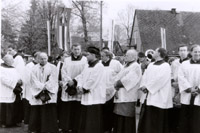
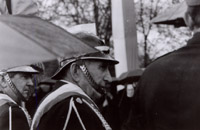
When I came back from Nowy Targ Saturday afternoon the whole area was incredibly crowded – nuns, grandmothers, children, all milling about with the volunteer firemen in uniform and trying to keep everyone off the road itself. I went to the apartment, got my camera, and met [Susan] and [Mrs. Nowak] on the roadside. By that time, the fire department's band had joined the crowd, as well as a group of traditional musicians decked out in traditional Orawian "strój" (costume). A procession of altar boys came down from the church, followed shortly by archbishop of Kraków and at least fifty priests.

This whole time, I kept thinking, "This is all for a picture!" The Black Madonna certainly has an almost mythical air, and it bends the knees of even the most "secular" Pole. For Protestants, it's sometimes difficult for me to tell the difference between the Catholic notions of "adoration," "veneration," and "worship." They pray to Mary, but they don't worship her. They cross themselves when they see the Black Madonna, and kneel before statues of Mary and Christ, but don't consider this idolatry because they don't see it as worship. Veneration, they say, or adoration.

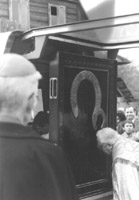
After a few moments, the sound of a siren announced the coming of the the madonna. It was housed in a Mercedes, the interior of which had been decorated with rosaries and other symbols of worship. A priest got out, walked to the back, and pressed a button set above the taillight of the van. The back hatch of the van began rising silently, and the madonna began sliding out – all automated, all very professional (and expensive, I'd assume). The priest/driver then nodded to the priests of Lipnica who approached the madonna, knelt, and kissed it after crossing themselves.

The madonna itself was housed on a special frame from which protruded two poles (much like the famed Ark of the Covenant) which were used to carry the queen of Poland. She was hoisted on firemen's shoulders, and the crowd began singing, "Swięta Maryja, Matka Boże, witamy ciebie." (Holy Mary, Mother of God, we welcome you.) They carried the madonna down to the church and all went inside for a special two hour mass.

All this was very curious. It seems impossible for them to deny at the very least that they are within a hair's breadth of worshiping this thing. All the decoration, the pomp and displays of devotion. Of course all this was for the sake of the fifty or so priests from outside the village that came along with the madonna, but I would argue that the inhabitants did this to show the priests how devoted they are to the madonna. Anyway, all this was for a picture.

And I've saved the real irony of the situation for the end: I found out at the beginning of the processional that it's not even the original, but a replica! The real queen of Poland sits in her shrine in Czestachowa, where other people are bowing down to the real picture, worshiping it and not some impostor. A friend assured me: "But there's only one copy! This is the only copy!" Still, a fake is a fake . . .

Just a few moments ago, there was a report on the radio about the madonna's visit to Lipnica. The vicar of Lipnica got quite a bit of radio time to talk about the significance of this (which had been in the works since September). He said something about being able to see the results of the visit, seeing how long the people will remember why Mary (he referred to the painting constantly and consistently as if it were a person) came to Lipnica. Or rather, why the replica of the painting of Mary was brought to Lipnica.

Time Change

Yesterday I thought I woke up at six, and I was pleased with myself for having pulled my lazy self out of bed at that hour. I made some coffee, got Mystery of the Ages and sat down in the "study" to read. Around half past I noticed a few people heading to school. "Strange," I thought, but continued reading. Shortly thereafter, I heard the noise of more people. I looked up and saw hordes heading to the school — the hordes that are usually going to school at seven thirty. Then I noticed the biology teacher was among them, and I knew they'd all taken a bus from Murewanice. "Could it be? Did we switch to summer time this weekend and we didn't know?" I wondered, but immediately dismissed it. "We've never switched over so early. In March?" I thought. But then I heard men working out front, and I saw cars heading to school and realize that's precisely what happened. So I headed to school on twenty minutes' notice. I didn't get any breakfast until after the second class when I managed to get a Twix downstairs, but despite all this, it wasn't a bad day.

Thoughts on Mystery of the Ages

After finishing the two small booklets included in the PCG mailing, I began Mystery of the Ages. It's been a truly enlightening experience. For one thing, I've learned a lot of Armstrongian theology that I wasn't really aware of. For example, according to Armstrong, humanity was created to finish the job of "beautifying" the earth. (Of course, the ideal of this process are the Ambassador College campuses [140].)

God placed man here to restore the government of God on earth. Lucifer and his angels had been placed here originally. God put them here on an unfinished earth. Remember, God creates in dual stages. Like a woman baking a cake, she bakes first the body of the cake, but it is not finished until she puts on the icing. The substance and body of the earth had been created before the angels were placed here. But God intended for the angels to develop the surface of the earth, to beautify it and improve it. . . .

But Lucifer . . . rebelled. . . .

But still "the icing on the cake" had not been added. God placed man here to do that which the sinning angels had not done (137, 8).

This is a silly reason to create humans. It also seems to make humans little more than a backup plan. "What was God's ultimate objective for the angels? Beyond question it is that which, now, because of angelic rebellion, has become the transcendent potential of humans" (70)! Armstrong's angels screwed up, and so God had to create humans. This raises some questions. (One of these questions is a little silly, but I'll point it out anyway: It makes me wonder about HWA's materialism. Why? Because it seems a little stupid that he would consider an un-iced cake as unfinished. HWA was always fond of icing, whether the literal kind — I'm assmuing here based on this comment — or the figurative — in the form of all the gold leave and crystal in Ambassador auditorium. Another silly question is HWA's view of women. He uses this analogy several times — to the point of sickening redundancy — and it's always a woman baking a cake, as if that's all she's good for.) Armstrong often says that Christ's sacrifice was planned from the "foundations of the earth" (142), but it's unclear as to whether this was before or after the angelic rebellion. Was it all planned out beforehand, or did God have to alter plans when the angels rebelled? If the answer is the latter, then his criticism against mainstream Christianity can be leveled against him:

Much supposed "Christian" teaching has been that God created the first man a perfect immortal being, but that when God was not looking Satan stole in and wrecked this wonderful handiwork of God. Salvation is then pictured as God's effort to repair the damage, and to restore mankind back to a condition as good as when God first created him (124).

Yet, since mankind was cut off from the possibility of access to God the Father because of Adam's sin (128), it could be argued that Armstrong's theology amounts to the same thing. Christ is to serve as the mediator between God the Father and humans, and this would have been the original state of humanity if indeed Jesus was the God of the Old Testament.

The angels, in turn, had been created to finish the job of creating. This is extremely anthropomorphic. Indeed, the whole second chapter, "The Mystery of Angels and Evil Spirits" abounds in this.

When God created the universe, the angels were supposed to be incredibly happy about this. The creation of the earth "was to provide a glorious opportunity for them. They were to work it, produce from it, and preserve and increase its beauty" (88). This begs the question of why spiritual angels would get any joy out of an eternity spent tending a physical earth. Yet it was more than this, for "whether or not it had been revealed to the angels, it was a supreme trail and test. It was to be the proving ground of obedience to God's government and their fitness to develop into final finished creation the millions of other planets in the vast universe" (89). It seems that everything in Armstrongian theology is a test from God, despite the fact that God indicates that he does no such thing by saying he tempts no one.

The very reason for angel's creation shows a weak God: Today, angels "continually walk through the earth to observe and report back to him the overall conditions on earth" (68). God in his omnipotence is not able to do this without the angels' help, I suppose. He couldn't even finish creation without them:

To aid them in the work of creating, governing and managing what was to be created, they first of all created other spirit beings on a lower plane than the God family. Angels were created to be ministers, agents, helpers in God's creation. They were created as servants of the living God (61).

First, the "them" in the first line is God and Jesus, the "God family" which results in Armstrongian duotheism. And the whole passage makes me wonder about God's omnipotence and omniscience. Couldn't God handle these things alone? Indeed, why would God create angels? Even if we reject Armstrong's theory, there seems to be little reason for it. It couldn't be because he was lonely — that's a human weakness. It couldn't be out of boredom — again, a human characteristic. But we're never really sure, I guess.

The anthropomorphic thought continues when he discusses Satan's rebellion. Armstrong believes there really was a battle in heaven, as described in Revelation (92). Once he rebelled, Satan "used his subtile [sic] wiles of deception to lead the angels under him into disloyalty, rebellion and revolt against the Creator and finally into a war of aggression and violence to attempt to depose God and seize the throne of the universe" (91). How can spirits wage a violent war with each other? How can a spirit try to overthrow another? The whole imagry requires human form, but of course this is no problem for Armstrong, since God has a spiritual "body" (46, 7).

Finally, after the angels' rebellion, "God saw that no beling less than God, in the God family, could be certainly relied on never to sin — to be like God — who cannot sin" (94). It seems that the whole angelic rebellion caught God unawares, and the fact that there was actually a "war" (according to Armstrong) backs this up. One can imagine a Milton-esque surprise attack, with the forces of good almost defeated by the initial surprise.

There's an interesting discrepancy in the chapter entitled, "The Mystery of Civilization." He writes, "Physically this perfectly created pair [Adam and Eve] had no chronic ailments or tendencies toward diseases or illnesses. This is testified in part by the fac thtat Adam lived to be 930 years old. And for nearly 2,000 year the human life span from Adam to Noah averaged close to 900 years. Think on it! The first man lived nearly one sixth of all the time from human creation until now" (145)! It's not surprising that Armstrong holds to a literal interpretation of this passage, but it's fairly interesting that he doesn't notice the anomalies of such conjecture. If, indeed, Adam lived for such a long time, wouldn't he probably have been a celebrity after a while? Wouldn't everyone have thought, "Hey, let's go see the first human ever!" Indeed, if the average life span was 900 years, there should be archeological evidence of this, references to people living for such a ridiculously long time.

This ridiculousness continues: "Adam and Eve had two sons, Cain and Abel. When they were grown, perhaps till in their teens, Cain became envious and hostile against his brother Abel." Cain of course murdered his brother and "God sentenced him to become a vagabond and a fugitive" (145). Continuing with the account in Genesis:

Cain said to the LORD, "My punishment is more than I can bear. Today you are driving me from the land, and I will be hidden from your presence; I will be a restless wanderer on the earth, and whoever finds me will kill me." But the LORD said to him, "Not so; if anyone kills Cain, he will suffer vengeance seven times over." Then the LORD put a mark on Cain so that no one who found him would kill him (4.13-15).

Now, Cain and Abel were the first born humans, and if this happened when they were only in their teens, where did these other people come from? I can imagine someone putting forth the argument that this dispute took place when Cain and Abel were a few hundred years old, allowing plenty of time for others to be born. Yet Armstrong's conjecture that this happened when they were in their teens precludes this.

Another interesting outcome of taking it literally that people lived 900 years comes on the next page: "The Bible tells us little of human development prior to Noah, but after 1,500 to 1,600 years human civilization had become so evil that only one man, Noah, remained righteous" (146). This means that all this happened in two generations!

The last topic I'll deal with is developed directly from the passage about Noah: racism. Armstrong writes that "There was rampant and universal interracial marriage — so exceedingly universal that Noah, only, was unblemished or perfect in his generations — his ancestry. He was of the original white strain" (147). Armstrong provides no Biblical documentation for this conjecture, but why does he have to? He's the unquestioned leader, God's called out apostle — no one would ever question this. He continues, "God does not reveal in the Bible the precise origin of the different races. It is evident that Adam and Eve were created white. God's chosen nation Israel was white. Jesus was white" (148). Once again, no Biblical evidence — probably because it doesn't exist, and I'm not sure he could twist any scriptures to indicate this.

It seems futile to deny that this is racism. Armstrong contends that "all [Noah's] ancestry back to Adam was of the one strain, and undoubtedly that happened to be white — not that white is in any sense superior" (148). This seems a half-hearted attempt to avoid the label "racist," but only an Armstrong apologist would fall for this, I fear.

It is, however, impossible, to deny that Armstrong would have been an advocate of segregation. He says as much in Mystery. "God originally set the bounds of national borders, intending nations to be separated to prevent interracial marriage" (148). He doesn't use the word here, but he is speaking of segregation plainly. Later, he's a little more explicit: "God intended to prevent interracial marriages. . . . God had set the bounds of the races, providing for geographical segregation, in peace and harmony but without discrimination" (151). One can only wonder what Armstrong must have thought of the attempts at integration and the civil rights movement in general. Not to disappoint us, Armstrong provides the answer himself: "God had intended geographical segregation, not integration of races" (154). I'll bet one can find anti-civil rights articles in old issues of the Plain Truth. And I can't help but wonder what people like the Cowards thought of this?

PCG Literature

I received earlier this week — or perhaps it was late last week — a rather large package from the PCG. (Now that I think about it, it must have been last week.) In it were three books: The Little Book, South Africa in Prophecy, and Mystery of the Ages. I've read the first two — The Little Book took about half an hour because it's only twenty some pages.

It's really amazing how badly Flurry writes. I wonder if folks had much training in how to write at AC other than the use of small caps and italics. He just changes the subject in the middle of a paragraph, introducing something out of nowhere, then does nothing with it. Here's a perfect example, right from the first paragraph:

Lange's Commentary states that Revelation 10 and 11 are one vision. A close study reveals that to be true. The entire vision revolves around the little book. . . . The little book is sweet as honey, but bitter in the belly. It has to do with prophecy. . . . There should be no break between chapters 10 and 11. Revelation 11:1-2 discusses a split in God's own end-time Church (1).

Perhaps not the best example of what I was discussing — I don't really care to scour the book looking for an example. All the same, this choppiness is indicative of the book as a whole.

The passage in question reads, "I was given a reed like a measuring rod and was told, 'Go and measure the temple of God and the altar, and count the worshipers there. But exclude the outer court; do not measure it, because it has been given to the Gentiles. They will trample on the holy city for 42 months'" (NIV). Forty-two months is three and a half years. WCG has been "trampling" for more than three and a half years, I would argue.

Flurry argues that Mystery of the Ages cannot be the little book because "it covers a much more comprehensive subject than the little book" (3). Of course Flurry provides now basis as to how much subject material this little book is supposed to contain, and so it doesn't follow that Mystery isn't the little book. He continues, "Mystery of the Ages does not contain seven thunderous messages like a lion's roar" (3, 4)! However, there are seven chapters in the book, and the definition of "thunderous" is entirely subjective. A minor point, really.

As might be expected, Flurry continues with his anthropomorphic descriptions of God. Writing about the initial revelation of the little book, he says,

The messages of this little book was first revealed 1900 years ago! However, IT WAS NOT WRITTEN UNTIL 1989! . . . If Mr. Armstrong had understood Malachi's Message, WHICH IS THE LITTLE BOOK, he would have warned us about this Judas-type betrayal. Then God would not know by our fruits who truly loves Him and who doesn't! God wouldn't know who would follow Him and who would follow a man (4).

This is a blatant refutation of God's omnipotence, but he resorts to the same un-Biblical reasoning as proof: "God gives us free moral agency and has chosen not to know our fate individually" (5). This makes almost no sense, as I've said before. Humans can choose not to know something, that's certain. I can choose not to know who won yesterday's basketball tournament simply by not asking around — by not seeking the information. How could this be possible with God, who is present in all time? All the same, I know to some degree what I'm choosing not to know: I know the nature of the subject matter I'm choosing not to know. I guess the same argument could be made about God. All the same, there seems to be no Biblical support for this idea.

The most interesting thing is that Flurry never proves that Malachi's Message is this little book — at least not in the way one would expect it. He states it (4), then it's assumed to be truth: "As we said before, the LITTLE BOOK IS MALACHI'S MESSAGE. And God commands us to "eat it up" (8). Perhaps he waits until the final pages to prove that the little book is Malachi's Message. "The prophecies reveal that there is always a disturbing connection between an end-time Elijah and the Laodiceans. Do you know of any book on earth that teaches such a message in detail? No other book even comes remotely close. It is clearly Malachi's Message" (15). If that is supposed to constitute proof, I must say it's really quite unconvincing. Unless, I'm sure, you've already been conditioned to accept anything Flurry says without question.

This idea that there's only one such book is repeated several times. "There is only one book on this planet that I am aware of that has a chapter — or thunder — about an "End-Time Joshua" (16), he declares, failing to realize that his proof rests on an interpretation of the Bible that he hasn't proved to many people's satisfaction. On the next pages, we find, "The PCG has the only book on this earth which proves Mr. Armstrong was the end-time Zerubbabel." A few lines later, "I know of only one book that reveals this man in a great falling away from God's truth" (17). At the end, he says, "There is only one little book on planet earth that reveals this greatest catastrophe in the end time" (20)! Once again, I'm not sure how the fact that Flurry is the only one saying such a thing contributes to its validity. "Gary Scott is God!" I'm the only one on earth saying that, but it doesn't follow that it's true.

He says in no uncertain terms that,

Malachi's Message was revealed to me in 1989. GOD REVEALED IT! . . . Malachi's Message is a new vision from God. It's a NEW REVELATION — not something somebody already knew!

This new revelation is God's way of saying that we must give the little book a special importance and the majesty it deserves. Only then can we properly respond to the great Work of God — much of which revolves around the little book (20, 21).

That's some big claims he's making for his own work. Of course, it came from God, so he's really making the claims for God. (It makes me wonder once again, how many times has he read Malachi's Message? Since it was revealed through him from God, I would think he'd read it many times — at least once a week or so!) He even seems to promote his own writing to a position above the Bible or even Armstrong's writings: "Malachi's Message is the centerpiece of God's work" (22). An organization that says its Christian, yet has a book other than the Bible as its "centerpiece." A strange situation indeed.

I also got South Africa in Prophecy, specifically because I wanted to see if there was much racism in the book. Not only is it a racist book, but it is also a work of a colonial apologist. Surprisingly, it's not by Flurry, but instead, Ron Frasier — who wrote the piece on Australia in The Philadelphia Trumpet some time ago.

The thesis seems to be that God gave South Africa to the whites because of his promises to Abraham, and that in turn, the whites are giving it to their traditional enemies. It's a little unclear who these traditional enemies are, though. One might assume that it's simply the blacks — those who are "not called" — but there are several references to the ties of the ANC to communism (9, 15), playing on the fears of a Red South Africa. Considering the fact that Armstrong theology has always maintained that the real threat is not from the communist Soviet Union but from a revived Holy Roman Empire led by the Pope and German, this seems a strange change of tactic for the PCG.

Of course there is plenty of the racism I was looking for. (I seem to indict myself by saying that I was looking for it. "If you're looking for something in a text, you'll find it," I've said to myself many times. Am I doing the same thing?) Fraser begins this racial diatribe from the beginning, with a startling statement:

A well-orchestrated campaign of disinformation, propaganda, and scurrilous slander has been waged against the South African nation by the combined forces of government officials (both within and without South Africa), the liberal press, leftist church authorities, and the United Nations. The catch phrase of all this as been apartheid — the policy of separate development pursued by the South African government since 1948. What escapes most commentators' attention is the reality that the whole world has been hoodwinked by this disinformation campaign (4).

I read that and almost fell out of my chair. "He's an apartheid apologist!" I muttered to myself in disbelief. "Separate development," he calls it. In Plessy v Ferguson it was called "separate but equal." In both cases, it resulted in a complete denial of basic human rights to a substantial (often majority) segment of the population based on race.

Fraser minces no words when he talks about race. Here's a sample of various quotes which can be labeled "racist":

"God lavished national blessings upon South Africa because a particular race was living within her borders" (23).

"Under British rule, South Africa reaped the blessings of God passed on from Abraham to Ephriam, promises inherited because of their race" (24).

"God showered His blessings on the nations of Israel by allowing the British, Dutch and French to conquer South Africa" (28).

"Land has special meaning for blacks" (36). (As if it doesn't for whites.)

"It has to do with race, not grace" (52), quoting HWA (The United States and Britain in Prophecy, 1980 edition, 29).

It becomes quite clear that this is a book geared toward racism, but the extent of this ideology is not obvious until the end of the book: "One of the greatest unthruths thus perpetuated in society is that race has no bearing on the achievement levels of various ethnic groups that abound in the melting pot of the earth's teeming billions of mankind" (52). While Fraser would undoubtedly argue that this is simply because God has blessed the descendants of Abraham, it smacks of the theories in The Bell Curve.

Not only is he a racist, but a colonial apologist: "Colonies formerly governed by a few sterling characters schooled in the administration of a global empire . . ." (49). When I read that to Chhavi, she said, "I have one thing to say to Mr. Fraser: 'Fuck you.'" I share the sentiment.

One last quote from this most intriguing book: Fraser says that "As Mr. Flurry has written . . . the Russian mind seems to have a particular proclivity to creating, publishing and accepting lies" (17)! Of course, Flurry has lived in Russian long enough to become well-versed in the culture and language and has based this statement on careful sociological and psychological research. He's not just saying this because the leader of the WCG is of Russian extraction . . .

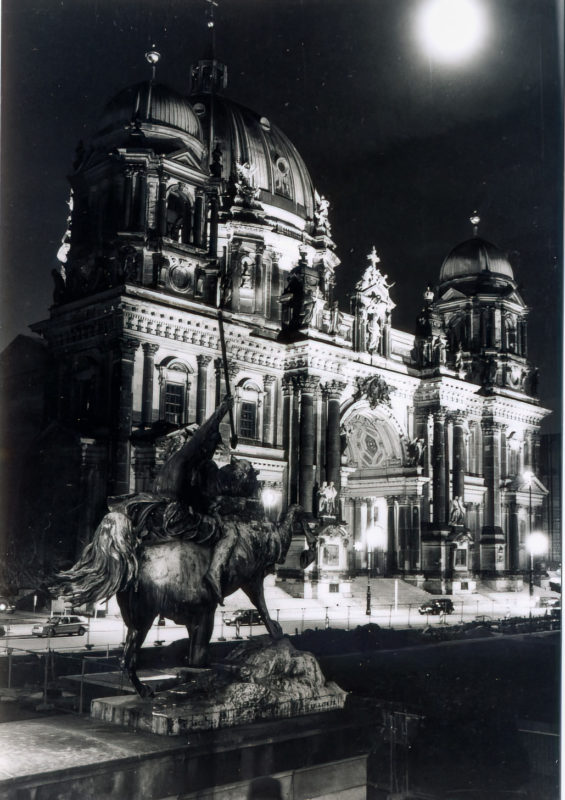
Berlin New Year’s Eve 1999

Long Day

It has been an exhausting day. I had practice maturas from eight to nine, then I came home to do some planning. I taught class IIIA and then had an hour break, so I took the opportunity to run take some pictures in the cemetery while the snow was falling and everything was relatively untouched. I also took a picture off the Mastelas’ bridge – another attempt. Then I rushed back to school to wolf down some lunch and then head off to teach IA and IC, then tried yet another experiment with IVA. I had Anna B. and Monika K. conduct class for a while. It meant that we didn’t cover nearly as much as we should have, but I think it might actually work out if I give them enough time to prepare for their teaching engagement. We’ll see. I want to give them as many opportunities to speak somewhat authentic English as possible. After that Chhavi and I taught dancing for almost an hour. We came home and I had enough time to realize I was really tired before heading off for an hour of basketball. Afterwards I returned home and cooked dinner. So basically I’ve been going for fourteen hours straight without many real breaks.