matching tracksuits

fun in threes, sometimes fours

Declared God

“Octavian was declared a god shortly after his death.” This is from the profile for Octavian that I just edited for the Western Civ I book. Being declared a “god” in this case seems something like beatification in the Roman church. Thinking of this, the obvious occurred to me: it’s called the Roman church because it grew out of the Roman Empire and was/is centered in Rome. Surely after Edict of Milan all notions of Roman reality didn’t get subsumed under the Christian worldview. In fact, the Christian worldview grew out of this Roman world, so it stands to reason that certain habits/notions from Roman religion persisted in Christianity. Hence it seems logical that this ritual of declaring this person or that person a god might carry over into the Roman church in the form of beatification. The differences, I’m sure, are enormous, and I’m not so naïve as to suggest that it’s a one-to-one relationship. However, the basic notion is the same.

That being said, even if it were empirical, historical fact that the idea of beatification grew out of the Roman deification of its rulers (which is, to be sure, not strictly a Roman notion and probably exists in cultures around the world — Japan and ancient Egypt come immediately to mind), that would not change Roman Catholic practice. Once it’s been so entrenched, how could anyone change it? Even if Pope John Paul II said, “Look, we’ve come to the realization that this beatification thing is nothing but a carry-over from pagan Roman religion,” no-one would buy it. They’d want to chalk it up to senility. Of course if the Pope said this as a holy pronouncement, then papal infallibility would kick in and then we’d have all kinds of cognitive dissonance.
Rules and Regs

From http://members.aol.com/cogwriter/cmc0929.htm

Guidelines for Church Dances: The Church of God teaches that dancing is an acceptable form of recreation for members and their families. The rules and traditions we have established for Living Youth Camp dances teach the way of outgoing concern and of decency. These rules and traditions are as follows:

  1. All music must be chosen carefully, with a very conservative approach, and with the approval of the Festival Coordinator or an individual he specifically assigns this task.
  2. No "free-style" dancing is permitted since this usually involves inappropriate music and brings out an attitude of abandoned inhibitions and showing off; thus focusing attention on the self rather than showing outgoing concern for others. Exceptions to this are some line and novelty dances.
  3. Fellows should politely ask a young lady or woman to dance i.e.: "May I have this next dance?" If the lady accepts, he should offer his arm to lead her out to the dance floor. When the dance is over, he should lead her back to her table or chair.
  4. Concerning teens, we do not want anyone left out. Therefore we discourage "pairing off" of teens at our church sponsored dances and encourage dancing with many partners, particularly noting who sat out the last dance. Older singles and engaged couples who are of age may be exempt from this rule.
  5. Music should not be so loud that those who prefer not to dance have a difficult time carrying on a conversation.
  6. Lighting should not be turned down so low that the average person could not read a book with ease.
  7. At any dance organized primarily for youth, all parents are welcome to visit.
  8. Appropriate dress for a Church dance in the Northern Hemisphere is slacks, coat and tie for adult and young men and modest knee length dress or long gown for adult and young women. A Church dance is not the place for a "personal statement."

Despite the obviously abusive control illustrated in the above quote, I still find myself strangely nostalgic when I think about my time in the WCG, especially now as it’s fall and time for the Feast of Tabernacles. The wonderful excitement and anticipation of the coming week when you arrive at your accommodations — of course this depends on the fact that you’re middle-class and could afford a decent place and knew, from the beginning, that it would be a decent place. The anticipation when you walk into the auditorium for the first evening’s service and you’re scooping out the place — of course this depends on whether you’re in the “in” crowd and you can rest assured that you’ll meet someone for a “Feast fling” or at least friendship. Making plans for that first night after services, or going out to lunch between services — of course this depends on whether you have the money to afford going out to eat for every meal, like we did.

My memories of the WCG are almost all positive, I guess, because I wasn’t the victim of any abuse. I didn’t lose my job because of the stupid Sabbath regulations; no one in my family refused to take medicine and died as a result; we had fairly decent relationships with all our extra-WCG family members. In other words, I didn’t have to give up much to be in the WCG. I didn’t get to go to school dances, and I wasn’t able to swim at Saturday meets, but that’s a relatively small price to pay — more of an inconvenience than anything.

More Relationship Concerns

To Return or Not?

I'm up at a little past seven, writing in my journal — I can't remember the last time I did this. I guess it was sometime in August when we were still living in that hellishly small place on North Beacon. When I came downstairs this morning and closed the door that leads upstairs, I realized yet again that our downstairs area, just the living room and study, are about as big as that whole apartment — and I shuddered to think that we lived there for a whole year. We've only been here about a month and already I can't imagine/remember what it was like to live in such a small place. Hopefully we'll never have to live like that again.

Of course considering the thoughts I've been having of late, that might be something of a moot point. It's insane the certainty with which I imagine going back to Lipnica sometimes. Yesterday, while walking home, I was sure I would come back and tell Chhavi, "I'm going back to Lipnica next year." And while I woke up this morning thinking almost the very same thoughts, I still said nothing, last night or this morning.

Sunday morning my folks called. They're going to try to come for a visit in about a month. In fact, they've tentatively planned to arrive a month from today. Anyway, for some reason Mom asked me, "What are your plans for after this year?" "Good question," I said, and hemmed and hawed a bit about why I couldn't answer it. That night in bed, though, I asked Chhavi what she saw us doing in a few years. Her final answer seemed to be, "You need to go to India before we can answer that question." But coming home from work yesterday, I said to myself, almost out loud, "I need to go back to Lipnica before I go to India."

In some ways I think I'm just trying to justify it — as if this is something I want to do for which I really don't have a good reason, yet I want to legitimize it in some way. But it's something I truly want to do, and as such, I don't know that I have to legitimate it. The best analogy I can come up with has to do with Kathe: I remember when I was thinking we would break up, "I need to come up with an explanation why — and a good one, one that she'll accept." But that's not the point — I needed to come up with a reason I would accept. Eventually I did — I realized that the desire to break up was enough to legitimate the break. And in some ways I see this situation as similar. But it's more than that. I keep thinking that if I don't go back and find out for sure once and for all, then this will haunt me for the rest of my life.

Time to get ready for work, I guess — and time to wake up Chhavi.

General Thoughts

Critical Conversation

General Entry

I was reading a little from Luci Shaw’s Life Path and if course I’m thinking, “I should be writing in my journal every single day. Every morning.” I write more in my journal these days about the fact that I never write than anything else. What all could I write about? My job — dealing with the nonsense that goes on there. My continuing frustration with Kali’s “I don’t get it” juxtaposed to her increasing “confidence.” There we go — I’ll write about that for a while.

Kali seems to be almost arrogant with her confidence at times. It’s very strange because on the one hand she complains about “not getting it” with certain things that I have written that I think are crystal clear, and then she seems to say that she can do anything she wants, that she’s the greatest asset our whole company has. I’ve just learned to deal with her on a case-by-case basis and realize that almost everything I give her will be declared completely incomprehensible at some point — one passage, one sentence, one silly word even.

I’m listening to BNL’s “When You Dream,” and it’s making me think about what it would be like to have a child. Originally I wrote “what it will be like,” then changed it to “will/would,” then dropped the definitive verb altogether and just stuck with the conditional. Second conditional in fact — used for things that aren’t the case and probably won’t be the case. Like saying, “If Bolek were a king,” I might have explained in class with last year’s IVB. So it’s almost the middle of September and I still haven’t talked to Chhavi. I still haven’t asked her a short (but not simple) question: Do you really think you’ll ever want to have a child?

And I guess I really need to ask myself beforehand: how much do I really want a child? Would I want one right now? No — certainly not. There’s no certainty in our life right now. We don’t know how long we’ll be living here or there or anywhere. And why would that stop me? Because it goes against everything I’ve always imagined my life would be like as a parent: having someplace that we stay for several years. A place to settle down, to put roots down — all those stupid cliches for which there are no other words, or for which I don’t want to search for replacements. So that’s the situation. I have this preconceived notion of how my life would be — probably an image I’ve had since I first took an interest in girls — once I fell in love and all that jazz. And yet nothing else has turned out as I would have thought when I was 15 or 16, so why should this be any different?

What are my alternatives? If C were to say she didn’t really think she would ever want children, and if — and that’s a huge “if” — I were to decide that because of this I should go my own way, what are my alternatives? Not many as I can tell.

I’ll finish this later today I hope.

More Complaining

It seems that every Saturday or Sunday morning these days I wake up feeling that I really don’t want to do anything — as if it’s too much work even to get out of bed for a cup of coffee. It’s not like I’m really depressed or anything. I just feel that it’s more effort than it’s worth to get up. I think of all the things I could do that day — today for example I could work on the little light box I’m going to try to create — but I just don’t feel like doing anything. Do I lie in bed thinking of LW? Not really. I just don’t feel like there’s anything worth doing. I think, “At least during the week I keep myself busy.” It was similar to when I first arrived in LW, I think. No — I was just generally depressed and alone at first.

It’s amazing — I just have nothing to write about. I could write about Marlon coming over for dinner last night, but why? We just chatted. I don’t know how I could write so much in Lipnica. Page after page. And now I haven’t even finished a full page in the first nine days of the month. In Lipnica — this would have been just the beginning of my first entry, writing about the first day back to school.

This week it’s been really weird walking to work. It was so sunny out — not a single cloud in the sky — and it made me think about the beginning of school and such. Fall crispness and I was thinking about not the beginning of my own school years, but the beginning of the three years in Lipnica. And how technically this should be the beginning of my fifth year there.

I’m still so sad. I still feel like I’m not where I belong. I still feel like I’m missing out on life. “When you dream, what do you dream about?” sings BNL. Lipnica. Always.

Moving

The move is finished — accomplished — done. Or perhaps more appropriately, survived. I left at 7:15 Tuesday morning to pick up the moving van and I finally fell into bed at 55 Adams Street, 99.99% of our belongings in the apartment, at 11:30 that night. And of course we’ve spent the next several days unboxing everything and working the stiffness out of our muscles. It was, in many ways, hellish, but it certainly wasn’t as bad as I was expecting.

The new place is a dream. We have more storage space in this apartment than we would have had we used the whole apartment at 168 North Beacon for storage. In other words, we have more storage space now than we had living space at the last place. And as far as living space goes, we have so much of it here that we don’t have enough furniture to fill it! As far as I’m concerned, we can stay here for as long as we live in Boston.

The only bad thing is the movie rental situation. The closest place is Blockbuster but they won’t let me get a membership there without a valid Mass ID. I can rent a truck that costs tens of thousands of dollars with my VA driver’s license, but I can’t rent a movie. I asked whether a passport would suffice — no go. So I can get into any country in Western or Central Europe with my passport, but I can’t get a Blockbuster membership card. How insane.

I’ve been thinking the past few days about the obvious: Lipnica. It’s now been four years since my arrival in Lipnica Wielka. I would — perhaps should — be starting my fifth school year if I were still there — and I think in many ways I should still be there. More later.

More Leaving

More Leaving

Don’t Even Ask!

Lots has happened this week. Arrived at work Monday to find everyone from Western Civ I in the religion cube, talking about Paul. Checked email to find a message from him saying he’d quit. It was, at times, almost hostile. “I will not answer any more [expletive deleted] content questions. Don’t EVEN ask.” I remember Kali doing her thing with him Friday, sitting at his computer and going through things line by line. I know how painful that can be, and I wouldn’t be surprised to learn that that was the cliché “last straw.” I heard someone say that Val was going to call him and try to talk him out of it. Seems unlikely.

The really big news is that I got a letter from Anna P. this week. It was short but much appreciated. And of course one could guess the effect it had on me. I’m now as confused as ever. Anyway, she’s having no problems from her ex — which probably means he harasses her only slightly when they bump into each other — and, as far as I can tell, she’s not out looking for a replacement, so to speak. Bad news though: She had a “small accident” and lost half a finger. It’s such a common ting there that she wrote all of one sentence about it, something that would send some people here into therapy!

Bus Jesus

On the 86 coming to work today I was witnessed to. I was sitting on the foremost single seat, minding my business, when this women asked me, “Jew have Essus in your heart?” I had to ask her a couple of times to repeat herself, but I finally realized she was asking me, “Do you have Jesus in you heart?” She began to explain to me that he loves me, died for me, is knocking on my heart and keeping me awake at night. She had a little flip-book with several verses on individual pieces of paper. She would read them to me, moving her finger along below each word as if she were a mother reading to her child. (Instead of a full stop at the end, though, she had colons. I'm not sure why.) At one point she asked me if I believed in God. When I told her I didn’t she didn't really know how to deal with it, it seems. She returned to talking about how Jesus died for me, how he loves me, and so on. She also explained that eventually God would close the door. I didn't know how to explain that any God with such conditional love as the God she is describing exhibits is not worthy of my love/respect.

She was, in all honesty, sweet. She was doing what she thought was necessary. Of course the question is, was she doing this because she wants me not to go to hell, or because she’s afraid God demands this of her for her salvation? I’m sure she couldn’t even answer that question completely.

Back in the States a Year

I’ve been in America for a year now. A year has passed since my time in Lipnica, since my departure from my home, more or less. I’ve been thinking about that for some time now and I’ve decided that it would be a good idea to do some accounting at this point — figure out what I’ve paid and what I’ve earned and see whether I’m in the black or the red. So I shall begin making breakfast and think about it for a while — I’ll be back shortly.

So let’s do a year in review. Maybe a chart: what I did, how I feel it has helped me, and how I feel it has helped others. Yeah, and maybe I could add some percentages and make charts and use that to determine whether I should be happy now or not. I’m being too analytical about all this, thinking, “If I just look at the data the right way, everything will be just fine; I’ll have my decision laid out for me right there, clearly and simply.”

The Churches of God–A Sociological Examination

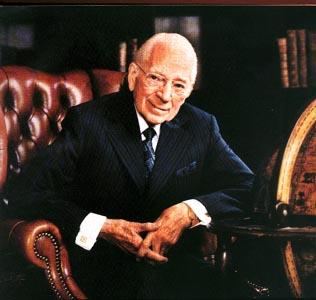
Herbert W. Armstrong

Since the doctrinal changes in the Worldwide Church of God (WCG hereafter) in the 1980s and 1990s and its subsequent division into the numerous “splinter groups,” there has not been much genuine communication between those who stayed (whom in this essay I will call “assenters,” for they give their assent to the new doctrines) and those who left (whom I will call “dissenters,” for they withhold their assent to the new doctrines).[1] When there is communication, it can generally be described as nothing less than a hateful argument, of which both assenters and dissenters are guilty. Assenters declare that dissenters are not really examining scripture “objectively” (a term which I will deal with shortly), indicating that accepting the WCG’s new doctrines is simply a matter of logic; dissenters declare that assenters are betraying everything they were taught under Herbert Armstrong and that they are hopelessly deceived by Satan. With such divergent presuppositions held firmly, assenters and dissenters often verbally bash each other over the head until one or the other (or both) realizes the futility of the “discourse,” and then communication ceases altogether.

At a WCG-related web site, John Bowers explains this lack of communication this lack of communication in, “Why Christians Hate.” He claims it is simply because of fear: “To be a member of an unpopular religious cult, such as the Worldwide Church of God, is to live in fear.” To some degree, I feel Bowers was on track in this assessment, but it doesn’t go deep enough. It offers a somewhat superficial explanation as to why members of sectarian cults “fear.” The purpose of this essay is to use sociology (specifically sociology of knowledge) to locate a little more precisely the source of this “fear” in Bowers’ essay and to a lesser degree.

The World through Sociology’s Eyes

From the moment of our birth, the world is mediated to us. Usually this is done by our parents, whose job it is to teach us “the ways of the world.” This involves teaching us very simple, physical things, like the fact that touching a hot stove is a bad idea. We could, of course, figure these simple things out for ourselves, and very often we do. That is how we learn to walk, for example.

Yet our parents’ responsibility doesn’t stop with teaching us to keep our fingers away form hot stoves and out of electrical outlets. It also involves teaching us things that we wouldn’t be able to figure out for ourselves – at least not immediately. For example, it is from our parents that we learn our ethnic and national heritage. The average 18-month-old French girl has no idea that she is a French girl. Indeed, she probably has no idea what France is at that point. If she’s born into a Catholic family, she also has no idea what Catholicism is. Nor would she easily figure these things out on her own. Instead, her parents explain these things to her – things that later in her life will appear as normal, everyday reality.

Our parents introduce us to a very specific world that has many facets: social standing, race, religious orientation, ethnicity, etc. As our parents expose us to these aspects of their world, we come to accept it as our world too. In short, our parents define reality for us as we are growing up. This is called socialization, or more specific, primary socialization.

The things we learn in primary socialization are the things that later we take for granted as “everyday knowledge.” They form the basis of what we think “normal” people do. The end result is that within a given culture where certain groups of people undergo a very similar primary socialization process, these people define reality in almost identical ways.

Rules of etiquette provide a good example of this: In the Western world we generally do not slurp our soup, flatulate in a crowded train, make rude comments about our boss’s hair, urinate in a public park, or any number of things, all because we have been taught not to – most often by our parents. The things described above are the “basics” of polite behavior – they constitute the foundation of how everyone knows they should behave.

Yet in and of themselves, these basics that “everyone knows” are arbitrary. Nothing physical will happen to us if we break taboo and do any of the preceding things things. We won’t die if we slurp our soup, or relieve ourselves in the middle of Central Park. We will, however, get glares at the dinner table for our noisy soup eating or be carted off by the police if we duck behind a tree in Central Park.

Thus is the world into which we are born. The rights and the wrongs have already been decided, even though in most cases the decisions made are, from a purely biological point of view, arbitrary. They are not based on universal human needs (like eating or sleeping) and as such they are open to a wide range of interpretation. This fact is most vividly illustrated when you go to a foreign country and find a man standing against a wall in broad daylight, his back to the street, urinating – for all to see. Clearly, you and the man relieving himself define reality in a different manner. Indeed, you define reality in a way different from the man urinating and all the other people walking by him without so much as a second glance. For you it is decidedly disgusting and unnatural; for them, it’s the norm.

The “norm” we receive from our parents during primary socialization is initially not in competition with any other definitions, and we come accept our parents’ reality as reality in its totality. For example, a child raised by Muslim parents in a Muslim community will initially assume that the entire world is Muslim. It’s possible to imagine a grown man who clings to this definition of reality as normative throughout his life. How would such a feat be possible? Simple. If he never encounters anyone who is not Muslim, he will never have any reason to doubt that the entire world is Muslim. However, given the proliferation of mass communication and the ease of contemporary travel, he probably will encounter someone (via television or tourism) who is not a Muslim, and this encounter will constitute a competing claim about the nature of reality.

In a pluralistic society such as America, such primary socialization that excludes all other definitions of reality is simply impossible. We usually become aware of different points of view at a fairly early age, but such alternative points of view can be easily dismissed as “different” or even “abnormal.” Our parents at first do this dismissing. For example, when we’re traveling to Florida for vacation and we encounter a group of punks at a rest area, our father mutters derisively, “Freaks.” We incorporate this into our own worldview and for us, as 5-year-old children, these individuals become “freaks” as well. We don’t question whether our father is right or wrong in his assessment – we simply accept it. He was correct when he taught us “right” and “left” and how to tie our shoes – why wouldn’t he be right here as well? This points out the simple fact that to the extent that our parents are our primary mediators to the world around us for our entire early childhood, they are infallible.

It is from such encounters with people who define reality differently that the “us-them” view of the world comes into play. While this paradigm is often (and rightly) criticized as being “narrow-minded,” it is unavoidable in a sense. As long as there are cultures that define reality different, these different views will have to be sensibly incorporated into our own worldview. As seen above, in can be done in a somewhat flippant manner, writing off the legitimacy of a whole worldview with a pshaw and flick of the wrist.

There are other ways to deal with differing worldviews, though, that don’t amount to an ideological annihilation. The father in the above example could have just as easily explained the punks’ spiked hair and leather in such a way that doesn’t completely debase them. He could have just explained that they’re different and left it at that.

However, there are some things about which even the most liberal-minded and socially tolerant parent will make will have make normative. Incest, for example, is a fairly universal taboo[2] and even those who are willing to accept punks or bikers will be unwilling to condone incest – or murder, stealing, or any number of semi-universal norms.

Primary socialization, then, simply involves our acceptance as children of certain subjective ideas as being objectively true. As a sort of negative example, imagine the following: as a cruel experiment, parents decide to teach their child that everything is the opposite of what it “actually” is. So they teach this child that “up” is “down,” “blue” is “green,” “left” is “right,” and so on. On what basis will this child initially know that her parents are lying to her? Initially, none. Only when she begins interacting with others and makes a comment about how blue the grass is and sees their reactions will she be able to understand that her reality is different than everyone else’s.

We might even ask, “On what basis are the parent lying to the child?” When we encounter this child calling the sky green and the grass blue, on what authority to we exclaim, “Why, you’ve got it wrong – exactly opposite, in fact!” In other words, why is blue blue? Because some omnipotent force decreed that light within a certain range of wavelengths will be called blue? Perhaps, but we have no evidence of that. From our point of view we must accept that blue is blue because that’s how speakers of English define that particular wavelength of color.[3]

All if this is simply to say that reality is a construction. It is something we learn from our parents, who learned it from their parents, who learned it from theirs – ad infinitum. And what’s more, this reality we learn from our parents is all encompassing. It is not simply a matter of colors and direction – it is a matter of what it means to be a good father, or how a man behaves and how a woman behaves, and so on.

To put it bluntly, the things we think of as “objective” really aren’t. Certain things are given objective status simply because everyone around us agrees that they have objective status. Nothing comes from an infallible fount of wisdom; everything we know, we know things because someone else told us – in the case of primary socialization, that someone is our parents. And the simple fact is, they could have just as easily socialized us in any number of ways. The reason they did as they did is simply because that was how they were socialized.

There are many different ways for parents to define reality to their children. What it means to be a man or a woman, for example, is a product of primary socialization and it differs greatly from culture to culture. In Western society, for instance, hand-holding has romantic and even sexual connotations in our society, and we learn these connotations during primary socialization. We also learn (generally speaking) that such romantic connections should not exist between two men. Therefore, it is culturally wrong for two men to hold hands in our society, unless of course they are lovers and are bold enough to show their affection in public. However, in other cultures, hand-holding is not a sign of romantic or sexual attraction, and while homosexuality might be generally socially condemned in that country just as it is in our own, two men holding hands doesn’t even get a second glance. Why? Because just in our society we “know” that hand-holding is a sign of romantic involvement, members of other cultures “know” that hand-holding is a symbol of intimacy and closeness but not sexuality. These two cultures might agree on the point that “men shouldn’t have sexual attractions for other men,” but still disagree on whether or not it is acceptable for me to hold hands as the stroll. Therefore, to be a man means slightly different things in these cultures.

Of course we can push this even further by pointing out that this notion of homosexuality being acceptable or not is something we learn during our primary socialization. From a biological point of view, the only drawback to homosexuality is its inability to produce offspring.[4] The fact that our culture defines reality in such a way that homosexuality is deemed offensive makes more of a statement about our culture than it does about homosexuality.

Not all of our knowledge comes from our parents and peers, though. Some of it comes from teachers, ministers, and counselors and constitutes secondary socialization. While similar in many ways to primary socialization, though, secondary socialization is much more fluid. Both teach us particular realities and provide knowledge about the world around us, but they do so in different ways and to different ends.

While the “knowledge” we learn during primary socialization is general – the taken-for-granted information that everyone in our culture accepts – what we learn in secondary socialization is much more specific. In addition, knowledge from secondary socialization tends to be less objective from a cultural point of view.

One of the things we learn in secondary socialization is how to perform the actions required of us by our jobs. If one is a chemist, these are the things one learned during many hours in the chemistry classroom and lab in college. If one is a garbage collector, these are the things one learned from the “old hands” at work. It doesn’t take long to realize that this knowledge is considered subjective. Not everyone agrees one the best way to keep warm while collecting garbage during the winter, and not everyone agrees on the best way to explain the behavior of certain chemicals under certain conditions. These are “matters of opinion,” we like to say.

It’s also clear from these examples that secondary socialization is much more specific – it is connected to roles that not everyone plays. Not everyone is a chemist, and so not everyone can even begin to explain why chemical x acts this way at time y. And since only a very few of us have collected garbage (in the summer or winter), we won’t all be able to keep warm simply because we’ve never been taught how.

Plausibility

Up to this point we have dealt with two kinds of knowledge – that which “everyone knows” (given to us through primary socialization) and that which a few people know (from secondary socialization). What both these kinds of knowledge have in common, though, is their source: they both come from other people. Other people not only are responsible for giving us knowledge; they are also responsible for making it possible to accept this knowledge as knowledge and not opinion. In short, the reason we can continue to believe most of the things we learned in primary socialization and secondary socialization is that people around us make us feel it is reasonable to believe. The fact that they believe something makes it easier for us to believe it; their belief in it makes the belief itself more plausible.

For example, the reason it is difficult in our modern Western society to hold that sticking pins in a doll will have an affect on a given person is in part because no one else believes it. If we do go around talking about voodoo dolls as if they were as effective as two aspirin, we would be labeled a lunatic, or at the very least, strangely out of touch with reality. If we were plopped down in the middle of a community where voodoo is plausible, we would have quite another situation on our hands. In fact, our insistence that voodoo is nothing but rubbish would have the same effect in this culture as our insistence on voodoo’s efficacy would have in our modern Western culture. In either case, we would constitute a cognitive minority – a group of people (or a single person in this case) who believe something radically different than what the majority of people believe.

If we are a cognitive minority, we have two alternatives. We can sell-out, so to say, and accept the definition of reality of the cognitive majority. If we decide not to sell out but to hold fast to the truth as we see it, we face an uphill battle. To everyone else’s “Yes!” we will always be saying, “No!” Everyone else’s black will be our white. To keep this up indefinitely will be exhausting unless we get some support. As long as someone else is saying, “That’s okay – I believe what you believe and I don’t think you’re a lunatic for doing so,” it will be more bearable to be the cognitive minority. What will happen, then, is we will find that we spend more time with those who believe as we do (after all, we can relax and stop justifying our beliefs to them) than with those who think we’re somewhat off our rockers for our crazy views. Put differently, we eventually will create for ourselves a community that serves to make the reality we take for granted seem more plausible. In doing so, we will implement what sociologists refer to as plausibility structures.

Plausibility structures help determine what is believable and what is not. The more support an idea gets from those around us, the easier it is to believe. In yet simpler terms, it is easier to be a Catholic in Rome than in Mecca. Peter Berger expresses it thus: “The strength of [an idea’s plausibility], ranging from unquestioned certitude through firm probability to mere opinion, will be directly dependent upon the strength of the supporting structure” (A Rumor of Angels, 40).

It is now time to return to John Bowers’ comment, “To be a member of an unpopular religious cult, such as the Worldwide Church of God, is to live in fear.” This really is an empty statement because we all live in a certain fear that the world constructed around us – the world into which we have been socialized and accept as “normal” – will turn out to be contrary to fact. A lie, to be blunt. To return to an earlier image, we’re always a little worried when we sit down at the table that those around us will begin slurping their soup as if it’s just the most natural thing in the world to do.[5]

We have all sorts of mechanisms – from psychotherapy to Mass – that ensure that we keep this fear under control, so much so that it’s almost unconscious. If it were not for these mechanisms, in fact, we would be unable to operate “normally” in our daily lives. Indeed, it is rare that someone is so overcome with the fear that the world she sees around her is somehow “wrong.” Such individuals are usually considered prime candidates for a psychiatrist’s couch – or, if radically different enough, for a straight jacket. This is because we’ve been “shown” (i.e., taught) – and we’ve accepted – the world around us as somehow corresponding to some normative “truth,” and the fact that everyone else around us behaves as if it’s true reassures us. Cars stop at red lights because we drivers have agreed to halt our cars at red lights and because it was somehow ordained at the beginning of time that such should be the case. People don’t slurp their soup because that’s how it’s always been done and it was ordained from the beginning that such should be the case. Or so it feels to us on a normal, everyday basis.

So to a degree, I take issue with Bower’s statement. We’re all a little frightened that what we believe to be reality is not reality. Proof of this is easily found in that disturbing limbo we inhabit immediately after waking up from a bizarre dream. For a moment the ontological status of the dream is unclear, and we’re just a little worried that the dream might be reality and vice versa. This last only for a few moments, however, and as the fog of sleep lifts, we see clearly that it was just a dream–and we are reassured.

Roles and Our Ever-Changing Biography

A convenient way to think about reality through the eyes of sociology is through roles. We all have particular roles we play, and each of these different roles – mother, lawyer, aunt, and sister – comes with built-in cultural expectations. A good aunt if is someone whose behavior conforms to the general cultural expectations of the role of “aunt.”

Some of the roles are defined by primary socialization, such as “mother” or “uncle” while others are delineated during secondary socialization, such as “professor” or “colonel.” Generally these roles coexist rather peacefully so that we have an “office self” that is not radically different from our “home self.” If there is a great deal of difference between these two roles, though, one or the other will have to give. Which one actually does give will depend on which one is more important, which in turn depends on any number of cultural and personal factors. To add to the confusion, a choice we make today to subsume a professional role (perhaps “lawyer”) to a personal role (maybe “mother”) because family life is deteriorating might have been drastically different five years ago when, say, there was rumors that one might be promoted to partner in the law firm.

Peter Berger points out one intriguing aspect of all this role-playing that makes up our lives: our biographies are in fact largely influenced by the various roles we play in our lives. Berger discusses this at length in Invitation to Sociology and it will be helpful here to outline his ideas in this regard.

Most of us like to think that the act of writing our autobiographies would be a fairly simple act. After all, we would simply need to record in chronological fashion a description of what we did in our lives. I was born on this date; I went to this school; I married this person; I had these children; I worked at these places. Yet we obviously can’t include everything in our autobiography, else it would be thousands of pages long. Therefore we have to select some things to include and others to leave out. How do we do this? Simple – it depends on what is important to us at the time of our writing. But here is the interesting catch: were we to write this at a different time – earlier or later – different parts of our lives would stand out as more important than they would now. More abstractly, our autobiography is an interpretation of our lives, not purely a description. What we see as important in our past depends on what is important in our present. Not only that, but we can re-interpret portions of our lives, giving them drastically different meanings than whatever meaning we attached to the moment as we were living it, or at some other point in our lives.

For example, imagine a woman who, after attending rallies and reading books, becomes a Communist. Her life to that point will need to be re-interpreted. What was once a happy, fiscally secure middle-class life will be viewed as an empty, bourgeois false consciousness. A Catholic convert might come to see a series of personal misfortunes as events God was using to bring him into the Mother Church.

It becomes clear, then, that such biographical reinterpretation is critical when one role conflicts with an earlier role. Some kind of explanation must be provided as to how the same individual could have been two seemingly different people, ideologically speaking. To do this, we reinterpret our biography.

Religion and Conversion

One of the most significant acts of secondary socialization is religious conversion. When one converts from one religion to another, it means altering how one defines reality, and very often, accepting one set of religious beliefs involves denying the set of religious beliefs we received from our parents. This type of secondary socialization can be more radical than any another because it often involves drastic changes in how we live our lives, how we explain the world around us, how we interpret our past, and so on.

In a sense, religious conversion is similar to primary socialization. Indeed, one might say it is a second primary socialization since “true” religious conversion results in a complete change of one’s course of life.[6] The primary difference is that this “second” primary socialization within religious conversion does not create a reality ex nihilo (“from nothing”) as one’s true primary socialization did many years earlier. We are not learning and interpreting reality; we are re-learning and re-interpreting reality.

Since it doesn’t create reality ex nihilo necessitates, conversion is one of the biggest stimuli for reconstituting one’s personal biography. That which transpired before conversion must be re-interpreted in order to maintain consistency with one’s current standards.

Frequently this includes the retrojection into the past of present interpretative schemas (the formula for this being, “I already knew then, though in an unclear manner . . .”) and motives that were not present in the past but that are now necessary for the reinterpretation of what took place then (the formula being, “I really did this because . . .”).[7]

This “then-and-now” biography creates a certain internal “us-them” mentality. “Before conversion, I was among the blind; now I can see.” One is no longer among “them,” the blind. Instead, one is among “us,” the enlightened.

Additionally, the conflicts that can arise between our pre-conversional selves and our post-conversional selves are not always easily resolved, and they can sometimes be destructive to relationships of our life that no longer conform to our new definition of reality. This radical new view of one’s past can, of course, necessitate a distance between the friends of the “former me” and the “new me.” This reality-twisting that we engage in when converting necessitates relationship-twisting that some relationships cannot bear. Something will have to give –our new interpretation of reality, our relationship, or both.

Sociology of Religion and the Churches of God

When we put all this together and use it as a tool of examination for the various Churches of God[8] it all seems to make sense – the distancing from non-members, the rigid instance on doctrinal purity and complete acquiescence, the virtual impossibility of assenter/dissenter friendships, etc. Indeed, one gets the uncanny feeling that authors writing general descriptions of sociology of knowledge and religion used the Churches of God as a model. And in fact, sociologists did just that, for the WCG and its sister churches are textbook examples (sometimes literally) of the processes described above.

To begin with, until the recent changes, members of the WCG had been a cognitive minority in the religious community in particular and in society in general. This was certainly not something the leadership and members of the WCG tried to deny. The knowledge Herbert Armstrong shared was special – esoteric knowledge available only to the select few that God has called out. It was not a source of shame. Indeed, the “cult” badge was worn with pride for many years, and still is by various splinter groups.

Armstrong would not even deny that the fact that WCG members constitute a cognitive minority was the reason it formed such a tight community in the local churches. The theological reasoning was simple: don’t be unequally yoked with nonbelievers.[9] The sociological reason for this, though, should now be obvious: since it’s easier to believe something when all your friends and acquaintances believe the same thing, it’s best to stay among one’s own kind. They back you up; they make belief in something plausible.

Herbert Armstrong certainly realized the importance of creating strong plausibility structures (though he never would have used such a term) and in essence, he created an alternative universe within the WCG. Armstrong’s WCG had its separate rules, regulations, and definitions of reality, and the individual churches served to provide social support for believers in time of “doubt.” This is not to say that WCG leaders or congregations nurtured people who had doubts, helping them find resolution to various problems. In fact, they often did quite the opposite and criticized fellow believers for their lack of faith. Instead what I am talking about here is plausibility support for a cognitive minority that the cognitive majority could describe as bizarre. Local congregations provided a community that made it easier to hold these beliefs that flew in the face of most other Christian theologies. Spouting off about the Great Tribulation on any street corner will immediately get one labeled, “Lunatic.” Doing so in the local COG congregation might possibly earn a promotion to deacon.

Sociology also helps explain why it was necessary to quarantine prospective members instead of inviting them to Sabbath services the next Saturday. Perspective members still hadn’t redefined their pre-Armstrongian biography and their new WCG socialization process had only begun. They still had in their heads alternative, “heretical” definitions of reality, and introduction of such an unsocialized element into the local congregation could lead others to adopt these heretical points of view.[10] More succinctly, the new member might re-socialize an established member or two if things are not handled carefully.[11]

It is clear now why Mr. Armstrong taught that sociology (among other “worldly” sciences) was to be avoided. When someone can explain anything from a non-theological point of view, it threatens the authority of those who explain the same thing from a theological point of view. Mr. Armstrong taught members to avoid close contact with people of “the world” because they were just that – the world, deceived by Satan and inherently dangerous from an ideological perspective. Members were called out, set apart, different in every way. This is the theological explanation. The sociological explanation is simply that associating with “the world” would tend to weaken rather than to support WCG members’ beliefs and the authority of Mr. Armstrong by providing alternatives to his explanations. Reading and studying sociology shows Armstrongian reality to be one of several alternative worldviews, and in such a fundamentalist sect such as the WCG, choice – heresy – is a dangerous thing. It also explains the mechanisms by which Armstrong tried to bracket out competing realities. It showed the man behind the curtain.  Again, not a good thing for a fundamentalist sect such as the WCG.

Armstrong and the other leaders of the WCG were of course aware of the various alternative definitions of reality swirling about outside the WCG, but in a sense they had nothing to worry about because they had mechanisms already in place to deal with them. Just as our father in an earlier example “nihiliated”[12] the punks’ worldview with the single word, “Freak,” so Armstrong nihiliated competing worldviews with a single word: Satan. The notion of worldwide satanic deception was convenient for two reasons. First, a different solution does not have to be proposed for each problematic worldview. All can be subsumed under the simple heading of “satanic deception.” Hinduism, Catholicism, Buddhism, Protestantism,[13] and even atheism all have the same flaw: Satan. Second, it helped highlight the lack of satanic deception in the WCG. In strengthened the us-them mentality by simultaneously pointing out their error and WCG’s correctness.[14]

The reinterpretation of one’s pre-conversional biography within the WCG also provided a nice way of setting members apart from the rest of the world, reinforcing the “us-them” mentality. “I was deceivedas the rest of the world is now!” And as pointed out earlier, this tends to force one to internalize the “us-them” view. In addition, the Armstrongian sorteriology provided a strong “us-them” mentality, with WCG members destined to be the leaders while the deceived world were to be subjects.

Whether or not Herbert Armstrong deliberately planned all of this is open to debate, but I for one think it is highly doubtful. While such a book could be written, there does not exist (to my knowledge) a monograph entitled How to Start a Sect.[15] Even to say that Armstrong envisioned a church approaching the scope of the WCG at its height seems to credit Armstrong with much more cunning than he actually possessed. It was all, to some degree, an accident. Armstrong was at the cliché right place at the right time with the right message that appealed to certain people. Once he gained a small following, the process of institutionalization followed its somewhat natural course and a sect formed.[16]

The Split

As the WCG’s initially slight theological changes became more pronounced in the late 1980s and the early 90s, the resulting splintering was hardly avoidable. There was initially an attempt to keep everyone together with assurances that “we can all live together in peace even if we have slightly different theological views.”[17] But as the scope of the changes broadened, expanding beyond make-up and healing, this became increasingly unrealistic for a simple reason: the local church communities, which, once united in a common belief, had served as plausibility structures, no longer provided this sociological necessity for everyone. People became “unequally yoked.”

Not only did individuals’ worldviews cease to support each other but as the changes dug deeper into the fundamentals of Armstrongian theology, individuals’ worldviews began to contradict each other. No institution can survive very long when members hold conflicting views, and so the divisions became not only theologically but also sociologically and psychologically necessary.

This is also the reason assenters and dissenters are hard-pressed to sustain meaningful relationships – their definitions of reality challenge each other. To remain in contact with those who no longer share the same beliefs would produce threats to one’s own worldview. Those for whom common religious beliefs were the defining aspect of their relationship could not long remain close friends with those who no longer share the common beliefs because of a lack of mutual support. If, however, there were other bonds in the relationship – either familial bonds, or perhaps even a strong personal friendship – the relationship might continue, but it’s doubtful that religion will be a frequent topic of conversation.

The Current, Post-Armstrongian WCG Reality

Where does all this leave the WCG today, almost fifteen years after Herbert Armstrong’s death? The future of this church is now questionable and those who were unable to acquiesce to the new teachings (the dissenters, as I originally named them) have formed many churches, which have themselves split (sometimes many times over). Armstrong’s once-great empire is now a fragmented mass of various churches with significant numbers attending no church at all. What are the implications of all this?

Both assenters and dissenters have had to re-think their definitions of reality. No one predicted such a cataclysmic event as what happened in the late 80s and early 90s. No one was prepared, ideologically speaking. Suddenly, a huge event had to be explained from worldviews that were not equipped to do so. An Armstrongian worldview could explain lots of things – why everyone looks at you like a freak when you talk about the Place of Safety, why Europe was moving toward increasing unity – but it couldn’t explain this. It couldn’t make sense of how so many people could turn their backs on the truth delivered through Mr. Armstrong; or, conversely, how so many people could fail to see the mistakes in Armstrong’s theology once they had been pointed out and prayerfully studied.

For each group this had somewhat different consequences. The dissenters had to come up with a way of explaining how God could allow so many “true Christians” to be deceived. Gerald Flurry, of the Philadelphia Church of God (PCG), uses 2 Thessalonians 2.10—11[18] as an explanation, explaining that God is separating the true Christian minority from the deceived WCG majority by sending a "strong delusion."[19] Other splinter groups explain it in a variety of ways, but most of them deal involve the idea of Satanic deception in one way or another. From the point of view of the dissenters, the assenters have now joined the ranks of the “deceived,” and as such the assenters’ new worldviews have long been nihiliated.

In a way, the predicament of the assenters is more interesting. To some degree those who accepted the new teachings have had to go through yet another socialization process when they came to accept once again the ideas they’d rejected upon conversion to Armstrongian theology. When they joined the WCG, they had to re-evaluate many of the simple facts of their lives, like what it means to be a Christian, what humanity’s potential and destiny are, etc. They had to reject “the world’s ideas” and accept Armstrong’s ideas. Once the changes were made, they essentially rejected Armstrong’s ideas and returned to “the world’s ideas.”

Not only that, but the assenters had to reformulate their worldviews in such a way that could account for the massive number of people who abandoned Armstrong’s teachings. This could be a particularly traumatic experience for some if they come to the conclusion that the reason their friends went with one of the other Churches of God was because their friends were (and are) still in the grip of cultic control. And that, by default, means they themselves were “in the grip of cultic control” – not something one likes to admit to oneself. Such a drastic explanation is not inevitable, though. Another possibility is to say that those who remain with Armstrongian Churches of God do so because they fulfill some basic need in their lives – a need they themselves once fulfilled with Armstrongian theology but now fill with “the grace of Christ.”

Whatever the explanation, one thing is certain – all involved must make some attempt to explain how such drastic changes occurred and further, to explain why John Doe assented to the changes while Susan Jones didn’t. Not to do so would be to leave a huge section of one’s life an enormous question mark – and that’s something very few people can live with.

Notes


[1] I do not mean “dissenter” to be a pejorative word, certainly not in the sense that it was used in the WCG (and is still used in other organizations) as grounds for disfellowshipment. Additionally, I am not implying that they are dissenting from a universal norm. In as much as the WCG’s doctrinal authority was once the norm for them, they are “dissenters.” Still, I am hesitant to use these words for they create an unavoidable polarity that I would actually like to avoid. Indeed, it is simply a matter of perspective: The “dissenters” could have just as easily been called “assenters” since they continue to subscribe to and support Armstrongian theology.

Further, I do not wish to describe them as “Tkach-ites” and “Armstrong-ites” for several reasons. To begin with, it’s grammatically clumsy and it sounds ridiculous. More importantly, the term “Armstrongites” has already been used and it is always used in a pejorative manner, something I hope to avoid like the cliché plague in this essay.

[2] This is true even in ancient Egypt when the pharaoh married his own sister. The difference lies in how various cultures define incest. What is incest in our culture is not in others, and vice versa.

[3] This illustrates that one of the most important aspects of primary socialization and one of the most subjective is language. While it is a fascinating topic, it is not a diversion I will make in this essay.

[4] One might point to sexually transmitted diseases as an example of another biological drawback, but this argument is rendered ineffective by the fact that no sexually transmitted disease is transmitted exclusively through homosexual encounters. Thus sexually transmitted diseases might be seen as a biological drawback to promiscuity, whether homo- or heterosexual.

[5]The fact that it is not natural is because of our primary socialization. There are a great many things that we are socialized into believing are not “natural” when in fact “nature” tells us nothing about these things.

[6] The apostle Paul in the New Testament speaks of conversion in terms that underscore this: “When I was a child, I spoke like a child, I thought like a child, I reasoned like a child; when I became an adult, I put an end to childish ways“ (1Cor 13.11).

[7] Peter Berger, The Social Construction of Reality, 160

[8] Worldwide, Philadelphia, International, Living, Global, United, etc.

[9] “Be ye not unequally yoked together with unbelievers: for what fellowship hath righteousness with unrighteousness? and what communion hath light with darkness?” King James Version - Armstrong’s preferred translation.

[10] It is useful to recall that “heresy” is derived from the Greek for “choice.”

[11] Gerald Flurry, leader of the Philadelphia Church of God, explains it thus: “God’s Church has the responsibility to PROTECT its members. WITH AN OPEN DOOR POLICY, THE WCG IS BEING DESTROYED SPIRITUALLY BY SATAN!” (Worldwide Church of God Doctrinal Changes and the Tragic Results, 74)

[12] The term is used in Peter Beger’s Invitation to Sociology.

[13] It has always amused me that Armstrong differentiated himself and his church from Protestants (using that term in a derogate fashion) while at the same time failing to realize that his church, by default, was itself Protestant. It was not Orthodox (Greek, Eastern, or Russian), Coptic, or Catholic, and the only other option (denominationally speaking) was Protestant.

[14] This simple dualistic view (us-them, Satan-vs-God, black-white) is common in fringe sects and fundamentalist denominations, and it serves as an easy way to deal with all competing worldviews. Not only did this dualism annihilate any possibility of an alternative reality having any validity, but it also strengthened the sense of inner-church community by fostering an “us-them” attitude.

[15] Some have labeled the WCG a “cult,” but from a sociological point of view, I would hold this is not quite correct. A cult by most sociological accounts is a new religion (such as UFO worship) whereas a sect is just a marginal interpretation of an established religion.

[16] For a more detailed discussion of the relationship between a charismatic leader and the subsequent formation of a religion, see Max Weber’s The Theory of Social and Economic Organization.

[17] I attended a WCG First Day of Unleavened Bread service in the early 90s at which the minister said, in effect, “If you think this is a holy and binding day, we welcome you. If you think this is not, we welcome you.” Such an attempt at tolerance was greeted with applause. Months later, though, the minister left the WCG for the United Church of God and many of the likeminded members, unable to survive in such a divided environment, followed.

[18] “And with all deceivableness of unrighteousness in them that perish; because they received not the love of the truth, that they might be saved. And for this cause God shall send them strong delusion, that they should believe a lie.” (The quote is from the King James Version, the preferred translation of the PCG.)

[19] This theological argument is questionable at best and creates certain negative connotations in the PCG explanation of God’s nature. For more on this see my “God as Represented in Malachi’s Message.”