matching tracksuits

fun in threes, sometimes fours

Original Sin :: Salvation, Mercy, and Logic, Part III

The discussion of salvation leads naturally to the question of one of the most puzzling doctrines of Christianity: Original Sin.

Simply stated, the idea of Original Sin is that because Adam and Eve sinned by eating of the Tree of Knowledge (interesting that God commanded them to stay ignorant), they plunged the whole human race into a state of sinfulness. Recall that Matthew Henry wrote that “in a graceless soul, [. . . ] is empty of all good, for it is without God; [. . . and] this is our condition by nature, till Almighty grace works a change in us.” How could this have come about, though? By what mechanism could Original Sin enter the entire human race?

What exactly did Adam and Eve do? Two things: a physical act, and more seriously, a psychological act. They physical act, of course, was eating the fruit, whatever that might have been. The psychological act was going against the will of God – disobeying, in other words. Yet for something to affect the entire human race, it would have to be passed on genetically. How could either eating a piece of fruit or disobeying a command naturally affect a human’s genetic makeup? Of course, it can’t affect us at all naturally, but we’re dealing also with a supernatural element in the story of the Fall and Original Sin, so perhaps God somehow altered Adam and Eve’s genetic composition to pass on an Original Sin gene.

Yet this is starting to get ridiculous. “Sin” is a psychological and even spiritual condition. Despite various notions of “physical sin” and other twists, sin is not physical but spiritual and psychological. How then could it be passed on genetically? If it were, it would be discoverable. Imagine the headline:

Scientists Discover the Genetic-Theological Source of All Our Woes!

If it’s not passed on genetically, we are left with the unsettling conclusion that perhaps Original Sin doesn’t really affect us as much as it affects how God views us. Original Sin is a condition we’re placed in by God, thanks to Adam and Eve’s rebellion. Perhaps it could be explained by saying that God withdrew himself from Adam and Eve after the Fall, making it impossible for them to have access to the godliness they needed to live a life free from Original Sin, and that that gap is what Jesus’ sacrifice was intended to overcome.
Polish Christmas Carols

In the interest of honesty and fairness, I've selected Christmas carols only from freely distributed CDs, in an effort to infringe on copyright privileges as little as possible.

Christmas in Poland is not the commercialized ugliness that it is in America (though it is changing). Since Poland is around 95% Catholic, Christmas has an enormous religious significance, second only to Easter. It stands to reason, then, that there are numerous Polish Christmas carols.

So, as a gift to anyone who's interested, here are six Polish Christmas carols.

Wśród Nocnej Ciszy ("In the Silence of the Night")

This is not the Polish version of "Silent Night," but an entirely different carol. It is addressed to the shepherds in the fields who go to see the newly-born Jesus.

It begins with a shofar, and then the first voice you hear, somewhat off-key, with an ever-increasing tempo as it nears the chorus, is that of none other than Karol Wojtyła -- John Paul II.

After the Pope's verse, you hear Józek Broda ("Joseph Beard") playing the "leaf" -- I'm not sure from which tree, but he's famous for it.

The other singers are Polish singers -- pop stars, theater performers, folk singers, and every other kind of artist imaginable.

Dzisiaj w Betlejem ("Today in Bethlehem")

This is a fairly standard Polish carol, performed in the Goralski ("Highlander") style. Goralski folk live in the southern, mountainous region of Poland, in the Tatra Mountains, around Zakopane ("Buried").

Typical of this style of music is the bass part. I'm not a musicologist, and I can't really describe it -- regular, repeating, simple, on the down beat. You really just have to hear it.

 Oj, Malućki ("Oh, Little One")

This is a traditional Goralski carol, which has become as known as "Silent Night" in Poland. The solo singing style is typical of the Goralski style -- it sounds to my ears sometimes as if the singer is occasionally straining to be in pitch and just _barely_ making it. It's a horrid style when the singer is, well, less than perfect.

Otherwise, it's intense but pleasant.

The lyrics here, according to Kinga, show a typical Goralski
attitude. One verse is,

Hey, what fer didja come down here?
Was it bad fer ya in heaven?
But daddy, your sweet, lovin' daddy
Tossed ya out of heaven
There ya'd sit drinkin'
All kinds a sweet goodies
And here you'll just be drinkin'
Yer bitter tears

My translation is horrid, and somewhat too direct, because it's in the Goralski dialect, and I just can't capture it in English. The best translated line, to get the spirit of the dialect, is the first line, "Hey, what fer didja come down here?" The original version contains the same awkward grammar when compared to "proper" Polish. I also chose to use a Southern, Twain-esque dialect (i.e., the "didja" and "fer"), in an effort to reproduce the feeling of Goralski in English, with its non-standard pronunciation of many Polish words. I think it works well because the Goralski accent here carries the same stigma as the Southern accent in the States.

 Pójdżmy Wszyscy do Stajenki ("Let Us All Go to the Stable")

Another Goralski version of a standard Polish carol. I love this one -- hard not to tap your feet as you listen.

Przybieżeli Do Betlejem ("They Came to Bethlehem")

This is a version by Igor Jaszczuk, a Polish singer-songwriter. It's not typical of any Polish style, and in fact, with the dobro, sounds more American than anything. I like it, though.

I hope you all enjoy these carols, and please leave a bit of feedback about them. I’m eager to see what any and all think.

Kinga and I hope you all have a pleasant Christmas.

Polishing my Polish

When I first met my wife, I spoke very little Polish. I could buy my groceries, order a beer, get a ticket to Warsaw, and that was about the extent of my Polish communication. When she introduced herself to me, my wife admitted that part of the reason she’d come over to where I was sitting was that she wanted to practice her English. That was fine, but it began happening too frequently. Soon, everyone who knew any English was coming up to me to pull out their rusty linguistic skills for a good once-over. The result was that my Polish was somewhat slow in developing.

Eventually my Polish reached a communicative level and I could discuss at least rudimentary things. But still it continued – people wanted to speak English with me.

With many people I was more than happy to continue. My wife still speaks better English than I do Polish, and several friends spoke such good English that it just seemed stupid to try to switch to Polish once I could mutter a few phrases. The goal of communication was just that – exchanging ideas – and not to sit in a bar with my friends having a language lesson.

However, I fought the English-as-a-default-language tendency with acquaintances, often to no avail. “Damn it, I want to learn this crazy language!” I thought to myself, realizing the idiocy of the situation: in Poland, and still unable to speak decent Polish. So I fought it, and tried to speak Polish more and more.

It was a triumphant moment when, standing at a bar listening to someone trying to tell me something in English, I realized, “Hey, I speak Polish much better than this guy speaks English!” I was momentarily proud of myself, then annoyed. I wanted to say, “No, możemy po prosto mowić po polsku.” (You can probably guess what that means.) It’s truly tedious to talk to someone who can barely communicate in English when you know you could switch to Polish and probably have an interesting conversation. But how terribly rude that is, for in making the switch, you’re essentially saying, “Great, great – your English sucks, so let’s speak Polish.” At least that’s how I always felt whenever the reverse happened to me.

My linguistic reality now is mixed: I still have some people that I speak mainly English with. I have a few friends with whom I began by speaking English and now mainly converse in Polish. There is an ever-growing number of people that, though they know English, have never used it with me – an ego-patting thing. And of course, there are plenty of friends and acquaintances now that I’ve only spoken Polish with.

Communication with my wife, though, is a topic deserving its own post.

Payment Required :: Salvation, Mercy, and Logic, Part II

This is part two of a discussion on the Christian notion of salvation. Christians and apologists are encouraged to comment.

Willful Expose, in response to the last post, summarized the Christian understanding of salvation in fairly traditional terms. In other words, in terms of justice and omnipotence. She argued thusly:

God is omnipotent in that he is all-powerful, but not that he can “do anything” per se. For instance, God cannot sin, because sin is not in his character. It is because of this same character that God requires payment for sins. That payment had to be someone perfect, and only Jesus could be perfect.

Not to pick on Ms. Expose, but I’m not sure I see the logic behind connecting

  • God not being able to sin, and
  • God requiring payment for sins.

This “requiring payment for sins” is not an attribute of God, then, it’s simply a fact about it. I require my students to make up missed work within two weeks, but that requirement is not an attribute of my character, and therefore I can change it as I see fit. The same would be true of God. He might be perfect, but he doesn’t have to “require payment for sins.”

Further, it’s not logical why that payment had to be from someone perfect, someone “innocent.” If innocence is required, then I would think all the infants who have died in the world would more than make up for it.

Ah, but there’s a rub in that — “Original Sin,” a topic I’ll return to in part three on Monday.

Middle Ages

Your Honor, the State would like to conclude its case with two exhibits:

Exhibit A:

My client and his recently spent a weekend in Krakow. With Advent coming, that Saturday night was the last big party night for a while, and they were supposed to go to a club opening with some friends. It all fell through, and everyone ended up going back to my client's friends' apartment and having a small "impreza" there.

The aforementioned friend lives with five roommates; each of them has a girlfriend--throughout the evening, people were coming and going. The thought of living in such conditions was enough to make my client's steadily-approaching-middle-age entire body queasy. No privacy; no silence; an apartment always full of strangers; never pausing, let alone stopping -- my client got goosebumps just thinking about it.

Exhibit B:

When younger, my client swore to himself that he would never let these two sentences fall from his lips:

  • "That's not music!"
  • The stuff I listened to growing up -- now that's music.

And yet.

And yet my client has said those very sentences -- thankfully not to anyone but his wife -- about techno, which my client refers to as "that abomination, that assault to the ears."

Your Honor, on the basis of the case presented, it's clear that Middle Age is preparing a full attack on my client, and I, as his counsel, am forced to respectfully request a restraining order be placed upon Middle Age.

Salvation, Mercy, and Logic, Part I

The paths to salvation in the Christian religion are almost as numerous as the denominations. Fundamentalists like to talk about "once saved, always saved," and the moment they assured their salvation by "accepting Jesus" as their "Lord and Savior." Catholics talk about their "hope" for salvation and the necessity of living a Godly life.

What all semi-traditional Christians agree on, is that salvation, whatever the form, is

  • necessary (It's often framed in terms of "Original Sin" -- the notion that humans have inherited a blemished, sinful soul from Adam and Eve's rebellion in the Garden of Eden.); and,
  • available only through Jesus.

Coupled with the dual nature Jesus supposedly possessed -- completely human and completely divine -- this raises the question of whether Jesus was affected by Original Sin.

Quotation marks are not meant, in this piece, to indicate derision but rather semi-direct quotes of traditional Christian formulations.

Catholics solve this problem with the dogma of the Immaculate Conception: the notion that Mary was born free of Original Sin, and therefore did not pass it on to Jesus' human nature. Protestants, as far as I know, barely discuss it.

It highlights the one of the strangest aspects of Christian theology, namely the convoluted nature of God's act of salvation. It's a many-stepped process:

  1. Jesus had to live a perfect life and therefore not "deserve" the penalty of death.
  2. Jesus had to die in an excruciating manner.
  3. Believers have to know of Jesus' sacrificial death.
  4. Believers have to do something about this knowledge (and at this point, Catholicism and Protestantism part ways significantly).

And all this for forgiveness?

It just seems an unnecessarily complicated method for an omnipotent God essentially to say, "That's okay -- I forgiveyou." And not only that -- it's conditional. The condition is Jesus. Without Jesus, Christianity says, you're unacceptable to God.

It seems an omnipotent God would just forgive -- simple as that.

"Dad, I'm sorry -- I screwed up."

"That's okay son."

The older I get, the more liberal I get in my theological outlook. Once a staunch atheist, I now admit that there are a great many things that are not explainable in a purely material framework, and I've reached a point that I can honestly say, "Who knows -- there might be a God." But one thing is for sure -- if there is a God, and he/she/it is one tenth of what theists of any and all stripes say about their God, he won't be doing any damning. He would be too wise, too patient, and too loving for that.

In other words, if there is a God, then there's a heaven, and if there's a heaven, we're all going there.

Glenn Gould :: Goldberg Variations (1981)

This is the first of several posts inspired by Wallfahrtslied. It's an effort to share with others some music that has changed my life for the better -- music I couldn't imagine living without. Desert Island Discs.

Glenn Gould recorded Bach's Goldberg Variations twice. The first time was in 1955, and those "in the know" refer to it as "revolutionary." He revisited the Variations in 1981, and this recording is the one I prefer. The 1955 Variations is too showy. While it's a masterful recording, it's still a bit immature. Despite the light touch, the music seems to be music performed by young man. It's excited, and passionate. The 1981 Variations shows a more mature Gould. The tempi are more controlled, and not to mention slower. But the biggest difference is the more human feel to the 1981 Variations. While the 1955 recording is far from robotic, it somehow lacks a beating heart that the 1981 version provides. It's more thoughtful, and with an occasional tragic whisper.

Both versions have been released under the title State of Wonder, and include a "radio drama"/interview with Gould just after having re-recorded the Variations in 1981.

Of course at the heart of both Gould's recordings are the twenty-five variations themselves. The variations express as many emotions as you can imagine: flirty youthfulness, mature joy, deep, resounding sadness -- it's all here. It's the human experience compressed into sixty some minutes of music.

You can hear excerpts from both recordings at NPR's web site .

Slip Sliddin’ Away

In the small village where I live, they don’t really scrape the snow off the roads until enough cars have driven over it to turn it into ice. By the time it all begins melting in March, it can be six or so inches thick. The roads underneath are, by then, a pot hole mess.

They don’t really shovel the sidewalks either — even in the neighboring town. From late November to early March, then, we all slip through our days rather than walking. No matter what kind of soles you have, nothing really helps when you’re walking on ice.

If someone slips and falls, well, it’s just her bad luck and worse balance. It’s not the shopkeeper or home owner’s fault for not having cleared the snow in front of his property.

Tabulaphobia

is, I’m assuming, a newly-coined (passive voice alert — subtly tooting my own cliche) fear: fear of blackboards. Rather, fear of cleaning blackboards. The joys of Iraq never cease.

Imagine having a serious discussion over who would eventually wipe clean the blackboard?

Got Soul? (Or “Where do we hang the thing?”)

I’ve been thinking about the idea of the soul lately, and I keep coming back to one question: what is the soul? Christian theology teaches us that the soul is the “real” us, the software, and that our bodies are just “temporary dwelling places” – the hardware. The “real” me is not something physical, but something spiritual.

But what is it? Where can we hang the soul in the body? The soul is synonymous with consciousness in many ways, but consciousness and all it entails (memories, emotions, personality, etc.) is merely a load of very complex chemical reactions going on in our brains. Brain imaging is mapping more and more of what we traditionally associated with the soul and showing these things are just that – physical things.

Furthermore, if the real “I” is a soul, how can things that seem to be so basic to the real “I” (personality, sense of humor, emotions, etc.) be affected by physical things? When someone gets drunk, their personality usually alters a bit; when one takes an anti-depressant, it changes an emotion; and of course, there are plenty of other examples. If the real “I” is a soul, then how does this happen?

A related question would be when the soul enters the body. Catholicism says it’s at the moment of conception. Steven Pinker, in The Blank Slate, writes,

Sometimes several sperm penetrate the outer membrane of the egg, and it takes time for the egg to eject the extra chromosomes. Where is the soul during this interval? Even when a single sperm enters, its genes remain separate from those of the egg for a day or more, and it takes yet another day or so for the newly merged genome to control the cell. So the “moment” of conception is in fact a span of twenty-four to forty-eight hours (225).

And what about fertilized eggs that split and become twins? When does that extra soul enter into the picture? And what of the phenomenon when two fertilized eggs merge into one embryo which, as Pinker writes, “develops into a person who is a genetic chimera: some of her cells have one genome, others have another genome.”

I posed this question on Catholic.com’s discussion forums, but I didn’t get any satisfactory responses.

One individual responded quoting F. J. Sheed’s Theology for Beginners:

Our ideas are not material. They have no resemblance to our body. Their resemblance is to our spirit. They have no shape, no size, no color, no weight, no space. Neither has spirit, whose offspring they are. But no one can call it nothing, for it produces thought, and thought is the most powerful thing in the world—unless love is, which spirit also produces.

The soul is like an idea – you can’t measure the color or size of an idea, so the argument goes, and so it’s immaterial. Not quite.

What is an idea if it’s not remembered, recorded somehow? If I have the idea, it’s recorded in my brain in a sequence of proteins and such; if I write it down, it’s recorded on paper; if I tell another person, it’s protein sequences in her brain. But it always depends on something physical. An idea must have a physical medium to survive, else it ceases to exist in a practical way.

This is the same analogy Chuck Missler uses when he talks about humans, hardware, and software. He asks, “How much does a piece of software weight?” He points out that you can load a floppy disk or CD with data, weigh it, and it still has the same weight as it did empty. This is intended to prove the non-material nature of software, which of course is the soul in humans, according to this analogy. But it suffers from the same problem as the “color of an idea” analogy. Software also depends on something physical – a magnetized plate of metal called a hard drive; radio waves as its transmitted from a wireless modem; the scrap of a napkin on which the programmer scribbled a particular algorithm.

And so this is indeed not a proper analogy for the soul, for the soul is not supposed to be dependent on anything physical. Ideas and software are dependent on their storage mechanisms. The soul isn’t supposed to have a storage mechanism.

Blinded by science? Most likely not — probably just not interested in questioning a taken-for-granted belief.

Tom’s Diner

English has twelve tenses; Polish has three. It’s a nightmare for beginning students to keep all that straight. We spend a lot of time drilling, doing “boring” written work, etc. but from time to time, I’m able to think of something completely original and — dare I think — even entertaining.

It happened one evening that I was planning lessons, thinking, “I need a good, fun lesson for present continuous,” and wondering what I would come up with. (Present continuous, for those of you who don’t know, is, for example, “I’m reading a book at the moment.”) I put some music on, sat down, and began planning.

Gradually, I found my attention drawn to the music I’d begun planning, and I sat there, jaw open, as I listened to the perfect present continous lesson (not to be confused with the not-so-perfect present perfect continuous lesson) — Suzanne Vega’s “Tom’s Diner.” It had everything going for it: the whole thing is in present continuous; it’s very popular in Poland, especially the DNA mix; the vocabulary is relatively simple.

In the intervening years, it’s become one of my most successful lessons.

It goes like this:

  1. Students get a worksheet that has the lyrics printed out, but without the verbs, and in the incorrect order. For each verb, they’re provided the necessary infinitive, the tense necessary, and any additional information/words (like “not” or “already”).
  2. After students take fill in the verbs, we check them all, and make sure they have a basic understanding of the meaning.
  3. Then, I just put the song on and watch — who is going to catch on? Eventually, I point out that it’s the worksheet we’ve been working on and tell them that the next task is to put the stanzas in the correct order. We talk about what the song means and make sure they understand it all, or, they translate it all for homework — depending on how much time we have.
  4. The next day, they’re divided into groups and prepare to act out the song in time with the music — a live music video, I tell them. This takes only a few minutes, and then we do something else. The actual video is the next day.
  5. Show time — and some classes take it very seriously and come in dressed up, with props and materials.

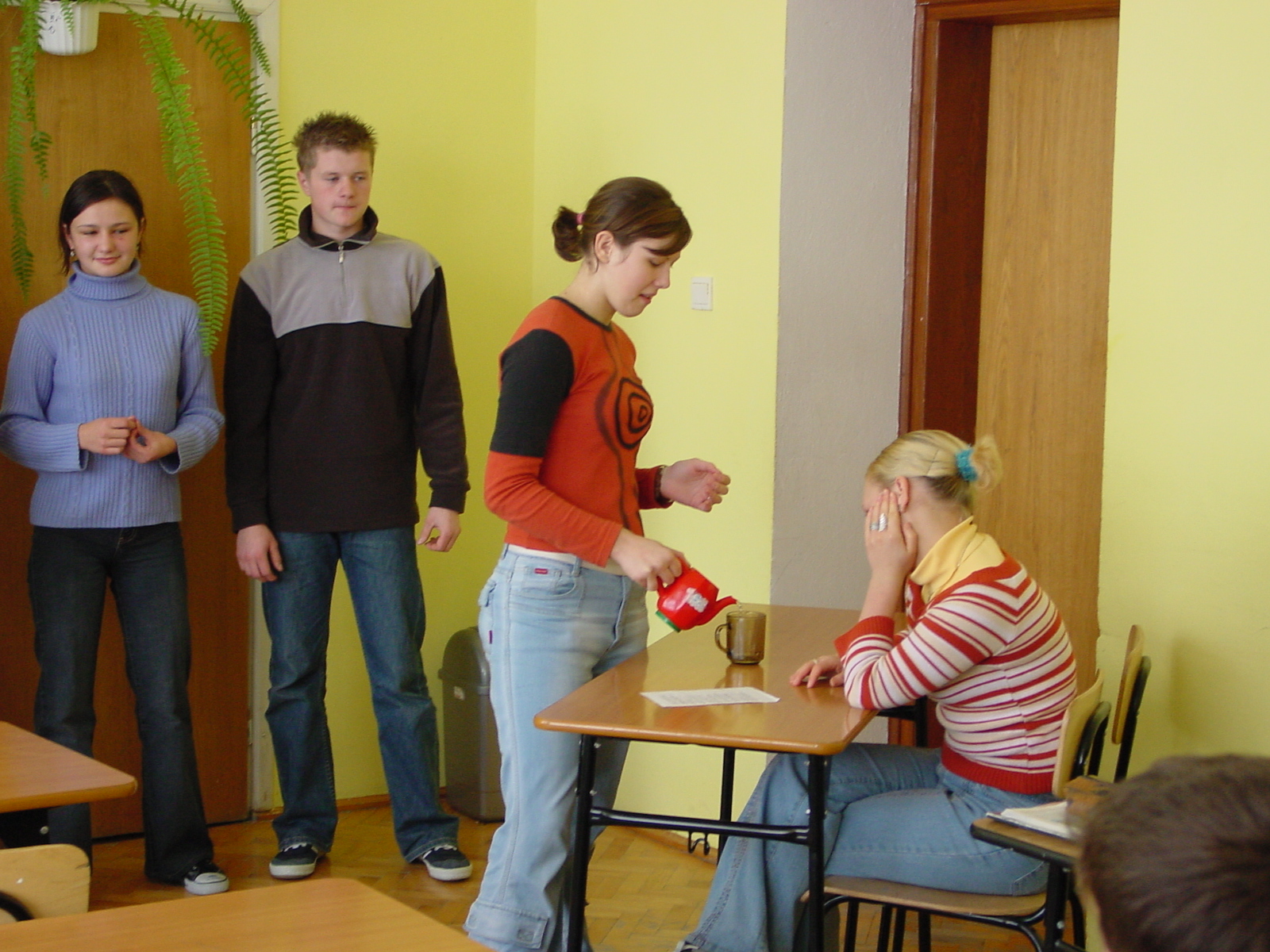
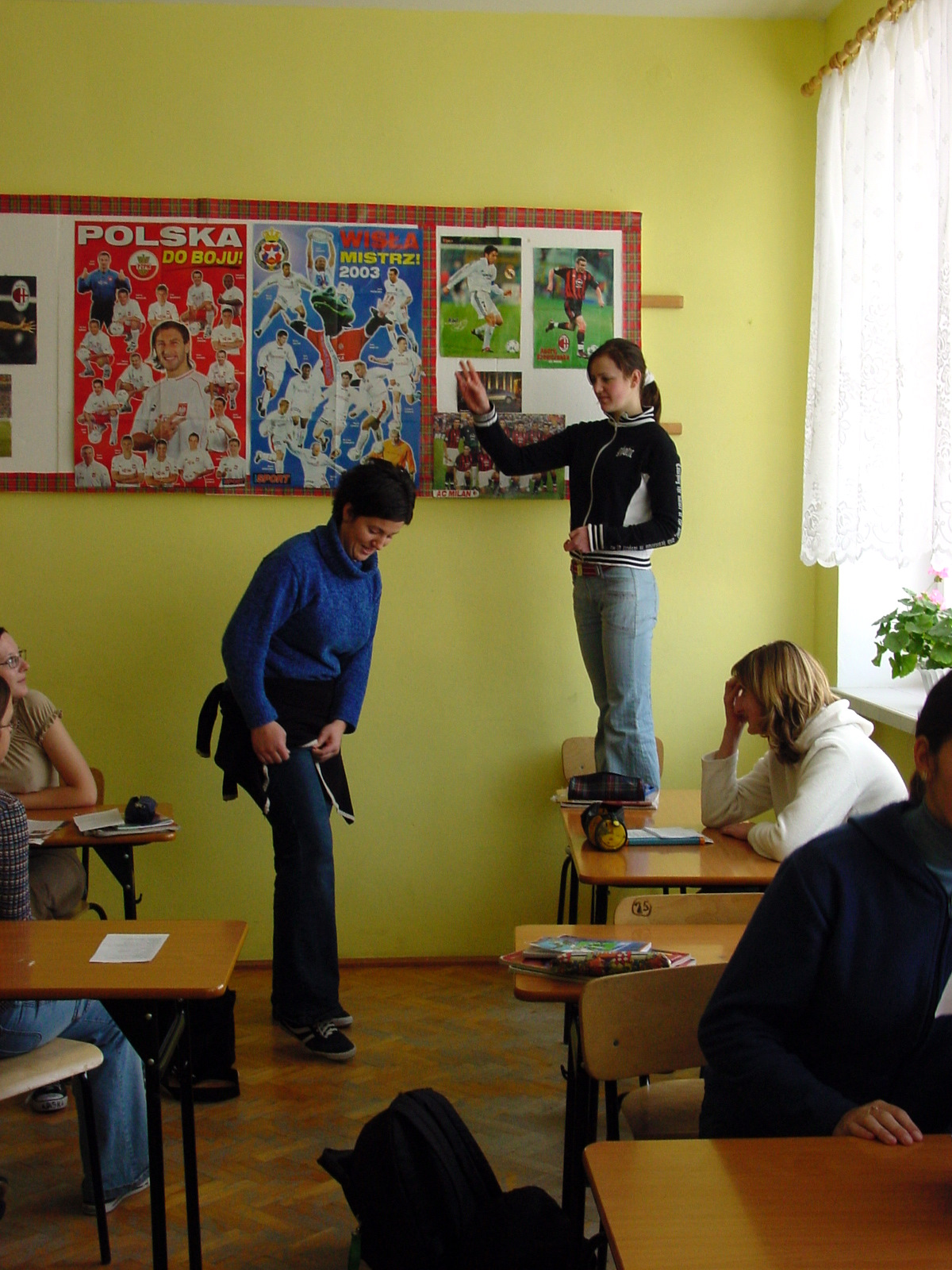
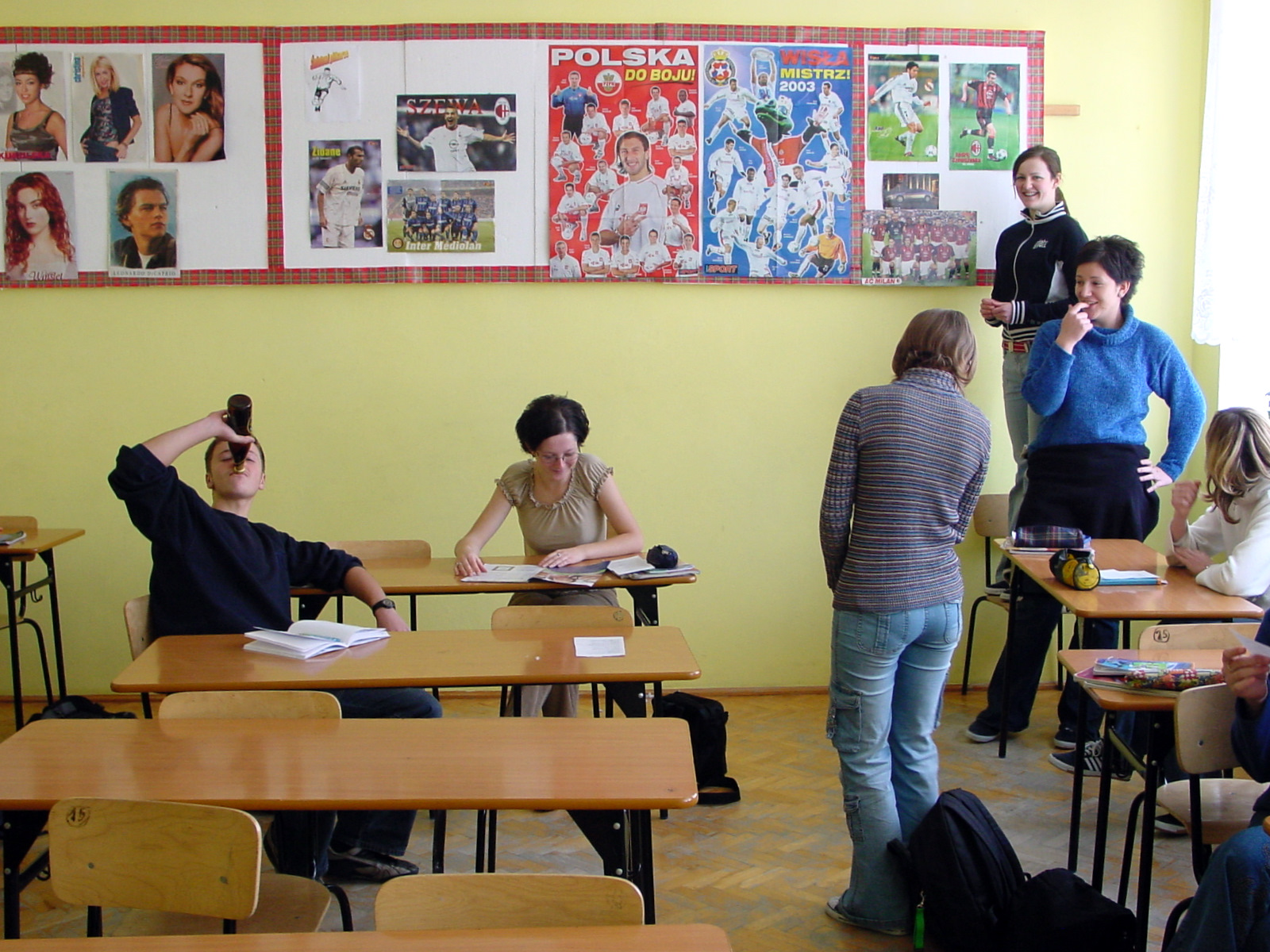
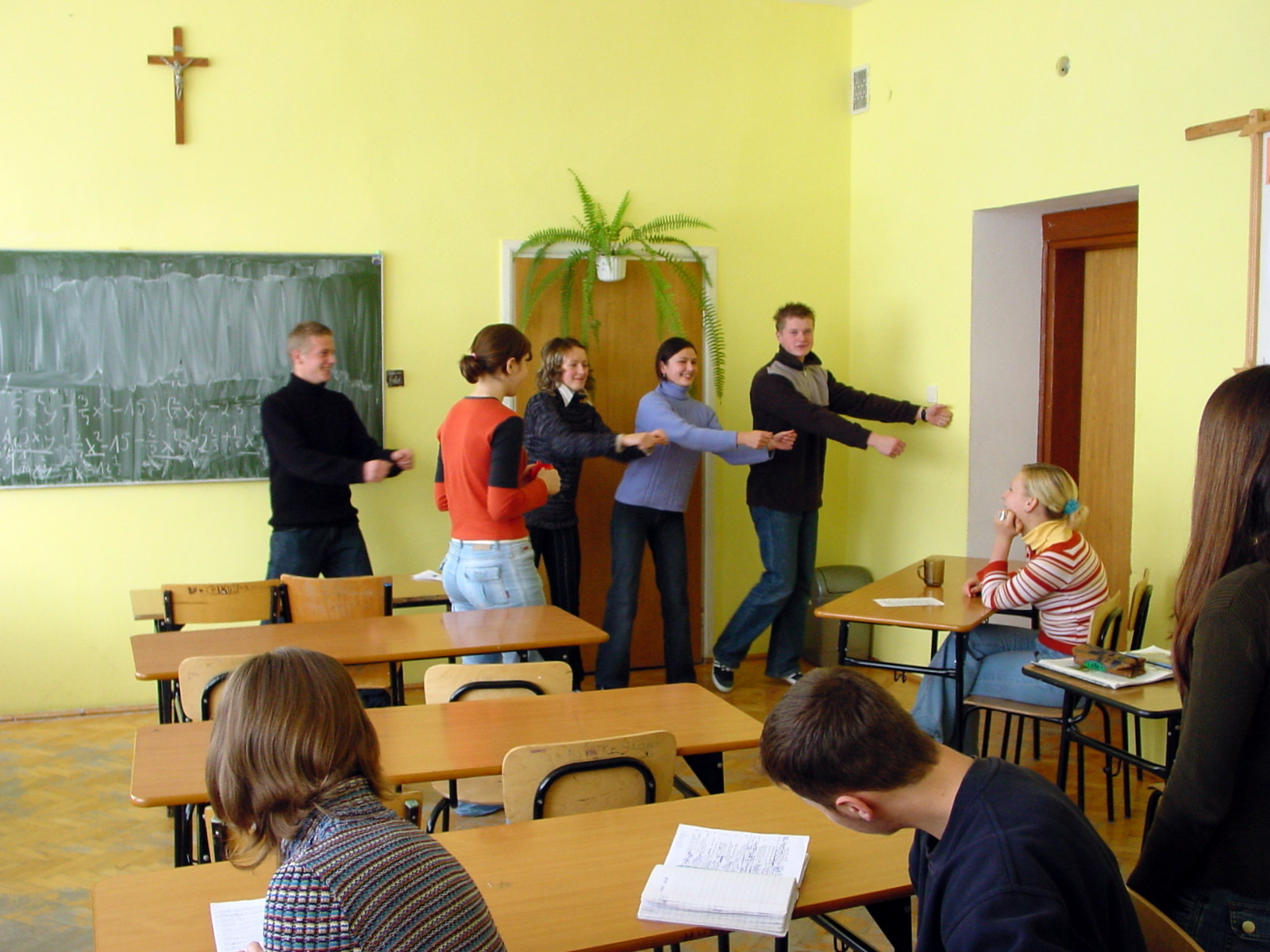
This was the most recent “performance” of the video. The day we were preparing the skits, several people were absent, who were then not absent when we were to perform it. What to do with them? Simple — they were a doo-wap chorus, and they even danced.

Most of the time, it’s very rewarding being a teacher. Sometimes, it’s simply fun, as well.

The Magic of Zamfir

Yesterday at school there was an unexpected “surprise” — a concert. Zamfir came, and brought his whole music-lite ensemble: a keyboard player. They began with a few classical-esque selections, but once the keyboard player got the programmed drum beats and bass going, there was no stopping them.

Many of the students were having trouble sitting still to such stirring music and would half leapt into the aisle to go Polka mad but for the fact that everyone was crammed like “herrings in a jar.” So they just tapped there feet and smiled merrily.

Some, moved by the music’s depth and power, sat in awe — I think I saw a tear or two trickle.

A couple of students whispered to me, “This is great, sir, but I sure wish we were back in class!”

Of course, ninety percent of this is made up. Ninety-nine, more like it. There was no Zamfir, no Polka sparkle in the eyes, no longing to go back to lessons. There was a concert, and it did include a young man of about twenty-five playing the pan flute while a woman accompanied. And the music was as artificial as you have probably been imagining.

I’m all for broadening students’ cultural awareness, but not in this way. Introducing them to such music as a way to get them interested in styles of music other than techno or metal (the two dominant preferences among my students) is doomed from the start, mainly because the students agreed to go (each class had the option of going or not, but they had to go as an entire class) in order to get out of lessons. Of course, I would have done the same thing at their age. Also, just giving a concert is not going to engage a sixteen-year-old male in any meaningful way if it’s the music he’s not used to, and he wrinkles his nose on first hearing it. Better to have a shorter concert, interspersed with explanations of the songs — their history, the period they come from, etc. — followed by perhaps short discussion afterward of the music. “Yes, that particular song did have a bird song quality to the melody. It’s because…” And for Mahler’s sake, don’t let it be simply a way to get out of class. That accomplishes nothing.

I try to introduce my students to various types of music throughout the year. One lesson I like to do toward the end of the year involves at least five different songs. It’s for intermediate students, and I simply have them do some free-writing (that’s where you just write uncritically what comes to mind — like most blogs, I would imagine) while I put on various songs. “Imagine you’re at the cinema,” I tell them, “and as the movie begins, this is the song you hear. What’s the movie about? What do you see happening?” And then I put on an incredibly eclectic mix: Ben Folds Five, Mozart’s requiem, Albert King, Ella Fitzgerald, and Johnny Cash come to mind as I recall past lessons.

The reaction is generally bad.

But at least once I held them in rapt attention. While doing some quite writing work (not related to the lesson described above), I put on Bruce Springsteen’s The Rising and told them that much of this album was connected to 9/11. Students who were usually squirmy sat and wrote quietly, while others just listened to the music, hands on folded arms, eyes wide open, utterly still.

I’m still at a loss, though, as to how effectively to broaden students’ musical awareness.

Shake and Freeze

The oddest thing for an inhabitant of Poland to be writing: we had an earthquake yesterday at around 6:20 in the evening.

It was a slight little hiccup by most standards: 3.6 on the Richter scale. Kinga was at home and said she felt the building shaking for about five seconds. I, on the other hand, was walking home and felt nothing. Reportedly in the nearest town, some houses were shaken enough that books fell from the shelves, and on the other side of the Tatra Mountains, Slovakians reported having felt it.

No reports of damage, but of course everyone’s talking about it.

Earthquake and Poland — they go together about as well as . . .

#$*@!

Ah #&@*, I did it again -- trying to stop cursing and let another one loose unconsciously.

Without the redundant profanity (a sorry attempt at a joke), that's what I thought last night when something irritating happened and, muttering to myself about it, I used "colorful" language.

Stopping cursing is about like stopping smoking, I'd imagine. Perhaps more difficult from a certain point of view -- you don't have to buy profanities. They're there, piled up in our heads, for free! And you never run out of them, so you can't really think to yourself, "As long as I don't stop by a convenience store and see a wall of cigarettes, I'm fine."

My parents tell the story of when my father was trying to stop cursing, he and my mother set up a system that each profanity cost some part of their weekly spending money. They were a young couple, and the purse strings were tight, so they allotted themselves only a few dollars a week as personal spending money. My father "spent" all his money and then some one afternoon waiting for, if I remember correctly, a "woman driver" to turn left.

What is it about profanity that has such a draw? It's so difficult to stop, and yet so easy to begin. You can sit with an infant, patiently trying to teach her how to say something -- anything -- and she, with stubborn resoluteness, sits and says nothing. Then you hear the soup boil over, exclaim something you shouldn't, and when you come back a second later, the infant is chanting your profanity.

It's not that children have an ear for the vulgarities of their own language. An acquaintance told my wife and me that her daughter has recently begun using "the 'f' word" because -- guess. It's a word that has no meaning in Polish, though it does sound like "Kwak," a somewhat common surname.

Nonetheless, there she was, running around the apartment saying, well, the obvious.

When I moved to Boston after having spent three years in Poland, I began muttering Polish profanity -- and it is a language rich in profanity -- at work when something was trying my patience. Then a Pole started working there.

In Polska, cursing is strangely culturally accepted. That's not to say that it’s universally practiced, for if everyone cursed, then it would cease to be profanity. Still, in the States someone out "in public" doesn't usually let the four-letter words fly at will. A bus driver, for example, wouldn't be sprinkling is conversation with a passenger with profanity, but here, it's a common occurrence. I've heard fathers let loose while their four-year-old daughters stand beside them, grandfathers going crazy while their five-year-old grandsons run around at their feet -- and then it's no wonder that you hear a five year old say the Polish equivalent of, "Hey, *#@$-for-brains, where they *#@! are you going?"

Why did I write *#@$ rather than "shit?" It's always amused me to read quotes in something like Sports Illustrated where instead of quote the pitcher verbatim, puts words like s*$# in his mouth. As if we don't know what it means, and, more importantly, as if we don't sound the word in our heads as we read it. Is "shit" any worse than *#@$ for conveying the same idea? It's even gotten to the point that without any context, we have a pretty good idea what *#@$ means, so what's the point?

I'm not sure if it's the rural environment, or Polish culture in general, but one does hear much more "in public" than one hears in the States. In stores, in bus stops, on the streets -- it's everywhere. In Polish, it's not "the 'f' word" but rather "the 'k' word" and it's shocking -- almost impressive -- to hear how many times a riled up Polish man of, say, twenty-five, can use "the 'k' word" in a sentence.

Perhaps it's a question of American culture's Puritan roots. After all, there are advertisements for soap in Europe that show women's breasts -- unthinkable in the States.

I'm curious about other cultures -- how is cursing viewed wherever you sit reading this?

Photo by Internet Archive Book Images

Gorecki’s Third

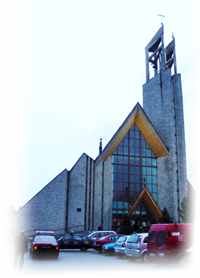
Holy Cross Church, ZakopaneUndoubtedly my favorite contemporary composer, Górecki often vies for “best composer of all time” in my opinion – it all depends on when you ask. It was his music, particularly his Third Symphony (subtitled”Symphony of Sorrowful Songs” – more information here) that was a major factor in my choosing Poland when I joined the Peace Corps back in 1996.
Since then, my appreciation of his music has only grown, particularly with my improved Polish and the ability to understand the texts of his vocal works.

When I was about to leave for Poland, I joked with someone that I was going to meet Mr. Górecki no matter what it took. I had my chance this weekend, in the most auspicious of occasions: Górecki conducting his Third Symphony in celebration of his seventieth birthday. In the end, I’m ashamed to say, I chickened out. I couldn’t think of anything to say that wouldn’t make me sound like a babbling teen meeting some superficial movie star.

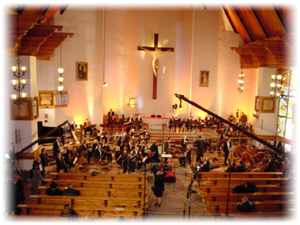
Górecki concertIt’s enough, I suppose, that I got to experience his Third Symphony, under his own baton (well, no – he didn’t actually conduct with a baton), in a location that was intimately connected with the text of the second movement.
The whole adventure was blessed by luck from the beginning. Kinga and I left at 1:40 in the afternoon, not knowing when we had a bus or even how long it would take us to get there. We arrived at the bus stop just as a bus to Nowy Targ was pulling up. The chances of that happening are miniscule. We made it to Nowy Targ, waited half an hour for a bus to Zakopane, with me babbling like a little girl going to meet The Back Street Boys. Hopped off the bus in Zakopane, took a cab to the church, and arrived half an hour before the concert started. Those without invitations had to sit in the small balcony. Though we arrived only half an hour before the concert was to begin, the balcony was virtually empty. We ended up standing at the railing of the balcony to get the best view, and by the time the concert started, there was quite a crowd.

The concert itself was something of a blur. At 60+ minutes, the symphony could, I suppose, be called “moderate” by some standards, but for me, it seemed to last about ten minutes. I blinked and the first movement was over, with an outbreak of coughing and sneezing in the audience – the backlog of half an hour silent, respectful listening, I suppose. The second movement, at only nine minutes, seemed a flash. And the third moment, at about twenty minutes, seemed about a tenth that. I didn’t take any pictures because the concert coordinator politely asked that we not.

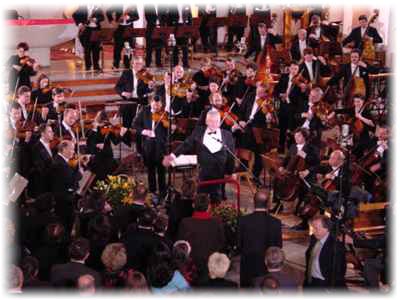
Górecki concertAfter the concert, the orchestra performed “Sto Lat” (“100 Years”), the traditional Polish well-wishing song. Mid-way through, Górecki jumped onto the podium again and directed everyone, audience and orchestra alike.
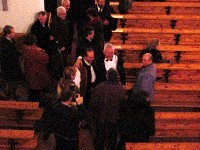
After some well-wishing and chatting, the orchestra came back out and they did a playback recording session, as this is intended to be a DVD released sometime later. It was a strange thing – they were basically making a music video, playing along with their earlier performance. They played for a bit – most of the first movement – then suddenly the director stopped everything just as the music reached it’s most emotional point. Strange how art can so easily succumb to commercial needs.