



matching tracksuits

fun in threes, sometimes fours

First Impressions II

Back straight, chest out, shoulders square, hands folded behind the back. Greetings, warm but firm, as everyone comes in.

The Speech, highlights:

I will treat you as an adult, which means that I will respect you and speak respectfully to you. When I speak to you, I will not simply bark an order, but I will speak politely. I use “please” and “thank you.” Most importantly, it means when you speak to me, I give you my full attention. I expect the same. Is that clear? Does everyone understand?

A quick survey shows that some indeed are not listening. Time for the sergeant act.

“Ladies and gentlemen, I asked you a question, and when I ask you a question, you will answer it. When I speak to you, you will listen.”

It’s the best drill sergeant voice I can muster, and I deliver the words in a loud and firm voice.

Silence.

“Do you understand?”

Heads nod, a few “Yes sirs.” A hand up. “Were you in the military, sir?”

Sometimes it’s amazing how well I can act the role.

Help II

It can be a look -- eyebrows furrowed and mouth slightly askew, or the opposite: eyebrows raised with eyes opened Bambi wide. It can be a sound -- smacking licks, a gasp of exasperation. It can be body language -- a staunch refusal to look someone in the eyes, shoulders turned perpendicular to another’s body, a tapping pencil. It can probably be even a smell -- pheromones released, but undetected by the blunt human nose.

There must be a thousand ways of telling someone, “I don’t want your help, and I think you’re a fool for offering it” without uttering a single word.

At some point we all need help, so the theory goes. But there are a few stalwart individuals who would rather drown than take a proffered hand. There are a few who will refuse swimming lessons even as they stand on the ever-vertical deck of a sinking ship, not take a parachute in a spiraling plane.

Help

"We give help to everyone in the world! When do they help us!? We help bail out this and that country, send aid here and there, notably saved and re-built Europe in WWII. What do we get for our efforts? Hatred."

Thus complained someone once about how hated America -- saintly, in this person's view -- is in the world. Poor us. What do we do when we do get that help?

Hundreds of tons of British food aid shipped to America for starving Hurricane Katrina survivors is to be burned

US red tape is stopping it from reaching hungry evacuees. (commondreams.org)

That's right -- we burn it.

(Thanks to Chhavi for this.)

Français sans filet

Je ne parle pas bien français. Je me souviens très peu de ce que j’ai appris à l’université. En fait, j’ai écrit cela en anglais et je l’ai traduit à Babel Fish. Cela explique la bêtise de ce texte.

I don’t speak French well. I remember very little of what I learned in college. In fact, I wrote that in English and I translated it at Babel Fish. That explains the silliness of this text.

Not speaking French didn’t stop me from being a French teacher for the day today. Fortunately, I had two bocks of first-year French and only one block of third-year. Even more fortunately, the planning period fell between the third year and first year blocks, so I had plenty of time to do a bit of cramming.

Oh, for a real Babel Fish, though. Think of the problems that might solve — instant intelligibility. Think of all the translators and comparative literature scholars out of work.

Teaching something while not being entirely sure that you’re teaching it correctly is a little like the Engine that Could — I think this is right, I think this is right.

A few tips for those embarking on teaching a foreign language you barely remember:

  • When in doubt about translation, be honest: “I don’t know.”
  • When in doubt about grammar, be honest: “I don’t know.”
  • When in doubt about spelling, be honest: “I don’t know.”
  • When in doubt about pronunciation, mumble.

And thank the maker for an assembly that cuts half an hour off your last lesson.

Treasure

“I’ve been sifting through the layers” since this weekend. I’ve thrown away large chunks of my past that I never thought I’d part with. I’ve seen a Gary I had forgotten about, whom I almost didn’t recognize.

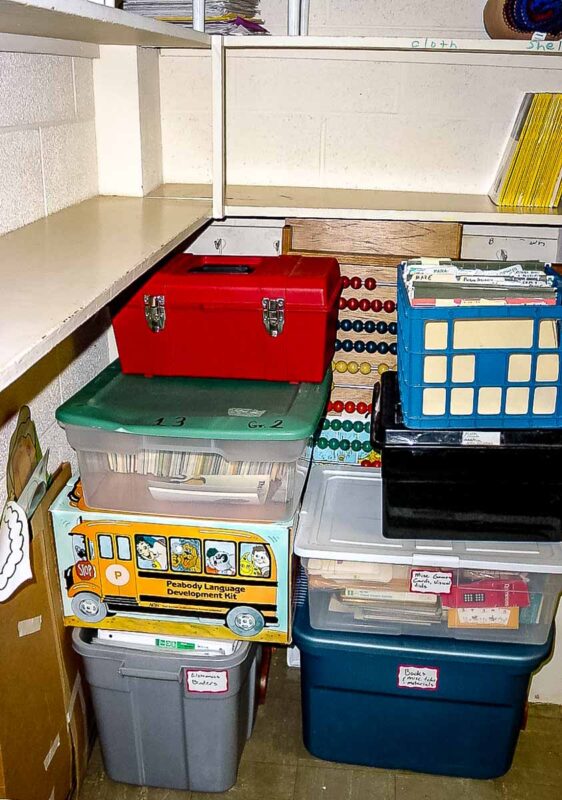
Kinga and I spent the weekend at my folks’ place, and I spent some time Sunday going through things that have been packed up for ten years, things I’d saved throughout my adolescence and my parents dragged from house to house as they were house-hopping the last few years. It was all stored in the giant blue plastic storage boxes you see towering above the isles in K-Mart and Wal-Mart -- all the Marts, I guess.

Amazing how treasure can turn to trash with the passage of time. In the end, I emptied almost three whole boxes, throwing out everything from old letters to college papers and most everything in between.

Most of what remained were toys from my childhood, things that my mother had saved long after I’d wanted to toss them out. “Fine,” I laughed Sunday. “You’re responsible for storing them, then!”

What was shocking was the number of letters I’d saved. When I was growing up, I had a friend who, after answering a letter, would throw it away. Me, I’d stash it in a box specially for that.

“Why? You’re not going to reread it,” my friend exclaimed.

“I might!” I never did, but throwing out something as personal and intimate as a letter always seemed sacrilegious. A private, lasting conversation with me, and no one else -- how could anyone toss that out?

Very easily, I discovered Sunday.

Also among the treasure and trash was an old notebook that I carried about during college, scribbling random thoughts here and there -- a sort of portable journal, for I’ve always kept that on the computer. To flip through it for the first time in probably nine years was to look at myself more directly than I’ve done in a long time. Random thoughts inspired by bumper stickers and books, quotes, silly attempts at being witty, sillier attempts at being deep -- it’s all in there:

  • I blow moisture from my mouth and nose at 200+ mph and receive a benediction for my efforts.
  • Ollie North lost his bid for Virginia Senator, restoring some of my hopes that we are an intelligent species.
  • “God is my co-pilot.” Bonhoeffer would hate that. God should be the pilot, not co-pilot. “Co-“ means shared control.
  • Perhaps we should spay and neuter some humans.
  • If reality bites, can I get rabies from it?
  • A poorly organized protest is more likely to appear as a temper-tantrum than a legitimate protest.
  • All new cars are beginning to look the same.

One entry in particular was striking, for it took up a few lines and a few moments to write it, but ended up affecting nine years of my life. Indeed, the rest of my life:

I am sending away for information about the Peace Corps. It would be a huge commitment, but I think it would teach me a lot, more than could be learned around here… (Wednesday 20 July 1994)

I ended up staying three and a half times as long as the two year minimum. I met my wife there. I found a second home.

ESubL

Being bilingual can really be a troublesome affair when trying to teach English – if your student’s L1 is different than your L2.

Today, while subbing, I worked with a student of Latin origins who spoke very limited English. I speak even more limited Spanish, though I’ve decided I must learn that language. At any rate, I found that while working with her it was a constant and very conscious struggle not to lapse into Polish. “She doesn’t understand what you’re saying,” a voice was screaming in my head, “So use another language.”

Unfortunately, Polish was not terribly helpful.

The world of ESL is frightful in some ways. The responsibility is enormous.

As an EFL teacher, I was teaching a foreign language, which means it’s not going to be used that often. It’s not often going to be the basis of all other learning. And teaching English as a foreign language also affects the skills stressed. My primary goal for my students was verbal communication. Writing is important, but not nearly as important as speaking.

I confess, then, that I probably didn’t spend enough time with my students working on writing, until the national testing standards changed and forced my hand.

ESL is an entirely different animal. The goal is simple: get students’ English up to a level where they use it as their primary language for instruction. Think about it: it’s re-wiring a house, re-pouring a foundation. No, wrong analogy. It’s adding a second set of wires to a house, putting a foundation within a foundation.

And what do students do in the meantime? If they have limited English, how do they learn science? The idea solution is bilingual education, with L1 gradually being phased out. But the ideal is often just that.

Moving

In Your Face

What do you say to a student when he says to you aggressively, “You don’t have to get up in my face like that!”? How do you respond when in fact all you were doing was trying to be “reasonable” and explain why you were calling him down in the first place, and doing it by squatting down to be at eye-level with him, talking to him like a man? Is this blatant disrespect, or something else?

I’m not even sure I know what it means to be “in someone’s face about something.” I’m assuming that it means the chest to chest, strutting peacock type of testosterone-laden behavior I saw myself as a student many times. Of course I wasn’t doing that when students said those lovely words to me, so what’s going on?

An invasion of someone’s personal space is the only explanation I can come up with. In trying to be respectful — and I do believe teachers should be as respectful to their students as they expect their students to be to them — it seems I crossed an unknown, unseen boundary and caused offense. Or perhaps he was just testing me, seeing what he could get by with?

More on ID

Thud mentioned “the kind of ID that also rejects short-history ‘the world is 5000 years old’ creationism.” It’s been my sense lately that “ID” is an effort by more moderate believers to distance themselves from the more literal, fundamentalist reading of a six-thousand-year-old universe. Look at the

Catholic church’s official position: the Vatican holds that God created the universe, but it makes no claim as to how he did it. Very sensible, but too sensible for fundamentalists – who often are rabidly anti-Catholic as well.

The problem lies with the fact that creationists – and I mean the hard-core, 6k variety – take the issue very personally. I once stumbled onto a teen message board of a fundamentalist sect and jumped in on the question, “Do you believe in evolution?” I found that the kids’ initial reaction was always an emotional one. “I’m not descended from primal sludge!” was a common theme. While I fail to see how the origins of my species affect my personal worth and self-confidence, the thought of being able to trace the human race back to amoebas somehow offended their sense of personal dignity.

“Something that used to be sludge can’t possibly be a child of God,” they reason. “I am a child of God,” they continue, concluding with, “Therefore, I did not evolve from primordial soup.”

Not the most well-founded syllogism I’ve ever encountered, but these are emotions we’re dealing with, not reasonable, rational responses.

Accepting evolution is rejecting God. For them, it means rejecting the very bedrock of their lives: the Bible. It makes the Bible a liar, because the use of figurative language has largely escaped them as a possible interpretation. If “And the evening and the morning were the first day” (Genesis 1.5) can be interpreted figuratively, so can “For God so loved the world, that he gave his only begotten Son, that whosoever believeth in him should not perish, but have everlasting life” (John 3.16). If the Bible got it wrong about biology, then what confidence can we have in it regarding salvation.

This black-and-white, either-or thinking permeates the fundamentalist world.

All we had to do was elect an evangelical president to see that.

The Poll

More creationism nonsense in the news. This time, yet another poll:

In a finding that is likely to intensify the debate over what to teach students about the origins of life, a poll released Tuesday found that nearly two-thirds of Americans say that creationism should be taught alongside evolution in public schools.

The poll found that 42 percent of respondents hold strict creationist views, agreeing that “living things have existed in their present form since the beginning of time.”

In contrast, 48 percent said they believed that humans had evolved over time; but of those, 18 percent said that evolution was “guided by a supreme being,” and 26 percent said that evolution occurred through natural selection. In all, 64 percent said they were open to the idea of teaching creationism in addition to evolution, while 38 percent favored replacing evolution with creationism.

The poll was conducted July 7-17 by the Pew Forum on Religion and Public Life and the Pew Research Center for the People and the Press. The questions about evolution were asked of 2,000 people, and the margin of error is 2.5 percentage points. (Source)

Creationists will never get through their head that creationism is, at best, a philosophical theory, not a scientific one.

In the end, though, I have no problem with teachers mentioning the idea of ID and asking students what they think of it, as long as it’s not called science. What will it be called then? I don’t know. I don’t care, as long as it doesn’t take too much time from the already overburdened curriculum.

What was most striking about the poll was the data dealing with a simple question: Who should decide what’s taught?

The poll showed 41 percent of Americans want parents to have the primary say over how evolution is taught, compared with 28 percent who say teachers and scientists should decide and 21 percent who say school boards should. Asked whether they believed creationism should be taught instead of evolution, 38 percent were in favor, and 49 percent were opposed.

Parents decide? In the end, I guess they do – they’re going to elect the officials who will force this nonsense down the public’s throat. But should they have an active hand in deciding what’s taught?

What would a nice response be for a science teacher? Mine would be along these lines:

Great! Saves me some time. You’re going to do this pro bono, right? And while you’re at it, since I didn’t study any of this in college and am completely unqualified to teach it, why don’t you make out my lesson plans for me? And write and grade the tests? Shoot, just come in and teach, and I’ll simply serve as a pedagogical consultant. You do the work, I get the pay. Sounds great.

Maybe parents want to come in and decide the entire curriculum and teach it as well? Teachers will just wander about the internet…

Support from Your Principal

Erin O'Connor at Critical Mass has a fascinating and yet disturbing post about a way of dealing with student profanity...by allowing it.

An English high school has decided to cope with the problem of student profanity by tolerating it. Beginning this fall, students will be allowed to curse at their teachers, just so long as they don't say "f -- k" more than five times during a lesson. Part of the new policy involves keeping a running tally on the blackboard of how many times the word "f -- k" has been uttered during a given lesson--a practice that promises to distract students.
I for one would feel this as a complete abandonment on the part of the principal of any acknowledgment even of my authority as teacher.

The post is here.

Blue Ridge Parkway

Are you our sub?

A first-time experience and I keep quiet -- that can’t have happened too very often. But the details about the events of yesterday, fascinating though they were, will remain distanced from any comments I might make here about it. The experience: I was a sub. First time.

In an effort to gain a face in the local school system, I am trying substitute teaching, and I got my first call yesterday morning.

“Substitute teaching.” That in itself seems to be an oxymoron. Teaching is a profession requiring such intimate knowledge -- not the least of which, the kids’ names -- that "substitute teacher" has all the ring of “substitute shrink.”
“Yes, I know you’d rather be talking to Dr. White, but he’s away on urgent business and his office asked me to come down and fill in for him. Now then, what seems to be the problem?”

It just doesn’t seem like it would work.

Yet at an orientation session for new substitute teachers last week, I and other new subs learned that “subbing isn’t the glorified babysitting it used to be” and that subs are expected to continue on instruction. In other words, be a substitute teacher and not just a substitute authority figure. I'm not sure it was ever anything else, but I do think that there was less expectation of what subs would accomplish in the classroom, say, twenty years ago.

The Day

Seven years of teaching has taught me one invaluable thing about the profession -- take nothing they do personally. Any silly, probing, "let's-see-what- he-does-now" behavior is directed at my role, not my person. That realization will be key to being an effective sub.

I survived. Not only that, but I enjoyed it. It felt good to be in a classroom again. With the beginning of the school year here (and approaching in Poland -- 1 September), it was difficult to keep from feeling a tinge of sadness at the thought of not teaching this year. The call Friday morning helped alleviate that.

I spent the afternoon with a group of seventh graders, the first time I’ve worked with that age group in many years.

Six weeks of my student teaching was in a seventh grade classroom, and those kids, according to my reckoning, have just finished college, so it’s been a while.

Seventh grade -- an interesting age group, for they’re right on that border between “child” and “young adult,” beginning to realize that they’re not kids anymore but not quite sure how to handle that.

Neck Pigment

I've been fighting for some time with the term "redneck." While not racist, I think, it's classist. The same basic thing: making assumptions about an individual's character based on a stereotype of his racial, cultural, ethnic group.

Really, I try not to use that term.

And then feel guilty when I laugh at something like this.

Impersonal

In the spirit of St. Bernard’s via negativa, there are few things to make you more appreciative of your spouse than perusing on-line personals. “Tell me I’ll never be back out there,” Carrie Fisher’s character says to Bruno Kirby in When Harry Met Sally, and after looking through a few on-line personals, the “dating scene” shows itself to be most definitely “out there.”

A good personal ad is an art. Just try describing yourself and what you’re looking for in less than 200 words. Less is more difficult.

Piling words on top of each other is much easier than constructing well-written sentences. But despite the fact that this is the _first_ impression they’re making, no one — neither men nor women — takes it so seriously. Instead, we read things like, “Hmmm about me. I guess you can say I’m a pretty funny broad.” Already we’re smiling at how much her word choice has said about her. Scroll down and we find, “Ok, where to start… like many people, I feel that I am just not meeting the ‘right people’ out at bars” To begin with, start without the “where to start.”

In advertising themselves, people tend to fall into cliché with alarming frequency – then wallow about in it. And it starts with the ad’s header:

  • I’m a nice girl looking for her shining knight.
  • Looking For Mr. Right
  • Don’t judge a book by its cover
  • Is Miss Right out there?
  • Looking for the right one.
  • Looking for Adventure
  • No DRAMA!
  • lookn 4 u!!

Some communicate on so many levels (many of them distressful) that they seemed to be masterpieces of Freudian innuendo:

  • Animal lover seeking non-puppy kicker
  • Gotta pay the cost to be the boss

Yahoo! personals washed up more than its share of clichés and freaks, but there were some thoughtful openings as well.

Well, one: “carpal tunnel love.” It just makes me all the more thankful that I’m married, that I no longer have such worries as “Will I still be alone when I’m sixty-four?”

She’ll still need me; she’ll still feed me.