fun in threes, sometimes fours

For a few years there, you could count on pictures down at the swing and hammocks. It was such a regular occurrence that I pretty much stopped taking pictures down there. How many pictures of your kids swinging do you really need?
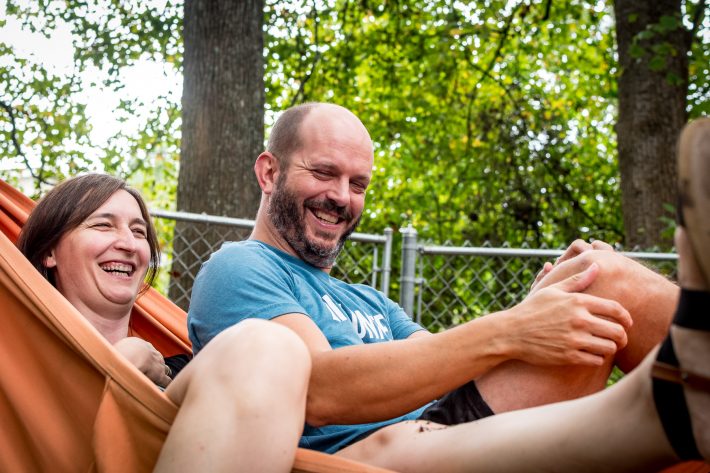
Today, we all went down to the swings for a while before dinner. I took some pictures, then gave the camera to the Boy.
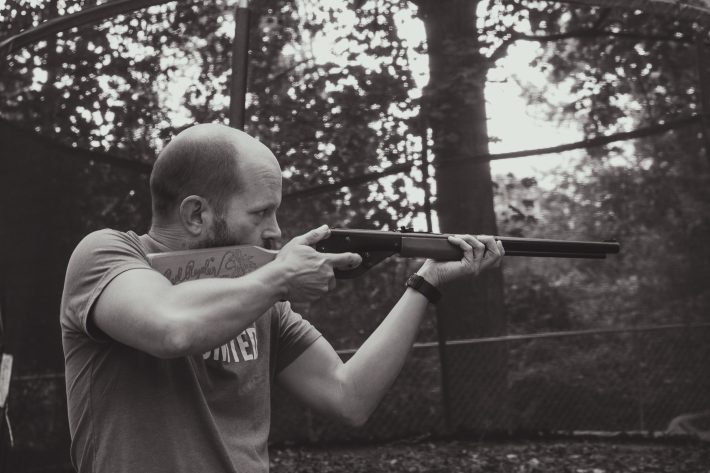
He's got a good eye, that little fellow.
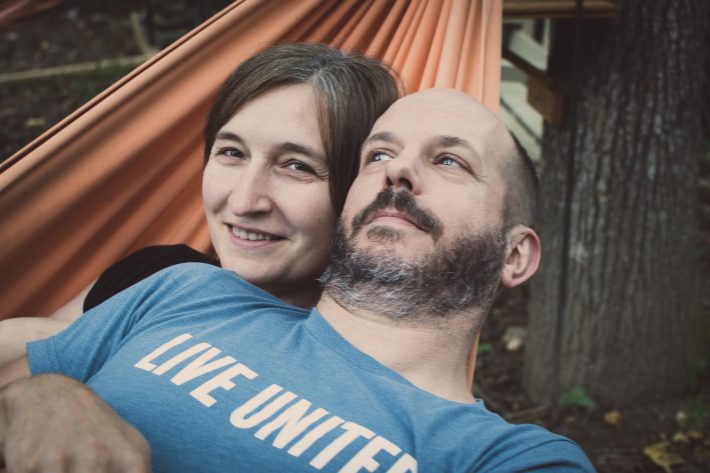
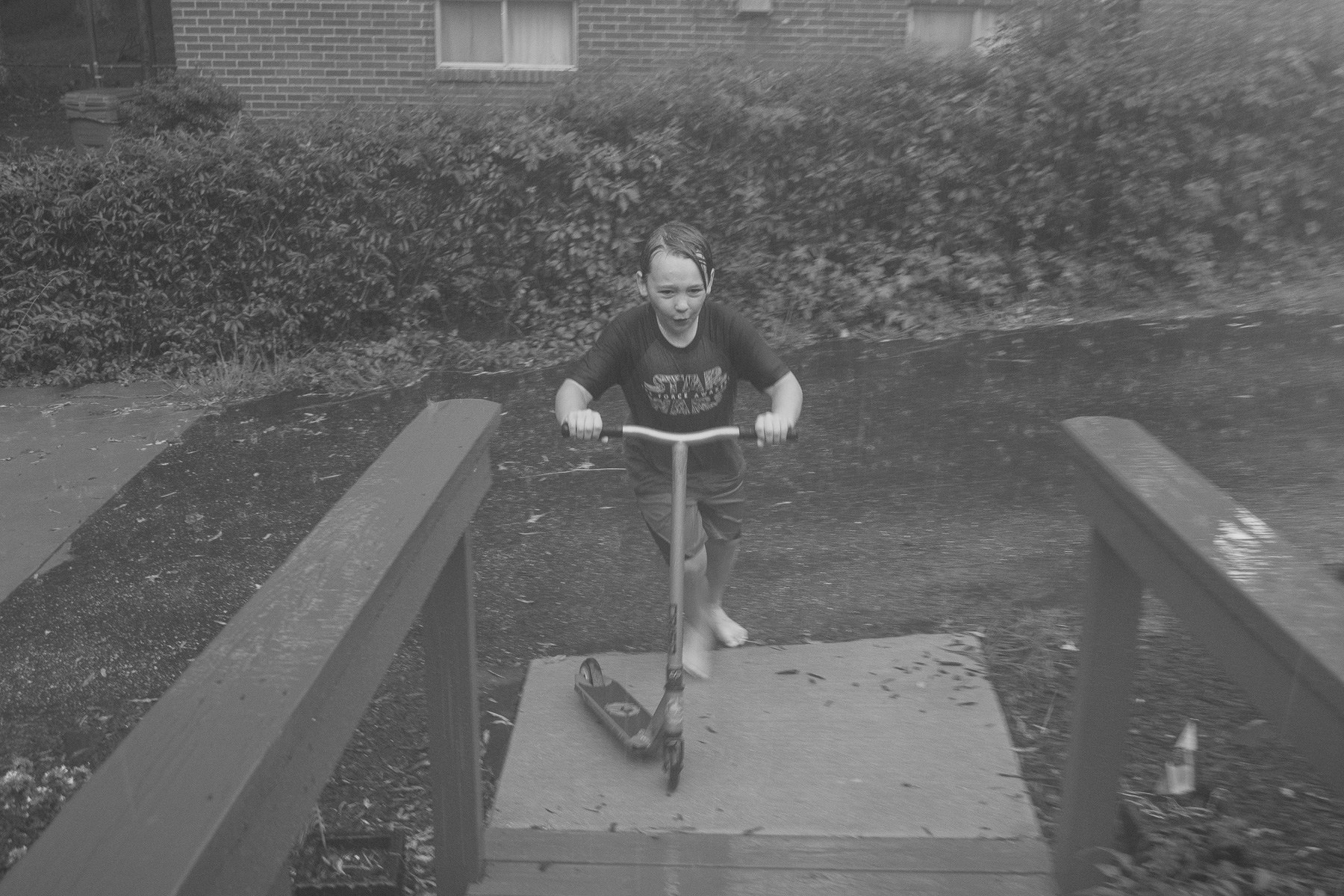
K and the Boy spent some time rolling around the neighborhood this evening after dinner. One of the countless things I love about K is her own love of childhood joys.
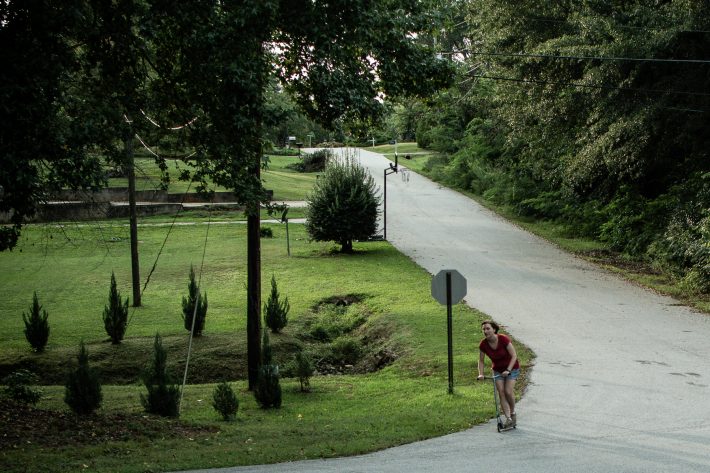
She was on E's scooter, having the time of her life it appeared.
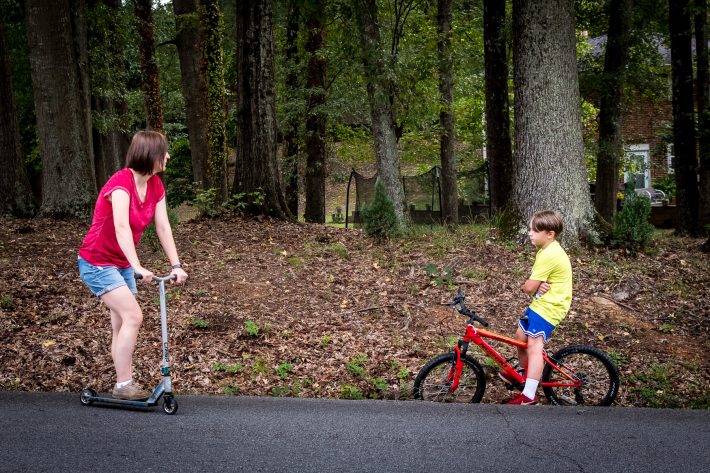
Afterward, we played a bit of soccer.
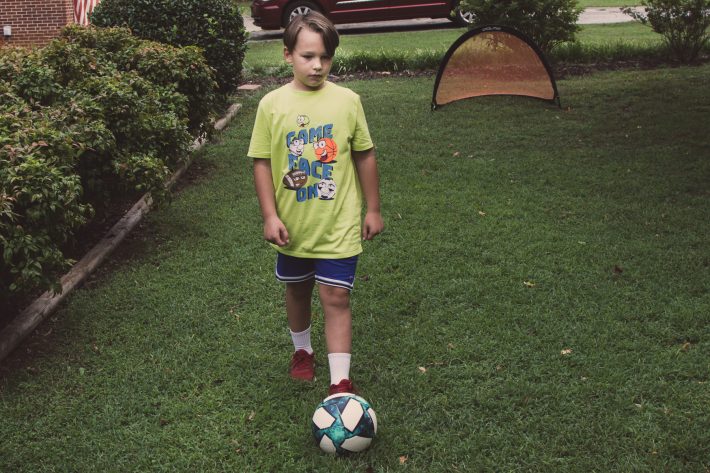
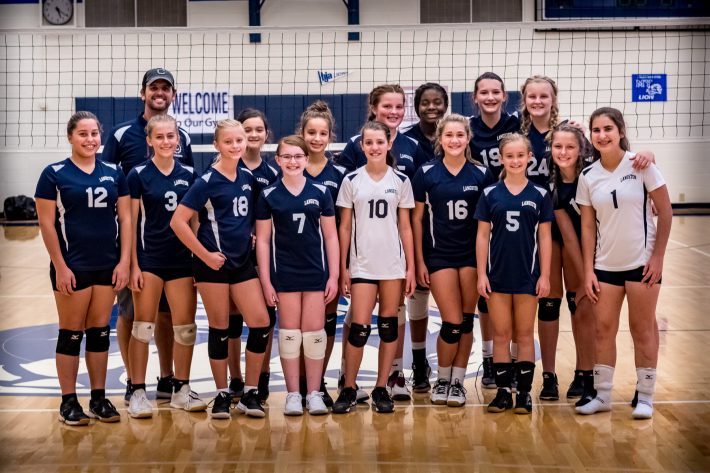
The Girl was at volleyball practice, so we had to do something to entertain ourselves.
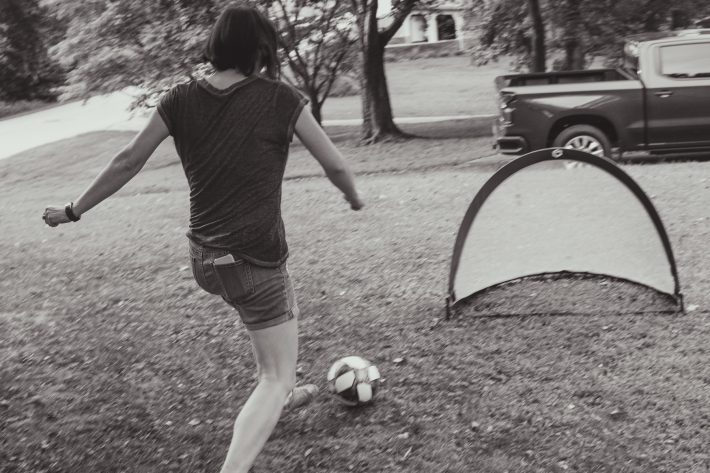
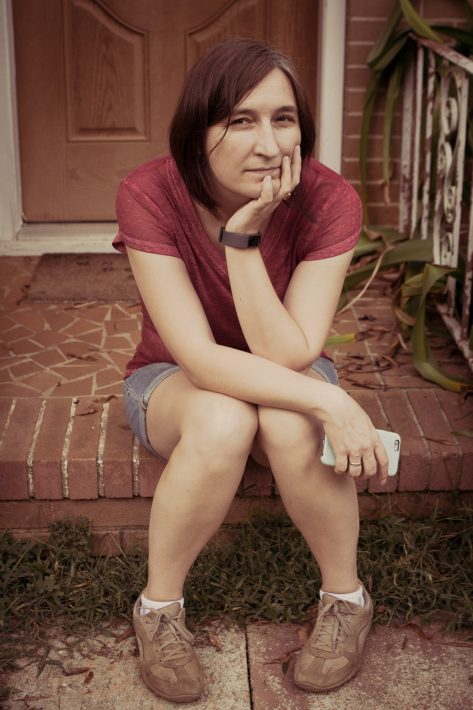
And of course, we had to have a little down time once it was all said and done.
We went for a bike ride this afternoon to our favorite local park. We got an up-close view of a local:
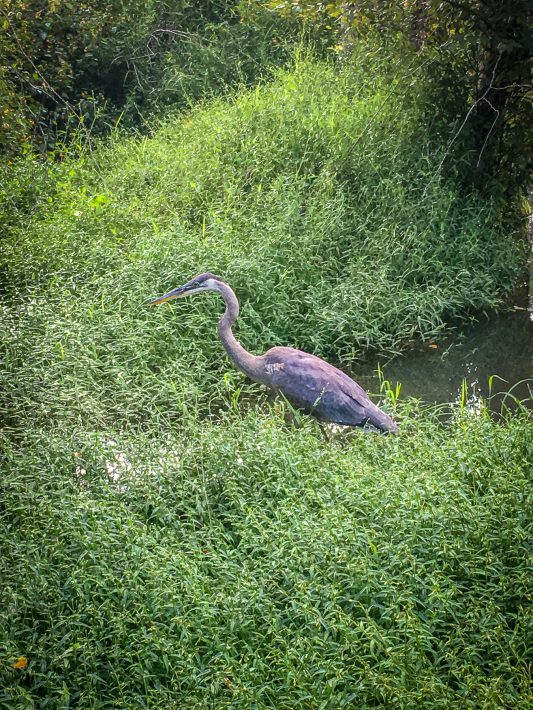
We see them at a distance quite frequently, and they even come into our creek behind our house from time to time, but this is undoubtedly the closest we've ever been to one.
While in Mass today I noticed an oddity that I'd heard many times but never really thought about: just before the congregation recites the Lord's Prayer, the priest says, "At the Savior's command and formed by divine teaching, we dare to say..."
"Why 'dare'?" I thought. "Doesn't Christianity present God as a father?"
A little research revealed this:
The priest notes what a privilege it is for us to be able to talk to God in this way: "At the Savior's command and formed by divine teaching, we dare to say …" What is it that we dare to say? "Our Father". This is precisely what Jesus calls us to do. It underscores the intimate relationship we now have with God because of Jesus' work of salvation. We share his life because he came to share ours. Through our union in Christ, God has truly become our Father.
Website for Church of St. Vincent DePaul in Singapore
I suppose the argument might be that pre-Jesus, no one would have thought to call God Father. I don't really know. But there's always been something of a thread of fear in most theisms, which seems somewhat unhealthy to say the least.
It's certainly present in the Bible, including this curiosity: "The fear of the Lord leads to life, and whoever has it rests satisfied; he will not be visited by harm" (Proverbs 19:23).
It seems somehow to echo what's said later in Mass, just before going to take communion: "Lord, I am not worthy that you should enter under my roof, but only say the word and my soul shall be healed." If God is indeed to be seen as a father-figure, who ever talks to their father that way? If my children said they're not worthy of being in my presence, I would wonder how I'd managed to raise them with such little self-esteem. I don't even know that you could raise children to think that way without emotionally abusing them. I understand the sense of humility, but this just seems to be a little much. I know, I know -- I'm viewing it through a human perspective. That's all any of us have, though, and it seems, honestly, a little like a cop-out. "Who are we to question the ways of God?" covers a multitude of unanswered prayers.
A poem by Billy Collins for the first anniversary of the 9/11 attacks
Yesterday, I lay awake in the palm of the night.
A soft rain stole in, unhelped by any breeze,
And when I saw the silver glaze on the windows,
I started with A, with Ackerman, as it happened,
Then Baxter and Calabro,
Davis and Eberling, names falling into place
As droplets fell through the dark.
Names printed on the ceiling of the night.
Names slipping around a watery bend.
Twenty-six willows on the banks of a stream.
In the morning, I walked out barefoot
Among thousands of flowers
Heavy with dew like the eyes of tears,
And each had a name —
Fiori inscribed on a yellow petal
Then Gonzalez and Han, Ishikawa and Jenkins.
Names written in the air
And stitched into the cloth of the day.
A name under a photograph taped to a mailbox.
Monogram on a torn shirt,
I see you spelled out on storefront windows
And on the bright unfurled awnings of this city.
I say the syllables as I turn a corner —
Kelly and Lee,
Medina, Nardella, and O’Connor.
When I peer into the woods,
I see a thick tangle where letters are hidden
As in a puzzle concocted for children.
Parker and Quigley in the twigs of an ash,
Rizzo, Schubert, Torres, and Upton,
Secrets in the boughs of an ancient maple.
Names written in the pale sky.
Names rising in the updraft amid buildings.
Names silent in stone
Or cried out behind a door.
Names blown over the earth and out to sea.
In the evening — weakening light, the last swallows.
A boy on a lake lifts his oars.
A woman by a window puts a match to a candle,
And the names are outlined on the rose clouds —
Vanacore and Wallace,
(let X stand, if it can, for the ones unfound)
Then Young and Ziminsky, the final jolt of Z.
Names etched on the head of a pin.
One name spanning a bridge, another undergoing a tunnel.
A blue name needled into the skin.
Names of citizens, workers, mothers and fathers,
The bright-eyed daughter, the quick son.
Alphabet of names in a green field.
Names in the small tracks of birds.
Names lifted from a hat
Or balanced on the tip of the tongue.
Names wheeled into the dim warehouse of memory.
So many names, there is barely room on the walls of the heart.
Students have been spending the last two days working on how we can use plot and setting to analyze a short story. Each day's classes came up with slightly different results.
Our first step was to explicate the plot and setting of our story:
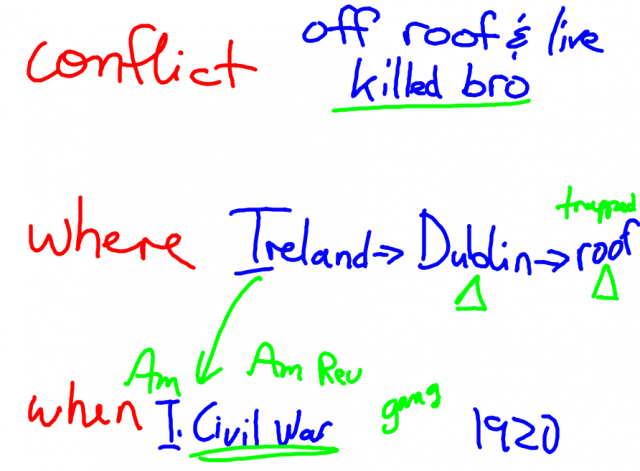
We determined that the real heart of the story, and thus of the conflict, was the fact that the protagonist unknowingly kills his brother as he tries to escape from being pinned down on the roof. This is what gives the story its power; this is the heart of the story that cannot be tampered with.
We then began asking whether we could change various elements of the plot. We determined that it doesn't have to be on a roof; it just has to be somewhere the protagonist can be trapped. We decided that it doesn't have to be Dublin, though a historian of the Irish Civil War might tell us that snipers were only active in Dublin. (I have no idea if this is the case. I used it as an example.) At first, everyone thought it couldn't be moved from Ireland because it's set in the Irish Civil War, but we soon figured out that it simply has to be in a setting where a brother could kill a brother without knowing it. Civil war and gang warfare are the most logical locations.
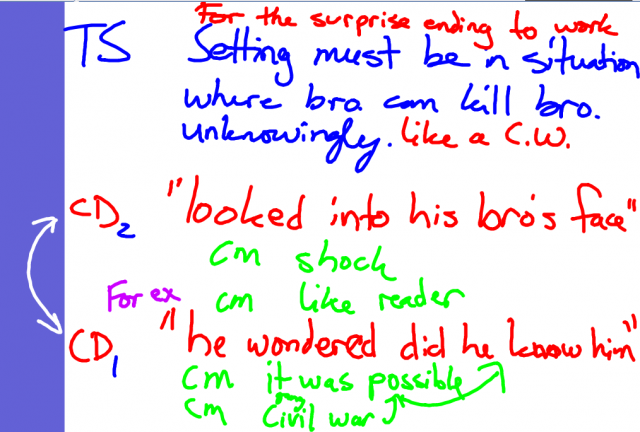
From there, it was fairly easy to create a working TS for our paragraph. We added some CDs before we decided that we had them in the wrong order: CD2 was our first CD so we would actually reverse the order if we were to write this paragraph. Finally, once all the CM was completed, we saw that our TS was a little out of alignment with our chunks, so we gave it a whack to knock it over a bit, adding "In order for the surprise ending to work" at the beginning of the paragraph.
At this point, the majority of the work is done. We still have actually to write out everything, but the hardest part is behind us.