matching tracksuits

fun in threes, sometimes fours

Murder Mystery

E and I were heading back down the driveway Wednesday night after taking the garbage cans out to the side of the room for morning pickup when we heard the most awful screaming coming from the woods behind our neighbor's house. We thought it might be a cat fight, but it quickly became clear that it was only one animal screeching. I remembered when Clover encountered a raccoon on the other side of the fence this summer and the sounds it was making, and I told E, "It's most likely a raccoon."

Clearing out the leaves to improve water flow

Today, we decided to go out for a little adventuring in the creek behind our house. We hadn't been for quite some time. I guess we just overdid it this summer, and the Boy was just tired of it. Still, today I talked him into it. We didn't get very far before we found out what happened to the raccoon:
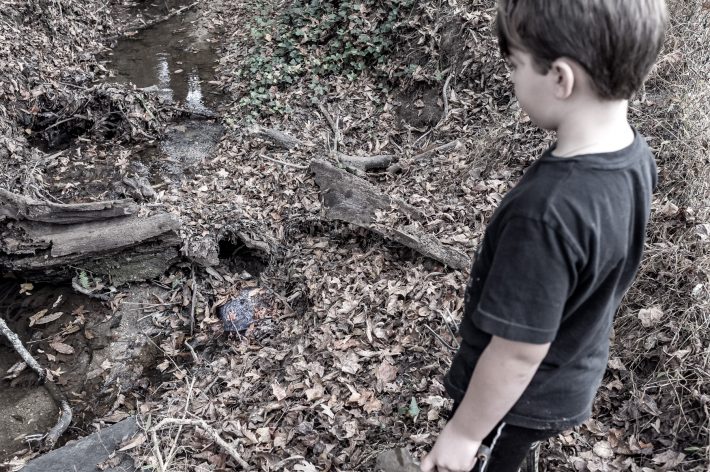
"There's a dead raccoon in the creek!" E exclaimed with a mix of fascination and disgust in his voice. We talked about what could have killed it. "We've seen blue herons in the creek, but I don't think one of them would attack a raccoon," he reasoned.

"No, they're not going to do anything like that, especially at night," I confirmed.

"Perhaps it was a ... " His voice trailed off. He really didn't know what to think. "It's the second one we've found," he recalled, and then remembered what we'd reasoned about that raccoon: "Maybe it was a copperhead! Or maybe a snapping turtle."

"I don't think it would be either of them," I explained. "They're both cold-blooded, and it's cold these days. They'll be tucked away somewhere hibernating."

"But Dad, we're wearing shorts today -- it's not that cold."

A View

From 19 years ago.

Clover

Always ready to play.

Shopping in Boston, 2001

Carving

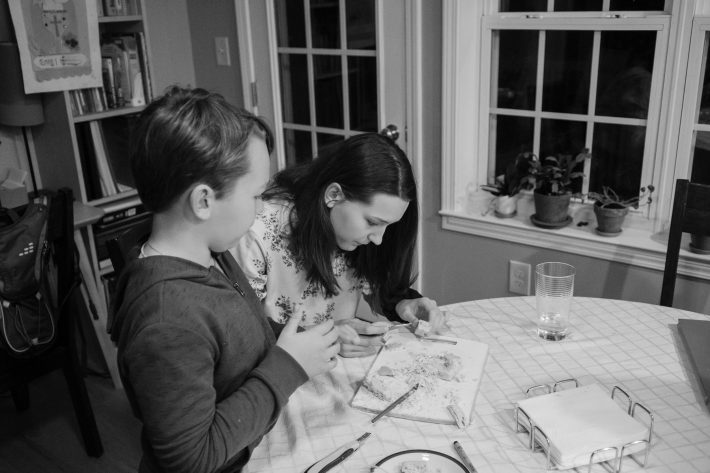
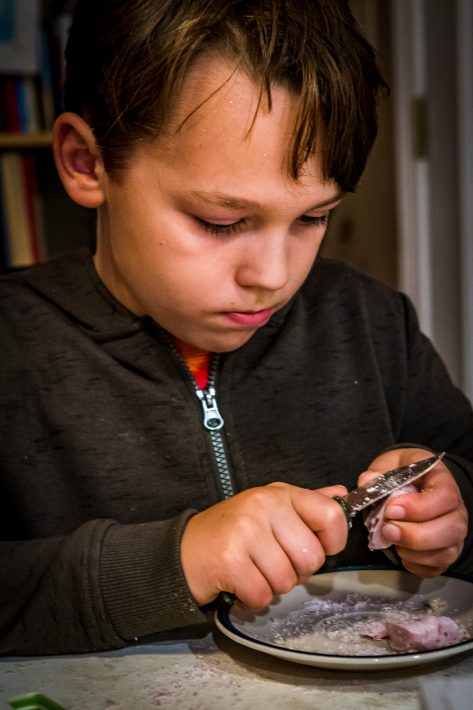
One of the skills the Boy is supposed to be learning as he works toward his Bear badge in cub scouts is whittling. We were supposed to be working in soap this week.

It's really a perfect hobby for the Boy: it requires patience, patience, patience, and we're finding as he gets older, the less patient he's becoming.

Meter

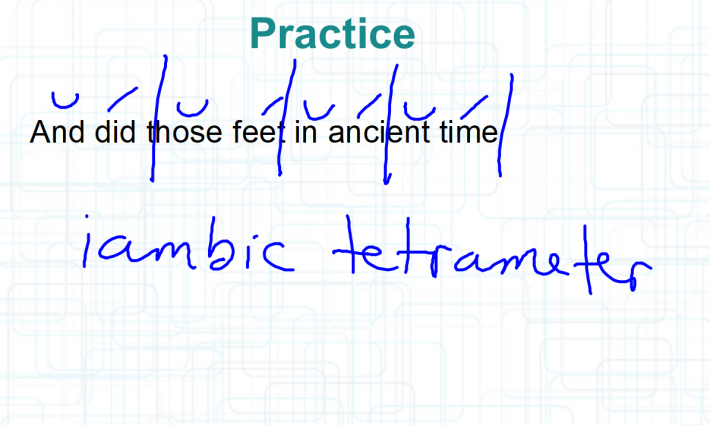
Today we finished up a quick day-and-a-half overview of meter after spending about a week on Shakespearean sonnets. I wanted kids really to understand the level of Shakespeare's achievement, how much he wrote in iambic pentameter.

"Remember, kiddos," I said, "he was not only choosing words based on the ideas he wanted to express; he was also having to take into account their length and rhythm."

In the evening, during L's club volleyball signing and uniform fitting, I ran into two of my students who are playing on L's team. They're having a test tomorrow on sonnets but not on meter. It's not in the standards in any sense, so I couldn't justify testing them on it, and I could just barely justify to myself spending almost two days on it. It's just on interpreting, on picking up on some of the rudimentary differences between modern and Elizabethan English. I reminded one of the girls to keep preparing for the test.

"We were going over it in the car," said her father.

Warship

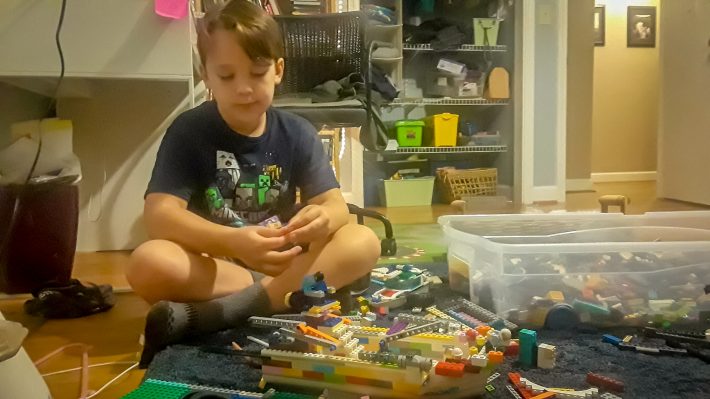
I was reading The Power Worshippers: Inside the Dangerous Rise of Religious Nationalism this evening, a frightening look at some Evangelicals’ attempt (and often more than just an attempt) to inject religion into government; K was working on documents for a listing she’s preparing; L was Facetiming a friend; E was drawing and writing a story about clowns. I realized it was seven already and I hadn’t done much of anything with the kids other than talk to them at dinner. I headed to E’s room and suggested we play with Legos.

“Yes!”

We’ve built a number of things with blocks over the years. A church. A school. A prison. Multiple boats. Countless wheeled vehicles. A bridge. A few houses.

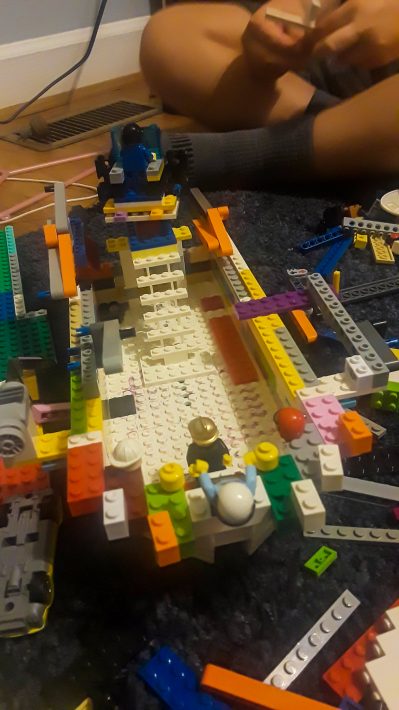
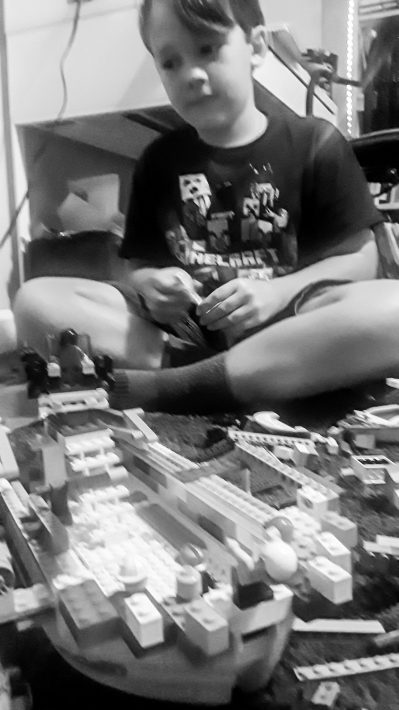
Today, we took the remnants of the bridge, destroyed part of a prison watchtower, and broke apart the remains of some cars and other nonsense to create a battleship. The ultimate battleship. Complete with gigantic booms coming off the side that can smash any vessel that comes too close, a number of guns, fore and aft, that could take out a small armada, and a newly-invented weapon:

The head canon — a forward-leaning Lego man whose head can be launched at will toward any enemy.

Cutting

Tonight, I spent a fair amount of time going through photos from the last year to create our yearbook. It’s a simple process: go to Lightroom; create a new collection with all flagged pictures from the year; begin deleting pictures. I started out with 1800; I’m down to 330 now.

It’s a good way to get an overview of the year. We had dozens of pictures of the family playing games (Sorry, Monopoly, hearts, etc.); we had dozens of pictures in the park going for walks; we had dozens of pictures of E and me exploring in our creek. How many nearly-identical pictures does one need?

Random Thoughts About Today’s Mass Reading

Today’s gospel reading was the famous parable of the talents:

Jesus told his disciples this parable: “A man going on a journey called in his servants and entrusted his possessions to them. To one he gave five talents; to another, two; to a third, one–to each according to his ability. Then he went away. Immediately the one who received five talents went and traded with them, and made another five. Likewise, the one who received two made another two. But the man who received one went off and dug a hole in the ground and buried his master’s money.

“After a long time the master of those servants came back and settled accounts with them. The one who had received five talents came forward bringing the additional five. He said, ‘Master, you gave me five talents. See, I have made five more.’ His master said to him, ‘Well done, my good and faithful servant. Since you were faithful in small matters, I will give you great responsibilities. Come, share your master’s joy.’ Then the one who had received two talents also came forward and said, ‘Master, you gave me two talents. See, I have made two more.’ His master said to him, ‘Well done, my good and faithful servant. Since you were faithful in small matters, I will give you great responsibilities. Come, share your master’s joy.’ Then the one who had received the one talent came forward and said, ‘Master, I knew you were a demanding person, harvesting where you did not plant and gathering where you did not scatter; so out of fear I went off and buried your talent in the ground. Here it is back.’ His master said to him in reply, ‘You wicked, lazy servant! So you knew that I harvest where I did not plant and gather where I did not scatter? Should you not then have put my money in the bank so that I could have got it back with interest on my return? Now then! Take the talent from him and give it to the one with ten. For to everyone who has, more will be given and he will grow rich; but from the one who has not, even what he has will be taken away. And throw this useless servant into the darkness outside, where there will be wailing and grinding of teeth.'”

I noticed a few things about this parable that I’d never seen before: first, the master leaves all these things and then “he went away.” There’s nothing in the text that indicates the master expected the servants to do anything with the money. Perhaps that’s implied, but it’s not explicitly stated that the master expected any growth on his investment or that it even is an investment.

Second, I find it entirely reasonable that the third servant hides the money. What if he invested it and lost it? Wouldn’t the master be even angrier then?

Third, what’s all this stuff about “harvesting where you did not plant and gathering where you did not scatter”? Just what are the master’s expectations? What kind of a man is this? He doesn’t seem very reasonable at all.

Finally, there’s the disturbing ending: why the severe punishment?

I know, I know — it’s a parable. It’s not really about the money at all but it’s about an individual’s talents. At least that’s how everyone has always interpreted it. That leads to a realization I’ve had recently: why did Jesus speak in parables? If his goal is to transmit information, metaphor and parable are not the most effective, efficient means of doing that.

Politics, As Always

Downtown Saturday

Bonfire