matching tracksuits

fun in threes, sometimes fours

More Testing

“Isn’t that test in a couple of weeks the state test?” Mrs. G asked this morning.

“No, no,” clarified Mrs. H. “In a couple of weeks it’s the state pilot TDA test. The actual state test won’t be until May.”

“Remember Mrs. J was telling us about the test the state is making our school take and how Mr. F[, the school principal,] was trying to convince the district to count the state test in lieu of the second [district-mandated] test?”

“Oh, yes, I remember that.” The discussion continued along the lines of how frustrating it is to be testing so much but how we can get our kids more prepared for these district- and state-mandated tests.

That three English teachers were having trouble figuring out just how many major, schedule-impacting writing tests there were to be this year says a lot about the testing load the district and state put on teachers and students.

Our district mandates quarterly benchmark tests in English and math through the third quarter, and each of these impact the schedule and learning environment in a major way. Plus, the district requires us to give two major writing tests in preparation for the state writing test. Each of these take half the school day.  So that’s eight days of testing right there — testing days that affect all classes and shorten all periods by approximately half. Naturally, it’s hard to get kids to engage in meaningful learning when they’ve just spent two hours analyzing some awful short story that’s at least 70 years old because the testing companies want to save money (i.e., boost revenue) by using texts that are in the public domain and hence don’t require licensing fees. (We English teachers hear all the time about how important it is to choose texts about things young readers can relate to, and the the  state farms out its test development to a company that completely disregards that.) So the day is in essence a wash. Eight days down the drain — almost two full school weeks.

And that’s just what the district mandates.

It’s bad enough that the district puts middle and high school students through this; it’s also rammed through the elementary schools. The Boy had his district-mandated third-quarter math benchmark test today. It was almost sixty questions. For a fourth grader.

I’ve been saying that eventually, the US has to realize this obsession with testing is doing nothing but harm to our students, and the powers that be eventually have to change this, but I’ve been saying it for nearly twenty years now, and instead of getting better, it’s getting worse.

What’s worse is, I don’t know of a single teacher that takes these benchmarks all that seriously. “They’re designed to show for which topics students need remediation,” the six-figure-salaried district big-shots explain to us. If as a teacher who’s now spent nearly 150 days working with these kids I can’t tell you off the top of my head who needs remediation with what topic, I probably am not putting enough thought into my teaching.

What’s frustrating is, I don’t know of a single classroom teacher that had any input into the discussion about whether these obsessive, intrusive tests would have any value to the teacher at all.  These decisions were made by individuals making two to three times what teachers make while spending absolutely no time in the classroom. They haven’t been in a classroom for over a decade at best, I’d venture.

I sometimes wonder what would happen if a whole school — everyone from administrators on down — simply refused to spend the time administering these tests. Everyone. Simple refusal. “We’ve decided as a school that this is not the best way to spend our students’ time.” What if some schools did it? What if all schools did it? What if teachers were vocal about their opposition to all this testing (well, they are, to be honest)?

I imagine what I’d do if I were a student. All the students of course hate these tests. They’re completely meaningless to them. I think I’d be tempted just to choose random answers and apologize to my teacher if it ended up making him look bad in the eyes of the powers that be.

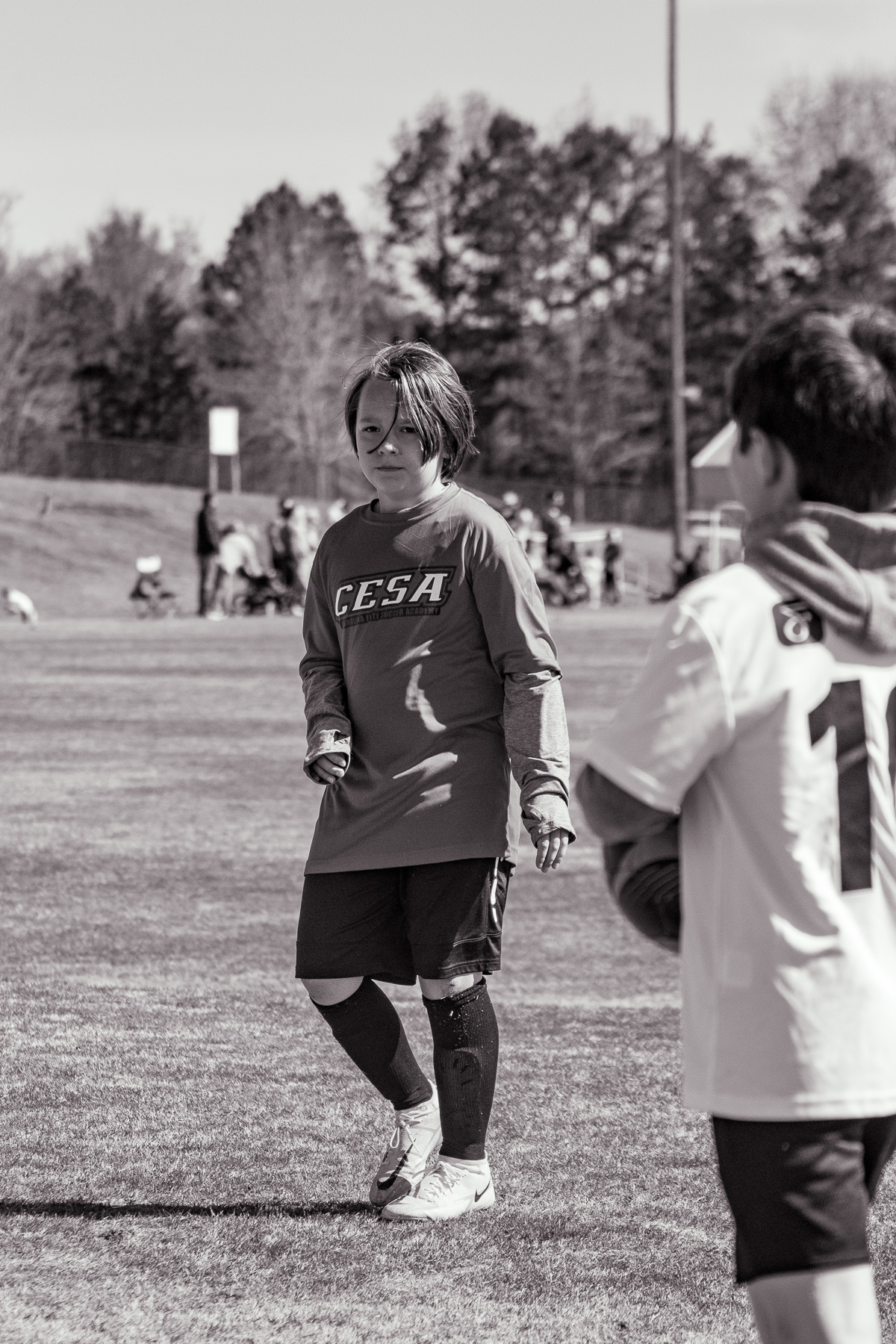
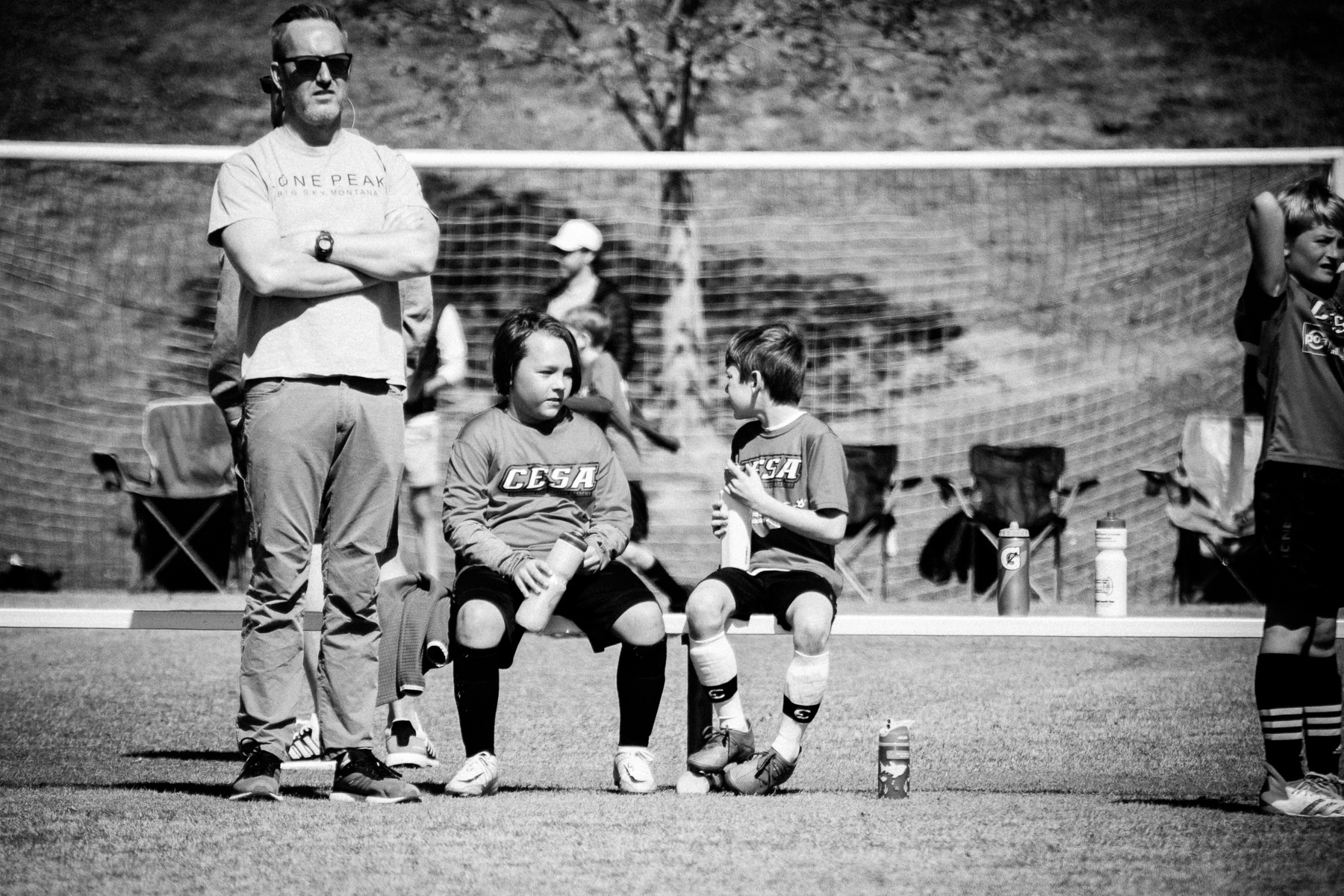
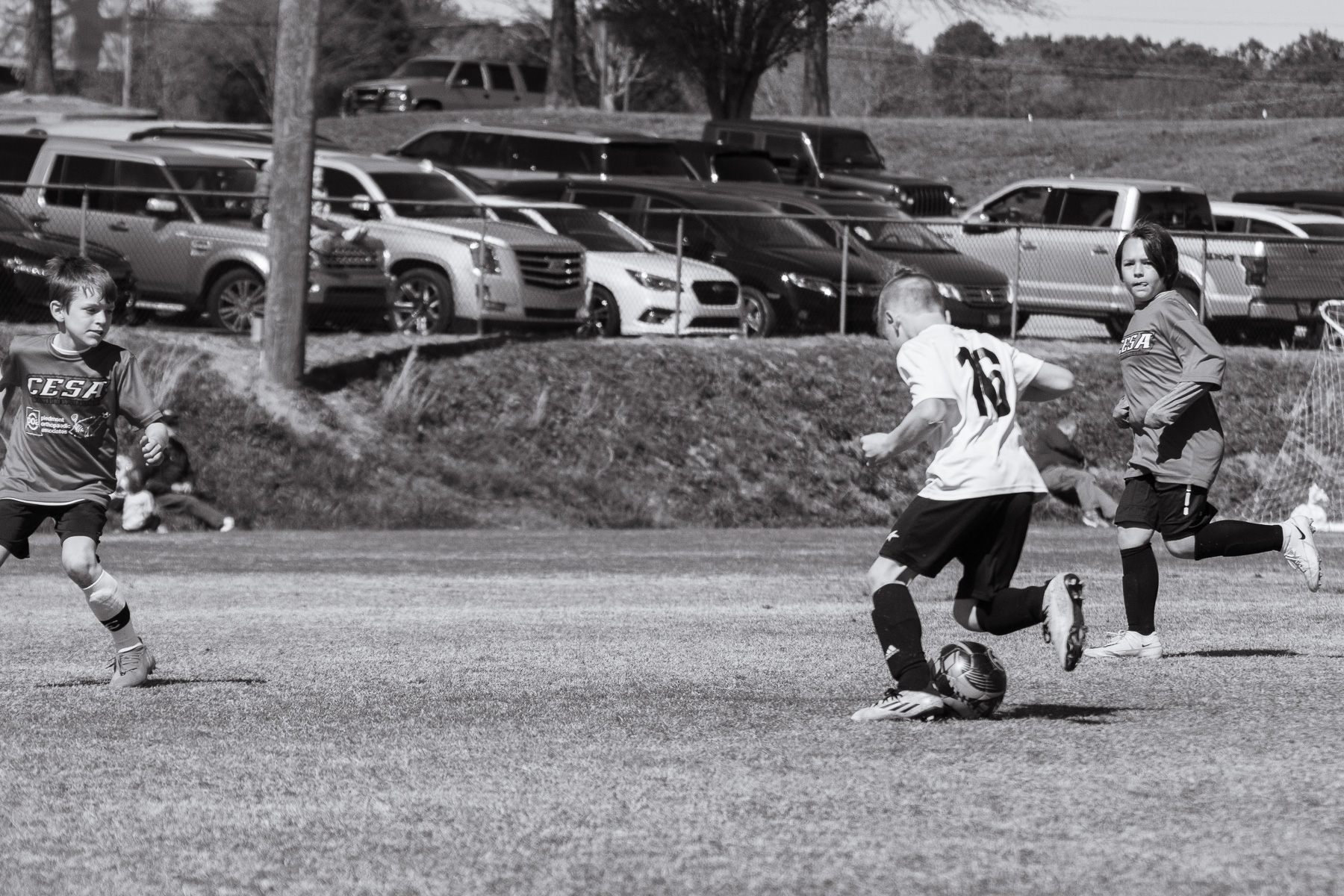
Random Pictures from the Walk I Took during the Boy's Soccer Practice

The Veil Removed

There was a short film about Mass that a lot of people shared on the Catholic social media streams I was following last year as I went through the Bible in a Year podcast. It's called "The Veil Removed," and it offers a fascinating idea of what Catholics could argue is, in some sense, going on during the Mass.

In it, angels crowd around the altar, and the priest transforms into Jesus at the moment of consecration while also appearing crucified on a cross above the altar. A drop of blood falls from Jesus's crucified body into the chalice of wine that Jesus is also holding as he stands behind the altar, I guess symbolizing the so-called Real Presence of Jesus in the communion wafers and wine. The fact that Jesus appears literally twice, as a crucified man and as the priest actually celebrating the Mass would not be logically problematic to the average Catholic, I'm assuming, because the average Catholic already believes that God the Father, Jesus, and the Holy Spirit are somehow three but also the same.

In the course of the video, obviously-skeptical congregants miraculously see all the angels and such and lose all sense of doubt.

Yet this whole film, far from assuaging any doubts I have, only creates more: why doesn't this actually happen in Mass? What better proof of the claims of Christianity could there be then for this to be happening in all Masses, worldwide, often simultaneously? This is even echoed in the title: The Veil Removed. Why would a god put the veil there in the first place if this god wants what the Christian god supposedly wants (i.e., the salvation of all)?

The Actor

Our family began watching this series on Netflix. Servant of the People (Слуга народу in Ukrainian) stars Volodymyr Zelenskyy who plays Vasily Petrovych Goloborodko, a high school history teacher who gets somewhat-unexpectedly elected as president of Ukraine. This scene, though — who could have known? Well, the series came out in 2015 and ran until 2019 — Crimea had already been annexed and Russia was already in the Donbas region, so probably the answer to “Who could have known?” is “Well, anyone with common sense…”

Sunday on the Court and Around the House

Early Spring Saturday

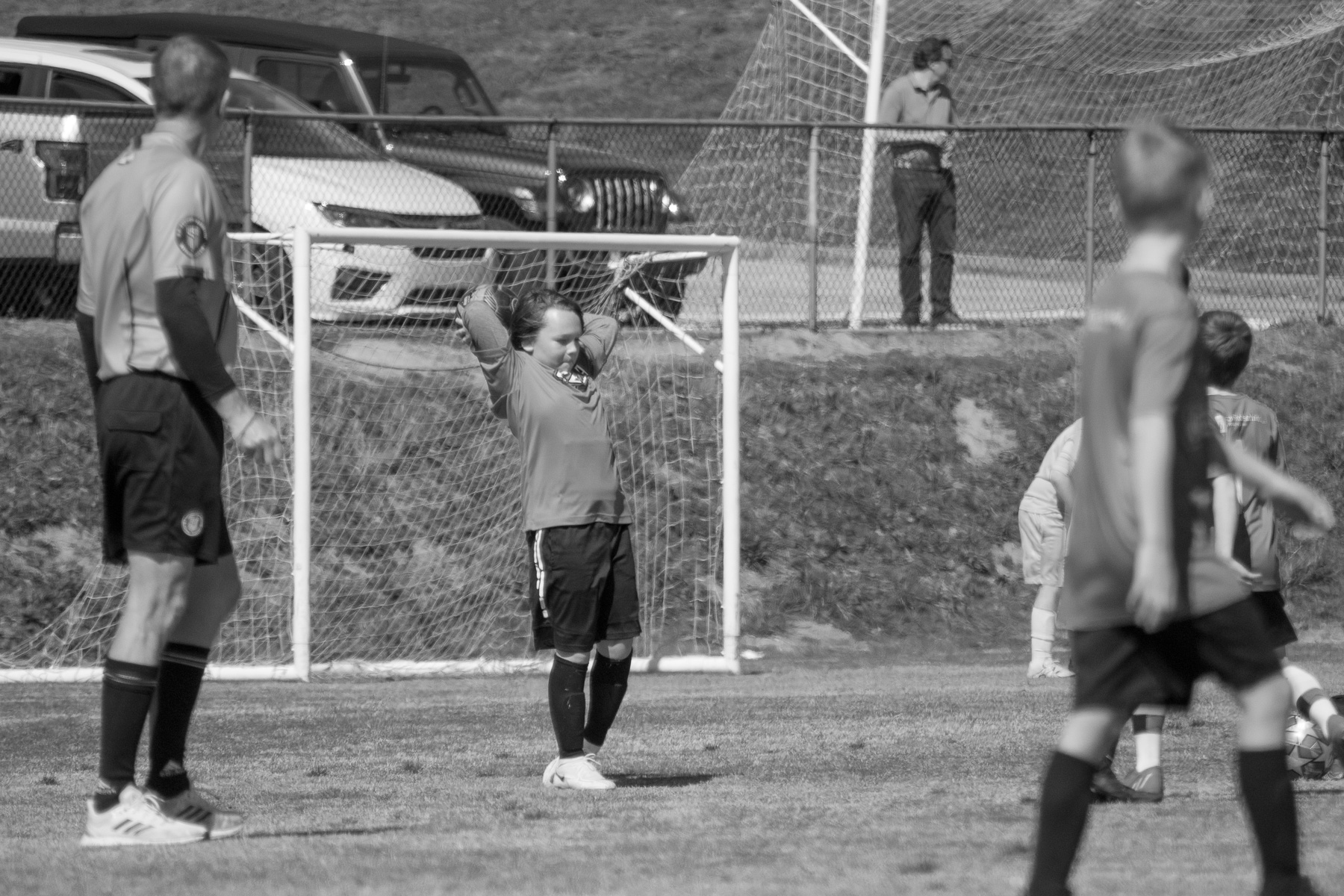
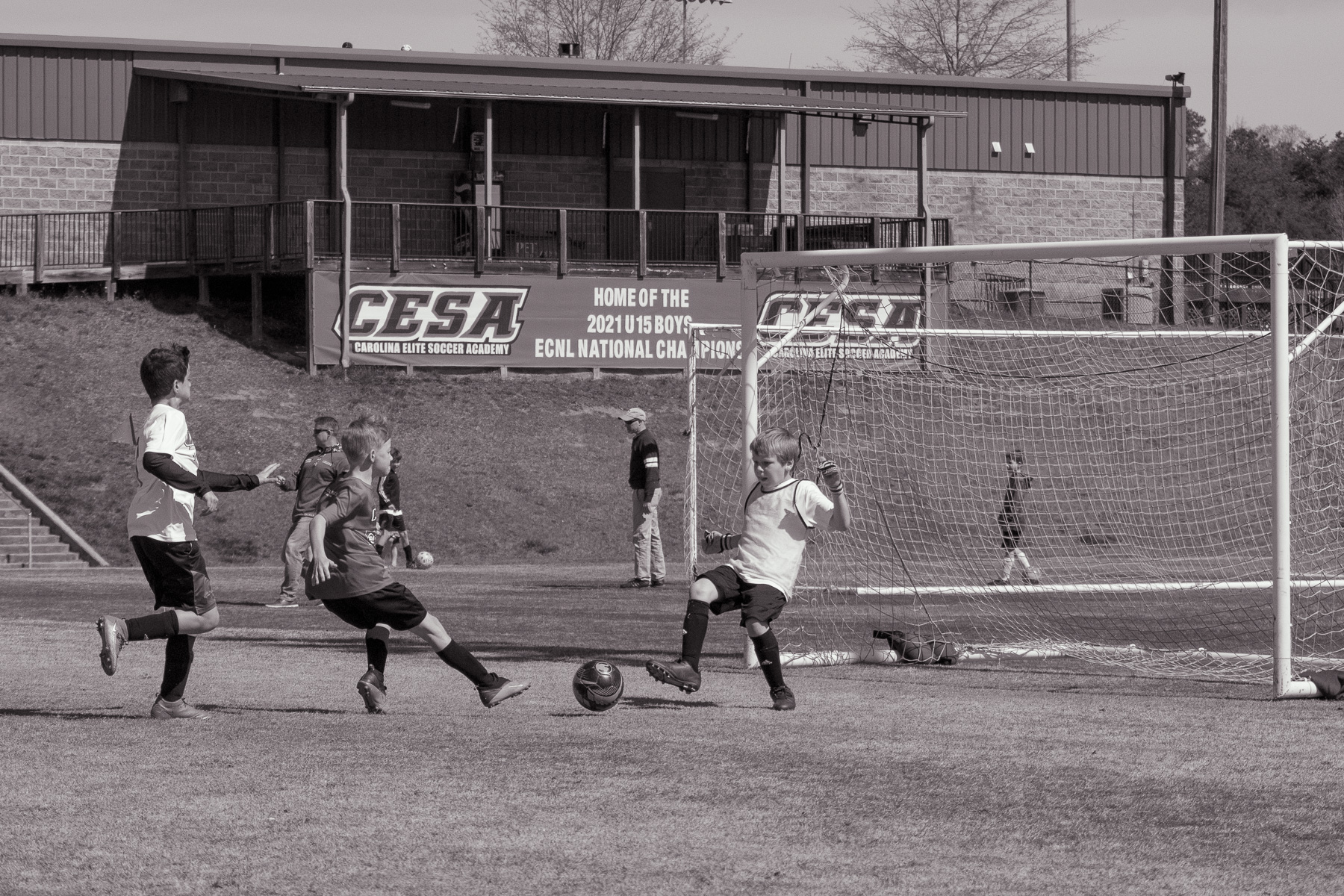
We started out with back-to-back games with the Boy. They won the first game 2-0 (I think -- maybe it was only 1), but lost the second game 1-2. They scored first, but on the very next possession, the opposing team equalized. They scored one more in the second half to pull ahead. We had one shot that hit the goal uprights but didn't go in, and we had about 4 more close shots on goal, but none of them went in.

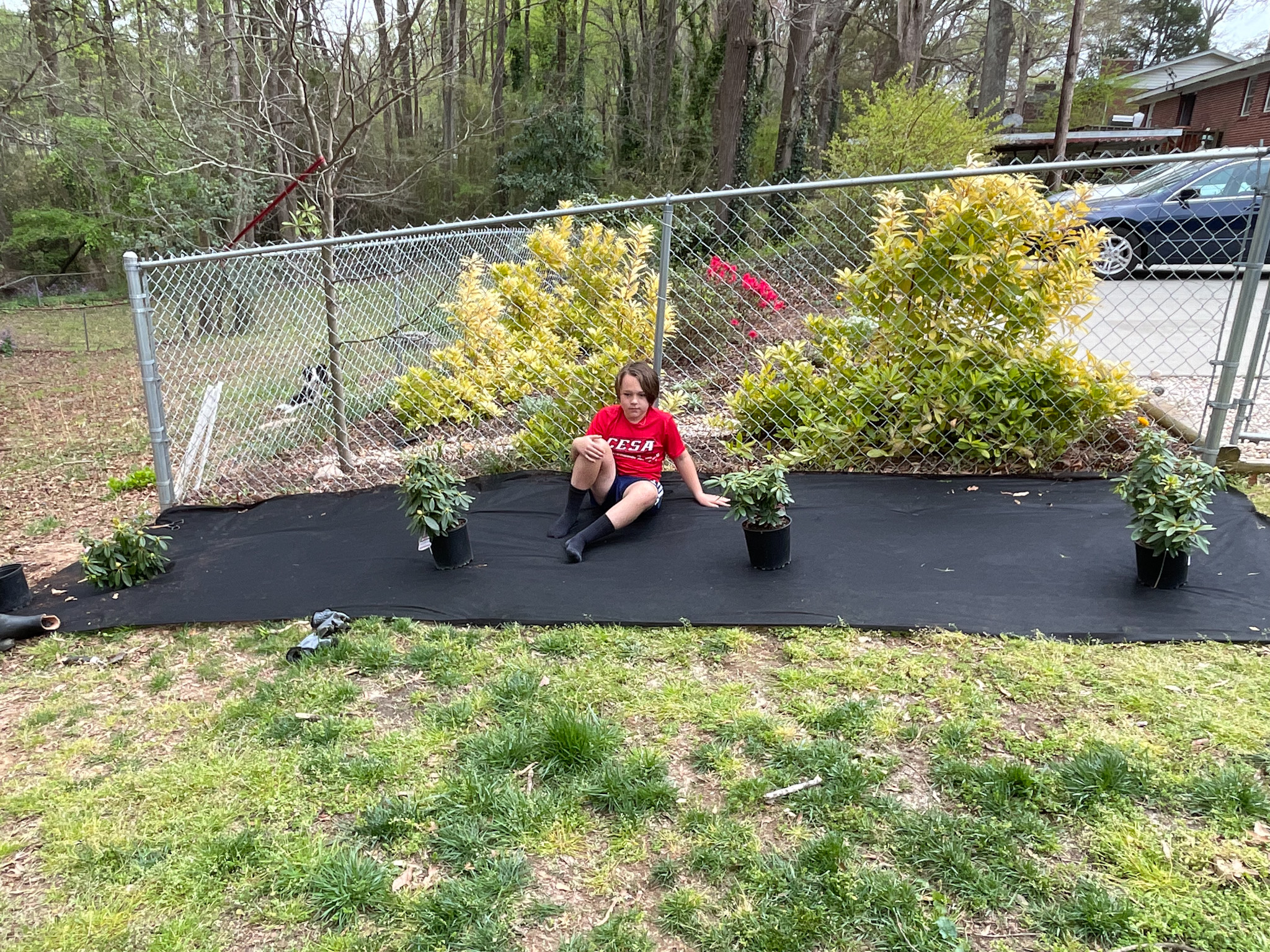
In the afternoon, it was yardwork.

Yesterday and Today

Shooting

In a tragic first since I’ve been teaching in the Greenville County school district, a young man was shot and killed in a middle school less than five miles from the school where I teach. A twelve-year-old named Jamari Jackson was shot in the hallway during class change, from what I’ve pieced together from various news outlets. The suspect is also twelve years old, and he is now charged with “murder, possession of a weapon during a violent crime, possession of a firearm on school property and unlawful possession of a weapon by a person under the age of 18.”

There’s nothing more I can say than that. Twelve-year-olds killing twelve-year-olds. America 2022.

Testing

We had today our third benchmark test, this time for ELA. Tomorrow we’ll have the math benchmark. Science will be Friday. Three days of testing. And this is not testing for the whole year — this is just testing to cover the third quarter. For English and math benchmarks, we run a special testing schedule. Students test with their first academic period, and that testing session runs from 8:30 to 10:30, though it usually goes in fact to 11:00. That’s over two hours of the day dedicated to testing. THe rest of the day follows a normal sequence of classes, but each class period is reduced to 30 minutes. Thirty minutes with tired kids (those tests are awful — 50-70 questions that, in the case of English, cover 5-10 texts of varying interest and complexity) is hardly conducive effective learning. The day is not quite a wash, but it’s close. The thing is, though, we did this at the end of first quarter, at the end of second quarter, and now again at the end of third quarter. At the end of the fourth quarter we do it a final time, but it’s not district-mandated tests like the benchmarks but rather state-mandated tests. It amounts to the same: three days of testing four times. That’s twelve days of testing. That’s almost thee full school weeks. That’s not all the testing, though: we also have two TDA (text-dependent analysis) tests that the district mandates, running the same extended testing schedule.

And this year, the state requires us to do another, third TDA before the fourth and final TDA which actually counts. Those three TDAs plus the final actual state TDA means we’re up to 16 days of testing. That’s 8.8% of the year doing testing. Nearly ten percent of the year we’re doing testing.

Putting Him to Bed

“Will you come check on me?”

For a few years now, that’s been one of the last things E has said to me or K. We put him in bed; we snuggle with him; we grow sleepy; we realize we can’t fall asleep; we get up and leave. He hears us.

“Will you come check on me?”

Gradually, it’s become a little different: “Will someone come check on me?”

The answer has gradually changed, too.

“Sure.” And then we wait for a while, doing something in the kitchen or reading at the dining room table. “Will someone come and check on me?” comes a voice from upstairs.

Eventually, “sure” because “probably.” The response initially is, “No, I need you to check on me!”

Eventually, he comes to accept that, and usually, someone goes to check on him. Usually. But not always.

“Probably” becomes “maybe.” “Maybe” eventually becomes “I hope so.” And “I hope so” remains for a while with an occasional, “No. I have too much to do tonight.”

This process has taken a couple of years. And now he’s nearly ten years old. And I come to realize that putting him to bed is almost done. For good. It was about this age that L began putting herself to bed, and the Boy already does it occasionally. So the end is near. And so the answers start backing up. “No” disappears, as does “I hope so.” “Probably” appears occasionally, but simple “yes” makes its return. For a while.

First Day Back

English 8 students began a new unit today on the Diary of Anne Frank, our final major reading selection for the year. We began with an anticipation lesson designed to get students empathetic to Anne Frank's situation and the dangers she faced as the Nazis took over Europe and began their unimaginable efforts to commit genocide.

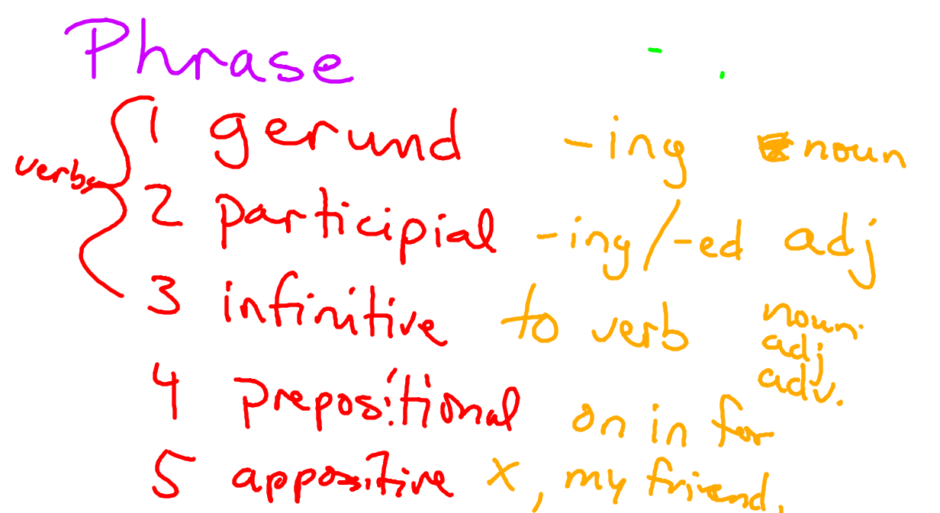
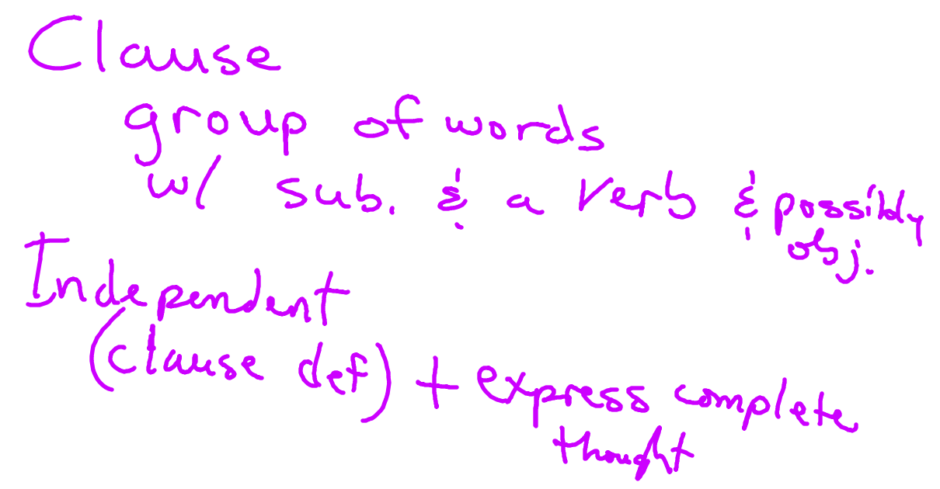
English I Honors students worked on a brief review of phrases (see notes above) before heading out into the wild world of clauses. We looked at the definition of independent clauses and examined several examples, touching additionally (and briefly) on subordinate clauses.

A good start to the final quarter.