From Saturday --
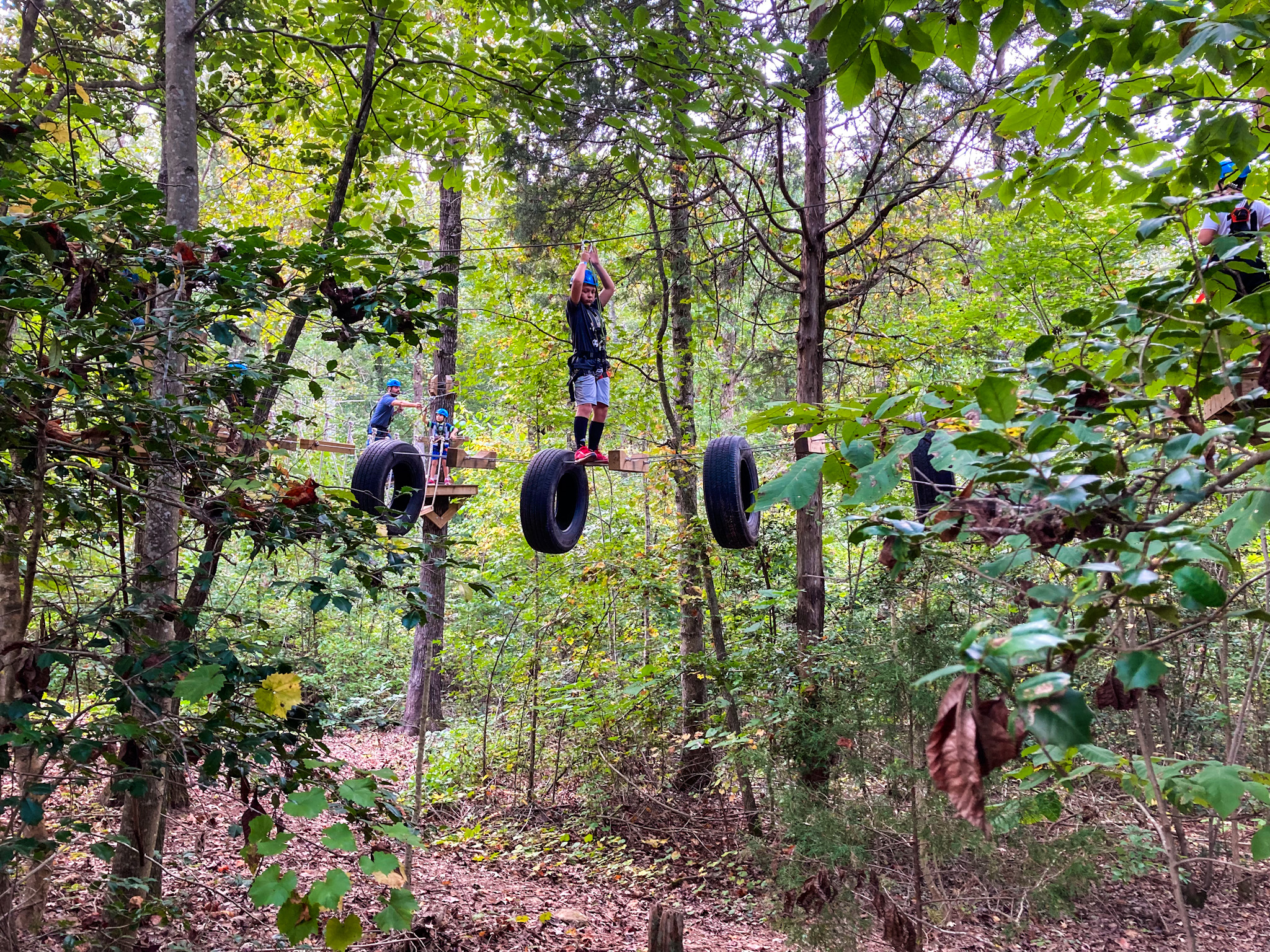


the Boy went to a birthday party at a line park.
fun in threes, sometimes fours
general
From Saturday --
the Boy went to a birthday party at a line park.
It’s gradually cooling off, which means we might be spending more time around our fire pit.

We cooked dinner over it two nights in a row now, and I’m already thinking about what to cook next weekend.






I knew taking the picture might break the spell: an at-risk student who, of her own accord without any prompting or suggestion, chose to read a book during free time after lunch might not be thrilled about having her picture taken. But on the other hand, it’s a picture of success, and when it’s a kid you’ve already grown to love in a way, a kid you’re already pulling your hair out over and cheering on and fussing at with a smile — you go ahead and take that chance.

Sure enough — “Mr. S! Don’t!” And the spell was broken. But unlike many magical moments, this one has evidence to back it.
I was looking at the photographs of British/Polish photographer Chris Niedenthal when I saw an image of PKO Rotunda in Warsaw. Suddenly, I was back in Poland in 1996, experiencing the country for the first time, with a vivid memory of the first time I saw the building.
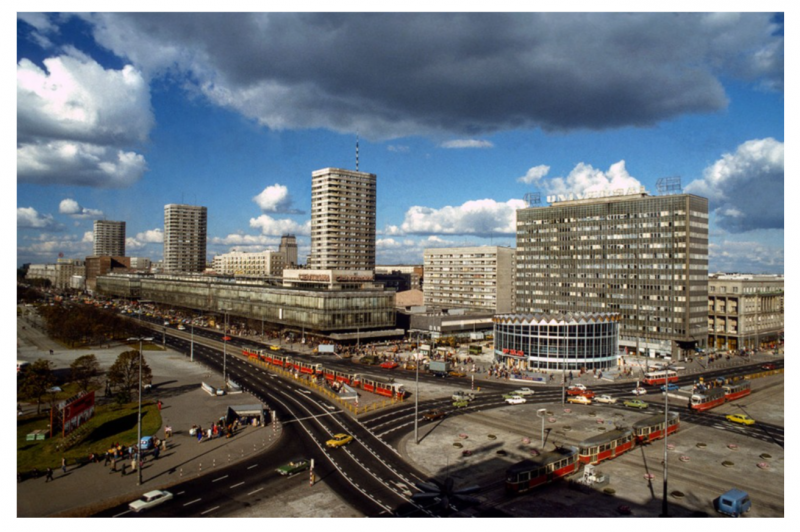
A friend took several of us to see Warsaw for the first time, and as we walked out of Warszawa Centralna and long Jerusalem Avenue, the impressively Stalinist Palace of Culture and Science on our left, we approached a most peculiar building.
"That's where we're headed," said A as we descended the stairs to pass under Marszałkowska. We weren't headed to the round bank building itself, though. In fact, I'm fairly certain that I never even entered the building.

It was, in fact, the building just behind the PKO Rotunda that interested us: "There's a Taco Bell there," our guide explained. "It's okay if you like cabbage on your tacos instead of lettuce."
It was one of the signs of the growing Westernization of Poland that, in 1996, was still relatively new. We were all interested in the Taco Bell for that reason: not because we were necessarily craving substandard "Mexican" fast food but because we wanted to see what Polish Taco Bell looked like, tasted like -- to get the local spin on one of the restaurants that provided us with cheap eats during college. With everything so new and unknown, it was fascinating to see things I'd always known in that setting.
Recently, developers demolished the original building and replaced it with a nearly-identical building.

The same spirit, but a different building.
So many of those old, communist-era buildings have been demolished or so completely remodeled as to be unrecognizable in the last twenty years. It's understandable, I guess: only from a sentimental point of view are those buildings of any aesthetic value at all, and for many, there's no question of sentimentality about the oppressive past they represent. For me, the sentimentality arises strictly from the novelty of such buildings when I first lived in Poland twenty-five years ago.
They woke up this morning with a sense of excitement and dread, thrilled with their sense of foreboding and relief. Today, Jesus was returning. No one knew the hour, that is certain, but it would certainly happen today.
Unless it didn’t. It wasn’t the first time their leader had predicted Jesus’s return. It wasn’t even the second time he’d foretold the day. It wasn’t the third or fourth time. Many members of the group had lost track of how many times their leader had made this exact prediction with the same fervent confidence. Just a year before, their leader had suggested that during this same fall festival Jesus would return.
“You won’t be returning to your houses!” He’d confidently assured everyone. He’d suggested that members might be talking to the resurrected Abraham — the Abraham of the Bible — within days. Even the original leader of their group, Herbert Armstrong, would have risen from the dead within that week and members would be able to “ask him yourselves” about various prophetic timing he seemed to get a little wrong.
So when they wake this morning and recalled their leader’s words from earlier in the week-long festival they were celebrating when he’d assured them Jesus would come back by Tuesday, they were hopeful that he might finally be right and worried that once again the prescribed day would come and go just like every other day before it.
Why do these people, members of the Restored Church of God under the autocratic leadership of Dave Pack, stick around and continue to support Pack’s delusions? The man sees himself as the most hated man on Earth. He has said about his importance in coming events that, from the perspective of the powers of evil seeking to wreck God’s plan, “I must be stopped at all costs!” Why do they continue to support him when year after year he has made the same false prophecy about the return of Jesus? It’s simple: the sunken cost fallacy. They’ve invested so much time and money into the prospect already that they cannot bring themselves to cut free. After all, there’s still the hope that he is God’s only apostle and his exclusive spokesman on Earth. If they leave now and then Jesus returns, they’ve forfeited their crown, literally: they believe they will become gods, part of the so-called “God family” that Pack and other heretics teach is the explanation of the passage in Genesis, “Let US make man in OUR image.” Abandoning the plan now means giving up god-hood if Pack ever does get it right. And since they thought for so long that eventually, he would get it right, they can’t bring themselves to admit that while he might be wrong now, he might eventually be right.
And yet they’ve heard it all before. They likely view their doubts as temptations of the devil, an attempt to get them to give up their crown -- the ultimate victory for the devil.
In the midst of all this, I look at this little group that splintered away from the group I grew up in -- I used to believe many of the absurd things the Restored Church of God teaches -- and think about those members who are watching these last hours of the promised day slip away, and I feel for them.
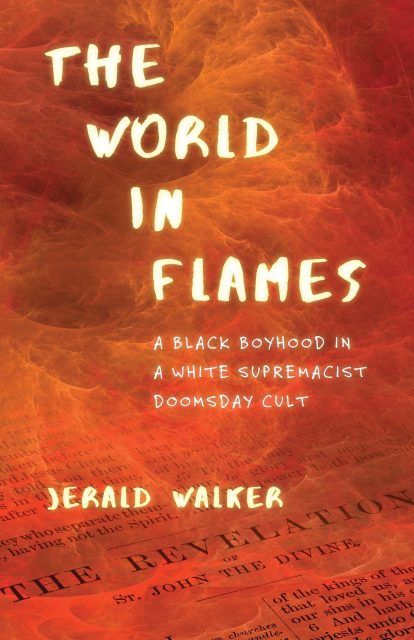 I was drawn to this book for one reason: I grew up in the same cult as Walker, Herbert W. Armstrong’s Worldwide Church of God (WCG). Hence, as I read the book, I felt an eerie similarity with many of Walker’s experiences. His sense of otherness while at school was the same as my sense of otherness. His sense of impending doom while looking at peers in school was my sense of impending doom.
My embarrassment about these beliefs, however, was absent. He seems to have talked freely about the strange things he believed, even going so far as to try to convert his best friend Paul. I, on the other hand, never said a word about my beliefs. Looking back on this, I think it’s because I never really believed. I could imagine someone asking me, “ Do you really believe that?” after I’d explained this or that strange belief, and my only imagined response to their reaction to “Oh that’s weird” would be to agree. That was my fear. This deep abiding embarrassment about what my church believed was central to my religion’s worldview. It was strangely lacking in Walker’s.
There’s a more fundamental sense in which I cannot relate to this book: Walker is African-American, and I am white. This is notable because the WCG’s theology was inherently one of white supremacy. This is not to say that the church was comprised of racists, nor is it to suggest that there were openly racist sentiments expressed in weekly services, but its theology had definite racist shades that appeared in select passages in Armstrong’s writing. He would insist he was not racist, but it’s difficult to argue that when part of the theology was that in the kingdom of God, which we colloquially knew as the World Tomorrow (which was the same name as Armstrong’s weekly religious broadcast), everyone will be sent back to where they “belong.” Armstrong phased it thus in his 1966 book The Wonderful World Tomorrow: What It Will Be Like, which he copied directly into his final book, Mystery of the Ages:
In Noah’s day, the chief cause of the violence and chaos of world conditions was racial hatreds, interracial marriages, and racial violence caused by man’s efforts toward integration and amalgamation of races, contrary to God’s laws. God had set the boundary lines for the nations and the races at the beginning (Deuteronomy 32:8-9; Acts 17:26). But men had refused to remain in the lands to which God had assigned them. That was the cause of the corruption and violence that ended that world. For 100 years Noah had preached God’s ways to the people—but they didn’t heed.
At that time, even as today, that world faced a population explosion. It was when “men began to multiply on the face of the earth” (Genesis 6:1). Jesus said, of our time, right now, “But as the days of Noe [Noah] were, so shall also the coming of the Son of man be” (Matthew 24:37)—or, as in Luke 17:26, “And as it was in the days of Noe, so shall it be also in the days of the Son of man.” That is, the days just before Christ returns. Today race wars, race hatreds, race riots and race problems are among the world’s greatest social troubles.
Noah merely preached to people in his human lifetime. But Noah, in the resurrection, immortal, in power and glory, will be given the power to enforce God’s ways in regard to race. It seems evident that the resurrected Noah will head a vast project of the relocation of the races and nations, within the boundaries God has set, for their own best good, happiness and richest blessings. This will be a tremendous operation. It will require great and vast organization, reinforced with power to move whole nations and races. This time, peoples and nations will move where God has planned for them, and no defiance will be tolerated.
Leaving aside the blindly stupid and racist assertion that “men had refused to remain in the lands to which God had assigned them” when considering the fact that the presence of African Americans in modern America is due almost entirely to the enslavement of Africans rather than people refusing “to remain in the lands to which God had assigned them,” the proposition that there will be “a fast project of the relocation of the races and nations” is essentially the assertion that God is a segregationist. The Kingdom of God runs on Jim Crow laws, it seems.
Note that I never once heard this from the pulpit. I never heard a single discussion about this, and I think that a fair number of people were unaware of this passage and the handful of others scattered in his writing. When I read that passage to a friend who’d also grown up in the church, she was dumbfounded and angry that she’d never noticed it. It was not a central element of the theology: the notion that we’d all become gods was more prominent.
In light of all that passage, though, it’s fascinating to me to think of the African-American constituency in WCG congregations. What was it about Armstrongism that attracted minorities even though it was clear from the theology that Armstrong’s god somehow viewed them as inferior? I was hoping Walker would write more about this than he did because he only deals with it directly a couple of times and obliquely a few more times. Still, it gave a compelling picture, and I cheered when his family finally left the cult.
Last night was homecoming. Instead of a date, she took her best friend.







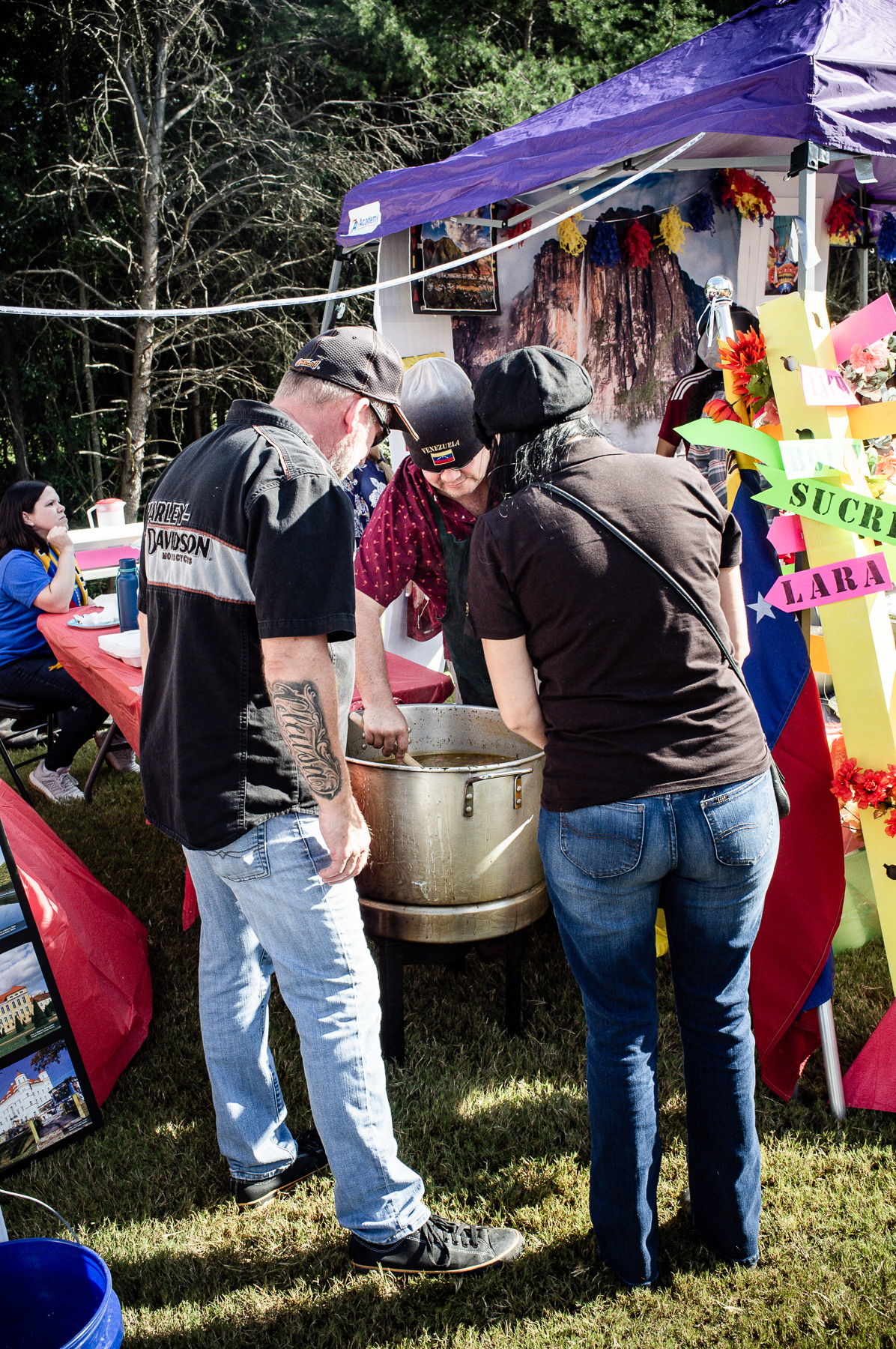



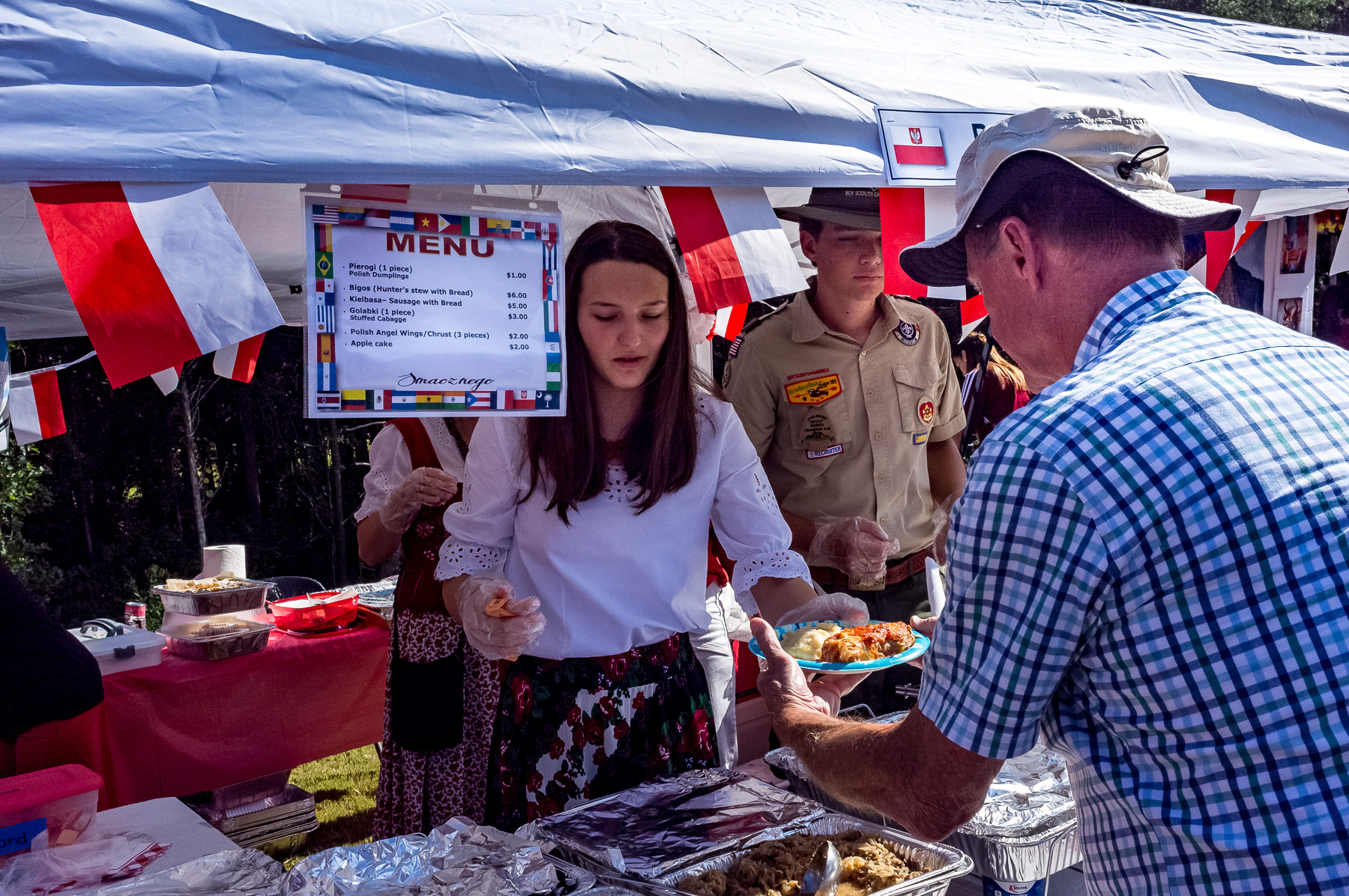




The Polish tent was a hit, selling out of almost everything and raising over $2,000.