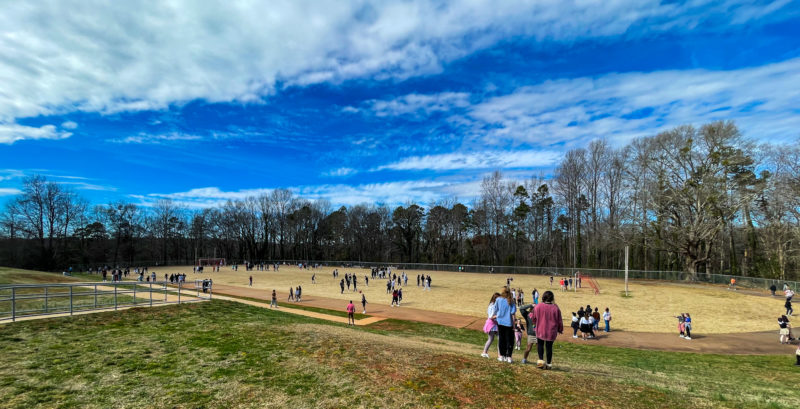
The promise of the coming summer begins to show itself when, during our monthly outside reward time, kids run around in shorts and short sleeves and get sweaty. Adolescent funk — nothing like it.
fun in threes, sometimes fours
general
The promise of the coming summer begins to show itself when, during our monthly outside reward time, kids run around in shorts and short sleeves and get sweaty. Adolescent funk — nothing like it.
There are a lot of things in the world that we might initially fear for no justifiable reason other than something deep within us says, “Run!” There are other things that seem completely harmless and yet can kill. How do we tell them apart?
Fortunately, in nature, evolution provided us with handy indicators: colorful creatures often are creatures we should avoid. Think of a coral snake. Bands of color warn us that this is a creature to avoid. Yet the scarlet king snake has very similar colors as an adaptive measure: it’s harmless, but it looks deadly. We stay away out of an abundance of caution.
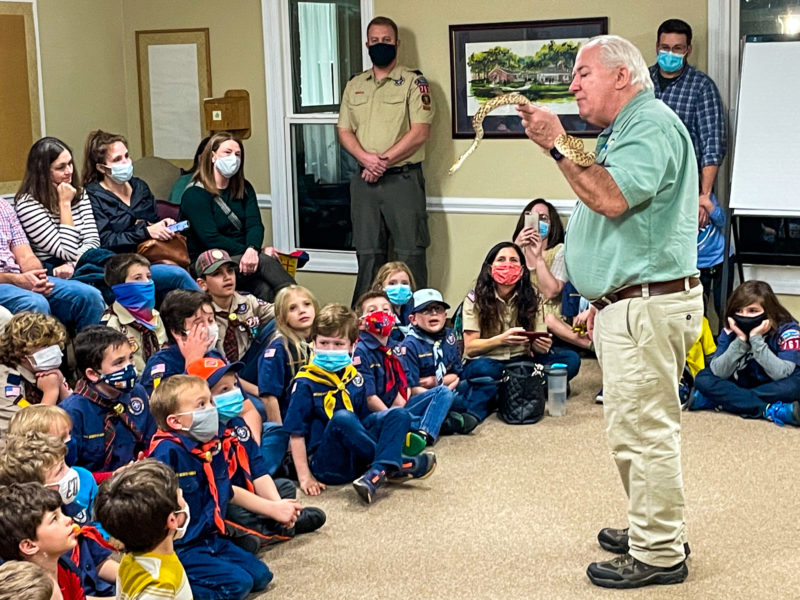
E’s scout pack had their Red and Gold Banquet tonight to celebrate the birthday of scouting. There were the usual scout meeting elements: a flag ceremony, recitation of the scout oath and law as well as the pledge, announcements, and the like There was a pleasant meal with friendly chatter. And there was something new: a visitor who brought a number of animals with him. There were snakes and frogs, insects and lizards, a couple of scorpions, some snakes, and a tortoise. Scouts got to handle some of them but mainly just look. One of the scorpions had venom in its stinger that could kill a human. It, of course, stayed inside its box.
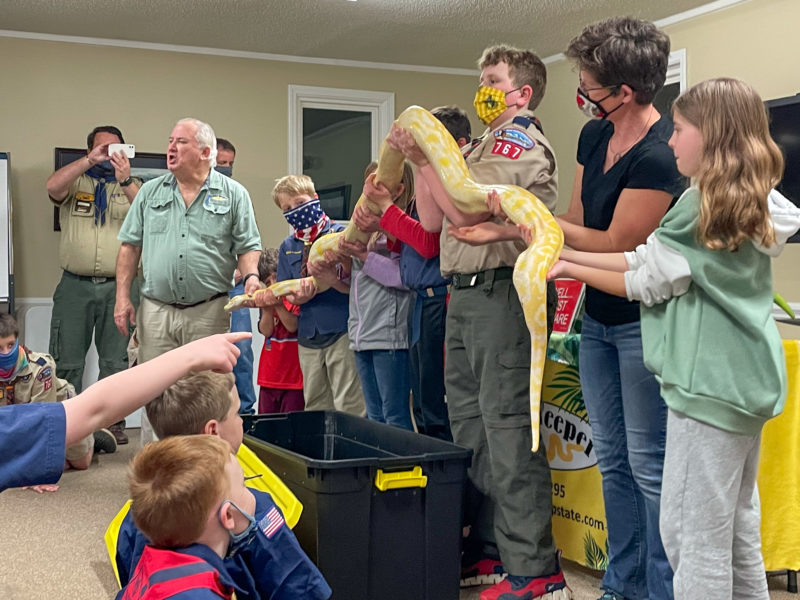
The highlight of the evening was the albino python that required seven minders plus the handler to hold. E got to hold a tarantula, which I thought he might back out of when the moment came. He looked over at me, though, getting a reassuring thumbs-up, he went ahead and conquered that fear.
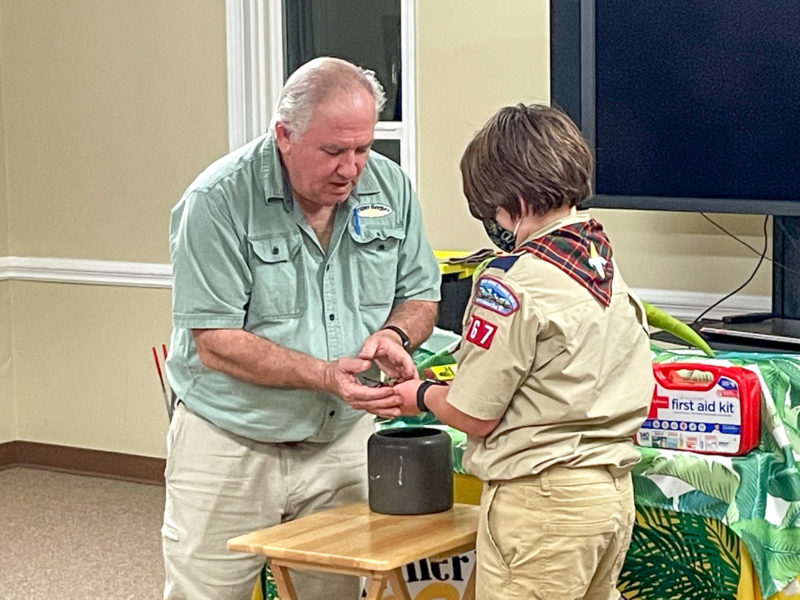
“The legs were hair and tickled a little,” he said on the way home.
Often people are the same as animals: they make clear with their words and actions that they are a threat, that they are someone that others need to deal with early on before things escalate. Russia’s attack on Ukraine was no surprise: Putin puffed out his chest, spread his tail, rattled his tail, flattened his hooded face, hissed, growled, clicked, and grunted, and the rest of us just contented ourselves with the thought that, like the scarlet snake, he only looked dangerous.
But we knew he was dangerous. All his words and deeds showed us that. Now we’re talking about draconian sanctions and such long after the time it could have actually helped. If we’d completely isolated Russia after it annexed Crimea, if we’d made life for its oligarchs all but impossible by completely cutting them off from all access of their incredible wealth held in Western banks and hedge funds, we might have affected some kind of change. But doing that now is a little like signing up for a self-defense course as you hear home invaders breaking down your door: too little much too late.
All the media outlets are running stories about how this changes everything, about how this is the greatest threat to Europe since World War 2, about how this will affect Russia and the rest of the world for years to come, and I think that’s an appropriate reaction. However, we should have had that reaction when they annexed Crimea. We should have had that reaction when they attacked Georgia. We should have known what kind of man we were dealing with when Putin began publishing pictures of himself without a shirt, puffing out his chest, riding horses.
It’s no wonder Trump gets sexually aroused just thinking out this guy. He’s everything Trump wants to be. It’s no wonder he’s praising this guy. He’s the cool bully in class that all the pimple-faced asshole bully-wannabes want to hang out with to get a little street credibility.




Twenty-six miles on a bike today.









We started with an early soccer game -- 8:15. On the way there, we drove by his school at just about the time he'd be arriving for a normal school day.

Somehow, the boys lost their second consecutive game. I say "somehow" because for 90% of the game, they dominated. They kept the ball in their opponents' half of the field, and I'd say they had at least 25 shots on goal. Their opponents maybe had 6-8 shots on goal -- but one of them went in. That's the only difference, but that's the most important difference.

After the game, a little relaxation for the Boy, with a quote from a favorite movie of mine -- modified, somewhat.
Late morning was honey-do list time -- including getting some final details set for K's new workstation.

I'm not jealous of her computer, but I'm envious of that desk!

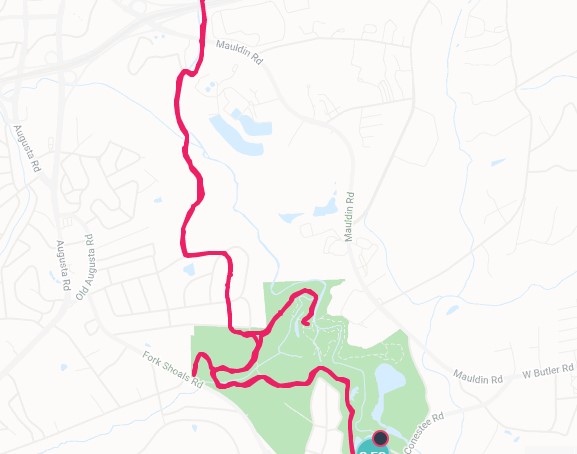
Afternoon -- bike ride. What else?
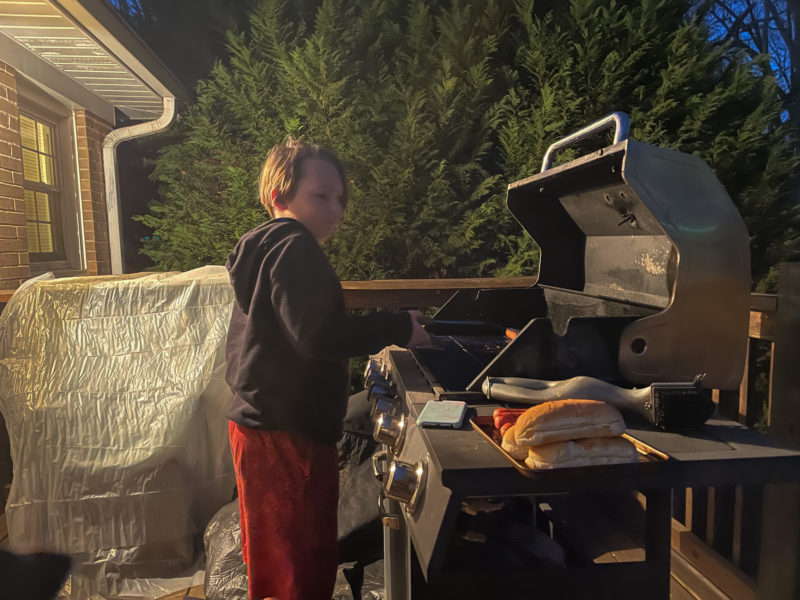
Hot dogs for dinner -- the Boy on the grill.
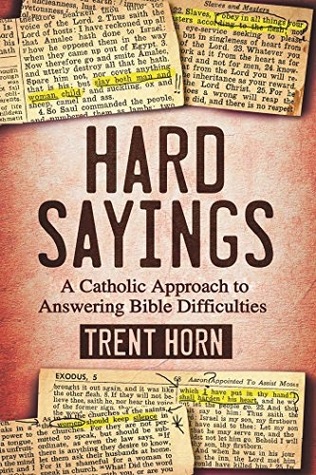 In the introduction to Hard Sayings: A Catholic Approach to Answering Bible Difficulties, Trent Horn quotes Dan Barker’s succinct point about the Bible: “An omnipotent, omniscient deity should have made his all-important message unmistakably clear to everyone, everywhere, at all times.” By this, Barker of course means that a god who is all the things the Christian god is supposed to be would send a message that couldn’t be so easily misunderstood, so easily used to justify so many conflicting ideas, as the Bible is.
There would be no difficult scriptures. For example, from the Catholic point of view, references to the “brother of Jesus” are troubling because Mary was, according to the Catholic Church, always a virgin. There was no way then that Jesus had brothers. How do we explain this, then? Well, in Aramaic, there is no term for “cousin.” Everyone is a “brother.” So that’s what the passage means. The only problem is that, although Jesus and his disciples would have been speaking Aramaic, the Gospels were written in Greek, a language that does have a word for cousin. In that case, why didn’t the Christian god inspire the gospel writers to say “cousin” and avoid all this confusion?
Horn responds to Barker’s claim most curiously:
I agree with Barker that God should provide an opportunity for all people to be saved since 1 Timothy 2:4 says God wants all to be saved. But that is not the same thing as saying that the Bible should be easily understood by anyone who reads it. Perhaps God has given people a way to know him outside of the written word? For example, St. Paul taught that God could make his moral demands known on the hearts of those who never received written revelation (Rom. 2:14-16). The Church likewise teaches that salvation is possible for those who, through no fault of their own, don’t know Christ or his Church.
Yet Barker never said anything about salvation. It’s not that Barker’s argument is that this god is doing a bad job of getting his salvific message out, but that’s what Horn’s response suggests. “No, no!” says Horn, “it’s not that people might lose their salvation over a confusing book. God also, according to St. Paul, communicates directly with people’s hearts.” In Horn’s strawman argument, Barker accepts that there is a god who wants everyone to be saved but just feels that this deity could be doing a better job of communicating that plan. But Barker is arguing the opposite: the massive amount of confusion stemming from this book suggests that is has a most decidedly human origin with no divine influence whatsoever. He’s arguing from the book to the hypothetical god that would have created it and saying that there is a significant incongruity between that hypothetical god and the Christian god.
Not only that, but Horn is quoting the Bible (Rom. 2:14-16) to provide evidence of his rebuttal (that God provides other means of salvation rather than through the knowledge gleaned from his book) when in fact it’s the Bible’s validity itself that’s at stake.
The problem is that for Horn, it’s impossible to see how someone could not accept the Bible as divinely inspired. He’s working with that presupposition so firmly in his mind that he doesn’t even realize when it causes him to go question-begging as he does in this response.
“Today’s the day we kill them off!” I declared as we started class today. We acted the entire fifth act in class. All three scenes amount to little more than half of act one, I’d say. They enjoyed it, I think. Kids said, “You know, you were right: I couldn’t understand Shakespeare at all when we started, but now I don’t even feel I need to look at the simplified version most of the time.”

In the afternoon, we got word about our homeroom’s door decoration: we won second place in the school. First place — another class on our team. Third place — another eighth-grade class. Our grade swept them! Our team took the top spots!
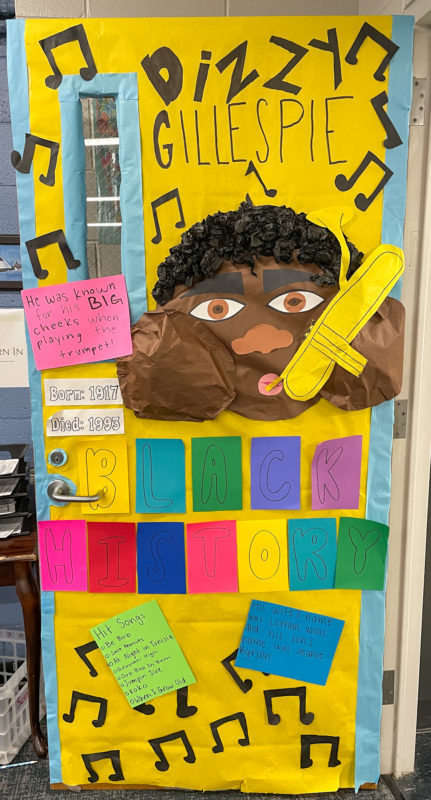
A fun day to be an eighth-grade teacher.