matching tracksuits

fun in threes, sometimes fours

general

Editing Success

Today has been a long but productive day — unlike yesterday. I went to work only to find that they didn’t have a free computer for me. Finally, V (the new VP of production) told me I could use R’s because she was in a meeting, but I quickly determined that I’d be wasting my time there. Using someone else’s computer like that is akin to cooking in a stranger’s kitchen. And I knew I’d never get anything accomplished if I stayed there, so I did indeed just come home. I’ve overcome the “distraction factor” of being at home, so I do actually accomplish things while working here.

Today I worked on Neusner’s first two chapters, and Whit’s latest. I still feel a little uncomfortable having someone write the biggest chunk of the work (a total of twenty-eight chapters) who is just beginning work on his Ph.D., while Neusner has written over five hundred books and taught for many years. But that’s really not my concern, and I’m glad I don’t have to worry about it. I worry about it nonetheless, but it’s not my responsibility to worry about it. Anyway, Neusner’s first chapters are quite good — a little more academic than Whit’s work, but I don’t know if it’s inaccessible to undergrad students. Granted, a lot of it will have to be simplified, but it’s the wording/phrasing that will be changed (breaking sentences into two or three separate sentences) and not the actual content, I think.

I’ve begun reading my third Berger book, Invitation to Sociology. He has a chapter subtitled “Alienation and Biography.” In it he discusses how we view our biography depends on our perspective and what’s important to us at that given moment in our lives. Since, as Henri Bergson pointed out, even memory is a matter of interpretation, then it’s clear that even for ourselves we don’t have a definitive, normative biography. Things that seemed important as we did them (like talking to Deanna on the YOU trip) are later subsumed under the category of “irrelevant.” “As we remember the past, we reconstruct it in accordance with our present ideas of what is important and what is not” (56).

In this light, what we call “maturity” is radically different: “Maturity is the state of mind that has settled down, come to terms with the status quo, given up the wilder dreams of adventure and fulfillment” (55). What I see as “maturity” (i.e., having given up on my dream of being a musician) I would have seen as a pathetic lack of confidence as a “youngster.”

I have to decide what I want to do with my life; I have to make a decision regarding teaching — do I teach at the high school or university level? I don’t think I would mind the high school level if I could teach writing, but I don’t really care to teach literature at all. But I can be highly creative and sneak in bits of philosophy, sociology, and such. I re-read my letters from class IV and the overwhelming sense I got, even from them, was that they felt I should continue being a teacher because I’m good at it; I agree. So what to do?


Thoughts on a First Return

While making dinner tonight I listened (or rather, we listened) to Shawn Colvin’s A Few Small Repairs. Naturally, I thought of Lipnica. Specifically the “party” I had with then-class-IIIA (now college freshmen). I put that on at some point, I recall. I was completely smitten with that album. I just remembered that they were asking me to play guitar. I don’t really know why I didn’t. Seems a little silly now — I never play for anyone anymore.

Anyway, for some reason, I began thinking about Agnieszka Kubacka, regretting that she never wrote me back. I guess I could write her another letter, but what’s the use? She didn’t write back; Tom didn’t. Iwona . Anna P. Damian. Agnieszka Adamczyk. Fairly ridiculous, but something I have, in large measure, learned to accept.

I keep having these grandiose visions of what my visit to Lipnica will be like, and yet I wonder if I won’t be as disappointed in some ways with that as I have been with my students’ lack of response. What if I get there and don’t get to see much of anyone I want to see? I know I’ll get to see the most important people--Janusz, Charles, Kinga, Edyta, Kinga, and Halina. The rest, I suppose — who knows. I’ll send a letter to school fairly soon telling everyone roughly when I’ll be there. I’ll set a date for a big group visit at urek maybe, and then try to visit everyone I really want to talk to beforehand (people like Dominika and Agnieszka).

I’d really like to see Grzegorz Kalemba. I wonder if he’d come to Żurek if I “announced” it. That would be really nice. He was a sweet kid who, in many ways, was a dream student. Always tried, never really disruptive. Bolek would be another I’d like to see. Marek as well. He was a tough one — he liked to be challenged, I think. And I’d like to see Krzysztof as well.

I’d love to see everyone; I’d love to have a Saturday night like “old times” — Janusz comes over for beer and music, then we head off to the disco. I guess that won’t happen because of the simple fact of where I’ll be staying.

I added another to my list of “those I’ve written to” — Beata Płotek. I remember how we had a few (very few) wonderful conversations — especially when I walked her home from Żurek and she told me, “You’re the best teach in the school.” I regret not having made more of an effort with her. Who knows what more I could have done. I’ve a feeling that no matter what I did, I would always feel I should have done more. (That’s not something Adam will ever feel regarding his time in Lipnica; he’s not even aware of how little he’s doing, and regret takes awareness of one’s actual situation and an ideal. He doesn’t seem to have either.) Anyway, I really do doubt that she’ll write me back, but it only cost me 60¢, so I’ve lost nothing I guess. I also wrote to Ewa and Kasia from Augustów.

Thoughts about the New Guy

An utterly boring evening I fear. The same old shit — watch movies, cook dinner. Nothing out of the ordinary.

I played cribbage online with Charles today. He beat me the first two games (including a second-game skunk), but I came back and took three in a row to win the match. It was a lot of fun to chat with him.

At some point I said something about winter break and he said that they’d been back in school for a week. And that practice matura is coming up soon. I mentioned that Danuta’s probably thrilled about that. “Adam doesn’t do anything and this will just add to her already-frantic workload.” There was some short exchange, and somehow I indicated that he’s fairly lazy or something. Anyway, he said something about him probably sitting in the teachers’ room drinking until ten minutes after the bell rings. I said that I didn’t really know from first-hand experience (obviously) but that Danuta had told me that he usually waits until all the teachers leave the teachers room before he leaves. Charles then asked me for his phone number.

“It’s the same as mine, I guess.”

“But I can’t remember it,” he responded.

I gave it to him, then asked, “Why do you want it, if I might be so nosy?”

“I’m going to call him and ‘gently’ encourage him to fulfill his responsibilities and stop making Americans look bad.”

“Well,” I replied, “He’s certainly not making Americans look bad in the other teachers’ eyes. According to Danuta they all like him much more than they liked me. Of course they didn’t like me at all, so that’s not saying much.”

He really didn’t say anything more to that. It’s not like Charles to talk about people, but I would honestly love to rant to him — he takes his job seriously and I think he’d understand my frustration with Adam.

Last night we watched Doc Hollywood — I’d forgotten the premise: New guy in small town spends a lot of time there; feels he’s making a difference; many people there like him and want him to stay; when it’s time to leave, he does so with a heavy heart; once back in his “home,” he can’t seem to get the little hamlet (deliberately cheesy word choice) out of his mind. Sound familiar? It fortuantely didn’t get me too stupidly sentimental about Lipnica.

Work Stuff, Grad Stuff

I was reading from Pomerleau’s Western Philosophies of Religion a section on the debates between Copleston and Russell and the second set between Ayer and Copleston. They’re at (to use Pomerleau’s term) “loggerheads” at on many issues simply because they have conflicting, mutually exclusive rational explanations of the world around them. In a sense the debates were useless in that they didn’t provide a clearly victorious position. At the same time, they showed the weaknesses of each position and they illustrated (at least the first one) how dogmatic even a non-believe can be. We non-believers often like to think that dogmatism shows itself most often among “irrational believers” but quite often, the opposite is true.

One of the issues at stake in the Copleston/Russell debate was the argument from contingency. I find it interesting that people are still trying to prove God’s existence, or for that matter, trying to disprove it. I hope I avoid that issue personally, in my musings here. I realize that I can point out all the “logical” problems of Christian theology, but that even a mountainous pile of such problems will not constitute a “dis-proof” of Christianity. And I’m not even sure I want to do such a thing. It’s a matter of faith, and convincing a Christian that Christianity is illogical would be like stealing something from her. It provides some meaning in her life, and as long as her holding these ideas doesn’t result in anyone else’s harm, then what right have I to try to get her to change her mind?

And yet I do this with Chhavi all the time — especially regarding music. It seems kind of a silly thing to do, really. And yet I’m constantly criticizing her music. Well, not constantly, but enough. Or rather, too much.

Oh — an interesting thing happened on the number seventy-seven bus to work Wednesday. Marlon, the new graphics designer with a long, straggly goatee (it must be four inches long, maybe longer), mostly-shaved head, and a long wisp of thin, brittle hair in the back, Rob, and I were talking. We were sitting in the back of the bus, Marlon and I on the driver’s side, Rob directly across us — we were sitting in the seats that face each other and not the front of the bus. At some point the conversation moved to a topic that either excluded Rob or about which Rob had nothing to say. I believe we were talking about rent. Rob began singing to himself, with quite a bit of animation, as if he were performing in fact. It was very disconcerting, and I really felt like I was with a child who, not getting enough attention, was doing something to remedy that. I don’t know whether it was such (i.e., Rob didn’t like the fact that he felt excluded by the conversation) or whether it was simply a bizarre coincidence. It seemed a little too odd to be mere coincidence, though, for Rob’s never done anything like that. Of course how much time have we spent together outside the office? Certainly not enough for such a strange thing to be the basis of the assumptions I’m making. Perhaps he does this all the time. Curious, though, that he picked that moment to do it for the first time around me.

Another thing that lends credence to my interpretation of the situation was the fact that when I asked Rob what he was singing, he looked at me for a moment and said quickly, “Oh, you wouldn’t know it,” and just kept going. As if to exclude me by that act.

Various Thoughts

Still nothing really to write about. I could complain about the nonsense going on at DLG because of the upcoming move — I don’t have access to my Outlook mail (at least not without Dale being privy to it as well) and I certainly don’t have access to Outlook as a planning tool.

(I just realized: it should be, “On nie zna waszego imi,” not “wie.” I always got those two mixed up when I was learning Polish — wiedzieć and znać. Oh well — Krystyna will understand me, proving my point about mistakes being fairly insignificant, and Danuta will get a laugh out of it.)

Back to DLG: It’s really rather unprofessional that I have to send out business email from my Excite account. Of course, who am I really sending email to? People I know personally, and 99% of it is indeed personal email, so what’s the problem? Just something to complain about, I suppose.


Today I have a presentation about the linking tool cum database that we’re working on. In some ways it will be like I’m teaching again — standing in front of a group of people, explaining something. Not quite the same, of course. I don’t care about these people as if they were my younger siblings — such was the case with many of my students. And the analogy breaks down further — no test on the material. That’s good, though. I was always thinking, in the back of my mind, that there must be some way to be a good teacher without ever having to resort to “tests” in the normal sense. (I still feel that way, but in Poland it seems to be a little different--not quite so “cut and dried,” as Mrs. Sams liked to say.)

Yesterday I stayed at home to work and I actually accomplished quite a bit. I was really somewhat surprised. Of course it helped that Whit recently sent in two more chapters, so I have plenty of fresh editing meat to work with. On an annoying note, I can’t get the stupid color-coding toolbar I created at DLG to work here. I had Kali send it to me as an attachment, but it doesn’t work because our version of Word doesn’t have that many text color possibilities. It went berserk (biting its shield and all!) when I tried to turn text “bright green” — no such thing exists in its world. So I made a comment for each and every entry, and today I’ll go through it (big stupid waste of time) and convert it all to green text. Excuse me, to bright green text.

Last night, as I lay in bed (and I suppose as I was getting ready for bed), I was thinking about the fact that I’m supposed to go to Poland in July — late June, actually. As I thought about it, I realized that it’s really not that far away. It’s now mid-February. I could be leaving in four months and a couple of weeks! The point is this: I haven’t been obsessing over it. In fact, I hadn’t even come to realize how close it is, relatively speaking. I’ve been gone for about twice that time, I think. Now that I have a job that I like and a semi-regular schedule, things just seem to be zipping by, so to speak. It reminds me of being in Poland, slipping into bed and realizing that yet another month has gone by.

A few words on my class: I’m finding that I get really excited about the things we talk about often, but not overwhelmingly so. Durkheim is interesting to talk about, but actually to read his stuff — it can be a little tedious. Not nearly as bad as Parsons (based on the one selection I’ve read, that is), but not terribly engaging in a way. I guess in class we just get a distillation of many books in a few moments of lecture. But it has made me wonder whether I do indeed want to change to sociology of religion.

One of the things that I love about sociology, though, is how it provides clear, functional definitions/explications of normal, “everyday” life. Prestige, for example, comes from holding a job that society holds somewhat sacred. The most prestigious job in America (according to many, even most) is Supreme Court justice. It is certainly not the best paid job — Dr. Seligman pointed out that a partner in a law firm can earn many times more than a Supreme Court justice. Yet we see them as something like secular high priests, gate-keepers of democracy and so on. (Of course the fringes of society — particularly on the right side of the political spectrum — view the Supreme Court as something of a farce.) That’s what I want to study about knowledge — how do we get it? How do we keep it? What makes it possible for some people, regarding God, to stop saying, “I believe” and start saying, “I know?”

Yesterday — a great moment — I spent the morning working on a list of terms that Rob is going to submit to Pat (the permissions editor) who in turn will submit it (along with lists from other project managers) to an image clearinghouse to see which images we can buy, simplifying the whole process to some degree. Anyway, as I worked (a somewhat mindless job, compared with editing that is), I listened to NPR, specifically “All Things Considered.” It’s really been years since I listened to it, and it brought back lots of memories: driving to work at Holiday Inn; driving to school for an 8:00 or 9:00 class and sitting in the parking lot, listening to a story. (It was always good when I had Dr. Mr. Woolsey, because he was understanding if I was a few minutes late. Being an NPR fan himself, he let it slide to a degree.) Or, another memory — going to the Richmans’ for work and listening to NPR while working on poetry. (I should write to them as well.)

The New Guy

I received another surprise Friday: a letter from Krystyna Jasiura of IIA (last year’s IA, of course). It was all in Polish — her first letter wasn’t. Regarding this, she wrote, “Czy mogłabym pisa do Pana po polsku, bo wiem, że jak piszę po angielsku to robię dużo będów i Pan się może denerwuje czytając list z takimi bądami.” I guess I feel the same way when I write in Polish. Still, it’s not like I won’t understand; nor will I think any less of anyone for writing me a letter full of mistakes.

However, that wasn’t really the interesting thing. Earlier in the letter she wrote, “Naprawada jestem Panu ogromnie wdzięczna za to, że mi Pan odpisał, bo przyznam, że w to wątpiłam. Myślałam, że Pan już o mnie zapomniał.” It got me to thinking about Adam — I think it could very well happen with him, since he doesn’t even know their names now. Yet with me, it seems completely absurd to think that I could possibly forget about these kids.

All the same, the most interesting — and something I’m not sure how I’ll respond to: “W klasie Pana wspomniajłi chcieliby, żeby Pan wróci do Lipnicy i znów nas uczyę. Zna Pan może osobiście naszego nowego pana od j. angielskiego? Jeżli to co pan o nim myśli?”

First of all, it makes me feel wonderful that “W klasie Pana wspomniajłi chcieliby, żeby Pan wróci do Lipnicy i znów nas uczyę.” They want me to come back! Of course that’s impossible, but what a feeling it gives me! (Of course with such an idiot as Adam as their teacher, that seems inevitable.)

Second, she wants to know what I think of A. How do I answer that? “Nie znam go osobiście, ale mogę powiedzieć to: nie słyszałem niczego dobrego o nim.” That’s about the most straightforward answer I can give, but I don’t know if I want to say such a thing. I could say more, of course. “Słyszałem, że on jeście nie wie waszego imion.” Or better still, “Słyszałem, że on jest głupy dupek kto myśli tylko o siebie.” Of course the key phrase in all that is, “Słyszałem, że . . .” I don’t want to go around spreading rumors, but I would simply love to pass judgment. That’s only human, I guess. I’m pissed with the asshole for taking advantage of everyone there (the kids, Danuta, Korpus Pokoju), and I want to strike back I guess.

Of course I could say, rightly so, “Ktoś mi powiedział, że on już nie wie waszego imi.” That’s a little better, I guess. It’s still problematic, though. I’m still basically gossiping.

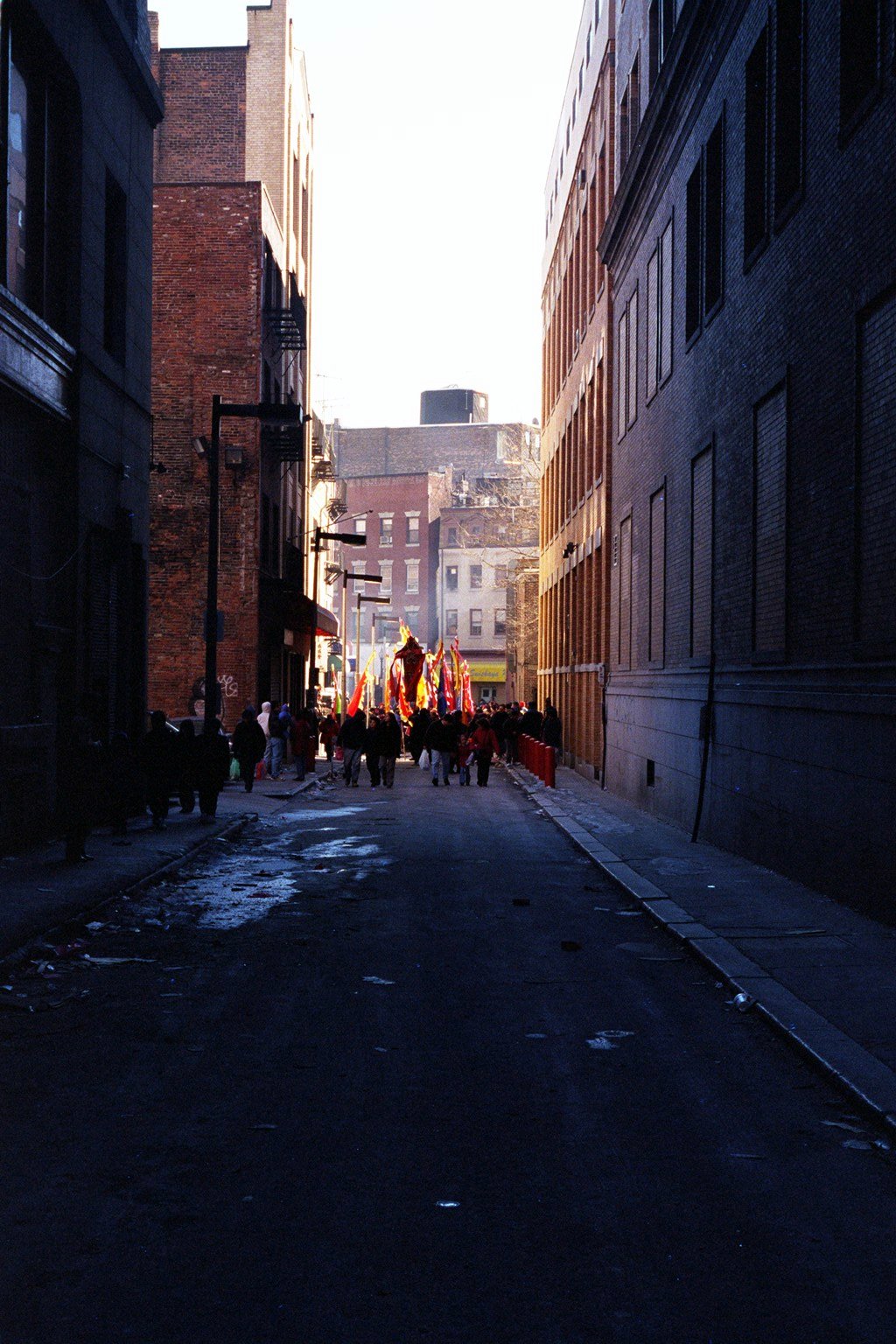
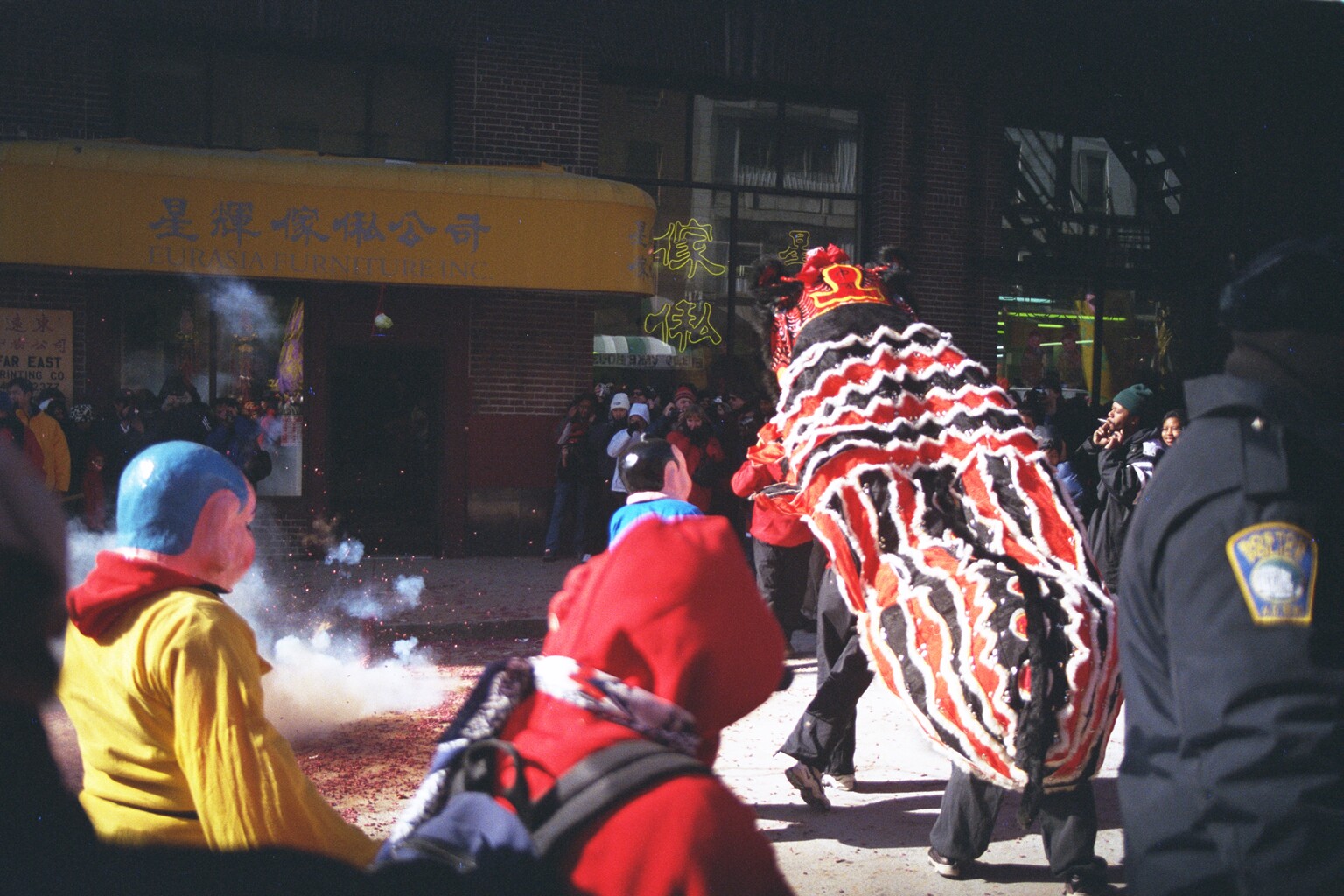
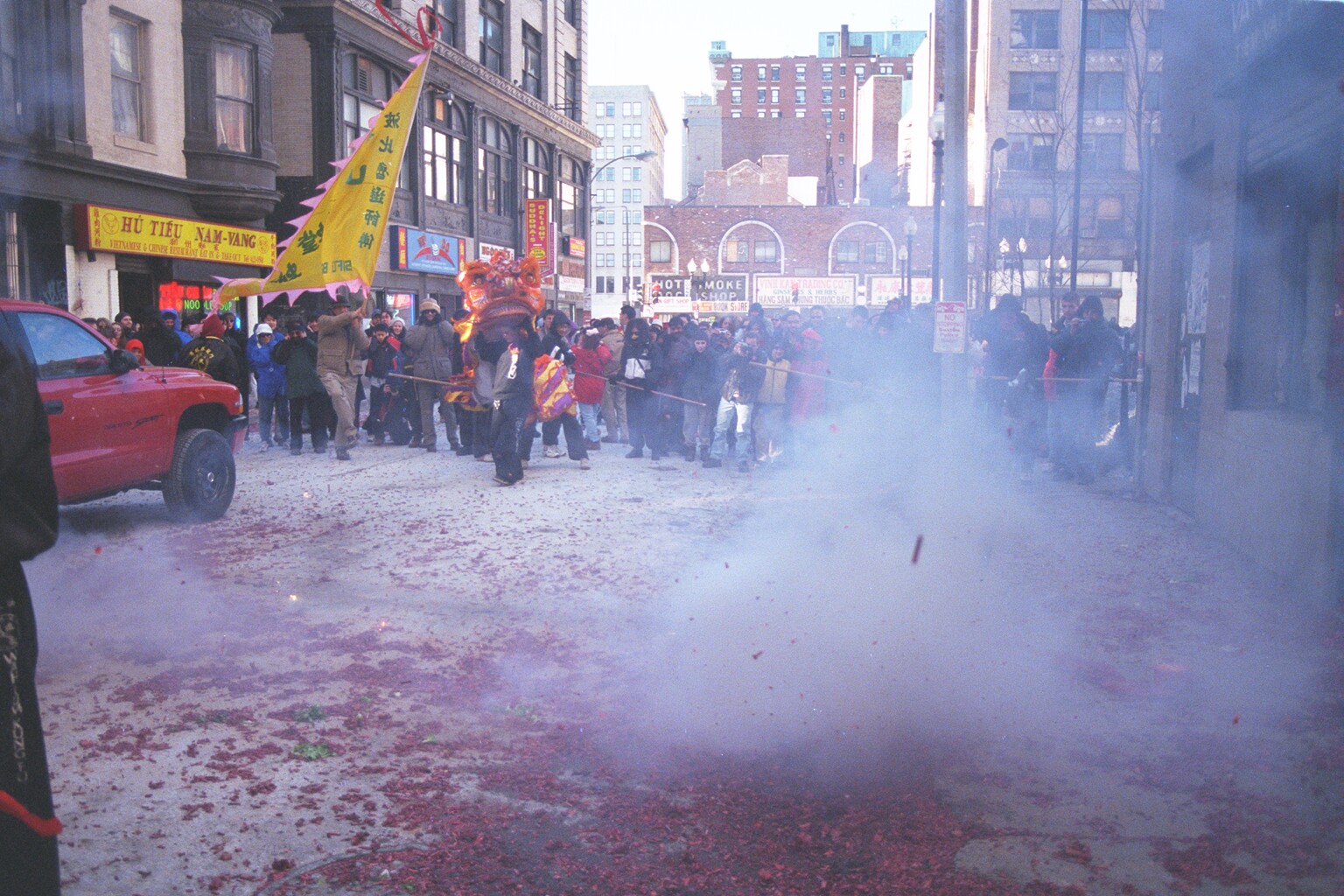
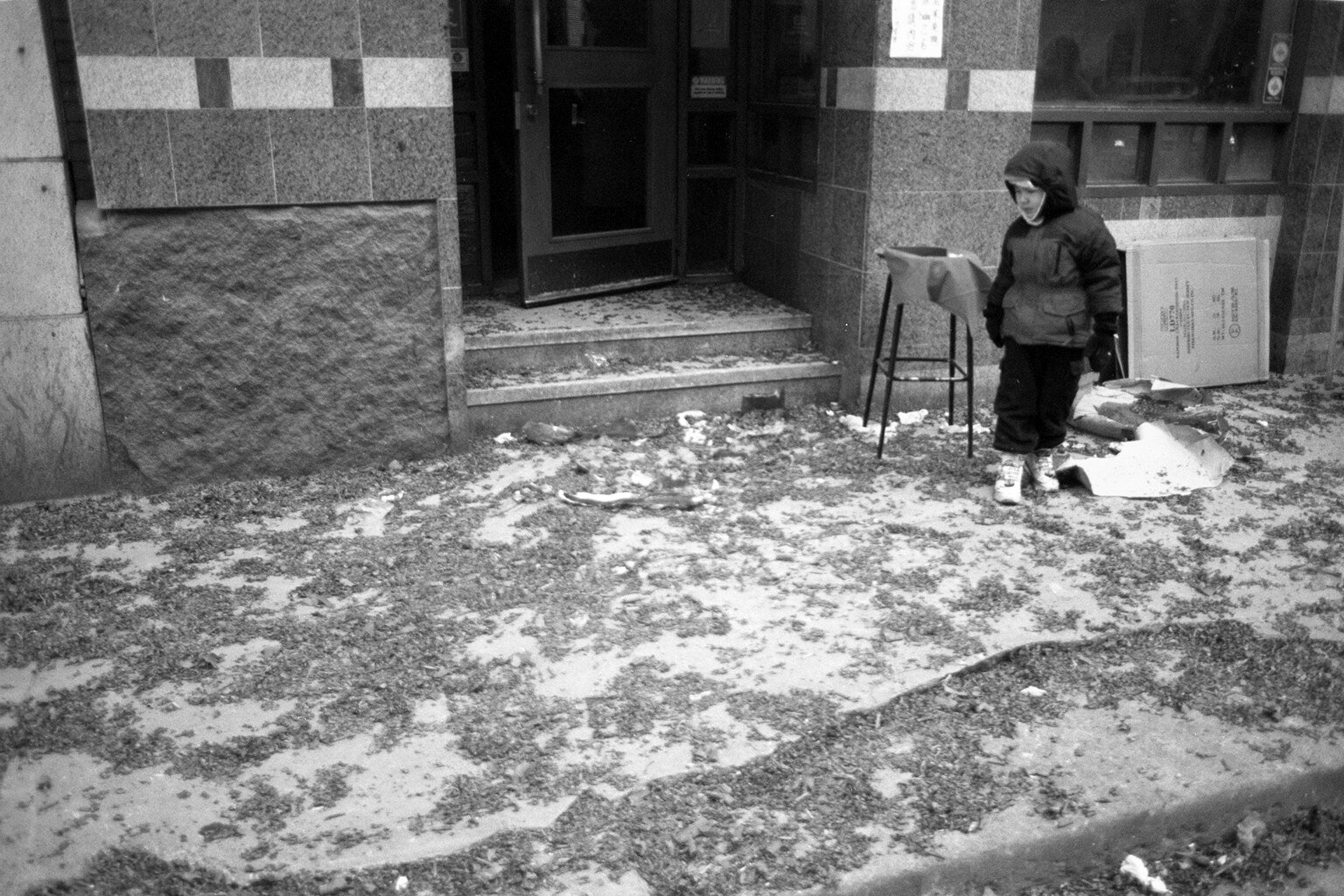
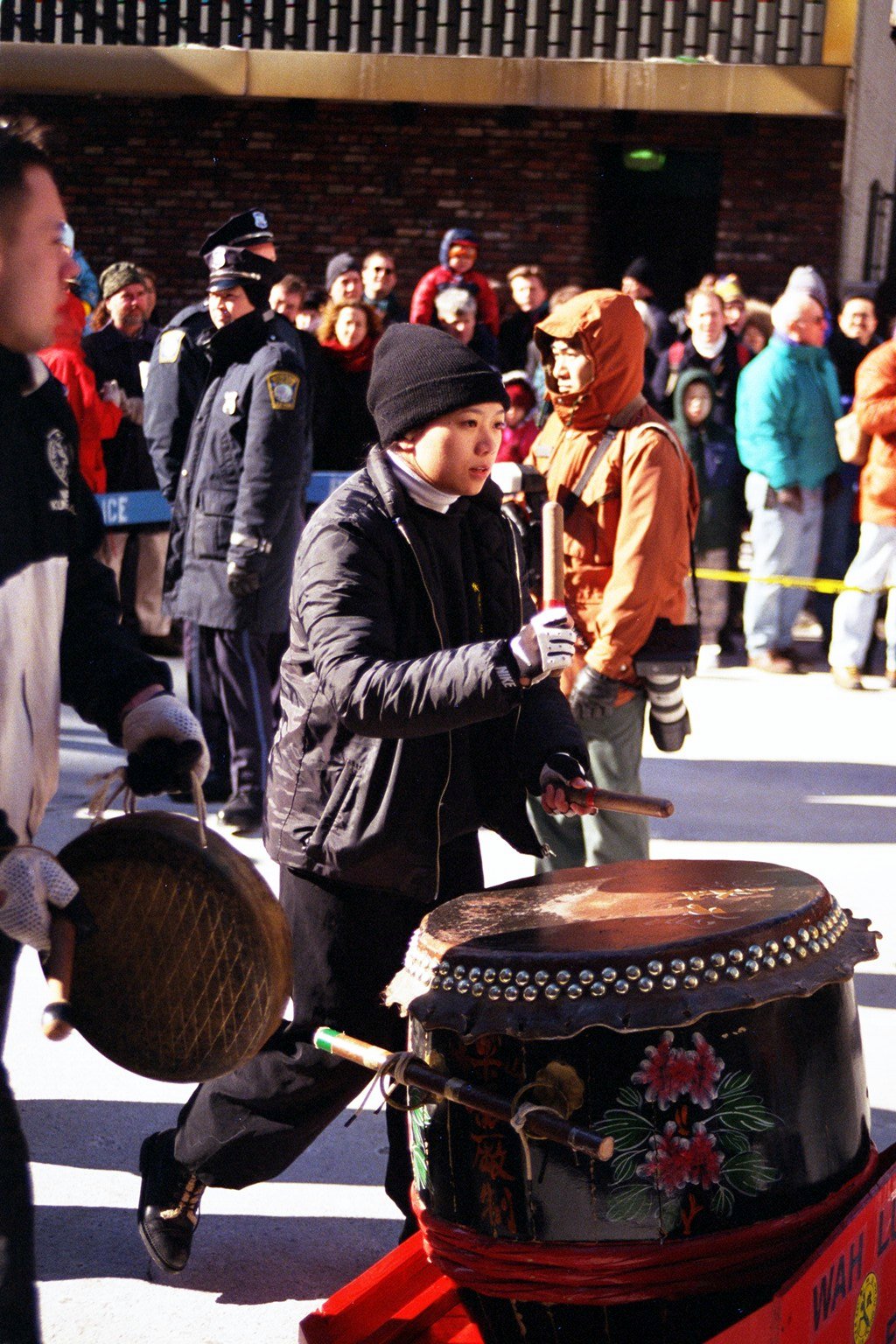
Chinese New Year

Resume

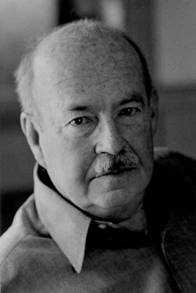
Jacob Neusner

Today I saw the longest résumé of my life: forty-seven pages long. Forty-seven. Not four; not seven. It was amazing. It’s the résumé of the professor of Judaic thought who’s written “over five hundred books.” There were just pages and pages of publications.

That seems completely impossible — five hundred books? I think he was born in the 30’s; finished his grad work in the 60’s. That gives him forty years of academic life. But let’s say he began writing as undergrad, when he was twenty. So that’s fifty years, which comes up to ten books a year, or a book every 36.5 days. That has got to be a slight misrepresentation; it has to include books he’s edited and such.

Update from 2016

At the time of his death, according to Wikipedia, Neusner wrote over 900 books

More Grad School Thoughts

Talcott Parsons

I did some reading yesterday afternoon/last night — Talcott Parsons. It’s something of a critique of Durkheim’s theories. The problem is that I really don’t know enough about Durkheim’s thoughts to be able to see the points he’s making. I understand to some degree, but at the same time I have a little trouble figuring out what’s Parsons’ thoughts (i.e., critique of Durkheim) and what’s simply restating D’s ideas (i.e., explication). And of course there’s the whole issue of the academic voice that makes it incredibly boring reading: “In spite of these legitimate ethical objections the immense sociological importance of Durkheim’s work must not be lost sight of.” This simply makes me want to scream. Why not simply say, “We shouldn’t lose sight of . . .” or even “Social scientists should not lose sight of . . .” There’s just something about the whole tone of the article/chapter that makes it dizzingly tiring. One has to struggle with almost every sentence with all the subordinate clauses and generally poor writing.

Why is it that academia compels itself to write in such an obfuscating fashion that, unless one is not well versed in the tools and lexical developments of the particular field in question and has read said field’s entire canon (and this is not to say that those not inducted into the field in any way is somehow lacking cognitive abilities, a conclusion that, regrettably, many scholars seem drawn toward), it is completely illegible? Even when I try, as in that example, to write so pompously, I fail miserably. That’s a good sign . . .

I think of writers like Peter Berger who share incredibly profound thoughts in their writing without sounding so ridiculous — it makes me wonder why the hell everyone can’t write like that. I guess they get so involved in their research that they never bother taking courses on or reading books about good writing. Of course once you read enough of it, you tend to start writing like that yourself. It’s a sort of stylistic blackhole.

And to what end? It doesn’t seem to do much for me other than torture me — force me to struggle through something on a Saturday afternoon that I could probably read in a few moments if it were written in a little clearer fashion. I can’t understand this need, though. Granted there’s a lot of shorthand that needs to be in academic writing, but that doesn’t mean the whole thing has to be so muddy.

Grad School Thoughts

Dr. Seligman

Last night during class Dr. Seligman asked a question that has remained unasked all semester: “Did you read this?” He didn’t of course ask me in particular, but the whole class. And when did he ask this? The one class for which I hadn’t read every single word assigned. In fact, I only read one article — a bit from Durkheim’s Sociology and Philosophy. It was a little embarrassing. “This won’t do,” he said when he saw how few hands went up for the Parson’s reading. “No, it won’t,” I though, and I immediately felt like an idiot for not having gotten my packet or readings earlier.

One of the things he talked about during class that wasn’t in the reading was Durkheim on suicide. Durkheim found within the notion and statistics of suicide a “proof” that society exists. There are those — Margaret Thatcher among them — even today who feel that we’re just a collection of individuals, that “society doesn’t exist.” (I won’t really comment on how shockingly medieval such a notion seems to me.) Durkheim points out that suicide is the most personal of acts imaginable. There is nothing more intimate and individual than the taking of one’s life. If there is no such thing as society, then the distribution within suicide rates should be completely random. There shouldn’t be different levels of suicide within different cultures — or between different groups of the same culture. However, there are. More Protestants tend to kill themselves than Catholics, for example. This shows that even in the most intimate of acts, there are social forces at work.

“Well, this is just illustrative of differences in theology,” one might argue. But it’s more than that, I think. Both Catholics and Protestants (by and large) believe that suicides go to hell — not much difference in theology there. But look at the differences in social stigma: a Catholic suicide won’t get a church funeral in some places; a Catholic suicide isn’t buried in the main, “blessed” portion of the cemetery but in a corner designated for the “sin” of suicide; Catholicism (though now a stereotype) plays more heavily on guilt than Protestantism. And so on. This shows that there is something at work other than the individual’s thoughts and desperation. It’s really quite ingenious.

Dr. Seligman said something else — more in passing than anything else — which stuck in my mind. He was discussing the fact that sociology and other social sciences deal with “facts” in a way that the humanities don’t. Facts, data, statistics — whatever. At any rate, he said, “If John [Clayton] were here, I would add, ‘Not like those in the humanities, who just tell stories.’”' This leads me back to my thoughts concerning philosophy of religion versus sociology of religion. I really need to talk to someone about this to see if in the latter I could still deal with the issues of the former which interest me: knowledge, language, &c. I was going to talk to Dr. Seligman about this, but I still haven’t emailed him to set up some kind of appointment. I should do that today — this week at the very latest.