
fun in threes, sometimes fours
general
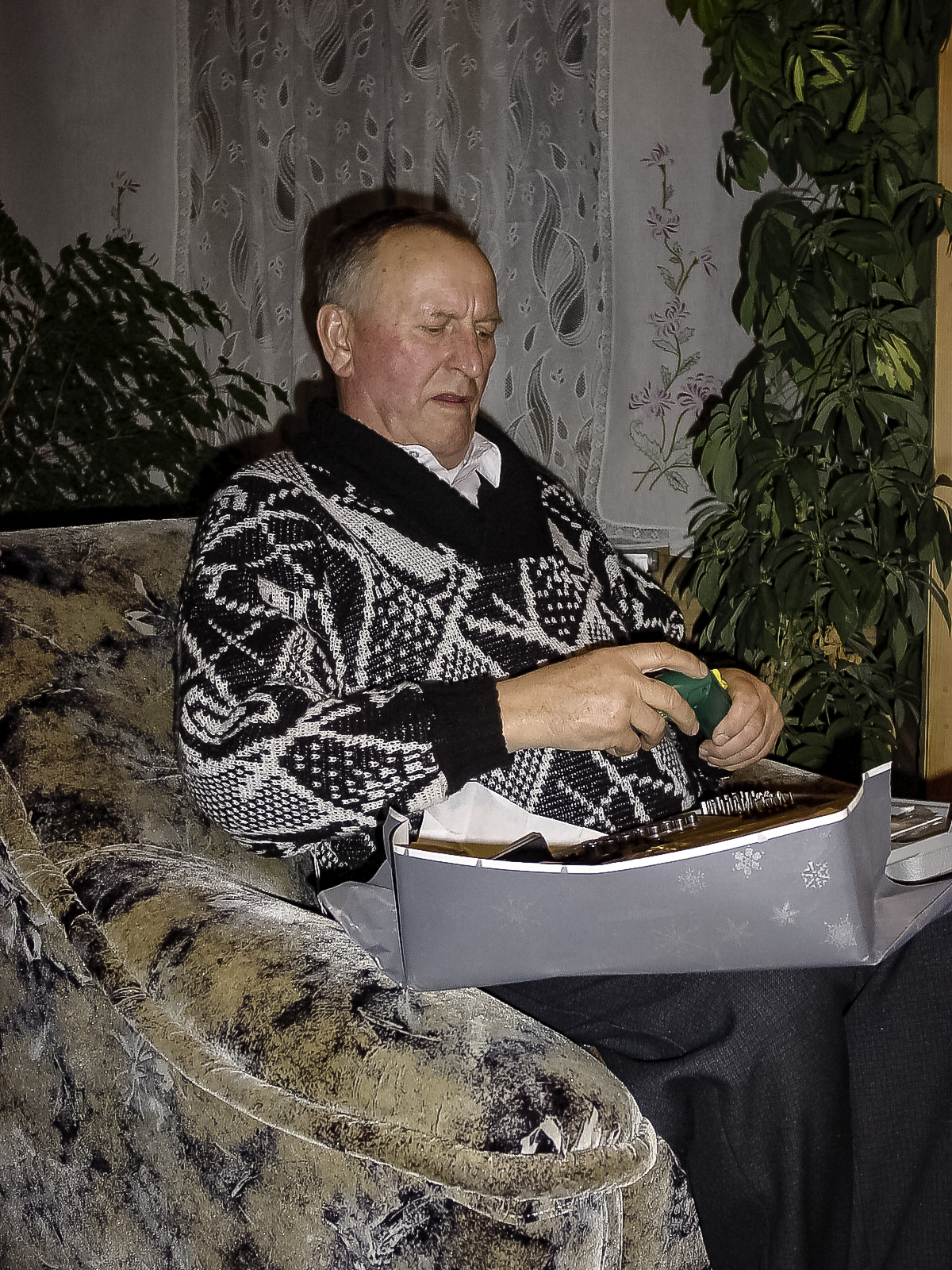
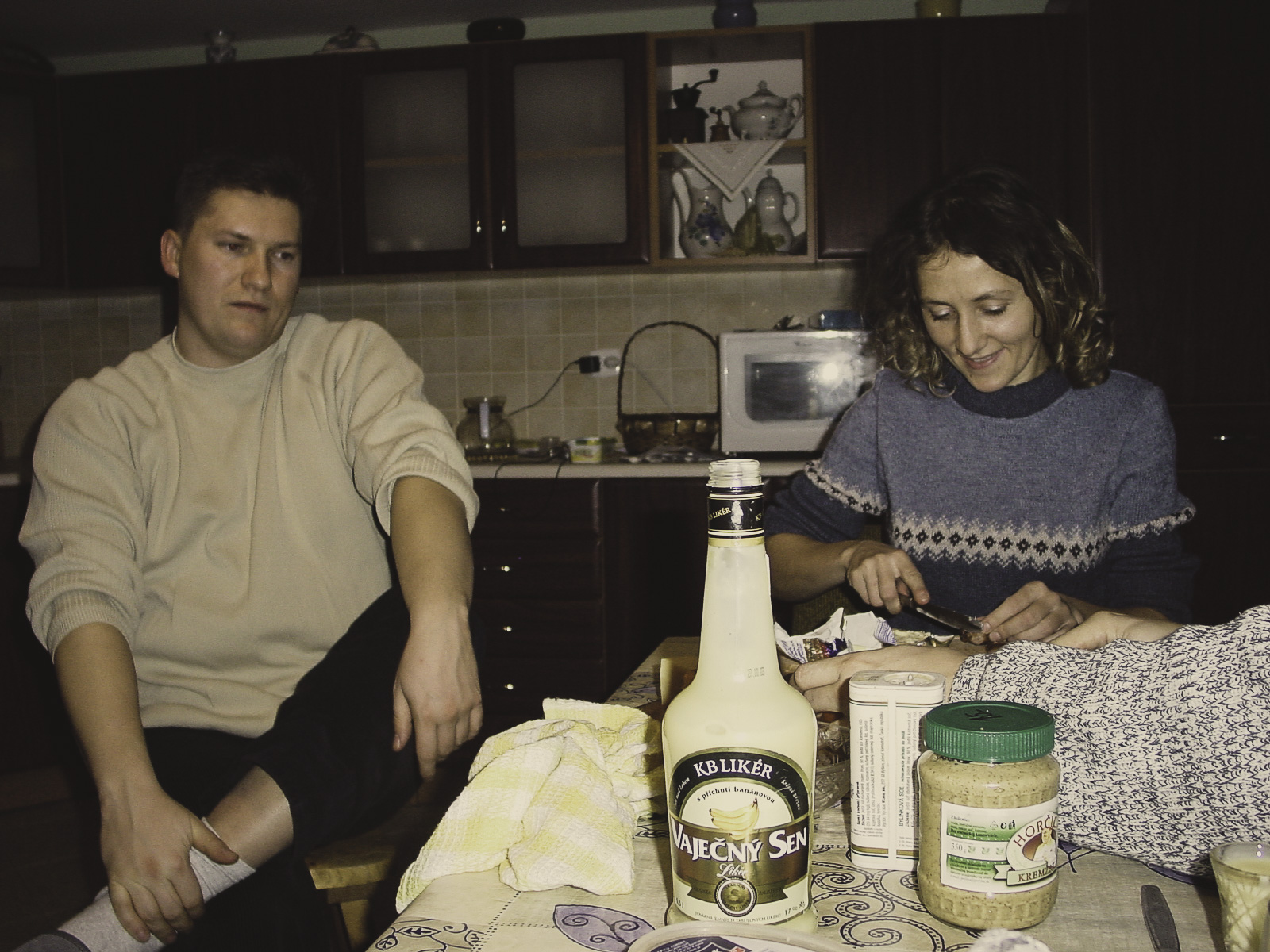
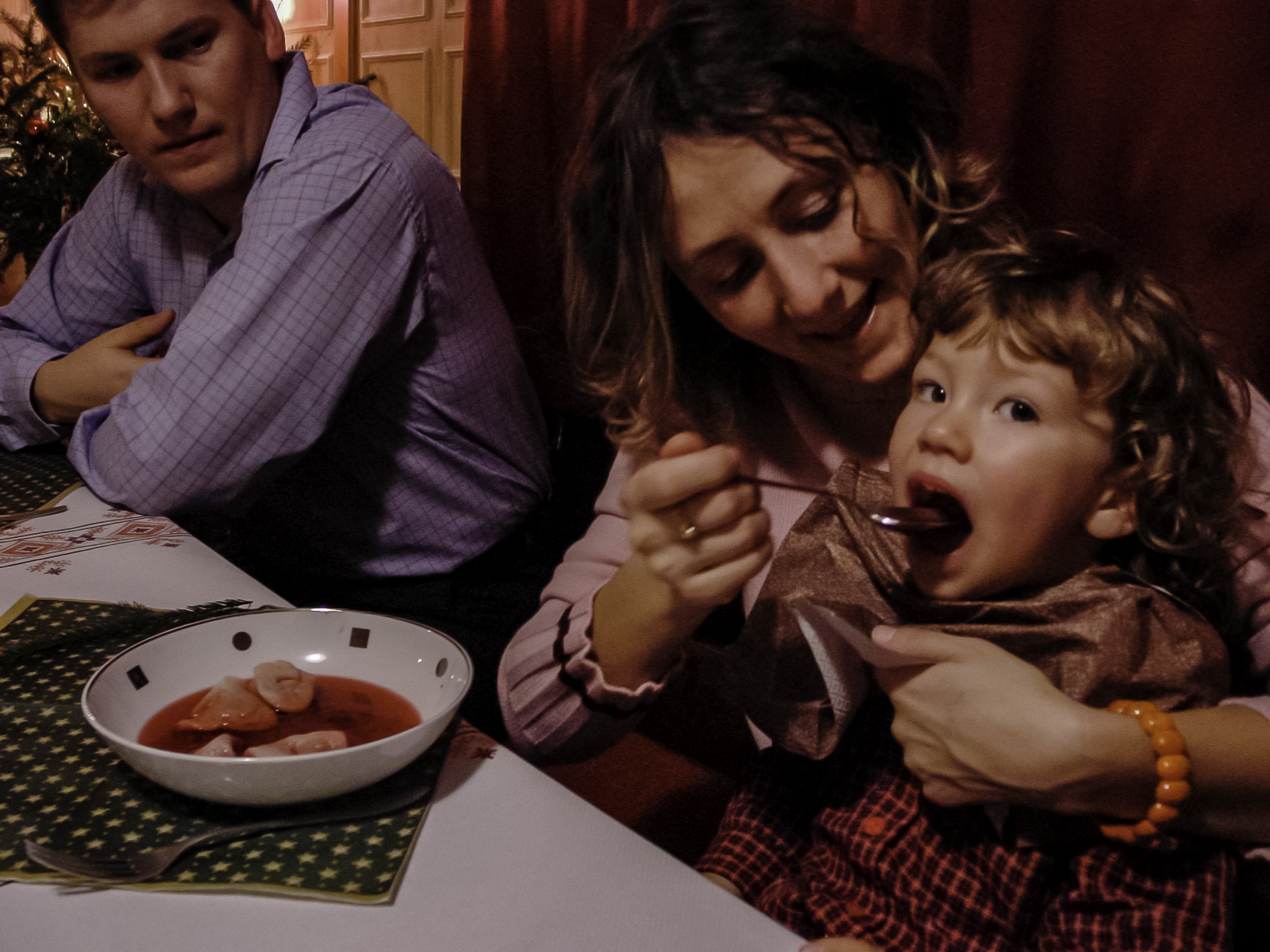

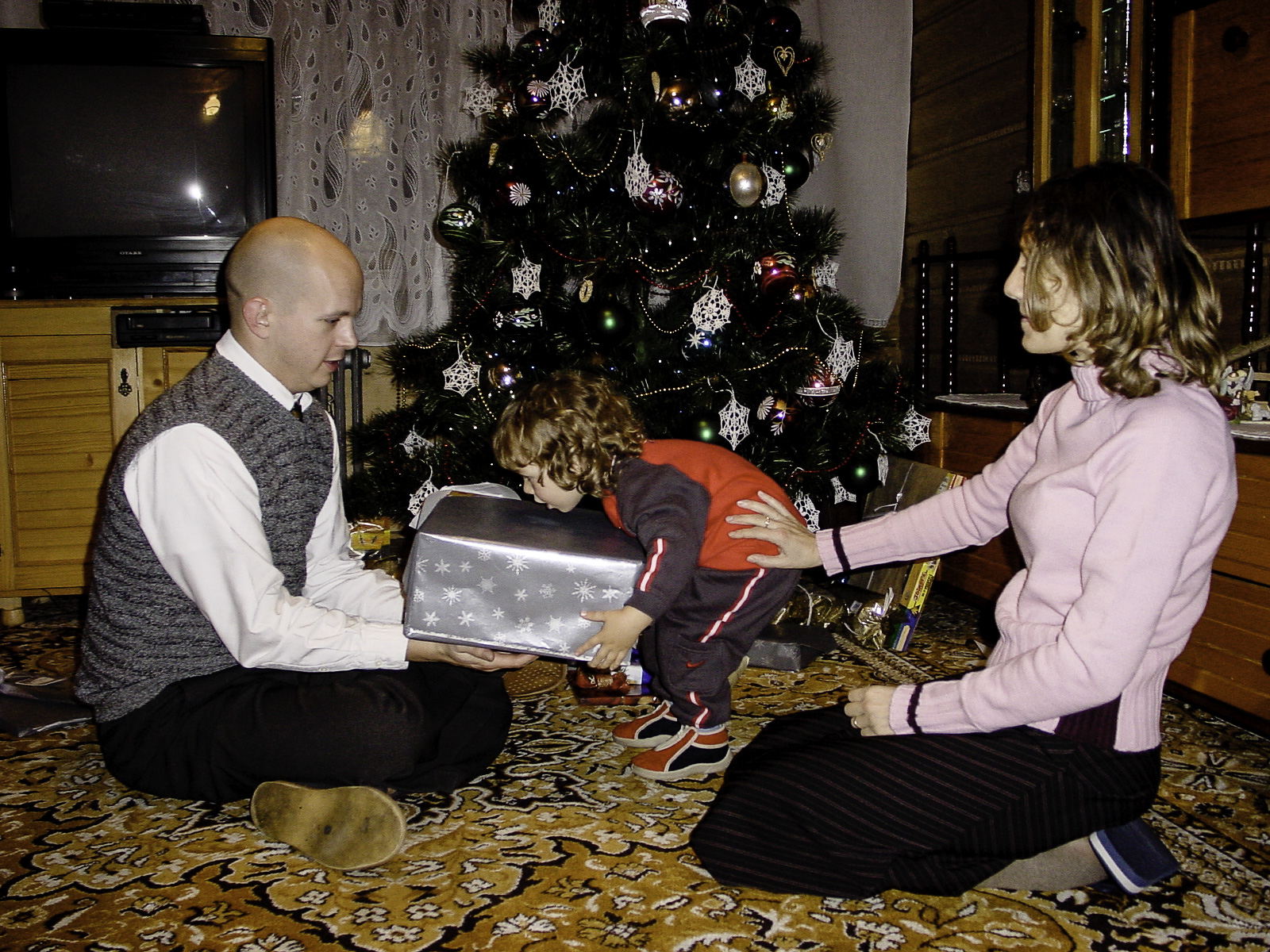
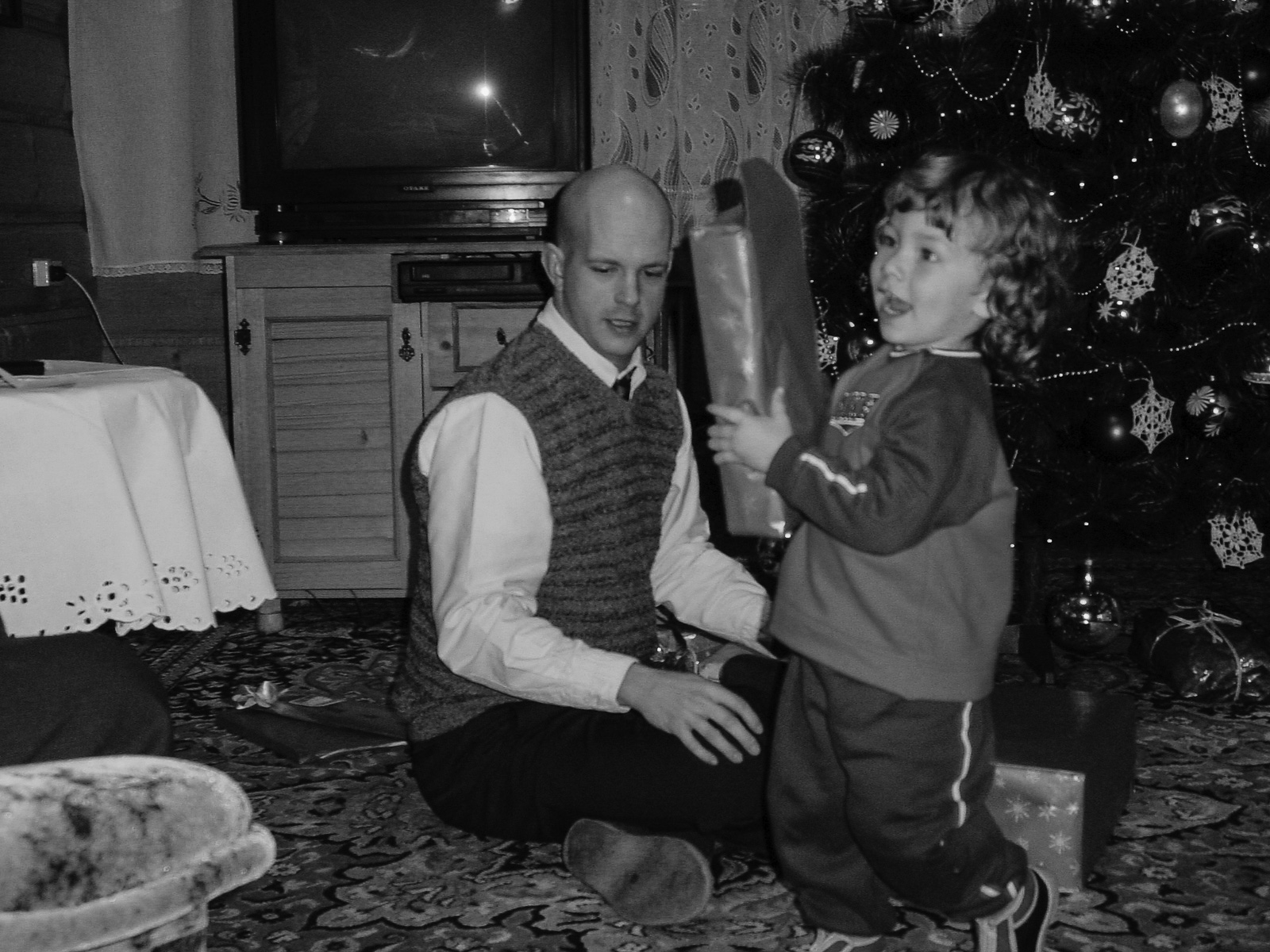
If I had a window, and a sign to hang it in, the sign might read, "Out for Christmas."
But I don't, on either count.
Here's wishing everyone a merry, safe Christmas.
Part of getting ready for Christmas here is cleaning. Massive cleaning. Some people clean all the windows as well as every single rug.
But let's not exaggerate.
My in-laws are reasonable people, and my wife is equally reasonable. But they're still Polish, so that means a lot of cleaning. From a masculine point of view.
Today I was helping clean and was asked to do the staircase.
"Vacuum everything," instructed my wife, as if I didn't know how to clean stairs. "And then go back with a rag and clean all the carpets."
Apparently, I didn't know how to clean stairs.
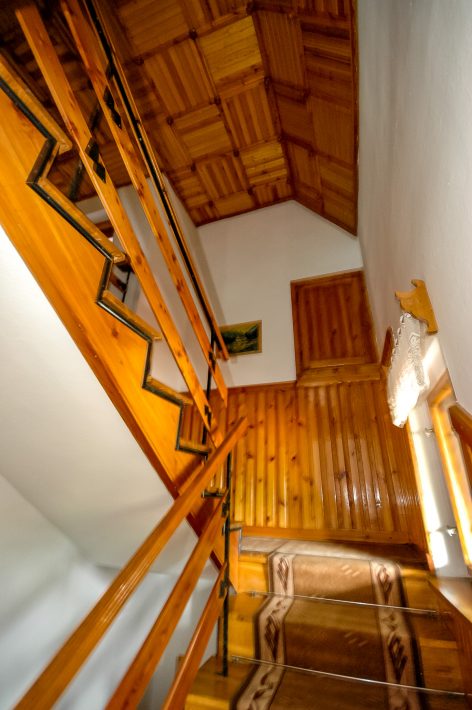
"Clean all the carpets with a rag? After they've been vacuumed?" I asked incredulously. "What for? It's not like it'll make a difference!"
Long story short: we made a bet that I could skip cleaning one of the steps and she wouldn't be able to tell which one.
Off I go, a lean-mean-clean machine.
I am a fair guy. More than fair. Hell, I even let folks do take-backs while playing chess online. So I thought, "If I'm such a sporty, fair-player sort with other people, how much more so should I be with my wife?" So, to give her a sporting chance, I didn't clean three of the stairs.
And one of them in the most brightly lit portion of the staircase.
It could be more the effect of my testosterone level than any cultural difference, but I was sure she wouldn't be able to find one.
The question is: how many did she find?
One of the best things about being an EFL teacher is the fact that I can do "stupid" lessons and get by with it.
Like singing Christmas carols. Imagine going to math (or "maths" for those who prefer British English) class and the teacher says, "Today, we're going to sing Christmas carols." Even in, say, literature class it doesn't really float.
But in English class, it does. So I teach the kids a few songs. This year:
Nothing special. I've always wanted to do "Jingle Bell Rock," but they don't know the melody, and that's key. It's a language lesson, after all, not a music class.
I can't really recall learning Spanish Christmas carols in high school. Perhaps we did, but I have no memory of it...
Kinga recently found some old CDs of choral renditions of many Polish carols. Several of them are simply different versions of the carols posted earlier.
Most of them, though, should be entirely new to non-Polish ears:
Unfortunately, I don’t have the time now to provide information about all the songs. If you want to download the whole bunch at once (24 MB), this is the link for you.
(Note: All songs have been removed, lost in a site-redesign 15+ years ago…)
The first piece of classical music I really fell in love with was Beethoven's Pastorale symphany. It's his sixth symphony, which means it is right after his famous Fifth, and squarely between his his revolutionary Third and Ninth symphonies. I'll readily admit now that I do, in many ways, prefer other Beethoven symphonies to his Sixth, but listening to it brings out the child in me.
I discovered the Sixth from a friend of my mothers, who, learning that I was showing interest at the age of eleven in classical music, brought me a couple of cassettes.
At this German site you can pick up the openings of each movement.
One was a Shostakovich piece, and the other was Beethoven's Symphony No. Six.
Shostakovich didn't grab my young years, but Beethoven had my full attention.
I've since tried to find the Shostakovich again. I was convinced it was an odd-numbered symphony, but after having bought so many Shostakovich odd-numbered symphonies, I'm now not sure. It began with a roaming, lonely bassoon solo. Any ideas? And no, I'm not confusing it with the opening of Stravinsky's Rite of Spring.
Once, while living in Poland the first time, I had a sleepless few nights thanks to a strange atmospheric phenomenon of the area (perhaps more on that later) and general stress. It was the final, peaceful movement of Beethoven's Sixth that finally put me to sleep.
Since falling in love with Ludwig's Sixth, I found others that I ultimately preferred. The first movement of his Third is one of the most dynamic openings I know for a symphony, and of course his entire Ninth is, well, Beethoven's Ninth.
But his Sixth always ensures a smile and a peaceful evening.
It’s a strange thing to get used to at first, seeing those three little letters everywhere before every name. Well, almost every name – the names that deserve it. The names that have earned it:
It’s an abbreviation for “magister,” and it appears before the names of all people who have completed the basic, five-year Polish university education. What it would be translated to in English is a little tricky, though.
Technically, it’s a Master’s Degree. But in many ways, it’s more like a Bachelor’s Degree. The main differences are the time-frame (five years as opposed to four), the course work (i.e., the total number of hours, though I’m not convinced a mgr equals a BA + MA as far as total course hours goes), and a required thesis. Of course most universities in the States don’t require a thesis for a BA and don’t require five years of study; on the other hand, the a lot of the fifth year is more or less spent writing the thesis, so a Polish university education is four years of course work, just as an American degree.
The major difference, I would say, comes after completion of the degree. That annoying title, “mgr,” prefaces names in every conceivable context. And when you think about it, it’s a little ludicrous, at least for an egalitarian American like me.
Imagine the American equivalent: GS, MA. Or worse: GS, BA. I tell myself that even if I had a doctorate, I wouldn’t want “Ph.D.” appended to my name all over the place. But at least I concede that a doctorate is deserving of that recognition and honor. But a Master’s Degree?
It’s especially annoying when one considers the fact that a “magister” degree here is the basic university level education. So in that way, it’s most decidedly not like the American MA, which is a step above the basic university education. I want to scream sometimes when I see a line of “mgr’s” in a list of personnel, “Jeez people, you completed your country’s basic university education! Stop bragging about it!”
If you do complete graduate studies in Poland, you get to include even more initials before your name! Below are a sampling of possibilities:

In death do we not part
Titles are one thing in life. At the very least, they show the relative qualifications of an individual to speak on a given topic.
In death, they’re certainly seem to be empty vanity. But, nonetheless, at least one grave I’ve seen includes the “mgr” nonsense.
Regarding my recent post on the soul, Isabella commented,
What loaded questions. That nobody can answer. I don’t know if you’re a reader of fiction (heck, I barely know you at all), but your entire post reminds me of an SF novel – Terminal Experiment, by Robert J Sawyer. I don’t think he’s a very good writer, but he grapples with some very interesting ideas, starting with the 21 grams that leave the body when you die.
Twenty-one grams that leave the body when you die? I'd never heard of this. Being a skeptic, I immediately thought, "Urban legend," but I thought I'd poke around on the internet a while and see what turned up.
In an article entitled "Soul Man", I found that the the 21-gram idea can be traced back to an early-twentieth century physician, Duncan MacDougall of Haverhill, Massachusetts. He did a relatively crude experiment in which the beds of six terminally ill patients were put on scales to check for weight loss at the moment of death. He claimed to have accounted for evaporation of any sweat that might be on the patients skin, and reasoned that the effect of bowel movement or urine elimination would be negligable because it would remain on the bed. His results were far from uniform, but they indicated some weight loss at death. (The full text of the 1907 AMA paper is here.)
From this, it's safe to say:
Urban Legend.
But were the questions I asked really "unanswerable?" That depends on what we mean by "unanswerable." Science is not usually about "definitely" answered questions, and after all, it is science than can answers this question for us while we're still alive.
All bets are off once we're dead, though.
The saddest part about not believing in a soul, though, is that we're right, we'll never know.
My wife and I, for the first several years of our friendship, spoke nothing but English.
When I met her, I barely spoke Polish; as we became friends and spent more time together, though my Polish was improving, her English was still much better, so it just made sense to speak English.
When we decided to try dating, after being friends for six years or so, I told her, “Okay, one thing that has to happen is a linguistic change. We can’t go speaking English all the time.” And so one early date, we spoke nothing but Polish.
It was awkward. The language felt heavy in my mouth as I occasionally stumbled to express something that I knew I could say in English and she would easily understand. And hearing her speak Polish to me – it was surprisingly odd.
Since then, we’ve reached an equilibrium. We speak a lot of English because we’re eventually going to be living in the States for some time, and she wants all the practice she can get. “You get so speak Polish all the time. I never get to speak English,” she reasoned. Fine by me, I thought – speaking my native language is still easier than speaking Polish, a sign that though my Polish is getting pretty good, fluency is a non-issue, and admittedly, an impossibility due to my inherent laziness.
When we’re with friends, we speak Polish of course. Guests leave and we sometimes continue speaking Polish, sometimes slip in to English, and most often, mix the two.
When she’s tired and I’m tired and neither of us wants to think about what how to say what we want to say, she speaks Polish and I speak English, leading to some undoubtedly strange sounding conversations. Most telephone conversations are mixed like this, though no one else knows it. (Or didn't, until now.)
I’ve recently noticed that when she speaks Polish, she sounds like a different person in some ways. My wife speaks very good English, but she's generally spoken it very deliberately. That’s why she makes so few grammar mistakes – she’s thinking carefully as she speaks. But when she speaks Polish, all those linguistic concerns disappear and she just talks.
Even her voice sounds a little different when she's speaking Polish. It's somehow a little deeper. It resonates a little more. The sounds in Polish ("szcz," "prz," "rz," etc.) generally sound harder (not more difficult, more solid), so when she's speaking Polish, she sounds older and less naive.
Re: the "less naive" comment: My wife and I are both idealists, though I'm a pessimistic idealist -- I hope things will work out for the best, but I usually doubt they will. So in that sense, we're both a bit naive.
I can only imagine what I sound like speaking Polish to her. Because Polish grammar is so difficult (it’s a heavily inflected language), I still make tons of mistakes. But my Polish is now at a level that I usually know I’ve made a mistake, but I just don’t want to go back and correct it, or, more often, I don’t know exactly how to correct it.
The result must be somewhat horrific.
Because my wife speaks English so well, I sometimes feel a bit stupid speaking Polish with her. She uses grammatical constructions that, as a teacher, I know are difficult for Poles to master, and she does it without thought. I, on the other hand, must sounding little like this. Well, no -- that's a bad example. My problem is mainly with the endings, so "better example this would be."
One of the advantages of this linguistic soup will obviously be bilingual children – as long as they don’t take their Polish cues from me, that is.