matching tracksuits

fun in threes, sometimes fours

general

Prayer Warriors

I've never understood that phrase, though I've read it from time to time. It's a good enough term for members of the Presidental Prayer Team.

They're stated goal:

The goal of The Presidential Prayer Team was to enlist 1% of the American population or 2.8 million people, to pray for the President, both this administration and future administrations. This goal was reached on May 1, 2003, just 600 days after The Presidential Prayer Team was launched. Plans are in the works to establish new goals and objectives of the Prayer Team. It is our sincere belief that this effort could radically alter the future of our country as our President and our nation are prayed for on a daily basis.

Further, regarding the issue of whether the effort is "affiliated with any political party, elected official or governmental agency," we read,

The Presidential Prayer Team is a spiritual movement of the American people which is not affiliated with any political party or official. It gains no direction or support, official or unofficial, from the current administration, from any agency of the government or from any political party, so that it may be free and unencumbered to equally serve the prayer needs of all current and future leaders of our great nation.

But really, will they still be around when there's a Democrat in the White House? And if they are, will the issues on their pray list be apolitical (i.e., not decidedly pro-life)?

Quick Fixes

Oil prices approach $70 a barrel, with analysts saying an even $100 a barrel is not unrealistic.

Politicians say there’s little we can do about it, and point out that the national average is still not as high as the inflation-adjusted prices of 1981 of $3.11.

“I wish I could say there is a quick fix, but there is not,” said Rep. Bob Beauprez, a Colorado Republican who is expected to face a tough reelection campaign next year. “Everybody is feeling the pinch.” (Washington Post)

Everybody is feeling the pinch, but I’m sure Bush’s oil company cronies are feeling it less than we mortals. Such is the reality of a market economy, some might say, shrugging their shoulders and walking away.

Quick fixes? We had thirty years to solve this problem. What did we learn from the late—70s, when long queues at the pump helped force Carter out of the White House? Apparently nothing. Hybrid car sales are most certainly rising — we’re thinking the next car we buy will have to be hybrid — but it all seems too little too late. No one is in a position to thumb his nose at the oil cartels and say, “Screw you! We just won’t buy your oil.”

China would surely be grateful.

We’ve built our entire civilization on fossil fuels, and it seems that the people sitting on said fuels will soon be realizing the power they wield. OPEC has us by the gonads, and has for decades. We saw in the late—70s what could happen, and yet our dependence only grew.

Not only that, but in America we’ve built our culture on a sense of independence that somehow dictates that we all have cars, that we fill our highways with cars transporting only the driver and a cell phone.

Lawmakers also cannot easily suspend or reduce the 18.4-cent-per-gallon federal tax on gasoline. That money goes straight into a trust fund for covering highway and mass-transit upgrades. When gas prices climbed in the 1990s, some Republicans were quick to call for lowering the tax. This time, however, Congress has boxed itself in by passing the largest-ever transportation bill just before leaving for the August recess.

And how much of that transportation bill was aimed at improving public transportation? If you live in a larger city, a car might not even be necessary. Living in Poland showed me that even if you live in the boondocks, a car is not completely necessary. A nice convenience, but not a necessity.

Sen. John F. Kerry (D-Mass.) and others say Bush should take a harder line with Saudi Arabia and other oil-producing nations, and demand that they release more oil and help push down the price of oil, which hit a record $66 per barrel this week. But skeptics say that approach has not worked in the past. “We have to realize they have the oil, and it’s a seller’s market,” Beauprez said.

Don’t worry — Bush will find a reason to attack them soon enough and then we’ll have all the oil we need.

Wasn’t this Iraq thing supposed to be about oil? Isn’t that what we bleeding hearts have been saying all along, that the WMD charges were just a smoke screen to justify a long-planned war? For whom could that oil be intended?

Even if that obstacle could be surmounted, “if you roll back that tax, people have to keep in mind that may not transfer into savings for consumers,” said American Automobile Association spokesman Mantill Williams. “It’s not automatic [that gasoline firms] will give that discount to the consumer.”

Oh — right. Right. Bush’s and Condie’s and, well, the whole administration’s buddies in the oil industry are getting their campaign contributions back many times over. It was a sound investment.

America, goes the cliché, where we have the best politicians money can buy.

Oil companies have us over a pork barrel and that’s that. We drive buy a service station and, noticing that the prices has jumped up two cents overnight, cut in quickly to fill up before it goes up again — even if there’s three-quarters’ of a tank still in the car. We buy their product even when we don’t need it at the moment…

Preventive Questioning II

Not passing something so simple as a driving test is enough to drive you to, well, study. Passing no longer was an option. “I must have satisfaction,” I declared, tossing gallantly my cape behind the hilt of my sword and raising my eyebrows menacingly. Only a perfect score would right the wrong the State of North Carolina inflicted upon me. 25/25 — nothing less.

So now I know how many points you get for, say, not properly restraining a child in a safety seat (2 pts — a strangely lenient punishment for risking the life of a child) or “driving aggressively” (5 pts), and I know quite a bit about NC’s -DUI- DWI laws, and assorted nonsense that will not help me be a better driver in any way.

I got one question about DWI and none about points.

Satisfaction evades me, though, as the test automatically shut down after I got the first twenty silly questions correct…

Belief

There’s something fascinating about the character of Barabbas in the Bible. He is the ultimate Christian type for all humanity, for Jesus literally dies for him according to the Gospels. Though the tradition is recorded nowhere outside the Bible, the Gospels tell us that it was the custom to release one prisoner around Passover time, and the crowds (who through the centuries become simply “Jews”) demand Barabbas be released and Jesus crucified.

Par Lagerkvist wrote a novella in the 1950’s about Barabbas after the crucifixion, about his desire to believe, to convert to Christianity, but his inability to go through with it. He sees Jesus crucified; he’s at the tomb at Easter (though of course he doesn’t see the resurrection, simply the empty tomb afterwards), and yet he still doesn’t believe.

It’s the curse of modern times -- a will to believe and yet an inability to do so. Winifred Galligher writes of this in Working on God. The modern solution, Rabbi Burton Visotzky tells Galligher, is a fight:

[Belief] may be the battle of your life, but emotionally and intellectually, it could also be the most exhilarating one you’ve ever engaged in. Whether you experience God’s reality or are just intellectually intrigued by the idea, God can be a very real force in peoples’ lives – spiritual, emotional, supportive – that almost no other system can offer. But you must gird yourself for a fight and know that you’re going to have to try to reconcile very difficult things. Or at least hold them in suspension and bounce them back and forth and get tired. There’s no quick fix, but we have the benefit of drawing on thousands of years of religious thinking. You can’t learn it over a weekend. It’s an engagement for the rest of your life. (261)

More so than during Kierkegaard’s life, it boils down, for some, to a Kierkegaardian leap of faith. Evolutionary theory and the general advances of some sciences make belief unbelievable, but for some there’s always an intellectual draw toward the idea of a great Something More.

Barabbas probably believed in a Something More. He was, after all, a first-century Jew and by many accounts, a Zealot, hoping an overthrow of Roman control over Jerusalem would hasten the Messiah’s return. What Langerkvist’s Barabbas is struggling for is not a believe in God, but a belief that he himself saw God in the flesh, however oxymoronically that might have seemed then, or still seem now. Langerkvist’s Barabbas then is a parable of someone who is having trouble trusting a first hand experience of what others called the divine.

If it was that difficult for him, think how much more so it must be for us, separated 20 centuries from the historical object of faith.

“I want to believe.” That seems to be the cry of many in the twenty-first century. William James argued that that very will to believe was sufficient in some situations, namely those like religion which cannot be concluded on purely rational grounds.

Why believe, though? There are those of us who are torn, who sometimes think it would be wonderful to fall on their knees in thankful prayer but mostly think religion is an antiquated relic that will pass with time. It’s the experiential factor that is most unnerving for such folk:

Let's not get too hard on the Holy Roman Church here. The Church has its problems, but the older I get, the more comfort I find there. The physical experience of being in a crowd of largely humble people, heads bowed, murmuring prayers, stories told in stained-glass windows … (Interview with Bono, from U2)

Seeing others people’s faith used to make me shake my head in disbelief. “How can people be so gullible, so naïve?” I used to think. But the older I get, the more fascinating it is, especially hearing the echo of five hundred people reciting the creed that’s been the backbone of Christian belief for centuries.

Mindless repetition for some, but looking at some folks’ faces, it’s easy to see the depth of belief there.

Preventive Questioning

Coming right out with it, I failed the North Carolina written driving test today.

Twenty-five questions, and I could make only five mistakes. I made it through twenty-two questions before racking up my sixth and final wrong answer, which resulted in the screen going blank and informing me tersely that I’d failed. I went back to the  examiner and she seemed surprised.

Indeed, I was surprised. I’d gone through the manual and remembered all sorts of fun facts.

  • It takes 211 feet to come from 55 MPH to a full stop.
  • You can’t park within 15 feet of an intersection when the road is not curbed; when it’s curbed, it’s 25 feet.
  • A person has to be visible at a distance of 200 feet with high beams and 70 feet with low beams for your lights to be “valid.”
  • Your horn must be audible at a distance of 50 feet.
  • You must stay two seconds behind the car in front of you (i.e., not the # of car-lengths, as I’d learned so many years ago).

All sorts of fun facts.

What did about 20% of my randomly prepared test involve? DUI.

For the first DUI offense, how long can the DMV revoke your license?

Any amount of time would make my life infinitely more complicated. But that is not the reason I don’t drink and drive. I know I can kill myself and others doing it — that’s why I don’t do it. Simple.

What is the punishment for refusing to take a Breathalyzer test?

What does it matter? I know it can only be something unpleasant, something that will make the situation — and my life in general — more difficult, so even if I knew I’d fail it, I’d take the stupid test.

What should the punishment be? The officer should give you a quick bullet to the head — you’re obviously too stupid to be making a positive contribution to society.

What is the first step to getting back your license after having it revoked for DUI?

I didn’t know. (It turns out that you have to take a driving course.) If I were so stupid as to get in the car after drinking, I don’t know that I deserve to get my license back. But if it were revoked, I guess I’d start worrying about how to get it back then, not before my license has even been issued.

The good news: Kinga’s test had no questions about driving drunk and had studied her butt off — though she didn’t know the answer to those questions either — so she passed her test, successfully drove the examiner around the neighborhood, and got her NC driving license.

Gas, the Obligatory Complaining

I know — we’re all suffering from gas prices. But it’s been ridiculous around here since we moved. At one station here in Asheville it was $2.11 about three weeks ago. This station sells gas mixed with ethanol, and so it was about ten cents cheaper than every other place around. Then it jumped up to $2.23. A few days later: $2.32. A week after that, last Friday: $2:44.

As of yesterday: $2:52.

That’s an 18% increase in about three weeks. How is that possible? Has the price of a barrel of gas increased proportionately in the last three weeks? No. It’s finally broken the $60 a barrel mark, and seems to be bearing down on $70 a barrel, but it hasn’t gone up that much.

It’s a good thing there’s not a milk cartel to go along with the oil and drug cartels. Can you imagine if the prices of everything fluctuated this badly?

Keeping Busy with Great Books

Keeping busy is the key. Idle hands, idle minds — conventional wisdom.

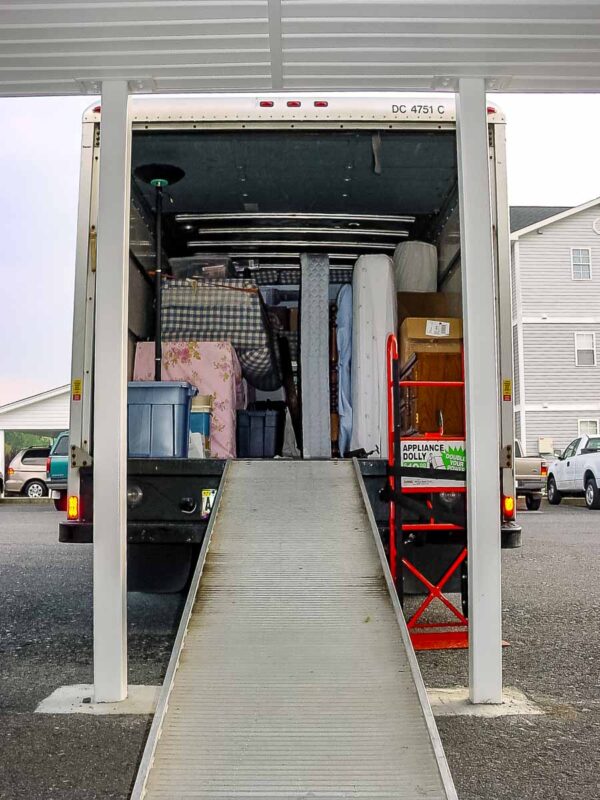
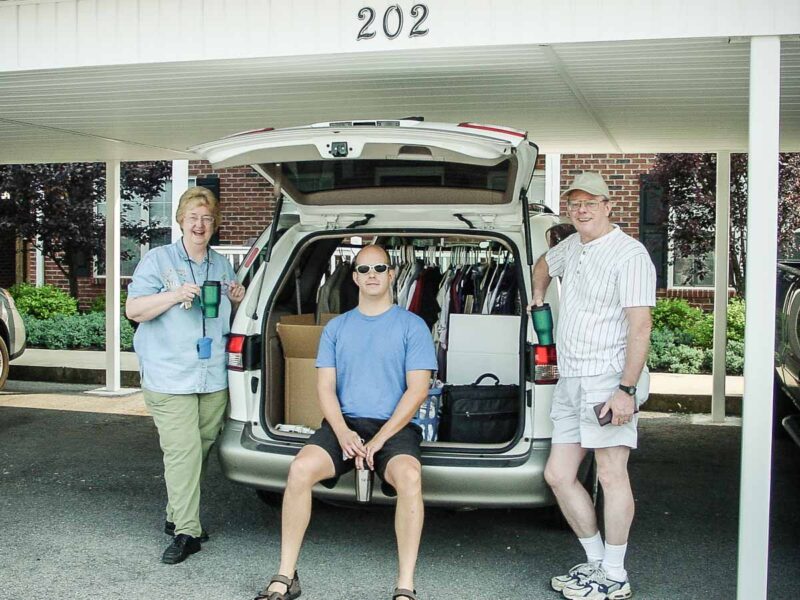
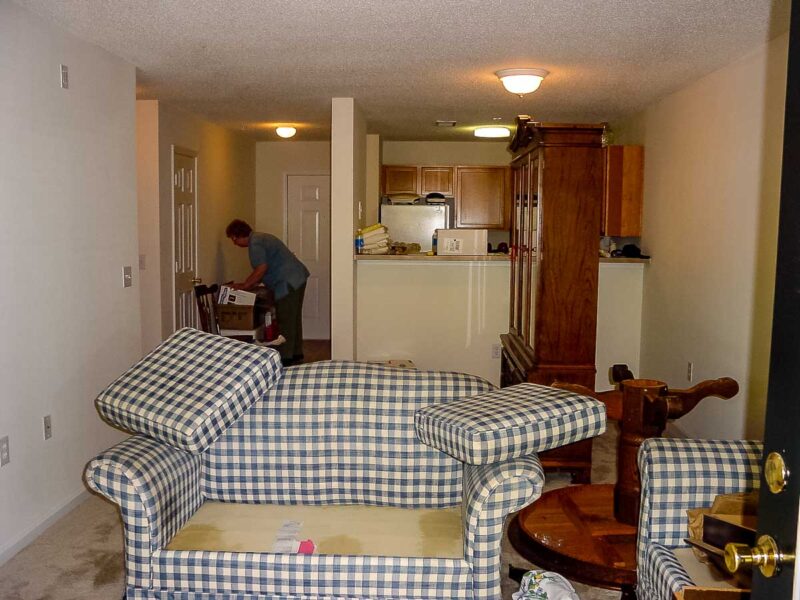
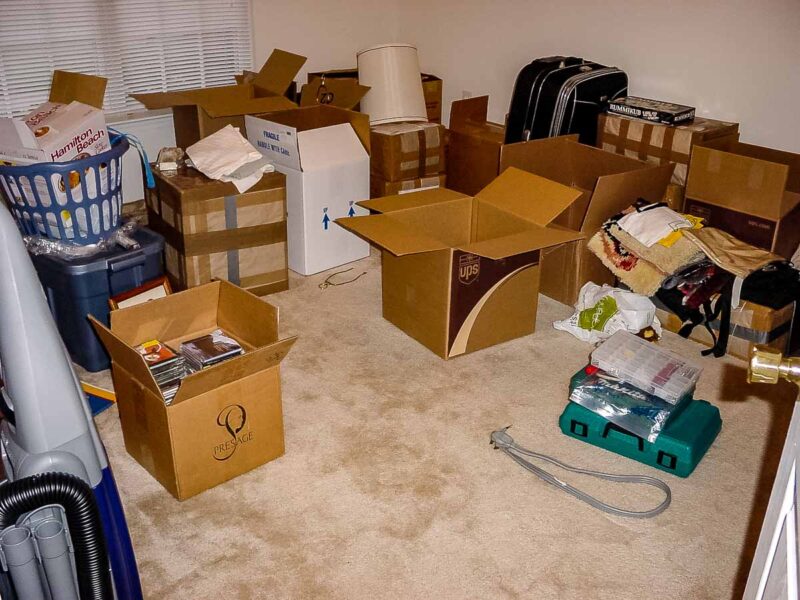
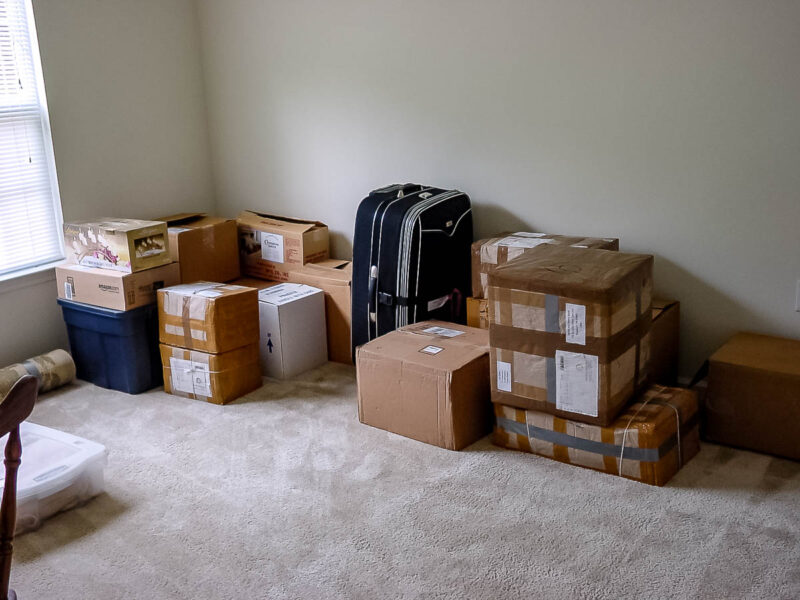
We’ve moved in, and as I don’t have a job, the last week has been busy with straightening and organizing. I’m a house-dad, without the “dad” part. Too bad I can’t just get pregnant and make use of the down time. Indeed -— if that could happen, we’d never have to work again, either of us. Medical miracle. Religious miracle, and it wouldn’t even have to be a virgin birth.

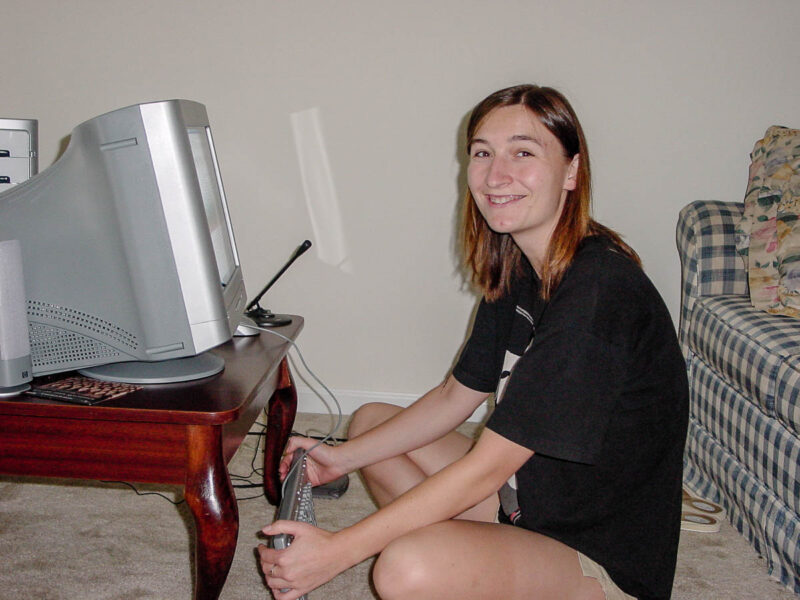
Keep busy. Our computer crashed and we had to buy a new one a few months ahead of schedule. Best Buy almost ripped us off, due to a pricing mistake. I went in ready for a fight. At last I can get out all the frustration building in the last year of Polish bureaucracy and tangle in my native language. No tangling there, though. They gave it to us for the advertised price. As if they wouldn’t. Well, in my recent experience abroad, worse things have happened.

Keep busy — else you end up writing things like this.

Two years in a place is enough to make it home. Three years cements it further, and moving after three years somewhere can be overwhelmingly traumatic. Four years could kill a person if she didn’t some kind of support. Seven years, ten years, twenty-six years — the transition period itself could last years. Family and friends constitute “mitigating factors” but most importantly in my experience is a concrete goal, a reason behind it all that motivates and justifies uprooting yourself.

Kinga and I are now settled in, hoping to take root in America. Because I spent seven of the last nine years in Poland, it’s as much a foreign country for me as for her. How long before we think of this place as “home”? I no longer associate our cozy apartment in Lipnica with that word, but also, I don’t imagine our new place when I think of “home,” either. It’s a word that hangs in my imagination, not even suspended by anything tangible. Maybe it will settle with the dust that will accumulate in our new apartment, and gradually pick up the warm associations it needs.

In the meantime, there’s the inevitable sadness that edges everyday life. I see it sometimes in Kinga’s eyes and remember what it was like when I first moved to Lipnica. The stimulation of all that’s new and different in a foreign country can grow tiring, and it’s then that thoughts turn back to the places and faces that usually come to mind alongside the word “home.”

I feel it like a fog in my own thoughts, when I realize anew how distant all I knew and loved in Lipnica is at this moment – friends, students, and now family. I look at pictures taken during our last weeks in Poland and I feel I’m looking at snapshots of another’s life. Seeing myself in some of the shots reassures me that I was there, that I didn’t just dream it all.

This tint of gloom is nothing compared to the wretchedness I felt when I first returned from Poland in 1999. Struggling at first just to scrounge up enough for Boston’s exurbanite cost of living, feeling intense doubt about graduate school, knowing next to no one, thinking it could be over a year — maybe two — before I’d be teaching again, and being so far from everything and everyone I knew in America made the first months dismal. It’s not that every moment was hellish. Far from it. But the transition from my rural Polish world of certainty was emotionally exhausting.

It was a bad day.

One good way to keep busy is looking for work, combing CareerBuilder.com and Hotjobs and Monster daily. Hourly is the temptation — after all, you can search by the hour. Still once a day should suffice.

Reading is another way to keep busy. God knows we’ve got enough books to read now. Dad gave me his “Great Books” collection. An odd thing, those Great Books. Everything from Freud to Euclid, from Shakespeare to Darwin. They’re big, hardback books, with a sixties binding. I thought about digging into Faraday or Adam Smith, but I still haven’t finished Kapuscinski’s Imperium. For now, Faraday waits on his side, stacked on the floor by the bookcase, with the other Great and Heavy Books of Western History beside anthologies and lesser books. My father said he had decided in the late sixties when he bought that Bundle of Books that he would, through his life, read them all. There are fifty-four volumes, beginning with the Iliad and ending significantly with Freud. I’m not  sure how many he read, but I’m fairly sure he never made it out of the ancient Greeks.

The Great Books series gives we intellectual mortals a feeling that we’re somehow greater than we are. After all, we have in our library Gibbon and Ptolemy, Chaucer and Galen. But really, what’s the point? Those who would read them probably already have them. They’re useful for libraries and sect’s bookshelves. No, I’m not so unoccupied that I’ve taken to reading Tacitus, important though he may be.

Keeping busy -— for example, physicals for registering as a substitute teacher, getting a North Carolina driving license (I have to take the test —- can’t just turn in the valid VA license.), getting tags, and so on.

New Look

I decided to clean up the nasty, table-based quicky template I'd done for the first version of MTS. The new look is not completely new -- same basic ideas -- and it's not quite finished, but...

I've also upgraded to Textpattern 4.0. So far so good. It seems to offer a bit more flexibility in how things are displayed (for example, comments) and it has a great auto thumbnail creation. In addition, you can provide files for visitors to download without having to fire up your favorite FTP program, and it counts the number of downloads. (I added a few of the Polish Christmas carols from last year to play around with -- i.e., format -- the feature.)

And you can now get it in Russian! Isn't that what you've always wanted?

Recent Reads

Moving