







We started with an early soccer game — 8:15. On the way there, we drove by his school at just about the time he’d be arriving for a normal school day.

Somehow, the boys lost their second consecutive game. I say “somehow” because for 90% of the game, they dominated. They kept the ball in their opponents’ half of the field, and I’d say they had at least 25 shots on goal. Their opponents maybe had 6-8 shots on goal — but one of them went in. That’s the only difference, but that’s the most important difference.

After the game, a little relaxation for the Boy, with a quote from a favorite movie of mine — modified, somewhat.
Late morning was honey-do list time — including getting some final details set for K’s new workstation.

I’m not jealous of her computer, but I’m envious of that desk!

Afternoon — bike ride. What else?

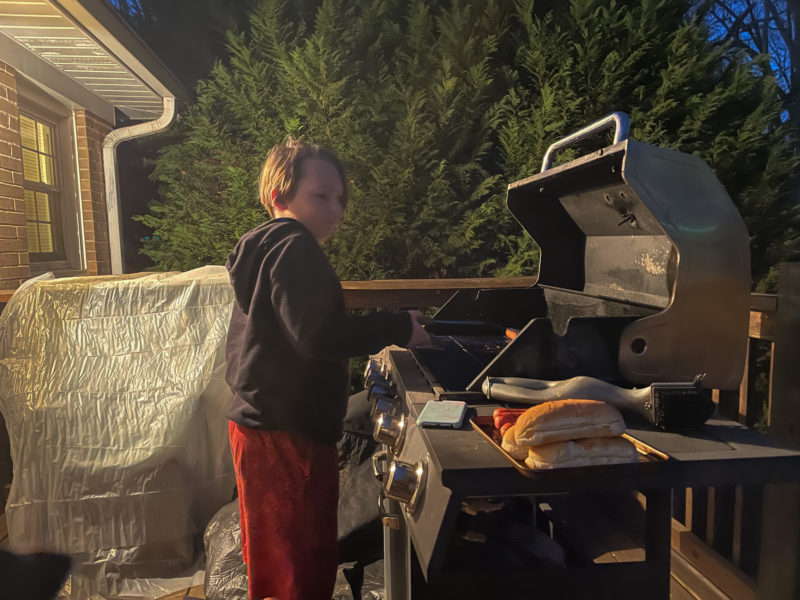
Hot dogs for dinner — the Boy on the grill.
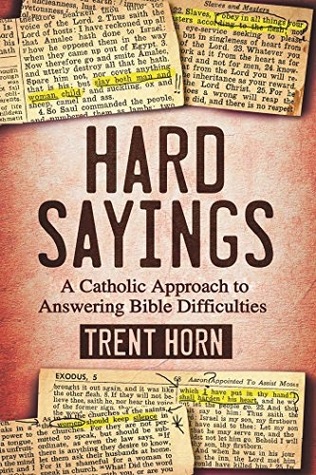 In the introduction to Hard Sayings: A Catholic Approach to Answering Bible Difficulties, Trent Horn quotes Dan Barker’s succinct point about the Bible: “An omnipotent, omniscient deity should have made his all-important message unmistakably clear to everyone, everywhere, at all times.” By this, Barker of course means that a god who is all the things the Christian god is supposed to be would send a message that couldn’t be so easily misunderstood, so easily used to justify so many conflicting ideas, as the Bible is.
There would be no difficult scriptures. For example, from the Catholic point of view, references to the “brother of Jesus” are troubling because Mary was, according to the Catholic Church, always a virgin. There was no way then that Jesus had brothers. How do we explain this, then? Well, in Aramaic, there is no term for “cousin.” Everyone is a “brother.” So that’s what the passage means. The only problem is that, although Jesus and his disciples would have been speaking Aramaic, the Gospels were written in Greek, a language that does have a word for cousin. In that case, why didn’t the Christian god inspire the gospel writers to say “cousin” and avoid all this confusion?
Horn responds to Barker’s claim most curiously:
I agree with Barker that God should provide an opportunity for all people to be saved since 1 Timothy 2:4 says God wants all to be saved. But that is not the same thing as saying that the Bible should be easily understood by anyone who reads it. Perhaps God has given people a way to know him outside of the written word? For example, St. Paul taught that God could make his moral demands known on the hearts of those who never received written revelation (Rom. 2:14-16). The Church likewise teaches that salvation is possible for those who, through no fault of their own, don’t know Christ or his Church.
Yet Barker never said anything about salvation. It’s not that Barker’s argument is that this god is doing a bad job of getting his salvific message out, but that’s what Horn’s response suggests. “No, no!” says Horn, “it’s not that people might lose their salvation over a confusing book. God also, according to St. Paul, communicates directly with people’s hearts.” In Horn’s strawman argument, Barker accepts that there is a god who wants everyone to be saved but just feels that this deity could be doing a better job of communicating that plan. But Barker is arguing the opposite: the massive amount of confusion stemming from this book suggests that is has a most decidedly human origin with no divine influence whatsoever. He’s arguing from the book to the hypothetical god that would have created it and saying that there is a significant incongruity between that hypothetical god and the Christian god.
Not only that, but Horn is quoting the Bible (Rom. 2:14-16) to provide evidence of his rebuttal (that God provides other means of salvation rather than through the knowledge gleaned from his book) when in fact it’s the Bible’s validity itself that’s at stake.
The problem is that for Horn, it’s impossible to see how someone could not accept the Bible as divinely inspired. He’s working with that presupposition so firmly in his mind that he doesn’t even realize when it causes him to go question-begging as he does in this response.
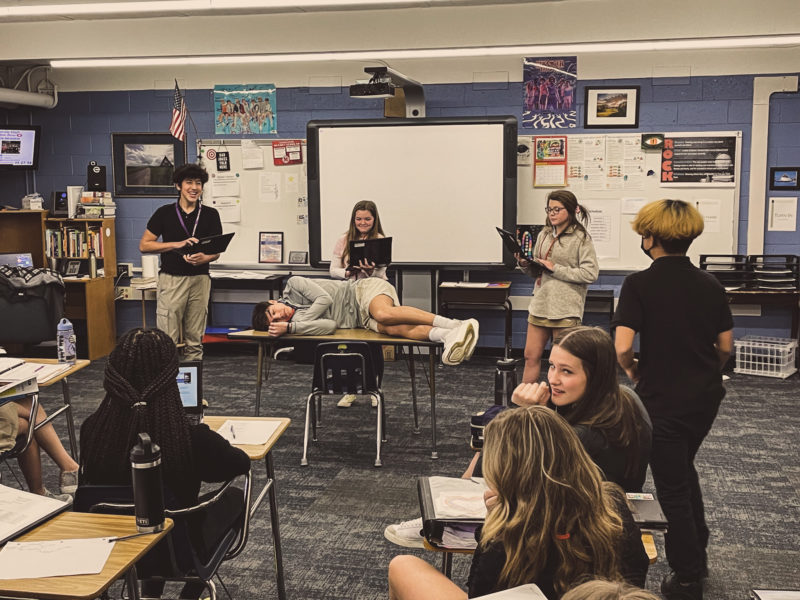
“Today’s the day we kill them off!” I declared as we started class today. We acted the entire fifth act in class. All three scenes amount to little more than half of act one, I’d say. They enjoyed it, I think. Kids said, “You know, you were right: I couldn’t understand Shakespeare at all when we started, but now I don’t even feel I need to look at the simplified version most of the time.”

In the afternoon, we got word about our homeroom’s door decoration: we won second place in the school. First place — another class on our team. Third place — another eighth-grade class. Our grade swept them! Our team took the top spots!
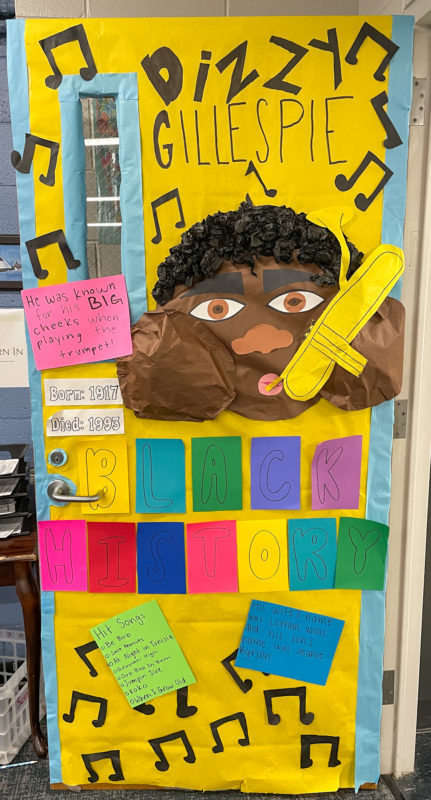
A fun day to be an eighth-grade teacher.
Juliet is dead now — at least in the eyes of her parents and extended family. Instead of marrying Paris today and going off to live in bliss as her parents anticipated, she has died in her sleep.
It’s strange how easily Friar Laurence manages to steer the family away from all thoughts other than the one he most desperately desires: get her buried as soon as possible, for who knows — from his perspective — what will happen if his potion wears off before they get her in the family crypt.
But why isn’t Capulet more concerned with what happened? How could a young girl die so suddenly? I think the notion, prevalent then, that someone could die of a broken heart goes a long way in explaining this. For Capulet, it’s easy enough just to accept the fact that Juliet never really got over her sorrow for Tybalt’s death, and it was of that broken heart that she died.
It’s that time of year that includes “spring” in many things in the South (like “spring soccer season”) yet has weather most assuredly not-spring-like. We arrived at soccer practice at 6:30, and it was 54 degrees. By the time we left ninety minutes later, the temperature had dropped 11 degrees.

“My big toe is numb!” the Boy declared.
It’s a bit steeper than it appears.
We’re on a new team this year.

We were hoping for a change for how things went last season (i.e., not winning a single game and drawing only once).

Sadly, it was more of the same: 0-2.
A curious story appeared in Newsweek the other day that highlights some of the quirks of Catholicism. Apparently, a priest there has been saying the wrong words during baptisms, which makes the baptisms invalid:
A priest with over two decades’ worth of service to multiple congregations has resigned “with a heavy heart” in the wake of revelations that he incorrectly performed baptisms.
Father Andres Arango, who most recently served in the Roman Catholic Diocese of Phoenix, Arizona, was found to have used the wrong phrasing.
When performing the sacrament, Arango would say, “We baptize you in the name of the Father, and of the Son, and of the Holy Spirit.”
However, as the Vatican’s Congregation for the Doctrine of the Faith made the diocese aware, the use of the word “we” made the baptisms “invalid.” Instead, Arango was supposed to use the phrase “I baptize” rather than “we baptize.” (Source)
So all these families have been taking their children to the priest to say the right words in order to remove the effects of the apple curse and safeguard their children from the horrors of hell, and this guy has been saying the wrong words! According to Catholic teaching, if they’re not validly baptized, they’re not saved. If they died still a child, then they go to limbo heaven — I forgot, the Catholic church changed that teaching when enough people protested that the idea of infants going to limbo for eternity was unconscionable. (Does this mean that all the infants in limbo never were in limbo, or did they get a “Get out of limbo free” card?)
For the poor schmucks who made it to adulthood and thought they were freed of the effects of the talking-snake-induced apple curse, it’s another story. These folks died in the assurance of heaven only to awaken in the next life to the surprise of, well, not just their lives but of eternity.
“Um, excuse me, I think there’s been some kind of mistake,” they shriek, doing their best to maintain some kind of professional decorum.
“No, no mistake,” the demon idly pulling their intestines out and wrapping them around its forefinger says, almost sounding bored.
“Yes, I think there was. You see, I was baptized.”
The succubus pauses for a moment, tightens the ringlets of intestine just a bit, yawns and says, “No, I’m afraid you weren’t. You see, Father Arango said ‘we baptize you’ when all decent priests know the correct words are ‘I baptize you.’ A simple clerical error, to be sure, but nonetheless, an error.”
“But, but!”
The demon becomes irate: “Now look here — we don’t make the rules about these or those magic words. We’re just as bound to the formalities as you are.” He gives a good tug, dislodging the large intestines. “You’d have to take that up with God.”
“Where is he?”
“Not here,” giggles the tormentor…
All joking aside, there are lot of people now unnecessarily mentally tortured with the thought that their loved one is in fact in hell because of a priest’s mistake. Just how many people might be going through this?
Katie Burke, a spokesperson for the Diocese of Phoenix, told Newsweek that while the diocese has no exact number of invalid baptisms Arango performed, the number is “in the thousands.”
Thomas Olmsted, bishop of the Diocese of Phoenix, wrote a January 14 letter to his congregation informing them of the invalid baptisms. He said it is his responsibility to be “vigilant over the celebration of the sacraments,” adding that it is “my duty to ensure that the sacraments are conferred in a manner” consistent with the Gospel and the tradition’s requirements.
I guess Father Arango should have realized the importance of using the proper words…
Every morning during every third week of school, I spend half an hour listening to toots and honks, squawks and whistles, in various states of harmony and dissonance as band members willing to come in before school practice their pieces. I peek into the room and see at least one or two students who, in my class, are less than focused. Here, they’re all focus, all attention, counting out measures as they wait for their entrance, glancing here and there in anticipation of the trumpets’ entry or the flutes’ flourish.
I’m reading Trent Horn’s Hard Sayings: A Catholic Approach to Answering Bible Difficulties. He speaks of Karl Keating’s argument for scriptural inspiration, saying “when taken as just a reliable human document, the Bible shows that Christ not only rose from the dead, but that he established a Church built on the apostles.” These apostles “were then able to authoritatively declare the Bible to be the word of God.” So the Bible proves the church and the church proves the veracity of the Bible. That’s called circular reasoning, isn’t it? Horn doesn’t think so.
This is not a circular argument, in which an inspired Bible is used to prove the Church’s authority and the Church’s authority is used to prove that the Bible is inspired. Instead, as Keating says, it is a “spiral argument,” in which the Bible is assumed to be a merely human document that records the creation of a divinely instituted Church. This Church then had the authority to pronounce which human writings also had God as their author.
The level of cognitive dissonance in this statement is absolutely astounding. He can assert that calling it a “spiral argument” somehow removes the circularity of the argument, but in essence, he is still using the Bible to prove the Church to prove the Bible. No Christian ever regards the Bible as “a merely human document.” People regard the Bible as authoritative because they see it as divinely authored. I get that this is a distinctly Catholic explanation of things, but no Catholic ever sees the Bible this way, either. It is, defacto, divinely inspired in their eyes. The so-called divine nature of the Catholic church is in no way illustrated in the pages of the Bible, and we still have the basic problem of Biblical error: how are we to know that that particular portion of the Bible detailing the founding of the church is accurate? In short, we don’t. We have to take that on faith. And who is the one explaining all of this? The Church. So the Church says the Bible is just a humanly written document that proves the Church is divinely inspired, which then proves the Bible is not just a humanly-written document.
It’s almost as convoluted as God impregnating Mary to give birth to God to die to appease God’s anger, which is the story of Christianity in its most simplistic form.
The sprint soccer season has begun — first practice was tonight. E is with a new team and a new coach. We’re playing on fields only 5 minutes away from our house rather than 20 minutes away.

E’s first impression: “The coach is good. And the kids are nice to me.”
I also had a good impression from what one of the parents said. Here’s hoping this season will be better than the last, which was not terrible, but certainly had some drawbacks.
K has decided to return to surveying. She’s landed a work-at-home gig that pays quite well without the moral stresses the current real estate market is putting on her. The things you have to recommend to your client these days to get a winning bid just feel too morally questionable to her, and then there’s the stress of working, working, working, and not even knowing if you’ll get paid (i.e., your client will have a winning offer).

Part of working at home involves creating a new work space, with a fancy dual-monitor display system on an adjustable desk.

We got most of it set up tonight.
This is from about a year ago, but it is very much worth the time it takes to watch it. And anyone who watches this and is not terrified on some level…
At the heart of this, Jeremiah Jennings (who goes by the name Prophet of Zod on social media) points out that functioning society involves discussing disagreements with people while holding a few assumptions in mind:
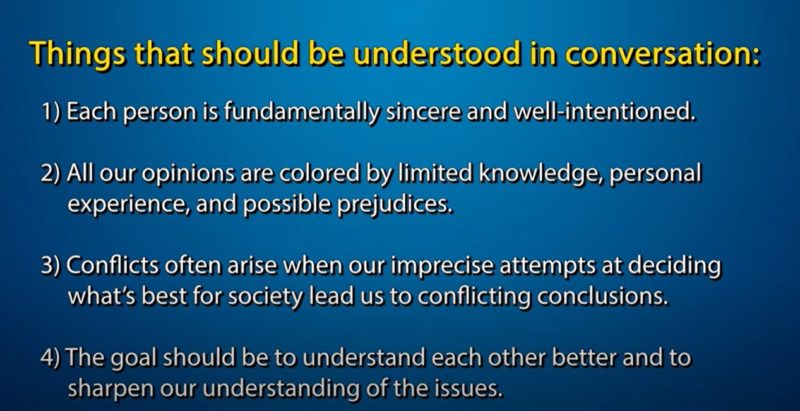
He then goes on to point out, very convincingly, how fundamentalist Christianity doubts or even outright disputes each of these claims. The implications this civic breakdown has for democracy are frightening.
https://www.youtube.com/watch?v=0lqaqp5TwnU
E’s Cub Scout pack had a special activity in Gatlinburg Tennessee this weekend: sleeping with the sharks at the aquarium. We went early Saturday afternoon and caught some amazing views on the way.

Once there, the Boy went go-carting, played some mini-golf, spent some time in an arcade, and tried mussels for the first time.


From there, we went to the aquarium. It was quite a unique opportunity for the kids, getting to spend a lot of time as the sole visitors in the whole complex.
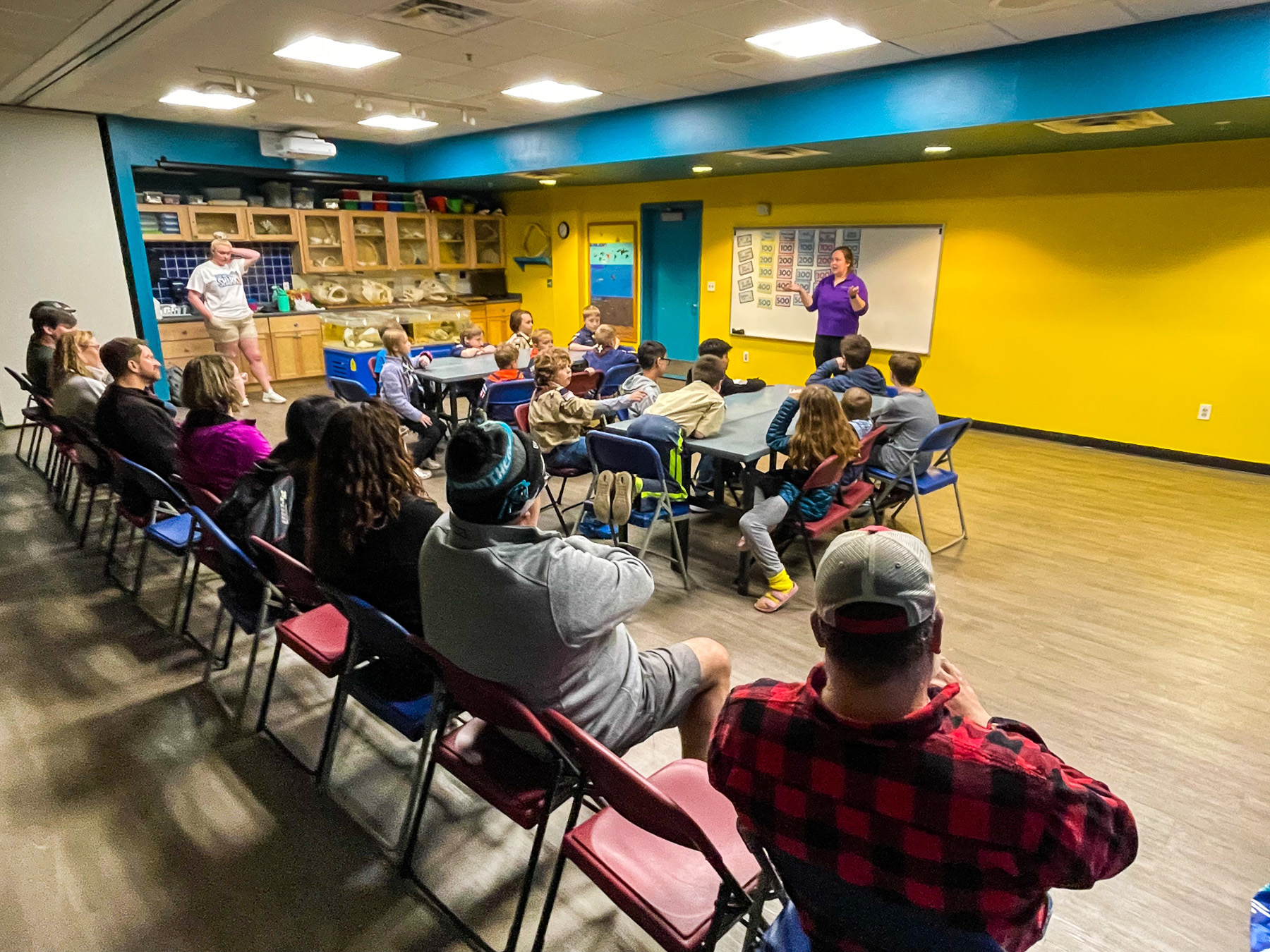










This morning, we spent a little time in the aquarium before heading out for more mini-golf, some laser tag, and some lunch.


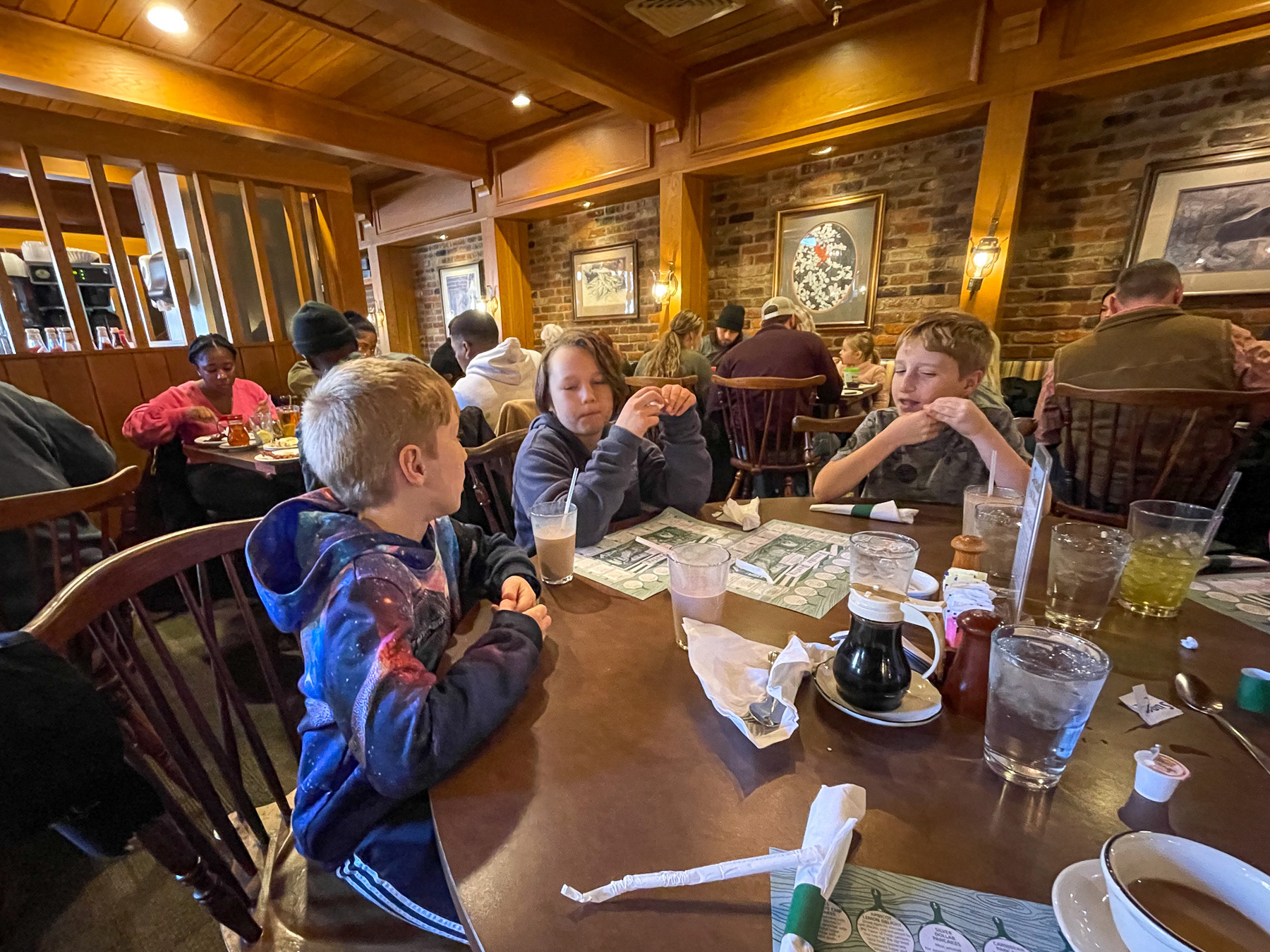



A busy weekend to say the least.
In a scene in After Life, Ricky Gervais’s character Tony Johnson is in the car as his brother-in-law drives, and he’s looking for music to play. He pulls out a CD, identifies the artist, and starts mocking his brother-in-law.
“Lighthouse Family?!?” he asks incredulously. He’s tempted to throw the disc out the window as he does several others.
Immediately I think, “I’ve listened to them. Or at least I’ve heard of them.” I hit “Pause” and sit staring at the screen. “Who was that group? How do I know them?” I wonder. I pull out my phone, load Spotify, search “Lighthouse Family,” play the first song that appeared, and in an instant, I know something is about to change.
When you’re close to tears remember
Someday it’ll all be over
One day we’re gonna get so high
The singer begins, accompanied by some light strings, a piano, and an organ.
“I’ve heard this, I think.”
The second line begins and the bass and drums enter:
Though it’s darker than December
What’s ahead is a different color
One day we’re gonna get so high.
“I’ve heard this! I know I’ve heard this — countless times, it seems.” But I can’t place it. Then the pre-chorus begins:
And at
The end of the day remember the days
When we were close to the edge
And wonder how we made it through the night
The end of the day remember the way
We stayed so close till the end
We’ll remember it was me and you
“This seems so very familiar!” But I still can’t place where I’d heard it. It feels like hearing a line from a film, knowing I’ve seen the film, but not even being able to remember the scene, the title, the actor. I familiar void.
When the chorus enters, though, I know. I remember where I’ve heard this song. I remember why I’ve heard it so many times.
‘Cause we are gonna be
Forever you and me
You will
Always keep me flying high
In the sky of love
“My God! It’s that song!”
In 1997, just a year after I’d moved to Poland, this song had just been about everywhere. On the radio. Playing in passing cars. At bars. At discos (i.e., Polish discos — dance places). Everywhere. And I always hated that song — so saccharine. Admittedly, the guy’s voice is gold, but the song itself? So empty. So vapid.
Yet I sit here listening to it, suddenly transported by a song I haven’t heard in over twenty years, a song I have thankfully and mercifully forgotten in probably just as long, and I feel such a longing to go back to that time for just one evening, just one beer, just one song. This song. It’s a song I hate and now, thanks to Ricky Gervais’s After Life, I love in that syrupy way that only nostalgia can inspire.

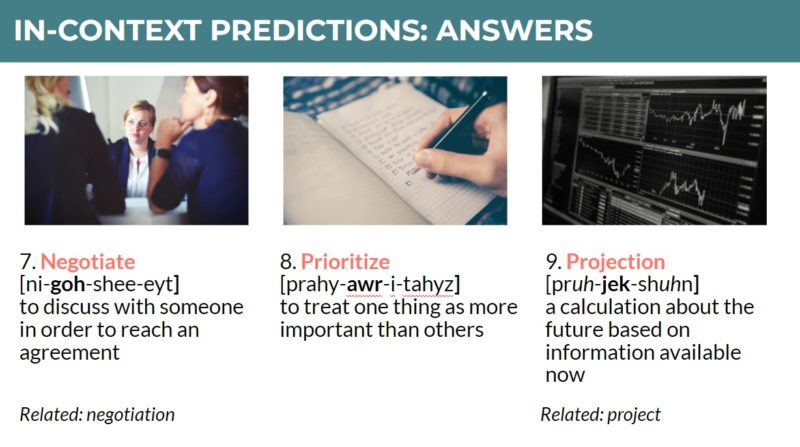
Going over some words in class today that might be new to some students (it was my remedial class), I started asking kids questions about the words.
“What might you prioritize as a student?”
“Your work!” someone responded. If only, young man, if only.
“What might I make projections about as a teacher?”
“Grades.” Yes, and if only you knew the projections — no, you probably do.
“With whom might you negotiate?”
“Your parents.” Of course.
“I don’t negotiate with my parents,” says one boy. “I do what I want.”
Bravado or inadvertent succint social commentary?
I swear, I’ve been teaching more than 20 years now, and I still cannot make a test for a gifted class that doesn’t just decimate the confidence of a significant number of students.
“Mr. S, I felt so much better about this test than the last one!”
I went through the test before the kids took it today and made some modifications that I was sure would help.

I had a couple of questions that, if one read it carefully, actually answered a couple of other questions partially. I made sure every passage I asked detailed questions about had appeared in in-depth in-class discussion/analysis. And still, a significant number of students were very disappointed with their scores.
But “decimating the confidence of a significant number of students” is not the same as “a large number of failing grades.” In fact, of 55 students who have taken it so far (several are absent for obvious 2022 reasons), only two failed outright. The curve, without any fiddling, looks quite acceptable:

Yet this type of curve is completely unacceptable to a group of high-achieving honors students. There will, no doubt, be requests for extra credit and the like.
(Side note: this marks post number 5,000. How ridiculous!)