matching tracksuits

fun in threes, sometimes fours

g

Watching Somebody Love Something

Donald Miller begins his memoir Blue Like Jazz with an “Author’s Note” that reads, in part,

I never liked jazz music because jazz music doesn’t resolve. But I was outside the Bagdad Theater in Portland one night when I saw a man playing the saxophone. I stood there for fifteen minutes, and he never opened his eyes.

After that I liked jazz.

Sometimes you have to watch somebody love something before you can love it yourself. It is as if they are showing you the way.

I never really liked dance until I watched my daughter dance rapturously. Any type of music will get her moving, including the pre-programmed light jazz numbers saved in the memory of the small digital piano we bought a few years ago. She shows me the new steps she has to learn in her new jazz dance class, explaining that she’s doing them very carefully now but will eventually have to get them much faster.

1-DSC_8291

Then she begins improvising, a mix of the ballet and jazz she’s learned mixed with some of the Polish Highlander style her mother continually shows her and some of her own imaginative moves.

It’s a skill I hope she keeps for the rest of her life, this ability to mix classical training (of a sort) with regional traditions and her own imagination — expanding it beyond dance, there’s no telling what she could accomplish.

Your Mean Face

I was talking with a student, joking that she is so kind to everyone that she probably doesn't even have a mean face.

"Let me see your mean face," I say with a smile.

"I don't have one!" she insisted.

To elicit some kind of reaction that might lead to a "mean face," I suggest to her a cruel scenario: "Imagine you're walking down the street and you see some kid kick a dog. Show me the mean face you'd give the kid."

She thought about it a moment, then responded, "I would probably go help the puppy first."

If only I had more students like that...

Thinking Critically about the Common Core

Charles Blow writes in a recent article about the Common Core standards,

Our educational system is not keeping up with that of many other industrialized countries, even as the job market becomes more global and international competition for jobs becomes steeper.

We have gone from the leader to a laggard.

The latest attempt to solve this problem is the Common Core standards, a group of national educational standards that is supposed to encourage the teaching of critical thinking and problem solving. The standards I use are available here.

Yet they're not universally accepted. Conservatives tend to bristle at anything they see as Federal mandates from above for national standards of just about anything. Liberals, in support with unions, don't like the idea of using testing as a measure of teacher effectiveness. (The New York Times also had an article on growing opposition to the standards.)

Yet I wonder about what it says now that we must go to great lengths to teach critical thinking in school. I don't recall many activities in high school that seemed geared to practicing critical thinking, and I don't remember any direct instruction in critical thinking, yet somehow I became a critical thinker. Take for example the skill of inferring. I go to great lengths to teach my students what inferring is and what it isn't, to differentiate between merely observing and inferring, and to apply the skill to texts. Yet I don't remember anyone teaching me that. It just seemed like something I picked up along the way as I read increasingly complex texts.

Another new feature of the Common Core standards is an increased emphasis on what the Common Core Consortium calls "informational texts." We just called it non-fiction. The Consortium points out that in the traditional educational progression, students spend all of high school reading literature and then they're suddenly required to read informational texts in college. It's as if reading the one has no influence on reading the other. I don't really recall having to read or to analyze much more than literature in high school, yet I somehow didn't have any problem making the switch to the "informational texts" of my college career. In the meantime, this push for greater emphasis on "informational texts" means that an entire generation will be underexposed to literature, one of the prime makes of society and social consciousness. (Of course, that's really only true to any significant degree in in the pre-Internet world, I suppose.)

The big question of course is whether this whole enterprise will work. With states that originally adopted the Common Core standards increasingly backing out, it seems like it might just turn out to be yet another educational fad.

From the Ants

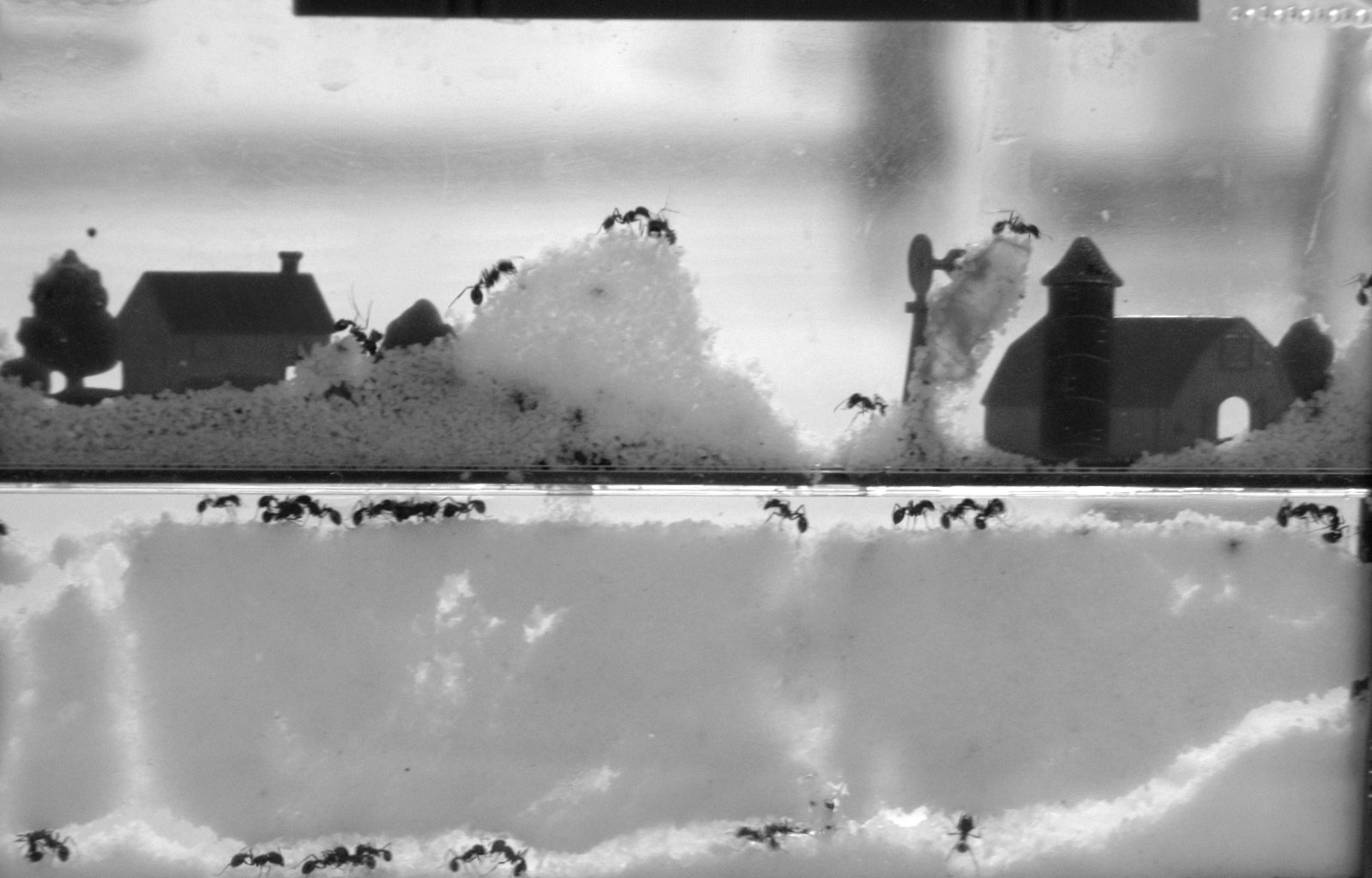
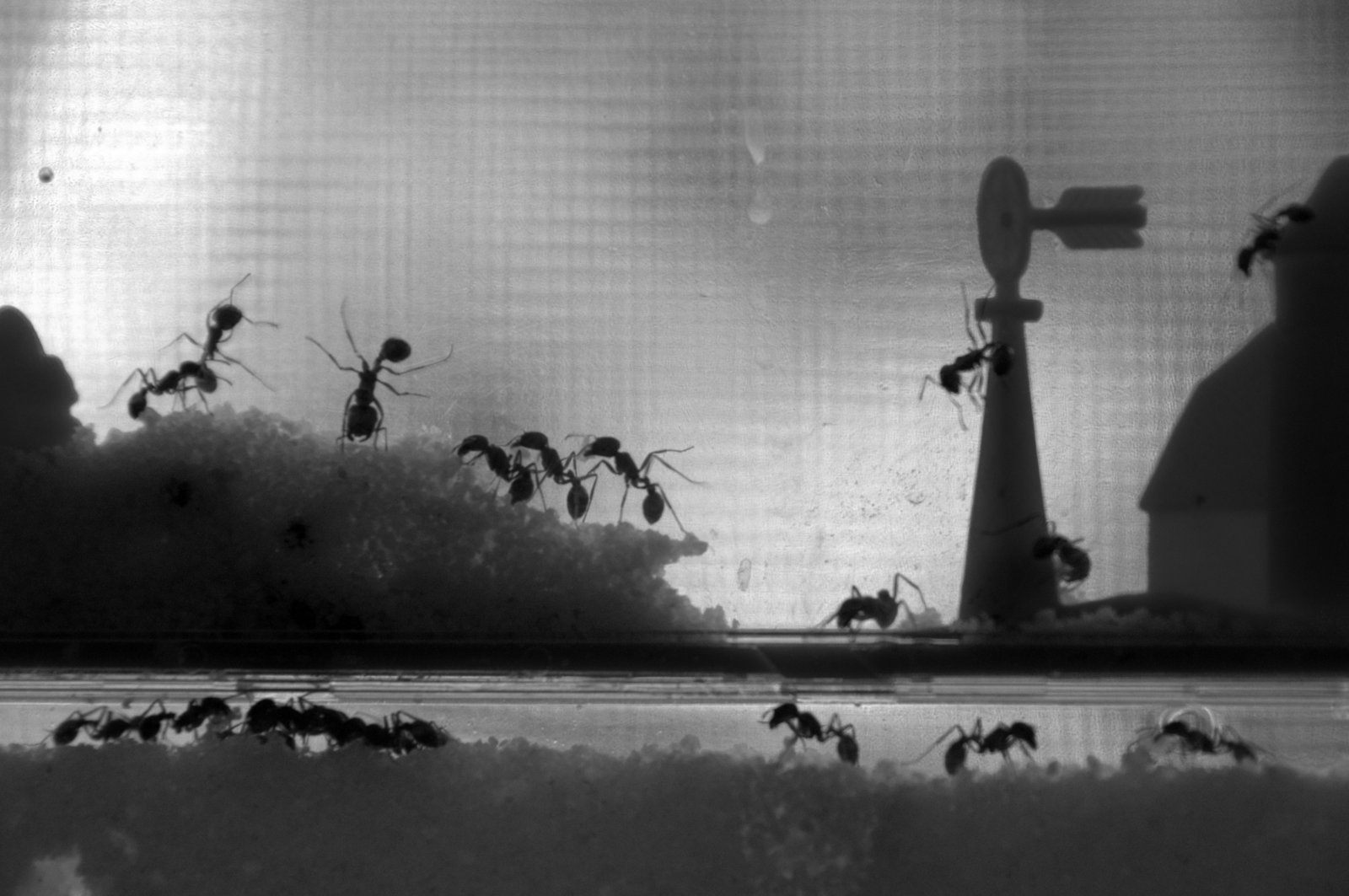
The ants arrived yesterday. The clear plastic ant farm has been ready well over a week, as has L: she has been waiting for them impatiently, checking daily, and consistently frustrated with the ant-free mailbox. We put them in the fridge yesterday to slow them down -- in accordance with the directions -- and found them to be mostly lethargic most of the day afterward.

DSC_8264

This morning, we awoke to find they'd been busy overnight, digging a fresh, clean tunnel under the plastic divider, which theoretically divides the above ground from the below. They'd piled the food we'd given them high with sand and were busily making the tunnel even deeper.

We went about our normal Sunday: Mass, a nice lunch, some relaxation.

DSC_8268

A late-afternoon trip to the pool ended quickly when L decided the water was entirely too cold. We spent some time at Nana's and Papa's place instead, with me falling asleep on the couch as usual.

DSC_8274

Returning to a lovely sunselt, we found the ants had been busier than we all could have believed they would be. And suddenly, a famous passage made much more sense:

Go to the ant, you sluggard; consider its ways and be wise! It has no commander, no overseer or ruler, yet it stores its provisions in summer and gathers its food at harvest. (Proverbs 6:6-8)

Perhaps Solomon had an ant farm himself...

DSC_8280


Surprise!

And she never saw it coming...

Searching

VIV_7768

Learning to Lose, Still

VIV_7783

First Day at School

L has been worried about starting school this year. New teacher; new students; new room in a new hall — new everything.

“I don’t want to be a first grader,” she lamented.

“I don’t want to go to that school,” she whined.

“I want to go back to Ms. B’s class,” she begged.

I recall being somewhat nervous about starting new grades. First grade for me too was tough: I was starting a new school, and the bathrooms we used were situated between first and second grade (it was an open classroom design). That meant every time I went to the restroom, I ran the risk of encountering an unimaginably large second grader. It was terrifying.

L had different worries, different concerns. Her first disappointment came when she learned that she would no longer be the first released to the car line. “Well, you’re not in kindergarten anymore,” I explained. Her first bit of pride came a little before that, though, as she was walking down the hall with her class and encountered a favorite teacher from last year.

“Did you say ‘Hi’?” K asked as we talked about it over dinner.

“No, Mama! We were walking down the hall. We couldn’t talk. We’re first graders! We can’t do that!”

The Boy, Goral

VIV_7782