g
Spring Saturday
We feel this way every single spring, the relief that the winter is over, that the cold has passed, that bright sun is the norm. No matter the severity of the winter, we all feel this way, especially here in the South, where we're not really sure what to do with cold weather anyway.
Today was the first warm -- truly warm -- Saturday we've had in the yard. Last weekend we had guests; next weekend is Palm Sunday. From here on out, weekends are not for working in the yard, so we made the most of this beautiful day.
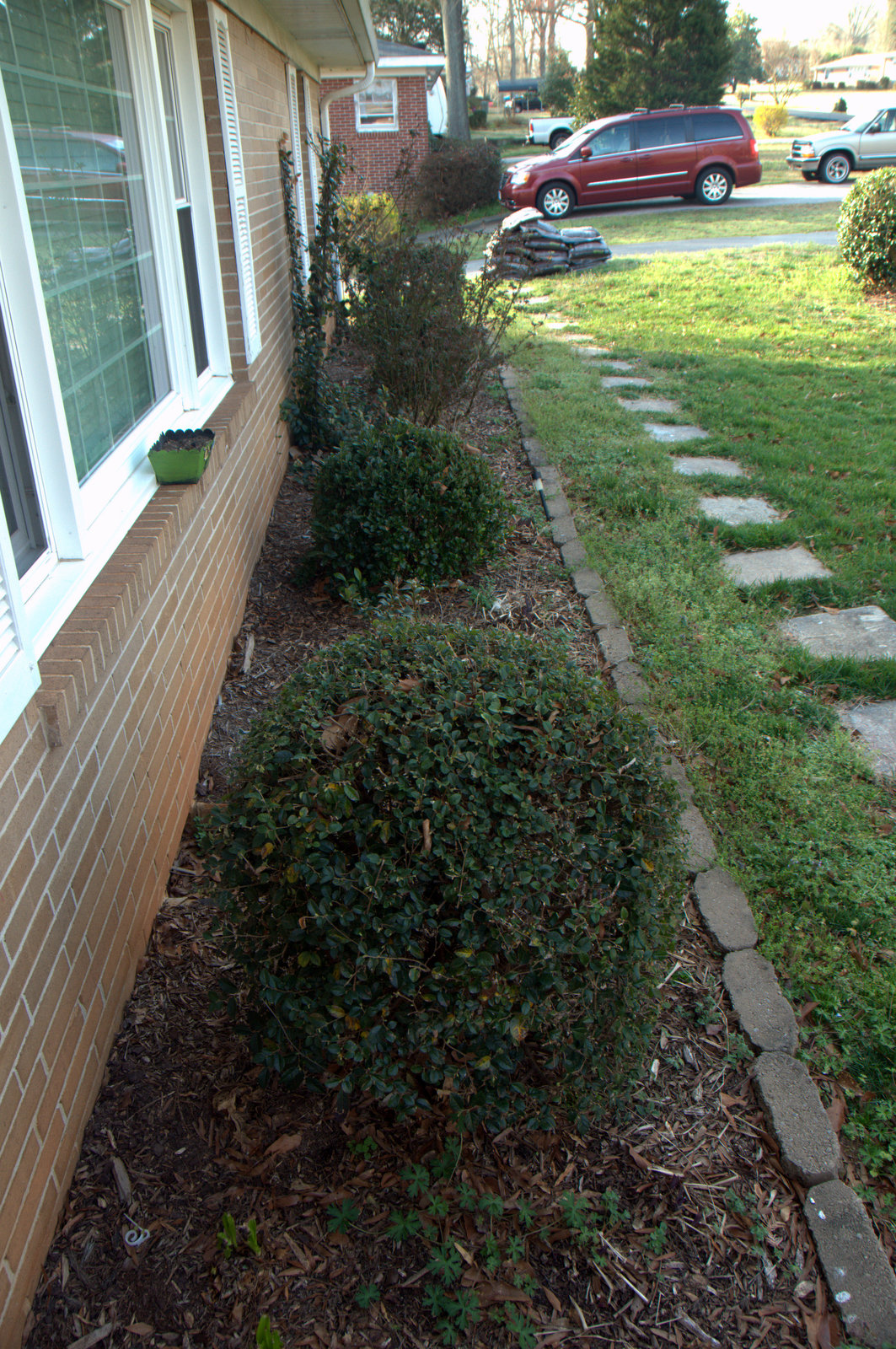
We started with the shrubs in front of the house. The boxwoods are a distant memory, but some of the replacements have not fared well, especially the Indian Hawthorns. We did everything we could, even apparently resurrecting them one spring, but they are stubbornly fragile, so I pulled them out today. Literally -- all it took was some rocking and tugging and out they came.

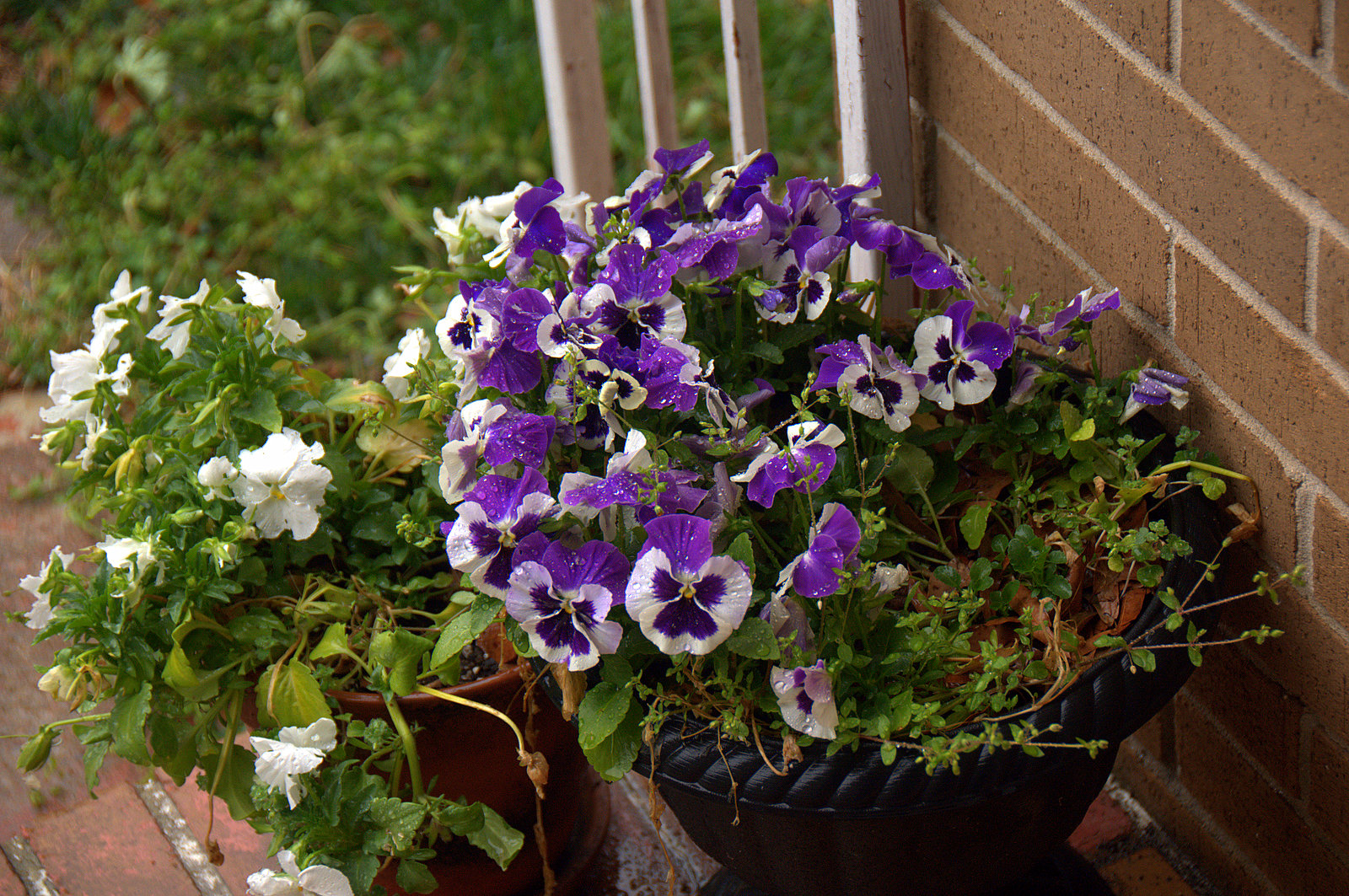




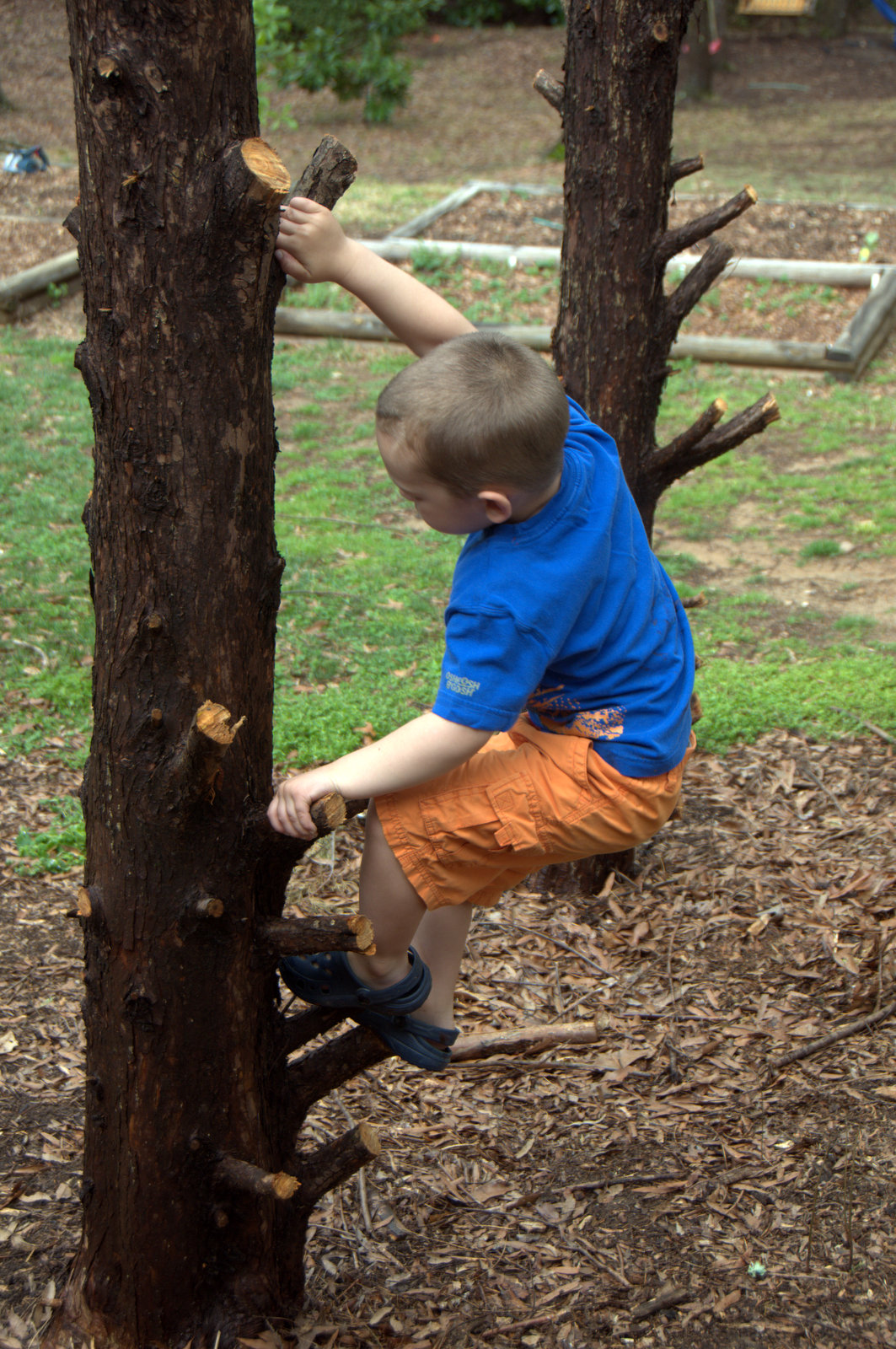
The Boy came out to help me, but the Girl was still in bed. E showed me how he walks in preschool when they have to be "super quiet." I would imagine he has little trouble following those directions, though: he's so concerned about following instructions that he gets upset now when he sees his schoolmates taking off their shoes. "It's against fire code!" he fusses, echoing what his teachers told the class at the beginning of the year. Thinking of some of my own students' disregard for rules and regulations, I was tempted when he first explained the fire code dilemma, to let him know that once he got to public school, it would become the ironic norm.
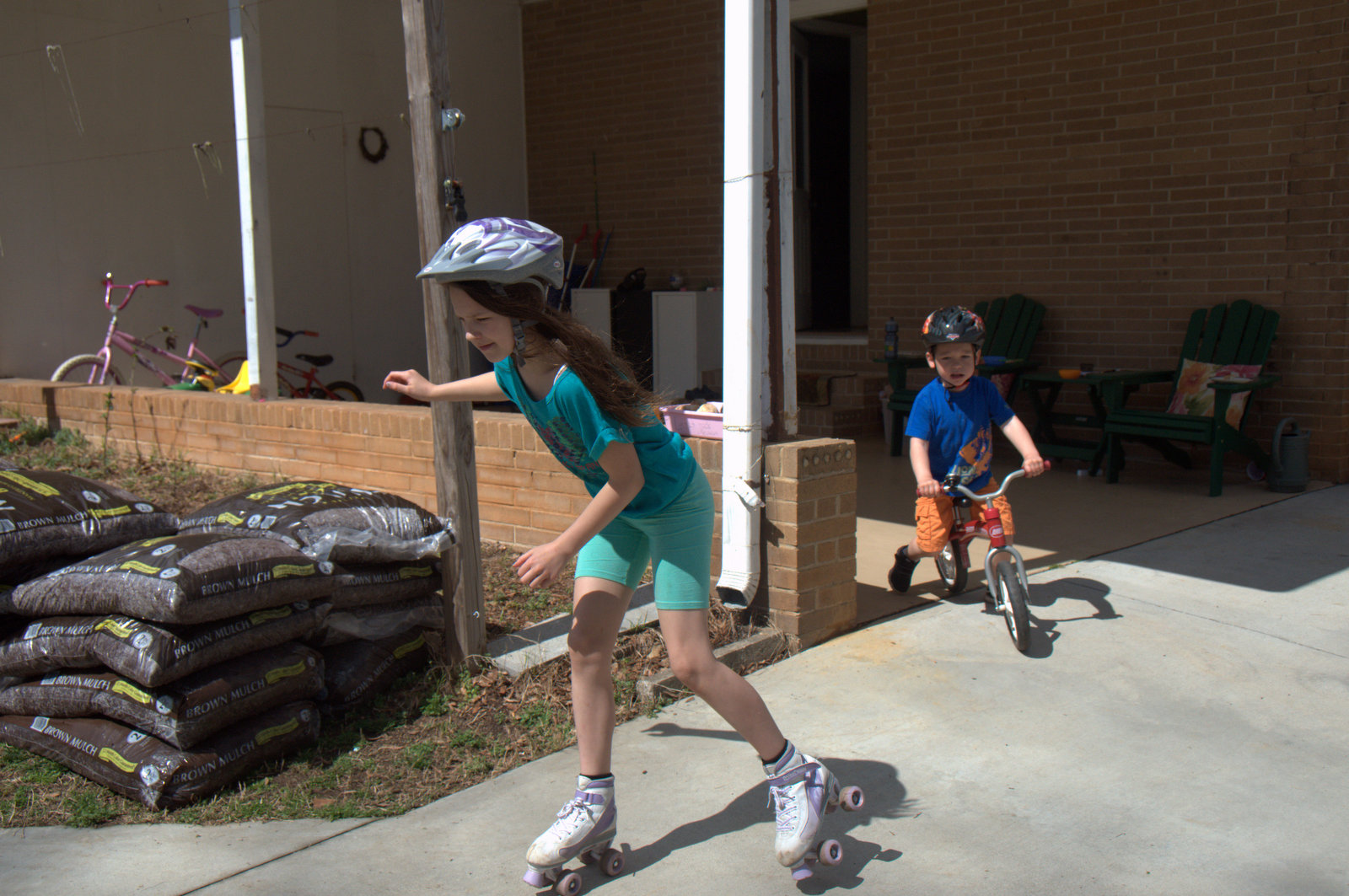
The Girl finally woke up, and it was straight to the driveway for racing. She never lets the Boy win, which frustrates him at times, but mostly he shrugs it off. It's difficult to imagine her doing the same thing when faced with a seemingly-endless losing streak, but that's one of the many differences that make them both precious to us.
From the Mountains







Working in the Backyard
Those Leyland Cypresses have really been a blessing and a curse. On the one hand, they provided a bit of privacy. On the other hand, they were a terrible nuisance to trim, and they were very very susceptible to disease and pests.
The last few months, though, one has given way to some kind of illness. I don't know what it is. I don't really care -- it's not a battle I was willing to fight. I knew I could never win that battle, so K and I decided to take down the entire tree. And the other two.
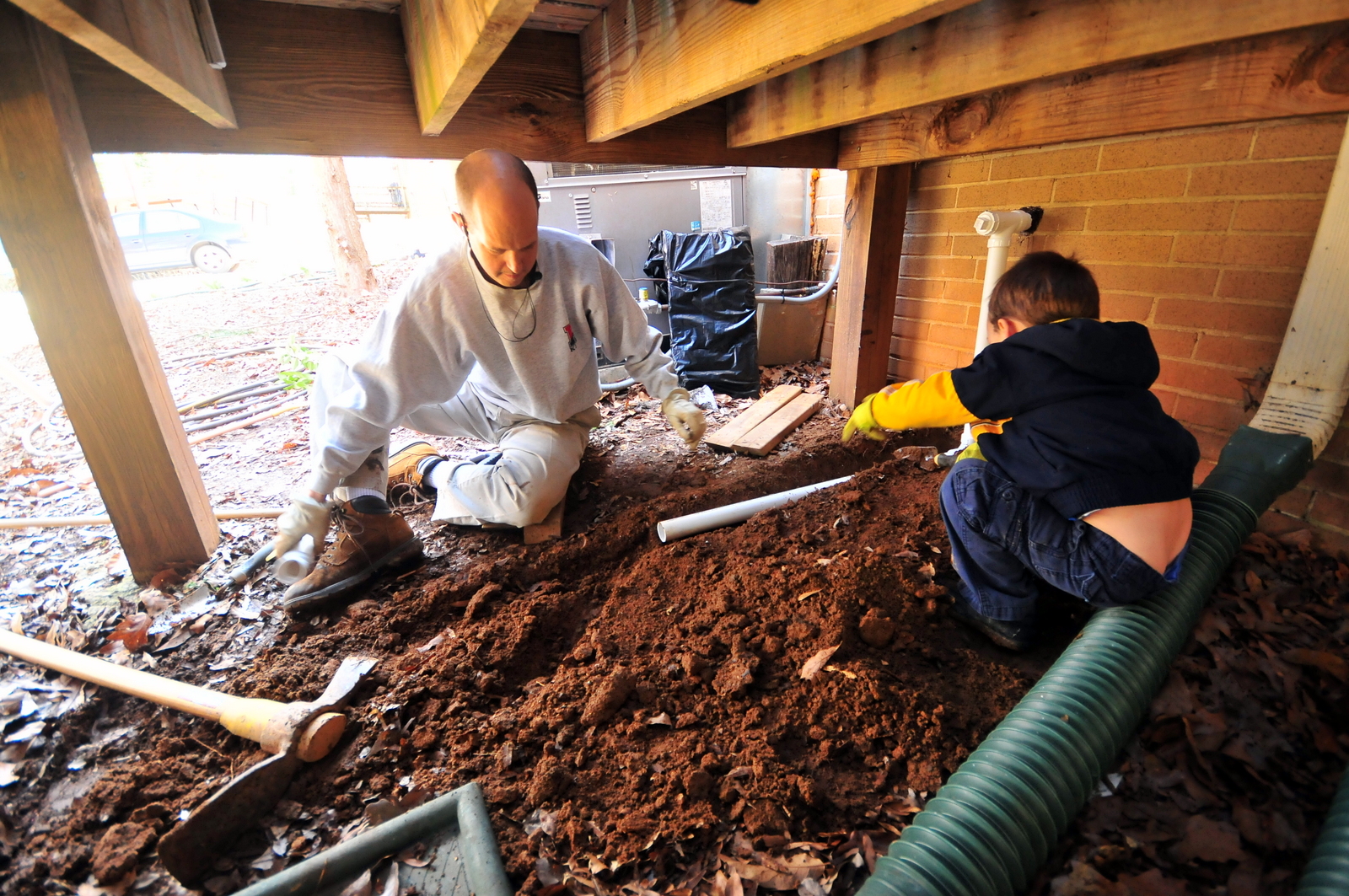
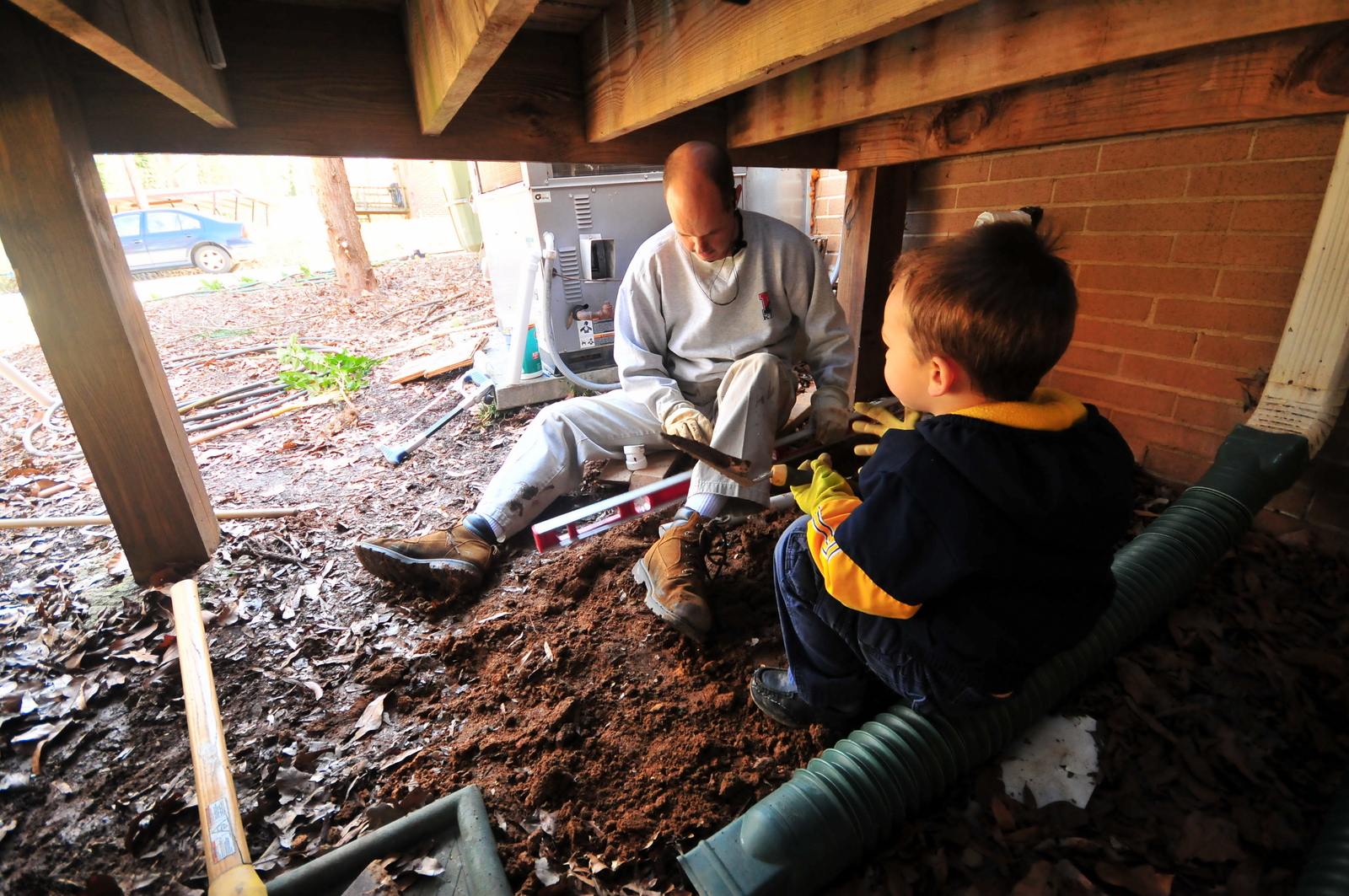
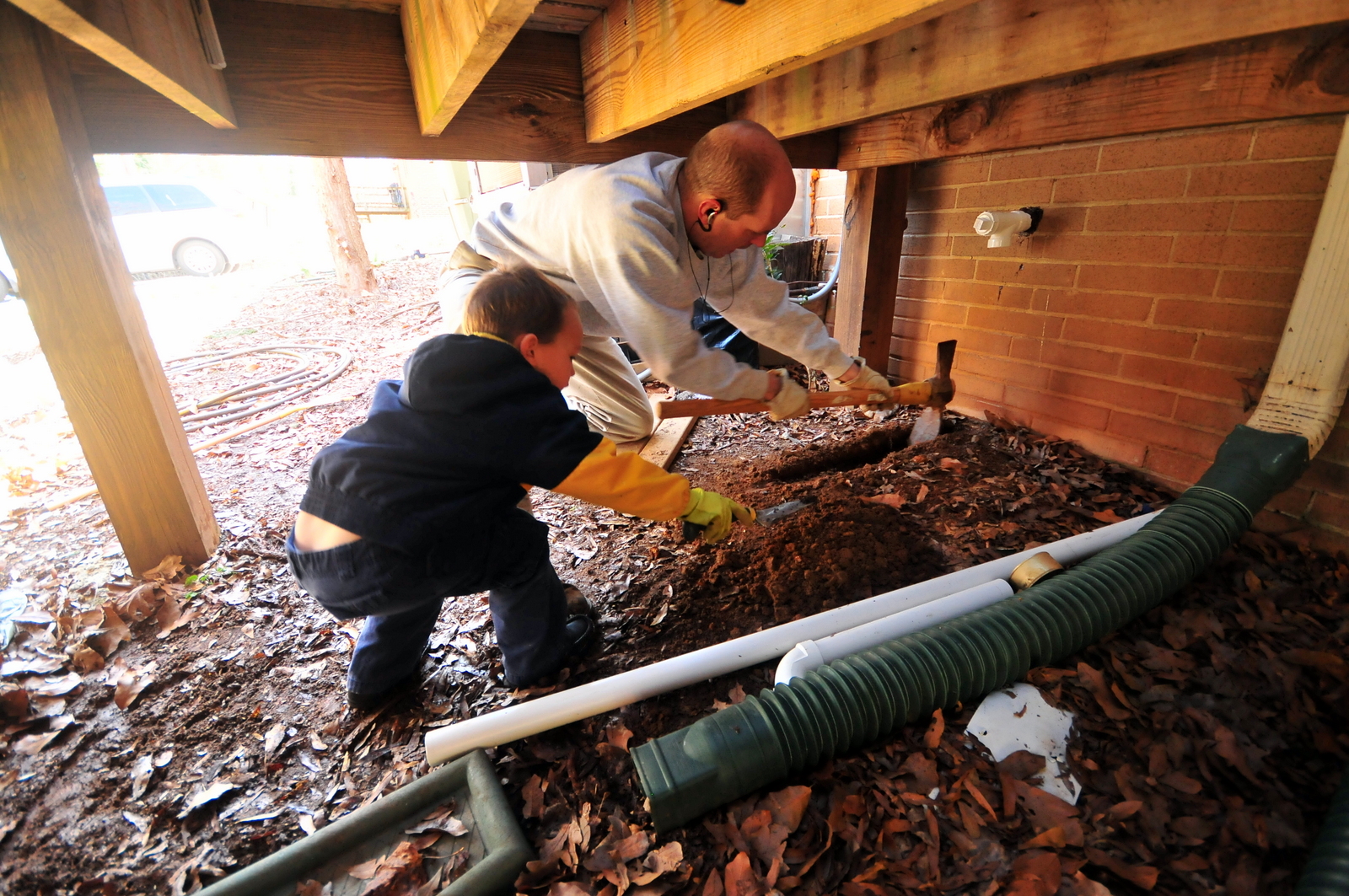
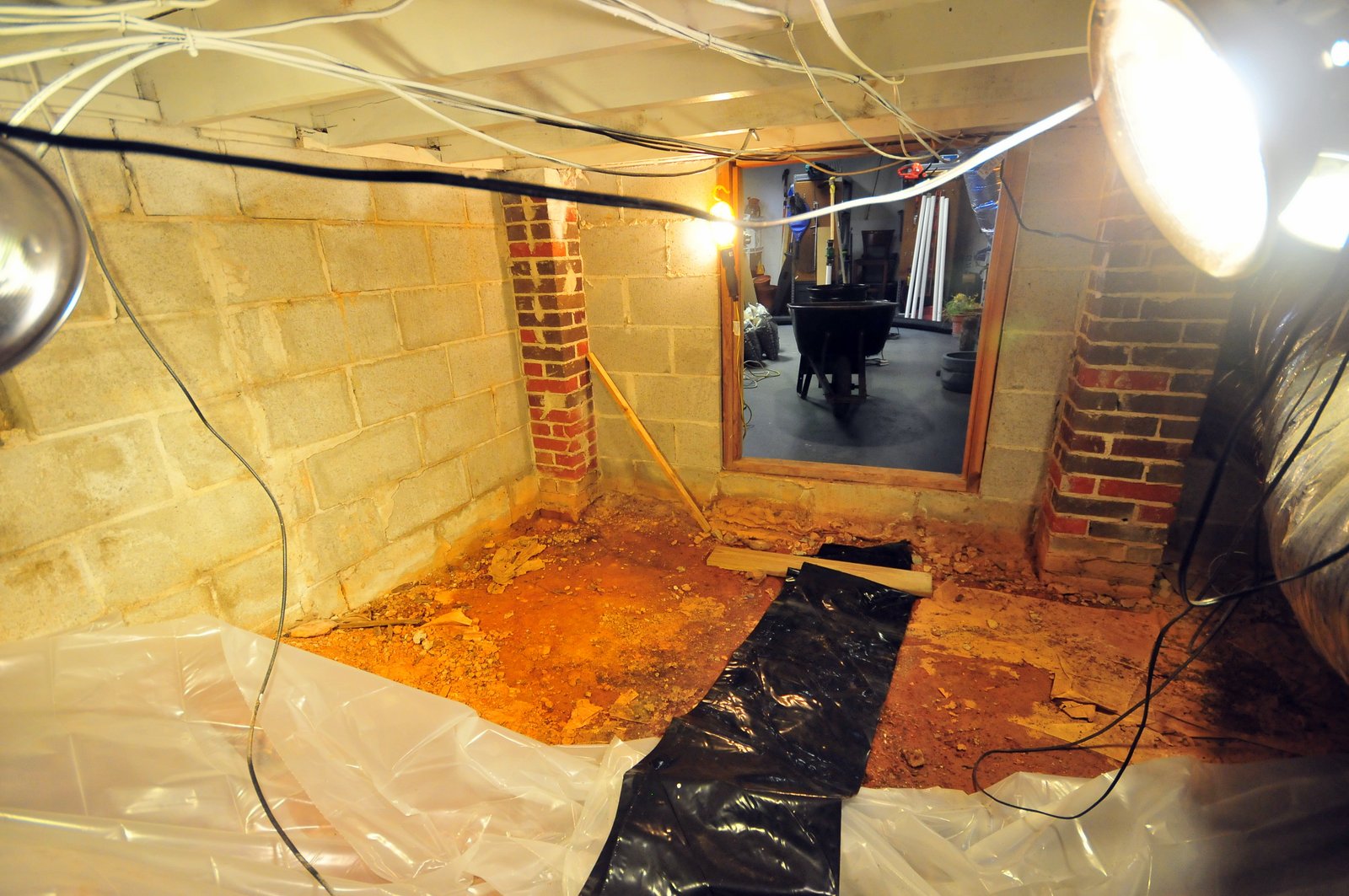
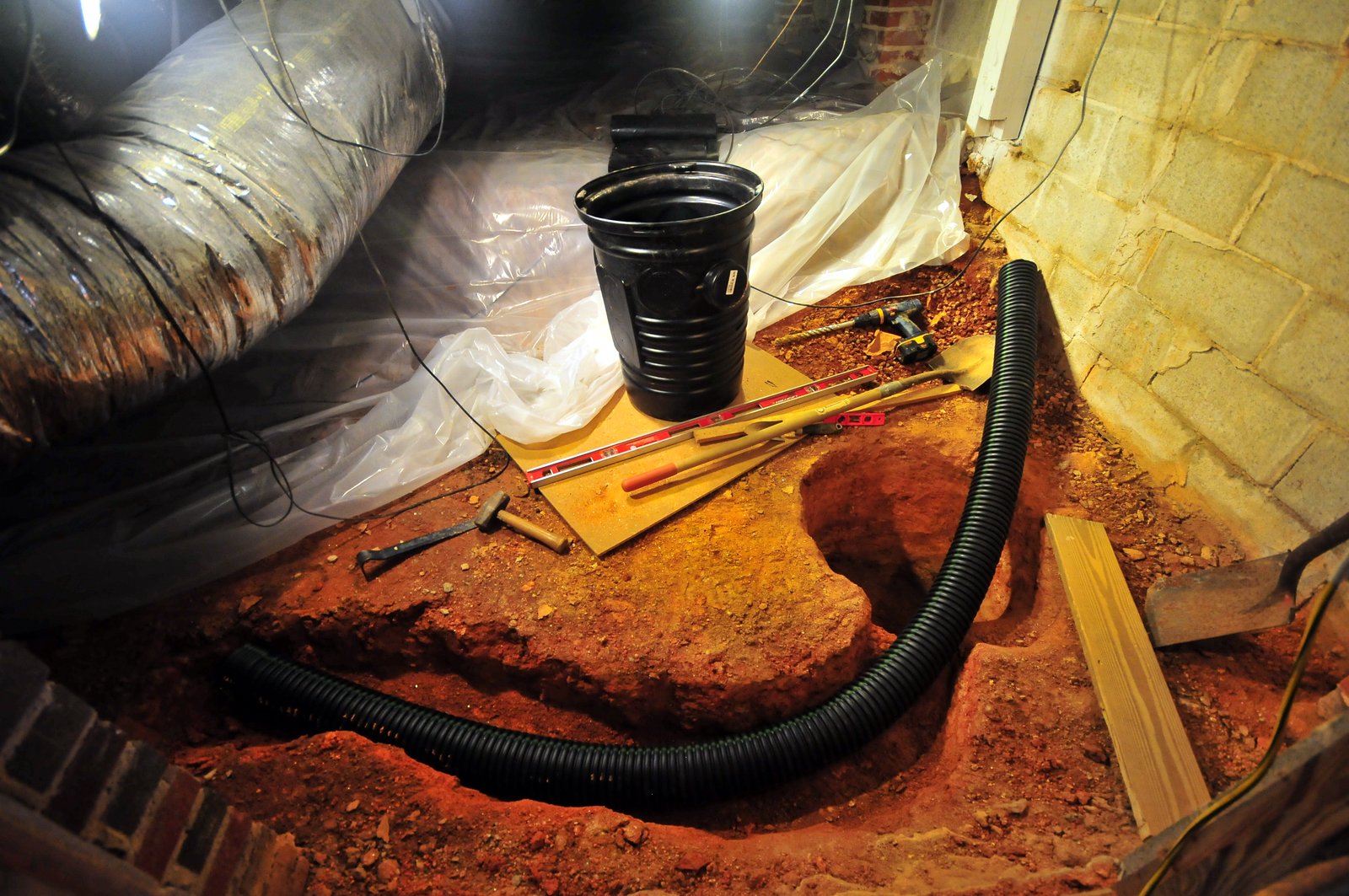
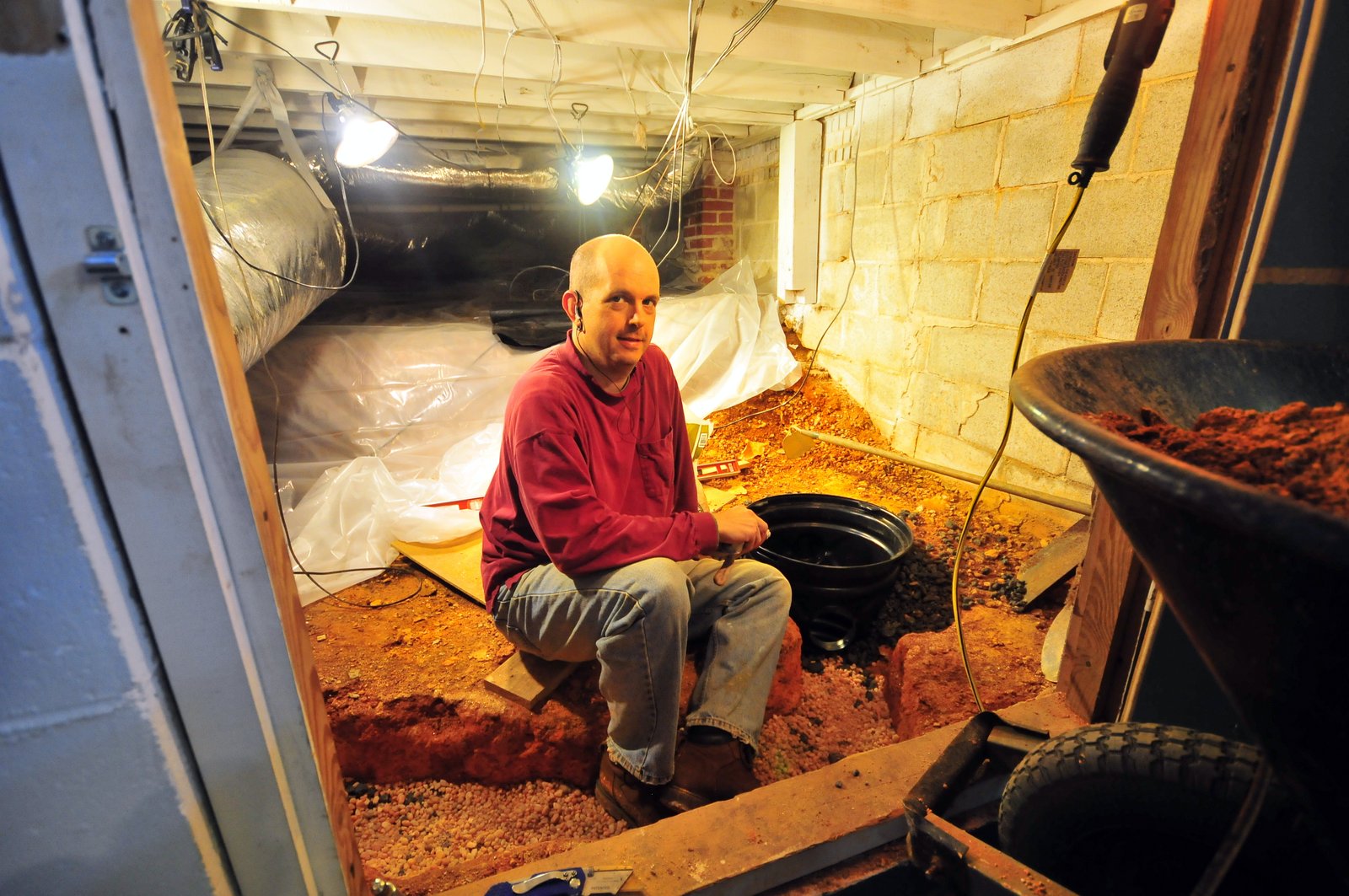
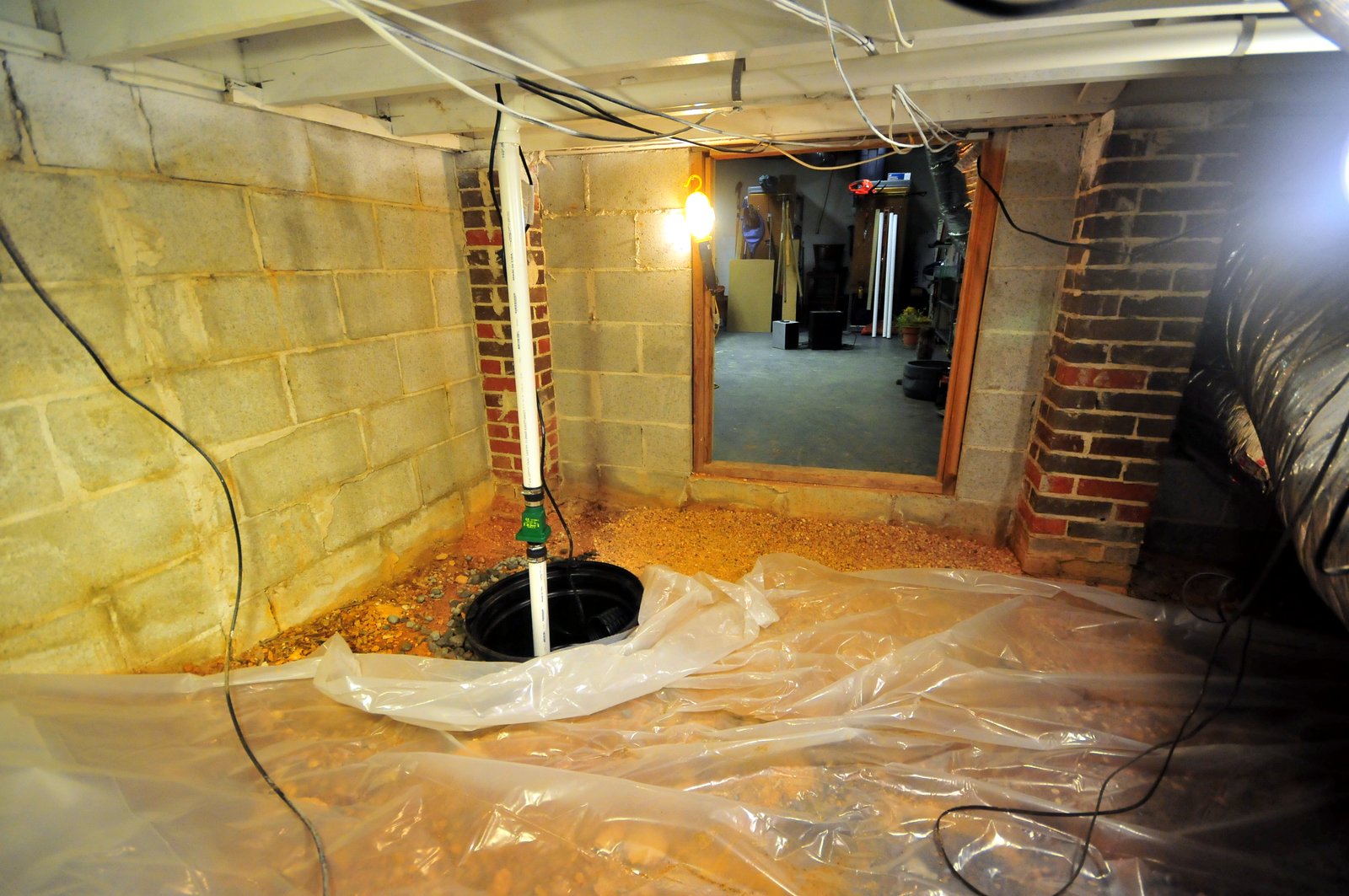
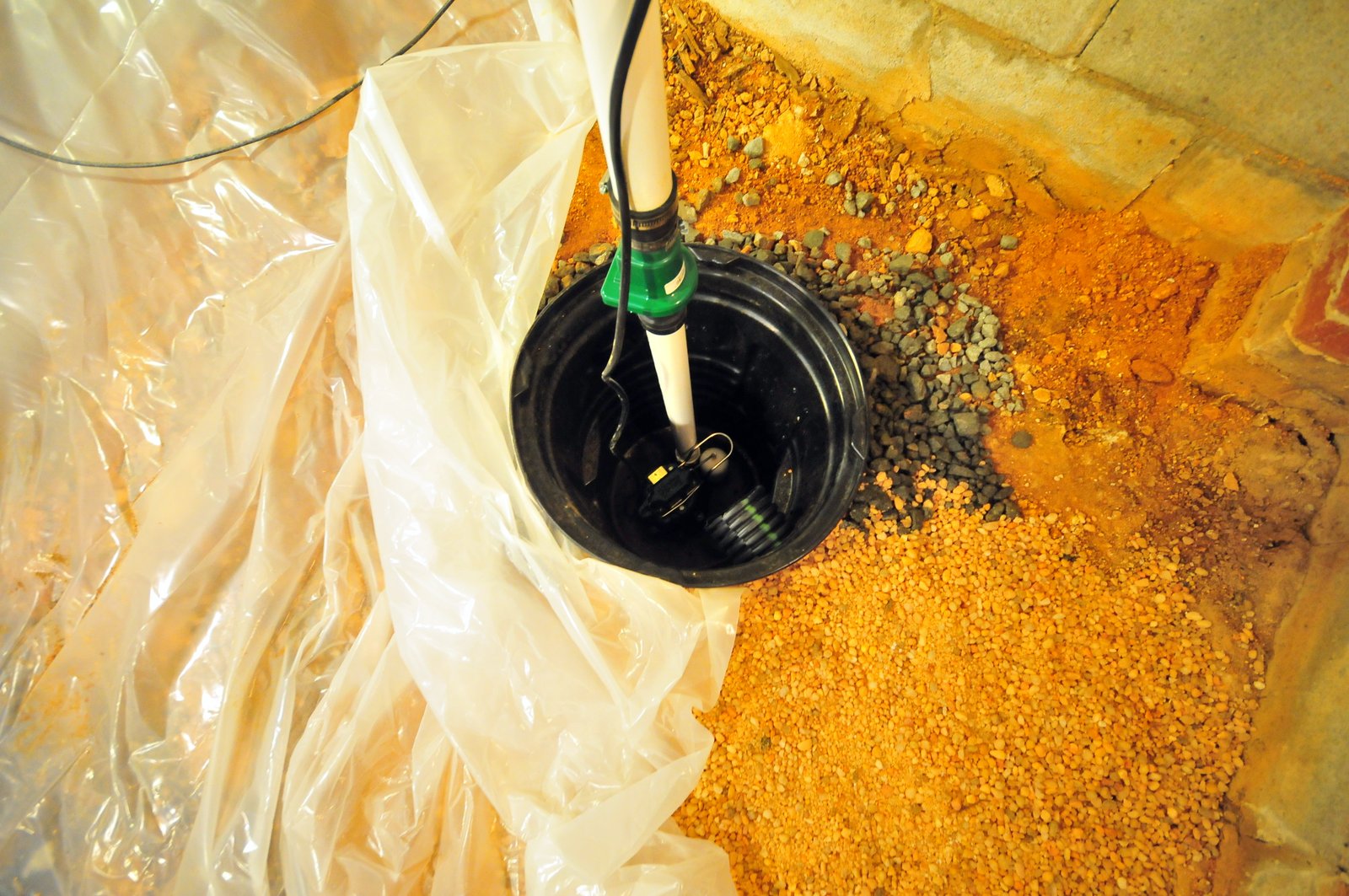
Second on the agenda: finish the sump pump system. The pit and pump have been installed for some time now, but the actual outlet was only a temporary fix. As of today, it's a little more permanent. Still not the perfect solution, but it should work.
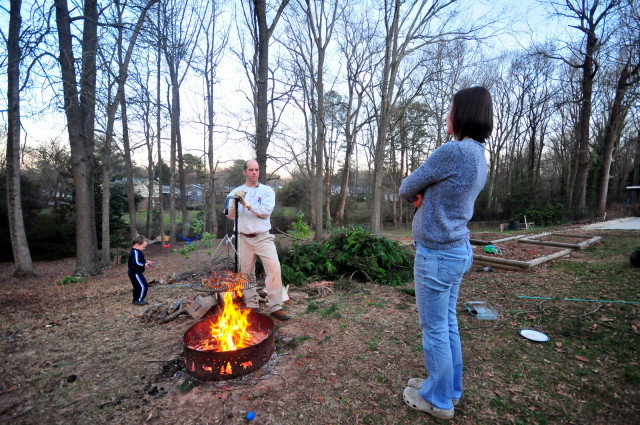
And finally, wings for dinner. A perfect Saturday.
Under Us, Around Us, In Us
I know nothing about mold other then the fact that it appears on bread. I've worked out this little personal equation that the purity of the bread is proportional to the speed with which it becomes covered in mold: the sooner, the better as it indicates few preservatives. But when it comes to mold in the house, I'm lost.
We have mold in the crawl space. A slow leak that went completely undiscovered for several weeks is all it took to create a wonderful little breeding ground for the stuff. Specifically, we have, according the the report we received, Cladasporium and "Pen./Asp", which a quick search reveals as "Aspergillus and Penicillium." A little more research was clearly in order.
According to the Centers for Disease Control, "common indoor molds" are
- Cladosporium
- Penicillium
- Alternaria
- Aspergillus
In other words, our three molds represent 75% of the most common molds. So it's nothing rare, and it's really not even anything that's not already naturally present in the air to some degree or other.
The CDC further explains,
Generally, it is not necessary to identify the species of mold growing in a residence, and CDC does not recommend routine sampling for molds. Current evidence indicates that allergies are the type of diseases most often associated with molds. Since the susceptibility of individuals can vary greatly either because of the amount or type of mold, sampling and culturing are not reliable in determining your health risk. If you are susceptible to mold and mold is seen or smelled, there is a potential health risk; therefore, no matter what type of mold is present, you should arrange for its removal. Furthermore, reliable sampling for mold can be expensive, and standards for judging what is and what is not an acceptable or tolerable quantity of mold have not been established.
Of course, regardless of the mold type, the amount seems to be just as important if not more than the type. All the sites I used in the research spoke of mold counts, some of them absolute ("spores per cubic meter") and some of them relative ("10 times the outside count"). Our report indicated "very low" levels of Cladosporium and "low" levels of Aspergillus and Penicillium. This seems even more useless than "x times the outside count," which itself seems fairly useless. Worse still, the CDC states that "[s]tandards for judging what is an acceptable, tolerable, or normal quantity of mold have not been established." In addition, the WHO suggests that the best way to test for mold is with a culture test, and our test is labeled "Direct Microscopic Examination Report," which indicates someone put the stuff on a slide and looked at it under a microscope, which would mean the concentration was determined by counting or even estimating.
The first mold remediation company came out and tested our crawl space and gave us a quote for taking care of the problem: $2200. This included "basement encapsulation," which promised to prevent the problem from happening again. The insulation, he assured us, wouldn't need to be changed. After all, it's glass. All told, two days' work.
The second company came out and basically said the problem was even worse than the first company said. The whole kitchen floor and subfloor needs to be replaced, they explained. The insulation in the entire crawl space would need replacing, as would the heavy plastic vapor barrier. The gentleman looked at our mold report from the other contractor and felt it inadequate. It would be better to use their testing services, for a mere $500, to get a true picture of the problem. All told, eight days' work, he said. The quote: $12,000. As with the $20,000 replacement window quote, I would have found it hard to keep a straight face were it not for the fact that the gentleman delivered the quote by phone to K about half an hour after he left.
And so where do we stand? A crawl space with some amount of mold that according to "experts" hovers gently between dangerous and deadly (judging from the quotes) filled with insulation that may or may not need to be replaced, and a vapor barrier that needs to be replaced to varying degrees.
The Sleep-over and Aftermath


Burnt Norton
Time present and time past
Are both perhaps present in time future,
And time future contained in time past.
Everything I do in life teaches my children something. I try to remember that, but it’s not always in the forefront of my thoughts. Still, whether I remember it or not, such is the reality. How I treat K teaches L how a man should treat a woman, how a husband should treat a wife, and E learns the same lessons from the other perspective. How I respond to disasters, real and imagined, teaches them how they should respond in such situations. Their future, in other words, is contained in our present.
I, in turn, learned how to behave by watching my own parents, and they from theirs. Being human, we sometimes give good bad examples, but that’s part of the limitations of humanity — concupiscence, as the Catholic Church describes it:
In its widest acceptation, concupiscence is any yearning of the soul for good; in its strict and specific acceptation, a desire of the lower appetite contrary to reason. To understand how the sensuous and the rational appetite can be opposed, it should be borne in mind that their natural objects are altogether different. The object of the former is the gratification of the senses; the object of the latter is the good of the entire human nature and consists in the subordination of reason to God, its supreme good and ultimate end. But the lower appetite is of itself unrestrained, so as to pursue sensuous gratifications independently of the understanding and without regard to the good of the higher faculties. Hence desires contrary to the real good and order of reason may, and often do, rise in it, previous to the attention of the mind, and once risen, dispose the bodily organs to the pursuit and solicit the will to consent, while they more or less hinder reason from considering their lawfulness or unlawfulness.
A fancy way of saying our tendency toward the less refined appetites in life.
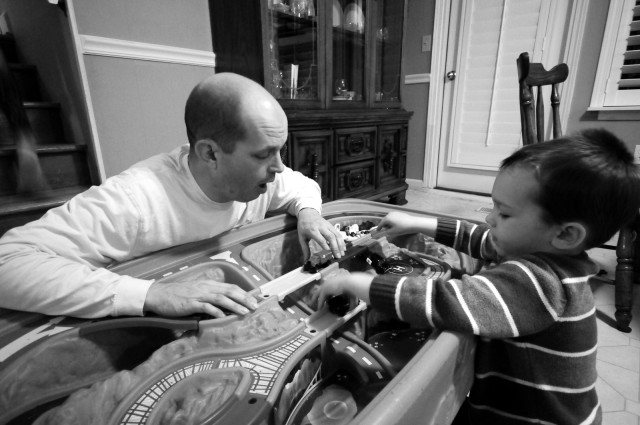
And then there are the other lessons: teaching the kids how to raise kids. Playing with them is always critical, but sometimes those lower appetites get in the way, the selfish appetites, the desire to do one’s own thing because “I’m tired” or whatever silly excuse.
Incomplete thoughts on an incomplete evening…
Free Monday
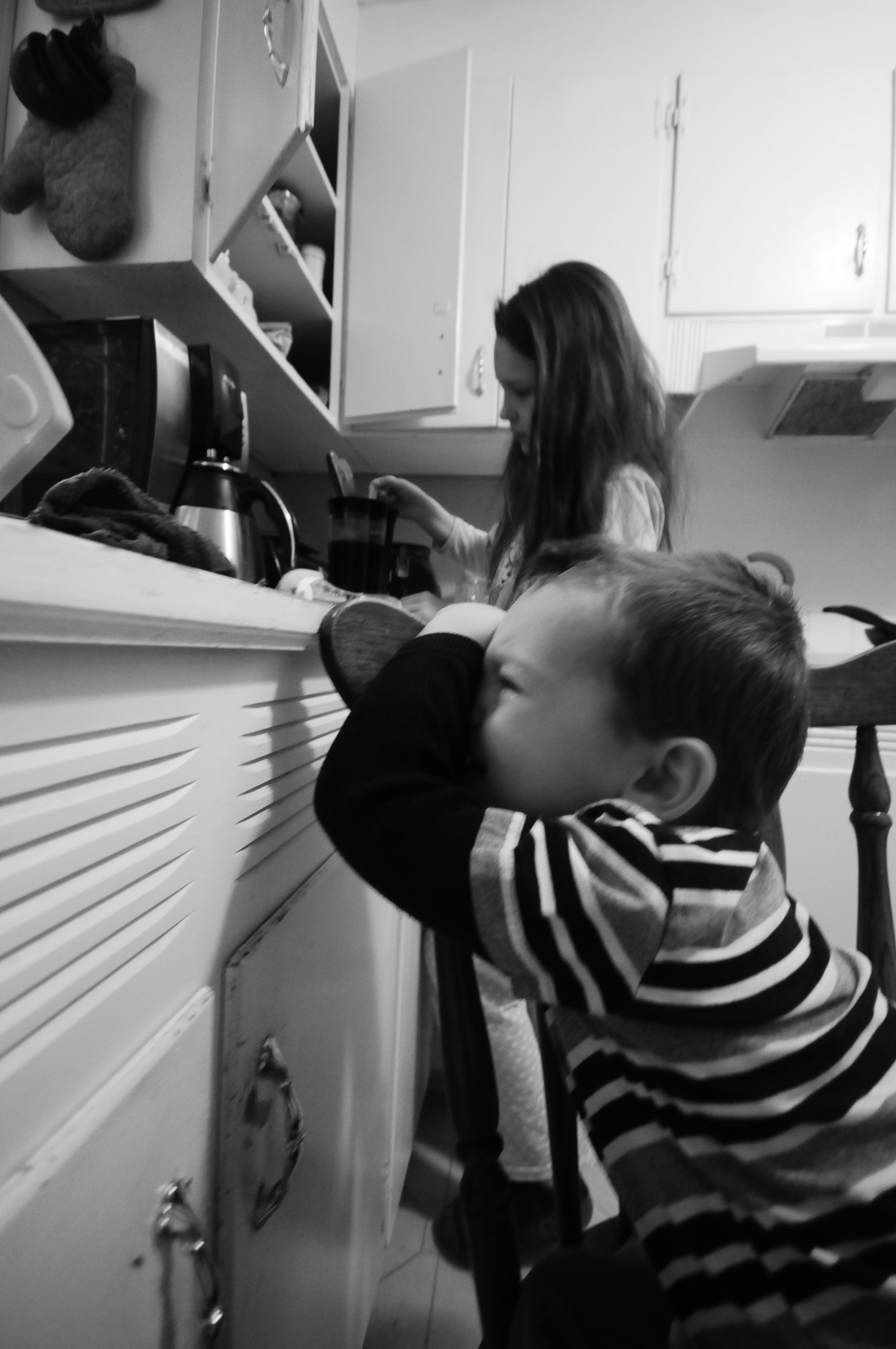
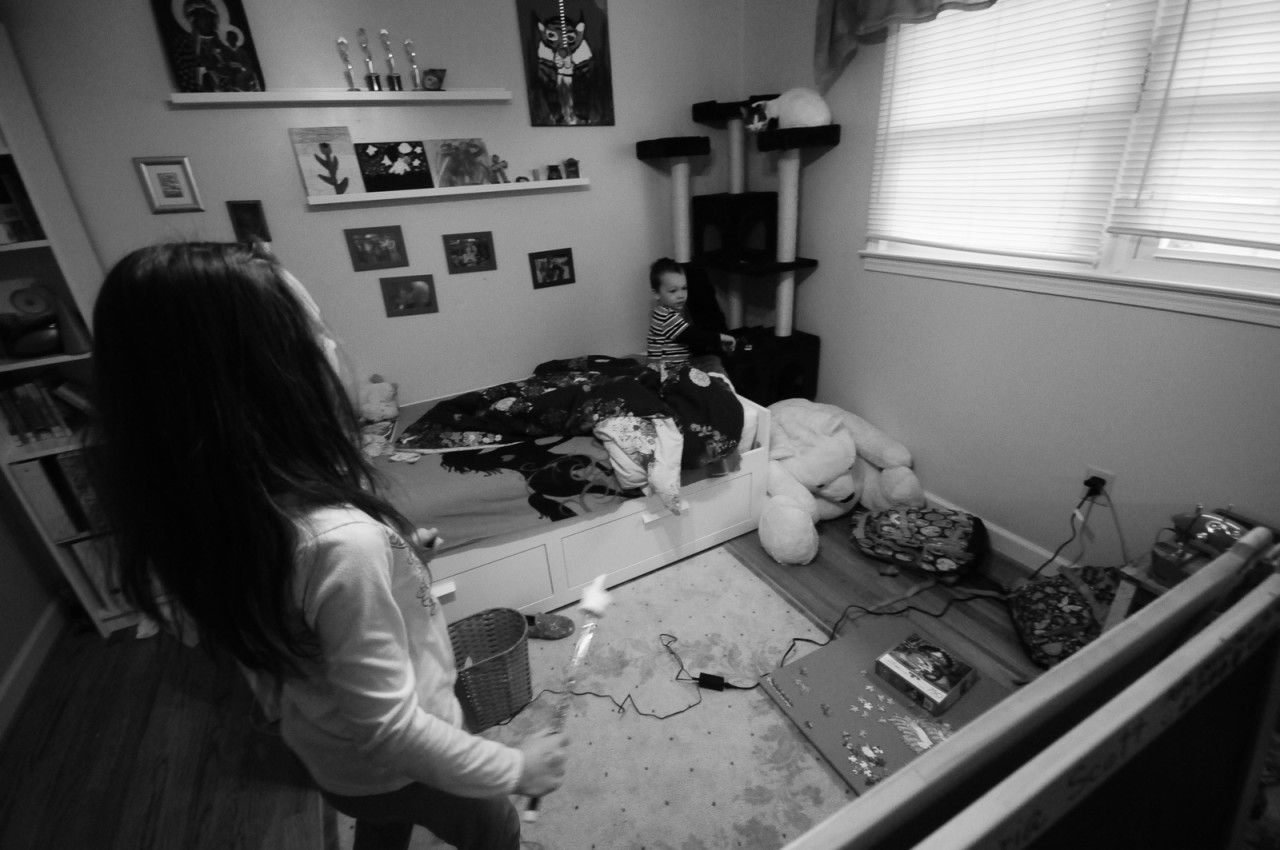
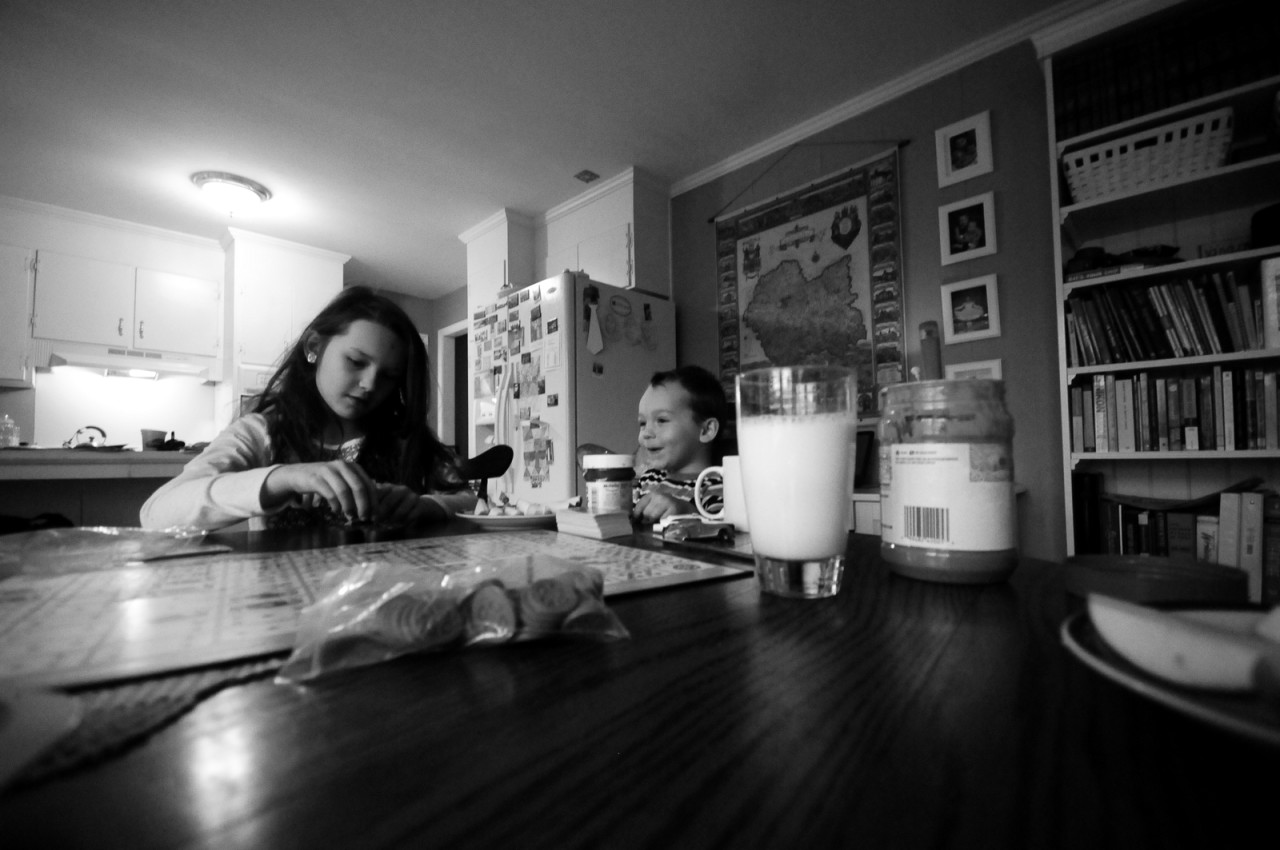
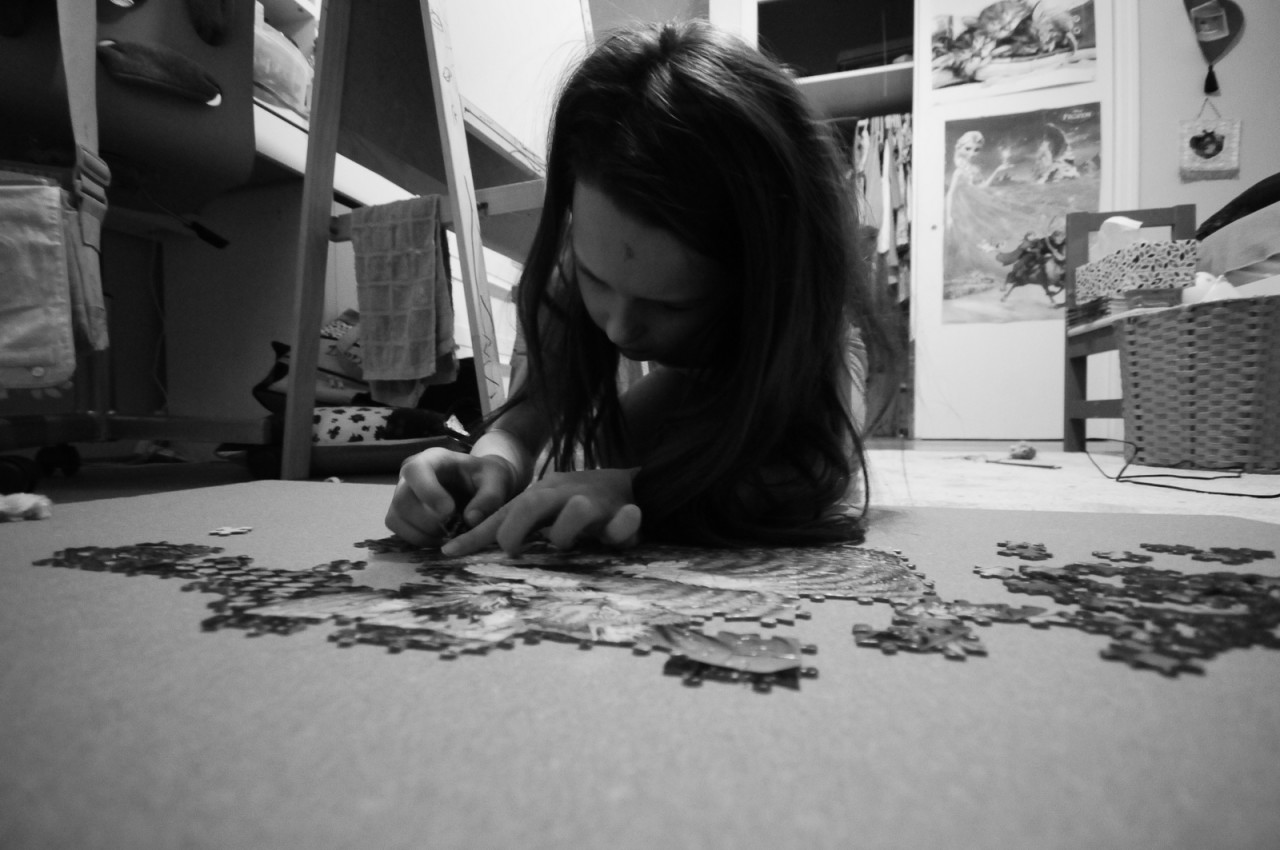
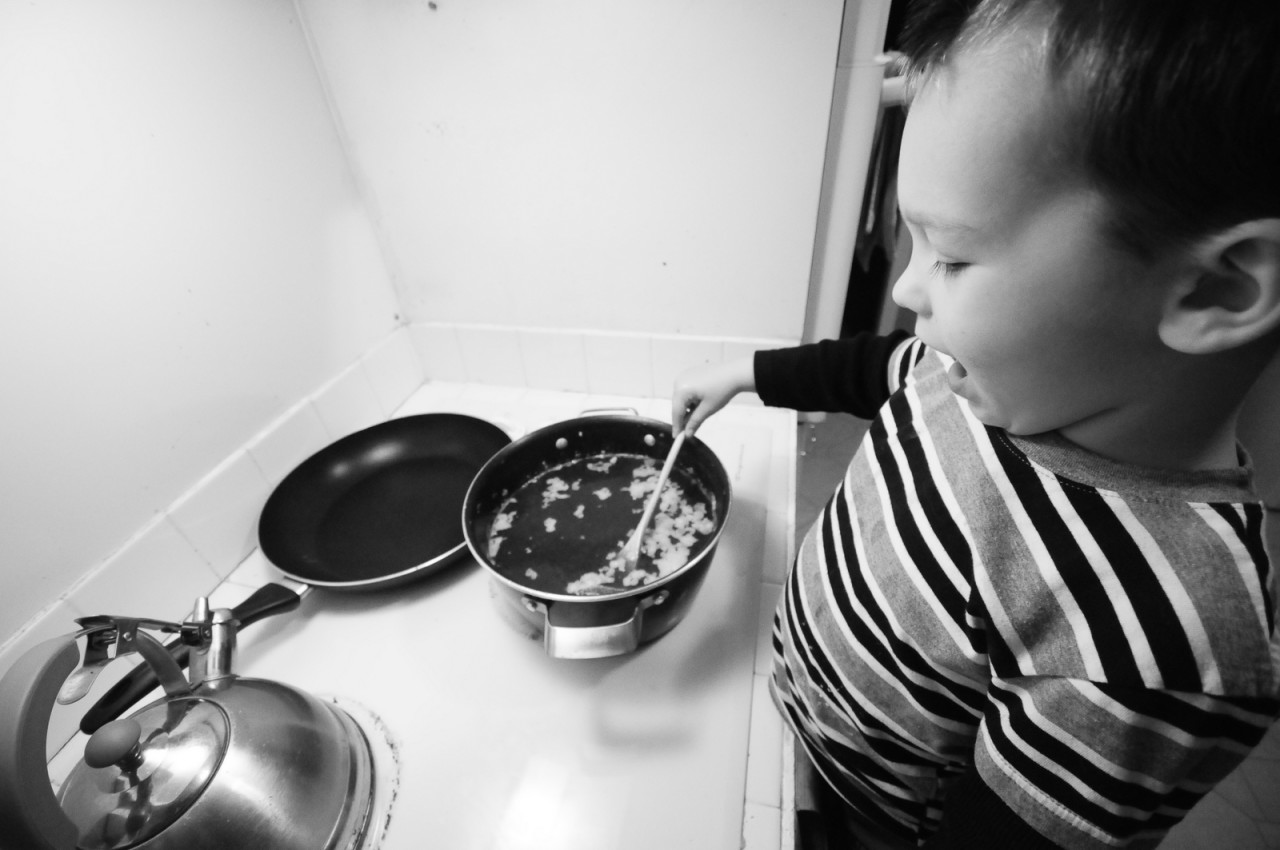
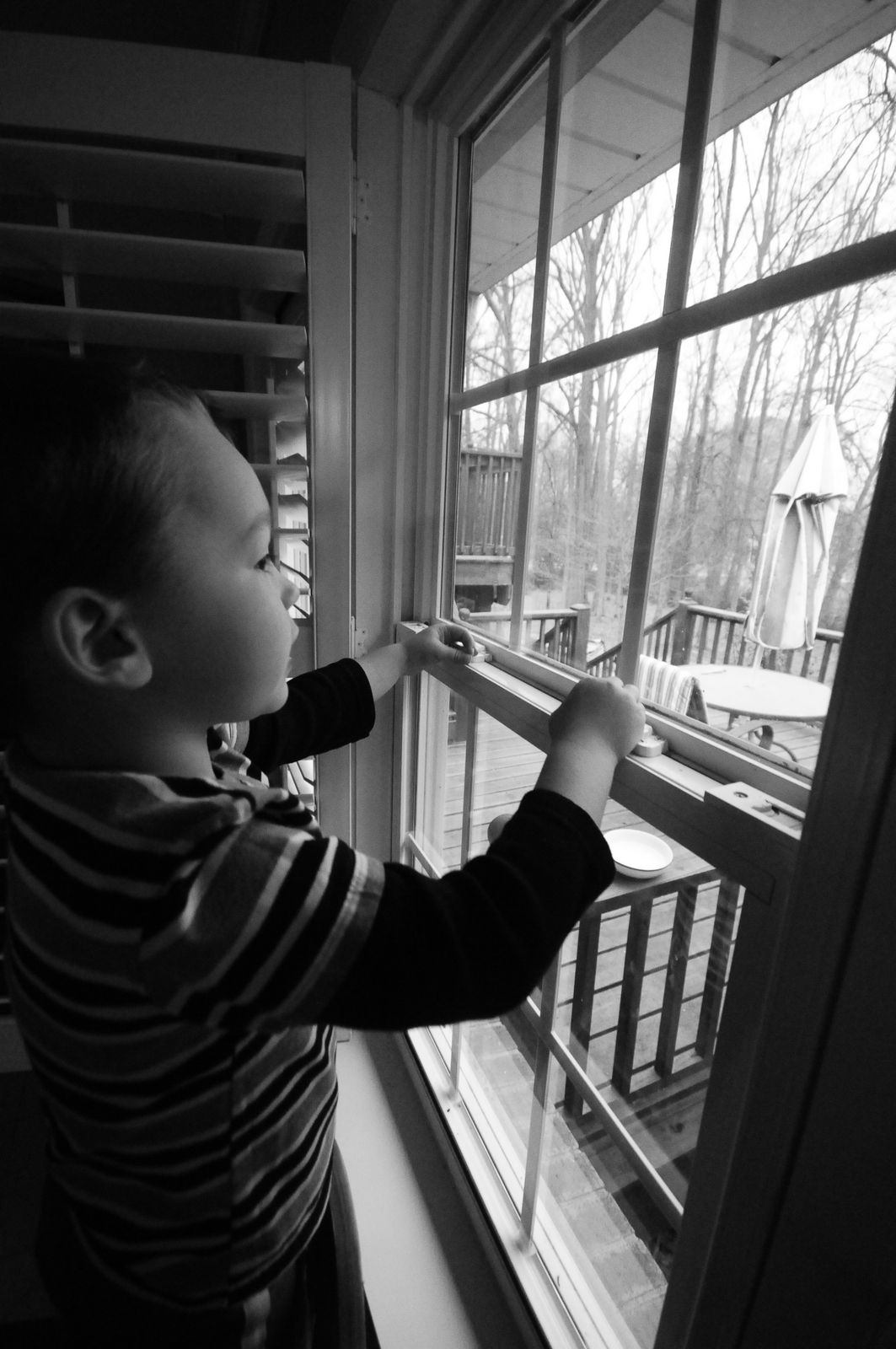
A Monday with no school means fussing over who gets to help make the coffee, playing school, playing board games with apple and peanut butter snacks, working puzzles, helping warm up soup for dinner, watching the weather for possible ice, and digging out old Pooh Bear costumes and honey.

Sunday
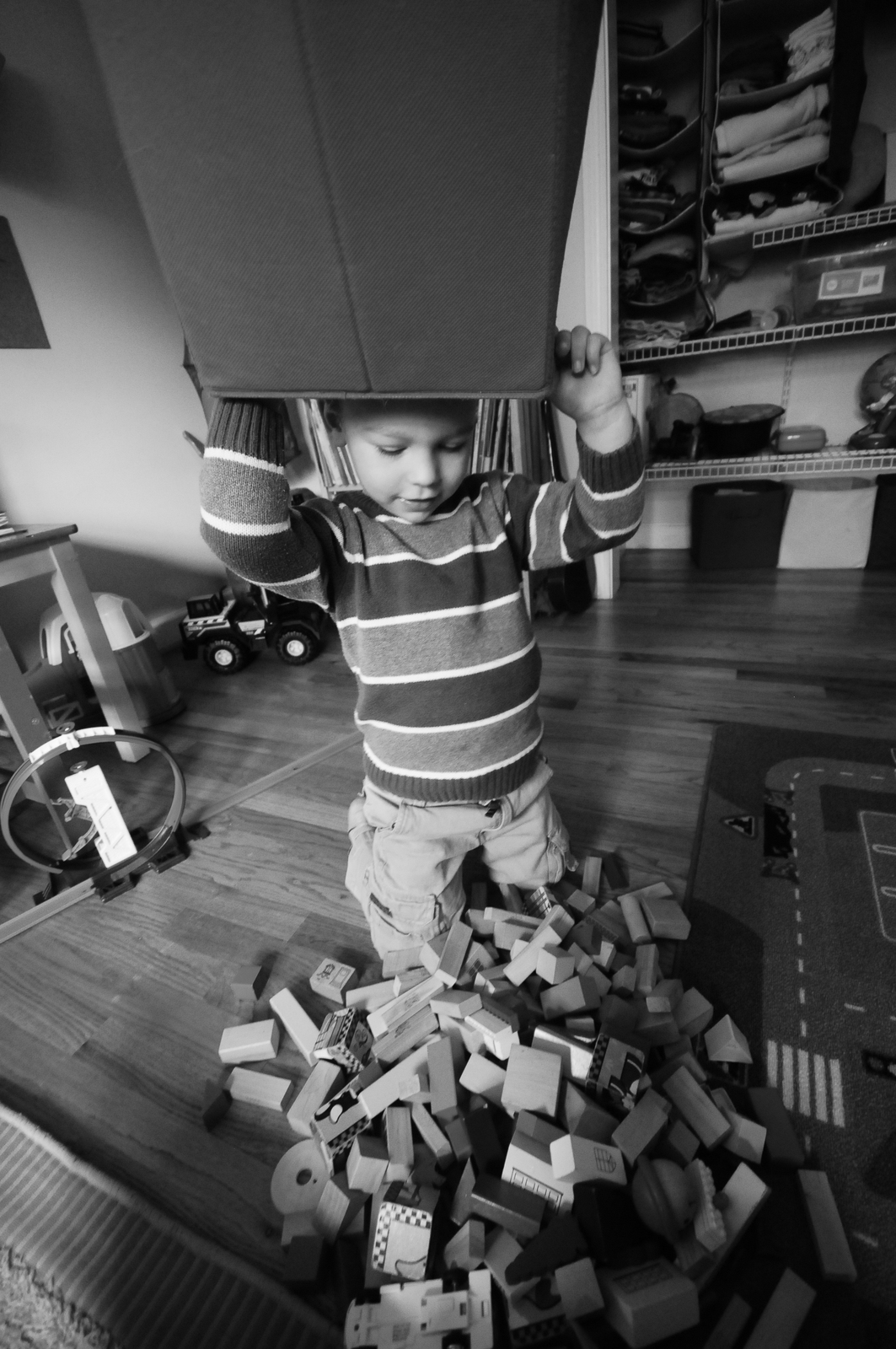
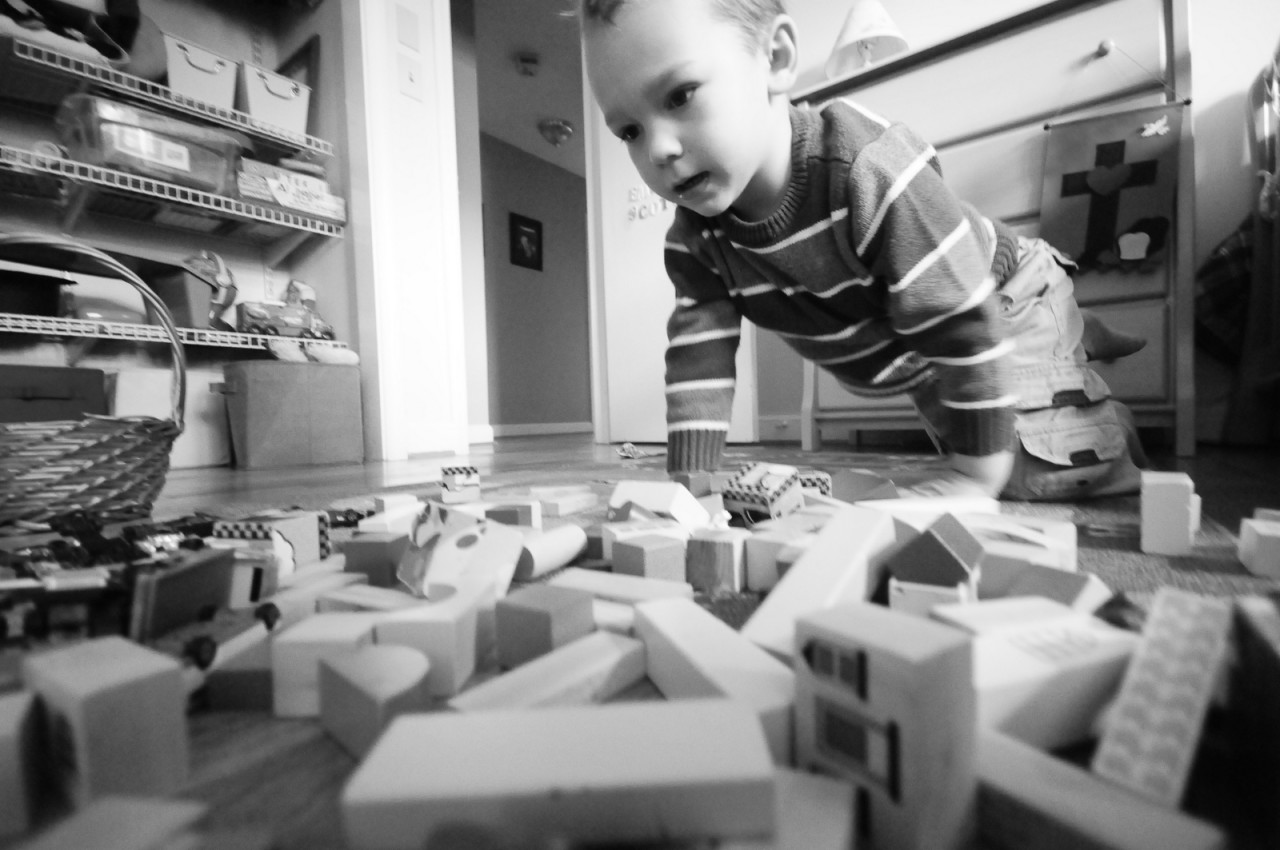
To play, you have to make a mess. You have to dump everything into the floor, spread it about a bit, and take stock of what you have to play with. Ideally, all your toys will have been thoroughly mixed through weeks of "chaotic" play that is only chaotic to the uninitiated. To the experienced player, there's a pattern in the mix of Jenga blocks, puzzle cubes, wooden train parts, and wood blocks that exists on a sort of quantum level. Add a basket of cars and a hobby horse and you have just about everything a little boy needs for a Sunday afternoon.



Digging in the Dirt
In which Tata installs a sump pump.