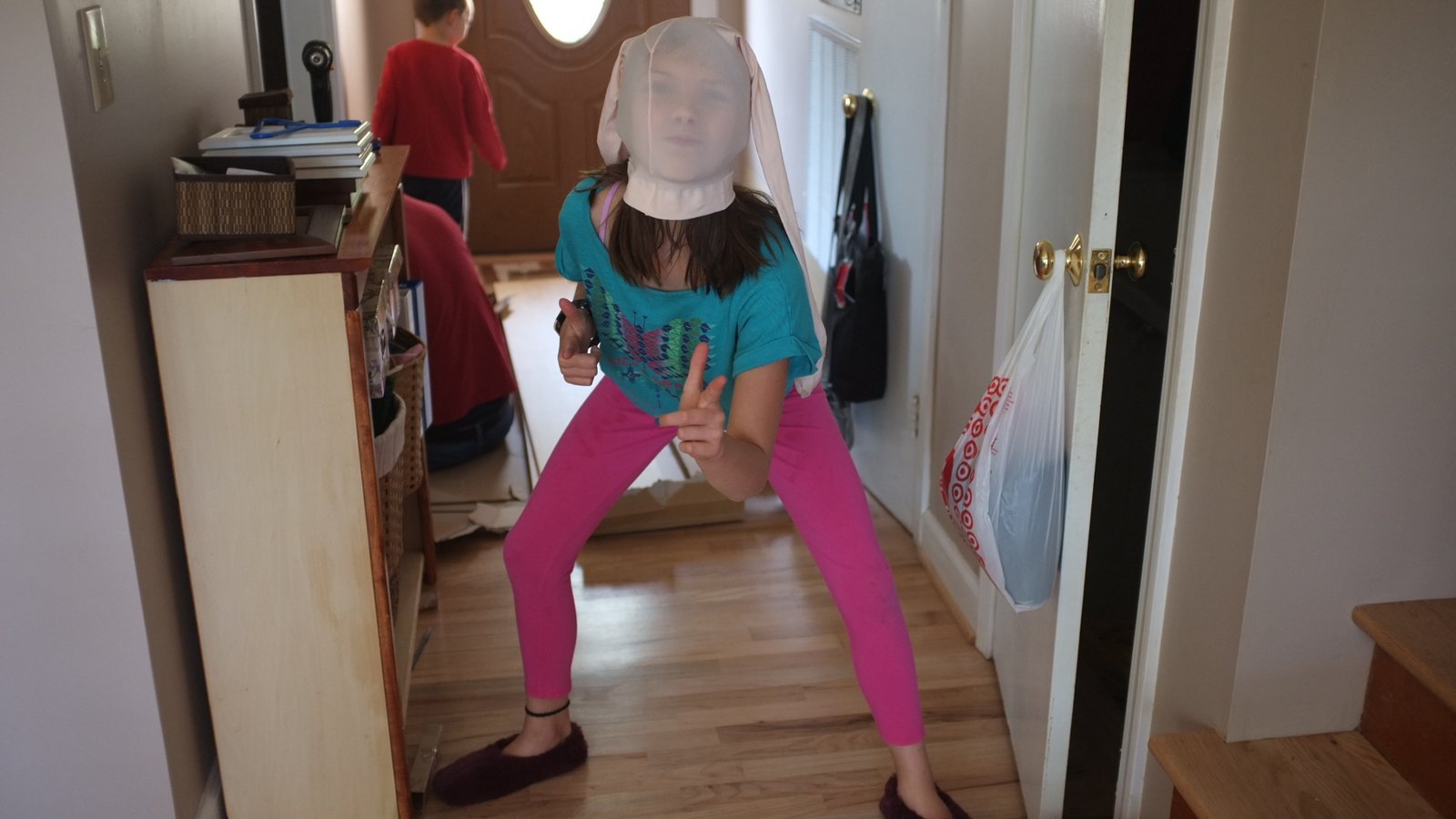
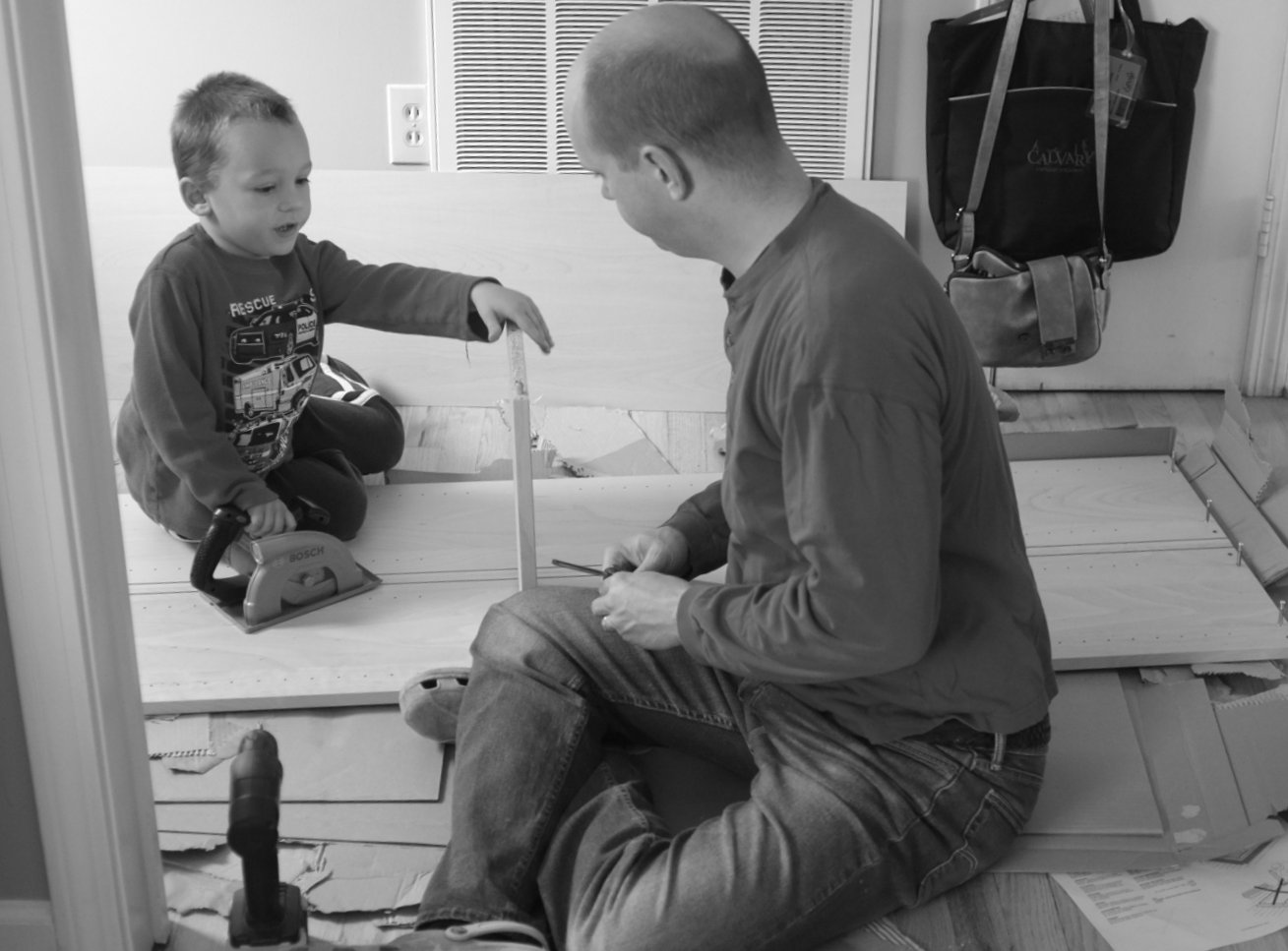
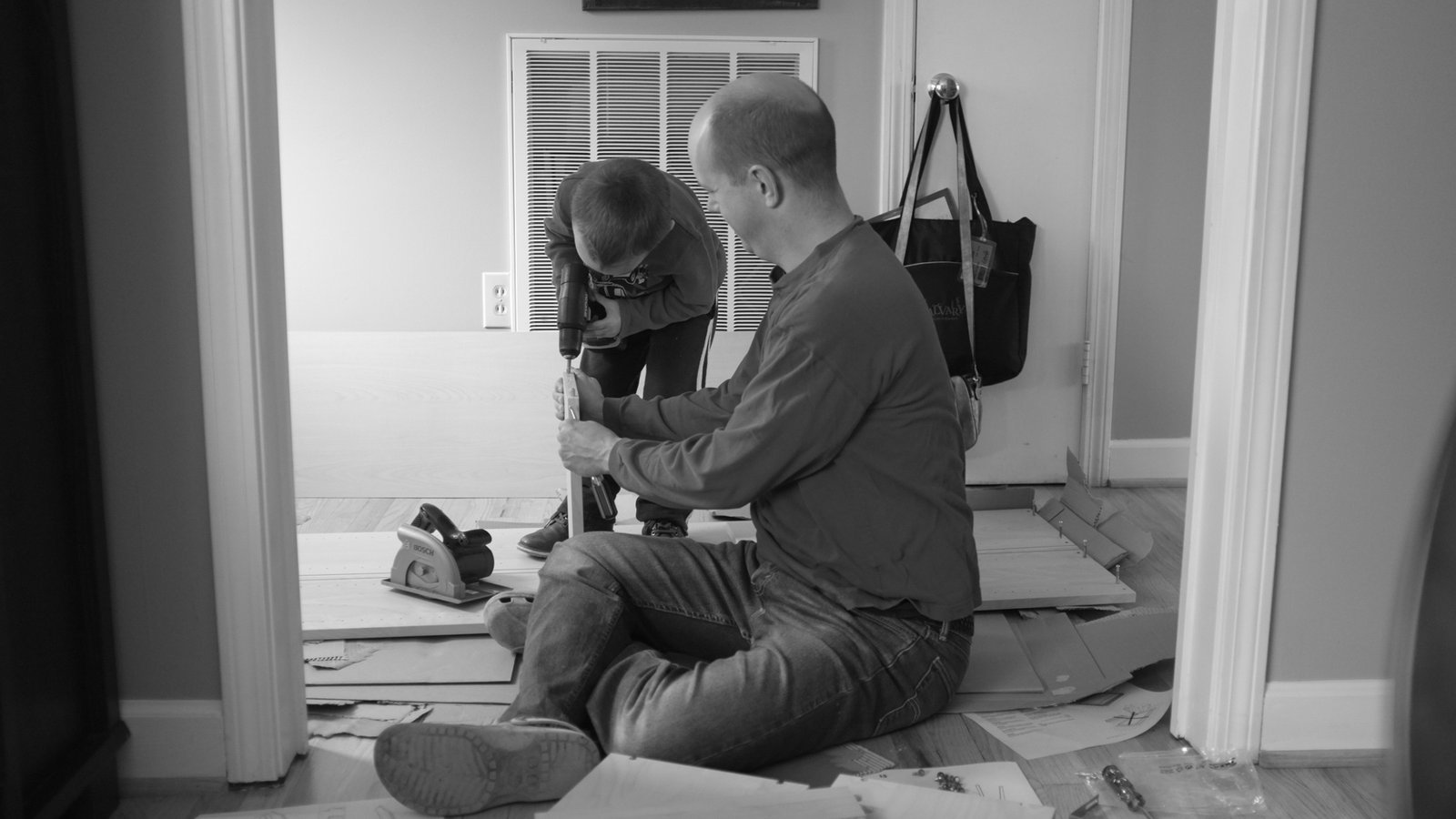
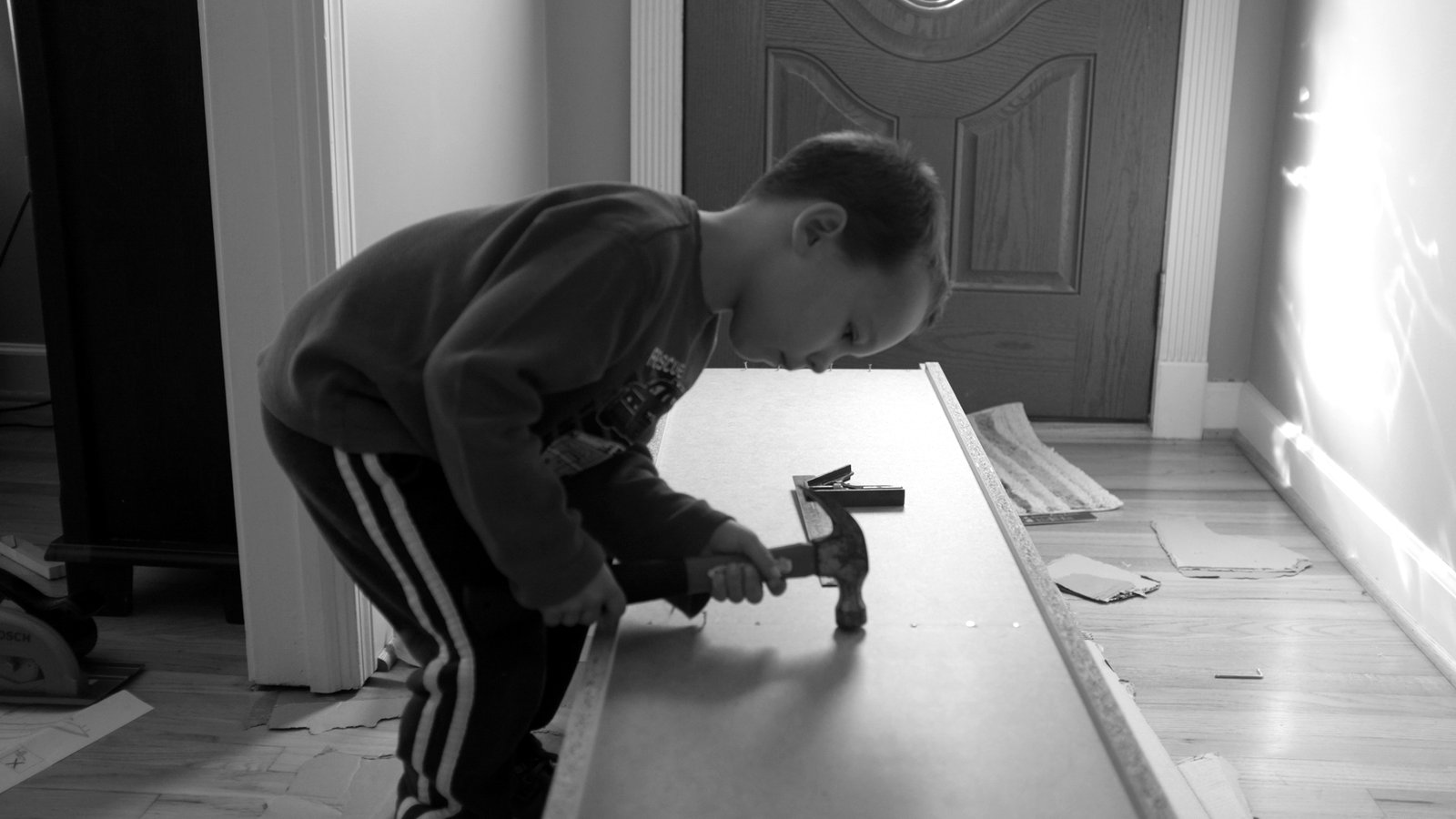
matching tracksuits

fun in threes, sometimes fours

g

American Tune

Four years ago, I marveled at how some of these lines mirrored what I was feeling after a disappointing election. I still feel this way after the election in 2016, but for different reasons.

With an untried, inexperienced, president-elect of questionable integrity, surely these are, in many ways, America’s most uncertain hours, both for Republicans and Democrats.
Decision, Redux

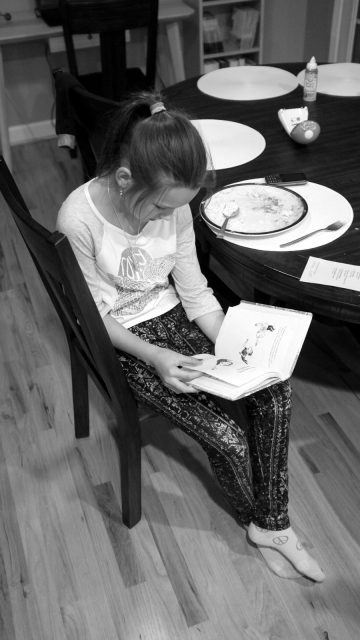
The Girl is tough. I don't mean that she's resilient, that she can take a metaphorical beating and get up from it. I mean she's stubborn, so very set in her ways that she looks at me sometimes with a glint in her eye when she's resisting and I think that if we could just get that stubbornness off of petty things, get it away from food and her obstinate refusal to try anything new, get it away from her irritation with the Boy and her stubborn insistence that everything go her way, get it away from her frustration with little failures and her insistence that the original solution to the problem (the solution that is obviously anything but) is the only solution to the problem -- if we could just redirect it, steer it just a bit, give it just the slightest nudge, she would have the resilience of a diamond.

Reading after dinner

Last night, we sat the table, fighting about food. I insisted that she eat some of the veggies that went alone with the stir fry we had for dinner. I insisted. I insisted. I insisted. And she fought. "I won't" became "I can't" became tears of frustration and anger.

I sat thinking whether it was necessary. Am I ruining her culinary tastes, creating a stubbornness for life, by doing this? Is it really a big deal that she doesn't eat something? Am I making something of nothing?

02-dscf1674
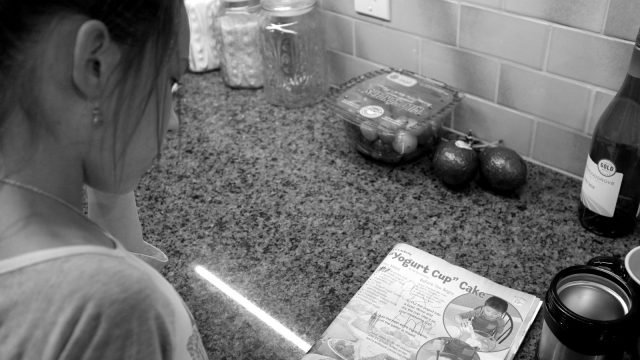
Reading the recipe for tomorrow's snack

And then there was the question of disobedience. I can't have that -- it's pathological. I get it enough from students at school. And yet, who really wants to submit?

And then there was the question of resilience: if I let her get by with not tackling this meager challenge -- in the end, it turned out to be five, five bites -- what kind of a child am I raising? I want someone who will slay dragons, and she can't even eat five damn bites of vegetables.

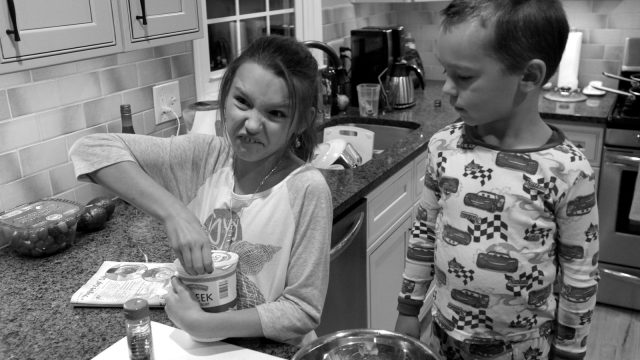
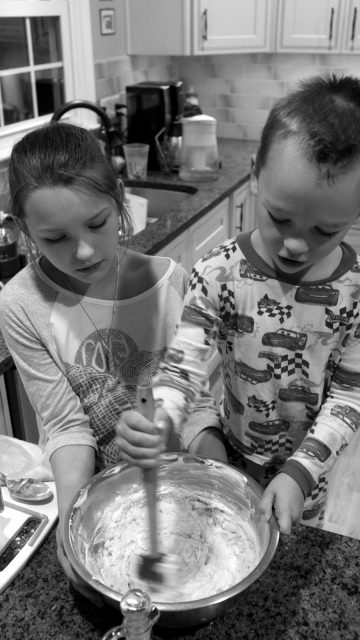
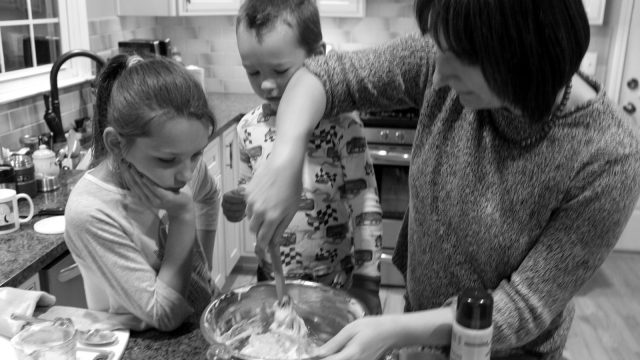
Opening the yogurt
Opening the yogurt

The other day in school, I had a quiet conversation with a very bright young lady who wanted to leave my class because she was so frustrated. She wasn't frustrated with me, or with my class, or with anyone in the class. But someone had said something, and she was on the warpath. She was ready to swing, as she said.

"But you don't have to. You can control that."

"No, I can't," she replied. Her tone wasn't argumentative or plaintive -- it was matter-of-fact. "I can't."

04-dscf1686
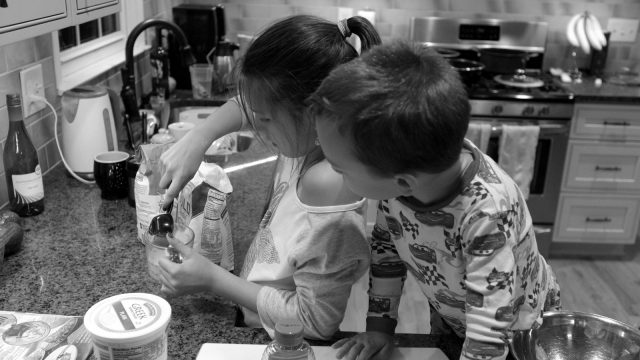
Measuring

Of course she can, and I told her that, but to someone who has such a very fatalistic worldview, suggesting that she can control something she's always been convinced she can't control was like me suggesting that she could control her digestive system like those tabloid gurus who the tabloid writers excitedly proclaim haven't had a bowel movement in decades. It makes sense: if you can control your heart rate and breathing, why can't you control every aspect of your body, including bowel movements and aging. Yet on a practical level, it's ridiculous to me. That's likely how this young lady viewed my suggestion that she could simply not fight, that she could unclinch her fists, take a deep breath, and let people say whatever the hell they want to about her.

I don't think the Girl will ever become anything like that. But perhaps I'm so concerned that she might, even with the little things, that I worry I overreact.

05-dscf1693
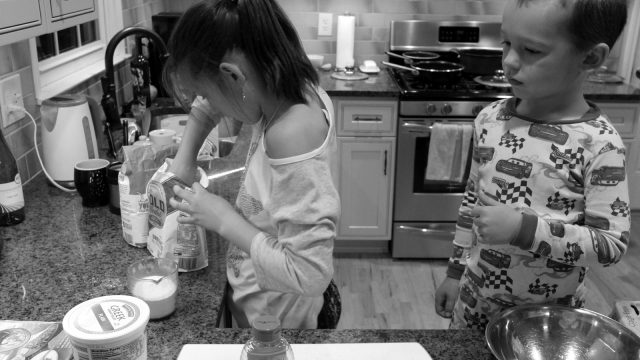
Measuring the flour

"Tomorrow," I decided, "I must make better decisions."

The Democratic party, now, seems to me to be a little like the Girl. It stuck by principles that seemed so important at the time, but in the end, one principle in particular cost them dearly. The principle? That as progressives, they are on the "right side of history," and to be on the right side of history means to be the party that has the first black president, and what could put them more firmly on the right side of history than to elect the first woman president. And so the party put forward a candidate that was seen by Republicans and many Democrats alike as untrustworthy.

06-dscf1695
Mixing dry ingredients

In her hubris, Clinton assumed she would be the Democratic nominee, because that would put the Democrats once again on the "right side of history." Sanders was not supposed to fight. Sanders was supposed to be on the "right side of history" as well. He got in the way, but the email leak scandal shows that the Democratic party machinery conspired to make sure he got put in his place, white male that he is. When the general election cycle began, Clinton, as the freshly minted historic nominee, knew she and her party were on the "right side of history," and given Trump's ridiculous and offensive behavior, it almost seemed poetic that he was the candidate, the perfect ying for her yang. Slate, an openly left-leaning magazine, can finish the argument better than I:

The party establishment made a grievous mistake rallying around Hillary Clinton. It wasn’t just a lack of recent political seasoning. She was a bad candidate, with no message beyond heckling the opposite sideline. She was a total misfit for both the politics of 2016 and the energy of the Democratic Party as currently constituted. She could not escape her baggage, and she must own that failure herself.

Theoretically smart people in the Democratic Party should have known that. And yet they worked giddily to clear the field for her. Every power-hungry young Democrat fresh out of law school, every rising lawmaker, every old friend of the Clintons wanted a piece of the action. This was their ride up the power chain. The whole edifice was hollow, built atop the same unearned sense of inevitability that surrounded Clinton in 2008, and it collapsed, just as it collapsed in 2008, only a little later in the calendar. The voters of the party got taken for a ride by the people who controlled it, the ones who promised they had everything figured out and sneeringly dismissed anyone who suggested otherwise. They promised that Hillary Clinton had a lock on the Electoral College. These people didn’t know what they were talking about, and too many of us in the media thought they did. (Slate)

There are other things at work there, I realize. And this all says nothing about what the political right accomplished in this election. National Review sums that up well:

This is a direct rebuke to progressive hubris. It turns out that the progressive elite’s preoccupations with identity politics, social shaming, and radical sexual change don’t motivate their “coalition of the ascendant.” In the past eight years, the progressive movement has doubled down its attacks on churches and in recent years directly confronted American law enforcement. It has attacked free speech, the free exercise of religion, and gun rights — secure in the belief that history was, as they put it, on their “side.”

The result was clear: The Democratic party lost ground with America’s poorest voters. Citizens making less than $50,000 per year propelled Obama to victory over Romney. Exit polling shows that Trump improved the GOP showing by 16 points with voters making less than $30,000 per year and by six points with voters making between $30,000 and $50,000, which more than offset Democrat gains with the middle class. (National Review)

For the right, this was not about choosing a man over a woman; it was about choosing one ideology over another. The New Republic recognized this as well:

This brings us to the problem of how the Democratic Party—and America as a whole—can recover from this calamity. There is sure to be a civil war among Democrats, with leftists arguing that a purer, less compromised version of liberalism will have a better chance of appealing to those very voters who put Trump over the top. There will be a push to expand the Democratic message beyond the identity politics that has increasingly defined the party in recent years—to welcome with open arms those blue-collar and middle-class whites who have been culturally alienated by newly assertive blue-collar and middle-class workers of brown skin. And there will be a backlash to this, an argument that the Democratic Party’s function is to redress the wrongs that have been done to minorities and make white America atone for its sins—“to force our brothers to see themselves as they are,” as James Baldwin put it, “to cease fleeing from reality and begin to change it.” (New Republic)

In that vein, some liberals suggest that this is just a sign of the latent misogyny and racism in America, but that kind of talk seems to indicate that they haven't yet learned much from this earthquake. What should they talk away from it? Back to the National Review:

The presidential candidate that voters believe less, like less, and think less qualified won the election. In other words, rather than endure four more years of elite progressive rule, the American people chose to gamble on a reality-television star with well-known and openly notorious character flaws. That’s how much they were ready for change.

It was all about change, Trump supporters say.

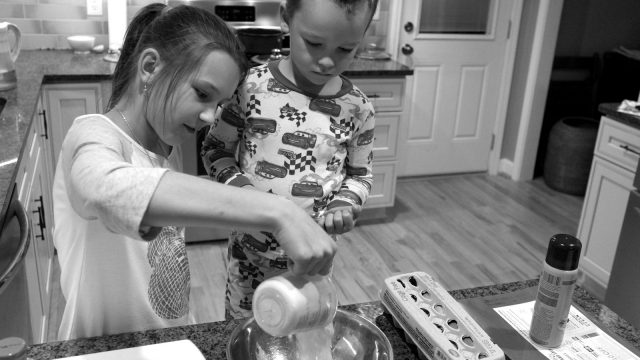
Blending too quickly

In that sense, though, Trump's supporters are a little like the Girl as well. The Girl tends to see every setback as a complete disaster. So many little things blow up into the end of the world for her. The veggies were an impossible task. We'd asked her to do the impossible, and she just couldn't do it, couldn't imagine it. In the same way, many on the right saw the election of Clinton as the end of the country. Obama began the transformation into a socialist republic, they saw, and Clinton would finish it.

Learning how to do it properly

Change can be good. It can be scary. These are merely truisms. Yet, change often does work, and so tonight, I changed tactics with the Girl: I put her veggies on a plate and told her that she needed to scarf them down before the Boy, who was napping, and napping hard, woke up. "Then for dinner, all you'll have is chicken and rice." She jumped at the chance. A little reframing, a little rewording, and we got reached the same conclusion.

Eventually, the left will realize this and act on it. Frustrated Americans will vote the right out and the left in, until the cycle repeats again.

Decision

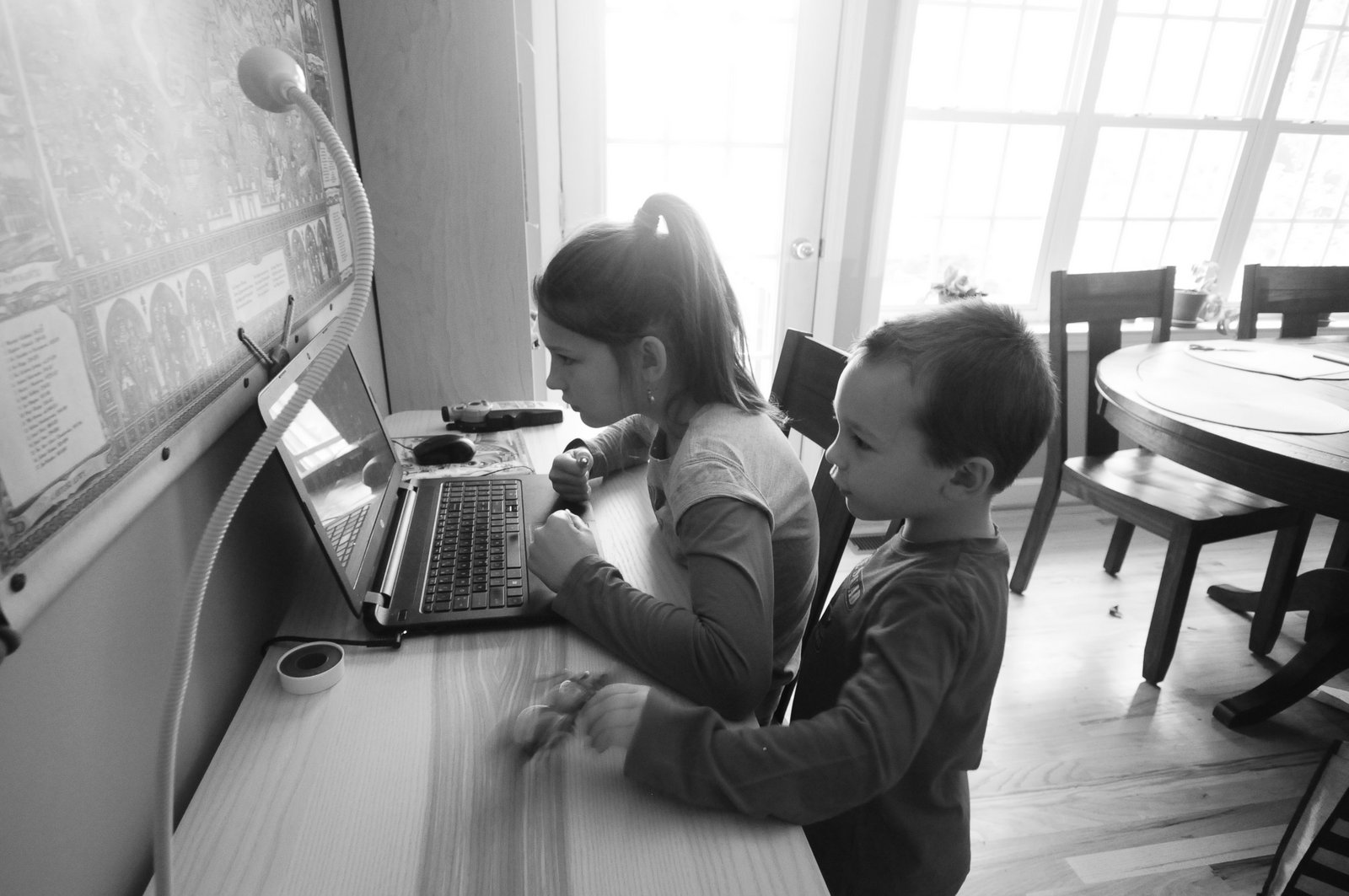
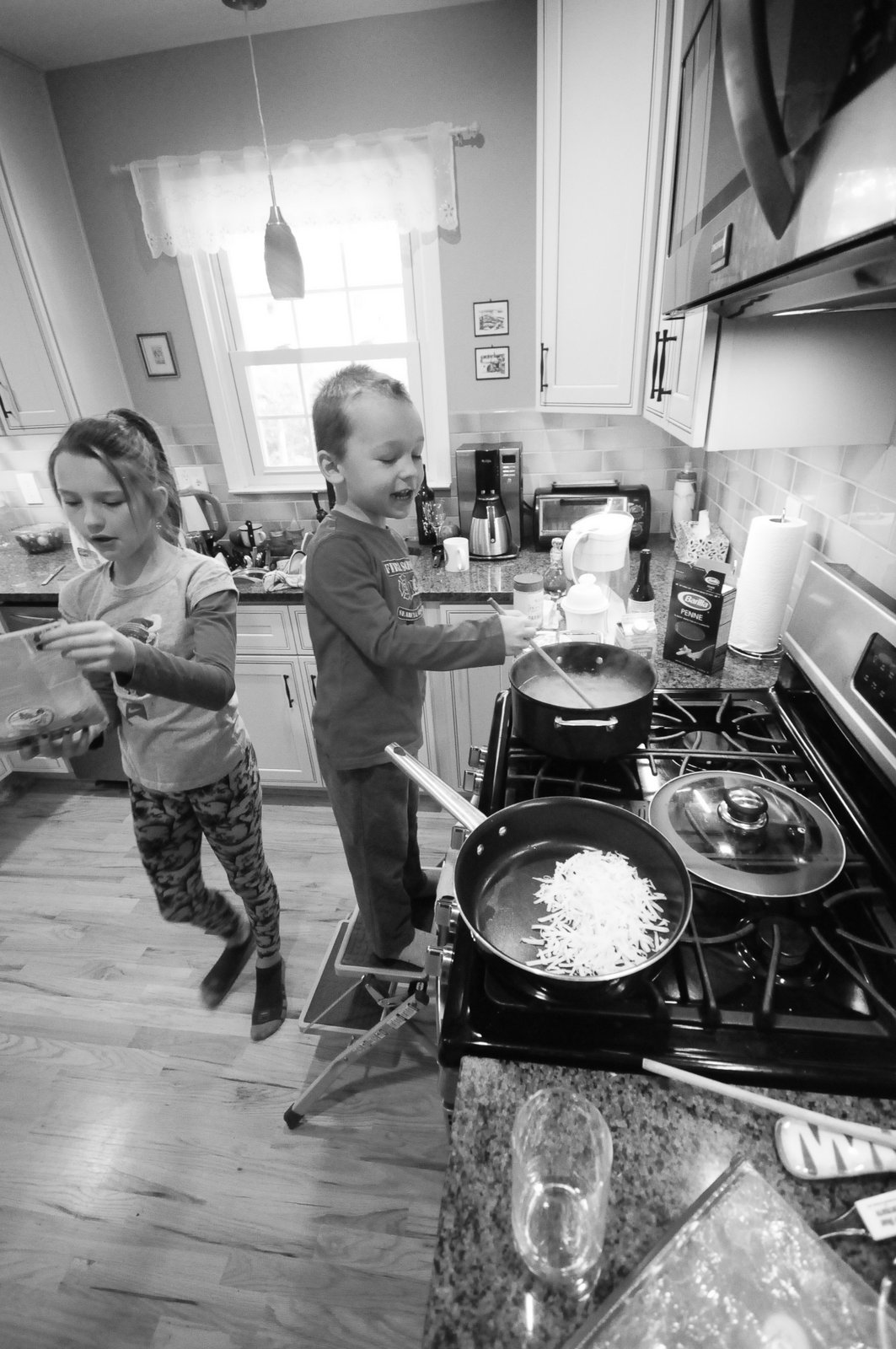
The morning: the kids entertain themselves while I do some school work. They play school, help make mac and cheese, and watch a bit of television.

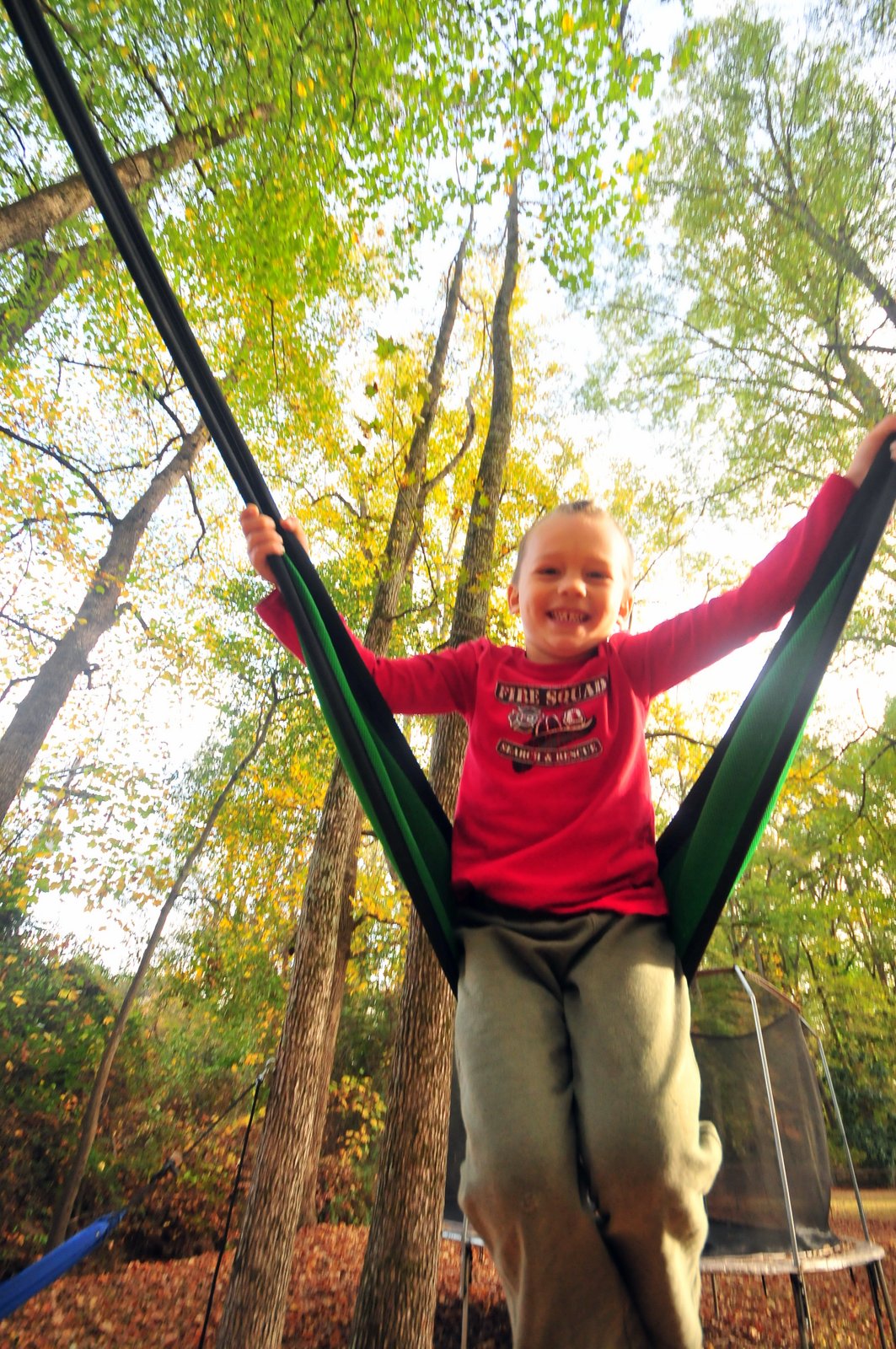
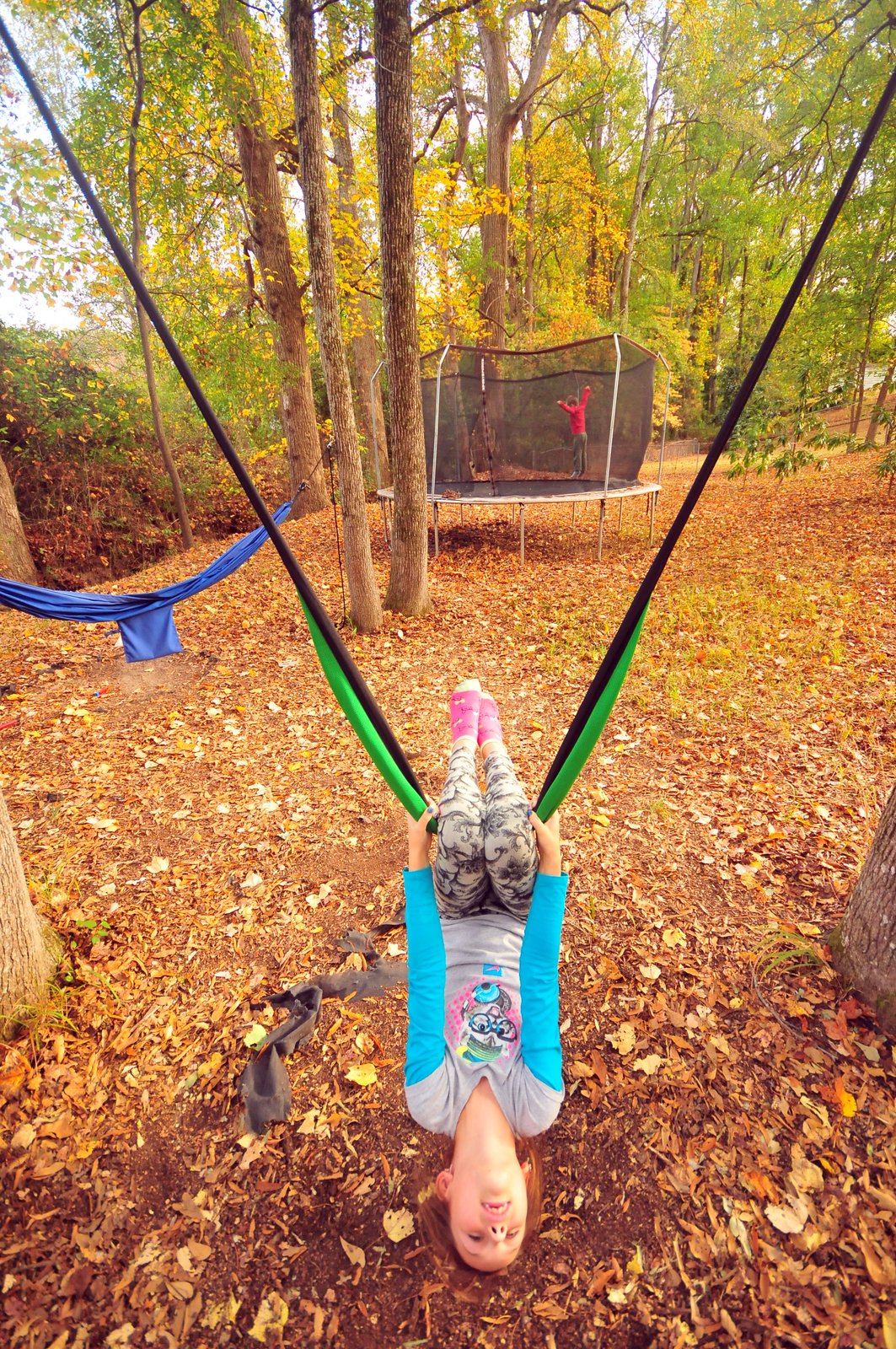
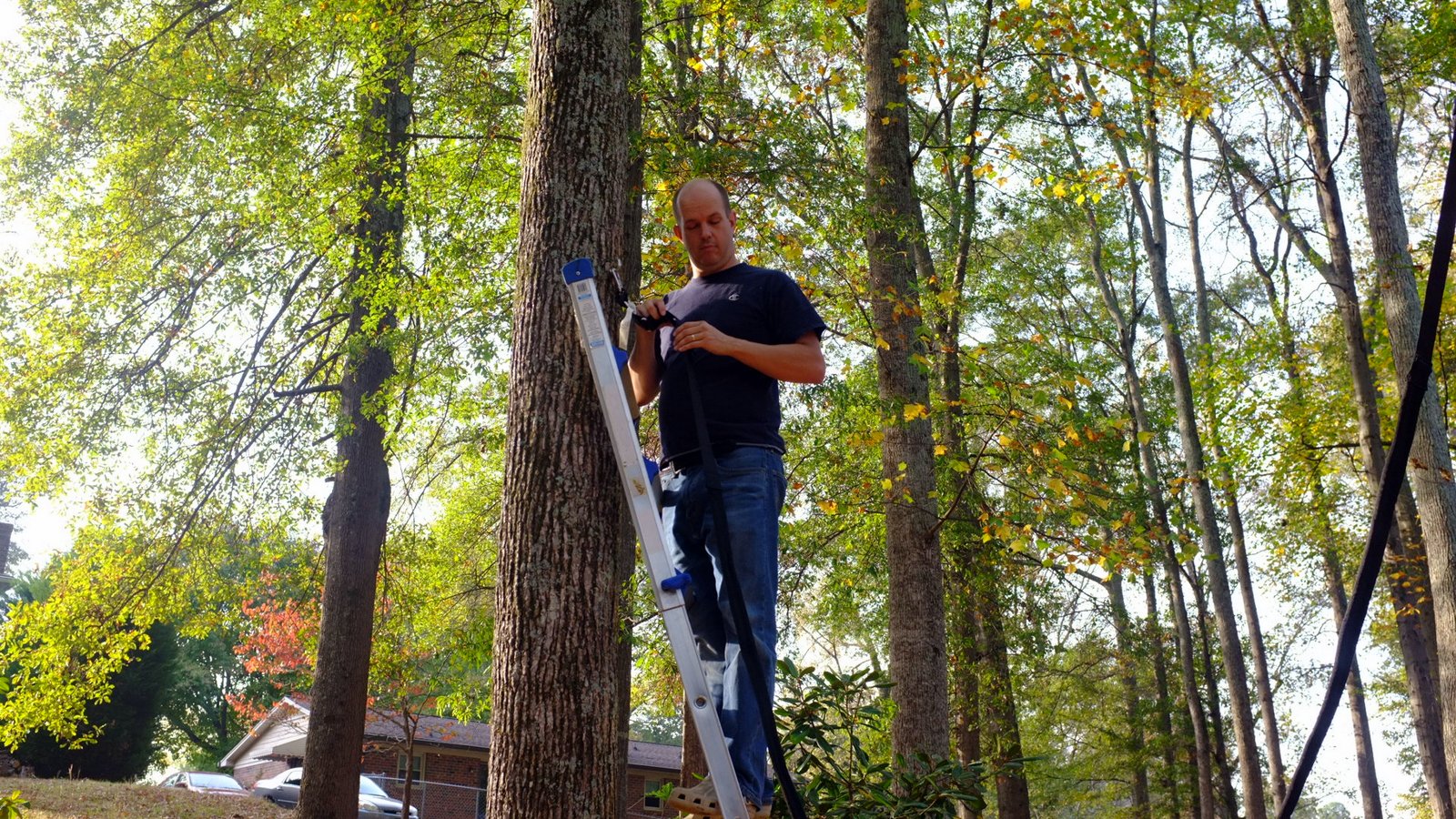
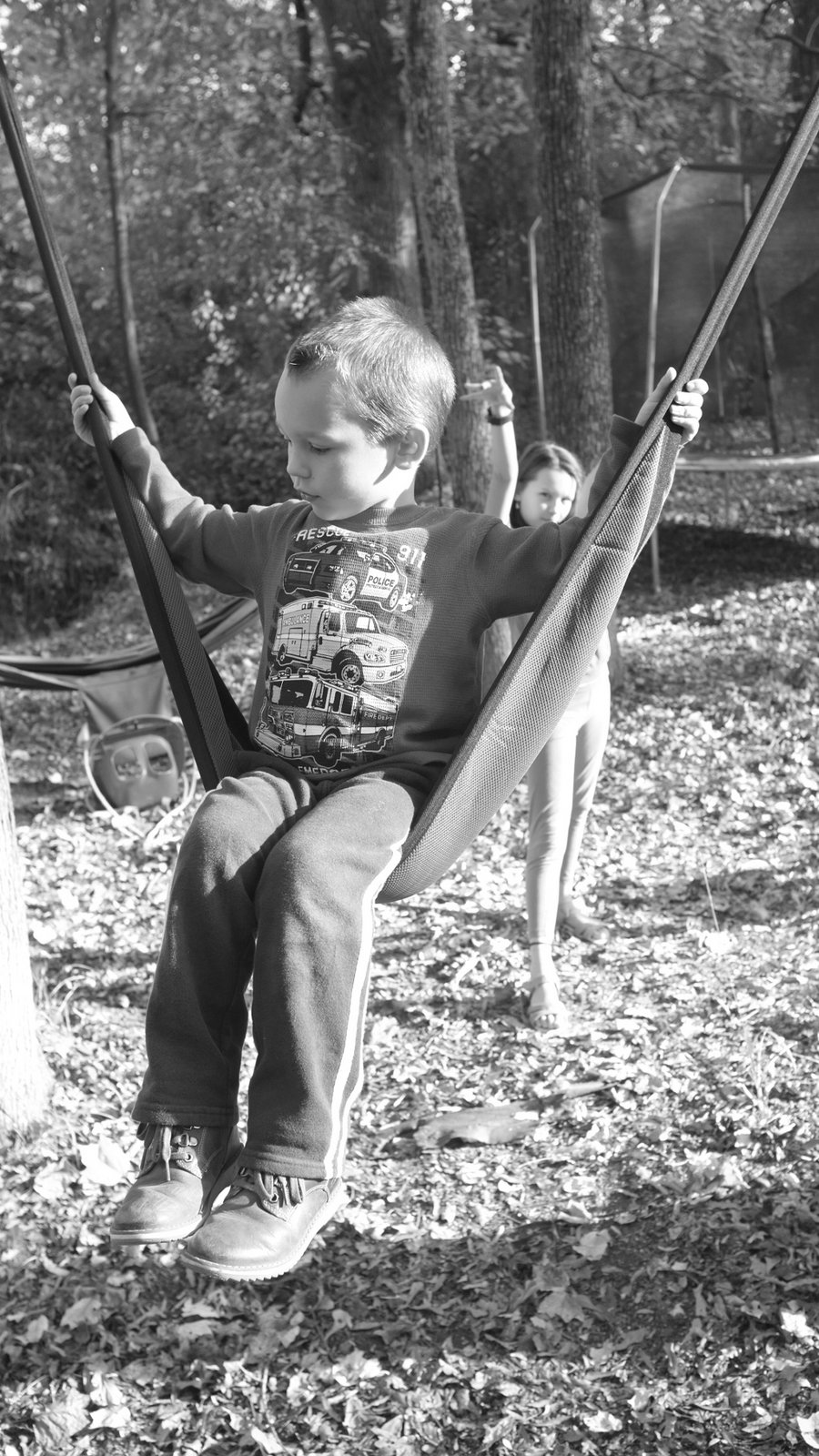
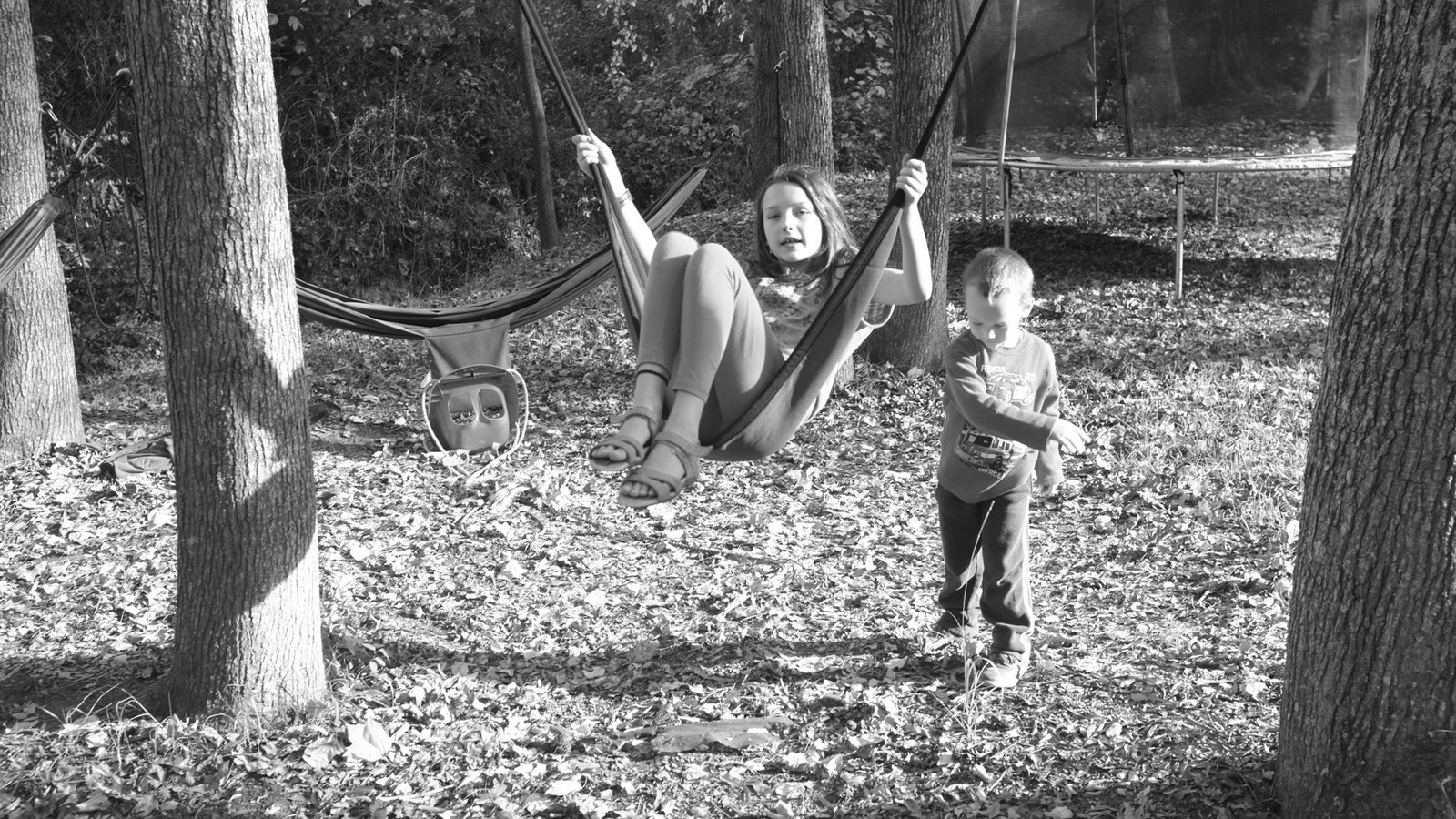
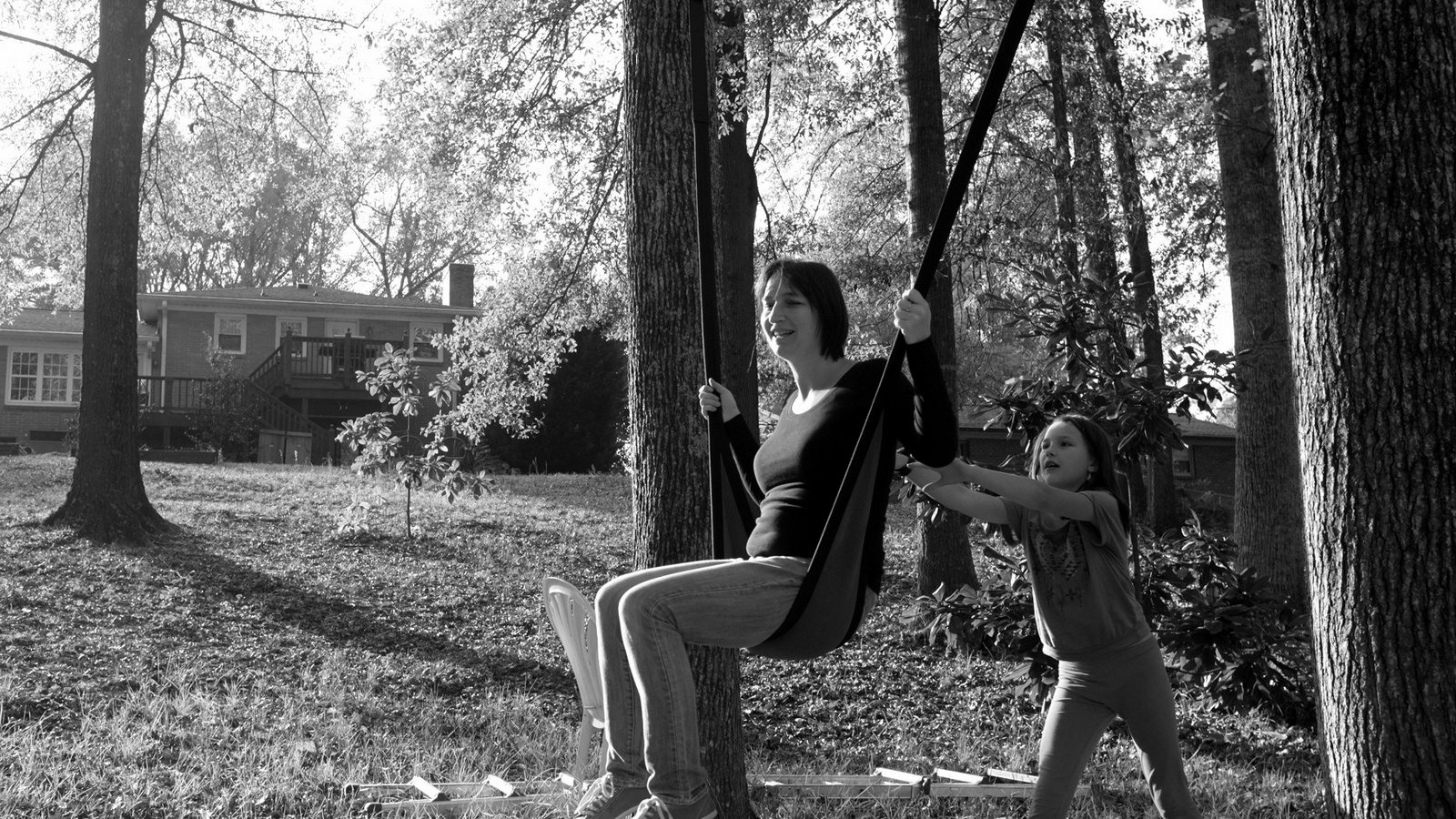
Afternoon, we head out to the backyard to swing and jump on the trampoline.

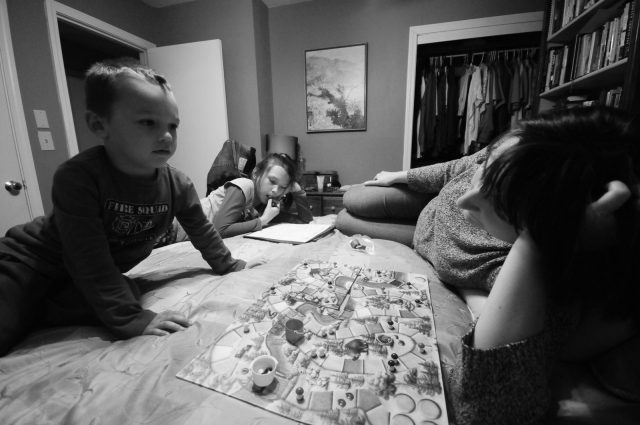
Evening, games.

14-bw0_7327

The rest of the country, most people thought it was possibly the end of the world if the opponent won.

Twenty Years Ago

Twenty years ago, I was only a couple of months into my big adventure of teaching English in Poland. I came home from school and wrote this:

I had a bit of a run-in with Agnieszka today. While arranging the new seating today she got rather rebellious. She refused to sit with Greg because “I don’t like him.” She plopped down beside Iwona and didn’t acknowledge me at all. At first I was polite: “Please, move over there.” When she did nothing, I became a bit mad, for she was forcing me into a power struggle. “I’m not asking now, I’m telling: move to that seat.” She did nothing. I knew the critical moment had arrived: if I said nothing and let her sit there, I would have lost a major portion of my classroom control. If I continued in that fruitless way, I would have made a fool of myself. So I did the only think I could think of: “Could I speak to you in the hall?” I asked/demanded.

“Why are you making this a difficult situation?” I asked. We talked about it and reached a compromise. I explained to her the situation her stubborn belligerence (redundant) had put me in. And I told her that at the same time I didn’t want anyone to be uncomfortable unnecessarily. So we reached a compromise, but in the end I still lost a great deal of credibility.

I should have handled it differently.

I wish I could say that, twenty years on, I don’t have these moments. Twenty years later, I’ve learned something. Twenty years on, I’m not repeating myself.

I wish I could say that, but I can’t.

The Weekend

Krakow Past

I first went to Krakow in the summer of 1996 (June 22 to be precise, according to my journal), catching a train in Radom at five in the morning to arrive some time around eight. I'd just arrived in Poland with my fellow Peace Corps volunteers, most of whom and come like I, to teach English. Half a dozen of us boarded the train, found an empty compartment, and chattered away as the train clattered away. "I never really thought I would be in this city. To be honest, I never thought about this city. But never the less, here I am," I wrote that first evening.

What struck me then was the ancient architecture: St. Mary's Basilica on the rynek, Wawel castle on the hill overlooking the old town, the rynek itself with its cobbles and pigeons. When I arrived at my home for two years (which eventually stretched to seven years), I went to Krakow frequently, and the churches and ancient architecture grew known and, dare I say it, common. It became part of "home" in an extended sense.
What I came to notice, sadly, was the negative, in particular the old bus station, where I arrived and departed for every trip to Krakow (and every trip to the north). It was small, with a crowded waiting room and only six ticket windows, most of which remained shuttered. Lines for tickets were long; lines waiting to get on buses out back were long. And everything -- everything -- was dull gray concrete.

old_pks_krakow
Bus Station

I hated waiting there. It was stuffy in the summer and freezing in the winter. It reeked of stale beer and urine, and everyone seemed angry -- and no wonder. Yet in the mid-nineties, there was no other option. There were a handful of private bus companies running, but the vast majority was the state-run Polskie Koleje Samochodowe, known simple as PKS. And due to where I lived, I had to wait somewhere. There was one direct bus to Lipnica Wielka that left every evening around six. If I finished at three, I had three hours.

There were options, of course. Most often, I simply planned my arrival to the station at around 5:30 to minimize waiting. In the meantime, I wondered the streets, sat in some cheap restaurant drinking tea, or dropped into a church to sit for a while.

The best option was a church: it was quite, relatively warm in the winter and cool in the summer, and free. I could find a quiet spot, sit, and read. Wandering the streets was always enjoyable -- who doesn't enjoy wandering around an ancient city? -- but in January, it was simply miserable.

Restaurants were the trickiest of all. The decent ones (i.e., clean and well-light) were often more expensive than what I was willing to pay. There was a McDonald's at the end of Florianska Street even in the mid-nineties, and I often dropped in for the simple reason of the cleanness of its restrooms and the brightness of its lights. But it was always crowded, often with fellow travelers like me, so the management quickly instituted a policy that restricted the restroom facilities to paying customers. I simply began buying a small order of fries or a small drink as an easy way around the problem.

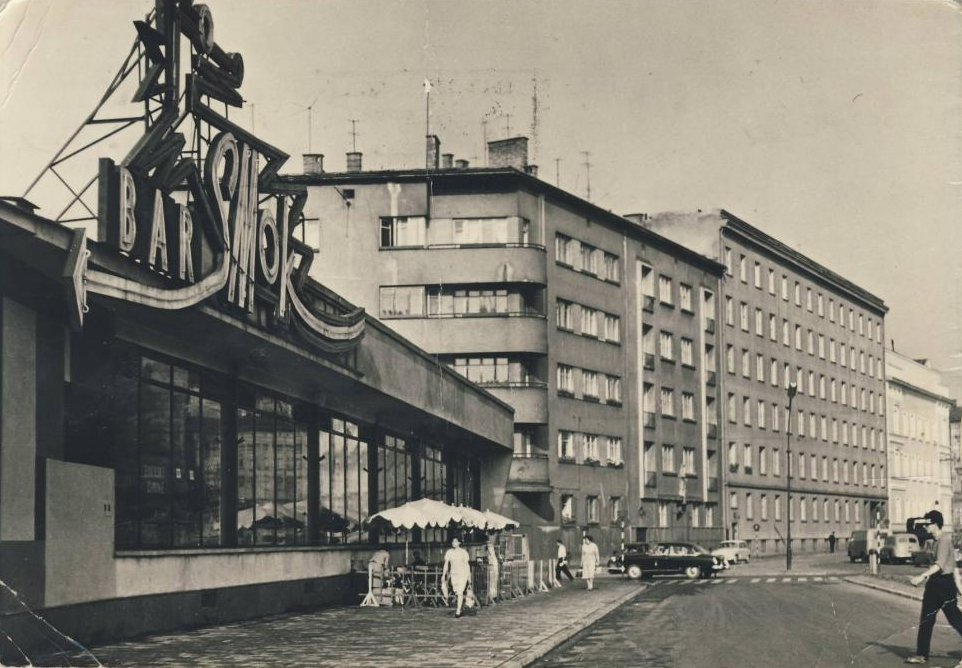
bar smok

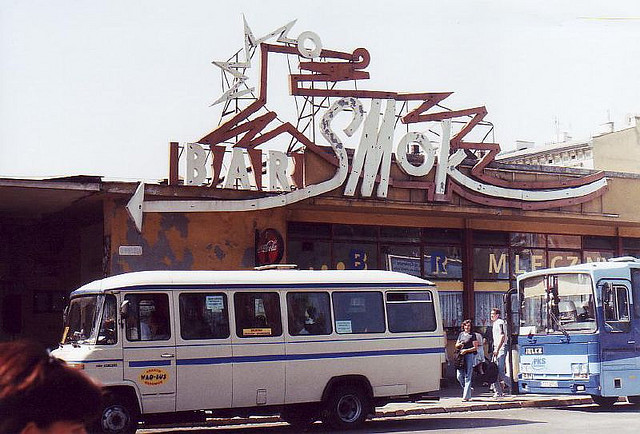
On the other hand, I learned I could always visit a milk bar for a quick, decent, cheap bite and a warm place to sit. Opposite the bus and train stations, in fact, there was a famous one, though notorious might be a better term: Bar Smok -- the Dragon Bar.

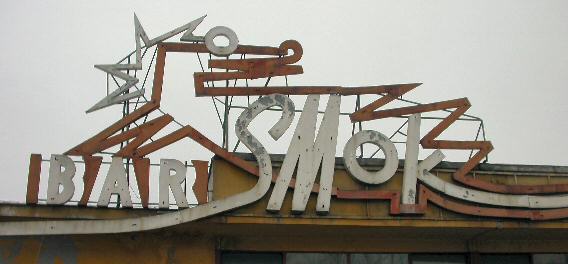
I didn't need to see a faded picture from the sixties to know how old the place was: one look at the sign was enough.

bar_smok_neon

It was legend, though. Everyone knew about Bar Smok -- Poles from all over the nation and even the Americans scattered throughout the country in my PC group.

I believe I ate there once. That was enough. I likely waited there a couple more times, but as far as eating -- by the late-90s, no thanks. It wasn't the food as much as the atmosphere. As Gazetta Wyborcza explains it:

Krakowscy bonzowie pili tu gorzałkę, pielgrzymi zajadali się bułkami z jajkiem, a pechowcy czasami tracili obiad, podjedzony przez bezdomnych. Ale bigos i grochówka na stojąco były tu bezkonkurencyjne. (Source)

That introduction explains it fairly succinctly: there could be drunks consuming cheap vodka; there were often pilgrims having a cheap meal of rolls with an egg; and the unlucky did occasionally have food snatched from their plates by random homeless folks. When I dropped in the few times I did in the mid- and late-nineties, I saw all of these things. I didn't get a chance to try the bigos or pea soup that the introduction describes as "without competition." The other stuff just got in my way, I suppose.

smok

The old pictures tell a different story, though. Not a story of homeless men grabbing pierogi off of the diners' plates but a story of a fashionable, affordable restaurant with a modern, colorful neon sign. It stands in contrast with the gray office and apartment buildings around it, a flash of color in an otherwise-gray world. It was this fact that makes the neon signs stand out: "Nieco abstrakcyjny i kolorowy, rozjaśniał szarą rzeczywistość gomułkowskiej Polski," writes one article ("Somewhat abstract and colorful, [the neon] lightened the gray of Gomułka-era Poland" -- Source).

barsmok

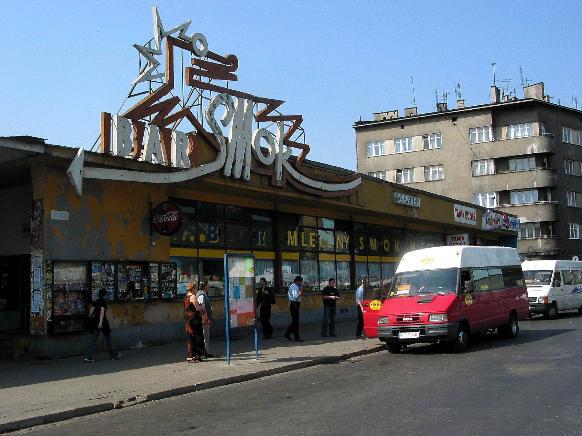
By the time I arrived, though, it had just become part of the gray. Dated and dilapidated, it was another of seemingly-endless examples of architecture that seemed like it could have never really been anything but dated.

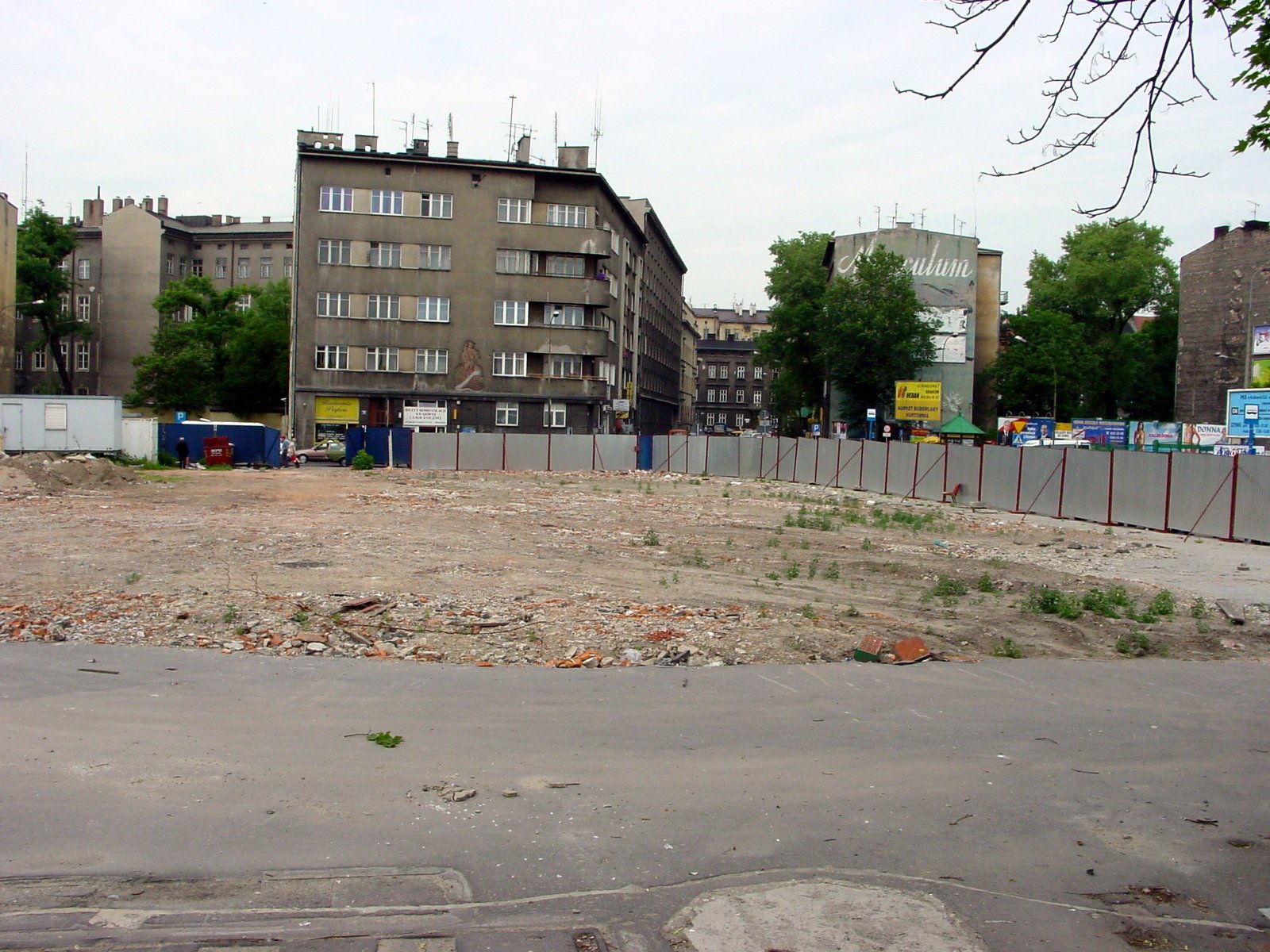
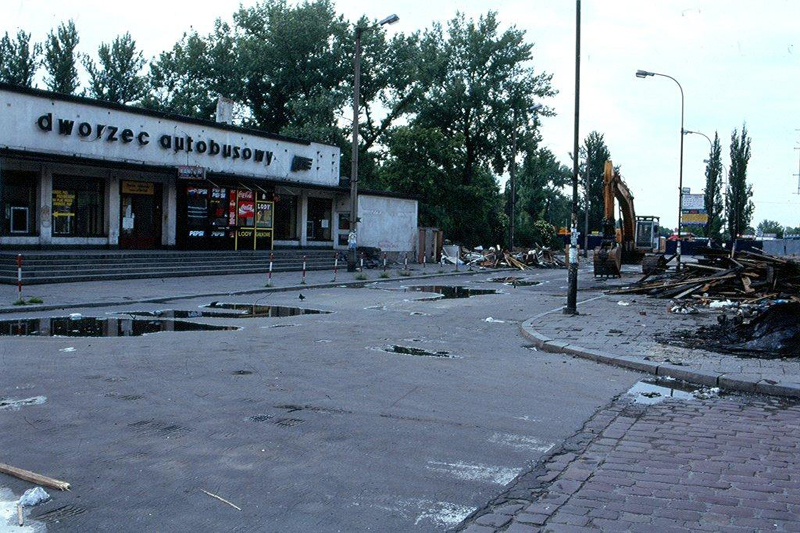
By the time I left, though, in 2005, it was all gone: the old bus station, the Dragon Bar, and all the the gray buildings surrounding them, all torn down to make room for "Galeria Krakowa," a modern shopping complex that could only be called a mall.

3-DSC00003

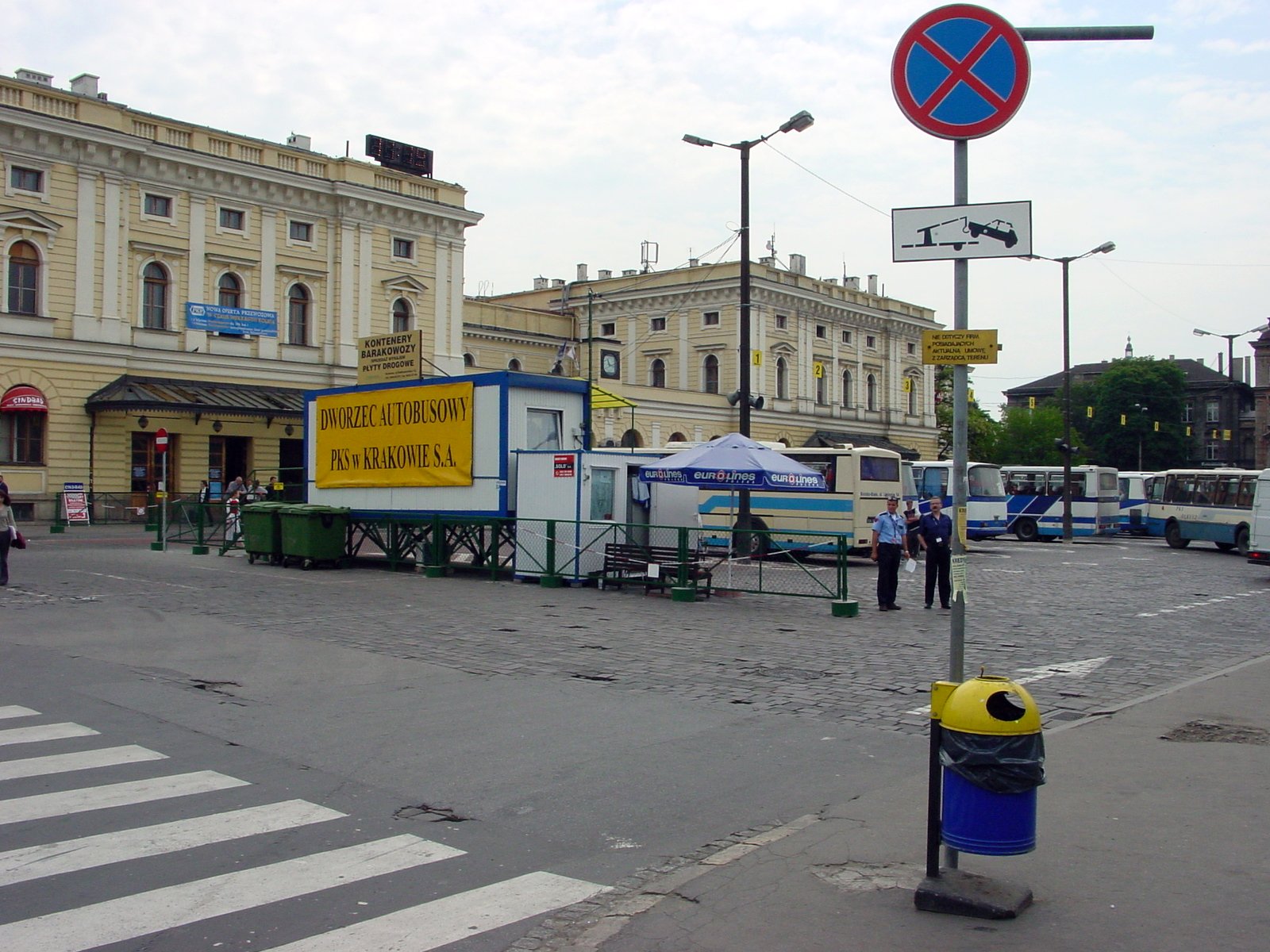
The bus station had moved to the cobblestone area in front of the train station, and the old buildings were not even a pile of rubble.

4-DSC00004

It's tempting to say something like, "No one really misses the bus station, but it's a real tragedy about the neon sign." Indeed, there is a small movement in Krakow (perhaps Poland?) to rescue the neon signs of the fifties, sixties, and seventies, but there's no sign of the Smok neon:

[P]o kilku latach nikt nie jest w stanie nam powiedzieć, gdzie się teraz znajduje "Smok". Od kilku dni próbujemy bezskutecznie to ustalić. A tymczasem to jeden z najcenniejszych przykładów neonów krakowskich. Zaprojektował go Adam Marczyński, profesor krakowskiej ASP, związany z Grupą Krakowską.

Więcej szczęścia miał neon kina Wanda przy ul. Gertrudy, które przegrało rynkową walkę z multipleksami. Ponieważ fasada (wraz z napisem) uznana została za zabytek - neon przetrwał.

The group was able to find the neon sign for the Wanda movie theater, but only because the building that housed it was declared a historical landmark building, and so the neon survived.

It's tempting to say that, to suggest that such an ugly building as the old PKS in Krakow is better off in memory only. Yet there seems to be a tragedy in that. Yes, it's an ugly building. Yes, it would be, had it survived, horribly dated. But I still think there's some value in keeping those buildings. Perhaps not all of them, but some. As it is, with fewer and fewer such places still standing every year, an entire portion of Polish architectural history is disappearing.

1-DSC00001

Left in its wake are the distinctly modern designs that seem just as destined to appearing dated at the old Bar Smok and buildings of its era.

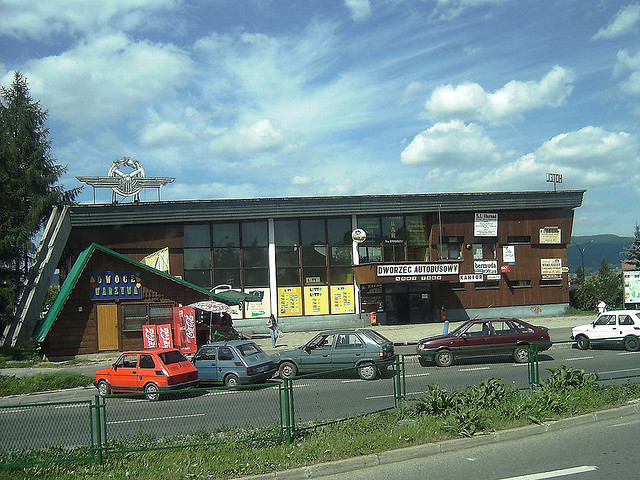
I felt the same way about the old PKS station in Nowy Targ, a station I knew much better because of the frequency of trips I took to the NT, the nearest real city (in Poland) from where I lived.

Nowy Targ Bus Station Poland
Photo by hack man

It too was strikingly dated, a relic from the sixties that was increasingly out of place architecturally. Yet that's precisely why it should still be standing: like so much of architecture, it's a palpable reminder of our past, of where we came from. "Perhaps Poles just want to forget that part," a friend suggested in 2013 when we walked by the place.

2-DSC00002

Perhaps. And perhaps renovation simply wasn't economically or architecturally feasible. Or maybe enough people just want to forget.

Trump Versus Reality

Does Trump forget that everything is recorded nowadays and his characterization of an event can be compared with the event itself? I’m no fan of Obama, but the man handled himself excellently in this situation. A man was protesting. Obama defended his right to protest, and even took the crowd to task for booing him. Trump characterized this as screaming at the protester. Trump suggested that if he spoke to protesters in a similar way, the media would declare “he became unhinged.” I think he’s right: if Trump ever speaks respectfully to a protester instead of inciting violence against him, many would believe he was unhinged — because it would be so out of character for him.

How do we explain this? Either he lied or he has terrible trouble interpreting body language, tone of voice, and the linguistic content of an utterance. Or he takes his supporters for chumps and thinks, “Well, even if they do go back and check on this clip and see I’m making things up, I won’t lose supporters.” Of course, if he hasn’t lost a given supporter by now, he never will. He probably could, as he bragged, shoot someone and not lose a certain segment of his supporters.

Game 7

Sleepy

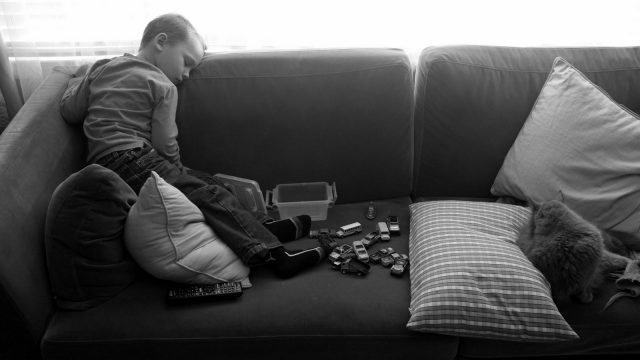
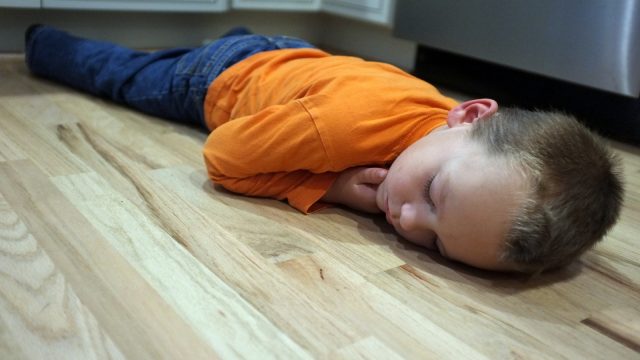
Two things conspired against the Boy this afternoon. The first was a late night with lots of excitement last night, which meant that he was unable to go to sleep immediately last night and then difficult to wake up this morning. We let the kids sleep in a bit this morning, but it was no help: he just didn’t want to get up.

dscf1554

The second thing that conspired against him was the rash that’s developed on his belly. It hasn’t really gone away in a few days, so K gave him some Benadryl this afternoon to try to calm down that reaction. Not having had Benadryl in at least two years, the Boy was not really prepared for how hard it would hit him — neither was K. And so he fell asleep while playing on the couch.

dscf1561

Once he goes to sleep late in the afternoon like that, though, he’s an absolutely nightmare to wake up. Today was no exception. I got to work on him a full fifteen minutes before dinner was ready, but he still needed a bit more time. And in the end, when I got him into the kitchen, he only ended up lying back down on the hardwood.

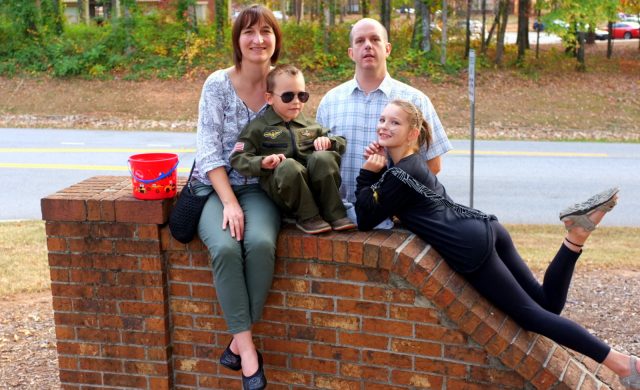
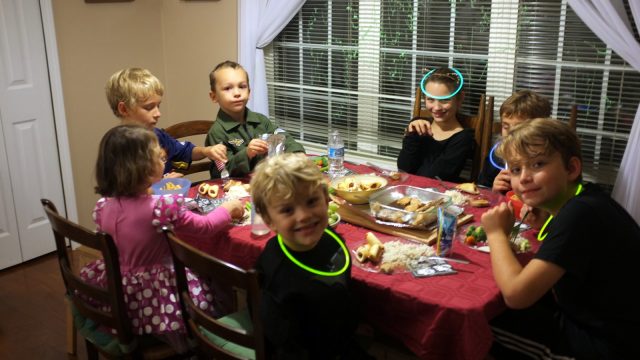
Halloween 2016

dscf1522

dscf1526

dscf1541

dscf1548