matching tracksuits

fun in threes, sometimes fours

g

Day 47: Quartets and Cars

Quartets

This afternoon, while cleaning up the kitchen, putting away groceries, and just generally puttering around the house, I discovered a BBC culture podcast that talks about, among other things, T. S. Eliot’s Four Quartets, a cycle of four poems that have, from the very first time I encountered them during my freshman year in college, utterly enthralled me. Naturally, I listened to it; naturally, halfway through, I was rooting around in the bookcase where we store such books for my thin volume of the poems.

Some passages of those poems seem pulled from the very fabric of existence itself, so fully do they capture the experience of being a finite human. In “Burnt Norton,” the first of the poems, Eliot writes of the frailty of the one thing that links us humans one to another: language.

Words strain,
Crack and sometimes break, under the burden,
Under the tension, slip, slide, perish,
Decay with imprecision, will not stay in place,
Will not stay still.

I read those lines in college at a time when I was growing very distrustful of language having been in a relationship that I ended largely because I felt like the young lady was lying incessantly, for no reason whatsoever. Was it compulsive lying? Was it even always conscious lying? Was it even lying? I could never figure that out, but I learned I couldn’t trust her, and when that happens, there’s only one thing to do.
The second poem in the cycle, “East Coker,” returns to this motif:

So here I am, […]
Trying to use words, and every attempt
Is a wholly new start, and a different kind of failure
Because one has only learnt to get the better of words
For the thing one no longer has to say, or the way in which
One is no longer disposed to say it. And so each venture
Is a new beginning, a raid on the inarticulate
With shabby equipment always deteriorating
In the general mess of imprecision of feeling,
Undisciplined squads of emotion.

“Is he reading my mind?” I thought. The poem seemed to be a summary of my growing interest in the idea of language itself. Such a strange thing — it’s the only thing we have that connects us to other people, yet it’s such a fragile connection, so easily manipulated and bent.

The Buried Car

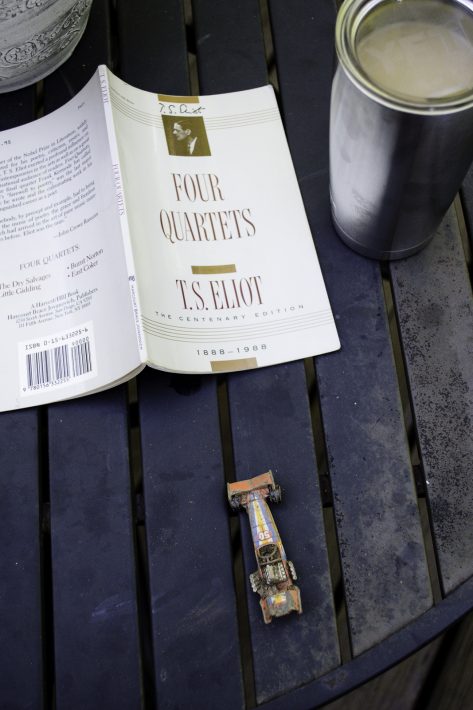
This evening, as I was reading the poems again after dinner, the Boy brought me a little car he’d found buried in the backyard.

“I found it buried in Mommy’s flowers,” he explained.

“It was my car,” I said, wondering if he would remember that it had been among the mass of cars that Nana had saved from my childhood just to give to a grandchild.

“Really?!” He couldn’t believe it. “Why did you bury it out there?”
It’s so rare that we can see someone’s entire faulty thinking process from just one sentence, the entire line of thought backing up neatly, step by step, until the whole story is clear, and it was so different from reality. That was such a moment. I knew I could utterly perplex him with one short sentence.

“I didn’t bury it out there; you did.”

I could almost hear the gears clicking. He wrinkled his brow, cast his eyes upward, and his breathing quickened. “I did?”

Back to Eliot — the very next lines:

And what there is to conquer
By strength and submission, has already been discovered
Once or twice, or several times, by men whom one cannot hope
To emulate—but there is no competition—
There is only the fight to recover what has been lost
And found and lost again and again: and now, under conditions
That seem unpropitious. But perhaps neither gain nor loss.
For us, there is only the trying. The rest is not our business.

I had not really lost the car; he had not really gained it. He discovered something that he himself had owned, had played with, had possibly even treasured.

“Yes, you must have been playing with it when Mommy was working out in the flowers and you accidentally left it there. Or maybe you even buried it on purpose, and you just don’t remember.” More thinking.

“I did?”

“Yes.” And I could even imagine how it happened: E, with more than a handful of cars, following K around as she planted flowers or pulled weeds, never willing to let her get very far away from her, picking up everything to follow closely behind.

Nana told me I was the same way. Probably, we all are.

“You must have been playing with it when Mommy was working in the flowers.”

He shrugged, not convinced, still wondering, I think, how I knew it was mine. “Was it one of your favorites?”

True, I think I can remember when I got that car, which means an event likely forty years ago. When we went to our church’s annual fall retreat, we had two-hour church services every day. To keep me quiet when I was a child, Nana and Papa gave me a new Matchbox car every day at the start of the service. I believe that’s where this one comes from. But it could simply be that I just remember playing with that old car.

Are there any of my old toys I wouldn’t recognize? I rather doubt it in a way. Toys are so precious to children — at least they were to me and to my own children — that they form an integral part of our identities. Like the music we listen to as adolescents, the toys we love as children reflect our interest and how we see ourselves.

I didn’t tell him all that, though. Too much back story, and so much of it so very different from the reality the Boy experiences.

“Two-hour church every day?! Why would you do that?” I can hear him ask. Why, indeed.

Back to the Quartets, this time, from “Little Gidding”:

There are three conditions which often look alike
Yet differ completely, flourish in the same hedgerow:
Attachment to self and to things and to persons, detachment
From self and from things and from persons; and, growing between them, indifference
Which resembles the others as death resembles life,
Being between two lives—unflowering, between
The live and the dead nettle. This is the use of memory:
For liberation—not less of love but expanding
Of love beyond desire, and so liberation
From the future as well as the past.

It’s attachment to things that makes us remember those toys, I guess, and the sense that they are part of us — thus, attachment to self.
Day 46: Snakes, Dogs, and Balls

Some years ago, there was a little flu epidemic here in the upstate. I'd forgotten all about it until I read the entry from the "Time Machine" widget at the bottom of the page.

I wrote,

Students come running into the classroom, desperate not to touch anything but the bottles of hand sanitizer that they’re most eagerly sharing amongst themselves. They sit down and put their hands in the air as if they’re being held up at gun point. They open doors with their feet and they laughingly refuse to touch the copies of Much Ado About Nothing we’ve been using in class.

A quick look around the room confirms my suspicions: I won’t be able to accomplish anything without dealing with this first.

That was 11 years ago now, and it seems so insignificant compared to what we're living now. Our flu outbreak affected a small part of the state; this viral reality is affecting the entire world. Magnify something and its significance seems often to increase exponentially like the curve of new cases in many places. That curve seems to have reached its summit in some areas. Everyone seems eager for that to be the reality, though. Do we have the maturity and self-control needed to keep the curve from turning back upwards again? I don't know.

Looking for the snake E and our neighbor saw

I know the kids have simply settled into the new rhythm and joke about it. The Girl is having an easier time than the Boy in some ways because she's in more constant contact with her friends through Facetime -- they sometimes just leave it on while they're doing other things, as if to have a companion near.

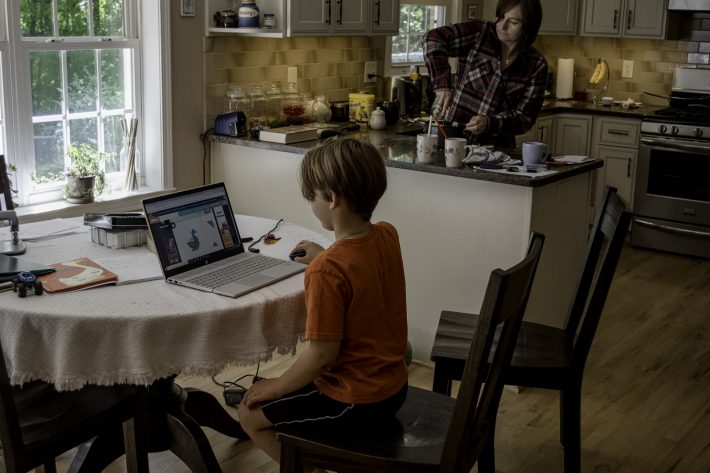
The Boy gets to see his friends daily with their whole-class Google Meet. (An aside: It's amazing the difference between elementary students and middle school students when it comes to these online meetings. When E's class meets, almost everyone is there; when my classes meet, almost no one is there. I suppose there's more parental involvement in the younger children's lives.) Still, that's hardly a substitute for their usual day together, which includes a bit of down-time to talk and of course recess.

Another entry from the nostalgia widget:

I wrote,

My reaction over the years has changed. In the past, I was just trying to survive at this point in the year. Perhaps that was because of a lack of clear and clear-headed goals for students; maybe that was a result of my inexperience and ineffectiveness; possibly that was because I had some exceptionally challenging students. Or perhaps it was all that and more. At any rate, I find myself eager, after a short break, to begin again. A sufficient “short break” in this case would be about three weeks or so, but I’m fortunate that we get about four times that.

That short break I was referring to was a hypothetical three-week summer break before getting back to school. I was suggesting that perhaps the whole summer is necessary. Indeed, it's a luxury. But now -- we'll have a break from mid-March until mid-August, and even then, I doubt we'll get back to normal.

In the end, "normal" will have to shift. Our state superintendent is already talking about possibly going to school in shifts to maintain an appropriate distance. I'm assuming that would mean dividing the eighth-grade student body in half: group A goes Monday and Wednesday and group B goes Tuesday and Thursday. Friday? Who knows. Who knows anything at this point. It's odd that the longer this stretches out, the more the uncertainty in some sense.

Prayer

Every day before every meal, Dad prays. He's done that for my entire life. Except for meals in restaurants, he has begun every meal with a prayer. And it's almost always the same prayer.

"Almighty, most great, and holy Father, we come before your throne..." Thus he begins -- the magic words. It's a good example of how some prayers seem to be automatic, without much or any thought at all. It just sounds reverent. "Almighty" and "most great" mean the same thing. If God is "almighty" he's definitely the "most great" being.

And why "most great" instead of "greatest"? It just sounds more -- I don't know. Old fashioned? (If that's the case, why not use "thee" and "thy" like so many do? "We thank thee for thy mercies" and that type of thing.)

Another thing he says that just confuses me: "Bless this food. Use it to nourish and strengthen us." Just what is this blessing? What does it accomplish? Is it healthier? Is it less fattening? Is it better tasting? And could a Christian differentiate between blessed and unblessed food?

The "use it to nourish and strengthen us" bit is especially confusing: is this a suggestion that, without these magic words, the food would merely sit in our bellies and pass through our colon without any effect at all? Isn't food digestion just a natural biological process that in no way depends upon anyone's will? I suppose there's the idea that God set in motion the laws that make all this happen, but even if that's the case, they continue running without him. Our bodies are going to get nourishment from food with or without the magic words.

Always after this bit about nourishing and strengthening us is this odd request: "Keep us in your holy and righteous name." What does it mean to keep someone in someone else's name?  I suppose it's like in John 17:11, having somehow to do with protection "protect them by the power of your name," but that doesn't really make matters any clearer. How does the power of someone's name protect us? Only in the sense that the offending person is afraid of the protector's name, in other words, afraid of what the protector might do to them. In this case, what will the Christian god do? The days of Biblical smiting are long gone: he doesn't seem to do much of anything remotely as impressive.

Day 45: Checkers and Rain

Day 44: Chess and the Mess

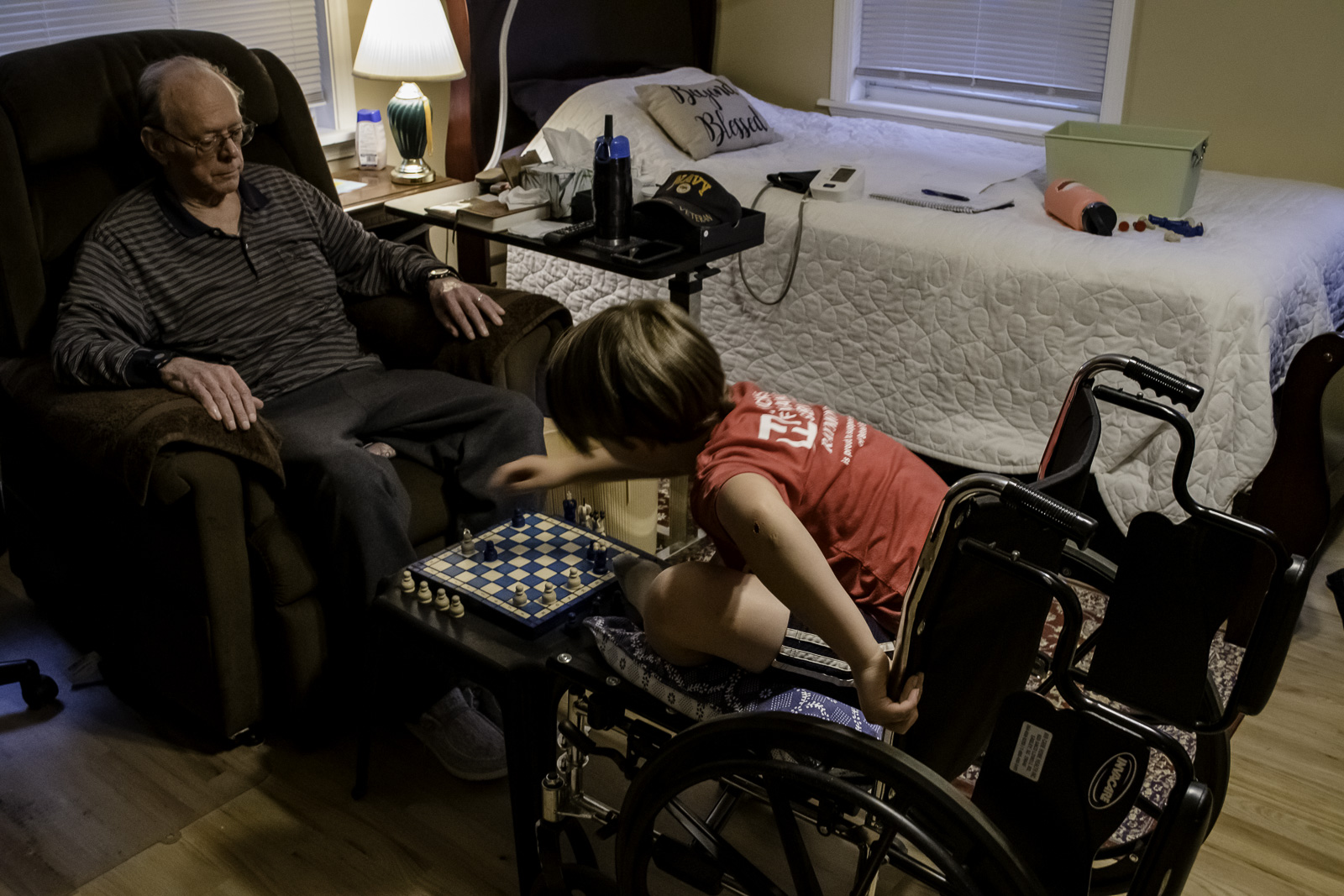
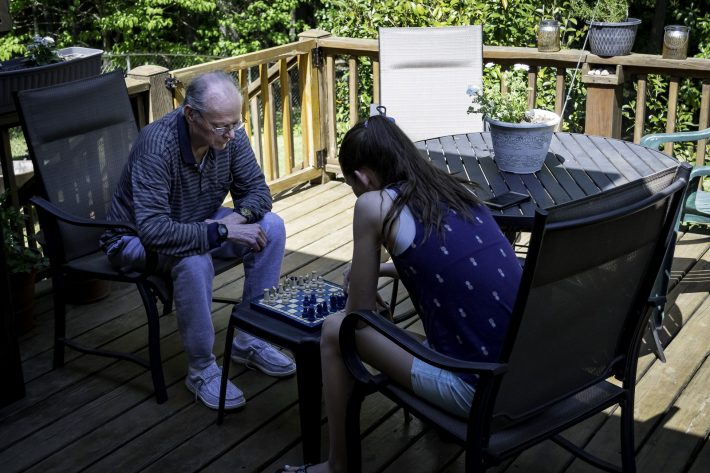
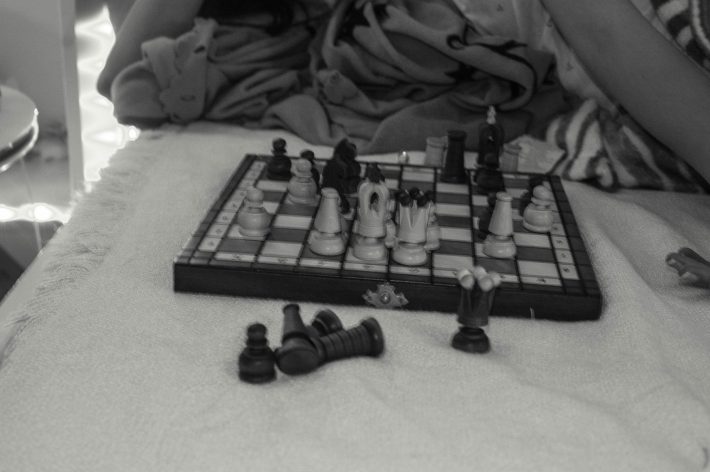
“Daddy, let’s play chess!” Normally, I wouldn’t say no to this. I enjoy sharing chess with the kids, so when the Girl suggested we play this afternoon, I was more than willing. She went out on the deck, where Papa was taking his afternoon fresh air, and began setting up the board. And then I had the idea.

“Why don’t you ask Papa if he‘d like to play?” I suggested.

Papa used to be obsessed with chess. He taught me how to move the pieces and then nothing more. This was because, by the time I came along, he’d given up chess. It was taking over his life, he said. He was lying in bed thinking of lost games. I know that feeling. So I wasn’t sure if he would play a game with her. But of course, I knew he would — he’s not going to turn down his granddaughter.

It was an up and down game. I sat by them, reading Paul Auster’s The Locked Room, looking over every now and then to see how things were going. Papa was up; L was up; Papa was up; L was up. It was a very uneven game until the end, when L just fell apart.

During all this, E was Facetiming his best friend from school. They were talking about Pokemon, baseball cards, favorite cartoons — second-grader stuff. He’d suggested it to his friend while the whole class was having a Google Meet in the morning.

“E, do you have a question?”

“Yes! I want to ask N when he can Facetime because it’s been ridiculously long since the last time.” And so we set it up for this afternoon.

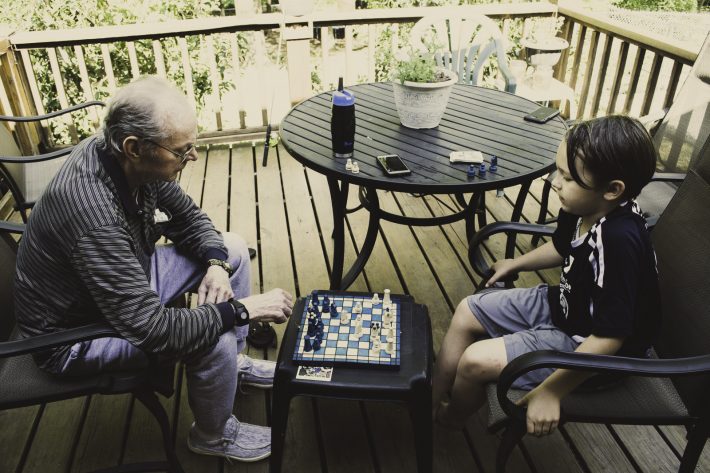
Once he came outside and saw the chess game, though, he wanted to play Papa.

Things didn’t go much better for him — Papa went undefeated today. Which was good for Papa.

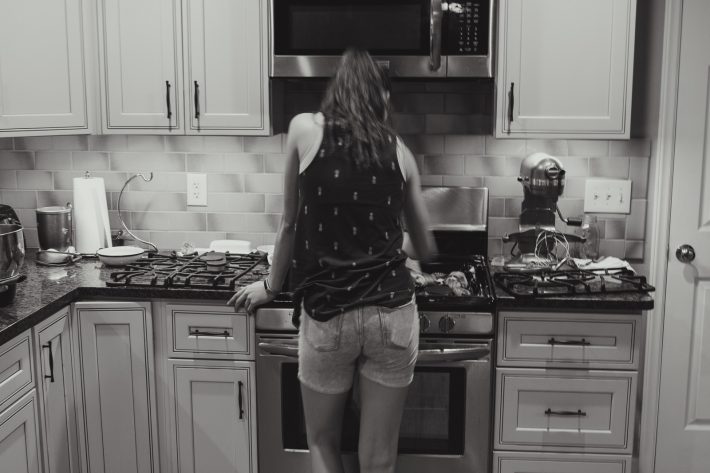
In the evening, L decided she wanted to bake cookies and try a formula for homemade Playdough. One might think this is something that would thrill parents, but K and I have learned: the Girl is not the best cleaner. She talks fast, walks fast, and cleans fast, which means she cleans poorly. It’s a thirteen-year-old thing, I’m certain. Tonight was no different. So I called her back down to the kitchen and pointed out the little things she’d missed.

She fussed; she argued; she pouted. But in the end, she did it.

Day 43: Cooperation

School in the morning. 

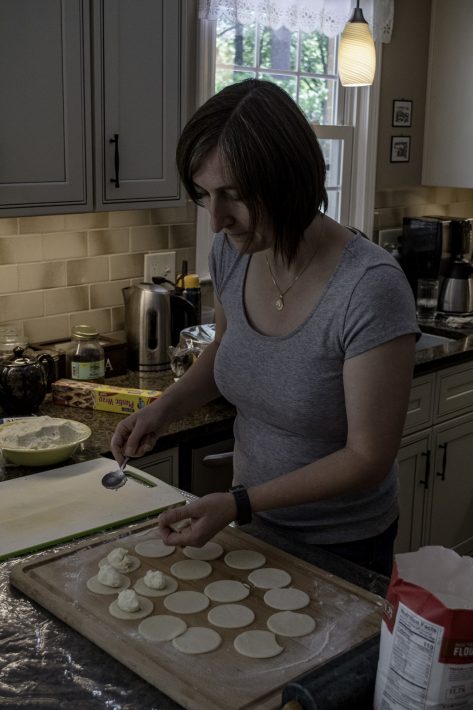
Pierogi in the afternoon.

Games in the evening.

Day 42: The Sermon and the Wall

The Sermon

I went out for a walk this morning. It was sunny and warm, and everyone else was busy doing something, so I couldn't resist. Listening to The Brothers Karamazov as I walked, I heard an amplified voice over the reader's voice. Sometimes, when the conditions are just right, we hear the announcer at the local high school's football games. Of course, there are no such games now, and there wouldn't be any on a Sunday anyway. I paused the recording, stopped walking, and listened carefully. It took a moment, but I realized that it was a preacher delivering a Sunday morning message to the faithful as they sat in their cars. Drive-in church service.

As I walked a little further, I heard a little later furious honking coming from that direction, as if twenty or thirty cars were all randomly honking their horns. I took the earbuds out again and listened for some time.

Through the trees, I heard, "But we don't have to fear death! Christ Jesus has conquered death!" Fairly typical evangelical formulation. "Isn't that wonderful?" And then the horns began again, and I realized what was going on.

"They're honking their amens," I muttered to myself.
The Wall

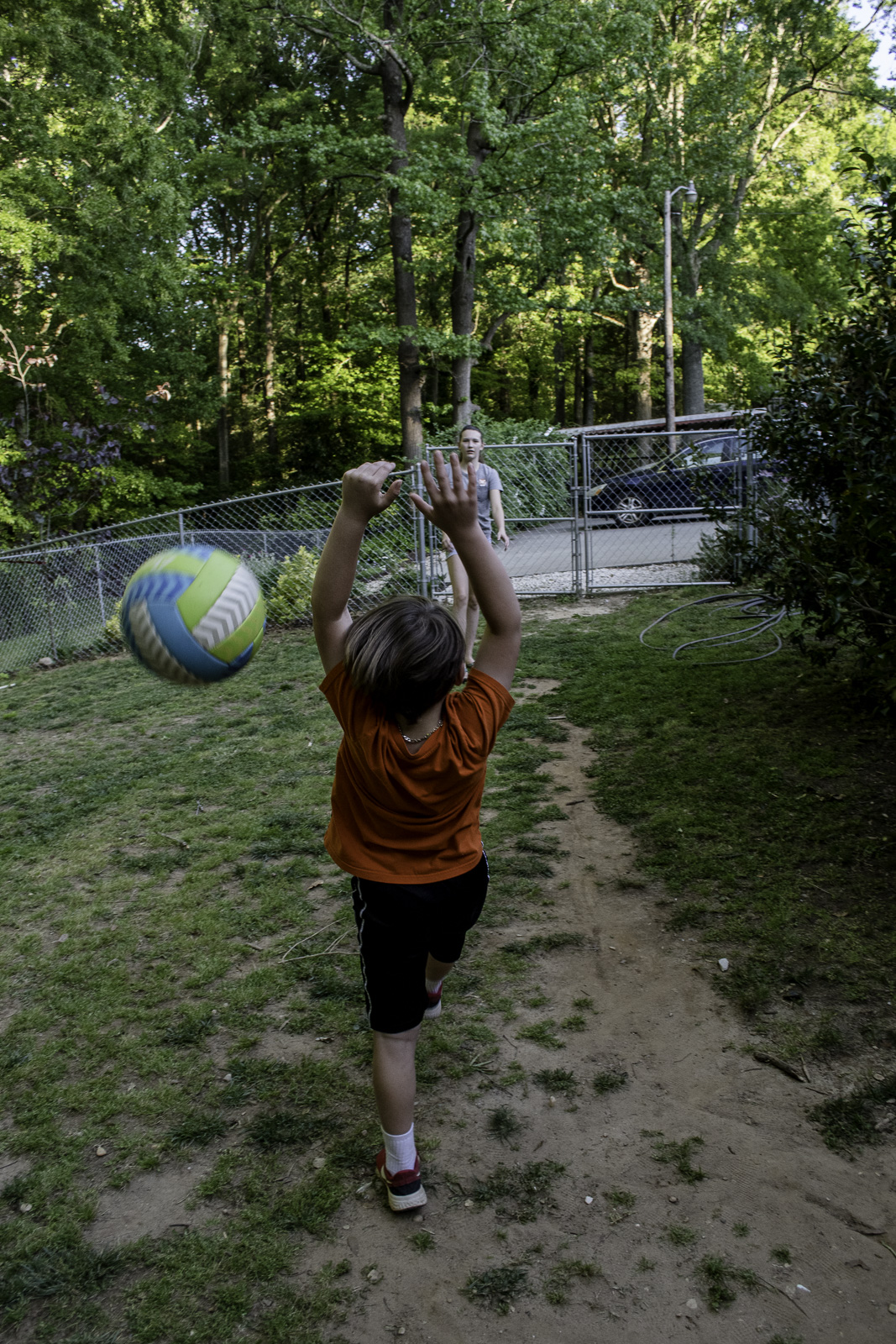
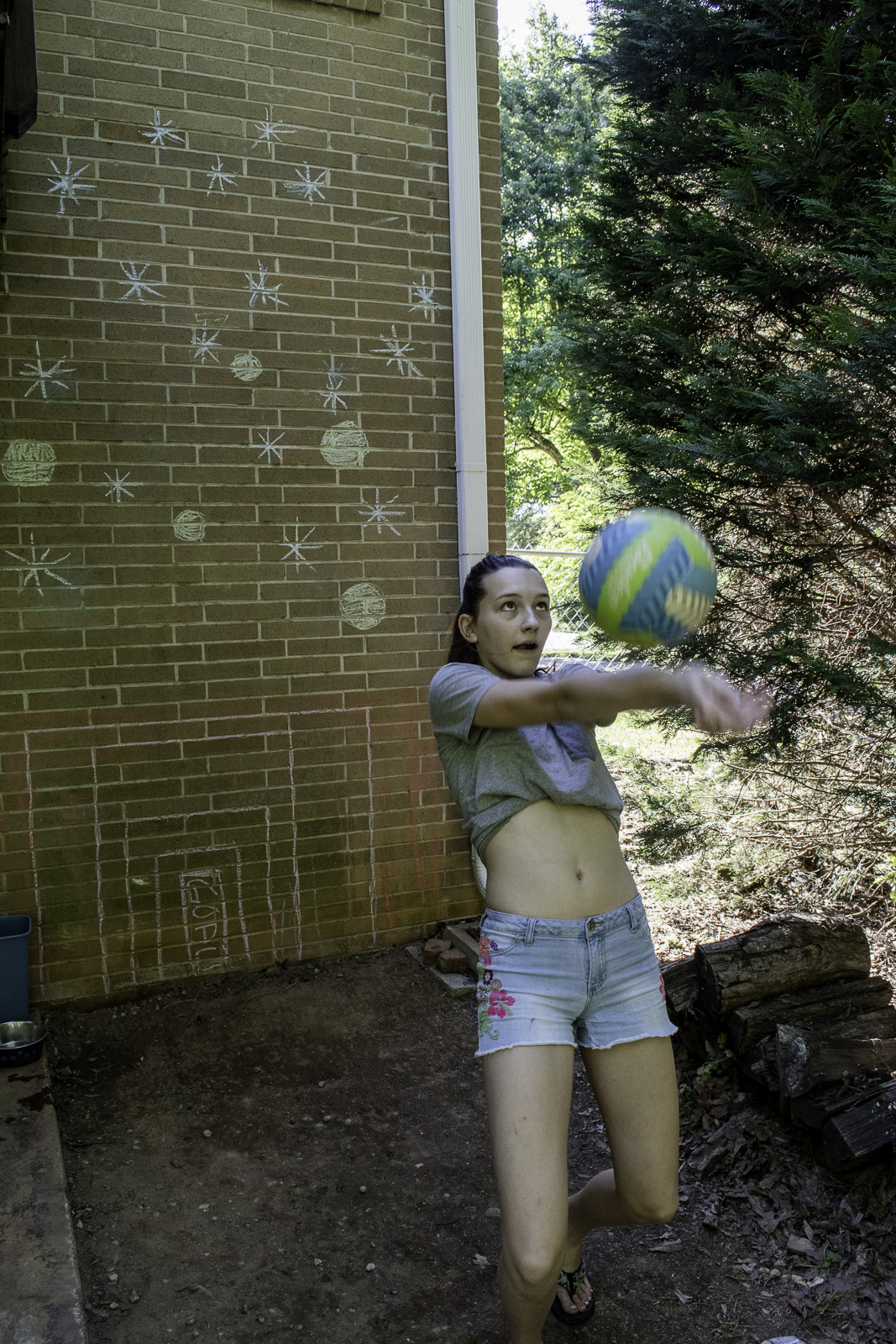
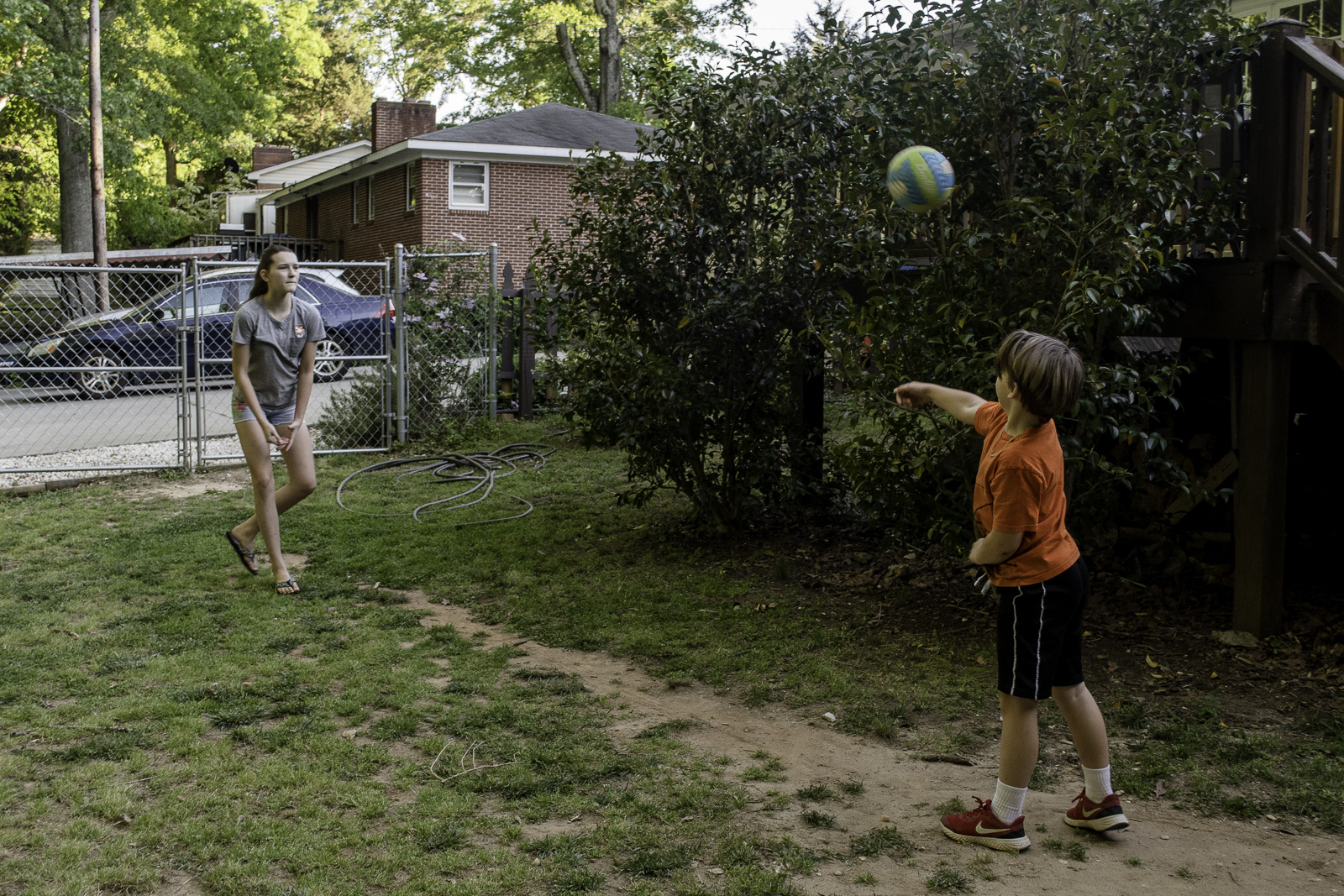
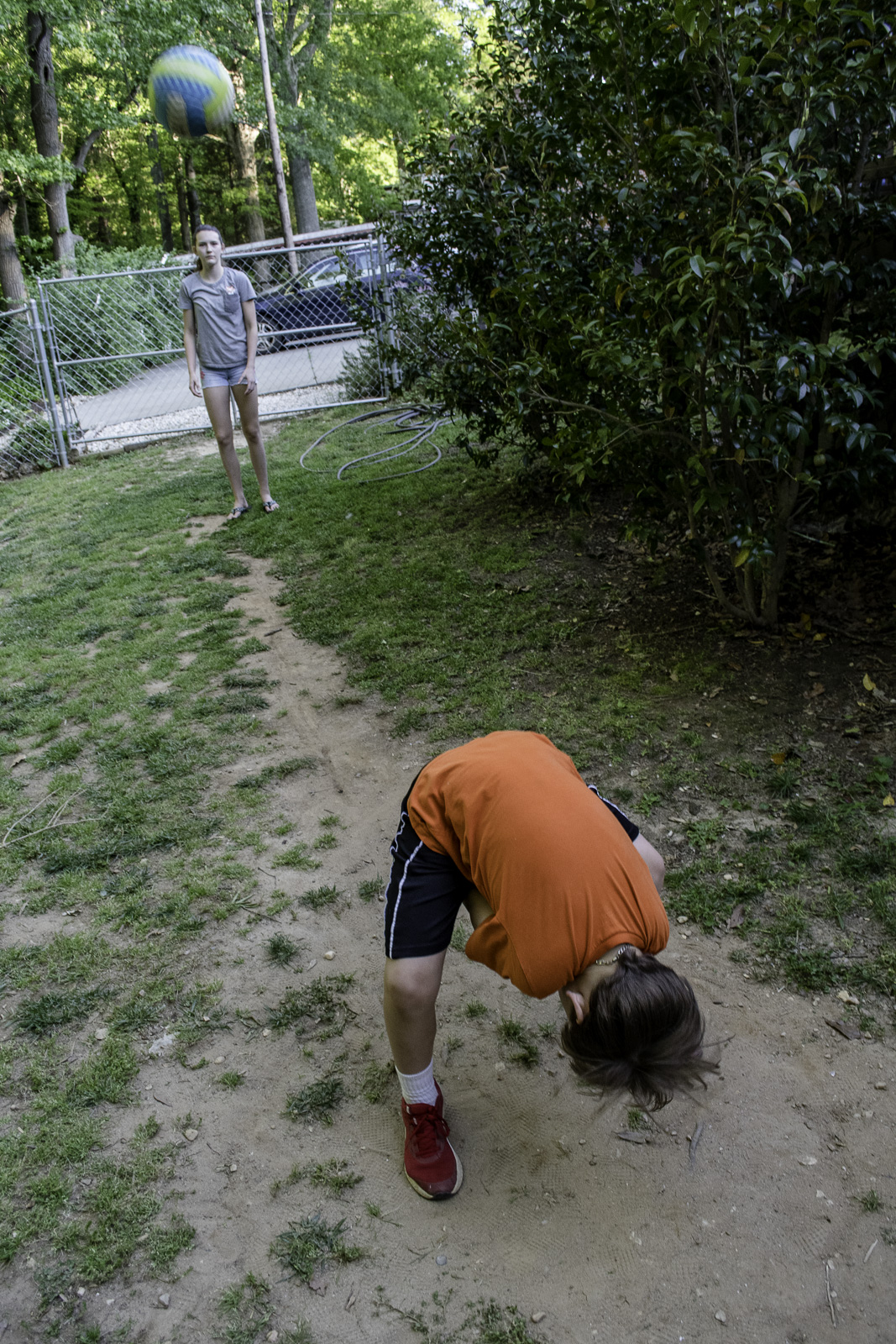
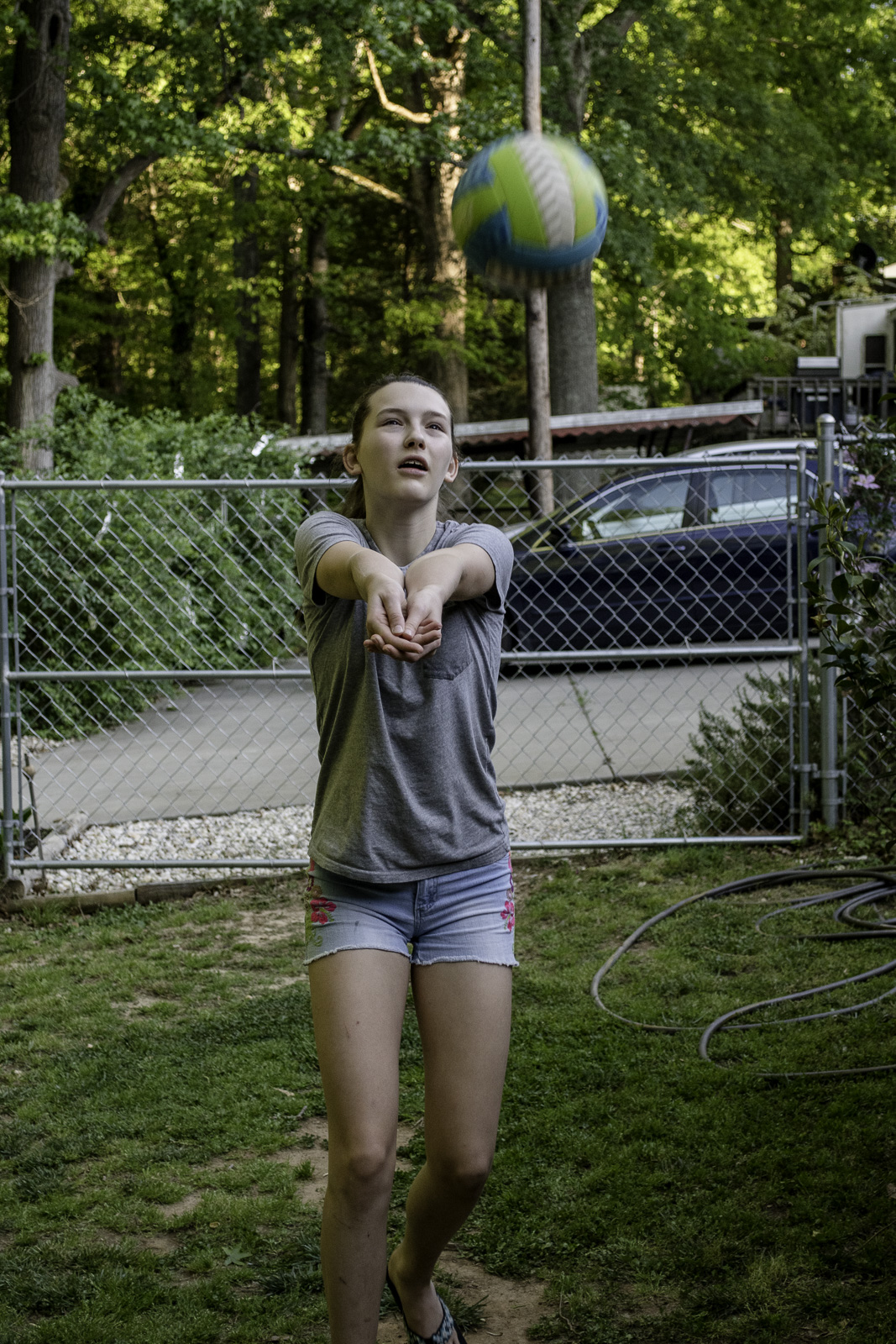
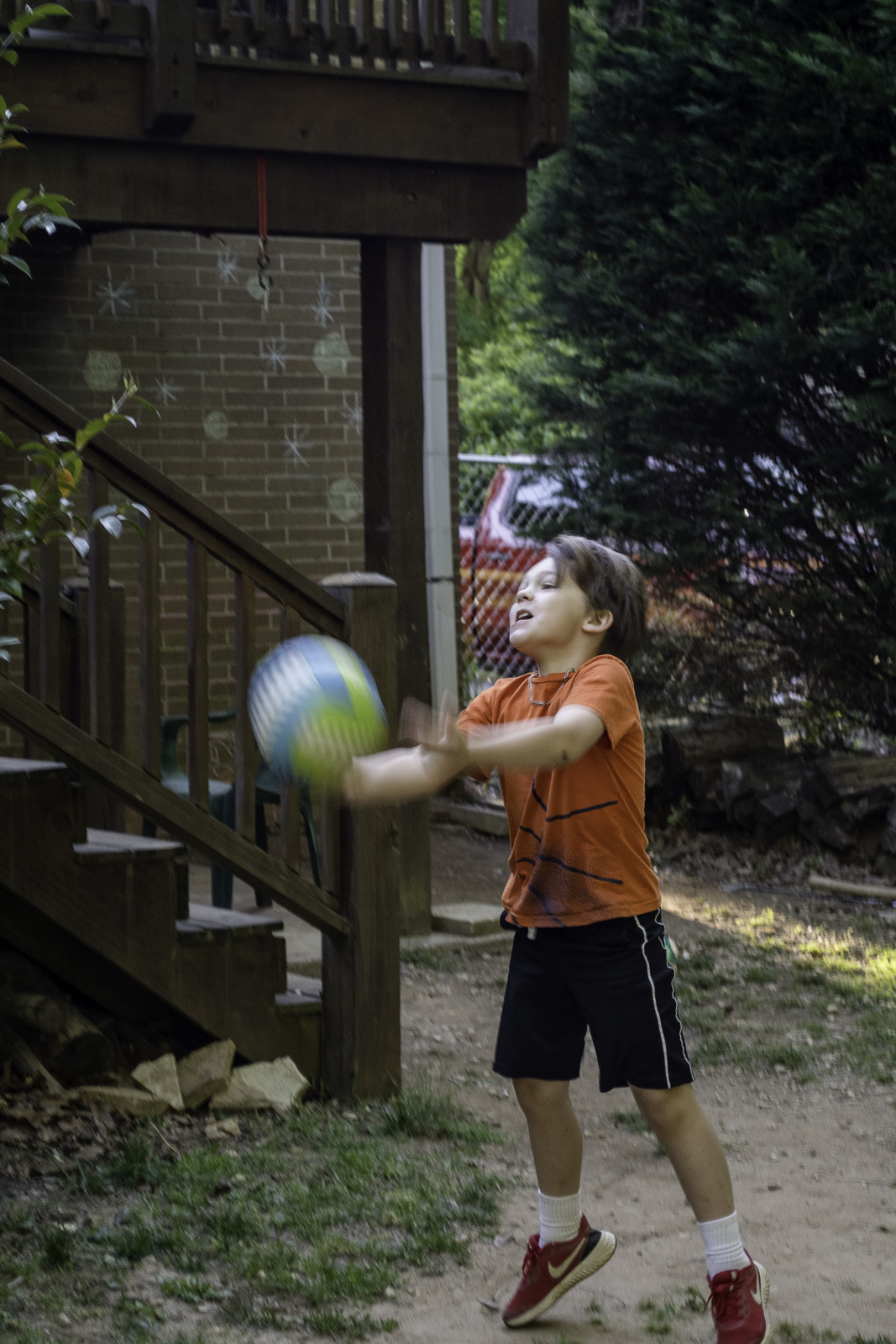
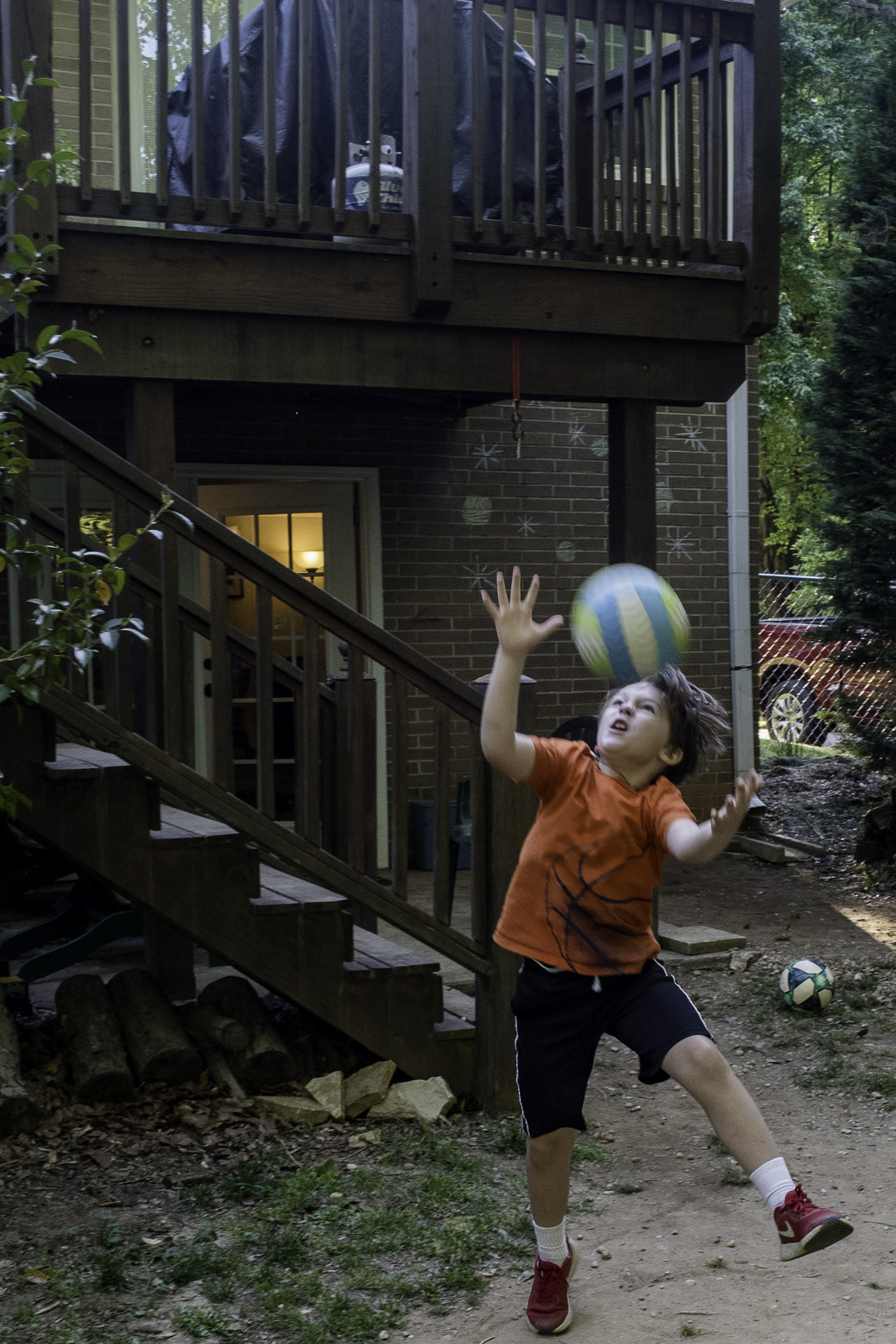
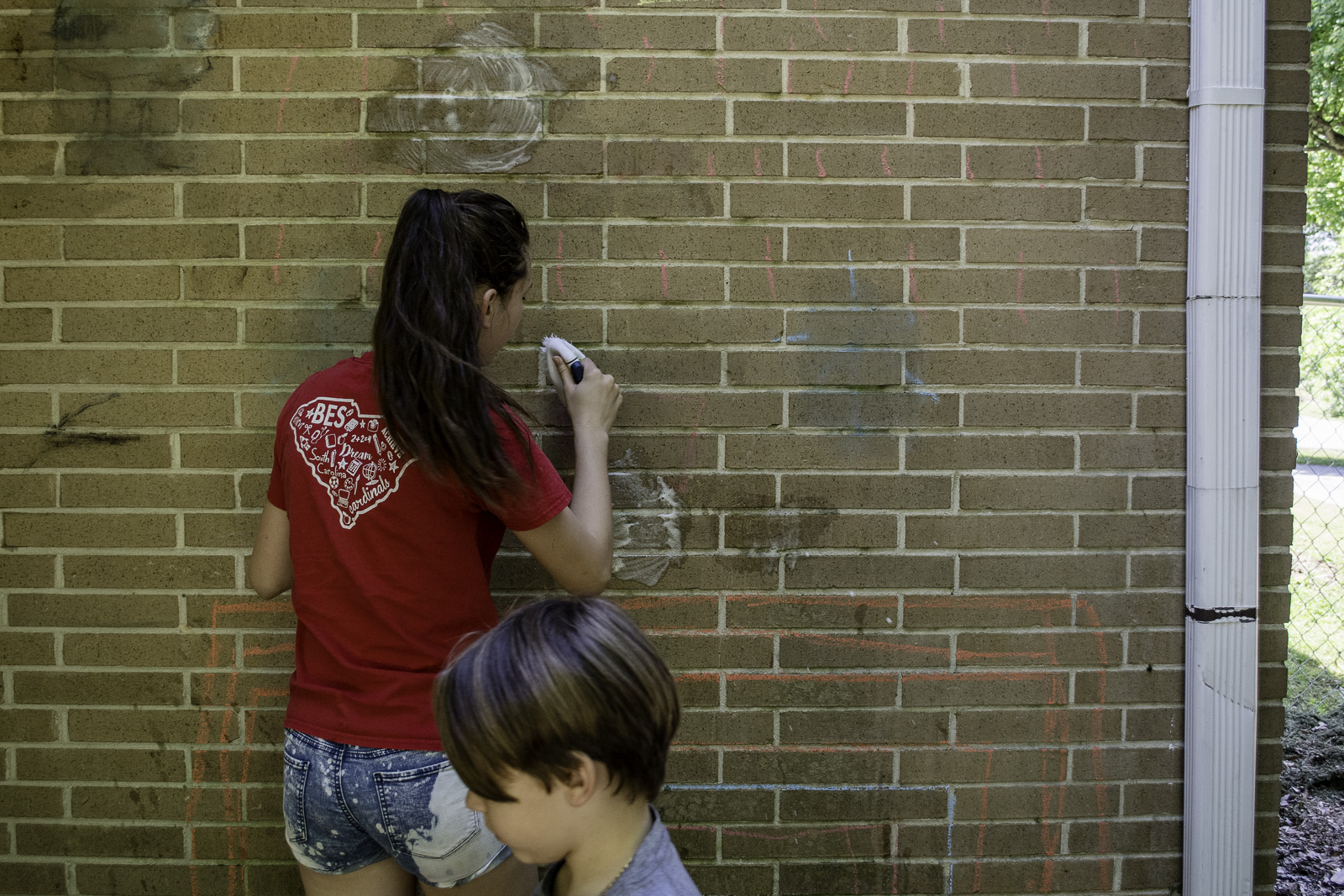
The kids have taken the back corner of the house as their practice area: the Boy kicks his soccer ball against the wall; the Girl uses it for volleyball. They decided to use chalk to make some targets to practice accuracy.

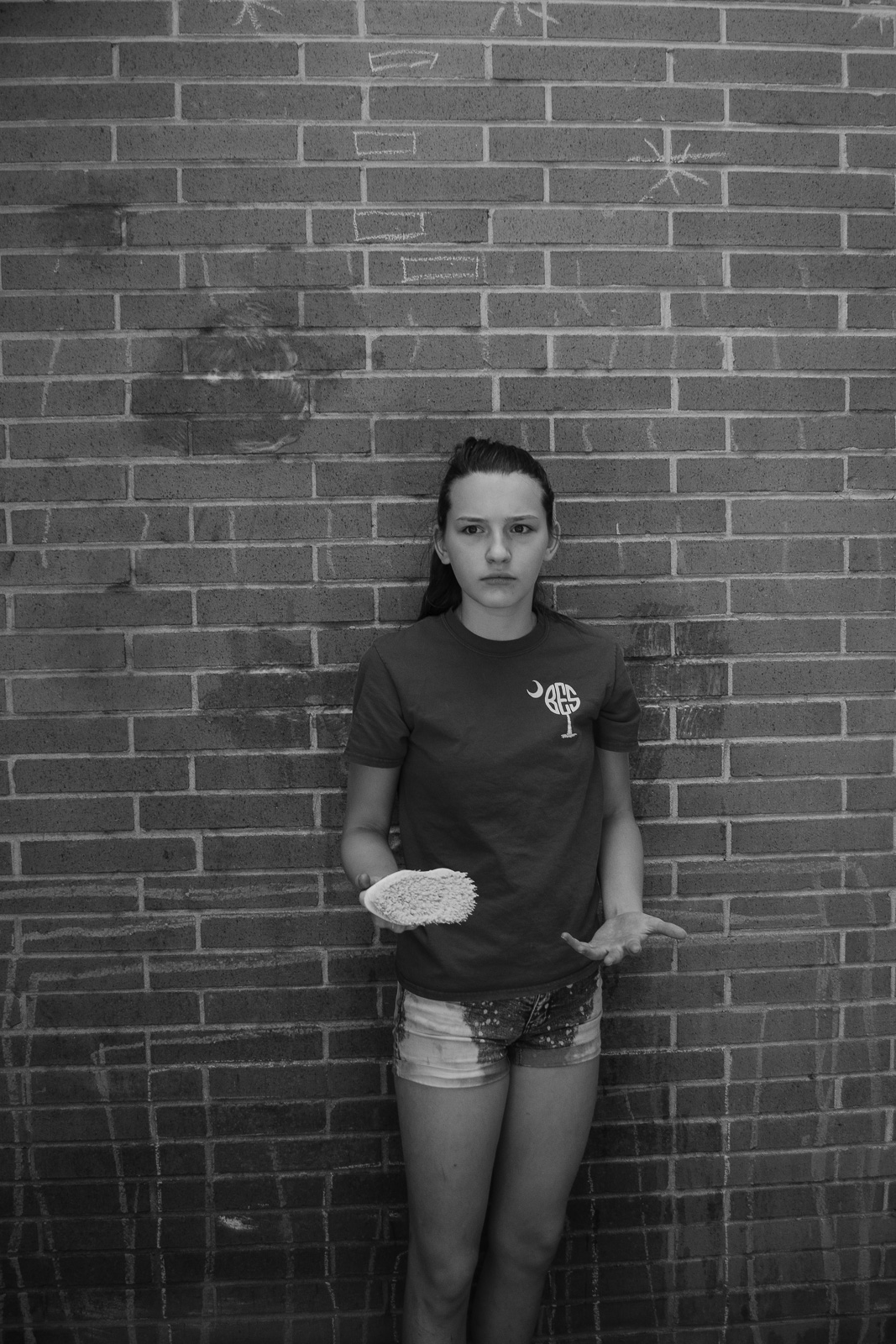
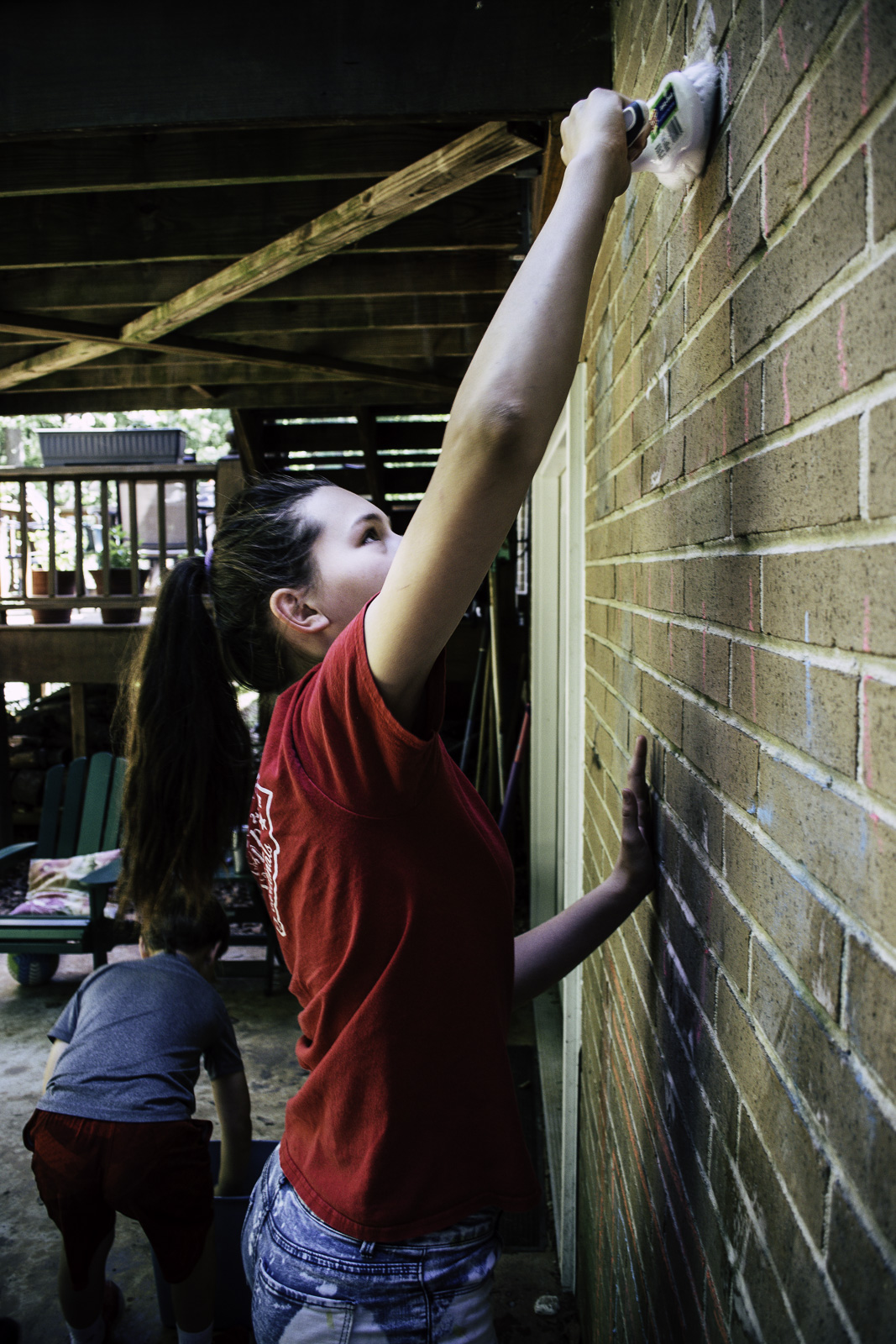
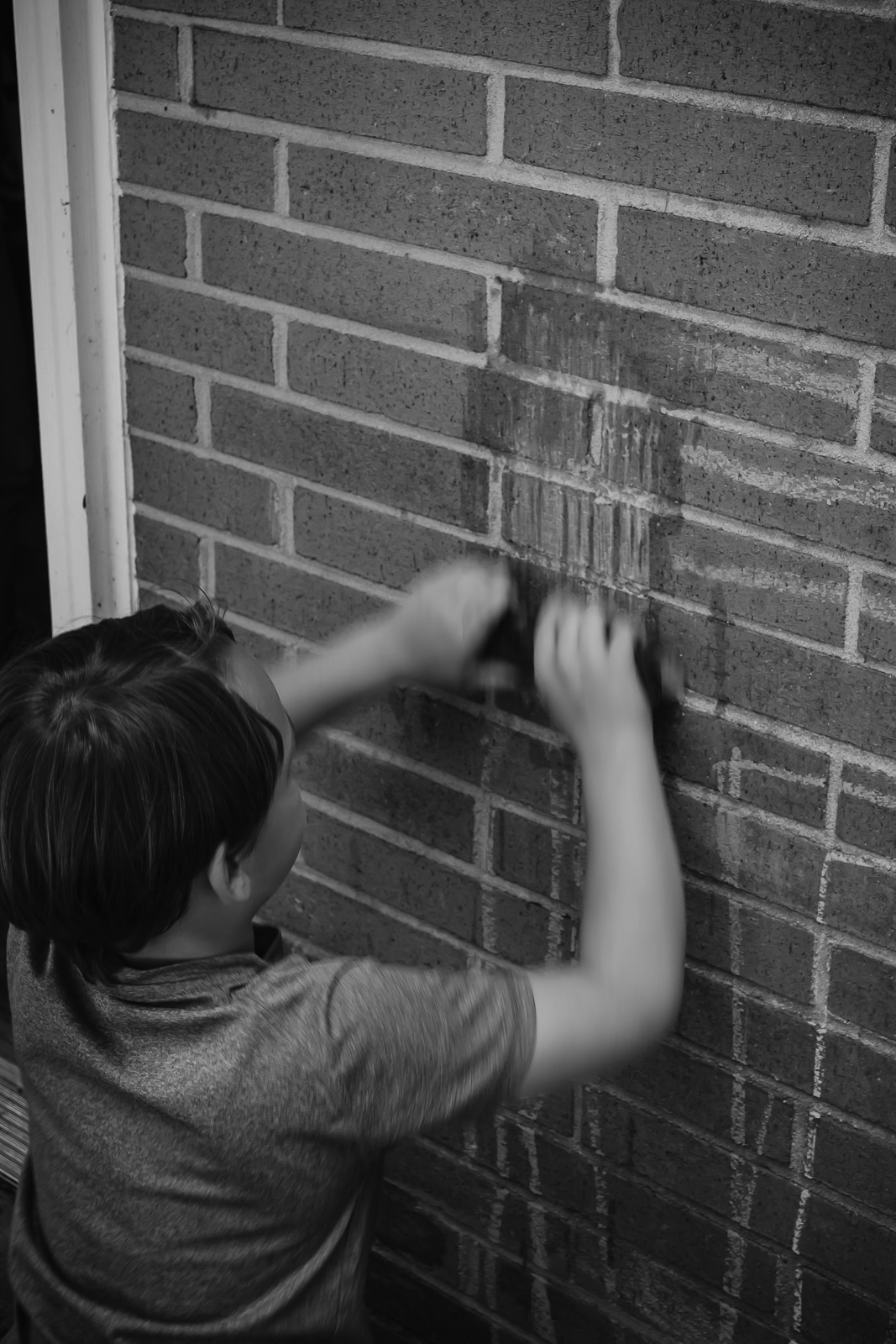
The Girl had it all planned out. Colors, target shapes, everything. And then the Boy "messed it all up," using colors at random for no other reason than wanting to use that particular color. And so they cleaned it and began again.

Day 41: Cleaning

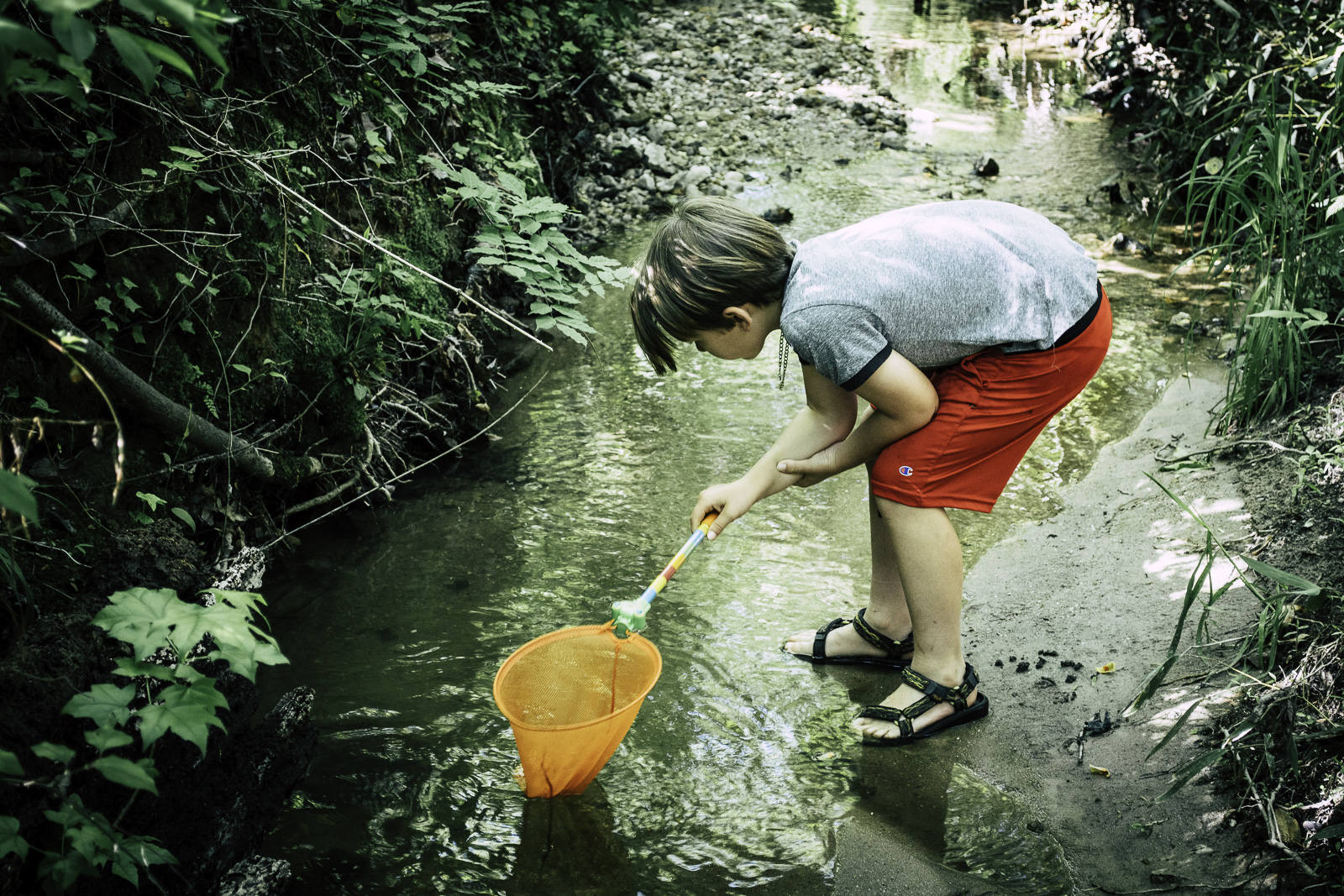
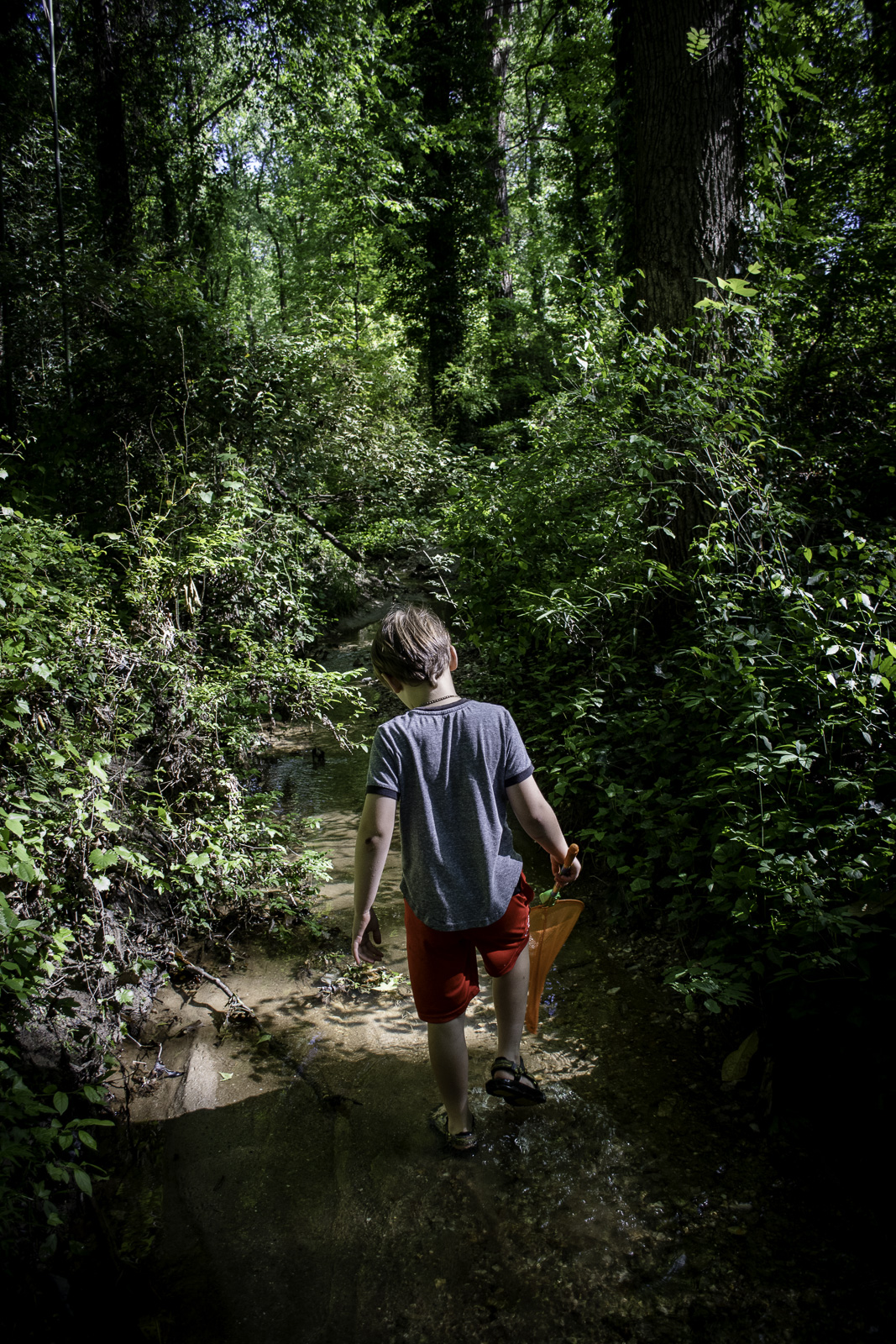
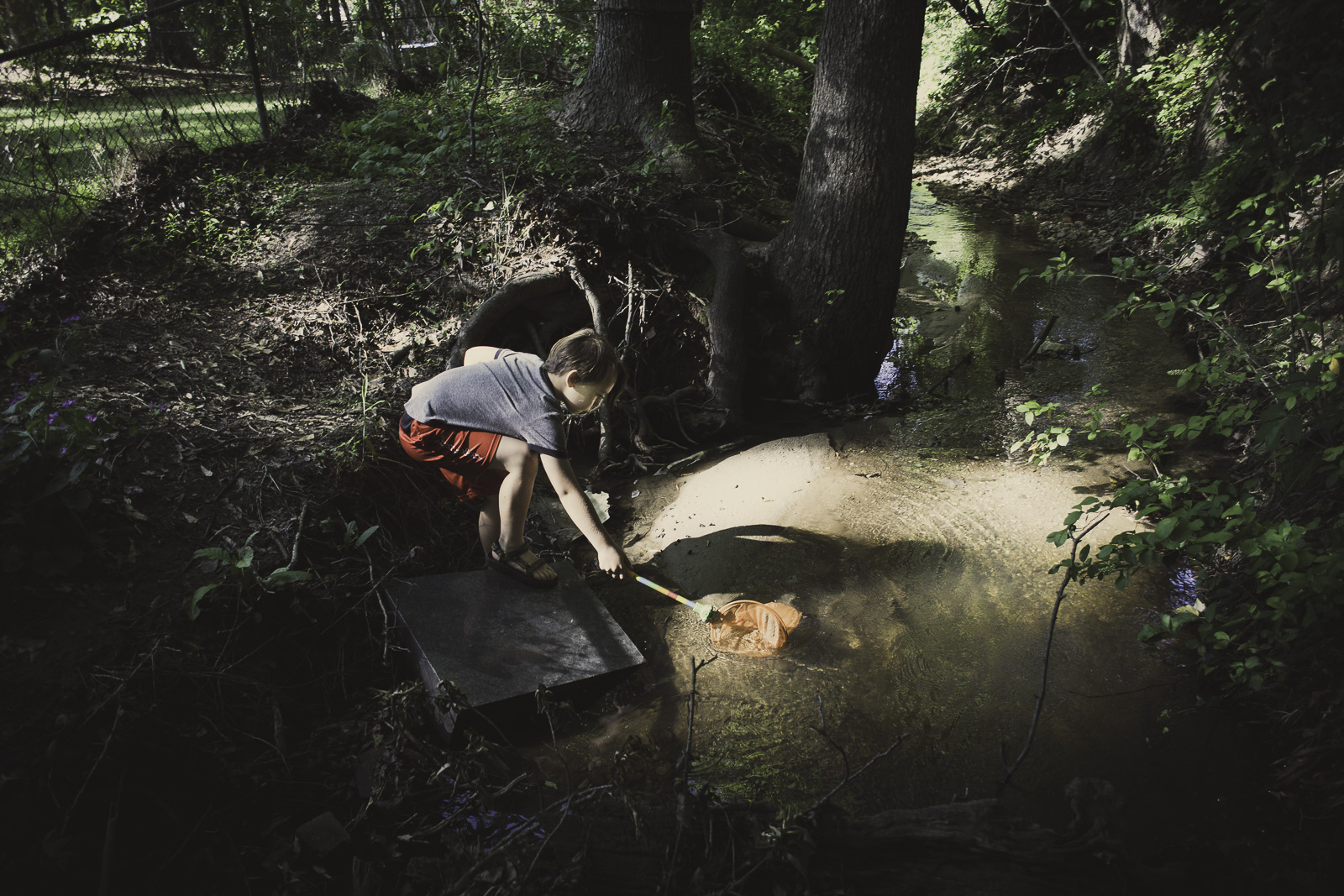
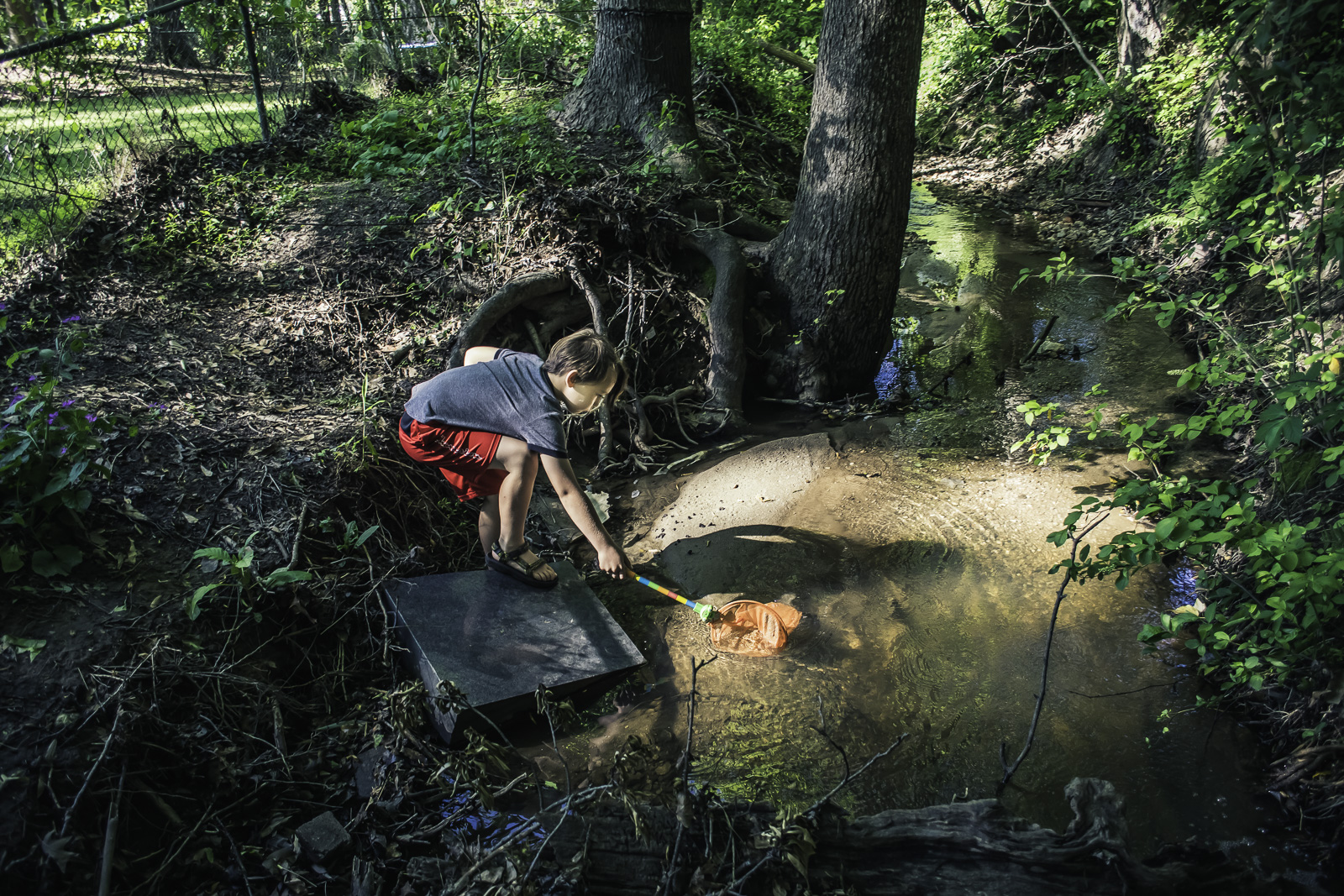
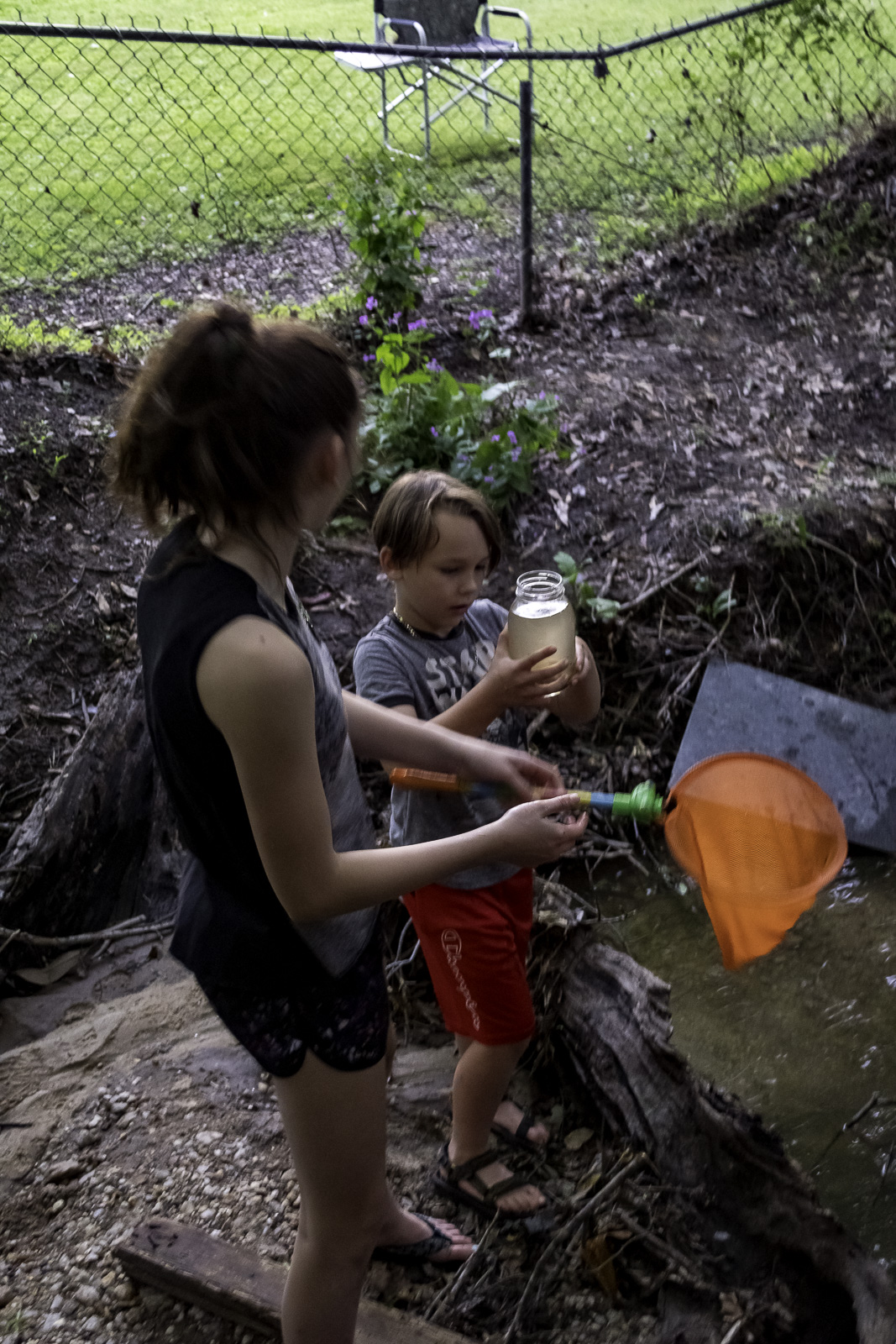
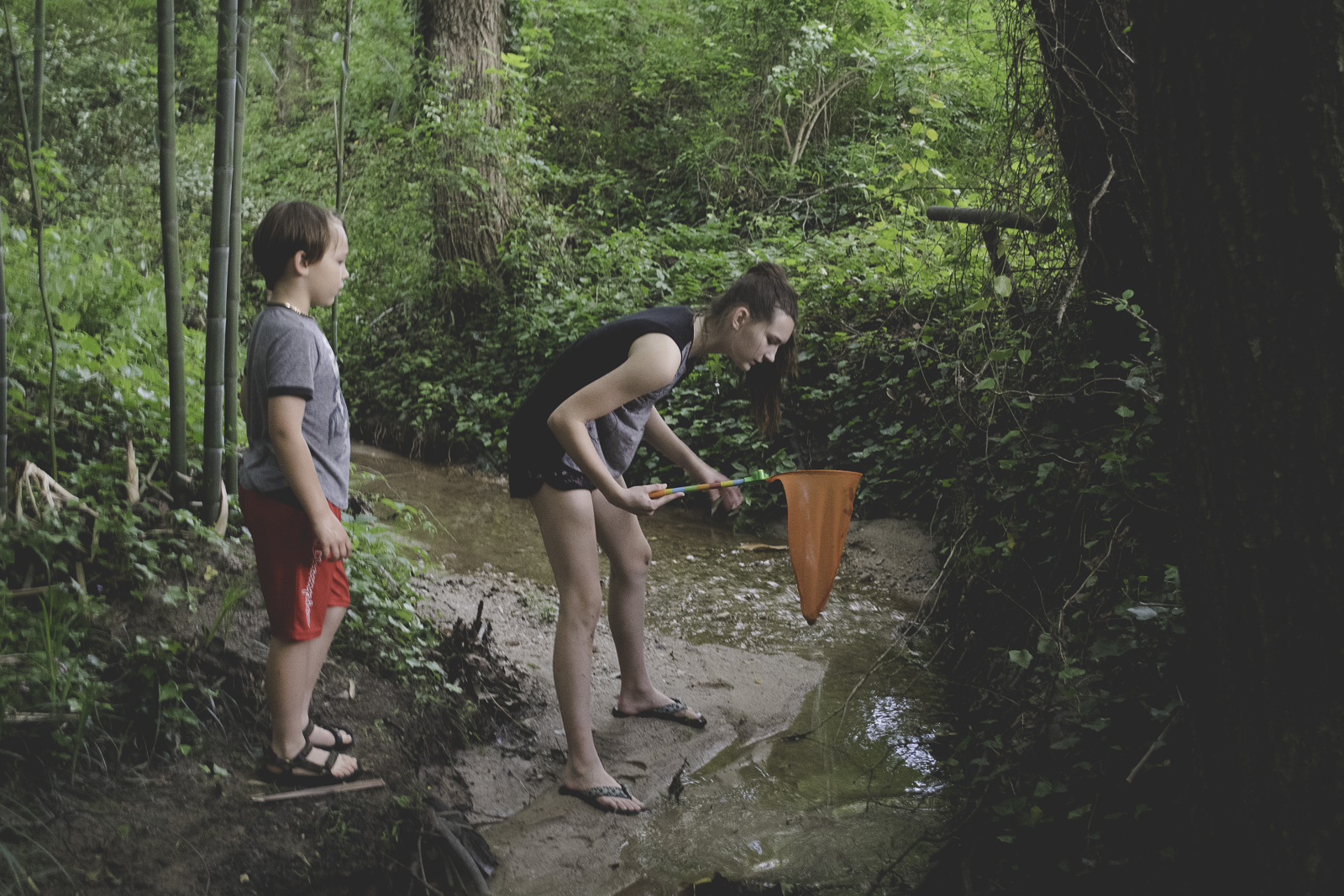
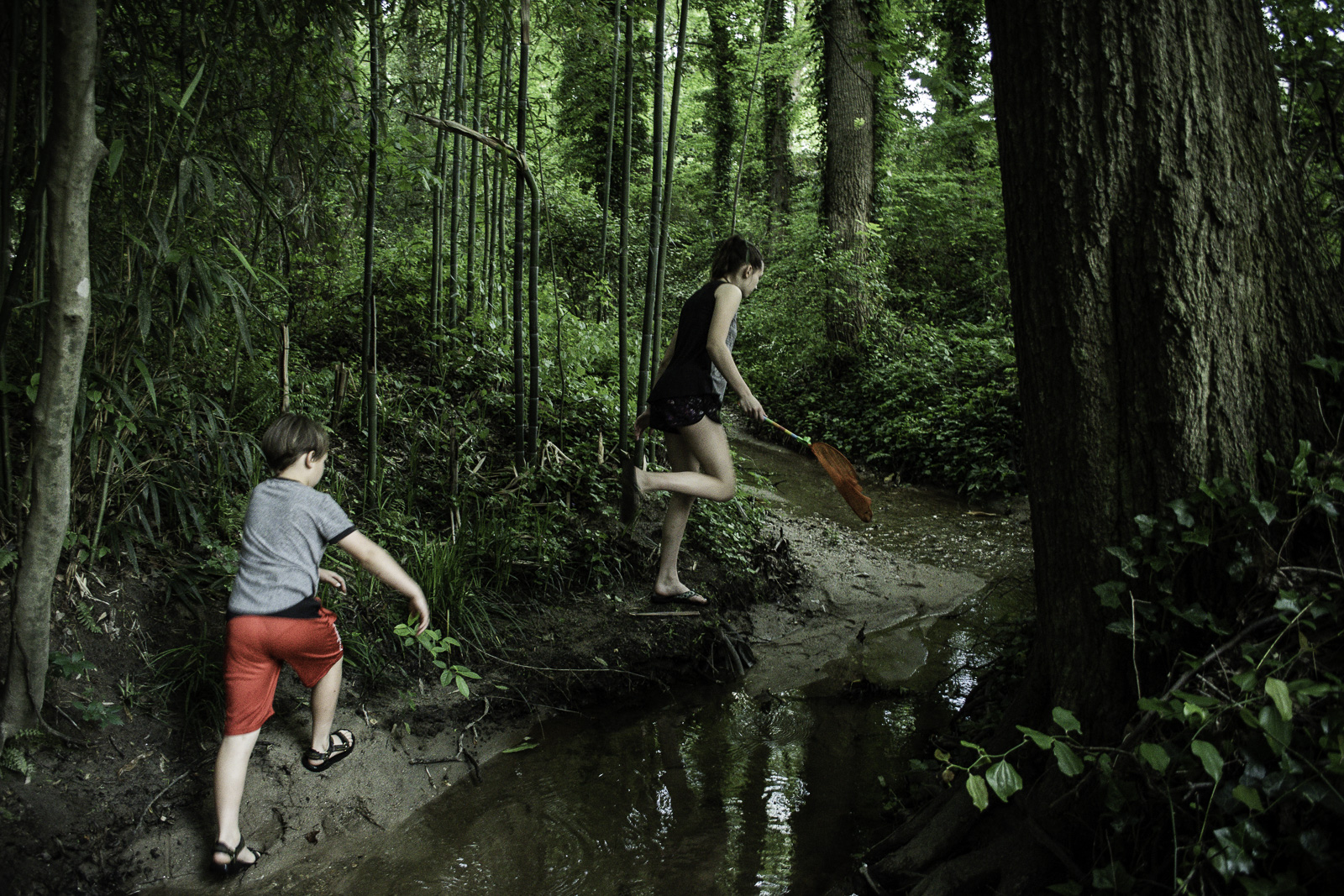
Day 40: In the Creek

Day 39: Rain

It rained today. Almost the entire day. Being stuck at home is not that bad when we can go outside, but being stuck in the house makes for a long day. In the grand scheme of things, that’s a petty issue, I realize. But such was our reality today.

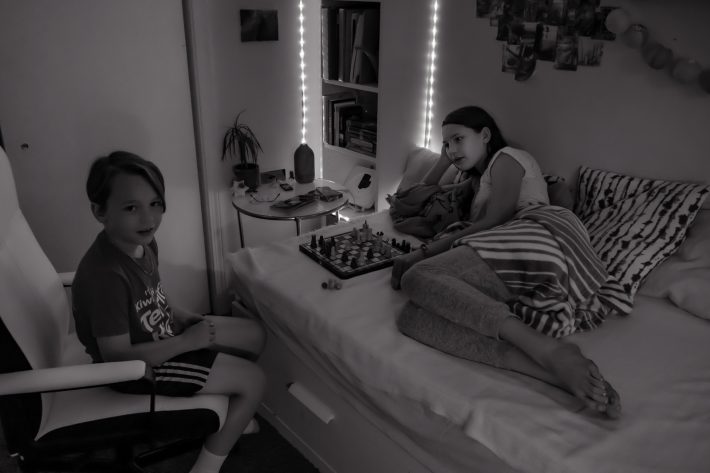
What’s more, E swears he’s tired of all the games.  Sorry? “No!” Monopoly?  “No!” Uno? “No!” He was up for chess, but one can hardly play three-person chess.

Well, it exists, but I’ve never played it, and we don’t have a board.