The board of directors of the charter school, where I now teach, has a meeting this evening. The principal of our school asked me to have my students in the leadership class to write brief notes of gratitude to the members of the board of directors.
"What else can we write other than 'thank you for our school?'” they asked.
I suggested they could be specific: “Thanks to them, you can attend a school that has a bit more freedom in its curriculum than the average public school.”
“You mean, they’re the ones who decided we don’t have to do benchmarks?” one student asked.
When I confirmed this, I can see that several of them immediately began adding that to their thank you notes.
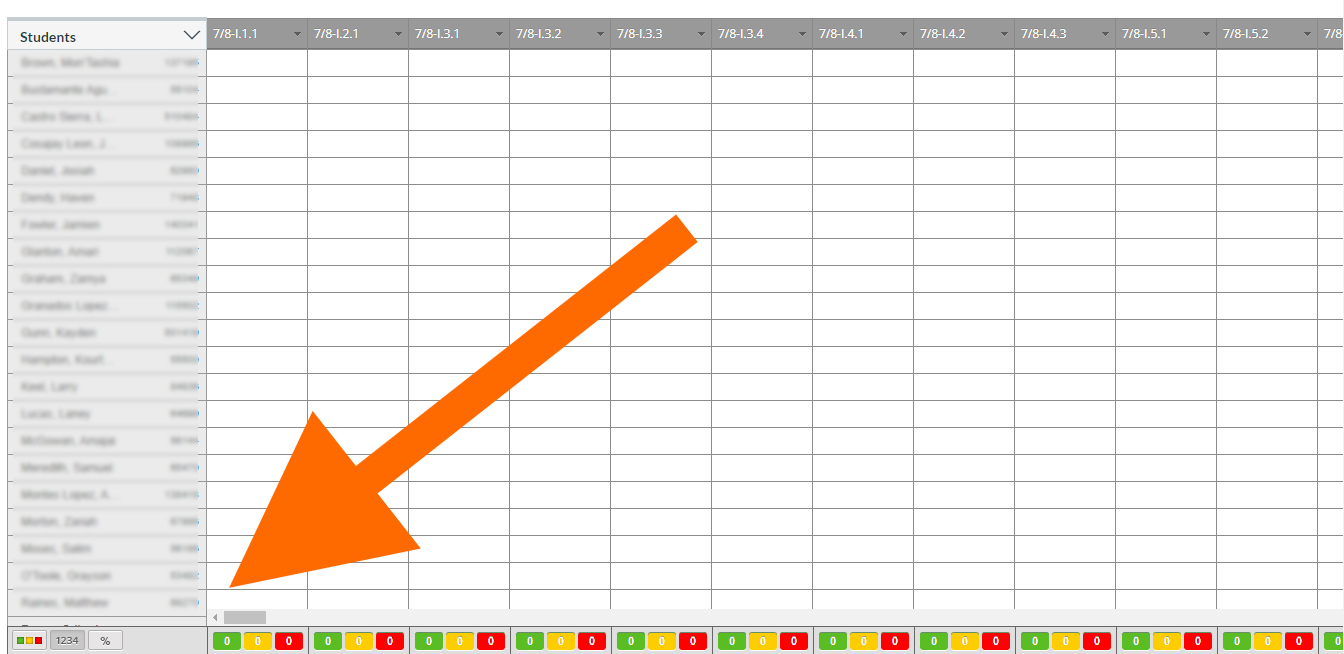
Later in the day, when the principal came by to pick up, thank you notes, I mentioned this to her. She said that some Greenville County schools are even worse. Apparently, they had a pretest recently for the benchmark. This is, I’m assuming, so that they can even use his first quarter to measure growth somehow. Here’s how students started in the first quarter; here’s how they ended the first quarter. Previously, we had to wait until the end of the second quarter to get that data. Now Greenville County teachers have more data. But I’ve always maintained it that useless data is just trivia. And there’s no data more useless than the data benchmarks and pretest and CFA and CSA‘s gather.
So why did they do it? Why does Greenville County even require so much testing? it’s a conservative county, which means its constituents should want fiscal conservative principles as well as social conservative principles. I’ve never met a teacher who suggested that this data was in anyway truly useful. I’ve never spoken to a parent who spoke positively of these benchmark tests. And every single kid I’ve ever met (including my own) complains about them. So the tests seem to be one colossal waste of money.
And it would have to be an enormous amount of money because all of these tests are created by third parties and they administered to third-party software. That means these test questions cost money. Subscriptions to Mastery Connect software costs money. And it’s all just a waste of time, which means the salary for teachers to administer the test costs money. None of the true stakeholders see any value in it. Why do we keep doing them?
Simple. There are a whole class of administrators in the district office who have to justify their six figure salaries.
I started doing some research about just how many people at the district office make over $100,000, and I found an article in the local paper about it:
More than 100 administrators earn six-figure salaries in Greenville County Schools, according to the school district.
That's more than $10 million in annual salaries for just the 100 top-paid employees in the state's largest district.
None of the district's 4,000 classroom teachers earns a six-figure salary, according to a document provided by the district.
The 100 top-paid school employees are all district-level and school-level administrators.
Some of the top earners:
- Burke Royster, superintendent: $256,717.
- Charles Gary, deputy superintendent: $178,807.
- William Brown, executive director, educational technology services: $154,000.
- Lynn Gibbs, executive director, human resources: 150,270.
- Jeffrey Knotts, executive director, finance: $149,995.
John Mills, executive director, construction management: $146,577. - Jeffrey McCoy, associate superintendent, academics: $142,314.
- Rodney Webb, legal counsel: $142,314.
- Traci Hogan, assistant superintendent, special education: $139,503.
- Elizabeth Farley, executive director, planning and demographics: $139,264.
Michelle Meekins, assistant superintendent, school leadership-elementary: $139,264. - Richard Barber, director, internal auditing: $138,308.
- Jason McCreary, director, accountability and quality assurance: $138,308.
- Charlotte McLeod-McDavid, executive director, academic innovation and technology: $134,927.
- Phillip Davie, assistant superintendent, administrative school support: $132,814.
- George Skipper, principal: $132,483.
- John Peake, principal: $132,483.
- William Rhymer, assistant superintendent for school leadership-high school: $128,937.
- Ella Beltran, information assurance and archives: $128,441.
- Andrew Crowley, principal: $126,567.
- Darryl Imperati, principal: $126,567.
- Kent Owens, executive director, student services: $126,181.
- David Smith, executive director, career technology education: 125,299.
- Brenda Byrd, assistant superintendent for school leadership-elementary: $124,251.
- Terisa Brinkman, executive director, strategic community engagement: $124,251.
Of the top 25 earners in the county, four are principals, twenty-one are district administrators, and not surprisingly, none are teachers.
Here's the real kicker, though: that article is from August 28, 2017. It's eight years old. There are even more administrators at the district office. There are deputy superintendents and assistant superintendents and associate superintendents. And they all have to justify their jobs, show that they're doing something to earn their money. What better way than to make spreadsheets and PowerPoint presentations for speeches to this or that group of other administrators. (Or rather, to have their secretaries make these spreadsheets and PowerPoint presentations -- you don't think they do that?)




0 Comments