
Hiding Place
fun in threes, sometimes fours
Month: January 2015
First time at the barber, disaster. Subsequent times, no problem.

First time at home, disaster. Subsequent times, no problem. Sort of.
E has wanted Mater from Cars for so long that he grew desperate: he began calling any of his cars that looked vaguely like a tow truck "Mater." And he found a car to substitute for Ramon as well.

But as of tonight, he no longer has to pretend. He's got the real thing. And when he received it, he showed once again a sweet peculiarity in his personality: no child I've ever seen shows joy and gratitude as unreservedly as the Boy.
"Oh thank you!" he gushed. "It's wonderful!"
Dear Teresa,
Since you phrased your starter self-evaluation as a letter and ended it by saying, “Yea so thats [sic]1 the question, but wheres [sic] the answer,” I thought I would supply the answer. I feel it is important to make sure my students understand the methodology I employ in the classroom, and it is to that end that I write to you now.
You wrote that the reasons you “have no starters is becase [sic] to me there is no reason to do it.” It’s an odd thing to write: I gave you the reason at the very beginning of the year. This is a writing class: I want you writing as much as possible. Additionally, if you didn’t see a reason for doing them, perhaps you could have asked me in private why we do them. (To shout it out in class would be disrespectful, and I know you would never want to be disrespectful.) But you never asked for the reason, so I didn’t know you were confused about why we do starters. Finally, it seems fairly logical to me what the reason is: this is a writing class, and the best way to improve in writing is by doing it. That’s why most of my starters, if you haven’t noticed, are questions to help get you writing, to get your brain working in a compositional mode. It might have worked for you if you’d tried it, but you never did. So despite your claim to the contrary, there are clear and solid pedagogically-sound reasons for the starter we do in class.
Most puzzling, though, is your claim that I “don’t even check” the starters, which “don’t even get graded.” It’s a strange claim because I directly told the class several times, at the beginning of the year and throughout each quarter, that I take up the starters at the end of the quarter. I probably also said, “Take care to do them and keep up with them because it should be an easy A.” In addition, I told the class several times as we approached the due date of January 15 that they would need to bring in their starters at the end of the week. Why would I take them up if I weren’t going to grade them? There’s simply no logic in that. Finally, I often walk around the room as the class works on the starters (you excepted) and I check roll. When I do this, I’m looking at what students are writing, often interacting with them about their ideas or possibly pointing out a silly grammatical mistake. It is during this time that I often encourage students who are not working on the starter, students like you, to begin doing so. Some students do; you often do not. So to suggest that I don’t check the starters is patently misleading.
The real key to understanding your response, though, was when you contrasted my starters to Ms. H’s starters. To begin with, it doesn’t make much sense to compare them because we teach you different subjects: she teaches reading while I teach writing. Of course we’re going to have different kinds of starters; it only makes sense. However, the whole comparison is bogus to begin with. I spoke to Ms. H about your response, and she informed me that you don’t do the starters in her class either except on rare occasion. I would bet that your behavior in her classroom during the beginning of class is much like your behavior in my classroom: you sit without any materials ready, turning around in your desk, and engaging in conversation with everyone around you. Thus your attempt to contrast my starters with Ms. H's starters is fairly meaningless.
I trust this explanation answers any questions you have about my starters. It is my sincerest wish that during this penultimate quarter, you mend your ways and begin taking this assignment seriously: it is intended to be a fairly easy way for students to improve their grade, and I hope you see and treat it as such. However, the choice is ultimately yours. I cannot make you or anyone else do anything. Don't make the mistake, though, of suggesting that I haven't fully explained to you the consequences of your choices.
Sincerely,
Your Teacher
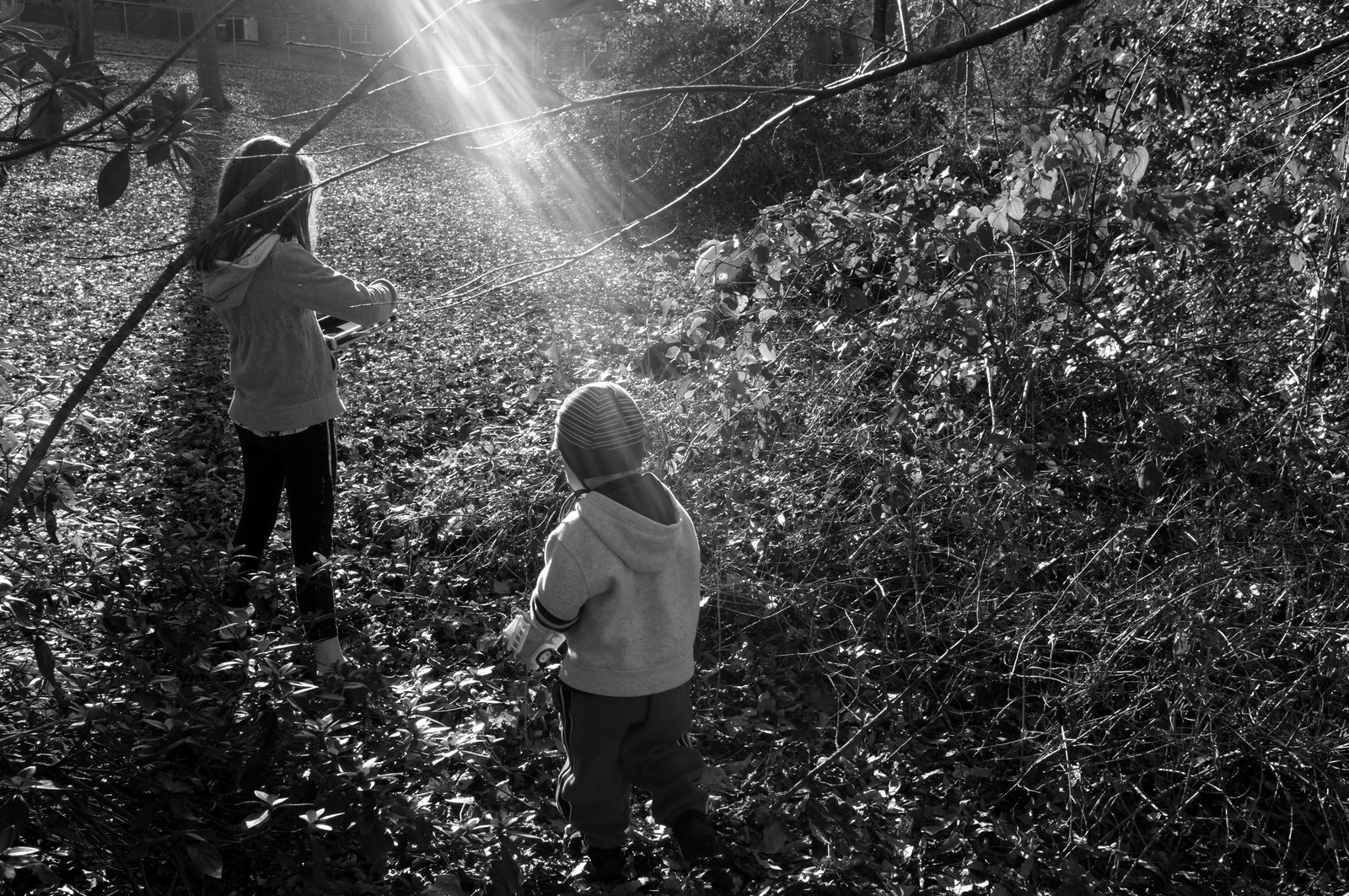
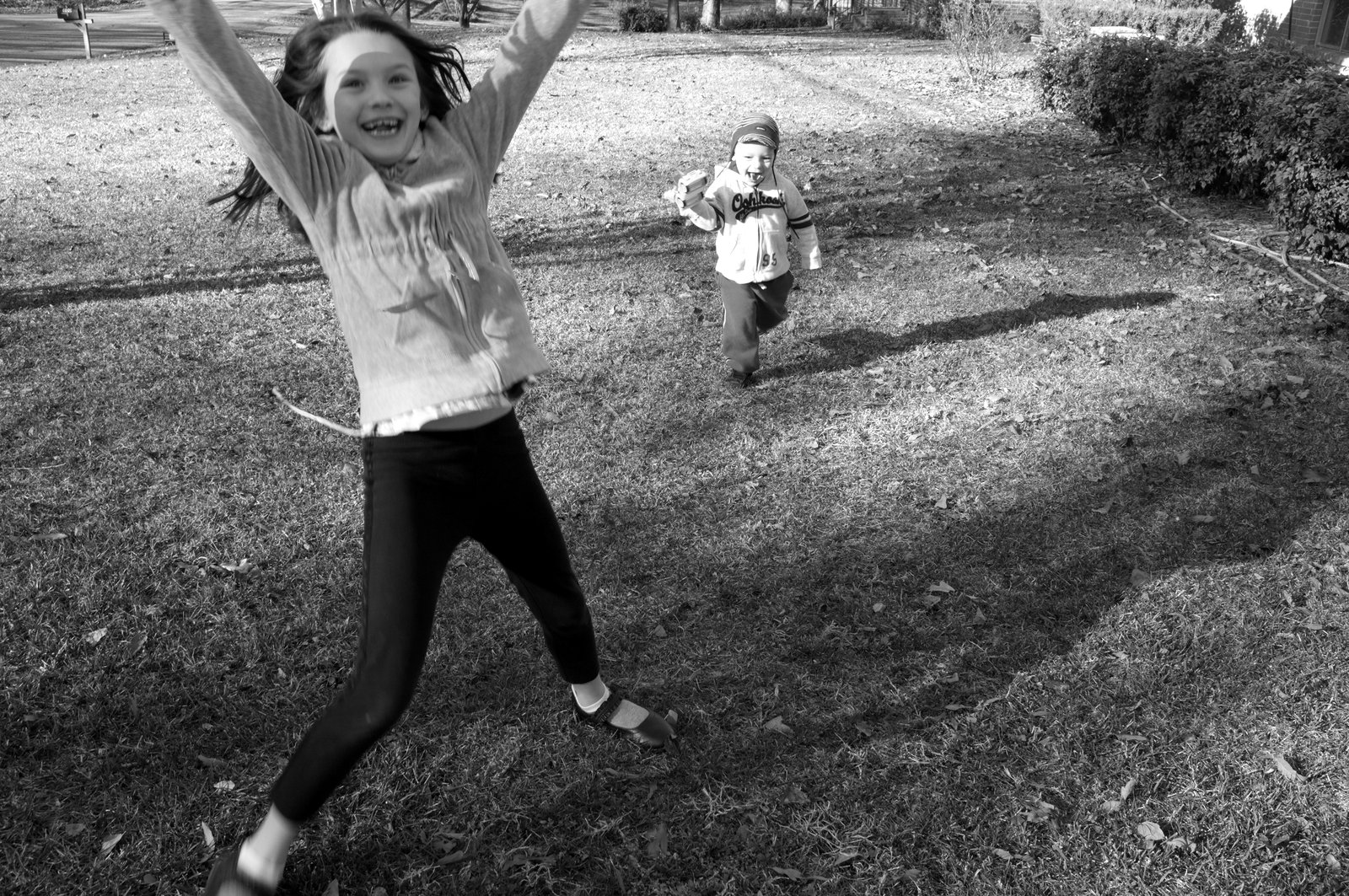
The pictures are from yesterday, but today was the same. We wander about the backyard, cross over to our neighbors' yard, all the while pretending we're exploring the Amazon rainforest. We've discovered snakes that can look like trees, leaves that can come alive, rocks that can attack. And a swing.
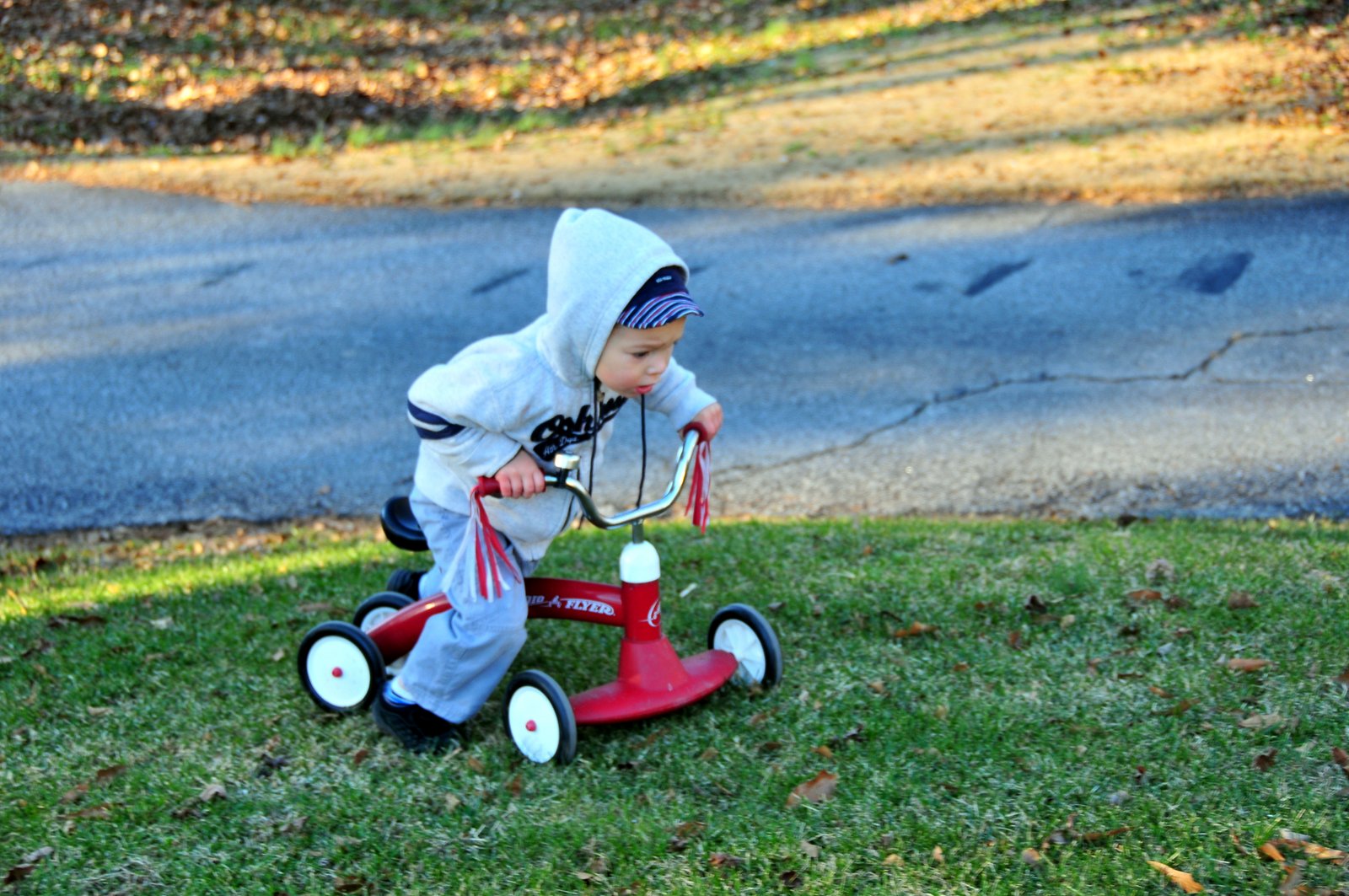
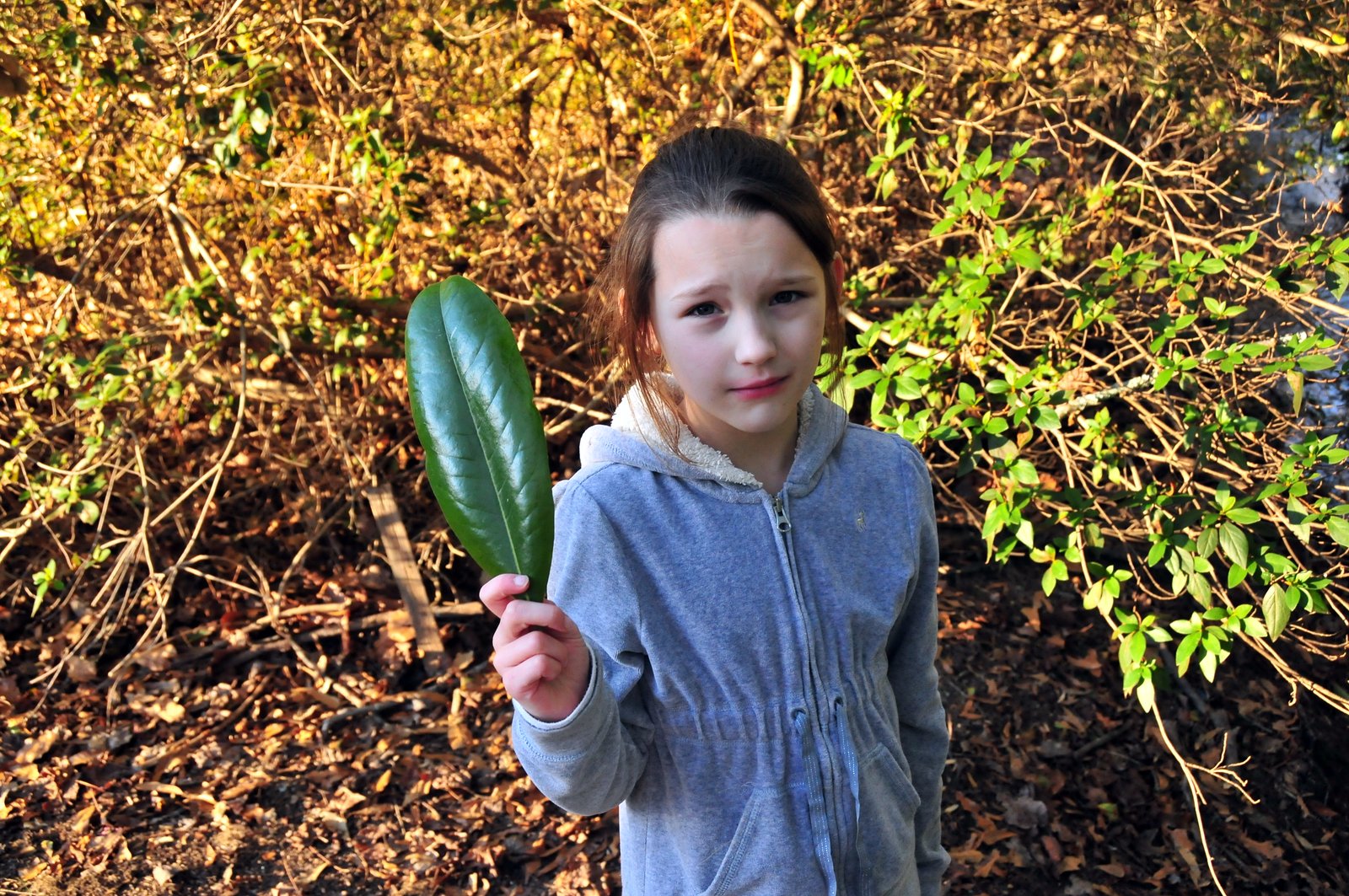
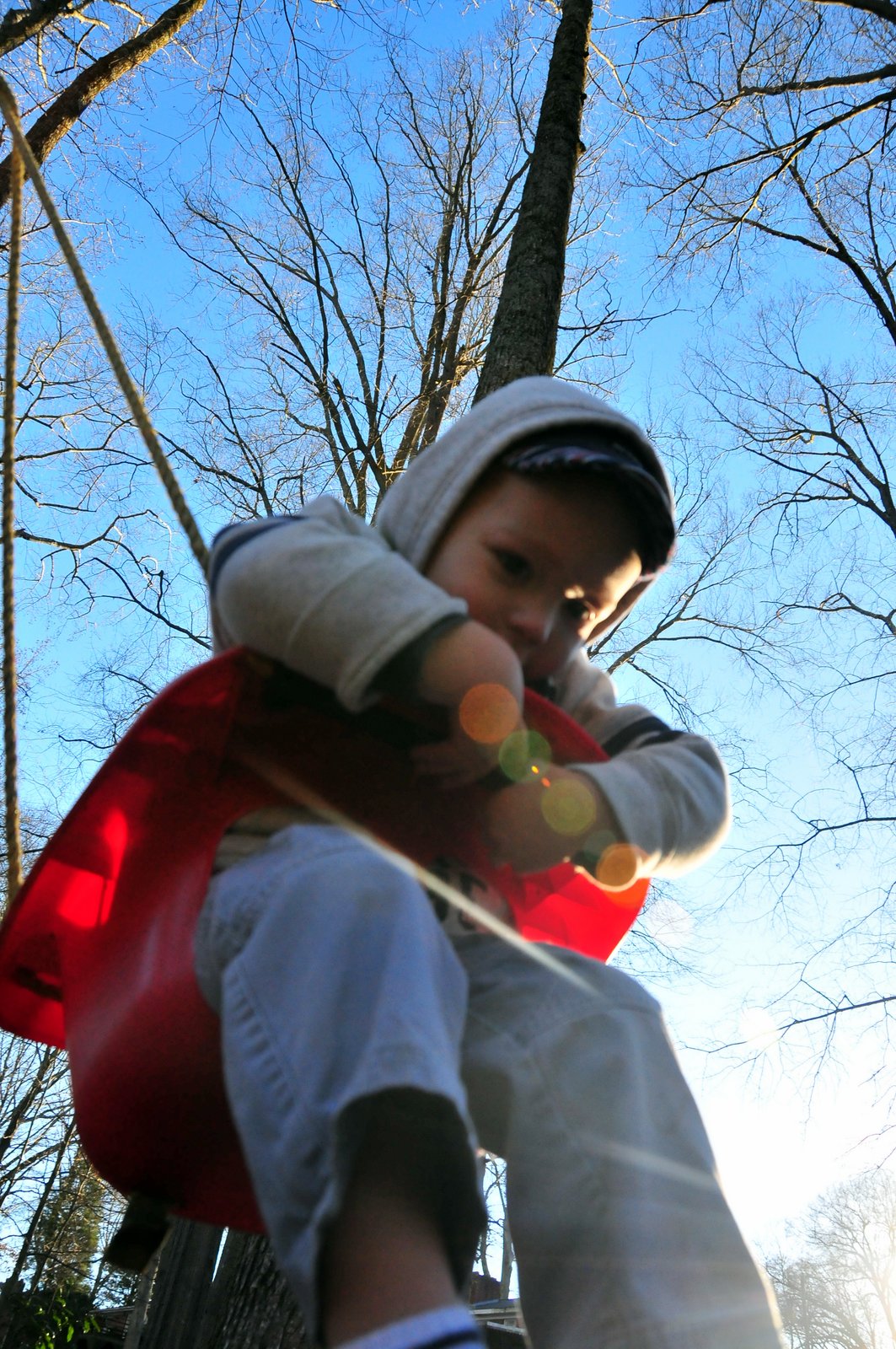
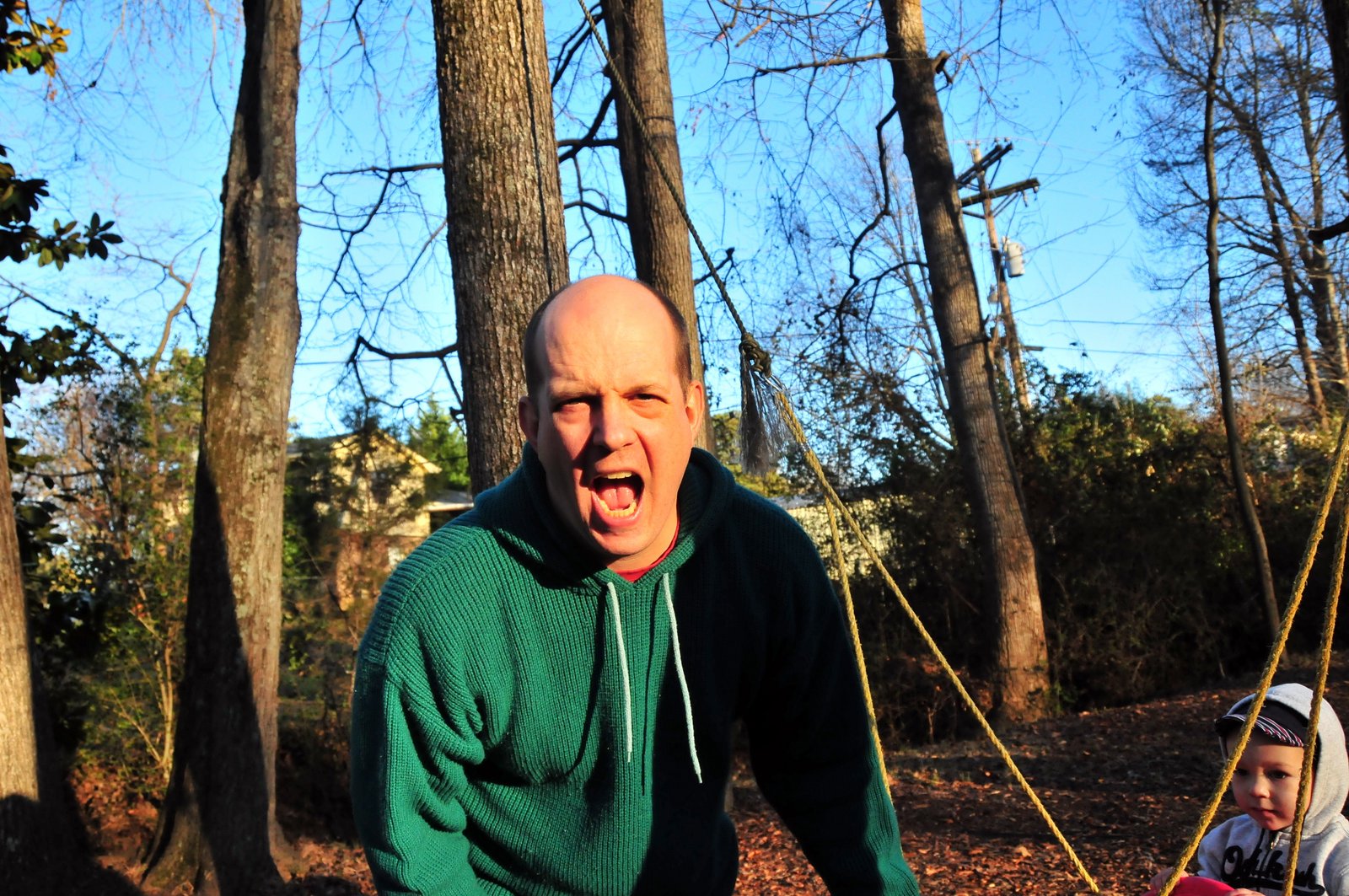

Maybe head to the smooth, newly-paved road that T-intersects ours right across from our house. Maybe ride on into the grass.
Two afternoons, almost identical. Yet different in every way.
One day, Henry was feeling playful. He met Emily as she chugged along, but he was going in the opposite direction on the same track. Emily braked hard and managed to stop just in time.
"Henry, what are you doing?!" she cried.
Instead of answering, Henry began pushing Emily.

"You've heard of Tug of War, haven't you?" laughed Henry. "This is Chug of War!" He pushed with all his steam as Emily, who was not laughing, chugged just as hard against him.
"Henry, will you stop it? We're going to get carried away and derail ourselves!"
But Henry was having too much fun. He chugged, and chugged, and chugged until there was a great clatter of and screech as Emily and all her cars crashed to the side of the tracks.
"Now you've done it!" shouted Emily as she struggled to right herself. "You're going to be in so much trouble!"
Henry, trying the help, suddenly jerked backwards only to find himself off the tracks as well.

Henry felt bad. He never meant to hurt Emily. He really liked Emily. They'd always had good times together, but this time, he'd just gone too far.
He knew he was going to be in trouble. He could just imagine Sir Topham Hatt's face, but he didn't have to imagine. Sir Topham Hatt came down as soon as he heard about the terrible accident.

"Oh, Sir Topham Hatt, I didn't mean to. I mean. It's just that..."
"Well, Henry, you've gone too far this time," Sir Topham Hatt interrupted. "You'll see just how serious this is in just a moment."
Sure enough, Henry saw just how serious it was when Sheriff from Cars showed up.

"Well," said Sheriff, "the first thing we need to do is get these trains back on the tracks."
Sir Topham Hatt called Kevin and Harvey to put the trains both back on the tracks.
Just as Henry was about to chug away, the Sheriff called after him. "Henry, you will be coming with me, I'm afraid.

"I really didn't mean to hurt anyone," Henry said as he chugged beside Sheriff. "I just wanted to have a bit of fun. Emily likes to have fun."
"Henry, did she say to stop?" Sheriff asked.
"Well," began Henry.
"When trains ask you not to do something, you should stop. That means it's not fun for them," Sheriff explained.

"I know you didn't mean it, but there still are consequences for our actions," Sheriff explained.
"What?"
"Time out."

Just after Sheriff left, Toby and James chugged past.
"Oh, Henry, what happened? Why are you in time out?" asked Toby.
"I did something... something..." Henry stammered.
"Not useful?" Toby suggested.
"That's it exactly. And Sheriff traveled back in time, crossed the Atlantic ocean, and left his movie to come into our story just to take me to time out!"
"Oh no!"
"And that's not what's the worst part of it! The worst part is that I didn't mean to do any of it!"

Toby and James felt bad for Henry. They knew what it was like to get in trouble for something you don't really mean to do. They were afraid all the other trains would be angry at Henry so they chugged off to the Tidmouth Sheds to explain to the other the other engines what happened. As they were explaining, Sheriff rolled up.

"Did you talk to Henry?" he asked.
"Yes, we. I mean, no. I mean," stammered Toby.
"Yes, we talked to Henry," James said sadly.
"While he was in time out?"
James and Toby exchanged guilty glances before admitting the truth.
"We knew we weren't supposed to, but..."
Sheriff didn't even wait.

"Off you go to time out as well!"
Such was our morning play.
When I first arrived in Lipnica Wielka, I was shocked one morning at the small grocer's in front of the teachers' housing to see how much bread the women in front of me were buying. It solved a mystery, though. I'd discovered that if I arrived too late, sometimes simply in the mid-morning hours, there was no bread to be found.
"Nie ma" was the curt reply.

Standing in line that morning, though, seeing woman after woman buy two, three, sometimes four loaves of bread, I understood why. It wasn't until I saw the same woman buy the same amount the next day that I realized her family ate that much bread in a single day.

The loaves themselves looked like nothing I'd ever seen for sale in grocery stores. I knew you could get stuff like that -- hard and crusty on the outside, thick and hearty on the inside -- at bakeries and such specialty stores, but in a regular Food Lion or Kroger?

When K and I first moved to the States, finding a good source for good bread was of primary grocery-shopping importance. Who knew we had a source right there?
After dinner, we dance.

Sort of.

The day obviously starts in the kitchen. But it’s more than food and preparation for the day. The Boy has a favorite book lately — Hot Rod Hamster — and on a whim, the Girl decides to read it to him. I read it to him last night; K read it to him the night before. But that’s not enough: he could listen to that book every single day, most likely because of the basic interactivity of it. Hot Rod Hamster, you see, has to choose the parts of his car, and the author often asks the reader, “Which would you choose?” By now everyone in the family knows which one he would choose, but that’s not the point.

The day also ends in the kitchen, with play. The office chair in which I now sit is a favorite toy, for it swivels in endless circles.

To the delight of both kids.
