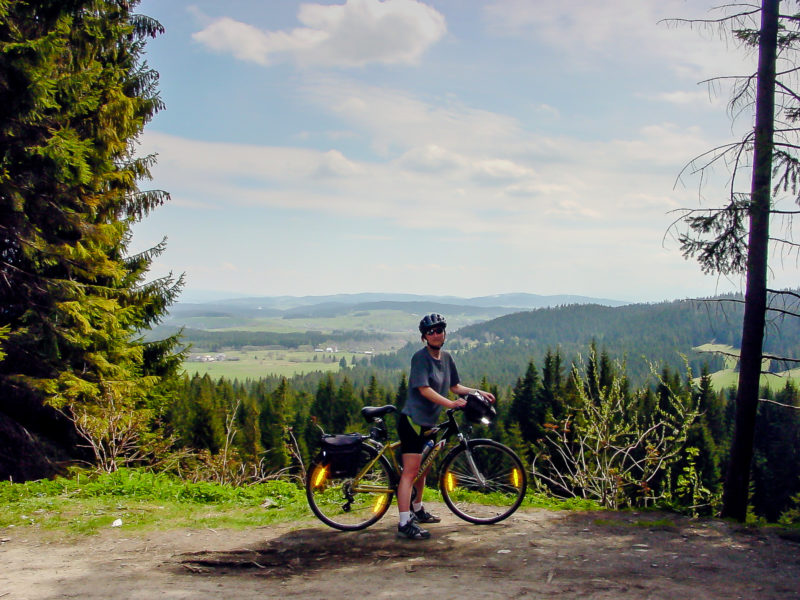
Kinga and I decided one of the last things we wanted to do before leaving for the States was to take a trip around the most prominent geographical feature of this area: Babia Góra, roughly translated “Lady’s Mountain.”
Babia known as “Królowej Beskidów” (“Queen of the Beskidy”), and is the highest mountain (1,724.6 meters above sea level – 5,658.4 feet) in the Beskidy mountain range, which is in turn seen as a part of the Carpathian Mountains (Wikipedia: Babia Góra||Beskidy).
Babia is an odd mountain, in that it looks radically different from different locations.
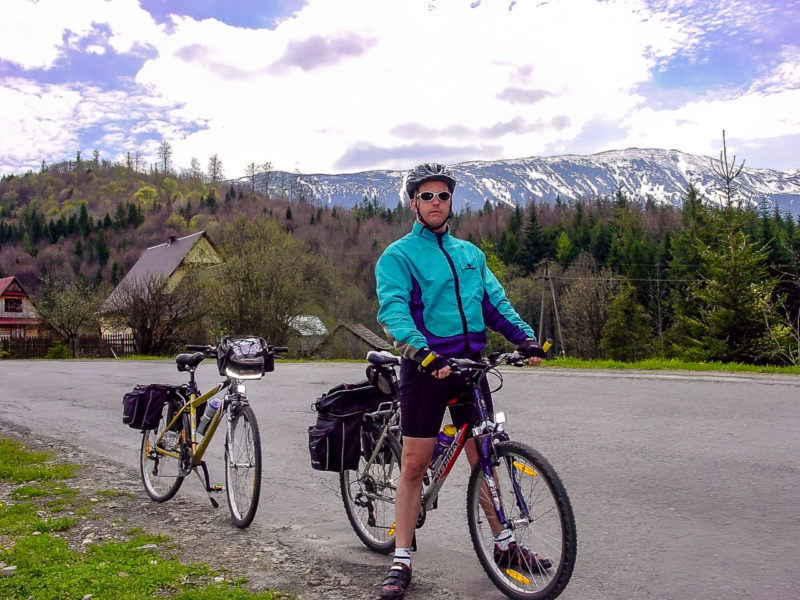
I see it daily from the south, and it’s a claim, motherly looking mountain that looks peaceful and wise. From the north, though, it’s almost violent looking and feels more like the Tatra range further to the south.
Living in Lipnica so long, I’ve been to Babia many times, though due to a persistent knee injury, I’ve never made it to the top.
Our route took us around the eastern edge of Babia to Zawoja, then north to Sucha Beskidzka.
Nie wiem, jak to się stało, że jeszcze nie objechaliśmy Babiej dookoła. Już trzeci sezon jeździmy, mieszkamy u stóp Babiej i jak do tej pory nie wpadliśmy na to. Być może dlatego, że te drogi są nam znane, zbyt oczywiste. Ale okazuje się, że druga strona Babiej Góry to istny raj dla nas i gdybyśmy zostawali dłużej, to na pewno wybralibyśmy się jeszcze raz nieco inną drogą. Z Zawoi jest kilka ciekawych skrótów w kierunku Koszarawy i Jeleśni. My pojechaliśmy przez Suchą, bo chciałyśmy zobaczyć zamek. Od momentu, kiedy zaczęli robić modernizację ewidencji w Raciborzu, co jakiś czas tamtędy przejeżdżałam i miałam ochotę zobaczyć, co też oni tam mają za zamek w tej Suchej.
A Babia od strony Zawoi wygląda inaczej, rzeczywiście groźniej, szczególnie teraz, kiedy jeszcze leży na niej śnieg. Widok od Orawy jest dla mnie bardzo uspokajający — taka nasza Babia siedzi sobie i obejmuje Orawę od Lipnicy Wielkiej aż po Zubrzycę.