matching tracksuits

fun in threes, sometimes fours

the girl

Another Day at the Pool

Another day at the pool, which meant two things.

First, more fun with the new camera: at close to seven frames per second, you can really get some good time-lapse sequences.
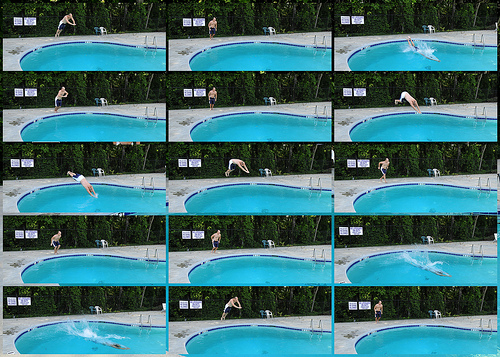
Mixed Time

And second, the Girl learned an important lesson: if you’re going to splash someone because you’re mildly frustrated with her,
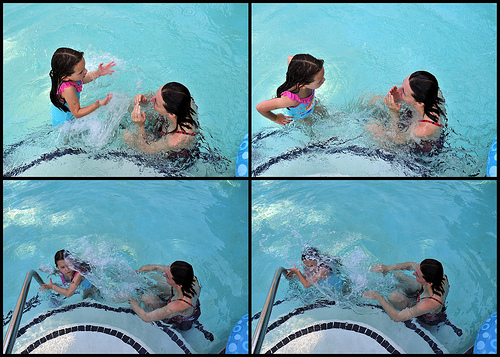
Zemsta

make sure that person can’t splash back more effectively.
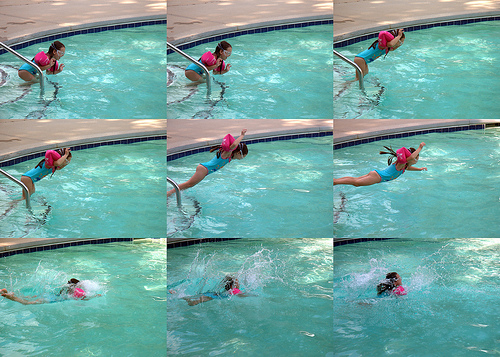
A Day in the Pool

The Girl is out of daycare — I am the daycare, which means a number of things.

Her sleeping habits have changed significantly, for starters. When we are all heading out of the door by or before half past seven in the morning, we have to get her up so early that it affects her weekend sleeping patterns: she rarely goes past seven thirty. This summer we’ve discovered that she’ll sleep almost to nine if we let her. Which means a bit of time alone in the morning before she’s up.

Yet there are some negative consequences, most significantly, a lack of interaction with other children and less outside time. We don’t have a playground in our backyard, where as the Girl’s school has several: mornings on the playground were the daily ritual.

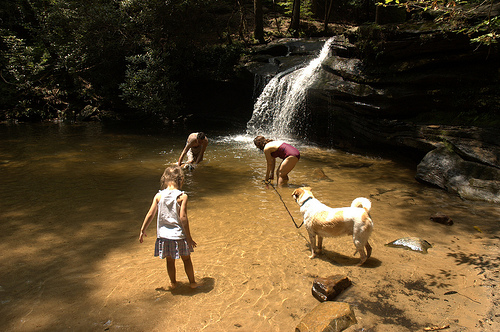
So we do the best we can. We take her swimming. Or, rather, jumping.

The Jump

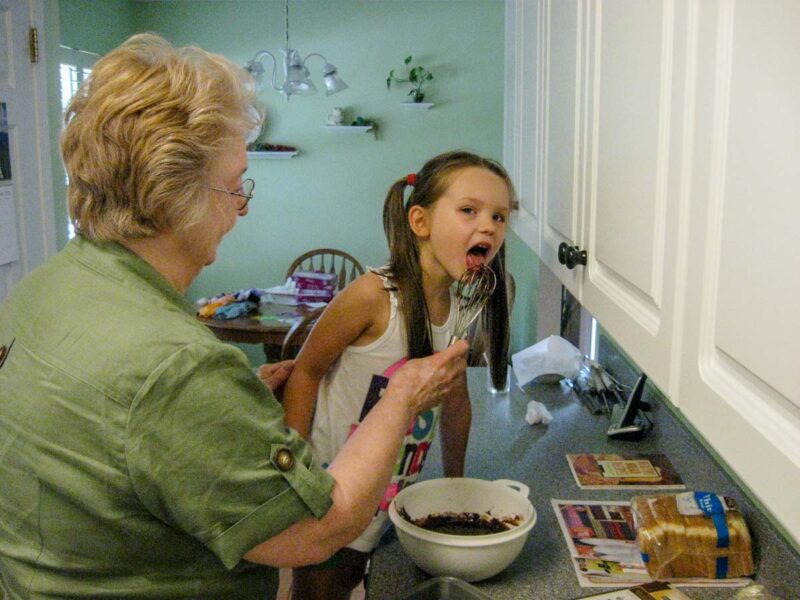
More Baking with Nana

Table Rock State Park, Part II

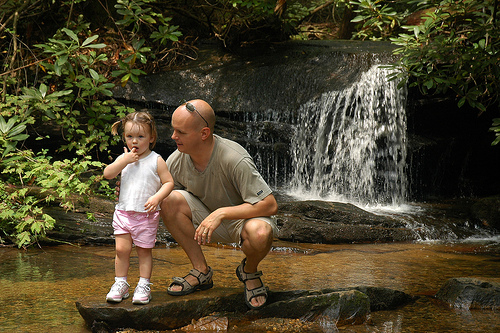
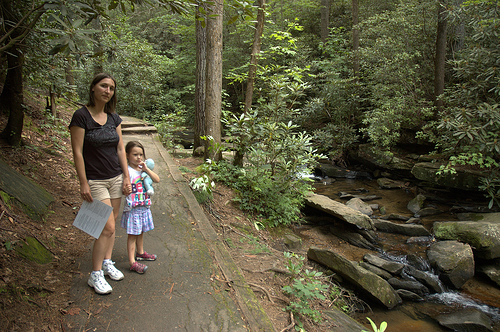
Returning to places as a parent provides a yardstick for your child's growth. The last time we visited Table Rock State Park, the Girl just shy of two years old. Her recently bald head was beginning to have enough hair to make her feminine, and she was beginning to talk. (When we watch videos of her at this age, though, neither K nor I can understand much of what she says sometimes.)

DSC_9674

That first trip, she toddled along for some of the short hike, but most of the time, either K or I carried her in a frame-less child carrier: twenty pounds of wiggle followed twenty pounds of sweat-inducing insulation.

DSC_3326

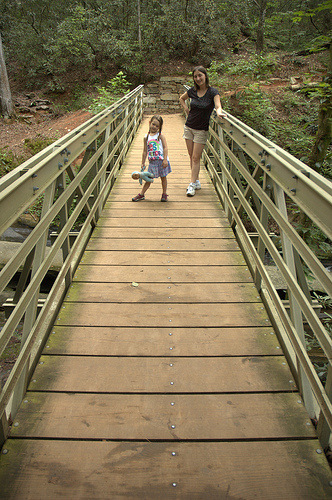
Three years later, and she is Miss Independence, resisting help on all but the steepest portions of the two-mile loop and occasionally pontificating, "It is time for a break!"

DSC_3353

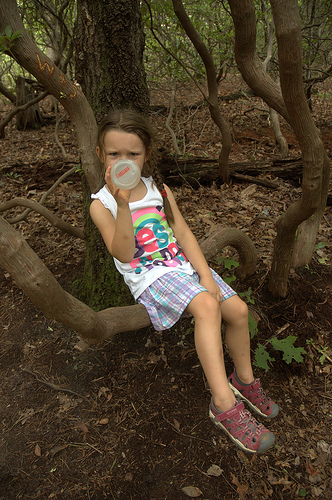
Last trip, she was barely aware of the camera; this trip, she posed. In fact, we had to tell her to stop posing occasionally: she has a tendency to get carried away.

DSC_3352

Yet some things have not changed in three years: Baby still is a constant companion, having been hiking in the mountains of Poland, photographed on the town square of Krakow, and one harrowing time, left at Target for one terrifying night.

DSC_3371

Imitation is still the order of the day, and fussing-filled frustration will likely be a frequent visitor for years to come.

DSC_3379

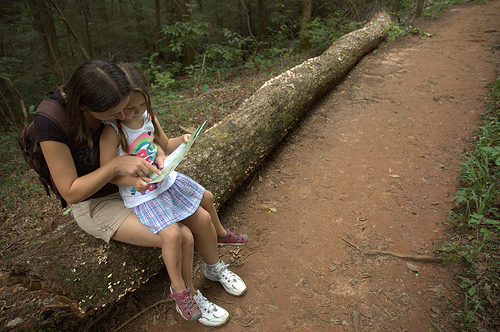
Yet the changes. We stopped for a break, and the Girl was curious: "Where are we?" K pulled out the map and showed her. At the next bend in the trail, she asked for the map to try to find where we were. The fact that she was completely off is of no importance: the curiosity is the treasure.

DSC_3408

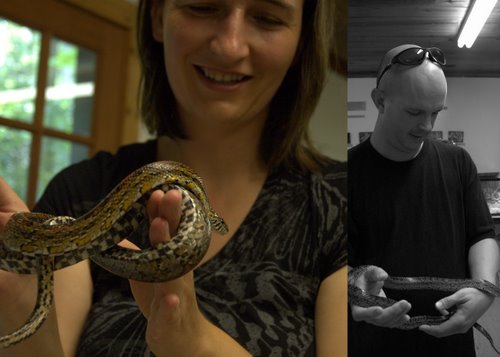
Curiosity was enough later to overcome fear and touch a corn snake in the nature center. K took a step further in overcoming that latent terror that seems to be in all of us almost instinctively.

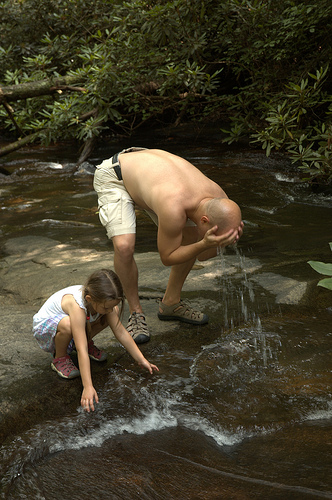
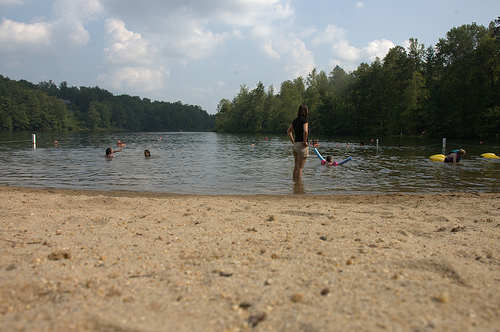
Most telling was the conclusion: splashing about the lake with restricted parental supervision (the swimming area was about to close, so there was no time for us to change anyone but the Girl), she gravitated toward the deeper portions.

DSC_3445

She called out, "Look how far away I am from you, Mama!"

Games

It’s a lifelong process, learning how to lose. I’m thirty-some years older than the Girl, but I still fight the frustration of loss just as much as she. I could contend that there is a difference: losing at games of chance doesn’t phase me because it’s a question of luck; losing at games of skill–read: chess–does bother me when I feel I made a stupid mistake. Such distinctions are lost on the Girl, though: losing is losing is losing. It all hurts.

DSC_3300

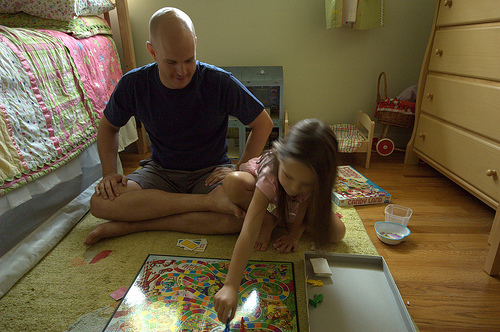
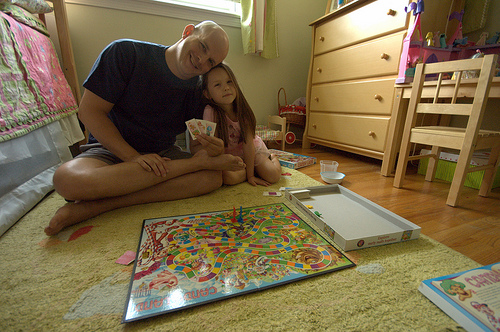
We’ve been working with the learning how to lose (and to a lesser degree, how to win gracefully) with Candy Land for ages. We’ve seen some real improvement: the complete hysterical fits have disappeared, replaced by a temporarily pout and an extended lower lip. In fact, things are going so well that I’ve stopped my Machiavellian parenting technique of stacking the deck to make sure she loses at least once or, if needed, wins once.

DSC_3309

Yet sometimes that dimension of untinkered-with chance provides some amusement: three candy cards within four turns for me resulted in some whiplash-inducing jumps around the board and laughs for the Girl — even when I was surging ahead. Perhaps she knew the next card would bring me back to Earth.

Fourth

The Girl is a strange eater. In truth, she’ll eat anything if she’s cooked it. For a long time, as a child, her favorite thing to cook while banging around the kitchen was “blue zupa,” a hybrid Polish and English name (“zupa” is Polish for “soup”) for an imaginary, favorite-colored dish. K and I ate countless pots of blue zupa.

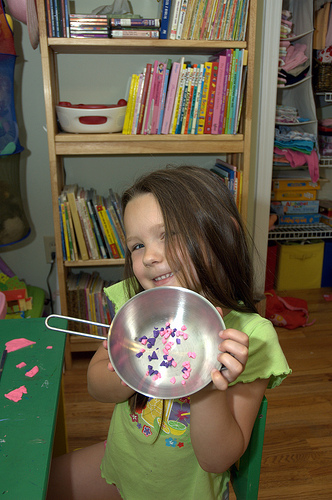
We eventually bought L some realistic play pots and pans at Ikea, and she moved from more imaginary to less imaginary. It’s truly amazing what you can cook from blue and pink Play-Doh.

DSC_3208

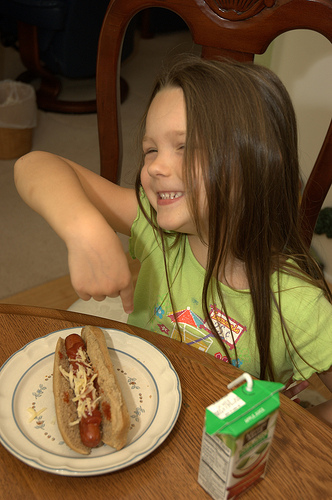
When it comes to more realistic food, though, the Girl has slightly different tastes. She likes some of the standards: spaghetti and pizza are always welcome on the table. Yet other childhood favorites have always been less popular. For instance, she just ate her first hot dog over the Fourth of July holiday. Granted, she hasn’t had much exposure to hot dogs: we eat them probably twice a year at most, if even that often. Still, she sees them at school, and probably sees how the other kids virtually inhale them. That peer pressure has had no effect (if only that would continue).

DSC_3213

Yet non-typical foods she adores. Exhibit A: barszcz. Her favorite food, without exception, is a traditional Polish beetroot soup. She’s absolutely obsessed: she’ll eat it once a week without fail, more if we let her.

She’s also eager to bring her best friend from school to try it.

“What will you do if E doesn’t like it? If he tries it and says, ‘I don’t like it.’? I ask.

“I’ll tell him, ‘You just have to try it,'” she replies.

“But what if he tries it and doesn’t like it?” I press.

Try it and not like it? Unthinkable.

Snacks

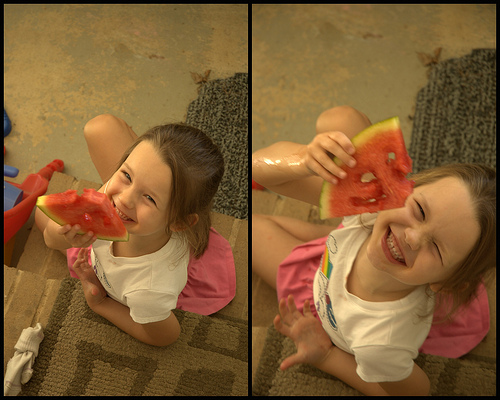
The Girl is a fan of summer snacking — what kid isn’t, I suppose. She always seems most attracted to the foods that make the biggest mess.

110626

But then again, what kid isn’t? What’s the point of eating something sweet if you can’t, at the same time, wear it? That is a convenience born of the fact that watermelon and ice cream taste better in the summer. Who would want to clean up such a mess inside? Better to let it drip and leave a small bit of sweetness for the ants.

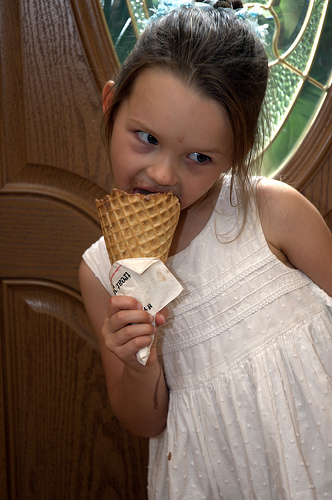
Ice cream is a different story altogether, and at the same time, it’s just a variation watermelon. Sweet and sticky, they both leave a trail behind. But only ice cream is affected by the clothes one wears.

DSC_3003

Sunday dresses always make ice cream taste best.

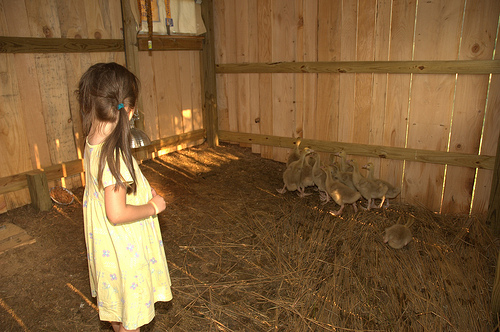
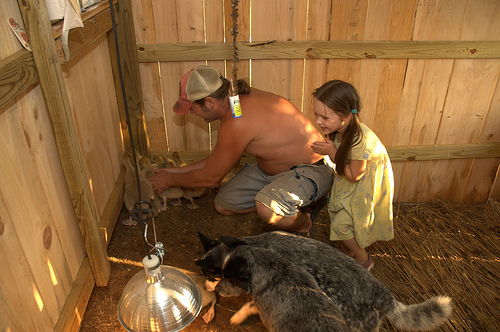
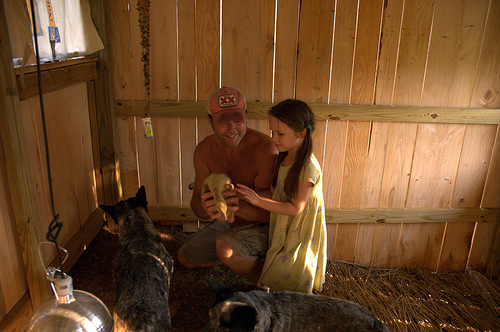
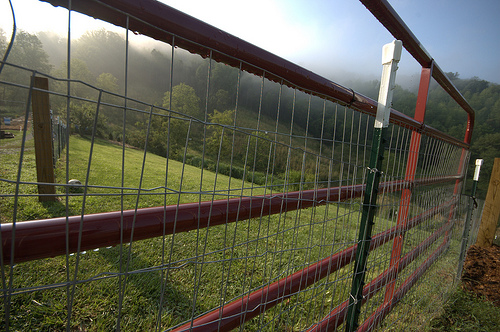
On the Farm

DSC_2885
DSC_2904
DSC_2910
DSC_2936
DSC_2942

Backyard Photo Walk

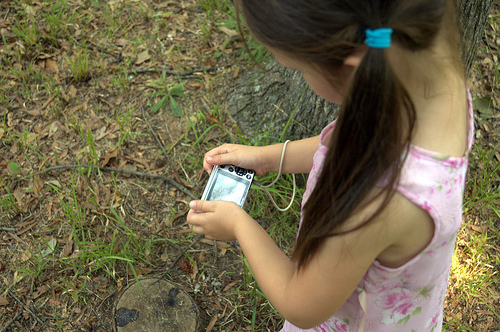
"Can I take a picture?" It's a common refrain whenever I bring home the small point-and-shoot I use in the classroom.

The Photographer I

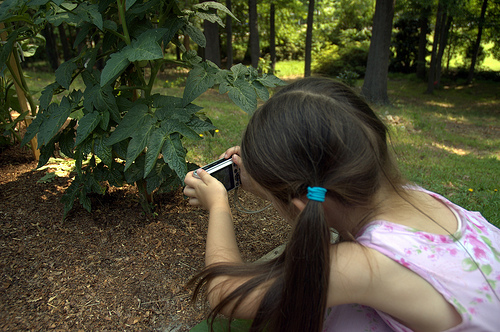
The Girl especially likes going for photo walks in our back yard.

Her Picture I
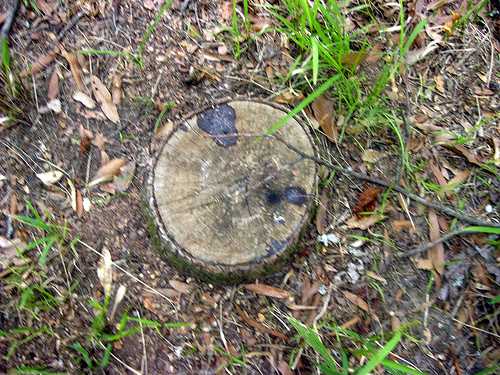
Photo by the Girl

I tag along with a camera too big for her even to hold, taking pictures of her taking pictures.

The Photographer II

Back in the house, we transfer the pictures to the computer. I straighten a few of hers, delete several blurred ones, and correlate them with my own photos.

Her Picture II
Photo by the Girl

"You're silly, Tata," I hear behind me, "Taking pictures of me taking pictures."

Why We Laughed

"They were laughing at us." L had just gotten off stage, and K, backstage to help with the recital, was there to greet her. Indeed, we in the audience were laughing a great deal through the night, but it obviously bothered some of the children, our daughter included.

Why did we laugh? I fumbled about with an explanation yesterday, but I went to bed thinking about it and woke up with it still on my mind.

If adults had been doing this, we might have called it a disaster. They stumbled about sometimes. They often looked to the side, desperate for a cue from someone wiser. Some stood, looking at the others, trying to remember what they should be doing at this or that particular moment. They were only vaguely uniform at some points, with some putting their arms down as others just began raising theirs.

Yet because they were children, everything changed. Disasters became masterpieces: flubs became arabesques; stumbles transformed into bourre; miscues became fouette; hesitant jumps became grand jets.

Further, if these had been adult dancers, they never would have appeared on stage. Ego would have prevented it, and that's part of what we mean when we say that these children are cute because they're innocent. They're not so concerned with unattainable perfection, and they're filled with joy just to be dancing.

I think we laugh, then, because we see ourselves in these little dancers and realize that, in so many ways, they have more courage than we have, and we laugh at the joy that courage brings us.