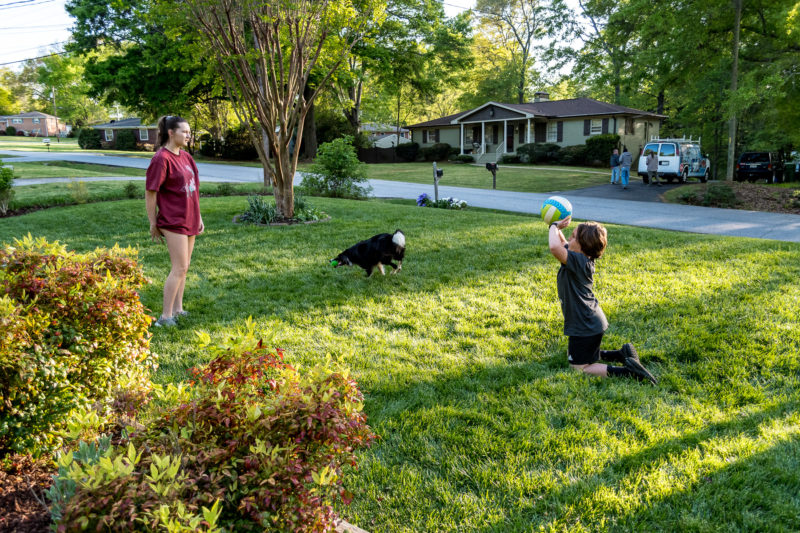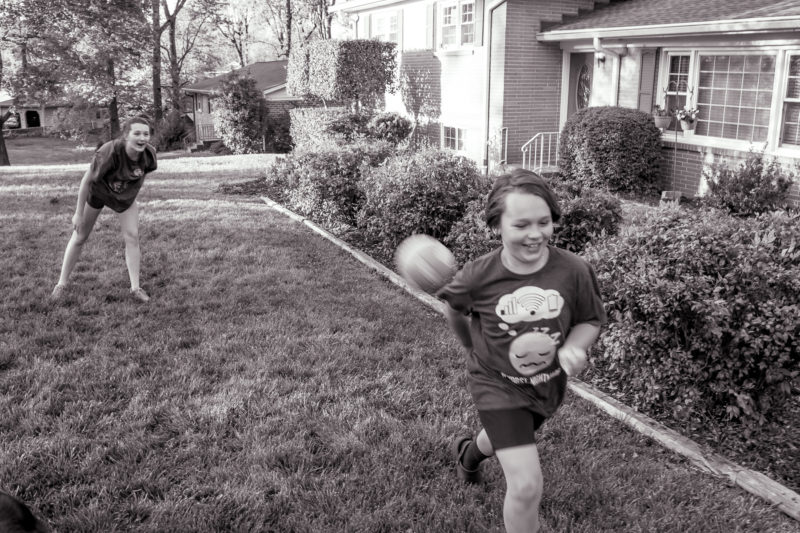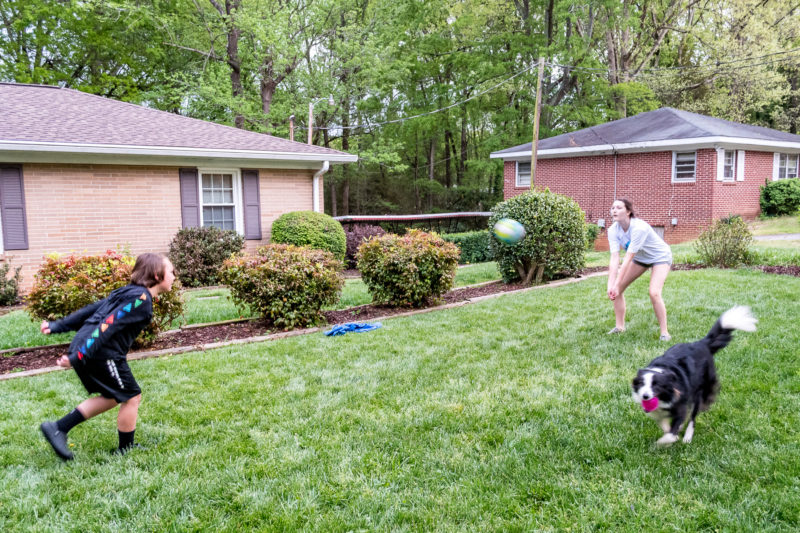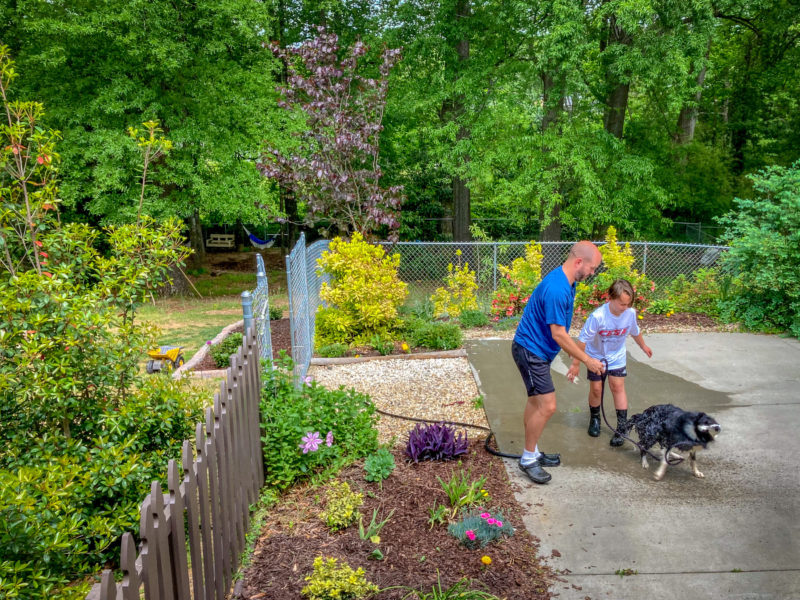
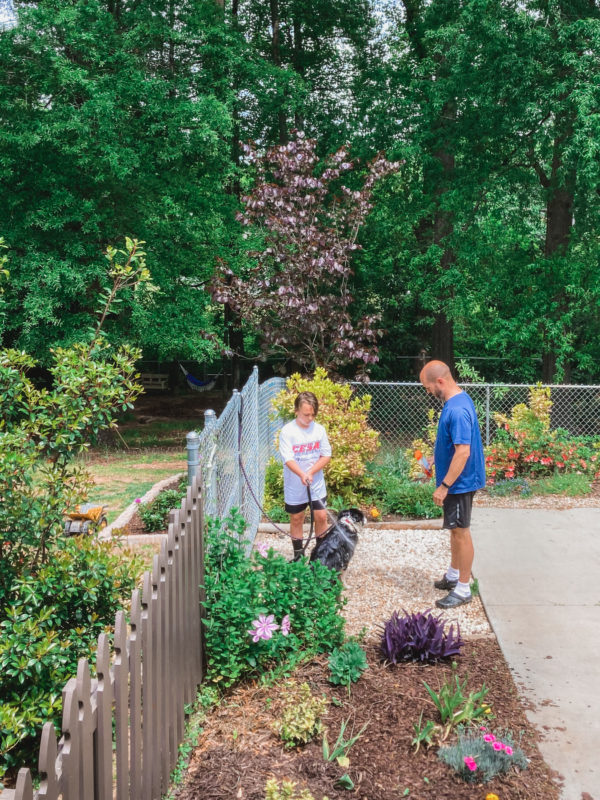

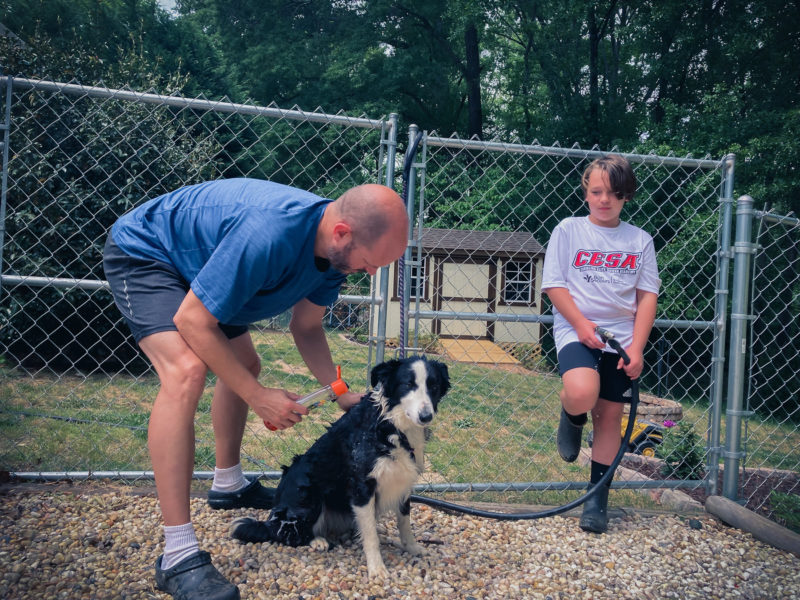

Matching Tracksuits

fun in fours

the boy

Shooting in the Backyard

The Boy wanted to have a Nerf war. “But I only have 4 bullets,” he admitted as we were getting ready.

“Kind of hard to have a real war with only 4 bullets,” I suggested. “Perhaps a duel would be better?”
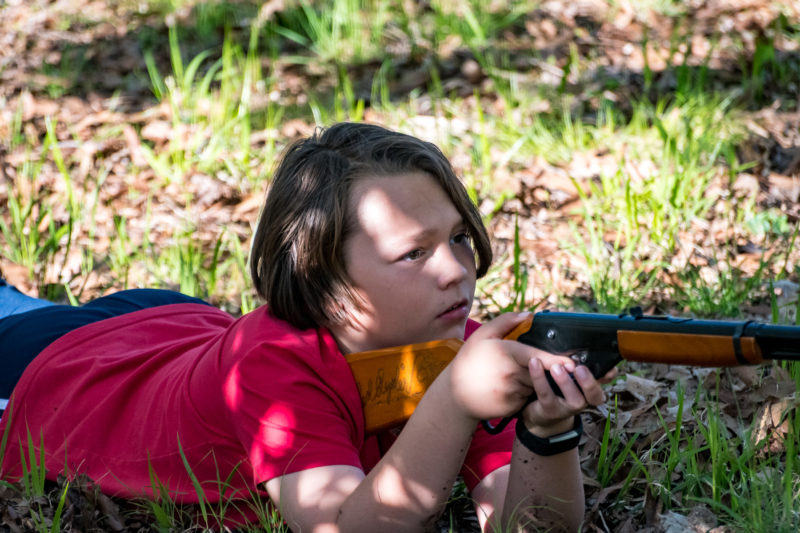
In the end, we just got the trusty bb gun out and shot at some cans in the backyard.

We tried to stay outside as much as possible today — it’s finally warm…

Soccer and the Yard

E had two games today to make up for the game that got rained out some time ago. They won the second game 3-1, but the first game was tough: a 1-4 loss.

In the second half, E played goalie. It was 1-2 when the half started. On the opponents’ first possession, they scored.
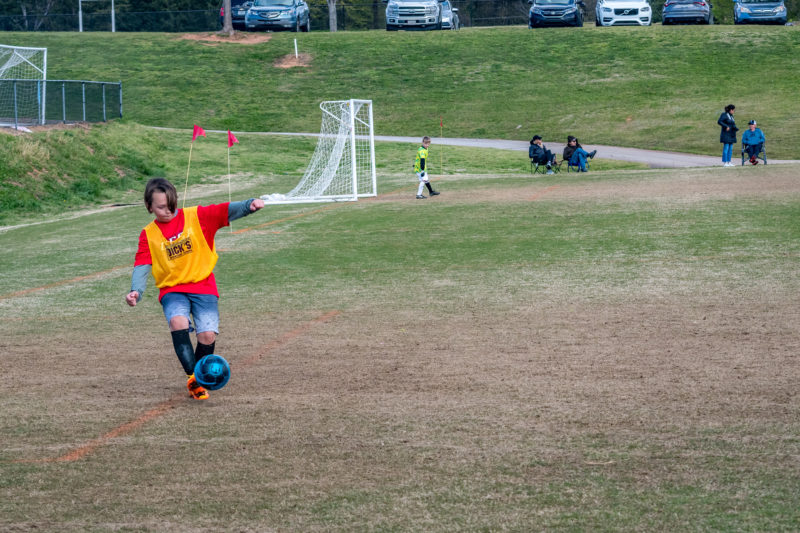
I knew it would be tough on the Boy — he doesn’t like letting people down, whether or not that’s what actually happened. They scored one more on the Boy. I had the camera up, hoping to get a good action shot of E stopping the ball.
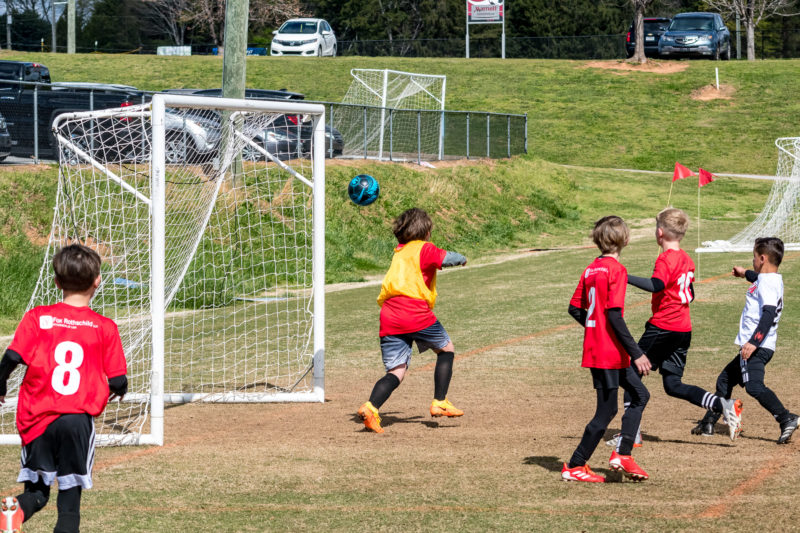
Not quite.

“I’m never playing goalie again,” he declared.

Attorney’s Visit, Tournament Start, and Mexican Dinner

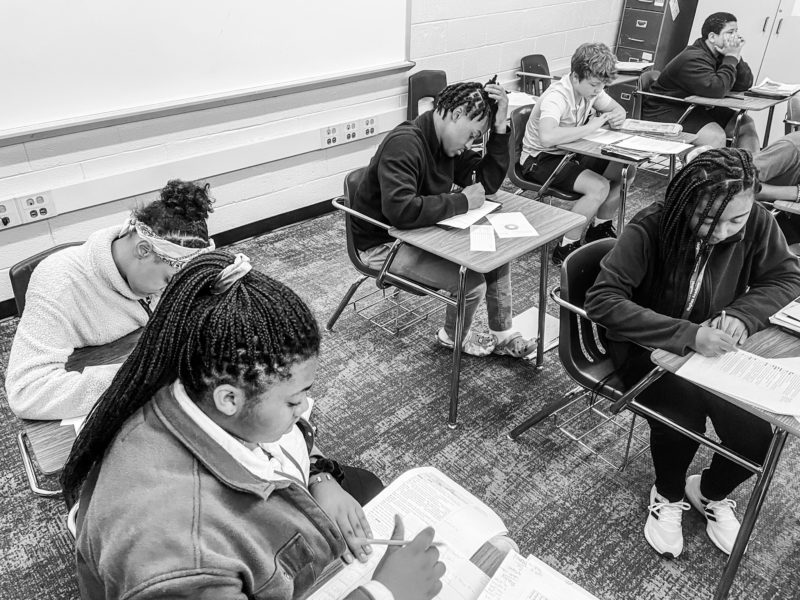
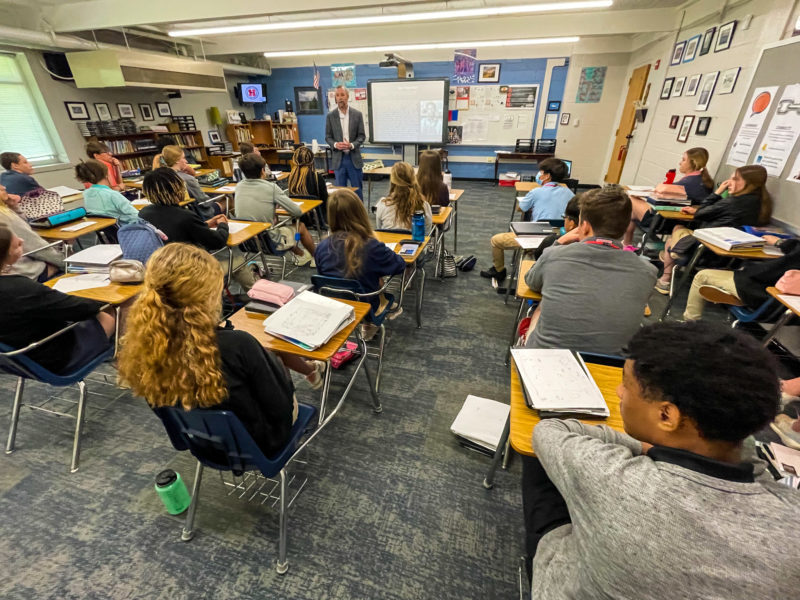
More Testing

“Isn’t that test in a couple of weeks the state test?” Mrs. G asked this morning.

“No, no,” clarified Mrs. H. “In a couple of weeks it’s the state pilot TDA test. The actual state test won’t be until May.”

“Remember Mrs. J was telling us about the test the state is making our school take and how Mr. F[, the school principal,] was trying to convince the district to count the state test in lieu of the second [district-mandated] test?”

“Oh, yes, I remember that.” The discussion continued along the lines of how frustrating it is to be testing so much but how we can get our kids more prepared for these district- and state-mandated tests.

That three English teachers were having trouble figuring out just how many major, schedule-impacting writing tests there were to be this year says a lot about the testing load the district and state put on teachers and students.

Our district mandates quarterly benchmark tests in English and math through the third quarter, and each of these impact the schedule and learning environment in a major way. Plus, the district requires us to give two major writing tests in preparation for the state writing test. Each of these take half the school day.  So that’s eight days of testing right there — testing days that affect all classes and shorten all periods by approximately half. Naturally, it’s hard to get kids to engage in meaningful learning when they’ve just spent two hours analyzing some awful short story that’s at least 70 years old because the testing companies want to save money (i.e., boost revenue) by using texts that are in the public domain and hence don’t require licensing fees. (We English teachers hear all the time about how important it is to choose texts about things young readers can relate to, and the the  state farms out its test development to a company that completely disregards that.) So the day is in essence a wash. Eight days down the drain — almost two full school weeks.

And that’s just what the district mandates.

It’s bad enough that the district puts middle and high school students through this; it’s also rammed through the elementary schools. The Boy had his district-mandated third-quarter math benchmark test today. It was almost sixty questions. For a fourth grader.

I’ve been saying that eventually, the US has to realize this obsession with testing is doing nothing but harm to our students, and the powers that be eventually have to change this, but I’ve been saying it for nearly twenty years now, and instead of getting better, it’s getting worse.

What’s worse is, I don’t know of a single teacher that takes these benchmarks all that seriously. “They’re designed to show for which topics students need remediation,” the six-figure-salaried district big-shots explain to us. If as a teacher who’s now spent nearly 150 days working with these kids I can’t tell you off the top of my head who needs remediation with what topic, I probably am not putting enough thought into my teaching.

What’s frustrating is, I don’t know of a single classroom teacher that had any input into the discussion about whether these obsessive, intrusive tests would have any value to the teacher at all.  These decisions were made by individuals making two to three times what teachers make while spending absolutely no time in the classroom. They haven’t been in a classroom for over a decade at best, I’d venture.

I sometimes wonder what would happen if a whole school — everyone from administrators on down — simply refused to spend the time administering these tests. Everyone. Simple refusal. “We’ve decided as a school that this is not the best way to spend our students’ time.” What if some schools did it? What if all schools did it? What if teachers were vocal about their opposition to all this testing (well, they are, to be honest)?

I imagine what I’d do if I were a student. All the students of course hate these tests. They’re completely meaningless to them. I think I’d be tempted just to choose random answers and apologize to my teacher if it ended up making him look bad in the eyes of the powers that be.

Random Pictures from the Walk I Took during the Boy's Soccer Practice

Early Spring Saturday

We started out with back-to-back games with the Boy. They won the first game 2-0 (I think -- maybe it was only 1), but lost the second game 1-2. They scored first, but on the very next possession, the opposing team equalized. They scored one more in the second half to pull ahead. We had one shot that hit the goal uprights but didn't go in, and we had about 4 more close shots on goal, but none of them went in.

In the afternoon, it was yardwork.

Putting Him to Bed

“Will you come check on me?”

For a few years now, that’s been one of the last things E has said to me or K. We put him in bed; we snuggle with him; we grow sleepy; we realize we can’t fall asleep; we get up and leave. He hears us.

“Will you come check on me?”

Gradually, it’s become a little different: “Will someone come check on me?”

The answer has gradually changed, too.

“Sure.” And then we wait for a while, doing something in the kitchen or reading at the dining room table. “Will someone come and check on me?” comes a voice from upstairs.

Eventually, “sure” because “probably.” The response initially is, “No, I need you to check on me!”

Eventually, he comes to accept that, and usually, someone goes to check on him. Usually. But not always.

“Probably” becomes “maybe.” “Maybe” eventually becomes “I hope so.” And “I hope so” remains for a while with an occasional, “No. I have too much to do tonight.”

This process has taken a couple of years. And now he’s nearly ten years old. And I come to realize that putting him to bed is almost done. For good. It was about this age that L began putting herself to bed, and the Boy already does it occasionally. So the end is near. And so the answers start backing up. “No” disappears, as does “I hope so.” “Probably” appears occasionally, but simple “yes” makes its return. For a while.

Another Conestee Walk

Orlando Day 3: Heading to St. Augustine

Universal Day 2

Universal Day 1