matching tracksuits

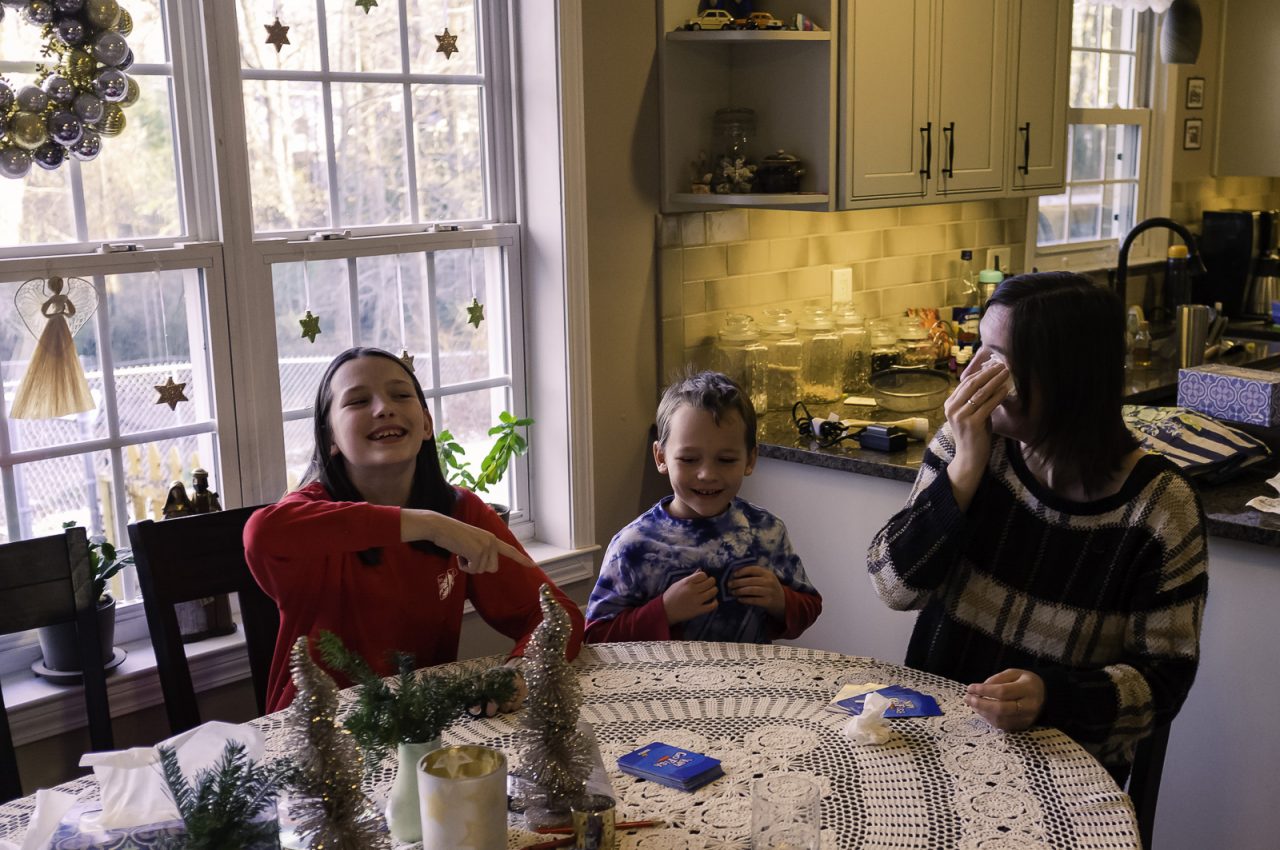
fun in threes, sometimes fours

the boy

Hard and Soft

We were at Nana's and Papa's this afternoon, and I asked the Boy who he wanted to ride back with.
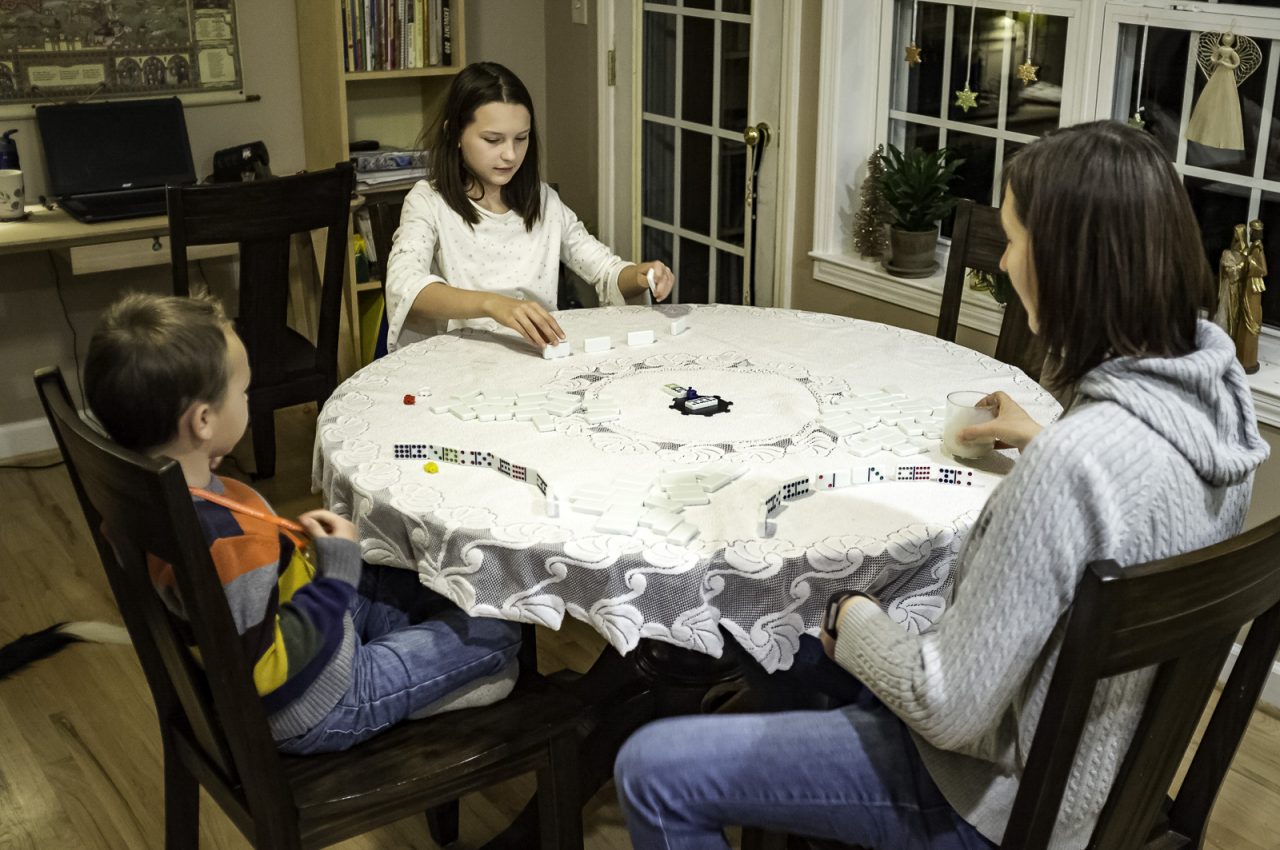
Learning dominoes

"Mama!"

"That's right -- no one loves Tata!" I laughed.
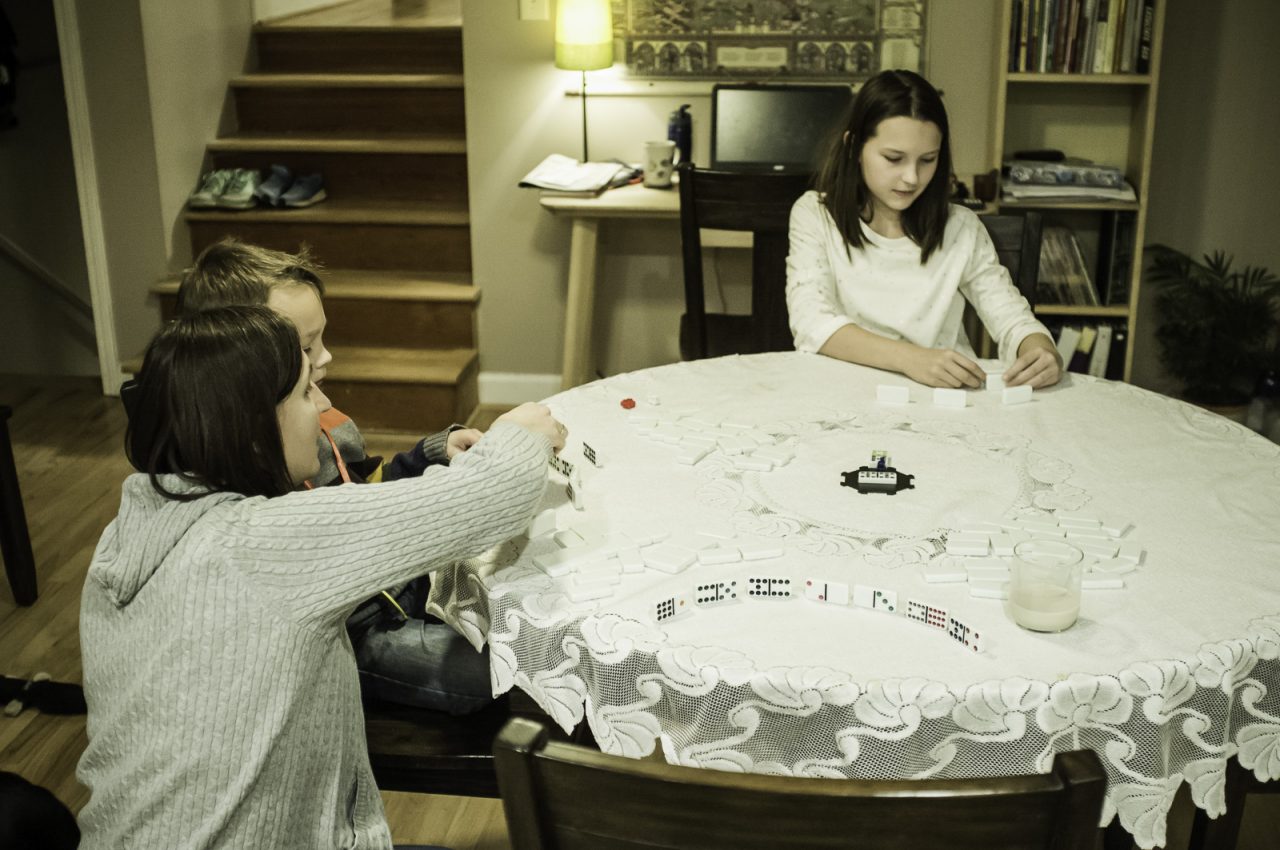
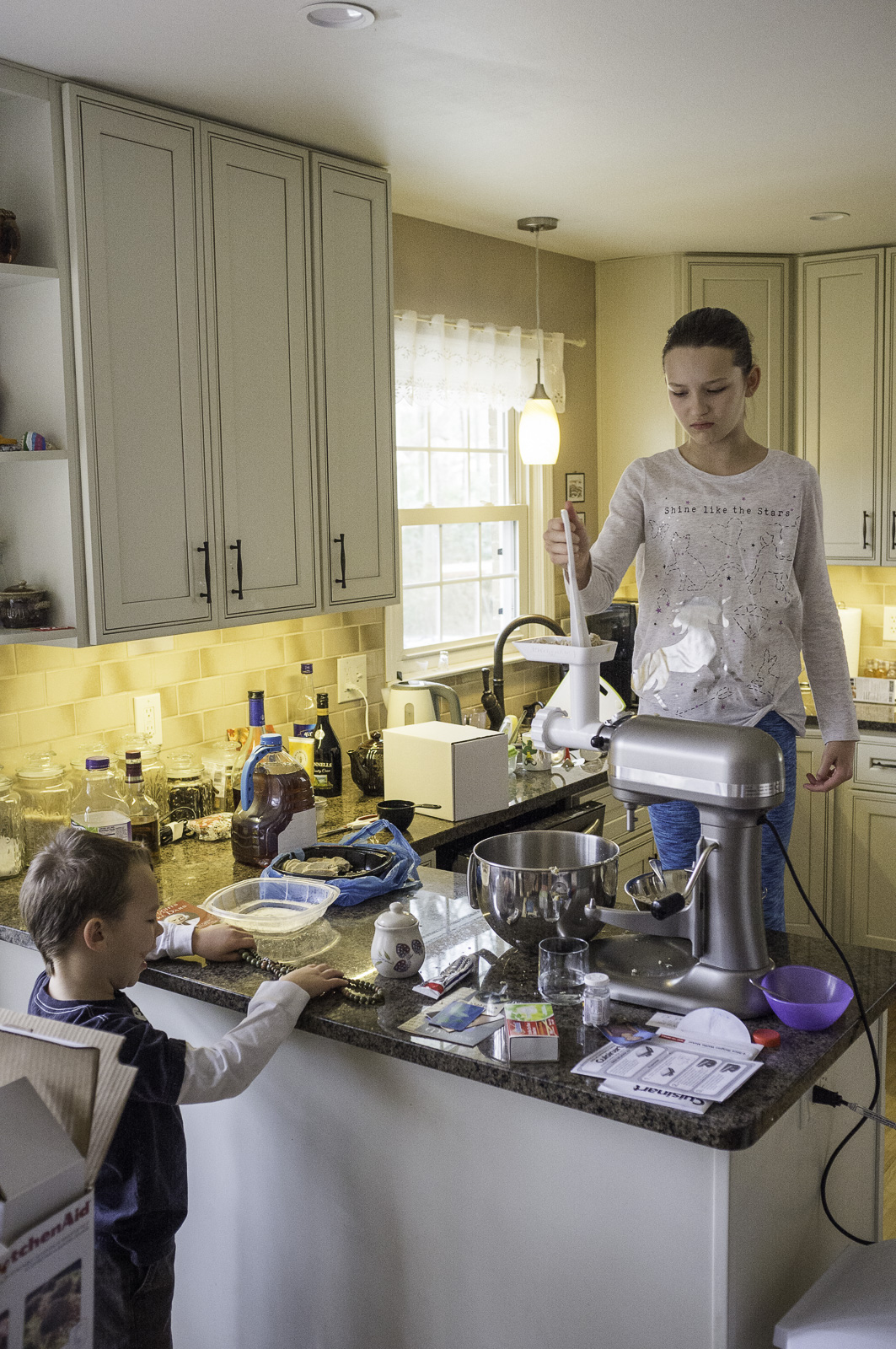
Helping the Boy set up

Later in the evening, as the Boy was nestling into his covers for the night and I lay beside him, he stroked my cheek and said, "Daddy, you're the best daddy. And I always love you no matter who I ride home with."
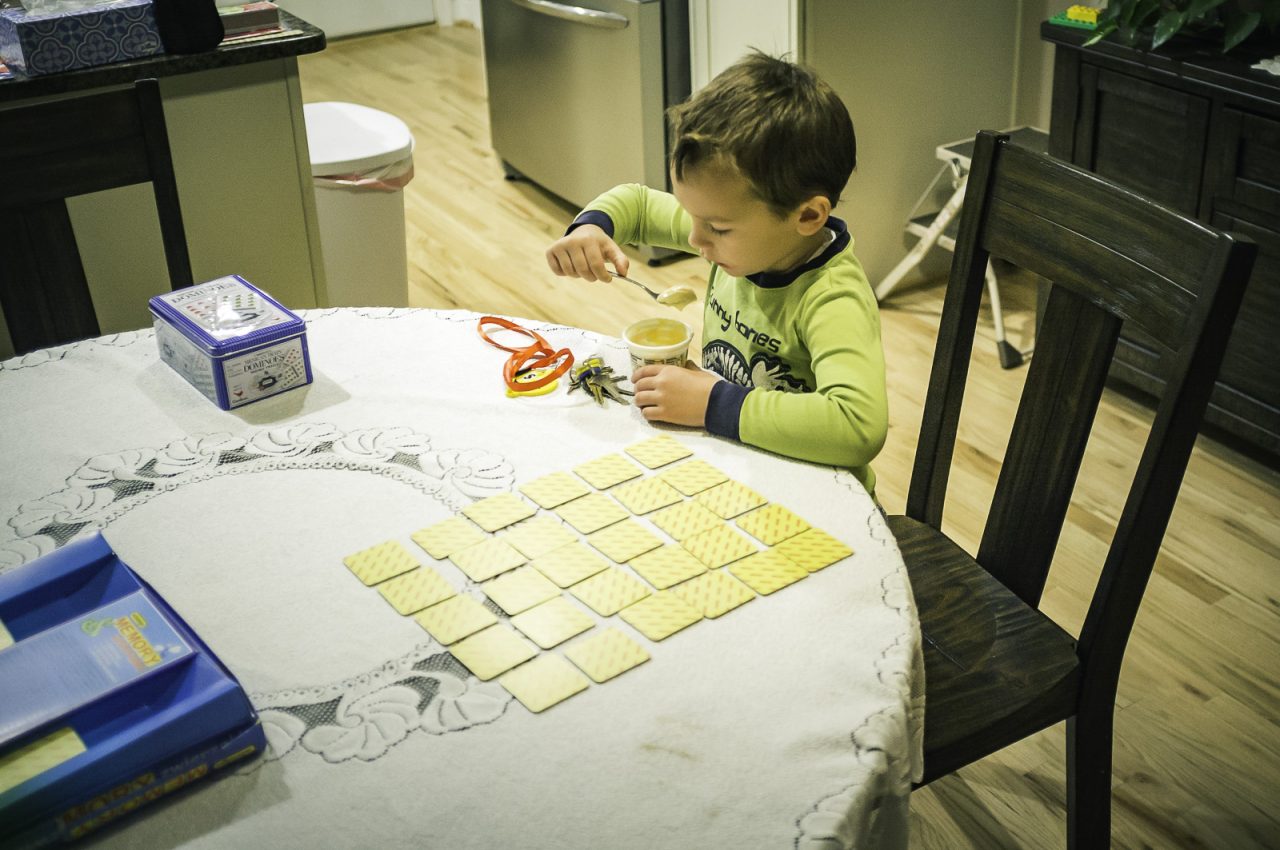
Final game of Memory before bed -- just after the snack

He paused for a moment, then added, "It's just that Mommy is soft, and you're a hard chunk."
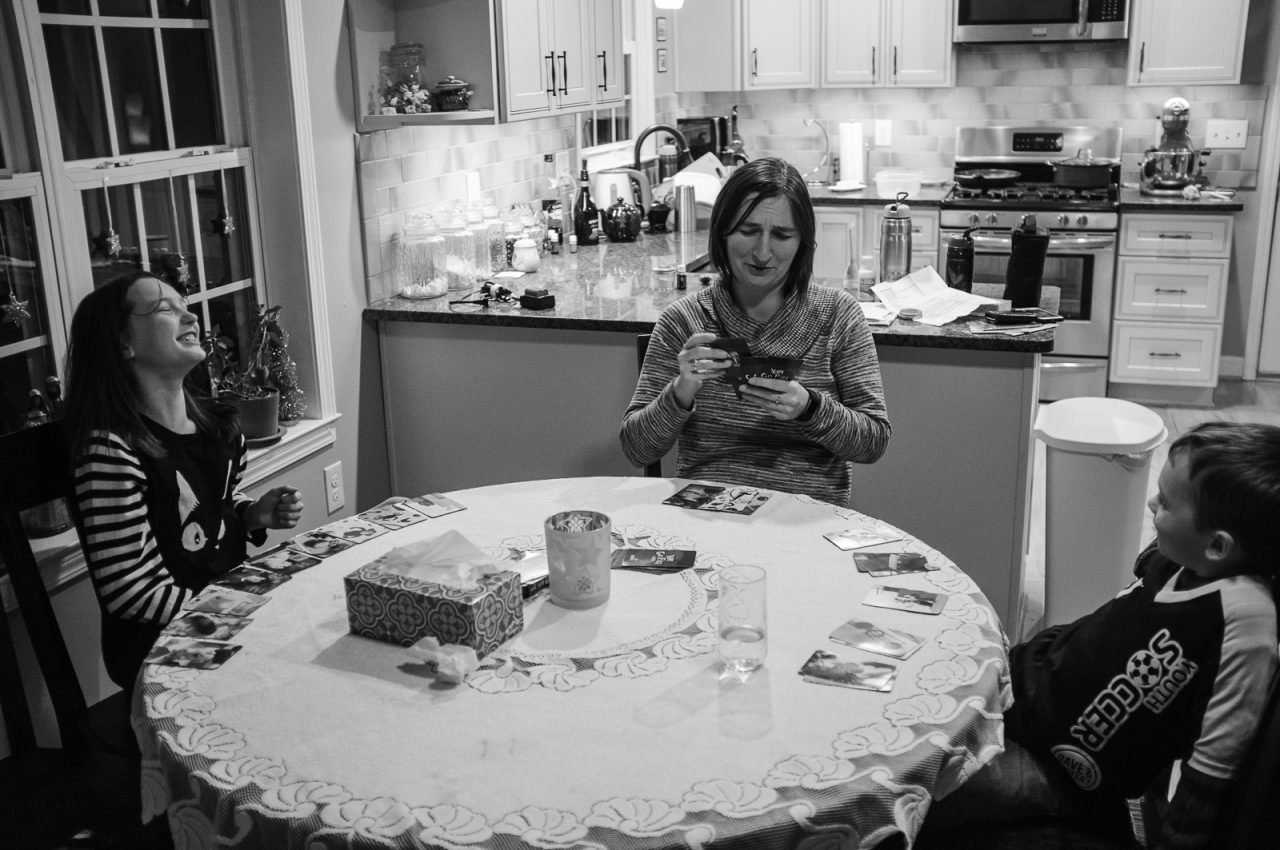
Scientific Go Fish

The Go Fish obsession continues. Someone plays with the kids every night, and they occasionally play together by themselves. We've yet to tackle a four-player game, though I'm not sure why. The kids don't seem to eager for whatever reason, and so perhaps that's why we haven't tried.

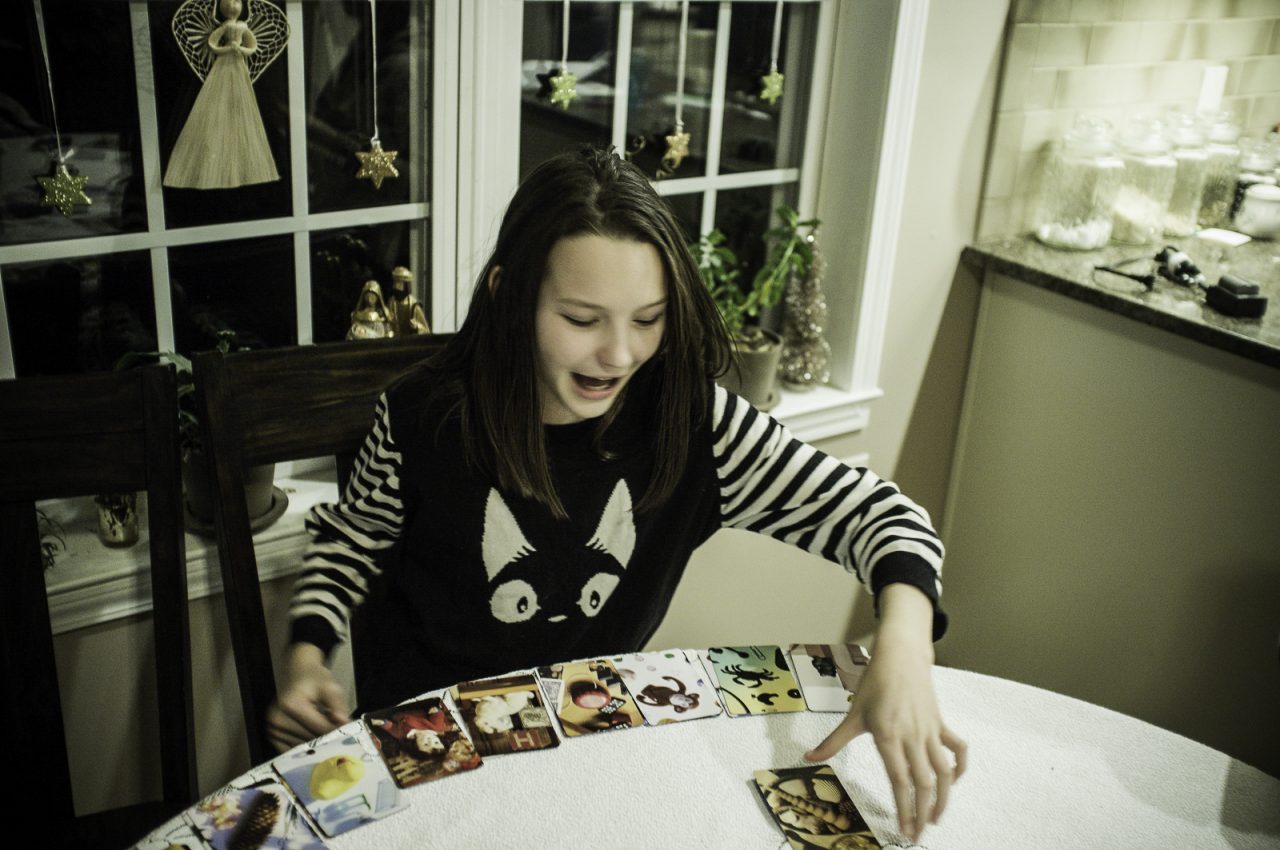
Go Fish last night

Tonight, as I was playing with them, I stood to get something from the other side of the room, and I accidentally glanced at the Boy's cards. (He has them spread out in a chair beside him, so the natural gesture to avoid seeing someone's cards -- looking down when passing -- doesn't work.) I did notice that he had a yo-yo (we play with a picture-based card set), and since I had a yo-yo, I thought I'd do a little experiment.

"L, do you have a yo-yo?" I asked during my next turn. E was set to go next, and I was ready for him to ask me if I had a yo-yo. He had been a little distracted, though, and asked instead, "L, do you have a yo-yo?"

L looked at me; I smiled back at her.

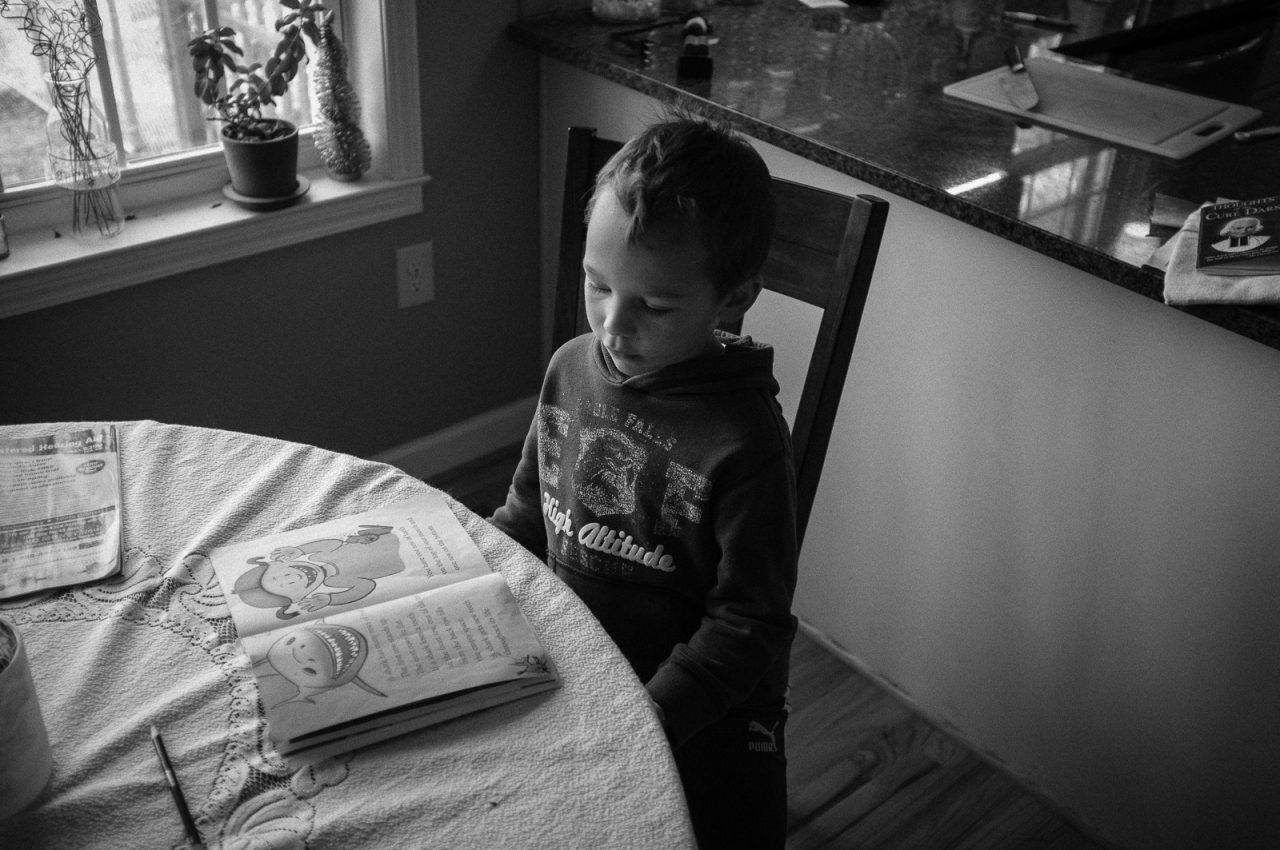
Afternoon reading

"E, I just asked her that," I laughed. "You should have asked me that just then. Now, I'm going to ask you for it next turn."

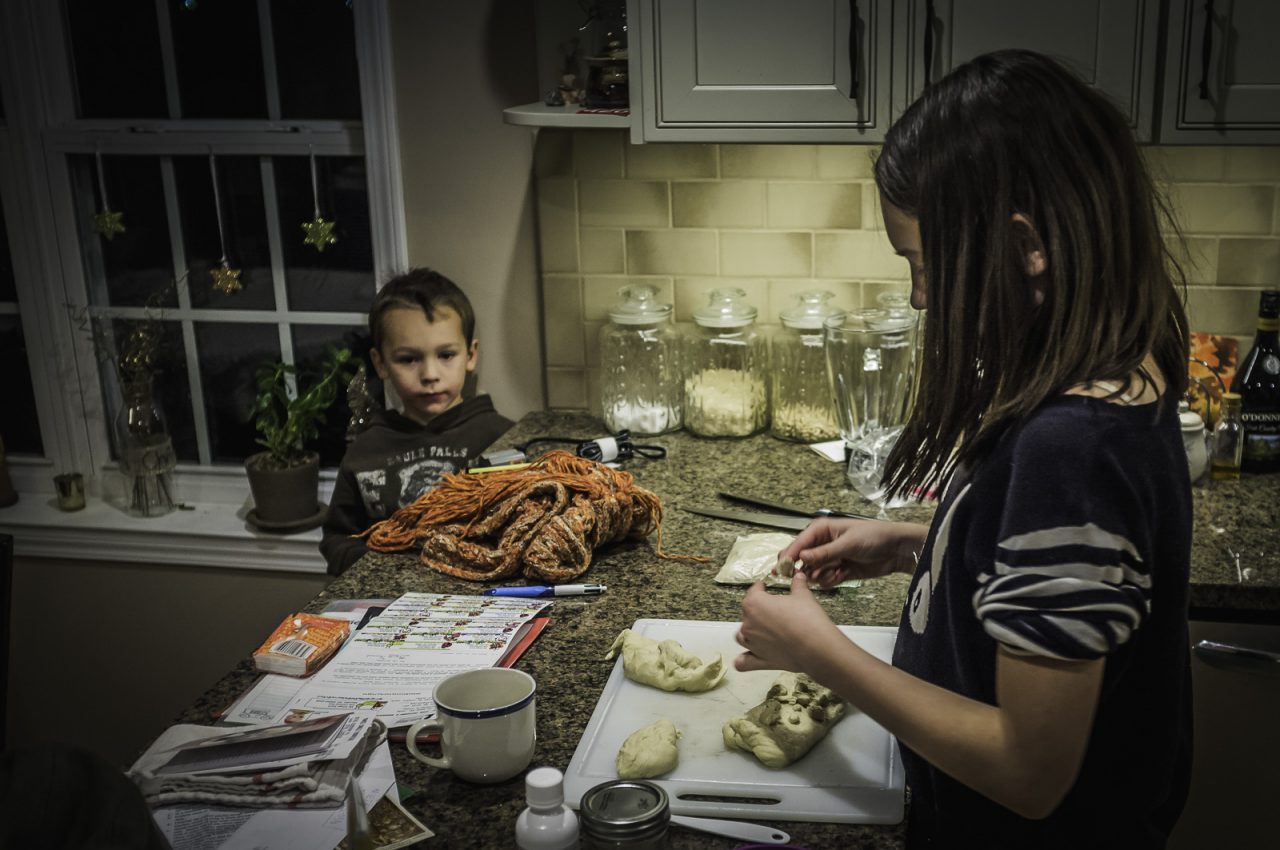
Playing with dough after dinner

He just smiled.

Last Day of Break

"Daddy, I don't understand. On Sid the Science Kid, the teacher calls all of the children scientists." The Boy paused for a moment: he's learned how to pause to heighten the moment just a bit. "That can't be right! They can't be scientists!"

We were on our way home from shopping, leaving the girls at home this last day of break. K stayed home because of a lingering illness, so we were together for the morning, but the Boy and I headed out after lunch to do the week's grocery shopping.

"Why can't they be scientists?" I asked, wondering what he had in mind.

"They're just kids!"

"So?"

"To be a scientist, you have to have a job. That's your job. A scientist," he explained still frustrated, though sometimes with him it's hard to tell if the frustration is real or just pretend, as if he's trying it on for size.

I thought about his definition and reasoning for a few moments, thought about why the teacher would be calling children scientists -- obvious for an adult, not so much for a child.

"Well, E, it's a question of scientific thinking. She's calling them scientists because they're behaving like scientists. They're thinking like scientists." This satisfied him for a few moments, but it didn't satisfy me. I was wondering if he would ask what it means to think scientifically, hoping he would ask. He didn't, so I prompted him. "Do you know what that means, to think like a scientist?"

"No."

"It's a process. You observe. You think about why things happen. You make predictions about why things happen; you check those predictions..."

I fear a lot of Americans really have no clue what it means to think like a scientist.

The other night, while on a walk, I was listening to an old sermon by a religious leader, and he was railing against "intellectualism." He never really defined it. He never really explained why it was so bad other than to say it was vanity. He was upset about how some Biblical scholars will spend so much time picking at the smallest little detail, and as he said that it occurred to me that he really didn't have a firm grasp of what those scholars were doing, how they were examining the text, their methodology and the justification for it.

I think this is a common thread in America, this anti-intellectual position, and it's directed at all sciences. People dismiss all sorts of things they, were they taught like Sid the Science Kid to think scientifically, they likely wouldn't dismiss, and they accept things that, were they taught like Sid the Science Kid to think scientifically, they would dismiss out of hand.

So I was very pleased when E later spoke of thinking scientifically. And as he played Go Fish with the girls, it occurred to me that here is a perfect opportunity for some basic critical thinking: observe (listen to what others are asking for); test (ask for a few things in a systematic way); repeat.

Decisions

"I want a flat egg. No, no, I want a bagel and some Cheerios. And some milk."
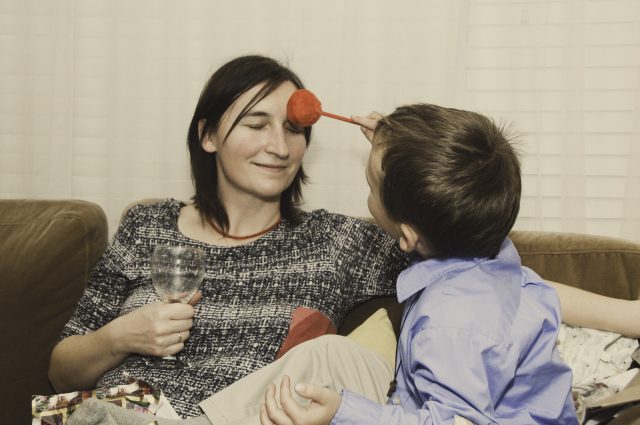
The Boy's breakfast decision process is similar almost every day. I feel fortunate that we are in a position to provide him with so many choices, but at times, it exhausts us.

This indecision spills over into all parts of the Boy's life. When given a choice for clothes, he can dither similarly. When given options for how to spend the afternoon, he can flip-flop similarly. It's only a mild inconvenience, and probably common for his age. I can't remember L being like that, but perhaps that's just selective memory.

His indecisiveness comes into full bloom (to thoroughly mix my metaphors and split my infinitives) when he as a little money to spend, which has been the case for the last few weeks. He'd earned money with various chores and received some from aunts and neighbors, so for the last few weeks, he's been playing out his options for how to spend his $30.

"I think I want a new log truck," he said one day.

"But you had a log truck, remember. You lost all the logs, and now you don't know where any of it is." That probably wasn't quite accurate: don't know those things are, which is not to say that he doesn't know.
"Well, still, I think I want a new one."
A few days after that, it was a new Nerf gun.

"Son, you have two Nerf guns."

"But they don't fire that well." Don't they? I wasn't aware of that.

He toyed with a few other ideas, but when we went to the toy store tonight, he'd finally settled on a Nerf gun.

And then he had to choose which gun...

Cold Day

Two Days After Christmas

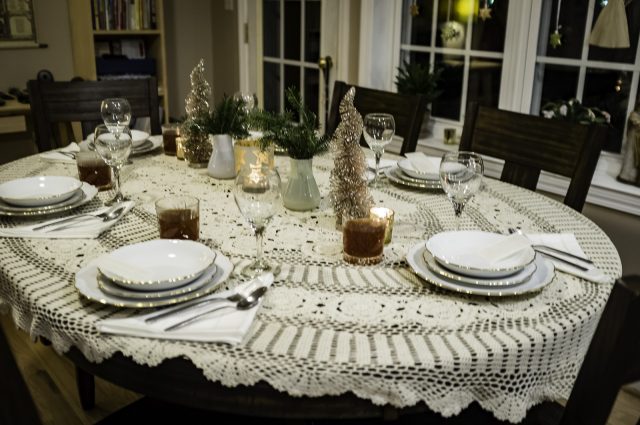
Wigilia 2017

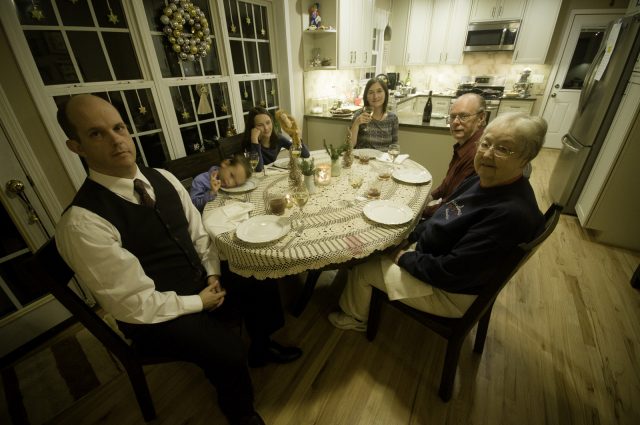
Down at the bottom of the page, there are posts about the last several wigilias. How many? K and I were counting this evening after the food had been put away, the dishes washed, the presents opened. Thirteen together with Nana and Papa, which would make fifteen together as a couple. I stop and think about it: that would make the first in 2002. Surely that’s not right. We got married in 2004, and we were engaged in 2003. I check my photos from that period and sure enough, there are the pictures of K preparing food at the table where this summer she sat with Babcia in the morning chatting over tea.

Fifteen years. Fifteen times we’ve put up a Christmas tree together, cooked and cleaned for wigilia together (though K has done the vast majority of the cooking), bought gifts together.

We began all this a couple of years before the students I currently teach were born.

It’s not that I’m obsessed with how much time has passed. I used to be that way, but I think it was youthful sentimentality that I eventually outgrew. It’s not that the time has passed but that I no longer really notice it. Not like I did when I was so eager to be somewhere I wasn’t at that moment, when I looked ahead instead of looked around, so eager to be older, beyond where I was, not who I was. Grown. And truth be told, I never really felt that way — grown — until things became serious with K, when the future began to take definitive form. But since then, with our move to the States, the birth of our children, the purchase and eternal remodeling of our house, the pressures of our jobs, and all the other things that pack our days and nights, I don’t often give it much thought.

That’s the greatest gift of wigilia: a pause, a step out of time with the rest of our lives, a ritual that calls us to reflect and remember the past and appreciate the present.

Nothing ever changes in wigilia. Nothing. We have the same preparation rituals, the same cleaning. The one change: the involvement of the kids increases. The Boy eagerly helps with anything; the Girl, not so much, but that is changing as she matures. She’s eleven now, nearing what promises to be one of the most challenging and rewarding period, her teens. Wigilia always provides a metric for growth, both in the amount of help she provides and the willingness with which she eats some of the things she’s not really crazy about.

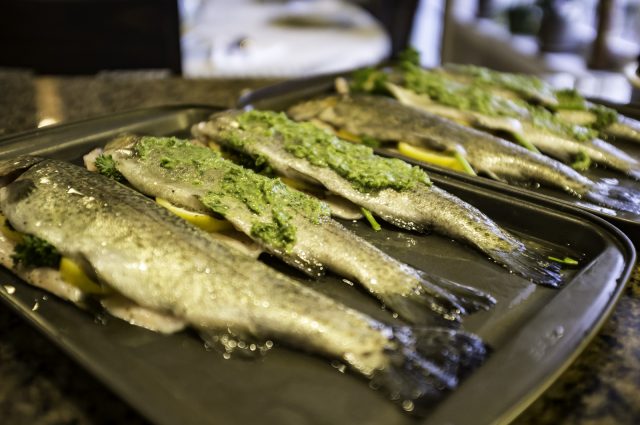
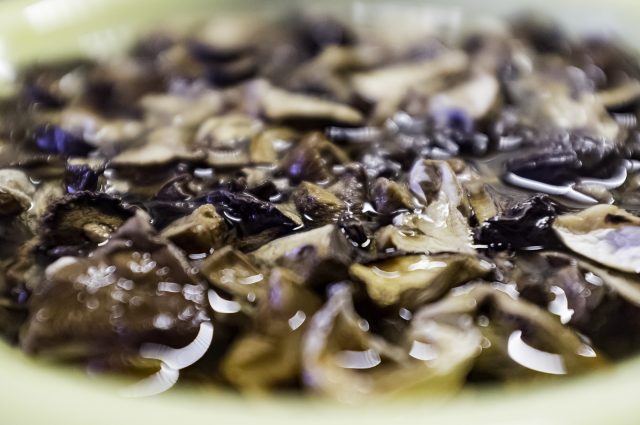
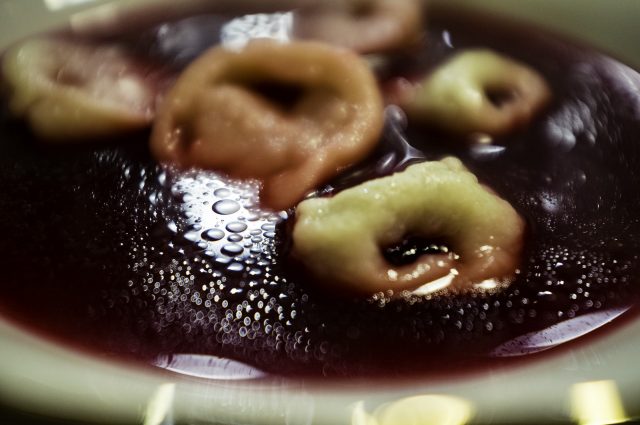
Nothing ever changes in wigilia. Ever. We eat the same foods with little repetition. Barszcz z uszkami, pierogi z kapustą i grzybami, jakaś ryba. Zawsze tak samo. It’s the ultimate comfort food, recipes that have passed through generations with little change. I sometimes wonder what L and E might do with their families after we’re gone. Will they take these recipes with them? Will they find themselves reminiscing on Christmas Eve about how different their Christmas Eves were as children?

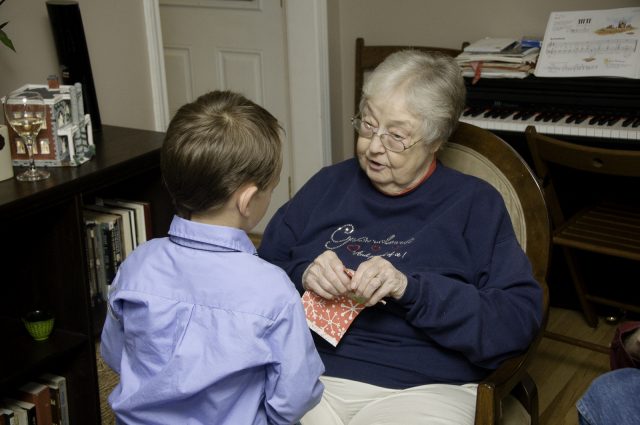
Nothing ever changes in wigilia. Nothing.We follow the same script with little repetition. A nativity story, usually from Matthew. We sing a Christmas carol, usually “Silent Night.” We share the opłatek. And our wishes for each other never change, always involving health in one form or other. Is there anything else we need to worry about? Is there a greater or more important wish we could have for others?

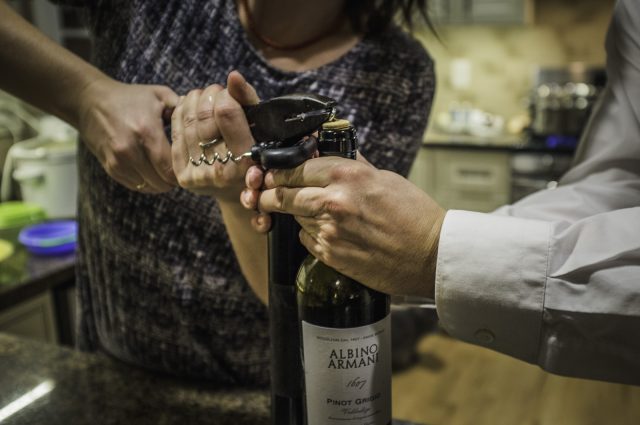
Nothing ever changes in wigilia. Ever. We even give the same gifts (a photo yearbook of the previous year’s adventures). It’s not the most fiscally generous gift, but it’s what everyone really wants. “We always look forward to getting it,” K’s sister-in-law once told us, and in truth, K and I truly enjoy making it. It’s a challenge to narrow a year’s worth of pictures (approximately 12,000 in 2017) to a selection to fit into roughly 150 pages. And for me, it’s always the same: a bottle or two of some libation. We’re all so easily pleased.

Nothing ever changes in wigilia. Nothing. We end the same way, sitting around drinking coffee, listening to carols, watching the kids play with their toys. This is something that will eventually change. L no longer gets toys, not in the sense of something she can play with. E will reach that point too. In ten years, L will be in college, E in high school, and what gifts will we be giving then? Lego won’t be so very special, but we’ll figure that out. Hopefully, the gift of just being home — the Girl coming home from her junior year of college in ten years — will be enough.

Nothing ever changes in wigilia. Ever. I end the evening alone, drink at hand, chewing on a cigar (and it’s even been the same cigar for the last few years, I would bet: a Partagas Black Label — a dark, earthy, rich, strong nicotine kick in the pants to end the evening), with Christmas music playing (this year, Chanticleer’s Psallite! A Renaissance Christmas), working on pictures taken throughout the day, then writing about it all — writing the same thoughts.

Nothing ever changes in wigilia. Nothing.

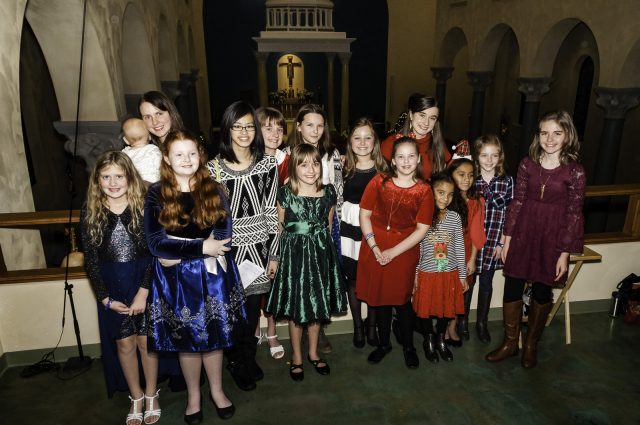
And yet there are all the little changes, little jewels of growth and change that make this year different from last. The Girl, singing soprano in the children’s choir under the direction of a new choirmaster who, looking for a change, has come through a miraculous chain of events from the Vatican where he was assistant music director at the Sistine Chapel to our little church in Greenville and has made the music of Mass positively angelic. The Boy, trying so hard to be a man, agreeing to change into more formal clothes because K explained that I would be doing the same. K, realizing she doesn’t have to do everything every year — notice: no kapusta z grzybami or zupa grzybowa on the menu, and only two deserts — and having a much more relaxed day as a result.

We’re all growing.

The truth is, everything changes every wigilia.

Everything.

Previous Years

Wigilia 2003

Wigilia 2004

Wigilia 2005

Wigilia 2006

Wigilia 2007

Wigilia 2008

Wigilia 2009

https://matchingtracksuits.com/2010/12/25/wigilia-2010/

Wigilia 2011

Wigilia 2012

Wigilia 2013

Wigilia 2014

Wigilia 2015

Jasełka 2017

Drawing and Helping

Games

The kids stayed home today, and so I stayed home. What to do on a day off? Simple — play games.

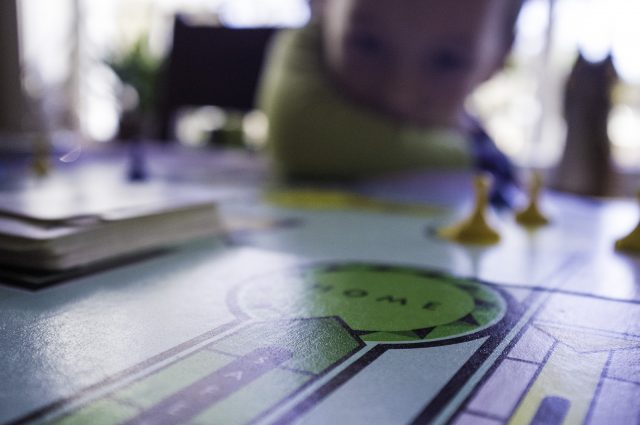
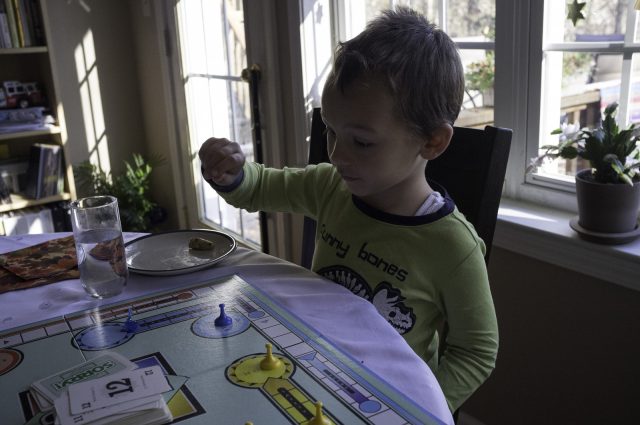
First, Sorry. I love how this game teaches patience: you get all your pieces moving around the board, making real progress, and suddenly someone draws an 11 and switches places with you, destroying the work of the last few moves in an instant. Or worse: your opponent draws a Sorry card — back to the beginning for you. Then there’s the opposite problem: you’re right at the entrance to your safety zone, and you draw a 12 card.

“Time to make another lap,” I told E when it happened to him. He was frustrated, but dealt with it well. (Yes, I see it. I choose not to acknowledge it.)

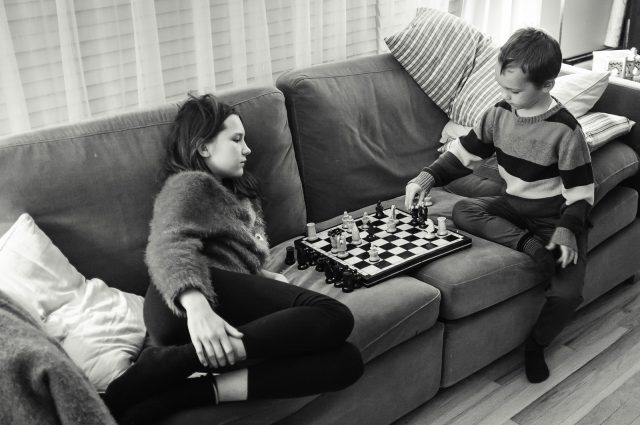
The real surprise for me these last few days has been our children’s desire to play chess with each other. I’ve been teaching the Boy to play chess, and since L already knew, she decided to take it upon herself to teach him the final pieces (king and queen) and start playing with him.

Naturally, she beats him as badly as I would beat her were I to play seriously against her, not pulling my punches, so to speak. Still, Magnus Carlsen began taking chess seriously at about E’s age because his older sister kept beating him and he didn’t like losing. Now he’s the world number one, with an astronomically high rating, and by and large seems unstoppable. Doubtful, but one never knows. The love of the game and the patient critical thinking it encourages are enough .