matching tracksuits

fun in threes, sometimes fours

polska

My always obsession...

Chapels

Poland is a Catholic country — in spades. Some ninety-seven percent of the population claims Roman Catholicism as their religion, though estimates of practicing Catholics is around seventy percent.

Of this seventy percent, I'm not sure how much of it is from habit and from true faith. I've had many a discussion about this with friends here about it. It calls to mind a college professor who'd "accepted Christ" at age five, which seems more from environment than from inner conviction. Regardless, the vast majority of Poles go through the motions, anyway. And certainly, many of them are devout and sincere.
There are quite a few who go to daily mass. It's mainly elderly women, judging from the small stream of people I see leaving the church. This raises a question: how does one draw the line between sincerity and habit? And what if it seems only to be habit despite the individual's protests that it's not? Pious until proven habitual? Or maybe I'm begging the question of them being mutually exclusive.

This Catholic piety spills over into every facet of life here, something striking to someone coming from a relatively irreligious country like the States. Separation of church and state — a completely foreign concept here.

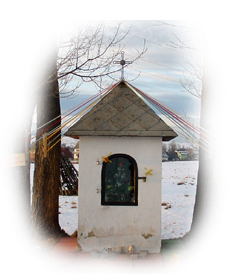
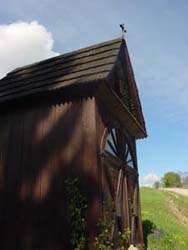
One of the many results of this piety is the proliferation of chapels —roadside chapels, yard chapels, even gable chapels.

Roadside Chapels
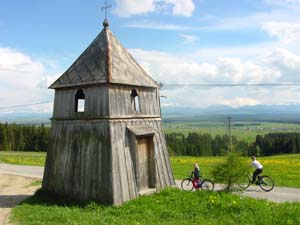
Belltower in Jablonka

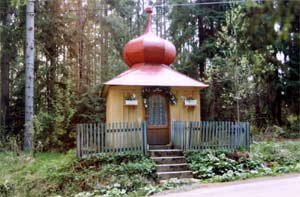
Roadside chapel just outside of KiczoryRoadside chapels are everywhere in Poland. They're by highways (or the Polish approximation of "highways") and roads you think are probably traveled once a year.

And they're all different: from small, simple, covered crucifixes to elaborate buildings.
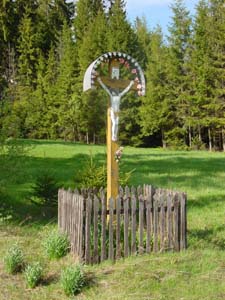
I've rarely seen people there praying, but it does happen occasionally. It seems to be most common around high holidays in the spring and summer when the weather is conducive to spending all that time outside praying. And in many ways, it's quite admirable, that kind of religious dedication.
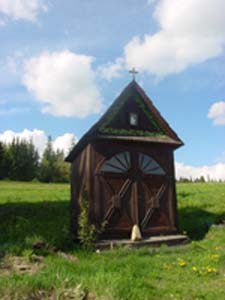
Some Protestants might suggest that building chapels like this is not necessary, that no building contains God.
Theological differences aside, it's still a pleasant idea for me, even as a non-believer.
Delivering Invitations

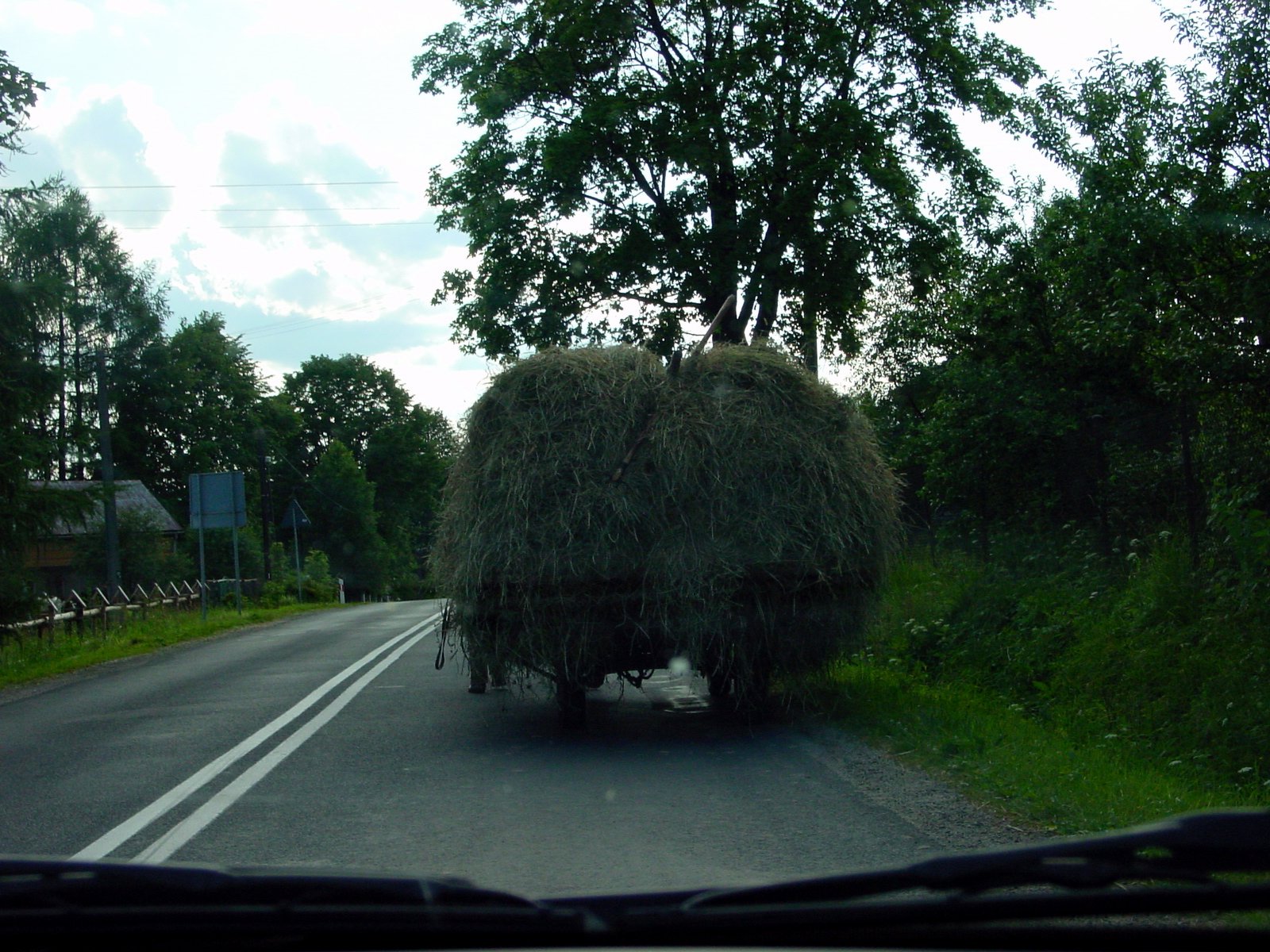
Part of the tradition of the Polish wedding is the delivery of the invitations. In short, if you can drive there in a reasonable amount of time, you’re expected to hand-deliver the invitations. That means a lot of driving before the wedding.

2-DSC00008

In places you might not usually drive.

1-DSC00004

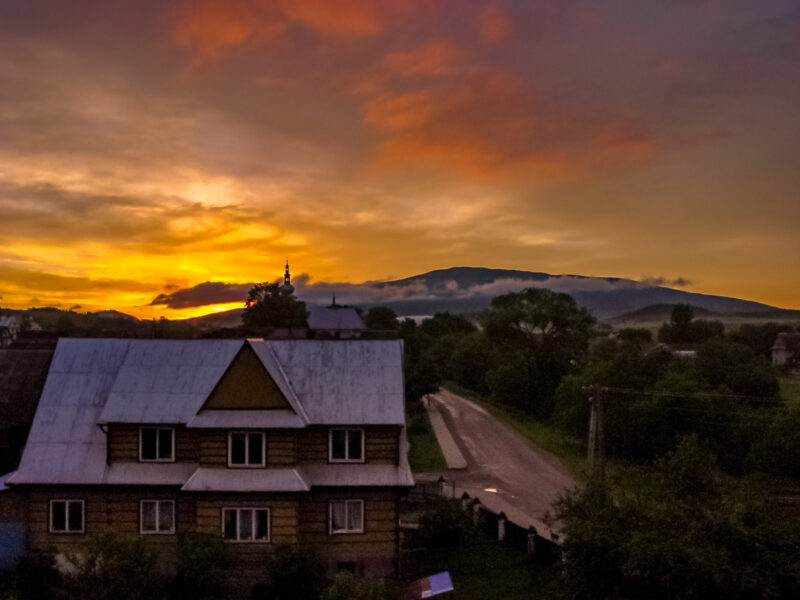
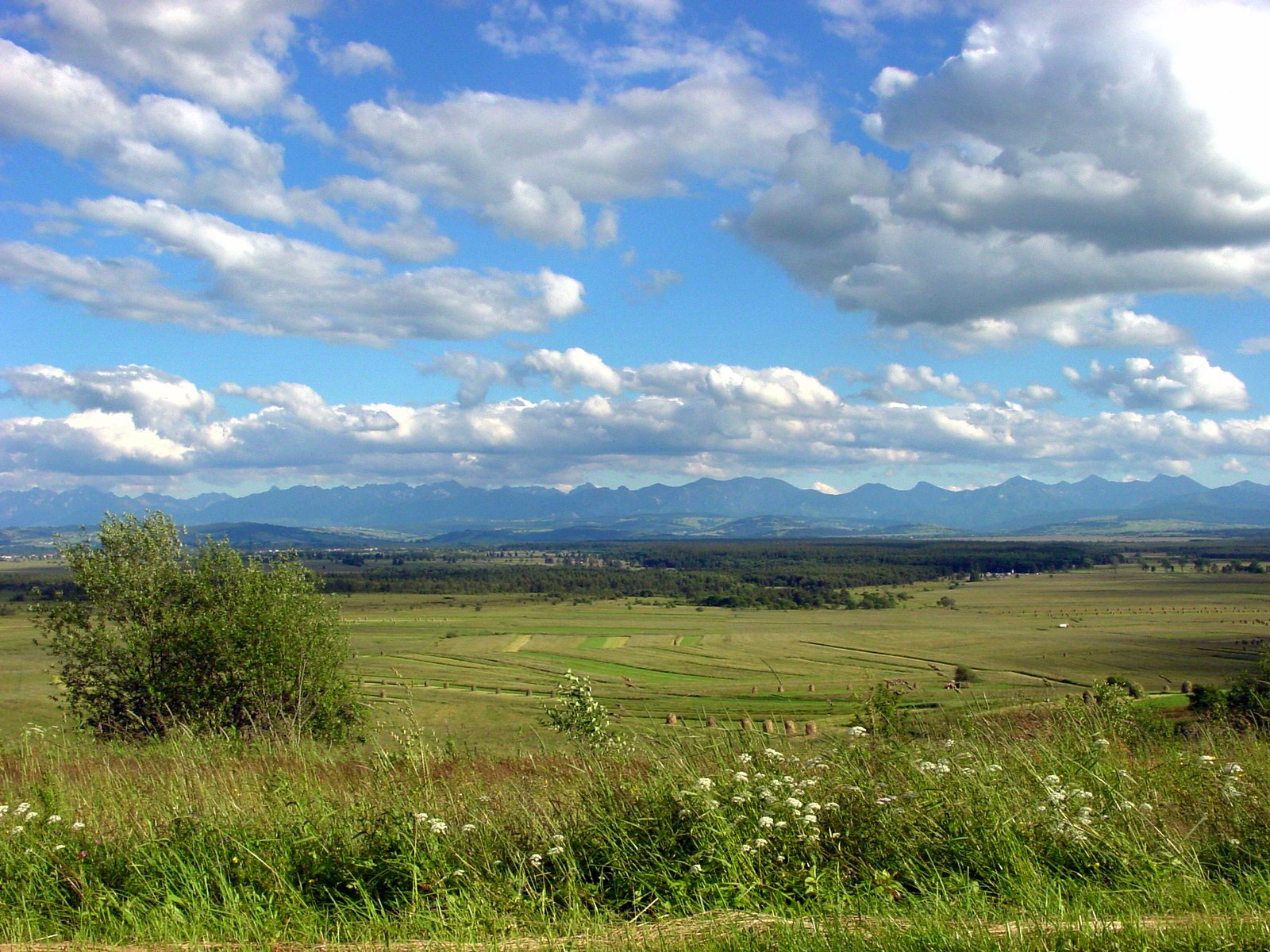
With views typical of the region.

Sunset

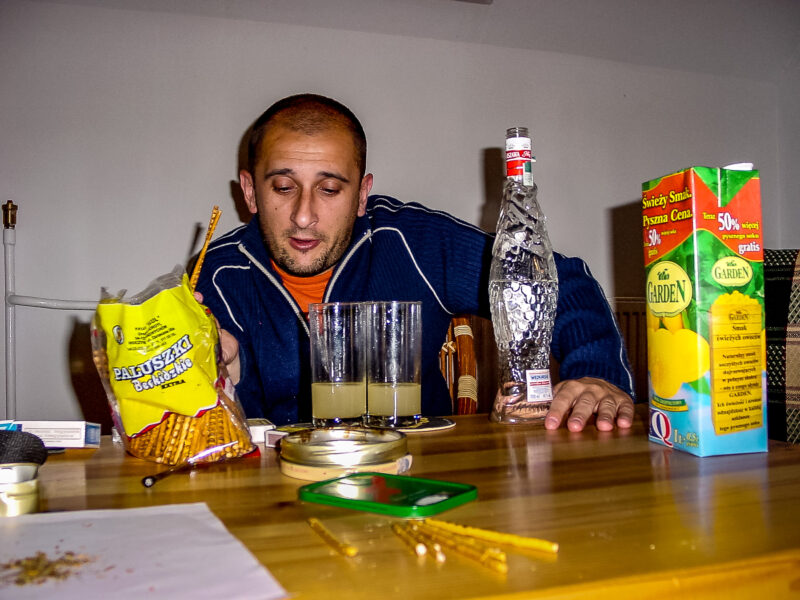
Johnny

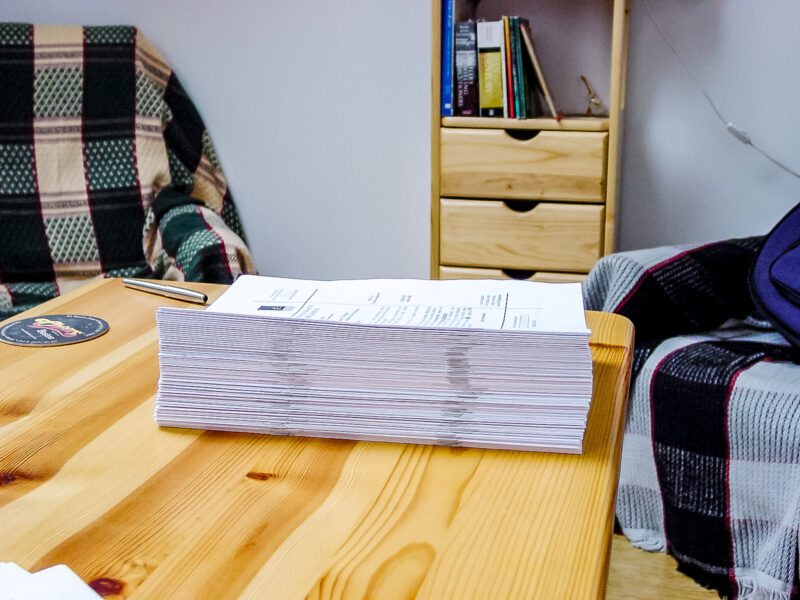
Maturas

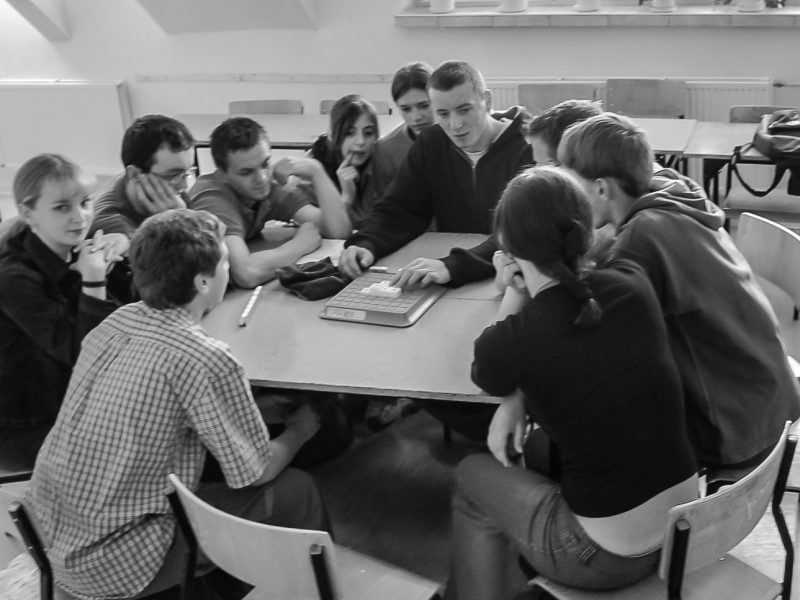
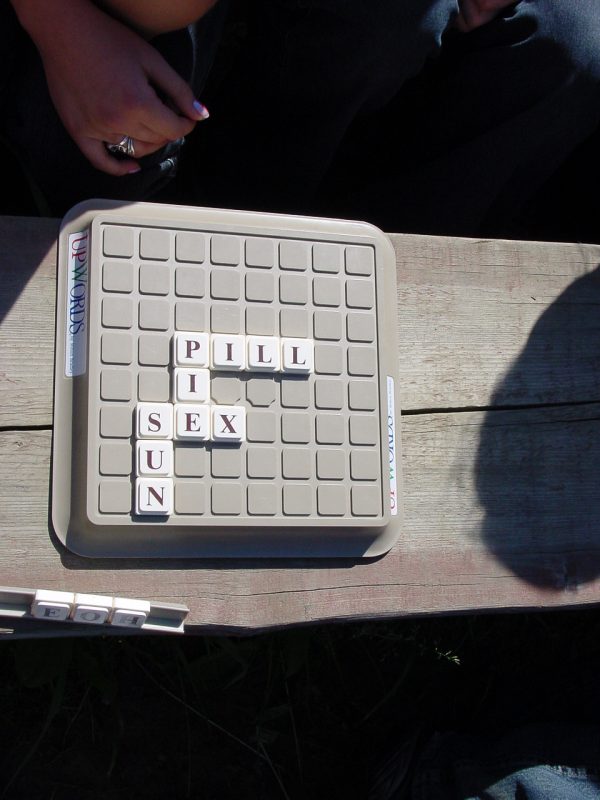
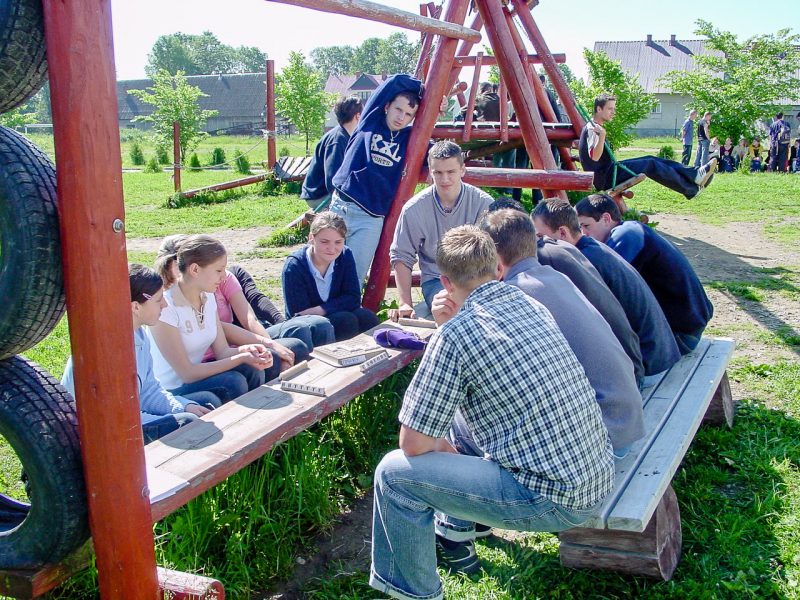
Playing Upwords

Looking

Looking for a verse for our wedding.

Libation

There are several drinks one associates with Poland. Surprisingly, tea is one of them. I say "suprisingly" because tea is too English to fit into Polish society, but fit it does.

But who wants to read about tea?

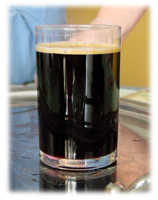
Coffee is another story altogether. In Poland they drink their coffee Turkish style. They simply put coffee grounds in a cup and add water.  No filter, so there's a sludge (not to be confused with sledz) in the bottom of the cup. My friend's uncle does strange things with his coffee grounds: He eats them.  He puts eight or nine teaspoons of sugar in his coffee (or rather, he pours a little water of his sugar and coffee ground mixture), then eats the stuff at the bottom of the glass.

"Glass?  Don't you mean, 'cup?'" you might be asking yourselves. No, I mean glass. Most often coffee is served in a glass, much like we would drink soda from in the States. In other words, there's no handle. I think it is actually rather dangerous, because it's very easy to burn my tender hands holding a glassful of hot coffee. But most Poles just grab the glass, and don't wince at all.

Vodka

I'm not sure I'd ever drunk vodka straight before I came to Poland. Since coming to Poland, I've drunk a fair amount of it (comparatively speaking), but I still don't like it.

Vodka accounts for many of the little surprises I've noticed around here — missing fingers, for instance. Many men in Lipnica have part or all of one or more fingers missing. I knew fairly early on that this would be a result of carelessness in one of the many sawmills in the village, but I thought, "Come on, simple carelessness doesn't account for it." Then I saw a man covered with wood chips and sawdust come into a shop and buy a half-liter of vodka.

As far as straight drinking goes, though, Poles, while they out-drink Americans to a lip-numbing degree, are teetotalers in comparison to Russians. I once saw a documentery in Poland, called Z?ota Ryba ("The Golden Fish"), about vodka in Russia. It showed a home distillary that produced 140 proof (i.e., 70% alcohol) vodka that even Grandma was tossing back by the full glass (Not a shot glass, mind you, but the size Poles use for coffee and tea.), without a chaser.

Poles make their own vodka too — to a degree. It's a tradition to use pure spirits to make wedding vodka. (Kinga's father and I made it for ours.)

Still, buying spirits and dilluting them is one thing; making your own spirits is quite another.

The Linguistics of Vodka

Vodka in Polish is "wódka." A perfectly normal word, but its derivation is strange.

First, a bit about diminutives. A grammatical "diminutive," for those who don't know what it is and don't want to look it up, is used to denote the smallness of or fondness towards a particular thing.

In English, we don't really have them. We might preface some noun with "little" (as in, that's a nice little dog), or even use "little" in conjunction with "cute" or "sweet."

In Polish, though, you actually change the word, usually adding "ek," "ka," or "ko" to masculine, feminine, and neuter nouns respectively. In the example above, a Pole might say "piesek" as the diminutive form of "pies."

Poles have diminutive forms of first names as well. You seldom call a friend named Piotr by that name, but instead use "Piotrek," or if you're his mother, "Piotru?." It's similar to the change from "Thomas" to "Tommy," I suppose.

Now, back to "wódka." If you notice, it ends in "ka," meaning it is, in fact, the diminutive of some feminine noun. What word could that be? Why, it's none other than "woda," or "water."

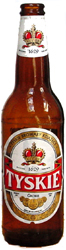
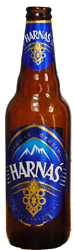
Beer

I'll never forget the first time I saw it: standing in a shop at seven in the morning, waiting to buy something for breakfast, I watch a man come in, buy a beer, down it in one long gulp (for lack of a better word), put the bottle on the counter and walk out. Seven in the morning.

It's safe to say that beer is viewed somewhat differently in Poland than in the States. In fact, when someone in Poland says, "I haven't drunk in two days!" I take that to exclude beer. "I haven't drunk vodka in two days," is what he probably means.

Fields

Matura Results

Matura — that’s something that happened that I haven’t mentioned. This year we failed nine. NINE!!

Then last week, Monday through Wednesday, we had the practice matura. It’s been hell grading it, but I’ve survived so far. I still have about seventeen to finish, and then I have to go back with 2b and 2c and grade the short writing, but that’s relatively quick and painless. But I have basically stopped writing in the margins — it just takes too much damn time.

I prepared a sample matura answer for them:

Dear Bob,

I hope you are doing well. I apologize for not writing, but I’ve been very busy at school and I haven’t had any free time. All I do is study, study, study.

“What am I studying?” you ask. English. You see, in Poland we have to take exams to graduate from high school, and one of them has to be in a foreign language. I chose English because I hate German. Who can speak a language with words three kilometers long? Anyway, one of the reasons I’m writing you (you see — it’s not just because I’m nice) is to ask you to send me some materials in English to help me study. Anything will suffice: magazines, newspapers, old books.

It’s important that I do well on my exam because I want to study English after high school. I’m thinking about being a translator. If I do well on my exams, I’ll have a better chance of getting into a good university. Of course, if I were rich, I could just come live with you in England for a year and then I’d be fluent.

I recently started thinking about what I’m going to do for vacation. I know that nothing can compete with that amazing vacation we had last year: two weeks in Fiji. What a dream! I guess once in a lifetime is enough. Anyway, do you have any plans? Perhaps we should do something? Maybe somewhere in Europe?

I’d better be going now. I hope to hear from you soon.

Regards,
XYZ

P.S. I heard Mark got a new job as a photographer. His dream job — I’m sure he’s still smiling. Send him my regards and tell him I’ll be looking for his photos in the Times!

Unfortunately, it’s too long. Oh well.

I’ve determined, though, that these kids just don’t know how to write, and that that’s my fault. I have to give more writing assignments, even though I don’t want to. And I have to get them to a point where they can begin checking their own work.