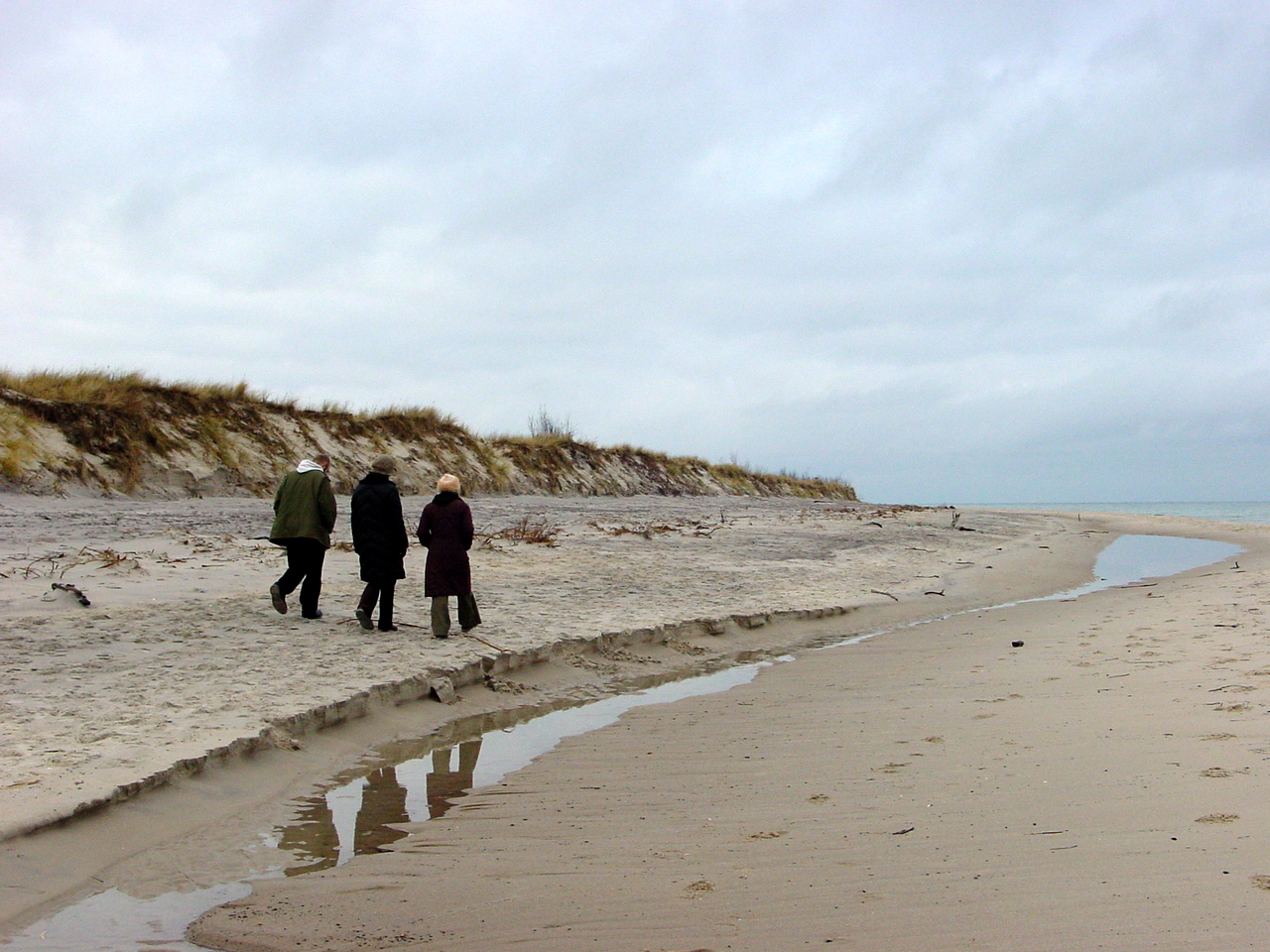
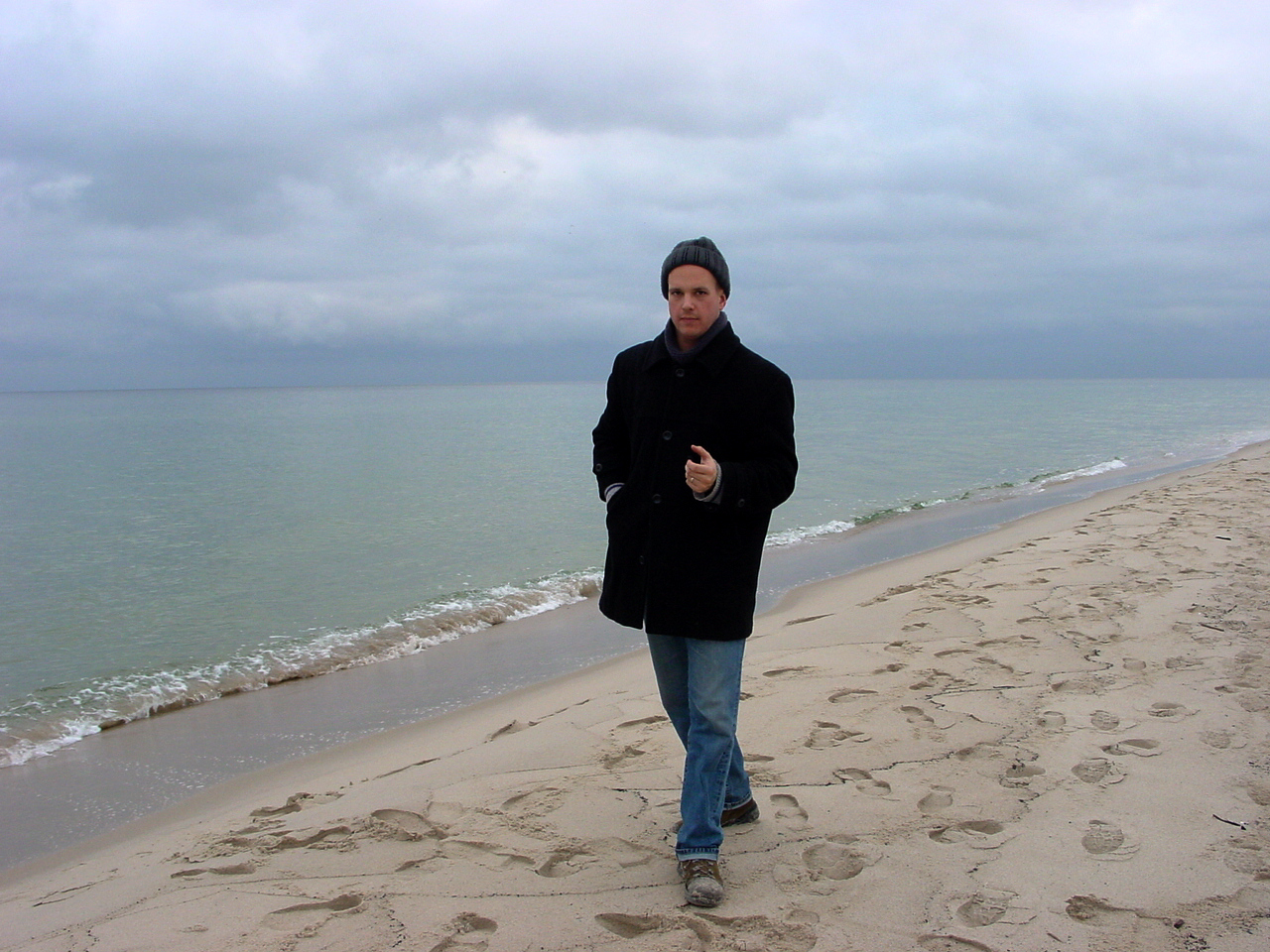
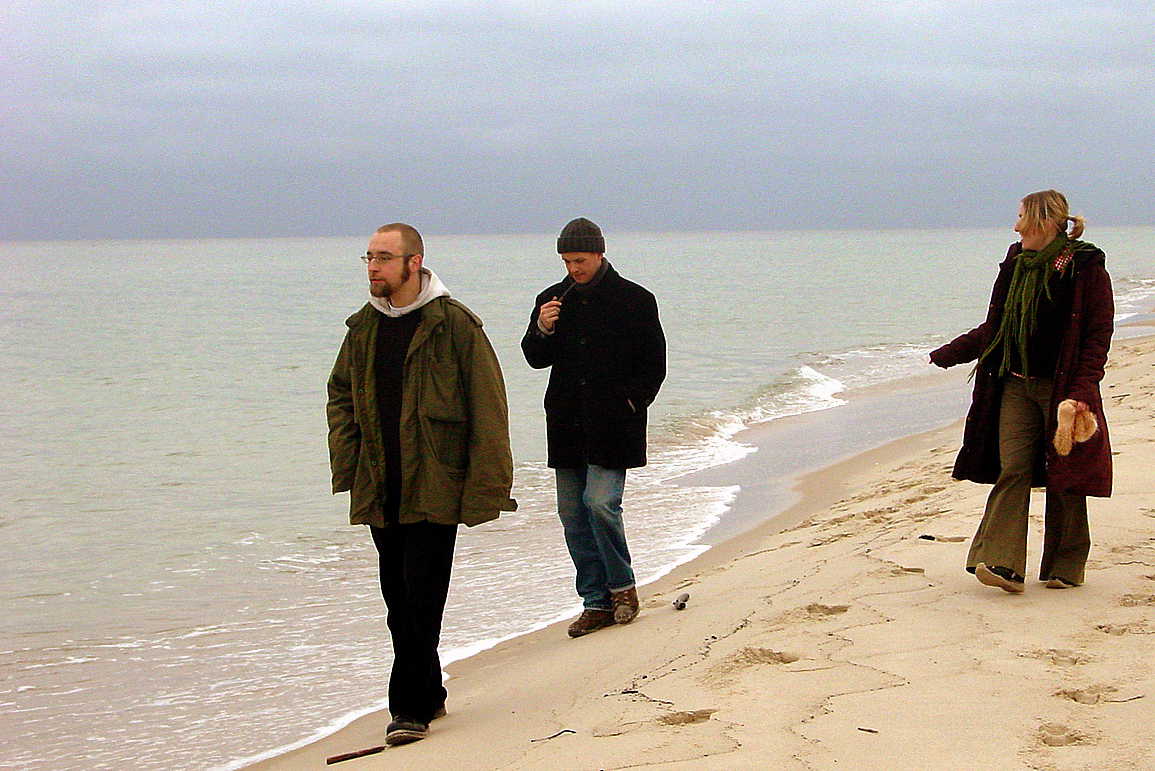
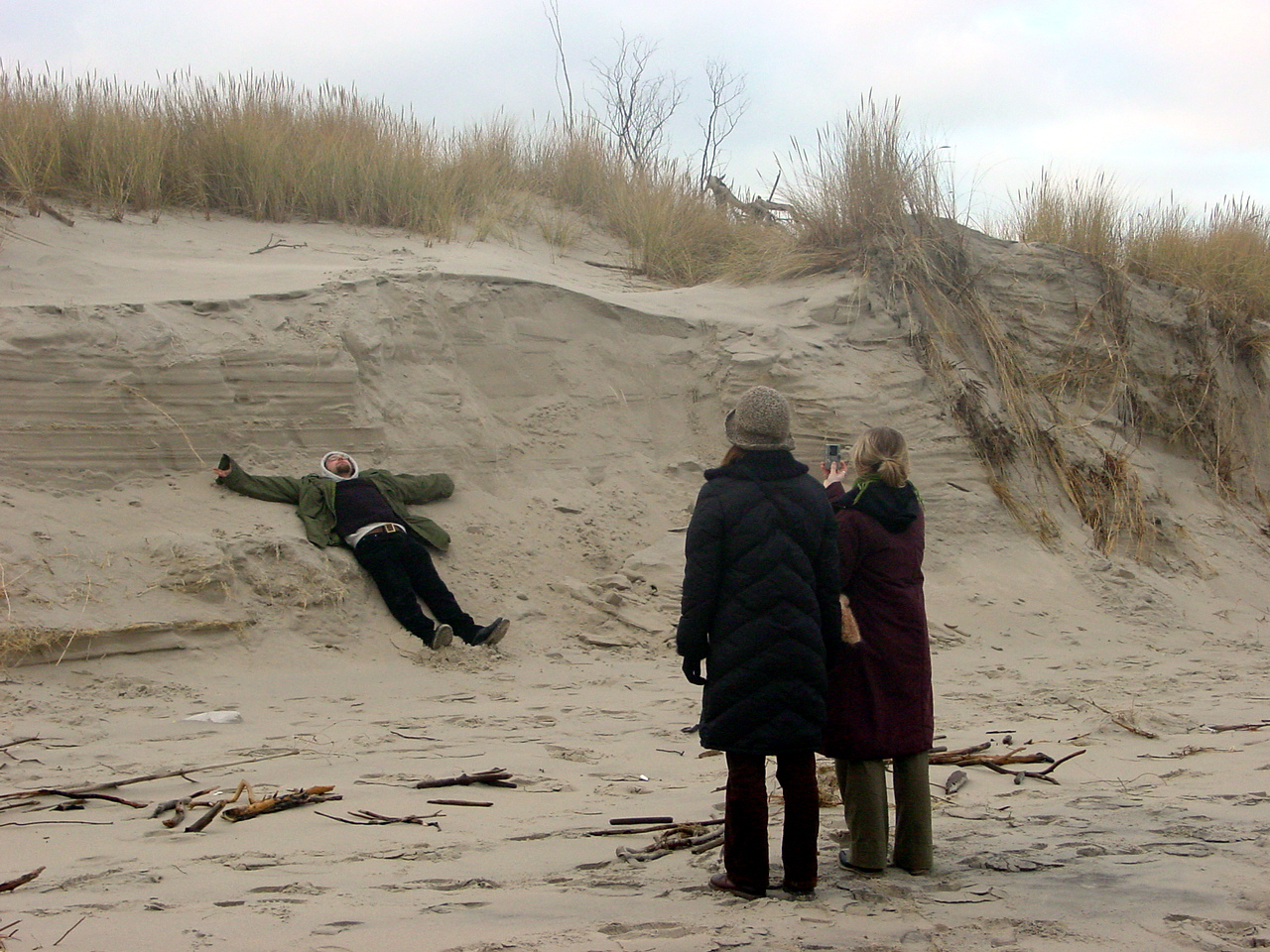
matching tracksuits

fun in threes, sometimes fours

polska

My always obsession...

I don’t know much about electricity and wiring

but I'm pretty sure that strange things as were happening around here last night should not be happening.

I'd literally just finished complaining about the techno hell I was scheduled to endure and had gone over to C-Span to watch some more of the Rice confirmation hearings when suddenly the light on my desk went out and the icon indicating that my laptop had switched to battery power.

Frank made the comment that it could be due to the age of the building, speculating that it could have been pre-WW2 and originally unwired, then wired and re-wired. I'm not quite sure of the age of the original building itself, but it could very well have been pre-WW2. In 1999-2001, though, it was completely rebuilt. I don't mean renovated, I mean rebuilt -- all that's left of the original building is the foundation and the outer walls. The floor Kinga and I live on was actually non-existent then, so everything here is about four years old.

Short-term power outages happen around here (super-rural Poland) semi-regularly, so I thought nothing of it. In fact, for the first time in my life, I was happy about the apparent blackout. "Peace!" I thought.  But the thum-thum-thum-th-th-thum-thum-thum was still going on downstairs.

And Senator Bidden (bless his compromising heart) was still making me smile via Real Player and the LAN router across the hall.

Intrigued, I tried the kitchen light. Nothing. Still further intrigued, I went out into the hall and tried the light switch there. "Ba-ba-ba-PING!" and the incandescent lights were on.

Odd.

I put on my coat and descended into Techno Hell. The teachers' room there was without electricity, but the adjacent areas had power. In fact, as I left, I noticed that there were lights on almost throughout the school. Talking to the teachers there, I learned that they were just as confused about it as I was. No one knew what was going on.

As a side note, I will very irritatedly report that most of the students were not hooting and hollering but just sitting at the edge of the room -- a typical dance. Why the music has to be so loud for that, I'll never know.

Returning home, I decided to start cooking dinner by candlelight -- a minor irritation, compounded by the bit of back luck that had given Techno Hell a different electrical fate than me. "Why oh why didn't they lose power?" I muttered.

Then the fridge switched on and I thought I was saved.

I reached over to turn on the light -- nothing. Fridge running, no light. I checked the lights in the living room. They worked. I went to the bedroom -- nothing going. So then I did the only logical thing: I systematically went through the apartment switching on all the lights to see which power outlets were live and which were not.

The bizarre results:

  • The bedroom and bathroom were completely without power.
  • The living room was fine, even though one of the outlets was in the same wall as one of the dead outlets in the bedroom -- directly opposite it, in fact. In theory, on the same line.
  • The main light in the kitchen didn't work, but the small light above the sink did.

Now, as I said, I don't know much about electrical wiring, but this seems pretty damn odd to me.

And it seems to indicate some pretty weird construction practices. When the maintenance man came, I stood talking to him for a moment with my neighbor, and I found out some even more bizarre info:

  • Most of the wiring for the upper floor where we live goes through a fuse box on that floor -- which makes since.
  • Some of the lines run through another fuse box two floors below us.
  • My neighbor had power everywhere except where his fridge was plugged in.

"Who the hell thought up such a wiring plan?!" I wanted to scream/laugh, but I bit my tongue and thanked the maintenance man for his help.

An hour or so later, the power all came back on, but I'm still scratching my head over it.

That's not the only example of weird wiring in Poland. The switches for most bathroom lights are outside the bathroom. You flip it on as you enter. In the first apartment I lived in, though, the lights were on the hinge side of the door, so if you forgot to turn on the light (which happened when I first arrived), it wasn't just a matter of sticking your hand out the door. You had to go back out into the hall, close the bathroom door, and turn the light on...
God Holding His Breath on Borrowed Time

Until I noticed the reference to God being "blue."

Thus I left things hanging.

Many words in Polish have dual meanings. Nothing new there -- English is loaded with them, my students like to point out.

"Niebieski" in Polish is derived from the word "niebo," which is "sky" or "heaven." Immediately we get into trouble, because the sky is a physical, observable phenomenon, while heaven is, at best, theological conjecture.

With such a start, meanings can only slide into more silliness.

The ontological status of the meaning of "niebo" aside, it gets more confusing when we throw the adjectival form into the mix. As expected, "niebieski" means "heavenly."

However, "niebieski," as you first learn it in a Polish course, would be "blue."

Hence, whenever I'm in Mass and hear that we should now direct our prayers "do niebieskiego ojca," I can't help but conjure up images of blue deities even though I know the priest is just telling us to direct our prayers to our "heavenly father."

There are other slippery words in Polish.

"Pożyczyć" is undoubtedly my favorite. It means, "lend."

And "borrow."

[Short pause.]

Exactly.

At first, that seems like saying "xidhb" in some language means "black" and "white." "Lend" and "borrow" have such intrinsically different, though related, meanings that it's difficult to comprehend that a language exists that represents both ideas with the same word. But it's really not that different: lending and borrowing both involve a temporary transaction of a given object, with the implicit understanding of said article's eventual return.

What English throws into the mix is the ownership information. By using the word "borrow," I make it clear, without any context, that I am lacking something. By using the word "lend," though, I make it clear that I am the owner.

Ownership in "pożyczy" is, of course, differentiated; only it's done grammatically.

  • "pożyczy㇠komuś›" is lend. "Komuś›" is the dative case for "ktoś›," which means "someone." And dative case, for those who don't know, is the case used in inflected languages to indicate the indirect article.
  • "pożyczyć od kogoś›" is borrow. "Od kogoś›" means "from someone," which makes the direction of the transaction (and hence ownership) clear.

Beginning students (and, to my dismay, students with some experience with English) often confuse these two English words, and come up with, "Can you borrow me your pen for a moment?" or "I can borrow you this or that."

More linguistic ambiguity:

  • The words for "lock," "zipper," and "castle" are all the same: zamek.
  • The words for "pigeon" and "dove" are the same, resulting in students coming up with an interesting construction: Pigeons of Peace.

But linguistic ambiguity is a two-way street, and soon I'll delve into the wild world of "things that mess with Polish students' heads."

Honesty

Sometimes students stop me dead in my lesson, and I stand there, unable to think what to do next. I'm not talking about "stupid" questions, or even behavior problems. Rather, I'm referring to that tendency all students have to say or ask something that just makes you reflect.

The other day I was fed up with a class and its behavior -- not even putting forth the slightest effort in a group speaking activity.

Now, I know it's artificial. I realize when I give them a task to do in English, they could accomplish it immediately in Polish. But as I ask them, "What for?" Usually they cooperate. Sometimes they don't.

They other day, they didn't.

In retaliation (and that's really the right word, I think), I assigned them a lot of homework. Basically, they were to translate the entire text we were reading into Polish.

I got the expected response: a chorus of "Proszę pana!" ("Please, sir!") I stood firm, though, and refused to relent. "The whole thing," I told them.

As they were filing into the classroom the next day, I could sense something was up. Then one lad stomped in, flopped down in his chair, and gave me a glare. He violently opened his book bag, jerked his materials out, and slammed them on the desk.

He's a theatrical boy, this lad (we'll call him Maciej), and so I regularly would have paid no heed. But the general atmosphere in the class was, as I said, strange, so I had my guard up.

Roll checked, then my usual line: "Show me the homework," in the silly way that Cuba Gooding, Jr. did, sort of, in Jerry Maguire. And so they start pulling out a typed translation -- a first, to be honest.

They started handing it in, and it hit: it's the same paper, photocopied twenty times.

"Michał, do you have your homework?" I ask one boy.

"No," he said. Another in the back piped up, "He didn't have the twenty groszy for copying."

Shock -- here they are, admitting it.

"What?"

"Yes, we copied it all, sir," replied Boy in the Back Row.

Then Agata began to explain, "See, sir, we had a big test in math today, and we didn't have any time to do the English homework. So Maciej typed it into the computer, ran it through a translator, and we all photocopied it."

I glanced down at the work. "It's the product of a computer translation, that's for sure," I thought

"We have homework in English every day," Agata continued. "We don't have many grades in math, and this was very important."

"Maciej, how long did it take you to do this?" I asked.

"Two hours," he grumbled.

"And the math test?"

"Pała," he replied. I probably don't need to translate that.

So where did it leave me?

The facts were simple:

  1. It was an unreasonable assignment, given in wrath, so to speak, rather than from some pedagogical motivation.
  2. They were honest about it.
  3. Their reason for not doing the assignment was fairly compelling.
  4. It didn't seem fair to punish them, or even get angry.

I simply stood there, thinking, "What to do? What to do?" I wanted to be fair, but I also had to save face. With some classes, face and authority are equivocal for a high school teacher, so I had to strike a balance.

Frying Mr. Teddy

Recently I mentioned the absurdity of the “Freedom Fries” wave sweeping across Patriotic Probably-Mostly-Republican America. Language is a living thing, and we can’t read current politics into a word’s etymology, I argued.

An amusing example of this in Polish: the word “pan.”

In modern usage, it has the meaning of “mister,” as in, “Mr. S” being “Pan S.” “Mrs.” is “Pani,” and on a side not, I know from an Indian friend that “pani” is Hindi for “water.”

Linguistic webs aside, “pan” would also be translated to French as “vous,” or to German as “Sie.” So when speaking to a stranger in Polish, you speak to them in third person singular out of respect. (Unless you live in the mountains down south and are speaking a dialect, and then it’s like French: second person plural.)

Armed with only this knowledge and some elementary Polish, you’ll be in for an amusing surprise when you go to Mass, because you’ll hear God referred to as “Pan Bóg.”

“Mr. God?” was my first surprised reaction.

More digging.

“Pan” also, and originally, means something like “master,” in the sort of 18th-century, English manor sense. So the patriotic Mickiewicz poem Pan Tadeusz wouldn’t be translated, as a Pole joked with me, “Mr. Teddy,” but rather, “Master Tad” (Source).

And so now “Pan Bóg” makes since: it’s simply “Lord,” or even “the Lord God.” When I learned all this, I stopped snickering under my breath whenever I rarely attended Mass with a friend.

Until I noticed the reference to God being “blue.”

Dziennik

Each class has one. All teachers are responsible for keeping it up to date. Students have a right to look at it at just about any time. And the Ministry of Education can cause a lot of headaches if it doesn't like what it sees in it.

So what is this mysterious thing called a dziennik?

I'm tempted to say it's a direct consequence of The Fall, God's punishment for all evil on earth, or other such silliness, but I'll simply say that it's one of the most annoying things about teaching in Poland.

"Dziennik" is Polish for "journal," and The Dziennik (imagine a Charlton Heston-esque booming voice saying that) is the grade book for each class. It is the record of the entire class for the entire year, and keeping it up to date is the biggest headache I know of. All grades for all classes (biology, English, physics) are in this marvel of modern stupidity as well as the personal information of each student, and in addition, attendance is marked in one portion.

The most irritating and annoying part of it is the slots for lesson topics. For each lesson, I must write the topic in a special little slot. Now this doesn't seem like much, but it can be an incredible pain in the ass. Teachers take the dziennik to class, and it is always bouncing through the school--one never really knows where it is. So you forget to write your topics one day.

Then that one day becomes two. Then three. Four. A week.

Then comes the fun.

The Polish equivalent of the homeroom teacher comes and points out all the slots where you forgot to write the topic, and you're supposed to get out your notebook, look up that day, and write the appropriate topic.

Of course I write all my topics in English, so the obvious struck me long ago: "Only [Basia] (the other English teacher) knows enough English to understand what I'm writing in here. I can write anything I want." So that's what I started doing.

After that, topics included, "General Chaos and an Attempt to Keep Them Interested Forty-Five Minutes" and "Stuff." Song lyrics can provide good topics: "Looking for someone, I guess . . ." or "Looking Over that Silly Four-Leaf Clove." I suppose it's immature, but we're all allowed to be childish every now and then, right?

Mind, I didn't do this regularly--just when I'd forgotten to write the topic or (more likely) the dziennik wasn't available at the time.

Some years ago, when I did this more often, the other English teacher finally saw me doing it, and she asked me to stop. "I'll be the one who gets in trouble," she protested. At that time I didn’t speak much Polish, really, and she was the go-between.

Reasonably enough, she didn’t want to get yelled at.

I toned it down a bit, something like "Present Continuous in Questions and Cow Tipping."--a combination of the two.

In theory, she explained, someone from the Ministry of Education might know enough English to understand what I wrote, and then the stuff would hit the fan.

I thought to myself, "If the Ministry of Education doesn't have anything better to do than to sit and read every single topic in some little village's school's dziennik, then I think whoever was reading it might appreciate the humor." But I said nothing. And wrote for my topic that day, "Telephone Vocabulary and Other Silliness."

Pour Marketing

The front of the shirt reads, “ghotic,” written in a font befitting the dust jacket of an Anne Rice novel. Down the sleeves and on the back there is a stupefying message, intended, I’m sure, to be mystifying or even dreadful and chilling:

This shirt, found at outdoor markets around southern Poland, is all the rage at the moment. It seems that at least thirty percent of the girls at school have one.

It seems strange that manufacturers want to incorporate “cool” foreign languages into their design, but “cool” text with such idiotic mistakes defeats the purpose. Why not just put gibberish on shirts if comprehensible meaning has no value? Why not put some squiggles and dots and call it Arabic? Or go to a Chinese language website and pick some of the characters at random?

This is the story of our times, when style consistently trumps content. Image is everything. First impressions are almost always visible, and pop culture is always dictating in which form the initial impressions should be in order to be considered “good.” Or even “cool.” That explains why so many of my female students wear clothes that bare their midriffs even when there’s a half meter of snow on the ground, and pluck their eyebrows within a millimeter of extinction. Chinese culture crippled its women with foot binding; Polish culture freezes them and has them running around with nonsense written on their clothes.

Ginger Snaps

Despite the stereotypical relationship prevelant in Western culture, I get on very well with my mother-in-law. She's a retired Russian teacher who gardens during the summer and crochettes through winter -- fresh veggies, beautiful flowers, and handmade Christmas tree ornaments.

I like her a lot.

She's not very technologically savvy, though. We all love her, but -- bless her sweet Polish heart -- she just doesn't feel comfortable with much of anything electronic.

My in-laws got their first microwave oven a couple of years ago (?!). It's a little, basic job, with a manual timer egg-timer type mechanism and limited settings.

I could sense disaster in the offing.

One evening, my not-yet-then-wife and I were sitting upstairs when I caught a whiff of something burning. "Something happened down in the kitchen," I thought, expecting the faint odor to disappear rather quickly. Instead, it grew stronger. We headed downstairs to see what was going on.

In the kitchen, on a stool in front of the microwave, sat my dear not-yet-then-mother-in-law, fretting and wringing her hands.

"Oh dear! Oh no!" she was muttering.

Seems she'd wanted to warm up some ginger-snaps for a snack and, not knowing how long it would take, set the egg-timer microwave to something like three minutes.

She didn't know she could just turn it back to zero to turn it off.

She didn't know she could just open the door to turn it off.

She didn't know she could, in a worst-case scenario, unplug the microwave.

So she sat there, watching the ginger-snaps slowly carbonize, worrying herself silly about how much smoke was in the kitchen and promising herself never again to use the microwave.

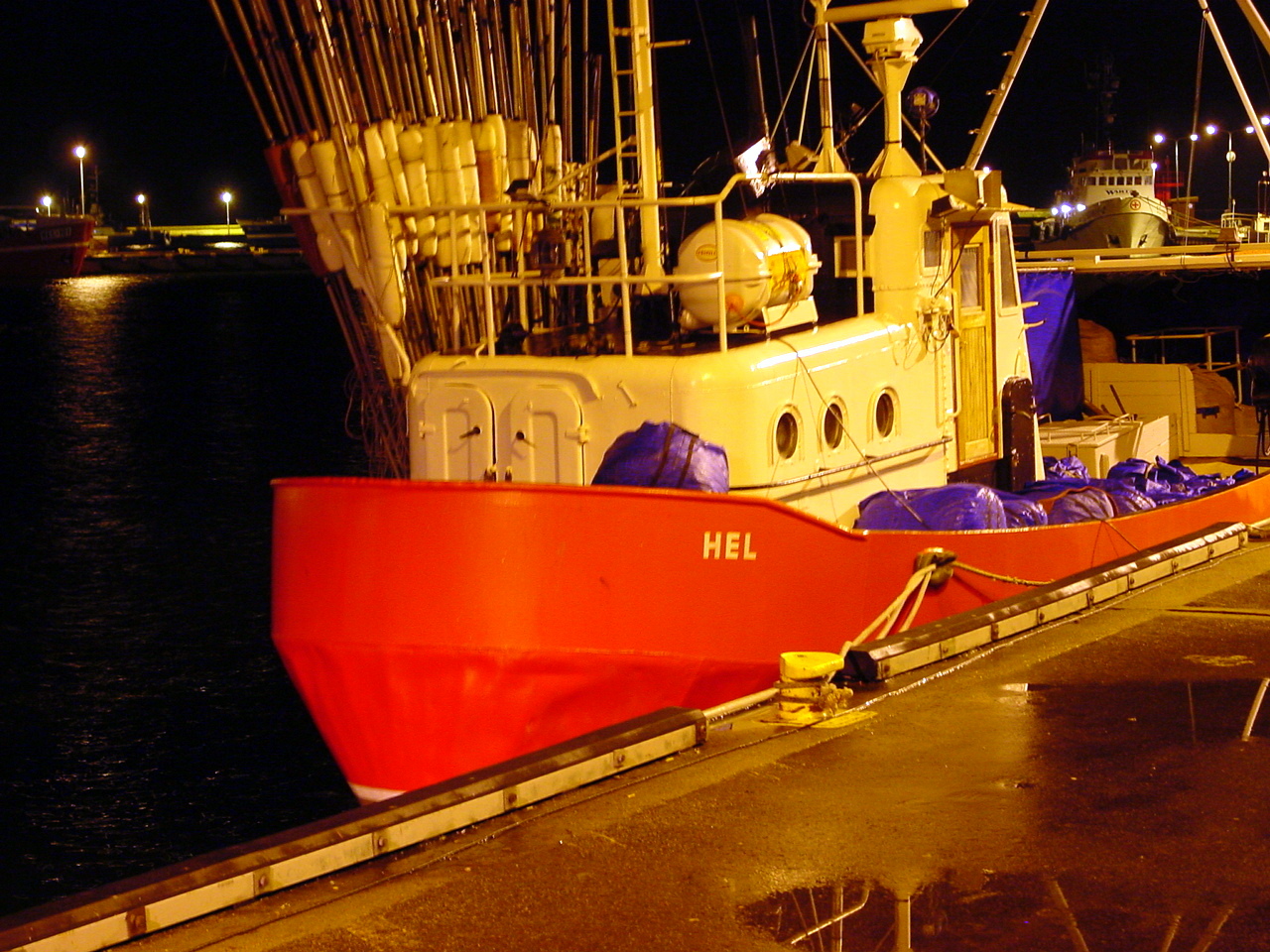
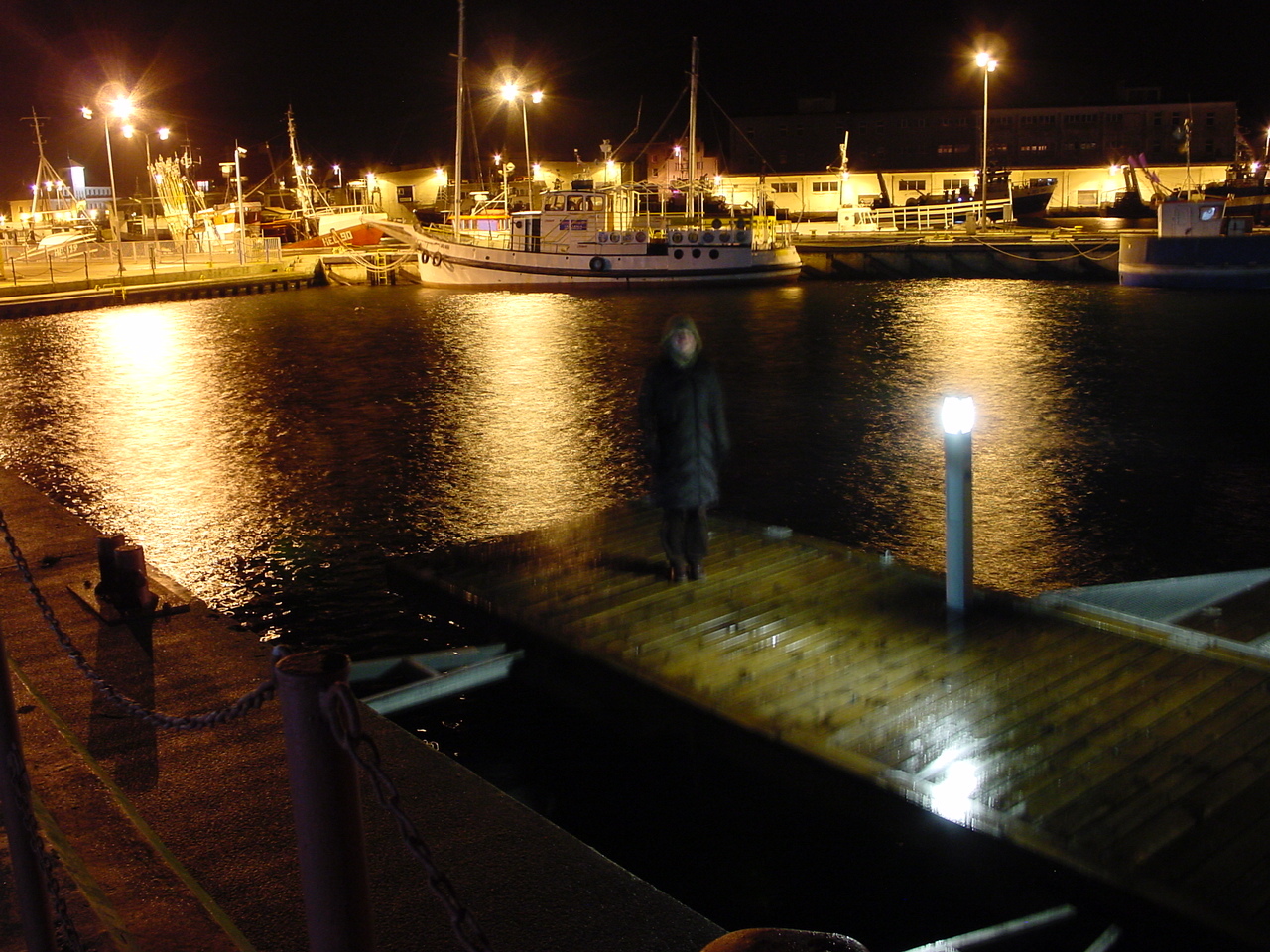
Hel

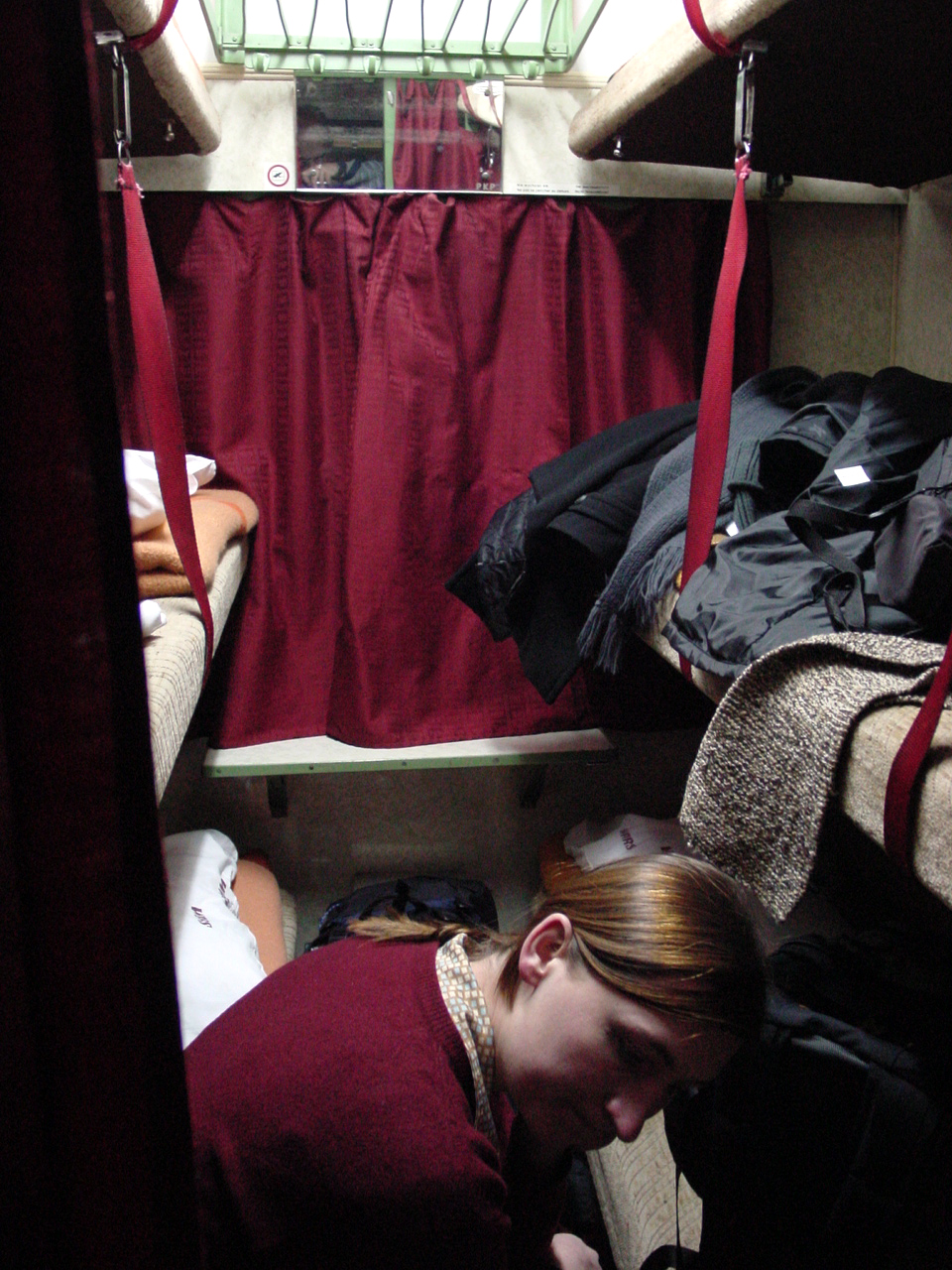
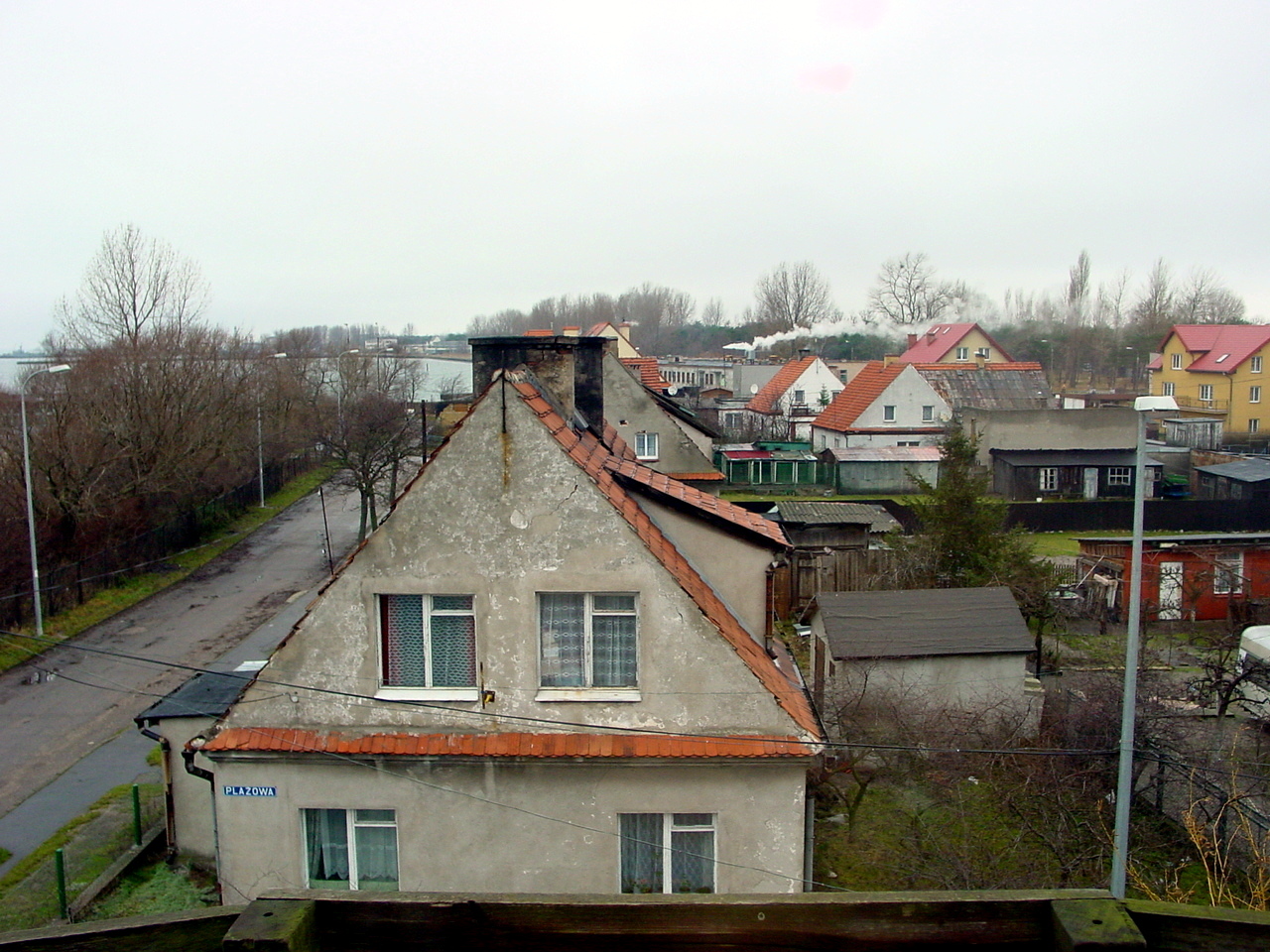
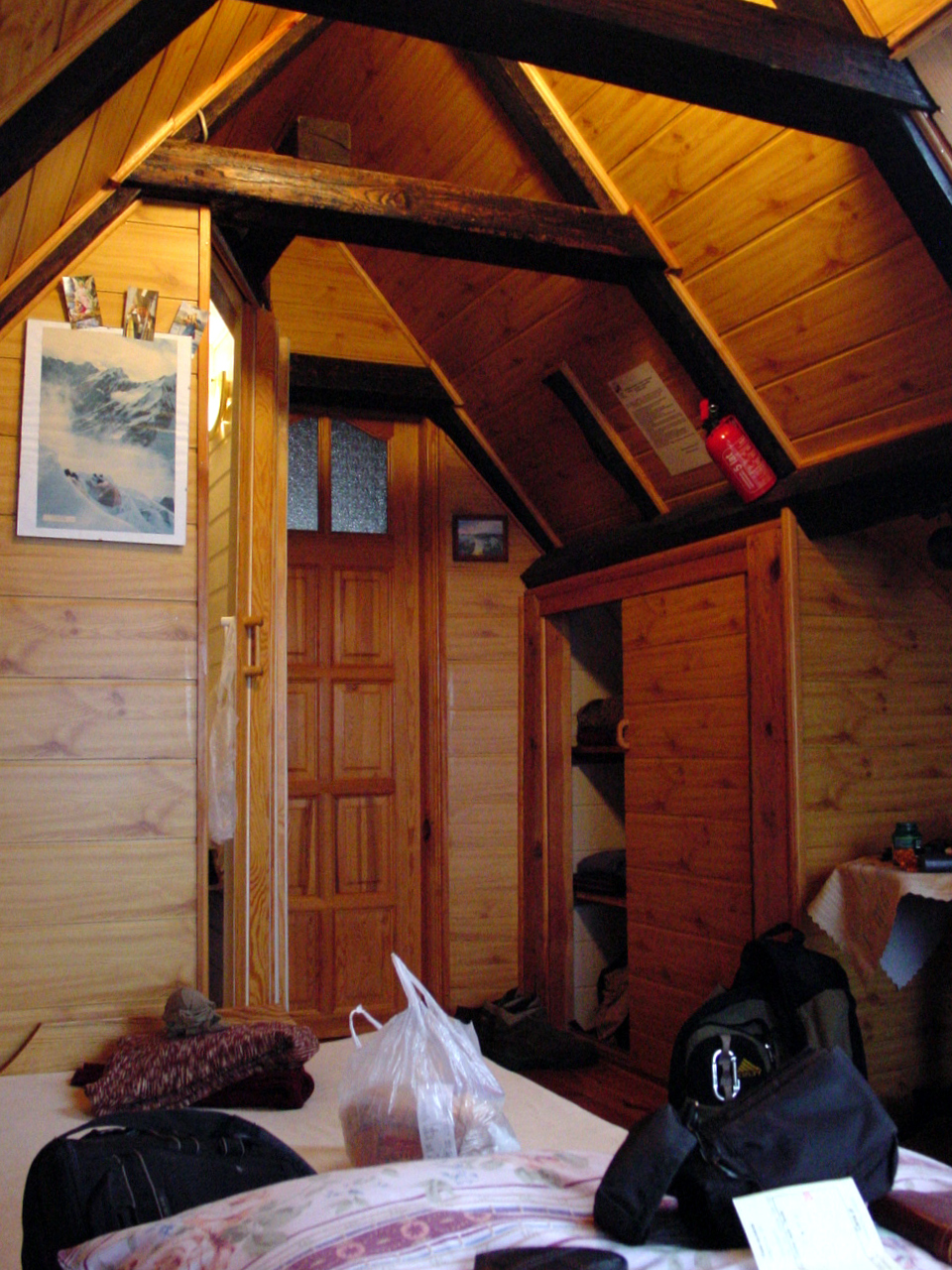
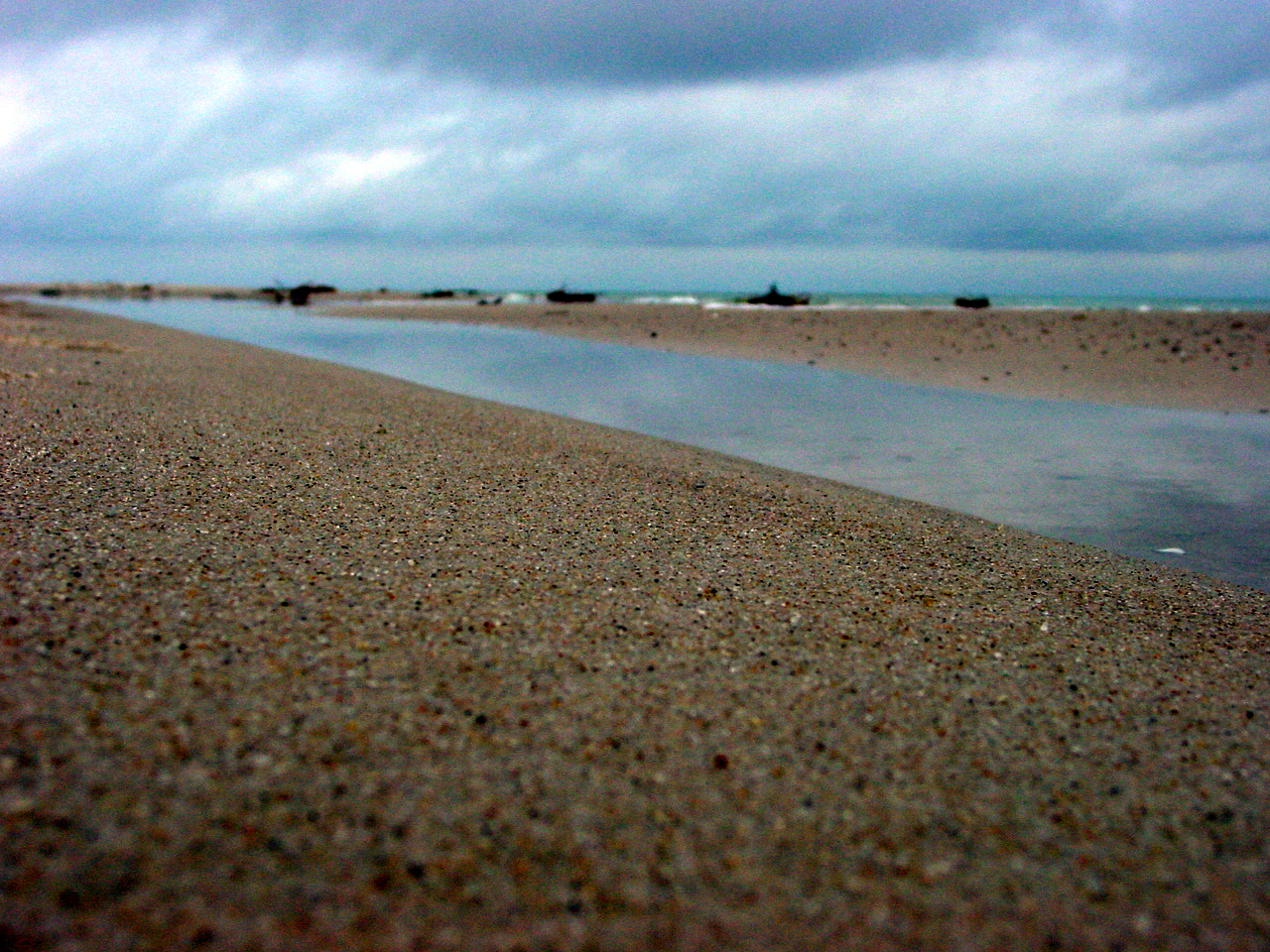
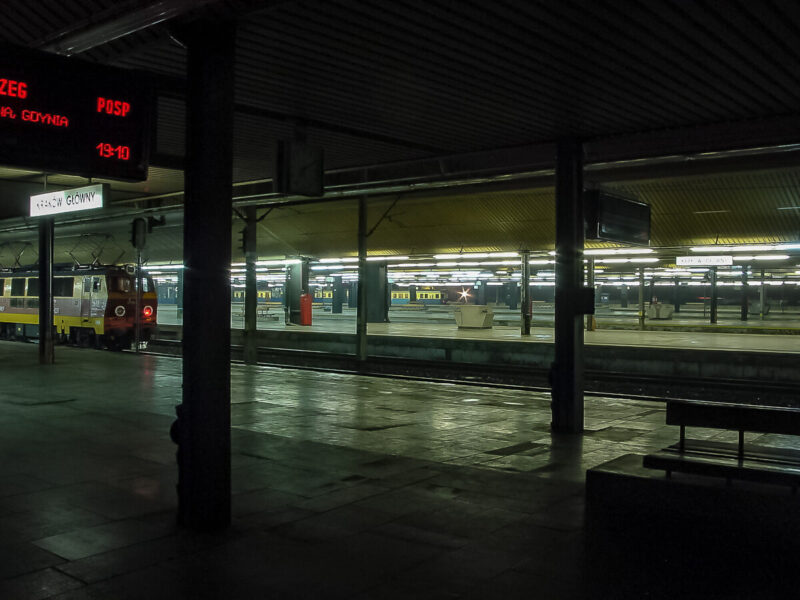
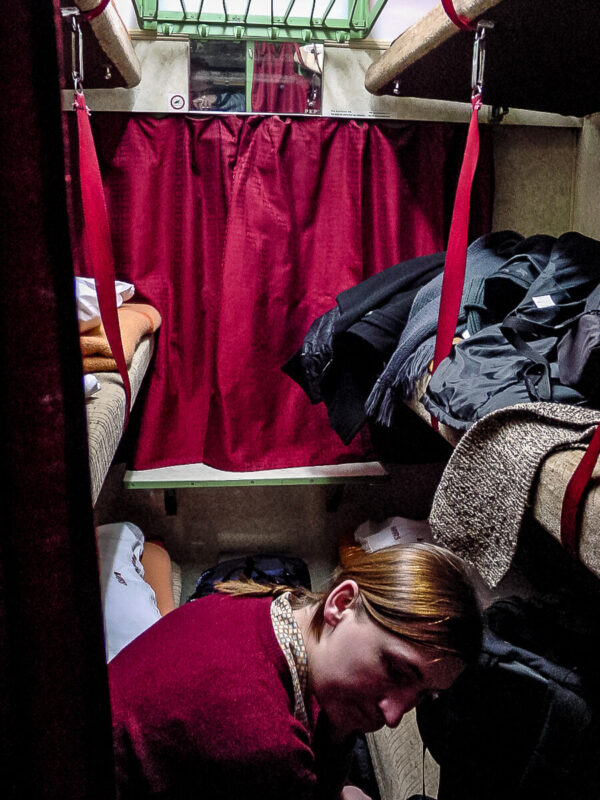
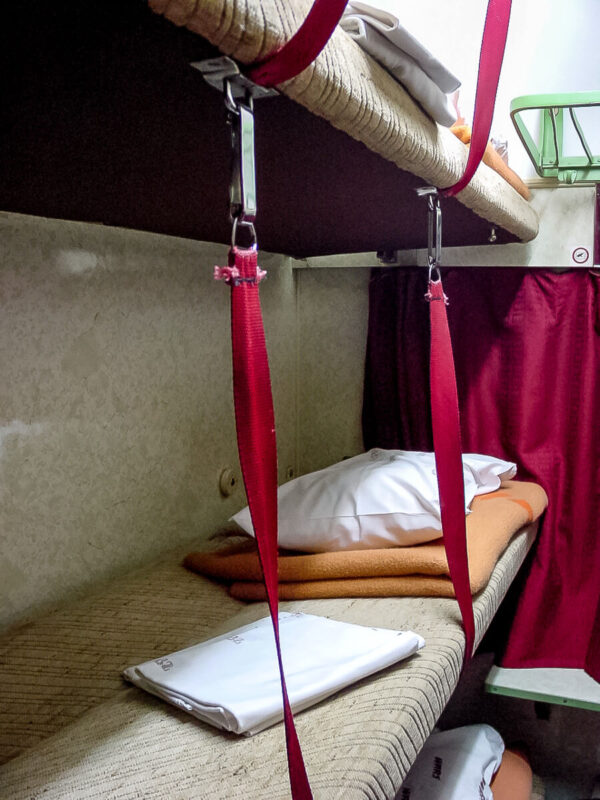
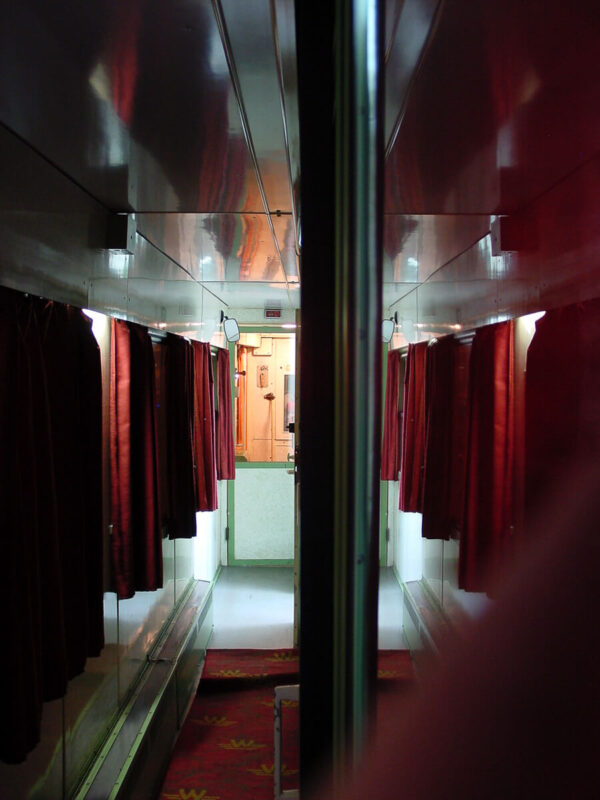
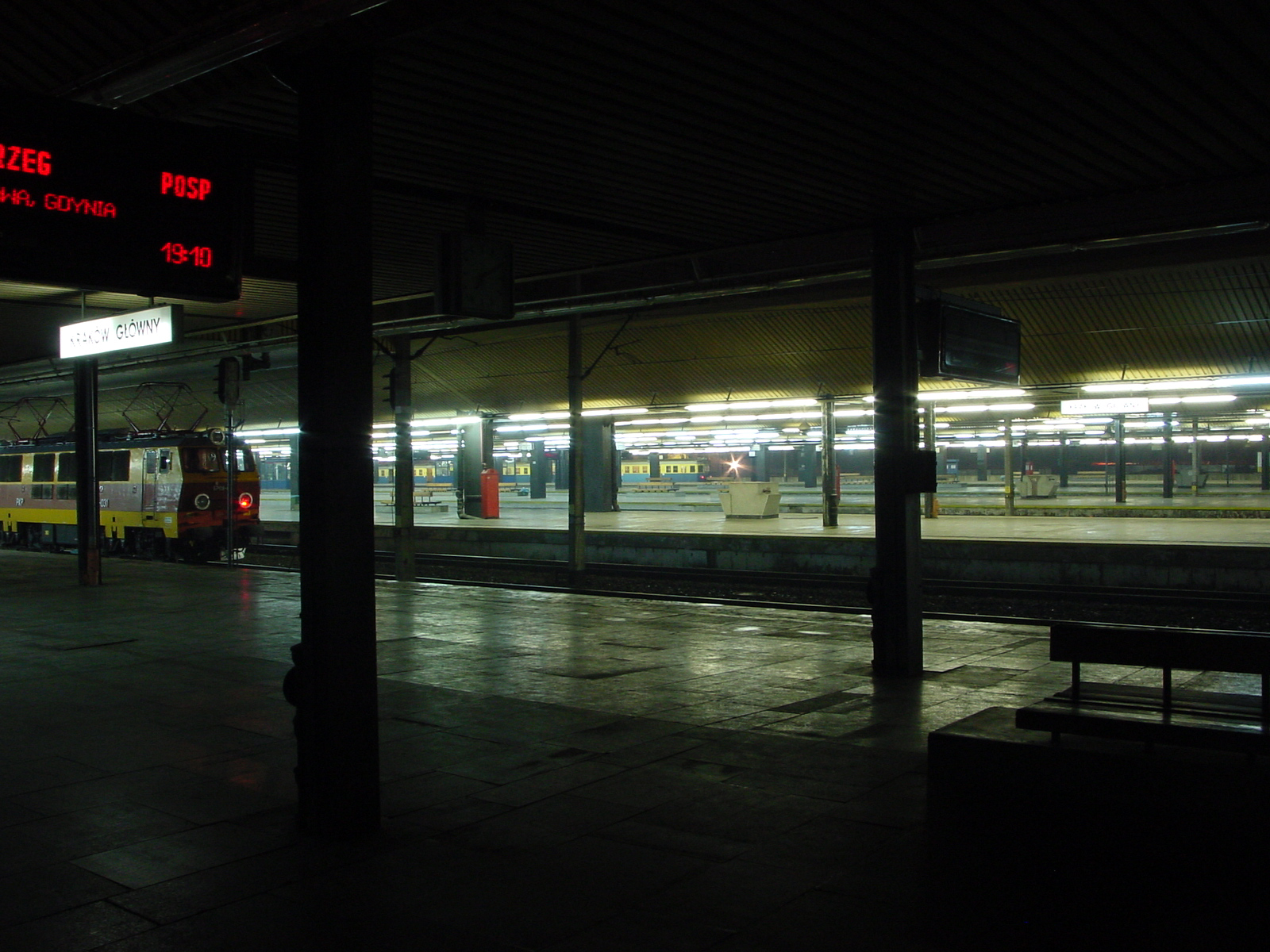
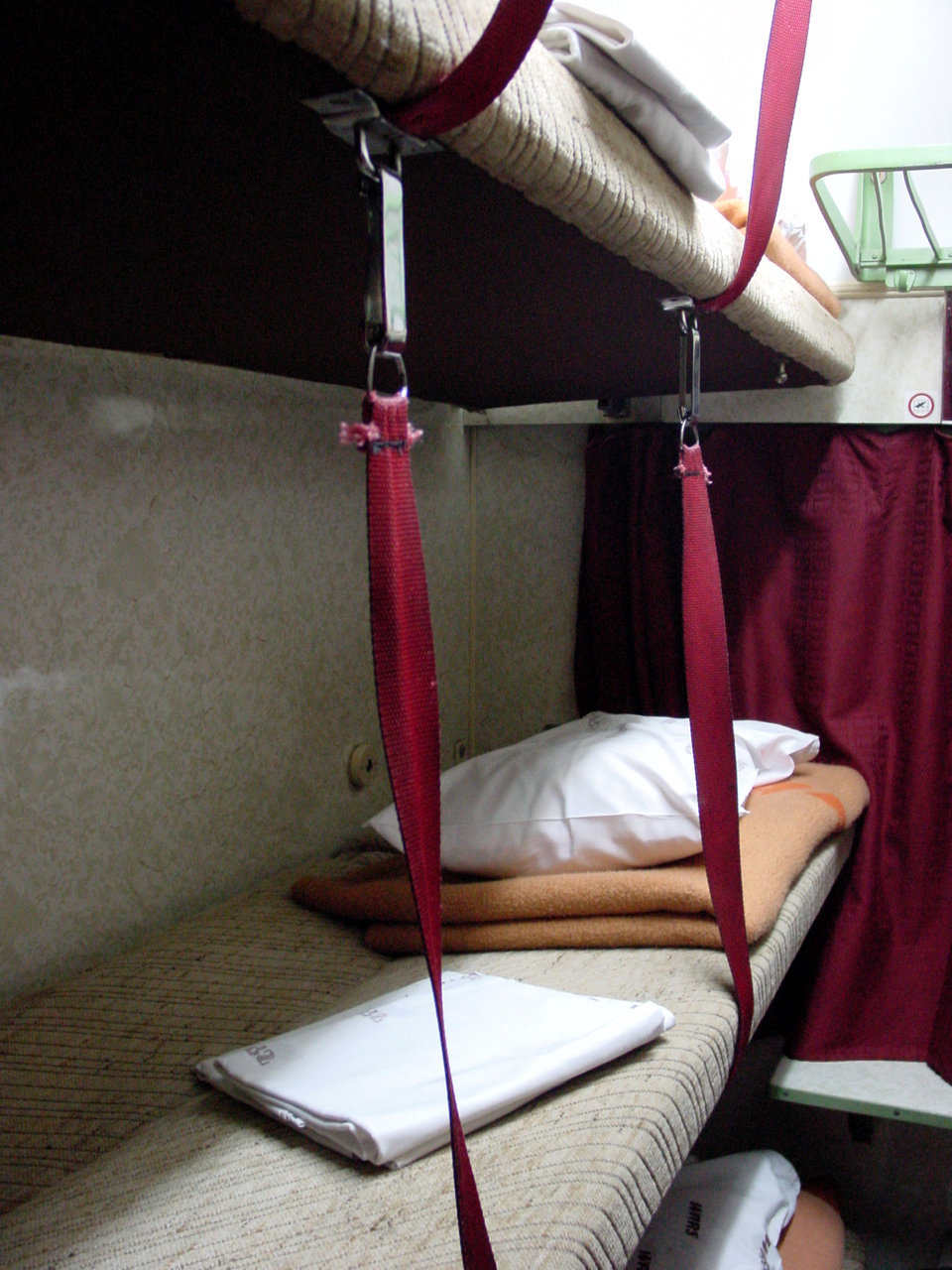
Overnight Train to Hel

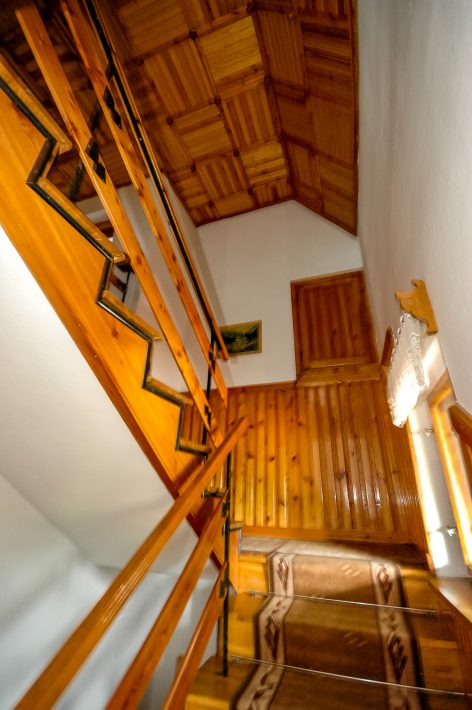
The Dirty Stairs

Part of getting ready for Christmas here is cleaning. Massive cleaning. Some people clean all the windows as well as every single rug.

But let's not exaggerate.

My in-laws are reasonable people, and my wife is equally reasonable. But they're still Polish, so that means a lot of cleaning. From a masculine point of view.

Today I was helping clean and was asked to do the staircase.

"Vacuum everything," instructed my wife, as if I didn't know how to clean stairs. "And then go back with a rag and clean all the carpets."

Apparently, I didn't know how to clean stairs.

"Clean all the carpets with a rag? After they've been vacuumed?" I asked incredulously. "What for? It's not like it'll make a difference!"

Long story short: we made a bet that I could skip cleaning one of the steps and she wouldn't be able to tell which one.

Off I go, a lean-mean-clean machine.

I am a fair guy. More than fair. Hell, I even let folks do take-backs while playing chess online. So I thought, "If I'm such a sporty, fair-player sort with other people, how much more so should I be with my wife?" So, to give her a sporting chance, I didn't clean three of the stairs.

And one of them in the most brightly lit portion of the staircase.

It could be more the effect of my testosterone level than any cultural difference, but I was sure she wouldn't be able to find one.

The question is: how many did she find?