W całej Warszawie nie ma tylu osób inteligentnych, ile ich przychodzi do jednej krakowskiej kawiarni.
polska
My always obsession...
Communism and Food
"Communism did to the national cuisine what it did to so much else and reduced it to the lowest common denominator: uniform and bland stodge characterised by poor ingredients, low standards and low expectations."
Chainsaw
I hear a chainsaw somewhere in the distance in our neighborhood, and I think, "That's a sound I usually associate with Babcia's small village." Then I realize it's just the Boy making his car sounds downstairs.
Lipnica Sunset

Here [They] Come
walkin' down the street...
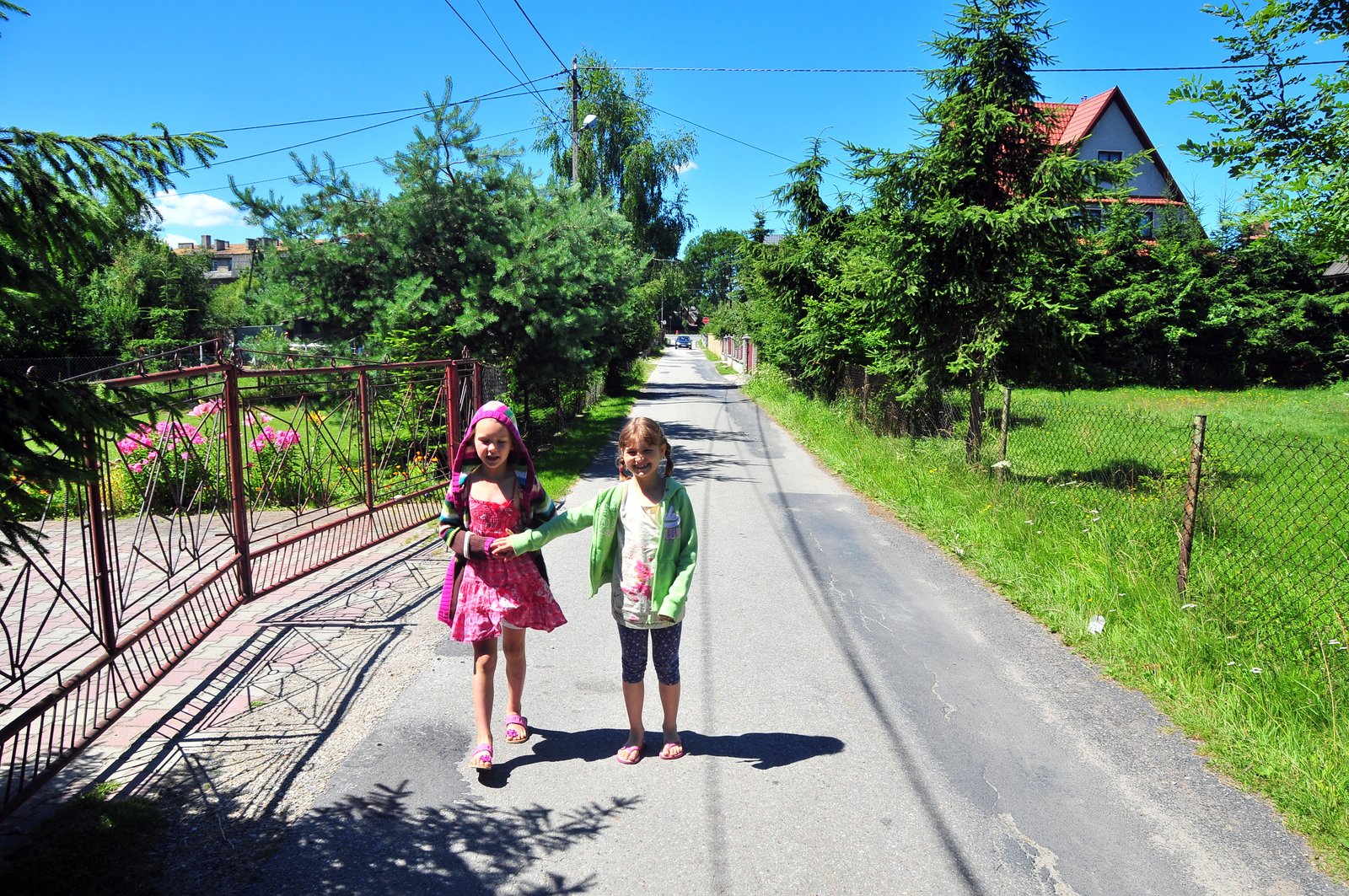
Such a difference in how L plays here in the States versus Babcia's place in Polska. With all the houses tightly packed in Babcia's neighborhood, I could easily hear L just about anywhere she was. She'd developed a few little haunts, but they were all within earshot of the house. Here, I watch her as she walks up the street to her friend's house, and his parents do the same when they return. It's a busier street to begin with, but there's also the eternal fear that sparks the almost cliche instructions, "Don't talk to strangers." In Polska, there were times that I didn't really know where L was, but I wasn't really worried about it. It's not that there aren't evil people in Polska, they just seem fewer and farther between. You don't read news accounts of abductions and murders like you do here.
And so L and S would often strike out on their own, yelling to one of us on their way out where they were headed.
Relativity of Weeds and Flowers

Stacks
Driving through the Orawa region of Poland, you notice two things fairly quickly: first, the fields are long and narrow. That's really nothing special about the region: such is the case throughout Poland. There have been efforts to help people consolidate their various fields through land reform laws (in essence, trading land with neighbors to have one large field instead of half a dozen scattered through the village), but the efforts have met with little effect in the south. The second that that you notice is that many of these fields are filled not with crops but with large stacks of thick, rough-sawn boards. Because of the nature of land ownership, there are often six or seven stacks about three meters wide, five or more meters tall, and probably eight to ten meters long.

"Nie martw się," Babcia replies. "Deska nigdy nie marnuje się."
"Don't worry. Planks never go to waste."
Cemetery
Cemeteries and funerals are for the living, not the dead–it’s what I’ve heard all my life. For even if any or all the -isms are right and life continues after death, what reward can a nice funeral or attractive grave site be for someone who is experiencing ultimate reality? That being said, there is one place on the planet where, were it logical logistically and fiscally, I would want to be buried.
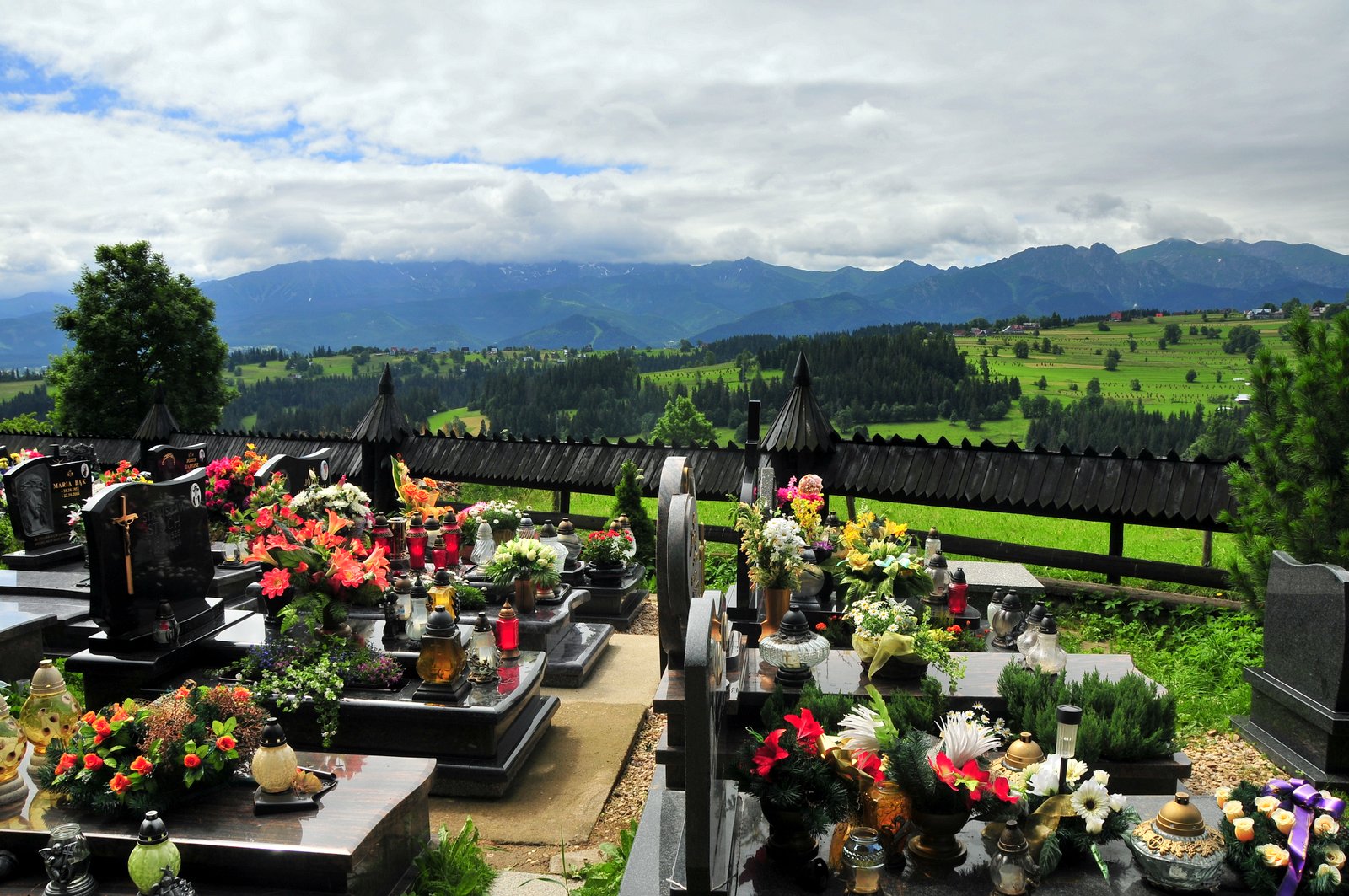
Isolated on the top of a ridge with a view of the whole Tatra range, the cemetery at Ząb (“Tooth”) never ceases to provoke thoughts that should really, I suppose, be saved for a later point of my life: where would I want to be buried? What environment would I like for those who come to visit my grave? With what feeling would I like the experience to leave them?
Ząb’s cemetery leaves only one emotion: awe. Even wandering among the tragically small graves of children who lived a few weeks, a few days, a few hours doesn’t entirely dampen that feeling.
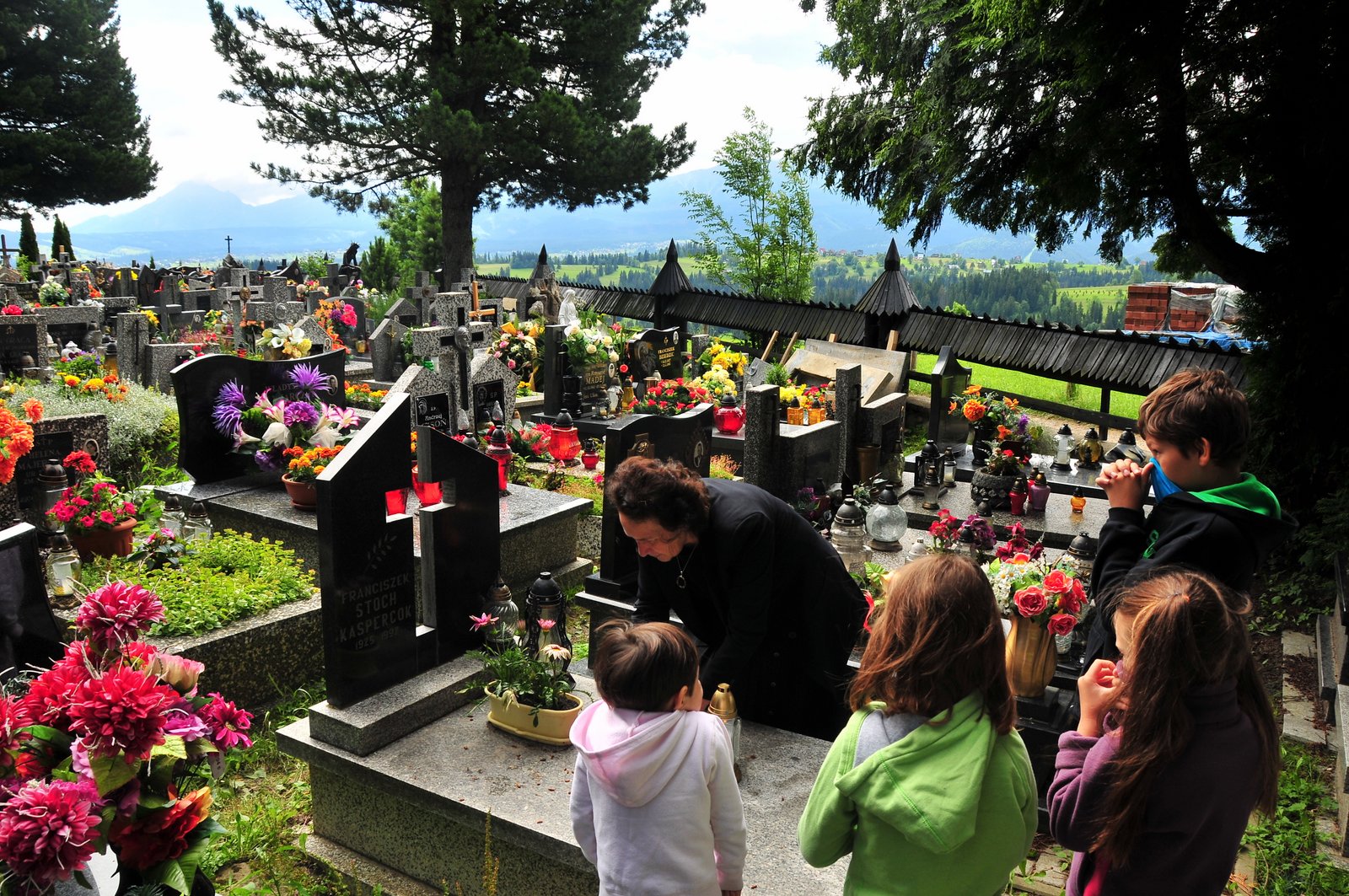
The small graves do provoke in L a certain solemnity that is rare in such a wound-up girl. She stands looking at the grave of a little boy who didn’t even live a full day, visibly shaken by it.
“Would you like to prayer for their souls like we pray for Dziadek’s soul?” I suggest.
“Tak,” comes the plaintive, affirmative reply. (She’s answering my English with Polish with increasing frequency lately.)
We cross ourselves. “W imiu ojca i syna i ducha swietego,” we begin, with L switching to English at this point.

“Are we praying for just him?”
“Maybe all of them?” I suggest with a sweep of my hand.
“Dobrze.” And back to English: “Have mercy on their souls and give them peace.” I think for a moment about what it would be like to lose a child after a day, a week, a month–to lose a child, period–and I think, “Perhaps we might better pray for the parents, pray that they have peace and that a quiet returns to their souls, for there’s no way, even after almost thirty years, a pain like that can ever go away.”
We cross ourselves anew, and L, back to her usual vivacious self, skips to cousin S and begins jabbering about something or other. Not only cemeteries are for the living; so too prayers.
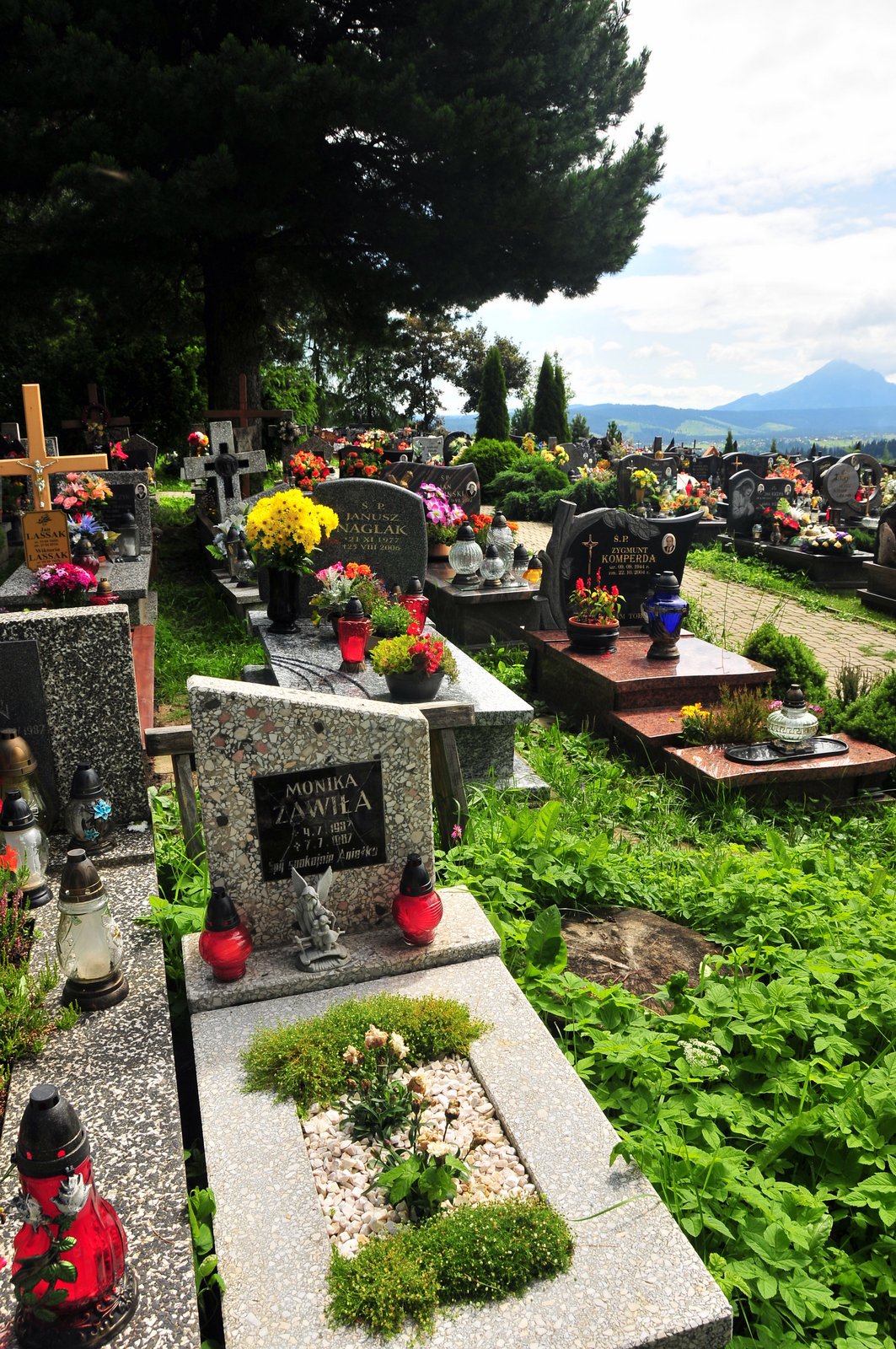
As for our own peace, all we have to do is look around.
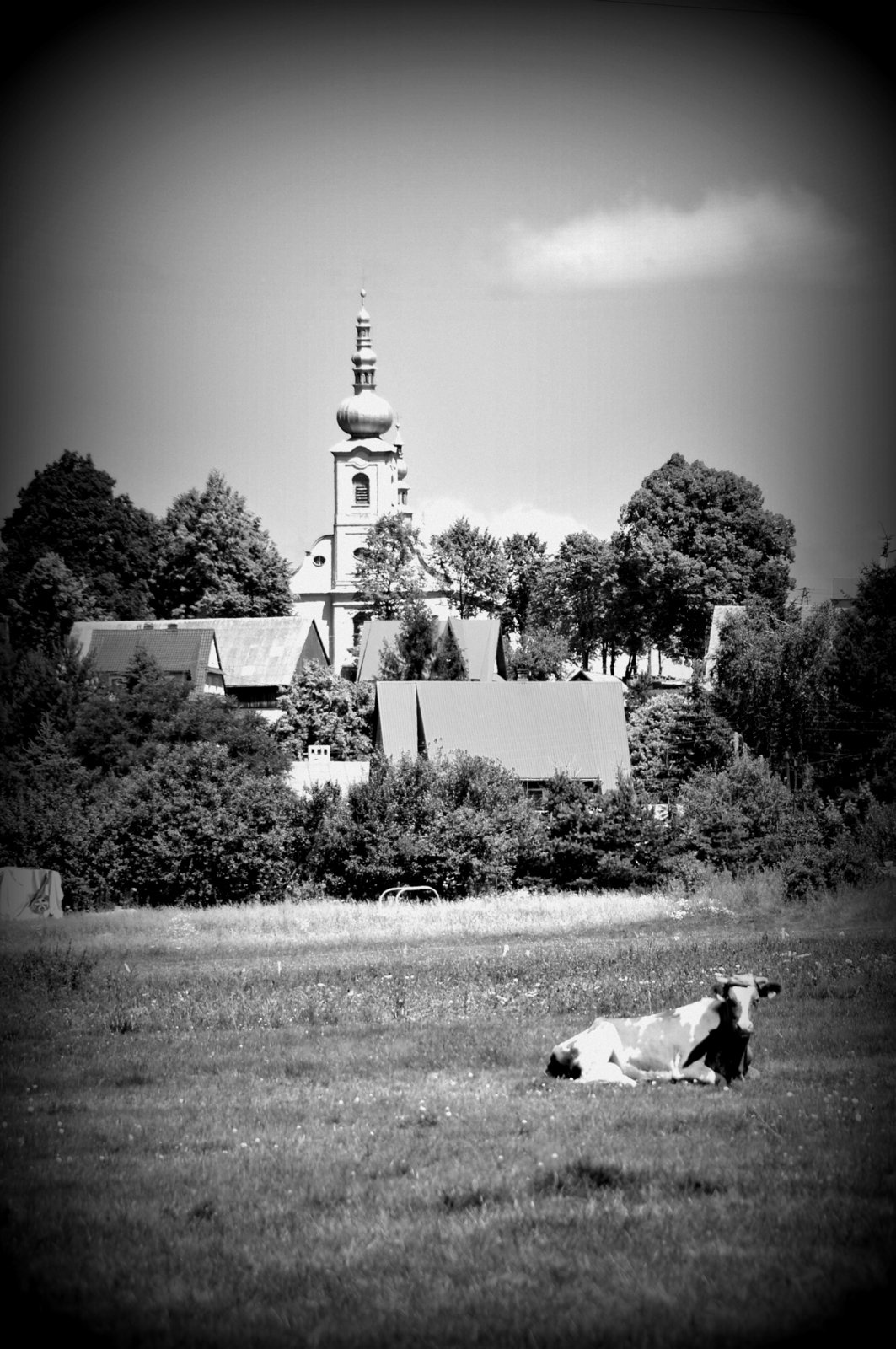
Jabłonka, 1913
If you could travel back in time, I would imagine Jabłonka would look a lot like this.
Sunday Afternoon
When in southern Poland you look out and see not a single cloud in the sky, staying inside is simply a sin.
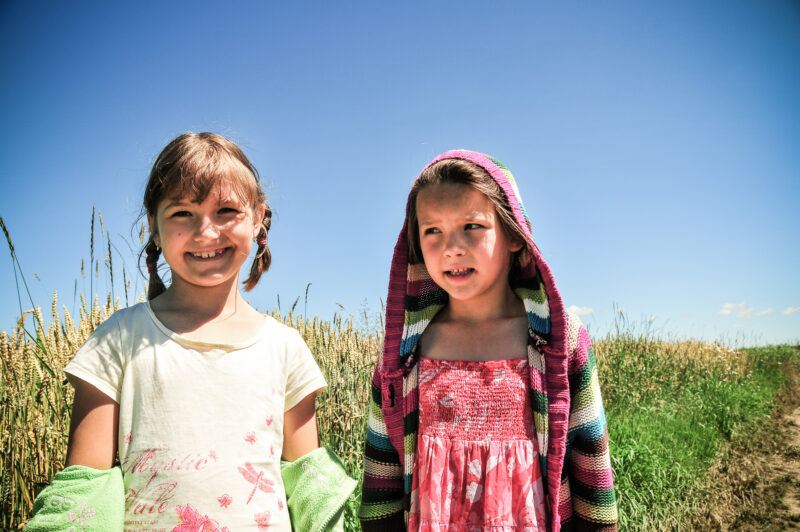
And with only a few days left of our Polish adventure, it's even more critical to make the most out of each moment, to squeeze every single opportunity out of every single moment (not to mention every single mixed metaphor). This also means beginning the lasts -- the last time seeing this or that friend, the last walk to the river, the last, the last. Always some kind of last.
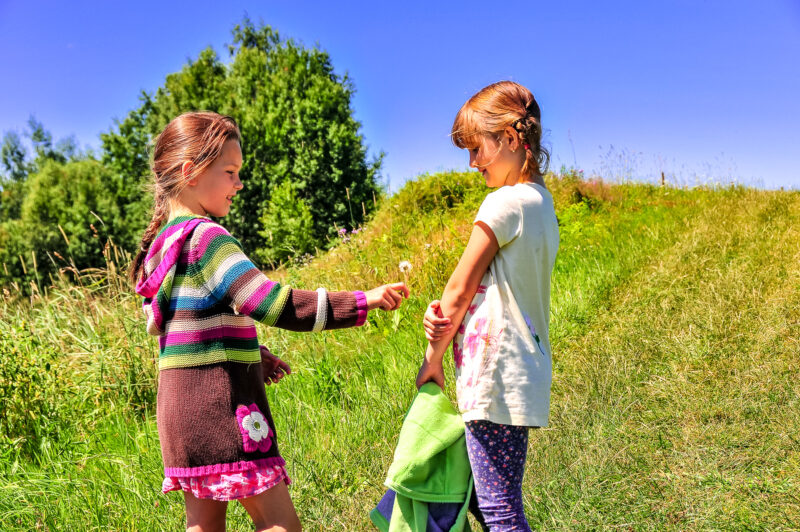
Today, on the walk, I take some of the last opportunities for some shots of the two of them. For them, it was possibly a last chance to play in the water, to play with the puppy that lives along the way to the river, to play some jokes on each other.
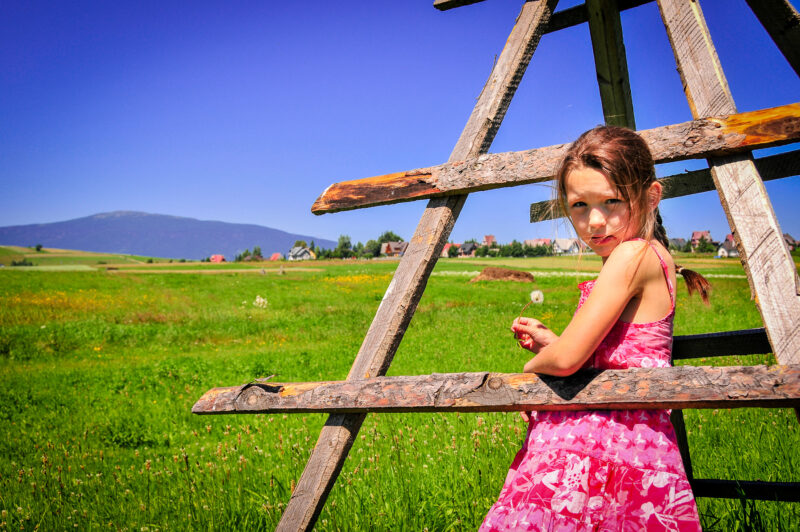
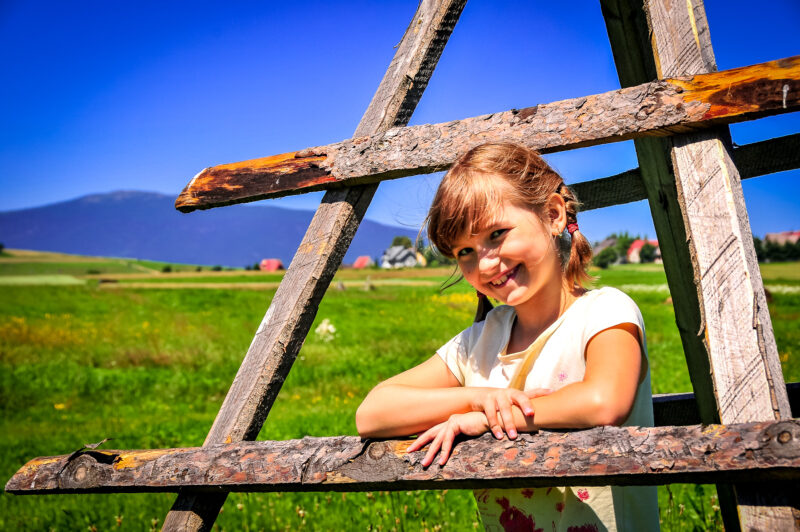
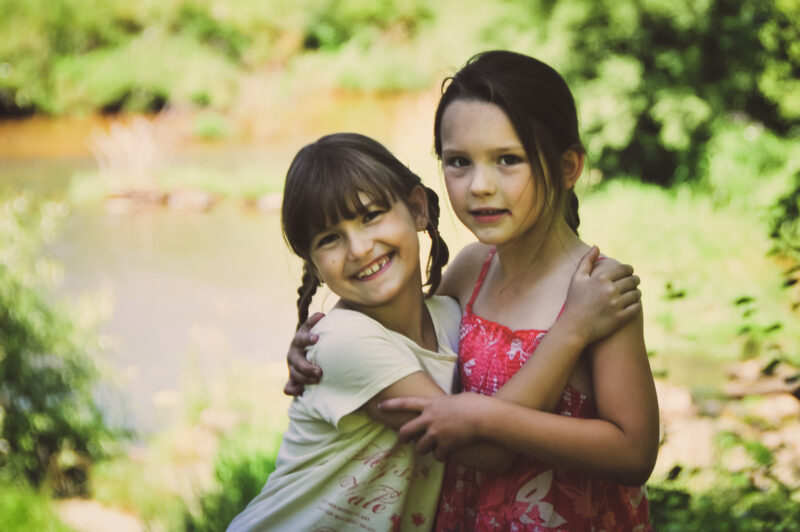
On the way back, we find a common sight: a stork hunting in the fields.
"Quiet! Quiet!" I call to the girls behind me. "Up ahead there's a stork." We sneak up to watch the stork, but at the last minute, Kajtek, Babcia's dog, spots the stork himself and gives chase.
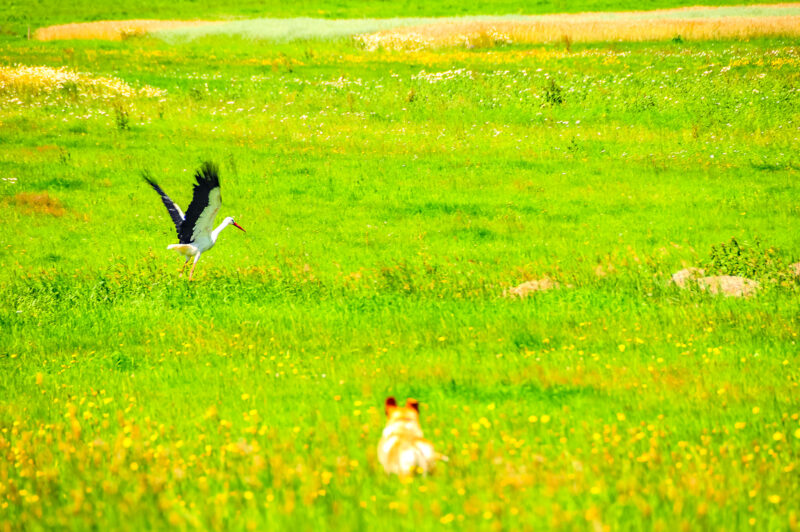
It thrills the girls despite the fact that there's no chance of watching the stork up close.
When we get back to the house, I jump into the car and head to a couple of locations I know to take a few landscape shots. After all, who could possibly pass up a virtually cloudless sky here? First stop -- just over the border in Slovakia. The fields are different here: instead of the patchwork of small plots all with different owners growing different crops, with each owner probably owning half a dozen plots spread about the village, the Slovaks have consolidated their fields, resulting in huge fields of corn, wheat, potatoes, and other crops.
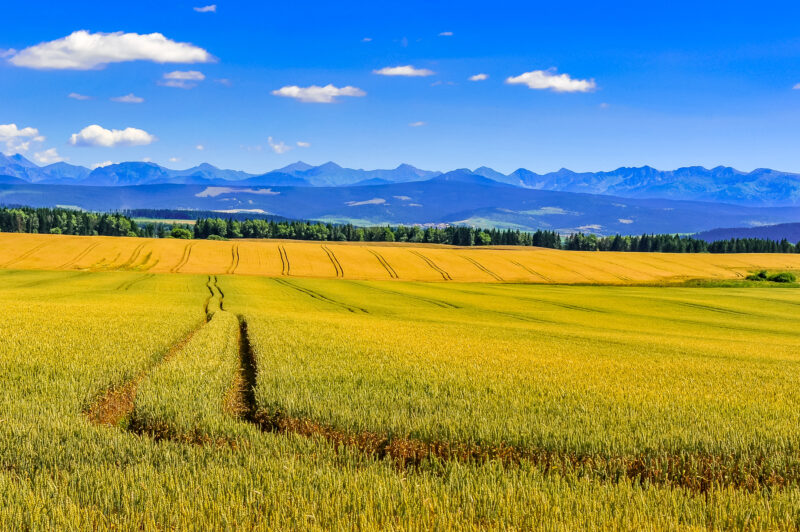
Returning, I stop at the start of Lipnica Mała to get a few shots of Babia Góra. In the end, neither location provides clear views of either the Tatra Mountains or Babia Góra: the air is still just a bit too thick, too heavy.
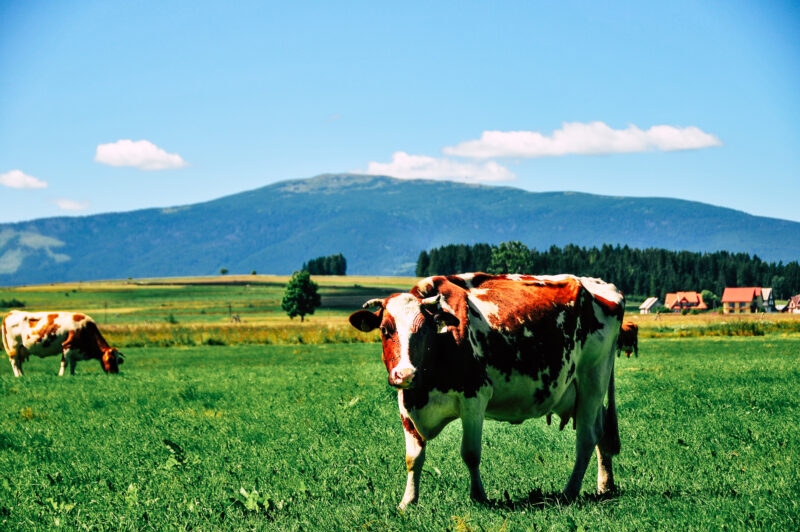
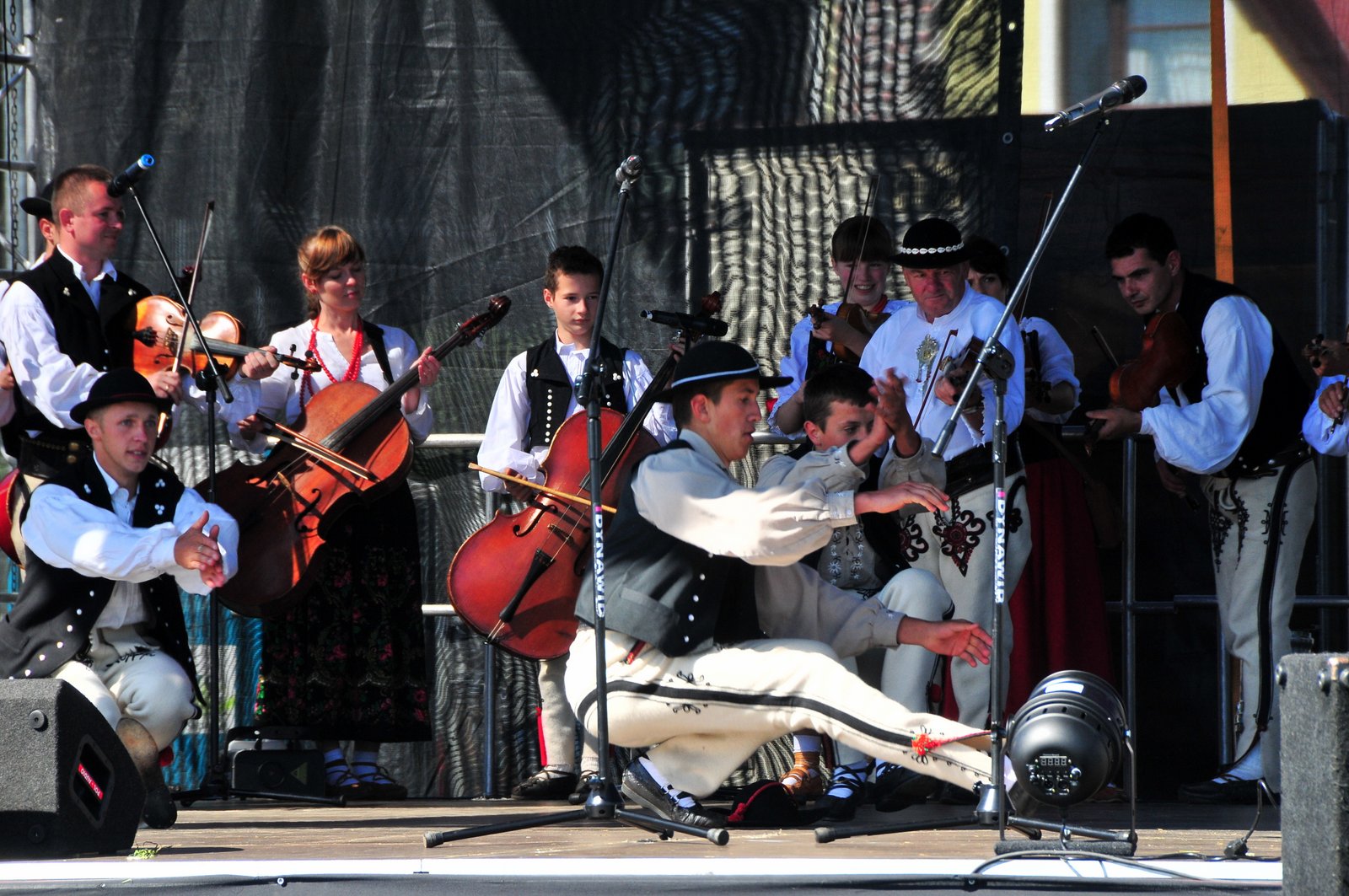
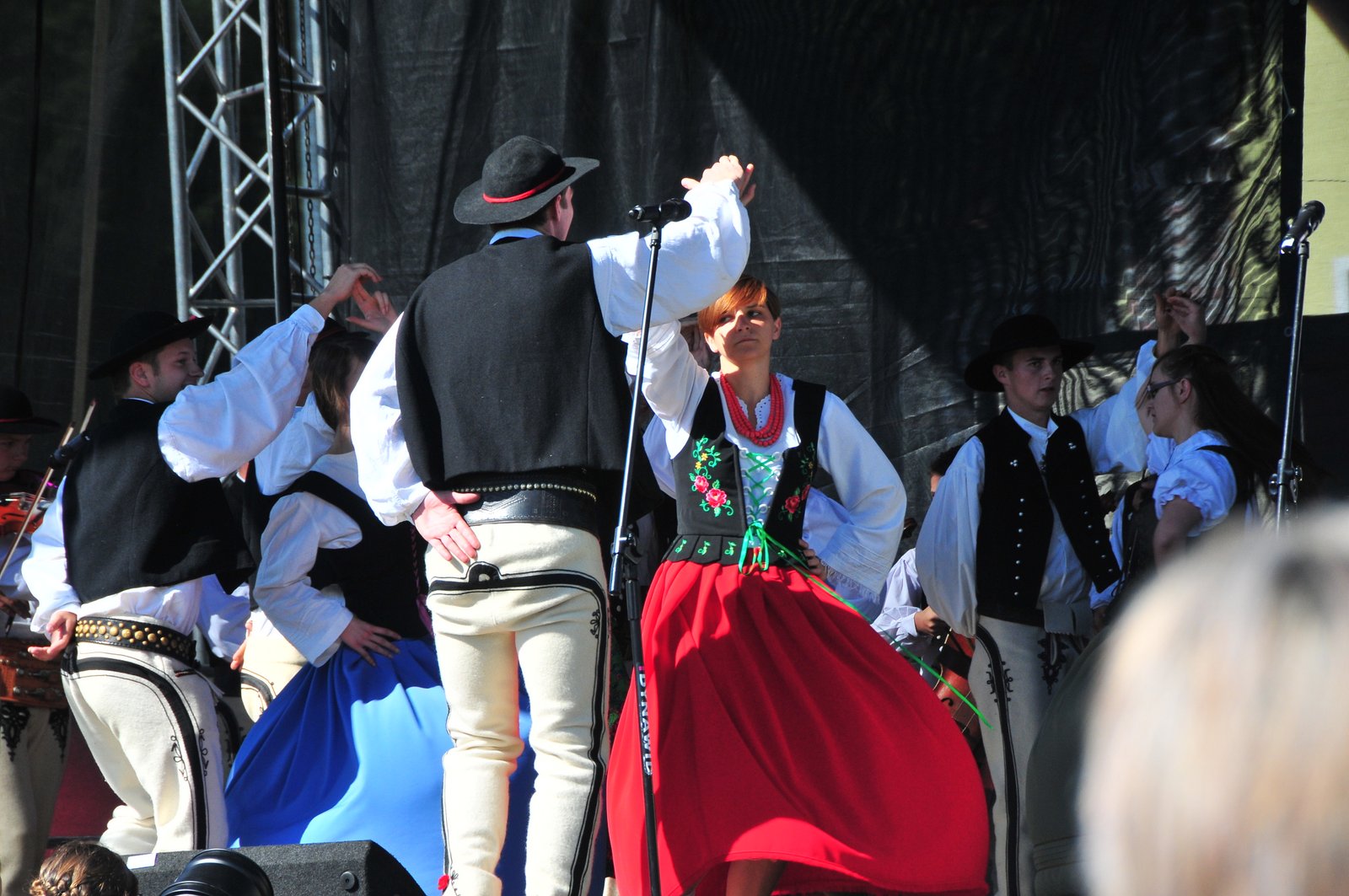
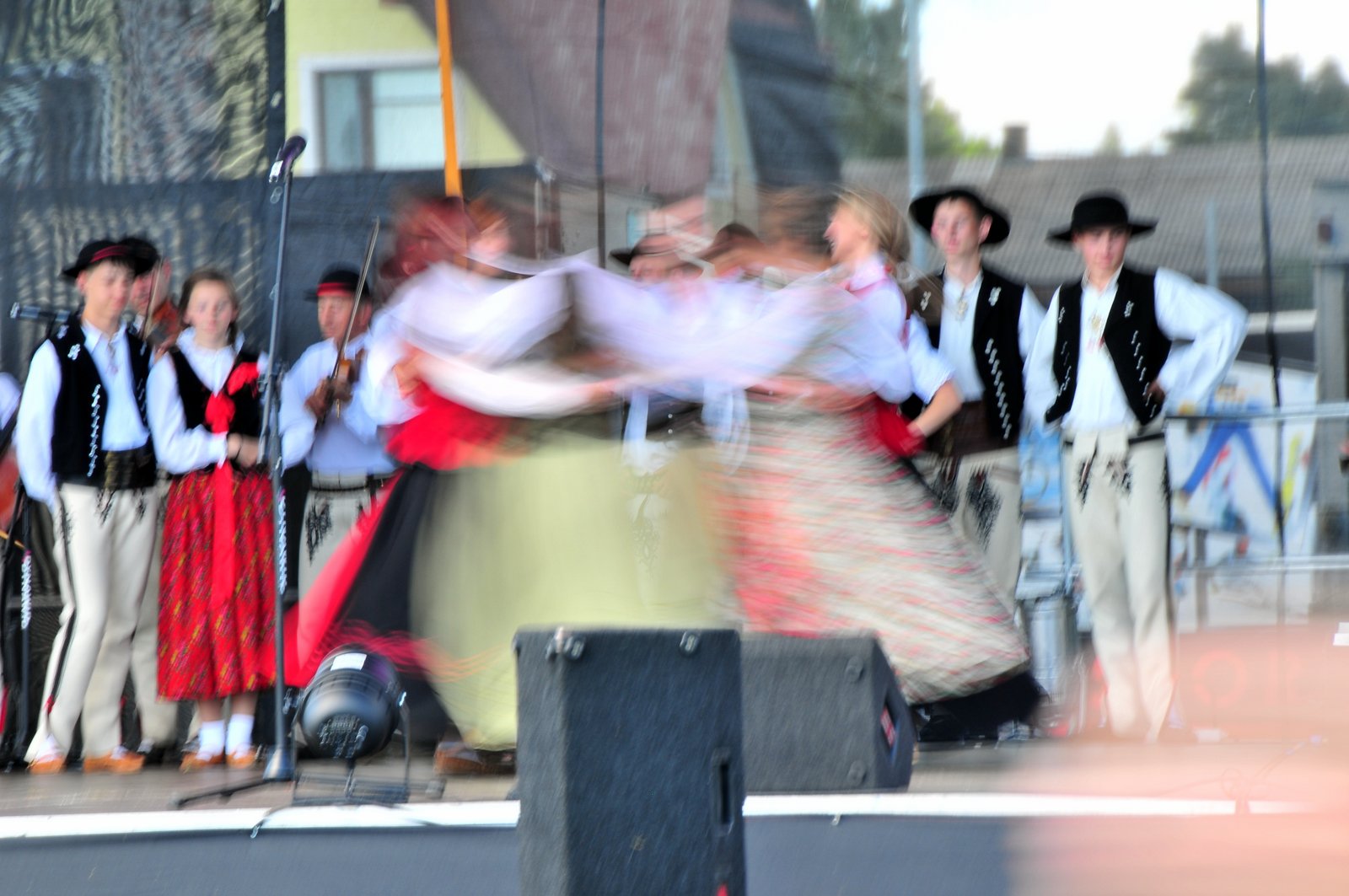
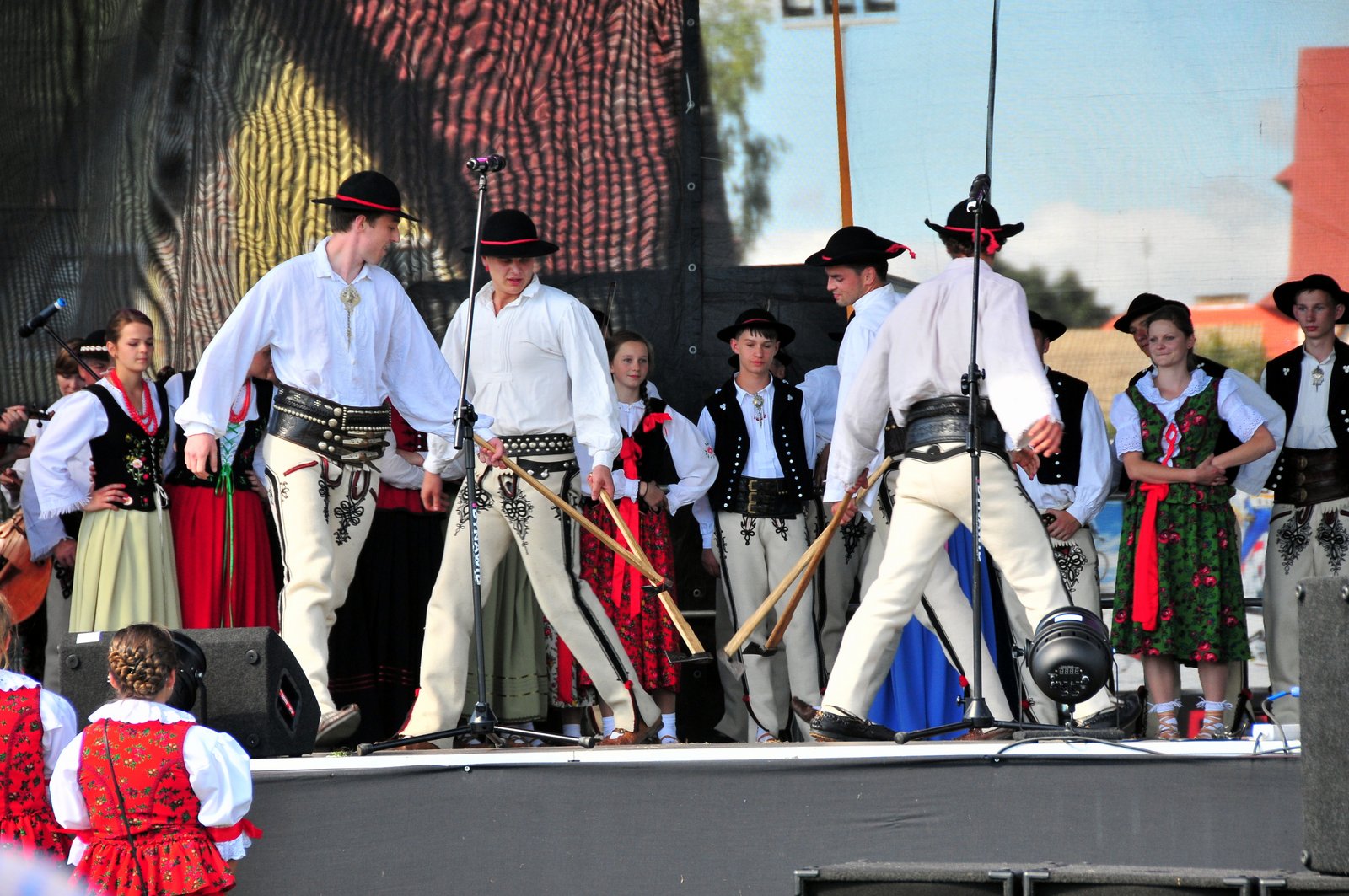
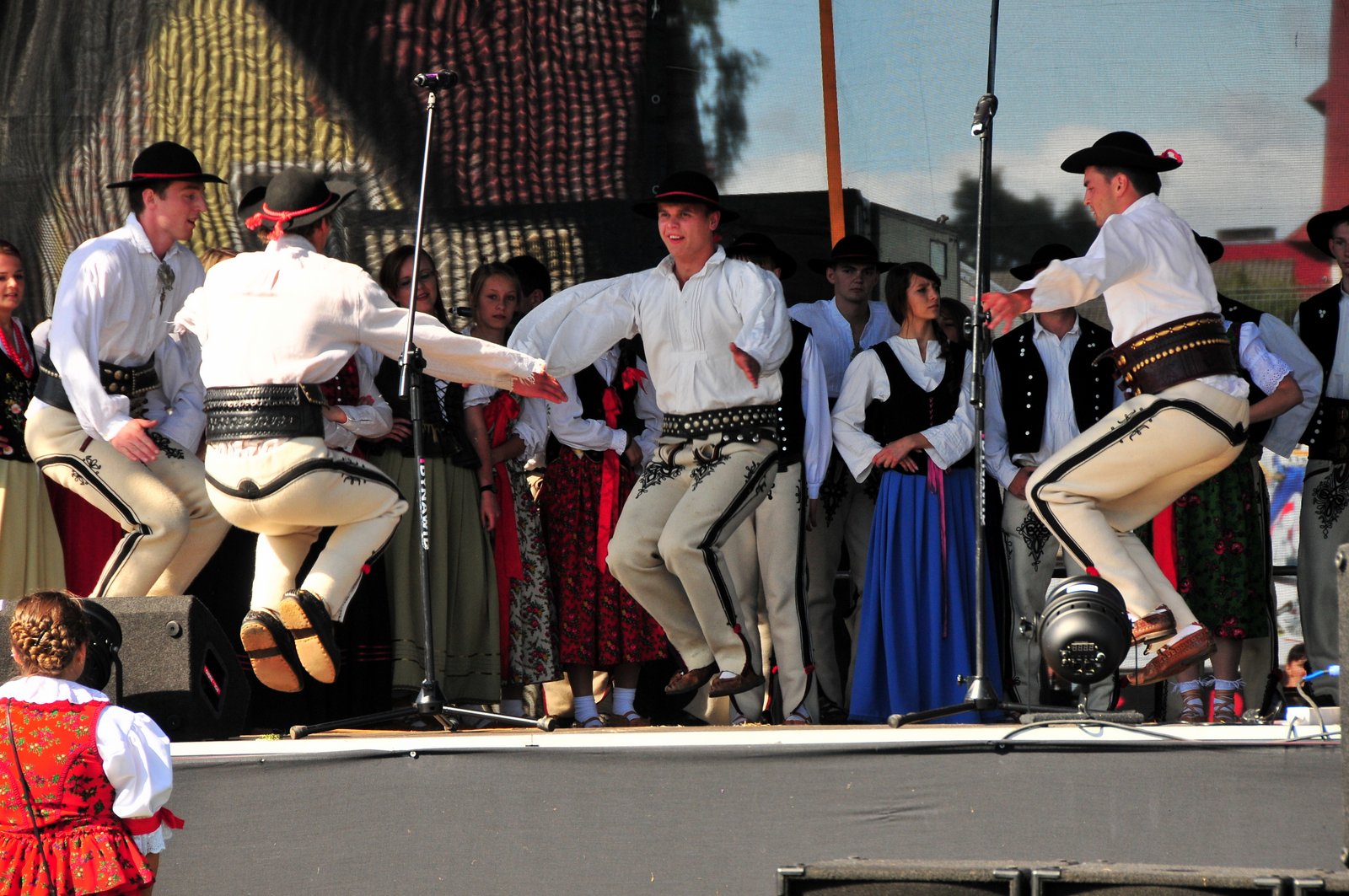
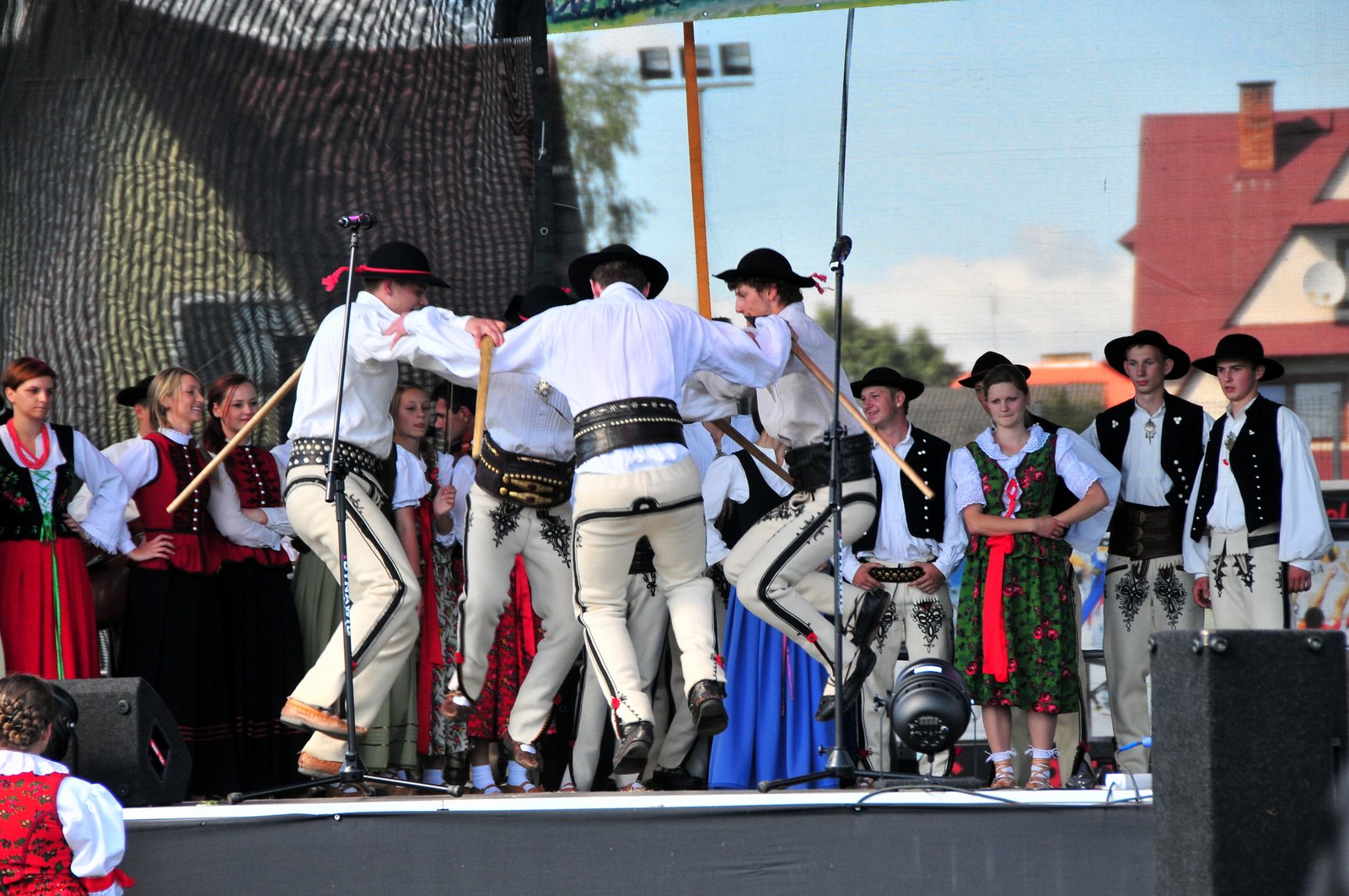
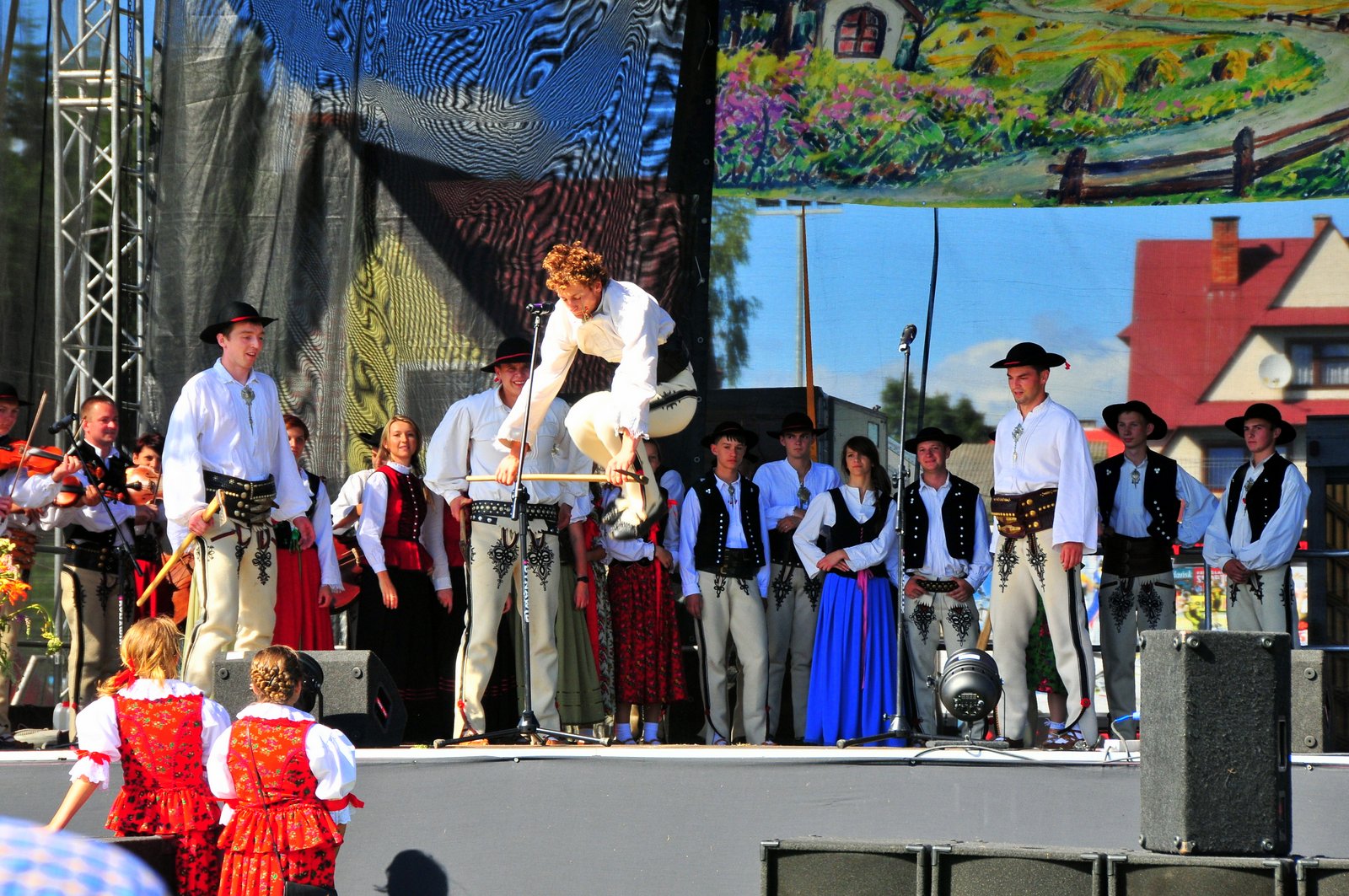
I head back to take the girls and Babcia to Orawskie Lato, a local folk festival that's in its twenty-second year. We arrive just in time for the "Popisy Hajduków" contest. I doubt you can think of a dance that's harder on the knees and more exhausting on the legs and lower back.

Afterward, while out with a friend at a nearby village, the skies clear and the mountains look close enough to touch from this distance.
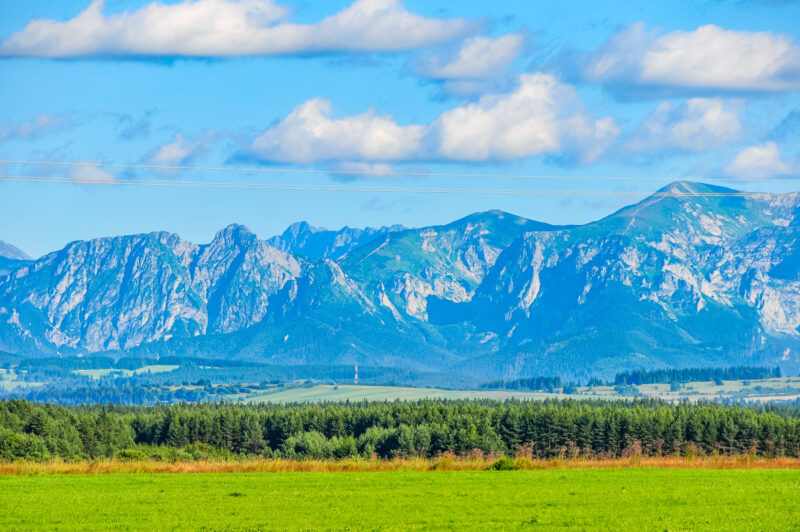
As we head back to Jabłonka, clouds lightly cover the Tatras.
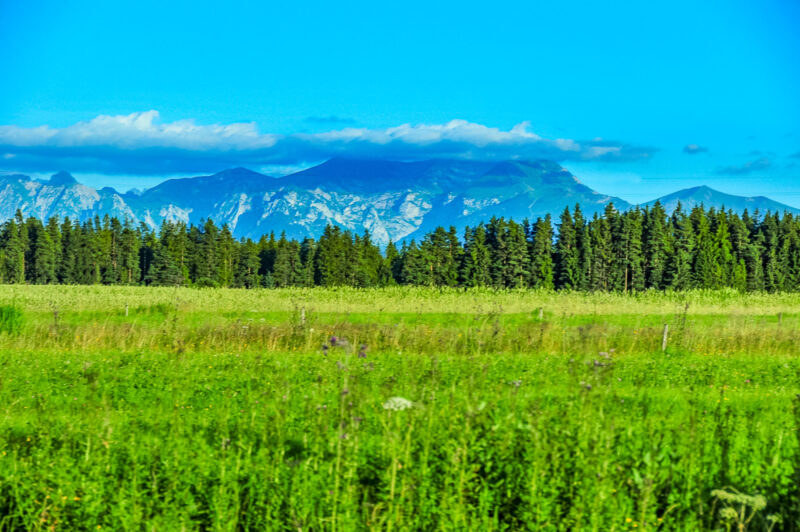
A good days of lasts -- temporary lasts, that is.