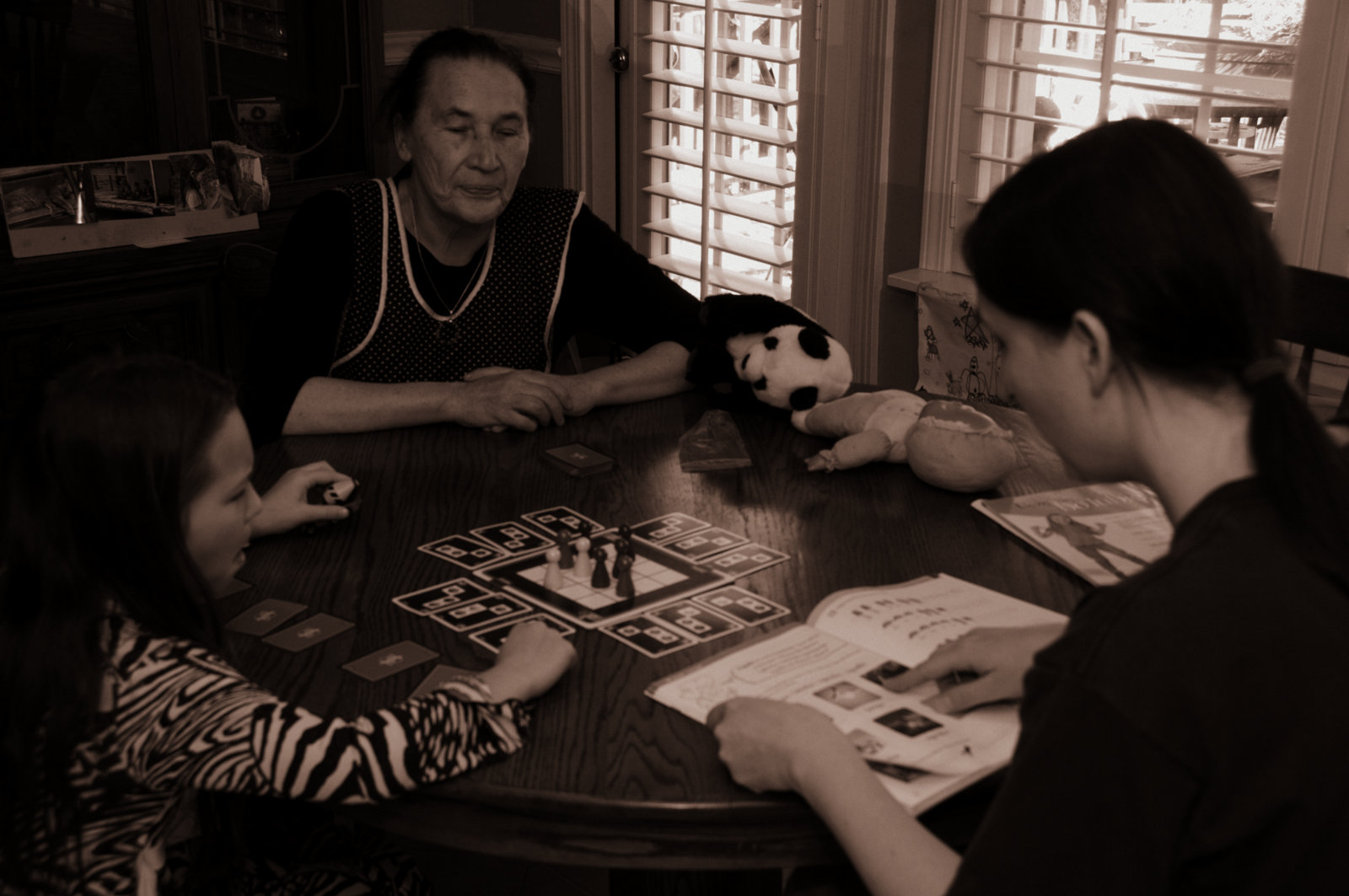
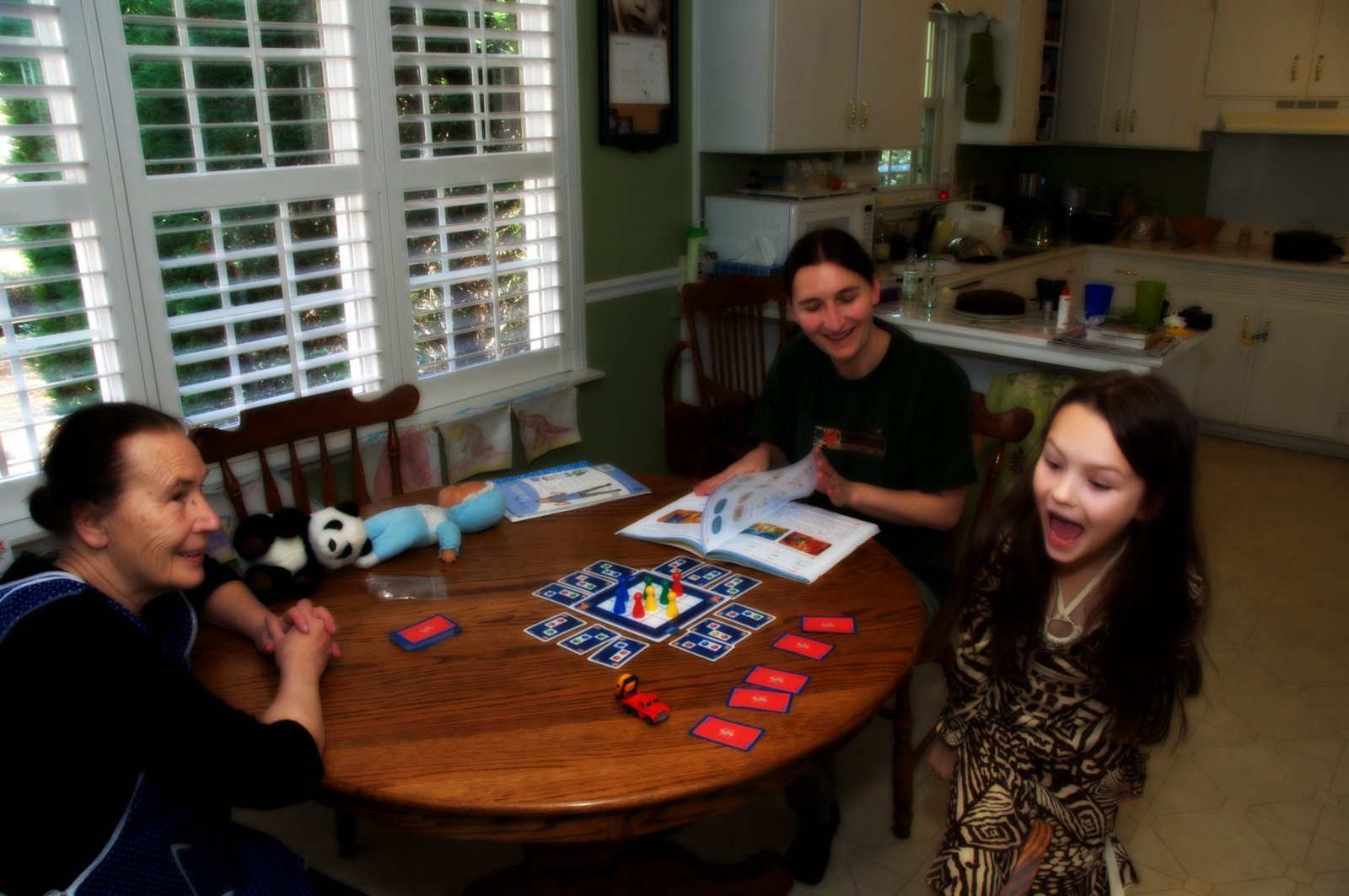
What happens when you throw a group of thirty-somethings from Poland together with a babcia who used to teach Russian? Everyone sings all the Russian songs they can remember from elementary school Russian classes.
polska
My always obsession...
Return to Russian
Jasełka 2013
He's always there, year in, year out. There's always a special seat for him set out in the front middle, and while he's likely to sit in the chair for some time, he'll often move over to the side and watch the parish Polish group put on their Christmas program.
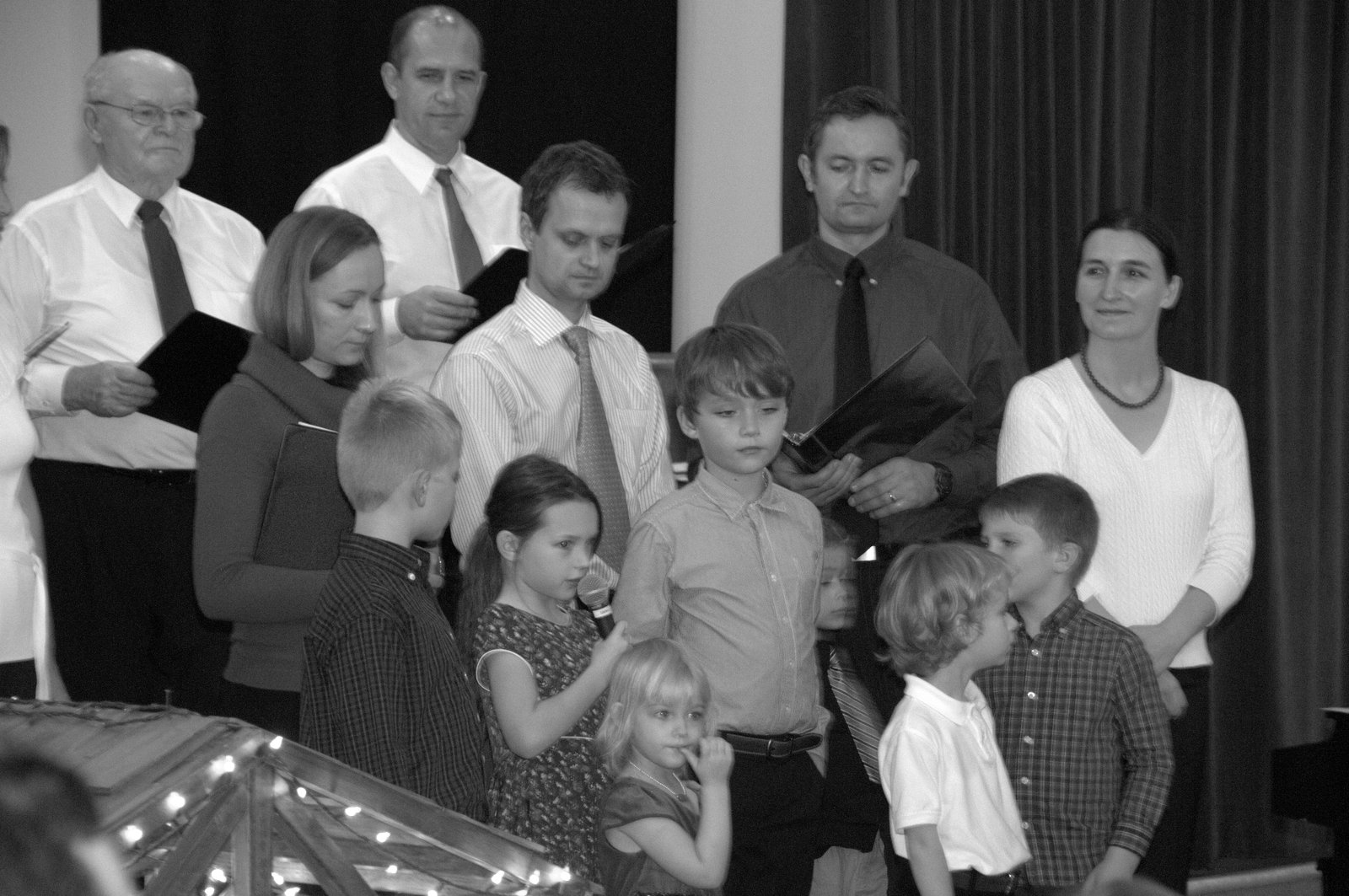
He's a polyglot, but he has only very limited Polish in his linguistic arsenal. He can greet people, say the Hail Mary, and thank people.
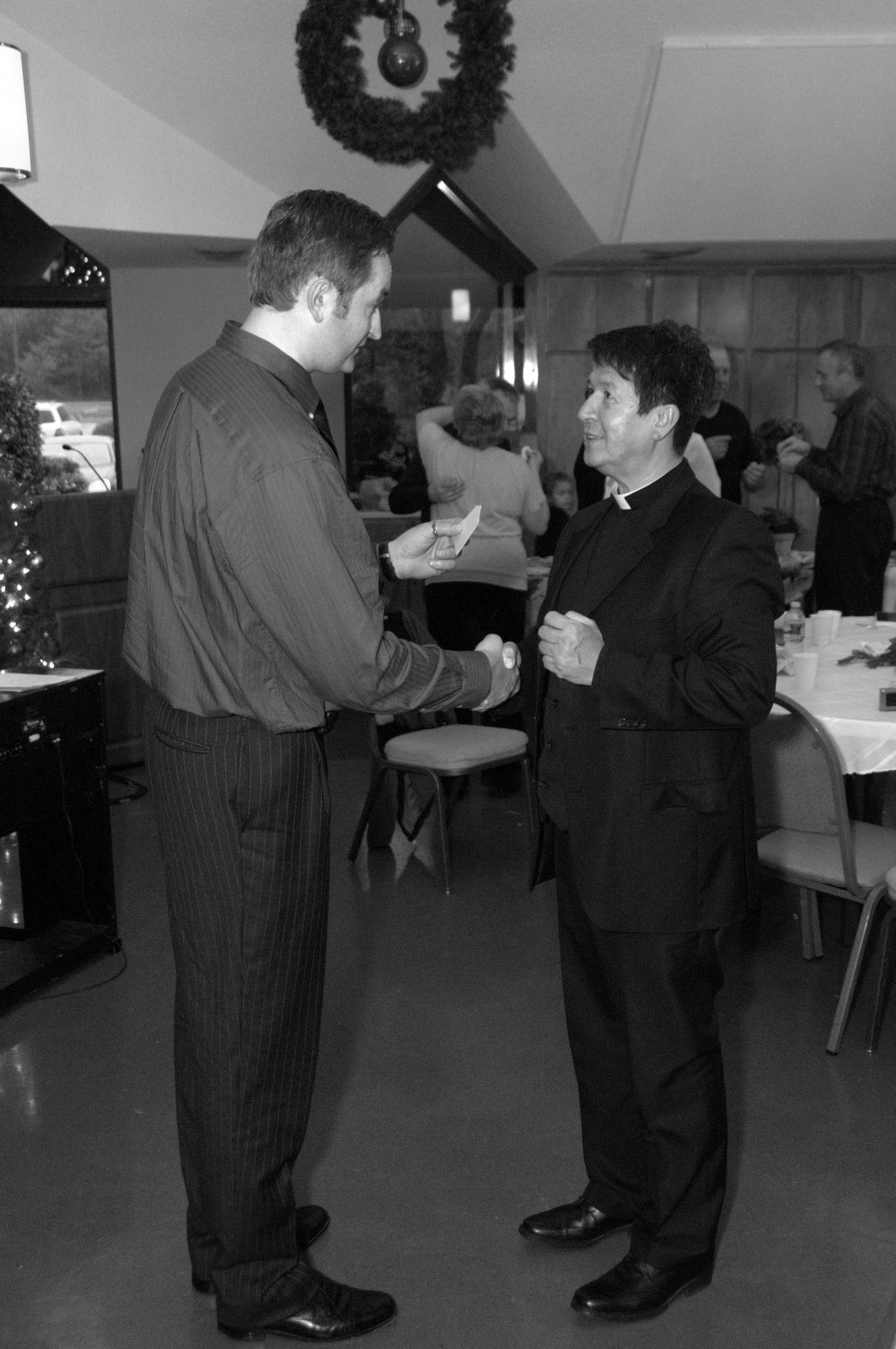
Yet his passion for Poland and all things Polish is never wavering. Among the gathered Poles, with his small stature and dark complexion, he stands out. As Polish parishioners offer each other they opłatek in the Polish wafer tradition, he stands smiling and watching until someone realizes he's been left out and brings him over a square of the wheat-and-water wafers, explains the tradition, then offers the square of bread. They break off a piece of each others' bread, wish each other well, and Fr. Theo's smile grows even bigger.
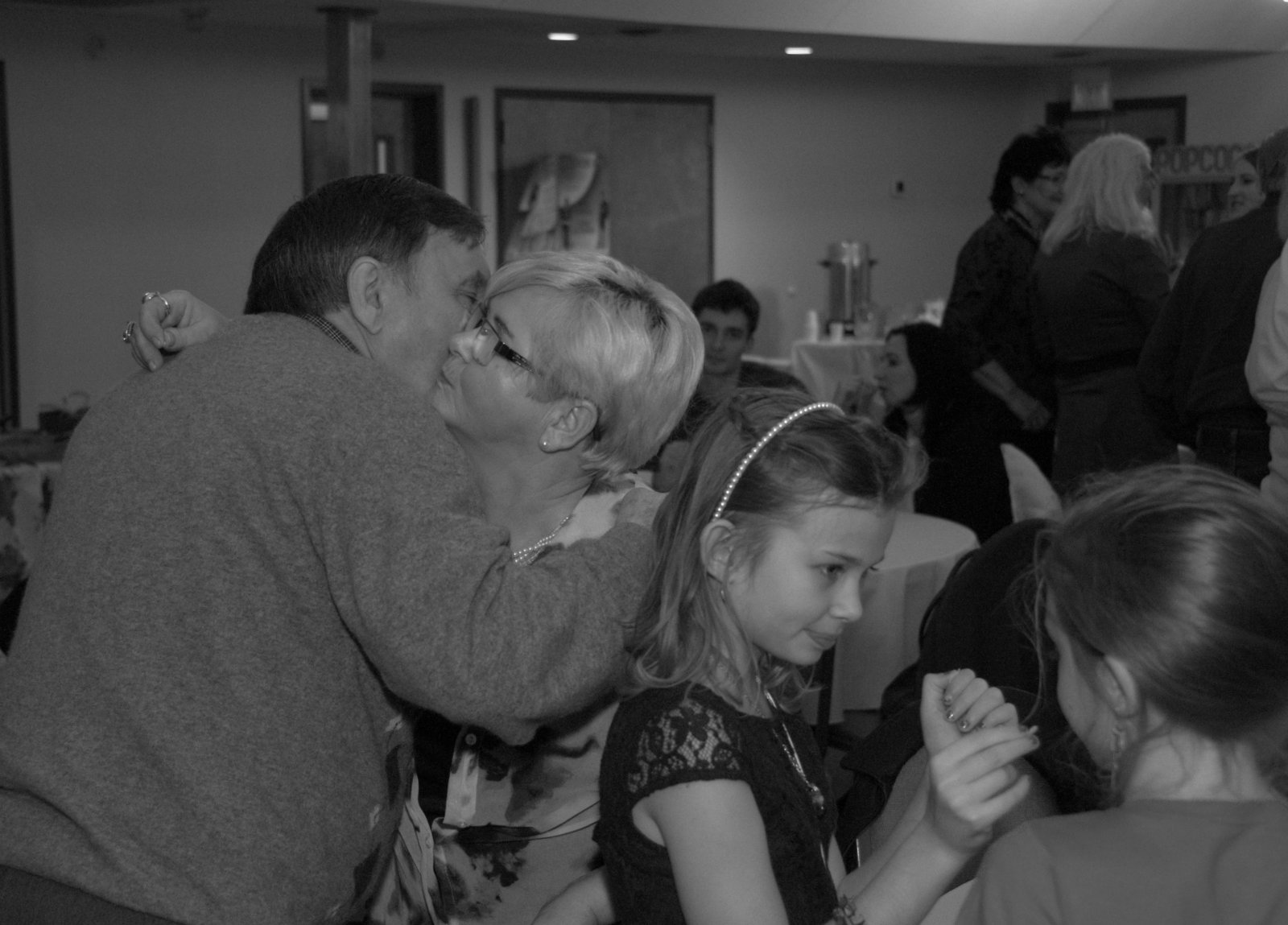
He turns to watch everyone around him, shuffling among friends, opłatek extended, smiling, hugging, kissing.
In her NPR piece, Sarah Zielinski explains what Fr. Theo, an immigrant himself from Columbia, initially was missing:
Nothing says "I love you," at least in my Polish-American family, quite like the sharing of a thin, flat, tasteless wafer called an oplatek at Christmas. [...]
"For us, Polish Americans, the opłatek, that wafer, is Christmas Eve," says Sophie Hodorowicz Knab, author of the book Polish Customs, Traditions and Folklore. "It defines people's heritage."
It's a cultural thing, to be sure, but it somehow goes beyond that. That simple sharing of bread makes a family of just about any group of gathered Poles.
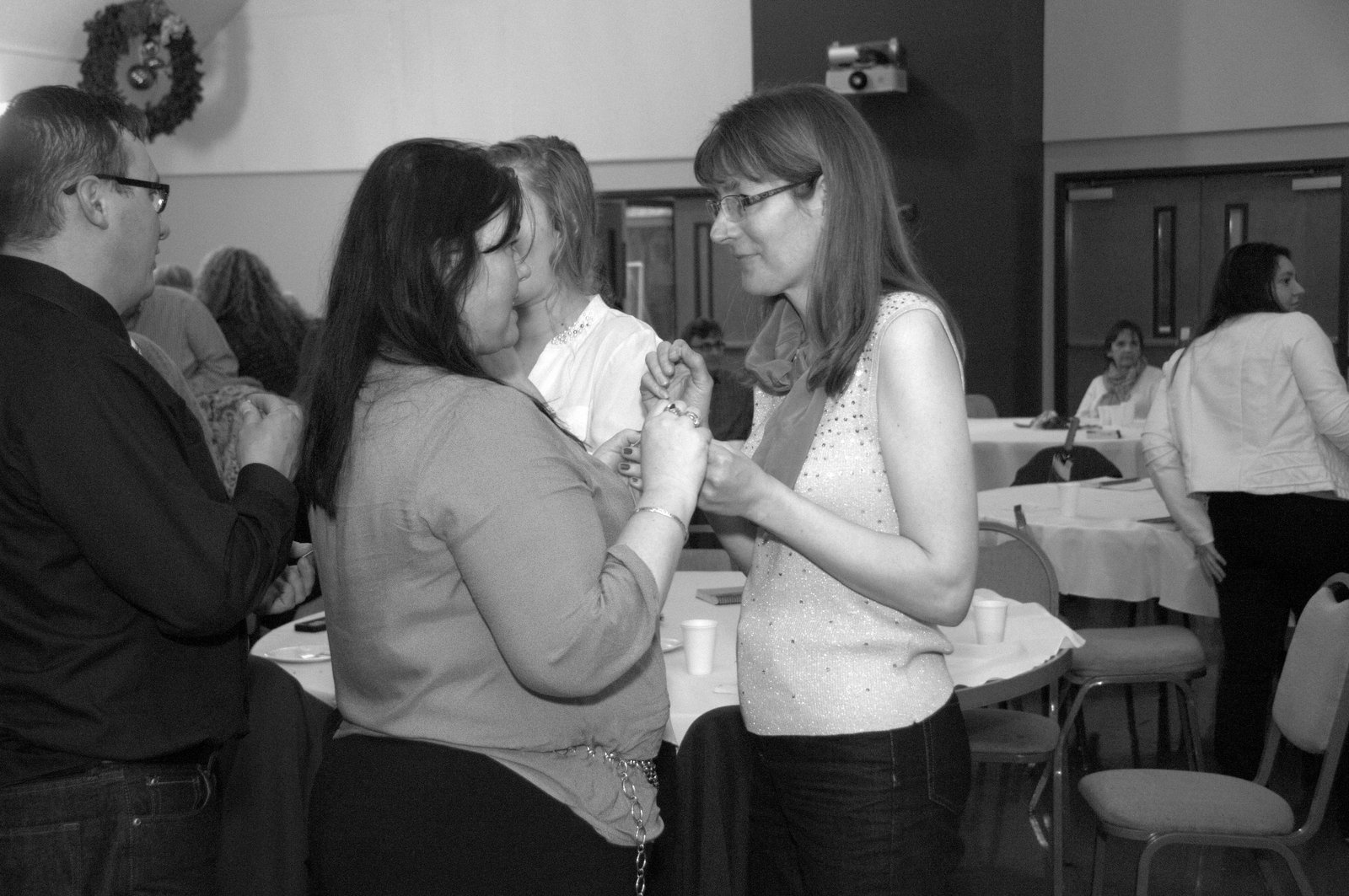
It's a phenomenon I've witnessed myself many times in Poland. Even students who didn't particularly like each other shared with a smile their little squares of dry bread without a hint of animosity or hesitation. Of course our pastor hasn't see all those experiences: this is his first experience, to my knowledge, with the tradition, with us, this Sunday.
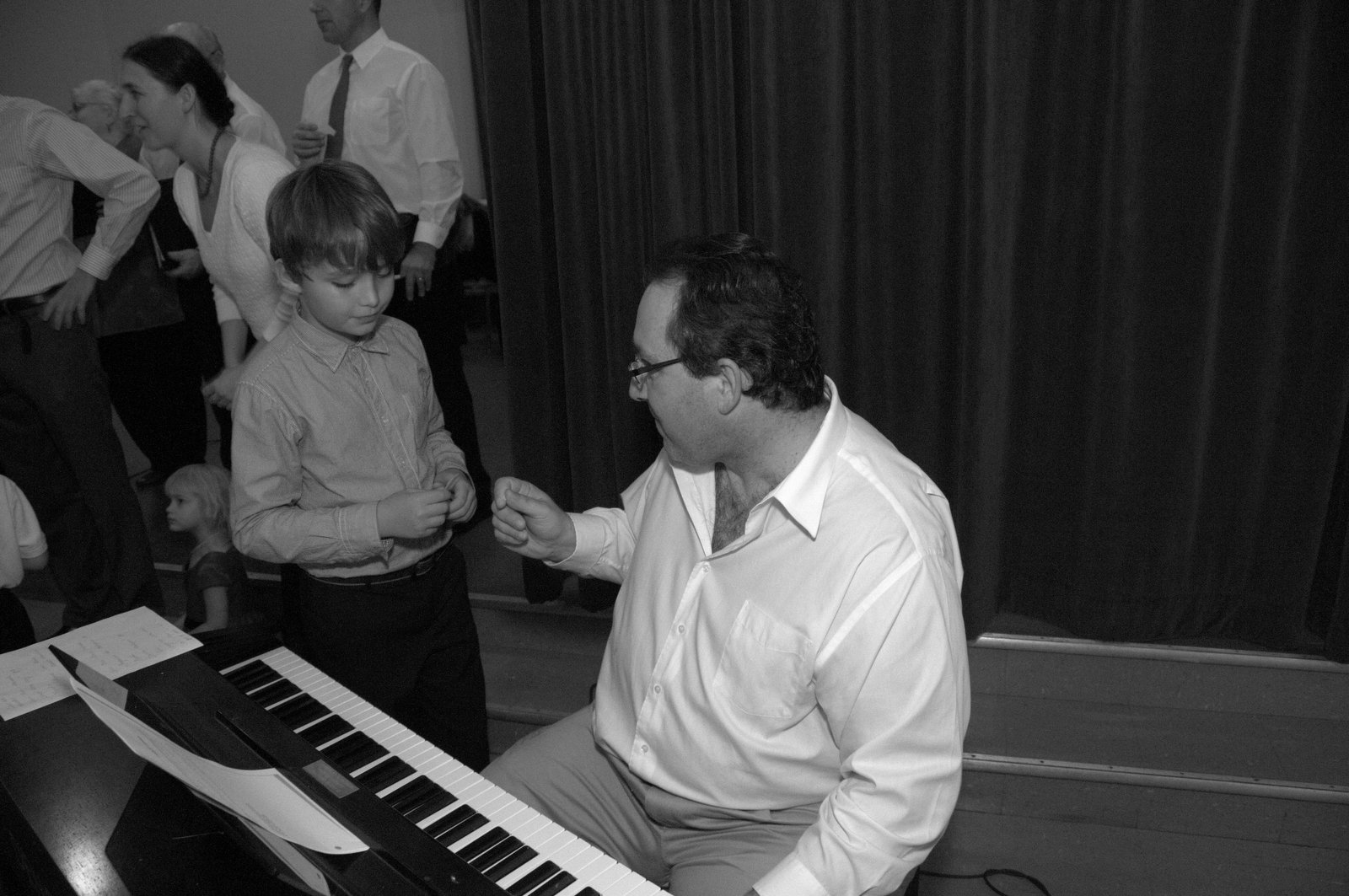
Everyone seems eager to share with Fr. Theo, and he seems equally pleased to share with everyone else. In a sense, many are strangers, but that's the beauty of the opłatek tradition: no one stays a stranger for long.
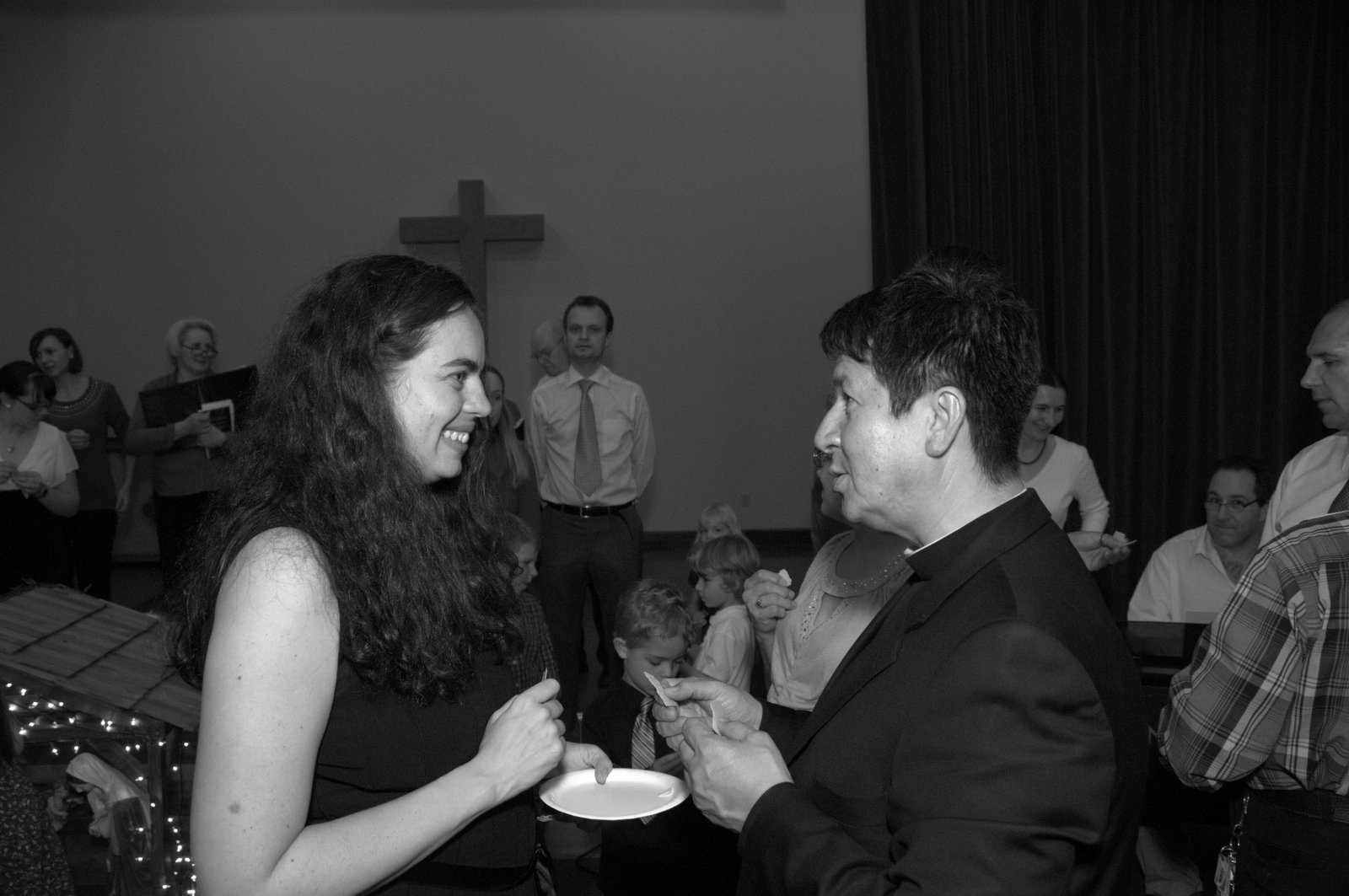
Afterward, I ask him what he thinks of the tradition. "Beautiful. Absolutely beautiful."
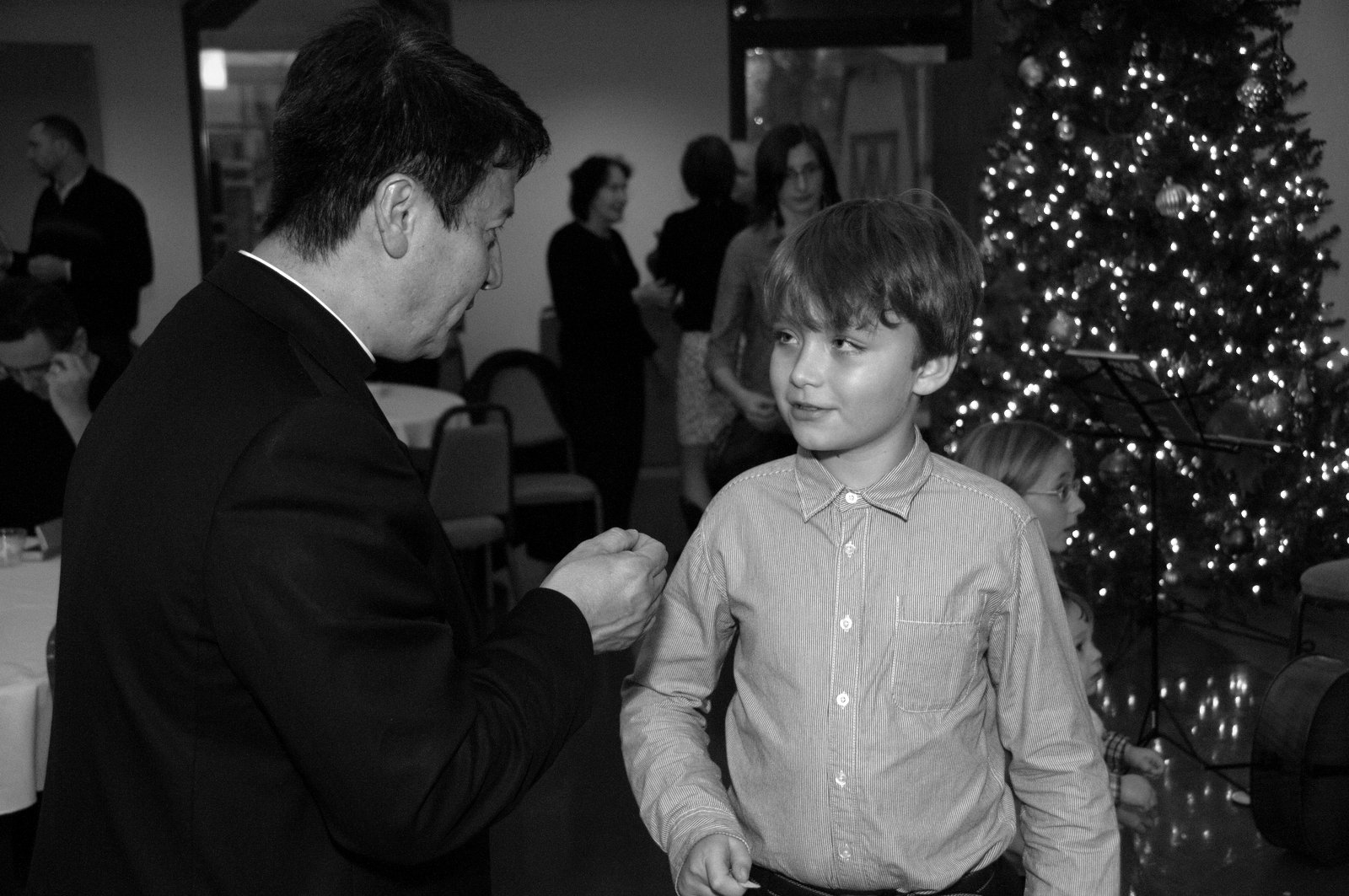
The choir begins singing again, though, and I leave Fr. Theo to shoot a few more pictures and let him enjoy the music in peace.
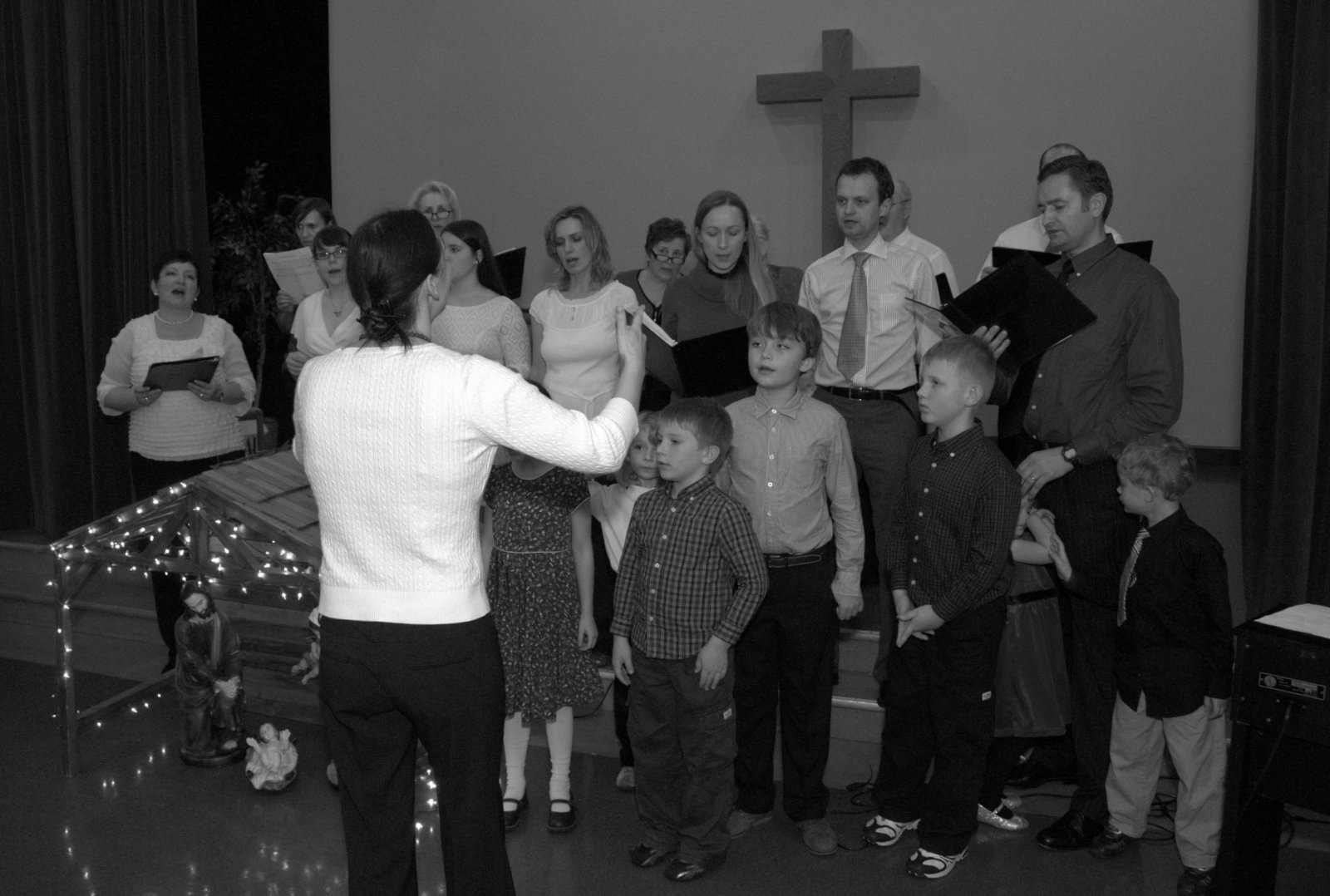
This is the fourth, the fifth time the local Polish community has held its jasełka at St. Mary Magdalene Catholic Church, and it's the fourth (or fifth?) time that Fr. Theo, the pastor, has been there.
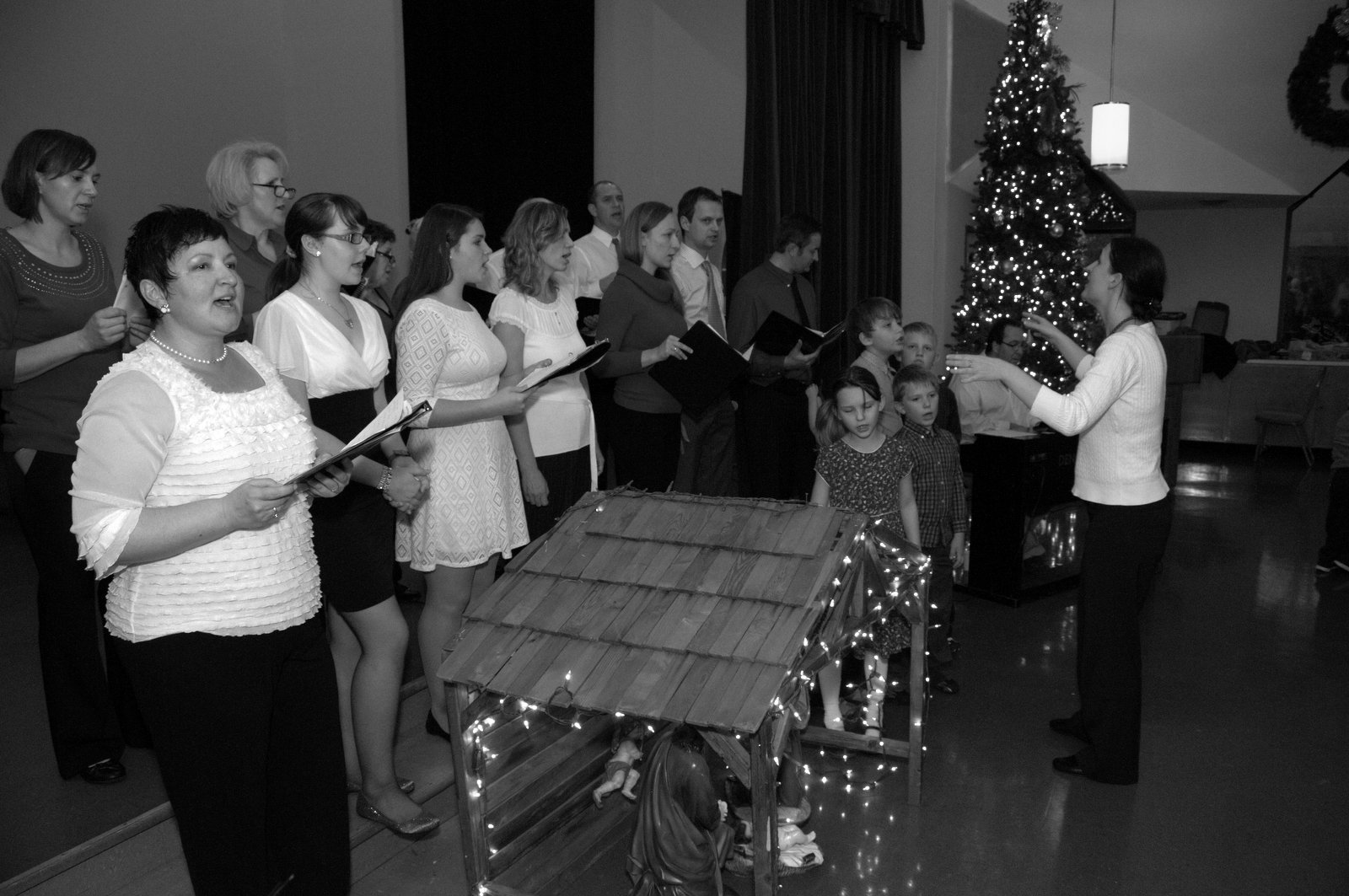
As K, the informal Polish choir director (or probably more likely, formal at this point) leads the choir through its final carol, Fr. Theo takes the mic to address everyone.
"You thank us," he smiles, "for having this here, but we are the ones who are blessed."
Polish Sunday
Polish Picnic 2013
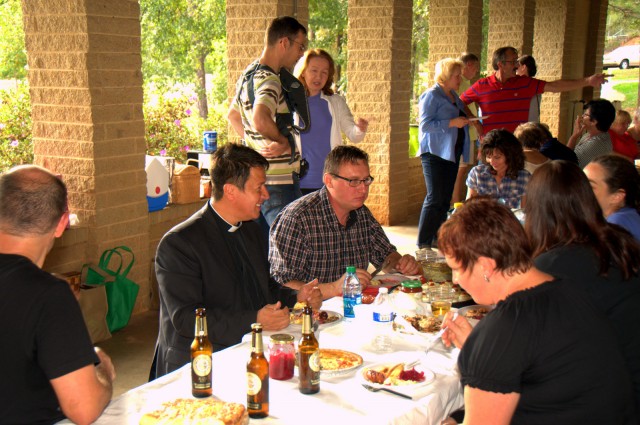
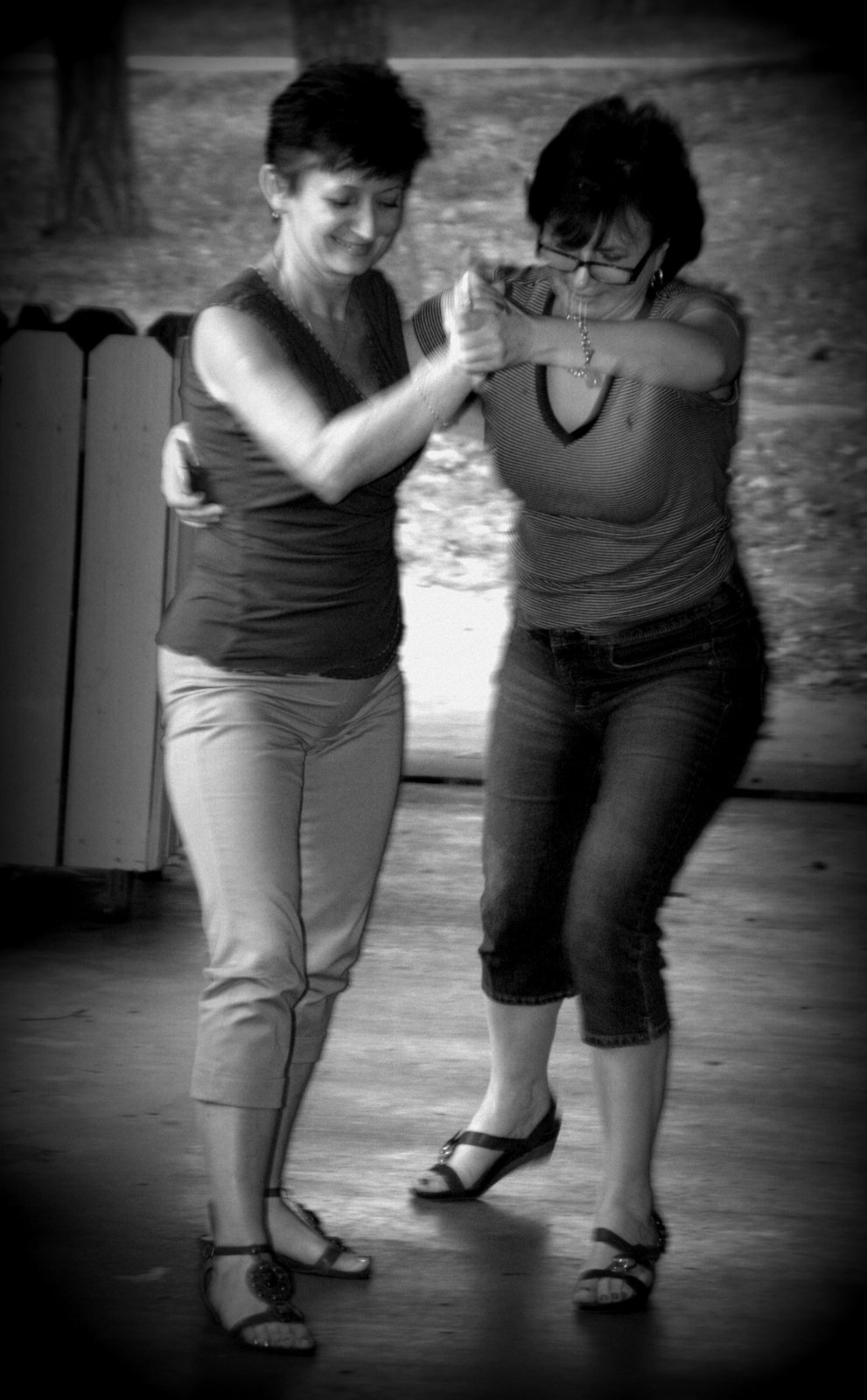


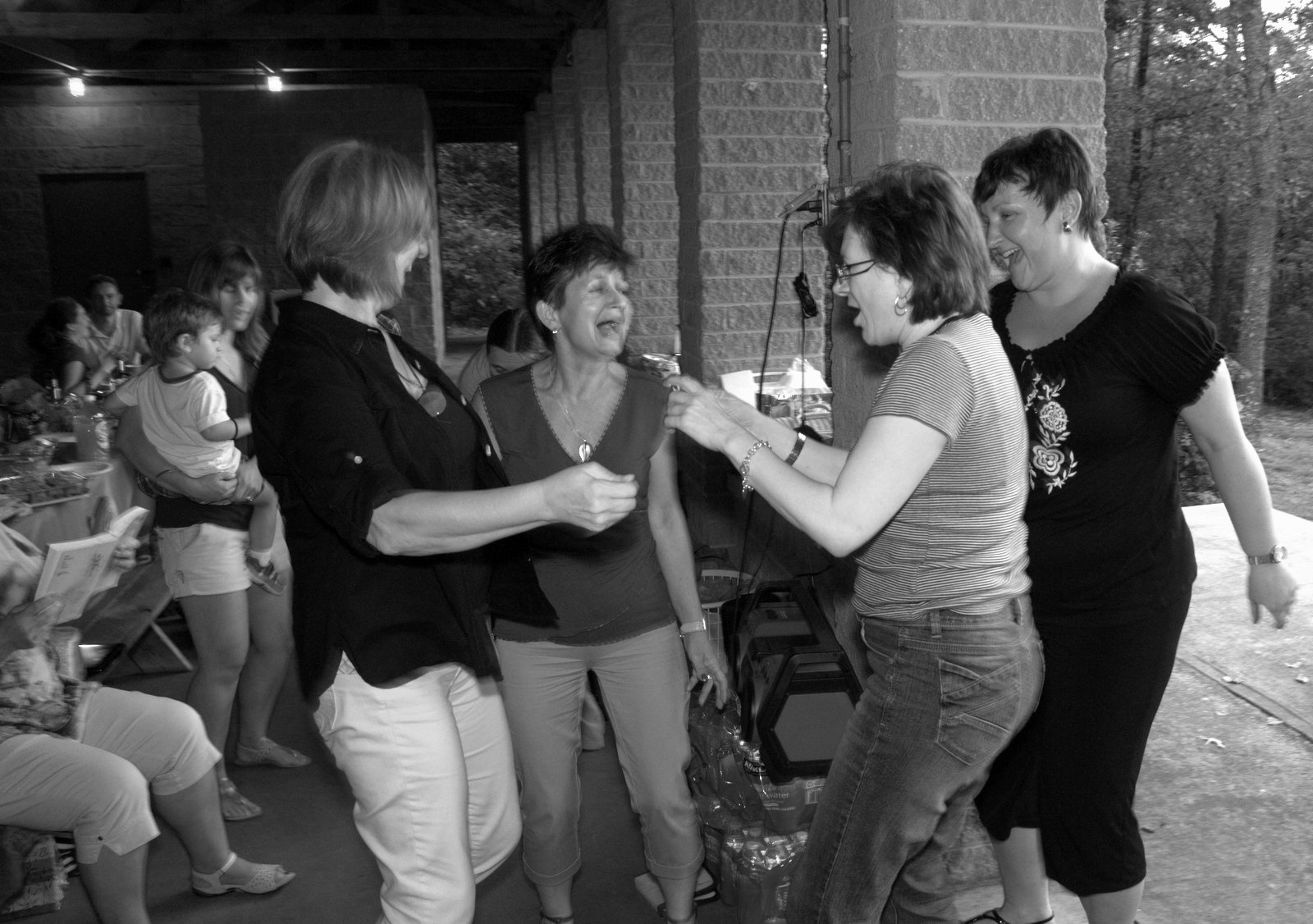
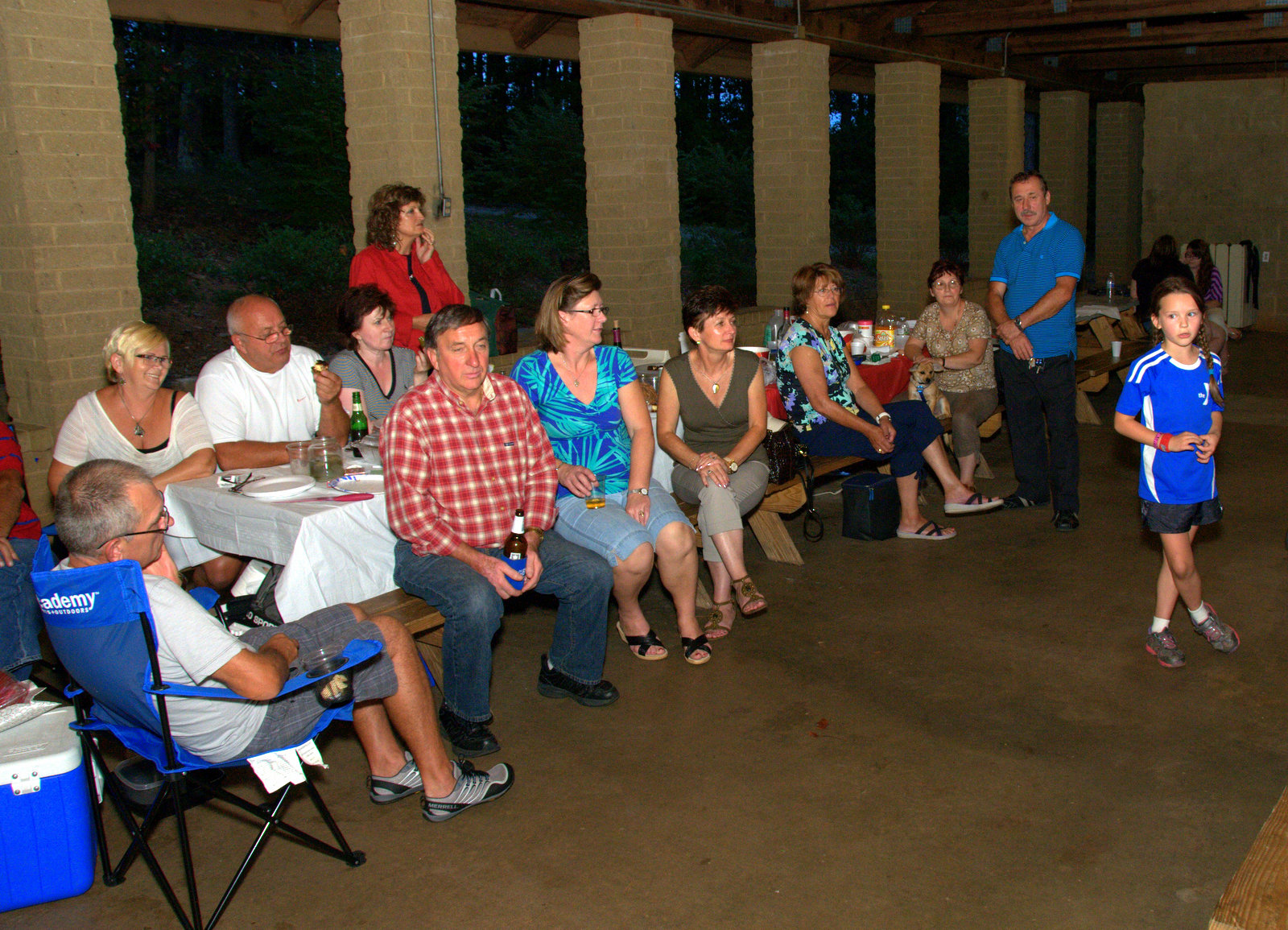
Get a bunch of Poles together and three things will happen: speeches, dancing, and singing. Lots of singing. This year had two of the three, though at moments we could have come close to a three-of-three conclusion.
Polish Train Ride
While we were in Poland, we took a train ride on a relatively old-fashioned train.
Explaining in Poland
I've only now been getting around to the videos from Poland.
Cemetery of Memories
The first time I approached the cemetery in Lipnica Wielka, it was November of 1996, and I headed up for my first experience with All Saints' Day in Poland.
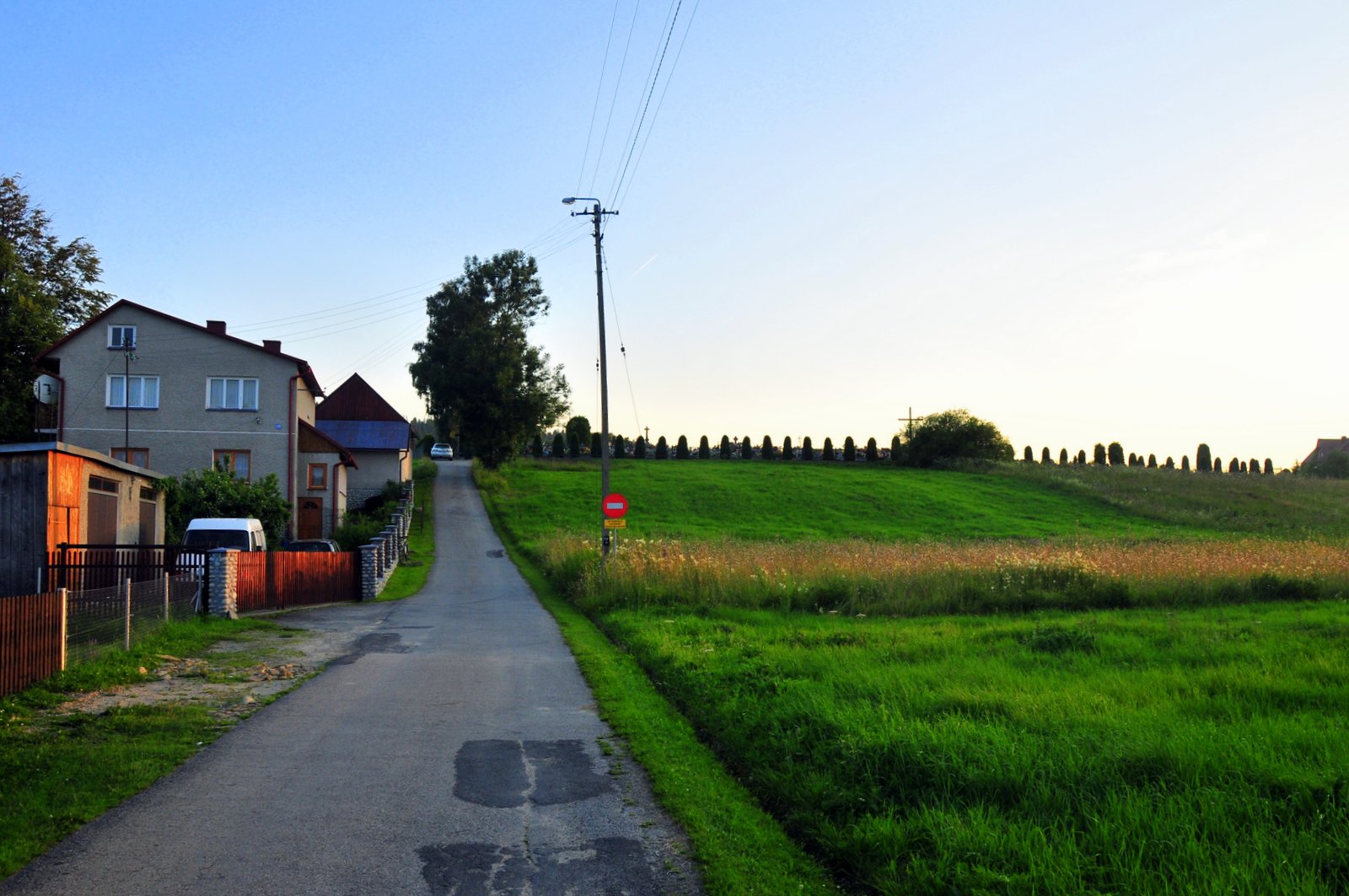
I took pictures and made mental notes for my journal:
I left my apartment around 4:30 and headed up to the cemetery to witness my first All Saints’ Day in Poland. I weaved my way through the maze of mud puddles that serve as my front yard and made it to the road, and suddenly it was if I was in Kraków instead of Lipnica. The street was filled with people, all leaving the cemetery as I made my way to the cemetery. I felt like the one Israelite who might have decided to turn back in the middle of the exodus. With my camera in hand and a bewildered look plastered across my face, I surely looked like a fool. But I didn’t care, for I was about to experience something I had heard about since arriving in Poland. (November 1996)
It was the first of many visits, for I found myself strangely drawn to the cemetery as the sun set. Summer sunsets were the best, giving Babia Gora just a touch of golden haze, but any sunset cast a lovely light over the headstones.
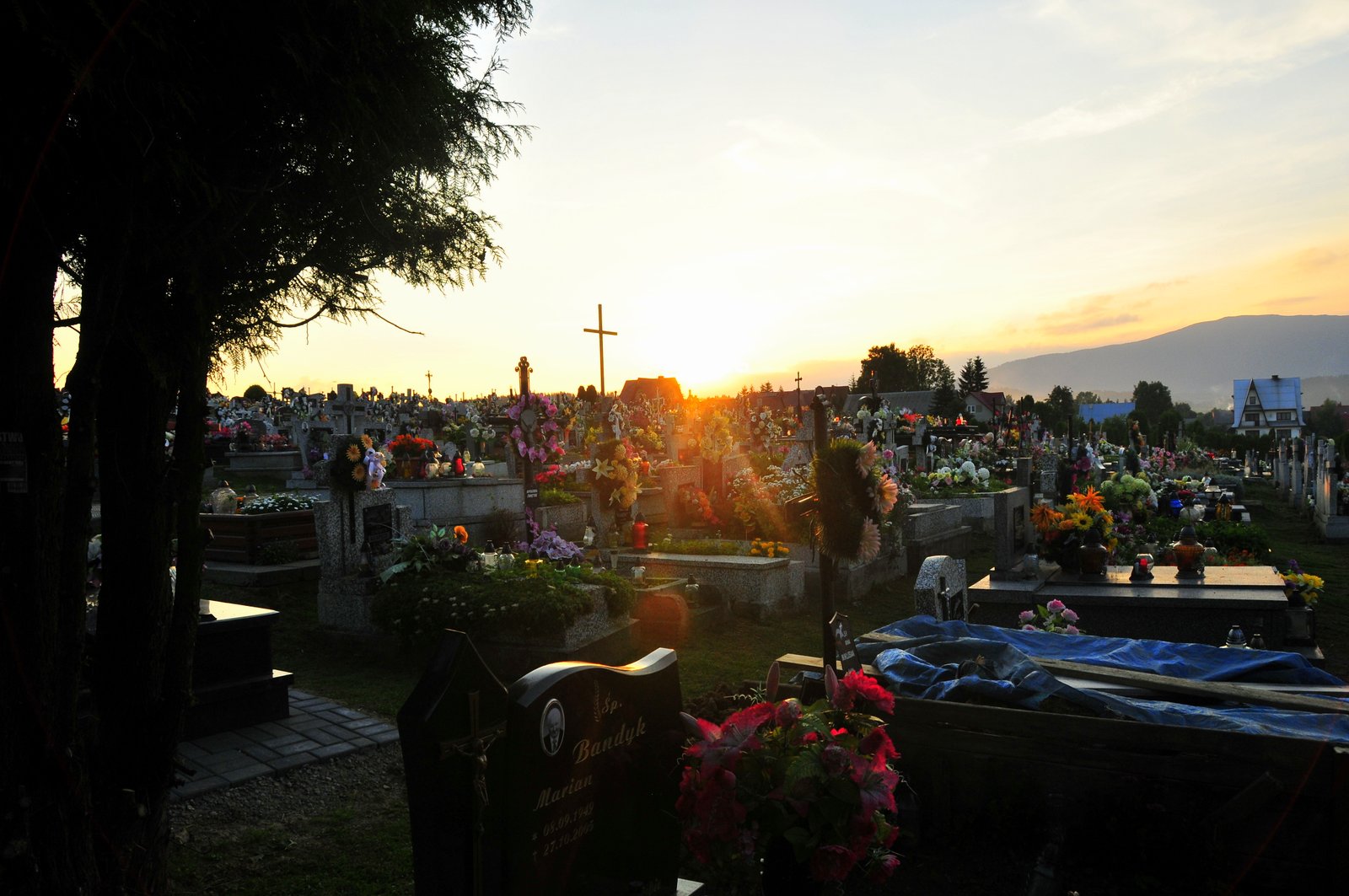
From the cemetery's small hill, I could see all of the central area of Lipnica Wielka -- centrum as it's known -- and that somehow gave me a sense of peace and belonging that other views lacked. Indeed, it was odd for me that from the first time I ever attended the cemetery prayers and processions of All Saints' Day, this plot of land filled with the remains of total strangers became a place of peaceful retreat. I never imagined I'd really have a personal connection to it. After all, I taught high school, and most of my interactions were with students: how often do high school students die? All the teachers at the school were young: what were the chances of some random accident taking one of them? No, I never really thought that I would think of Lipnica's cemetery as much more than a quiet place of reflection.
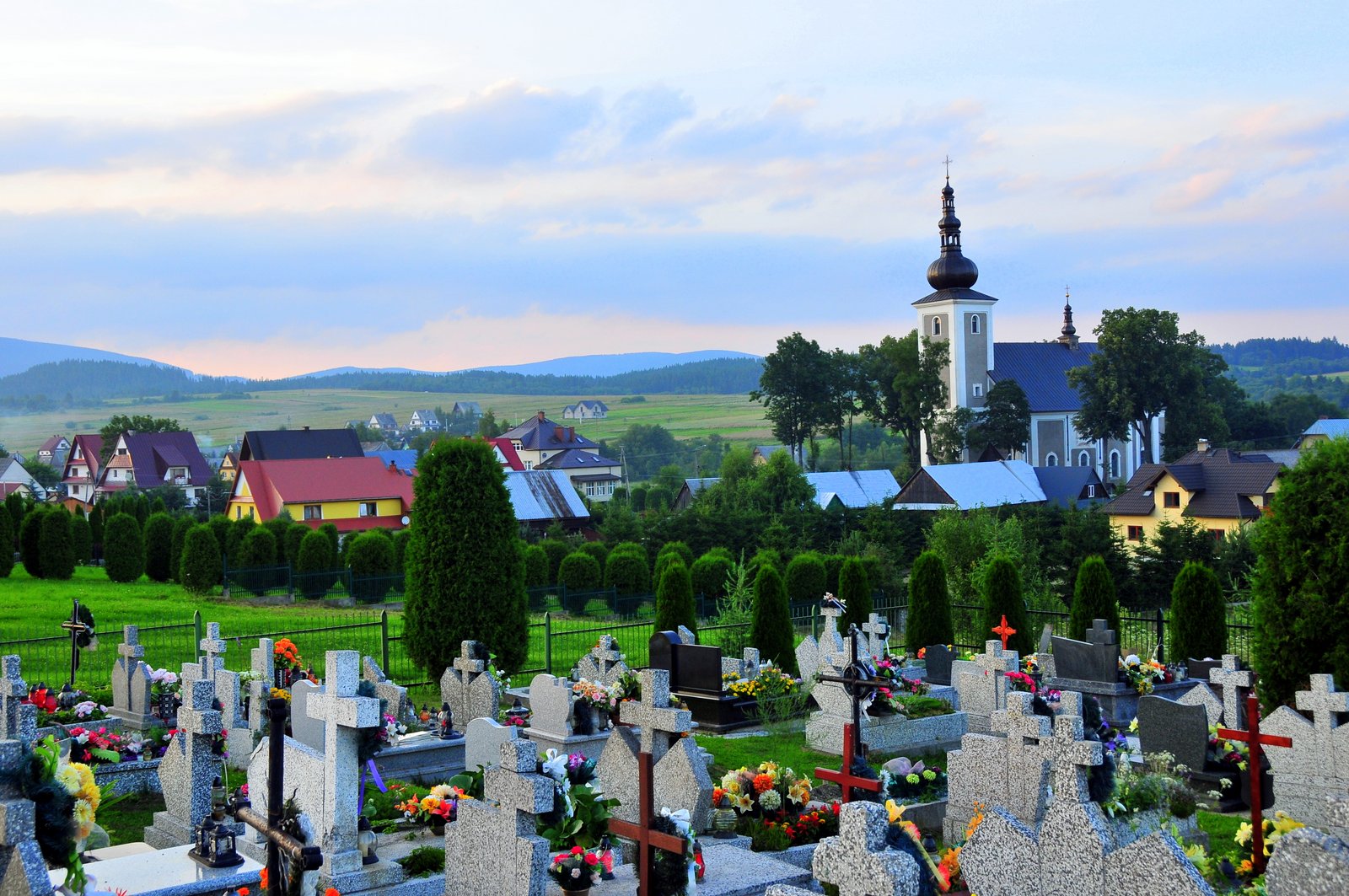
Yet that was just what happened. Disease, accident, and tragedy claimed several students' lives during my time there.
The first was a girl named Halina. She wasn't actually from Lipnica, but she was living at a rehabilitation center at the top of the village, just below Babia Gora. It was a center the Duchess of York had established for children recovering from the barrage of chemicals and radiation used to treat cancer. Halina was eighteen but trying to complete her first year of high school in Lipnica. Just before Christmas break, Halina disappeared. Several weeks later, during the two-week inter-semester winter break, I ran into the director of the rehab center.
"Halina died," he said abruptly.
As she was from the west of Poland, several hours' travel from Lipnica, I was unable to attend the funeral, and I've never visited her grave.
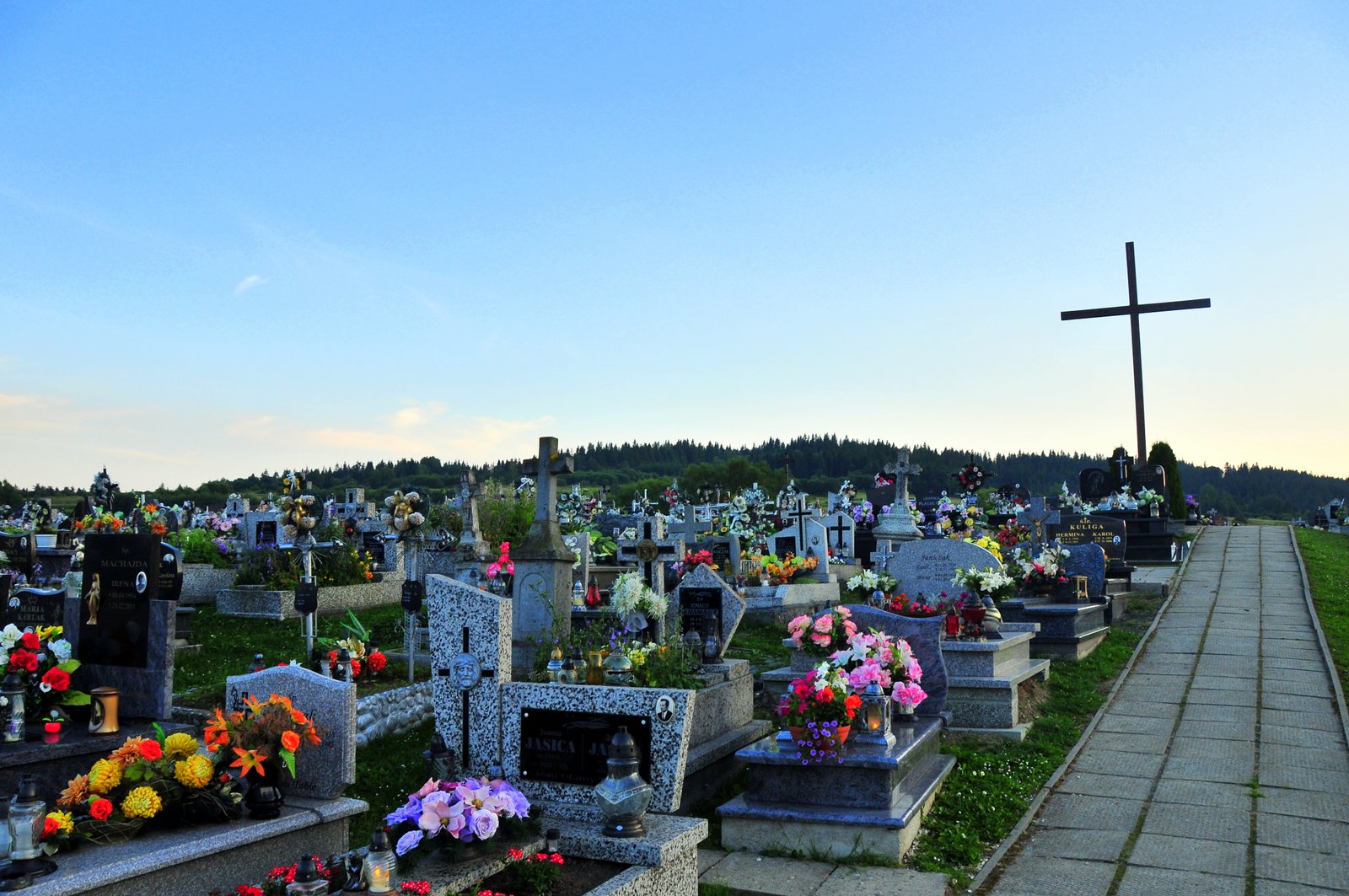
The cemetery was one of the last places I managed to visit during our 2013 trip, though. Â I'd come to pay respects to those students who'd died after the shock of Halina's passing.
It took me little while, though, to realize how much had changed. The last remaining tree in the cemetery (a large evergreen) had been chopped down -- a negative change. It always amazed me how the light of thousands of candles could illuminate the entire tree during All Saints' Day, and that single tree, almost in the center of the cemetery, was a constant reminder of the renewal that follows death.
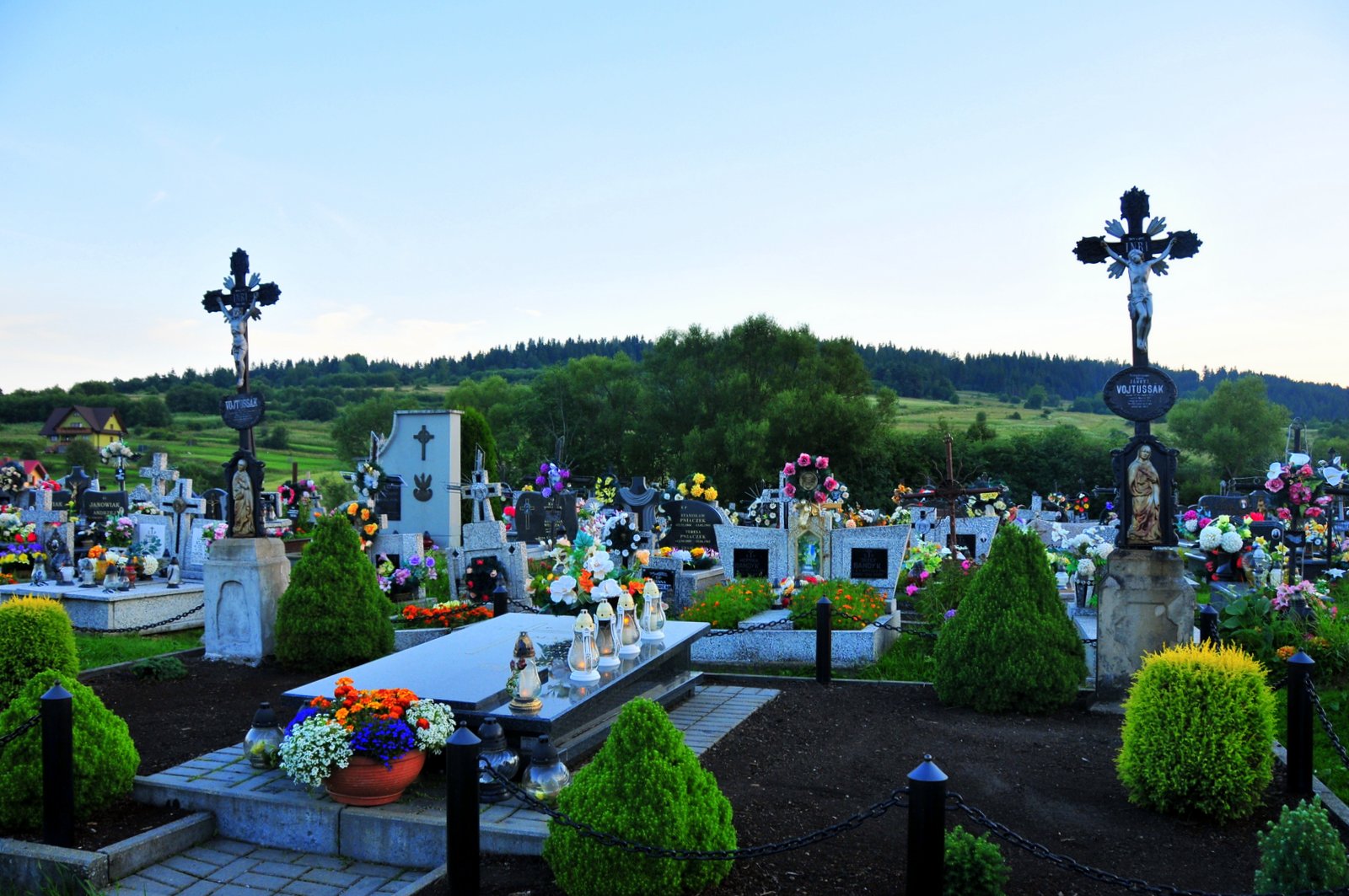
The chainlink fence around a small group of graves (including a couple of Hungarian markers) had been replaced with a modest chain barrier -- a positive change. The two iron crosses, in the center of the cemetery but toward the rear fence, always stood out, and the chain link fence seemed an inappropriate addition.
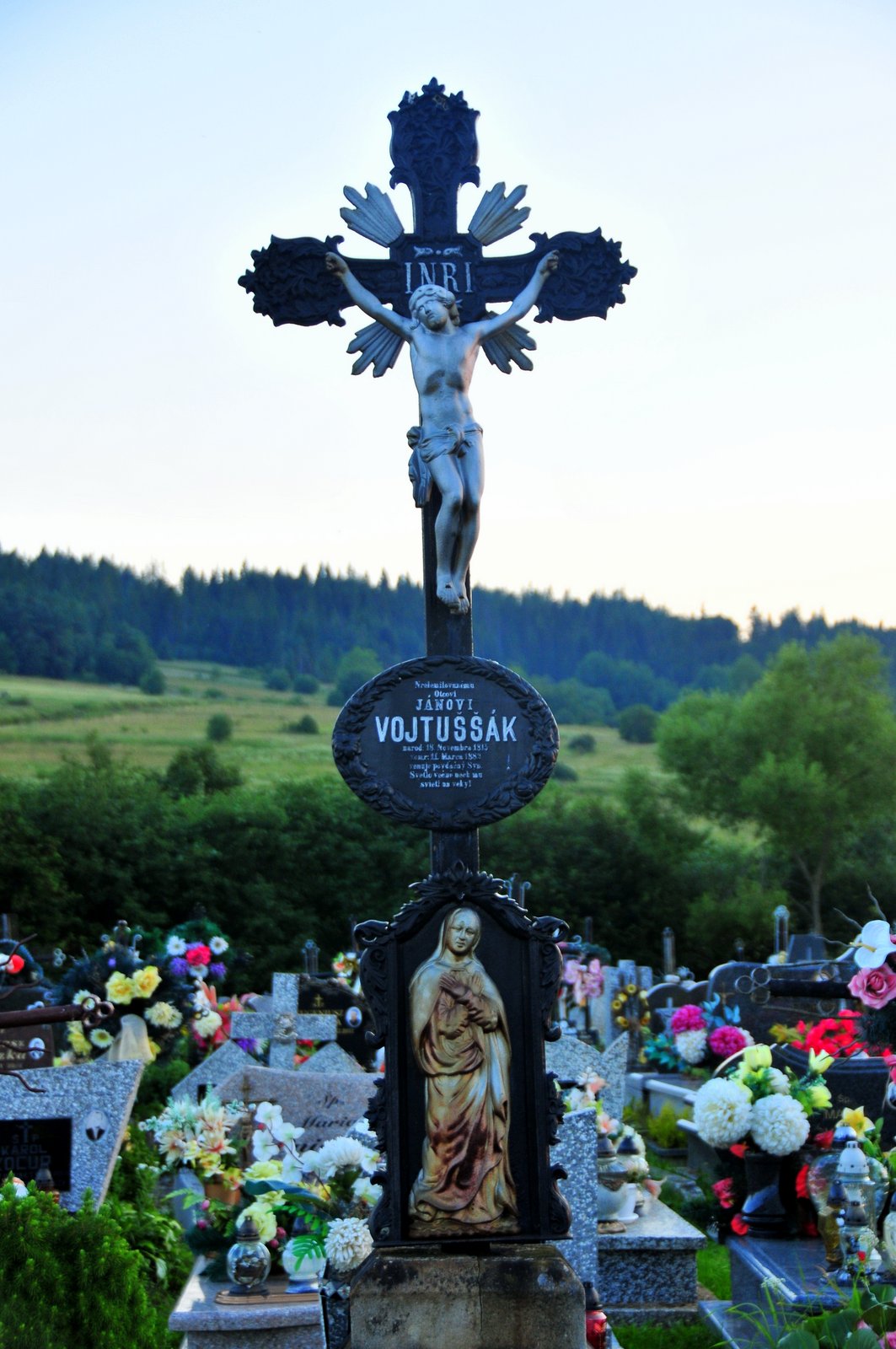
But I hadn't come to see how much the cemetery had changed; I'd come to pay respects to three people, all of whom were taken entirely too soon.
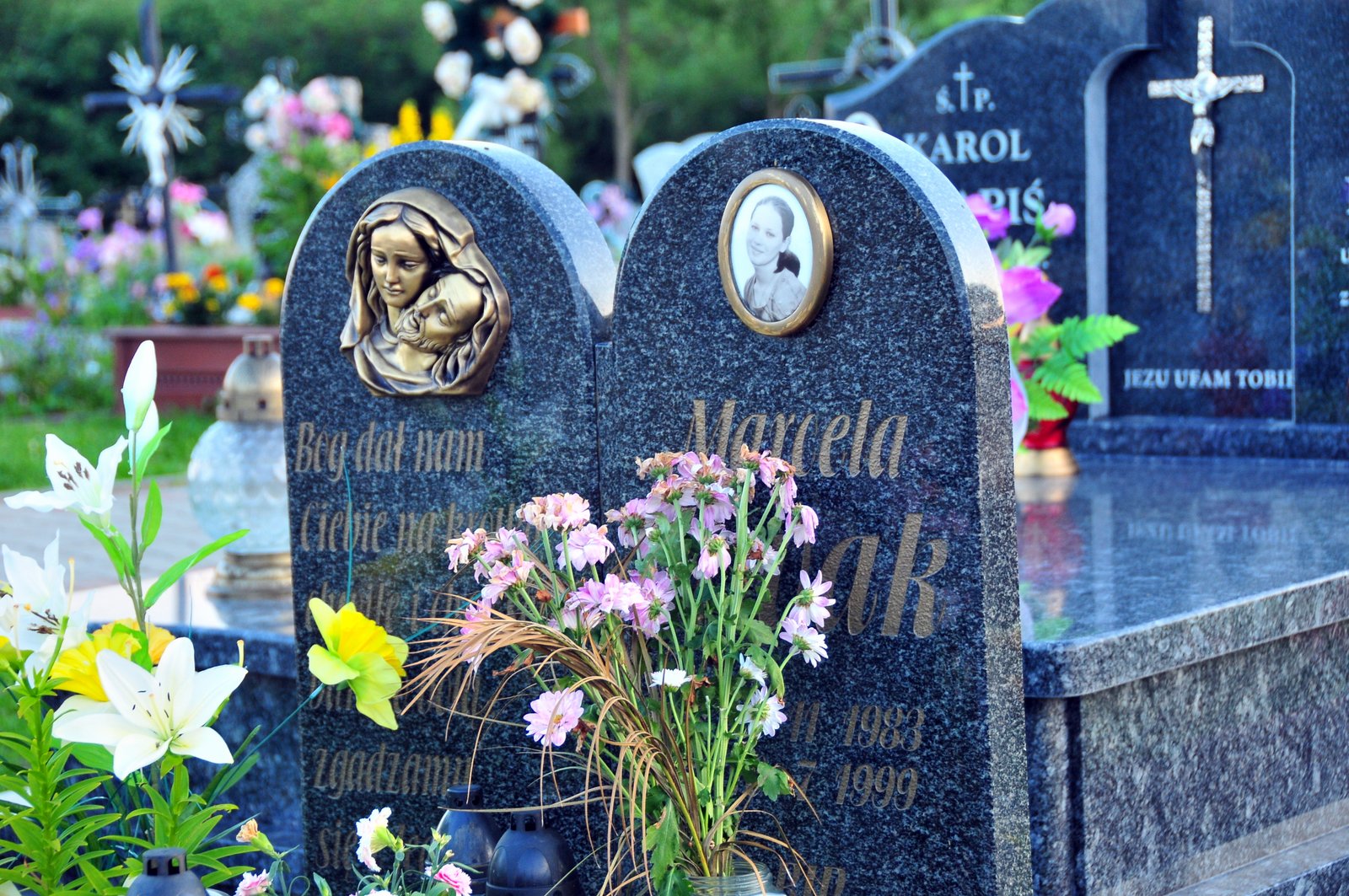
Marcela finished up her freshman year in high school as I left Poland in 1999. I didn't know her well: I only taught her class a couple of times a week, and I worked with her for only that one year. But when, back in the States, I learned that she and another girl, also my student, had drowned while on a trip to the Baltic Sea, that small connection seemed much more significant. A young girl, on a summer trip, drowns: it seems to be almost cruelly ironic.
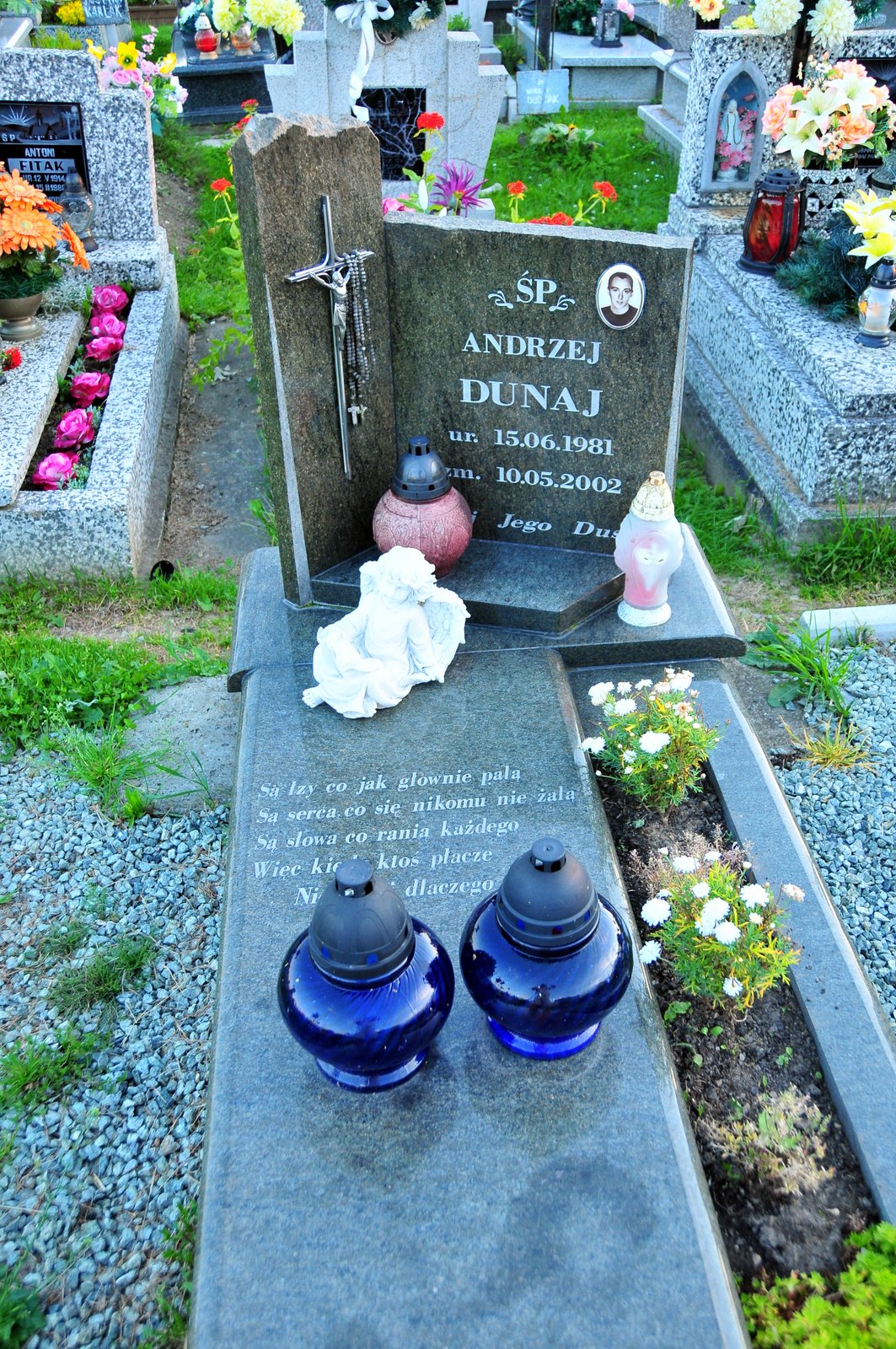
Andrzej I knew much better, though. I taught him for three years, and when I returned to Poland in 2001, he'd graduated high school and we developed a friendly acquaintance as adults. Andrzej was truly popular with everyone. I don't recall ever seeing him do anything other than smile. His death in a farming accident shocked and shook hundreds of people: his funeral mass was standing-room only, and for many weeks after, whenever I wandered into the cemetery, someone would be standing at his grave.
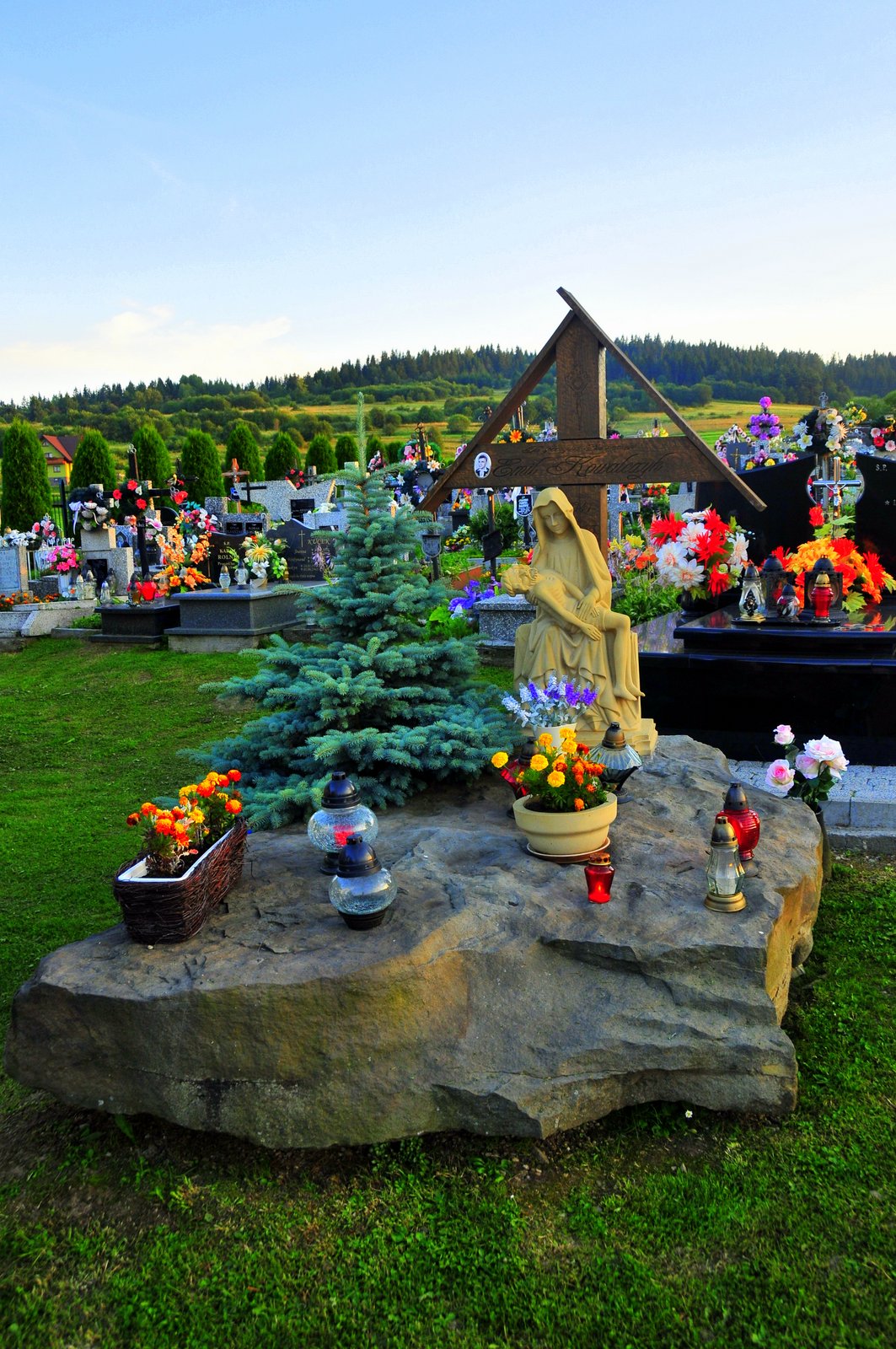
Emil Kowalczyk was Przewodniczący Rady Gminy (Chairman of the Municipal Council) for Lipnica Wielka, but more than that, he was a constant champion of the cultural heritage of Lipnica. I really only knew him in a professional capacity mainly by helping occasionally with some translation work. It was he, however, who arranged for me the traditional outfit required for admittance to the VIP seating area during Pope John Paul II's visit in 1997. The mayor offered me the spot; Kowalczyk provided me the clothes. Always a kind and friendly soul, he died in 2005 of cancer at the young age of 64.
I visited the graves and felt a tinge of guilt that I didn't bring flowers or a candle. I thought of the Jewish tradition of laying a rock on a grave as a mark of respect, but it seemed out of place, a Jewish tradition from a Catholic in a Catholic cemetery, as if I would just be going through some motions or other.
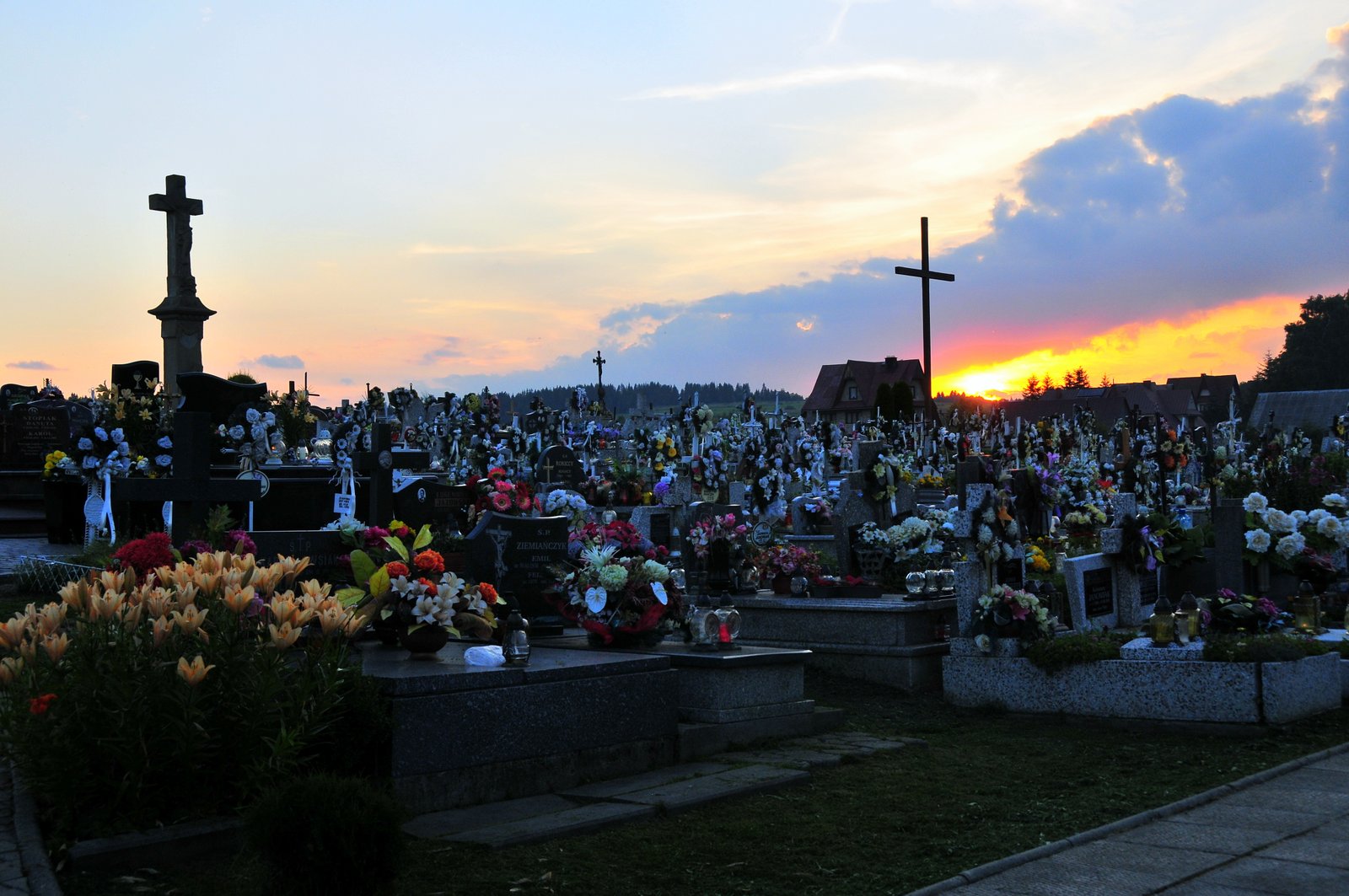
In the end, I just left after mumbling a short prayer over each grave, the same prayer L and I pray for Dziadek every night: "Have mercy on his soul and give him peace."
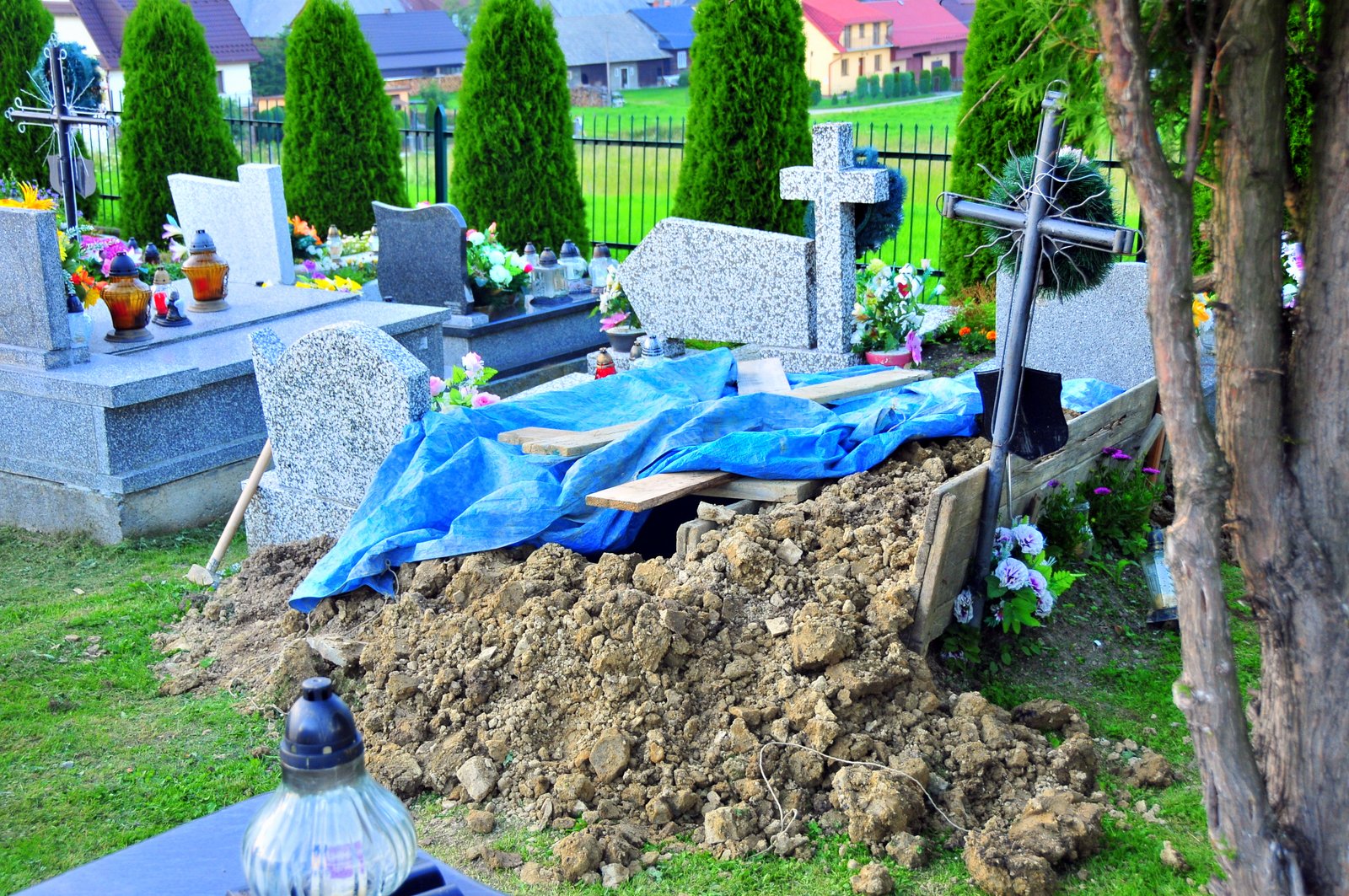
On the way out, I noticed a fresly dug grave. Unlike in most US cemeteries, the graves in Lipnica are dug manually: a couple of guys with shovels, picks, and a few planks. Winter graves are hellishly difficult because of the depth of the frost line. Diggers must first thaw the earth before they can begin with the shoves and picks. In the summer, it must be relatively quick work.
Early Afternoon
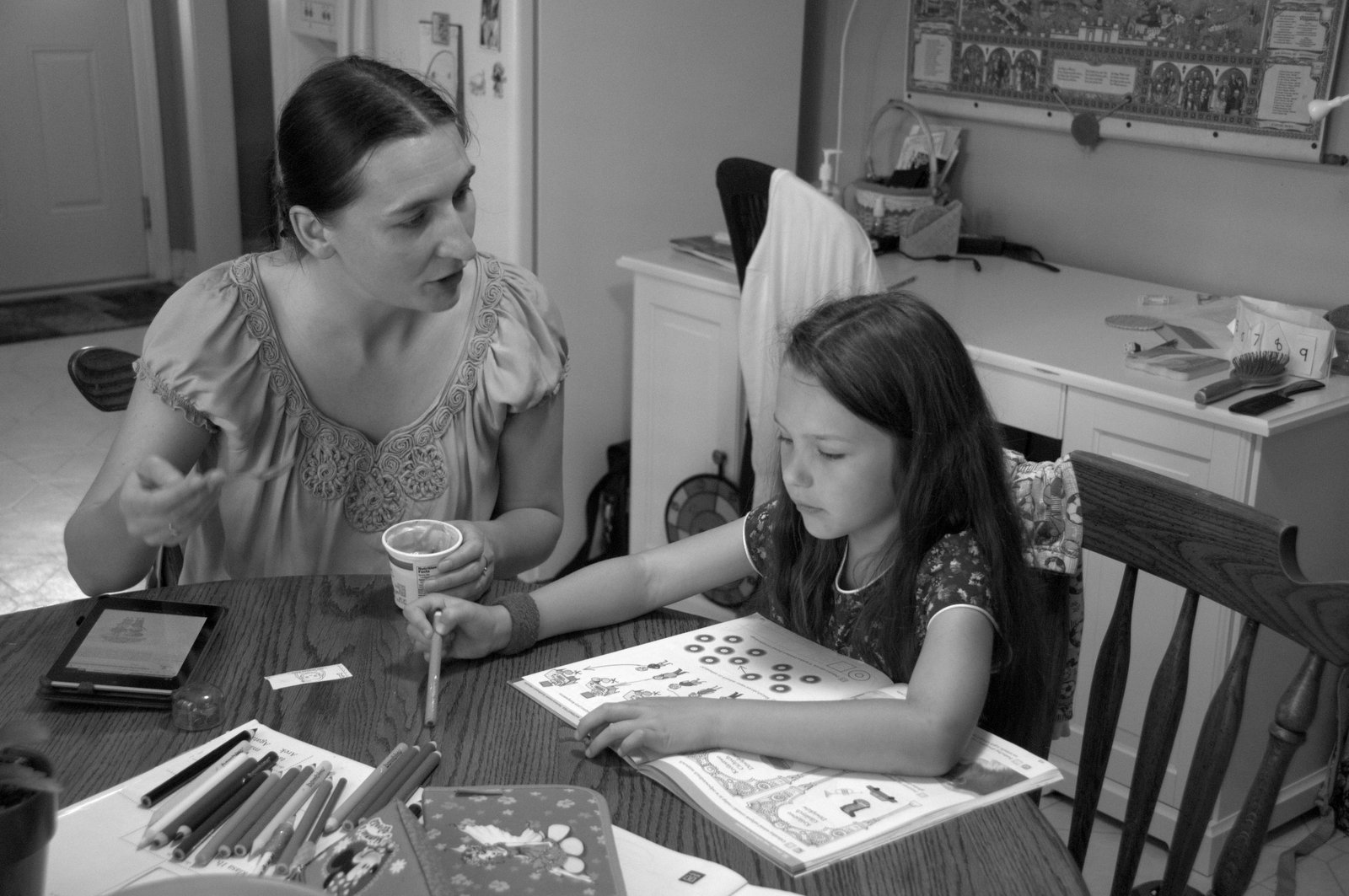
Polish lessons.
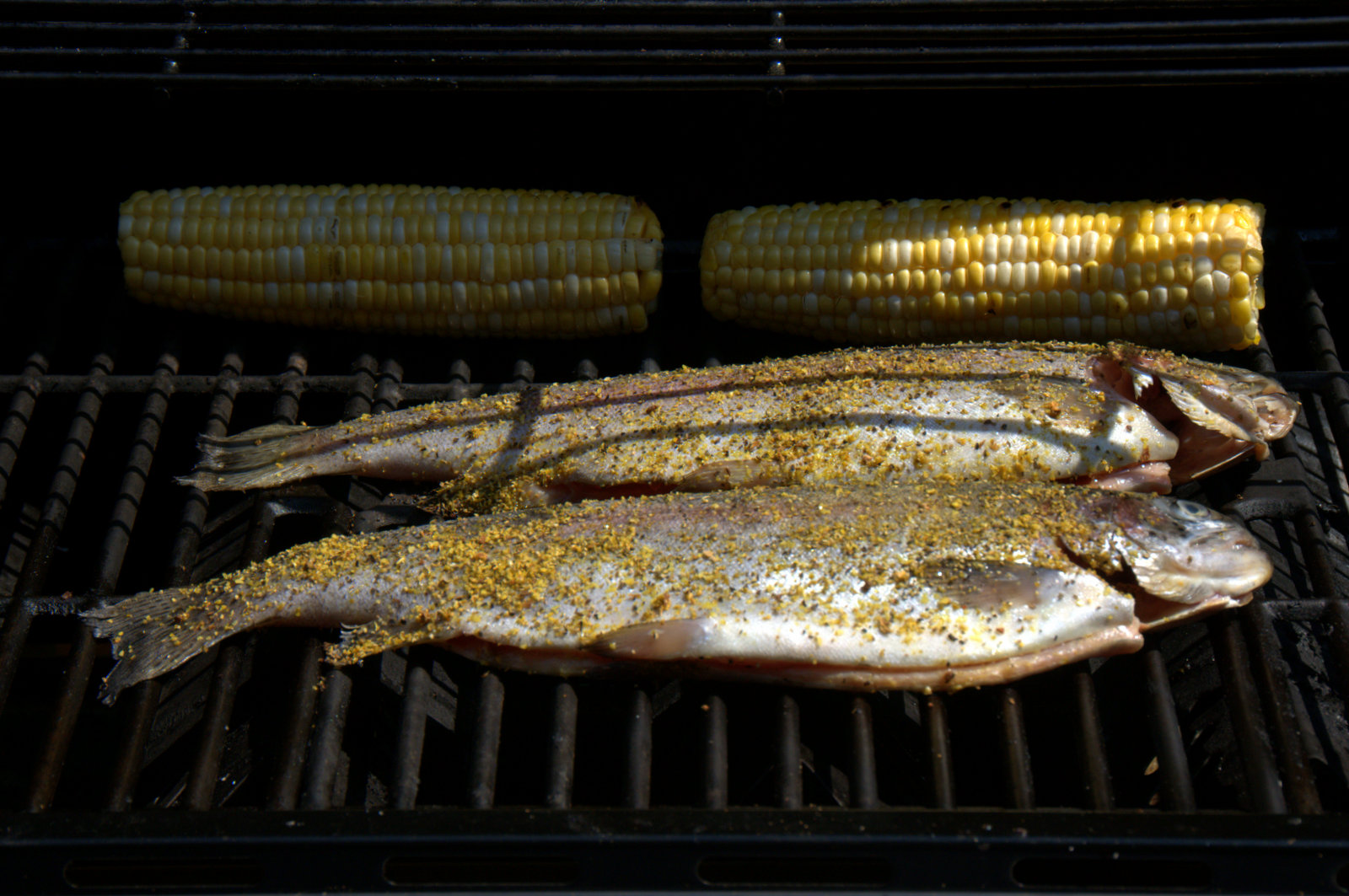
Lunch.
Nice start to Sunday.
Week One
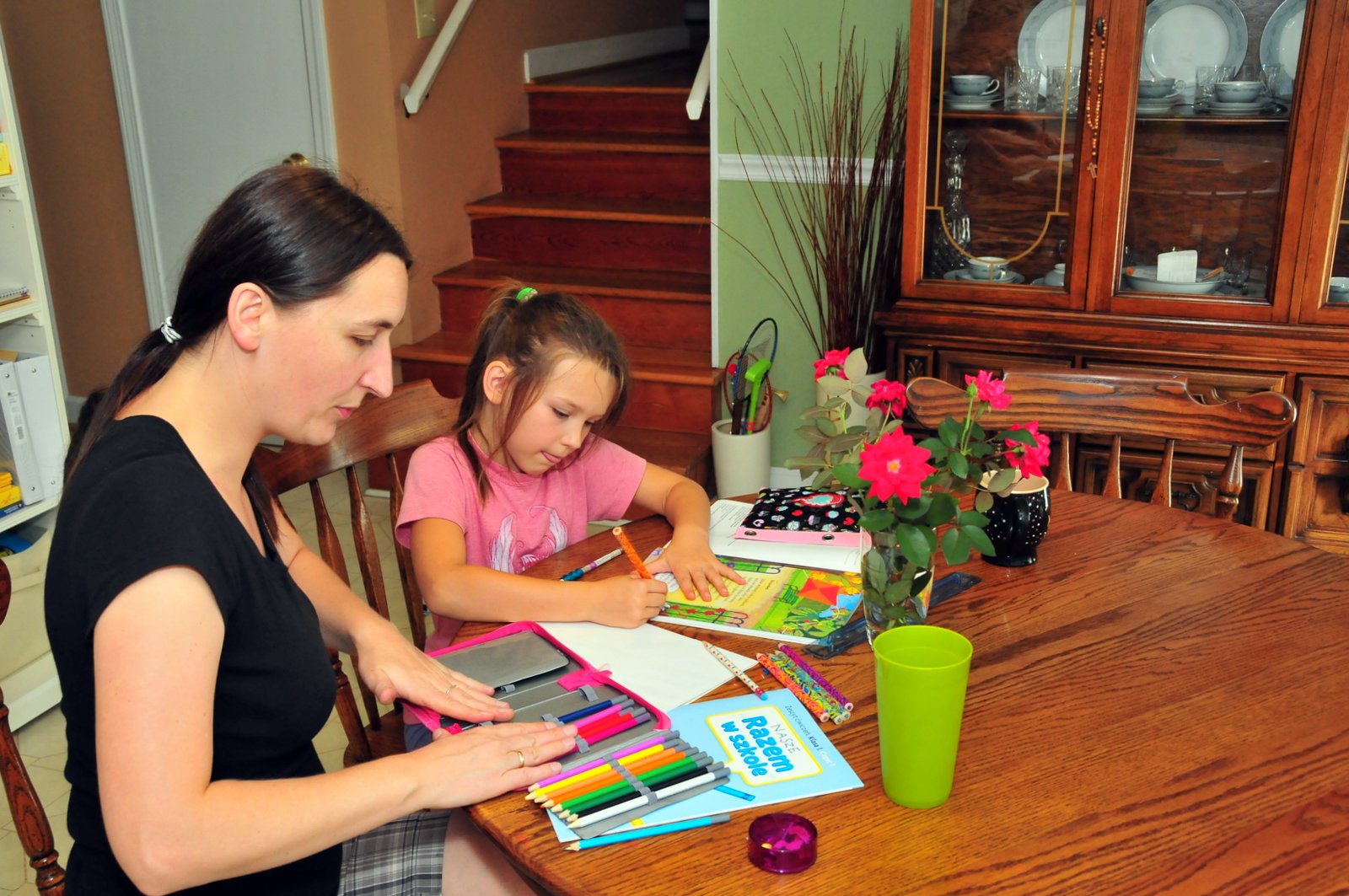
Today the Girl started Polish school, or as the girls refer to it, “polska szkoła.” This is not merely an improvised effort to make sure L stays in touch with her Polish heritage and improves her language skills a bit. This is a formal, institutional organization that follows a traditional Polish school curriculum for students who live outside of Poland. The Girl will be working on math, Polish, computer skills, and one more subject that will certainly cause L much worry and many sleepless nights: English.
“How come?” I asked.
“Because they’re following the Polish curriculum,” K explained. “We could have requested a different language, but what for? Polish is already a second language.”
I, in the meantime, stuck with what I’m good at: mowing the lawn and making burgers. It is Labor Day, and